Content .. 1073 1074 1075 1076 ..
Ford Galaxy / Ford S-MAX. Manual - part 1075
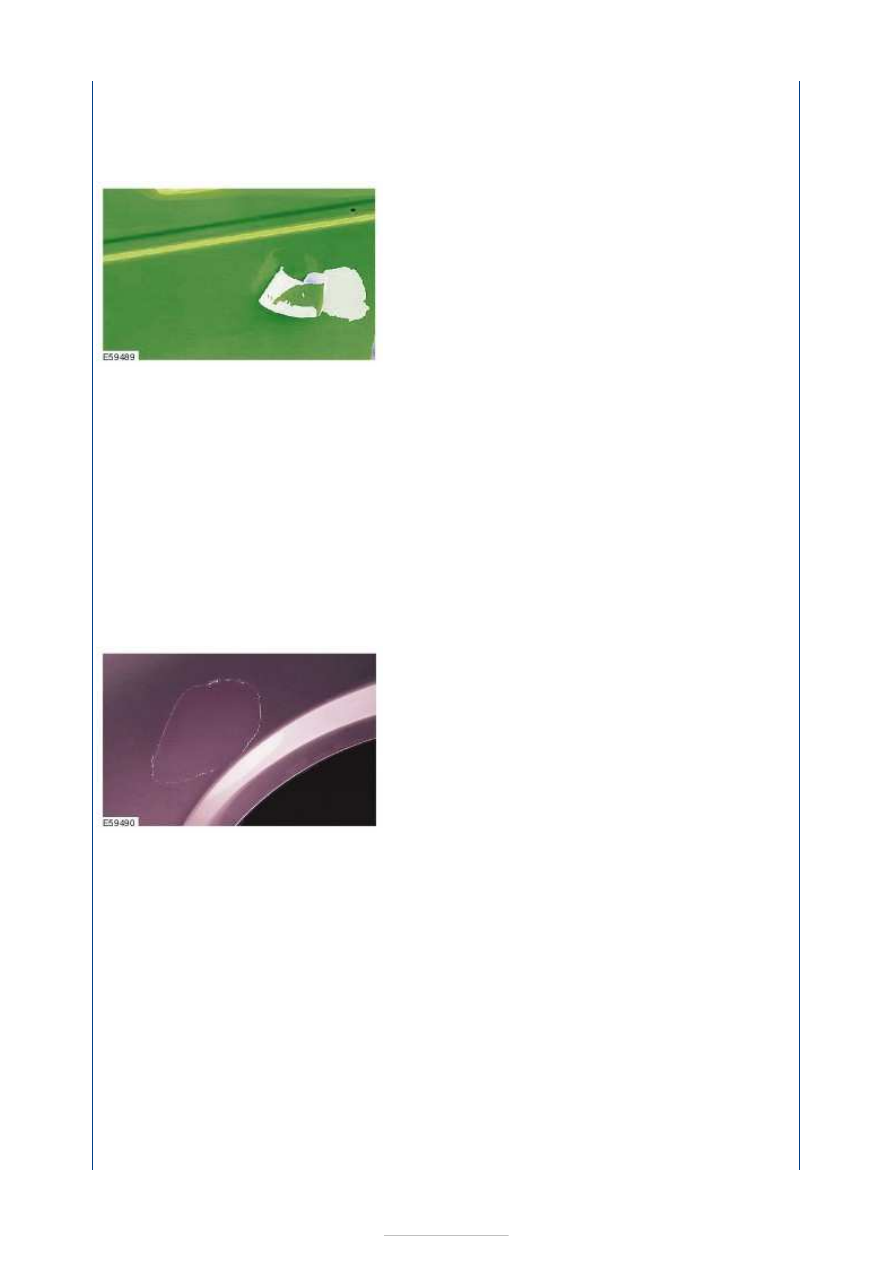
Failure to intermediate sand.
Condensation formed because of temperature fluctuations.
Unprofessional preparation (especially on plastics).
Overheated CDP/intermediate filler.
Repair of damage:
Sand out the damage and recreate the paint finish. Create the paint finish strictly in
accordance with the general technical information.
Adhesion defects in clear lacquer.
Clear lacquer detched from base paint.
Cause/damage pattern:
Base paint layer too thick.
Intermediate and final flash-off times of base paint too long.
Incorrect mixture ratio clear lacquer/hardner.
Repair of damage:
Refinish sanding and recreate the paint finish.
Sanding scores
Single or wide area clusters of scoring or sanding marks, often with raised edges.
Noticeable on metallic paints as light-dark stripes.
Cause/damage pattern:
Stopper sanded too coarsely.
Filler sanded too coarsely.
Filler not thoroughly dried bfore sanding.
Old paint sanded too coarsely.
Soft elastic substrates, e.g. TPA base, treated with thinners which was too aggressive
and therefore etched.
Top coat applied too thinly.