FM 3-05.70 Field Manual Survival (17 May 2002) - page 15
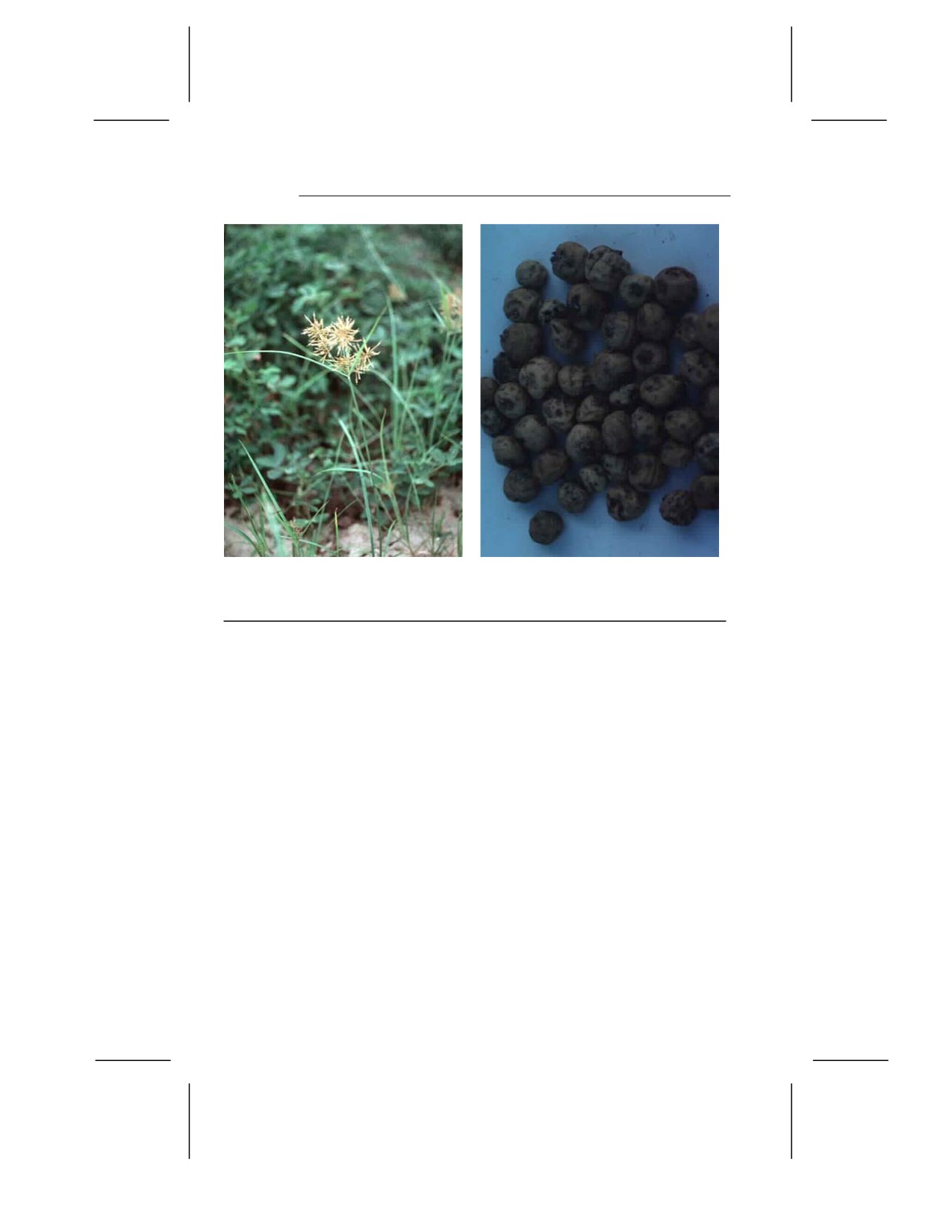
Chufa
Cyperus esculentus
Description: This very common plant has a triangular stem and grasslike leaves.
It grows to a height of 20 to 60 centimeters (8 to 24 inches). The mature plant
has a soft, furlike bloom that extends from a whorl of leaves. Tubers 1 to 2.5
centimeters (1/2 to 1 inch) in diameter grow at the ends of the roots.
Habitat and Distribution: Chufa grows in moist sandy areas throughout the
world. It is often an abundant weed in cultivated fields.
Edible Parts: The tubers are edible raw, boiled, or baked. You can also grind
them and use them as a coffee substitute.
B-30

Coconut
Cocos nucifera
Description: This tree has a single, narrow, tall trunk with a cluster of very large
leaves at the top. Each leaf may be over 6 meters (20 feet) long with over 100
pairs of leaflets.
Habitat and Distribution: Coconut palms are found throughout the tropics. They
are most abundant near coastal regions.
Edible Parts: The nut is a valuable source of food. The milk of the young
coconut is rich in sugar and vitamins and is an excellent source of liquid. The nut
meat is also nutritious but is rich in oil. To preserve the meat, spread it in the sun
until it is completely dry.
Other Uses: Use coconut oil to cook and to protect metal objects from corrosion.
Also, use the oil to treat saltwater sores, sunburn, and dry skin. Use the oil in
improvised torches. Use the tree trunk as building material and the leaves as
thatch. Hollow out the large stump for use as a food container. The coconut
husks are good flotation devices and the husk’s fibers are used to weave ropes
and other items. Use the gauzelike fibers at the leaf bases as strainers or use
them to weave a bug net or to make a pad to use on wounds. The husk makes a
good abrasive. Dried husk fiber is an excellent tinder. A smoldering husk helps to
repel mosquitoes. Smoke caused by dripping coconut oil in a fire also repels
mosquitoes. To render coconut oil, put the coconut meat in the sun, heat it over a
slow fire, or boil it in a pot of water. Coconuts washed out to sea are a good
source of fresh liquid for the sea survivor.
B-31
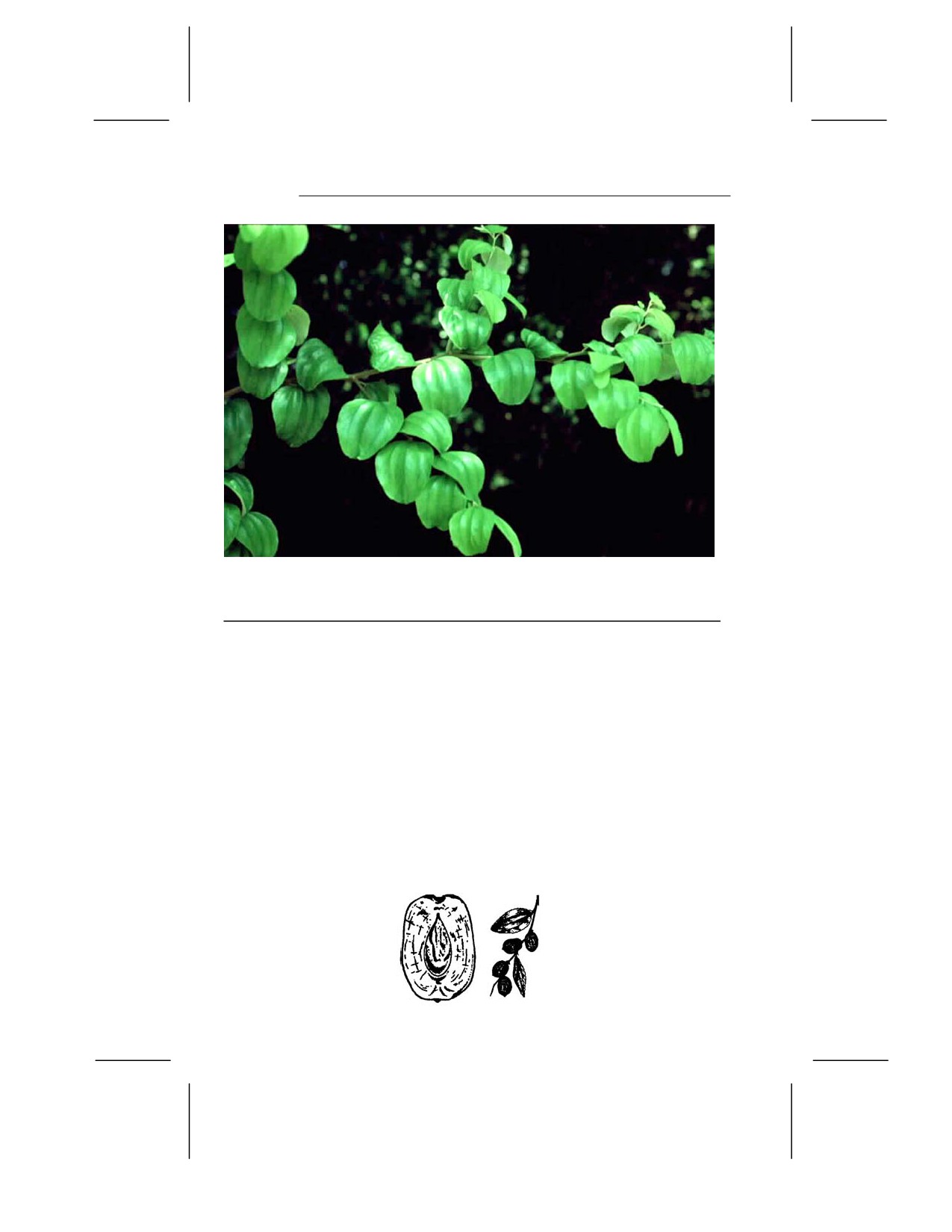
Common jujube
Ziziphus jujuba
Description: The common jujube is either a deciduous tree growing to a height of
12 meters (40 feet) or a large shrub, depending upon where it grows and how
much water is available for growth. Its branches are usually spiny. Its reddish-
brown to yellowish-green fruit is oblong to ovoid, 3 centimeters (1 inch) or less in
diameter, smooth, and sweet in flavor, but with a rather dry pulp around a
comparatively large stone. Its flowers are green.
Habitat and Distribution: The jujube is found in forested areas of temperate
regions and in desert scrub and waste areas worldwide. It is common in many of
the tropical and subtropical areas of the Old World. In Africa, it is found mainly
bordering the Mediterranean. In Asia, it is especially common in the drier parts of
India and China. The jujube is also found throughout the East Indies. It can be
found bordering some desert areas.
Edible Parts: The pulp, crushed in water, makes a refreshing beverage. If time
permits, you can dry the ripe fruit in the sun like dates. Its fruit is high in vitamins
A and C.
B-32
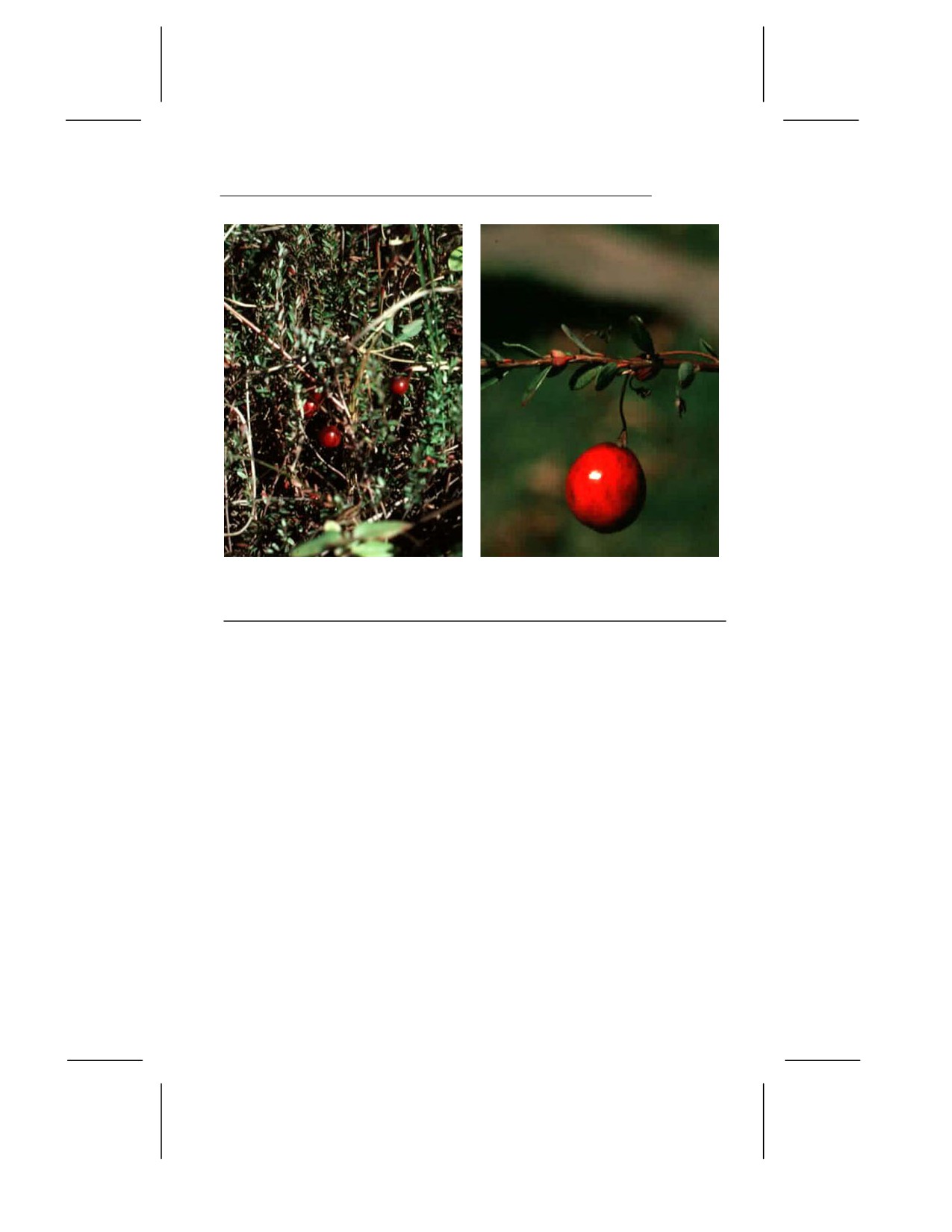
Cranberry
Vaccinium macrocarpon
Description: This plant has tiny leaves arranged alternately. Its stem creeps
along the ground. Its fruits are red berries.
Habitat and Distribution: It only grows in open, sunny, wet areas in the colder
regions of the Northern Hemisphere.
Edible Parts: The berries are very tart when eaten raw. Cook in a small amount
of water and add sugar, if available, to make a jelly.
Other Uses: Cranberries may act as a diuretic. They are useful for treating
urinary tract infections.
B-33
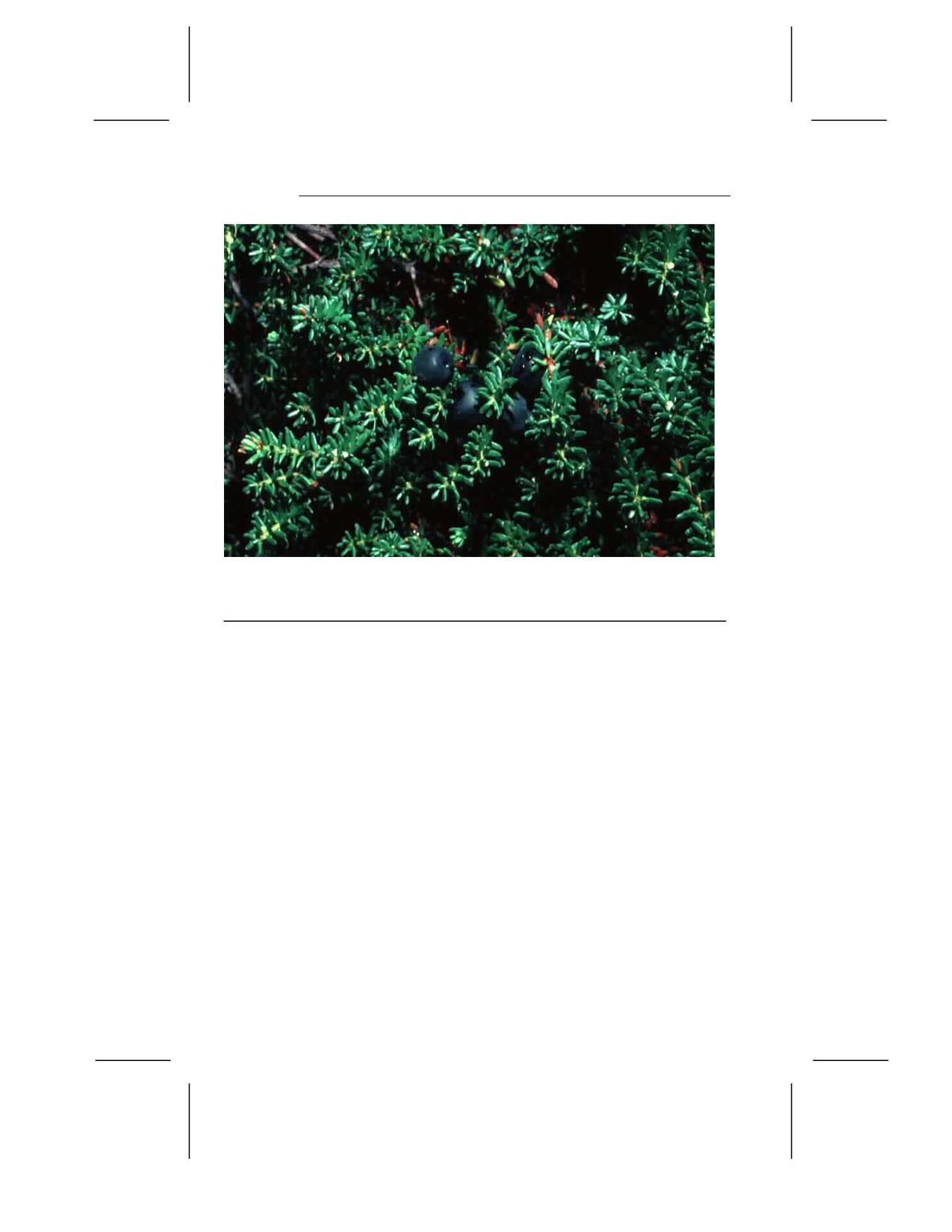
Crowberry
Empetrum nigrum
Description: This is a dwarf evergreen shrub with short needlelike leaves. It has
small, shiny, black berries that remain on the bush throughout the winter.
Habitat and Distribution: Look for this plant in tundra throughout arctic regions
of North America and Eurasia.
Edible Parts: The fruits are edible fresh or can be dried for later use.
B-34
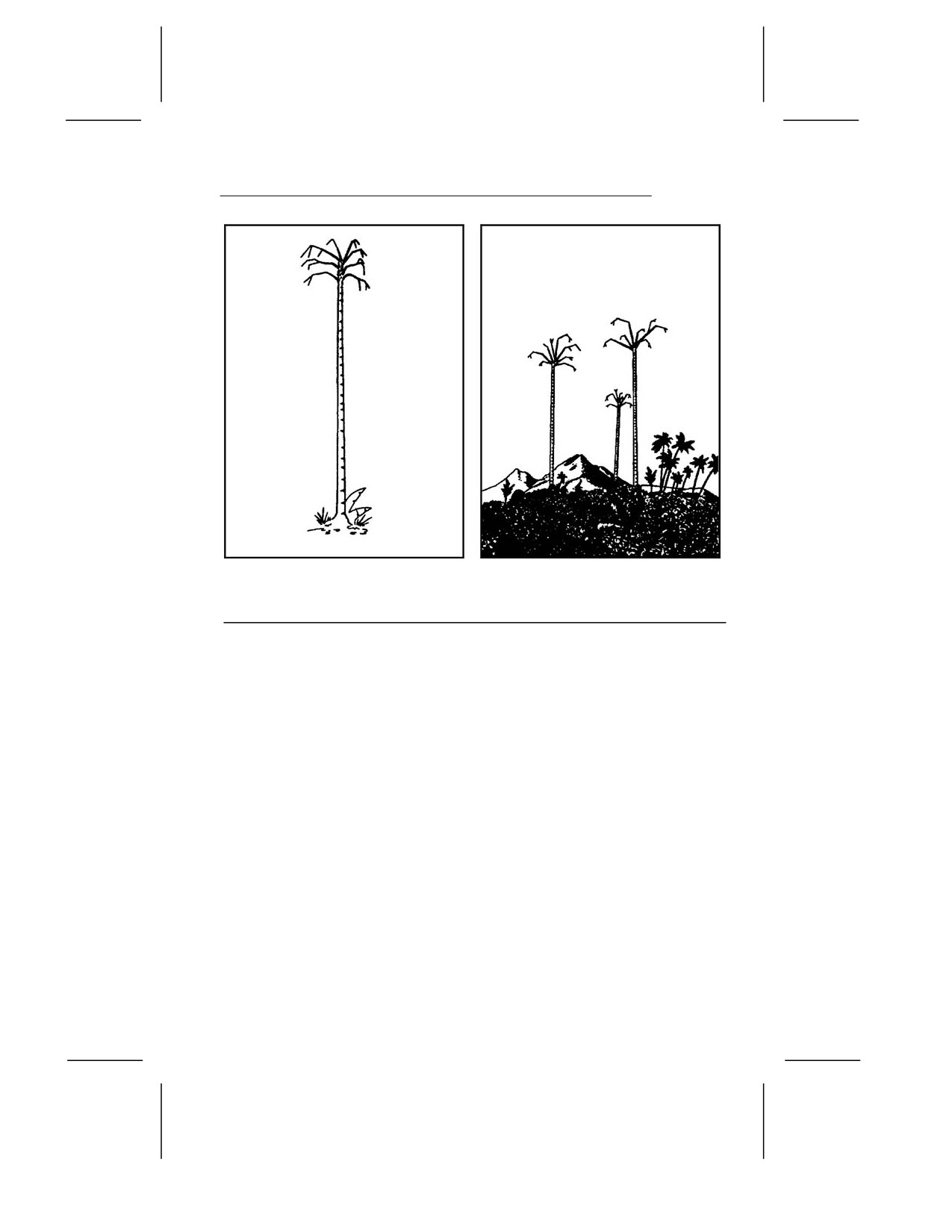
Cuipo tree
Cavanillesia platanifolia
Description: This is a very dominant and easily detected tree because it extends
above the other trees. Its height ranges from 45 to 60 meters (149 to 198 feet). It
has leaves only at the top and is bare 11 months out of the year. It has rings on
its bark that extend to the top to make it easily recognizable. Its bark is reddish or
gray in color. Its roots are light reddish-brown or yellowish-brown.
Habitat and Distribution: The cuipo tree is located primarily in Central American
tropical rain forests in mountainous areas.
Edible Parts: To get water from this tree, cut a piece of the root and clean the dirt
and bark off one end, keeping the root horizontal. Put the clean end to your mouth
or canteen and raise the other. The water from this tree tastes like potato water.
Other Uses: Use young saplings and the branches’ inner bark to make rope.
B-35
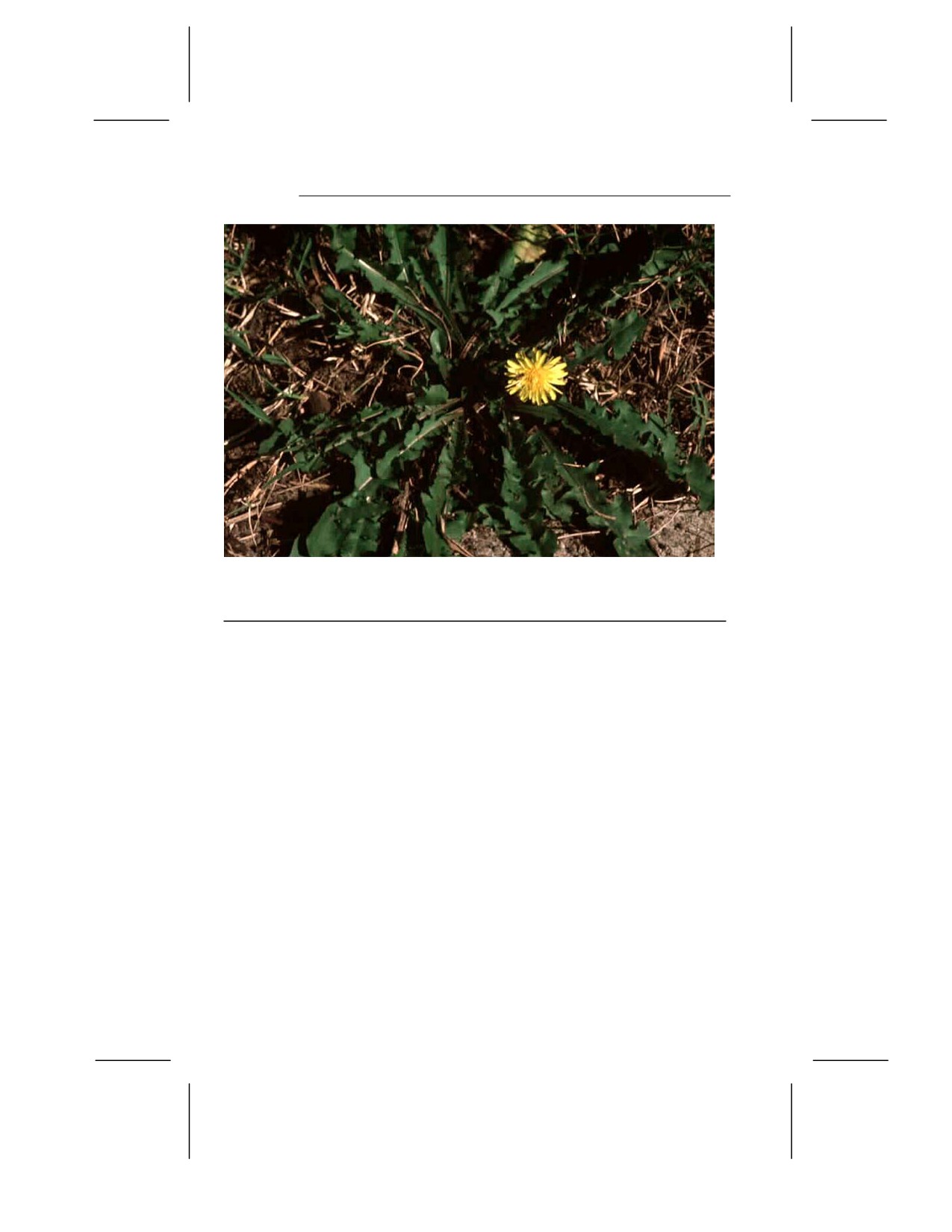
Dandelion
Taraxacum officinale
Description: Dandelion leaves have a jagged edge, grow close to the ground,
and are seldom more than 20 centimeters (8 inches) long. The flowers are bright
yellow. There are several dandelion species.
Habitat and Distribution: Dandelions grow in open, sunny locations throughout
the Northern Hemisphere.
Edible Parts: All parts are edible. Eat the leaves raw or cooked. Boil the roots as
a vegetable. Roots roasted and ground are a good coffee substitute. Dandelions
are high in vitamins A and C and in calcium.
Other Uses: Use the white juice in the flower stems as glue.
B-36
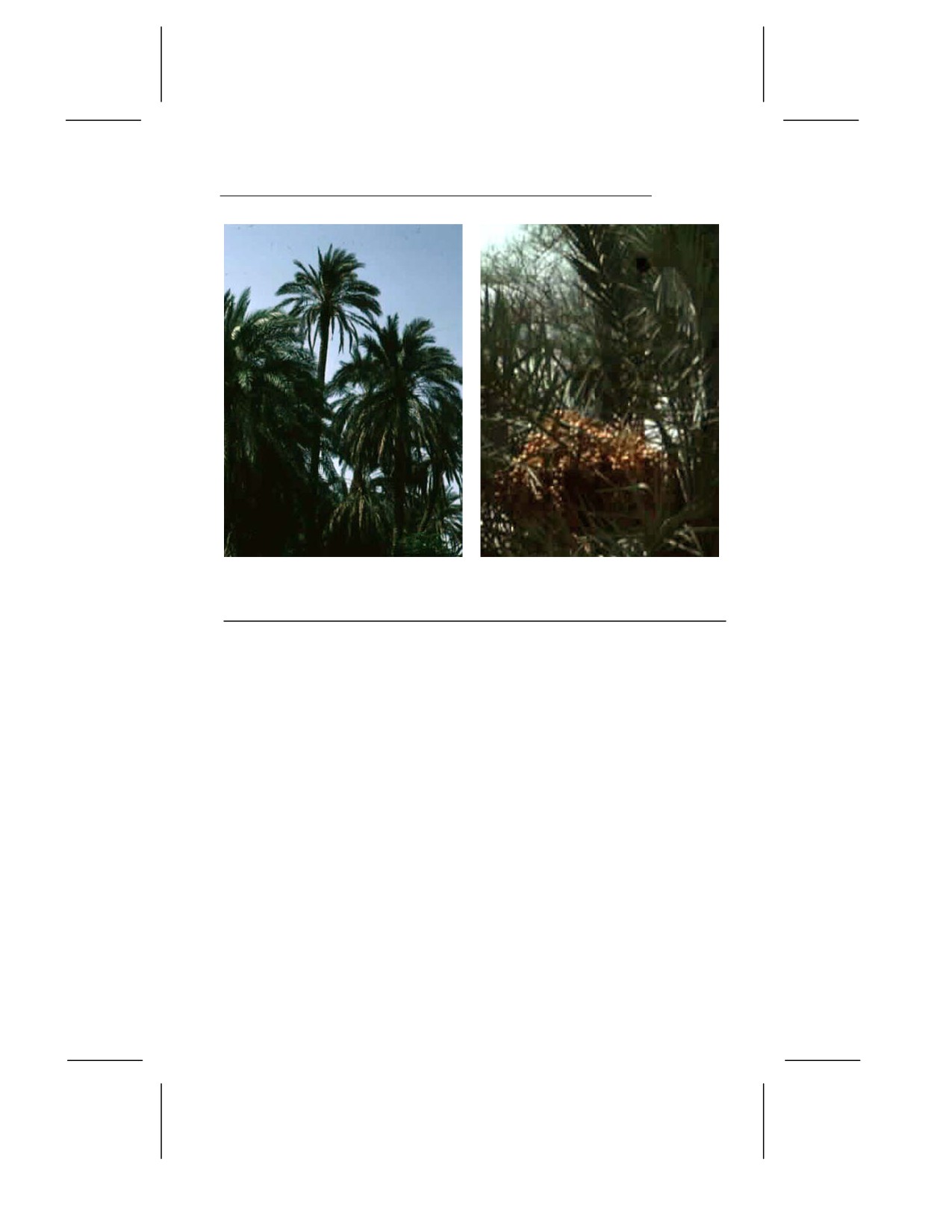
Date palm
Phoenix dactylifera
Description: The date palm is a tall, unbranched tree with a crown of huge,
compound leaves. Its fruit is yellow when ripe.
Habitat and Distribution: This tree grows in arid semitropical regions. It is
native to North Africa and the Middle East but has been planted in the arid
semitropics in other parts of the world.
Edible Parts: Its fruit is edible fresh but is very bitter if eaten before it is ripe. You
can dry the fruits in the sun and preserve them for a long time.
Other Uses: The trunks provide valuable building material in desert regions
where few other treelike plants are found. The leaves are durable, and you can
use them for thatching and as weaving material. The base of the leaves
resembles coarse cloth that you can use for scrubbing and cleaning.
B-37
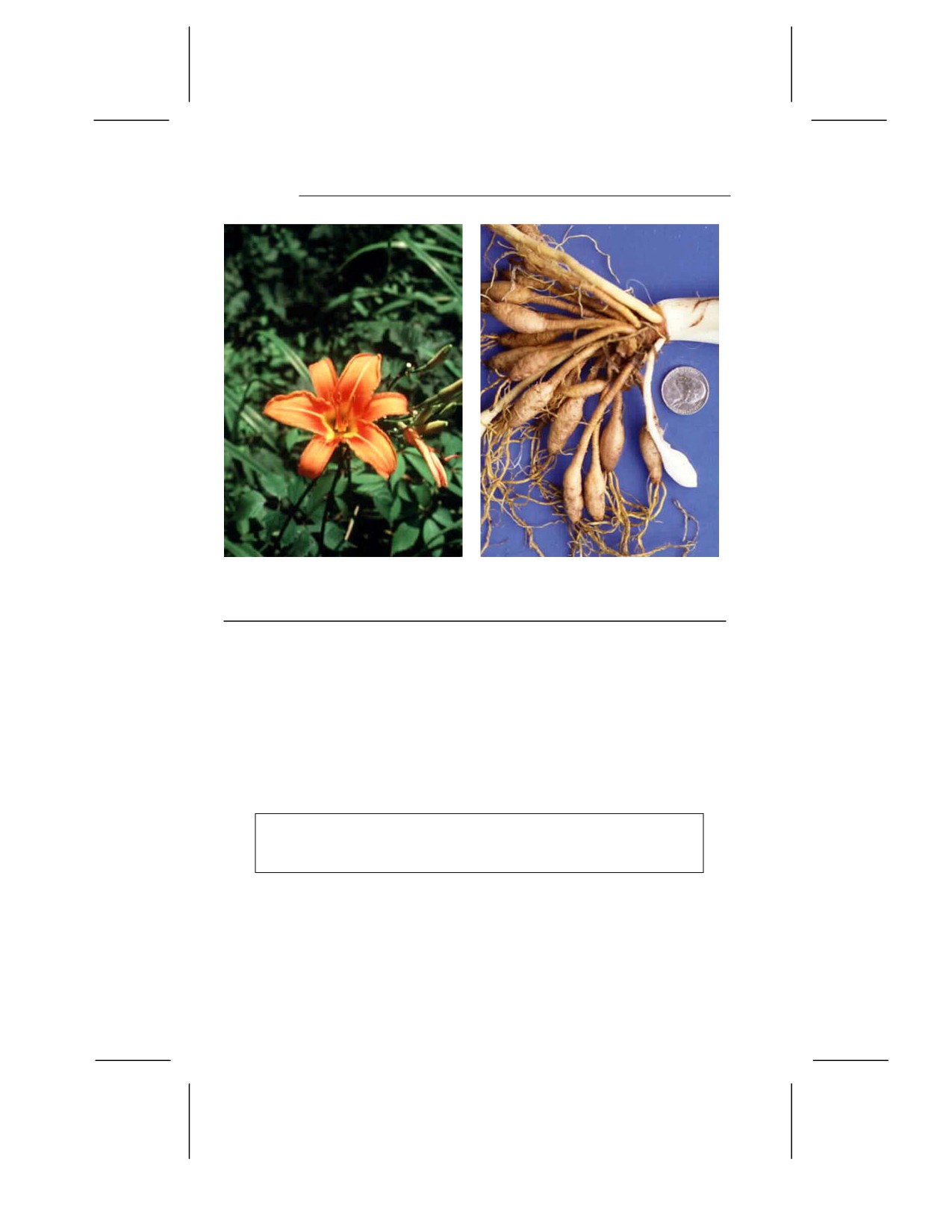
Daylily
Hemerocallis fulva
Description: This plant has unspotted, tawny blossoms that open for
1 day only. It has long, swordlike, green basal leaves. Its root is a mass of
swollen and elongated tubers.
Habitat and Distribution: Daylilies are found worldwide in tropic and temperate
zones. They are grown as a vegetable in the Orient and as an ornamental plant
elsewhere.
Edible Parts: The young green leaves are edible raw or cooked. Tubers are also
edible raw or cooked. You can eat its flowers raw, but they taste better cooked.
You can also fry the flowers for storage.
CAUTION
Eating excessive amounts of raw flowers may cause diarrhea.
B-38
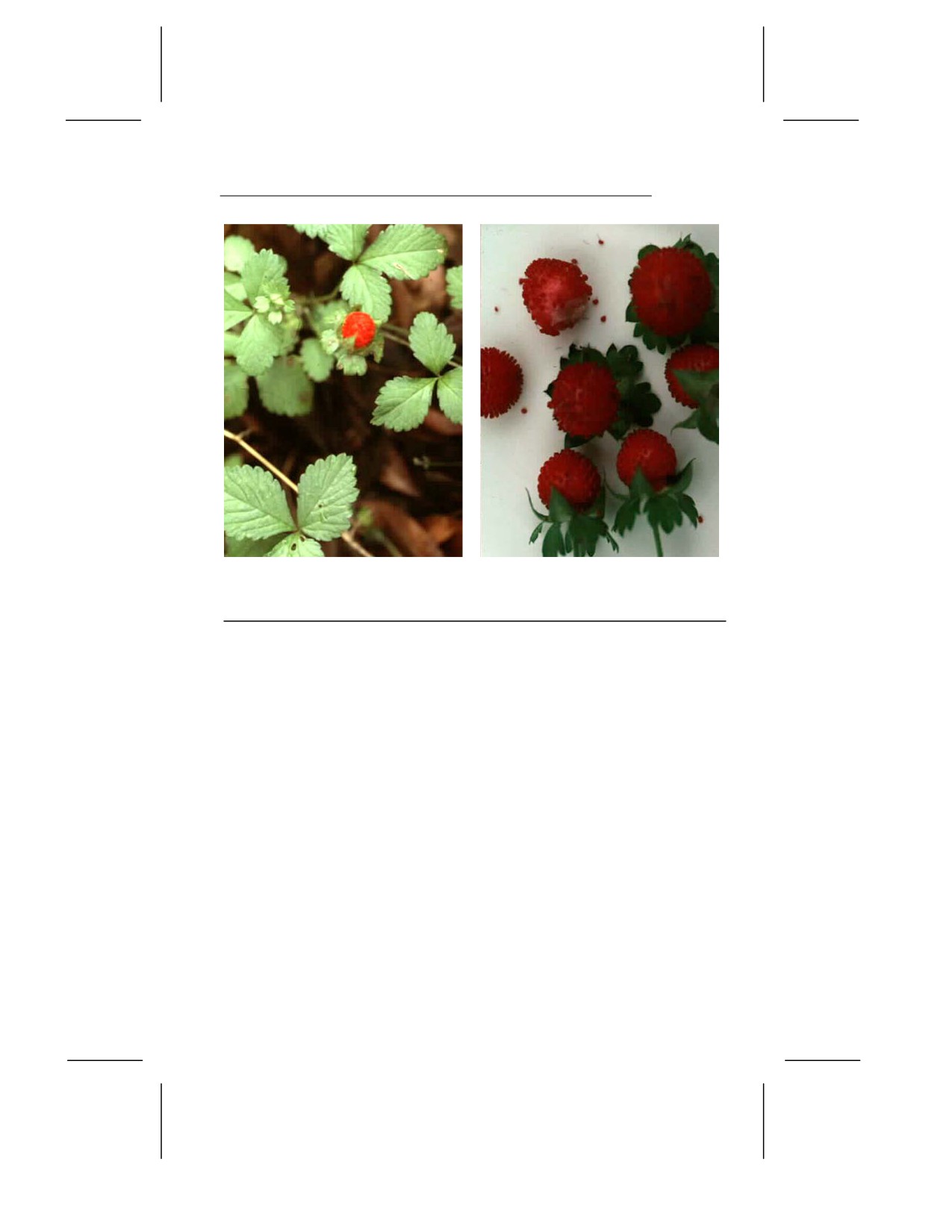
Duchesnea or Indian strawberry
Duchesnea indica
Description: The duchesnea is a small plant that has runners and three-parted
leaves. Its flowers are yellow and its fruit resembles a strawberry.
Habitat and Distribution: It is native to southern Asia but is a common weed in
warmer temperate regions. Look for it in lawns, gardens, and along roads.
Edible Parts: Its fruit is edible. Eat it fresh.
B-39
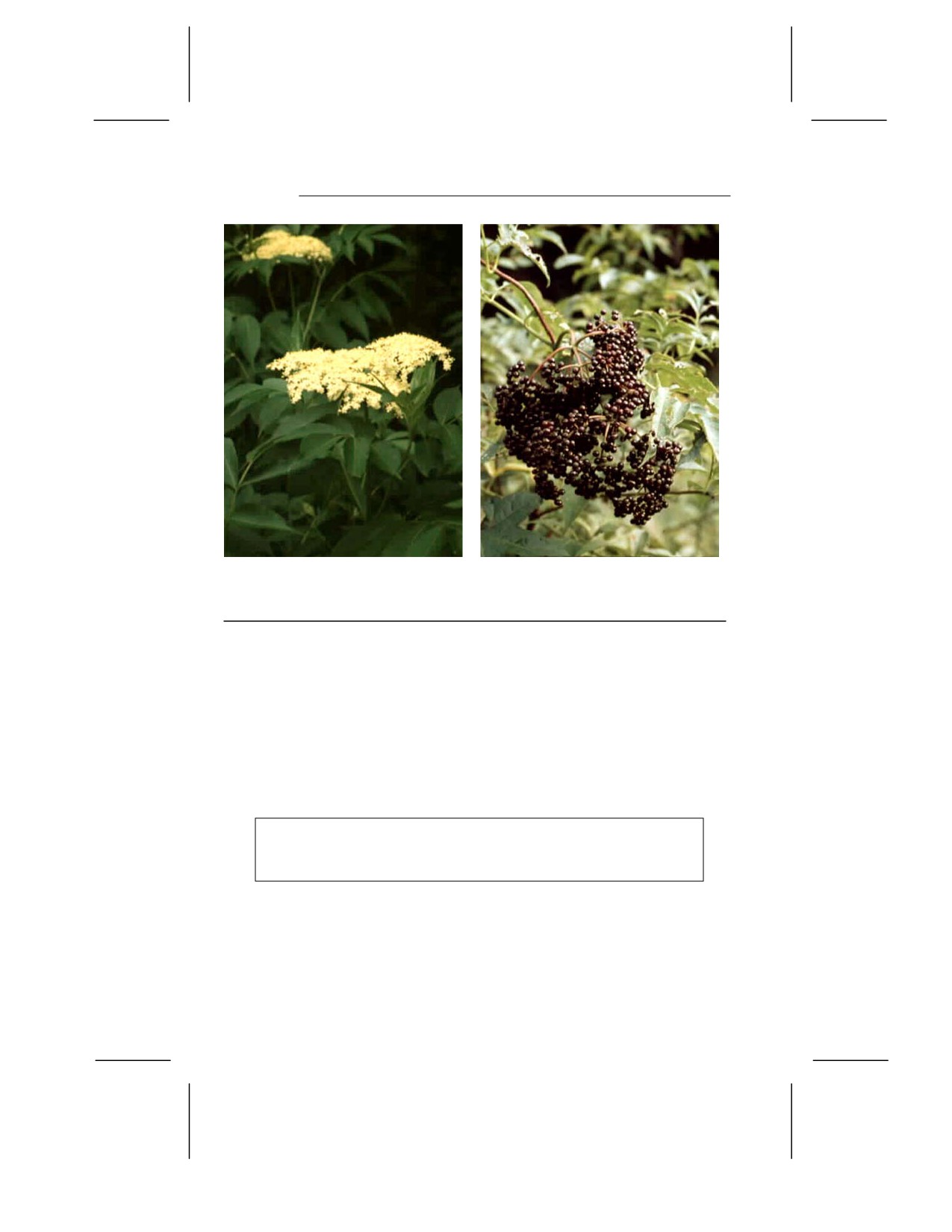
Elderberry
Sambucus canadensis
Description: Elderberry is a many-stemmed shrub with opposite, compound
leaves. It grows to a height of 6 meters (20 feet). Its flowers are fragrant, white,
and borne in large flat-topped clusters up to 30 centimeters (12 inches) across.
Its berrylike fruits are dark blue or black when ripe.
Habitat and Distribution: This plant is found in open, usually wet areas at the
margins of marshes, rivers, ditches, and lakes. It grows throughout much of
eastern North America.
Edible Parts: The flowers and fruits are edible. You can make a drink by soaking
CAUTION
All other parts of the plant are poisonous and dangerous if eaten.
the flower heads for 8 hours, discarding the flowers, and drinking the liquid.
B-40
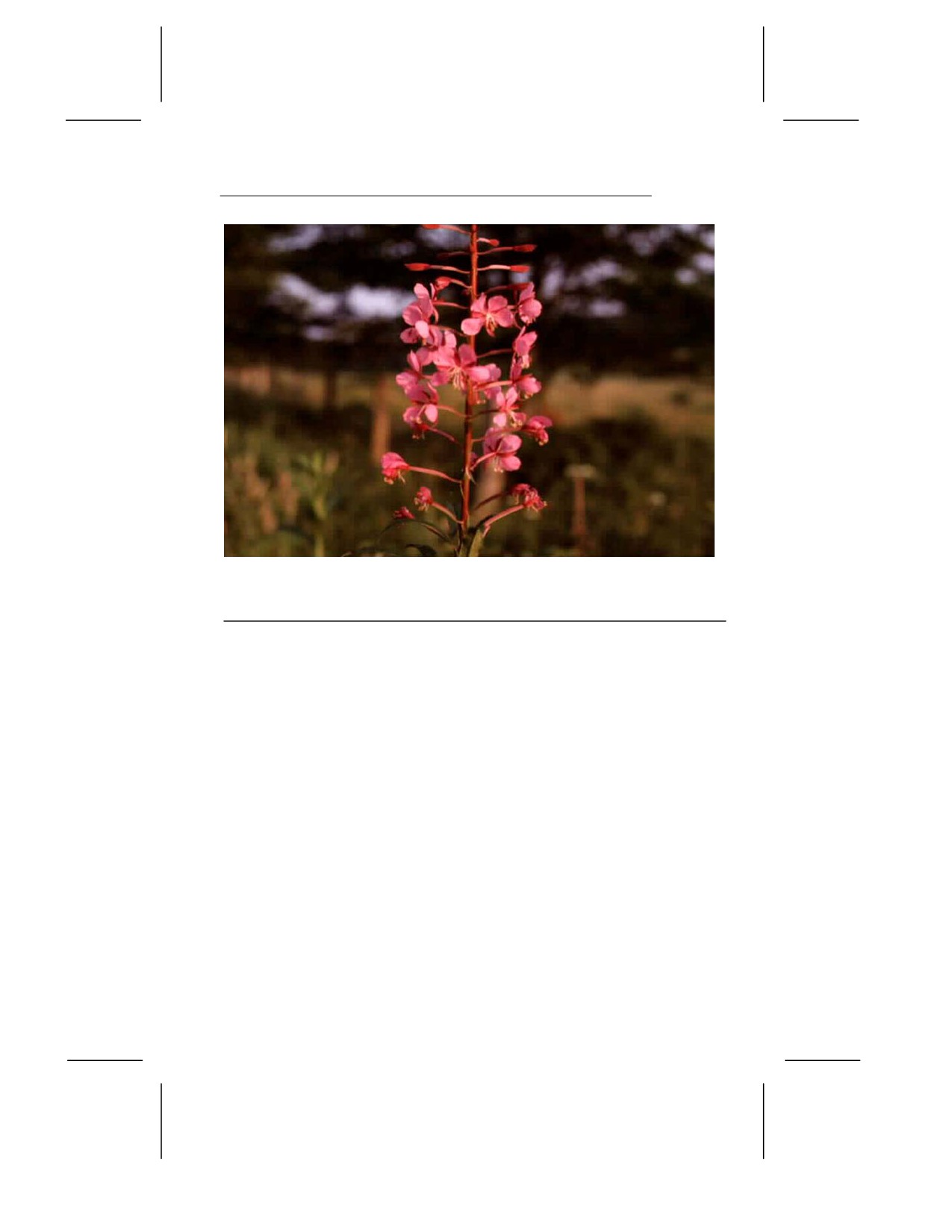
Fireweed
Epilobium angustifolium
Description: This plant grows up to 1.8 meters (6 feet) tall. It has large, showy,
pink flowers and lance-shaped leaves. Its relative, the dwarf fireweed (Epilobium
latifolium), grows 30 to 60 centimeters (12 to 24 inches) tall.
Habitat and Distribution: Tall fireweed is found in open woods, on hillsides, on
stream banks, and near seashores in arctic regions. It is especially abundant in
burned-over areas. Dwarf fireweed is found along streams, sandbars, and
lakeshores and on alpine and arctic slopes.
Edible Parts: The leaves, stems, and flowers are edible in the spring but
become tough in summer. You can split open the stems of old plants and eat the
pith raw.
B-41
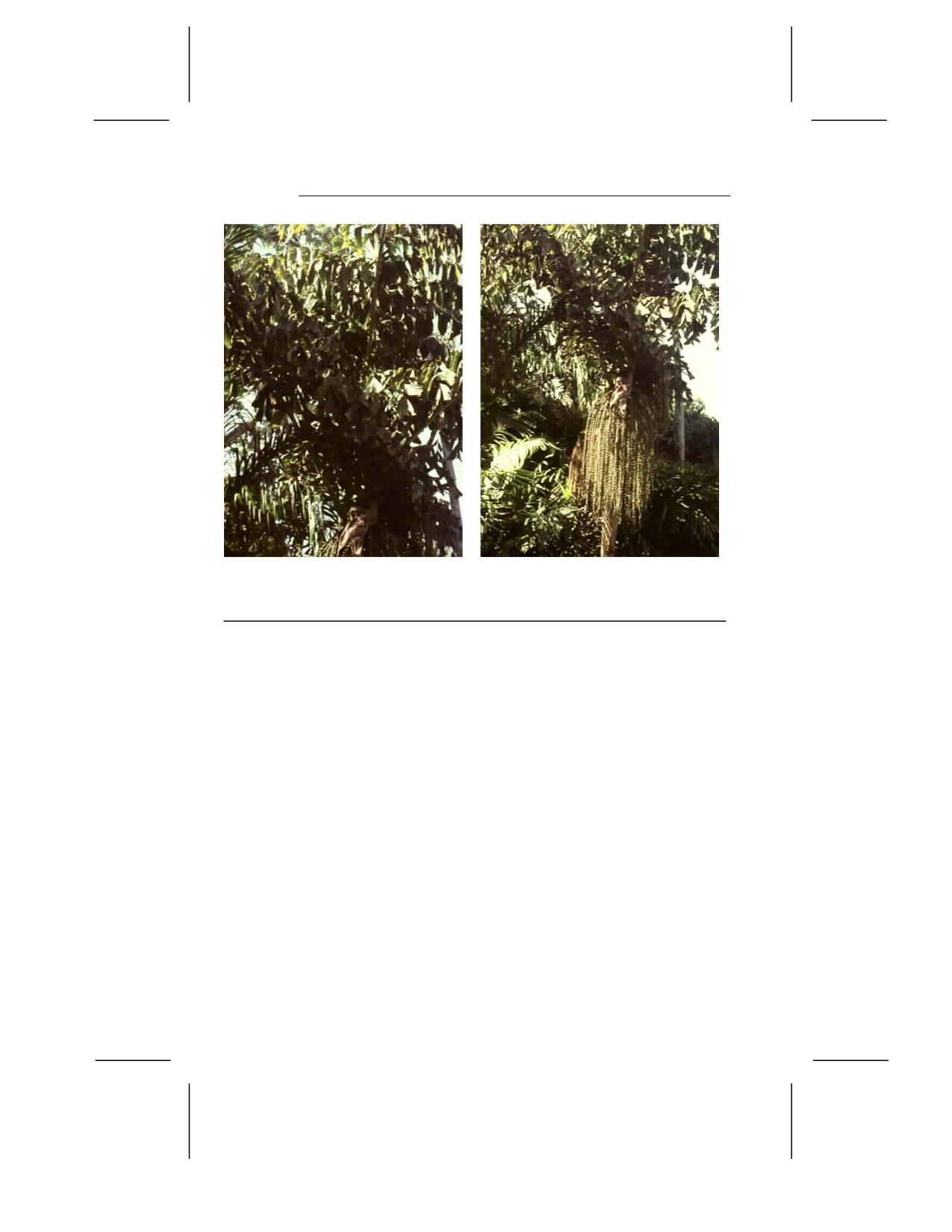
Fishtail palm
Caryota urens
Description: Fishtail palms are large trees, at least 18 meters (60 feet) tall. Their
leaves are unlike those of any other palm; the leaflets are irregular and toothed
on the upper margins. All other palms have either fan-shaped or featherlike
leaves. Its massive flowering shoot is borne at the top of the tree and hangs
downward.
Habitat and Distribution: The fishtail palm is native to the tropics of India,
Assam, and Myanmar. Several related species also exist in Southeast Asia and
the Philippines. These palms are found in open hill country and jungle areas.
Edible Parts: The chief food in this palm is the starch stored in large quantities in
its trunk. The juice from the fishtail palm is very nourishing and you have to drink
it shortly after getting it from the palm flower shoot. Boil the juice down to get a
rich sugar syrup. Use the same method as for the sugar palm to get the juice.
The palm cabbage may be eaten raw or cooked.
B-42
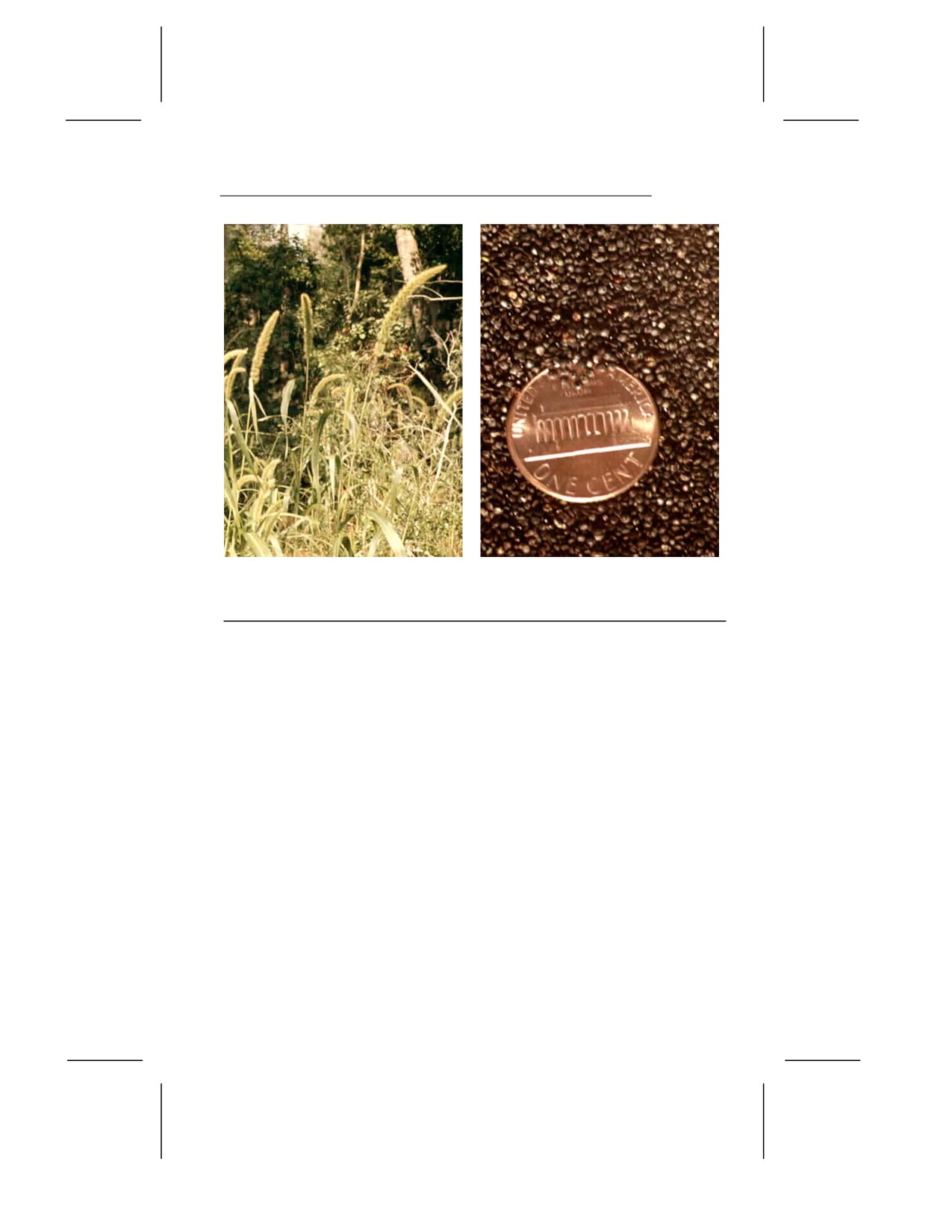
Foxtail grass
Setaria species
Description: This weedy grass is readily recognized by the narrow, cylindrical
head containing long hairs. Its grains are small, less than
6 millimeters (1/4 inch) long. The dense heads of grain often droop when ripe.
Habitat and Distribution: Look for foxtail grasses in open, sunny areas, along
roads, and at the margins of fields. Some species occur in wet, marshy areas.
Species of Setaria are found throughout the United States, Europe, western Asia,
and tropical Africa. In some parts of the world, foxtail grasses are grown as a
food crop.
Edible Parts: The grains are edible raw but are very hard and sometimes bitter.
Boiling removes some of the bitterness and makes them easier to eat.
B-43
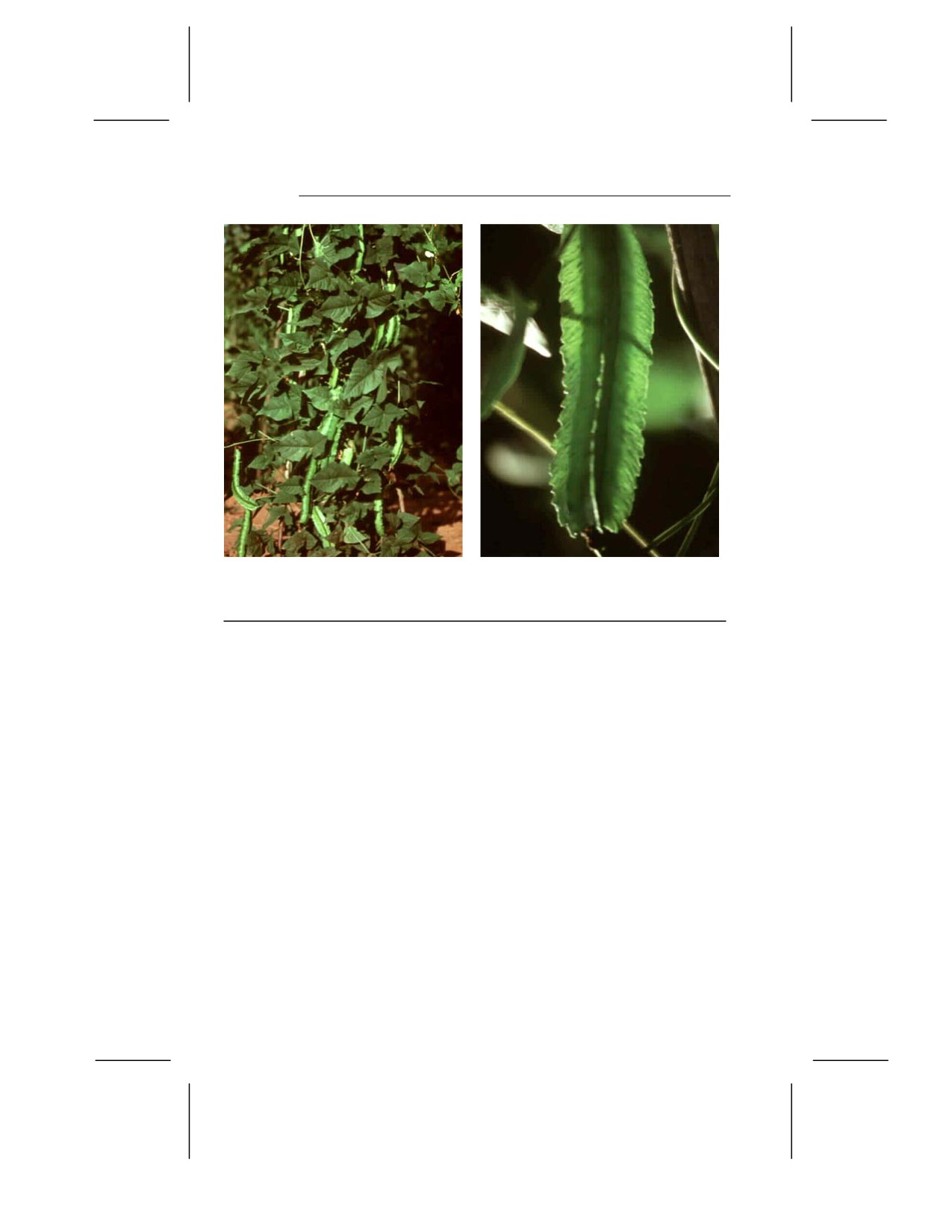
Goa bean
Psophocarpus tetragonolobus
Description: The goa bean is a climbing plant that may cover small shrubs and
trees. Its bean pods are 22 centimeters (9 inches) long, its leaves 15 centimeters
(6 inches) long, and its flowers are bright blue. The mature pods are 4-angled,
with jagged wings on the pods.
Habitat and Distribution: This plant grows in tropical Africa, Asia, the East
Indies, the Philippines, and Taiwan. This member of the bean (legume) family
serves to illustrate a kind of edible bean common in the tropics of the Old World.
Wild edible beans of this sort are most frequently found in clearings and around
abandoned garden sites. They are more rare in forested areas.
Edible Parts: You can eat the young pods like string beans. The mature seeds
are a valuable source of protein after parching or roasting them over hot coals.
You can germinate the seeds (as you can many kinds of beans) in damp moss
and eat the resultant sprouts. The thickened roots are edible raw. They are
slightly sweet, with the firmness of an apple. You can also eat the young leaves
as a vegetable, raw or steamed.
B-44
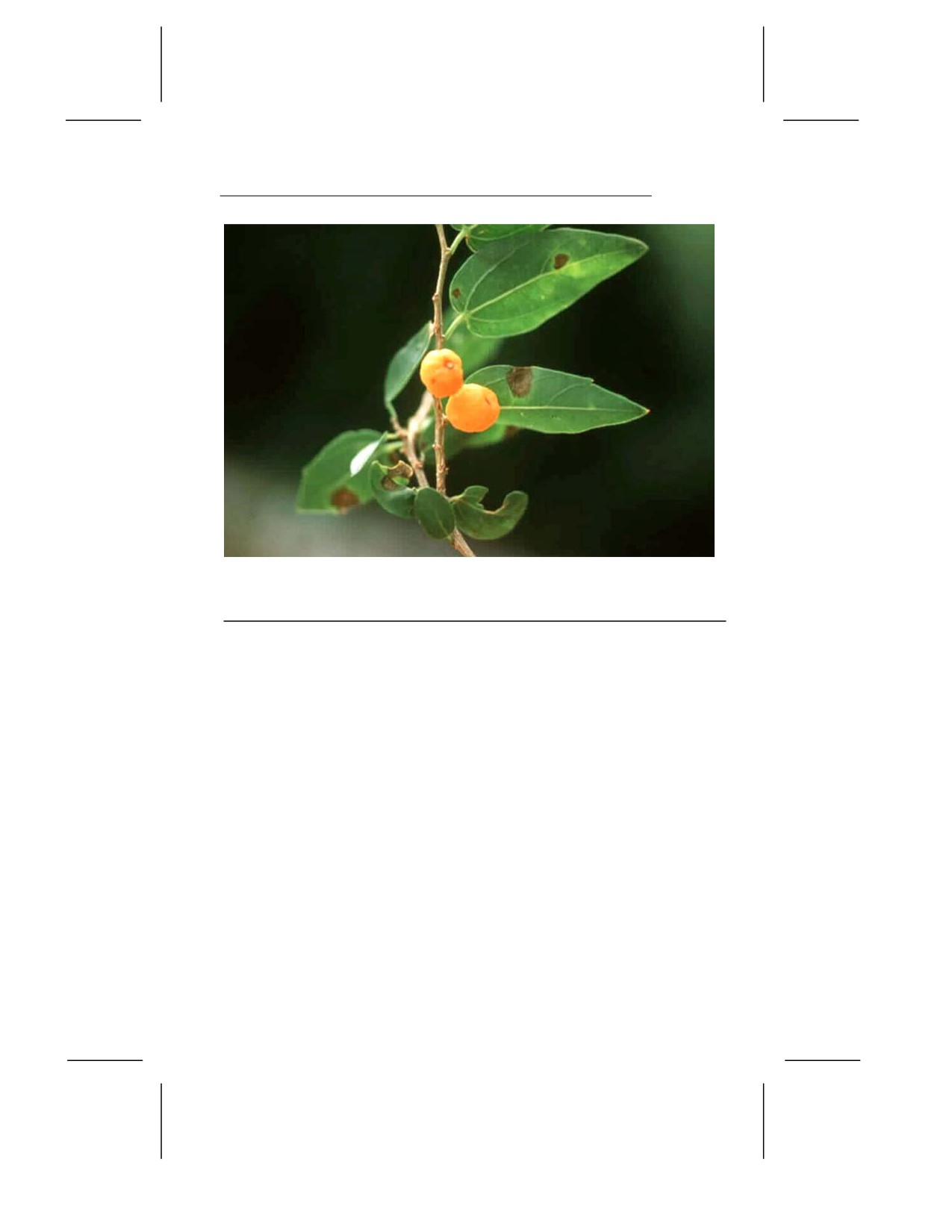
Hackberry
Celtis species
Description: Hackberry trees have smooth, gray bark that often has corky warts
or ridges. The tree may reach 39 meters (129 feet) in height. Hackberry trees
have long-pointed leaves that grow in two rows. This tree bears small, round
berries that can be eaten when they are ripe and fall from the tree. The wood of
the hackberry is yellowish.
Habitat and Distribution: This plant is widespread in the United States,
especially in and near ponds.
Edible Parts: Its berries are edible when they are ripe and fall from the tree.
B-45
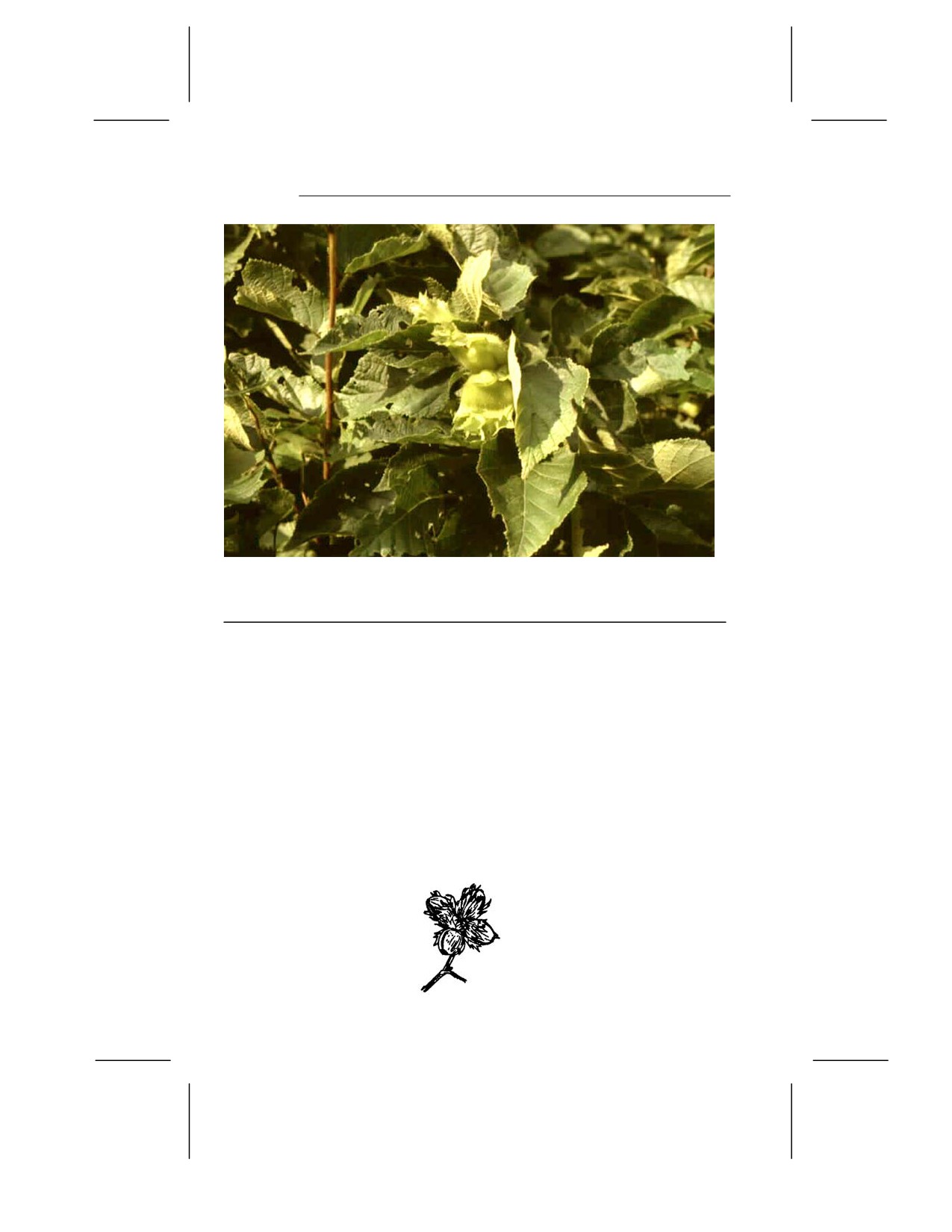
Hazelnut or wild filbert
Corylus species
Description: Hazelnuts grow on bushes 1.8 to 3.6 meters (6 to 12 feet) high.
One species in Turkey and another in China are large trees. The nut itself grows
in a very bristly husk that conspicuously contracts above the nut into a long neck.
The different species vary in this respect as to size and shape.
Habitat and Distribution: Hazelnuts are found over wide areas in the United
States, especially the eastern half of the country and along the Pacific coast.
These nuts are also found in Europe where they are known as filberts. The
hazelnut is common in Asia, especially in eastern Asia from the Himalayas to
China and Japan. The hazelnut usually grows in the dense thickets along stream
banks and open places. They are not plants of the dense forest.
Edible Parts: Hazelnuts ripen in the autumn, when you can crack them open
and eat the kernel. The dried nut is extremely delicious. The nut’s high oil content
makes it a good survival food. When they are unripe, you can crack them open
and eat the fresh kernel.
B-46
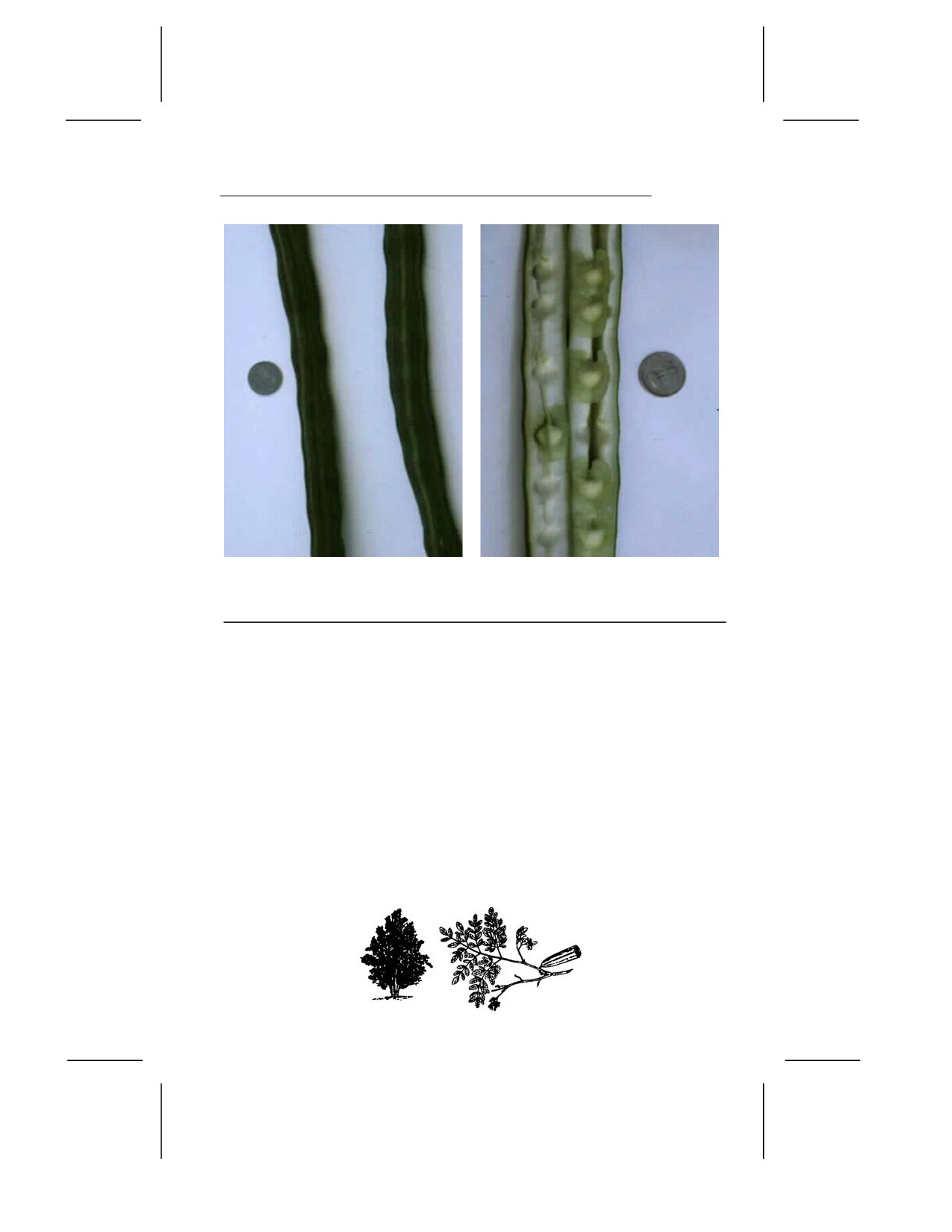
Horseradish tree
Moringa pterygosperma
Description: This tree grows from 4.5 to 14 meters (15 to 46 feet) tall. Its leaves
have a fernlike appearance. Its flowers and long, pendulous fruits grow on the
ends of the branches. Its fruit (pod) looks like a giant bean. Its 25- to 60-
centimeter-long pods are triangular in cross section, with strong ribs. Its roots
have a pungent odor.
Habitat and Distribution: This tree is found in the rain forests and
semievergreen seasonal forests of the tropical regions. It is widespread in India,
Southeast Asia, Africa, and Central America. Look for it in abandoned fields and
gardens and at the edges of forests.
Edible Parts: The leaves are edible raw or cooked, depending on their
hardness. Cut the young seedpods into short lengths and cook them like string
beans or fry them. You can get oil for frying by boiling the young fruits of palms
and skimming the oil off the surface of the water. You can eat the flowers as part
of a salad. You can chew fresh, young seedpods to eat the pulpy and soft seeds.
The roots may be ground as a substitute for seasoning similar to horseradish.
B-47
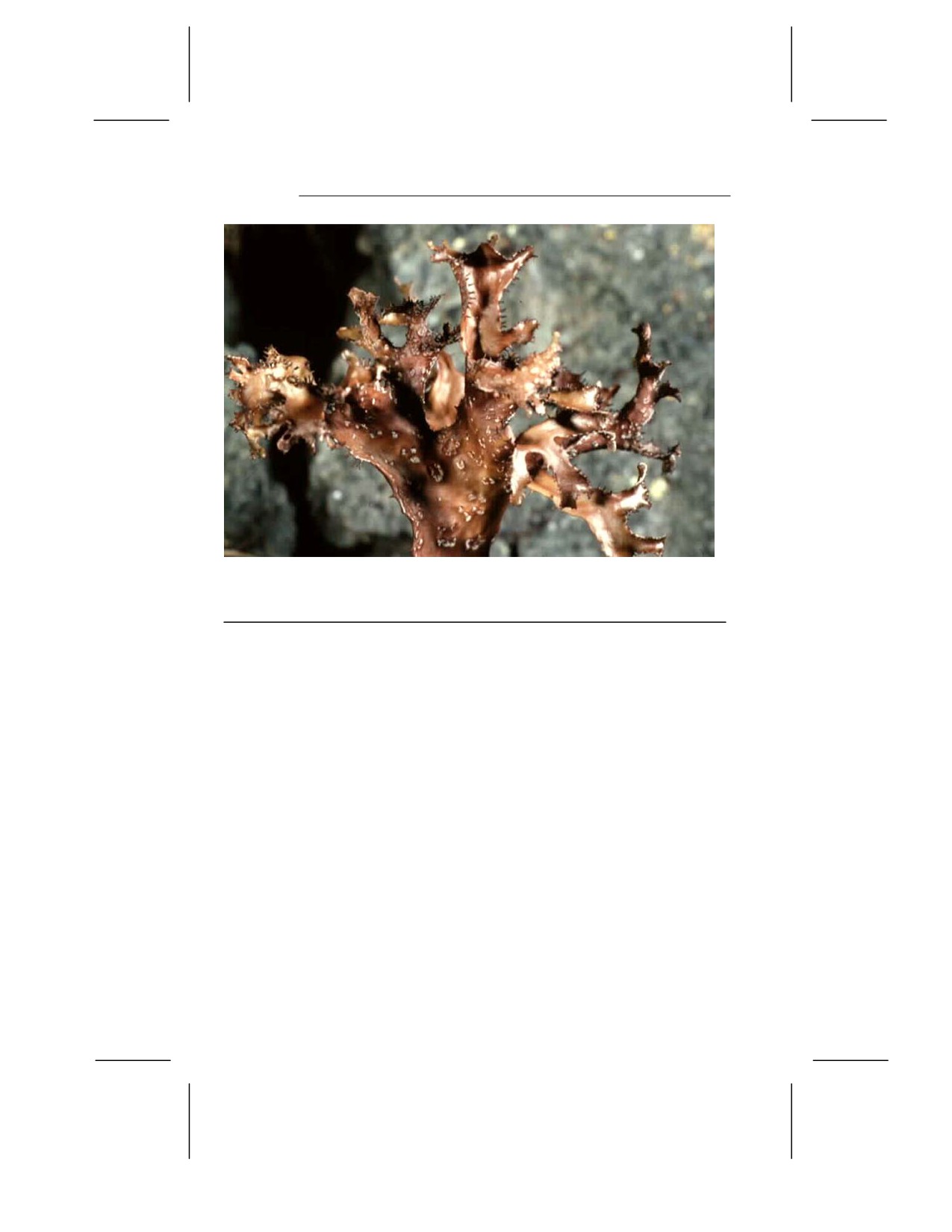
Iceland moss
Cetraria islandica
Description: This moss grows only a few inches high. Its color may be gray,
white, or even reddish.
Habitat and Distribution: Look for it in open areas. It is found only in the arctic.
Edible Parts: All parts of the Iceland moss are edible. During the winter or dry
season, it is dry and crunchy but softens when soaked. Boil the moss to remove
the bitterness. After boiling, eat by itself or add to milk or grains as a thickening
agent. Dried plants store well.
B-48
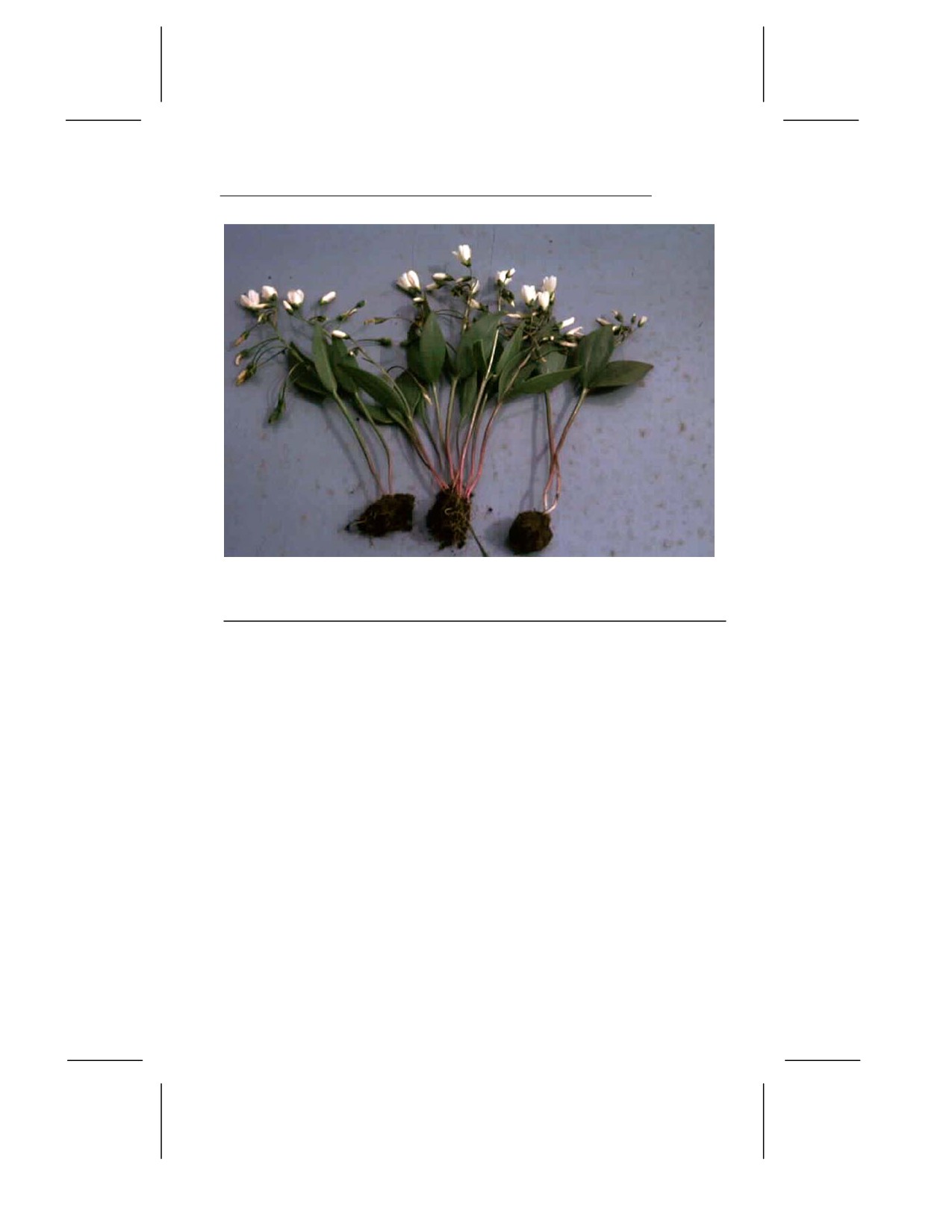
Indian potato or Eskimo potato
Claytonia species
Description: All Claytonia species are somewhat fleshy plants only a few
centimeters tall, with showy flowers about 2.5 centimeters (1 inch) across.
Habitat and Distribution: Some species are found in rich forests, where they
are conspicuous before the leaves develop. Western species are found
throughout most of the northern United States and in Canada.
Edible Parts: The tubers are edible but you should boil them before eating.
B-49
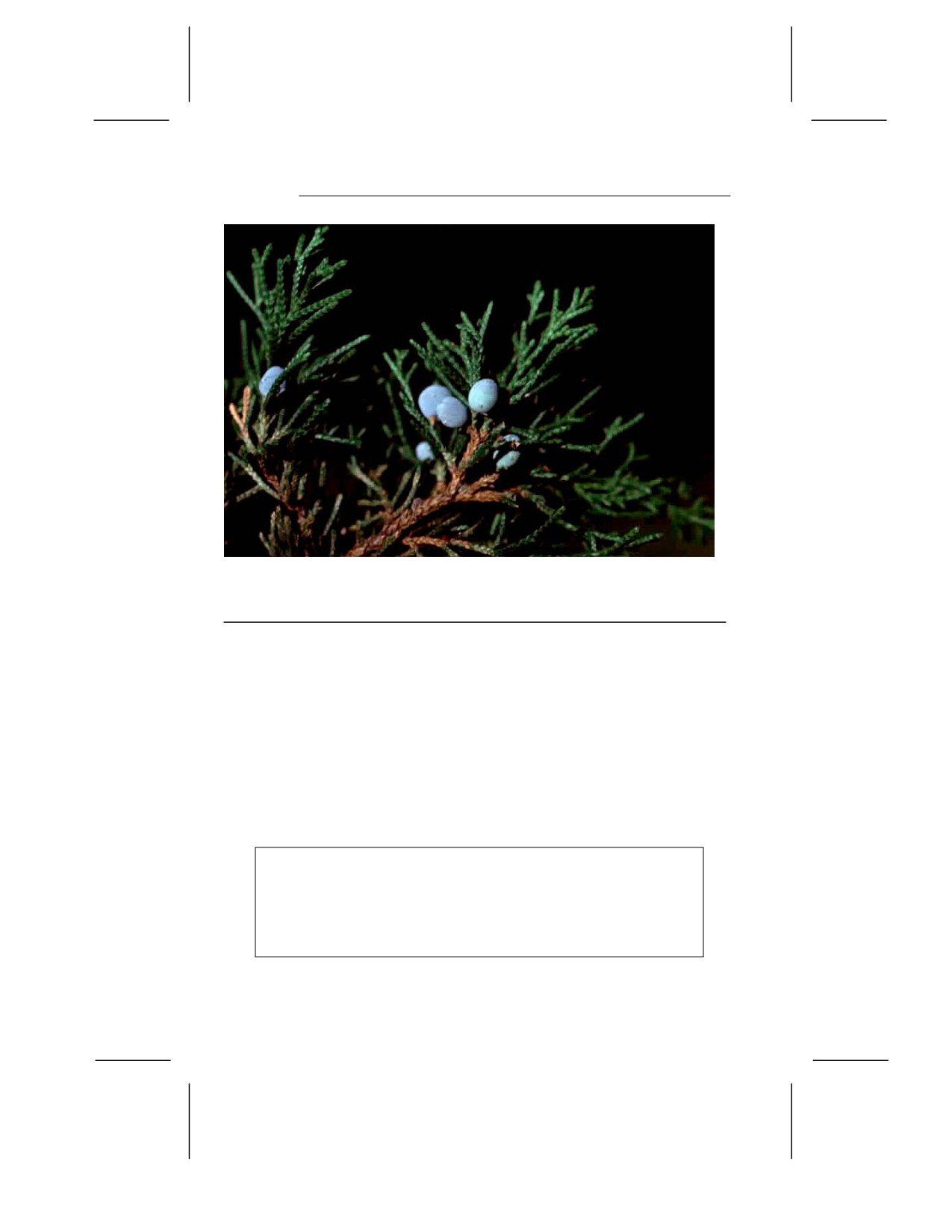
Juniper
Juniperus species
Description: Junipers, sometimes called cedars, are trees or shrubs with very
small, scalelike leaves densely crowded around the branches. Each leaf is less
than 1.2 centimeters (1/3 inch) long. All species have a distinct aroma resembling
the well-known cedar. The berrylike cones are usually blue and covered with a
whitish wax.
Habitat and Distribution: Look for junipers in open, dry, sunny areas throughout
North America and northern Europe. Some species are found in southeastern
Europe, across Asia to Japan, and in the mountains of North Africa.
Edible Parts: The berries and twigs are edible. Eat the berries raw or roast the
seeds to use as a coffee substitute. Use dried and crushed berries as a
seasoning for meat. Gather young twigs to make a tea.
CAUTION
Many plants may be called cedars but are not related to
junipers and may be harmful. Always look for the berrylike
structures, needle leaves, and resinous, fragrant sap to be
sure the plant you have is a juniper.
B-50
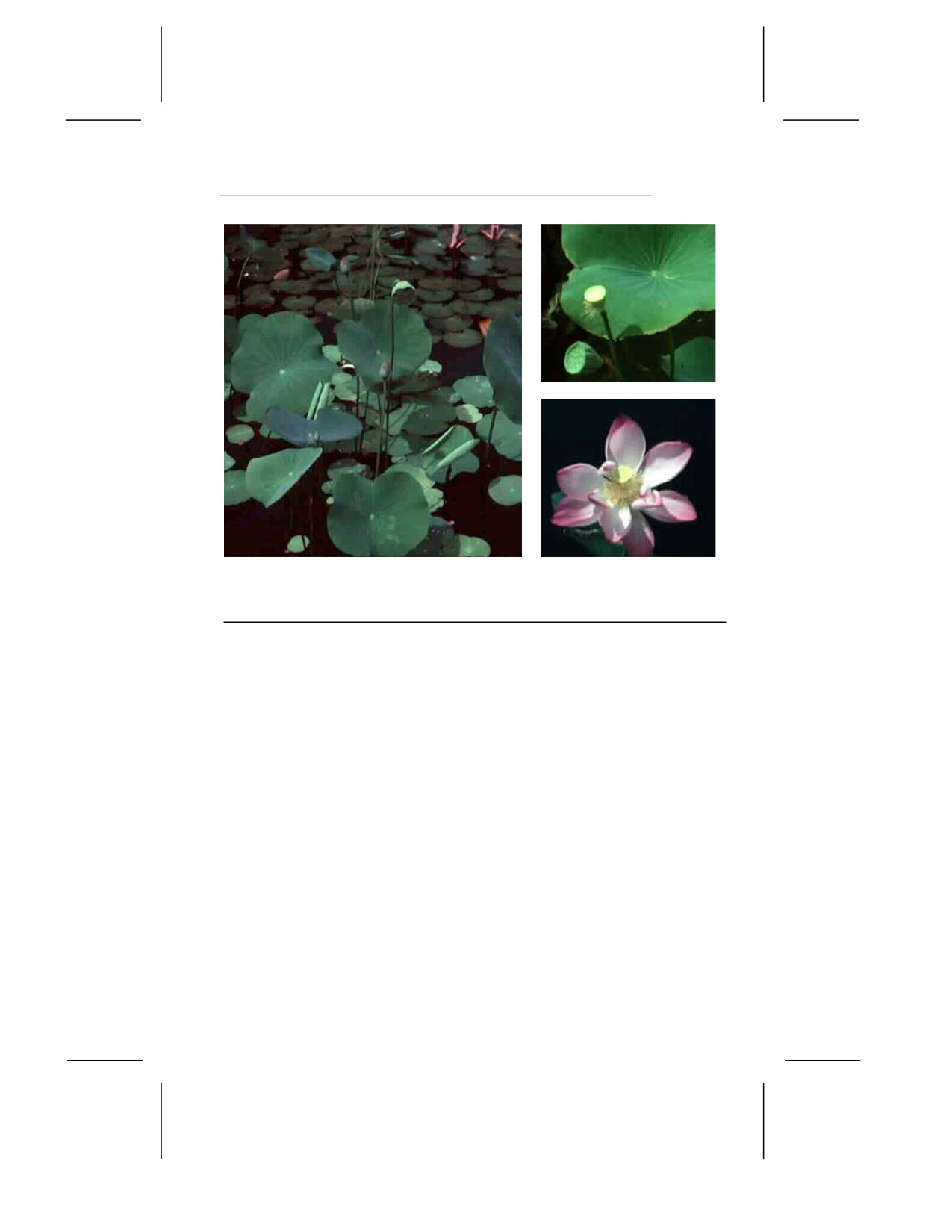
Lotus
Nelumbo species
Description: There are two species of lotus: one has yellow flowers and the
other pink flowers. The flowers are large and showy. The leaves, which may float
on or rise above the surface of the water, often reach 1.5 meters (5 feet) in
radius. The fruit has a distinctive flattened shape and contains up to 20 hard
seeds.
Habitat and Distribution: The yellow-flowered lotus is native to North America.
The pink-flowered species, which is widespread in the Orient, is planted in many
other areas of the world. Lotuses are found in quiet freshwater.
Edible Parts: All parts of the plant are edible raw or cooked. The underwater
parts contain large quantities of starch. Dig the fleshy portions from the mud and
bake or boil them. Boil the young leaves and eat them as a vegetable. The seeds
have a pleasant flavor and are nutritious. Eat them raw, or parch and grind them
into flour.
B-51
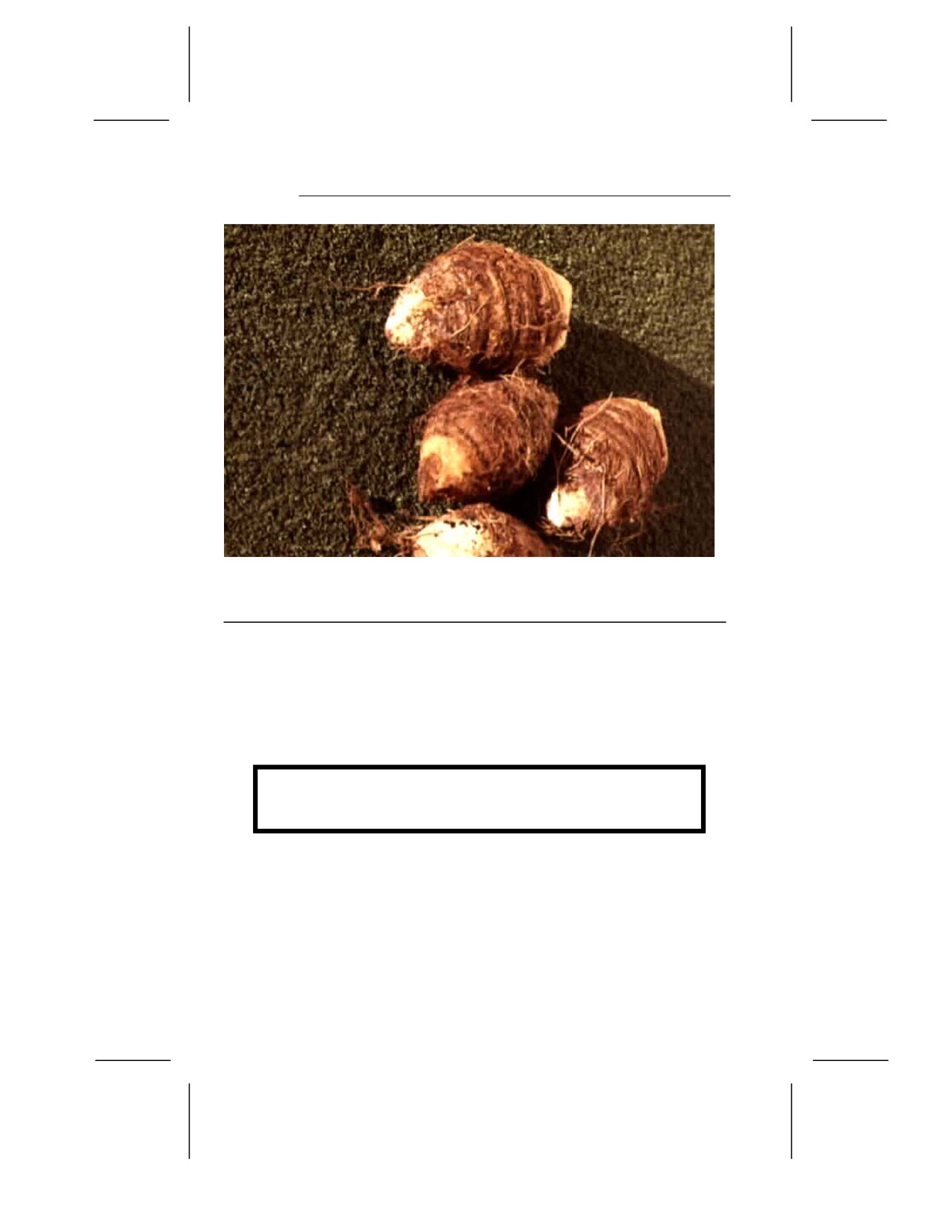
Malanga
Xanthosoma caracu
Description: This plant has soft, arrow-shaped leaves up to
60 centimeters (24 inches) long. The leaves have no aboveground stems.
Habitat and Distribution: This plant grows widely in the Caribbean region. Look
for it in open, sunny fields.
Edible Parts: The tubers are rich in starch. Cook them before eating to destroy a
poison contained in all parts of the plant.
WARNING
Always cook before eating.
B-52
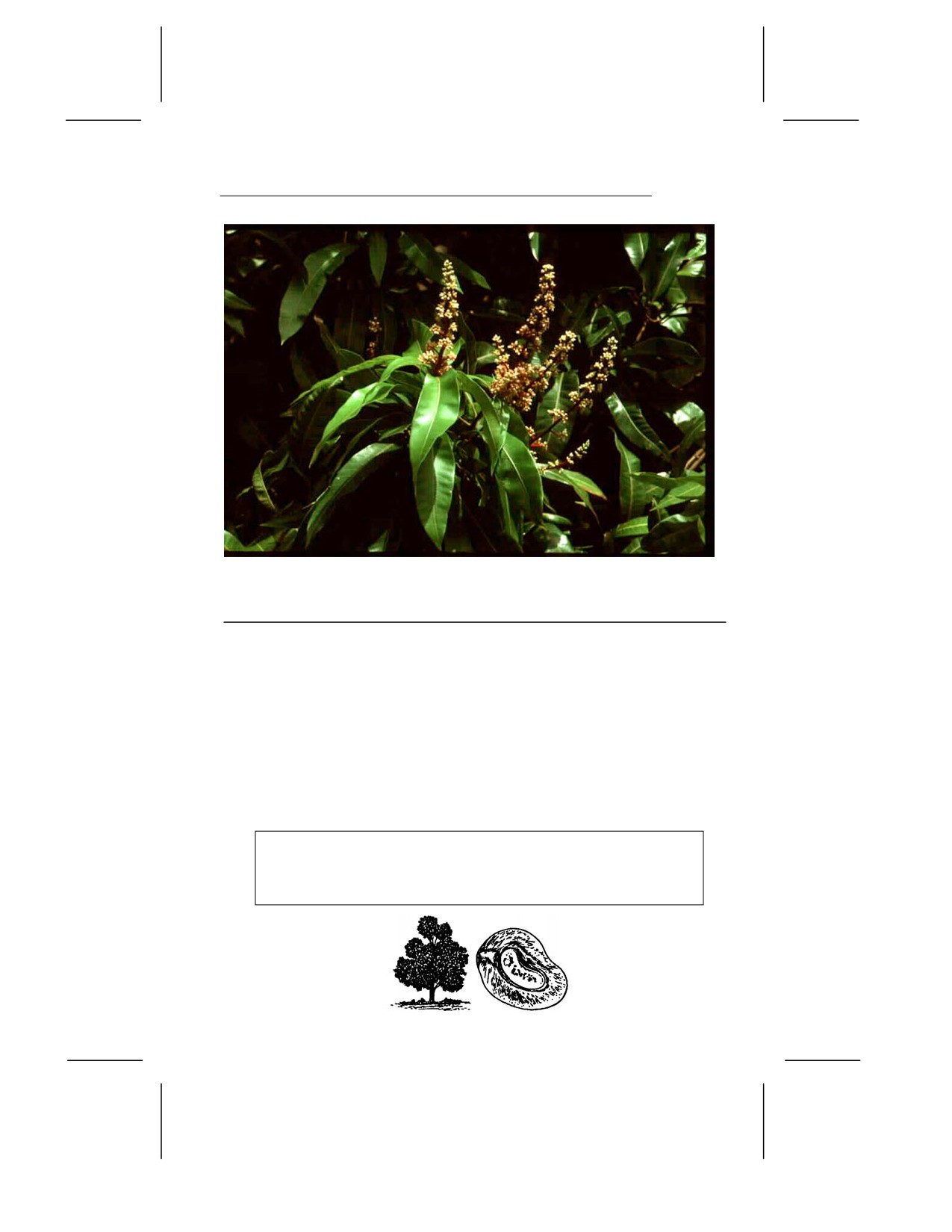
Mango
Mangifera indica
Description: This tree may reach 30 meters (90 feet) in height. It has alternate,
simple, shiny, dark green leaves. Its flowers are small and inconspicuous. Its fruits
have a large single seed. There are many cultivated varieties of mango. Some have
red flesh, others yellow or orange, often with many fibers and a kerosene taste.
Habitat and Distribution: This tree grows in warm, moist regions. It is native to
northern India, Myanmar, and western Malaysia. It is now grown throughout the
tropics.
Edible Parts: The fruits are a nutritious food source. The unripe fruit can be peeled
and its flesh eaten by shredding it and eating it like a salad. The ripe fruit can be
peeled and eaten raw. Roasted seed kernels are edible.
CAUTION
If you are sensitive to poison ivy, avoid eating mangoes, as
they cause a severe reaction in sensitive individuals.
B-53
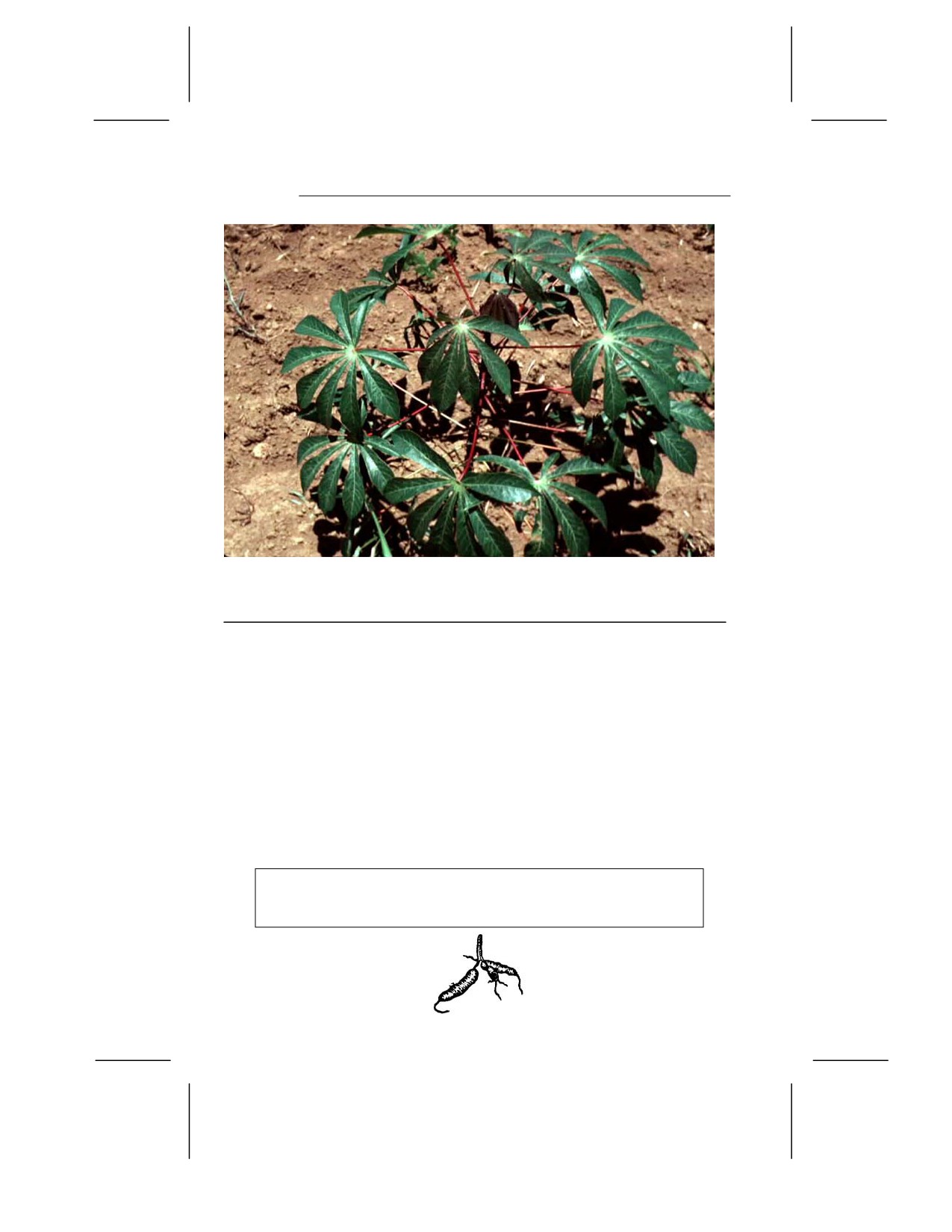
Manioc
Manihot utillissima
Description: Manioc is a perennial shrubby plant,
1 to
3 meters
(3 to
9 feet) tall, with jointed stems and deep green, fingerlike leaves. It has large,
fleshy rootstocks.
Habitat and Distribution: Manioc is widespread in all tropical climates,
particularly in moist areas. Although cultivated extensively, it may be found in
abandoned gardens and growing wild in many areas.
Edible Parts: The rootstocks are full of starch and high in food value. Two kinds
of manioc are known: bitter and sweet. Both are edible. The bitter type contains
poisonous hydrocyanic acid. To prepare manioc, first grind the fresh manioc root
into a pulp, then cook it for at least 1 hour to remove the bitter poison from the
roots. Then flatten the pulp into cakes and bake as bread. Manioc cakes or flour
will keep almost indefinitely if protected against insects and dampness. Wrap
manioc in banana leaves for protection.
CAUTION
For safety, always cook the roots of either type.
B-54

Marsh marigold
Caltha palustris
Description: This plant has rounded, dark green leaves arising from a short
stem. It has bright yellow flowers.
Habitat and Distribution: This plant is found in bogs, lakes, and slow-moving
streams. It is abundant in arctic and subarctic regions, and in much of the
eastern region of the northern United States.
Edible Parts: All parts are edible if boiled.
CAUTION
As with all water plants, do not eat this plant raw. Raw water
plants may carry dangerous organisms that are removed only
by cooking.
B-55
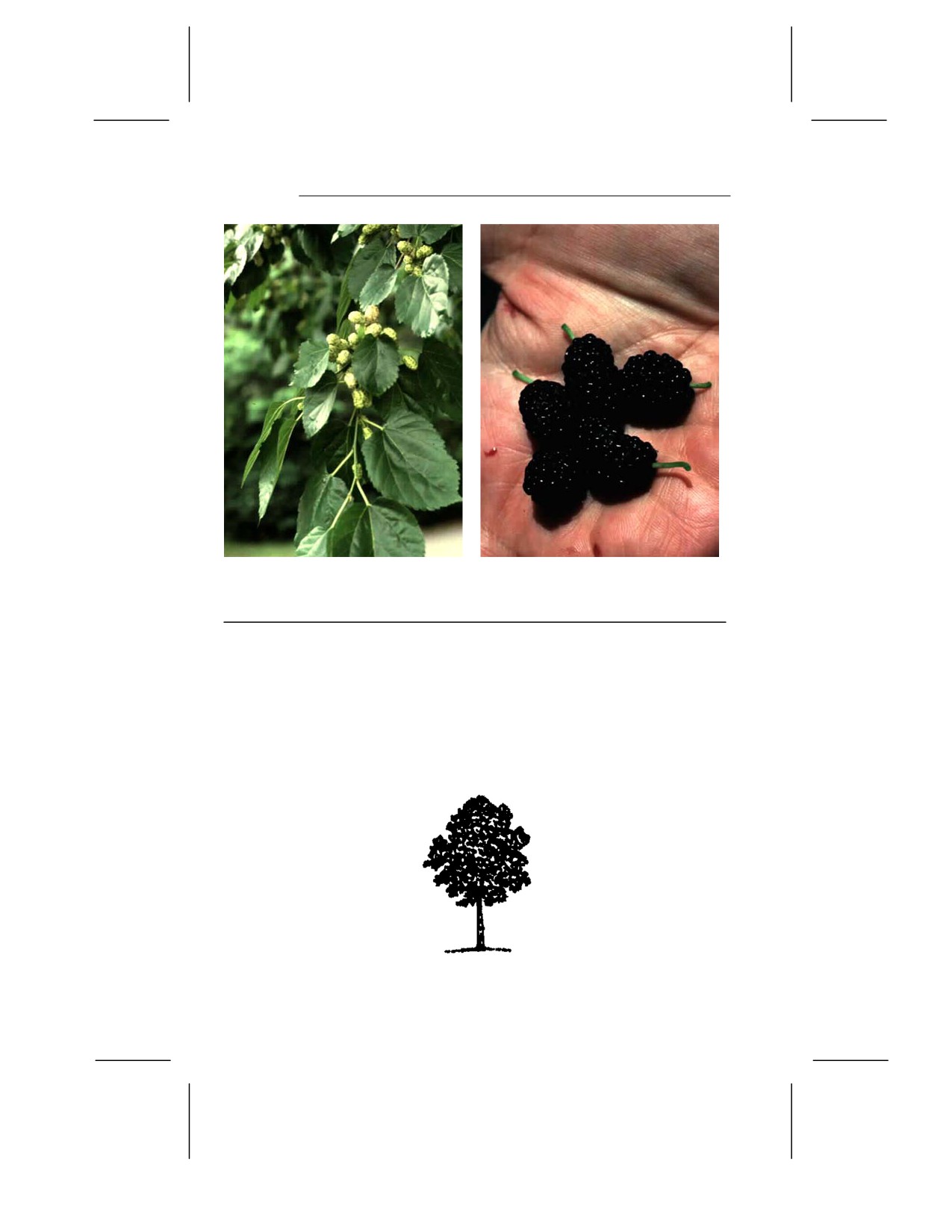
Mulberry
Morus species
Description: This tree has alternate, simple, often lobed leaves with rough
surfaces. Its fruits are blue or black and many-seeded.
Habitat and Distribution: Mulberry trees are found in forests, along roadsides,
and in abandoned fields in temperate and tropical zones of North America, South
America, Europe, Asia, and Africa.
Edible Parts: The fruit is edible raw or cooked. It can be dried for eating later.
Other Uses: You can shred the inner bark of the tree and use it to make twine
or cord.
B-56
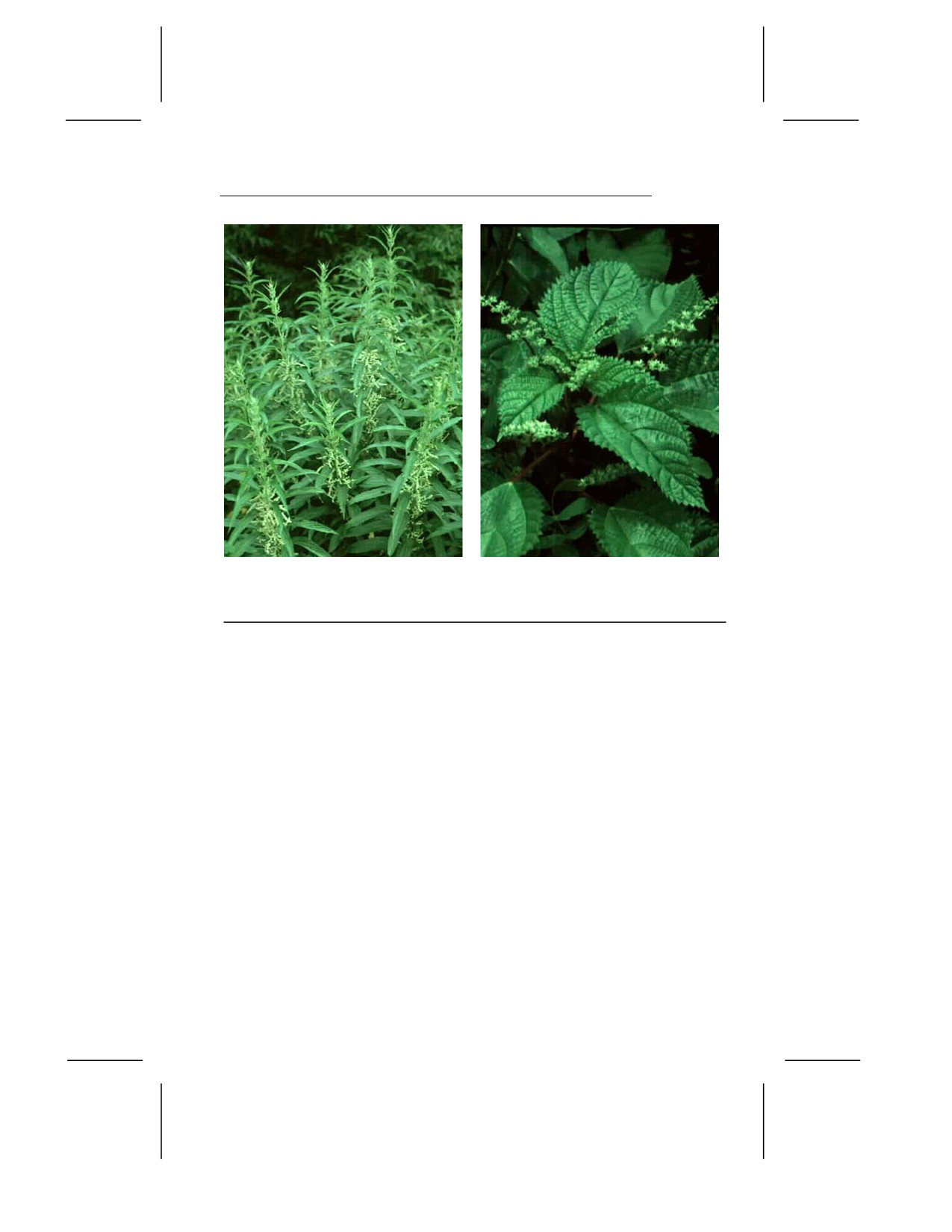
Nettle
Urtica and Laportea species
Description: These plants grow several feet high. They have small,
inconspicuous flowers. Fine, hairlike bristles cover the stems, leafstalks, and
undersides of leaves. The bristles cause a stinging sensation when they touch
the skin.
Habitat and Distribution: Nettles prefer moist areas along streams or at the
margins of forests. They are found throughout North America, Central America,
the Caribbean, and northern Europe.
Edible Parts: Young shoots and leaves are edible. Boiling the plant for 10 to 15
minutes destroys the stinging element of the bristles. This plant is very nutritious.
Other Uses: Mature stems have a fibrous layer that you can divide into individual
fibers and use to weave string or twine.
B-57
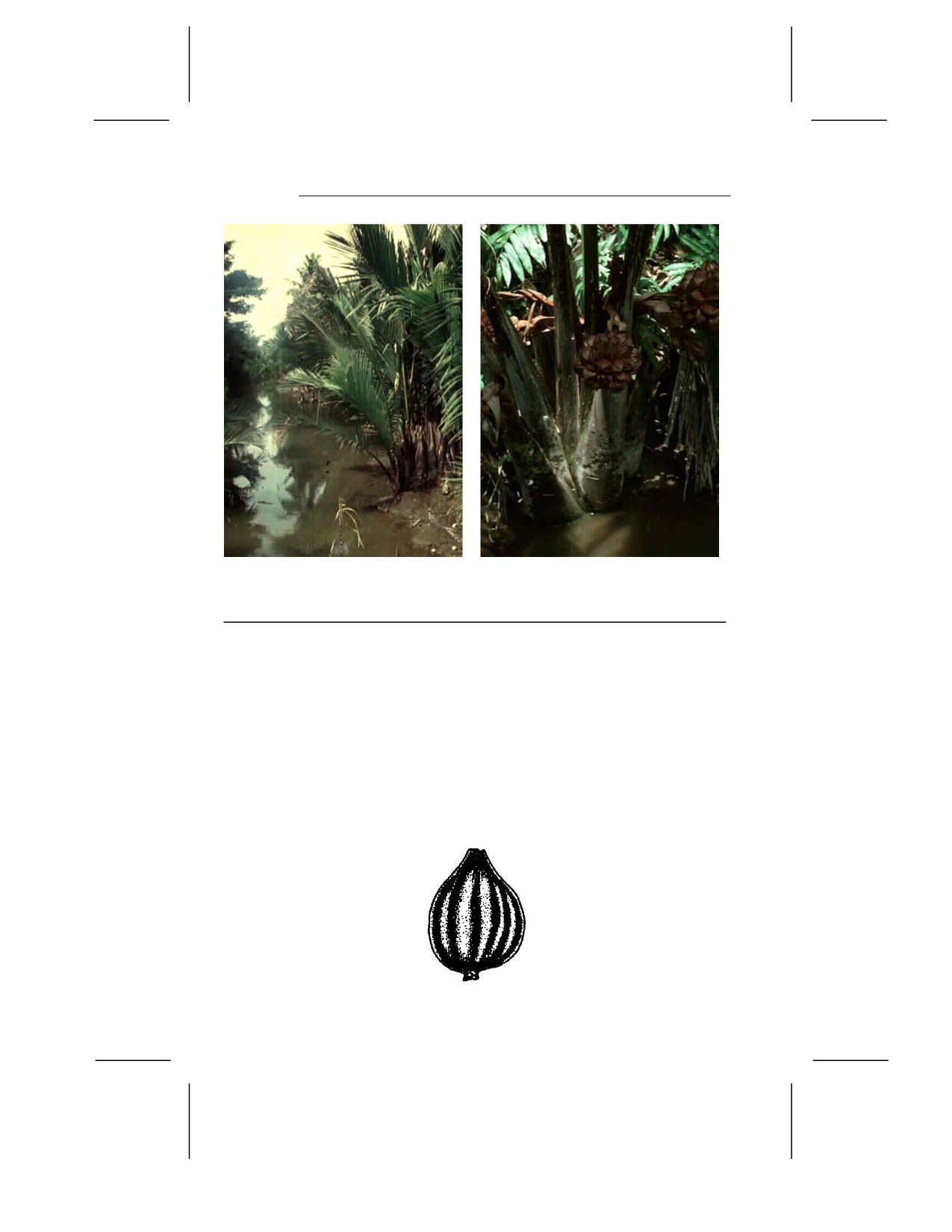
Nipa palm
Nipa fruticans
Description: This palm has a short, mainly underground trunk and very large,
erect leaves up to 6 meters (20 feet) tall. The leaves are divided into leaflets. A
flowering head forms on a short erect stern that rises among the palm leaves.
The fruiting (seed) head is dark brown and may be 30 centimeters (12 inches) in
diameter.
Habitat and Distribution: This palm is common on muddy shores in coastal
regions throughout eastern Asia.
Edible Parts: The young flower stalk and the seeds provide a good source of
water and food. Cut the flower stalk and collect the juice. The juice is rich in
sugar. The seeds are hard but edible.
Other Uses: The leaves are excellent as thatch and coarse weaving material.
B-58
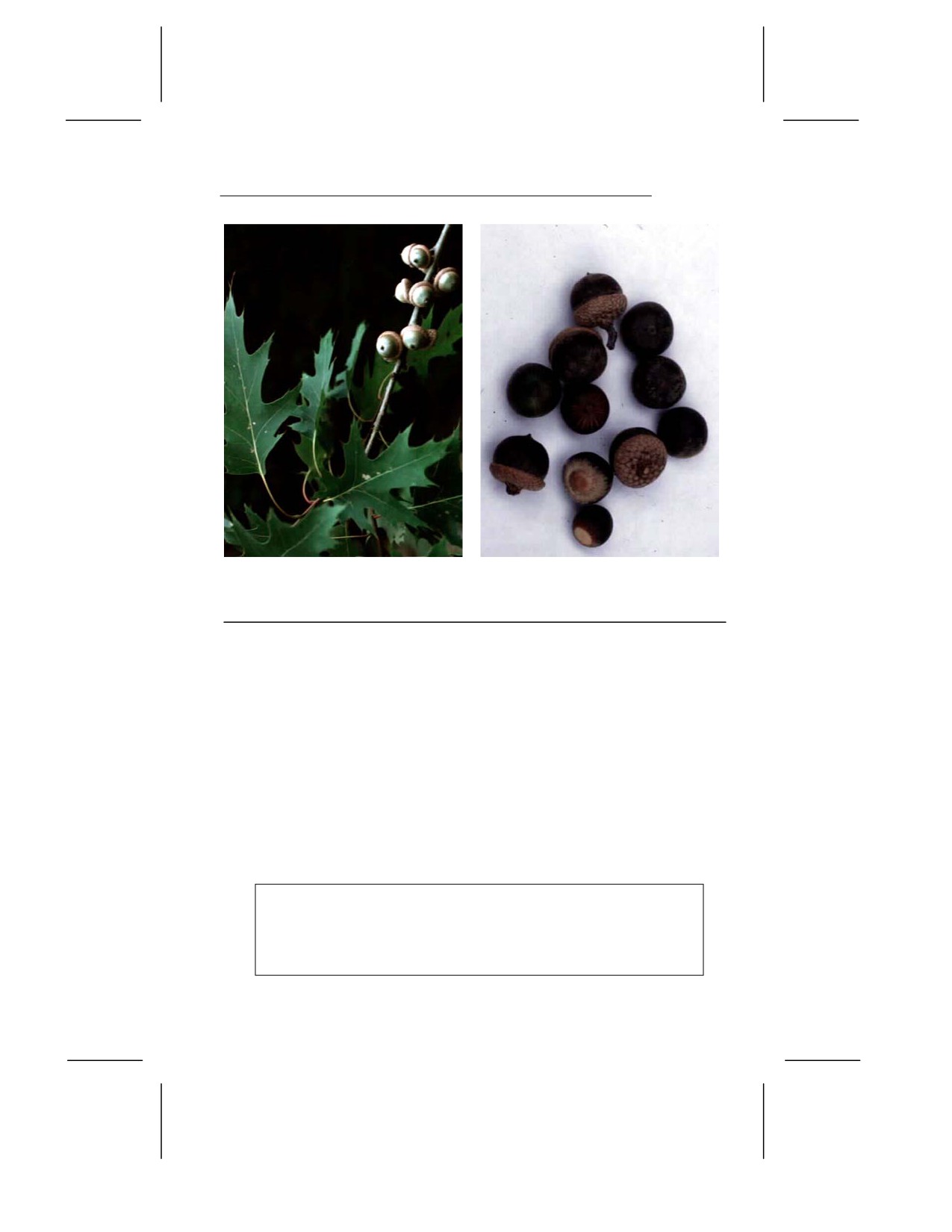
Oak
Quercus species
Description: Oak trees have alternate leaves and acorn fruits. There are two
main groups of oaks: red and white. The red oak group has leaves with bristles
and smooth bark in the upper part of the tree. Red oak acorns take 2 years to
mature. The white oak group has leaves without bristles and a rough bark in the
upper portion of the tree. White oak acorns mature in 1 year.
Habitat and Distribution: Oak trees are found in many habitats throughout
North America, Central America, and parts of Europe and Asia.
Edible Parts: All parts are edible, but often contain large quantities of bitter
substances. White oak acorns usually have a better flavor than red oak acorns.
Gather and shell the acorns. Soak red oak acorns in water for 1 to 2 days to
remove the bitter substance. You can speed up this process by putting wood
ashes in the water in which you soak the acorns. Boil the acorns or grind them
into flour and use the flour for baking. You can use acorns that you baked until
very dark as a coffee substitute.
CAUTION
Tannic acid gives the acorns their bitter taste. Eating an
excessive amount of acorns high in tannic acid can lead to
kidney failure. Before eating acorns, leach out this chemical.
B-59