FM 3-05.70 Field Manual Survival (17 May 2002) - page 14
NSN
Description
8465-00-177-4819
Survival vest
6516-00-383-0565
Tourniquet
5820-00-782-5308
AN/PRC-90 survival radio
1305-00-301-1692
.38 caliber tracer ammunition
1305-00-322-6391
.38 caliber ball ammunition
1005-00-835-9773
Revolver, .38 caliber
9920-00-999-6753
Lighter, butane
6350-00-105-1252
Mirror, signaling
6545-00-782-6412
Survival kit, individual tropical
1370-00-490-7362
Signal kit, foliage penetrating
6230-00-938-1778
Light, distress marker, SDU-5/E
8465-00-634-4499
Bag, storage, drinking water
5110-00-162-2205
Knife, pocket
4240-00-300-2138
Net, gill, fishing
6605-00-151-5337
Compass, magnetic, lensatic
Figure A-5. SRU-21P Aviator’s Survival Kit
NSN
Description
1680-00-148-9233
Survival kit, cold climate (RSSK OV-1)
1680-00-148-9234
Survival kit, hot climate (RSSK OV-1)
1680-00-965-4702
Survival kit, overwater (RSSK OV-1)
Figure A-6. OV-1 Rigid Seat Survival Kits
A-8
Appendix B
Edible and Medicinal Plants
In a survival situation, plants can provide food and
medicine. Their safe use requires absolutely
positive identification, knowing how to prepare
them for eating, and knowing any dangerous
properties they might have. Familiarity with
botanical structures of plants and information on
where they grow will make them easier to locate
and identify. This appendix provides pictures,
descriptions, habitats and distribution, and edible
parts of the most common plants that you might
encounter.
B-1
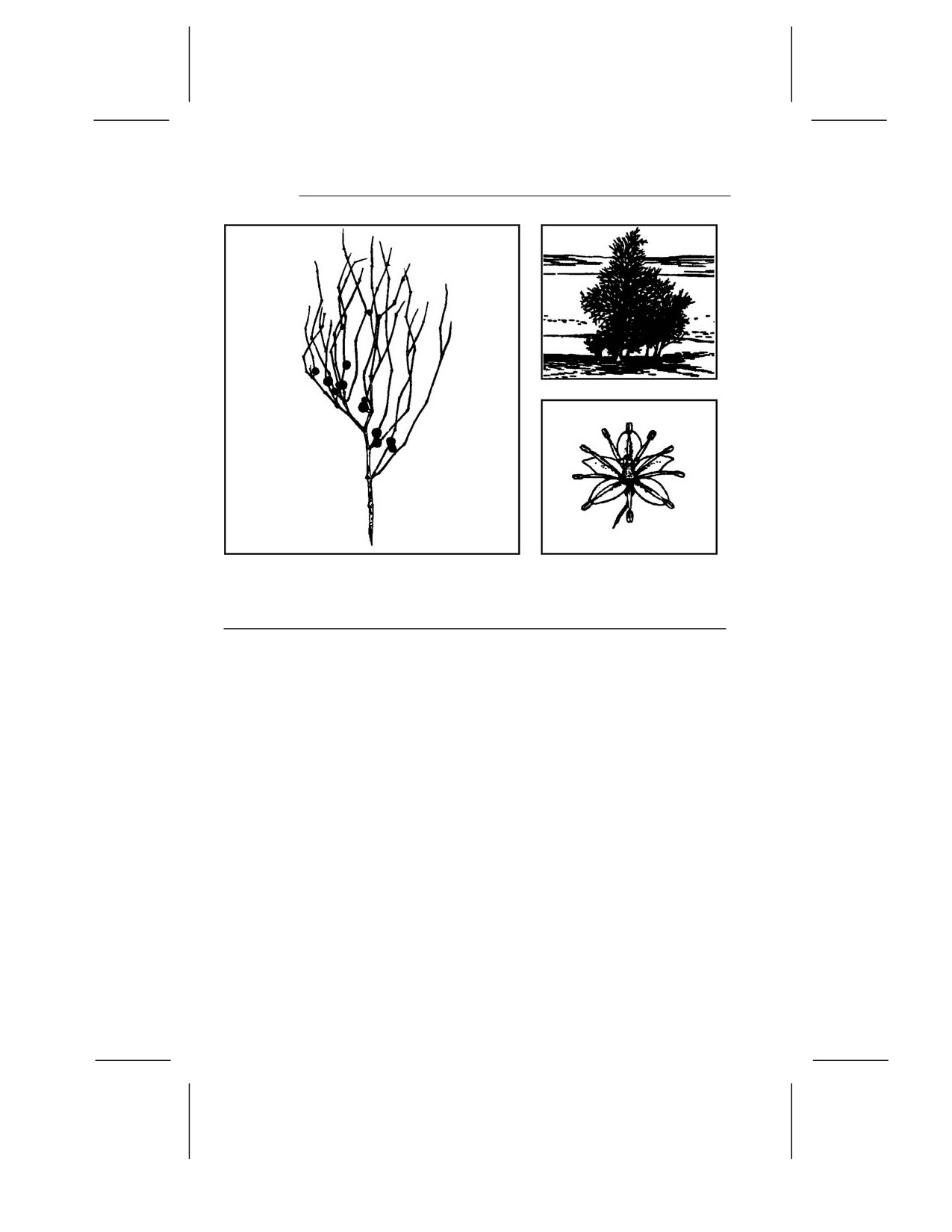
Abal
Calligonum comosum
Description: The abal is one of the few shrubby plants that exist in the shady
deserts. This plant grows to about 1.2 meters (4 feet), and its branches look like
wisps from a broom. The stiff, green branches produce an abundance of flowers
in March and April.
Habitat and Distribution: This plant is found in desert scrub and waste in any
climatic zone. It inhabits much of the North African desert. It may also be found
on the desert sands of the Middle East and as far eastward as the Rajputana
desert of western India.
Edible Parts: This plant’s general appearance would not indicate its usefulness
to you, but while this plant is flowering in the spring, its fresh flowers can be
eaten. It is common in the areas where it is found. An analysis of the abal’s food
value has shown it to be high in sugar and nitrogenous components.
B-2
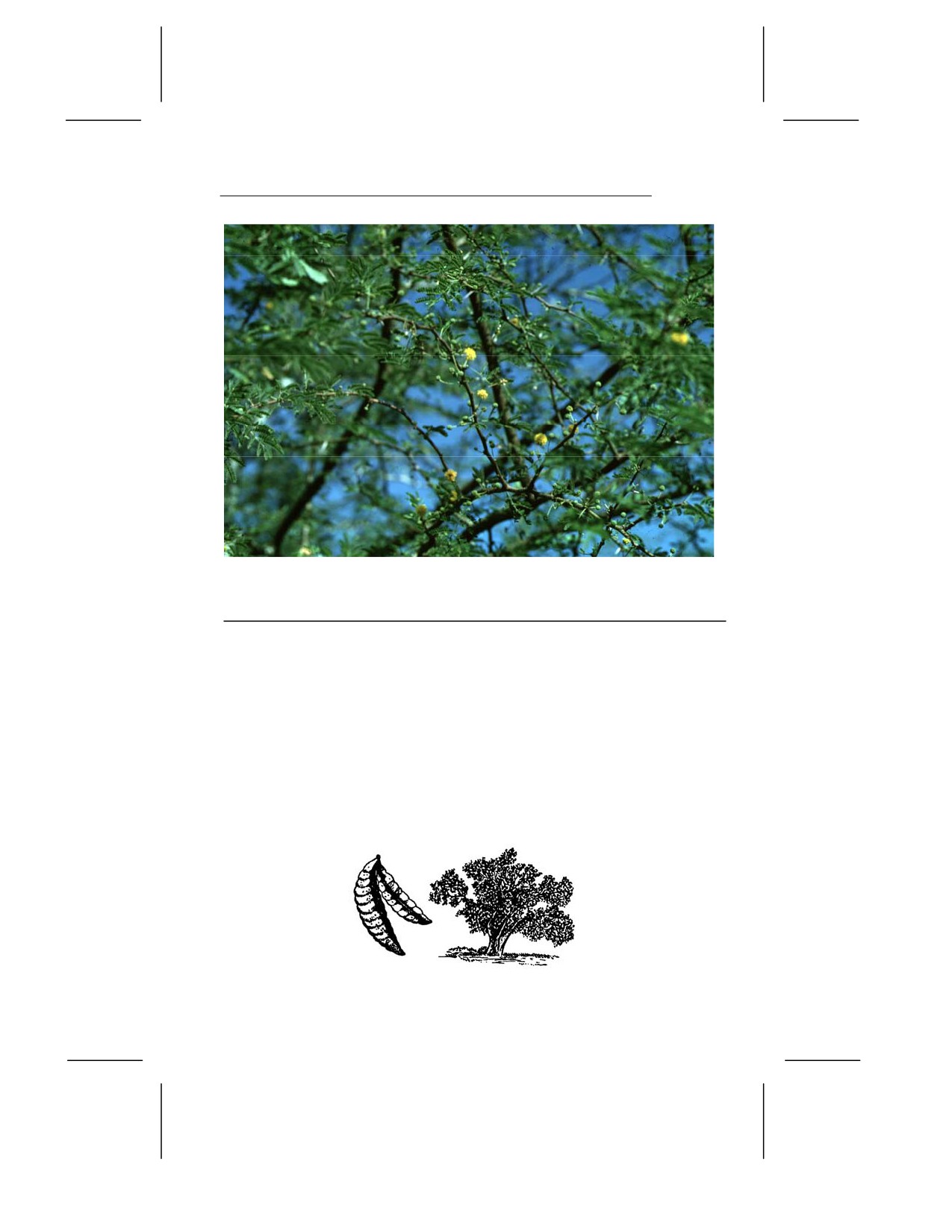
Acacia
Acacia farnesiana
Description: Acacia is a spreading, usually short tree with spines and alternate
compound leaves. Its individual leaflets are small. Its flowers are ball-shaped,
bright yellow, and very fragrant. Its bark is a whitish-gray color. Its fruits are dark
brown and podlike.
Habitat and Distribution: Acacia grows in open, sunny areas. It is found
throughout all tropical regions.
NOTE: There are about 500 species of acacia. These plants are especially
prevalent in Africa, southern Asia, and Australia, but many species are found in
the warmer and drier parts of America.
Edible Parts: Its young leaves, flowers, and pods are edible raw or cooked.
B-3
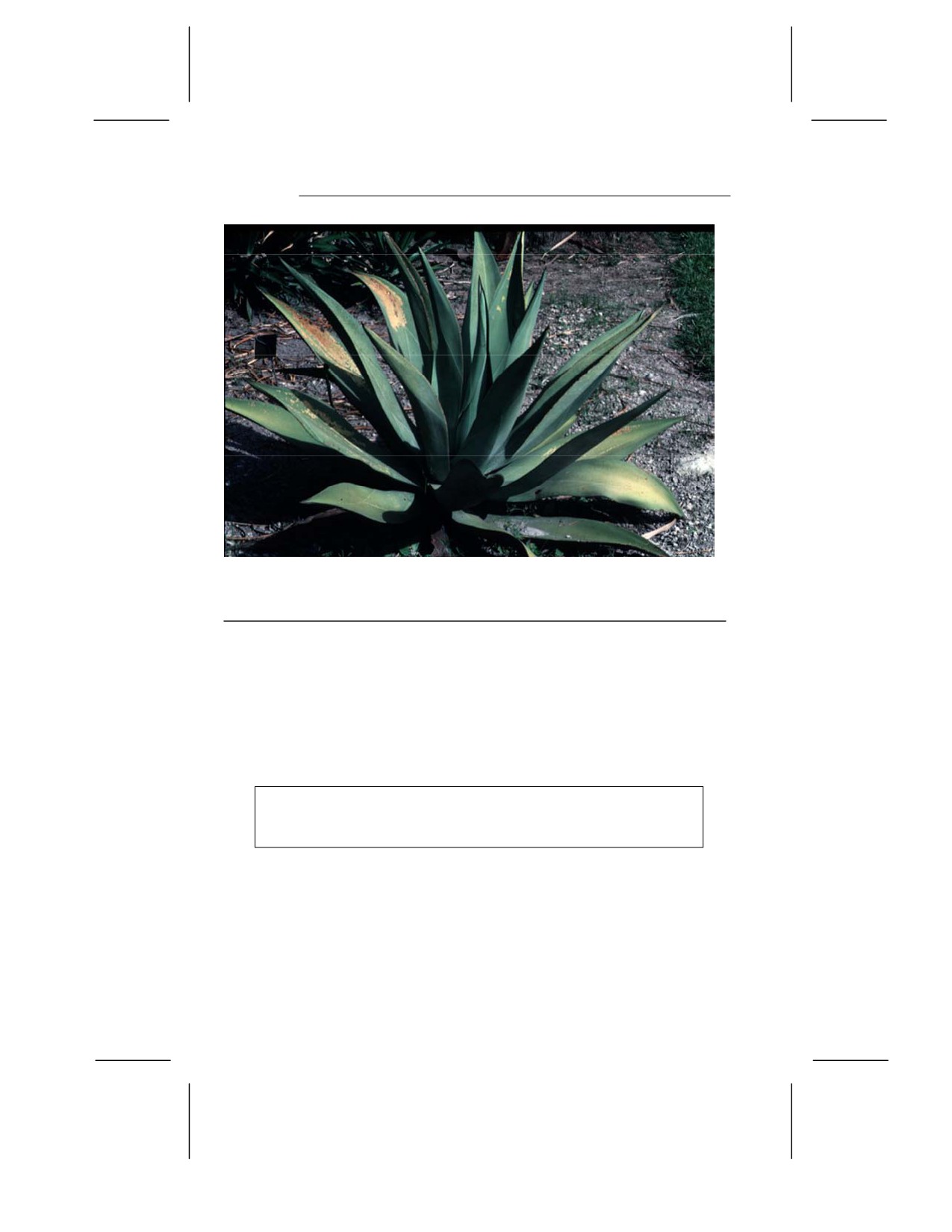
Agave
Agave species
Description: These plants have large clusters of thick, fleshy leaves borne close
to the ground and surrounding a central stalk. The plants flower only once, then
die. They produce a massive flower stalk.
Habitat and Distribution: Agaves prefer dry, open areas. They are found
throughout Central America, the Caribbean, and parts of the western deserts of
the United States and Mexico.
Edible Parts: Its flowers and flower buds are edible. Boil them before eating.
CAUTION
The juice of some species causes dermatitis in some individuals.
Other Uses: Cut the huge flower stalk and collect the juice for drinking. Some
species have very fibrous leaves. Pound the leaves and remove the fibers for
weaving and making ropes. Most species have thick, sharp needles at the tips of
the leaves. Use them for sewing or making hacks. The sap of some species
contains a chemical that makes the sap suitable for use as a soap.
B-4
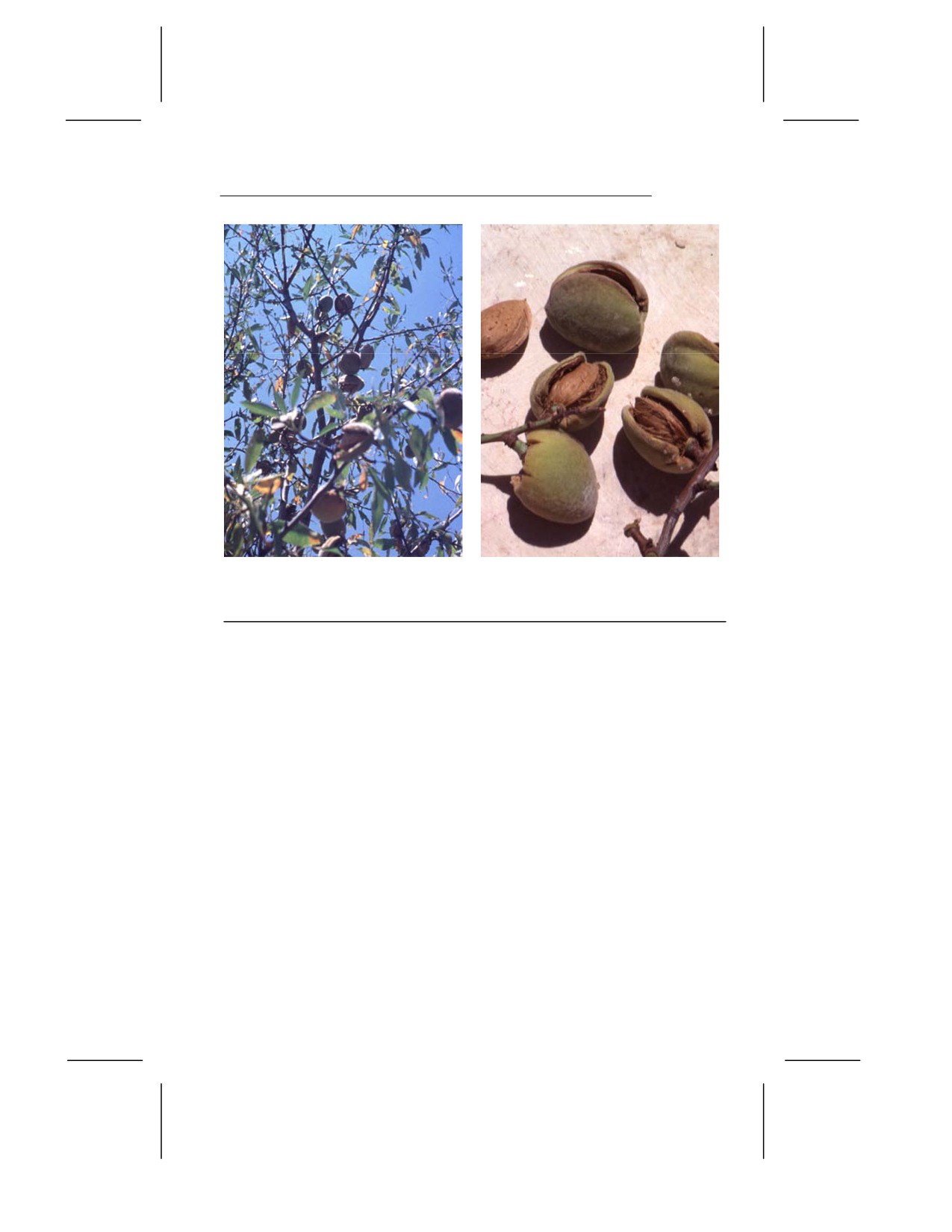
Almond
Prunus amygdalus
Description: The almond tree, which sometimes grows to 12.2 meters (40 feet),
looks like a peach tree. The fresh almond fruit resembles a gnarled, unripe peach
and grows in clusters. The stone (the almond itself) is covered with a thick, dry,
woolly skin.
Habitat and Distribution: Almonds are found in the scrub and thorn forests of
the tropics, the evergreen scrub forests of temperate areas, and in desert scrub
and waste in all climatic zones. The almond tree is also found in the semidesert
areas of the Old World in southern Europe, the eastern Mediterranean, Iran, the
Middle East, China, Madeira, the Azores, and the Canary Islands.
Edible Parts: The mature almond fruit splits open lengthwise down the side,
exposing the ripe almond nut. You can easily get the dry kernel by simply
cracking open the stone. Almond meats are rich in food value, like all nuts.
Gather them in large quantities and shell them for further use as survival food.
You could live solely on almonds for rather long periods. When you boil them, the
kernel’s outer covering comes off and only the white meat remains.
B-5
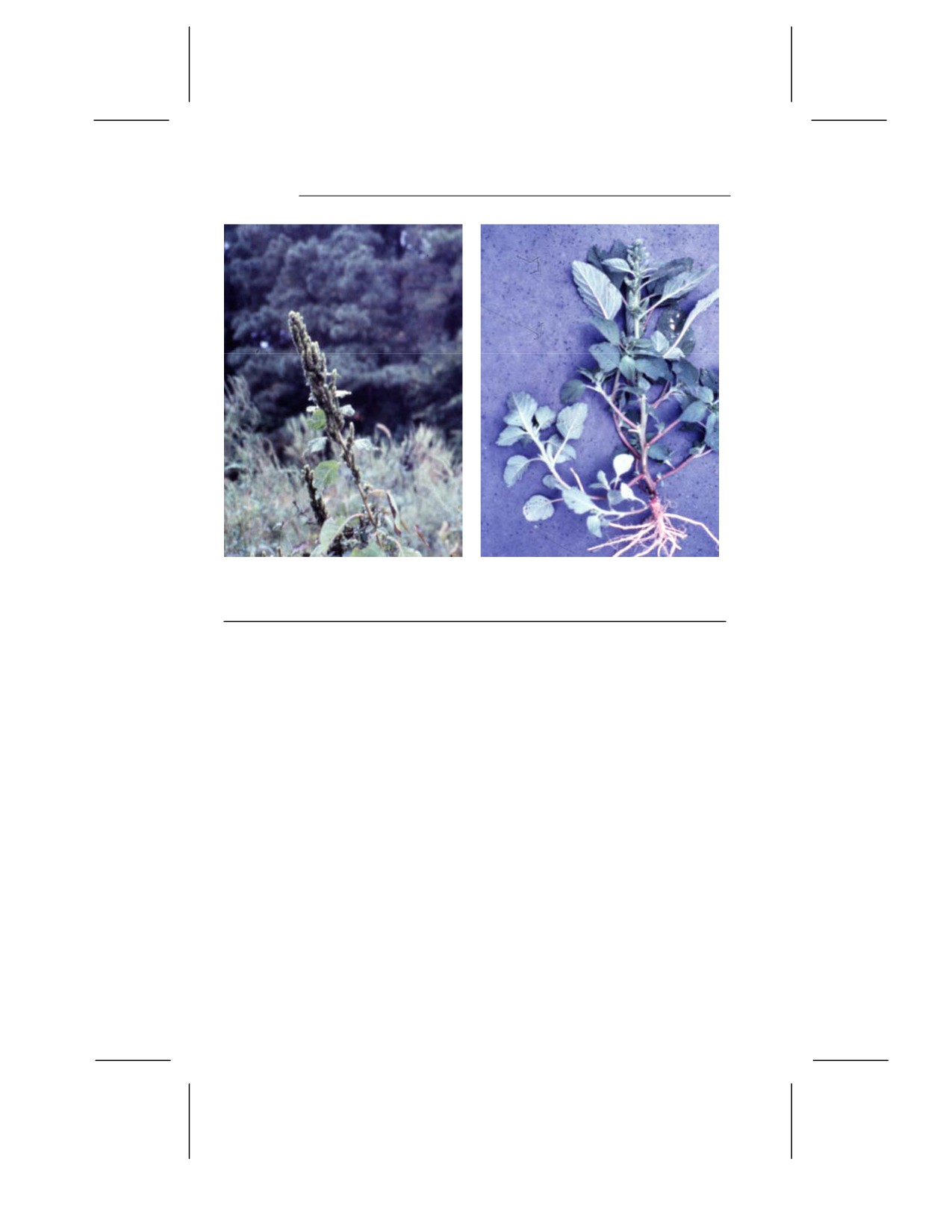
Amaranth
Amaranthus species
Description: These plants, which grow
90 to
150 centimeters
(35 to
60 inches) tall, are abundant weeds in many parts of the world. All amaranth
have alternate simple leaves. They may have some red color present on the
stems. They bear minute, greenish flowers in dense clusters at the top of the
plants. Their seeds may be brown or black in weedy species and light-colored in
domestic species.
Habitat and Distribution: Look for amaranth along roadsides, in disturbed
waste areas, or as weeds in crops throughout the world. Some amaranth species
have been grown as a grain crop and a garden vegetable in various parts of the
world, especially in South America.
Edible Parts: All parts are edible, but some may have sharp spines you should
remove before eating. The young plants or the growing tips of older plants are an
excellent vegetable. Simply boil the young plants or eat them raw. Their seeds
are very nutritious. Shake the tops of older plants to get the seeds. Eat the seeds
raw, boiled, ground into flour, or popped like popcorn.
B-6
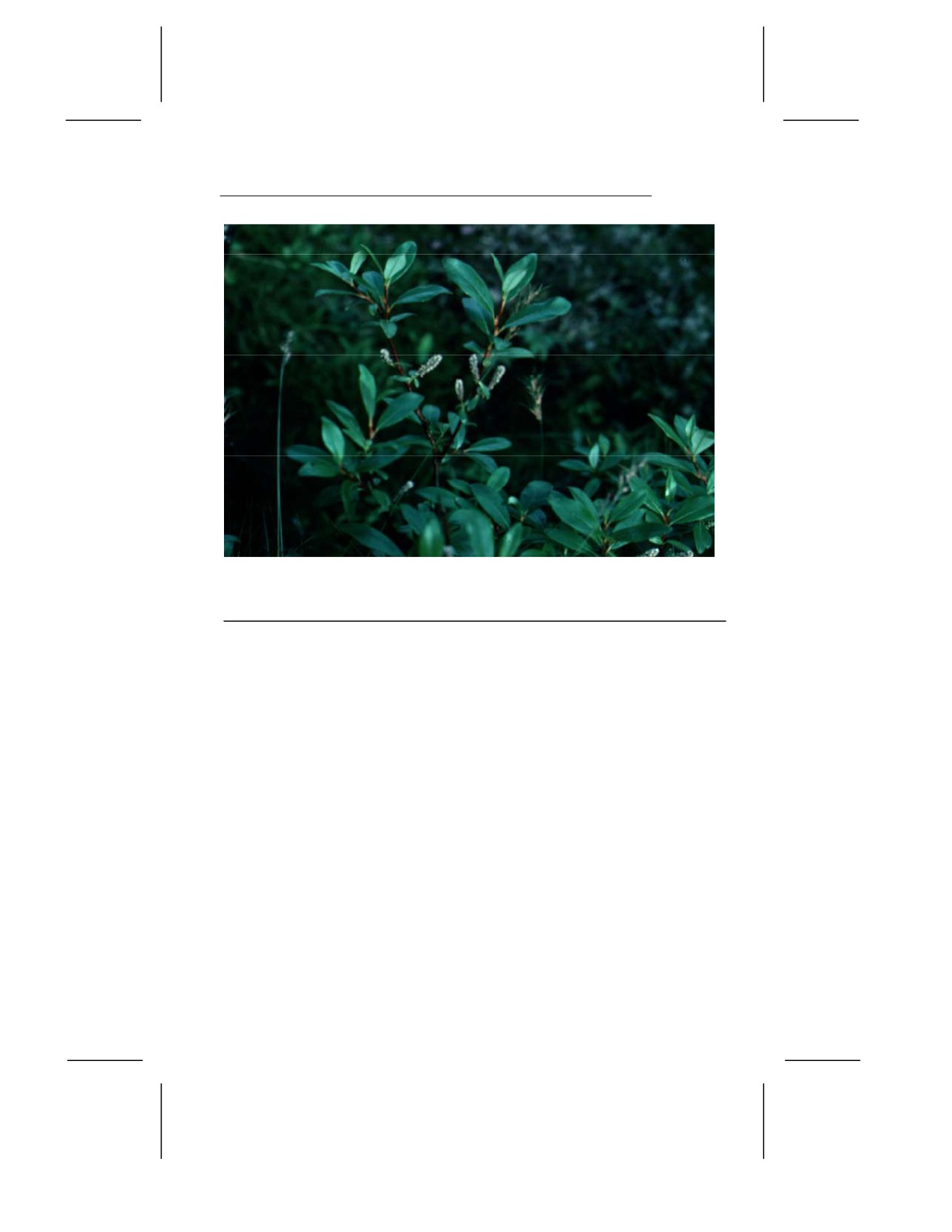
Arctic willow
Salix arctica
Description: The arctic willow is a shrub that never exceeds more than 60
centimeters (24 inches) in height and grows in clumps that form dense mats on
the tundra.
Habitat and Distribution: The arctic willow is common on tundras in North
America, Europe, and Asia. You can also find it in some mountainous areas in
temperate regions.
Edible Parts: You can collect the succulent, tender young shoots of the arctic
willow in early spring. Strip off the outer bark of the new shoots and eat the inner
portion raw. You can also peel and eat raw the young underground shoots of any
of the various kinds of arctic willow. Young willow leaves are one of the richest
sources of vitamin C, containing 7 to 10 times more than an orange.
B-7
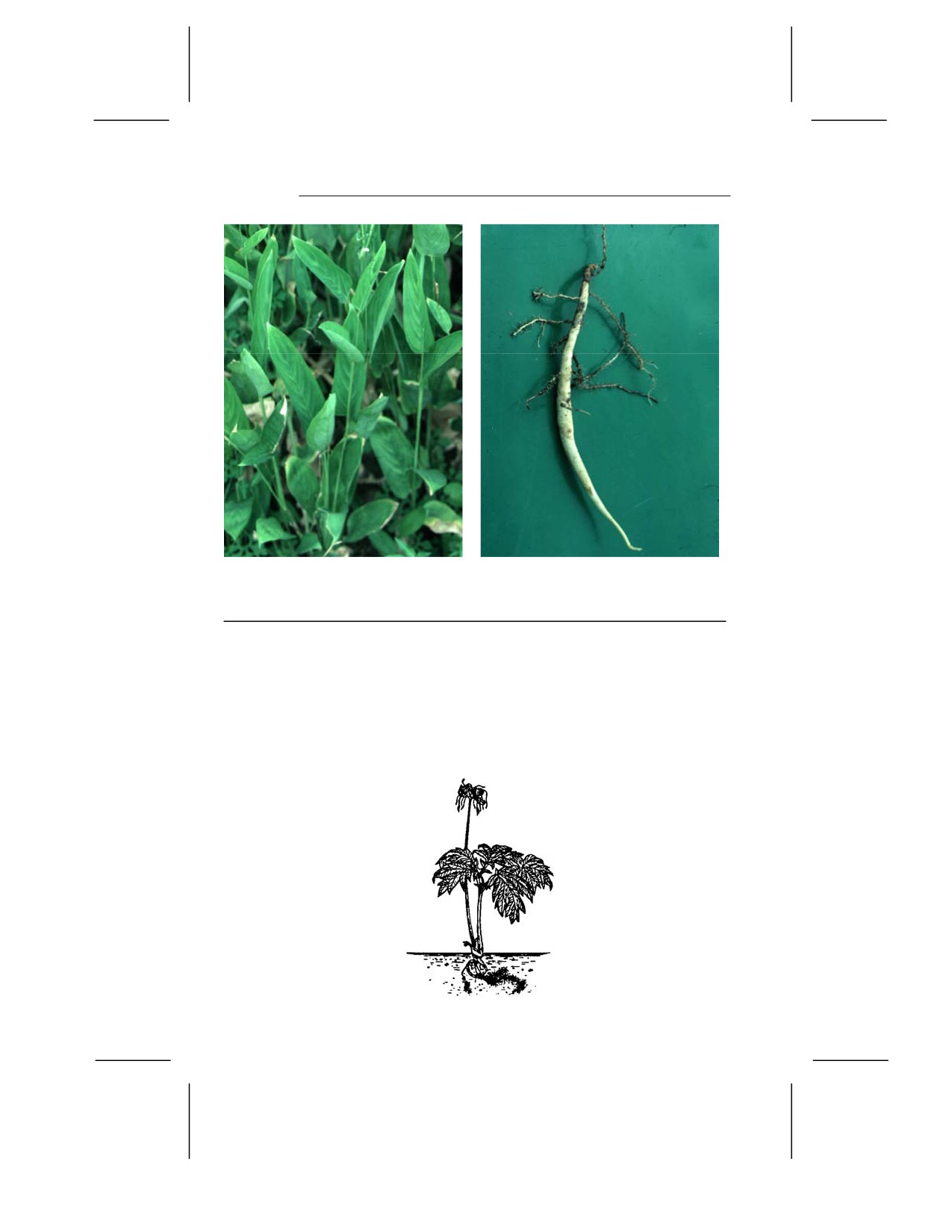
Arrowroot
Maranta and Sagittaria species
Description: The arrowroot is an aquatic plant with arrow-shaped leaves and
potatolike tubers in the mud.
Habitat and Distribution: Arrowroot is found worldwide in temperate zones and
the tropics. It is found in moist to wet habitats.
Edible Parts: The rootstock is a rich source of high quality starch. Boil the
rootstock and eat it as a vegetable.
B-8
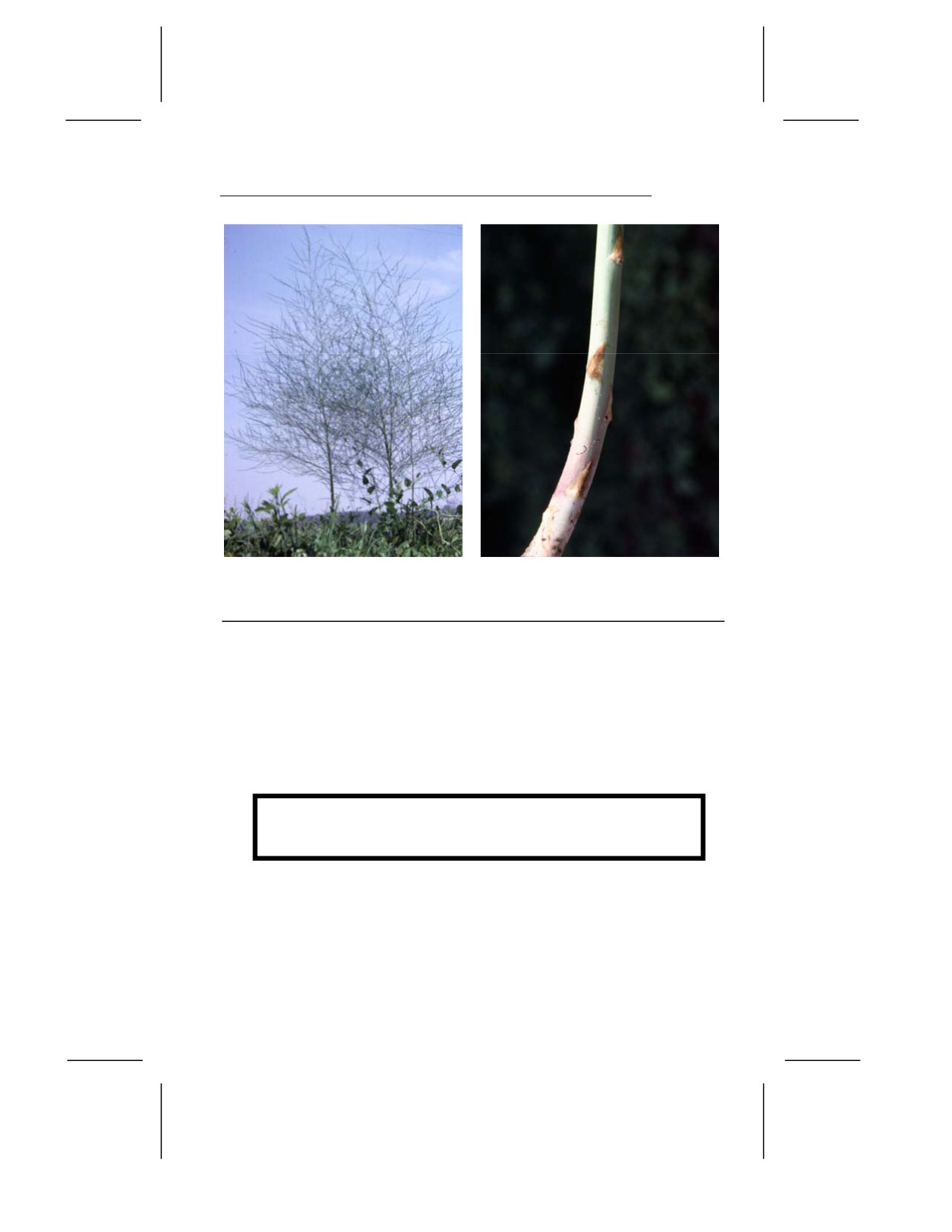
Asparagus
Asparagus officinalis
Description: The spring growth of this plant resembles a cluster of green fingers.
The mature plant has fernlike, wispy foliage and red berries. Its flowers are small
and greenish in color. Several species have sharp, thornlike structures.
Habitat and Distribution: Asparagus is found worldwide in temperate areas.
Look for it in fields, old homesites, and fencerows.
Edible Parts: Eat the young stems before leaves form. Steam or boil them for 10
to 15 minutes before eating. Raw asparagus may cause nausea or diarrhea. The
fleshy roots are a good source of starch.
WARNING
Do not eat the fruits of any since some are toxic.
B-9
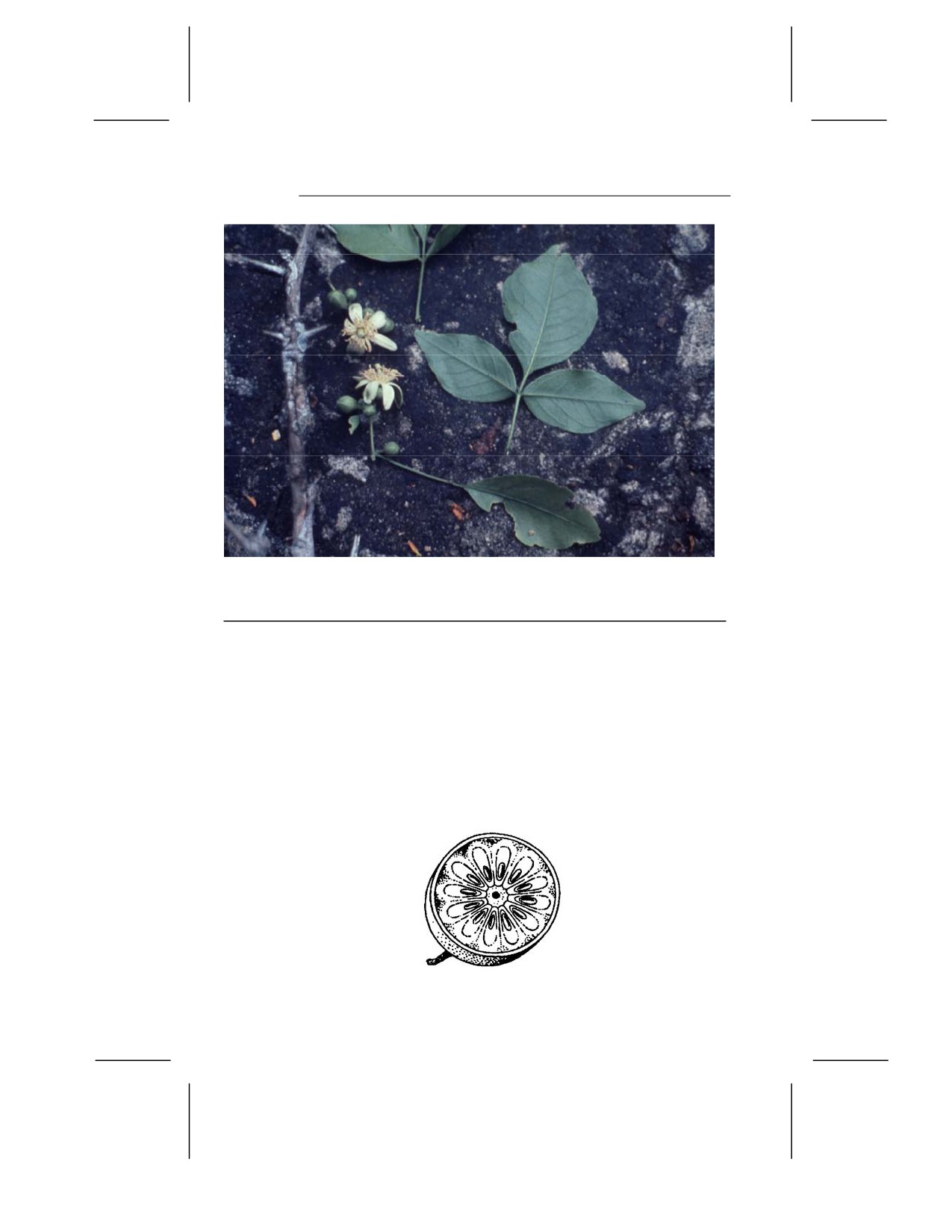
Bael fruit
Aegle marmelos
Description: This is a tree that grows from
2.4 to
4.6 meters
(8 to
15 feet) tall, with a dense spiny growth. The fruit is 5 to 10 centimeters (2 to 4
inches) in diameter, gray or yellowish, and full of seeds.
Habitat and Distribution: Bael fruit is found in rain forests and semievergreen
seasonal forests of the tropics. It grows wild in India and Burma.
Edible Parts: The fruit, which ripens in December, is at its best when just turning
ripe. The juice of the ripe fruit, diluted with water and mixed with a small amount
of tamarind and sugar or honey, is sour but refreshing. Like other citrus fruits, it is
rich in vitamin C.
B-10
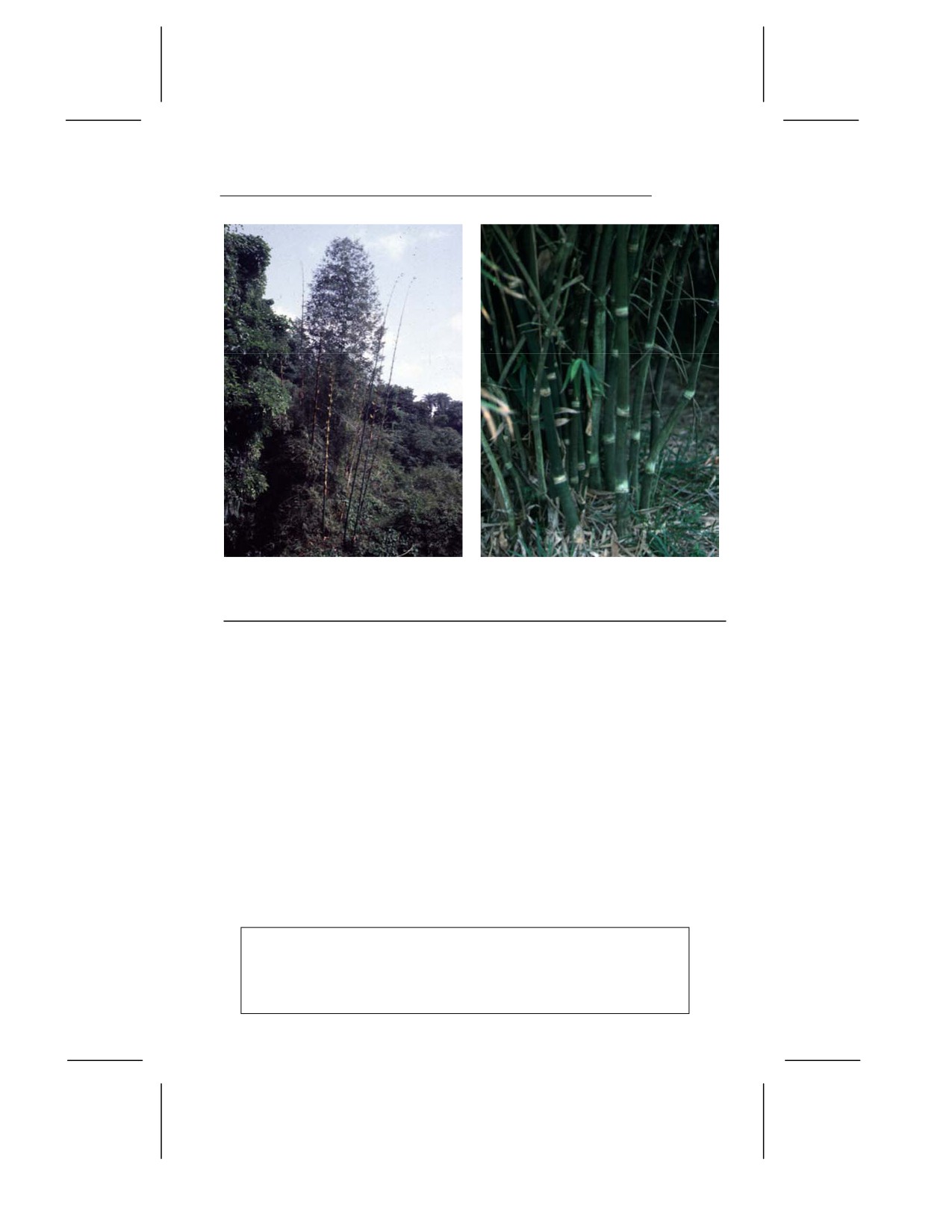
Bamboo
Various species including Bambusa, Dendrocalamus, Phyllostachys
Description: Bamboos are woody grasses that grow up to 15 meters (50 feet)
tall. The leaves are grasslike and the stems are the familiar bamboos used in
furniture and fishing poles.
Habitat and Distribution: Look for bamboo in warm, moist regions in open or jungle
country, in lowland, or on mountains. Bamboos are native to the Far East (temperate
and tropical zones) but have been widely planted around the world.
Edible Parts: The young shoots of almost all species are edible raw or cooked.
Raw shoots have a slightly bitter taste that is removed by boiling. To prepare,
remove the tough protective sheath that is coated with tawny or red hairs. The
seed grain of the flowering bamboo is also edible. Boil the seeds like rice or
pulverize them, mix with water, and make into cakes.
Other Uses: Use the mature bamboo to build structures or to make containers,
ladles, spoons, and various other cooking utensils. Also, use bamboo to make
tools and weapons. You can make a strong bow by splitting the bamboo and
putting several pieces together.
CAUTION
Green bamboo may explode in a fire. Green bamboo has an
internal membrane you must remove before using it as a food
or water container.
B-11
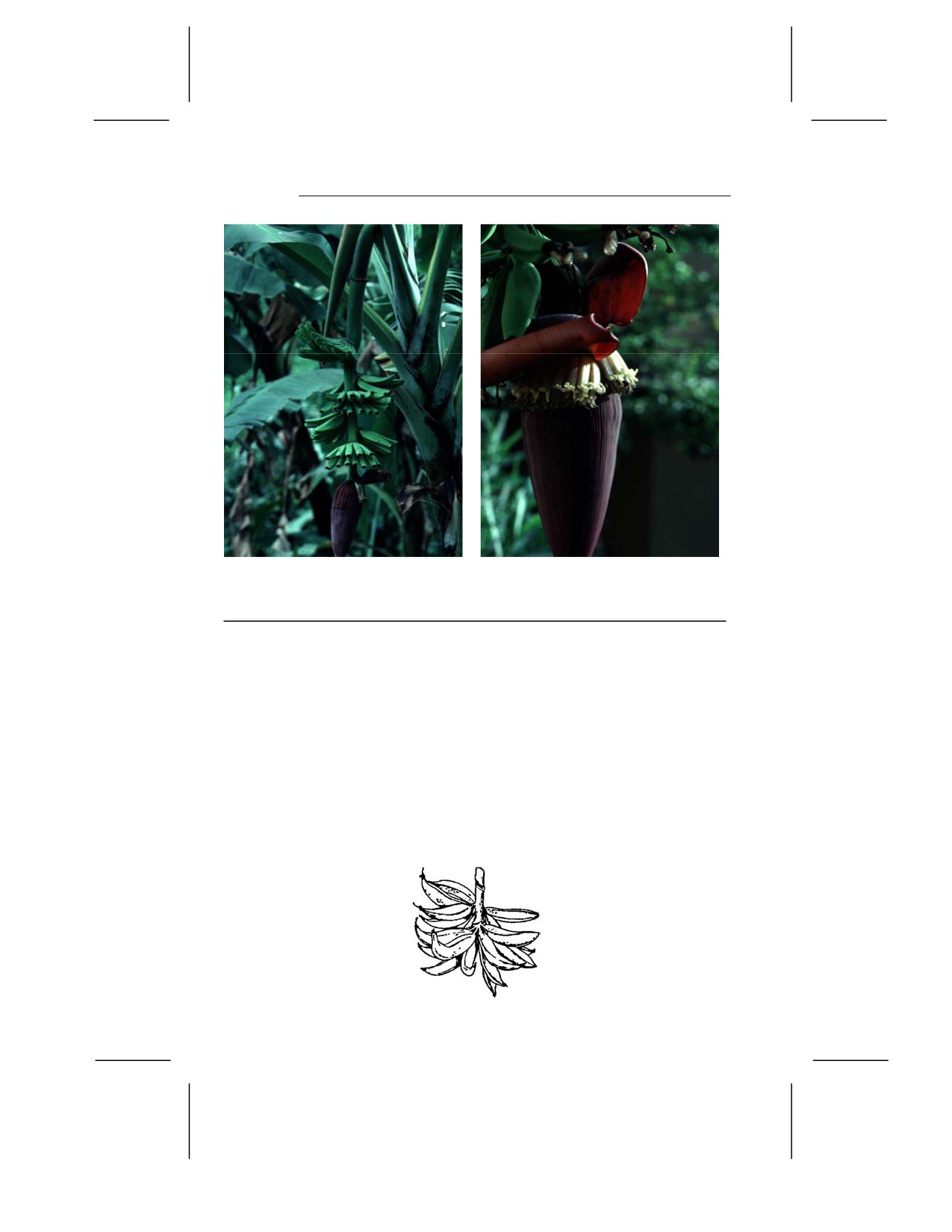
Banana and plantain
Musa species
Description: These are treelike plants with several large leaves at the top. Their
flowers are borne in dense hanging clusters.
Habitat and Distribution: Look for bananas and plantains in open fields or
margins of forests where they are grown as a crop. They grow in the humid
tropics.
Edible Parts: Their fruits are edible raw or cooked. They may be boiled or
baked. You can boil their flowers and eat them like a vegetable. You can cook
and eat the rootstocks and leaf sheaths of many species. The center or “heart” of
the plant is edible year-round, cooked or raw.
Other Uses: You can use the layers of the lower third of the plants to cover coals
to roast food. You can also use their stumps to get water (see Chapter 6). You
can use their leaves to wrap other foods for cooking or storage.
B-12
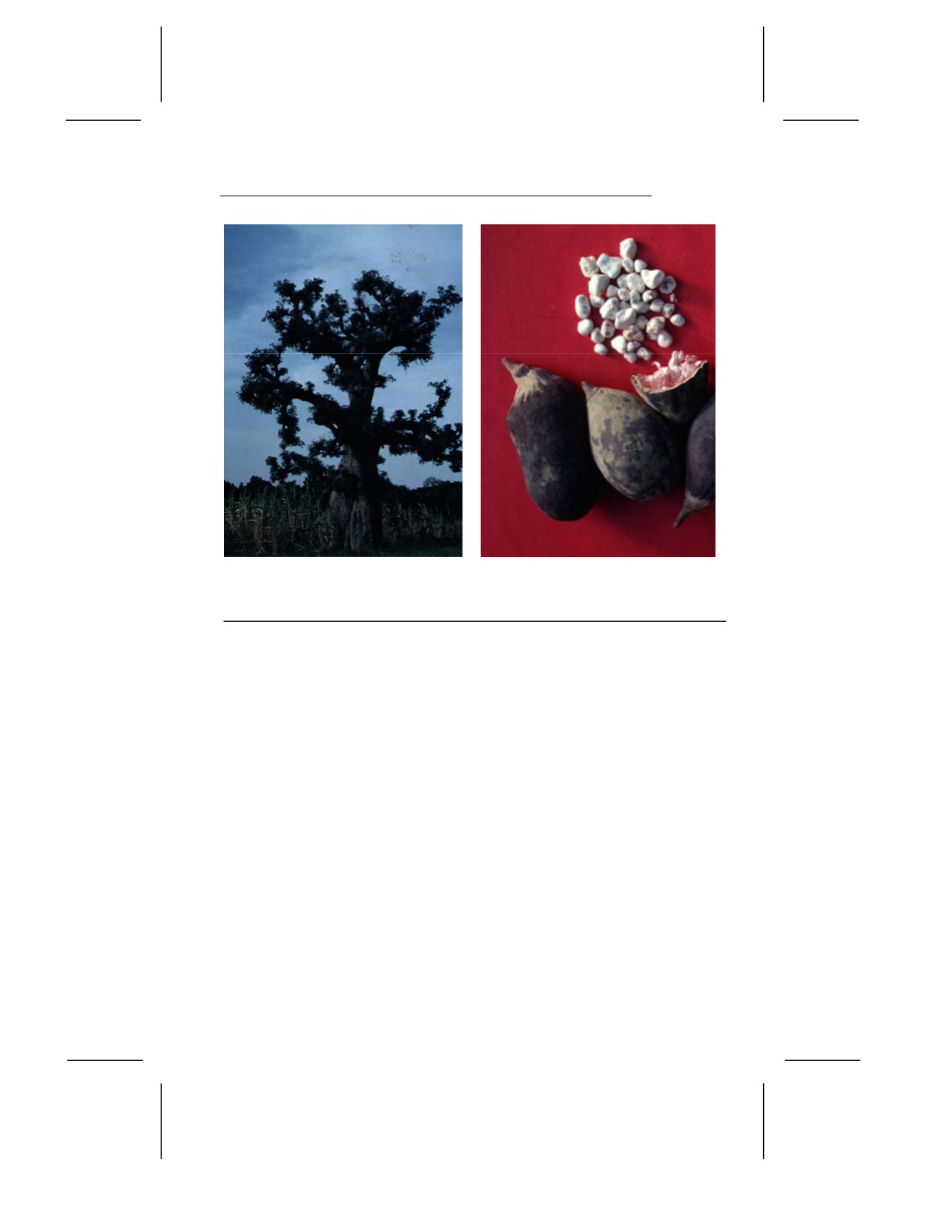
Baobab
Adansonia digitata
Description: The baobab tree may grow as high as 18 meters (60 feet) and may
have a trunk 9 meters (30 feet) in diameter. The tree has short, stubby branches
and a gray, thick bark. Its leaves are compound and their segments are arranged
like the palm of a hand. Its flowers, which are white and several centimeters
across, hang from the higher branches. Its fruit is shaped like a football,
measures up to 45 centimeters (18 inches) long, and is covered with short dense
hair.
Habitat and Distribution: These trees grow in savannas. They are found in
Africa, in parts of Australia, and on the island of Madagascar.
Edible Parts: You can use the young leaves as a soup vegetable. The tender
root of the young baobab tree is edible. The pulp and seeds of the fruit are also
edible. Use one handful of pulp to about one cup of water for a refreshing drink.
To obtain flour, roast the seeds, and then grind them.
Other Uses: Drinking a mixture of pulp and water will help cure diarrhea. Often
the hollow trunks are good sources of fresh water. The bark can be cut into strips
and pounded to obtain a strong fiber for making rope.
B-13
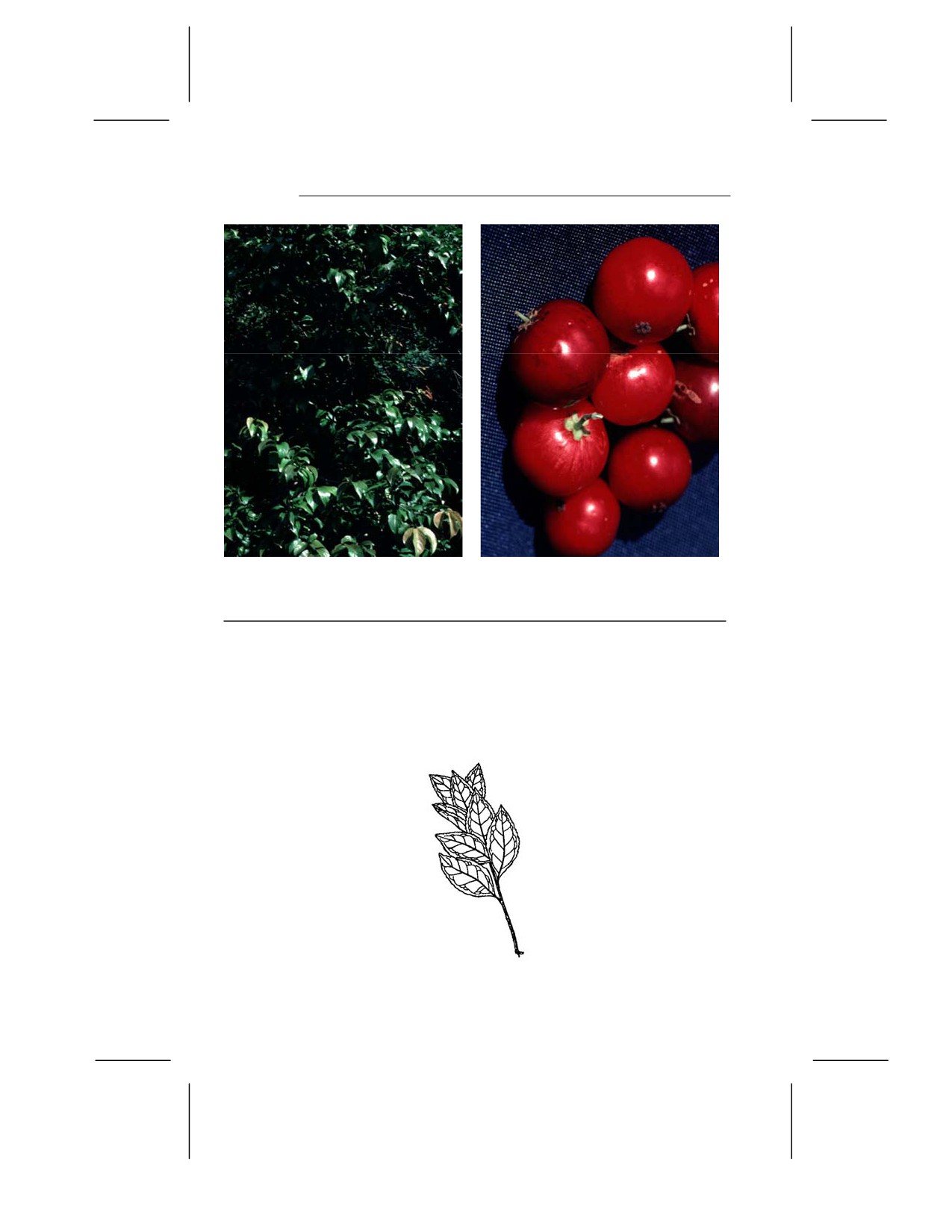
Batoko plum
Flacourtia inermis
Description: This shrub or small tree has dark green, alternate, simple leaves.
Its fruits are bright red and contain six or more seeds.
Habitat and Distribution: This plant is a native of the Philippines but is widely
cultivated for its fruit in other areas. It can be found in clearings and at the edges
of the tropical rain forests of Africa and Asia.
Edible Parts: Eat the fruit raw or cooked.
B-14
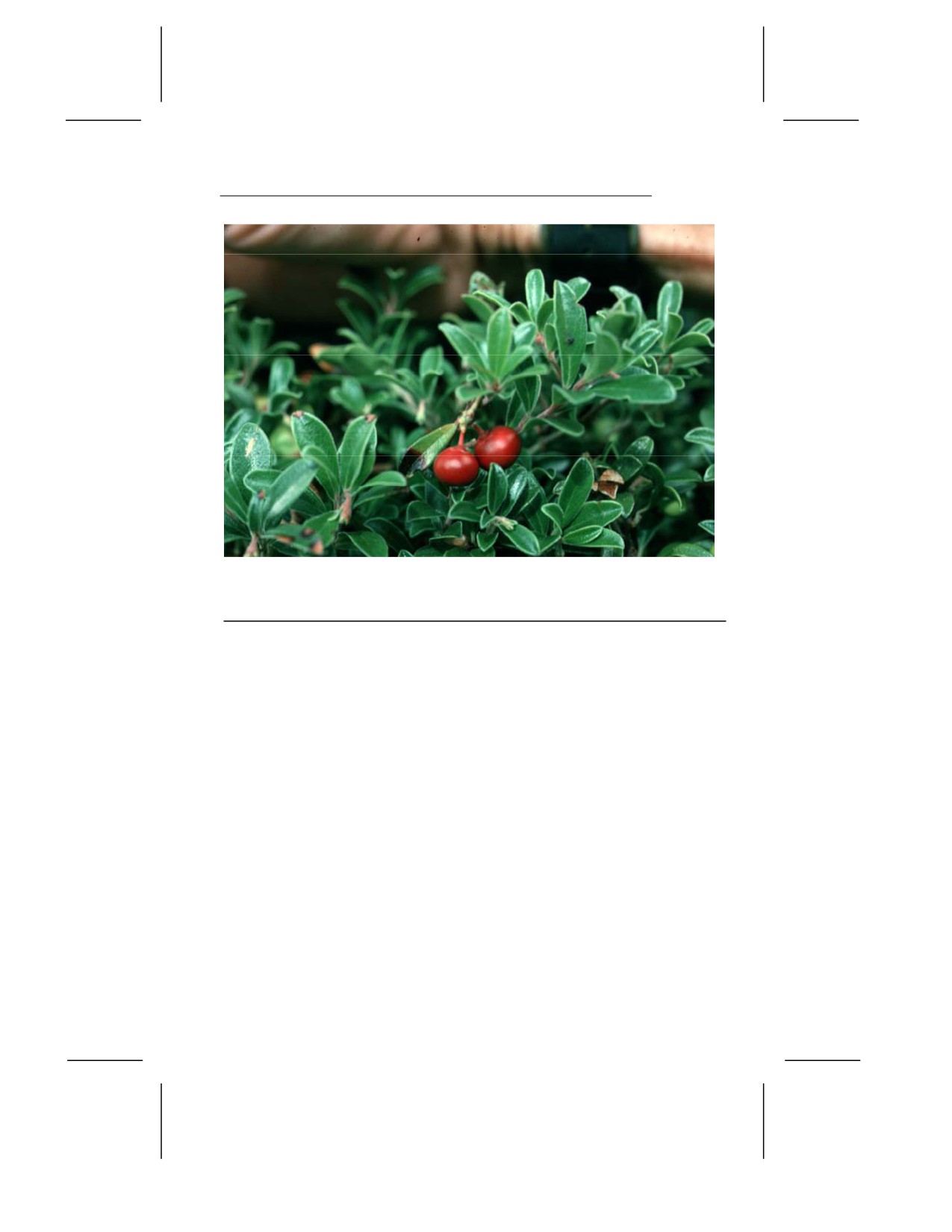
Bearberry or kinnikinnick
Arctostaphylos uvaursi
Description: This plant is a common evergreen shrub with reddish, scaly bark
and thick, leathery leaves 4 centimeters (1 1/2 inches) long and 1 centimeter (1/2
inch) wide. It has white flowers and bright red fruits.
Habitat and Distribution: This plant is found in arctic, subarctic, and temperate
regions, most often in sandy or rocky soil.
Edible Parts: Its berries are edible raw or cooked. You can make a refreshing
tea from its young leaves.
B-15
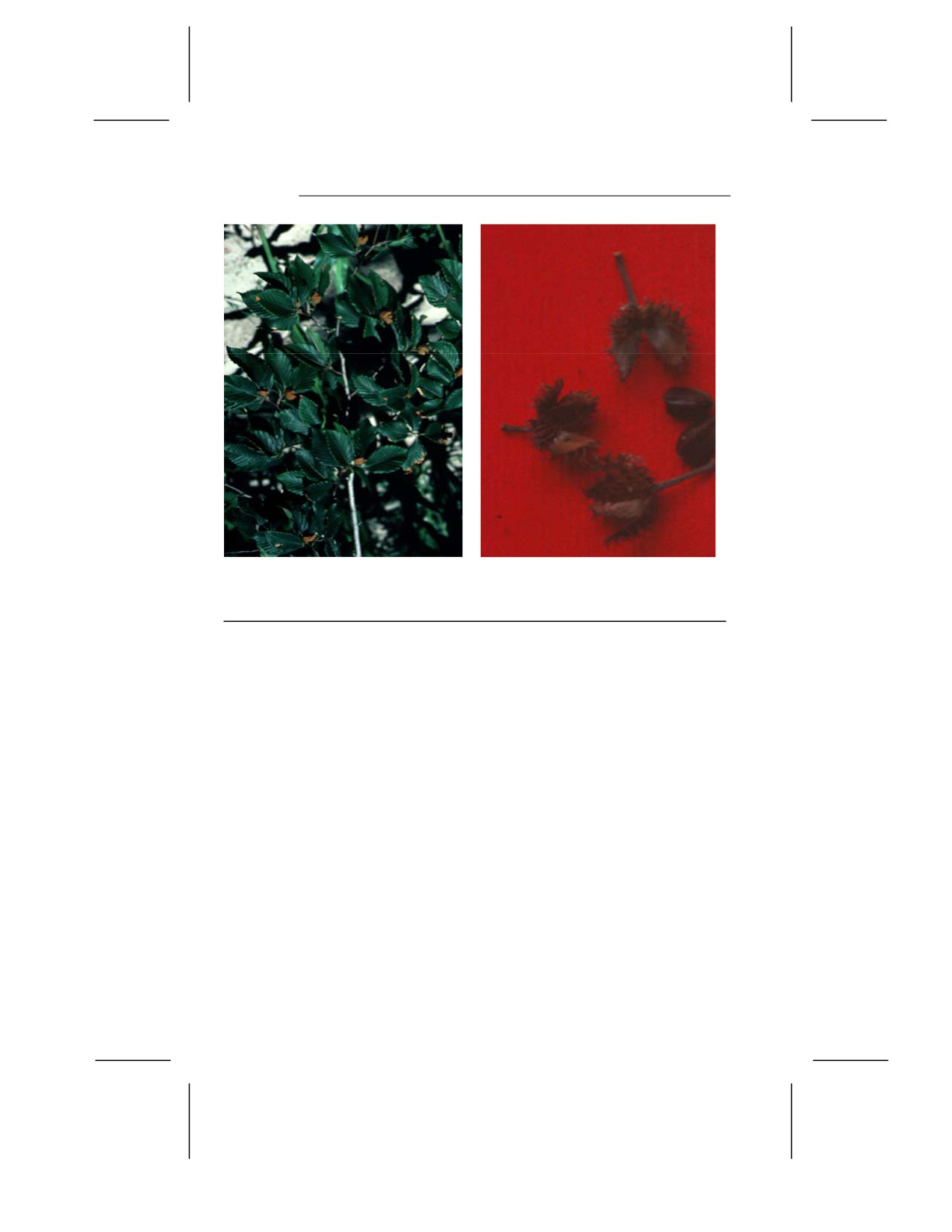
Beech
Fagus species
Description: Beech trees are large (9 to 24 meters [30 to 80 feet]), symmetrical
forest trees that have smooth, light-gray bark and dark green foliage. The
character of its bark, plus its clusters of prickly seedpods, clearly distinguish the
beech tree in the field.
Habitat and Distribution: This tree is found in the temperate zone. It grows wild
in the eastern United States, Europe, Asia, and North Africa. It is found in moist
areas, mainly in the forests. This tree is common throughout southeastern
Europe and across temperate Asia. Beech relatives are also found in Chile, New
Guinea, and New Zealand.
Edible Parts: The mature beechnuts readily fall out of the husklike seedpods.
You can eat these dark-brown, triangular nuts by breaking the thin shell with your
fingernail and removing the white, sweet kernel inside. Beechnuts are one of the
most delicious of all wild nuts. They are a most useful survival food because of
the kernel’s high oil content. You can also use the beechnuts as a coffee
substitute. Roast them so that the kernel becomes golden brown and quite hard.
Then pulverize the kernel and, after boiling or steeping in hot water, you have a
passable coffee substitute.
B-16
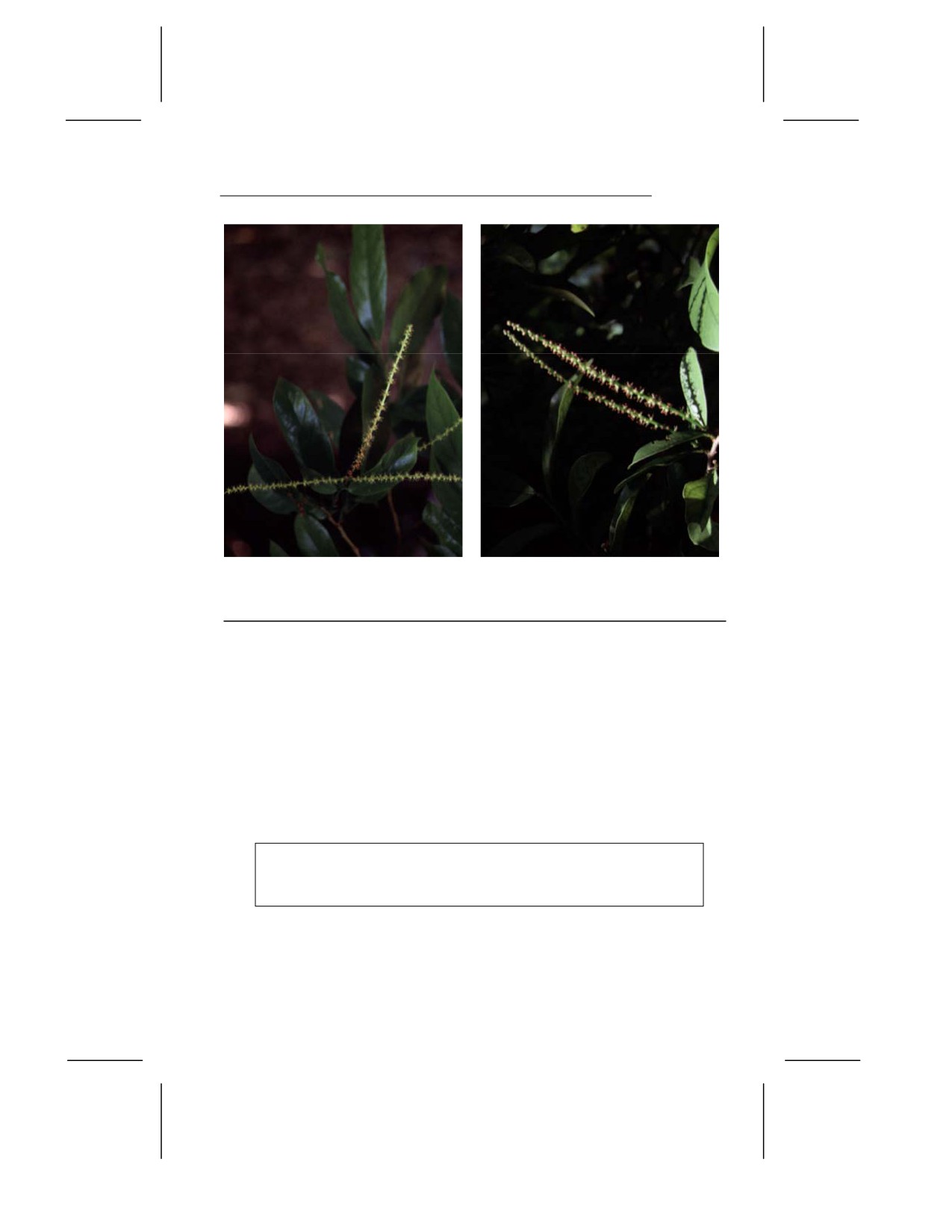
Bignay
Antidesma bunius
Description: Bignay is a shrub or small tree,
3 to
12 meters
(10 to
40 feet) tall, with shiny, pointed leaves about 15 centimeters (6 inches) long. Its
flowers are small, clustered, and green. It has fleshy, dark red or black fruit and a
single seed. The fruit is about 1 centimeter (1/2 inch) in diameter.
Habitat and Distribution: This plant is found in rain forests and semievergreen
seasonal forests in the tropics. It is found in open places and in secondary
forests. It grows wild from the Himalayas to Sri Lanka and eastward through
Indonesia to northern Australia. However, it may be found anywhere in the
tropics in cultivated forms.
Edible Parts: The fruit is edible raw. Do not eat any other parts of the tree. In
Africa, the roots are toxic. Other parts of the plant may be poisonous.
CAUTION
Eaten in large quantities, the fruit may have a laxative effect.
B-17
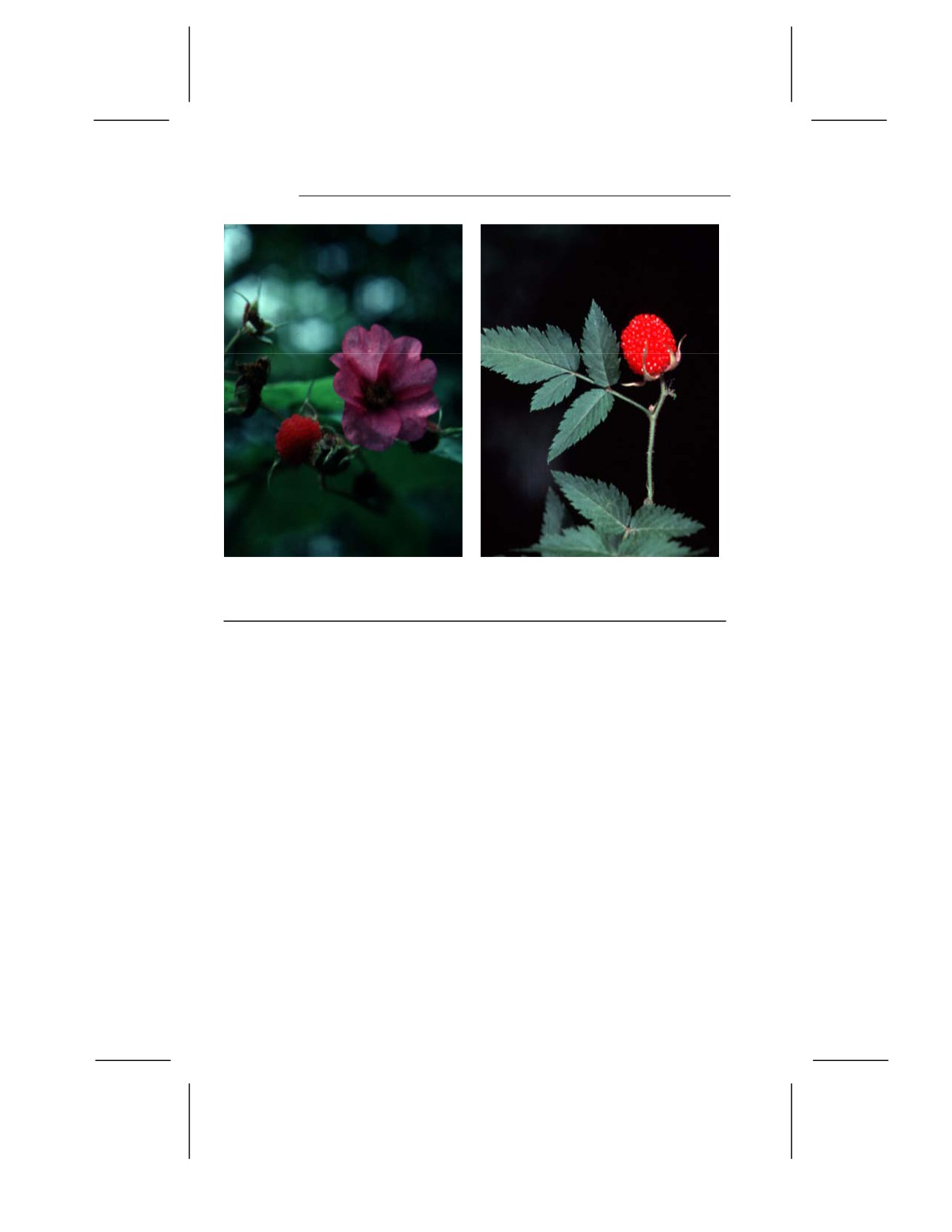
Blackberry, raspberry, and dewberry
Rubus species
Description: These plants have prickly stems (canes) that grow upward, arching
back toward the ground. They have alternate, usually compound leaves. Their
fruits may be red, black, yellow, or orange. This plant is often confused with
poison ivy during some seasons but these stems have thorns.
Habitat and Distribution: These plants grow in open, sunny areas at the margin
of woods, lakes, streams, and roads throughout temperate regions. There is also
an arctic raspberry.
Edible Parts: The fruits and peeled young shoots are edible. Flavor varies
greatly.
Other Uses: Use the leaves to make tea. To treat diarrhea, drink a tea made by
brewing the dried root bark of the blackberry bush.
B-18
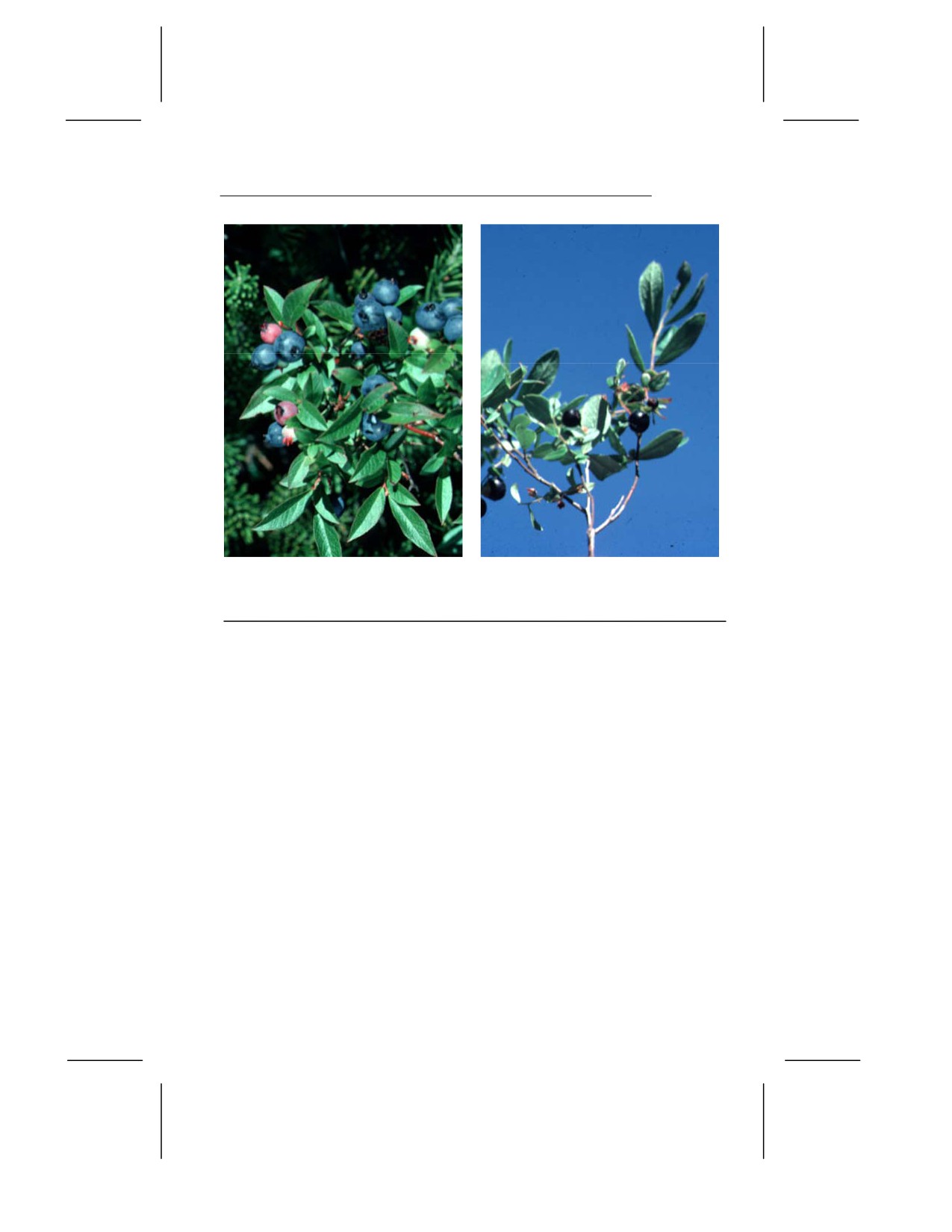
Blueberry and huckleberry
Vaccinium and Gaylussacia species
Description: These shrubs vary in size from 30 centimeters (12 inches) to 3.7
meters (12 feet) tall. All have alternate, simple leaves. Their fruits may be dark
blue, black, or red and have many small seeds.
Habitat and Distribution: These plants prefer open, sunny areas. They are
found throughout much of the north temperate regions and at higher elevations in
Central America.
Edible Parts: Their fruits are edible raw.
B-19
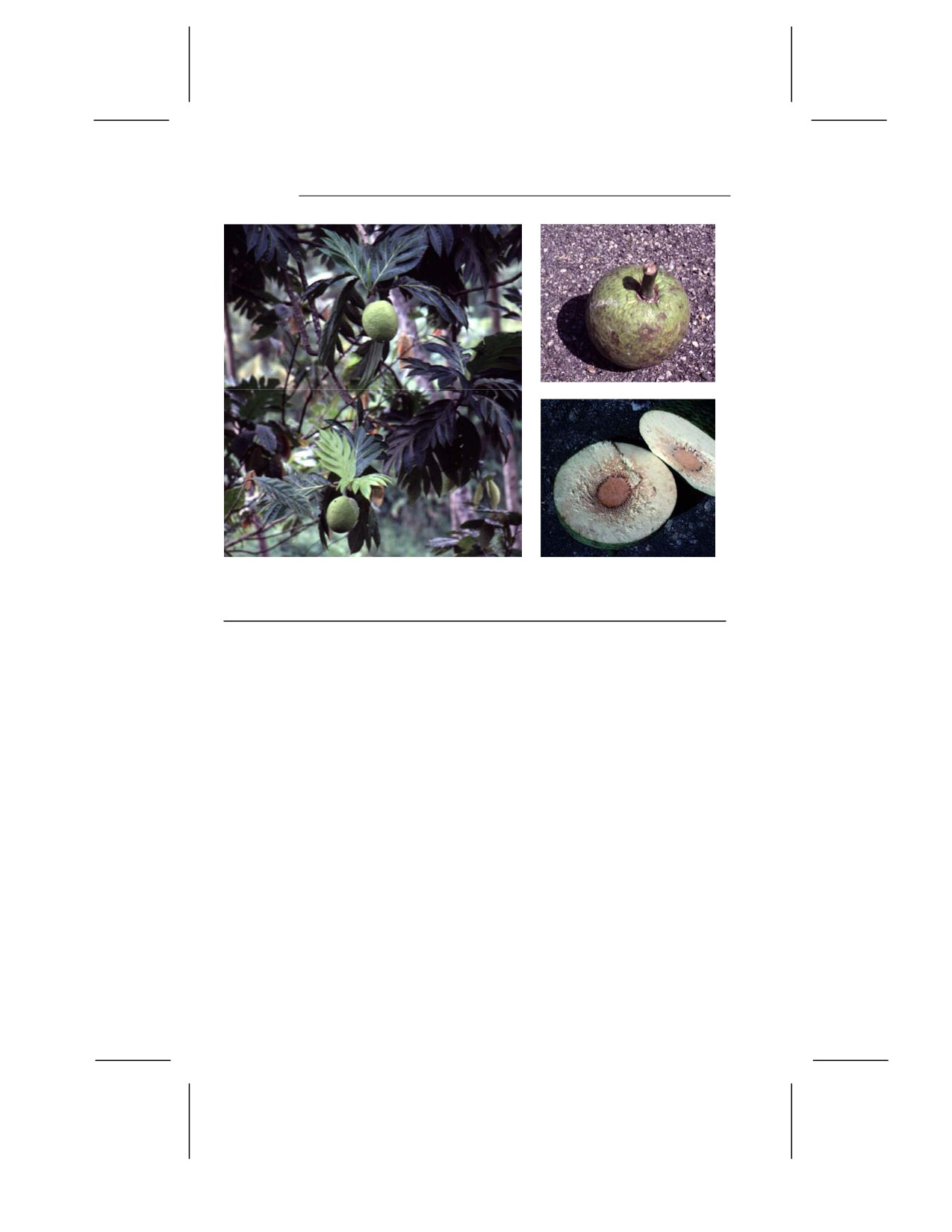
Breadfruit
Artocarpus incisa
Description: This tree may grow up to 9 meters (30 feet) tall. It has dark green,
deeply divided leaves that are
75 centimeters
(29 inches) long and
30
centimeters (12 inches) wide. Its fruits are large, green, ball-like structures up to
30 centimeters (12 inches) across when mature.
Habitat and Distribution: Look for this tree at the margins of forests and
homesites in the humid tropics. It is native to the South Pacific region but has
been widely planted in the West Indies and parts of Polynesia.
Edible Parts: The fruit pulp is edible raw. The fruit can be sliced, dried, and
ground into flour for later use. The seeds are edible cooked.
Other Uses: The thick sap can serve as glue and caulking material. You can
also use it as birdlime (to entrap small birds by smearing the sap on twigs where
they usually perch).
B-20
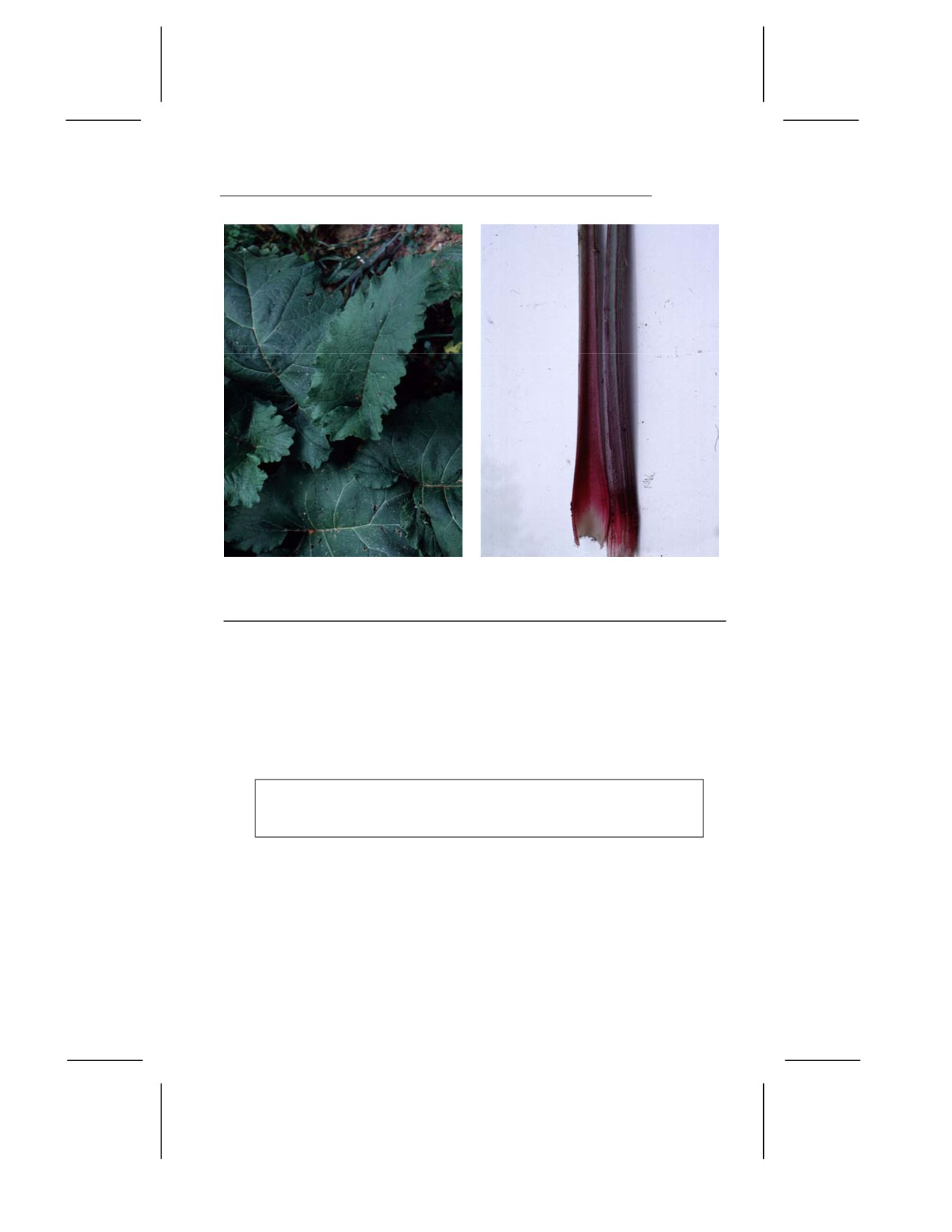
Burdock
Arctium lappa
Description: This plant has wavy-edged, arrow-shaped leaves and flower heads
in burrlike clusters. It grows up to 2 meters (7 feet) tall, with purple or pink flowers
and a large, fleshy root.
Habitat and Distribution: Burdock is found worldwide in the north temperate
zone. Look for it in open waste areas during the spring and summer.
Edible Parts: Peel the tender leaf stalks and eat them raw or cook them like
greens. The roots are also edible boiled or baked.
CAUTION
Do not confuse burdock with rhubarb that has poisonous leaves.
Other Uses: A liquid made from the roots will help to produce sweating and
increase urination. Dry the root, simmer it in water, strain the liquid, and then
drink the strained liquid. Use the fiber from the dried stalk to weave cordage.
B-21
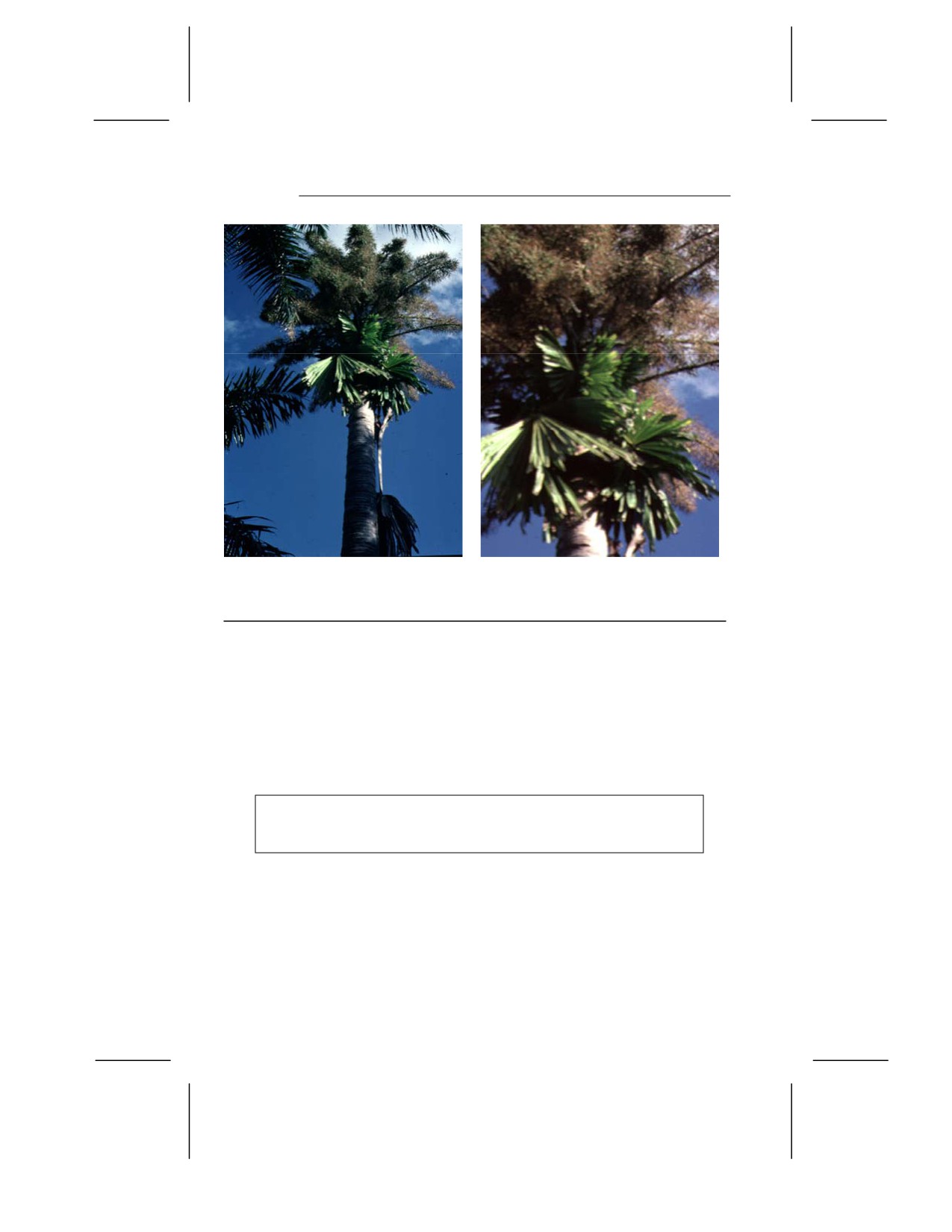
Burl Palm
Corypha elata
Description: This tree may reach 18 meters (60 feet) in height. It has large,
fan-shaped leaves up to 3 meters (10 feet) long and split into about 100 narrow
segments. It bears flowers in huge dusters at the top of the tree. The tree dies
after flowering.
Habitat and Distribution: This tree grows in coastal areas of the East Indies.
Edible Parts: The trunk contains starch that is edible raw. The very tip of the
trunk is also edible raw or cooked. You can get large quantities of liquid by
bruising the flowering stalk. The kernels of the nuts are edible.
CAUTION
The seed covering may cause dermatitis in some individuals.
Other Uses: You can use the leaves as weaving material.
B-22
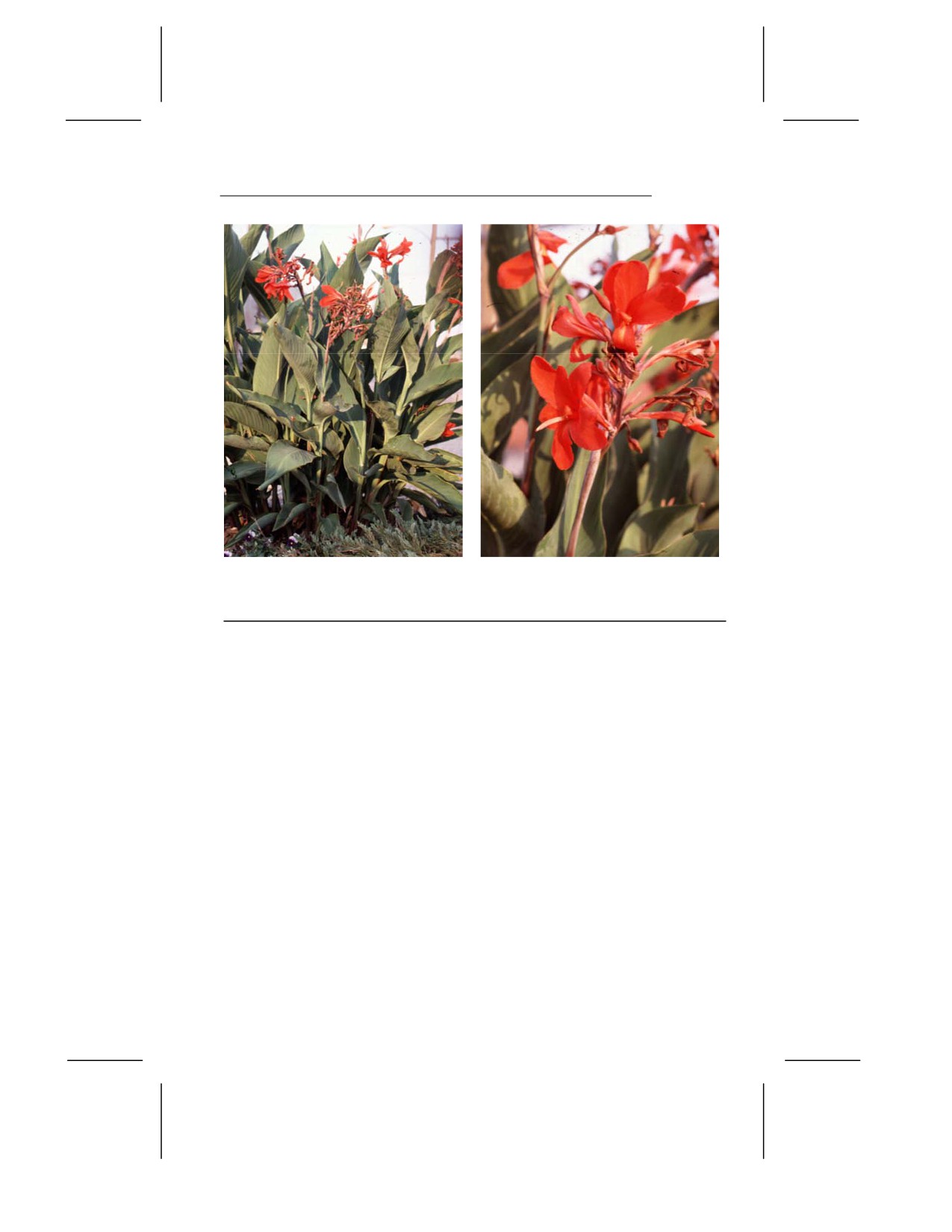
Canna lily
Canna indica
Description: The canna lily is a coarse perennial herb, 90 centimeters (36
inches) to
3 meters
(10 feet) tall. The plant grows from a large, thick,
underground rootstock that is edible. Its large leaves resemble those of the
banana plant but are not so large. The flowers of wild canna lily are usually small,
relatively inconspicuous, and brightly colored reds, oranges, or yellows.
Habitat and Distribution: As a wild plant, the canna lily is found in all tropical
areas, especially in moist places along streams, springs, ditches, and the
margins of woods. It may also be found in wet temperate, mountainous regions.
It is easy to recognize because it is commonly cultivated in flower gardens in the
United States.
Edible Parts: The large and much-branched rootstocks are full of edible starch.
The younger parts may be finely chopped and then boiled or pulverized into a
meal. Mix in the young shoots of palm cabbage for flavoring.
B-23
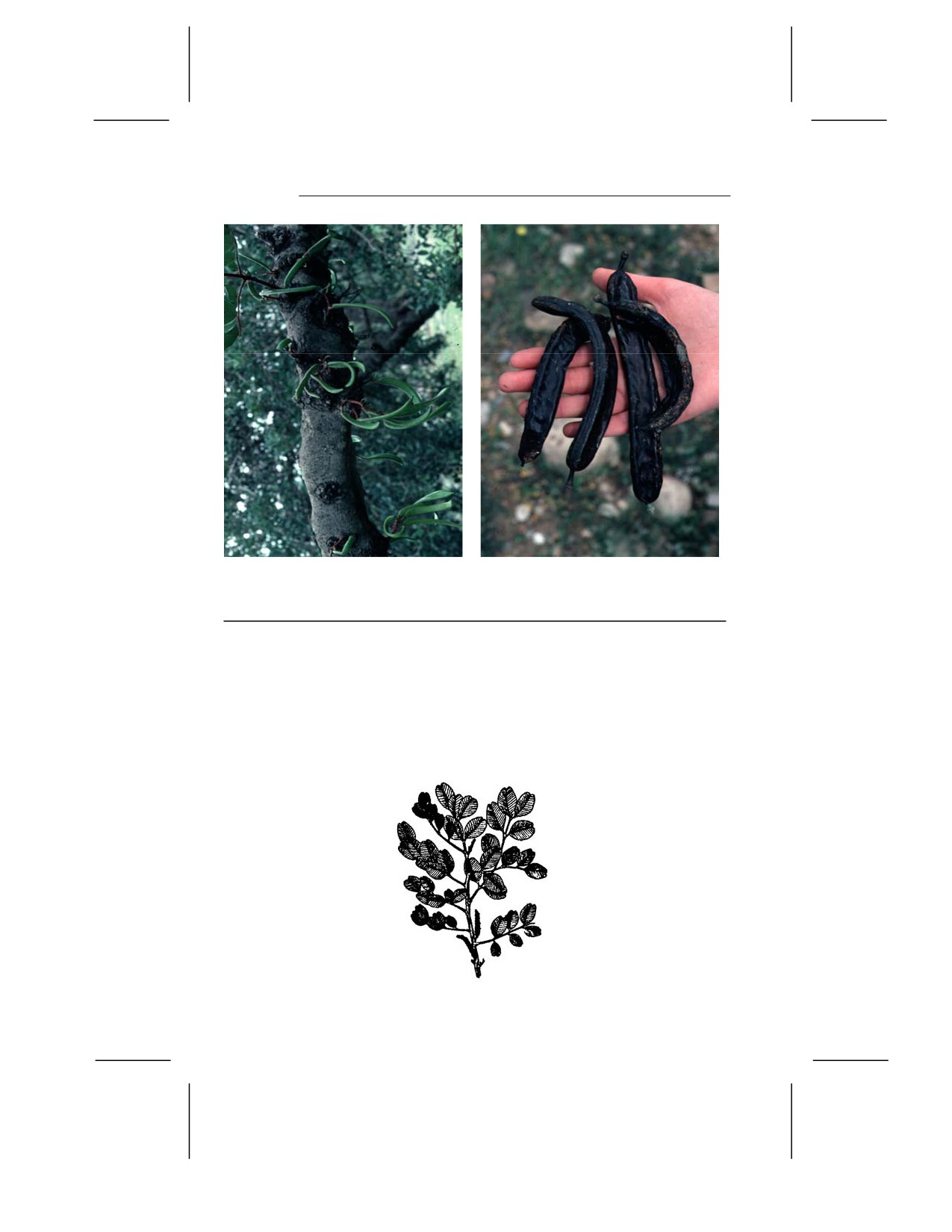
Carob tree
Ceratonia siliqua
Description: This large tree has a spreading crown. Its leaves are compound and
alternate. Its seedpods, also known as Saint John’s bread, are up to 45 centimeters
(18 inches) long and are filled with round, hard seeds and a thick pulp.
Habitat and Distribution: This tree is found throughout the Mediterranean, the
Middle East, and parts of North Africa.
Edible Parts: The young, tender pods are edible raw or boiled. You can
pulverize the seeds in mature pods and cook as porridge.
B-24
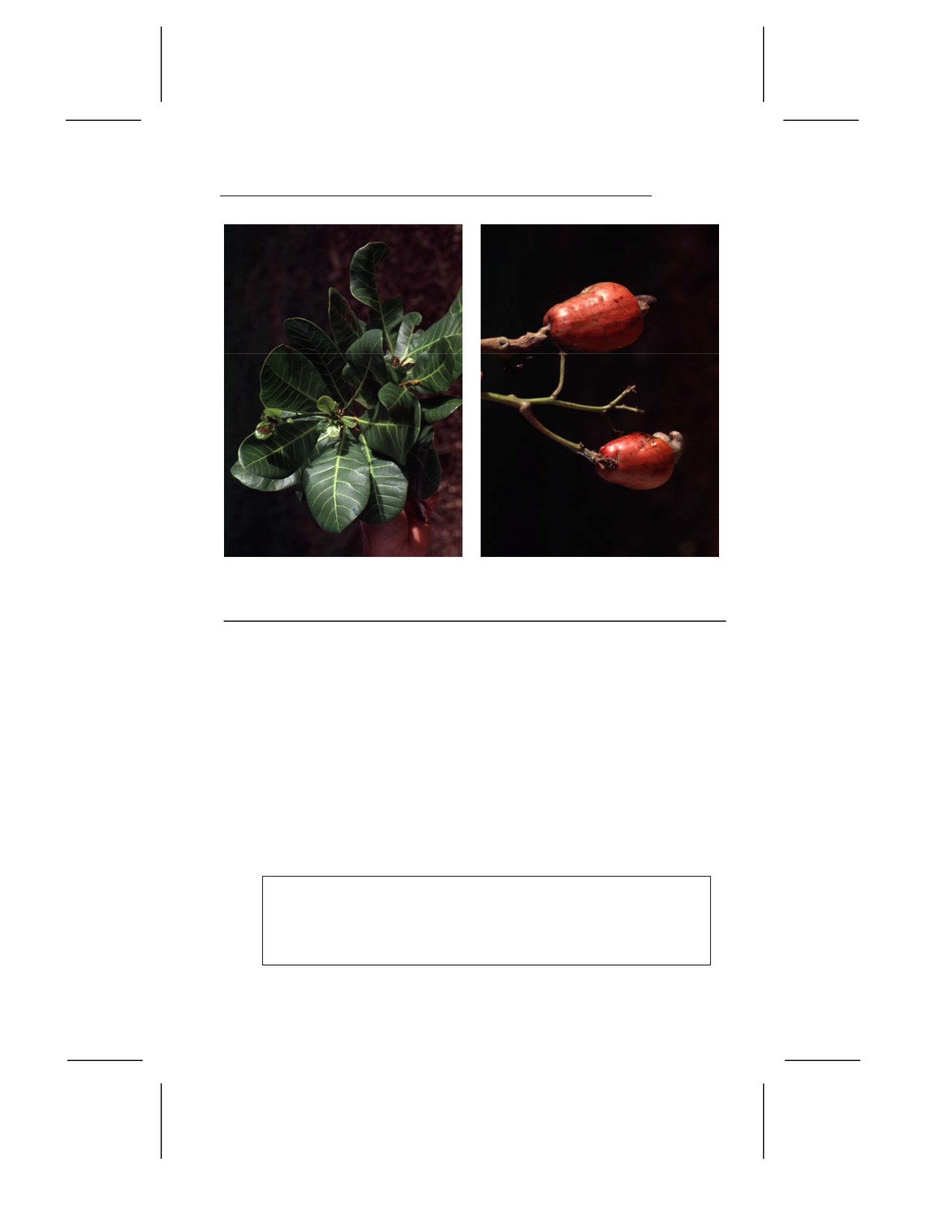
Cashew nut
Anacardium occidentale
Description: The cashew is a spreading evergreen tree growing to a height of 12
meters (40 feet), with leaves up to 20 centimeters (8 inches) long and 10 centimeters
(4 inches) wide. Its flowers are yellowish-pink. Its fruit is very easy to recognize
because of its peculiar structure. The fruit is thick and pear-shaped, pulpy and red or
yellow when ripe. This fruit bears a hard, green, kidney-shaped nut at its tip. This nut
is smooth, shiny, and green or brown according to its maturity.
Habitat and Distribution: The cashew is native to the West Indies and northern
South America, but transplantation has spread it to all tropical climates. In the
Old World, it has escaped from cultivation and appears to be wild at least in parts
of Africa and India.
Edible Parts: The nut encloses one seed. The seed is edible when roasted. The
pear-shaped fruit is juicy, sweet acid, and astringent. It is quite safe and
considered delicious by most people who eat it.
CAUTION
The green hull surrounding the nut contains a resinous irritant
poison that will blister the lips and tongue like poison ivy. Heat
destroys this poison when the nuts are roasted.
B-25
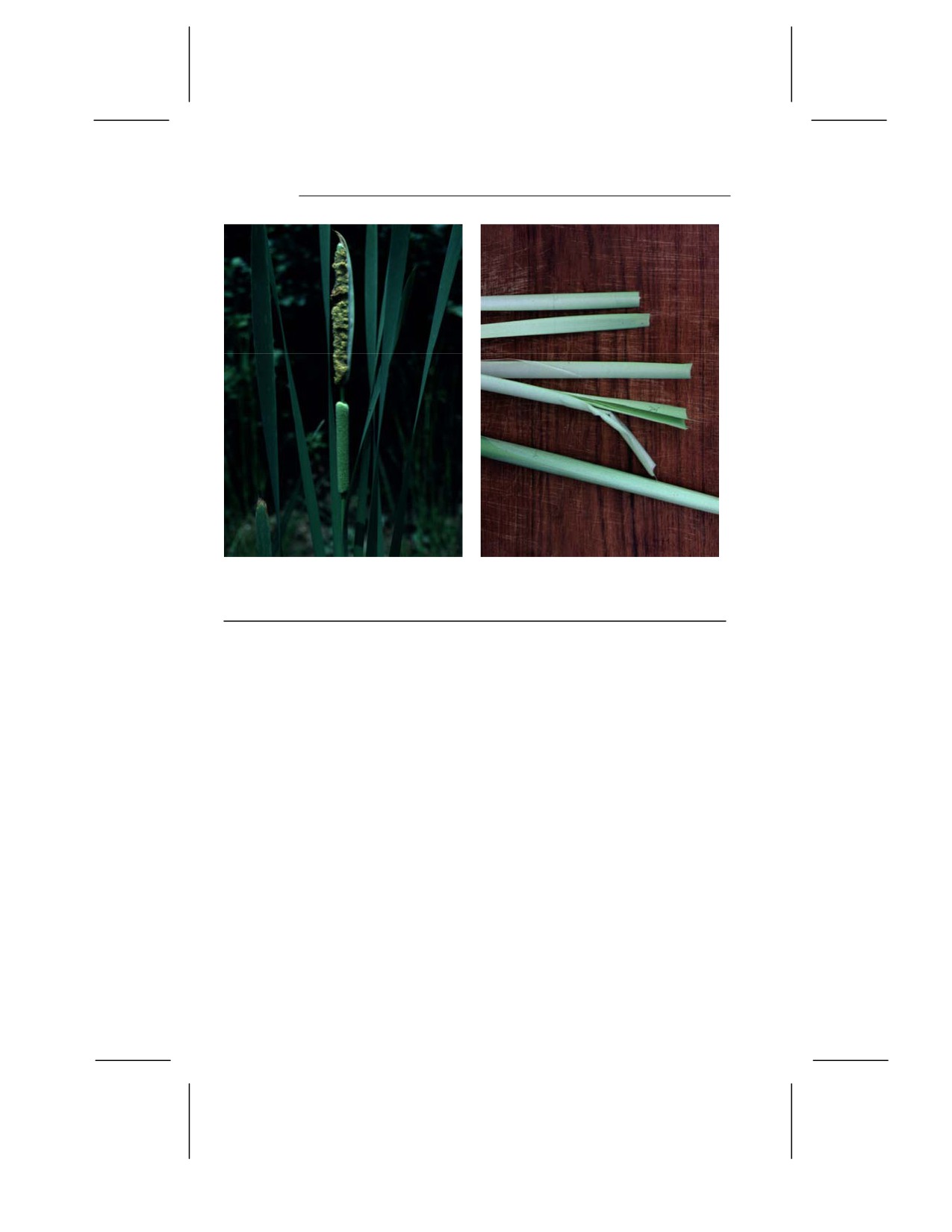
Cattail
Typha latifolia
Description: Cattails are grasslike plants with strap-shaped leaves
1 to
5 centimeters
(1/4 to
2 inches) wide and growing up to
1.8 meters
(6 feet) tall. The male flowers are borne in a dense mass above the female
flowers. The male flowers last only a short time, leaving the female flowers,
which develop into the brown cattail. Pollen from the male flowers is often
abundant and bright yellow.
Habitat and Distribution: Cattails are found throughout most of the world. Look
for them in full sun areas at the margins of lakes, streams, canals, rivers, and
brackish water.
Edible Parts: The young tender shoots are edible raw or cooked. The rhizome is
often very tough but is a rich source of starch. Pound the rhizome to remove the
starch and use as a flour. The pollen is also an exceptional source of starch.
When the cattail is immature and still green, you can boil the female portion and
eat it like corn on the cob.
Other Uses: The dried leaves are an excellent source of weaving material you
can use to make floats and rafts. The cottony seeds make good pillow stuffing
and insulation. The fluff makes excellent tinder. Dried cattails are effective insect
repellents when burned.
B-26
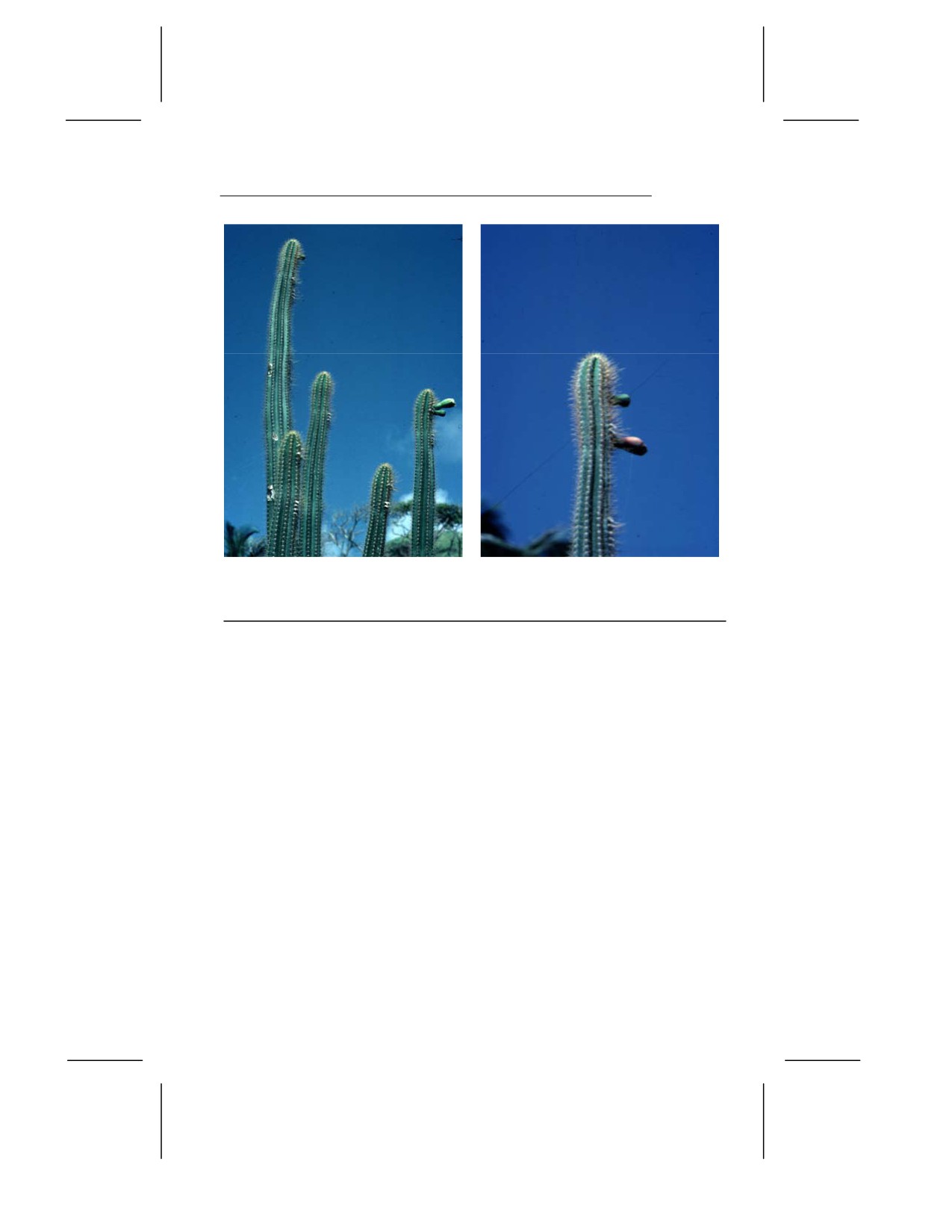
Cereus cactus
Cereus species
Description: These cacti are tall and narrow with angled stems and numerous
spines.
Habitat and Distribution: They may be found in true deserts and other dry,
open, sunny areas throughout the Caribbean region, Central America, and the
western United States.
Edible Parts: The fruits are edible, but some may have a laxative effect.
Other Uses: The pulp of the cactus is a good source of water. Break open the
stem and scoop out the pulp.
B-27
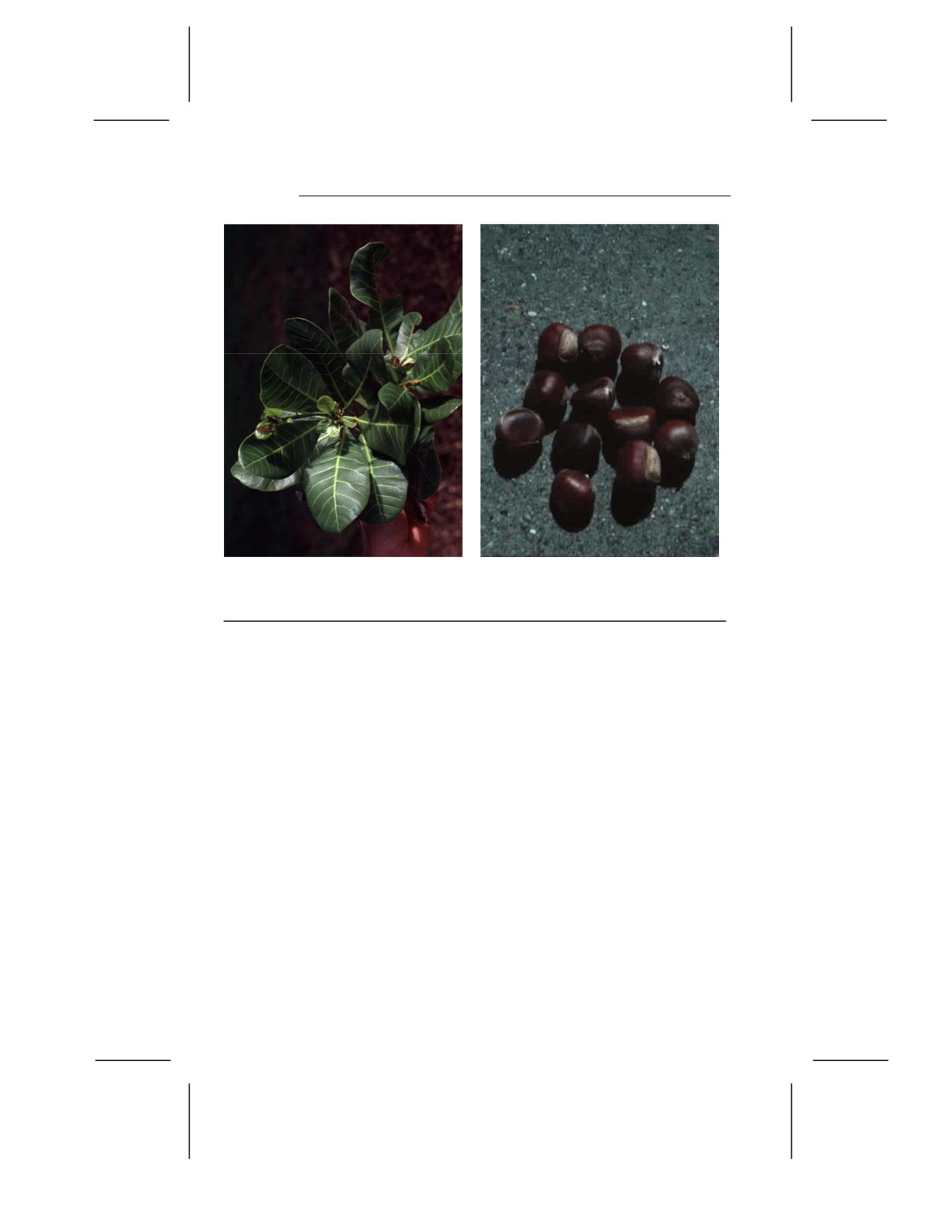
Chestnut
Castanea sativa
Description: The European chestnut is usually a large tree, up to
18 meters (60 feet) in height.
Habitat and Distribution: In temperate regions, the chestnut is found in both
hardwood and coniferous forests. In the tropics, it is found in semievergreen
seasonal forests. They are found over all of middle and south Europe and across
middle Asia to China and Japan. They are relatively abundant along the edge of
meadows and as a forest tree. The European chestnut is one of the most
common varieties. Wild chestnuts in Asia belong to the related chestnut species.
Edible Parts: Chestnuts are highly useful as survival food. Ripe nuts are usually
picked in autumn, although unripe nuts picked while green may also be used for
food. Perhaps the easiest way to prepare them is to roast the ripe nuts in
embers. Cooked this way, they are quite tasty, and you can eat large quantities.
Another way is to boil the kernels after removing the outer shell. After boiling the
nuts until fairly soft, you can mash them like potatoes.
B-28
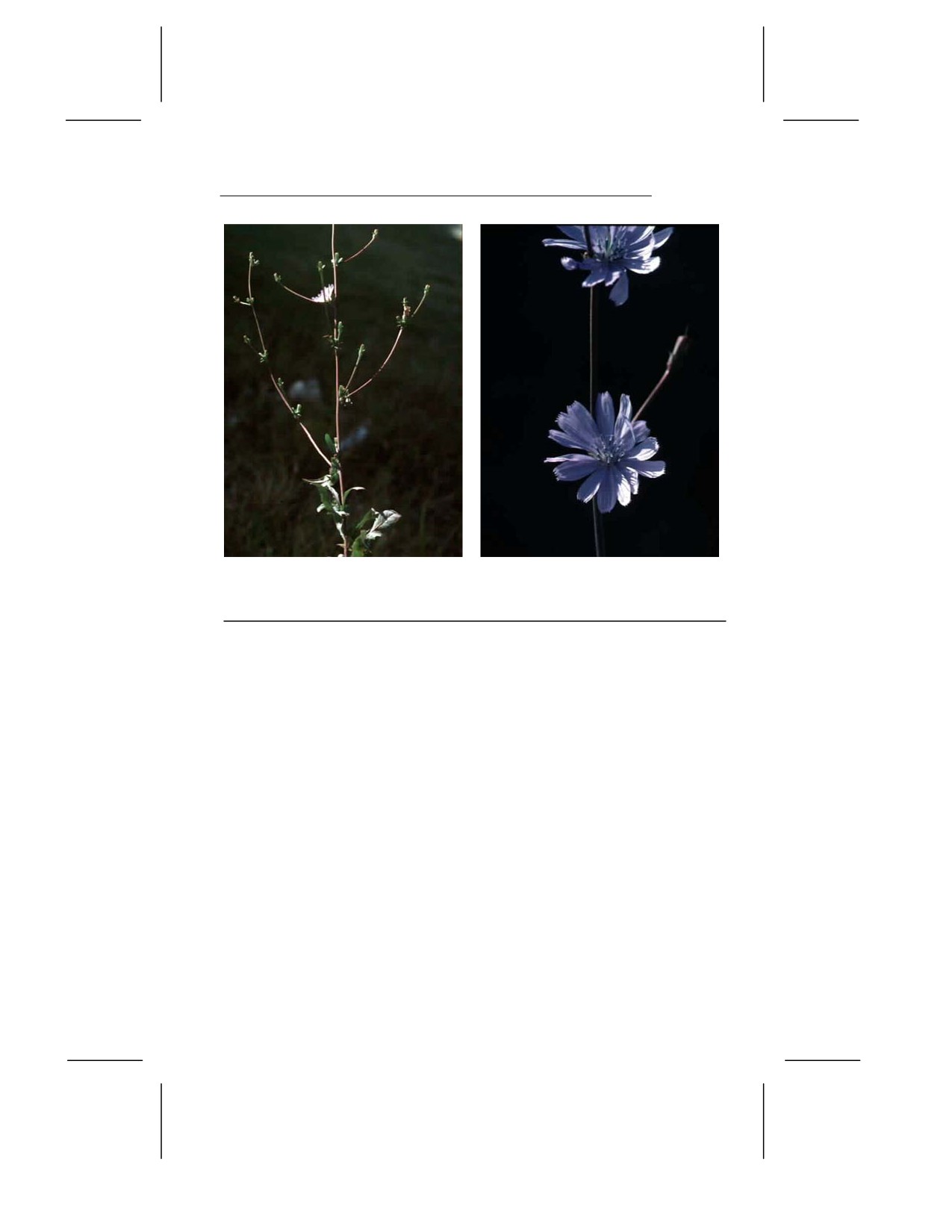
Chicory
Cichorium intybus
Description: This plant grows up to 1.8 meters (6 feet) tall. It has leaves
clustered at the base of the stem and some leaves on the stem. The base leaves
resemble those of the dandelion. The flowers are sky blue and stay open only on
sunny days. Chicory has a milky juice.
Habitat and Distribution: Look for chicory in old fields, waste areas, weedy lots,
and along roads. It is a native of Europe and Asia, but is also found in Africa and
most of North America, where it grows as a weed.
Edible Parts: All parts are edible. Eat the young leaves as a salad or boil to eat
as a vegetable. Cook the roots as a vegetable. For use as a coffee substitute,
roast the roots until they are dark brown and then pulverize them.
B-29