Electrical Engineering Dictionary - part 71
 

  Index      Production     Electrical Engineering Dictionary


Search            


Content   ..  69  70  71  72   ..


Electrical Engineering Dictionary - part 71


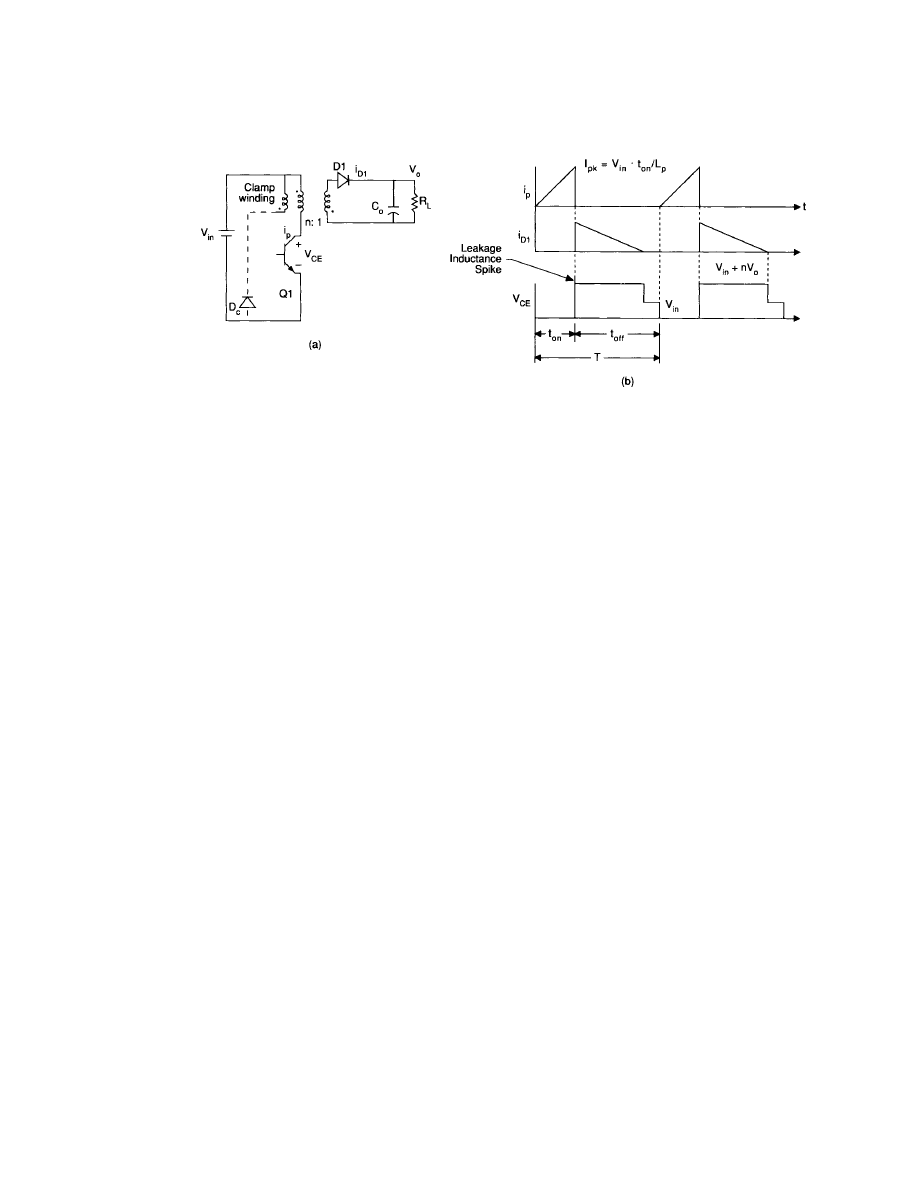
Flyback converter.

same spin state, resulting in emission of light
with a very short lifetime, typically nanosec-
onds.

fluorescent lamp

typically a lamp made

by exciting a low pressure discharge in mer-
cury vapor and other gases; mercury, when
excited in the discharge, predominantly emits
257 nm radiation (ultraviolet) which is ab-
sorbed by a phosphor on the inside wall of the
lamp tube; the phosphor fluoresces, emitting
a white light spectrum in the visible.

fluoroscopy

a mounted fluorescent screen

on which the internal structure or parts of
an optically opaque object may be viewed
as shadows formed by the transmission of X-
rays through the object.

flush

the act of clearing out all actions be-

ing processed in a pipeline structure. This
may be achieved by aborting all of those ac-
tions, or by refusing to issue new actions to
the pipeline until those present in the pipeline
have left the pipeline because their process-
ing has been completed.

flux

(1) lines that indicate the intensity

and direction of a field. Intensity is usually
represented by the density of the lines.

(2) a measure of the intensity of free neu-

tron activity in a fission reaction, closely re-
lated to power, the product of neutron den-

sity and neutron velocity, e.g., neutrons per
square cm per second.

flux density

lines of magnetic flux per unit

area, measured in tesla; 1

= 1Wb/m

2

.

flux line

See

direction line

.

flux linkage

quantity that indicates the

amount of flux associated with a coil. Flux
linkage is denoted by the symbol

λ and

expressed in Webers (Wb) or Weber-Turns
(Wb-t). For a single turn coil, flux linkage is
the same as the flux. Flux linkages of an

N

turn coil are

Nφ Wb-t.

fluxmeter

an instrument that measures the

change in magnetic flux within a coil by in-
tegrating the induced voltage with respect to
time.

flyback converter

the isolated version of

the buck-boost converter. In this case, the
transformer is also an inductor that stores en-
ergy when the transistor is on and releases
energy to the output when the transistor is off.
The primary and the secondary of the trans-
former conduct alternately. The advantage of
this topology is that through the addition of
a second winding on the input inductor, i.e.,
to form a transformer, electrical isolation is
achieved. This type of transformer is called a
flyback transformer or flyback inductor. See
also

buck-boost transformer

.

c

2000 by CRC Press LLC

Flynn’s Taxonomy

Single-Data Stream

Multiple-Data Stream

Single-Instruction Stream

von Neumann architecture/uniprocessors
RISC

Systolic processors
Wavefront processors

Multiple-Instruction Stream

Pipelined architectures
Very long instruction word processors

Dataflow processors
Transputers

flyback inductor

See

flyback converter

.

flyback transformer

See

flyback converter

.

flying head disk

a disk storage device that

uses a read/write head unit “flying” over (i.e.,
very closely above) the disk surface on a thin
air bearing. Used e.g., in “Winchester” disks
(a sealed “hard disk”). This is in contrast to,
e.g., floppy disks, where the head unit is ac-
tually in physical contact with the disk when
reading or writing. See also

disk head

.

Flynn’s taxonomy

a classification system

that organizes computer processor types as
either single-instruction stream or multiple-
instruction stream and either single-data
stream or multiple-data stream.

The four

resultant types of computer processors are
known as SISD, MISD, SIMD, and MIMD
(see table below). Due to Michael J. Flynn
(1966).

flywheel

a heavy wheel placed on the shaft

of an electrical machine for storing kinetic
energy. A flywheel may be used to help damp
speed transients or, to help deliver energy to
impact loads such as a punch press.

FM

See

frequency modulation

.

FMS

See

flexible manufacturing systems

.

FM sound

a carrier wave whose instanta-

neous frequency is varied by an amount pro-
portional to the instantaneous amplitude of
the sound input modulating signal.

focal length

distance from a lens or mirror

at which an input family of parallel light rays
will be brought to a focus.

focus

the position of the plane of best fo-

cus of the optical system relative to some ref-
erence plane, such as the top surface of the
resist, measured along the optical axis (i.e.,
perpendicular to the plane of best focus).

focus of attention

the center of the region

detected by a visual attention mechanism,
which is the first stage of a pattern recog-
nition system that is aimed to detect regions
where a target object is likely to be found.

focus of expansion

(1) in optical flow

computation, the point into which the veloc-
ity field lines of a translating object converge.

(2) the point in an image from which

feature points appear to be diverging when
the camera is moving forward or objects are
moving toward the camera.

focus-exposure matrix

the variation of

linewidth (and possibly other parameters) as
a function of both focus and exposure energy.
The data is typically plotted as linewidth
versus focus for different exposure energies,
called the Bossung plot.

focused ion beam (FIB)

a lithography

technique similar to electron beam lithog-
raphy in which a stream of charged ions is
raster-scanned to produce an image in a re-
sist.

focuser

a focusing electrode for an elec-

tron steam in a vacuum tube.

FOH

See

first order hold

.

c

2000 by CRC Press LLC

fold-over distortion

the names given to

the phenomena associated with the genera-
tion of an erroneously created signal in the
sampling process are called “fold-over” dis-
tortion or aliasing. Sampling a signal ex-
hibits many of the same properties that a
“mixer” circuit in RF communications pos-
sesses. The mathematical relationship for a
mixer circuit and a sampling circuit is ex-
pressed by the trigonometric identity

sin

A·sin .5 cos(AB).5 cos(A+B)

From the equation it is evident that if the

radian frequency is not twice the radian
frequency, then the

− term will produce

a signal whose radian frequency is less than
B’s. This created signal will appear within
the original frequency bandwidth. These er-
ror signals can be minimized by incorporat-
ing an anti-aliasing filter (i.e., a low-pass fil-
ter) on the input to the sample-and-hold cir-
cuit. The anti-aliasing filter bandlimits the
input frequencies so that fold-over distortion
or aliasing is minimized.

folded sideband

an FM method used fre-

quently in video tape recording (VTR) sys-
tems. The term refers to the fact that there is
no corresponding upper sideband to the one
existing sideband.

folding

the technique of mapping many

tasks to a single processor.

foldover

a form of distortion in a digital

communications system which occurs when
the minimum sampling rate is less that two
times the analog input signal frequency.

footing impedance

the electrical imped-

ance between a steel tower and distant earth.

foot-candle

the unit of illuminance when

the foot is taken as the unit of length. It is the
illuminance on a surface one square foot in
area on which there is a uniformly distributed
flux of one lumen.

force manipulability ellipsoid

a model

that characterizes the end-effector forces
and/or torques,

, that can be generated

with the given set of joint forces and/or
torques,

τ, with the manipulator in a given

posture. Mathematically assuming that the
joint forces and/or torques, satisfy the equa-
tion

τ

T

τ = 1, the ellipsoid (taking into ac-

count kineto-static duality) can be written as
follows:

F

T

(J J

T

)F = 1. Here, denote

geometric Jacobian of the manipulator. See
also

kineto-static duality

.

forced commutation

the use of external

circuitry to artificially force a current zero,
thus allowing a diode or thryistor to turn off.

forced interruption

an interruption in

electric supply caused by human error, inap-
propriate equipment operation, or resulting
from situations in which a device is quickly
taken out of service by automatic or manual
switching operations.

forced outage

the unscheduled interrup-

tion of electric power to a portion of a power
system due to equipment failure, weather
conditions, or other mishaps.

forced outage rate

a measure of perfor-

mance usually applied to generation units. It
is the ratio of equipment down-time vs. the
total time that the unit is available for opera-
tion.

forced system

a dynamic system is said to

be forced if it is excited by a nonzero external
source.

foreground

(1) a process that is currently

the process interacting with the user in a shell,
as opposed to background processes, which
get suspended when they require input from
the user.

(2) a term describing a Unix command that

is using your terminal for input and output,
so that you will not get another Unix prompt
until it is finished.

c

2000 by CRC Press LLC

(3) the foreground of a window is a single

color or a pattern. The foreground text or
graphics is displayed against the background
of the window.

fork

(1) the action of a process creating

another (child) process without ending itself.

(2) in Unix, fork is a process that can cre-

ate a new copy of itself (a child) that has its
own existence until either it terminates (or is
killed) or its parent terminates. The prepare
handler is called before the processing of the
fork subroutine commences. The parent han-
dler is called after the processing of the fork
subroutine completes in the parent process.
The child handler is called after the process-
ing of the fork subroutine completes in the
child process.

form

term used to indicate the structure

and dimensions of a multiterm equation with-
out details within component terms.

formants

the main frequencies that result

from typical short-time spectral analysis of
vowels. Depending on the application, two
or three formants are commonly extracted.

forming gas

a mixture of hydrogen and

nitrogen (typically 5% hydrogen and 95% ni-
trogen), typically used in the post-metal an-
nealing process in wafer fabrication.

forward channel

also referred to as for-

ward link, it is the radio link (channel) in a
cellular or microcellular network where the
base station is the transmitter and the mobile
terminal is the receiver. In the case of cel-
lular networks, the term is synonymous with
down-link. The mobile to base station link is
known as the reverse link or up-link.

forward converter

an isolated version of

a buck converter. The primary and the sec-
ondary of the transformer conduct at the same
time. The transformer does not store energy.
An additional winding with a diode is often
used to reset the magnetizing energy when
the transistor is off.

forward error correction (FEC)

an er-

ror control system used for simplex chan-
nels (only a forward channel) where the
channel code is used to determine the most
likely transmitted sequence of information
symbols.

Compare with

automatic repeat

request

.

forward error recovery

a technique (also

called roll-forward) of continuing processing
by skipping faulty states (applicable to some
real-time systems in which occasional missed
or wrong responses are tolerable).

forward voltage

the voltage across the de-

vice when the anode is positive with respect
to the cathode.

forward wave

in a traveling wave tube,

microwaves propagate in the same direction
with electrons in the electron beam. Electro-
magnetic waves travel in the positive direc-
tion of the coordinate system.

forward–backward procedure

an effi-

cient algorithm for computing the probabil-
ity of an observation sequence from a hidden
Markov model.

forwarding

(1) sending a just-computed

value to potential consumers directly, with-
out requiring a write followed by a read.

(2) to immediately provide the result of

the previous instruction to the current instruc-
tion, at the same time that the result is written
to the register file. Also called bypass.

Foster’s reactance theorem

states that

the driving-point impedance of a network
composed of purely capacitive and inductive
reactances is an odd rational function of fre-
quency.

Foster–Seeley discriminator

similar to

the balanced slope detector. A circuit used
to convert an incoming FM signal to a re-
lated AM signal to provide a demodulation
process.

c

2000 by CRC Press LLC


Content   ..  69  70  71  72   ..