Toyota Corolla (2024 year). Manual in english - page 5
 

  Index      Toyota     Toyota Corolla (2024 year). Manual in english


Search            copyright infringement  


Content      ..     3      4      5      6     ..


Toyota Corolla (2024 year). Manual in english - page 5


129

3-5. Opening and closing the windows

3

Before driving

pushing the switch in the 

one-touch opening direction, and 

hold it there for approximately 4 

seconds or more.

6

Pull and hold the power window 

switch in the one-touch closing 

direction again. After the door 

window is completely closed, 

continue holding the switch for a 

further 1 second or more.

If you release the switch while the 

window is moving, start again from 

the beginning.

If the window reverses and cannot 

be fully closed or opened, have the 

vehicle inspected by your Toyota 

dealer.

Door lock linked window opera-

tion

Vehicles without a smart key sys-

tem: The power windows can be 

opened and closed using the key.

*


(

P.106)

Vehicles with a smart key system: 

The power windows can be 

opened and closed using the 

mechanical key.

*

 (

P.376)

The power windows can be 

opened using the wireless remote 

control.

*

 (with a wireless remote 

control function) (

P.105)

*

: These settings must be custom-

ized at your Toyota dealer.

Customization

Some functions can be customized. 

(

P.406)

WARNING

Observe the following precau-

tions. Failure to do so may result 

in death or serious injury.

Closing the windows

The driver is responsible for all 

the power window operations, 

including the operation for the 

passengers. In order to prevent 

accidental operation, especially 

by a child, do not let a child 

operate the power windows. It is 

possible for children and other 

passengers to have body parts 

caught in the power window. 

Also, when riding with a child, it 

is recommended to use the win-

dow lock switch. (

P.130)

Check to make sure that all pas-

sengers do not have any part of 

their body in a position where it 

could be caught when a window 

is being operated.

When using the wireless remote 

control (if equipped), key or 

mechanical key and operating 

the power windows, operate the 

power window after checking to 

make sure that there is no pos-

sibility of any passenger having 

any of their body parts caught in 

the window. Also do not let a 

child operate window by the 

wireless remote control (if 

equipped), key or mechanical 

key. It is possible for children 

and other passengers to get 

caught in the power window.

When exiting the vehicle, turn 

the engine switch off, carry the 

key and exit the vehicle along 

with the child. There may be 

accidental operation, due to 

mischief, etc., that may possibly 

lead to an accident.

130

3-5. Opening and closing the windows

This function can be used to 

prevent children from acciden-

tally opening or closing a pas-

senger window.
Press the switch.

The indicator   will come on and 

the passenger windows will be 

locked.
The passenger windows can still be 

opened and closed using the 

driver’s switch even if the lock 

switch is on.

The power windows can be 

operated when

The engine switch is in ON.

When the battery is discon-

nected

The window lock switch is disabled. 

If necessary, press the window lock 

switch after reconnecting the bat-

tery.

WARNING

Jam protection function

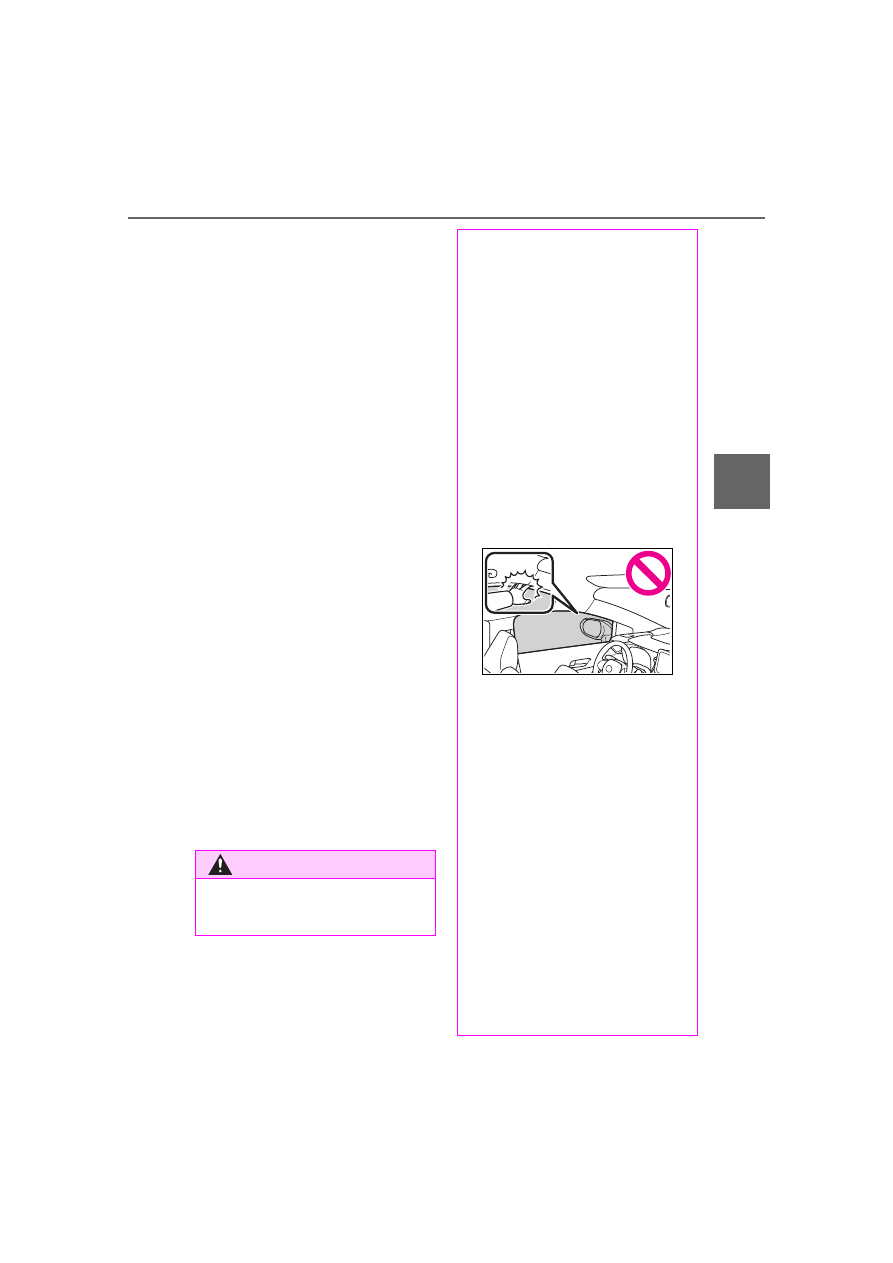
Never use any part of your body 

to intentionally activate the jam 

protection function.

The jam protection function may 

not work if something gets 

jammed just before the window 

is fully closed. Be careful not to 

get any part of your body 

jammed in the window.

Catch protection function

Never use any part of your body 

or clothing to intentionally acti-

vate the catch protection func-

tion.

The catch protection function 

may not work if something gets 

caught just before the window is 

fully opened. Be careful not to 

get any part of your body or 

clothing caught in the window.

Preventing accidental 

operation (window lock 

switch)

131

3-5. Opening and closing the windows

3

Before driving

*

: If equipped

Opening and closing

1

Opens the moon roof

*

The moon roof stops slightly before 
the fully open position to reduce 
wind noise. Press the switch again 
to fully open the moon roof.

2

Closes the moon roof

*

*

: Lightly press either side of the 

moon roof switch to stop the 
moon roof partway.

Tilting up and down

1

Tilts the moon roof up

*

2

Tilts the moon roof down

*

*

: Lightly press either side of the 

moon roof switch to stop the 
moon roof partway.

The moon roof can be operated 
when

The engine switch is in ON.

Operating the moon roof after 
turning the engine off

The moon roof can be operated for 
approximately 45 seconds after the 
engine switch is turned to ACC or 
OFF.  It cannot, however, be oper-
ated once either front door is 
opened.

Jam protection function

If an object is detected between the 
moon roof and the frame while the 
moon roof is closing or tilting down, 
travel is stopped and the moon roof 
opens slightly.

Sunshade

The sunshade can be opened and 
closed manually. However, the sun-
shade will open automatically when 
the moon roof is opened.

Door lock linked moon roof 
operation

Vehicles without a smart key sys-
tem: The moon roof can be 
opened and closed using the key.

*


(

P.106)

Vehicles with a smart key system: 
The moon roof can be opened 
and closed using the mechanical 
key.

*

 (

P.376)

The moon roof can be opened 
using the wireless remote control.

*


(

P.105)

*

: These settings must be custom-

ized at your Toyota dealer.

When the moon roof does not 
close normally

Perform the following procedure:

Moon roof

*

Use the overhead switches 
to open and close the moon 
roof and tilt it up and down.

Operating the moon roof

132

3-5. Opening and closing the windows

If the moon roof closes but then 

re-opens slightly

1

Stop the vehicle.

2

Press and hold the “CLOSE” 

switch.

*1

The moon roof will close, reopen 

and pause for approximately 10 sec-

onds.

*2

 Then it will close again, tilt 

up and pause for approximately 1 

second. Finally, it will tilt down, open 

and close.

3

Check to make sure that the 

moon roof is completely closed 

and then release the switch.

If the moon roof tilts down but then 

tilts back up

1

Stop the vehicle.

2

Press and hold the “UP” switch

*1

until the moon roof moves into 

the tilt up position and stops.

3

Release the “UP” switch once 

and then press and hold the “UP” 

switch again.

*1

The moon roof will pause for 

approximately 10 seconds in the tilt 

up position.

*2

 Then it will adjust 

slightly and pause for approximately 

1 second. Finally, it will tilt down, 

open and close.

4

Check to make sure that the 

moon roof is completely closed 

and then release the switch.

*1

:If the switch is released at the 

incorrect time, the procedure will 

have to be performed again from 

the beginning.

*2

:If the switch is released after the 

above mentioned 10 second 

pause, automatic operation will 

be disabled. In that case, press 

and hold the “CLOSE” or “UP” 

switch, and the moon roof will tilt 

up and pause for approximately 1 

second. Then it will tilt down, 

open and close. Check to make 

sure that the moon roof is com-

pletely closed and then release 

the switch.

If the moon roof does not fully close 

even after performing the above 

procedure correctly, have the vehi-

cle inspected by your Toyota dealer.

Customization

Some functions can be customized. 

(

P.406)

WARNING

Observe the following precau-

tions.

Failure to do so may cause death 

or serious injury.

Opening the moon roof

Do not allow any passengers to 

put their hands or heads outside 

the vehicle while it is moving.

Do not sit on top of the moon 

roof.

Opening and closing the 

moon roof

The driver is responsible for 

moon roof opening and closing 

operations.

In order to prevent accidental 

operation, especially by a child, 

do not let a child operate the 

moon roof. It is possible for chil-

dren and other passengers to 

have body parts caught in the 

moon roof.

133

3-5. Opening and closing the windows

3

Before driving

WARNING

Check to make sure that all pas-

sengers do not have any part of 

their body in a position where it 

could be caught when the moon 

roof is being operated.

When using the wireless remote 

control or mechanical key and 

operating the moon roof, oper-

ate the moon roof after checking 

to make sure that there is no 

possibility of any passenger 

having any of their body parts 

caught in the moon roof. Also, 

do not let a child operate moon 

roof by the wireless remote con-

trol or mechanical key. It is pos-

sible for children and other 

passengers to get caught in the 

moon roof.

When exiting the vehicle, turn 

the engine switch off, carry the 

key and exit the vehicle along 

with the child. There may be 

accidental operation, due to 

mischief, etc., that may possibly 

lead to an accident.

Jam protection function

Never use any part of your body 

to intentionally activate the jam 

protection function.

The jam protection function may 

not work if something gets 

caught just before the moon 

roof is fully closed. Also, the jam 

protection function is not 

designed to operate while the 

moon roof switch is being 

pressed. Take care so that your 

fingers, etc. do not get caught.

134

3-6. Favorite settings

3-6.Favorite settings

An individual can be identified 
using the following authentica-
tion devices.

Electronic key (vehicles with
smart system)

An individual is identified when the 
smart key system detects their 
electronic key. (

P.114)

Bluetooth

®

 device

An individual is identified when a

Bluetooth

®

 device is connected to 

the audio system. For information 

on how to connect Bluetooth

®


devices, refer to the “MULTIMEDIA 
OWNER’S MANUAL”. When an 
individual is identified with an elec-
tronic key identifying using a Blue-

tooth

®

 device is not performed.

When an individual is identified 
from an authentication device, 
settings for the following func-
tions are recalled.

Meter displays and audio sys-

tem information

*

When an individual is identified, the 
display settings used when the 
engine switch was last turned off 
are recalled.

Vehicle settings that can be

set using the audio system

*

When an individual is identified, the 
vehicle settings used when the 
engine switch was last turned off 
are recalled.

*

: Some settings are excluded

My Settings

Drivers are identified using 
devices such as electronic 
keys to store the vehicle 
settings for each. Then the 
information can be recalled 
the next time the vehicle is 
driven.

Authentication devices can 
be assigned in advance to 
drivers so that they can 
drive using their preferred 
settings.

Settings for 3 drivers can be 
stored in My Settings.

For information on authenti-
cation devices registra-
tion/deletion, changing the 
driver’s name, initializing 
driver registered settings, 
manually switching drivers 
and deleting drivers regis-
tration refer to the “MULTI-
MEDIA OWNER’S 
MANUAL”.

Types of assigned 
authentication devices

Recalled functions

135

4

4

Dr
iv

ing

Driving

.

4-1. Before driving

Driving the vehicle.......

137

Cargo and luggage .....

143

Vehicle load limits .......

146

Trailer towing...............

146

Dinghy towing .............

147

4-2. Driving procedures

Engine (ignition) switch 

(vehicles without a smart 
key system) ...............

148

Engine (ignition) switch 

(vehicles with a smart key 
system)......................

149

Continuously variable trans-

mission (vehicles without 
paddle shift switches)

..................................

154

Continuously variable trans-

mission (vehicles with pad-
dle shift switches)......

156

Turn signal lever..........

161

Parking brake ..............

162

Brake Hold ..................

165

4-3. Operating the lights and

wipers

Headlight switch ..........

167

AHB (Automatic High 

Beam)........................

169

Windshield wipers and 

washer.......................

172

4-4. Refueling

Opening the fuel tank cap

..................................

174

4-5. Using the driving support

systems

Toyota Safety Sense 3.0 

software update.........

176

Toyota Safety Sense 3.0

..................................

178

PCS (Pre-Collision System)

..................................

184

LTA (Lane Tracing Assist)

..................................

195

LDA (Lane Departure Alert)

..................................

200

PDA (Proactive driving 

assist) ........................

205

RSA (Road Sign Assist)

..................................

211

Dynamic radar cruise con-

trol .............................

213

Cruise control ..............

221

Emergency Driving Stop 

System ......................

224

BSM (Blind Spot Monitor)

..................................

226

RCTA (Rear Cross Traffic 

Alert) function ............

231

Safe Exit Assist ...........

237

Driving mode select switch

..................................

241

Driving assist systems

..................................

242

136

4-6. Driving tips

Winter driving tips .......

247

4

Driving

137

4-1. Before driving

4

Dr
iv

ing

4-1.Before driving

Starting the engine

P.148, 149

Driving

1

With the brake pedal
depressed, shift the shift 
lever to D. (

P.154)

2

Release the parking brake. 
(

P.162)

If the parking brake is in automatic 
mode, the parking brake will be 
released automatically. (

P.163)

3

Gradually release the brake 
pedal and gently depress the 
accelerator pedal to acceler-
ate the vehicle.

Stopping

1

With the shift lever in D,
depress the brake pedal.

2

If necessary, set the parking 
brake. (

P.162)

If the vehicle is to be stopped for an 
extended period of time, shift the 
shift lever to P. (

P.154)

Parking the vehicle

1

With the shift lever in D,
depress the brake pedal to 
stop the vehicle completely.

2

Set the parking brake 
(

P.162), and shift the shift 

lever to P. (

P.154)

Make sure the parking brake indi-
cator light is on.

Do not press the shift release but-
ton after shifting the shift lever to P.

3

Vehicles without a smart key 
system: Turn the engine 
switch to OFF to stop the 
engine.
Vehicles with a smart key 
system: Press the engine 
switch to stop the engine.

4

Slowly release the brake 
pedal.

5

Lock the door, making sure 
that you have the key on your 
person.

If parking on a hill, block the wheels 
as needed.

Starting off on a steep
uphill

1

Make sure that the parking 
brake is set and shift the shift 
lever to D.

2

Gently depress the accelera-
tor pedal.

3

Release the parking brake.

Driving in the rain

Drive carefully when it is raining,
because visibility will be reduced,
the windows may become
fogged-up, and the road will be
slippery.

Drive carefully when it starts to
rain, because the road surface will
be especially slippery.

Refrain from high speeds when
driving on an expressway in the
rain, because there may be a
layer of water between the tires
and the road surface, preventing
the steering and brakes from

Driving the vehicle

The following procedures 
should be observed to 
ensure safe driving:

Driving procedure

138

4-1. Before driving

operating properly.

Engine speed while driving

In the following conditions, the 

engine speed may become high 

while driving. This is due to auto-

matic up-shifting control or 

down-shifting implementation to 

meet driving conditions. It does not 

indicate sudden acceleration.

The vehicle is judged to be driving

uphill or downhill

When the accelerator pedal is

released

When the brake pedal is

depressed while sport mode is

selected (if equipped)

Restraining the engine output

(Brake Override System)

When the accelerator and brake

pedals are depressed at the same

time, the engine output may be

restrained.

A warning message is displayed

on the multi-information display

while the system is operating.

Breaking in your new Toyota

To extend the life of the vehicle, 

observing the following precautions 

is recommended:

For the first 186 miles (300 km):

Avoid sudden stops.

For the first 621 miles (1000 km):

• Do not drive at extremely high

speeds.

• Avoid sudden acceleration.

• Do not drive continuously in low

gears.

• Do not drive at a constant speed

for extended periods.

Operating your vehicle in a for-

eign country

Comply with the relevant vehicle 

registration laws and confirm the 

availability of the correct fuel. 

(

P.387)

WARNING

Observe the following precau-

tions.

Failure to do so may result in 

death or serious injury.

When starting the vehicle

Always keep your foot on the 

brake pedal while stopped with 

the engine running. This prevents 

the vehicle from creeping.

When driving the vehicle

Do not drive if you are unfamil-

iar with the location of the brake

and accelerator pedals to avoid

depressing the wrong pedal.

• Accidentally depressing the

accelerator pedal instead of the

brake pedal will result in sudden

acceleration that may lead to an

accident.

• When backing up, you may twist

your body around, leading to a

difficulty in operating the pedals.

Make sure to operate the pedals

properly.

• Make sure to keep a correct

driving posture even when mov-

ing the vehicle only slightly. This

allows you to depress the brake

and accelerator pedals properly.

• Depress the brake pedal using

your right foot. Depressing the

brake pedal using your left foot

may delay response in an emer-

gency, resulting in an accident.

Do not drive the vehicle over or

stop the vehicle near flammable

materials.

The exhaust system and

exhaust gases can be

extremely hot. These hot parts

may cause a fire if there is any

flammable material nearby.

139

4-1. Before driving

4

Dr

iv

ing

WARNING

During normal driving, do not

turn off the engine. Turning the

engine off while driving will not

cause loss of steering or brak-

ing control, but the power assist

to these systems will be lost.

This will make it more difficult to

steer and brake, so you should

pull over and stop the vehicle as

soon as it is safe to do so.

However, in the event of an

emergency, such as if it

becomes impossible to stop the

vehicle in the normal way:

P.342

Use engine braking (shift posi-

tion B

*1

 or downshift

*2

) to main-

tain a safe speed when driving

down a steep hill.

Using the brakes continuously

may cause the brakes to over-

heat and lose effectiveness.

(

P.154, 156)

*1

:Vehicles without paddle shift

switches

*2

:Vehicles with paddle shift

switches

Do not adjust the positions of

the steering wheel, the seat, or

the inside or outside rear view

mirrors while driving.

Doing so may result in a loss of

vehicle control.

Always check that all passen-

gers’ arms, heads or other parts

of their body are not outside the

vehicle.

Do not drive in excess of the

speed limit. Even if the legal

speed limit permits it, do not

drive over 85 mph (140 km/h)

unless your vehicle has

high-speed capability tires. Driv-

ing over 85 mph (140 km/h)

may result in tire failure, loss of

control and possible injury. Be

sure to consult a tire dealer to

determine whether the tires on

your vehicle are high-speed

capability tires or not before

driving at such speeds.

When driving on slippery

road surfaces

Sudden braking, acceleration

and steering may cause tire

slippage and reduce your ability

to control the vehicle.

Sudden acceleration, engine

braking due to shifting, or

changes in engine speed could

cause the vehicle to skid.

After driving through a puddle,

lightly depress the brake pedal

to make sure that the brakes

are functioning properly. Wet

brake pads may prevent the

brakes from functioning prop-

erly. If the brakes on only one

side are wet and not functioning

properly, steering control may

be affected.

When shifting the shift lever

Do not let the vehicle roll back-

ward while a forward driving

position is selected, or roll for-

ward while the shift lever is in R.

Doing so may cause the engine

to stall or lead to poor brake and

steering performance, resulting

in an accident or damage to the

vehicle.

140

4-1. Before driving

WARNING

Do not shift the shift lever to P 

while the vehicle is moving.

Doing so can damage the trans-

mission and may result in a loss 

of vehicle control.

Do not shift the shift lever to R 

while the vehicle is moving for-

ward.

Doing so can damage the trans-

mission and may result in a loss 

of vehicle control.

Do not shift the shift lever to a 

driving position while the vehicle 

is moving backward.

Doing so can damage the trans-

mission and may result in a loss 

of vehicle control.

Moving the shift lever to N while 

the vehicle is moving will disen-

gage the engine from the trans-

mission. Engine braking is not 

available when N is selected.

Be careful not to shift the shift 

lever with the accelerator pedal 

depressed. Shifting the shift 

lever to any positions other than 

P or N may lead to unexpected 

rapid acceleration of the vehicle 

that may cause an accident and 

result in death or serious injury.

If you hear a squealing or 

scraping noise (brake pad 

wear indicators)

Have the brake pads checked and 

replaced by your Toyota dealer as 

soon as possible.
Rotor damage may result if the 

pads are not replaced when 

needed.
It is dangerous to drive the vehicle 

when the wear limits of the brake 

pads and/or those of the brake 

discs are exceeded.

When the vehicle is stopped

Do not race the engine.

If the vehicle is in any gear other 

than P or N, the vehicle may 

accelerate suddenly and unex-

pectedly, causing an accident.

In order to prevent accidents 

due to the vehicle rolling away, 

always keep depressing the 

brake pedal while the engine is 

running, and apply the parking 

brake as necessary.

If the vehicle is stopped on an 

incline, in order to prevent acci-

dents caused by the vehicle roll-

ing forward or backward, always 

depress the brake pedal and 

securely apply the parking 

brake as needed.

Avoid revving or racing the 

engine.

Running the engine at high 

speed while the vehicle is 

stopped may cause the exhaust 

system to overheat, which could 

result in a fire if combustible 

material is nearby.

When the vehicle is parked

Do not leave glasses, cigarette 

lighters, spray cans, or soft 

drink cans in the vehicle when it 

is in the sun.

Doing so may result in the fol-

lowing:

• Gas may leak from a cigarette 

lighter or spray can, and may 

lead to a fire.

• The temperature inside the 

vehicle may cause the plastic 

lenses and plastic material of 

glasses to deform or crack.

• Soft drink cans may fracture, 

causing the contents to spray 

over the interior of the vehicle, 

and may also cause a short cir-

cuit in the vehicle’s electrical 

components.

141

4-1. Before driving

4

Dr

iv

ing

WARNING

Do not leave cigarette lighters in 

the vehicle. If a cigarette lighter 

is in a place such as the glove 

box or on the floor, it may be lit 

accidentally when luggage is 

loaded or the seat is adjusted, 

causing a fire.

Do not attach adhesive discs to 

the windshield or windows. Do 

not place containers such as air 

fresheners on the instrument 

panel or dashboard. Adhesive 

discs or containers may act as 

lenses, causing a fire in the 

vehicle.

Do not leave a door or window 

open if the curved glass is 

coated with a metallized film 

such as a silver-colored one. 

Reflected sunlight may cause 

the glass to act as a lens, caus-

ing a fire.

Always apply the parking brake, 

shift the shift lever to P, stop the 

engine and lock the vehicle.

Do not leave the vehicle unat-

tended while the engine is run-

ning.

If the vehicle is parked with the 

shift lever in P but the parking 

brake is not set, the vehicle may 

start to move, possibly leading 

to an accident.

Do not touch the exhaust pipes 

while the engine is running or 

immediately after turning the 

engine off.

Doing so may cause burns.

When taking a nap in the vehi-

cle

Always turn the engine off. Other-

wise, if you accidentally move the 

shift lever or depress the acceler-

ator pedal, this could cause an 

accident or fire due to engine 

overheating. Additionally, if the 

vehicle is parked in a poorly venti-

lated area, exhaust gases may 

collect and enter the vehicle, lead-

ing to death or a serious health 

hazard.

When braking

When the brakes are wet, drive 

more cautiously.

Braking distance increases 

when the brakes are wet, and 

this may cause one side of the 

vehicle to brake differently than 

the other side. Also, the parking 

brake may not securely hold the 

vehicle.

If the brake booster device does 

not operate, do not follow other 

vehicles closely and avoid hills 

or sharp turns that require brak-

ing.

In this case, braking is still pos-

sible, but the brake pedal 

should be depressed more 

firmly than usual. Also, the brak-

ing distance will increase. Have 

your brakes fixed immediately.

Do not pump the brake pedal if 

the engine stalls.

Each push on the brake pedal 

uses up the reserve for the 

power-assisted brakes.

The brake system consists of 2 

individual hydraulic systems; if 

one of the systems fails, the 

other will still operate. In this 

case, the brake pedal should be 

depressed more firmly than 

usual and the braking distance 

will increase. Have your brakes 

fixed immediately.

142

4-1. Before driving

WARNING

If the vehicle becomes stuck

Do not spin the wheels exces-

sively when a driven wheel is up 

in the air, or the vehicle is stuck in 

sand, mud, etc. This may damage 

the driveline components or pro-

pel the vehicle forward or back-

ward, causing an accident.

NOTICE

When driving the vehicle

Do not depress the accelerator 

and brake pedals at the same 

time during driving, as this may 

restrain the engine output.

Do not use the accelerator 

pedal or depress the accelera-

tor and brake pedals at the 

same time to hold the vehicle on 

a hill.

When parking the vehicle

Always set the parking brake and 

shift the shift lever to P. Failure to 

do so may cause the vehicle to 

move or the vehicle may acceler-

ate suddenly if the accelerator 

pedal is accidentally depressed.

Avoiding damage to vehicle 

parts

Do not turn the steering wheel 

fully in either direction and hold 

it there for an extended period 

of time.

Doing so may damage the 

power steering.

When driving over bumps in the 

road, drive as slowly as possible 

to avoid damaging the wheels, 

underside of the vehicle, etc.

For APEX models: APEX vehi-

cle height is lower than other 

vehicle grades.

Driving over rough or damaged 

road surfaces, as well as park-

ing blocks, curbs, and other 

obstacles may cause damage 

to the underside of your vehicle. 

Drive carefully under rough con-

ditions to avoid damage.

If you get a flat tire while driv-

ing

A flat or damaged tire may cause 

the following situations. Hold the 

steering wheel firmly and gradu-

ally depress the brake pedal to 

slow down the vehicle.

It may be difficult to control your 

vehicle.

The vehicle will make abnormal 

sounds or vibrations.

The vehicle will lean abnor-

mally.

Information on what to do in case 

of a flat tire (

P.364)

When encountering flooded 

roads

Do not drive on a road that has 

flooded after heavy rain etc. 

Doing so may cause the following 

serious damage to the vehicle:

Engine stalling

Short in electrical components

Engine damage caused by 

water immersion

In the event that you drive on a 

flooded road and the vehicle 

becomes flooded or stuck in mud 

or sand, be sure to have your Toy-

ota dealer check the following:

Brake function

143

4-1. Before driving

4

Dr

iv

ing

When the following unusual 

operation is performed with the 

accelerator pedal depressed, 

the engine output may be 

restrained.

When the shift lever is shifted 
to R

*

.

When the shift lever is shifted 

from P or R to forward drive 
shift position such as D

*

.

When the system operates, a mes-

sage appears on the multi-informa-

tion display. Read the message and 

follow the instruction.

*

: Depending on the situation, the 

shift position may not be 

changed.

Drive-Start Control (DSC)

When the TRAC is turned off 

(

P.244), sudden start restraint 

control also does not operate. If 

your vehicle have trouble escaping 

from the mud or fresh snow due to 

sudden start restraint control opera-

tion, deactivate TRAC (

P.244) so 

that the vehicle may become able to 

escape from the mud or fresh snow.

Cargo capacity depends on the 

total weight of the occupants.
(Cargo capacity) = (Total load 

capacity) — (Total weight of 

occupants)
Steps for Determining Correct 

Load Limit —
(1) Locate the statement “The 

combined weight of occupants 

and cargo should never exceed 

XXX kg or XXX lbs.” on your 

vehicle’s placard.
(2) Determine the combined 

weight of the driver and passen-

gers that will be riding in your 

vehicle.
(3) Subtract the combined 

weight of the driver and passen-

gers from XXX kg or XXX lbs.
(4) The resulting figure equals 

the available amount of cargo 

and luggage load capacity.
For example, if the “XXX” 

amount equals 1400 lbs. and 

there will be five 150 lb passen-

gers in your vehicle, the amount 

of available cargo and luggage 

load capacity is 650 lbs. (1400 


NOTICE

Changes in the quantity and 

quality of the engine oil, tran-

saxle fluid, etc.

Lubricant condition for the bear-

ings and suspension joints 

(where possible), and the func-

tion of all joints, bearings, etc.

Sudden start restraint 

control (Drive-Start Con-

trol [DSC])

Cargo and luggage

Take notice of the following 

information about storage 

precautions, cargo capacity 

and load:

Capacity and distribution

144

4-1. Before driving

750 (5 

 150) = 650 lbs.)

(5) Determine the combined 
weight of luggage and cargo 
being loaded on the vehicle. 
That weight may not safely 
exceed the available cargo and 
luggage load capacity calcu-
lated in Step 4.

(6) If your vehicle will be towing 
a trailer, load from your trailer 
will be transferred to your vehi-
cle. Consult this manual to 
determine how this reduces the 
available cargo and luggage 
load capacity of your vehicle. 
(

P.146)

Toyota does not recommend towing 
a trailer with your vehicle. Your 
vehicle is not designed for trailer 
towing.

Cargo capacity

Total load capacity (vehicle 
capacity weight) (

P.386)

When 2 people with the com-
bined weight of A lb. (kg) are rid-
ing in your vehicle, which has a 

total load capacity (vehicle 
capacity weight) of B lb. (kg), 
the available amount of cargo 
and luggage load capacity will 
be C lb. (kg) as follows:

B

*2

 lb. (kg) - A

*1

 lb. (kg) = C

*3

 lb. 

(kg)

*1

: A =Weight of people

*2

: B =Total load capacity

*3

: C =Available cargo and luggage 

load

In this condition, if 3 more passen-
gers with the combined weight of D 
lb. (kg) get on, the available cargo 
and luggage load will be reduced E 
lb. (kg) as follows:

C lb. (kg) - D

*4

 lb. (kg) = E

*5

 lb. 

(kg)

*4

: D =Additional weight of people

*5

: E =Available cargo and luggage 

load

As shown in the example above, 
if the number of occupants 
increases, the cargo and lug-
gage load will be reduced by an 
amount that equals the 
increased weight due to the 
additional occupants. In other 
words, if an increase in the num-
ber of occupants causes an 
excess of the total load capacity 
(combined weight of occupants 
plus cargo and luggage load), 
you must reduce the cargo and 
luggage on your vehicle.

Calculation formula for 
your vehicle

145

4-1. Before driving

4

Dr

iv

ing

WARNING

Things that must not be car-

ried in the trunk

The following things may cause a 

fire if loaded in the trunk:

Receptacles containing gaso-

line

Aerosol cans

Storage precautions

Observe the following precau-

tions.

Failure to do so may prevent the 

pedals from being depressed 

properly, may block the driver’s 

vision, or may result in items hit-

ting the driver or passengers, pos-

sibly causing an accident.

Stow cargo and luggage in the 

trunk whenever possible.

To prevent cargo and luggage 

from sliding forward during 

braking, do not stack anything in 

the enlarged trunk. Keep cargo 

and luggage low, as close to the 

floor as possible.

When you fold down the rear 

seats, long items should not be 

placed directly behind the front 

seats.

Do not place cargo or luggage 

in or on the following locations.

• At the feet of the driver
• On the front passenger or rear 

seats (when stacking items)

• On the package tray
• On the instrument panel
• On the dashboard

Secure all items in the occupant 

compartment.

Never allow anyone to ride in 

the enlarged trunk. It is not 

designed for passengers. They 

should ride in their seats with 

their seat belts properly fas-

tened.

Capacity and distribution

Do not exceed the maximum 

axle weight rating or the total 

vehicle weight rating.

Even if the total load of occu-

pant’s weight and the cargo 

load is less than the total load 

capacity, do not apply the load 

unevenly. Improper loading may 

cause deterioration of steering 

or braking control which may 

cause death or serious injury.

146

4-1. Before driving

Total load capacity and seating 

capacity

These details are also described on 

the tire and loading information 

label. (

P.322)

Vehicle load limits

Vehicle load limits include 

total load capacity, seating 

capacity, towing capacity 

and cargo capacity.

Total load capacity (vehicle 

capacity weight): 

P.386

Total load capacity means the 

combined weight of occupants, 

cargo and luggage.

Seating capacity: 

P.386

Seating capacity means the max-

imum number of occupants 

whose estimated average weight 

is 150 lb. (68 kg) per person.

Towing capacity

Toyota does not recommend tow-

ing a trailer with your vehicle.

Cargo capacity

Cargo capacity may increase or 

decrease depending on the 

weight and the number of occu-

pants.

WARNING

Overloading the vehicle

Do not overload the vehicle.

It may not only cause damage to 

the tires, but also degrade steer-

ing and braking ability, resulting in 

an accident.

Trailer towing

Toyota does not recom-

mend towing a trailer with 

your vehicle. Toyota also 

does not recommend the 

installation of a tow hitch or 

the use of a tow hitch carrier 

for a wheelchair, scooter, 

bicycle, etc. Your vehicle is 

not designed for trailer tow-

ing or for the use of tow 

hitch mounted carriers.

147

4-1. Before driving

4

Dr

iv

ing

Dinghy towing

Your vehicle is not designed 

to be dinghy towed (with 4 

wheels on the ground) 

behind a motor home.

NOTICE

To avoid serious damage to 

your vehicle

Do not tow your vehicle with the 

four wheels on the ground.

148

4-2. Driving procedures

4-2.Driving procedures

1

Check that the parking brake 

is set. (

162)

2

Check that the shift lever is in 

P.

3

Firmly depress the brake 

pedal.

4

Turn the engine switch to 

START to start the engine.

If the engine does not start

The engine immobilizer system may 

not have been deactivated. (

P.71) 

Contact your Toyota dealer.

When the steering lock cannot 

be released

When starting the engine, the 

engine switch may seem stuck in 

OFF. To free it, turn the key while 

turning the steering wheel slightly 

left and right.

1

OFF (“LOCK” position)

The steering wheel is locked and 

the key can be removed. (The key 

can be removed only when the shift 

lever is in P.)

2

ACC (“ACC” position)

Some electrical components such 

as the audio system can be used.

Engine (ignition) 

switch (vehicles with-

out a smart key sys-

tem)

Starting the engine

WARNING

When starting the engine

Always start the engine while sit-

ting in the driver’s seat. Do not 

depress the accelerator pedal 

while starting the engine under 

any circumstances. Doing so may 

cause an accident resulting in 

death or serious injury.

NOTICE

When starting the engine

Do not crank the engine for 

more than 30 seconds at a time. 

This may overheat the starter 

and wiring system.

Do not race a cold engine.

If the engine becomes difficult to 

start or stalls frequently, have 

your vehicle checked by your 

Toyota dealer immediately.

Changing the engine 

switch positions

149

4-2. Driving procedures

4

Dr

iv

ing

3

ON ( “ON” position)

All electrical components can be 

used.

4

START ( “START” position)

For starting the engine.

Turning the key from ACC to 

OFF

1

Shift the shift lever to P.

2

Push in the key and turn it to 

OFF.

Key reminder function

A buzzer sounds if the driver’s door 

is opened while the engine switch is 

in OFF or ACC to remind you to 

remove the key.

1

Check that the parking brake 

is set. (

P.162)

2

Check that the shift lever is in 

P.

3

Firmly depress the brake 

pedal.

 and a message will be dis-

played on the multi-information dis-

play. If it is not displayed, the 

engine cannot be started.

4

Press the engine switch 

shortly and firmly.

When operating the engine switch, 

one short, firm press is enough. It is 

not necessary to press and hold the 

switch.
The engine will crank until it starts 

or for up to 30 seconds, whichever 

is less.
Continue depressing the brake 

pedal until the engine is completely 

started.
The engine can be started from any 

WARNING

Caution when driving

Do not turn the engine switch to 

OFF while driving. If, in an emer-

gency, you must turn the engine 

off while the vehicle is moving, 

turn the engine switch only to 

ACC to stop the engine. An acci-

dent may result if the engine is 

stopped while driving. (

P.342)

NOTICE

To prevent battery discharge

Do not leave the engine switch in 

ACC or ON for long periods of 

time without the engine running.

Engine (ignition) 

switch (vehicles with 

a smart key system)

Performing the following 

operations when carrying 

the electronic key on your 

person starts the engine or 

changes engine switch 

modes.

Starting the engine

150

4-2. Driving procedures

engine switch mode.

Engine switch illumination

According to the situation, the 

engine switch illumination operates 

as follows:

When a door is opened, or the 

engine switch mode is changed 

from ACC or ON to off, the engine 

switch illumination comes on.

When depressing the brake pedal 

with carrying the electronic key on 

your person, the engine switch 

illumination blinks.

When the engine switch mode is 

in ACC or ON, the engine switch 

illumination is constantly illumi-

nated.

If the engine does not start

The engine immobilizer system 

may not have been deactivated. 

(

P.71)

Contact your Toyota dealer.

If a message related to start-up is 

shown on the multi-information 

display, read the message and fol-

low the instructions.

If the battery is discharged

The engine cannot be started using 

the smart key system. Refer to 

P.377  to restart the engine.

Electronic key battery depletion

P.100

Conditions affecting operation

P.115

Notes for the entry function

P.116

Electronic key battery

P.327

Operation of the engine switch

If the switch is not pressed shortly 

and firmly, the engine switch 

mode may not change or the 

engine may not start.

If attempting to restart the engine 

immediately after turning the 

engine switch off, the engine may 

not start in some cases. After turn-

ing the engine switch off, please 

wait a few seconds before restart-

ing the engine.

Customization

If the smart key system has been 

deactivated in a customized setting, 

refer to P.375.

WARNING

When starting the engine

Always start the engine while sit-

ting in the driver’s seat. Do not 

depress the accelerator pedal 

while starting the engine under 

any circumstances.

Doing so may cause an accident 

resulting in death or serious injury.

NOTICE

When starting the engine

Do not race a cold engine.

If the engine becomes difficult to 

start or stalls frequently, have 

your vehicle checked by your 

Toyota dealer immediately.

151

4-2. Driving procedures

4

Dr

iv

ing

1

Stop the vehicle completely.

2

Set the parking brake 

(

162), and shift the shift 

lever to P.

Check the parking brake indicator 

is illuminated.
Do not press the shift release but-

ton after shifting the shift lever to P.

3

Press the engine switch 

shortly and firmly.

The engine will stop, and the meter 

display will be extinguished.

4

Release the brake pedal and 

check that “ACCESSORY” or 

“IGNITION ON” is not shown 

on the multi-information dis-

play.

Automatic engine shut off fea-

ture

The vehicle is equipped with a 

feature that automatically shuts off 

the engine when the shift lever is 

in P with the engine running for an 

extended period.

The engine will automatically shut 

off after approximately 1 hour if it 

has been left running while the 

shift lever is in P.

The timer for the automatic engine 

shut off feature will reset if the 

brake pedal is depressed or if the 

shift lever is in a position other 

than P.

After the vehicle is parked, if the 

door is locked with the door lock 

switch (

P.109) from the inside or 

the mechanical key (

P.375) from 

the outside, the automatic engine 

shut off feature will be disabled. 

The timer for the automatic engine 

shut off feature will be re-enabled 

if the driver’s door is opened.

NOTICE

Symptoms indicating a mal-

function with the engine 

switch

If the engine switch seems to be 

operating somewhat differently 

than usual, such as the switch 

sticking slightly, there may be a 

malfunction. Contact your Toyota 

dealer immediately.

Stopping the engine

WARNING

Stopping the engine in an 

emergency

If you want to stop the engine in 

an emergency while driving the 

vehicle, press and hold the 

engine switch for more than 2 

seconds, or press it briefly 3 

times or more in succession. 

(

P.342)

However, do not touch the 

engine switch while driving 

except in an emergency. Turn-

ing the engine off while driving 

will not cause loss of steering or 

braking control, but the power 

assist to these systems will be 

lost. This will make it more diffi-

cult to steer and brake, so you 

should pull over and stop the 

vehicle as soon as it is safe to 

do so.

If the engine switch is operated 

while the vehicle is running, a 

warning message will be shown 

on the multi-information display 

and a buzzer sounds.

To restart the engine after per-

forming an emergency shut-

down, shift the shift lever to N 

and then press the engine 

switch.

152

4-2. Driving procedures

Modes can be changed by 

pressing the engine switch with 

brake pedal released. (The 

mode changes each time the 

switch is pressed.)

1

OFF

*1

The emergency flashers can be 

used.

2

ACC

*2

Some electrical components such 

as the audio system can be used.
“ACCESSORY” will be displayed 

on the multi-information display.

3

ON

All electrical components can be 

used.
“IGNITION ON” will be displayed on 

the multi-information display.

*1

:If the shift lever is in a position 

other than P or the shift release 

button is pressed when turning 

off the engine, the engine switch 

will be remained to ON, not to 

off.

*2

:ACC mode can be enabled/dis-

abled on the customize menu. 

(

P.406)

WARNING

When parking

Exhaust gases include harmful 

carbon monoxide (CO), which is 

colorless and odorless. Observe 

the following precautions.
Failure to do so may cause 

exhaust gases to enter the vehicle 

and may lead to an accident 

caused by light-headedness, or 

may lead to death or a serious 

health hazard.

If the vehicle is in a poorly venti-

lated area or a closed area, 

such as a garage, stop the 

engine.

Do not leave the vehicle with 

the engine running for a long 

time. If such a situation cannot 

be avoided, park the vehicle in 

an open space and ensure that 

exhaust fumes do not enter the 

vehicle interior.

Do not leave the engine running 

in an area with snow build-up, 

or where it is snowing. If snow-

banks build up around the vehi-

cle while the engine is running, 

exhaust gases may collect and 

enter the vehicle.

Changing engine switch 

modes

153

4-2. Driving procedures

4

Dr

iv

ing

Auto power off function

If the vehicle is left in ACC or ON 

(the engine is not running) for more 

than 20 minutes with the shift lever 

is in P or the shift release button is 

not pressed, the engine switch will 

automatically turn to OFF. 

However, this function cannot 

entirely prevent battery discharge. 

Do not leave the vehicle with the 

engine switch in ACC or ON for long 

periods of time when the engine is 

not running.

When ACC customization is in 

off

With the engine switch is turned off, 

the multimedia system can still be 

used for a certain time until the bat-

tery saving function starts operating.

If the engine is stopped when 

the shift lever is in a position 

other than P or the shift release 

button is pressed, the engine 

switch will not be turned off. Per-

form the following procedure to 

turn the switch off:

1

Check that the parking brake 

is set.

2

Shift the shift lever to P.

Do not press the shift release but-

ton after shifting the shift lever to P.

3

Check that “IGNITION ON” is 

displayed on the multi-infor-

mation display and press the 

engine switch shortly and 

firmly.

4

Check that “ACCESSORY” 

or “IGNITION ON” on the 

multi-information display are 

off.

NOTICE

To prevent battery discharge

Do not leave the engine switch 

in ACC or ON for long periods of 

time without the engine running.

If “ACCESSORY” or “IGNITION 

ON” is displayed on the 

multi-information display, the 

engine switch is not off. Exit the 

vehicle after turning the engine 

switch off.

When stopping the engine 

with the shift lever in a 

position other than P

NOTICE

To prevent battery discharge

Do not stop the engine with the 

shift lever in a position other P or 

the shift release button pressed. If 

the engine is stopped with the 

shift lever in a position other than 

P or the shift release button 

pressed, the engine switch will not 

be turned off and remained to ON. 

If the vehicle is left in ON, battery 

discharge may occur.

154

4-2. Driving procedures

*

: To improve fuel efficiency and 

reduce noise, shift the shift lever 

to D for normal driving.

To protect the continuously 

variable transmission

If the continuously variable trans-

mission fluid temperature is high, 

“Transmission Oil Temp High Stop in 

a Safe Place and See Owner’s 

Manual” will be displayed on the 

multi-information display and the 

vehicle will go into transmission pro-

tection mode automatically. Have 

the vehicle inspected by your Toyota 

dealer.

When driving with the dynamic 

radar cruise control activated

Even when switching the driving 

mode to sport mode with the intent 

of enabling engine braking, engine 

braking will not occur because 

dynamic radar cruise control will not 

be canceled. (

P.241)

Restraining sudden start 

(Drive-Start Control)

P.143

G AI-SHIFT

G AI-SHIFT automatically selects a 

suitable gear for sporty driving 

according to driver’s input and driv-

ing conditions. G AI-SHIFT operates 

automatically when the shift lever is 

in D and sport mode is selected for 

the driving mode. (Selecting normal 

mode or shifting the shift lever to the 

B position cancels this function.)

After recharging/reconnecting 

the battery

P.379

Continuously variable transmis-

sion fail-safe control

The system detects malfunctioning 

parts targeted (all of the solenoids 

that perform the shifting function) by 

the On-Board Diagnostics, and per-

forms fail-safe mechanisms, such 

as restricting the shifting function or 

transmission ratio control.

In this event, the malfunction indica-

tor lamp turns on.

Continuously variable 

transmission (vehi-

cles without paddle 

shift switches)

Select the shift position 

depending on your purpose 

and situation.

Shift position purpose 

and functions

Shift posi-

tion

Objective or function

P

Parking the vehi-

cle/starting the engine

R

Reversing

N

Neutral

(Condition in which the 

power is not transmit-

ted)

D

Normal driving

*

B

Applying moderate 

engine braking driving 

down hills

WARNING

When driving on slippery 

road surfaces

Do not accelerate or shift the shift 

gears suddenly. 

Sudden changes in engine brak-

ing may cause the vehicle to spin 

or skid, resulting in an accident.

155

4-2. Driving procedures

4

Dr
iv

ing

:While the engine switch is in 

ON and the brake pedal 
depressed

*

, shift the shift lever 

while pushing the shift release 
button on the shift knob.

:Shift the shift lever while 

pushing the shift release button 
on the shift knob.

:Shift the shift lever normally.

When shifting the shift lever 
between P and D, make sure that 
the vehicle is completely stopped 
and the brake pedal is depressed.

*

: For the vehicle be able to be 

shifted from P, the brake pedal 
must be depressed before the 
shift release button is pushed. If 
the shift release button is pushed 
first, the shift lock will not be 
released.

Shift lock system

The shift lock system is a system to 
prevent accidental operation of the 
shift lever in starting.
The shift lever can be shifted from P 
only when the engine switch is in 
ON and the brake pedal is being 
depressed.

If the shift lever cannot be 
shifted from P

First, check whether the brake pedal 
is being depressed.
If the shift lever cannot be shifted 
with your foot on the brake pedal, 
there may be a problem with the 
shift lock system. Have the vehicle 
inspected by your Toyota dealer 
immediately.
The following steps may be used as 
an emergency measure to ensure 
that the shift lever can be shifted.
Releasing the shift lock:

1

Set the parking brake.

2

Turn the engine switch off.

3

Depress the brake pedal.

4

Ply the cover up with a flathead 
screwdriver or equivalent tool.
To prevent damaging the cover, 
wrap the tip of the flathead 
screwdriver with a tape.

5

Press and hold the shift lock 
override button and then push 
the shift release button on the 
shift knob.

The shift lever can be shifted while 

Shifting the shift lever

156

4-2. Driving procedures

the button is pressed.

P.241

*

: To improve fuel efficiency and 

reduce noise, shift the shift lever 

to D for normal driving.

To protect the continuously 

variable transmission

If the continuously variable trans-

mission fluid temperature is high, 

“Transmission Oil Temp High Stop in 

a Safe Place and See Owner’s 

Manual” will be displayed on the 

multi-information display and the 

vehicle will go into transmission pro-

tection mode automatically. Have 

the vehicle inspected by your Toyota 

WARNING

To prevent an accident when 

releasing the shift lock

Before pressing the shift lock 

override button, make sure to set 

the parking brake and depress the 

brake pedal.

If the accelerator pedal is acci-

dentally depressed instead of the 

brake pedal when the shift lock 

override button is pressed and the 

shift lever is shifted out of P, the 

vehicle may suddenly start, possi-

bly leading to an accident result-

ing in death or serious injury.

Selecting the driving 

mode

Continuously variable 

transmission (vehi-

cles with paddle shift 

switches)

Select the shift position 

depending on your purpose 

and situation.

Shift position purpose 

and functions

Shift posi-

tion

Objective or function

P

Parking the vehi-

cle/starting the engine

R

Reversing

N

Neutral

(Condition in which the 

power is not transmit-

ted)

D

Normal driving

*

M

10-speed sport sequen-

tial shiftmatic mode 

driving (

P.159)

157

4-2. Driving procedures

4

Dr

iv

ing

dealer.

When driving with dynamic 

radar cruise control with 

full-speed range activated

Even when switching the driving 

mode to sport mode with the intent 

of enabling engine braking, engine 

braking will not occur because 

dynamic radar cruise control will not 

be canceled. (

P.241)

Restraining sudden start 

(Drive-Start Control)

P.143

G AI-SHIFT

G AI-SHIFT automatically selects a 

suitable gear for sporty driving 

according to driver’s input and driv-

ing conditions. G AI-SHIFT operates 

automatically when the shift lever is 

in D and sport mode is selected for 

the driving mode. (Selecting normal 

mode or shifting the shift lever to the 

M position cancels this function.)

After recharging/reconnecting 

the battery

P.379

:While the engine switch is in 

ON and the brake pedal 

depressed

*

, shift the shift lever 

while pushing the shift release 

button on the shift knob.

:Shift the shift lever while 

pushing the shift release button 

on the shift knob.

:Shift the shift lever normally.

When shifting the shift lever 

between P and D, make sure that 

the vehicle is completely stopped 

and the brake pedal is depressed.

*

: For the vehicle be able to be 

shifted from P, the brake pedal 

must be depressed before the 

shift release button is pushed. If 

the shift release button is pushed 

first, the shift lock will not be 

released.

WARNING

When driving on slippery 

road surfaces

Do not accelerate or shift the shift 

gears suddenly. 

Sudden changes in engine brak-

ing may cause the vehicle to spin 

or skid, resulting in an accident.

Shifting the shift lever

158

4-2. Driving procedures

Shift lock system

The shift lock system is a system to 

prevent accidental operation of the 

shift lever in starting.

The shift lever can be shifted from P 

only when the engine switch is in 

ON and the brake pedal is being 

depressed.

If the shift lever cannot be 

shifted from P

First, check whether the brake pedal 

is being depressed.

If the shift lever cannot be shifted 

with your foot on the brake pedal, 

there may be a problem with the 

shift lock system. Have the vehicle 

inspected by your Toyota dealer 

immediately.

The following steps may be used as 

an emergency measure to ensure 

that the shift lever can be shifted.

Releasing the shift lock:

1

Set the parking brake.

2

Turn the engine switch off.

3

Depress the brake pedal.

4

Ply the cover up with a flathead 

screwdriver or equivalent tool.

To prevent damaging the cover, 

wrap the tip of the flathead 

screwdriver with a tape.

5

Press and hold the shift lock 

override button and then push 

the shift release button on the 

shift knob.

The shift lever can be shifted while 

the button is pressed.

P.241

To drive using temporary shift 

range selection, operate the “-” 

or “+” paddle shift switch. 

When the “-” paddle shift switch 

is operated, the shift range 

switches to a range that enables 

engine braking force that is suit-

able to driving conditions. When 

the “+” paddle shift switch is 

operated, the shift range 

switches to a range that is one 

WARNING

To prevent an accident when 

releasing the shift lock

Before pressing the shift lock 

override button, make sure to set 

the parking brake and depress the 

brake pedal.

If the accelerator pedal is acci-

dentally depressed instead of the 

brake pedal when the shift lock 

override button is pressed and the 

shift lever is shifted out of P, the 

vehicle may suddenly start, possi-

bly leading to an accident result-

ing in death or serious injury.

Selecting the driving 

mode

Selecting shift ranges in 

the D position

159

4-2. Driving procedures

4

Dr
iv

ing

range higher than the current 
range. 
Changing the shift range allows 
restriction of the highest gear, 
preventing unnecessary upshift-
ing and enabling the level of 
engine braking force to be 
selected.

1

Upshifting

2

Downshifting

The selected shift range, from D1 to 
D10, will be displayed on the 
multi-information display.

Gear step functions

You can choose from 10 levels of 
engine braking force.

A lower gear step will provide 
greater engine braking force than 
a higher gear step, and the engine 
speed will also increase.

Deactivation of temporary 
10-speed Sport Sequential 
Shiftmatic mode

In the following situations, tempo-
rary 10-speed Sport Sequential 
Shiftmatic mode will be deactivated:

When the vehicle is stopped

If the accelerator pedal is 
depressed continuously for more 
than a certain amount of time 
while in one gear range

If the accelerator pedal is 
depressed abruptly and heavily

When the shift lever is shifted to a 
position other than D

When the “+” paddle shift switch is 
operated for a certain amount of 
time continuously

To enter 10-speed sport 
sequential shiftmatic mode, shift 
the shift lever to M position. 
Gear steps can then be selected 
by operating the shift lever or 
paddle shift switches, allowing 
you to drive in the gear step of 
your choosing.

1

Upshifting

2

Downshifting

The gear changes once every time 
the shift lever or paddle shift switch 
is operated.

The selected gear step, from M1 to 
M10, will be displayed on the 
multi-information display.

However, even when in the M 
position, the gear steps will be 
automatically changed if the 

Changing gears in the M 
position

160

4-2. Driving procedures

engine speed is too high, or too 
low.

Gear step functions

You can choose from 10 levels of 
engine braking force.

A lower gear step will provide 
greater engine braking force than 
a higher gear step, and the engine 
speed will also increase.

When the vehicle comes to a 
stop with the shift lever in the M 
position

The transmission will automati-
cally downshift to M1 once the 
vehicle is stopped.

After a stop, the vehicle will start 
off in M1.

When the vehicle is stopped, the 
transmission is set at M1.

Downshifting restriction warn-
ing buzzer

To help ensure safety and driving 
performance, downshifting opera-
tion may sometimes be restricted. In 
some circumstances, downshifting 
may not be possible even when the 
shift lever or paddle shift switch is 
operated. (A buzzer will sound 
twice.)

If the 10-speed sport sequential 
shiftmatic mode indicator does 
not come on even after shifting 
the shift lever to M

This may indicate a malfunction in 
the continuously variable transmis-
sion system. Have the vehicle 
inspected by your Toyota dealer 
immediately.
(In this situation, the transmission 
will operate in the same manner as 
when the shift lever is in D.)

Continuously variable transmis-
sion fail-safe control

The system detects malfunctioning 
parts targeted (all of the solenoids 
that perform the shifting function) by 
the On-Board Diagnostics, and per-

forms fail-safe mechanisms, such 
as restricting the shifting function or 
transmission ratio control.
In this event, the malfunction indica-
tor lamp turns on.


Content      ..     3      4      5      6     ..