Toyota Yaris Cross (2022 year). Manual in english - page 14
225
4
n
4-5. Using the driving support systems
D
riv
ing
hole cover, steel plate, etc.), steps, or
a protrusion in front of your vehicle
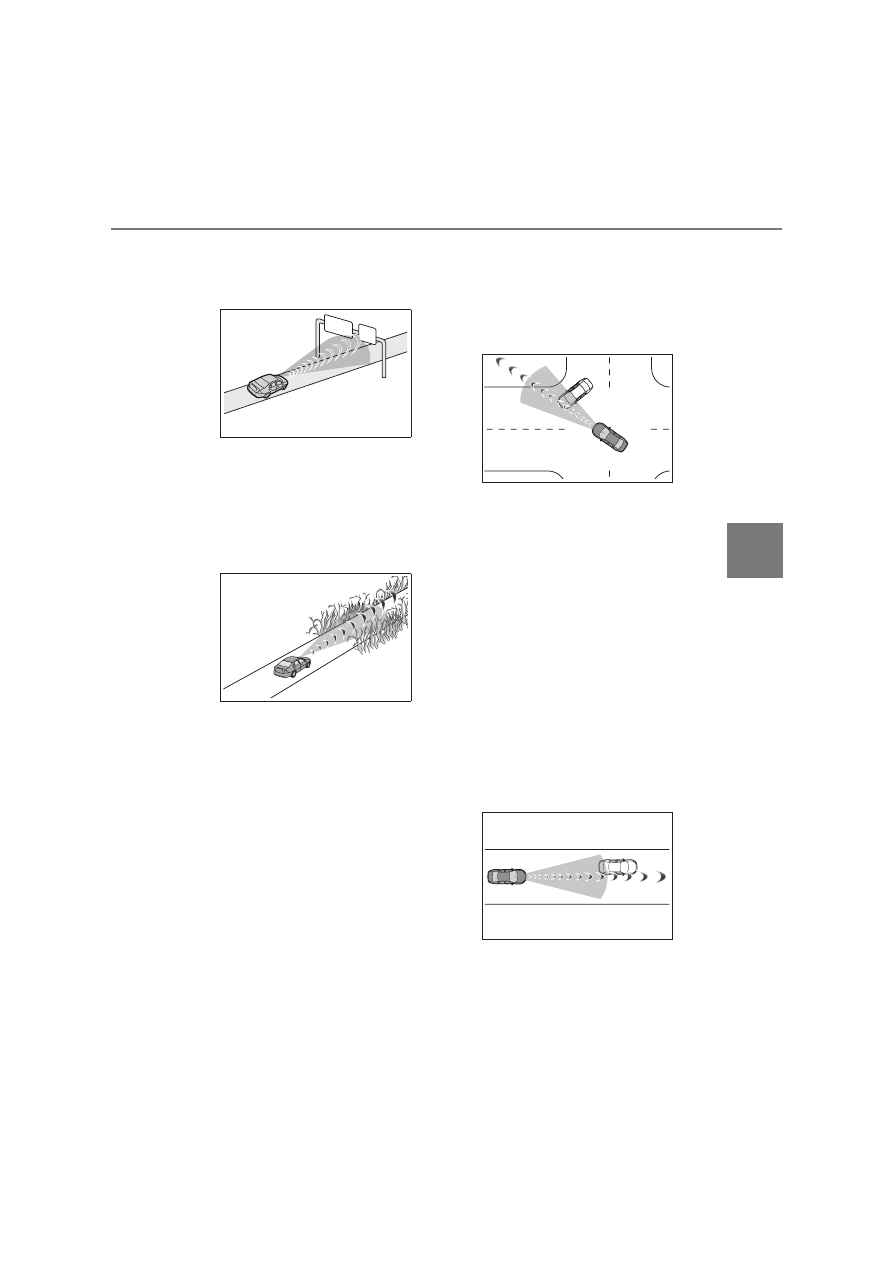
• When passing under an object (road
sign, billboard, etc.)
• When approaching an electric toll gate
barrier, parking area barrier, or other
barrier that opens and closes
• When using an automatic car wash
• When driving through or under objects
that may contact your vehicle, such as
thick grass, tree branches, or a ban-
ner
• When driving through steam or smoke
• When driving near an object that
reflects radio waves, such as a large
truck or guardrail
• When driving near a TV tower, broad-
casting station, electric power plant,
radar equipped vehicles, etc., or other
location where strong radio waves or
electrical noise may be present
• When there are many things which
can reflect the radio waves of the
radar in the vicinity (tunnels, truss
bridges, gravel roads, snow covered
road that have tracks, etc.)
• For region A: While making a right/left
turn, when an oncoming vehicle or a
crossing pedestrian has already
exited the path of your vehicle
• For region A: While making a right/left
turn, closely in front of an oncoming
vehicle or a crossing pedestrian
• For region A: While making a right/left
turn, when an oncoming vehicle or a
crossing pedestrian stops before
entering the path of your vehicle
• For region A: While making a right/left
turn, when an oncoming vehicle turns
right/left in front of your vehicle
• For region A: While steering into the
direction of oncoming traffic
■
Situations in which the system may
not operate properly
●
In some situations such as the follow-
ing, an object may not be detected by
the radar sensor and front camera,
preventing the system from operating
properly:
• When a detectable object is
approaching your vehicle
• When your vehicle or a detectable
object is wobbling
• If a detectable object makes an abrupt
maneuver (such as sudden swerving,
acceleration or deceleration)
• When your vehicle approaches a
detectable object rapidly
• When a detectable object is not
directly in front of your vehicle
• When a detectable object is near a
wall, fence, guardrail, manhole cover,
vehicle, steel plate on the road, etc.
• When a detectable object is under a
structure