Honda Pilot (2022 year). Manual in english - page 28
 

  Index      Manuals     Honda Pilot (2022 year). Manual in english


Search            copyright infringement  


Content      ..     26      27      28      29     ..


Honda Pilot (2022 year). Manual in english - page 28


446

uu

Towing a Trailer

u

Towing Preparation

Driving

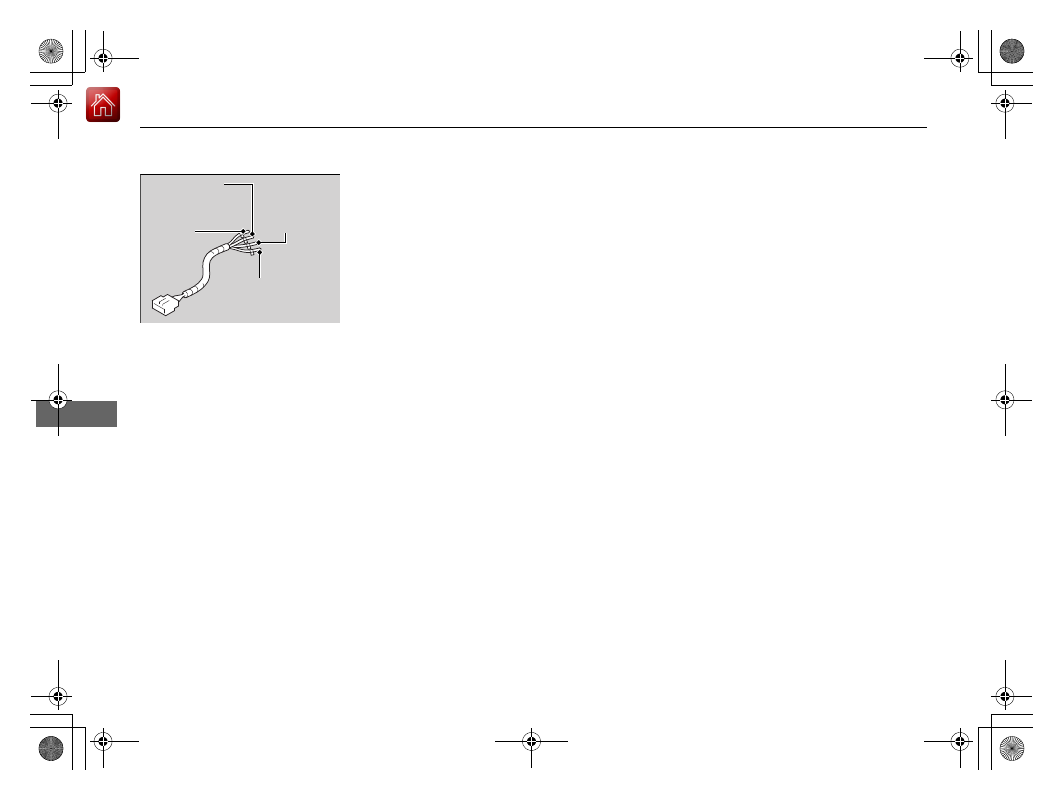
The trailer hitch harness is used to install the 
controller for the electric trailer brakes.
Insert the trailer brake fuse into the engine 
compartment sub fuse box.

2

Engine Compartment Fuse Box Type B


P. 634

Electric Brake 
(Brown)

+B (20A) 
(Blue)

Ground 
(Black)

Brake Lights 
(Sky Blue)

Continued

447

uu

Towing a Trailer

u

Towing Preparation

Driving

Trailer light

Trailer lights and equipment must comply with federal, state, province/territory, and 
local regulations. Check with your local trailer sales or rental agency for the 
requirements in the area where you plan to tow.

We recommend that you have a dealer install a Honda wiring harness and converter. 
They are designed for your vehicle.

Hitches

Read the trailer manufacturer’s instructions, and select the appropriate draw bar for 
the height of the trailer you will be towing.

Weight distribution hitches

Your vehicle is designed to tow without the need for a load distributing hitch. If you 
wish to use one, please consult your trailer maker for proper installation and set-up.
Improper set-up could degrade the handling, stability, and braking performance of 
your vehicle.

1

Trailer light

The trailer lighting connector is located behind the 
left side panel in the cargo area.
Even if you are planning to use the non-Honda trailer 
lighting harness and converter, ask a dealer for the 
correct connector and pins.

+B Trailer Main
(Red)

+B Trailer Charge
(Sky Blue)

+B ELEC Brake
(Brown)

IG2 HAC
(Light Green)

Back Light
(Brown)

Trailer Small Light
(Red)
Stop Light
(Beige)

Pins’ wiring color codes and their purposes:

Right Turn Signal
(Green)

Left Turn Signal
(Blue)

448

uu

Towing a Trailer

u

Towing Preparation

Driving

Safety chains

Always use safety chains when you tow a trailer. Leave enough slack to allow the 
trailer to turn corners easily, but do not allow the chains to drag on the ground.

Sway control

This device can be used if your trailer tends to sway. Your trailer maker can tell you 
what kind of sway control you need and how to install it. Improper installation could 
degrade the handling and stability of your vehicle.

Trailer mirrors

Many states, provinces and territories require special exterior mirrors when towing a 
trailer. Install special mirrors whenever you cannot clearly see behind you, or if the 
trailer creates a blind spot.

Automatic transmission cooler

An additional ATF (automatic transmission fluid) cooler is required to keep the 
transmission from overheating when towing more than 3,500 lbs (1,588 kg). You 
can get the additional ATF cooler at a dealer.

AWD models

449

uu

Towing a Trailer

u

Trailer Stability Assist

Driving

Trailer Stability Assist

Helps to stabilize the vehicle and trailer when the trailer severely sways.

How trailer stability assist works

When the vehicle and trailer become unstable while driving, trailer stability assist 
determines the cause. If the trailer oscillation is detected as the cause, and the 
swaying increases, the system applies the brakes or controls engine output to reduce 
vehicle speed.
Both the vehicle and trailer brake lights come on automatically if you brake to 
reduce vehicle speed.

1

Trailer Stability Assist

Trailer stability assist is not a function that prevents 
the vehicle and trailer from swaying. Avoid high 
speeds, abrupt steering, improper trailer load, and 
sudden braking to keep the trailer from swaying. 
When swayed too severely, the system becomes 
ineffective, and you may lose control of your vehicle, 
causing the trailer to roll over or get damaged.

2

Driving Safely with a Trailer

 P. 450

Trailer towing sway is caused by:

Crosswinds

Improper towbar down load

Excessive Speed

The VSA

®

 system indicator blinks during the trailer 

stability assist operation.

2

VSA

®

 Operation

 P. 478

450

uu

Towing a Trailer

u

Driving Safely with a Trailer

Driving

Driving Safely with a Trailer

Have the trailer properly serviced and keep it in good condition.

Make sure that all the weights and load in the vehicle and trailer are within limits.

2

Towing Load Limits

 P. 442

When towing more than 3,500 lbs (1,590 kg), use of gasoline with a pump 
octane number of 87 or higher is recommended.

u

Towing performance can be affected by high altitude, high temperature, or 
steep uphill.

Securely attach the hitch, safety chains, and other necessary parts to the trailer.

Securely store all the items in and on the trailer so that they do not shift while 
driving.

Check if the lights and brakes on the trailer are working properly.

Check the pressures of the trailer tires.

Turn off the Auto Idle Stop system using the Auto Idle Stop 

OFF

 button. The 

trailer weight can affect your vehicle's brake effectiveness if Auto Idle Stop is 
activated on a hill while towing a trailer.

Drive slower than normal.

Obey posted speed limits for vehicles with trailers.

Use the 

(

D

 position when towing a trailer on level roads.

Turn more slowly and with a wider turning arc than normal.

Allow more time and distance for braking.

Do not brake or turn suddenly.

Things You Need To Know Before Towing a Trailer

Towing Speeds and Gears

Turning and Braking

1

Driving Safely with a Trailer

Operating speed when towing a trailer must not 
exceed 62 mph (100 km/h).

Parking
In addition to the normal precautions, place wheel 
chocks at each of the trailer’s tires.

1

Towing Speeds and Gears

When towing a fixed-sided trailer (e.g., camper), do 
not exceed 55 mph (88 km/h). 
At higher speeds, the trailer may sway or affect 
vehicle handling.

451

uu

Towing a Trailer

u

Towing Your Vehicle

Driving

Monitor your temperature gauge. If it nears the white (Hot) mark, turn off the 
climate control system and reduce speed. Pull to the side of the road safely to cool 
down the engine if necessary.

Change the gear position to 

(

S

 position if the transmission shifts frequently.

When retrieving a boat from the water, we recommend using the sequential shift 
mode 

(

S

 to utilize the transmissions lower gears.

Towing Your Vehicle

Your vehicle is not designed to be towed behind a motor home. If your vehicle needs 
to be towed in an emergency, refer to the emergency towing information.

2

Emergency Towing

 P. 638

Driving in Hilly Terrain

Retrieving a Boat

1

Driving in Hilly Terrain

If the automatic transmission fluid temperature 
exceeds the specified limit, the transmission will also 
automatically up shift, even in the sequential shift 
mode. 

452

Driving

Off-Highway Driving Guidelines

General Information

Your vehicle has been designed primarily for use on pavement, however, its higher 
ground clearance allows you to occasionally travel on unpaved roads. It is not 
designed for trail-blazing, or other challenging off-highway activities.

If you decide to drive on unpaved roads, you will find that it requires somewhat 
different driving skills and that your vehicle will handle somewhat differently than it 
does on pavement. Pay attention to the precautions and tips in this section, and get 
acquainted with your vehicle before leaving the pavement.

Important Safety Precautions

To avoid loss of control or rollover, be sure to follow all precautions and 
recommendations:

Be sure to store cargo properly and do not exceed your cargo load limits.

2

Maximum Load Limit

 P. 439

Whenever you drive, make sure you and your passengers always wear seat belts.

Keep your speed low, and never go faster than the conditions allow.

It’s up to you to continually assess the situation and drive within the limits.

1

Off-Highway Driving Guidelines

Failure to operate your vehicle correctly might result 
in a crash or a rollover.

2

Important Handling Information

 P. 34

2

Precautions While Driving

 P. 460

Spinning the tires excessively can also damage the 
Intelligent VTM4 (i-VTM4

TM

) system.

3

WARNING

Improperly operating this vehicle on or off 
pavement can cause a crash or rollover in 
which you and your passengers could be 
seriously injured or killed.

Follow all instructions and guidelines in 
this owner’s manual.

Keep your speed low, and don’t drive 
faster than conditions permit.

453

uu

Off-Highway Driving Guidelines

u

Avoiding Trouble

Driving

Avoiding Trouble

Check Out Your Vehicle

 before you leave the pavement and make sure that all 

scheduled maintenance has been completed. Pay special attention to the 
condition of the tires, and check the tire pressures.

Remember

 the route you choose presents limits (too steep or bumpy), you have 

limits (driving skill and comfort), and your vehicle has limits (traction, stability, and 
power). Failing to recognize these limits will likely put you and your passengers in 
a hazardous situation.

Accelerating and Braking

 should be done slowly and gradually. Trying to start 

or stop too fast can cause a loss of traction and you could lose control.

Avoiding Obstacles and Debris

 in the road reduces the likelihood of a rollover 

or damage to your suspension or other components.

Driving on Slopes

 increases your risk of a rollover, particularly if you attempt to 

drive across a slope that is too steep. Going straight up or down a slope is usually 
the safest. If you can’t clearly see all conditions or obstacles on a slope, walk it 
before you drive it. If there is any doubt whether you can safely pass, don’t try it. 
Find another route. If you get stuck when climbing, do not try to turn around. 
Back down slowly following the same route you took up the hill.

Crossing a Stream

 - Avoid driving through deep water. If you encounter water 

in your route (a small stream or large puddle, for example), evaluate it carefully 
before going ahead. Make sure it is shallow, flowing slowly, and has firm ground 
underneath. If you are not sure of the depth or the ground, turn around and find 
another route. Driving through deep water can also damage your vehicle. The 
water can get into the transmission and differential, diluting the lubricant and 
causing an eventual failure. It can also wash the grease out of the wheel bearings.

If You Get Stuck

, carefully go in the direction that you think will get you 

unstuck. Do not spin the tires as this will only make things worse and could 
damage the transmission. If you are unable to free yourself, your vehicle will need 
to be towed. Front tow hook is provided for this purpose.

454

Driving

When Driving

Starting the Engine

1.

Make sure the parking brake is applied.

2.

Depress the brake pedal.

3.

Press the 

ENGINE START/STOP

 button 

without depressing the accelerator pedal.

1

Starting the Engine

Keep your foot firmly on the brake pedal when 
starting the engine.
The engine is harder to start in cold weather and in 
thinner air found at altitudes above 8,000 feet 
(2,400 meters).

When starting the engine in cold weather, turn off all 
electrical accessories such as the lights, climate 
control system and rear defogger in order to reduce 
battery drain.

If you live in a region where winter is extremely cold, 
an engine block heater will improve starting and 
warming of the engine. Consult a dealer for details.

If the exhaust system sounds abnormal or you can 
smell exhaust gas inside the vehicle, have your vehicle 
checked by a dealer. There may be a problem with 
the engine or exhaust system.

Bring the keyless remote close to the 

ENGINE 

START/STOP

 button if the battery in the keyless 

remote is weak.

2

If the Keyless Remote Battery is Weak


P. 622

The engine may not start if the keyless remote is 
subjected to strong radio waves.

Brake Pedal

Continued

455

uu

When Driving

u

Starting the Engine

Driving

You can turn the engine off when the vehicle is completely stopped.

1.

Put the transmission into 

(

P

.

2.

Press the 

ENGINE START/STOP

 button.

Stopping the Engine

1

Starting the Engine

Do not hold the 

ENGINE START/STOP

 button to 

start the engine.
If the engine does not start, wait at least 30 seconds 
before starting the engine again.

The immobilizer system protects your vehicle from 
theft.
If an improperly coded device is used, the engine’s 
fuel system is disabled.

2

Immobilizer System

 P. 150

uu

When Driving

u

Starting the Engine

456

Driving

You can remotely start the engine on using the keyless remote.

To start the engine

When started remotely, the engine automatically shuts off after 10 minutes of idling 
and/or the brake pedal and 

ENGINE START/STOP

 button have not been pressed 

simultaneously.
To extend the run time for another 10 minutes during the first run, press the 


button, then press and hold the 

 button.

u

Some exterior lights flash six times if a 10-minute extension request was 
transmitted successfully.

Remote Engine Start

1

Remote Engine Start

If there are buildings and obstacles between your 
vehicle and the remote, the range will be reduced.
This distance may vary by external electrical 
interference.
The engine may not start by the remote engine start 
if:

You have disabled a remote engine start setting 
using the audio/information screen.

2

Customized Features

 P. 385

The power mode is not in VEHICLE OFF (LOCK).

The transmission is in a position other than 

(

P

.

3

WARNING

Carbon monoxide gas is toxic and can 
rapidly accumulate in closed or even partly 
enclosed areas.
Breathing it can cause unconsciousness and 
even kill you.
Never use the remote engine starter with 
the vehicle parked in a garage or other 
areas with limited ventilation.

Press the 

 button, then press and 

hold the 

 button

Some exterior lights flash once.

Go within the range, 
and try again.

LED: Blinks when any button is pressed.

Some exterior lights flash 
six times if the engine 
starts successfully.

Exterior lights will not 
flash if the engine does 
not start.

Continued

457

uu

When Driving

u

Starting the Engine

Driving

To stop the engine

1

Remote Engine Start

The hood is open, or any door or the tailgate is 
unlocked.

You have already used the remote twice to start 
the engine.

Another registered keyless remote is in the vehicle.

There is any antenna failure.

The door is unlocked with the built-in key.

The engine oil pressure is low.

The engine coolant temperature is extremely high.

The telematics

*

 unit malfunctions.

The security system alarm is not set.

The engine may stop while it is running if:

You do not start the vehicle within 10 minutes of 
starting the engine with the keyless remote.

The engine is stopped by using the keyless remote.

There is any antenna failure.

The security system alarm is not set.

The door is unlocked with the built-in key.

The hood is open, or any door, or the tailgate is 
unlocked.

Any door is open.

The telematics

*

 unit malfunction.

The engine coolant temperature is extremely high.

The battery is low.

Press and hold the 

 button for 

one second.

Go within the range, 
and try again.

The exterior lights will not flash when the remote 
is out of the keyless access system range.
The engine will not stop.

The exterior lights flash once if the engine stops 
successfully.

* Not available on all models

uu

When Driving

u

Starting the Engine

458

Driving

1

Remote Engine Start

The engine oil pressure is low.

The Malfunction Indicator Lamp comes on if there 
is a problem with the emissions control systems.

The transmission is in a position other than 

(

P

.

While the engine is running, the vehicle will 
automatically precondition inside the vehicle.
When it is warm outside:

The climate control system is activated in 
recirculation mode.

The seat ventilation is activated

*

.

When it is cold outside:

The defroster is activated at a moderately warm 
temperature.

The rear defogger and door mirror heaters are 
activated.

The seat heaters

*

 and heated steering wheel

*

 are 

activated.

2

Heated Steering Wheel

*

 P. 215

2

Front Seat Heaters/Ventilators

*

 P. 213, 

214

* Not available on all models

459

uu

When Driving

u

Starting the Engine

Driving

1.

Depress the brake pedal and press the 

ENGINE START/STOP

 button 

simultaneously.

2.

Keeping your right foot on the brake pedal, release the parking brake. Check that 
the parking brake and brake system indicator has gone off.

2

Parking Brake

 P. 536

3.

Put the transmission into 

(

D

. Select 

(

R

 when reversing.

4.

Gradually release the brake pedal and gently depress the accelerator pedal to pull 
away.

Hill start assist system

Hill start assist keeps the brake engaged briefly to help prevent the vehicle from 
rolling on inclines as you move your foot from the brake pedal to the accelerator.

Put the transmission into 

(

D

 or 

(

S

 when facing uphill, or 

(

R

 when facing downhill, 

then release the brake pedal.

Starting to Drive

1

Starting to Drive

The engine stops when the transmission position is 
changed from 

(

P

 before the 

ENGINE START/STOP


button is pressed. Follow step 1 when starting to 
drive.

When the engine was started using 
the keyless remote

When the engine was started using the keyless remote

When the engine was started in any case

1

Hill start assist system

Hill start assist may not prevent the vehicle from 
rolling downhill on a very steep or slippery slope, and 
will not operate on small inclines.

Hill start assist is not a replacement for the parking 
brake.

Hill start assist will operate even when VSA

®

 is 

switched off.

460

uu

When Driving

u

Precautions While Driving

Driving

Precautions While Driving

Utility vehicles have a significantly higher rollover rate than other types of vehicles. 
To prevent rollovers or loss of control:

Take corners at slower speeds than you would with a passenger vehicle.

Avoid sharp turns and abrupt maneuvers whenever possible.

Do not modify your vehicle in any way that you would raise the center of gravity.

Do not carry heavy cargo on the roof.

Never carry more than 165 lbs (75 kg) of cargo on the roof rack (Honda accessory).

Avoid driving in deep water and on flooded roads. This can damage the engine, 
driveline, or cause electrical component failure.

If there is a strong impact with something under the vehicle, stop in a safe location. 
Check the underside of the vehicle for damage or any fluid leaks.

Driving Guidelines for Your Utility Vehicle

In Rain

Other Precautions

1

Precautions While Driving

NOTICE

Do not change the gear position while pressing the 
accelerator pedal. You could damage the 
transmission.

NOTICE

If you repeatedly turn the steering wheel at an 
extremely low speed, or hold the steering wheel in 
the full left or right position for a while, the electric 
power steering (EPS) system heats up. The system 
goes into a protective mode, and limits its 
performance. The steering wheel becomes harder 
and harder to operate. Once the system cools down, 
the EPS system is restored. Repeated operation under 
these conditions can eventually damage the system.

If the power mode is set to ACCESSORY while 
driving, the engine will shut down and all steering 
and brake power assist functions will stop, making it 
difficult to control the vehicle.

Do not change the gear position to 

(

N

, as you will 

lose engine braking (and acceleration) performance.

During the first 600 miles (1,000 km) of operation, 
avoid sudden acceleration or full throttle operation so 
as not to damage the engine or powertrain.

Avoid hard braking for the first 200 miles (300 km) 
after purchasing your new vehicle or replacing the 
brake pads or rotors, to allow for proper break-in.

461

uu

When Driving

u

Automatic Transmission

Driving

Automatic Transmission

The engine runs at a higher idle speed and creeping increases.
Keep the brake pedal firmly depressed when stopped.

Quickly depressing the accelerator pedal while driving uphill may cause the 
transmission to drop to a lower gear, unexpectedly increasing vehicle speed. Depress 
the accelerator pedal carefully, especially on slippery roads and curves.

Creeping

Kickdown

1

Driving Guidelines for Your Utility Vehicle

Failure to operate your vehicle correctly might result 
in a crash or a rollover.

2

Important Handling Information

 P. 34

2

Precautions While Driving

 P. 460


Content      ..     26      27      28      29     ..