Ford Ranger EV (2001 year). Manual - part 38
206-07-2
206-07-2
Power Brake Actuation
SPECIFICATIONS
Torque Specifications
Torque Specifications
Description
Nm
Lb-Ft
Lb-In
Description
Nm
Lb-Ft
Lb-In
Vacuum Pressure Sensor
5.5
—
49
Battery Ground Cable
8
—
71
to Vacuum Tee Screws
Vacuum Pump Bracket
22
16
—
Vacuum Pressure Sensor
22
16
—
Bolts
Bolt
(Continued)
The vacuum pressure sensor measures absolute
DESCRIPTION AND OPERATION
pressure. The IAA module reports pressure in the
Power Disc Brake Actuation
system as the difference between system pressure
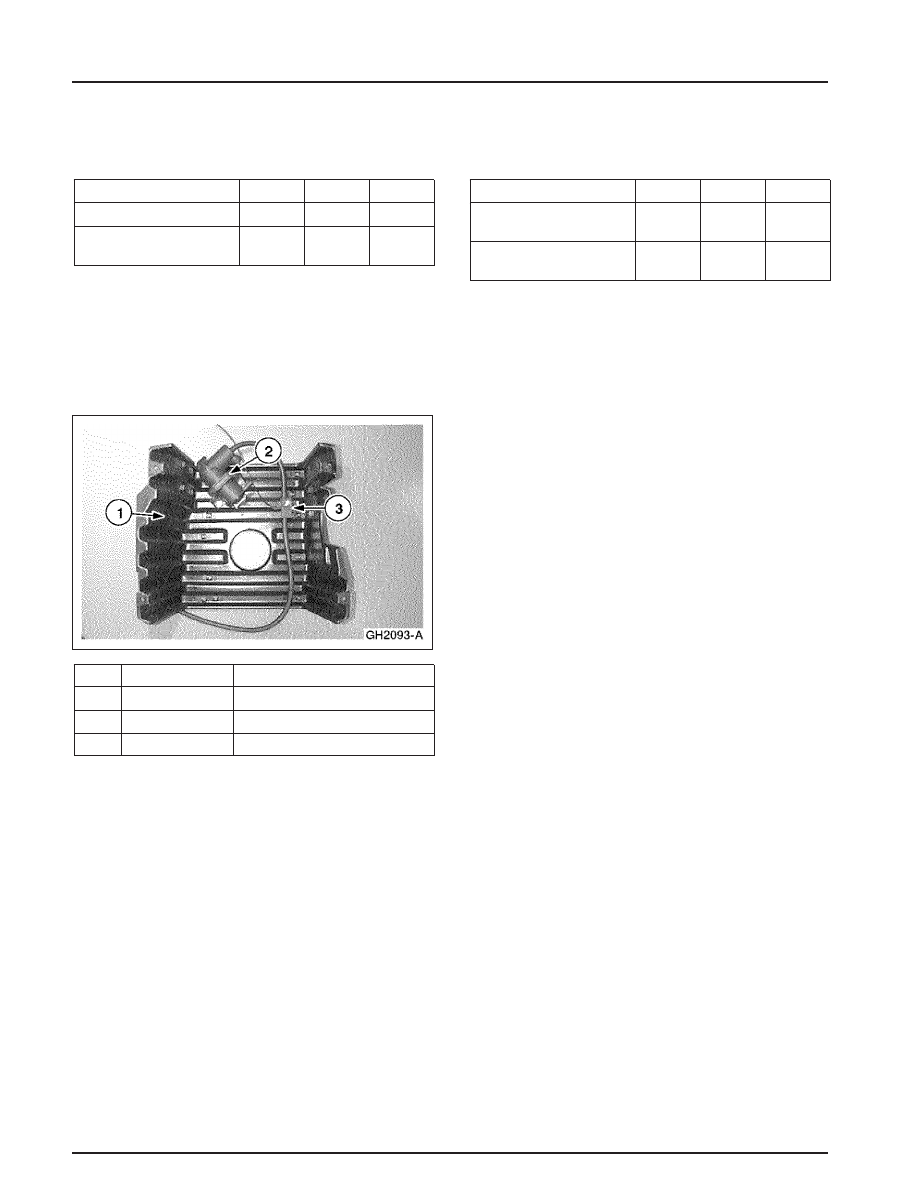
Card Table Bottom View
and absolute zero pressure. Based upon the absolute
zero scale, ambient pressure is about 100 kPa (14.5
psi). Any pressure less than 100 kPa (14.5 psi) is
defined as vacuum. The smaller the reading, the
higher the amount of vacuum.
Power is supplied to the vacuum pump when the
key is in the RUN or START position. The IAA
module reads the vacuum signal sent by the vacuum
pressure sensor and opens and closes a relay to
operate the vacuum pump. The vacuum pump cycles
in order to maintain a set amount of pressure that
ranges from 26-34 kPa (3.8-4.9 psi).
Item
Part Number
Description
1
—
Card Table
2
—
Vacuum Pump
3
—
Vacuum Pressure Sensor
The Electric Vehicle uses a conventional
vacuum-assisted hydraulic brake system. All
vacuum necessary for the brake system and climate
control operation is supplied by an electrically
operated vacuum pump. The pump is driven by an
electric motor and is controlled by the interface
adapter assembly (IAA) module. A vacuum signal is
sent to the IAA module from a vacuum pressure
sensor located in the vacuum line from the pump.
The pump and the vacuum pressure sensor are
mounted on the bottom side of the card table,
underneath the traction battery charger. The vacuum
pump should be replaced every 5 years or 60,000
miles.