Fiat Qubo (2021 year). Manual in english - page 4
59
The solenoid valves are open when:
the switching button is in the
methane position;
the pressure in the cylinder is
sufficient for operation;
the engine is running;
The solenoid valve assembly is
equipped with the following safety
devices:
1) Fuse pad
: in the event of
overheating (temperature above 110
°
C), it totally eliminates the danger of
excess pressure making the methane
in the cylinder flow out as quickly as
possible in a controlled manner.
2) Mechanical excess pressure
device (Burst Disk)
: in the event of
excess pressure (above 330 bar), it
ensures that the methane escapes
as quickly as possible in a controlled
manner.
3) Excess flow device
: intervenes
if the pipes break and limits the flow
of methane exiting to non dangerous
levels.
The flow restrictor valve is located to
allow it to operate even if the solenoid
valve casing is broken due to an
impact.
4) Manual tap
: positioned upstream of
the solenoid valve.
This separates the cylinder from the
methane system to allow maintenance
operations.
The taps are accessible from outside
the vehicle and are located, in the case
of the lengthwise middle cylinder, at the
rear of the cylinder and, in the case of
the transverse rear cylinder, towards
the wheel right side.
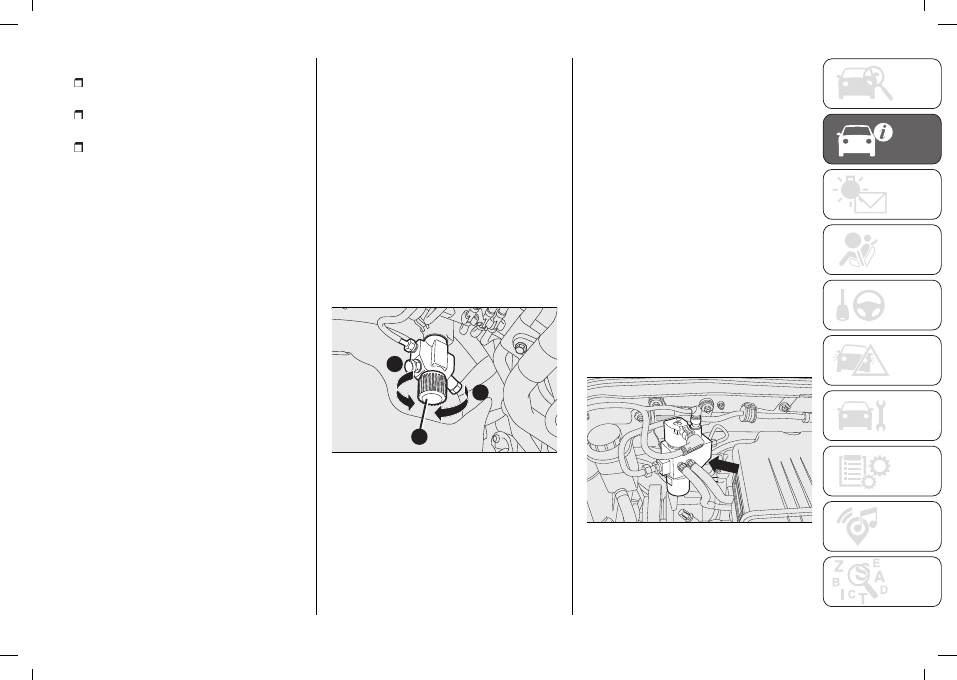
To close the taps (D) fig. 115: turn the
knob in the direction (1) shown by the
arrow (clockwise OFF).
To open the taps (D) fig. 115: turn the
knob in the direction (2) shown by the
arrow (anticlockwise ON).
1
2
D
115
F0T0349
5) Check valve
, this prevents the
methane from flowing back to the filler.
PIPES
The methane piping from the filler to
the pressure regulator/reduction unit
is made from galvanised steel and
covered in plastic (high pressure) and
is located outside the passenger
compartment; the piping from the
pressure regulator/reduction unit to the
methane injectors is in stainless steel.
PRESSURE
REGULATOR/REDUCTION
UNIT
The pressure reduction unit fig. 116 is
installed in the engine compartment.
It reduces the pressure of the methane
from the value in the cylinder to the
supply value for the methane injectors
(about 6 bar) and keeps it constant in
all operating conditions.
116
F0T0350