Fiat 124 Spider (2020 year). Manual in english - page 14
-------------------------------------------------------------------------------------------------------------------------------------------------------------
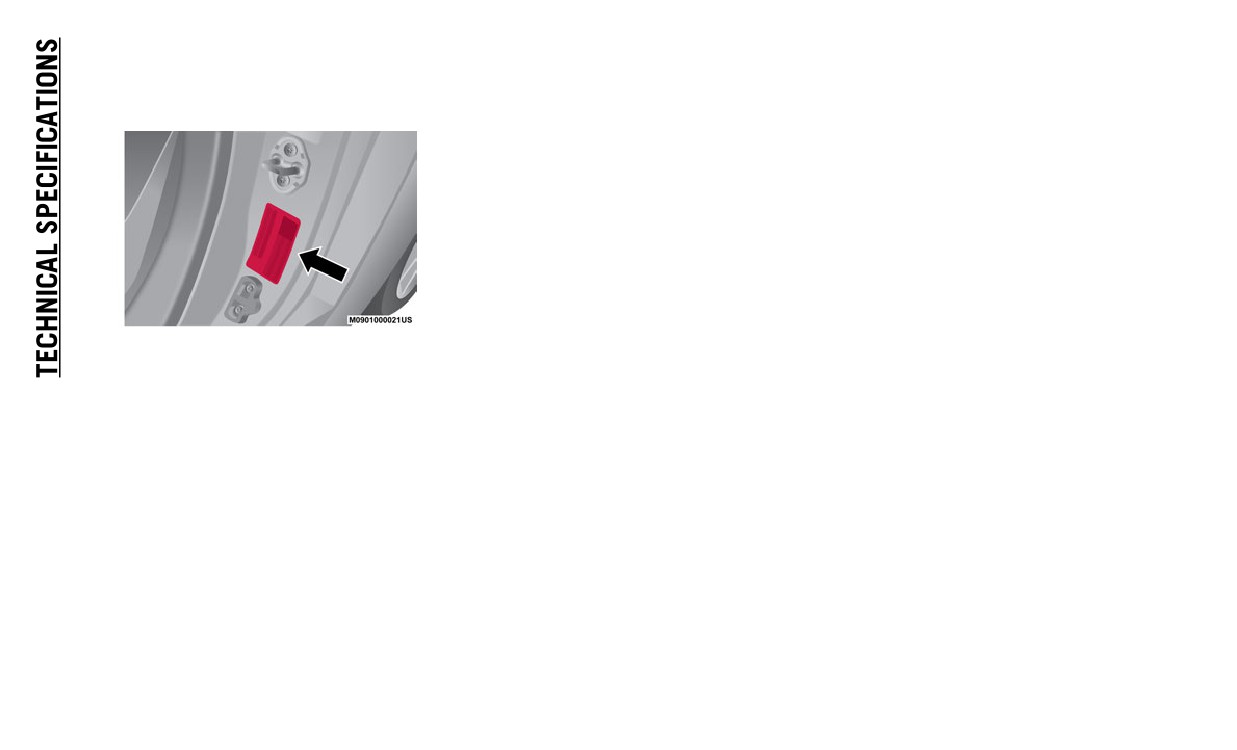
Tire Pressure Label
It is very important that the inflation pres-
tance, resulting in heat buildup and
sure of the tires on your vehicle is main-
internal damage to the tire. It results in
The tire pressure label is located on the left
tained at the recommended pressure.
unnecessary tire stress, irregular wear,
side of door pillar.
loss of control and accidents. A tire can
You should check the tire pressure regularly
lose up to half of its air pressure and not
to insure that the proper inflation pressure is
appear to be flat. It is impossible to deter-
maintained.
mine whether or not tires are properly
NOTE:
inflated just by looking at them.
Tire pressures listed on the vehicle
Checking Tire Pressure
placard or tire information label indicate
Proceed as follows:
the recommended cold tire inflation pres-
sure, measured when the tires are cold,
1.
When you check the air pressure, make
after the vehicle has been parked for at
sure the tires are cold - meaning they are
Tire Pressure Label
least three hours. As you drive, the
not hot from driving even a mile.
temperature in the tire warms up,
Engine Number
increasing the tire pressure.
2.
Remove the cap from the valve on one
tire.
The engine number label is located on the
Always check the tire inflation pressures
engine.
on a regular basis according to the recom-
3.
Firmly press a tire gauge onto the valve.
mended tire inflation pressure on the tire
RECOMMENDED TIRE
label and in conjunction with the informa-
4.
Add air to achieve recommended air
pressure.
INFLATION PRESSURE
vehicle with under-inflated tires is
5.
If you overfill the tire, release air by
dangerous. Under-inflation is the most
On the tire label you will find the recom-
pushing on the metal stem in the center
common cause of failures in any kind of
mended tire inflation pressure in both psi
of the valve. Then recheck the pressure
tire and may result in severe cracking,
and kPa for the tires installed as original
with your tire gauge.
tread separation or “blowout”, with unex-
equipment on the vehicle.
pected loss of vehicle control and
6.
Replace the valve cap.
increased risk of injury. Under-inflation
increases sidewall flexing and rolling resis-
284