Dodge Ram Truck 1500-2500-3500. Manual - part 603
4. After cleaning and inspecting the wiper components and the glass, if the wiper blade still fails to clear the glass
without smearing, streaking, chattering, hazing, or beading, replace the wiper blade.
WASHER SYSTEM
The washer system components should be inspected periodically, not just when washer performance problems are
experienced. This inspection should include the following points:
1. Check for ice or other foreign material in the washer reservoir. If contaminated, clean and flush the washer sys-
tem. (Refer to 8 - ELECTRICAL/WIPERS/WASHERS - CLEANING).
2. Inspect the washer plumbing for pinched, leaking, deteriorated, or incorrectly routed hoses and damaged or dis-
connected hose fittings. Replace damaged or deteriorated hoses and hose fittings. Leaking washer hoses can
sometimes be repaired by cutting the hose at the leak and splicing it back together using an in-line connector
fitting. Similarly, sections of deteriorated hose can be cut out and replaced by splicing in new sections of hose
using in-line connector fittings. Whenever routing a washer hose or a wire harness containing a washer hose, it
must be routed away from hot, sharp, or moving parts. Also, sharp bends that might pinch the washer hose must
be avoided.
CHECK VALVE
DESCRIPTION
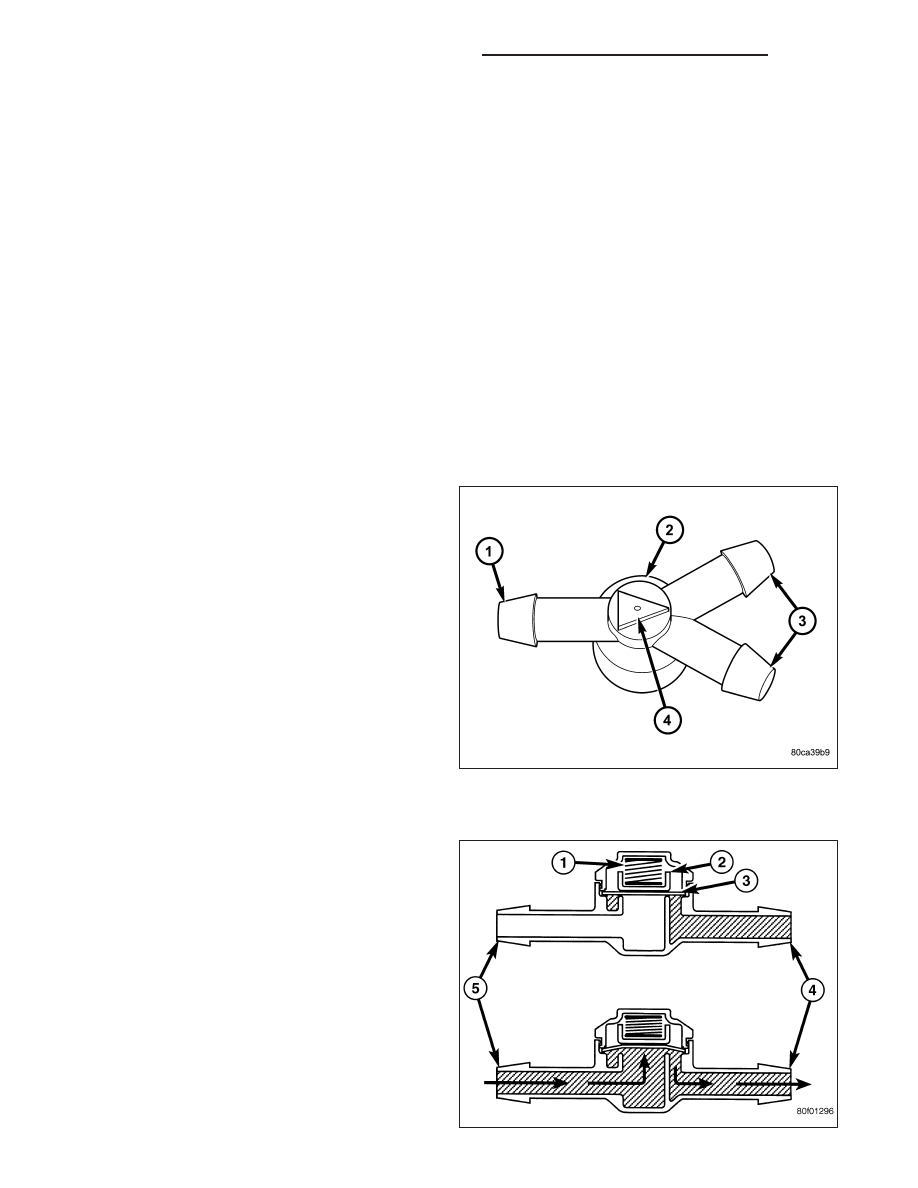
A single washer system check valve is standard
equipment on this model, and is installed in the
washer system plumbing. The check valve is integral
to the washer nozzle plumbing wye fitting (2) located
in the cowl plenum area beneath the cowl plenum
cover/grille panel near the base of the windshield. The
check valve consists of a molded plastic body with a
raised arrowhead (4) molded into its center section
that indicates the direction of the flow through the
valve, and three barbed hose nipples (1 and 3) formed
in a wye configuration on the outside circumference of
the center section of the valve body. The check valve
cannot be adjusted or repaired and, if faulty or dam-
aged, it must be replaced.
OPERATION
The check valve provides more than one function in
this application. It serves as a wye connector fitting
between the engine compartment and washer nozzle
sections of the washer supply hose. It prevents
washer fluid from draining out of the washer supply
hoses back to the washer reservoir. This drain-back
would result in a lengthy delay from when the washer
switch is actuated until washer fluid was dispensed
through the washer nozzles, because the washer
pump would have to refill the washer plumbing from
the reservoir to the nozzles. Such a drain-back condi-
tion could also result in water, dirt, or other outside
contaminants being siphoned into the washer system
through the washer nozzle orifice. This water could
subsequently freeze and plug the nozzle, while other
contaminants could interfere with proper nozzle oper-
ation and cause improper nozzle spray patterns. In
8R - 52
WIPERS/WASHERS - SERVICE INFORMATION
DR/DH