Dodge Ram Truck 1500-2500-3500. Manual - part 241
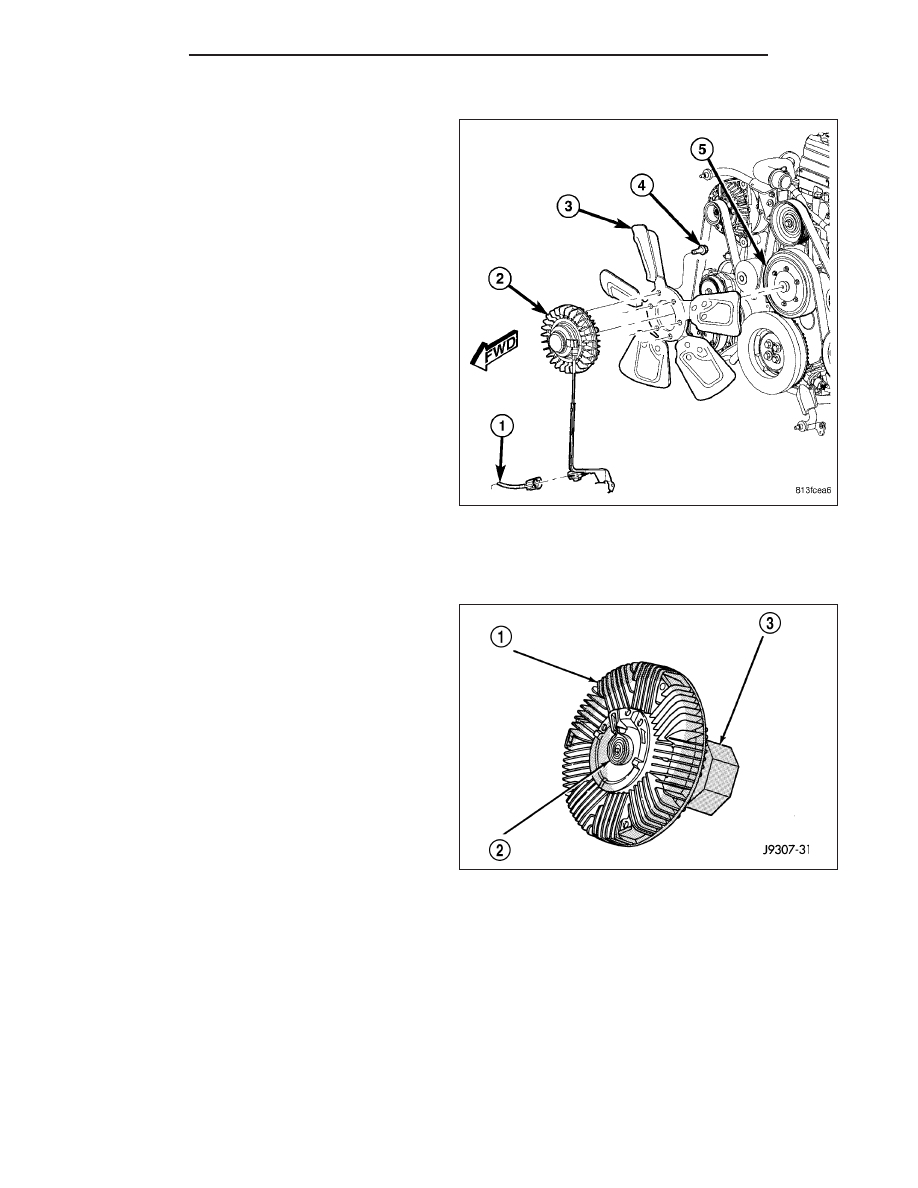
5.9L DIESEL ENGINE
The electronically controlled viscous fan drive is
attached to the fan drive pulley mounted to the
engine. The coupling allows the fan to be driven in a
normal manner. The fan speed is controlled by the
electronic control module.
OPERATION
GAS ENGINES
A thermostatic bimetallic spring coil is located on the
front face of the viscous fan drive unit (a typical vis-
cous unit is shown in. This spring coil reacts to the
temperature of the radiator discharge air. It engages
the viscous fan drive for higher fan speed if the air
temperature from the radiator rises above a certain
point. Until additional engine cooling is necessary, the
fan will remain at a reduced rpm regardless of engine
speed.
Only when sufficient heat is present, will the viscous
fan drive engage. This is when the air flowing through
the radiator core causes a reaction to the bimetallic
coil. It then increases fan speed to provide the neces-
sary additional engine cooling.
Once the engine has cooled, the radiator discharge
temperature will drop. The bimetallic coil again reacts and the fan speed is reduced to the previous disengaged
speed.
5.9L DIESEL
The Engine Control Module (ECM) controls the level of engagement of the electronically controlled viscous fan
clutch by monitoring coolant temperature, intake manifold temperature, air conditioning pressure and transmission oil
temperature. Based on cooling requirements, the ECM sends a signal to the viscous fan clutch to increase or
decrease the fan speed.
Fan speed is monitored by the ECM. Fan speeds above or below a calibrated threshold will set a DTC. Circuit
concerns will also set fan clutch DTC’s.
7 - 70
ENGINE
DR/DH