PERSIAN OF IRAN TODAY AN INTRODUCTORY COURSE VOLUME 1 (2015) - page 7
One more thing about the verb “to be.”
In spoken Persian, if you want to indicate that “there is” something or “there are” some things, it is common
to use تسه. Look at the following examples.
There is a big door in front of the student.
) .تسه زومآشناد یولج گرزب رد هی(
There are six questions.
).تسه لاوس ات شیش(
There are several books under the table.
) .تسه زیم ریز باتک ات دنچ(
Note: This use of تسه is usually only found in the spoken language.
Fill in the blanks using تسه or هـ /ه . Be prepared to explain your answers in class. All of the sentences below are in spo-
ken form. In some cases both options are correct.
. ی
مرگ يليخ اوه زورما
. ی
نوبايخ نيا يوت هنوخ دنچ
؟ی
هنوخ نوا يوت قاتا ات دنچ
. ی
ضيرم مردارب تسود
. ی
ييابيز رهش ناهفصا
. ی
زيم يور گرزب فيک هي
؟ی
يک لام زيم يور فيک نوا
. ی
بوخ يليخ مليف نوا
؟ی
هنوخ نلا يک
Writing Exercise نتشون
Take a picture of your room and print it out (or find a picture of a room on the Web). Use the words you have
learned to describe the picture. The following questions may help you develop your paragraph.
What is this picture (سکع)?
What is my name? What do I do? Where do I live? Do I have a room? Do I share it with somebody? Is the room
big? What do I have in the room? Where are things are located? Is the room clean (زيمت)?
SHAHSAVARI | ATWOOD
164
Speaking Activities
In Class:
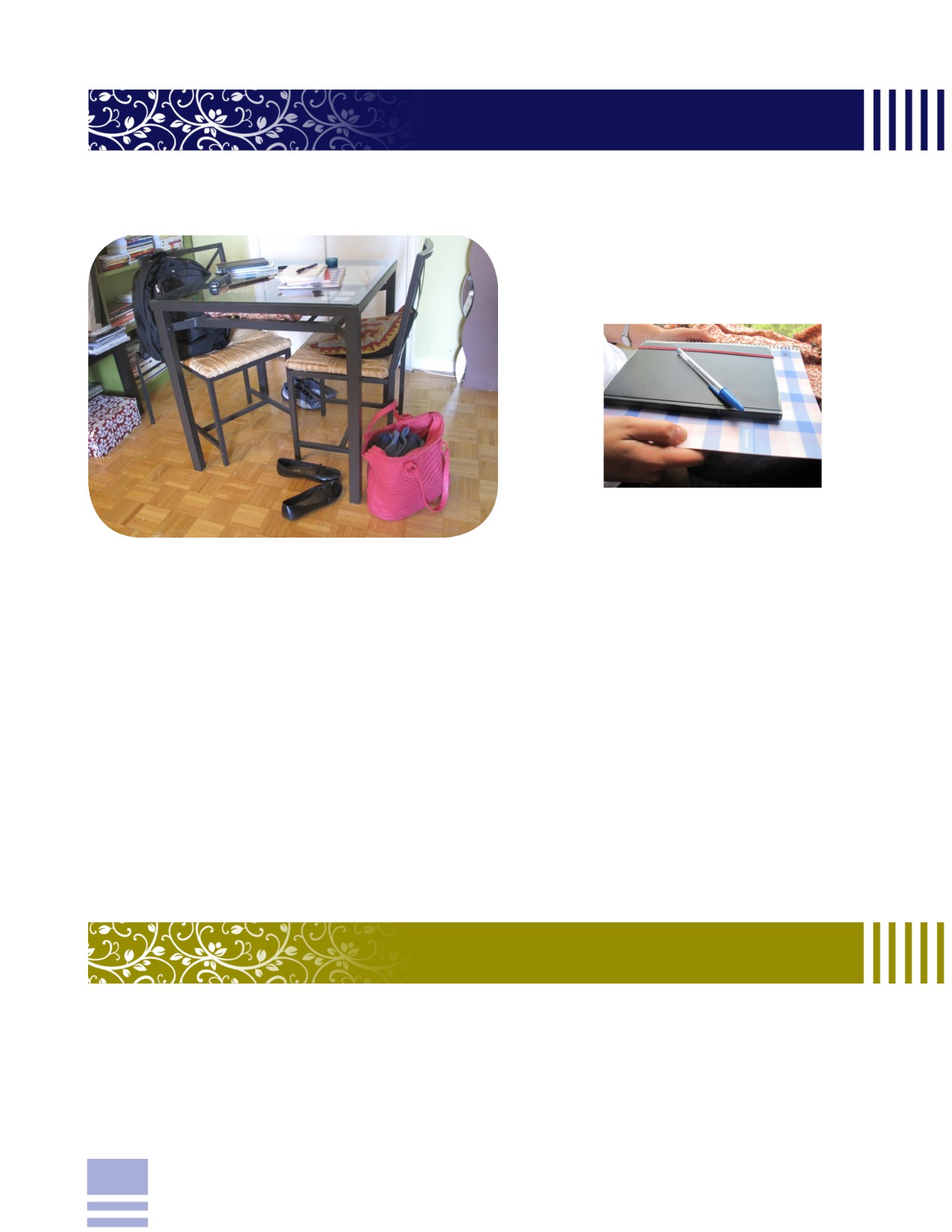
Look at the pictures below and use the new vocabulary to describe them. For example:
.تسا باتک يور دادم
).تسه زيم رانک يلدنص ات ود(
For Homework:
Review the vocabulary and grammar and think about how you would ask (and answer) these questions.
Practice aloud so you are ready to ask your classmates.
~ What does your father do? What time does he go to work ?
~ Is your mother a doctor? What’s your mother’s job?
~ Is your brother a lawyer? Is your sister an engineer?
~ What do you do? Do you like your work?
~ Is your mother a nurse?
~ What is in front of your house?
~ Why do you like Persian?
~ Now how many people are in our class?
~ Are your brothers or sisters students?
~ Where were you yesterday at noon?
Language Game
Hoarders
Work in small groups. Make sure your books are closed, and then describe an imaginary room in a minute and
forty-five seconds. Your instructor will draw the room as you describe it. However, he or she may refuse to draw
sentences that are incorrect. After each group has finished, the items in each picture will be counted, and the
group with the most items in its room wins!
165
PERSIAN OF IRAN TODAY
UNIT 10
ص
آ
ض
ب
ط
پ
ظ
ت
ع
ث
غ
ج
ف
چ
ق
ح
ک
خ
گ
د
ل
ذ
م
ر
ن
ز
و
ژ
ه
س
ي
ش
؟هيچ نوتهتشر
What is your major?
Cultural Note یگنهرف تشاددای
ناريا رد یشزومآ ماظن
Educational System in Iran
Education in Iran is an extensive system that can be divided into two parts: primary/secondary education and
higher education. While the Ministry of Education oversees the former, the latter is supervised y theMinistry of
Science, Research, and Technology. All levels of education are free in Iran; however, private institutions exist both
at the university level and the primary/secondary level.
According to the Iranian constitution, all Iranians must achieve at least a primary education. In Iran, there is an
optional year-long pre-elementary course that students begin at age 5 or 6. Elementary school or ناتسبد begins
the following year and lasts five years. At the end of that period, students must pass nationally administered
exams to continue to the next level. Middle school, which is called ييامنهار, or guidance, is a three-year program
that prepares students for high school, or ناتسريبد. Secondary education is not required in Iran. However, students
who decide to continue can choose two tracks during their three years in ناتسريبد: an academic/theoretical track
that prepares them for higher education, or a vocational track to prepare them for the work force. At the end of
ناتسريبد students receive a هطسوتم ملپيد. Primary and secondary education in Iran is divided according to gender, and
girls and boys attend different institutions.
Students who wish to continue on to higher education must pass a national entrance exam called روکنک.
Students usually spend an entire year preparing for this exam, and admission into universities is contingent upon
the score they achieve. There are separate exams for admission into public and private institutions, and admission
into public institutions tends to be more competitive because tuition is free. Fields in science and technology and
professional programs (like medicine and dentistry) are especially competitive.
Unlike primary and secondary education, most institutions of higher learning are open to both men and women.
However, classrooms are divided by gender and men sit on one side and women on the other. Academic years
are divided into semesters, and at the end of approximately four years, students receive a سناسيل /يسانشراک, which
is equivalent to a bachelor’s degree in the United States. سناسيل قوف / دشرا يسانشراک, which is equivalent to a master’s
degree, can usually be completed in two years (beyond يسانشراک). A ارتکد (or يد چا يپ, as it is sometimes called in
conversation) is the highest degree attainable in most fields.
167
PERSIAN OF IRAN TODAY
Short Conversations هاتوک یاهوگتفگ
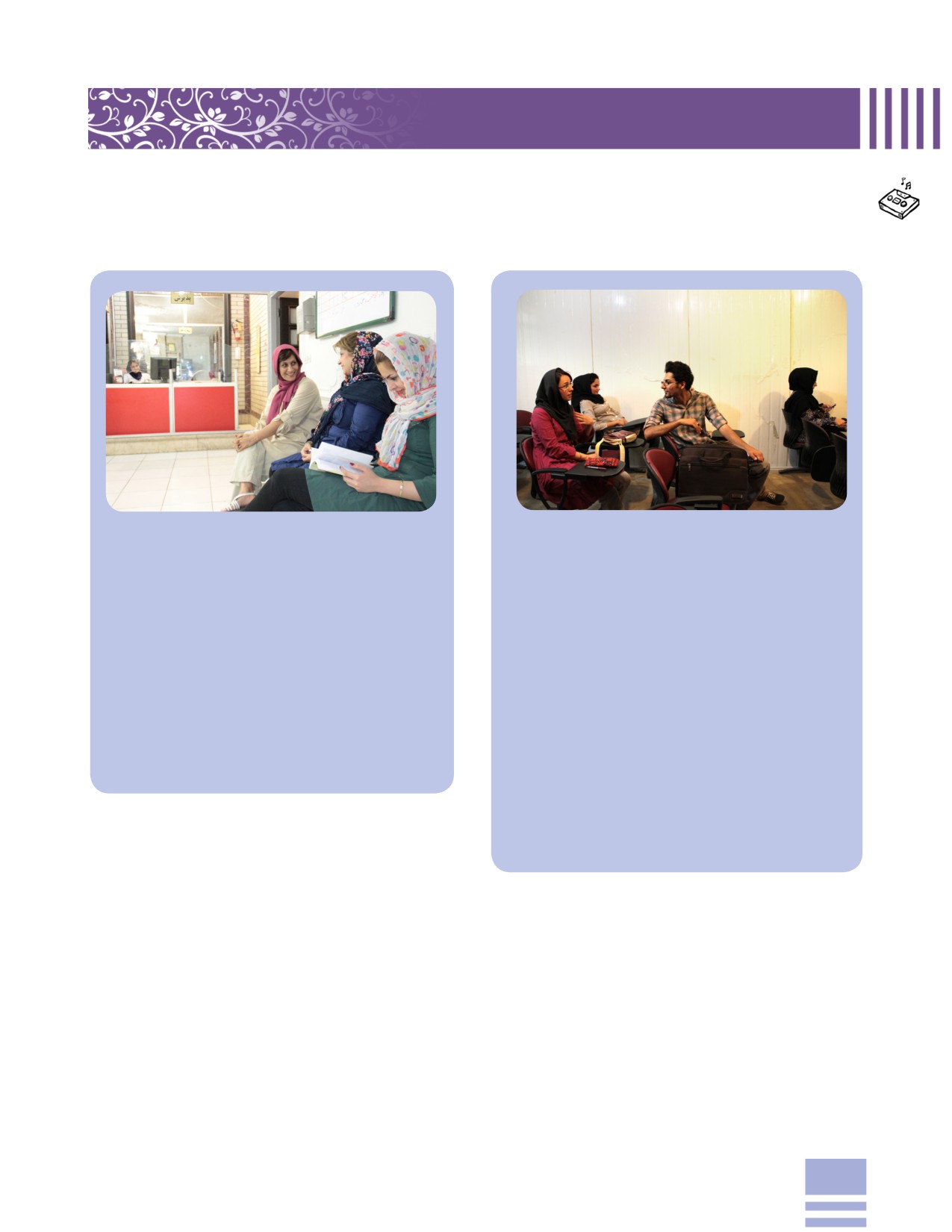
In class, listen to the audio files, repeat what you hear and try to fill in the blanks. At home repeat what you hear
several times and try to follow the rhythm. Write at least two sentences in Persian about each conversation you
hear. During the next class time, you will work with a classmate to create a scenario that uses these expressions.
؟نيتسه
نيا یوجشناد _
؟
نوترتخد ، ملس _
.هلب _
.هلب _
؟هيچ
_
؟نتسه
_
. .................... خيرات
_
.موس لاس
مرتخد ،هلب _
. ..................... مه نم _
یوجشناد .هئوجشناد
نمرسپ _
؟
مدنچ لاس _
.یسدنهم
لوا لاس _
؟نيتسه
امش _
1
1
.متسه موس
نم _
2
2
1
1
How do you say “major in Persian? Add this word to
the list of vocabulary in this unit.
2
2
SHAHSAVARI | ATWOOD
168
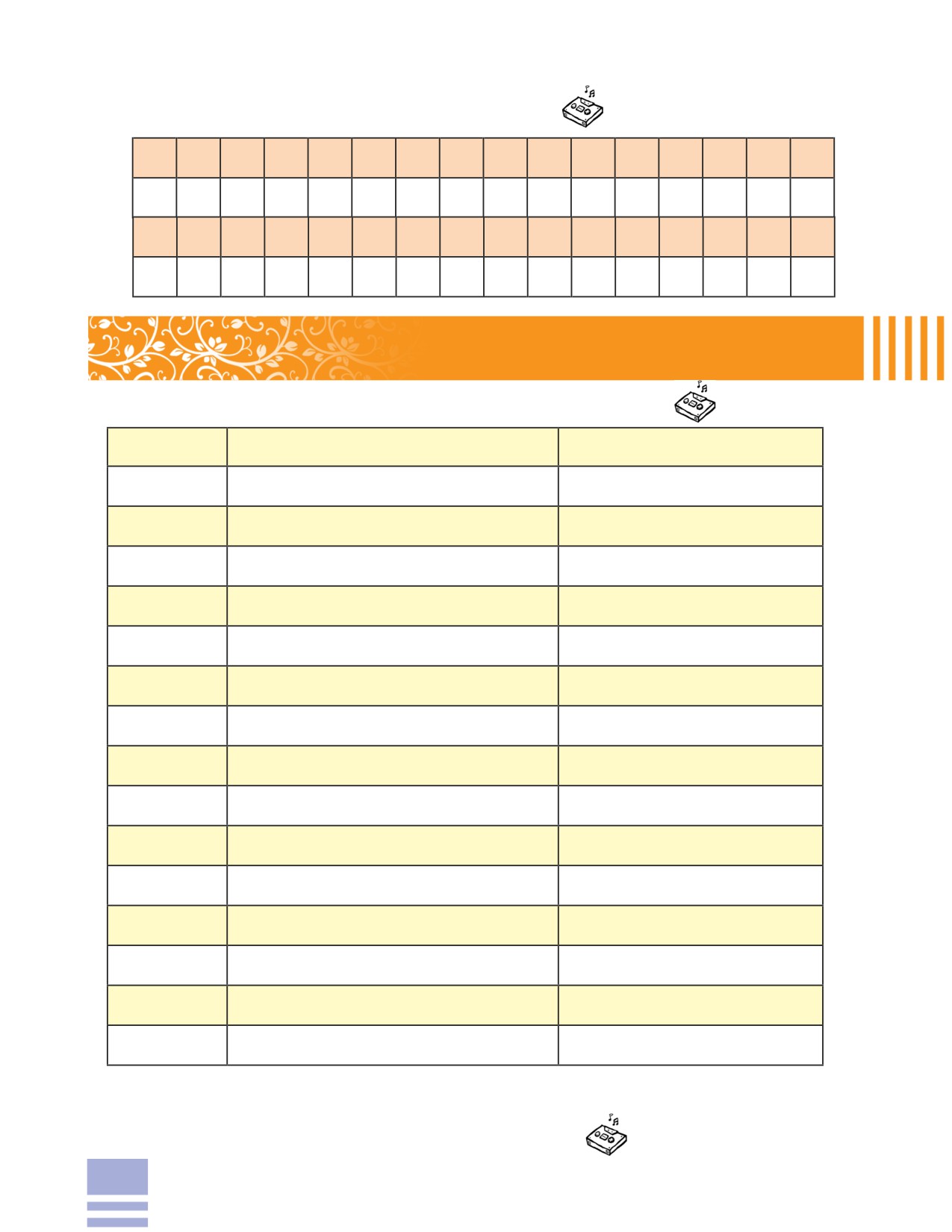
.دينک رارکت و دينک شوگ
ابفلا لودج
نيش
نيس
ژ
ز
ر
لاذ
لاد
خ
ح
چ
ميج
ث
ت
پ
ب
فلا
ش
س
ژ
ز
ر
ذ
د
خ
ح
چ
ج
ث
ت
پ
ب
آ
ي
ه
واو
نون
ميم
مل
فاگ
فاک
فاق
ف
نيغ
نيع
اظ
اط
داض
داص
ي
ه
و
ن
م
ل
گ
ک
ق
ف
غ
ع
ظ
ط
ض
ص
Vocabulary 1
سلک ناگژاو :1 ناگژاو
1. Listen to and learn these words. The spoken variations have been included in parentheses.
lesson
) .هتخس
( .تسا تخس سرد نيا
سرد .1
exercise
)..نوسآ..( .تسا ناسآ باتک نيرمت نيا
نيرمت .2
listen, listen to
) .نينک شوگ
( .دينک شوگ سرد نيا هب
)نينک شوگ( دينک شوگ ... هب .دينک شوگ .3
speak
) .نينزب فرح
( .دينزب فرح یسراف متسود اب
)نينزب فرح( دينزب فرح .4
write
) .نيسيونب رتفد وت ونيا( .ديسيونب رتفد رد ار نيا
)نيسيونب( ديسيونب .5
read
) .نينوخب ور یسراف
( .ديناوخب ار يسراف باتک نيا
)نينوخب( ديناوخب .6
repeat
) .نينک رارکت هنوخ وت ور نيرمت نيا( .دينک رارکت هناخ رد ار نيرمت نيا
)نينک رارکت( دينک رارکت .7
guess
) .نينزب سدح ور لاوس نيا باوج( .دينزب سدح ار لاوس نيا باوج
)نينزب سدح( دينزب سدح .8
open
).نينک زاب ور نوتباتک( .دينک زاب ار ناتباتک
)نينک زاب( دينک زاب .9
close
).نيدنبب ور نوتباتک( .ديدنبب ار ناتباتک
)نيدنبب( ديدنبب .10
word
).نيسيونب نوترتفد وت ور ...( .ديسيونب ناترتفد رد ار هملک نيا
هژاو ،هملک .11
sentence
).نينوخب ور
( .ديناوخب ار هلمج نيا
هلمج .12
term, phrase
).نينک رارکت ور
( .دينک رارکت ار ترابع نيا
ترابع .13
easy
).هنوسآ شزرو نيا( .تسا ناسآ شزرو نيا
)نوسآ( ناسآ .14
hard, difficult
).هتخس
( .تسا تخس سرد نيا
تخس .15
major
)؟هيچ هاگشناد وت امش یهتشر( ؟تسيچ هاگشناد رد امش يهتشر
هتشر .16
2. Listen to the audio file again. Based on what you hear, write the vowels on the example sentences. Now listen to the
next audio file. Write the sentences you hear and translate them to English.
169
PERSIAN OF IRAN TODAY
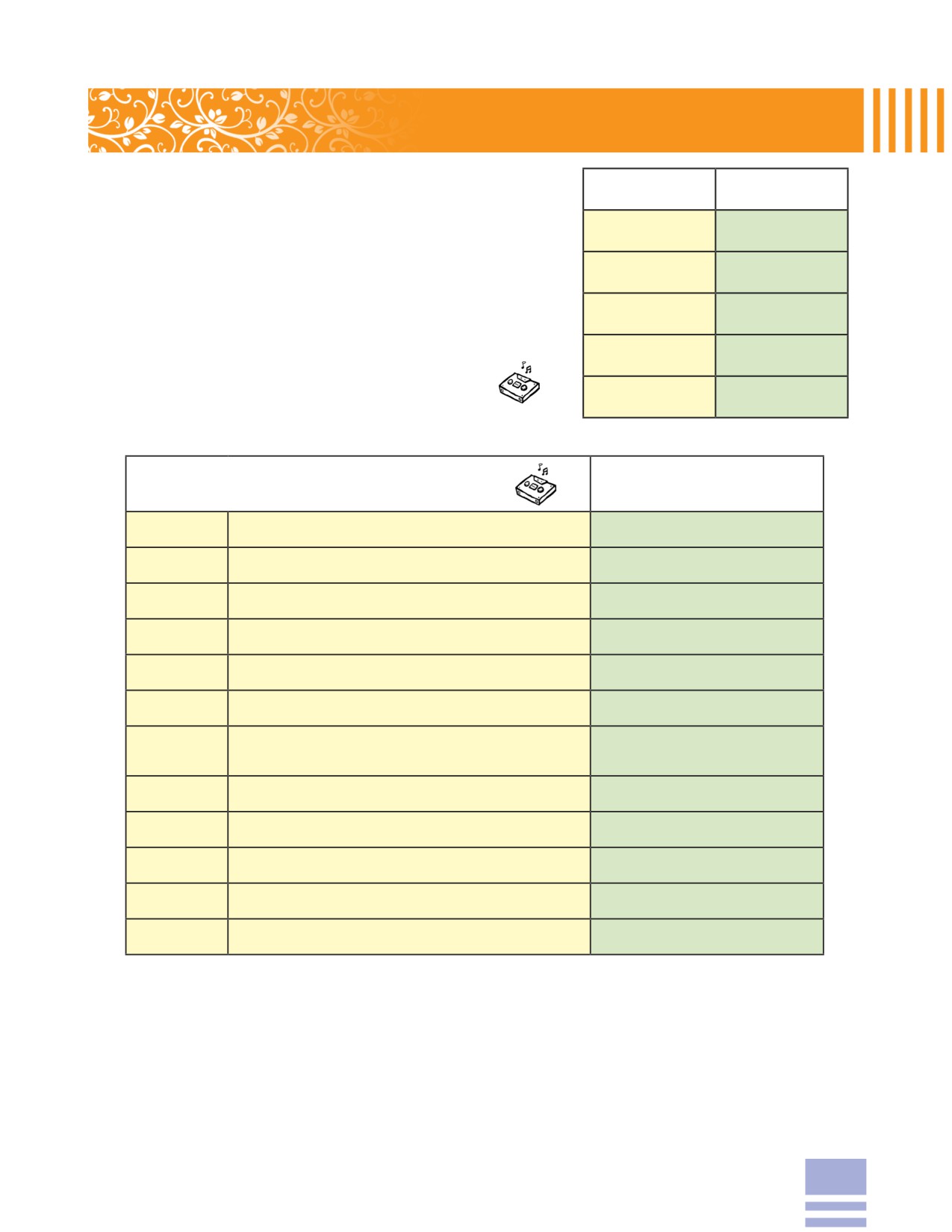
Vocabulary 2
ناگژاو
تيلم
روشک
3. Look at the following list of countries and corresponding
يناريا
ناريا
nationalities. Read them aloud with a partner and then try to
identify patterns for forming nationalities based on country names.
يناملآ
ناملآ
Do they all follow the rule? Circle the examples that don’t follow
يياکيرمآ
اکيرمآ
the rule. Listen to the audio file. In addition to the words from
the chart, you will hear several other countries and nationalities.
يتاراما
تاراما
Write them down and add them to your vocabulary list.
ناغفا
ناتسناغفا
4. Fill in the left column with the corresponding
تیلم ،روشک
nationalities.
)نتسه ناتسناغفا لها انوا( .دنتسه ناتسناغفا لها اهنآ
ناتسناغفا لها :ناغفا ،ناتسناغفا
)؟نيتسه ناتسکيجاتلهاامش( ؟ديتسه ناتسکيجاتلهاامش
ناتسکيجات لها :کيجات ،ناتسکيجات
؟يتسه ناتسکاپ لها وت
ناتسکاپ لها :يناتسکاپ ،ناتسکاپ
).هناريا ناريا رانک قارع( .تسا ناريا رانک قارع
قارع لها :يقارع ،قارع
.ميتسه هيکرت لها ام
هيکرت لها ،هيکرت
Note: we should not use Tork
ناتسنمرا لها ،ناتسنمرا
Note: we should not use Armani .متسه ناتسنمرا لها نم
.دنکيم يگدنز ناتسنمکرت رد متسود
ناتسنمکرت لها ،ناتسنمکرت
).هنکیم يگدنز ناتسنمکرت رد متسود(
).هناتسنمکرت يلاب هيسور( .تسا ناتسنمکرت يلاب هيسور
هيسور لها :سور ،هيسور
).هيدنه نوا( .تسا يدنه وا
دنه لها :يدنه ،دنه
)هگرزب نيچ( .تسا گرزب نيچ
نيچ لها :ينيچ ،نيچ
)هنکیم یگدنز نپاژ رد مردارب( .دنکیم یگدنز نپاژ رد مردارب
نپاژ لها :ينپاژ ،نپاژ
).هسيلگنا لها نوا( ؟تسا سيلگنا لها وا
سيلگنا لها :يسيلگنا ،سيلگنا
5. Add four countries that you would like to visit. Look them up on Wikipedia by searching for the country in
English and then selecting Persian (یسراف) from the list of languages on the left. Derive the nationality from the
country name and write a sentence for each country/nationality.
6. In class, tell your classmates about friends with different nationalities than yours.
.مراد یياپورا تسود دنچ و ناغفا تسود هس ،يياکيرمآ تسود کي ،ینيطسلف تسود ود نم :لاثم
SHAHSAVARI | ATWOOD
170
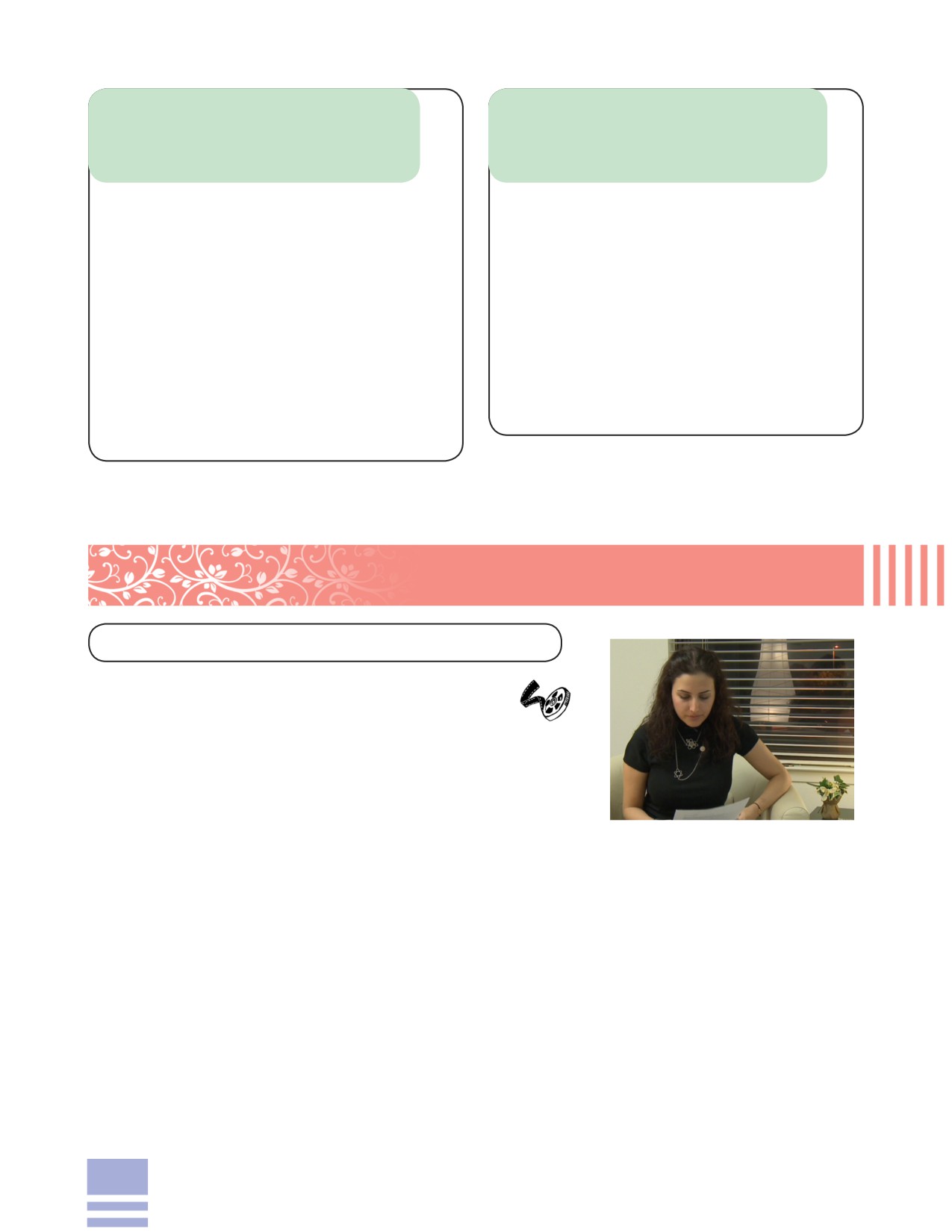
7. Read the following words aloud with
8. Read the following words aloud with
your partner. What do you notice about the
your partner. How does the suffix changes the
relationship between the two words?
meaning?
ناتسکيجات :کيجات
)university( هاگشناد :)knowledge( شناد
ناتسنمکرت :نمکرت
)dorm( هاگباوخ :)sleeping( باوخ
ناتسدرک :درک
)store( هاگشورف :)selling( شورف
ناتسچولب :چولب
ناتسکبزا :کبزا
)airport( هاگدورف :)landing( دورف
ناتسودنه :ودنه
)workshop( هاگراک :)work( راک
Listening Comprehension رادينش کرد
1. Watch the video and listen to what Shayli says. Follow the instructions.
………………………………………………………………………………..
………………………………………………………………………………..
………………………………………………………………………………..
………………………………………………………………………………..
………………………………………………………………………………..
171
PERSIAN OF IRAN TODAY
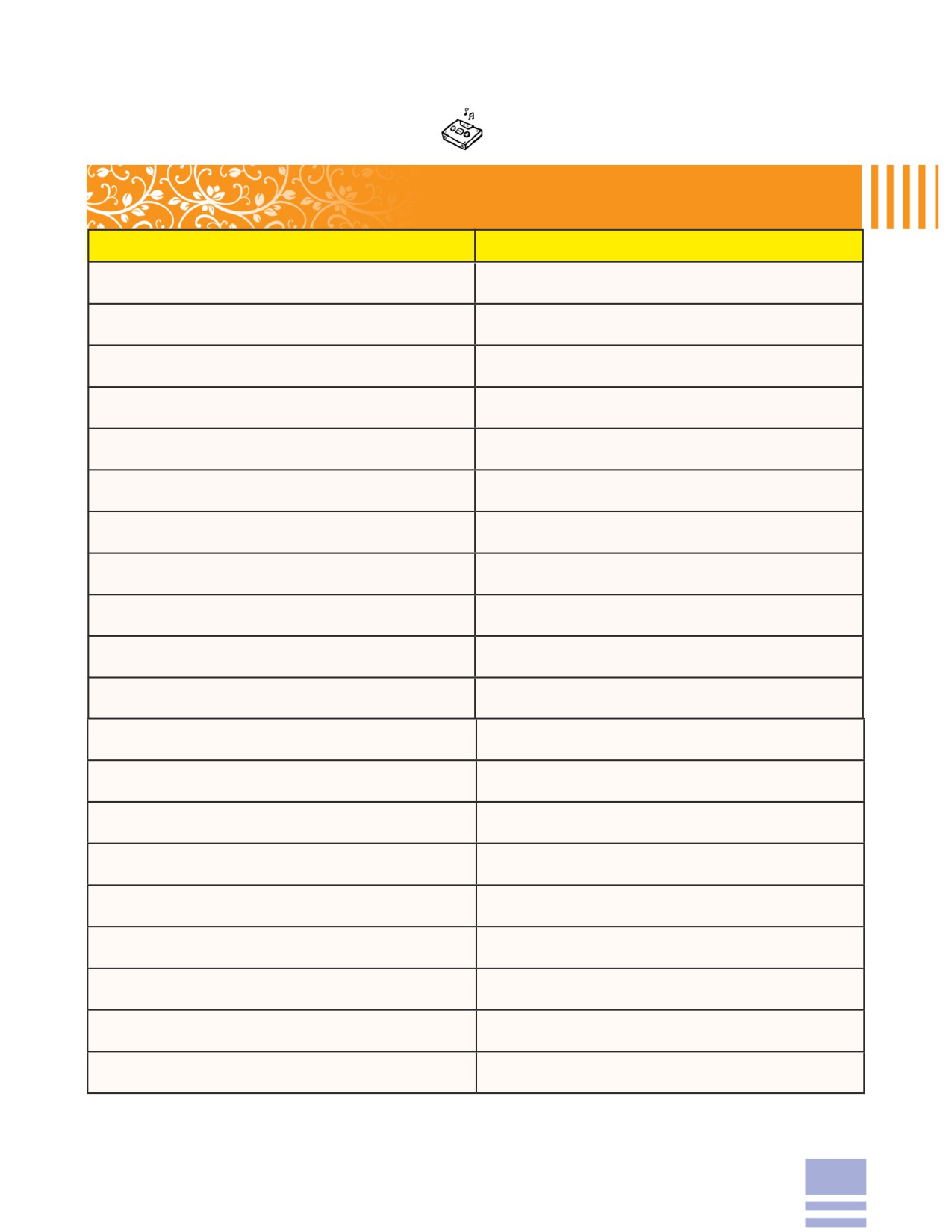
2. Listen to the audio file for the following words and write the sentences you hear for
each item. Translate these sentences into English.
ناگژاو
Vocabulary 3
همجرت
)راتفگ( راتشون
Sangak bread
)کگنس نون( کگنس نان
my dear
مزيزع
bon appetit
ناج شون
It’s me
)منم( متسه نم
I come
)مايم( ميآيم
I am going
)مريم مراد( موريم مراد
Setar class
راتهس سلک
ok
هشاب
with, i.e., “with Leyli”
يليل اب : اب
How is he/she?
)؟هروط هچ( ؟تسا روط هچ
How are you?
)؟نيروط هچ( ؟ديتسه روط هچ
How is he / she / they?
)؟نروط هچ( ؟دنتسه روط هچ
my health, my state of being
ملاح = نم لاح
God
ادخ
thank God
رکش ار ادخ
you are welcome / go ahead (used to give permission)
ديراد رايتخا
Give my regards to…
)دينوسرب( ديناسرب ملس . . . هب
of course, sure
امتح
I’ll give them your best.
)منوسريم ونوتيگرزب(
my dear
مناج
SHAHSAVARI | ATWOOD
172
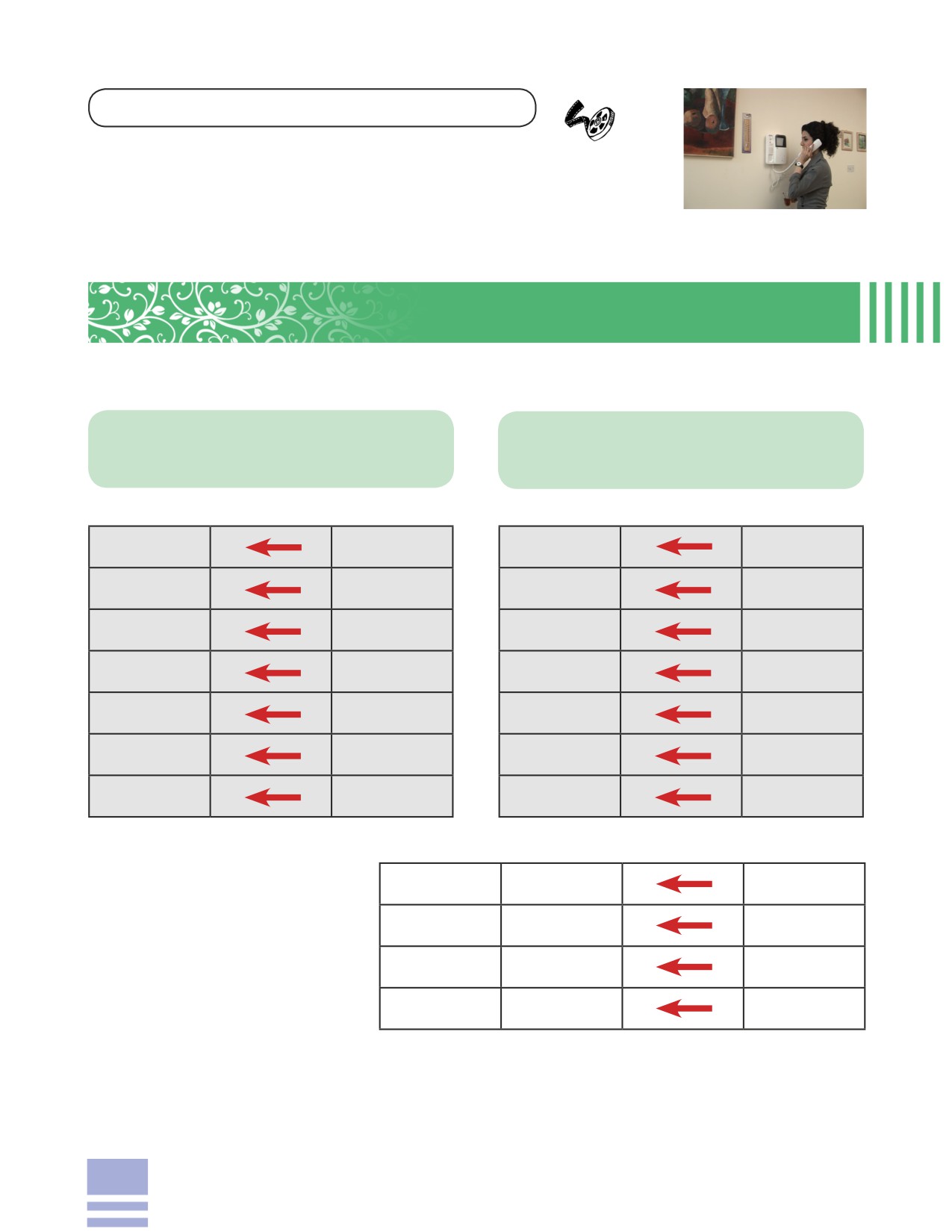
Now watch the video and answer the following questions in Persian.
1. What did Raha ask her mother?
2. Where are Leili and Raha going?
3. What did Raha say to Mr. Ebadi as she was leaving?
4. Use the vocabulary you know to explain to a classmate what happened in the video.
Grammar Note
يروتسد تشادداي
Find out for yourself!
Read the following words aloud with a partner.
Read the following words aloud with a partner.
What is the relationship between the two columns?
What is the relationship between the two columns?
ناراتسرپ
راتسرپ
اهباتک
باتک
ناسدنهم
سدنهم
اهزيم
زيم
نادرم
درم
اهردپ
ردپ
نانز
نز
اهیلدنص
یلدنص
ناردام
ردام
اهردام
ردام
ناردارب
ردارب
اهرتويپماک
رتويپماک
ناردپ
ردپ
اهرتفد
رتفد
Complete the following chart.
رهاوخ
بش
فيک
رتخد
Write the rule for forming the plural below.What is the difference between the two different plurals above? Share
your rule with your classmates and instructor, and refer to this page as a reference for the plural.
173
PERSIAN OF IRAN TODAY

Specific Direct Object Marker (ار)
Read the following sentence:
.دینک زاب ار یسراف باتک نیا
Try translating this sentence.
………………………………………………………………………………………………………………………
As you were translating, were there any words in the sentence you didn’t understand?
………………………………………………………………………………………………………………………
You were able to translate the example sentence without knowing all of the words because ار or the specific
direct object marker is a concept that does not have an equivalent in English. Nevertheless, it is very important to
Persian grammar. Our goal in this section is to familiarize you with the use of this word and the rules that govern
it, so you can begin recognizing it and incorporating it into your own speaking and writing.
Basic Rules: Keep the following basic rules about ار in mind as we introduce the concept to you in more detail.
1. ار marks specific direct objects.
2. ار is written immediately after the direct object or any adjectives that might describe it.
3. ار is pronounced as though it were part of the word it follows. When you read aloud, for example, you
cannot pause in between the direct object and ار.
4. In spoken, ار is pronounced as either /ro/ or /o/.
Direct Objects: Before we can explain ار, it is important to review some of the basic grammar concepts that serve
as a foundation for this feature. Specifically, it’s important that we understand what a direct object is in English
before we attempt to describe it in Persian.
A direct object is the thing or person upon which the verb’s action is performed. Whereas the subject is the
person or thing doing the action, the direct object is to whom or what that subject is performing the action.
Consider the following sentence:
The teacher saw her before class.
The subject (the teacher) completed the action of the verb (seeing) upon her, so “her” is the direct object of
this sentence.
Look at the following English sentences. Circle the direct object and explain how you determined it was the direct
object. If there is no direct object, then simply explain why.
1. Every Tuesday I write a letter to my parents.
2. The carpenter built the chair from scratch.
SHAHSAVARI | ATWOOD
174
3. The teacher slowly left the room on the last day of class.
4. Although both his parents are from Iran, he lives in the United States.
5. While he was in the classroom, he read a book.
As you might have noticed, whether or not a sentence has a direct object is determined by the verb. Some verbs
like reading, writing, and building require an object, while other verbs like being, living, and going do not (because
you don’t perform those actions on anything). Verbs that take direct objects are called transitive and verbs that
do not take direct objects are called intransitive.
Because the verb is an important (although not the only) factor in determining the use of ار, it is important to
categorize all of the verbs you learn as either transitive or intransitive. Keeping a list of transitive verbs will be
very helpful to you as you attempt to master this concept.
ندوب
ندمآ
ندز فرح
ندرک زاب
ندرک یگدنز
نتشاد
ندرک شوگ
ندز سدح
ندرک رارکت
نتفر
ندرک راک
نتشاد تسود
For now, put the following verbs in the chart.
Intransitive
Transitive
Knowing whether or not the verb is transitive is the first step in determining whether or not to use ار. If the
verb is intransitive then you will never use ار. Even though transitive verbs usually have direct objects, not all have
direct objects.
Specificity: Once you have decided that a sentence has a direct object, you must determine whether or not this
direct object is specific. Only specific direct objects require ار. With regards to the direct object, specificity in
Persian can function in two ways.
Sometimes the words that describe the direct object make it specific. In these cases it is grammatically incorrect
to omit ار. There are two cases when this is always true:
• Any time نیا and نآ are the direct object or describe the direct object, you must use ار. For example, can
you translate the following sentences?
175
PERSIAN OF IRAN TODAY
.دنراد تسود ار باتک نیا
.دینک رارکت ار نآ
• Whenever a pronoun (or a pronominal ending) is the direct object or describes it, you must use ار. Try translating
the following sentences.
.دنراد تسود ار ام
.دیراد ار شرتفد
2. Other times, by adding ار after a direct object, you are making it specific. Consider these two examples:
I have books.
.مراد باتک
I have the book./ I have that book.
).مراد ور هباتک( .مراد ار باتک نآ
We like ice cream.
.میراد تسود ینتسب
We like the ice cream./ I like that ice cream.
).ميراد تسود ور هینتسب( .میراد تسود ار ینتسب نآ
Can you explain what the presence of ار does to each of these sentences? How does it change their meanings?
………………………………………………………………………………………………………………………
………………………………………………………………………………………………………………………
These are some basic rules to help you start determining specificity. However, ultimately a direct object is specific
if both you and your listeners (or readers) know exactly what you’re talking about. If it is a physical object, then
they can picture it.
To Review:
1. ار is written after specific direct objects.
2. Determining whether or not you need ار involves a two-step thought process. First, you must decide if the verb
is transitive and requires a direct object. Once you have decided that the sentence does have a direct object,
you must determine whether or not the direct object is specific. Only specific direct objects require ار. Can you
describe how to decide if a direct object is specific?
………………………………………………………………………………………………………………………
………………………………………………………………………………………………………………………
Since this concept is completely new to you, it will take time to incorporate it comfortably into your speaking.
Don’t get discouraged! Instead, simply try to remain aware of this grammatical feature, making sure you understand
it now and continue to review and update your understanding of it as we go along.
SHAHSAVARI | ATWOOD
176

Grammar Practice 1
We will return to this concept several times over the next several months. For now, try writing five sentences that
use ار. Make sure that each sentence has at least six words and be prepared to explain in class why you used it.
.۱
.۲
.۳
.۴
.۵
Grammar Practice 2
Determine whether the following sentences need ار. Remember your two-step thought process, looking first at
the verb to see if it is transitive and then determining if the direct object is specific. Use the space to explain why
you wrote ار.
.میوریم ـــــ هناخ نیا هب بش .۱
.دینک رارکت ـــــ هلمج نآ ،اقآ .۲
.مراد ـــ نآ ارچ ؟یرادن ــــ مباتک .۳
!دینک شوگ ــــــ نم هب .۴
.مینکیم یگدنز ــــــ نیتسآ رد .۵
Introduction to Simple Past
هداس يهتشذگرب یدمآ رد
This is an introduction to Simple Past in Persian. The following text is repeated in the second volume of the
textbook. You will have the chance to learn and practice using the simple past tense in the next volume.
So far you have learned how to describe actions using the present tense. In Persian, the present tense is
much more versatile than it is in English. We can use the present tense in Persian to refer to actions that are
happening right now, will happen in the future, or happen habitually. However, we require several tenses to
describe actions that take place in the past. The first past tense you will learn, the simple past, describes actions
that were completed in the past but not over a period of time.
Examine the following example:
)yesterday :زورید( .مدروخ ياچ متسود اب زوريد
1. Use the information you know in the sentence to try to translate it.
2. We will explain more clearly how to form the simple past below,
I ate
مدروخ
to eat
ندروخ
177
PERSIAN OF IRAN TODAY
Forming the Simple Past
3. Look at the verb in the example sentence above. What is the infinitive for this verb?
Say the Persian infinitive “to eat” and then the conjugation “I ate.” How do the two compare? What is the
relationship between the infinitive and the conjugation?
The simple past tense in Persian follows this pattern:
Personal Verb
+
Past Tense
Endings
Stem
As you have probably already noticed, the past tense stem—unlike the present-tense stem—depends on the
infinitive. In order to derive the past tense stem, we simply remove the ن from the infinitive.
دروخ
ندروخ
ندروخ
The personal verb endings are the same endings we add to the present tense verb conjugations. The only exception
is the third person singular (he/she/it); the past tense conjugation for this person is always just the past tense stem.
روخ -دروخ -ندروخ
4. How would you translate this sentence into Persian?
نم
Yesterday the professor had dinner with his mother.
وت
5. Now that you have a basic understanding of the
دروخ
(نوا( وا
steps required to form the past tense conjugation,
ام
try filling in the chart. Read the conjugations aloud as
you write them:
ـ)نیدروخ( دیدروخ
امش
(انوا( اهنآ
Speaking Activities ندز فرح
In Class:
Watch Video 10 with your instructor and learn more about meeting and greeting others. Practice these new
expressions with your classmates. Ask them where they are from and tell them where you are from. You’ll
certainly want to let them know that you are pleaesd to meet them!
SHAHSAVARI | ATWOOD
178
For Homework:
Carefully review the new classroom vocabulary (pg. 169). Listen to the audio file so you will recognize these
words and expressions when you hear them. Your teacher will be using these phrases often and you will need to
use them to function in class. Try to use this vocabulary as much as possible when you speak to your teachers
and classmates.
Memorize the following sentence and use it when you are saying goodbye to someone you have just met for the
first time. مدش تقوشوخ یليخ!
Language Games
1. Flashcard Game
Bring your vocabulary flashcards to class for this flashcard activity.
Trade flashcards with a partner. Come up with questions for each word you encounter on your partner’s flashcards.
Your partner must answer these questions. Then switch roles.
2. Sentence Master
The class will be given five words. Each group should try to write 5 sentences. In each sentence they will use as
many words as they can. The number of the words used by each group to write the sentences will be the score
for each group. Prepositions and connectors will not count.
Write your sentences on the board. You will have an opportunity to correct your sentences as you write them.
However, once you are done the other groups may identify any mistakes in your sentences, and each mistake will
cause you to lose a point. Keep spelling, punctuation, word order, and the proper prepositions in mind!
Classroom Activities یداهنشيپ یاهتيلاعف
Talk with your classmates and find out
...if their studies are hard or easy.
... how many close friends they have.
... what is next to your house.
... now how many chairs there are in the class.
... where they were yesterday at 12:45.
... what they do between 8:30 in the morning and 8:30 at night.
... if they talk on the phone everyday.
... if they like reading.
179
PERSIAN OF IRAN TODAY

Review Exercises
روتسد و ناگژاو هرود
Spelling:
ـ .دننادیم ار اههژاو ینعم هک تسا ییاکیرمآ -یناریا نایوجشناد یارب شخب نیا
1. Have someone read the following words and sentences to you and try to write them down.
Unit 1 and 2:
ایرپ ،زیربت ،ناریا ،نیتسآ ،اتیب ،نیرآ ،اتینآ ،زییاپ ،انیش ،اسراپ ،زاناس ،ریما ،سید ،زودن ،انیس ،دایز ،سینن
یسنت ،زاریش ،تشر ،یپویتا ،سیراپ ،ایناپسا ،ناتسنمرا ،هیروس ،هیسور ،اماناپ ،یزنودنا ،شیرتا
.دراد تسود یربرب نان انیس
.میتشاد ینیمزبیس و ازتیپ ماش یارب
.رادرب ار بیس
.مروایب نییاپ ار متسد مناوتیمن تسا زور هس
.دوب یناراب زورید
.مدوب داش زور مامت
؟دیراد درد نادند
؟ینیمز ماداب ای تاتیپ
.تسایسآ رد ناریا
.دنامیم شیرتا رد مزابسینت تسود
؟نرتسن ای تسا نیرسن وا
.منادیمت ار شمسا
.دوب نادنز رد زور ود وا
.دسرتیم رام زا مردارب رسپ
.دراد یزبس پوس ناروتسر نیا
.دناسرتیم ار نم یزاب نیا
.زودب ار تنیتسآ زرد
.دوب یناسآ سرد هس سرد
؟درب تردپ ندید یارب ار وت
.مداد بآ وا هب
Unit 3 and 4:
.دنتسه ناملسم ناریا مدرم رتشیب
.دندوب هتسشن نوریب نایوجشناد مامت
.تسا یدهشم مردپ .تسا مردام رهش نادمه
.دوریم هسردم هب ناتسراجم رد یناریا رسپ نآ
.مدید اینیجریو رد ار وا
.دنرادن ملاس یاوه اهینارهت
.تسا یناریا یندیشون کی ینتسب جیوه بآ
.دراد ار رهش ینتسب نیرتهب اجنیا
.تسا هتسب هشیمه اجنیا یهرجنپ
.داد هار ار نایوجهانپ ناملآ
.دنراد تسود وج پوس مردارب و رهاوخ
!وت دیرایب فیرشت !دیدمآ شوخ
SHAHSAVARI | ATWOOD
180
Short form of “to be”
2. Use contractions to change the following sentences? (In other words, how else can we say
the following sentences?)
.تسا ملعم نم ردام .1
.ميتسه وجشناد ام .2
.دنتسه ینابصع ام ناتسود .3
؟دنتسين ناريا لها امش ردام و ردپ .4
Ezâfe
3. Add ezâfe wherever necessary.
.مينکیم راک گرزب ناروتسر کي رد .1
.دنراد ابيز فيک ات هاجنپ شرهاوخ و ردام .2
؟دننکیم یگدنز ابيز و گنشق نامتراپآ نيا رد رفن دنچ .3
؟دراد مه گرزب هرجنپ ؟دراد رد دنچ امش هناخ .4
4. Add the ezâfe marker and then translate to English.
.ميراد نامهناخ رد گرزب زيم کي .1
.مروخيمن نامهاگشناد پاش يفاک رد ار ممرگ هوهق .2
.موريم کيزيف سلک هب رصع جنپ تعاس .3
.دراد کچوک راکدوخ ود و گرزب فيک کي هنمآ .4
.ميوریم ناهفصا ناروتسر هب مايناريا تسود و نم .5
Vocabulary
5. Complete the following sentences.
ود تعاس - ؟یوریم هناخ هب
- .1
)ود تعاس - ؟هنوخ یریم
-(
:یراتفگ
.متسين دب . ؟
2
.تسا زيم رانک . ؟
یلدنص .3
.تسا سدنهم . ؟
ناتردپ .4
.تسا مرتفد ريز ،هن . ؟
5
.تساجک منادیمن . ؟
6
.ميراد ناحتما .متسه تحاران ،هن . ؟
7
181
PERSIAN OF IRAN TODAY
Writing questions
6. Write a question for each sentence. Make sure that the question is related to the underlined section.
.دنوريم ناروتسر هب ناشردام و ردپ1
1
.منکیم یگدنز تيوک رد2
2
۰۹۱۷-۸۷۹-۲۱۲۳3
3
.دنوریم مردام یهناخ هب شتسود و وا4
4
.دنروخیم یاچ ینپاژ ناروتسر کي رد اهنآ5
5
Verbs and pronouns
7. Complete the chart.
ندمآ هداس لاح
یکلم ريمض
نتفر هداس لاح
یلعاف ريمض
)مآیم( ميآیم
)مریم( موریم
نم
وت
وا
ام
امش
)نوشرهاوخ( ناشرهاوخ
اهنآ
8. Use the approriate forms of to be, to eat, to live, to like, to go and to have to complete the following sen-
tences.
. ........................................................................................ یدان نابایخ رد ميرم و نم .1
. .................................................................................... رطق هاگشناد هب نز راهچ نيا .2
. ..................................................................... ام یهناخ هب هعمج ناتاتسود و امش .3
. ....................................................................... زيم هس و یلدنص راهچ مقاتا رد نم .4
. .................................................................................................... یسپپ ناوج نز نآ .5
؟
اجک لها امش .6
SHAHSAVARI | ATWOOD
182

Word order
Persian syntax is quite ambiguous in written form. Several factors contribute to the ambiguity:
Although Persian is a verb-final language, it does not adhere to a strict word order and the sentential
constituents may occur in various positions in the clause; this is especially the case for preposition
phrases and adverbials. In addition, there are no overt markers, such as case morphology, to indicate
the function of a noun phrase or its boundary; in Persian, only specific direct objects receive an overt
marker. Although in spoken language, the ezafe morpheme is used to link the elements within the
noun phrase, this morpheme, being a short vowel, is absent in written text. Furthermore, subjects are
optional in Persian and subject-verb agreement is not always present for inanimate subjects. Persian
preposition phrases, however, are easily recognized and can be used to mark phrasal boundaries in
the sentence. Additionally, the verb almost always occurs in the sentence-final position in written
text. For more information, you can check: http://www.zoorna.org/shiraz/syntax.html
9. Put in order. Do not forget the punctuation.
اجک ،ردپ ،امش
،دنتسه .1
نآ ،سلک ،دنتسه ،هدجه ،رد ،مناخ .2
رتخد ،دروخیمن
،ابيز
،نآ
،ريش .3
ناتا ،هب
،تعاس ،دوریم ،هاگشناد
،دنچ ،تسود .4
ديراد ،ینتسب ،ليم ،یليناو .5
تعاس ،دنچ ،یروخیم ،ريش ،مرگ .6
نآ ،هدزناپ
،دنتسه
،یلدنص
،گرزب .7
زيم ،تسا
،رد
،نيا
،دنچ
،ناروتسر .8
دنکیم یگدنز ،ردارب
،رد ،روشک ،تیوک ،متسود .9
؟ تعاس ،ینادیم ،دناوخیم ،دنچ
،سرد ،زور ره .10
اهنآ ،دننزیم فرح ،دنتسين ،ینپاژ ،لها ،اما ،نپاژ .11
)هلمج ۲( تسين ،ناش ،زيم
،تسا ،اجک ،ريز ،فيک ،ینادیم .12
؟هراک ،شا ،و ،هچ ،ردام ،ردپ ،دنتسه .13
ار ،نات ،منادیمن ،باوج ،لاوس .14
دروخیمن ،دنتسه ،ناش ،اذغ ،تسود ،اهنآ ،نوچ ،ینابصع .15
183
PERSIAN OF IRAN TODAY
دنچ ،ینادیم ،سلک ،تعاس ،کيزيف ،یراد .16
تـ ،سلک ،کيزيف ،تسا ،اجک .17
نابايخ ،بلقنا ،امش ،رد ،هاگشناد ،تسين .18
تسا ،ما ،تشپ ،هناخ ،هاگشناد ،گرزب ،یياکيرمآ ،کي .19
دروخیمن ،تحاران ،و ،شي/شا ،اذغ ،ینابصع ،درم ،ار .20
هب ،ناريا ،رهش ،و ،هاجنپ ،دص ،موریم .21
تسا ،ناتا ،منادیمن ،هوهق ،اجک ،زيم ،تسين ،یور .22
یشوس ،ینپاژ ،تسا ،و ،اهنآ ،نيا ،تشه ،دنراد ،رد ،ناروتسر ،نابايخ .23
فيک ،مگرزب ،ناتا ،زيم ،تسا ،هناخ ،یور .24
تسا ،کچوک ،منادیمن ،هچب ،اهنآ ،اجک .25
و ،ود ،رد ،راهچ ،ابيز ،زيم ،ام ،ميراد ،یلدنص ،گرزب ،نام ،هناخ .26
و ،ميروخیم ،رد ،اذغ ،جنپ ،تکرامرپوس ،تعاس ،هب ،هناخ ،موریم ،متسود .27
10. Use fifteen of the following words to write a conversation.
،درس ،بآ ،هتسخ ،لاحشوخ ،اما ،تفه ،لها ،یلدنص ،منادیمن ،ناوج ،رتفد ،متسين ،رهاوخ ،هرجنپ ،دننکیم یگدنز
رهش ،اجنيا دنتسين ،هنشت ،ديروخیم
11. Use the following words to write a conversation.
اجک ،امش یهزاجا اب ،رتفد ،داتشه ،هنسرگ ،راهان ،؟دنچ تعاس ،رفن ،ملعم ،تشپ
SHAHSAVARI | ATWOOD
184
Short Conversations
لوا سرد هاتوک یاهوگتفگ
Unit 1
2
3
1
؟هروط هچ امش لاح -
؟هیچ امش مسا -
!ريخ هب حبص ،ملس -
؟نيروط هچ امش .مرکشتم ،مبوخ -
.تسا هنامس نم مسا -
.ريخ هب حبص -
.نونمم یليخ ،مبوخ -
Short Conversations
مود سرد هاتوک یاهوگتفگ
Unit 2
3
2
1
!نونمم یليخ _
.منکیم شهاوخ _
!ديشخبب
_
.دييامرفب _
.منکیم شهاوخ_
!نونمم یليخ _
.منکیم شهاوخ _
5
4
؟هروطهچ تلاح _
؟هروطهچ نوتلاح _
؟يروطهچ وت .مبوخ _
؟نيروطهچ امش .یسرم ،مبوخ _
.مرکشتم .مبوخ منم _
.رکش ار ادخ .متسين دب _
185
PERSIAN OF IRAN TODAY
اهسرد ناگژاو تسرهف
kitchen
)هنوخزپشآ( هناخزپشآ
26
opera
ارپا
1
sir, gentleman, man
اقآ
27
room
قاتا
2
28
3
اکيرمآ
bedroom
باوخ قاتا
United States
29
guest room
نامهم قاتا
4
American
يياکيرمآ
you are welcome / go
5
میآیم ،ندمآ
30
ديراد رايتخا
to come, I come
ahead (used to give
that
)نوا( نآ
31
permission)
is
تسا
6
it, that
)نوا( نآ
32
professor
داتسا
7
there
)اجنوا( اجنآ
33
ski
یکسا
8
they
)انوا( اهنآ
34
name
مسا
9
with
اب
35
now
نلا
10
with your permission
امش يهزاجا اب
36
11
but
اما
with, i.e., “with Leyli”
37
يليل اب :اب
pomegranate
رانا
12
almond
ماداب
38
English
یسيلگنا
13
open
)نينک زاب( دينک زاب
39
to be from somewhere
لها
14
ok
هشاب
40
he, she
)نوا( وا
15
over/above
لاب
41
Iranian
يناريا
16
close
)نيدنبب( ديدنبب
42
he, she (polite)
)نوشيا( ناشيا
17
excuse me
ديشخبب
43
this
نيا
18
child
کدوک ،هچب
44
it’s warm in here, it’s
،همرگ ،همرگ اجنيا
19
read
45
)نينوخب( ديناوخب
warm, I’m hot
هممرگ
bad
دب
46
here
اجنيا /اجنيا
20
brother
ناریا
21
ردارب
47
Iran
big
48
نیا
22
گرزب
this
I’ll give them your best.
هنوسريم ونوتيگرزب
49
water
بآ
23
ice cream
50
هويمبآ
24
ينتسب
fruit juice
I know (how to do
51
)نوسآ( ناسآ
25
يدلب ،مدلب
easy
something), you know
SHAHSAVARI | ATWOOD
186
اهسرد ناگژاو تسرهف
behind
yes
هلب
52
تشپ
79
write
)نيسيونب( ديسيونب
53
stairs
هلپ
80
to
هب
54
five
جنپ
81
ديناسرب ملس . . . هب
55
window
هرجنپ /هرجنپ
82
Give my regards to…
)دينوسرب(
fifty
هاجنپ
83
I go to
)مريم( موريم . . . هب
56
cheese
رينپ
84
I was
مدوب
57
old
ريپ
85
twenty
تسيب
58
Quantifier
86
He is twenty years
ات
تسيب -هشلاس تسيب
59
دراد لاس
old.
thirsty
هنشت
87
تسيب -هملاس تسيب
60
I am twenty.
I am thirsty.
)همنشت( ماهنشت
88
.مراد لاس
repeat
)نينک رارکت( دينک رارکت
89
twenty six
شش و تسيب
61
twenty five
جنپ و تسيب
62
television
نويزيولت
90
twenty four
راهچ و تسيب
63
exercise
نيرمت
91
twenty two
ود و تسيب
64
lazy
لبنت
92
twenty three
هس و تسيب
65
tennis
سينت
93
twenty nine
هن و تسيب
66
Tehran / from
ينارهت /نارهت
94
Tehran
twenty eight
تشه و تسيب
67
you
وت
95
twenty seven
تفه و تسيب
68
my dear
مناج
96
twenty one
کي و تسيب
69
twenty / thirty
یس ،تسيب
70
in front of
ولج
97
between
نيب
sentence
هلمج
71
98
park
کراپ
72
answer
باوج
99
eraser
نککاپ
73
young
ناوج
100
tea
ياچ
fifteen
)هدزنوپ( هدزناپ
74
101
how many
)ات دنچ( دنچ
father
ردپ
102
75
my father
مردپ
76
دنچ -؟هنوتلاس دنچ
how old are you?
103
؟ديراد لاس
nurse
راتسرپ
77
؟دنچ
104
how many?
boy, son
رسپ
78
187
PERSIAN OF IRAN TODAY
اهسرد ناگژاو تسرهف
thank God
رکش ار ادخ
129
forty
لهچ
105
tired
هتسخ
130
what
)یچ( هچ
106
dormitory
هاگباوخ
131
هچ( ؟تسا روط هچ
107
How is he/she?
)؟هروط
sister/ my sister
مرهاوخ/رهاوخ
132
هچ( ؟دنتسه روط هچ
108
How is he / she /
you’re welcome
منکيم شهاوخ
133
)؟نروط
they?
good
بوخ
134
هچ( ؟ديتسه روط هچ
109
How are you?
)؟نيروط
pen
راکدوخ
135
What are you
؟دينکيم راک هچ
110
handsome
پيت شوخ
136
doing?
what does he do?
؟دنتسه هراک هچ
111
happy
لاحشوخ
137
What do they do?
street
)نوبايخ( نابايخ
138
what do you do?
؟ديتسه هراک هچ
112
thank you
نونمم يليخ
who
)؟يک( /يسک هچ
113
139
welcome!
!ديدمآ شوخ یليخ
140
what?
)؟يچ( /یزيچ هچ /هچ
114
he / she has
دراد
141
four
)راهاچ( راهچ
115
I have / I do not have
مرادن /مراد
142
)هدراچ( هدراهچ
116
fourteen
he / she has, they have
دنراد
143
because
نوچ
117
you have (for close
یراد
144
؟تسا روط هچ امش لاح
118
friends)
how are you?
)؟هروط هچ . . .(
مراد( موريم مراد
I am going
145
)مريم
my health, my
ملاح = نم لاح
119
state of being
you have / you do not
ديرادن /ديراد
146
of course, sure
امتح
120
have
we have
ميراد
147
سدح( دينزب سدح
121
guess
)نينزب
student (non-university)
درگاش /زومآشناد
148
speak
)نينزب فرح( دينزب فرح
122
university student
وجشناد
149
ma’am, lady, Mrs.,
مناخ
123
Miss
university
هاگشناد
150
house
)هنوخ( هناخ
124
girl, daughter
رتخد
151
your house
)نوتهنوخ( ناتاهناخ
125
door
رد
152
house wife
رادهناخ
126
in
)وت( رد
153
lesson
سرد
your house
154
امش يهناخ
127
restroom
یيوشتسد
155
God
ادخ
128
SHAHSAVARI | ATWOOD
188
اهسرد ناگژاو تسرهف
question
لاؤس
185
notebook
رتفد
156
پوس
186
soup
doctor
رتکد
157
super market
تکرام رپوس
187
ten
هد
158
thirty
يس
two
ود
159
188
twelve
هدزاود
160
apple
بيس
189
I like
مراد تسود
161
thirteen
هدزيس
190
movie theater
you like
ديراد تسود
162
امنيس
191
I do not like
مرادن تسود
163
dinner
ماش
192
you do not like
ديرادن تسود
164
sixteen
)هدزنوش( هدزناش
193
friend / my friend
متسود/تسود
165
good night. (when you
ريخ هب بش
194
are going to bed at
restaurant
ناروتسر
166
night)
radio
ويدار
167
six
)شيش( شش
195
hallway
ورهار
168
sixty
تصش
196
major
هتشر
169
occupation
لغش
197
on
یور ،ور
170
؟تسيچ امش لغش
198
what is your job?
)؟هيچ امش لغش(
good morning/day
ريخ هب زور
171
you (plural or respectful
199
راگنربخ /راگنهمانزور
امش
journalist
172
singular)
sweets, dessert
ينيريش
200
woman
نز
173
ريخ هب حبص
201
I live
منکیم یگدنز
good morning.
174
beautiful
ابيز
morning / breakfast
هناحبص /حبص
202
175
under
ريز
a hundred/a thousand
رازه /دص
203
176
chair
يلدنص
jacket
تکاژ
204
177
greeting for noon
ريخ هب رهظ
two o’clock
ود تعاس
205
178
excellent
يلاع
one o’clock
کي تعاس
206
179
term, phrase
ترابع
what time? when?
یک /؟دنچ تعاس
207
180
Iraq
قارع
208
hard, difficult
تخس
181
Saudi Arabia
یدوعس ناتسبرع
cold/ I’m cold, It’s
)همدرس( /درس
209
182
cold
my dear
مزيزع
210
hello
ملس
183
angry
ينابصع
211
three
هس
184
189
PERSIAN OF IRAN TODAY
اهسرد ناگژاو تسرهف
teacher
ملعم
240
good afternoon.
ريخ هب رصع
212
نم
I eat food. (never use
I
241
مروخیم اذغ
213
khordan by itself)
I am
)منم( متسه نم
242
Persian
يسراف
214
It’s me
سدنهم
243
soccer
لابتوف
215
engineer
)مايم( ميآيم
244
coffee
هوهق
216
I come
مروخيم
245
I work
منکيم راک
217
I eat, I drink
)نيروخیم( ؟ديروخيم
246
kabob
بابک
218
do you eat/drink?
زيم
247
book
باتک
219
ليم( ؟ديراد ليم
248
table
)نيراد
library
هناخباتک
220
would you like (to
249
where-where is it?
تساجک ،اجک
221
هويم
have)?
word
هژاو ،هملک
222
fruit
میروخیم
250
class
سلک
223
we eat, we drink
251
)منودیم( منادیم
Setar class
راتهس سلک
224
I know (knowledge)
)ینودیم( ینادیم
252
beside
رانک
225
you know
تحاران
253
concert
ترسنک
226
نون( کگنس نان
254
sad
small
)کيچوک( کچوک
227
)کگنس
Sangak bread
)نون( نان
255
bag
فيک
228
ماهنسرگ
229
bread
راهن /راهان
256
I am hungry.
)همنسرگ(
lunch
مدوبن
257
to say, I say
میوگیم ،نتفگ
230
I was not
کيدزن
258
... هب
.دينک شوگ
231
listen, listen to
شوگ( دينک شوگ
close
رفن
259
)نينک
Quantifier for person
)منوديمن( مناديمن
260
we
ام
232
I do not know.
هن
261
mother
ردام
233
nine
هن
262
my mother
مردام
234
no
دون
263
marker
کيژام
235
ninety
هدزون
264
thank you
مرکشتم
236
nineteen
ناج شون
265
pencil
دادم
237
bon appetit
هباشون
266
man
درم
238
I am not
متسين
ضيرم
267
sick
239
SHAHSAVARI | ATWOOD
190
اهسرد ناگژاو تسرهف
you are not
)نيتسين( ديتسين
268
we are not
ميتسين
269
living room
نميشن قاتا /لاه
270
eighteen
)هدژيه( هدجه
271
I am
متسه
272
they are
دنتسه
273
you are
يتسه
274
you are
)نيتسه( ديتسه
275
we are
ميتسه
276
eight
تشه
277
eighty
داتشه
278
seven
تفه
279
seventy
داتفه
280
seventeen
)هدويه( هدفه
281
and
و
282
sport, exercise
شزرو
283
lawyer
ليکو
284
villa
ليو
285
one
کي
286
or
اي
287
eleven
هدزاي
288
191
PERSIAN OF IRAN TODAY