PERSIAN OF IRAN TODAY AN INTRODUCTORY COURSE VOLUME 1 (2015) - page 5
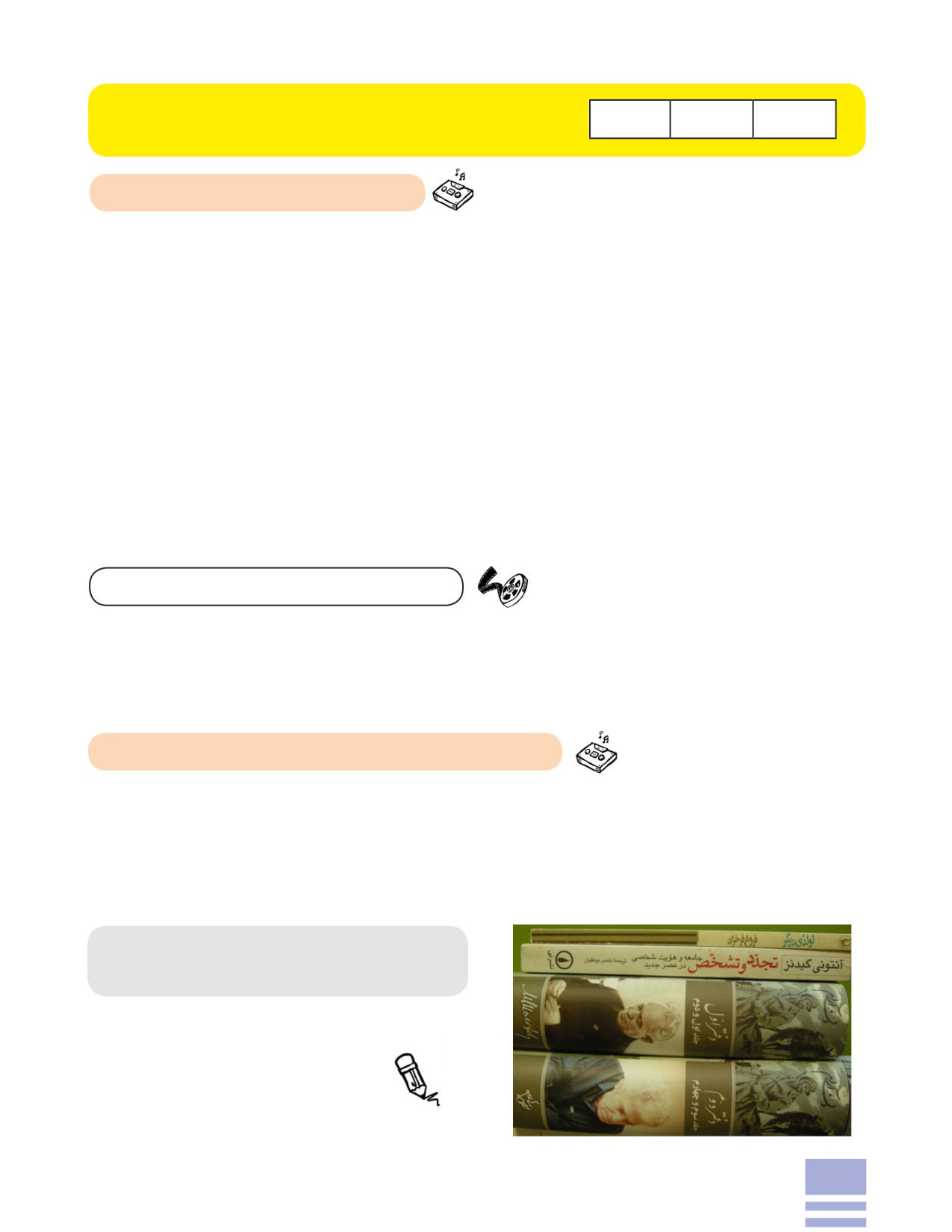
Part
1: tashdid ــــــــــــ
تدش
اما
رکشت
1. Listen to the audio file for file. ـــــ tashdid.
This symbol, called tashdid, is a pronunciation marker whose function is to double the length of a consonant in
pronunciation. In Persian, doubled consonants are not written twice, but instead take tashdid. Do not associate
the effect of tashdid with two identical, consecutive consonants in English, as in the word little. In Persian,
doubling changes the pronunciation of the consonant over which it is written. Like other vocalization marks,
tashdid is usually omitted in unvocalized texts, except where ambiguity might arise without it. In general, the
reader is expected to know which words take tashdid, and to use context, if necessary, to guess. The difference
between a single consonant and a doubled one is a question of length: a doubled consonant is pronounced
and held for twice as long as a single one. Consider the English word “roommate.” How would the word be
pronounced if it were written roomate? Tashdid creates the former effect.
Tashdid is written like a tiny, rounded “w” above the consonant that it doubles. You’ll notice that when a zir
appears after a tashdid, it is written under the tashdid itself and not the letter.
2. Watch the video and write the following words.
.................................................. تدم
شافک
................................................... هچب
ندمت
3. Listen and check when the word you hear needs tashdid.
□ .۴
□ .٣
□ .٢
□ .١
□ .۸
□ .۷
□ .۶
□ .۵
4. Circle ـــ in the following texts. Report to your
instructor how many ـــ you identified in the text.
SHAHSAVARI | ATWOOD
104
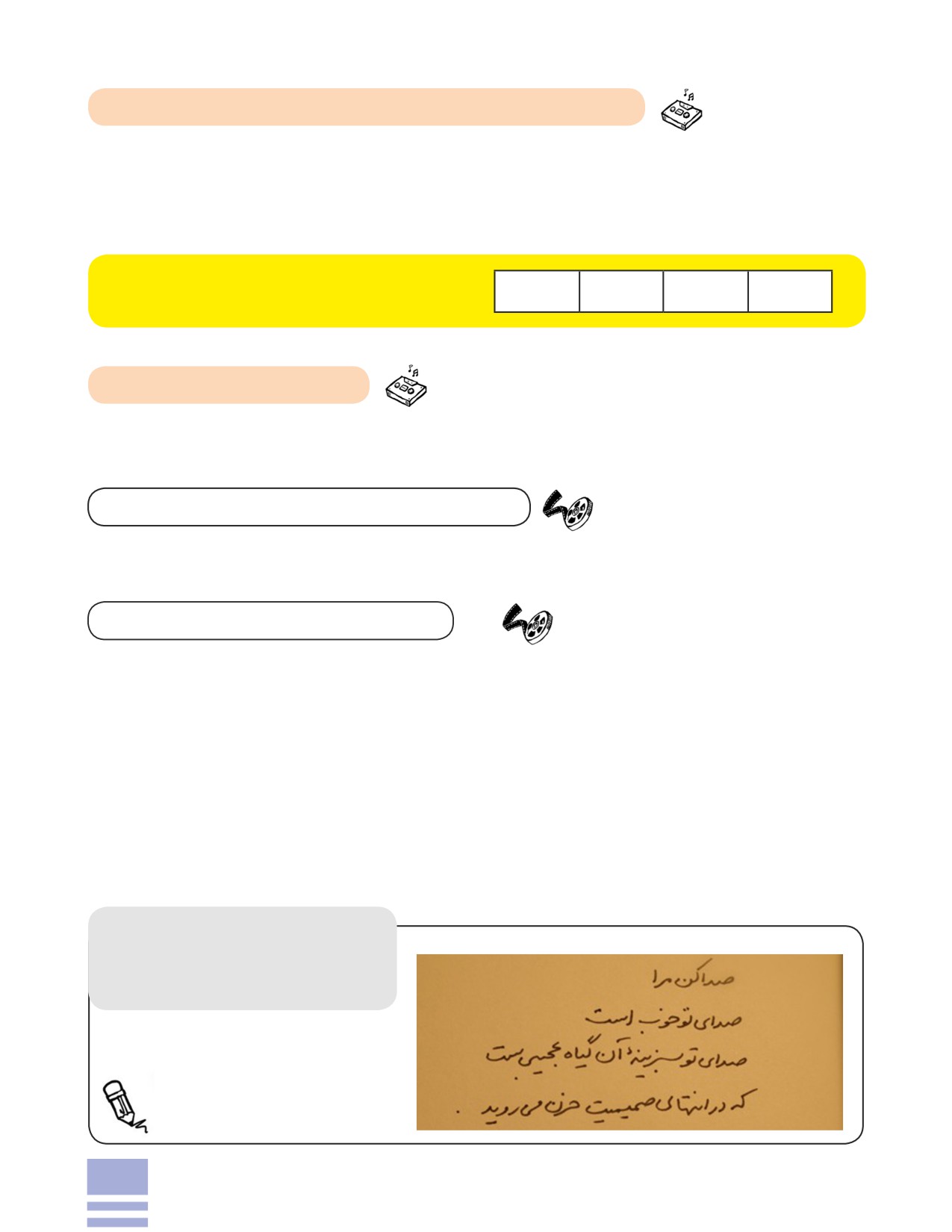
5. Listen and write the words you hear. Write a letter that includes “tashdid.”
.٥
.۴
.٣
.٢
.١
.۱۰
.۹
.۸
.۷
.۶
صرح
صيرح
رصم
ربص
Part
2: sâd
/s/
__ص_ﺻ__
1. Listen to the audio file for ص sâd.
This letter represents the sound /s/ and is pronounced exactly like the letter س .
2. Writing ص : Watch the video and follow the instructions.
......................................................................................................... ص
ﺻ
3. Watch the video and write the following words.
..................................................................................................................... ادص
................................................................................................................. تروص
................................................................................................................... فاص
.................................................................................................................. روصنم
.................................................................................................................. نوباص
.............................................................................................................. صوصخم
4. Circle the letter ص in the following
text. Report to your instructor how many
ص you identified in the text.
105
PERSIAN OF IRAN TODAY
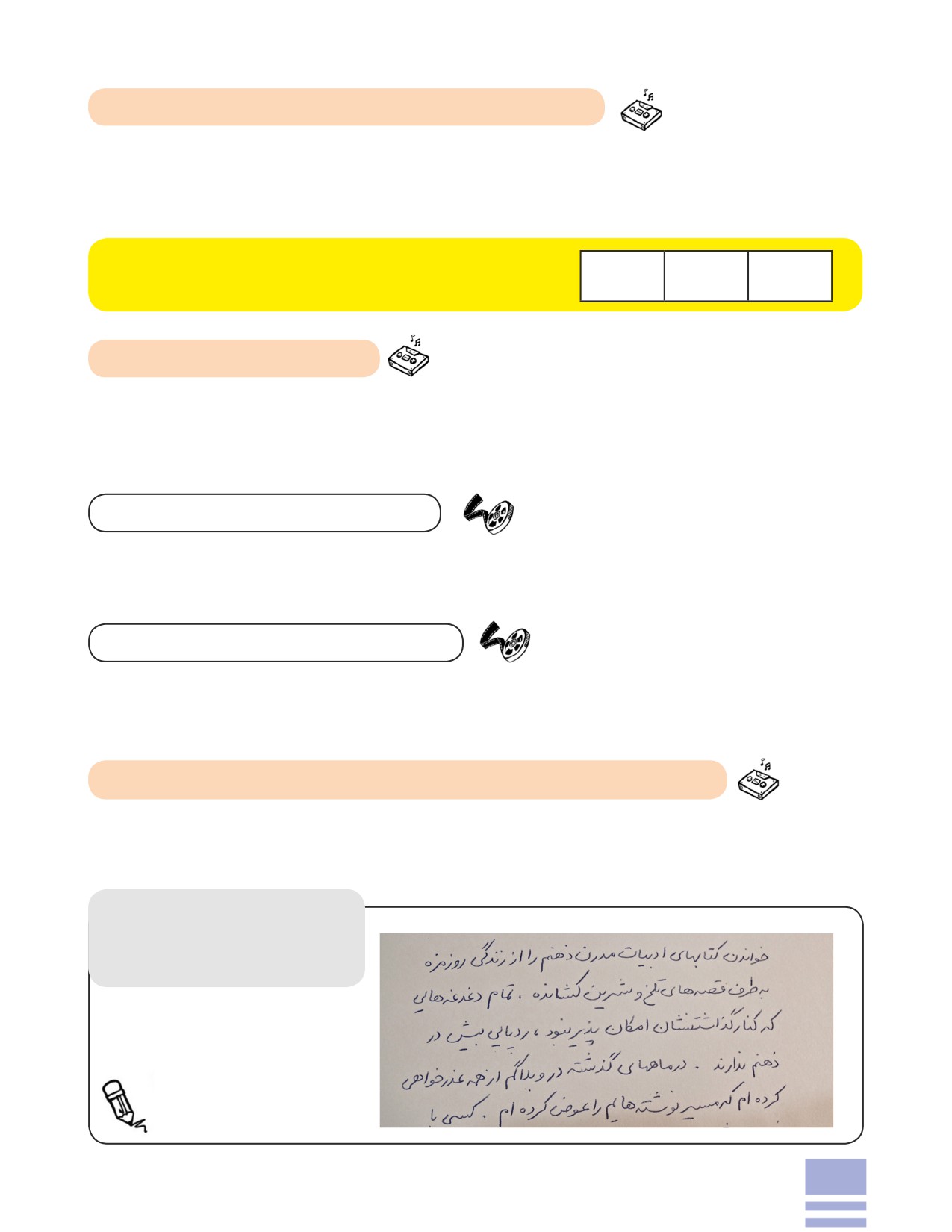
5. Listen and write the words you hear. Write the /s/ sound with ص.
.6
.٥
.4
.٣
.٢
.١
.12
.11
.10
.9
.8
.7
Part
3: zâl
/z/
__ذ__
ذيذل
تذل
لاذ
1. Listen to the audio file for file. ذ zâl.
This letter is pronounced exactly like ز , but it is written like د with a dot above it. Like د it does not con-
nect to the following letter.
2. Watch the video and follow the instructions.
..........................................................................................................................ذ
3. Watch the video and write the following words.
.................................. ناذا
هتشذگ
تذل
4. Listen and write the words you hear. Write “ذ” whenever you hear the /z/ sound.
.6
.٥
.4
.٣
.٢
.١
5. Circle the letter ذ in the following
text. Report to your instructor how
many ذ you identified in the text.
SHAHSAVARI | ATWOOD
106
___ع__ﻊ___ﻌ___ﻋ___
Part
4: eyn
/ ’ /
عورش
عبر
ديع
ملعم
1. Listen to the audio file for ع eyn.
This letter does not have an alphabetic equivalent in English, but you make its sound all the time. Try saying “uh-oh”
several times and pay attention to the sound you make in between the two syllables.You make the same sound when
you pronounce any word that begins with a vowel, such as our, if, it, I, on, up. Say these out loud, and pay attention
to the “catch” in your throat as you pronounce the first vowel. In Persian, this sound is actually a consonant.
2. Watch the video and follow the instructions.
.........................................................................................................................ﻋ
.........................................................................................................................ﻌ
.........................................................................................................................ﻊ
.........................................................................................................................ع
3. Watch the video and write the following words.
.................................................ملع
يلاع
. . . . . . . . . . . . . . . . . . . . . . . . . . . . . . . . . . . . . . . . . . . . . . . . .رعش
ملعم
.................................................عورش
عيسو
4. Listen and check when you hear the / ’ / sound in the word.
□ .۵
□ .۴
□ .٣
□ .٢
□ .١
107
PERSIAN OF IRAN TODAY
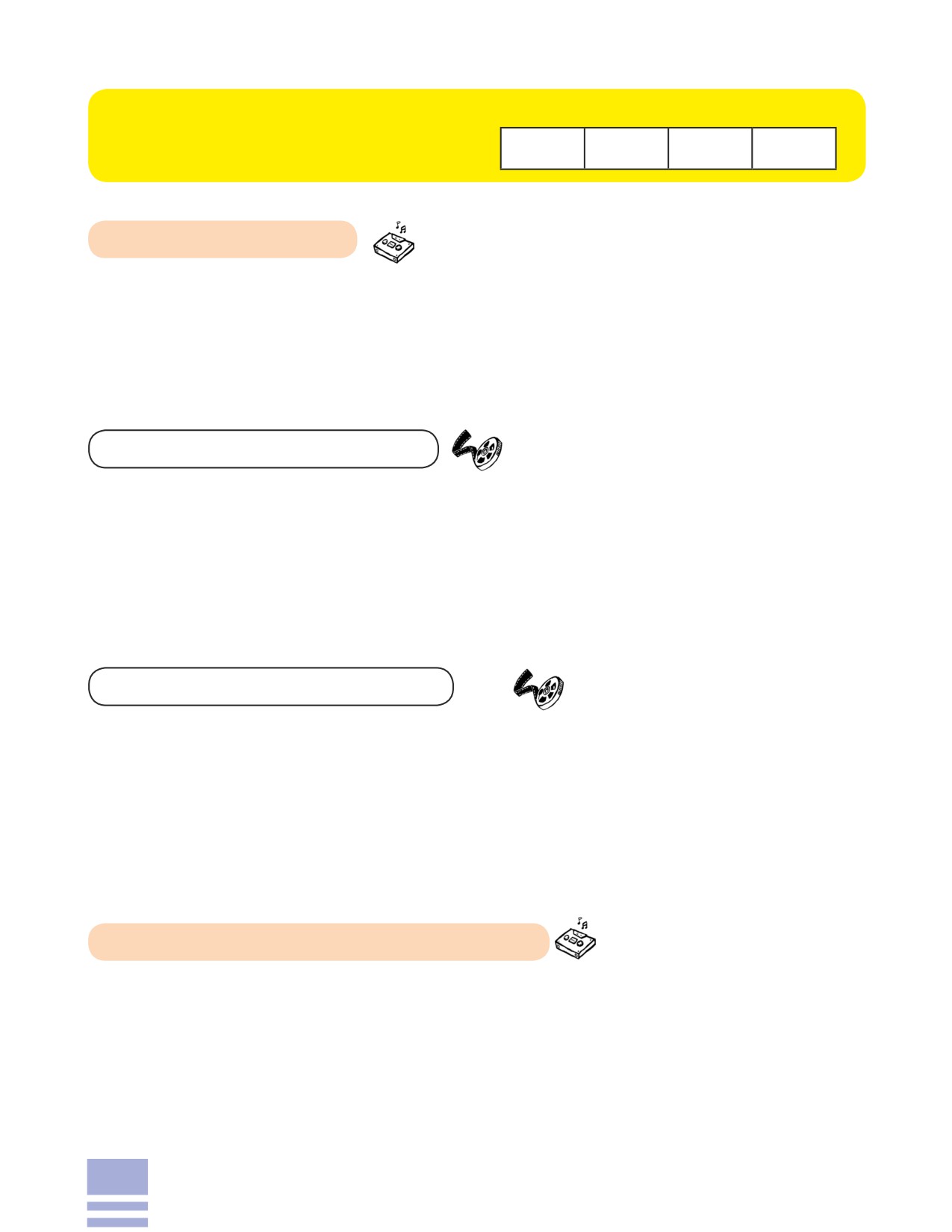
5. Circle the letter ع in the following text. Report to your
instructor how many ع you identified in the text.
6. Listen and write the words you hear.
۶
.٥
.۴
.٣
.٢
.١
.12
.11
.۱۰
.۹
.۸
.۷
7. Connect the letters to form words.
ت + ي + ي + ص + خ + ش .١
ر + د + ص + م .٢
م + ل + ل + ع + م . ٣
ق + ف + ش .۴
ا + ق + ي + ر + ف + آ .٥
ت + ي + ي + م + م + ه + ا .٦
ل + د + د + ع + م .۷
8. Listen to the following words. Fill in the missing letter or letters,
then write the completed words on a separate piece of paper.
تدم .۴
لداـــــــم .۳
فدــــــ .۲
يشاقن .۱
راجن .۸
بوـــــــرم .۷
رودـــــــ .۶
تـــــــرس .۵
مهم .۱۲
باوـــــــ .۱۱
هراق .۱۰
ــــــــــــدص .۹
تــــــرف .۱۶
ناتسبرــــــ .۱۵
سدقم .۱۴
تداـــــــس .۱۳
SHAHSAVARI | ATWOOD
108
9. Read aloud the following words with your partner.
فراع .4
مهم .3
هدام .2
هيهت .1
يلاع .8
ينابصع .7
دعب .6
تدعاسم .5
رصع .12
هرداصم .11
قرب و دعر .10
فورعم .9
قامس .16
ليلذ .15
تلاذر .14
رصاعم .13
يندعم بآ .20
سدع .19
هکرس .18
نارفعز .17
10. Listen to the audio file and
11. Read the following words aloud with your
mark the word you hear.
partner. What do you notice about the
relationship between the two columns?
يروق
قوس
۷
۱
اهرهش
رهش
يروگ
گوس
اهشوم
شوم
رگم
مرگ
۸
۲
رقم
نرق
اههسردم
هسردم
رگا
داقن
۹
۳
اهرد
رد
لقا
راگن
اههار
هار
شوگ
بيرق
10
۴
چوق
ميلگ
ناناوج /اهناوج
ناوج
تواقش
نيارق
۱۱
۵
نايوجشناد /اهوجشناد
وجشناد
تياکش
هيلگ
قشم
يراگ
۱۲
۶
کشم
يراق
109
PERSIAN OF IRAN TODAY
Vocabulary1
1 ناگژاو
1. Listen to and learn these words. Translate the sentences. The spoken variations have been
included in parentheses.
your house
)؟تساج نيا امش یهنوخ( ؟تساج نيا امش هناخ
امش يهناخ .1
your house
)؟هنوبايخ نيا وت نوتهنوخ( ؟تسا نابايخ نيا رد ناتاهناخ
)نوتهنوخ( ناتاهناخ .2
I do not know.
)؟تساجک انوا یهنوخ منودیمن( .تساجک اهنآ يهناخ مناديمن
)منوديمن( مناديمن .3
good night
!ريخ هب امش بش
ريخ هب بش .4
good morning / day
)ريخ هب نوتزور( !ريخ هب ناتزور
ريخ هب زور .5
excellent
).هيلاع ینيريش نيا( .تسا يلاع ینيريش نيا
يلاع .6
big
).هگرزب انوا هنوخ( .تسا گرزب اهنآ هناخ
گرزب .7
small
).مراد کيچوک ردارب هي نم( .مراد کچوک ردارب کي نم
)کيچوک( کچوک .8
book
).هراد یسراف باتک ات ود نوا( .دراد يسراف باتک ود وا
باتک .9
pencil
).هراد دادم ات هس نوا( .دراد دادم هس وا
دادم .10
pen
)؟یراد راکدوخ ات راهچ امش( ؟يراد راکدوخ راهچ امش
راکدوخ .11
notebook
).نراد رتفد ات جنپ انوا( .دنراد رتفد جنپ اهنآ
رتفد .12
eraser
؟يراد نککاپ
نککاپ .13
bag
). مراد مفيک وت کيچوک رتفد ات ود( .مراد مفيک رد کچوک رتفد ود
فيک .14
table
) .هسلک نيا وت گرزب زيم هي( .تسا سلک نيا رد گرزب زيم کي
زيم .15
.تسه کچوک يلدنص تسيب سلک نيا رد
chair
يلدنص .16
).تسه کيچوک یلدنص ات تسيب سلک نيا وت(
child
).نتسه هنوخ وت هرجنپ ات شش( .دنتسه هناخ رد هچب شش
کدوک ،هچب .17
young
)؟هنووج وت ردارب( ؟تسا ناوج وت ردارب
ناوج .18
old
).هريپ نم ردپ( .تسا ريپ نم ردپ
ريپ .19
SHAHSAVARI | ATWOOD
110
boy, son
).نراد رسپ ات تفه انوا ( .دنراد رسپ تفه اهنآ
رسپ .20
girl, daughter
).هکيچوک نم رتخد( .تسا کچوک نم رتخد
رتخد .21
.تسا نابايخ نيا رد ابيز یهناخ کي
beautiful
ابيز .22
) هنوبايخ نيا وت ابيز یهنوخ هي(
handsome
).همردارب پيتشوخ درم نيا( .تسا مردارب پيتشوخ درم نيا
پيت شوخ .23
.دراد قارع رد گرزب هناخ کي متسود ردپ
Iraq
قارع .24
).هراد قارع وت گرزب یهنوخ هي متسود ردپ(
)Muslim( .تسا ناملسم روشک کي ناتسبرع
Saudi Arabia
یدوعس ناتسبرع .25
.هنوملسم روشک هي ناتسبرع
who
)؟تسا هتسخ یک( ؟تسا هتسخ يسک هچ
)؟يک( /يسک هچ .26
2. Listen to the audio file again. Based on what you hear, write the vowels on the example sentences. Now
listen to the next audio file. Write the sentences you hear and translate them to English.
Vocabulary 2
2 ناگژاو
3. Listen to and learn these words. Translate the sentences. The spoken variations have been
included in parentheses.
bedroom
)
هنوخ وت ...( .ميراد هناخ رد گرزب باوخ قاتا کي
باوخ قاتا .1
living room
).هنميشن ...( .تسا نميشن قاتا اجنيا
نميشن قاتا /لاه .2
kitchen
).هکيچوک نوشهنوخزپشآ( .تسا کچوک ناشاهناخزپشآ
)هنوخزپشآ( هناخزپشآ .3
restroom
؟تساجک ييوشتسد ،ديشخبب
یتشادهب سیورس -یيوشتسد .4
stairs
)؟نيراد هلپ نوتهنوخ وت( ؟ديراد هلپ ناتاهناخ رد
هلپ .5
.دراد گرزب یورهار هس هناخ نيا
hallway
ورهار .6
) .هراد گرزب یورهار ات هس هنوخ نيا(
guest room
).ميرادن نومهم قاتا هنوخ وت( .ميرادن نامهم قاتا هناخ رد
نامهم قاتا .7
4. Listen to the audio file again. Based on what you hear, write the vowels on the example sentences. Now
listen to the next audio file. Write the sentences you hear and translate them to English.
111
PERSIAN OF IRAN TODAY
Listening Comprehension رادينش کرد
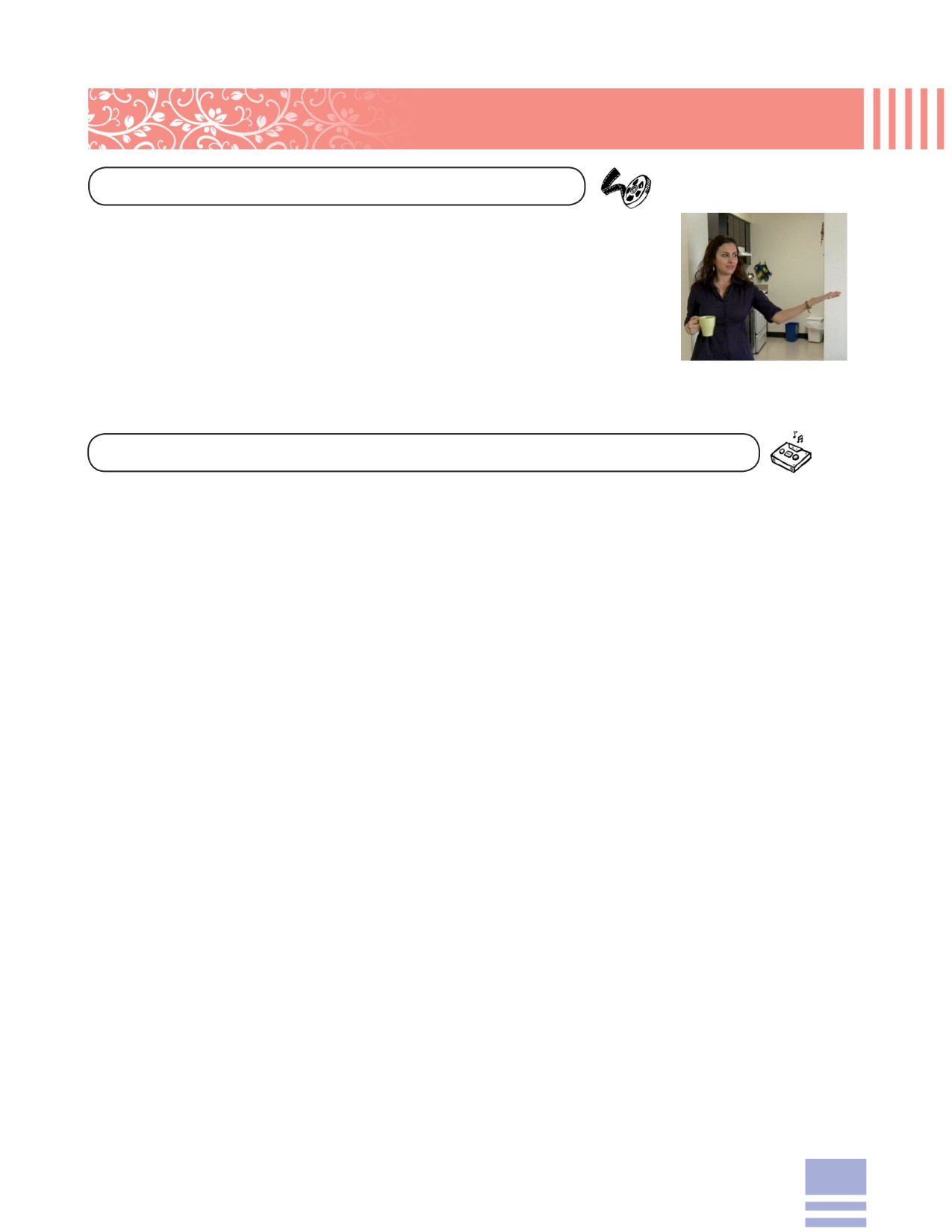
1. Watch the videos and answer the following questions in Persian.
1. What does Shayli show us in her house?
2. Where do you think she studies?
3. How does she feel about her apartment?
4. Who calls Shayli?
5. How does Shayli feel? What does her friend suggest she drink?
6. Where is Shayli going to go? With whom?
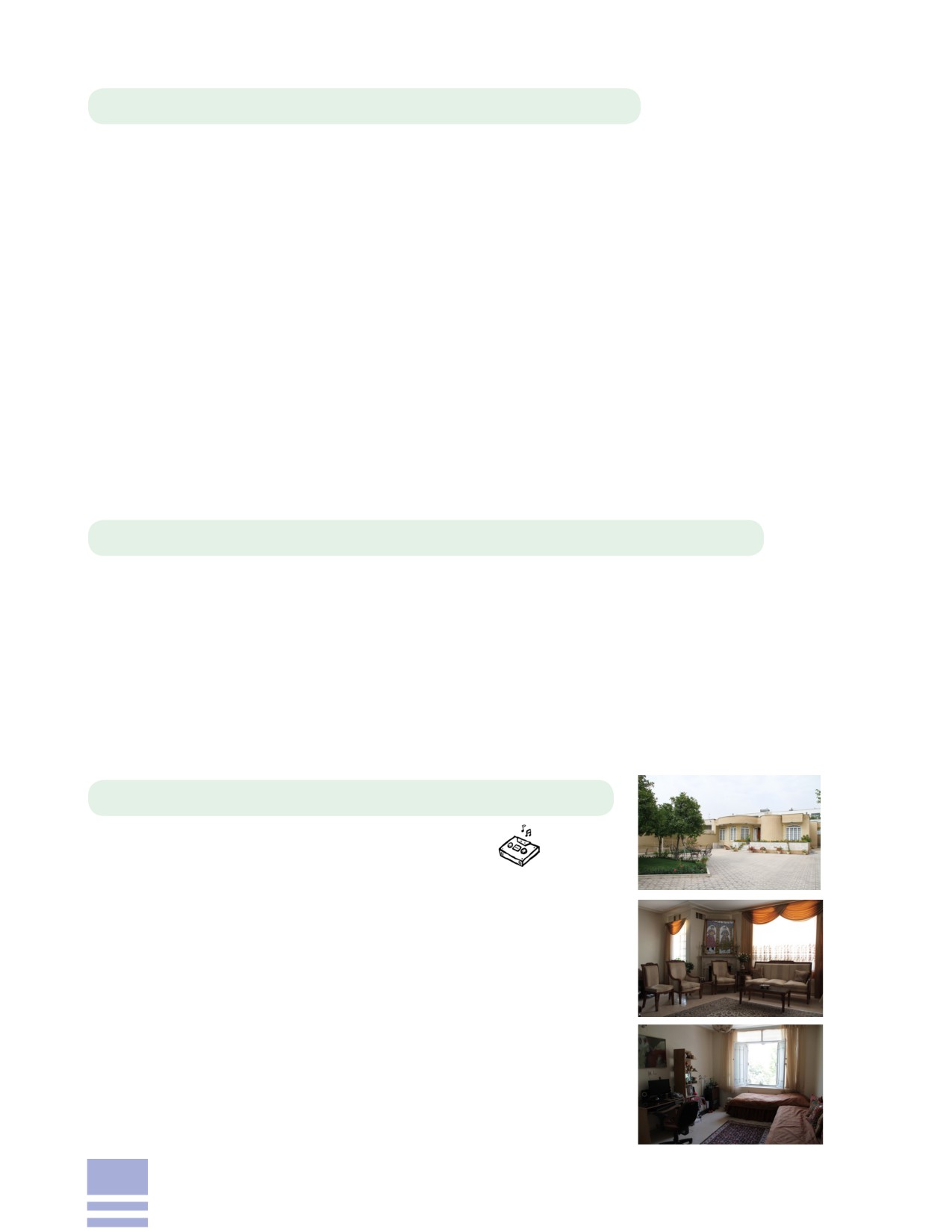
2. Listen to the audio file and answer the questions you hear in complete sentences in Persian.
.۱
.2
.3
.4
.5
SHAHSAVARI | ATWOOD
112
Grammar Note
یروتسد تشادداي
Ezâfe
is a construction that marks a relationship between two words: nouns and other nouns, nouns and adjectives,
or nouns and pronouns.
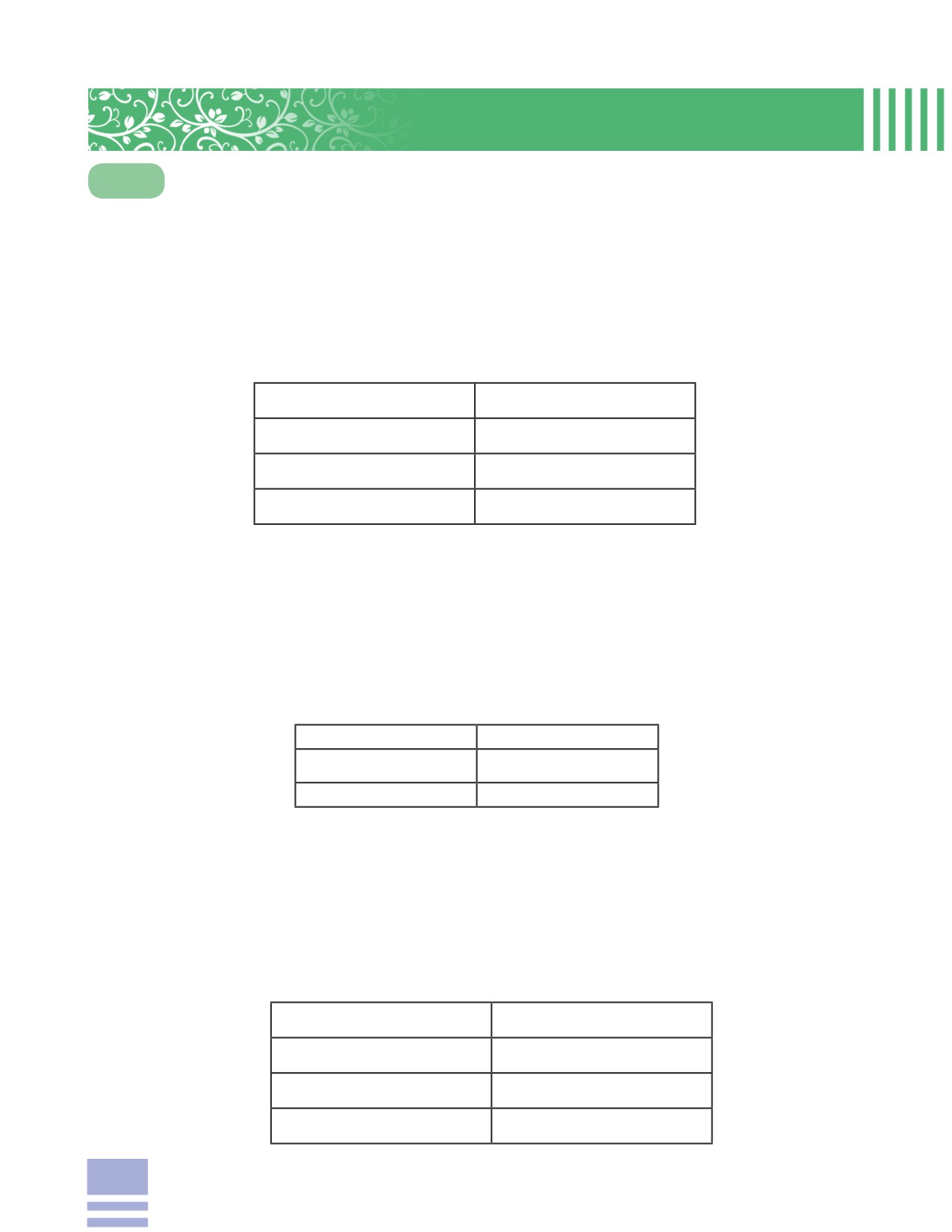
You actually already know how to create an ezâfe construction. Think back to possession. How did you make
possessive phrases using pronouns? To review, fill in the following chart using pronouns to create possession.
Make sure you read your answers aloud as you write them.
my book
نم باتک
his pencil
our class
امش راکدوخ
their daughter
You didn’t write anything in between the noun and pronoun, but as you were reading them aloud, what did you
say between them? … … … … … … … … … … … … … … … … … … … … … … … … … … … … … … … …
That /e/ sound marks ezâfe and it is usually how we indicate this kind of relationship between two words. Ezâfe can
also mark possession between two nouns, similar to the English “of.” How would you translate the following phrases?
Bâbak’s bag
سلک زیم
University of Texas
However, the ezâfe construction is not limited to possessive phrases. It is also used when we connect a noun
and an adjective. Remember that in Persian the noun comes first and is followed by the adjective. Complete the
following chart, connecting the noun and adjective in the proper order. Be sure to read your answers aloud and
don’t forget the /e/ sound in between the two words!
the big university
the excellent book
the little sister
the old woman
113
PERSIAN OF IRAN TODAY
Two Caveats
Now that you have a clearer idea of how to use ezâfe, keep the following rules in mind as you construct it.
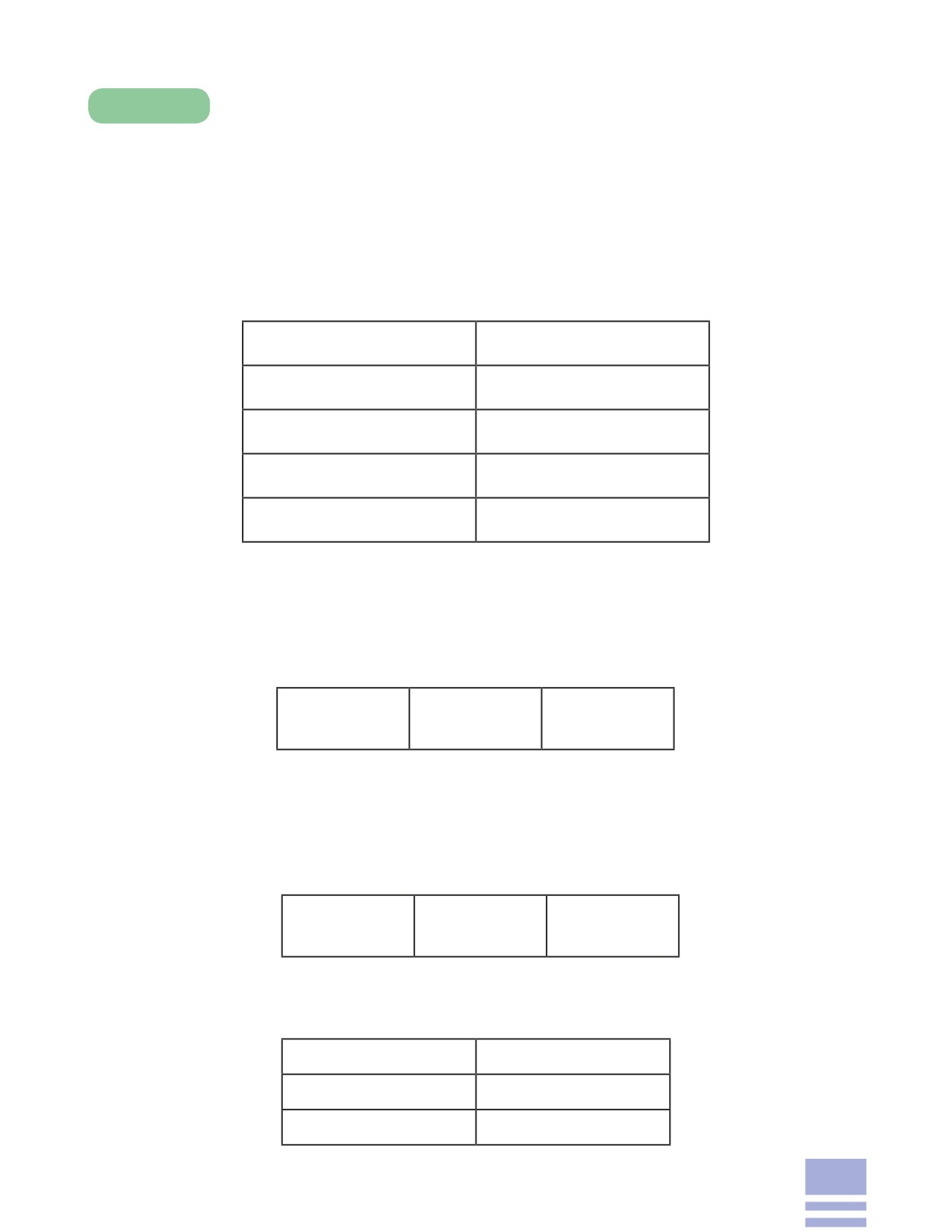
1. In Persian, words can either end in vowels or consonants. Remember that a vowel is written at the end of the
word with an alef, vâv, ye, or a he (which represents an /e/ sound). Look through your vocabulary lists from the
last two lessons and separate the nouns according to their last letter, put words ending with vowels in the left
column and words ending with consonants in the right column.
هناخ
باتک
This distinction is important because words that end with vowels act differently in ezâfe constructions.
Specifically, when the first word in an ezâfe construction ends with a vowel, instead of just saying /e/ in between
the two words, we actually write and pronounce a ی. You’ve already seen this construction in your most recent
vocabulary list.
my house
khâne-ye man
نم یهناخ
Because هناخ ends with a vowel (/e/), we write a ی directly next to the ه without connecting it. If a word ends
with an alef or a vâv (pronounced /u/), then we also write and pronounce a ی. However, if a word ends in ی, we
don’t write an additional ی . Consider the following example:
the big chair
sandali-ye bozorg
گرزب یلدنص
How would you translate the following phrases, keeping the rule you just learned in mind?
the small window
their house
the excellent university
SHAHSAVARI | ATWOOD
114
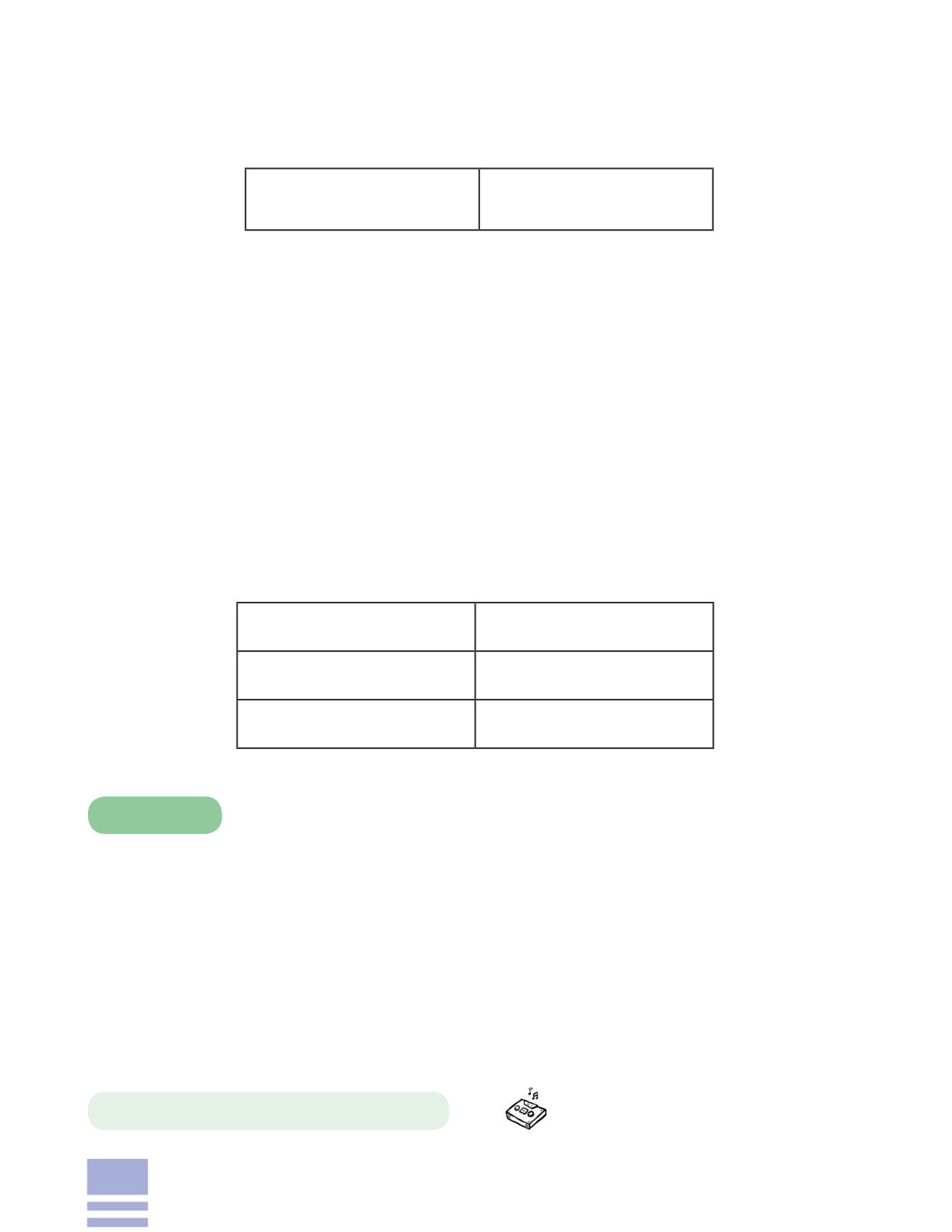
2. It is also possible to “stack” words in an ezâfe construction. However, if a pronoun is involved, remember that
it always comes at the end! Look at the following example:
my beautiful house
نم یابیز یهناخ
Can you write four examples of your own that use at least three words “stacked” in an ezâfe construction?
Try to incorporate your new vocabulary as well.
.۱
.2
.3
.4
3. How would you translate the following phrases? Remember that ezâfe is not added to numbers.
ابيز قاتا ود
کچوک هرجنپ هس
ناوج درم راهچ
Ezâfe Practice
Determining where ezâfe goes is one of the biggest challenges to reading Persian. However, it is important
because it demonstrates that you understand the meaning of the sentence. Practice by writing in the ezâfe
markers (either the zir or ye).
.دراد ابیز زیم جنپ ام گرزب هناخ .۱
.تساجک اهنآ کچوک رهاوخ منادیم .2
.مروخیم گرزب هویم بآ کي امش هزاجا اب .3
؟تسا سازگت هاگشناد یسراف سلک رد امش وجشناد وجشناد نيا ،رتکد اقآ .4
.تسا نارهت نابایخ رد ام سلک .5
Listen to the audio file and check your answers.
Grammar 1
115
PERSIAN OF IRAN TODAY
Grammar Exercises
1. Which of the sentences below could be the equivalent for the Persian phrase in the yellow box?
Translate the other sentences. The vocabulary you may not know is given in the box.
!ديشاب هتشاد يبوخ زور
vanilla
)adj( یليناو ،ليناو
ice cream
ينتسب
milk
ريش
apple
بيس
How are you?
……………………………..
Have a good day!
……………………………..
Where are you from?
……………………………..
She has two brothers.
……………………………..
I do not have an apple.
……………………………..
I like vanilla ice cream.
……………………………..
My brother’s name is Bahram.
……………………………..
She drinks milk.
……………………………..
Memorize the phrase !ديشاب هتشاد یبوخ زور for future use!
2. Add nouns or adjectives to the following words to make phrases. Then make sentences with each phrase.
. . . . . . . . . . . . . . . . . . . . . . . . . . هناخ
. . . . . . . . . . . . . . . . . . . . . . . . . . دادم
. . . . . . . . . . . . . . . . . . . . . . . . . . فيک
. . . . . . . . . . . . . . . . . . . . . . . . . . . درم
. . . . . . . . . . . . . . . . . . . . . . ل ابت وف
. . . . . . . . . . . . . . . . . . . . . . . . . . . .نز
SHAHSAVARI | ATWOOD
116
3. Fill in the blanks with appropriate words. Add ezafe wherever necessary.
.منکیم یگدنز ناهفصا رد مردام و ردپ اب اما متسه
نم . تساراس نم مسا .1
.ميرادن اج .ميراد ناهفصا رد
هناخ کي ام .2
.دنتسه رتخد
مراد بوخ تسود راهچ هاگشناد رد و متسه ناهفصا هاگشناد
نم .3
. ..................... هويم بآ مردارب و نم .4
)؟همفيک یوت .تساجنيا - .تسا اجک امش
و
منودیمن( .5
.تسا ام کيزيف داتسا
نز نيا .6
؟تسه
و
دنچ سلک نيا رد .7
4. Fill in the blanks with the correct form of the verbs “to be,” “to eat,” “to live,” and “to have.”
یتلکش ینيريش متسود و نم .۱
. . . . . . . . . . . . . . . . . . . . ناهفصا رد درم راهچ نيا .2
?
نيشام ناتردارب و امش .3
. . . . . . . . . . . . . . . . . . . . یاچ اهبش وا .4
5. Listen to the audio files and answer the following questions in Persian.
1. Who lives in the house?
2. How many باوخ قاتا are there in the house?
Grammar 3
3. Who shares one bedroom?
4. How many guest rooms are there in the house?
5. How are the windows in the bedrooms?
6. Where does the family dine?
7. Where are the bathrooms?
117
PERSIAN OF IRAN TODAY

Writing exercise نتشون
1. Use the vocabulary you have learned so far to write a short paragraph about your house., or find a picture
related to a house and describe the house.
Speaking Activities ندز فرح
In Class:
Try to describe your surroundings to your classmates. Say things like “This book is big!” Or “This is a big book!”
For Homework:
Review the vocabulary on p.66 and the grammar note on ezâfe and think of how you would ask your classmates
the following questions. Practice them aloud several times so you can ask them fluidly in class. Think about how
you might answer these questions and be sure you know how to say “I don’t know.”
~ Where is your house?
~ Is your house big?
~ Is this your book?
~ Do you have a son or daughter? What is his/her name?
~ Does your brother have a small notebook?
~ Is there a pen in your bag?
~ Do you have a big table in your house?
~ Who in Hollywood is very handsome? Pretty?
~ Who in this class knows three languages?
~ Do you live in a house or an apartment (نامتراپآ)?
~ How many bedrooms and bathrooms does it have?
~ Do you eat dinner in the kitchen or the living room?
In Class:
Now practice with your classmates. Ask your neighbors the questions you practiced. Pay attention to what they
say, as your instructor may ask you to report what you’ve learned to the class. Be sure to thank your classmates!
SHAHSAVARI | ATWOOD
118
Classroom Activities سلک یارب یداهنشيپ یاهتيلاعف
Cribs: Work with a partner. Your instructur will give each of you a different picture of a house. You must describe
your house to your partner and s/he will draw it. Then switch roles. Your partner will describe his/her picture
while you draw it. Do all of this without looking at your partner’s picture!
The following words will be useful as you describe your pictures:
above
.دنتسه هناخزپشآ یلاب اهقاتا
لاب
to the left of
.تسا نميشن قاتا پچ تمس هناخزپشآ
پچ تمس
to the right of
.تسا هلپ تسار تمس ييوشتسد
تسار تمس
0 ..دينک بلج هفاضا فرح زا دعب »هفاضا« هب ار اهنآ هجوت و ديناوخب نايوجشناد یارب ار لاب یاههلمج :داتسا یارب
119
PERSIAN OF IRAN TODAY
UNIT 7
ص
آ
ض
ب
ط
پ
ظ
ت
ع
ث
غ
ج
ف
چ
ق
ح
ک
خ
گ
د
ل
ذ
م
ر
ن
ز
و
ژ
ه
س
ي
ش
How old are you?
؟هنوتلاس دنچ
Cultural Note یگنهرف تشاددای
I don’t want to bother you
!مشیمن نوتمحازم
Iranians are very comfortable asking and responding to questions that may be considered too personal inWestern
societies. In everyday conversation, Iranians often discuss and ask about one’s weight, salary, religion, age, and
political views. Making comments about someone’s weight is not considered disrespectful, and people might give
each other advice on how to lose weight or get in better shape.
While these kinds of personal questions are considered culturally appropriate, in other contexts people are
indirect when responding to requests. Iranians often use ambiguous comments or indirect phrases to communicate
their needs or respond to a request. In this context, being blunt is not considered an appropriate cultural
practice in Iran. For example, if someone asks you if you would like tea, you might answer, “No, thanks.
I don’t want to bother you.” نیتفایب تمحز هب ماوخیمن نونمم هن, which is actually used to accept the tea.
121
PERSIAN OF IRAN TODAY
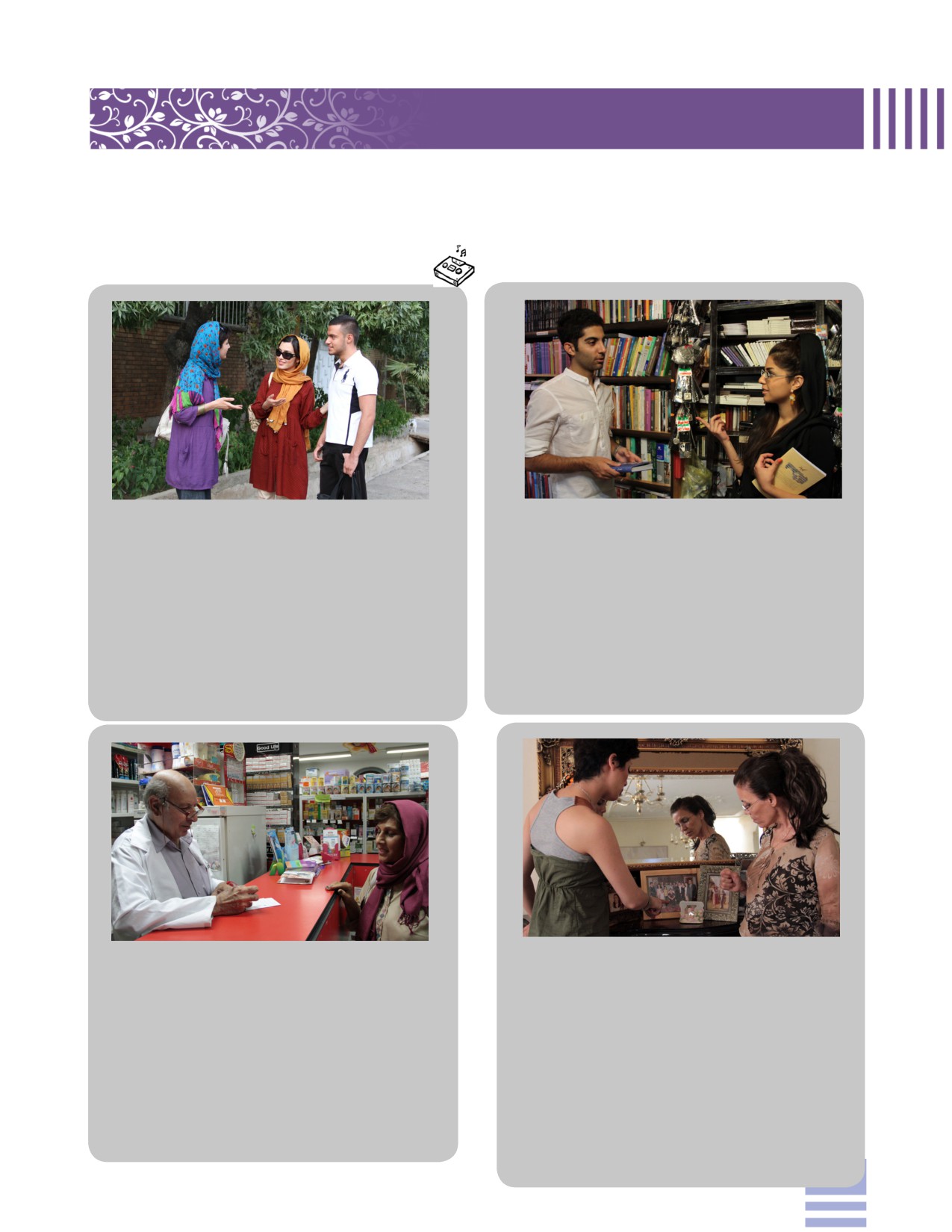
Short Conversations هاتوک یاهوگتفگ
In class, listen to the audio files, repeat what you hear and try to fill in the blanks. At home repeat what you hear
several times and try to follow the rhythm. Write at least two sentences in Persian about each conversation. You
can use made up names for the people who are talking. During the next class time, you will work with a classmate
to create a scenario that uses these expressions.
؟دنتسه
؟هنوتلاس دنچ .
.هلب .
؟هنوتلاس
امش .لاس
و تسيب .
؟
.هملاس
نم .
.هشلاس تسيب .
1
1
1
1
2
2
2
2
؟
تگرزبردام .
؟هنوتلاس دنچ
هنکمم ،ديشخبب .
.هنوشلاس
.مراد لاس
هدنب ،هلب .
؟هنوشلاس دنچ
!لاشام .
.هشلاس
و هاجنپ
1
1
1
1
2
2
2
2
SHAHSAVARI | ATWOOD
122
....ط
...ض
ﺿ
...ح
ﺣ
...ث...ﺛ...
Part
1: se
/s/
__ ث__ﺛ__
ثعاب
لاثم
ايرث
1. Listen to the audio file for ث se.
The letter se is pronounced exactly like the letter س (which marks three letters that you have learned
representing the same sound). It is written like ب but with three dots above in an upside-down v-shape.
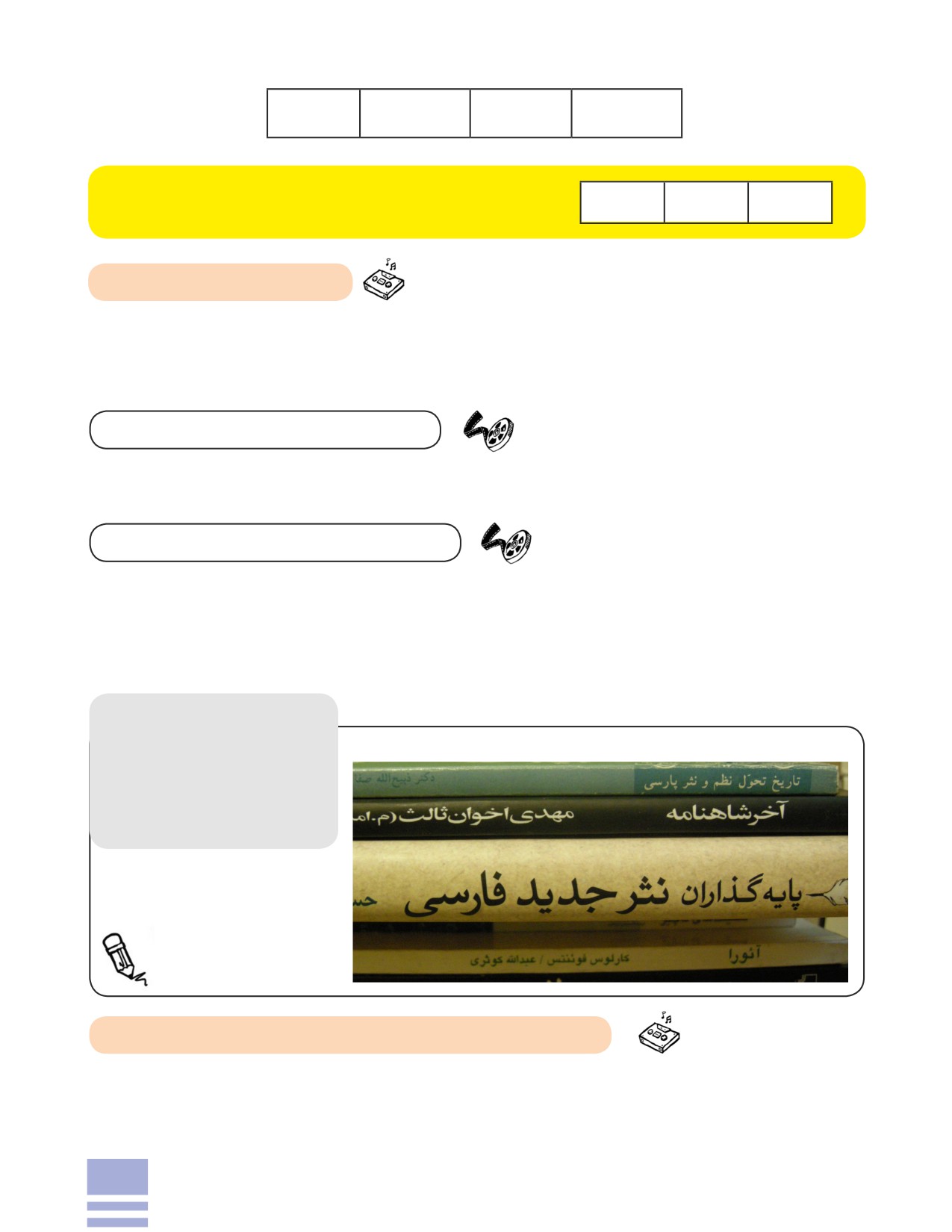
2. Watch the video and follow the instructions.
..........................................................................................................ث
ﺛ
3. Watch the video and write the following words.
لاثم
هثل
. . . . . . . . . . . . . . . . . . . . . . . . . . . . . . . . . . . . . . . . . . . . . . . . . . . . . . فيثک
ثلثم
4. Find and circle the letter ث in
the following text (in the titles).
Report to your instructor how
many ث you identified in the
text.
5. Listen and write the words you hear. Use ث when you hear /s/ sound.
.٥
.۴
.٣
.٢
.١
.۱۰
.۹
.۸
.۷
.۶
123
PERSIAN OF IRAN TODAY
Part 2: he
/h/
__ح__ﺣ__
حور
حبص
رحس
فرح
1. Listen to the audio file for ح he.
The letter he is pronounced exactly like ه, which you learned earlier. It is written like ج, but without dots.
2. Watch the video and follow the instructions.
.............................................................................................ح
ﺣ
3. Watch the video and write the following words.
............................... حبص
ناويح
فرح
............................. هحفص
هناحبص
تبحص
4. Listen and check when you hear the /h/ sound in the word.
□ .۵
□ .۴
□ .٣
□ .٢
□ .١
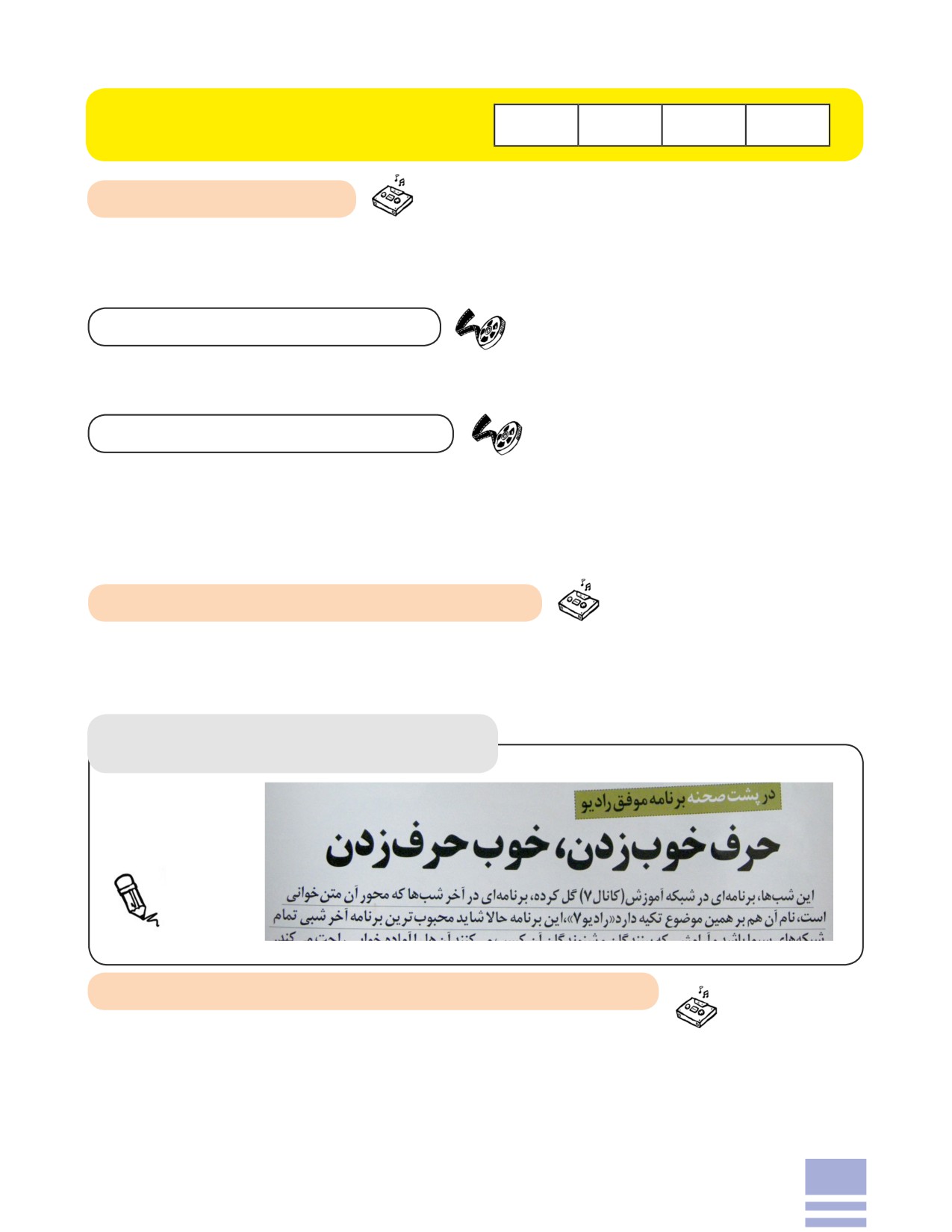
5. Circle the letter ح in the following texts. Report to
your instructor how many ث you identified in the text.
6. Listen and write the words you hear. Use ح when you hear the /he/ sound.
.٥
.۴
.٣
.٢
.١
.۱۰
.۹
.۸
.۷
.۶
SHAHSAVARI | ATWOOD
124
ضوح
ضيرم
يضعب
ريمض
Part 3: zâd
/z/
__ض__ﺿ__
1. Listen to the audio file for ض zâd.
This letter represents the sound ز .
2. Watch the video and follow the instructions.
..........................................................................................................ض
ﺿ
3. Watch the video and write the following words.
........................................................ريمض
اضف
......................................................ضيرم
حيضوت
.....................................................نومضم
ررض
4. Circle the letter ض in the following text.. Report to
your instructor how many ض you identified in the text.
5. Listen and write the words you hear.
.٥
.۴
.٣
.٢
.1
125
PERSIAN OF IRAN TODAY
Part 4: tâ
/t/
___ط___
طايح
نطو
يطوط
1. Listen to the audio file for ط tâ.
The letter tâ represents the same sound as the letter ت .
2. Watch the video and follow the instructions.
........................................................................................................................ط
3. Watch the video and write the following words.
......................................................... قلطم
لوط
........................................................... طخ
طقف
4. Write the words in the appropriate box.
،يعس ،ناذا ،بورضم ،عياض ،تاحلصا ،يرطاب ،ملعم ،يفاضا ،صوصخم ،هنيطنرق ،تداعس ،فعض ،طرف ،گرزب
تشاذگ ،لط ،هزاجا ،نيلوا ،رکفت ،علطا ،هحلاصم ،فراعت ،قلطم ،تقادص
ط
-- ديدشت
ض
ص
ع
ذ
5. Listen and write the words you hear. Use ط when you hear the /t/ sound.
.٥
.۴
.٣
.٢
.١
6. Circle the letter ط in the
following text. Report to your
instructor how many ط you
identified in the text.
SHAHSAVARI | ATWOOD
126
6. Read the following words aloud with your partner.
رطق .4
دحاو .3
بلطم .2
قاقحتسا .1
برطضم .8
لاح .7
سلطا .6
دودح .5
بيبح .21
هعياض .11
ضرف .10
هقح .9
فيعض .16
ديحو .15
بورضم .14
هقياضم .13
هعياض .20
اضقنا .19
فعض .18
بزح .17
Vocabulary 1 ناگژاو
1. Listen to and learn these words. Translate the sentences. The spoken variations have been included in parentheses.
we eat, we drink
)instructors can introduce a few “food” words(.ميروخيم ينتسب
میروخیم .1
.موريم مجنپ نابايخ رد ماهناخ هب
to
هب .2
) .مجنپ نوبايخ وت مهنوخ مریم(
I go to
).هاگشناد مریم( .موريم هاگشناد هب
)مريم( موريم . . . هب .3
tired
هتسخ .4
).ناهتسخ رسپ ات تفه نوا( .دنتسه هتسخ رسپ تفه نآ
I am thirsty.
)تسهنشت رتخد نوا( .تسا هنشت رتخد نآ
)همنشت( ماهنشت .5
.دنوریم یيايلاتيا ناروتسر کي هب هنسرگ رسپ تشه نآ
I am hungry.
)همنسرگ( ماهنسرگ .6
). یيايلاتيا ناروتسر هي نریم هنسرگ رسپ ات تشه نوا(
happy
) .نلاحشوخ رتخد ات هن نوا( .دنتسه لاحشوخ رتخد هن نآ
لاحشوخ .7
.دنتسه تحاران رتخد و رسپ هد نآ
sad
تحاران .8
) .نتحاران رتخد و رسپ ات هد نوا(
angry
).هينابصع نووج رسپ نوا( .تسا ينابصع ناوج رسپ نآ
ينابصع .9
sick
.مضيرم .تسين بوخ ملاح
ضيرم .10
lazy
).هنم تسود لبنت رسپ نيا( .تسا نم تسود لبنت رسپ نيا
لبنت .11
it’s warm in here,
)؟هنوتمرگ امش(
)هممرگ( / )همرگ ،همرگ اجنيا( .12
it’s warm, I’m hot
cold/ I’m cold,
).هنومدرس ام(
)همدرس( /درس .13
It’s cold
127
PERSIAN OF IRAN TODAY
I work
).منک يم راک نارهت وت( .منک يم راک نارهت رد
منکيم راک .14
restaurant
).منکيم راک ناروتسر وت( .منکيم راک ناروتسر رد
ناروتسر .15
kabob
)؟نيروخیم بابک ناروتسروت( ؟ديروخيم بابک ناروتسر رد
بابک .16
with your permission
.مروخيم ياچ امش يهزاجا اب
امش يهزاجا اب . 17
to be from somewhere
.متسه ناتسکيجات لها
لها .۱۸
but
.متسين دلب يسراف اما متسه يناريا
اما .۱۹
library
).منکیم راک هنوخ باتک وت نم( .منکیم راک هناخباتک رد نم
هناخباتک .۲۰
dormitory
).هاگباوخ هب مریم و ماهتسخ( .موریم هاگباوخ هب و ماهتسخ
هاگباوخ .۲۱
2. Listen to the audio file again. Based on what you hear, write the vowels on the example sentences.
Now listen to the next audio file. Write the sentences you hear and translate them to English.
Vocabulary 2 ناگژاو
3. Listen to and learn these words. Translate the sentences.
The spoken variations have been included in parentheses.
ten
).تسه نوبايخ نيا وت ناروتسر هد( .تسه نابايخ نيا رد ناروتسر هد
هد .1
twenty
).هراد هاگشناد ات تسيب نارهت( .دراد هاگشناد تسيب نارهت
تسيب .2
thirty
).تسه اجنيا گرزب یهنوخ یس( .تسه اجنيا رد گرزب یهناخ يس
يس .3
forty
.دنتسه نابايخ رد کدوک لهچ
لهچ ۴.4
fifty
).نتسه سلک نياوت نووج رسپ و رتخد هاجنپ( .دنتسه سلک نيارد ناوج رسپ و رتخد هاجنپ
هاجنپ .5
sixty
).هراد یلاع هاگشناد ات تصش اکيرمآ( .دراد يلاع هاگشناد تصش اکيرمآ
تصش .6
seventy
).هراد داتسا ات داتفه هاگشناد نيا( .دراد داتسا داتفه هاگشناد نيا
داتفه .7
eighty
).ميراد يسراف باتک ات داتشه ام( .ميراد يسراف باتک داتشه ام
داتشه .8
ninety
).هراد سلک ات دون هاگشناد نيا( .دراد سلک دون هاگشناد نيا
دون .9
a hundred/a thousand
).هراد بوخ ناروتسر ات دص نارهت( .دراد بوخ ناروتسر دص نارهت
رازه /دص .10
4. Listen to the audio file again. Based on what you hear, write the vowels on the example sentences.
Now listen to the next audio file. Write the sentences you hear and translate them to English.
SHAHSAVARI | ATWOOD
128
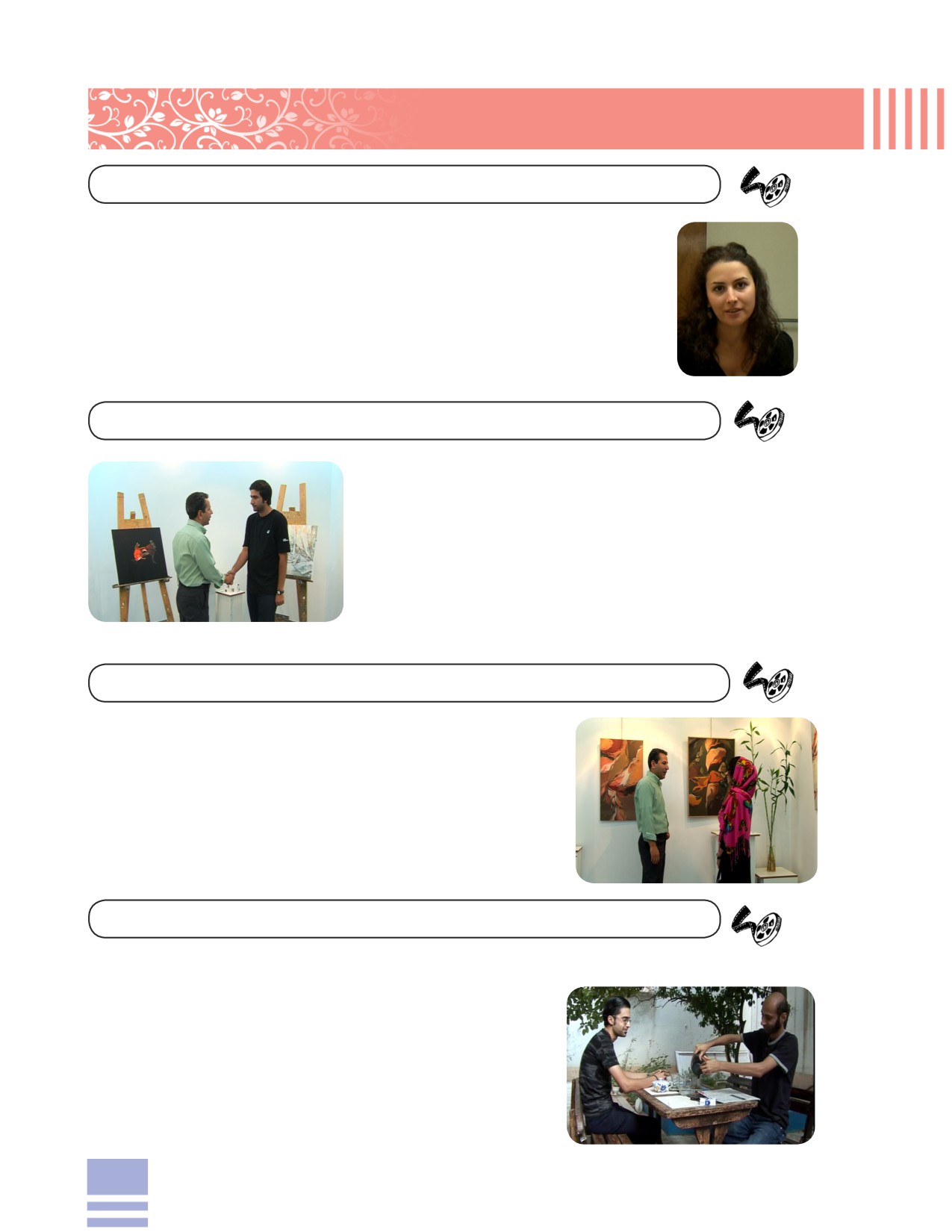
Listening Comprehension رادينش کرد
Watch video one and answer the following questions in complete sentences in Persian.
1. Tonight Shayli is going to her friend’s birthday party. What is her friend’s name?
2. How old will Shayli’s friend be tonight?
3. Where is the birthday party?
4. What is the address?
Watch video two and answer the following questions in complete sentences in Persian.
؟دنتسه اجک لها ديحو و یدهم .5
؟دنکیم یگدنز اجک رد ديحو .6
Watch video three and answer the following questions in complete sentences in Persian.
7. What does Raha call Vahid?
8. Why do you think she does this (answer this part in English)?
9. What does Raha say when she wants to say goodbye?
How does Vahid answer?
Watch video four and answer the following questions in complete sentences in Persian.
10. Transcribe the phrase that Mr. Ja’fari uses to thank Mr. Hashemi for the tea.
129
PERSIAN OF IRAN TODAY
Grammar Note
یروتسد تشادداي
More on the verb “to be.”
At this point, you have been using the present-tense conjugation of the verb “to be” in your speaking and writing.
Although the conjugations you have learned are used often, a condensed version of the present-tense of “to be”
is also used frequently. You have actually already used this version in your speaking practice. Consider the follow-
ing example:
You know that بوخ means “good” or “well” and مبوخ means “I am well.” What have we added to the end of بوخ
to mark “I am”? ……………………………
That مـ or ما
(in fact the sound /am/) should look familiar to you. It is the same ending we use for متسه,
which you know means “I am.” We can, therefore, just use the personal endings of the present tense of “to be”
to represent the entire conjugation. We add these endings directly to nouns and adjectives. In Persian grammar
books, you see the column in green as the condensed form of verb “to be.” However, this column in fact shows the
pronunciation of the form when it attaches to a noun or an adjective. It is the the final sound of the original word
that determines the spelling of the entire word. For example, when any of the short forms comes after a consonant,
the yellow column is used at the end of the word. Complete the left coloumn of the chart with the correct pronoun
form for each person.
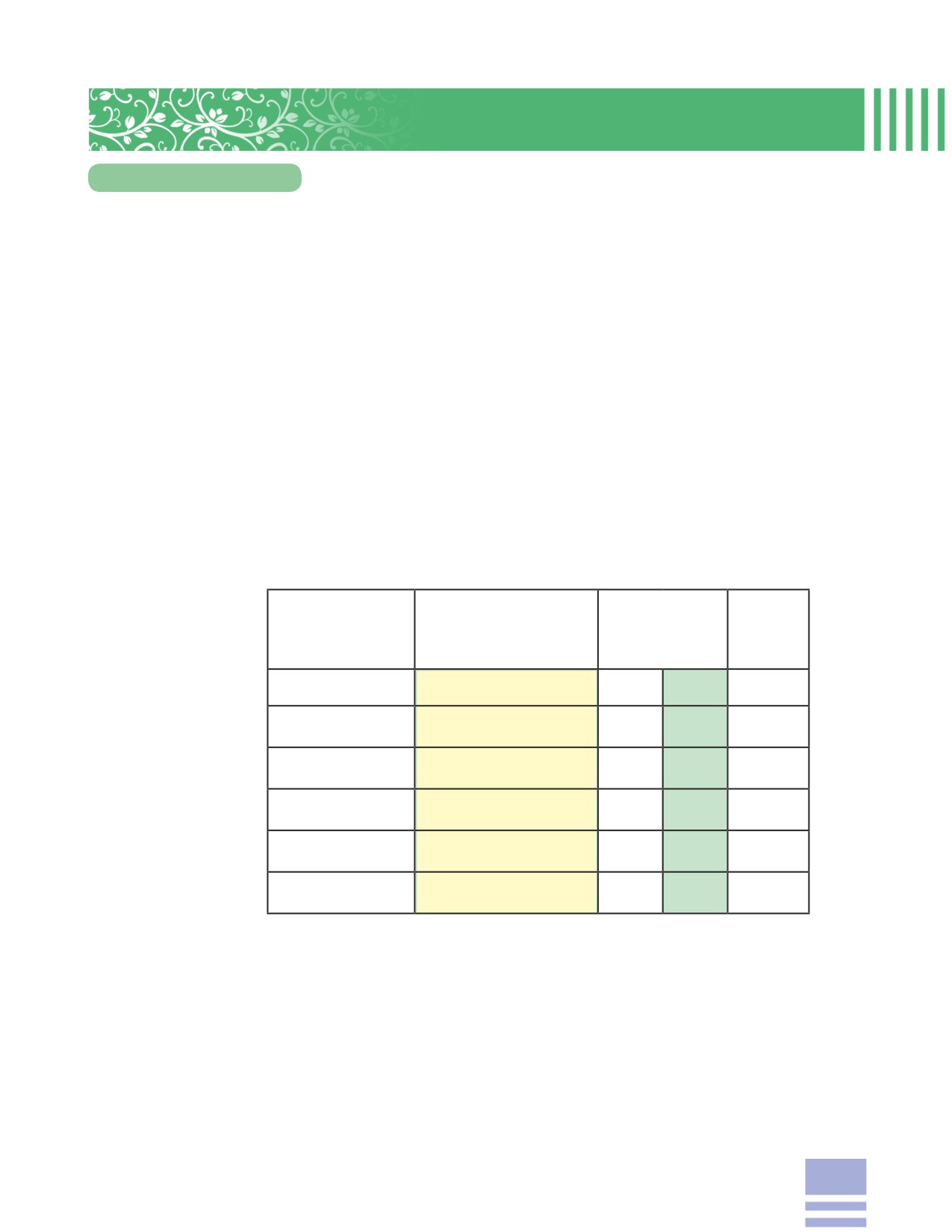
to be happy
How the form of the short
the sound of the
verb “to
The final sound is /l/.
form of “to be” when it comes
short form of “to
be”
after a consonants
be”
ملاحشوخ
مـ
am
ما
متسه
i
یتسه
یـ
یا
تسا
تسا
ast
تسا
میتسه
می
im
میا
دیتسه
دی
id
دیا
دنتسه
دنـ
and
دنا
Why do you think that there is no way to apply this new concept to تسا ?………………………………………
……………………………………………………
Hopefully you figured out that we don’t apply this concept to the conjugation تسا because it does not take a
personal ending, so we just stick to the full conjugation for the third-person singular (he/she) in written form,
although تسا itself becomes ه or هـ in spoken form. This construction is used in both writing and speaking, but
it is more common in the spoken form. Make sure you know the spoken version by filling in the following chart.
SHAHSAVARI | ATWOOD
130
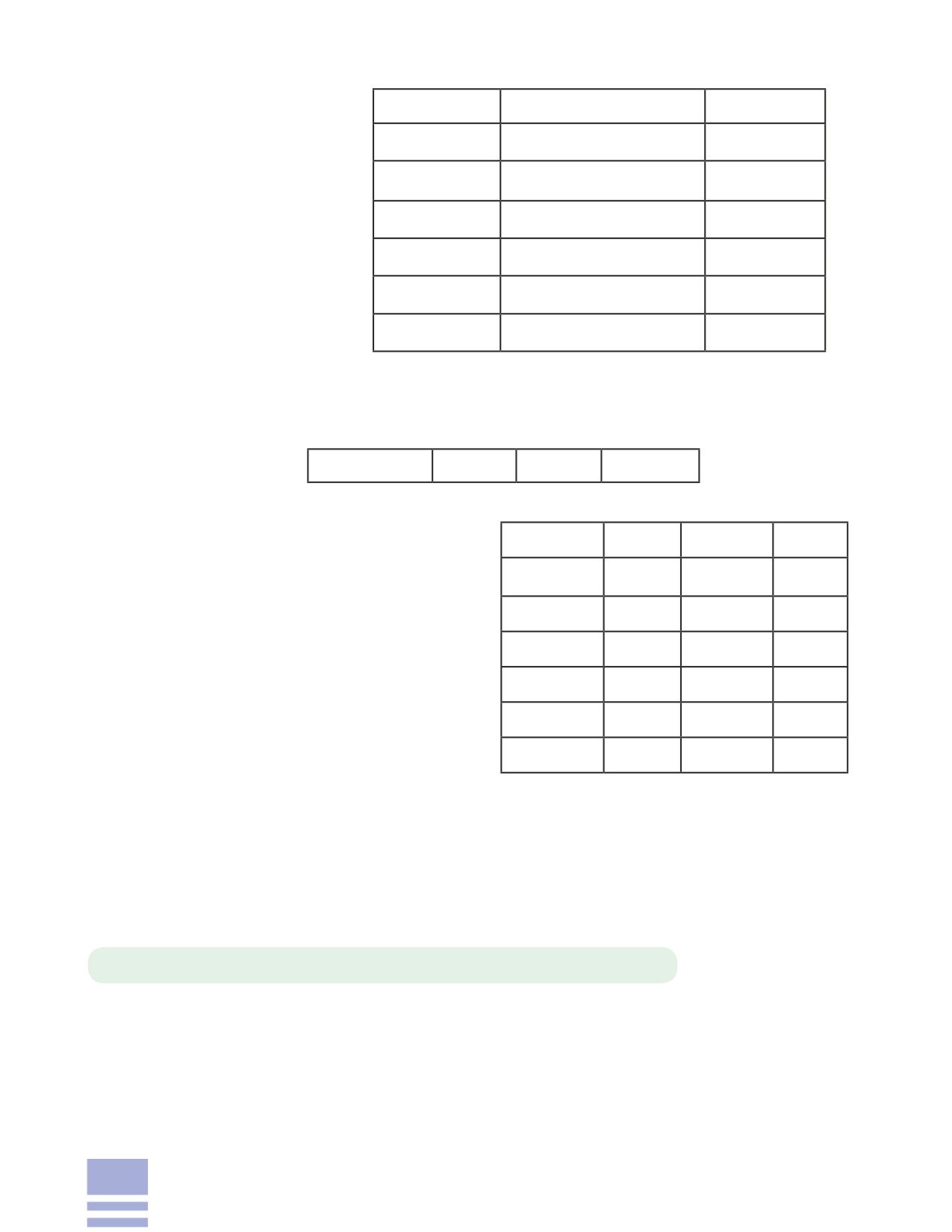
یراتفگ رد ندوب لعف هاتوک لکش
یصخش ريمض
Example لاثم
نم
وت
هبوخ
ه/هـ
نوا
ام
نيا/ديا
امش
انوا
One final note: Do you remember when you were learning ezâfe and you discovered that words that end with
vowels function differently in ezâfe constructions? Nouns and adjectives that end with ه (pronounced /e/) also
require a special rule in this case. You’ve already seen this in your vocabulary lists.
ماهنشت
هنشت
I am thirsty
thirsty
â
sound
i sound
e sound
SUB.P
What is placed in between the م and the word
نم
میابیز
مایناریا
ماهنشت
هنشت
? This is a spelling convention that keeps all of
the pieces of this construction clear. Notice that the
ییابیز
وت
alef is written directly next to the ه but it does not
نوا
تسابیز
connect to it. We use this spelling convention for all
مییابیز
ام
of these kinds of conjugations. Complete the chart
دییابیز
امش
to practice.
دنیابیز
انوا
In class you will work on pronunciation for this concept. Use the following space to make notes about
the pronunciation.
…………………………………………………………………………………………………………………………………
…………………………………………………………………………………………………………………………………
……………………
Transform the following sentences, using the condensed version of the verb “to be.”
........................................................................................................................................ .تسا مرگ نم یهوهق .1
..................................................................................................................................................... .دیتسه هنسرگ .2
............................................................................................................................................. .دنتسه لاحشوخ .3
.................................................................................................................................................. .میتسه تحاران .4
........................................................................................................................................... .یتسه ناروتسر رد .5
131
PERSIAN OF IRAN TODAY
Simple and Compound Verbs
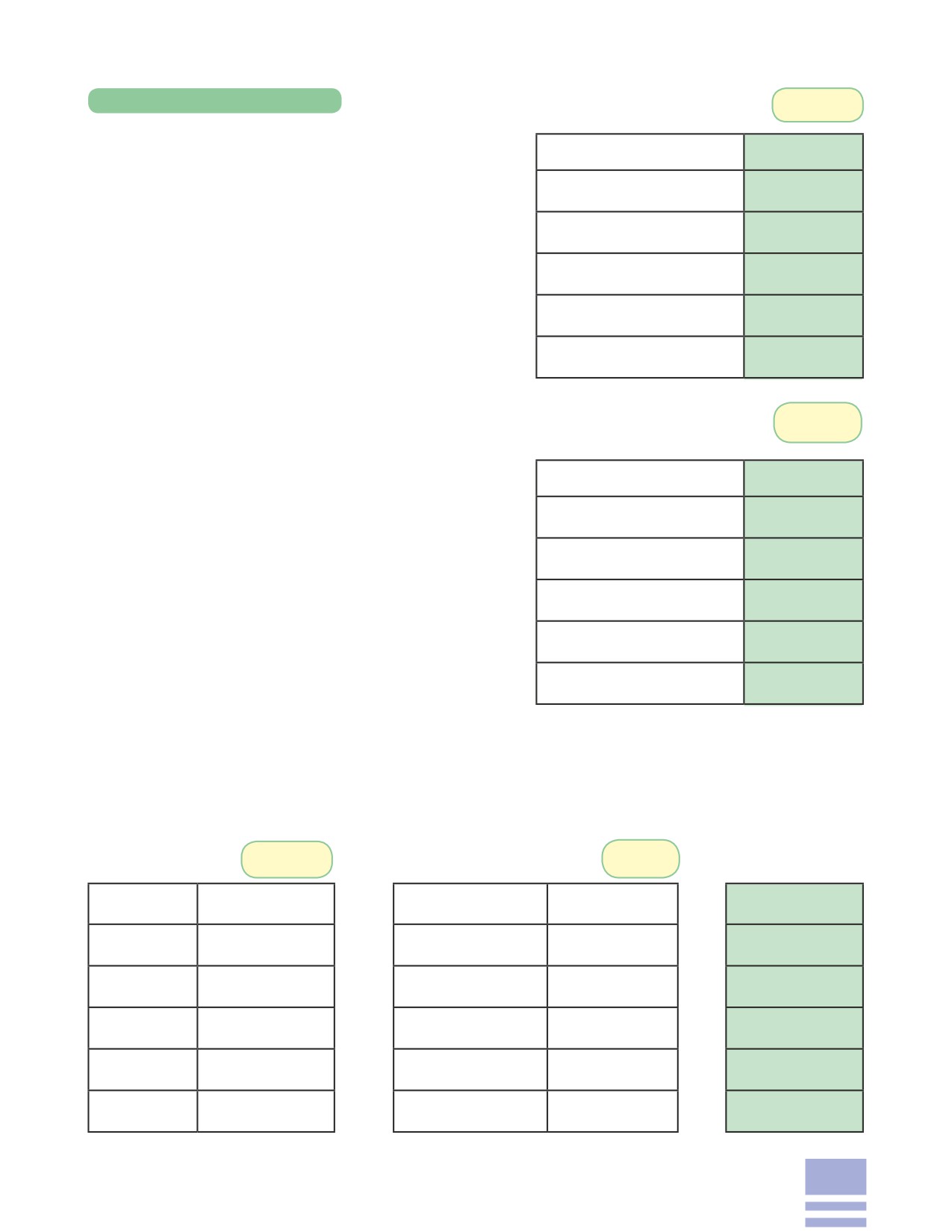
آ -ندمآ
Verb: ندمآ (to come). Use your knowledge of regular
نم
present-tense conjugation to complete the following chart.
وت
*Present-tense stem (written): یآ
*Present-tense stem (spoken): آ
(دآیم( دیآیم
(نوا( وا
ام
امش
(انوا( اهنآ
ور -نتفر
نم
وت
Verb: نتفر (to go). Use your knowledge of regular present-
tense conjugation to complete the following chart.
(هریم( دوریم
(نوا( وا
*Present-tense stem (written): ور
ام
*Present-tense stem (spoken): ر
امش
(انوا( اهنآ
Every time you learn a verb, get into the habit of charting it out like you have just done.This is a useful activity that will
help you review the conjugation practices and will make it easier to remember how to use these verbs in the future.
Here are the completed chatrs for “ندمآ “ and “نتفر.“ In these charts the verbs have come in one single column.
Choose the style you are more comfortable with when you make your charts.
ور -نتفر
آ -ندمآ
مریم
موریم
مایم
میآیم
نم
یریم /نیریم
یوریم /دیوریم
یایم /نیایم
ییآیم /دییآیم
وت /امش
هریم /نریم
دوریم /دنوریم
دایم / نایم
دیآیم /دنیآیم
)نوا( وا /نوشیا
میریم
میوریم
میایم
مییآیم
ام
نیریم
دیوریم
نیایم
دییآیم
امش
نریم
دنوریم
نآیم
دنیآ یم
)انوا( اهنآ
SHAHSAVARI | ATWOOD
132
A note about the spoken form: The verbs “to go” and “to come” in Persian are different than the verbs you
learned before because in their conjugations both the stem and the ending change in the spoken form. However,
these verbs of motion are also special because they affect the sentence structure when spoken. In your vocabulary
list for this lesson, you’ll see the following sample sentence:

.موریم هناخ هب
I go home.
You’ll notice that the verb comes at the end of this written sentence. We must also write the word هب in order
to indicate our destination. However, in spoken Persian, the destination often immediately follows the verb. So the
sample sentence above would become
I go home.
.هنوخ مریم

Note that we’ve used the spoken variation of “I go” and “house,” plus we have changed the structure of the
sentence. We also don’t need to use هب when speaking, although it is necessary when written.
Compound Verbs
The Persian verb system is unique because of the presence of compound verbs. These verbs consist of two parts:
a simple verb and a noun. These two pieces work together to convey a singular meaning. The most common
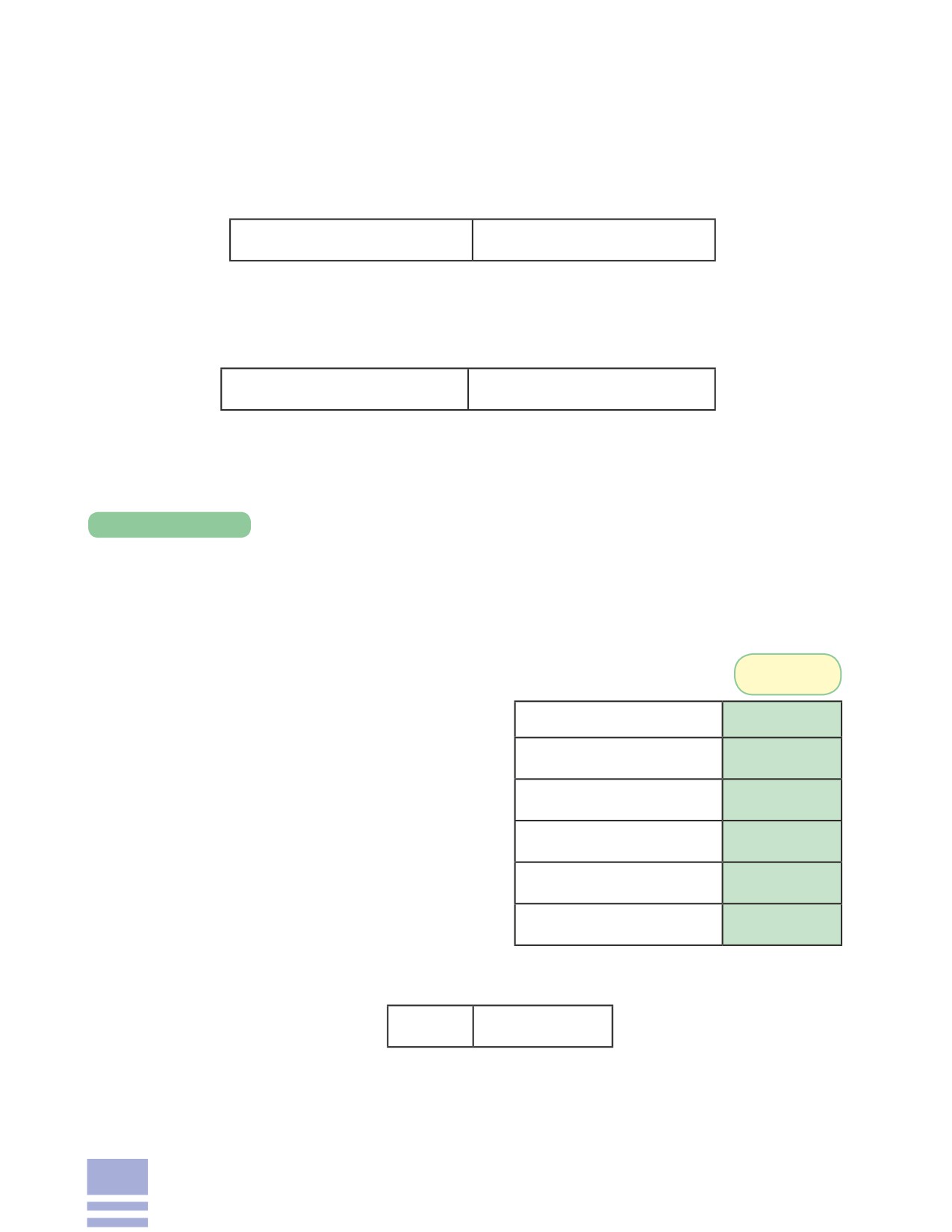
simple verb in these combinations is the verb ندرک, so it will be useful to memorize its conjugation well. To get
started, complete the following chart:
Present-tense stem: نک
نک -ندرک
نم
وت
(هنکیم( دنکیم
(نوا( وا
ام
امش
(ننکیم( دننکیم
(انوا( اهنآ
In your vocabulary list for this lesson, you’ll see that you learned one example of a compound verb:
I live.
منکیم یگدنز
Notice that when a compound verb is conjugated, the verbal component remains completely separate from the
noun. That is, the یم is affixed to the verbal part of the compound verb and not the noun part.
133
PERSIAN OF IRAN TODAY