PERSIAN OF IRAN TODAY AN INTRODUCTORY COURSE VOLUME 1 (2015) - page 3
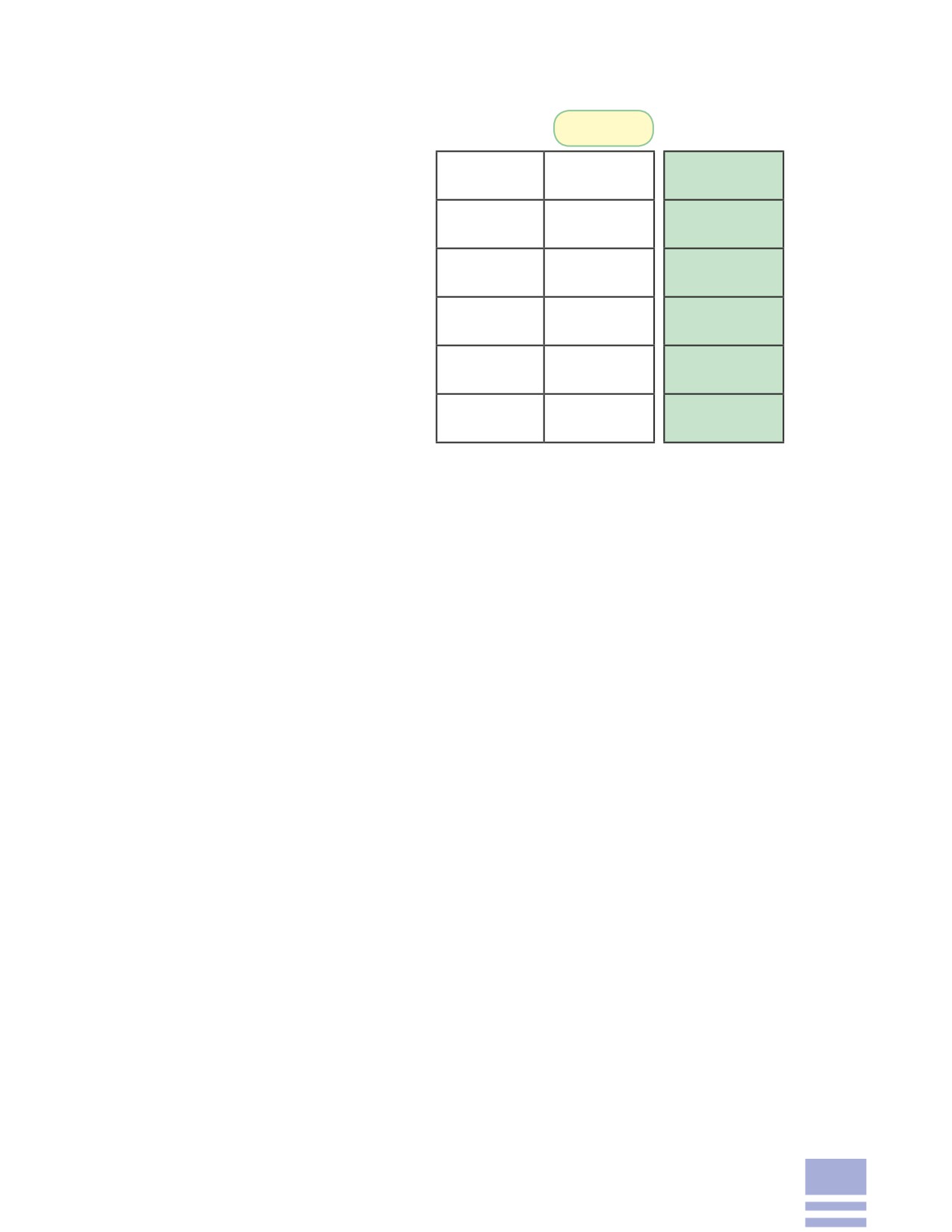
راد -نتشاد
مرادن
نم
یراد
وت
دراد
وا
میراد
ام
دیرادن
امش
دنراد
اهنآ
Fill in the blank with the appropriate form of نتشاد (to have). You can write about the following things:
سينت ،بيس ،شزرو ،رانا ،ماداب ،ردوپ ،نيشام ،وپماش ،نان ،پوس ،ردارب ،ینيريش ،ینتسب ،ازتيپ
You can also add تسود to نتشاد to write about what the following people like or dislike.
. . . . . . . . . . . . . . . . . . . . . . . . . . . . . . . . . . . . . . وت و نم
. . . . . . . . . . . . . . . . . . . . . . . . . . . . . . . . . . . . . . اهنآ و وت
وا و نم
. . . . . . . . . . . . . . . . . . . . . . . . . . . . . . . . . . . . . . . نم و وت
. . . . . . . . . . . . . . . . . . . . . . . . . . . . . . . . . . . . اهنآ و نم
. . . . . . . . . . . . . . . . . . . . . . . . . . . . . . . . . . . . . . . وت و نم
. ................................... امش و نم
. . . . . . . . . . . . . . . . . . . . . . . . . . . . . . . . . . . . . . . . وت و ام
. . . . . . . . . . . . . . . . . . . . . . . . . . . . . . . . . . . . . . امش و وا
. . . . . . . . . . . . . . . . . . . . . . . . . . . . . . . . . . . . . . . . وا و ام
. . . . . . . . . . . . . . . . . . . . . . . . . . . . . . . . . . . . . . وا و امش
. . . . . . . . . . . . . . . . . . . . . . . . . . . . . . . . . . . . . . اهنآ و ام
. . . . . . . . . . . . . . . . . . . . . . . . . . . . . . . . . . . . . . . . ام و وا
. . . . . . . . . . . . . . . . . . . . . . . . . . . . . . . . . . . . . . امش و ام
. . . . . . . . . . . . . . . . . . . . . . . . . . . . . . . . . . . . . . اهنآ و وا
. . . . . . . . . . . . . . . . . . . . . . . . . . . . . . . . . . مردپ و ردارب
. . . . . . . . . . . . . . . . . . . . . . . . . . . . . . . . . . . . . . . وت و وا
. . . . . . . . . . . . . . . . . . . . . . . . . . . . . . . . . . مردام و ردپ
. . . . . . . . . . . . . . . . . . . . . . . . . . . . . . . . . . . . . . . وا و وت
......................... مردارب و متسود ردپ
. . . . . . . . . . . . . . . . . . . . . . . . . . . . . . . . امش و اهنآ و ام
44
SHAHSAVARI | ATWOOD
1. Choose the best written form for each word.
2. Write the words in Persian.
1. mosâvât
.١
هدنمرش O
1
sharmandeh
دنمرش O
2. mi-shavad
.٢
ناملسم O
2
mosalmân
ناملاسم O
3. suriye
٣
ساپيس O
3
ساپس O
sepâs
4. sarâsar
.۴
ينادماه O
4
ينادمه O
hamedâni
5. barâzande
.٥
راشبآ O
5
راشيبآ O
âbshâr
6. dâyere
.٦
ناتسيمز O
6
ناتسمز O
zemestân
7. turân
.٧
هتشرب O
7
تشرب O
berereshte
8. bimârestân
.٨
هشمه O
8
هشيمه O
hamishe
9. marzbân
.٩
بشميا O
9
بشما O
emshab
10. sâmâne
.١۰
نتسرل O
10
ناتسرل O
lârestân
3. Write sentences with each word.
امش .١
ردارب .٢
تسود . ٣
شزرو .۴
هنشت .٥
45
PERSIAN OF IRAN TODAY
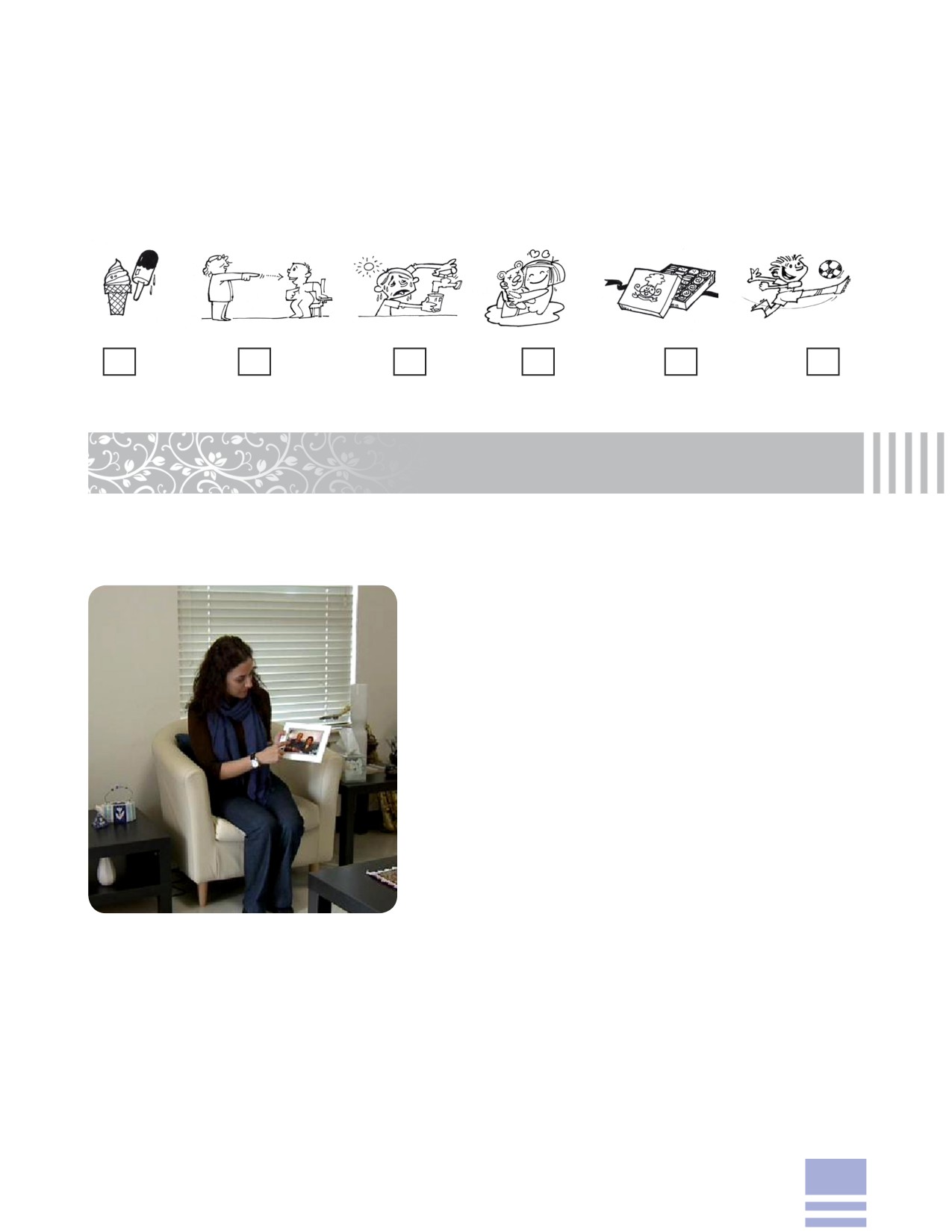
Match the following vocabulary words with their corresponding picture. Write the appropriate number for
each word.
امش .6
ينيريش .5
ماهنشت .4
ينتسب .3
مراد تسود .2
شزرو .1
Writing Exercise
نتشون
Watch Shaily’s video again and see how she talks about her family. Write a short paragraph about yourself and
your family. What do you like and dislike? What does your family like and dislike?
SHAHSAVARI | ATWOOD
46

Speaking Activities
ندز فرح
At Home:
Based on the vocabulary and grammar and the videos you have seen, think about how you might ask (andanswer)
the following questions.
Look at the following examples with translations.
Can you tell what happens to word order when
~ What is you father’s name?
asking questions in Persian?
~ Do you have a brother?
~ Do you like exercise?
1. Your brother likes ice cream.
~ Does you mother like ice cream?
2. Does your brother like ice cream?
~ Do you like sweets?
.دنراد تسود ینتسب ناتردارب .1
~ Does your father like soup?
؟دنراد تسود ینتسب ناتردارب .٢
In Class:
Now, practice with your classmates. Ask your neighbors the questions above. Pay attention to what they say,
because your instructor may ask you to report what you’ve learned to the class.
Classroom Activities سلک رد یداهنشيپ یاهتيلاعف
1. Tit-for-Tat, This-and-That: Review the words on page 32. Your instructor will provide you with index cards
with pictures on them. Each person will get four index cards. Work with partner. You should find out what is on his/
her index cards by asking “What is that?” and replying “This is...”
2. Story Wars: Review the vocabulary on page 53. Your instructor will divide the class into two groups. Each group
will be given a short list of words (11 words).Work together to write a short story that incorporates all of the words.
After 15 minutes, you must share your story with the class. The instructor will help you pick the best story!
3. I Scream, You Scream, We all Scream for Ice Cream: Your instructor will give you a set of index cards
with words or pictures from the vocabulary. Using only Persian, you will work with a partner and together you must
determine which words you both have, and which words are different.
.دنراد توافتم تراک ود و هباشم تراک ۳ هورگ ره .دوشیم هداد تراک ۵ وجشناد ره هب هرفن ود یزاب نيا رد :داتسا یارب
ب :لاثم .دنبايب ار ناشهباشم یاهتراک دیاب اهوجشناد
؟یراد رانا وت .مراد رانا نم
ی!ميراد رانا ام ... !مراد رانا نم
47
PERSIAN OF IRAN TODAY
UNIT 3
ص
آ
ض
ب
ط
پ
ظ
ت
ع
ث
غ
ج
ف
چ
ق
ح
ک
خ
گ
د
ل
ذ
م
ر
ن
ز
و
ژ
ه
س
ي
ش
I am Asadi.
.متسه یدسا
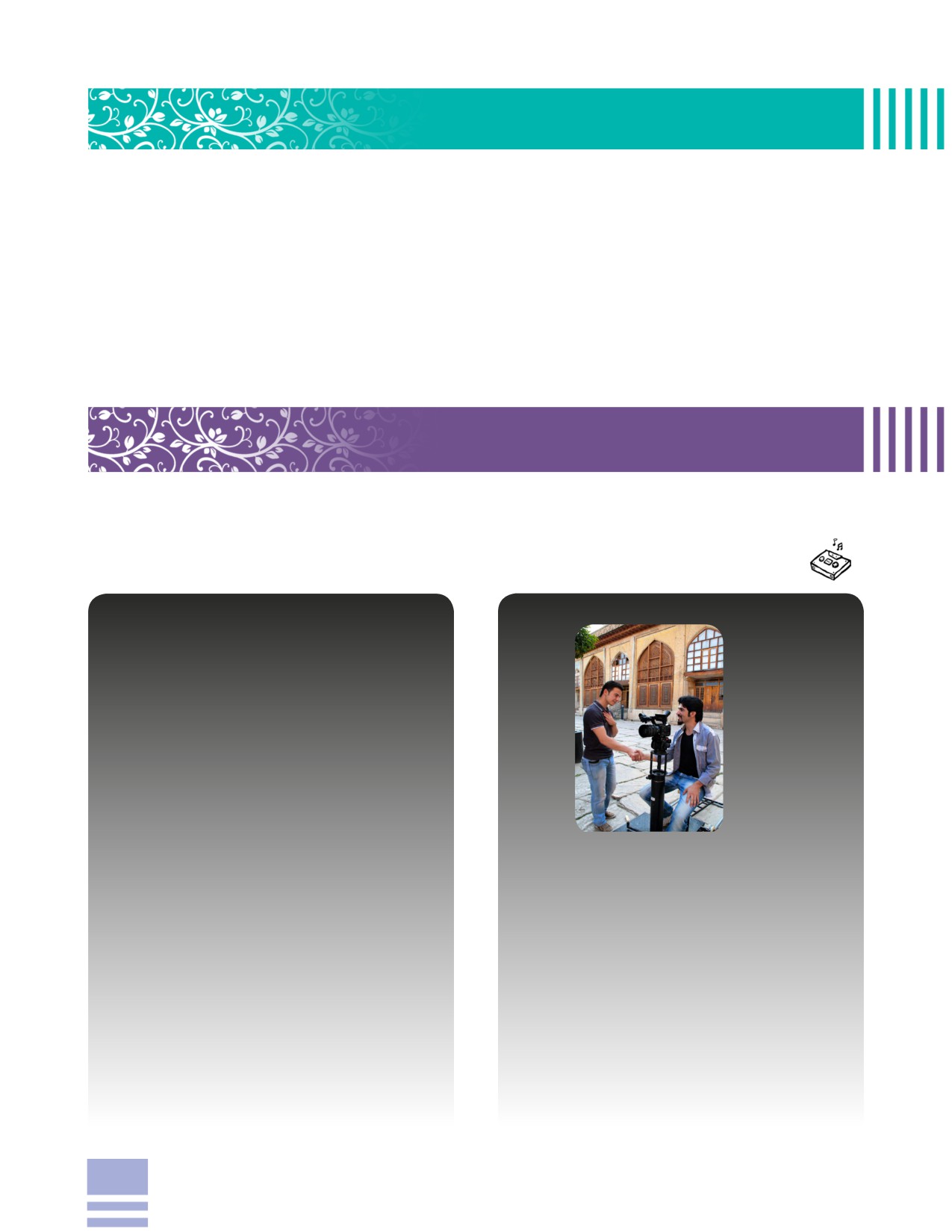
Cultural Note یگنهرف تشاددای
Introductions
ندرک یفرعم
Using just your last name is a common way to introduce yourself to someone whom you have not met before.
Usually, men introduce themselves and offer to shake hands when they meet other men. However, it is not
appropriate for a man and a woman to shake hands when introducing themselves in public places, such as an office
or university. Avoiding eye contact between men and women as they introduce themselves is also considered as
a modest and respectful gesture. In less formal settings, like a family gathering or a friend’s party, it is common
among non-religious men and women to shake hands while introducing themselves. In such situations, women are
usually responsible for initiating the handshake to indicate they are comfortable doing so.
Short Conversations هاتوک یاهوگتفگ
In class, listen to the audio files, repeat what you hear and try to fill in the blanks and transcribe the sentences. At home
repeat what you hear several times and try to follow the rhythm. Write a sentence in Persian about each conversation you
hear. During the next class time, you will work with a classmate to create a scenario that uses these expressions.
.متسه
،ملس .
،متسه یدهم نم ،ملس .
یليخ
تاواسم ،ملس .
.متسه
نم .متقوشوخ یليخ ،ملس .
.متقوشوخ
.متقوشوخ یليخ .
.نوتيانشآ زا متقوشوخ .
1 1
1 1
49
PERSIAN OF IRAN TODAY
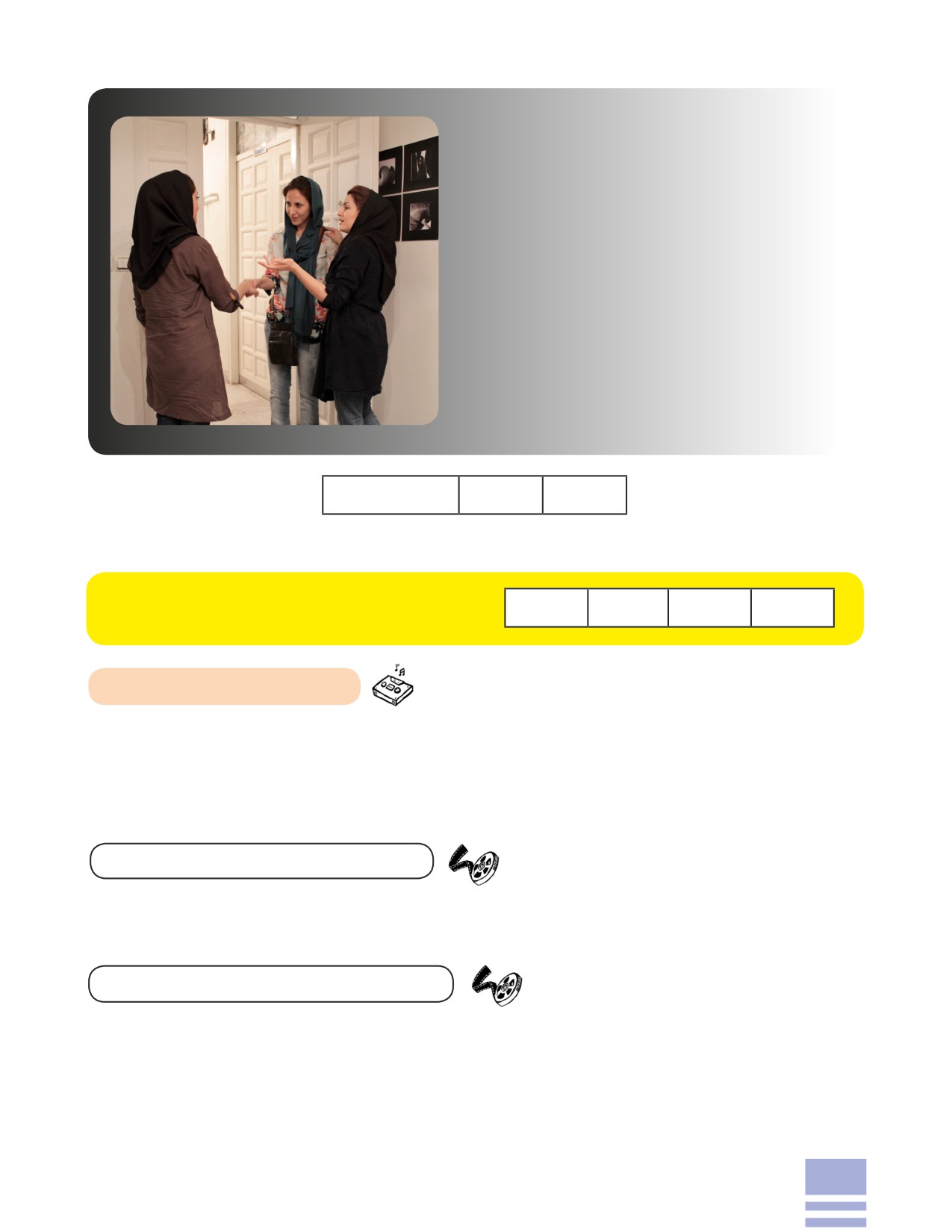
.هناجرم نيا ميرم .هميرم نيا ،ناجرم ملس .
.متقوشوخ ميرم ،ملس .
؟هروطهچ نوتلاح ،ملس .
.مرکشتم ،مبوخ .
1
1
...ﻪ
ه...ﻬ
ﻫ..
... ل
ﻟ
ج...ﺟ...
In this unit you will learn two more Persian consonants and the second use of the letter ه.
جوم
يناجم
دلج
Part
1: jim
/j/
_ج__ﺟ__
1. Listen to the audio file for ج jim.
The letter jim is pronounced like j in jack . Pay close attention to how this letter is written. You will learn three
more letters that are written similarly in future units.
2. Watch the video and follow the instructions.
.............................................................................................................ج
ﺟ
3. Watch the video and write the following words.
..............................رواجم
هرجنپ
نشج
.............................. جنرب
هجوج
جرب
SHAHSAVARI | ATWOOD
50
4. Listen and check when you hear the /j/ sound in the word.
□ .۵
□ .۴
□ .٣
□ .٢
□ .١
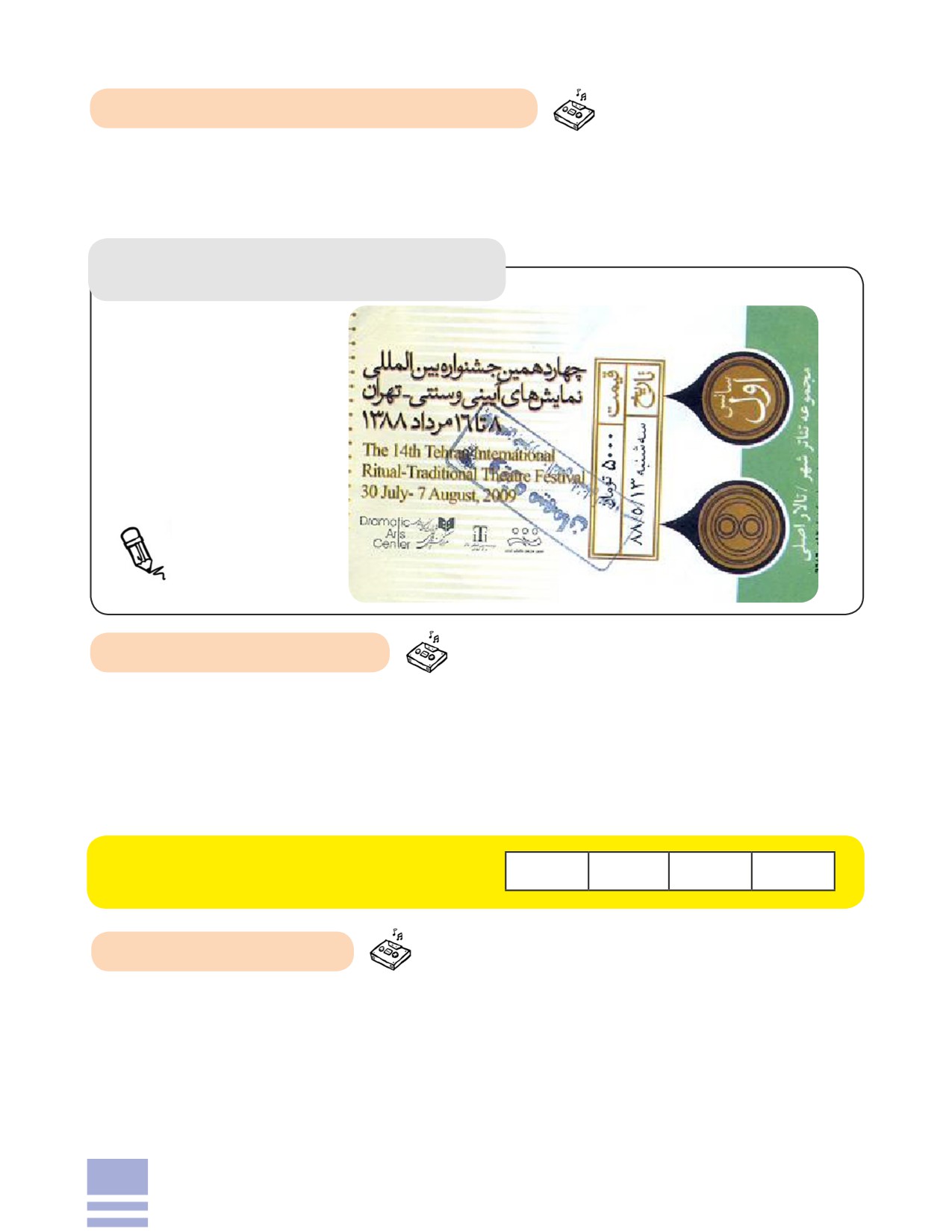
5. Circle the letter ج in the following text. Report to
your instructor how many ج you identified in the text.
6. Listen and write the words you hear.
.٥
.۴
.٣
.٢
.١
.۱۰
.۹
.۸
.۷
.۶
لد
لپ
يليش
ندل
Part
2: lâm
/l/
_ل__ﻟ__
1. Listen to the audio file for ل lâm.
This letter represents the sound of the Spanish or French “l,” that is, a frontal “l” in which the front part of the
tongue is against the back of the teeth, and the tongue is high in the mouth. Americans tend to pronounce “l”
with the tongue farther back and lower down in the mouth, resulting in a more emphatic sound than the Persian
ل . To pronounce Persian ل , hold the tip of your tongue against the back of your teeth at the roof of your mouth
and keep your tongue as high and as far forward as you can.
51
PERSIAN OF IRAN TODAY
2. Watch the video and follow the instructions.
.....................................ل
ل
ﻟ
3. Watch the video and write the following words.
......................................................ليل
هلول
...................................................لامش
يلاموس
................................................ناملسم
ناولم
................................................يتملس
ملس
..............................................................................................................ييلل
4. Listen and check when you hear the /l/ sound in the word.
□ .۵
□ .۴
□ .٣
□ .٢
□ .١
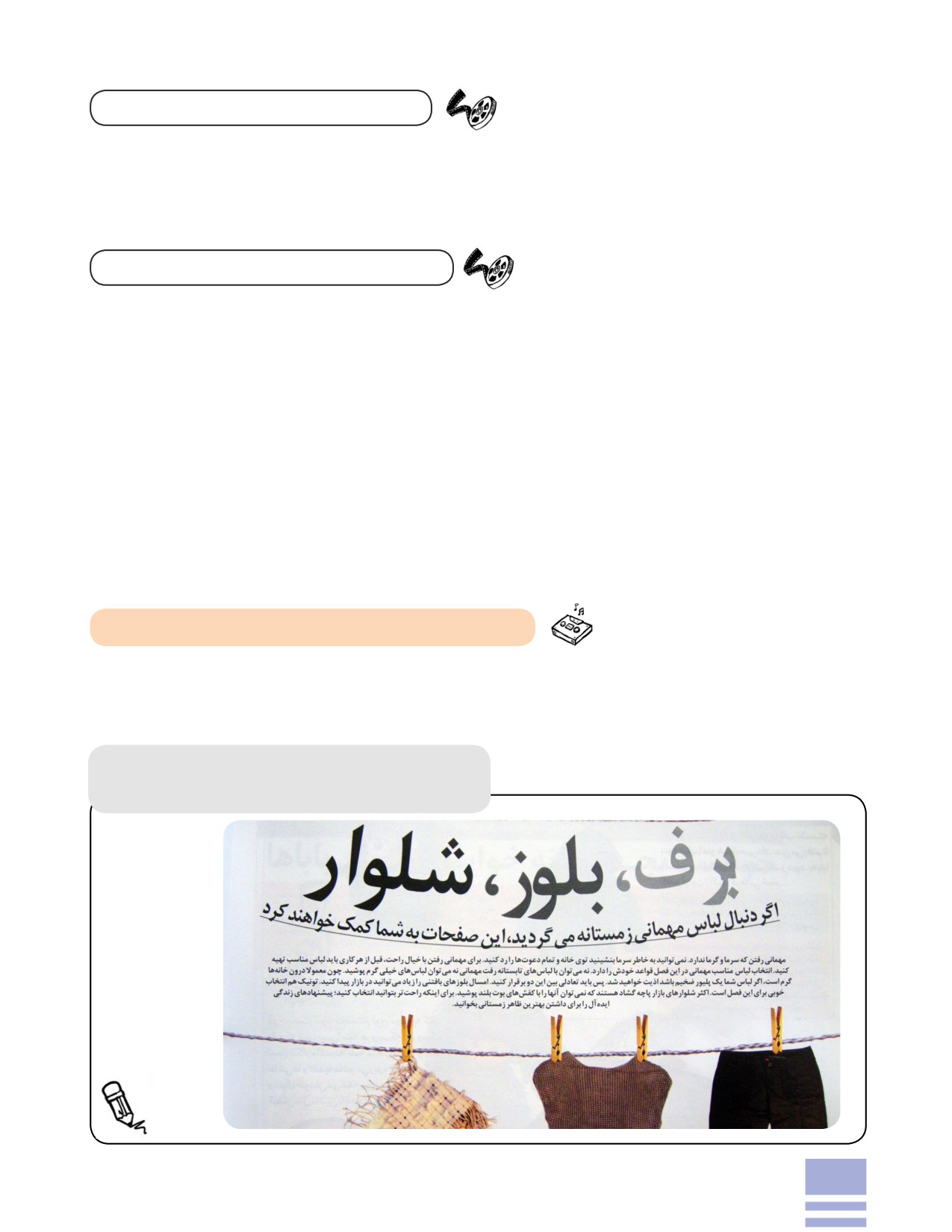
5. Circle the letter ل in the following texts. Report to
your instructor how manyل you identified in the text.
SHAHSAVARI | ATWOOD
52
6. Listen and write the words you hear.
.٥
.۴
.٣
.٢
.١
.۱۰
.۹
.۸
.۷
.۶
__ﻪ__ﻩ__ﻬ__ﻫ__
هن
هام
رتهب
نامه
Part
3: he
/h/
1. Listen to the audio file for ه
he.
You have already learned that in specific circumstances, ه represents the /e/ sound in bet. In other positions,
this letter represents the sound of English /h/ in house. Unlike the English “h,” which can be silent, as in the word
hour, ه is always pronounced, unless it is at the end of the word. Watch the video to see how this letter’s shape
is different when typed vs. handwritten, like “a” in English.
Remember: When ه comes at the end of the word and is immediately preceded by a consonant and no vowel
sound, it makes an /e/ sound. However if it is at the end of a word and is preceded by a written or unwritten
vowel, then it makes an /h/ sound.
2. Watch the video and follow the instructions.
.................................................................ﻬ
ﻫ
................................................................ﻪ
ﻩ
3. Watch the video and write the following words.
.........................................................رهش
متسه
.........................................................هب هب
روهشم
..........................................................هانپ
هام
53
PERSIAN OF IRAN TODAY
4. Listen and check when you hear the /h/ sound in the word.
□ .۵
□ .۴
□ .٣
□ .٢
□ .١
5. Circle the letter ل in the following text. Report to
your instructor how many ل you identified in the text.
6. Listen and write the words you hear.
.٥
.۴
.٣
.٢
.١
.۱۰
.۹
.۸
.۷
.۶
Extra Practice: Read the words below. Determine whether the ه in each word represents a /h/ sound
or an /e/ sound. Explain why.
Explanation
/e /
/ h /
Word
هبنش جنپ .۱
هام .۲
هب هب .3
هویم .4
هجوت .5
هب .6
SHAHSAVARI | ATWOOD
54
7. Connect the letters to form words
8. Listen to the following words. Fill in the
and read them aloud.
missing letter(s) for each word, and then write
the complete word on a separate piece of paper.
......................ي
+ ر + و + ه + م + ج .١
تاـــــــه .2
ه ــــدوب .1
.............................. س
+ ل + ج + م .٢
ناـــــــنپ .4
سان ـــــا .3
تداـــــــش .6
ب ــــــــجن .5
...........................د
+ا + ل + ا + س . ٣
داــــــــن .8
هس ــــــــج .7
...................ه
+ ي + ا + س + م + ه . 4
مــــــتسه .10
ــــــــيدبت .9
..................... ر
+ و + ي + ر + ه + ش .٥
دــــــــج .12
ماه ــــــــ .11
دنتـــــــه .14
رسم ـــــــ .13
........................... د
+ ا + ت + س + ا .٦
درادنا ــــــــسا .15
...........................ل
+ ي + ن + ا + و .۷
9. Read the following words aloud with
10. Listen to the audio file and mark
your partner.
the word you hear.
ايرلام .2
زاج .١
لپ
هدب
۱
۷
لته .4
پيج .3
رپ
هلب
ليو .6
وجشناد .5
هلد
ملک
۸
۲
هرد
مرک
ليناو .8
ترواجم .7
يلوک
ملد
لاش .10
نونجم .9
۹
۳
يروک
مهرد
دلاس .12
سنج .11
ريس
رل
لدم .١4
نشج .١3
10
ليس
۴
رد
سلجم .١6
روناج .١5
هروس
هلب
هنل .١8
لبمس .١7
۱۱
۵
هلوس
هرب
نامهم .20
نويليم .١9
مل
بارس
ناملآ .22
ايلاتيا .21
۱۲
۶
مار
ملس
اهر .24
وميل .23
55
PERSIAN OF IRAN TODAY
11. Listen to the audio file and fill in the missing letters for each word, then
write the English equivalent.
د__ـه .4
ناتسن_را .3
هـ_ـسور .2
نار_ـت .1
دن__تروپ .8
__ـيرتا .7
ای_ارتسا .6
زاري__ .5
ناتسرا_ـم .12
ای_ـيجريو .11
سلجنآ _ـل .10
__ـتايس .9
وتن__وت .۱۵
زي_ـبت .14
ي__ـهد .13
Vocabulary ناگژاو
1. Listen to and learn these words. Translate the sentences. The spoken variations have been included in parentheses.
hello
)؟نيراد ينتسب ،ملس( ؟ديراد ينتسب ،ملس
ملس .۱
I am
).متسه نوا ردارب نم( .متسه وا ردارب نم
متسه .2
you are
)؟نيتسه راتسرپ امش( ؟ديتسه راتسرپ امش
)نيتسه( ديتسه .3
I am not
).متسين نوا ردپ نم( .متسين وا ردپ نم
متسين .4
you are not
)؟نيتسين راتسرپ امش( ؟ديتسين راتسرپ امش
)نيتسين( ديتسين .5
university student
)؟نيتسهوجشناد امش( ؟ديتسه وجشناد امش
وجشناد .6
professor
).هداتسا وا ردپ( .تسا داتسا وا ردپ
داتسا .7
name
).هريما نم مسا( .تسا ريما نم مسا
مسا .8
we
).هنومهنشت ام( .ميتسه هنشت ام
ام .9
we are
.ميتسه وجشناد
ميتسه .۱0
we are not
.ميتسين داتسا ام
ميتسين .۱1
Iranian
.ميتسه يناريا ام
يناريا .۱2
Tehran / from Tehran
).ميتسه ینورهت ام( .ميتسه ينارهت ام
ينارهت /نارهت .13
you have (for close friends)
؟یراد ینيريش
یراد .۱4
he / she has
).هراد وجشناد ات هس نوا( .دراد وجشناد هس وا
دراد .۱5
we have
؟ميراد پوس
ميراد .۱6
he / she has, they have
)؟نراد ردارب(
؟دنراد ردارب
دنراد .۱7
they
).نرادن تسود ینيريشانوا( .دنرادن تسود ینيريش اهنآ
)انوا( اهنآ .۱8
SHAHSAVARI | ATWOOD
56
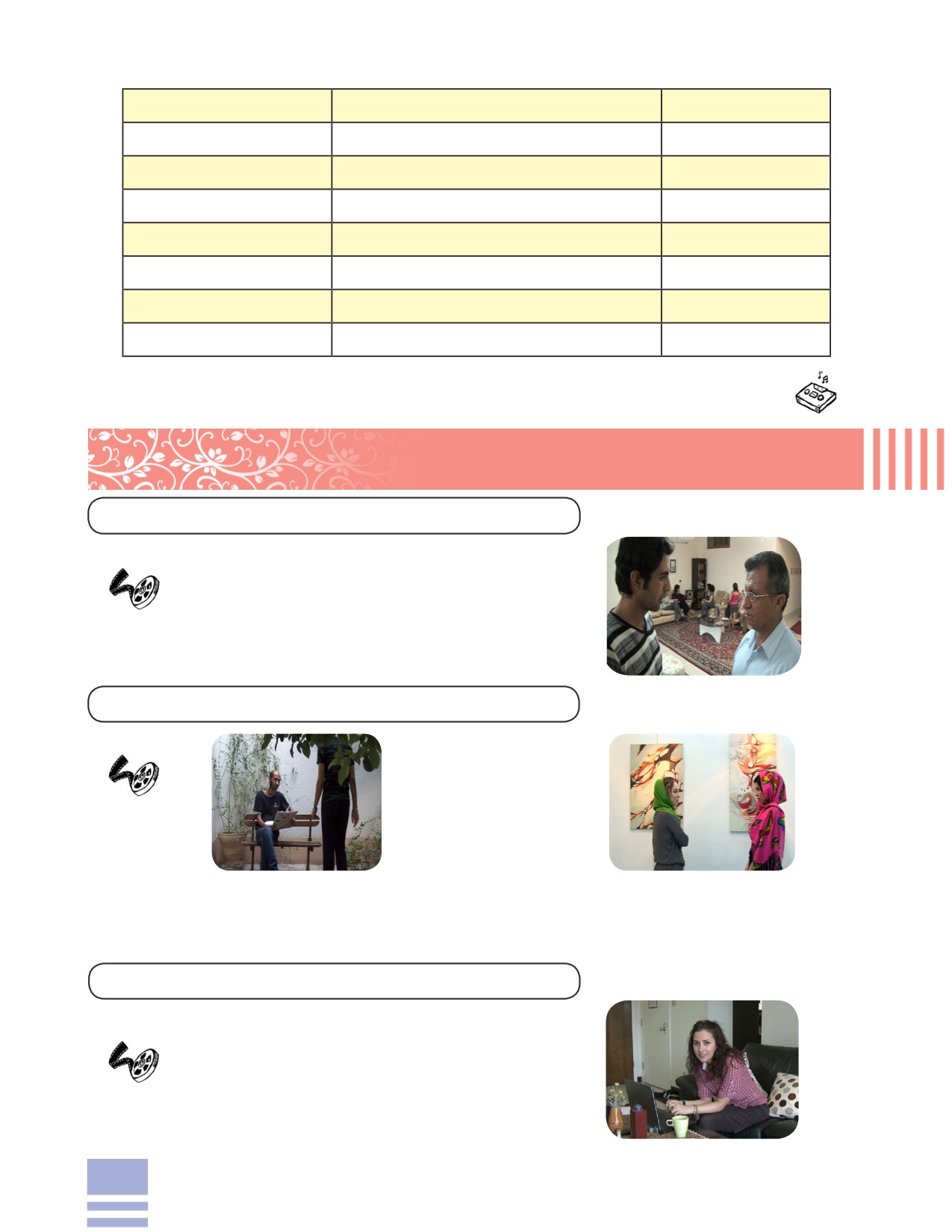
nurse
.متسين راتسرپ نم
راتسرپ .۱9
They are from Tehran.
).نتسه ینورهت انوا( .دنتسه ینارهت اهنآ
دنتسه .20
my mother
).هراتسرپ مردام( .تسا راتسرپ مردام
مردام .21
my father
.ميتسه هنشت مردپ و نم
مردپ .22
this
)هينيريش نيا( .تسا ینيريش نيا
نيا .23
it, that
).هيناريا ینيريش نوا(.تسا یناريا ینيريش نآ
)نوا( نآ .24
woman
).همردام نز نيا( .تسا مردام نز نيا
نز .25
man
).هيناريا درم نوا( .تسا یناريا درم نآ
درم .26
2. Listen to the audio file again. Based on what you hear, write the vowel on the example sentences.
Now listen to the next audio file. Write the sentences you hear and translate them to English.
Listening Comprehension رادينش کرد
1. Watch the videos and transcribe the conversation that you hear.
2. Watch the videos and answer the following questions in Persian.
1. What does the first man ask the other?
3. What does the first girl ask the other?
2. How does the second man answer?
4. How does the second girl answer?
3. Watch the videos and answer the following question in Persian.
- What did you learn about Amin? Who is he?
What does he like?
57
PERSIAN OF IRAN TODAY
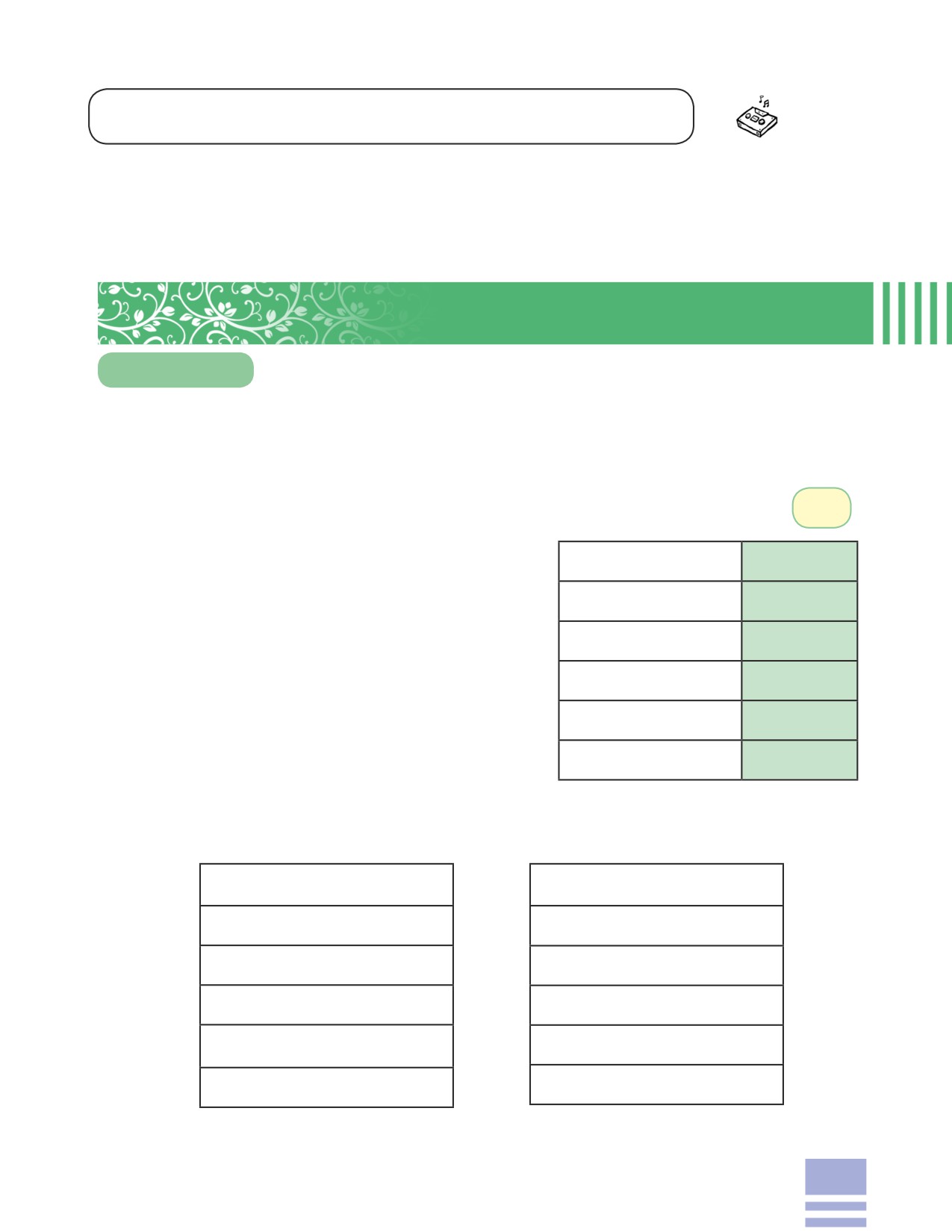
4. Listen to the audio files and answer the following questions. Practice each con-
versation out loud several times. You will be required to use them in class.
a. Write 2-4 sentences about نيمار.
b. Write 2-4 sentences aboiut ناجرم.
c. What does ناجرم say to end the conversation?
Grammar Note
يروتسد تشادداي
The Verb “To Be”
In this lesson, you learned to say “I am” and “you are.” Just like the verb “to have,” the verb “to be” is conjugated
in the present tense based on a stem (تسه) and different endings that indicate who or what you’re talking about.
The Verb “To Be”
ندوب
Note that you should use امش and
نوشیا instead of وت and وا if you are
متسه
نم
not talking to (or about) your close
یتسه
وت
friend:
؟دیتسه ام کیزیف داتسا امش
(هـ( تسا /تسه
(نوا( وا
؟ديتسه وجشناد نیا ردام امش
میتسه
ام
.دنتسه ام کیزیف داتسا نوشیا
(نیتسه( دیتسه
امش
.دنتسه متسود ردام نوشیا
(نتسه( دنتسه
(انوا( اهنآ
Look at the chart that starts with “I am Amin’s professor.” Complete the other chart starting with “I am
thirsty.”
ـ .متسه هنشت نم
ـ .متسه نیما داتسا نم
ـ
وت
ـ .یتسه نیما داتسا وت
وا
ـ .تسا نیما داتسا وا
ـ
ام
ـ .میتسه نیما داتسا ام
. . . . . . . . . . . . . . . . . امش
.دیتسه نیما داتسا امش
ـ
اهنآ
ـ .دنتسه نیما داتسا اهنآ
SHAHSAVARI | ATWOOD
58
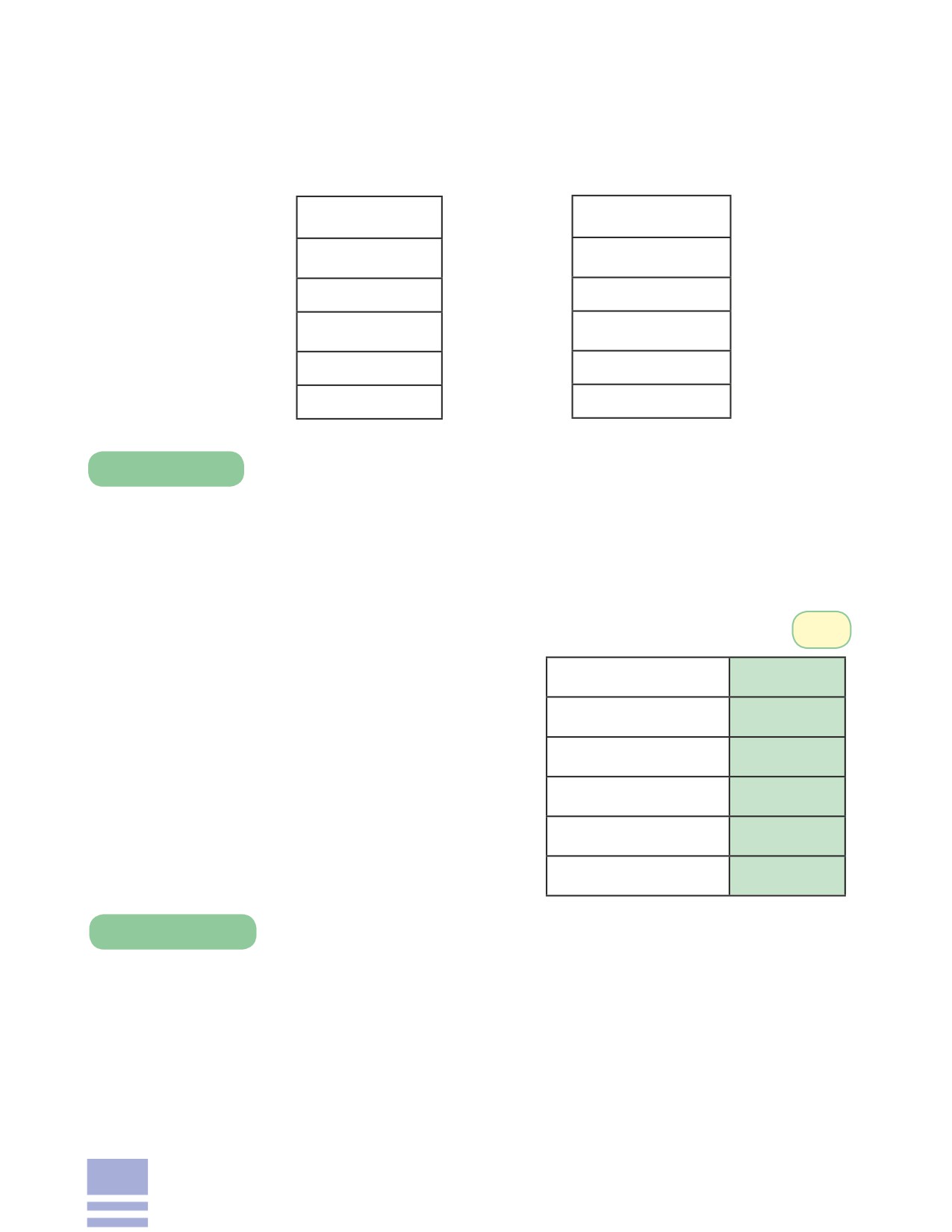
In unit 7, you will learn about the condensed version (هاتوک مرف) of the present tense “to be”. The short form
of verb “to be” is the common form in spoken form. These charts show that the Persian verb “to be” has a
condensed form in Persian.
ـ .ماهنشت نم
ـ .مانیما داتسا نم
ـ .یاهنشتوت
ـ .یانیما داتسا وت
ـ .تسا هنشت وا
ـ .تسا نیما داتسا وا
ـ .میاهنشت ام
ـ .میانیما داتسا ام
.دیاهنشتامش
.دیانیما داتسا امش
ـ .دناهنشت اهنآ
ـ .دنانیما داتسا اهنآ
The Verb “To Be”
Negating the verb “to be”: You also learned how to say “I am not” and “you are not” in this lesson. The negation
of “to be” follows the same rules as the regular conjugation for “to be,” except it uses the stem تسین. The third-
person singular (he/she/it) is also irregular. Can you guess what it is? Try filling out the following chart.
ندوبن
متسین
نم
یتسین
وت
تسین
(نوا( وا
میتسین
ام
(نیتسین( دیتسین
امش
(نتسین( دنتسین
(انوا( اهنآ
Some Good News!
First read these sentences:
.درادن ردارب وا
؟درادن ردارب وا
How are these two sentences different? Correct! The first one is a statement and the second is a question. So
the good news is that no change of order is needed to express a question in Persian. How do we know it is a
question then? Based on intonation. From now on, pay attention to the sentences you hear. For example, listen
to these sentences:
59
PERSIAN OF IRAN TODAY

.متسه یناريا نم
؟ديتسه یناريا امش
)؟هراد تسود ینتسب نوا(
In class listen to your instructor read the following sentences. You have not heard them before. You probably do
not know what they mean. Just listen and put a period at the end of the ones that sound like statements and a
question mark at the end of the ones that sound like questions.
یرادیمرب اجنيا زا ور مفيک
تشگرب هسردم زا
هراد تسود ور شهاگشناد
هنوخیم سرد
هنکیمن راک
هليطعت ادرف
Grammar Exercises
1. Organize the following sets of words into meaningful sentences.
ام ،ميتسه ،وجشناد .۱
داتسا ،اهنآ ،دنتسه .2
ديتسه ،امش ،هنشت .3
وا ،مردام ،تسا .4
. . . . . . . . . . . . . . . . . . . . . . . . . . . . . . . . . . . . . . . . . . . . . . . . . . . . . . . . . . . . . . . . . . . دراد تسود
،مردپ ،هنشت ،اما ،مردام ،تسا ،پوس .5
و ،نم ،هنشت ،مردپ ،ميتسه .6
ماداب ،دراد ،مردپ ،تسود .7
2. Negate the sentences you constructed in the exercise above.
.۱
.2
.3
.4
.5
.6
.7
SHAHSAVARI | ATWOOD
60
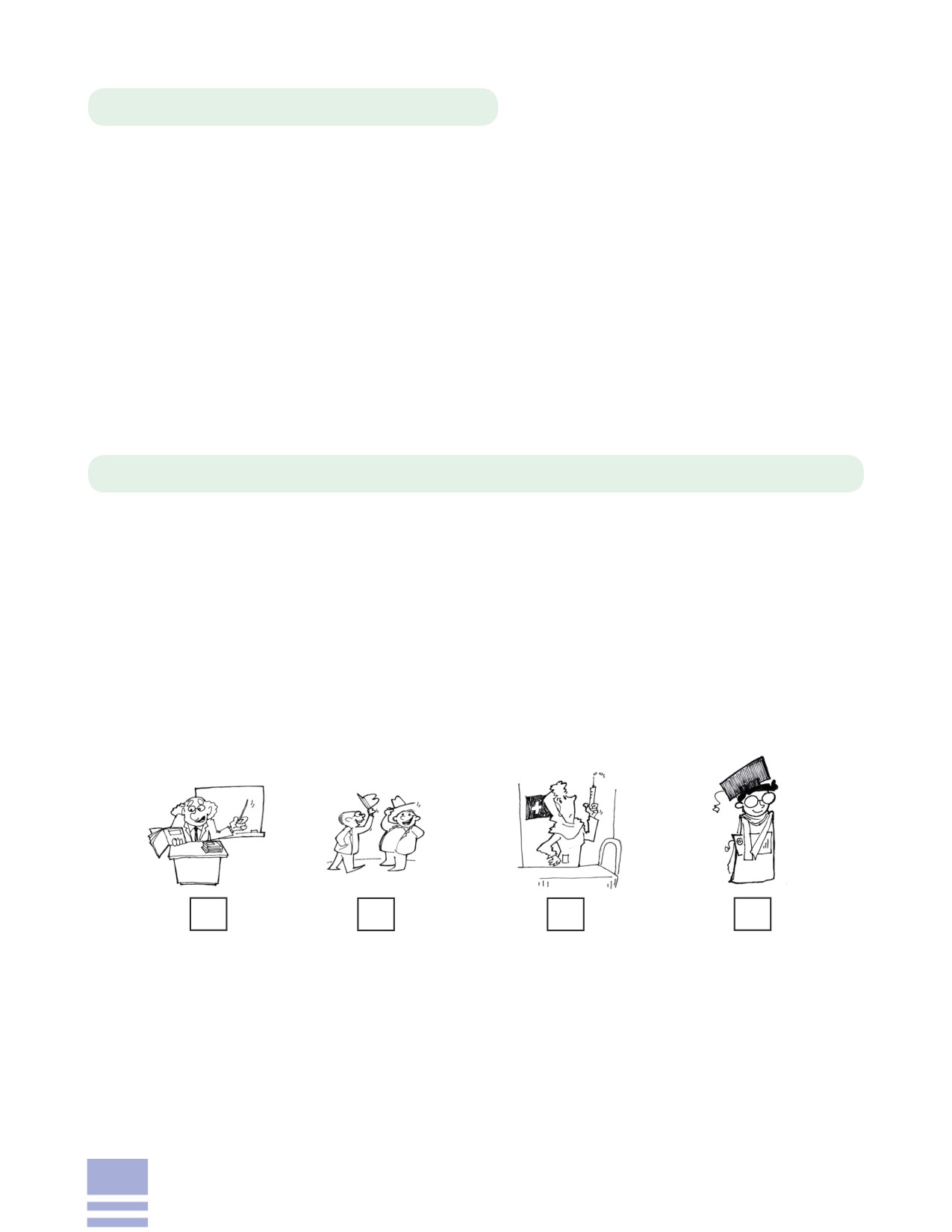
3. Translate the sentences from both preceding sections.
1
2
3
4
5
6
7
4. Match the following vocabulary words with a corresponding picture and write 4 sentences with the words.
.1
.2
.3
.4
ملس .4
داتسا .3
وجشناد .2
راتسرپ .1
61
PERSIAN OF IRAN TODAY

Writing Exercise نتشون
Use what you have learned to write 10 sentences about you, and your family and friends.
Speaking Activities ندز فرح
Watch Video 2 with your instructor in class. You will learn how to say what you are and what you are not.
After the video clip, practice this structure with your classmates. Ask them if:
~ they are students, professors, mothers, fathers, Iranians, etc.
~ their parents, brothers, professors, or friends are Iranian.
~ their name is Iranian.
In order to practice the plural, work in small groups and ask several classmates at once.
Classroom Activities سلک یارب یداهنشيپ یاهتيلاعف
Scavenger Hunt: Use the list below to complete a scavenger hunt in class. You should ask your classmates in
Persian if they match the description on the list. If they do, write their name next to the appropriate description.
You can only write each person’s name down twice.
Someone whose father is Iranian
Someone whose brother’s name is Iranian
Someone whose father’s friend is a student
Someone who likes Iranian ice cream
Someone who is thirsty
Someone whose father is Iranian but whose mother is not Iranian
Someone who doesn’t like exercise but likes tennis
Someone who likes sweets but does not like exercise
Someone who likes soup and almonds
SHAHSAVARI | ATWOOD
62
UNIT 4
ص
آ
ض
ب
ط
پ
ظ
ت
ع
ث
غ
ج
ف
چ
ق
ح
ک
خ
گ
د
ل
ذ
م
ر
ن
ز
و
ژ
ه
س
ي
ش
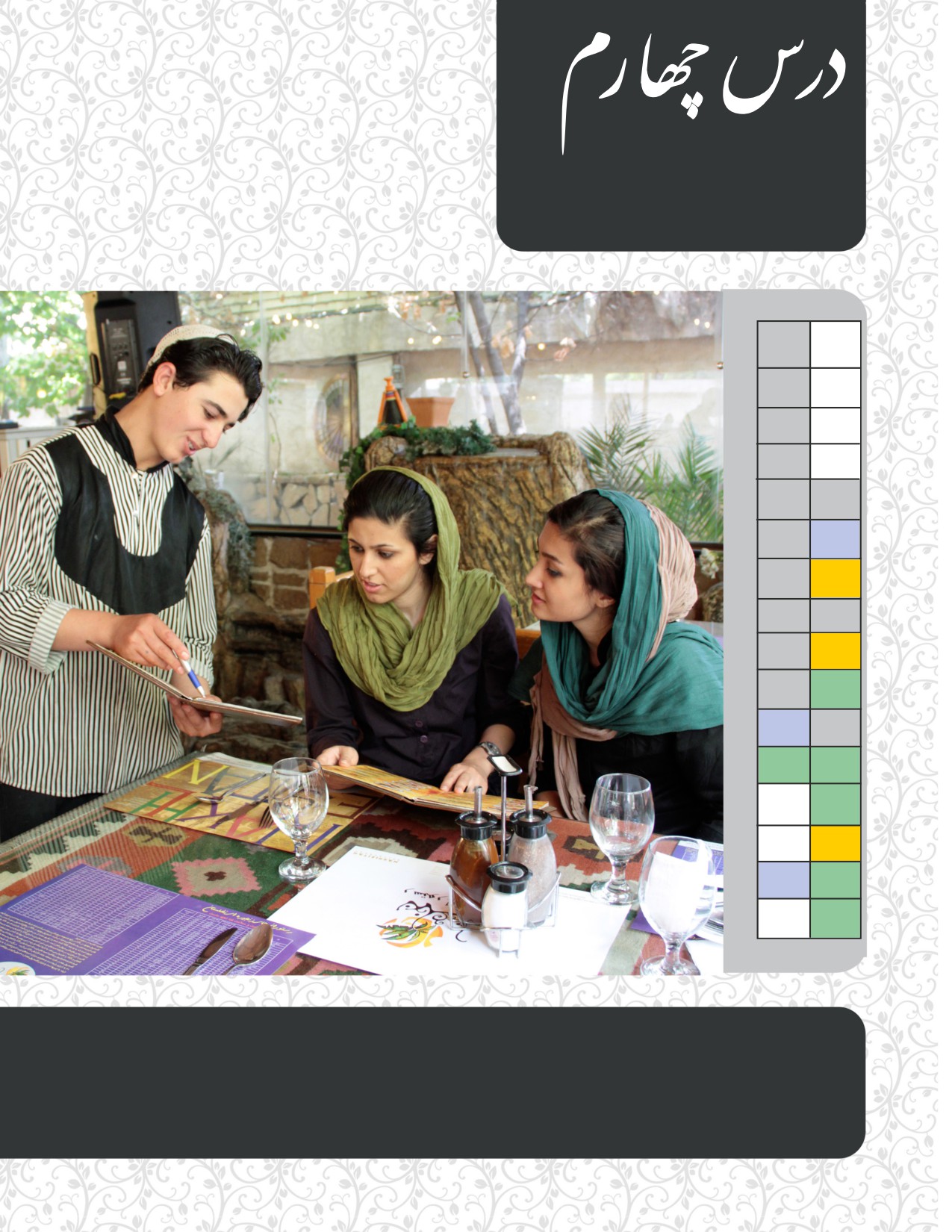
What would you like to drink? ؟ديراد ليم یچ ینديشون
6
Cultural Note یگنهرف تشاددای
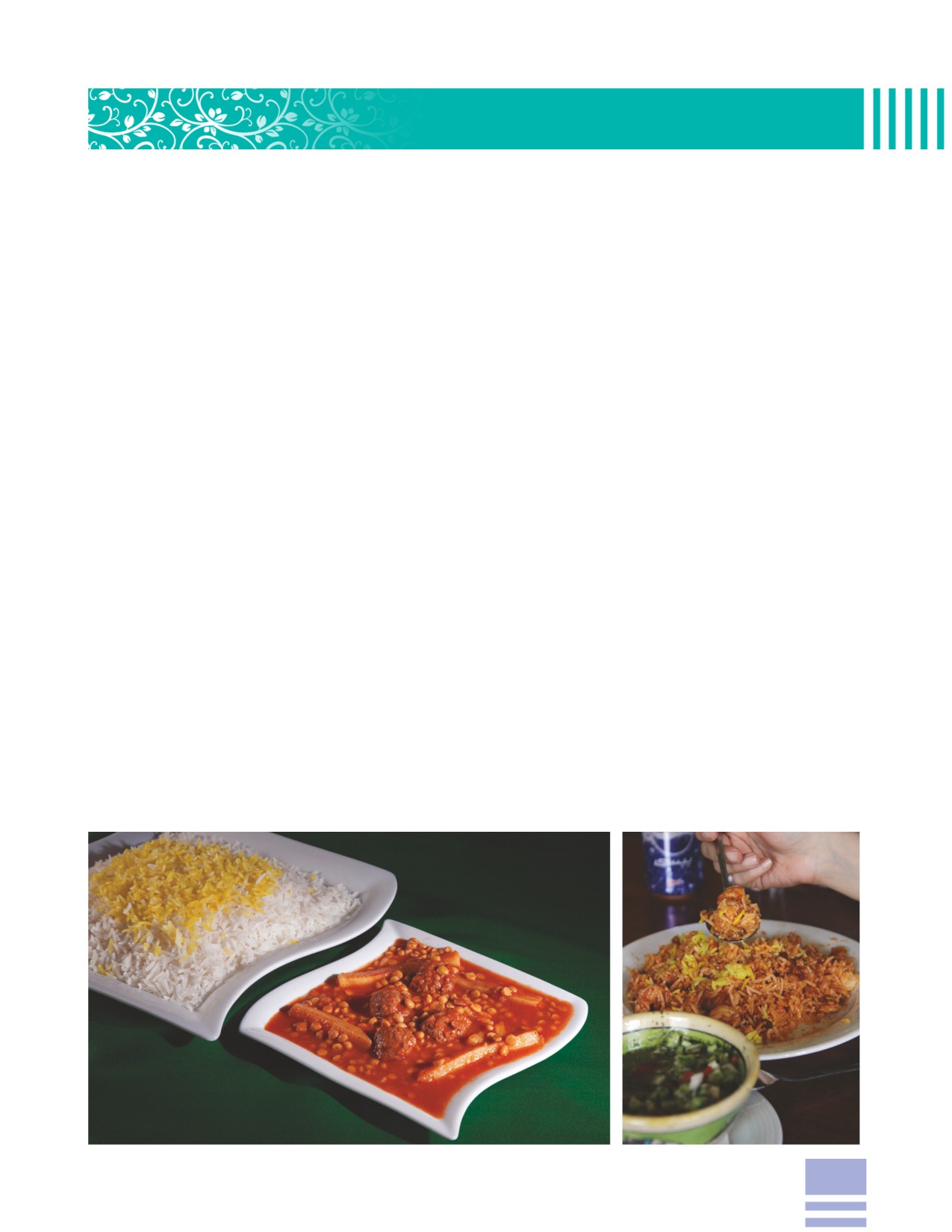
Food اذغ
In Iranian culture, family practices are rooted in the preparation and consumption of colorful foods. Persian food
is often prepared using a variety of different spices. However, the spiciness of the foods may vary depending on
which part of the country the cook is from. Southern food is spicier and hotter; while foods from central Iran
are not hot, but still flavorfully seasoned with spices such as cumin and cardamom; and northern meals tend to
include far fewer spices and seasoning. Iranian families eat three meals during the day. Lunch is the main dish in
Iran and usually takes place at some point between 12:30 and 2:00 PM. This meal usually includes white rice and a
kind of meat stew in addition to several side dishes such as salads, fresh herbs, plain yogurt, and radishes or pickled
vegetables. Purchasing fresh-baked bread on a daily basis is still a common practice in the everyday life of Iranian
families. Usually fresh lavash, barbari, sangak, or taftoon breads are purchased early in the morning to start the day
with fresh bread for breakfast. Dinner is commonly served in the late evenings at around 8:30 or 9:00 PM. Unless
there is a family gathering, dinner usually features a light dish that has more vegetables and less rice and meat. The
contents of dinner may vary according to the season. For example, kookoo وکوک, a kind of Persian soufflé that
includes eggs, a vegetable, and baked beans is more common in the winter, while fresh fruits such as melon, water-
melons, and cucumbers with cheese and bread or plain yogurt might be served as dinner during the summertime.
Most friend and family gatherings that happen during the weekdays take place at around dinner time. When dinner
is prepared for guests, it is no longer just a light meal and normally consists of two or three main dishes such as
rice, stew, and meat, as well as several side dishes. Iranian gatherings and parties are famous for نیگنر هرفس [sofre-
ye rangin], colorful food on the dining table or sofre, which is a fabric that is used to cover the carpet when food
is served on the floor instead of a dining table.
SHAHSAVARI | ATWOOD
64
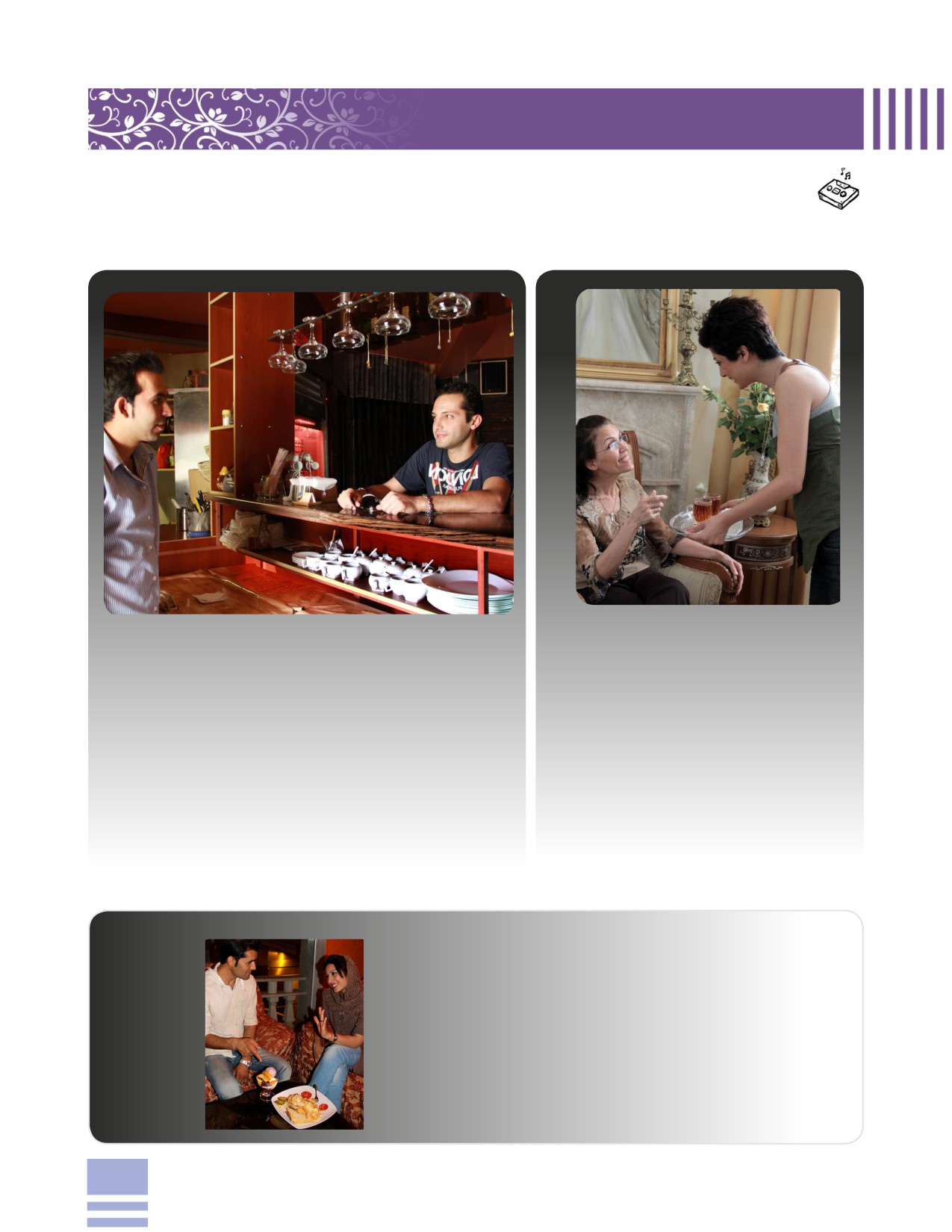
Short Conversations هاتوک یاهوگتفگ
In class. listen to the audio files, repeat what you hear and try to fill in the blanks and transcribe the
sentences. At home repeat what you hear several times and try to follow the rhythm. Write at least two
sentences in Persian about each conversation you hear. During the next class time, you will work with
a classmate to create a scenario that uses these expressions.
؟
ليم یاچ .
؟هوهق
ديراد ليم یاچ .
.مرکشتم .مروخیم ،هلب .
. ......................... یليخ .مروخیم هوهق .
c h ây m eyl
?
c h ây m ey l
?
1
1
1
1
2
2
2
2
?
؟یروخیم ینتسب .
.یسرم ،هن .
1 1
2 2
65
PERSIAN OF IRAN TODAY
...اوخ
......ژ
...خ
ﺧ
چ
چراق
چيپ
هچب
مشچ
Part
1: che
/ch/
_چ__ﭼ__
1. Listen to the audio file for چ che.
The letter che is pronounced like the /ch/ in children. It is written exactly like jim, but with three dots in a v-shape
instead of one.
2. Watch the video and follow the instructions.
......................................................................................................چ
ﭼ
3. Watch the video and write the following words.
..............................شچيپ
مشچ
زيچ
.................................چراپ
چم
اه هچب
4. Listen and check when you hear /ch/ sound in the word .
□ .۵
□ .۴
□ .٣
□ .٢
□ .١
5. Circle the letters چ in the following texts. Report to your
instructor how many چ you identified in the text.
SHAHSAVARI | ATWOOD
66
6. Listen and write the words you hear.
.٥
.۴
.٣
.٢
.١
.۱۰
.۹
.۸
.۷
.۶
Part
2: khe
/kh/
_خ__ﺧ__
خاش
تخس
ربخ
1. Listen to the audio file for خ khe.
The sound of the letter khe is found in many European languages: the Scottish pronunciation of “loch,” and
the German “ch” as in “Bach.” To pronounce خ , say “k” and pay attention to where the back of your tongue
hits the back of the roof of your mouth and blocks your windpipe. Instead of closing off the windpipe with
the back of your tongue completely, block it part way, and you will produce this sound. It is written exactly
like jim and che, but with one dot above it.
2. Watch the video and follow the instructions.
...........................................................................................................خ
ﺧ
3. Watch the video and write the following words.
....................................ربخ
رتخد
مناخ
................................رايتخا
رابخا
ديشخبب
..................................خيس
خوش
خن
4. Listen and check when you hear the /kh/ sound in the word.
□ .۵
□ .۴
□ .٣
□ .٢
□ .١
67
PERSIAN OF IRAN TODAY
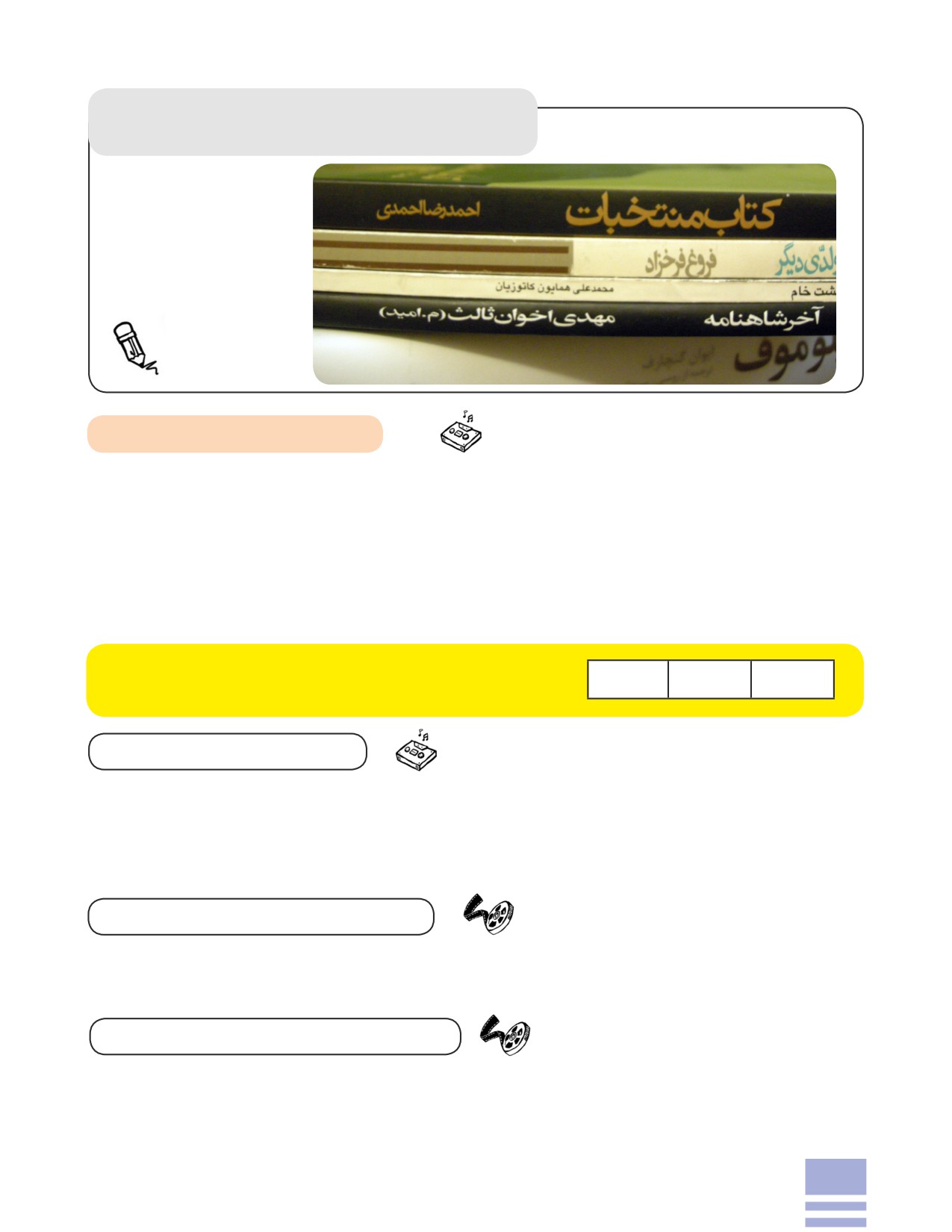
5. Circle the letter خ in the following text. Report to your
instructor how many خ you identified in the text.
6. Listen and write the words you hear.
.٥
.۴
.٣
.٢
.١
.۱۰
.۹
.۸
.۷
.۶
__ژ __
Part
3: zhe
/zh/
اهدژا
هدژم
هلاژ
1. Listen to the audio file for ژ zhe
This consonant corresponds to a sound for which there is no alphabetic equivalent in English, but the sound does
exist in many English words. Its sound is like the “s” in the words “vision” and “treasure.”
The letter ژ is a nonconnector and has the same shape as ر and ز, except that it takes three dots above.
2. Watch the video and follow the instructions.
.....................................................................................................................ژ
3. Watch the video and write the following words.
..............................هژوس
هدرمژپ
نپاژ
SHAHSAVARI | ATWOOD
68
4. Listen and write the words you hear.
.٥
.۴
.٣
.٢
.١
.۱۰
.۹
.۸
.۷
.۶
5. Circle the letters ژ in the following text. Report to your
instructor how many ژ you identified in the text.
Part
4: khâ
/kh/
__اوخ__
رهاوخ
باوخ
1. Listen to the audio file for file اوخ khâ.
This combination of letters is seen in many common words in Persian. Although a و is written, it remains silent
in standard Persian pronunciation. So the combination اوخ is pronounced as اخ. Look at the following words that
contain اوخ and try to pronounce them.
2. List of words with اوخ :
sister
رهاوخ .١
to want
نتساوخ .٢
to sleep
نديباوخ .٣
small
راوخ .۴
to read
ندناوخ .٥
69
PERSIAN OF IRAN TODAY
3. Connect the letters to form words.
چ + ي + و + د + ن + ا + س .١
ن + ا + گ + ژ + م .٢
ت + خ + ب . ٣
ر + ه + چ + و + ن + م .۴
ر + ا + ي + و + ا + خ .٥
ن + ا + س + ا + ر + خ .٦
4. Listen to the following words. Fill in the missing letter(s) for each word, and then
write the complete word on a separate piece of paper.
رايوــــــــخ .۳
ميــــــر .۲
نيــــــ .١
ــــــاريت .۶
بوــــــ .۵
ــــــافوش .۴
ناساــــــــخ .۹
ژــــــدناب .۸
هيوناــــــ .۷
............ شوـــــــ
.۱۲
يـــــــچ .۱۱
............ تکاــــــ
.۱۰
........... جارخــــــــسا
.۱۴
وــــــــچ .۱۳
5. Read the following words aloud with your partner.
هژاو .6
هيوناژ .5
ربخ .4
رناژ .3
دنمدرخ .2
ژانيتاپ .١
هلاژ .12
نپاژ .1١
ارجا .١0
ژاساپ .9
راتخم .8
نژ .7
ترجه .18
نوبماژ .١7
ناتسراجم .١6
هژورپ .١5
يژرنا .١4
موجه .١3
تراجت .20
هراچيب .١9
SHAHSAVARI | ATWOOD
70
6. Listen to the audio file and mark the
word you hear.
نامه
خاش
۷
۱
مره
هاش
دهش
راخ
۸
ديهش
۲
راه
اهر
يخس
۹
۳
هار
يهس
لهس
رخ
10
۴
لحاس
ره
ترارم
رهام
۱۱
۵
تللم
رهم
مل
ناه
۶
۱۲
مار
ناخ
Vocabulary ناگژاو
1. Listen to and learn these words. Translate the sentences. The spoken variations have been
included in parentheses.
sister/ my sister
).همرهاوخ نوا( .تسا مرهاوخ وا
مرهاوخ/رهاوخ .١
they
) .نراد پوس انوا ( .دنراد تسود پوس اهنآ
)انوا( اهنآ .2
they are
).نتسه یناريا( .دنتسه یناريا
دنتسه .3
you are
؟يتسه وجشناد وت
يتسه .4
do you eat/drink?
)؟نيروخ یم ينيريش امش( ؟ديروخيم ينيريش امش
)نيروخیم( ؟ديروخيم .5
would you like (to
)؟نيراد ليم ينتسب( ؟ديراد ليم ينتسب
)نيراد ليم( ؟ديراد ليم .6
have)?
Used only when offering food or drink. We never use this
verb for first person.
I eat, I drink
.مروخيم ينتسب و ينيريش نم
مروخيم .7
tea
.مراد تسود يناريا ياچ نم
ياچ .8
cheese
)؟نيراد رينپ امش( ؟ديراد رينپ امش
رينپ .9
71
PERSIAN OF IRAN TODAY

soda
)؟نيراد ليم هباشون( ؟ديراد ليم هباشون
هباشون -10
water
)؟نيروخیم بآ( ؟ديروخيم بآ
بآ -11
fruit
)؟نيروخیم هويم( ؟ديروخیم هويم
هويم -12
fruit juice
)؟نيراد ليم هويم بآ(؟ديراد ليم هويمبآ
هويمبآ
-13
you
؟يراد رهاوخ وت
وت -14
bad
.متسين دب
دب -15
good
)هبوخ اجنيا ينتسب( .تسا بوخ اجنيا ينتسب
بوخ -16
.دراد یناريا ناروتسر کي نابايخ نيا
street
نابايخ -17
).هراد یناريا ناروتسر هي نوبايخ نيا(
house
)؟تسامش یهنوخ نيا( ؟تسامش یهناخ نيا
)هنوخ( هناخ -18
in
).متسه نارهت( .متسه نارهت رد
)وت( رد -19
room
).هنم قاتا نيا ( .تسا نم قاتا نيا
قاتا -20
window
).هرادن نم قاتا ( .درادن هرجنپ نم قاتا
هرجنپ /هرجنپ -21
door
).هسلک رد نيا ( .تسا سلک رد نيا
رد -22
or
)؟هوهق ای نيراد ليم یاچ( ؟هوهق اي ديراد ليم یاچ
اي -23
thank you
!ردپ نونمم يليخ
نونمم يليخ -24
welcome!
)!نيدموا شوخ یليخ(
!ديدمآ شوخ یليخ -25
yes
)؟نيتسه یناريا ( هلب- ؟ديتسه یناريا
هلب -26
no
).مرادن ،هن-؟نيراد رهاوخ( .مرادن ،هن- ؟ديراد رهاوخ
هن -27
what
)؟نيراد ليم یچ( ؟ديراد ليم یچ
)یچ( هچ -28
dinner
.مروخیم پوس ماش
ماش -29
lunch
)؟نيراد ليم یچ راهان( ؟ديراد ليم یچ راهان
راهن /راهان -30
2. Listen to the audio file again. Based on what you hear, write the vowel on the example sentences.
Now listen to the next audio file. Write the sentences you hear and translate them to English.
SHAHSAVARI | ATWOOD
72
Listening Comprehension رادينش کرد
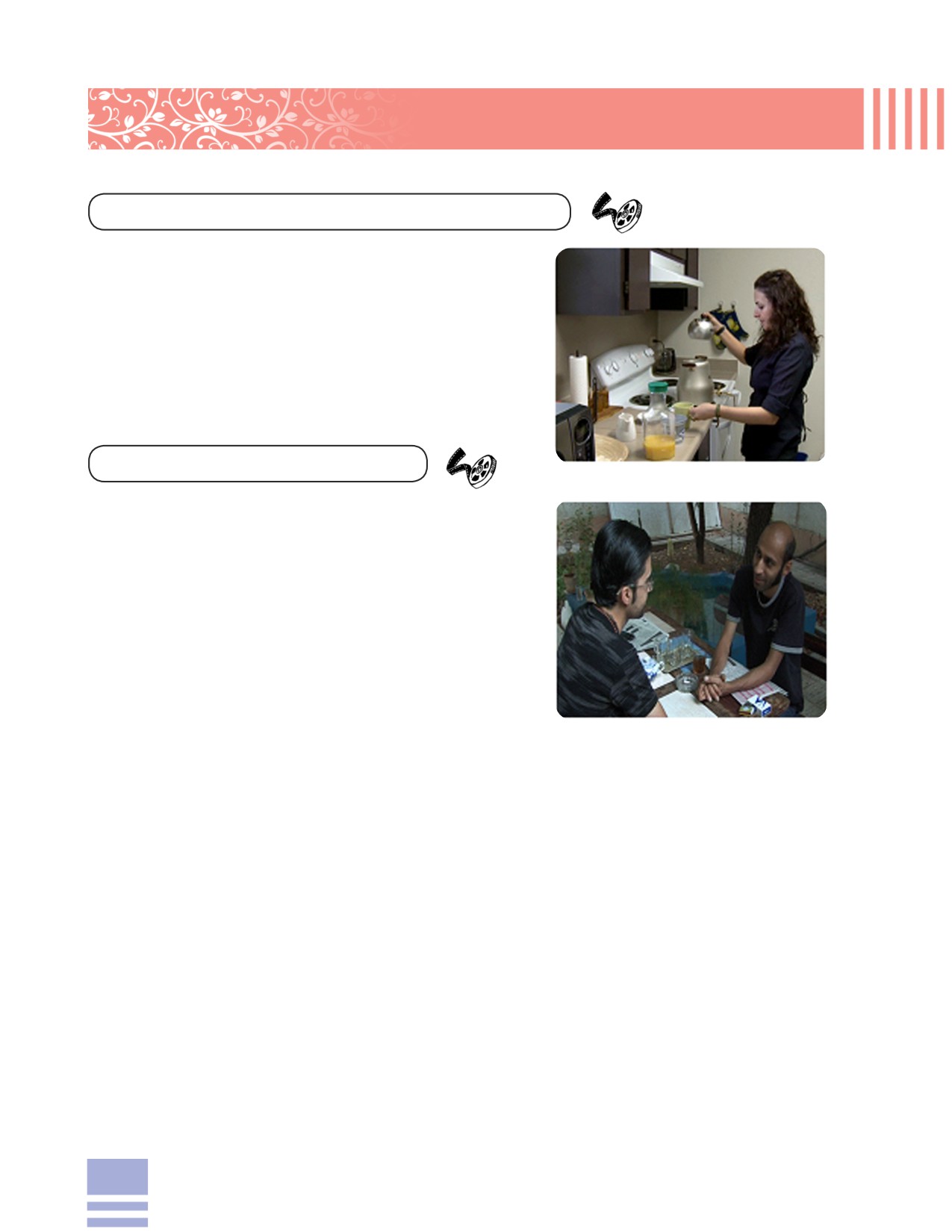
1. Watch the videos and answer the following questions in Persian.
1. What does Shayli eat for breakfast?
2. Does she drink coffee?
3. Listen carefully and guess what “delicious” is in Persian?
4. How does she say “Yummy!” in Persian?
2. Watch the video and write what you hear.
73
PERSIAN OF IRAN TODAY