PGEV and PGE Locomotive Governors. Manual - part 12
 

  Index      Locomotives - books     PGEV and PGE Locomotive Governors - manual 1990


Search            


Content   ..  10  11  12  13   ..


PGEV and PGE Locomotive Governors. Manual - part 12


Manual 36703 

PGEV and PGE Locomotive Governors 


Woodward 

37 

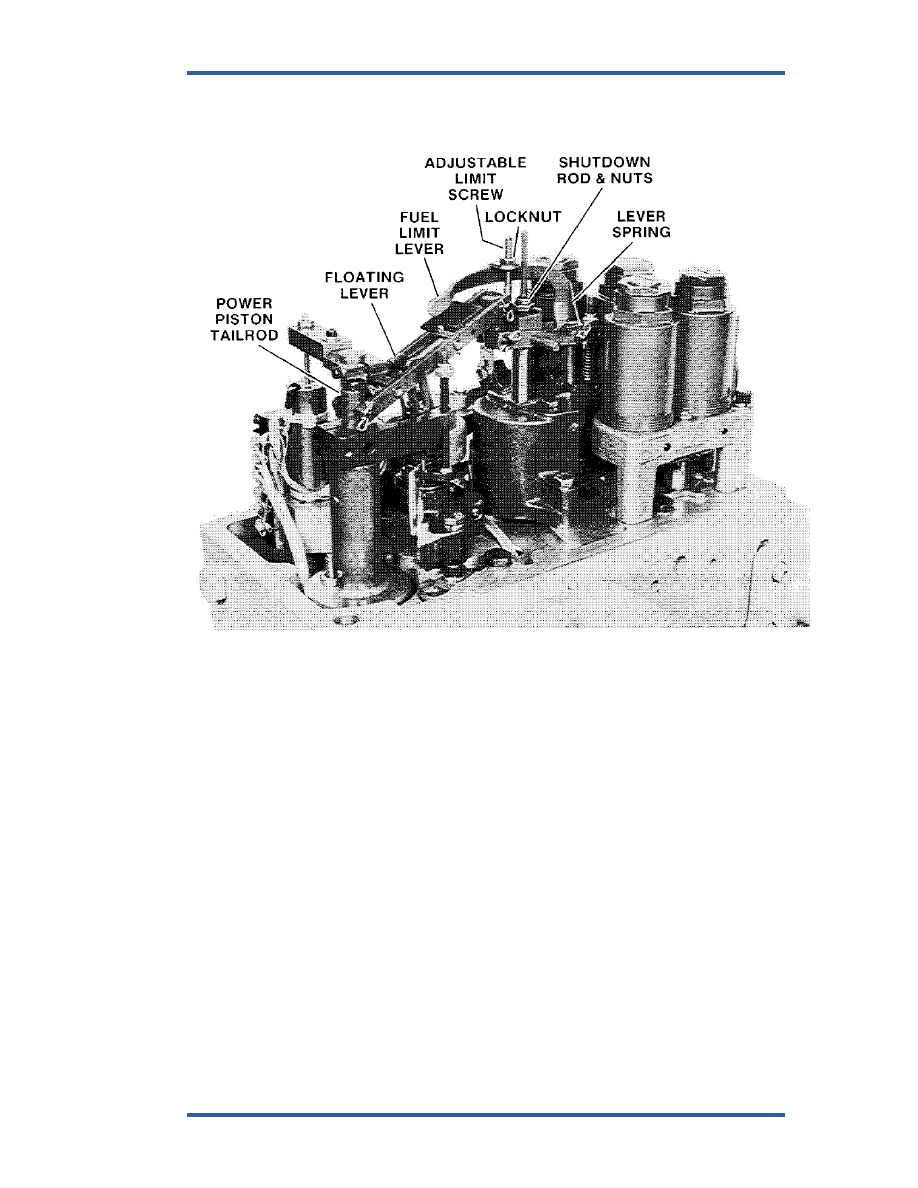
When the governor speed setting is increased, the speed setting servo position 
moves down. This action moves the floating lever down away from the fuel limit 
lever so that the limit level no longer restricts fuel. 


Figure 3-6b. Start Fuel Limiter Linkage 

PGEV and PGE Locomotive Governors 

Manual 36703 


38 

Woodward 

Chapter 4. 

Troubleshooting 


Introduction 

 
It is impossible to anticipate every kind of trouble that is encountered in the field. 
This covers the most common troubles experienced. Poor governing may be due 
to faulty governor performance, or it may be due to the governor attempting to 
correct for faulty operation of the engine or turbine auxiliary equipment. The 
effect of any auxiliary equipment on the overall control requirements of the 
governor also must be considered. 


Be prepared to make an emergency shutdown when starting the 
engine, turbine, or other type of prime mover, to protect against 
runaway or overspeed with possible personal injury, loss of life, or 
property damage. 


Oil 

 
Fill the governor with oil to the mark on the oil level gauge with the engine idling. 
Oil must be visible in the glass on the gauge during all other conditions. 
 
Dirty oil causes approximately 50 per cent of all governor troubles. Use clean 
new or filtered oil. Containers used to fill governors from bulk containers should 
be perfectly clean. Oil contaminated with water breaks down rapidly, causes 
foaming and corrodes internal governor parts. 


Compensating Needle Valve 

 
The compensating needle valve must be correctly adjusted with the governor 
controlling the engine or turbine, even though the compensation may have been 
previously adjusted at the factory or on governor test equipment. Although the 
governor may appear to be operating satisfactorily because the unit runs at 
constant speed without load, the governor still may not be correctly adjusted. 
 
High overspeeds and low underspeeds, or slow return to speed, after a load 
change or speed-setting change, are some of the results of an incorrect setting of 
the compensating needle valve. 


Definitions 

 
Use the chart on the following pages to determine the probable causes of faulty 
operation, and to correct these troubles. Terms used in the chart are defined as 
follows: 
 
Hunt

—A rhythmic variation of speed which can be eliminated by blocking 

governor operation manually, but which will recur when the engine is returned to 
governor control. 

Manual 36703 

PGEV and PGE Locomotive Governors 


Woodward 

39 

Surge

—A rhythmic variation of speed, always of large magnitude, which can be 

eliminated by blocking governor action manually and which will not recur when 
the engine is returned to governor control, unless speed adjustment is changed 
or the load changes. 
 
Jiggle

—A high-frequency vibration of the governor fuel-rod end (or terminal 

shaft) and fuel linkage. Do not confuse this with normal controlling action of the 
governor. 


Preliminary Inspection 

 
Governor troubles are usually revealed in speed variations of the prime mover, 
but it does not necessarily follow that such variations are caused by the 
governor. When improper speed variations appear, the following procedure 
should be performed. 
 
1.  Check the load to be sure the speed changes are not the result of 

malfunctions in the vane servo, generator control circuits, switchgear, etc. 

 
2.  Check engine operation to be sure all cylinders are firing properly and that 

the fuel injectors are in good operating condition and properly calibrated. 

 
3.  Check linkage between governor and fuel racks to be sure there is no 

binding or excessive backlash. 

 
4.  Check setting of governor compensation needle valve. 
 
5.  Check speed-setting circuits for voltage level and sequencing. 
 
6.  Check for fuel-pressure changes. 
 
7.  Check governor oil pressure. A test port is provided in two sides of the 

governor power case for this purpose. 

 
8.  The source of most troubles in any hydraulic governor stems from dirty oil. 

Grit and other impurities can be introduced into the governor with the oil, or 
can form when the oil begins to break down (oxidize) or become sludgy. The 
internal moving parts are continually lubricated by the oil within the unit. 
Valves, pistons, and plungers will stick and even "freeze" in their bores, due 
to excessive wear caused by grit and impurities in the oil. If this is the case, 
erratic operation and poor response can be corrected by flushing the unit 
with fuel oil or kerosene. The use of commercial solvents is not 
recommended as they may damage seals or gaskets. 


Change the oil and flush the governor twice a year if possible. Remove the 
cover, open the drain cock and drain out the oil. Flush the governor by filling 
it with fuel oil. With the engine running at low speed, cycle the governor by 
opening the needle valve two or three turns. Let the governor hunt for a 
minute or two and then stop engine and drain the governor. Flush the 
governor once again. Fill the governor with oil, pouring it over all the internal 
parts that are visible. Start the engine and reset the compensation needle 
valve. 

 
9.  Check drive to governor for any evidence of misalignment, roughness, 

excessive backlash, etc. 

PGEV and PGE Locomotive Governors 

Manual 36703 


40 

Woodward 

Table 4-1. Troubleshooting 


Trouble Cause

Correction 

1. 

Engine hunts or 
surges. 

Needle valve adjustment incorrect. 

Adjust needle valve as described in 
Chapter 2. 

Buffer springs too light. This may occur 
on a new installation; or on an old 
installation because of a radical change 
in load conditions. 

Install heavier buffer springs (consult 
Woodward Governor Company). 

Lost motion in engine linkage, fuel 
pumps, or gas valve. 

Repair linkage, fuel pumps, or gas 
valve. 

Binding in engine linkage, fuel pumps, 
or gas valve. 

Repair and re-align linkage, fuel pumps, 
or gas valve. 

Governor stroke too short. This may 
occur on a new installation. Should be 
at least 50 percent of full governor 
travel between idle and full load. 

Redesign or rework the fuel linkage to 
require more governor stroke. (Consult 
engine manufacturer and Woodward 
Governor Company). 

Low oil level. No harm will be done if 
top of oil is visible in gauge glass. 

Add oil slowly to correct level in gauge. 

Dirty oil or foaming oil in governor. 

Drain governor oil; flush governor to 
clean, and refill with proper clean oil. 
Bleed air and adjust the needle valve. 

Governor worn or not correctly 
adjusted. 

Try spare governor or repair and adjust 
governor. 
a. 

Check flyweight pins and bearings 
for wear. 

b. 

Check flyweight toes for wear 
and/or flat spots. 

c. 

Check flyweight and head thrust 
bearing; also centering bearing. 

d. 

Pilot-valve plunger may be 
sticking; clean and polish if 
necessary. 


Do not break corners of control land. 

 
e. 

Check vertical adjustment of pilot 
valve plunger and correct if 
necessary. 

f. 

Clean and polish all moving parts 
to ensure smooth and free 
operation. 

Spring too weak in telescopic link. 

Install heavier spring so that link stays 
solid at all times. 

 2.  Fuel pump racks do 

not open quickly when 
cranking engine. 

Low oil pressure in governor. 

a. 

Check governor pump gears and 
gear pockets for excessive wear. 
No correction except to replace 
worn parts. 

b. 

Flush governor and refill with 
clean oil to remove dirt in pump 
check valves. 

c. 

Examine pump check valves. If 
not seating tightly, install new 
ones. 

Cranking speed too low. 

Install a booster servomotor (consult 
Woodward Governor Company). 

Booster servomotor (if used) not 
functioning properly. 

a. 

Check action of automatic air-
starting valve. 

b. 

Check air and oil connections. 


Shutdown nuts not adjusted correctly. 

Loosen nuts and start engine. Readjust 
nuts for proper clearance at idle. 


Content   ..  10  11  12  13   ..