HUAWEI OptiX OSN 8800 T64/T32 Intelligent Optical Transport Platform. Product Description - part 29
l Constraint conditions for network resources (explicit node, explicit link, explicit
wavelength, and explicit channel)
l Constraint conditions for exclusion of network resources (excluded node and excluded link)
l Strict route and number of nodes (hops) that a service traverses
l Fiber length of a service, load balancing, SRLG, and associated services
l Combination of the preceding constraint conditions
The constraint conditions for the ASON wavelength or sub-wavelength services are mainly
reflected in the trail cost. The trail cost includes the following factors:
l Link bandwidth occupancy
l Link length
l Number of nodes (hops) that a service traverses
During service route computation, you should consider the preceding factors of the trail cost
(the function of setting the weight of each factor is provided), and thus you can select the route
with the minimum trail cost. In this manner, the traffic is equalized and the network resources
are properly used.
Customized Link Cost
The ASON software supports the customized link cost. Hence, users can adjust the link cost and
select the expected link according to actual situations. After the customized link cost is
introduced, the trail with the lowest cost is selected according to the integrated cost of a link
during service creation or rerouting.
The customized link cost is used to describe the customized link attributes. By using the
customized link cost, users can assign different meanings to a link. The examples are as follows:
l Link age
The cost of a link ascends with the age of the link. When computing a trail, the ASON
software is more likely to select a new trail.
l Link price
The cost of a link ascends with the price of the link. When computing a trail, the ASON
software is more likely to select a cheap trail.
l Link interruption rate
The cost of a link ascends with the link interruption rate. When computing a trail, the ASON
software is more likely to select a trail with a low link interruption rate.
The customized link cost can be queried, and a change of the customized link cost on a node
can be flooded to all nodes on the entire network. In this manner, all nodes on the network
acknowledge the customized link cost information, which can be used as a basis of computing.
Shared Risk Link Group
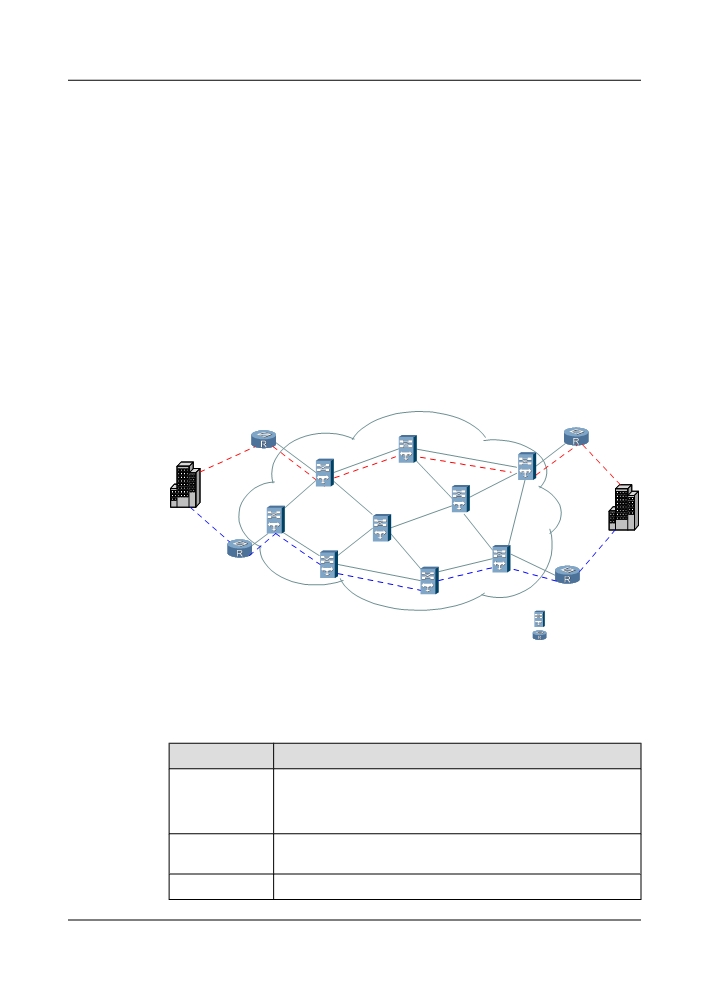
On an ASON network, a shared risk link group (SRLG) needs to be set when a group of optical
fibers are in one cable.
SRLG represents the shared risk link group. Fibers in the same optical cable have the same risk.
That is, when the cable is cut, all fibers are cut. Hence, an ASON service should not be rerouted
to another link that has the same risk.
Hence, an SRLG needs to be correctly set for the links sharing the same risk on a network so as
to avoid the situation where an LSP after rerouting of ASON services traverses a link that has
301
the same risk as that of the faulty link. In this manner, the service restoration time during ASON
service rerouting is shortened. You can change the SRLG attribute.
When an electrical-layer service selects its trail, the electrical-layer link inherits the SRLG
information of the links involved in its electrical server layer and the SRLG information of the
links involved in its optical server layer. As a result, during rerouting, the electrical-layer service
follows the principle of separating SRLGs as possible.
7.5.10 Service Association
Service association can be used to associate the same services accessed from different points
into an ASON network.
Service association involves associating two ASON services that have different routes. During
rerouting or optimization of either service, the rerouting service avoids the route of its associated
service. Service association is mainly used for services (dual-source) accessed from two points.
As shown in Figure 7-34, D-E-I and A-B-G-H are two associated LSPs. When the fiber between
B and G is cut, rerouting of A-B-G-H LSP avoids D-E-I LSP.
Figure 7-34 Service association
R4
R1
E
1+1protection
I
1+1protection
D
F
C
A
B
H
G
R2
R3
: ASON NE
: User equipment
Table 7-14 lists the attributes of service association.
Table 7-14 Attributes of service association
Attribute
Service Association
Service creation
The ASON software supports the following operations:
l Creating two associated WDM ASON trails at one time.
l Associating two created WDM ASON trails.
Service
Supports optimization of associated services.
optimization
Rerouting
When a service is rerouted, it avoids the route of its associated service.
302

Attribute
Service Association
Service type
l Supports association of two silver services.
l Supports association of two copper services.
l Supports association of a silver service and a copper service.
NOTE
In the case of the associated optical-layer or electrical-layer services that have the same source, you can
set a rerouting condition on the U2000. The rerouting condition can be either of the following:
l Rerouting is triggered when one service is interrupted (default condition).
l Rerouting is triggered only when both services are interrupted.
NOTE
The product supports the pre-computation function of optical-layer or electrical-layer associated services
with different source nodes. On the NMS, after a user selects two pairs of service source and sink nodes
and route constraint, the system can precalculate or directly create associated services.
It is recommended that you configure two services that originate from the same node as associated services.
The following problems may occur if two associated services originate from different nodes.
l If two associated services originate from different nodes and travel along the same LSP, they will be
also switched to the same LSP after rerouting.
l If two associated services (for example, services A and B) originate from different nodes and travel
along different LSPs, the current LSP of service A may overlap with the original LSP of service B after
rerouting. If service B is switched back to the original LSP subsequently, it will travel along the current
LSP of service A.
7.5.11 Service Optimization
After the topology changes several times, the ASON may have less satisfactory routes and
therefore requires service optimization. Service optimization involves creating an LSP,
switching the optimized service to the new LSP, and deleting the original LSP to change and
optimize the service. The service route can be restricted during the service optimization.
CAUTION
The LSP must be changed in wavelength trail optimization, which will cause switching between
WSS components. As a result, services may be interrupted during service optimization.
Especially, optical-layer services will be interrupted for seconds. Be cautious to use the function.
LSP optimization has the following features.
l Only manual optimization is supported.
l The optimization does not change the protection level of the optimized service.
l During optimization, rerouting, degrade/upgrade, or deleting operations are not allowed.
l During creation, rerouting, degrading/upgrading, starting or deleting operations,
optimization is not allowed.
l The following service types support optimization: diamond, silver, copper, iron and
tunnel services.
303
NOTE
When the OptiX OSN 8800 V100R005 is used as a WDM or an OTN device, resources on the original
trail will be reserved during revertive service optimization. When a fault occurs on the optimized trail, the
service can be rerouted back to the original trail if the original trail has no fault.
l During maintenance, lock the revertive function of an optimized revertive service. After performing
the maintenance, unlock the revertive function to manually reroute the service back to the original trail.
l In typical scenarios, it is recommended to set the new trail for an optimized revertive service as the
service's original trail.
7.5.12 Service Migration
The ASON software supports the migration between ASON services and traditional services.
The ASON software also supports migration of the ASON services with different SLAs. The
service migration is hitless and does not interrupt the existing services.
Service Migration between ASON Trails and Permanent Connections
Currently, Huawei ASON software supports the following migration between the traditional
WDM services and ASON services:
l Migration between static 1+1 services and diamond services
NOTE
For ODUk trail, the 1+1 service denotes the ODUk SNCP.
l Migration between static unprotected services and silver services
l Migration between static unprotected services and copper services
Service Migration between ASON Trails
The ASON software supports the following migration between the traditional WDM services
and ASON services:
l Migration between diamond WDM ASON trails and silver WDM ASON trails.
l Migration between diamond WDM ASON trails and copper WDM ASON trails.
l Migration between silver WDM ASON trails and copper WDM ASON trails.
7.5.13 Preset Restoration Trail
Customers may require that the services route to a specified trail in the case of trail failure. To
this end, the ASON software provides the function of presetting the trail for restoration. This
function helps increase the controllability of service routing. The preset restoration trail
information is stored only on the control plane and requires no physical resource.
For SDH ASON service, in the case of a service configured with a preset restoration trail, when
this preset restoration trail fails, the system recalculates a new preset restoration trail during
regular detection (at default intervals of 60 minutes). After recalculating a preset restoration trail,
the system reports a preset restoration trail update event to the NMS.
NOTE
If the resources are sufficient, the system currently supports two preset restoration trails for one ASON
service.
In the case of an optical-layer silver trail, if a wavelength the same as the original wavelength
is not available, the ASON software presets a restoration trail to set up a wavelength-tunable
trail.
304
ASON software supports pre-set restoration trail in the case of multiple fiber cuts:
l
Pre-set restoration trail in the case of multiple fiber cuts
To ensure the route after rerouting in the case of multiple fiber cuts, the ASON software
configures multiple pre-set restoration trails for an end-to-end reroutable service (optical-
layer or electrical-layer service). Users can configure a maximum of two pre-set restoration
trails for a service or an LSP, and specify the priorities of the two trails.
NOTE
Users can configure two pre-set restoration trails for the working and protection LSPs of a diamond
service.
To ensure that services can be restored after multiple fiber cuts, when planning pre-set
trails, users need to separate the routes between multiple pre-set restoration trails as
possible.
l
Change of the priority of a pre-set restoration trail in the case of multiple fiber cuts
The ASON software can configure, delete, or query multiple pre-set restoration trails. In
addition, the ASON software can change the priority of a pre-set restoration trail in the case
of multiple fiber cuts. After the pre-set restoration trail in the case of multiple fiber cuts is
configured, if the network condition changes, users can change the priority of the configured
pre-set restoration trail. The change does not immediately trigger rerouting, because the
change is valid only in the next rerouting.
l
Route selection policy of the pre-set restoration trail during rerouting in the case of multiple
fiber cuts
The route selection policies of the pre-set restoration trail during rerouting in the case of
multiple fiber cuts are as follows:
- Select the pre-set restoration trail with the highest priority.
- When multiple pre-set restoration trails with the same priority are available, take priority
to select the trail with a small number.
- If services are rerouted to a pre-set restoration trail with a low priority, rerouting is not
triggered after the fault on the pre-set restoration trail with a high priority is rectified.
l
Principle of service protection level conversion in the case of multiple pre-set restoration
trails
The protection level conversion principle in the case of multiple pre-set restoration trails
is as follows:
- If a service that has the rerouting capability is converted to a service of another type
that also has the rerouting capability, the pre-set restoration trail in the case of multiple
fiber cuts is retained.
- If a service that has the rerouting capability is converted to a service of another type
that does not have the rerouting capability, the pre-set restoration trail in the case of
multiple fiber cuts is cleared.
- When a diamond service is converted to a silver service, the ASON software determines
whether to retain the pre-set restoration trail of the working LSP or protection LSP
according to the parameters of the working and protection trails set by users.
- When a silver service is converted to a diamond service, the ASON software determines
whether the pre-set restoration trail is used as the pre-set restoration trail of the working
LSP or protection LSP according to the parameters of the working and protection trails
set by users.
305
7.5.14 Trail Pre-Computation and Adjustment
When optimizing the routes of new ASON wavelength/sub-wavelength services or original
wavelength/sub-wavelength services, users can issue the route pre-computation command
through the U2000. In this manner, users can acknowledge the service routes to be created, routes
after optimization, specific routes involving service restoration trails in advance. In addition,
users can properly adjust the pre-computed trail according to service trail requirements.
7.5.15 Service Reversion Mechanism
The ASON software supports service reversion. After a fault is rectified, services are reverted
to the previous trail.
ASON services can be classified into revertive services and non-revertive services.
l For revertive services, the previous trail is retained after rerouting. After the fault is
rectified, the services are reverted to the previous trail.
l For non-revertive services, the previous trail is not retained after rerouting. After the fault
is rectified, the services are not reverted to the previous trail.
The reversion mechanisms of revertive services include manual reversion, scheduled reversion,
and automatic reversion.
l Scheduled reversion
Services are rerouted because of a fault on the previous trail. After the fault is rectified and
the manually set reversion time elapses, the services are reverted to the previous trail.
l Automatic reversion
Services are rerouted because of a fault on the previous trail. The system periodically checks
the link status. After the fault on the previous trail is rectified and the service alarm ends,
the services are automatically reverted to the previous trail when the wait to revert time is
due.
l Manual reversion
After services are rerouted or optimized to another trail, the information about the previous
trail is retained. When the press-to-revert command is issued, the services are reverted to
the previous trail. If the previous trail is normal and no resource is occupied, the services
are successfully reverted to the previous trail. Otherwise, the reversion fails.
Users can set whether services can be reverted during service creation or change the revertive
attribute of the services without service interruption.
NOTE
The previous trail refers to the trail before rerouting, and the previous route may not be the route initially
set up for ASON services.
NOTE
After several topology changes on an ASON network, the actual service routes may be different from the
original routes. The ASON software provides the function of reverting the services on the entire network
to the original trails. Generally, the route during ASON service creation is the original route of the ASON
service. After services are rerouted or optimized to another trail, the information about the original trail is
retained. If the original route recovers, the services can be adjusted to the original route manually.
NOTE
The OptiX OSN 8800 V100R002 and later supports the automatic reversion function of optical-layer ASON
services.
306
Adhere to the following principles for changing the service reversion mode:
l For a non-revertive service,
- It can be modified as revertive when the current trail is consistent with the original trail.
- It cannot be modified as revertive when the current trail is inconsistent with the original
trail.
l For a revertive service,
- It can be modified as non-revertive when the current trail is consistent with the original
trail.
- It cannot be modified as non-revertive when the current trail is inconsistent with the
original trail.
Adhere to the following principles for changing the original trail:
l For a non-revertive service,
- The current trail can be set as the original trail regardless whether the current trail is
consistent with the oringinal trail or not.
l For a revertive service,
- The current trail can be set as the original trail if the current trail is consistent with the
original trail.
- The current trail can be set as the original trail if the current trail is inconsistent with
the original trail, but the previous original trail needs to be deleted and the revertive
mode of the current service needs to be set as revertive.
TIP
The features of automatic reversion of optical-layer ASON services are as follows:
l If no port alarm is detected on the link between the FIU boards at two stations, optical-layer services
are automatically reverted to the trail before rerouting. If a wavelength channel alarm is detected, the
services are reverted to the trail before reversion in the case that the trail before reversion has no alarm.
That is, when the optical-layer services are reverted, system does not delete the rerouted trail. If no
service alarm is detected two minutes after the services are reverted to the trail before rerouting, the
system deletes the rerouted trail. Two minutes later, if a service alarm persists, the services are reverted
to the rerouted trail and a reversion failure event is reported. No automatic reversion operation is
performed later, and the service enters the "stopping automatic reversion" state until users manually
revert the services (or in timed manner). In this case, the "stopping automatic reversion" state changes.
l Within the two minutes when the services are automatically reverted but the rerouted trail is not deleted,
if a port on the FIU of the rerouted trail reports an alarm, the two-minute wait is stopped. In this case,
the rerouted trail is directly deleted and the reversion operation is complete.
l If a port on the FIU of the trail before rerouting reports an alarm, the two-minute wait is stopped and
the services are directly reverted to the rerouted trail.
NOTE
When the OptiX OSN 8800 V100R005 is used as a WDM or an OTN device, resources on the original
trail will be reserved during revertive service optimization. When a fault occurs on the optimized trail, the
service can be rerouted back to the original trail if the original trail has no fault.
l During maintenance, lock the revertive function of an optimized revertive service. After performing
the maintenance, unlock the revertive function to manually reroute the service back to the original trail.
l In typical scenarios, it is recommended to set the new trail for an optimized revertive service as the
service's original trail.
NOTE
For the ODU1 ASON service, revertive mode is recommended.
307
7.5.16 Resource Sharing of Trails
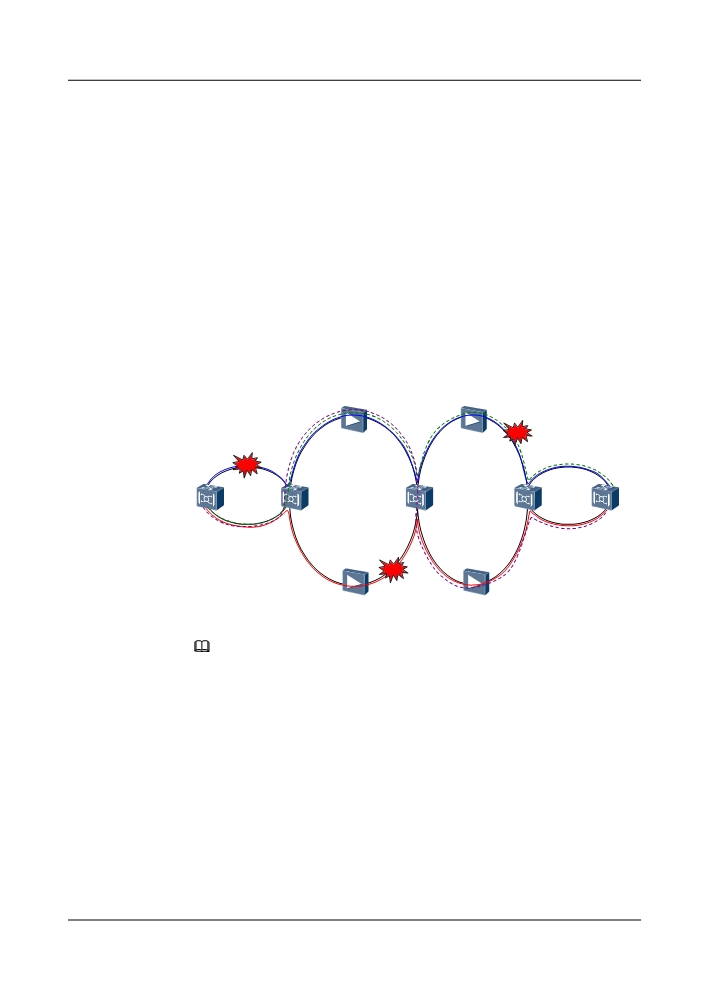
In the case of optical-layer or electrical-layer permanent 1+1 diamond services, rerouting 1+1
diamond services, and associated services with the same source (wavelengths of the associated
silver services are the same), the ASON software supports the function of resource sharing of
the working and protection trails or resource sharing of the associated service trails.
l Resource sharing of the working and protection trails
Resource sharing of the working and protection trails can provide restoration resources as
many as possible. Figure 7-35 shows the main application scenario of tangent rings. The
blue and red continuous lines indicate the working and protection trails. The working and
protection trails are invalid when fibers at points 1 and 2 are cut. In this case, if resources
of the working and protection trails cannot be shared, services cannot get resources for
restoration. If resources can be shared, you can combine part of the working trail and part
of the protection trail together to form a restoration trail, which is the green dashed line in
the figure. Similarly, if the fiber at point 3 is cut, the trail (purple dashed line) can be used
for service restoration.
Figure 7-35 Application of resource sharing of the working and protection trails
3
1
2
NOTE
When both trails for 1+1 diamond ASON services are interrupted, the system by default allows
resources sharing on the working and protection trails during service rerouting. Resource sharing of
the working and protection trails provides a possible solution to protect services in the case of multiple
fiber cuts on a network other than a mesh network.
308
NOTE
l
When both the working and protection trails for a permanent 1+1 diamond ASON service are
interrupted, the system allows resources sharing on the working and protection resources only
when no diverse route is available for service restoration.
l
When the "using original trail resources as possible" rerouting policy is used for a rerouting 1+1
diamond service, the system shares the resources on the working and protection trails with
precedence to restore the service.
l
In the case of creating a new ASON service or optimizing an ASON service, resource sharing of
the working and protection trails is not allowed. Optimization, pre-computation, and
configuration of a preset restoration trail can still be performed on a service with resource sharing
of the working and protection trails enabled.
l
A static service with resource sharing of the working and protection trails enabled cannot be
upgraded to a 1+1 diamond service, and an ASON service where resource sharing of the working
and protection trails is performed cannot be downgraded but can be deleted.
l
If resource sharing of the working and protection trails is performed on the original trail of a
revertive service, automatic reversion is not initiated, but the service can be reverted in a manual
or timed manner.
l
During rerouting of a diamond service, if the routing policy of the service is section restoration,
you need to take priority to follow this policy.
l
The trail of a service where resource sharing of the working and protection trails is performed
cannot be set as the original trail.
l
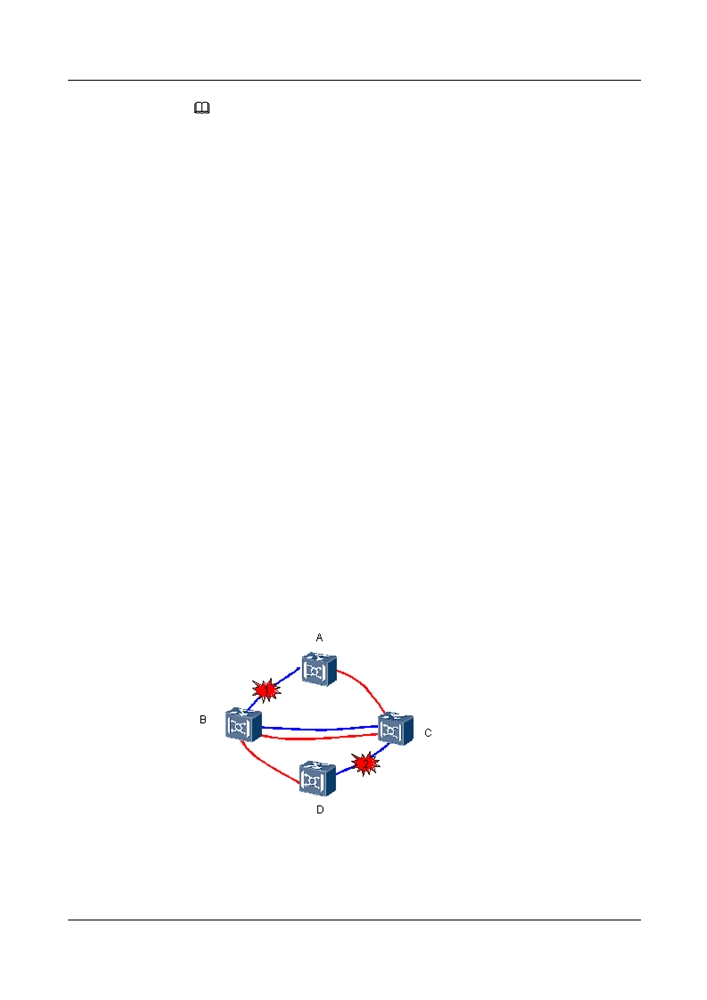
During sharing, directions of services must be the same. A forward trail and a reverse trail cannot
share resources of each other. Figure 7-36 shows application of resource sharing of a forward
and reverse tail.
l
An ASON service with the same working and protection trail cannot be enabled with resource
sharing of the working and protection trails.
l
If the working and protection trails already share resources, the working and protection trails are
separated to the most when one or all trails are optimized. If resources are insufficient, the
optimized trails can still share resources. (Only the currently shared resources can be shared.)
l
When the system choose to share the resources on the working and protection trails for an optical-
layer ASON service, the service will be transmitted over the original wavelength. Resource
sharing and wavelength adjustment are not allowed at the same time.
Figure 7-36 Resource sharing of a forward and reverse tail
A service is added at point A and dropped at point D. The original trail is A->B->C->D
(blue lines). When the fibers between A and B and between C and D are cut, the service
309
can be rerouted to trail A->C->B->D (red lines). Hence, between B and C, the forward trail
and reverse trail share resources.
l
Resource sharing of associated trails
The ASON software provides the trail sharing function to associated ASON services with
the same source. Figure 7-35 shows the main application scenarios of a tangent ring
network. The blue lines and red lines indicate two associated trails with the same source.
When fibers at 1 and 2 are cut, the two trails fail. If resources of the associated trails cannot
be shared, the services cannot be restored. If the resources can be shared, you can combine
the associated trails to make a restoration trail, which is the trail in green as shown in the
figure. Similarly, if the fiber at 3 is cut, you can still use the trail in purple to restore the
services.
NOTE
When both trails that have the same source for two associated optical-layer wavelength services are
interrupted, the system by default allows resources sharing on the associated trails for the associated
services to reroute if there are no other resources available. On the U2000, users can specify whether
to share resources on the associated trails as required.
NOTE
l During rerouting of associated services that come from the same source, the system will take
precedence to share the resources on the two trails for the services if the two trails are configured
with a policy to use resources on the original trail.
l In the case of creating a new service or optimizing a service, resource sharing of associated trails
is not allowed.
l After associated trails share resources, do not cancel the association.
l If associated services are of different types, resource sharing of associated trails is not supported.
For example, the associated OTN services must have the same granularity and rate. The protection
level, however, is not restricted. For example, sharing is allowed when a silver service and a
copper service are associated.
l If resource sharing of associated trails is performed on the original trail of a revertive service,
automatic reversion is not initiated, but the service can be reverted in a manual or timed manner.
l During rerouting of associated services with the same source, if the routing policy of the services
is restoration by section, you need to take priority to follow this policy.
l The trail of a service where resource sharing of associated trails is performed cannot be set as
the original trail. Before canceling association of associated services, you can delete the services
and clear the association information.
l If the trails of associated services already share resources, the trails of the associated services are
separated to the most when one or all trails are optimized. If resources are insufficient, the
optimized trails can still share resources. (Only the currently shared resources can be shared.)
l During sharing, directions of services must be the same. A forward trail and a reverse trail cannot
share resources of each other. Figure 7-36 shows application of resource sharing of a forward
and reverse tail.
l An ASON service with the same associated trail cannot be enabled with resource sharing of
associated trails.
7.5.17 ASON Features Based on the Split of Optical and Electrical
NEs
For ASON network, users need to split the NE into different NEs. The splitting rule is that all
optical boards and regeneration boards are allocated to one or more optical NEs and all electrical
boards are allocated to one or more electrical NEs. Based on the split of optical and electrical
NEs, the ASON software supports resource locating and creation of ASON services.
310
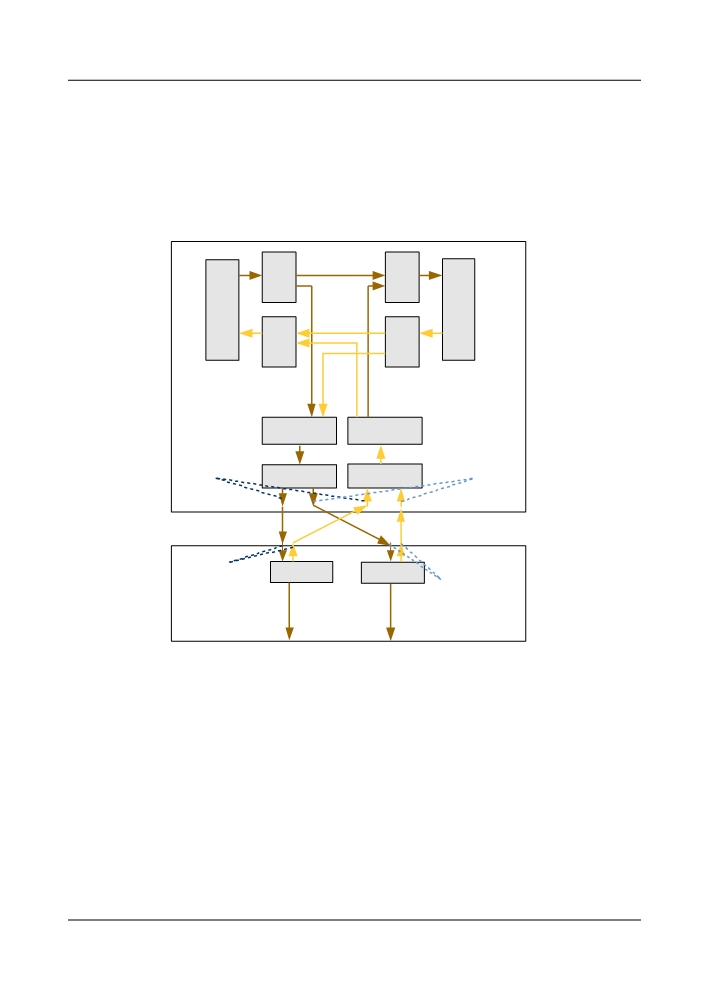
Figure 7-37 shows the schematic diagram of separate optical and electrical NEs (Colored). In
the figure, NE1 is an optical NE taking the M40 and D40 boards as the edge points. NE2 is the
electrical NE taking the OTU board as the edge points.
Figure 7-38 shows the schematic diagram of separate optical and electrical NEs (Colorless). In
the figure, NE1 is an optical NE taking the WSM9 and WSD9 boards as the edge points. NE2
is the electrical NE taking the OTU board as the edge points.
Figure 7-37 Schematic diagram of the split of optical and electrical NEs (Colored)
W
R
NE1
S
D
M
U
F
F
9
9
I
I
U
R
W
U
D
S
U
M
9
9
RDU9
WSM9
OCh
D40
M40
OCh
NE2
OCh
OTU
OTU
OCh
311