Physics For Scientists And Engineers 6E - part 332
A.42
Answers to Odd-Numbered Problems
29. 6.92 m/s
31. 3.74 m/s
33. (a) $ 160 J (b) 73.5 J (c) 28.8 N (d) 0.679
35. (a) 1.40 m/s (b) 4.60 cm after release (c) 1.79 m/s
37. (a) 0.381 m (b) 0.143 m (c) 0.371 m
39. (a) a
x
% $
&
k
gx/L (b) v % (&
k
gL)
1/2
41. (a) 40.0 J (b) $ 40.0 J (c) 62.5 J
43. (A/r
2
) away from the other particle
45. (a) ( at !, $ at ", 0 at #, $, and % (b) $ stable; #
and % unstable
(c)
59. 1.24 m/s
61. (a) 0.400 m (b) 4.10 m/s (c) The block stays on the
track.
63. (h/5)(4 sin
2
* (
1)
65. (a) 6.15 m/s (b) 9.87 m/s
67. (a) 11.1 m/s (b) 19.6 m/s
2
upward (c) 2.23 ! 10
3
N
upward (d) 1.01 ! 10
3
J (e) 5.14 m/s (f) 1.35 m
(g) 1.39 s
69. (b) 1.44 m (c) 0.400 m (d) No. A very strong wind
pulls the string out horizontally. The largest possible equi-
librium height is equal to L.
73. (a) 2.5R
CHAPTER 9
1. (a) (9.00ˆ
i $ 12.0ˆj) kg · m/s (b) 15.0 kg · m/s at 307°
3. ~ 10
$
23
m/s
5. (b)
7. (a) 13.5 N · s (b) 9.00 kN (c) 18.0 kN
9. 260 N normal to the wall
11. (a) (9.05ˆ
i ( 6.12ˆj) N · s (b) (377ˆi ( 255ˆj) N
13. 15.0 N in the direction of the initial velocity of the exiting
water stream
15. 65.2 m/s
17. 301 m/s
19. (a) 2.50 m/s (b) 37.5 kJ (c) Each process is the time-
reversal of the other. The same momentum conservation
equation describes both.
21. (a) v
gx
%
1.15 m/s (b) v
px
% $
0.346 m/s
23. (a) 0.284 (b) 115 fJ and 45.4 fJ
25. 91.2 m/s
27. (a) 2.24 m/s to the right (b) No. Coupling order makes
no difference.
29. v
orange
%
3.99 m/s, v
yellow
%
3.01 m/s
31. v
green
%
7.07 m/s, v
blue
%
5.89 m/s
33. 2.50 m/s at $ 60.0°
35. (3.00ˆ
i $ 1.20ˆj) m/s
37. (a) ($ 9.33ˆ
i $ 8.33ˆj) Mm/s (b) 439 fJ
39. 0.006 73 nm from the oxygen nucleus along the bisector
of the angle
41.
r
CM
%
(11.7ˆ
i ( 13.3ˆj) cm
43. (a) 15.9 g (b) 0.153 m
45. (a) (1.40ˆ
i ( 2.40ˆj) m/s (b) (7.00ˆi ( 12.0ˆj) kg · m/s
47. 0.700 m
49. (a) 39.0 MN (b) 3.20 m/s
2
up
51. (a) 442 metric tons (b) 19.2 metric tons
53. 4.41 kg
55. (a) 1.33ˆ
i m/s (b) $ 235ˆi N (c) 0.680 s (d) $ 160ˆi N · s
and (160
iˆi N · s (e) 1.81 m (f) 0.454 m (g) $ 427 J
(h) ( 107 J (i) Equal friction forces act through different
distances on person and cart, to do different amounts of
work on them. The total work on both together, $ 320 J,
p %
√
2mK
2
4
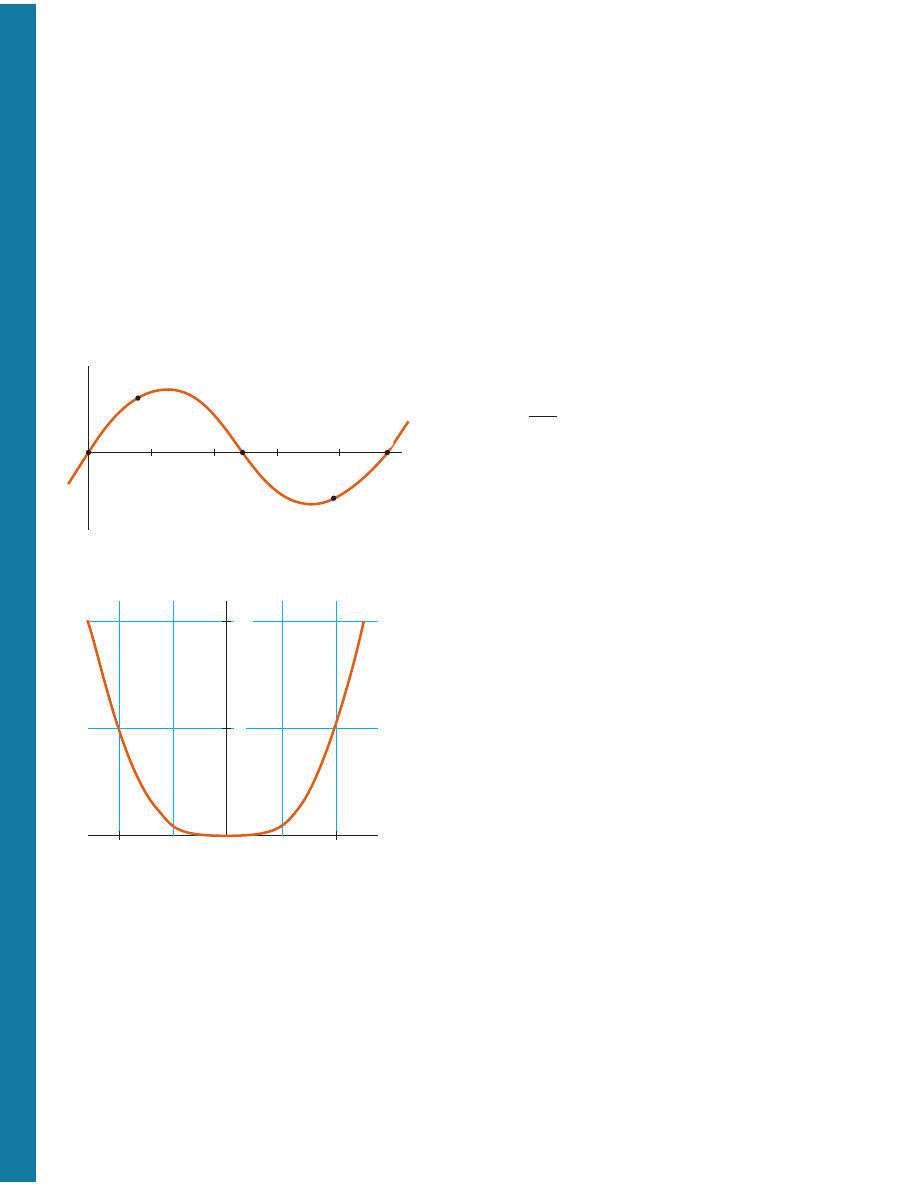
6
8
x(m)
F
x
#
!
$
"
%
47. (b)
–2
2
0
x(m)
50
100
U( J)
Equilibrium at x % 0
(c) 0.823 m/s
49.
! 10
3
W peak or ~ 10
2
W sustainable
51. 48.2°
53. (a) 0.225 J (b) /E
mech
% $
0.363 J (c) No; the normal
force changes in a complicated way.
55. (a) 23.6 cm (b) 5.90 m/s
2
up the incline; no.
(c) Gravitational potential energy is transformed into ki-
netic energy plus elastic potential energy and then en-
tirely into elastic potential energy.
57. 0.328