Physics For Scientists And Engineers 6E - part 4
 

  Index      Production     Physics For Scientists And Engineers 6E


Search            


Content   ..  1  2  3  4  5  ..


Physics For Scientists And Engineers 6E - part 4


1.6 Estimates and Order-of-Magnitude 

Calculations

It is often useful to compute an approximate answer to a given physical problem even
when  little  information  is  available.  This  answer  can  then  be  used  to  determine
whether or not a more precise calculation is necessary. Such an approximation is usu-
ally  based  on  certain  assumptions,  which  must  be  modified  if  greater  precision  is
needed.  We  will  sometimes  refer  to  an order  of  magnitude of  a  certain  quantity  as  the
power  of  ten  of  the  number  that  describes  that  quantity.  Usually,  when  an  order-of-
magnitude calculation is made, the results are reliable to within about a factor of 10. If
a quantity increases in value by three orders of magnitude, this means that its value in-
creases by a factor of about 10

3

$

1 000. We use the symbol 

# for “is on the order of.”

Thus, 

0.008 6

# 10

"

2

0.002 1

# 10

"

3

720

# 10

3

The spirit of order-of-magnitude calculations, sometimes referred to as “guessti-

mates” or “ball-park figures,” is given in the following quotation: “Make an estimate
before every calculation, try a simple physical argument . . . before every derivation,
guess the answer to every puzzle.”

4

Inaccuracies caused by guessing too low for one

number are often canceled out by other guesses that are too high. You will find that
with practice your guesstimates become better and better. Estimation problems can
be  fun  to  work  as  you  freely  drop  digits,  venture  reasonable  approximations  for

S E C T I O N   1 . 6     •     Estimates and Order-of-Magnitude Calculations

13

Example 1.4 Is He Speeding?

On  an  interstate  highway  in  a  rural  region  of  Wyoming,  a
car is traveling at a speed of 38.0 m/s. Is this car exceeding
the speed limit of 75.0 mi/h?

Solution We first convert meters to miles:

Now we convert seconds to hours:

Thus, the car is exceeding the speed limit and should slow
down.

What  If?

What if the driver is from outside the U.S. and is

familiar  with  speeds  measured  in  km/h?  What  is  the  speed
of the car in km/h?

Answer We can convert our final answer to the appropriate
units:

(85.0 mi/h) 

!

1.609 km

1 mi

"

$

137 km/h

(2.36 ! 10

"

2

 mi/s) 

!

60 s

1 min

"


!

60 min

1 h

"

$

85.0 mi/h

(38.0 m/s) 

!

1 mi

1 609 m

"

$

2.36 ! 10

"

mi/s

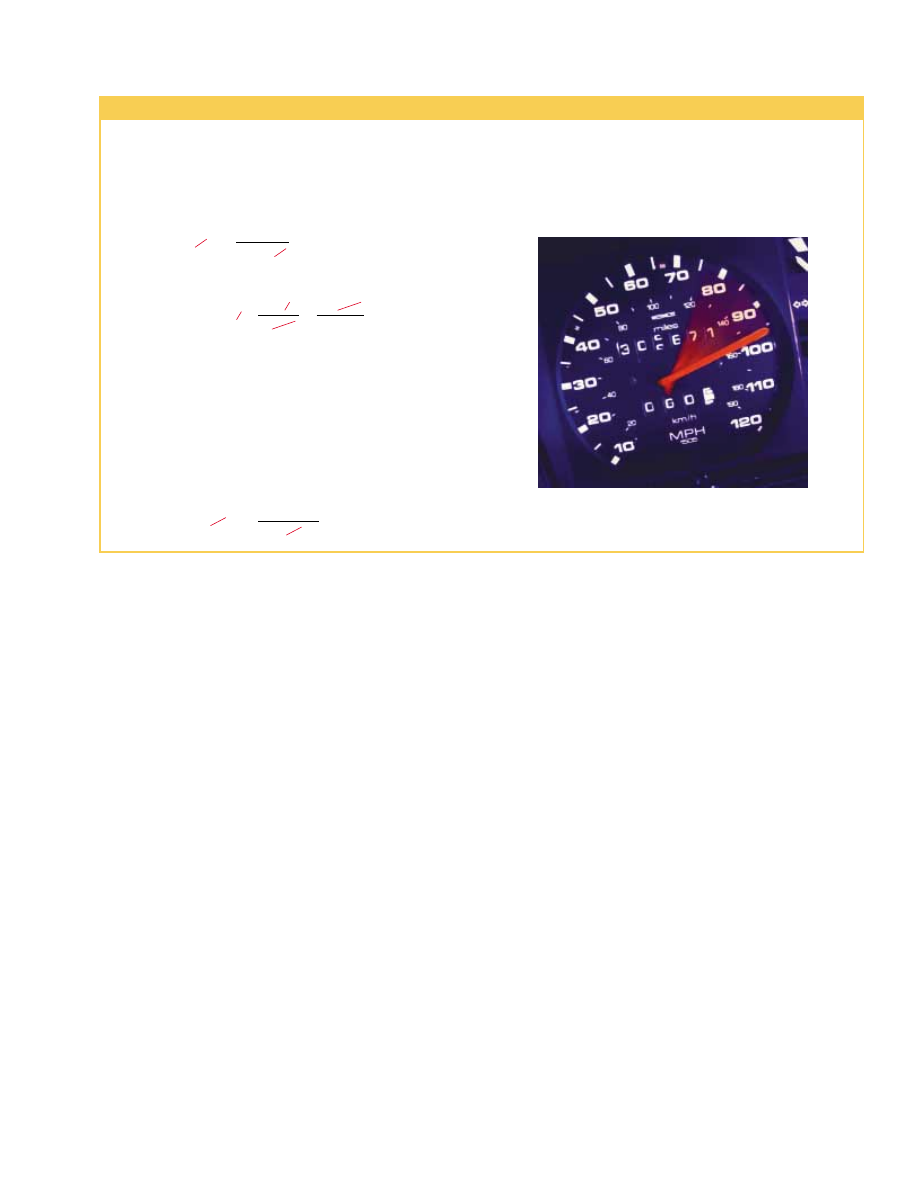
Figure  1.3  shows  the  speedometer  of  an  automobile,  with
speeds in both mi/h and km/h. Can you check the conver-
sion we just performed using this photograph?

Figure 1.3 The speedometer of a vehicle that
shows speeds in both miles per hour and kilome-
ters per hour.

Phil Boorman/Getty Images

4

E. Taylor and J. A. Wheeler, Spacetime Physics: Introduction to Special Relativity, 2nd ed., San Francisco,

W. H. Freeman & Company, Publishers, 1992, p. 20.

14

C H A P T E R   1     •     Physics and Measurement

Example 1.5 Breaths in a Lifetime

Estimate the number of breaths taken during an average life
span.

Solution We  start  by  guessing  that  the  typical  life  span  is
about 70 years. The only other estimate we must make in this
example  is  the  average  number  of  breaths  that  a  person
takes  in  1 min.  This  number  varies,  depending  on  whether
the  person  is  exercising,  sleeping,  angry,  serene,  and  so
forth. To the nearest order of magnitude, we shall choose 10
breaths  per  minute  as  our  estimate  of  the  average.  (This  is
certainly closer to the true value than 1 breath per minute or
100 breaths per minute.) The number of minutes in a year is
approximately

Notice  how  much  simpler  it  is  in  the  expression  above  to
multiply 400 ! 25 than it is to work with the more accurate
365 ! 24. These approximate values for the number of days

$

6 ! 10

5

 min

1 yr 

!

400 days

1 yr

"


!

25 h

1 day

"


!

60 min

1 h

"

in  a  year  and  the  number  of  hours  in  a  day  are  close
enough for  our  purposes.  Thus,  in  70  years  there  will  be
(70 yr)(6 ! 10

5

min/yr) $ 4 ! 10

7

min.  At  a  rate  of  10 

breaths/min,  an  individual  would  take 

in a lifetime, or on the order of 10

9

breaths.

What  If?

What  if  the  average  life  span  were  estimated  as

80 years instead of 70? Would this change our final estimate?

Answer We  could  claim  that  (80  yr)(6 ! 10

5

min/yr) $

5 ! 10

7

min,  so  that  our  final  estimate  should  be  5 ! 10

8

breaths. This is still on the order of 10

9

breaths, so an order-

of-magnitude  estimate  would  be  unchanged.  Furthermore,
80  years  is  14%  larger  than  70  years,  but  we  have  overesti-
mated the total time interval by using 400 days in a year in-
stead of 365 and 25 hours in a day instead of 24. These two
numbers  together  result  in  an  overestimate  of  14%,  which
cancels the effect of the increased life span!

4 ! 10

8

 breaths

Example 1.6 It’s a Long Way to San Jose

Estimate  the  number  of  steps  a  person  would  take  walking
from New York to Los Angeles.

Solution Without  looking  up  the  distance  between  these
two cities, you might remember from a geography class that
they are about 3 000 mi apart. The next approximation we
must make is the length of one step. Of course, this length
depends on the person doing the walking, but we can esti-
mate  that  each  step  covers  about  2  ft.  With  our  estimated
step size, we can determine the number of steps in 1 mi. Be-
cause  this  is  a  rough  calculation,  we  round  5  280 ft/mi  to
5 000  ft/mi.  (What  percentage  error  does  this  introduce?)
This conversion factor gives us

5


000 ft/mi

2 ft/step

$

2


500 steps/mi

Now  we  switch  to  scientific  notation  so  that  we  can  do  the
calculation mentally:

$

So if we intend to walk across the United States, it will take
us on the order of ten million steps. This estimate is almost
certainly too small because we have not accounted for curv-
ing  roads  and  going  up  and  down  hills  and  mountains.
Nonetheless, it is probably within an order of magnitude of
the correct answer. 

7.5 ! 10

6

 steps

# 10

7

 steps

(3 ! 10

3

 mi)(2.5 ! 10

3

 steps/mi)

Example 1.7 How Much Gas Do We Use?

Estimate the  number of  gallons  of gasoline used  each year
by all the cars in the United States.
Solution Because  there  are  about  280  million  people  in
the United States, an estimate of the number of cars in the
country is 100 million (guessing that there are between two
and three people per car). We also estimate that the average

distance each car travels per year is 10 000 mi. If we assume
a  gasoline  consumption  of  20 mi/gal  or  0.05 gal/mi,  then
each car uses about 500 gal/yr. Multiplying this by the total
number of cars in the United States gives an estimated total 

consumption of  5 ! 10

10

 gal

# 10

11

 gal.

unknown  numbers,  make  simplifying  assumptions,  and  turn  the  question  around
into something you can answer in your head or with minimal mathematical manipu-
lation on paper. Because of the simplicity of these types of calculations, they can be
performed on a small piece of paper, so these estimates are often called “back-of-the-
envelope calculations.”

1.7 Significant Figures

When certain quantities are measured, the measured values are known only to within
the  limits  of the experimental  uncertainty. The value  of this uncertainty  can depend
on various factors, such as the quality of the apparatus, the skill of the experimenter,
and the number of measurements performed. The number of 

significant figures in a

measurement can be used to express something about the uncertainty. 

As an example of significant figures, suppose that we are asked in a laboratory ex-

periment to measure the area of a computer disk label using a meter stick as a measur-
ing instrument. Let us assume that the accuracy to which we can measure the length of
the label is * 0.1 cm. If the length is measured to be 5.5 cm, we can claim only that its
length lies somewhere between 5.4 cm and 5.6 cm. In this case, we say that the mea-
sured value has two significant figures. Note that the significant figures include the first
estimated  digit.  Likewise,  if  the  label’s  width  is  measured  to  be  6.4  cm,  the  actual
value lies  between  6.3  cm  and  6.5  cm.  Thus  we  could  write  the  measured  values  as
(5.5 * 0.1) cm and (6.4 * 0.1) cm.

Now suppose we want to find the area of the label by multiplying the two measured

values. If we were to claim the area is (5.5 cm)(6.4 cm) $ 35.2 cm

2

, our answer would

be unjustifiable because it contains three significant figures, which is greater than the
number  of  significant  figures  in  either  of  the  measured  quantities.  A  good  rule  of
thumb to use in determining the number of significant figures that can be claimed in a
multiplication or a division is as follows: 

S E C T I O N   1 . 7     •     Significant Figures

15

When multiplying several quantities, the number of significant figures in the final
answer is the same as the number of significant figures in the quantity having the
lowest number of significant figures. The same rule applies to division.

Applying this rule to the previous multiplication example, we see that the answer

for  the  area  can  have  only  two  significant  figures  because  our  measured  quantities
have  only  two  significant  figures.  Thus,  all  we  can  claim  is  that  the  area  is  35 cm

2

,

realizing  that  the  value  can  range  between  (5.4 cm)(6.3 cm) $ 34 cm

2

and

(5.6 cm)(6.5 cm) $ 36 cm

2

.

Zeros may or may not be significant figures. Those used to position the decimal

point in such numbers as 0.03 and 0.007 5 are not significant. Thus, there are one
and two significant figures, respectively, in these two values. When the zeros come af-
ter  other  digits,  however,  there  is  the  possibility  of  misinterpretation.  For  example,
suppose the mass of an object is given as 1 500 g. This value is ambiguous because we
do not know whether the last two zeros are being used to locate the decimal point or
whether they represent significant figures in the measurement. To remove this ambi-
guity, it is common to use scientific notation to indicate the number of significant fig-
ures. In this case, we would express the mass as 1.5 ! 10

3

g if there are two signifi-

cant figures in the measured value, 1.50 ! 10

3

g if there are three significant figures,

and 1.500 ! 10

3

g if there are four. The same rule holds for numbers less than 1, so

that  2.3 ! 10

"

4

has  two  significant  figures  (and  so  could  be  written  0.000  23)  and

2.30 ! 10

"

4

has three significant figures (also written 0.000 230). In general,

a sig-

nificant figure in a measurement is a reliably known digit (other than a zero
used to locate the decimal point) or the first estimated digit.

For  addition  and  subtraction,  you  must  consider  the  number  of  decimal  places

when you are determining how many significant figures to report:

When numbers are added or subtracted, the number of decimal places in the result
should equal the smallest number of decimal places of any term in the sum.

PITFALL PREVENTION

1.6 Read Carefully

Notice  that  the  rule  for  addition
and subtraction is different from
that  for  multiplication  and  divi-
sion.  For  addition  and  subtrac-
tion, the important consideration
is  the  number  of  decimal  places,
not  the  number  of  significant
figures
.

For example, if we wish to compute 123 ' 5.35, the answer is 128 and not 128.35. If we
compute  the  sum  1.000  1 ' 0.000  3 $ 1.000  4,  the  result  has  five  significant  figures,
even though one of the terms in the sum, 0.000 3, has only one significant figure. Like-
wise, if we perform the subtraction 1.002 " 0.998 $ 0.004, the result has only one sig-
nificant  figure  even  though  one  term  has  four  significant  figures  and  the  other  has
three. In this book, 

most of the numerical examples and end-of-chapter problems

will yield answers having three significant figures. When carrying out estimates we
shall typically work with a single significant figure.

If  the  number  of  significant  figures  in  the  result  of  an  addition  or  subtraction

must be reduced, there is a general rule for rounding off numbers, which states that
the last digit retained is to be increased by 1 if the last digit dropped is greater than
5. If the last digit dropped is less than 5, the last digit retained remains as it is. If the
last digit dropped is equal to 5, the remaining digit should be rounded to the near-
est  even  number.  (This  helps  avoid  accumulation  of  errors  in  long  arithmetic
processes.)

A technique for avoiding error accumulation is to delay rounding of numbers in a

long calculation until you have the final result. Wait until you are ready to copy the fi-
nal answer from your calculator before rounding to the correct number of significant
figures.

16

C H A P T E R   1     •     Physics and Measurement

Quick  Quiz  1.4

Suppose you measure the position of a chair with a meter

stick  and  record  that  the  center  of  the  seat  is  1.043  860  564  2 m  from  a  wall.  What
would a reader conclude from this recorded measurement?

Example 1.8 Installing a Carpet

A  carpet  is  to  be  installed  in  a  room  whose  length  is  mea-
sured  to  be  12.71  m  and  whose  width  is  measured  to  be
3.46 m. Find the area of the room.

Solution If you multiply 12.71 m by 3.46 m on your calcula-
tor, you will see an answer of 43.976 6 m

2

. How many of these

numbers should you claim? Our rule of thumb for multiplica-
tion tells us that you can claim only the number of significant
figures in your answer as are present in the measured quan-
tity having the lowest number of significant figures. In this ex-
ample,  the  lowest  number  of  significant  figures  is  three  in 

3.46 m, so we should express our final answer as

44.0 m

2

.

The  three  fundamental  physical  quantities  of  mechanics  are  length,  mass,  and  time,
which in the SI system have the units meters (m), kilograms (kg), and seconds (s), re-
spectively.  Prefixes  indicating  various  powers  of  ten  are  used  with  these  three  basic
units. 

The 

density of  a  substance  is  defined  as  its  mass  per  unit  volume. Different  sub-

stances  have  different  densities  mainly  because  of  differences  in  their  atomic  masses
and atomic arrangements.

The method of 

dimensional analysis is very powerful in solving physics problems.

Dimensions can be treated as algebraic quantities. By making estimates and perform-
ing order-of-magnitude calculations, you should be able to approximate the answer to
a problem when there is not enough information available to completely specify an ex-
act solution.

When you compute a result from several measured numbers, each of which has a

certain accuracy, you should give the result with the correct number of 

significant fig-

ures. When  multiplying  several  quantities,  the  number  of  significant  figures  in  the

S U M M A R Y

Take a practice test for

this chapter by clicking on
the Practice Test link at
http://www.pse6.com.


Content   ..  1  2  3  4  5  ..