Electrical Engineering Dictionary - part 61
 

  Index      Production     Electrical Engineering Dictionary


Search            


Content   ..  59  60  61  62   ..


Electrical Engineering Dictionary - part 61


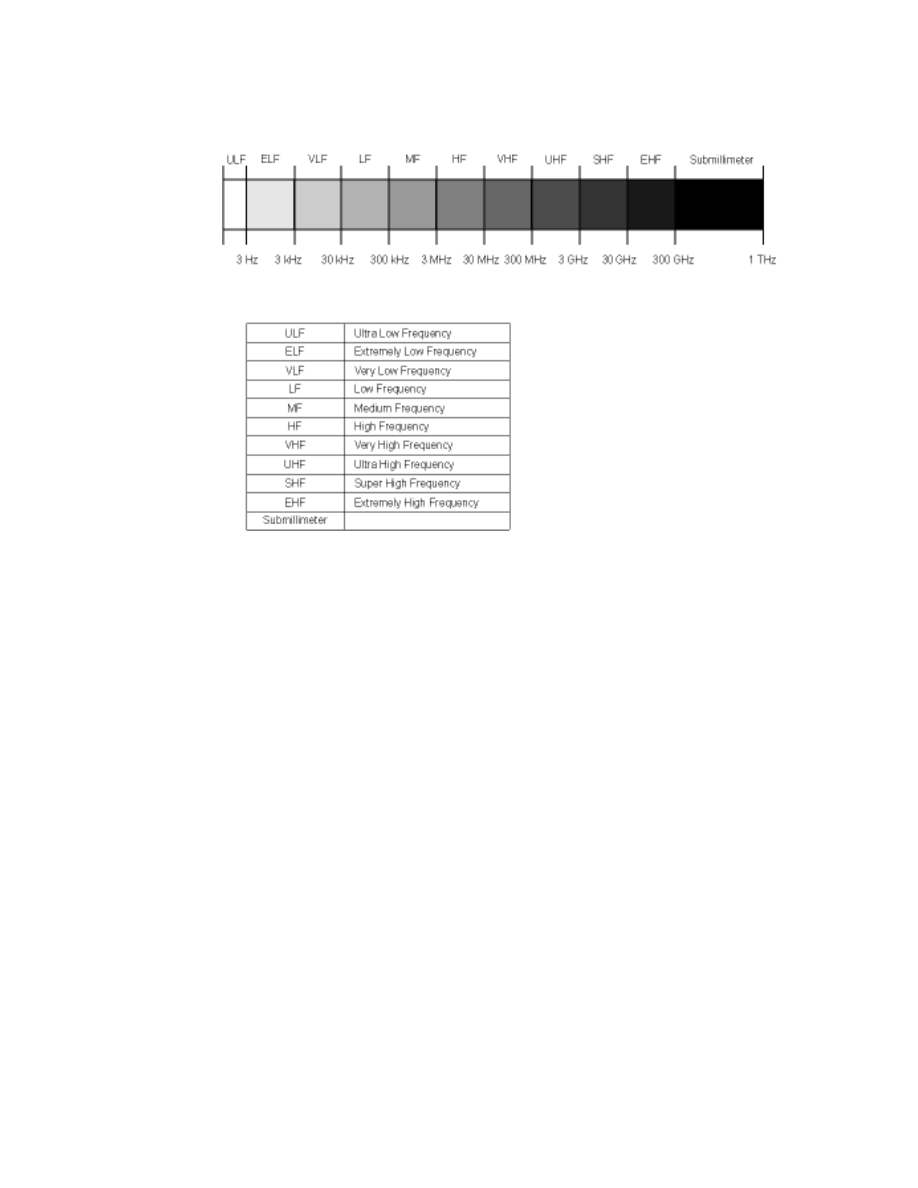
Electromagnetic spectrum.

mechanical coherence.

Depending on the

quantum mechanical system, electromagnet-
ically induced transparency can be viewed as
a special case of effects such as Fano interfer-
ence or coherent population trapping applied
to optically dense media.

electromagnetics

the study of the effect

of electric charges at rest and in motion.

electromechanical equation

a basic non-

linear equation that governs the rotational dy-
namics of a synchronous machine in stability
studies. The equation is given by

2

H d

2

δ/ω

s

dt

2

where H is a constant defined as the ra-
tio of the kinetic energy in megajoules at
synchronous speed to the machine rating in
MVA,

ω

s

is the synchronous speed in rads

per second, and

δ is the load angle expressed

in electrical degrees. Various forms of the
swing equation serve to determine stability
of a machine within a power system. So-
lution of the swing equation yields the load

angle

δ as a function of time. Examination of

all the Swing curves (plot of

δ w.r. to time)

shows whether the machines will remain in
synchronism after a disturbance. See also

swing equation

.

electromechanical relay

a protective re-

lay that uses electrical, magnetic, and me-
chanical circuits to implement the operating
logic.

electron band

a range or band of energies

in which there is a continuum (rather than a
discrete set as in, for example, the hydrogen
atom) of allowed quantum mechanical states
partially or fully occupied by electrons. It
is the continuous nature of these states that
permits them to respond almost classically
to an applied electric field.

electron beam excitation

electron impact

excitation due to a free electron beam rather
than, for example, the conduction electrons
in a gas discharge; permits high-pressure ex-
citation without arcing.

c

2000 by CRC Press LLC

Microwave frequency band designations

Frequency

Wavelength

IEEE Radar Band Designation

Old

New

1–2 GHz

30–15 cm

L

D

2–3 GHz

15–10 cm

S

E

3–4 GHz

10–7.5 cm

S

F

4–6 GHz

7.5–5 cm

C

G

6–8 GHz

5–3.75 cm

C

H

8–10 GHz

3.75–3 cm

X

I

10–12.4 GHz

3–2.42 cm

X

J

12.4–18 GHz

2.42–1.67 cm

Ku

J

18–20 GHz

1.67–1.5 cm

K

J

20–26.5 GHz

1.5–1.13 cm

K

K

26.5–40 GHz

1.13 cm–7.5 mm

Ka

K

40–300 GHz

7.5–1.0 mm

mm

electron beam lithography

lithography

performed by exposing resist with a focused
beam of electrons.

electron beam welding

a welding pro-

cess that produces coalescence of metals with
the heat obtained from a concentrated beam
composed primarily of high-velocity elec-
trons impinging on the surfaces to be joined.

electron collision frequency

the average

number of collisions per second an electron
has with heavy particles in a medium such as
plasma.

electron impact excitation

excitation of

an atom or molecule resulting from collision
by an electron.

electron multiplication

the phenomenon

where a high-energy electron strikes a sur-
face and causes additional electrons to be
emitted from the surface. Energy from the
incident electron transfers to the other elec-
trons to cause this. The result is electron gain
proportional to the incident electron energy.

electron oscillator model

simplified clas-

sical model for an atomic or molecular
medium in which the charges are assumed
to be bound together by springs rather than
quantum mechanical potentials; provides

good qualitative explanation for absorption
and dispersion.

electron plasma

a plasma medium in

which electrons are the mobile charge car-
riers and the ions form the stationary com-
pensating positive charge background.

electron wave

the wave described by

Bloch function solutions to the problem of
an electron in a periodic lattice of ions.

electron-beam lithography

refers to a

lithographic (or photographic) process in
which the exposure energy is provided by the
energy carried by a beam of focused electrons
rather than by photons (light).

electronic bottleneck

the factor limiting

the speed and capacity of a fiber optic com-
munication network is ultimately the link be-
tween photons of light and the electronics
required to transmit or receive and process
them. In order to exploit the full bandwidth
capacity of a single-mode optical fiber an op-
tical network should minimize the number of
optical to electrical conversions and instead
process the signals in the optical domain.

electronic brake

a power electronic sys-

tem designed to decelerate a motor. For an
induction machine, the brake supplies DC
current to the stator winding, producing a

c

2000 by CRC Press LLC

stationary magnetic field, negative slip, and
braking torque.

electronic motor starter

starter in which

solid state devices provide reduced voltage
to the motor for starting, thus limiting the
starting current.

electronic nonlinear response

the non-

linear optical response resulting from the mo-
tion of bound electrons. It is characterized
by moderately large response and very short
(several fs) response times.

electronic overload device

an overload

device that employs an electronic circuit
to sense motor voltage and current for the
purpose of providing precise motor over-
load protection. See also

overload heater

,

overload relay

.

electronic switch

an electronic circuit that

controls analog signals with digitary (binary)
signals.

electronic transition

alteration in the

electronic structure of a material such that
one electron temporarily changes its energy
level through the absorption or emission of
energy.

electronic warfare

contention for the

control of the electromagnetic (EM) spec-
trum, to allow active and passive EM sensing
and communications while denying the same
ability to adversaries. Includes deceptive EM
techniques.

electronically commutated machine

a

DC machine with rotor-mounted permanent
magnets, and concentrated (square) stator
windings. The machine fundamentally be-
haves like a DC machine with linear speed
and torque characteristics, and hence is also
called a brushless DC machine. The ma-
chine is distinguished from conventional DC
machines in its substitution of a six-switch
inverter for brushes and copper commutator

bars and in its need for the rotor position in-
formation in real time.

electronically

erasable

programmable

read-only memory (EEPROM)

a term

used to denote a programmable read-only
memory where the cells are electronically
both written and erased.

Also known as

electrically alterable read-only memory. See
also

electronically programmable read-only

memory

.

electronically programmable read-only
memory (EPROM)

Programmable read-

only memory that is electronically written but
requires ultraviolet light for erasure.

electroplastic effect

plastic deformation

of metals with the application of high-density
electric current.

electroplastic smart material

material

with smart properties of elastic deformation
changes proportional to a controlled electric
current applied in proportion to the sensed
deformation.

electrorheological property

property ex-

hibited by some fluids that are capable of al-
tering their flow characteristics depending on
an externally applied electric field.

electrorheological smart fluid

fluid with

smart flow characteristics dictated to change
self-adaptively by means of an electric field
applied in proportion to the sensed flow pa-
rameters.

electrorheological smart material

ma-

terial with smart properties of elastic defor-
mation changes proportional to a controlled
electric current applied in proportion to the
sensed deformation.

electroslag welding

a welding process

that produces coalescence of metals with
molten slag that melts the filler metal and the
surfaces of the parts to be joined.

c

2000 by CRC Press LLC

electrostatic discharge (ESD)

the dis-

charge of a body through a conducting path
between two pins of an IC. Circuits located
at the inputs and outputs of ICs protect the
internal devices from ESD events.

electrostatic precipitator

a method of ex-

tracting dust from stack gases or ventilating
systems in which ions are laid on the dust
particles by high-voltage electrodes and then
attracted electrostatically into a trap.

electrostatic voltmeter

a voltmeter, typ-

ically used for voltages in the kilovolt range,
in which the pointer is moved by the elec-
trostatic attraction of a pair of metal plates
across which the voltage to be measured is
applied.

electrostriction

the tendency of materials

to become compressed in the presence of an
applied electric field. The change in density
is proportion to the square of the electric field
strength. This process leads to an increase in
the refractive index of the material, describ-
able by

δn n

2

I, where n

2

is the (positive)

coefficient of the nonlinear refractive index
and

is the intensity of the field in units of

power per unit area. For condensed matter, a
typical value of

n

2

is 10

−20

m

2

/W.

element factor

in antenna theory, that part

of the radiation pattern that is governed by the
geometrical shape of the antenna that con-
strains the current.

Elias’ upper bound

for any

(n, k) block

code, the minimum distance is bounded
asymptotically as

d

min

n

≤ 2A(1 − A)

where the parameter

is related to the code

rate through the equation

k
n

= 1 + log

2

(1 − A) log

2

(1 − A)

0

≤ 

1

2

ellipse detection

the detection of ellipses

in digital images, often with a view to lo-
cating elliptical objects or those containing
ellipses; ellipse detection is also important
for the location of circular features on real
objects following orthographic projection or
perspective projection.

ellipsometry

measurement of the changes

of light polarization produced by scattering.

elliptic

See

elliptic filter

.

elliptic filter

(1) filter with an equal ripple

passband frequency response, but in which
the stop band also exhibits an equal ripple
(peaks) stopband response. Also known as a
Caurer filter.

(2) member of a class of low pass, high

pass, band pass and band stop filters with an
equiripple characteristic, designed to achieve
optimally rapid rollof rates near cutoff fre-
quencies ( See also

Butterworth filter

and

Chebyshev filter

at the expense of a loss

of monotonicity in both the passbands and
the stopbands. For example, an elliptic low
pass filter design is equiripple in the passband
and stopband, and has a squared magnitude
response of the form

|H (jw)|

2

=

1

1


2

U

2

N

(w/w

c

)

,

where

U

N

(w) is a Jacobian elliptic function.

elliptical polarization

the polarization

state of a radiated electromagnetic field in
which the tip of the electric field vector traces
an ellipse as a function of time for a fixed po-
sition. The sense of rotation of the electric
field vector is either right-hand or left-hand
(clockwise or counter-clockwise). Circular
polarization and linear polarization are spe-
cial cases of elliptical polarization.

embedded computer

(1) a computing

machine contained in a device whose pur-
pose is not to be a computer. For example,
the computers in automobiles and household
appliances are embedded computers.

c

2000 by CRC Press LLC


Content   ..  59  60  61  62   ..