Subaru BRZ (2023 year). Manual in english - page 14
Tire Information
399
Occupant distribution
Ply
Radial ply tire
Distribution of occupants in a
A layer of rubber-coated parallel
A pneumatic tire in which the ply
vehicle as specified in the third
cords.
cords that extend to the beads are
column of Table 1 that is appended
laid at substantially 90 degrees to
Ply separation
to the end of this section.
the centerline of the tread.
A parting of rubber compound
Open splice
between adjacent plies.
Recommended inflation pres-
Any parting at any junction of tread,
sure
Pneumatic tire
sidewall, or innerliner that extends
The cold inflation pressure recom-
A mechanical device made of
to cord material.
mended by a vehicle manufacturer.
rubber, chemicals, fabric and steel
Outer diameter
or other materials, that, when
Reinforced tire
The overall diameter of an inflated
mounted on an automotive wheel,
A tire designed to operate at higher
new tire.
provides the traction and contains
loads and at higher inflation pres-
the gas or fluid that sustains the
sures than the corresponding stan-
Overall width
load.
dard tire.
The linear distance between the
exteriors of the sidewalls of an
Production options weight
Rim
inflated tire, including elevations
The combined weight of those
A metal support for a tire or a tire
due to labeling, decorations, or
installed regular production options
and tube assembly upon which the
protective bands or ribs.
weighing over 5.1 lbs (2.3 kg) in
tire beads are seated.
excess of those standard items
Passenger car tire
Rim diameter
which they replace, not previously
A tire intended for use on passenger
Nominal diameter of the bead seat.
considered in curb weight or acces-
cars, multipurpose passenger vehi-
sory weight, including heavy duty
Rim size designation
cles, and trucks, that have a gross
brakes, ride levelers, roof rack,
Rim diameter and width.
vehicle weight rating
(GVWR) of
heavy duty battery, and special trim.
13
10,000 lbs (4,535 kg) or less.
- CONTINUED -
400
Tire Information
Rim type designation
described in ASTM F-1805-00,
Vehicle capacity weight
The industry of manufacturer’s
Standard Test Method for Single
The rated cargo and luggage load
designation for a rim by style or
Wheel Driving Traction in a Straight
plus
150 lbs
(68 kg) times the
code.
Line on Snow-and Ice-Covered
vehicle’s
designated
seating
Surfaces, and that is marked with
capacity.
Rim width
an Alpine Symbol “
” on at least
Nominal distance between rim
Vehicle maximum load on the
one sidewall.
flanges.
tire
Test rim
Load on an individual tire that is
Section width
The rim on which a tire is fitted for
determined by distributing to each
The linear distance between the
testing, and it may be any rim listed
axle its share of the maximum
exteriors of the sidewalls of an
as appropriate for use with that tire.
loaded vehicle weight and dividing
inflated tire, excluding elevations
Tread
by two.
due to labeling, decoration, or
protective bands.
That portion of a tire that comes into
Vehicle normal load on the tire
contact with the road.
Load on an individual tire that is
Sidewall
Tread rib
determined by distributing to each
That portion of a tire between the
axle its share of the curb weight,
tread and bead.
A tread
section
running
accessory weight, and normal occu-
circumferentially around a tire.
Sidewall separation
pant weight
(distributed in accor-
Tread separation
The parting of the rubber compound
dance with Table 1 that is appended
from the cord material in the
Pulling away of the tread from the
to the end of this section) and
sidewall.
tire carcass.
dividing by 2.
Snow tire
Treadwear indicators (TWI)
Wheel-holding fixture
A tire that attains a traction index
The projections within the principal
The fixture used to hold the wheel
equal to or greater than
110,
grooves designed to give a visual
and tire assembly securely during
compared to the ASTM E1136-93
indication of the degrees of wear of
testing.
Standard Reference Test Tire,
the tread.
when using the snow traction test as

Tire Information
401
Table 1 ʊ Occupant loading and distribution for vehicle normal load for
■ Tire Care - Maintenance and
various designated seating capacities
Safety Practices
Check on a daily basis that the
Designated seat-
Occupant distribution
Vehicle normal load,
tires are free from serious damage,
ing capacity, num-
in a normally loaded
number of occupants
nails, and stones. At the same time,
ber of occupants
vehicle
check the tires for abnormal wear.
2 through 4
2
2 in front.
Inspect the tire tread regularly
2 in front, 1 in second
and replace the tires before their
5 through 10
3
seat.
tread wear indicators become
visible. When a tire’s tread wear
2 in front, 1 in second
indicator becomes visible, the tire is
11 through 15
5
seat, 1 in third seat, 1 in
worn beyond the acceptable limit
fourth seat.
and must be replaced immediately.
2 in front, 2 in second
With a tire in this condition, driving
16 through 22
7
seat, 2 in third seat, 1 in
at even low speeds in wet weather
fourth seat.
can cause the vehicle to hydro-
plane. Possible resulting loss of
vehicle control can lead to an acci-
dent.
To maximize the life of each tire
and ensure that the tires wear
uniformly, it is best to rotate the tires
every 6,000 miles (10,000 km). For
information about tire rotation, refer
13
to "Rotational Direction of Tires" ) P364.
Replace any damaged or unevenly
worn tire at the time of rotation. After
tire rotation, adjust the tire pres-
- CONTINUED -
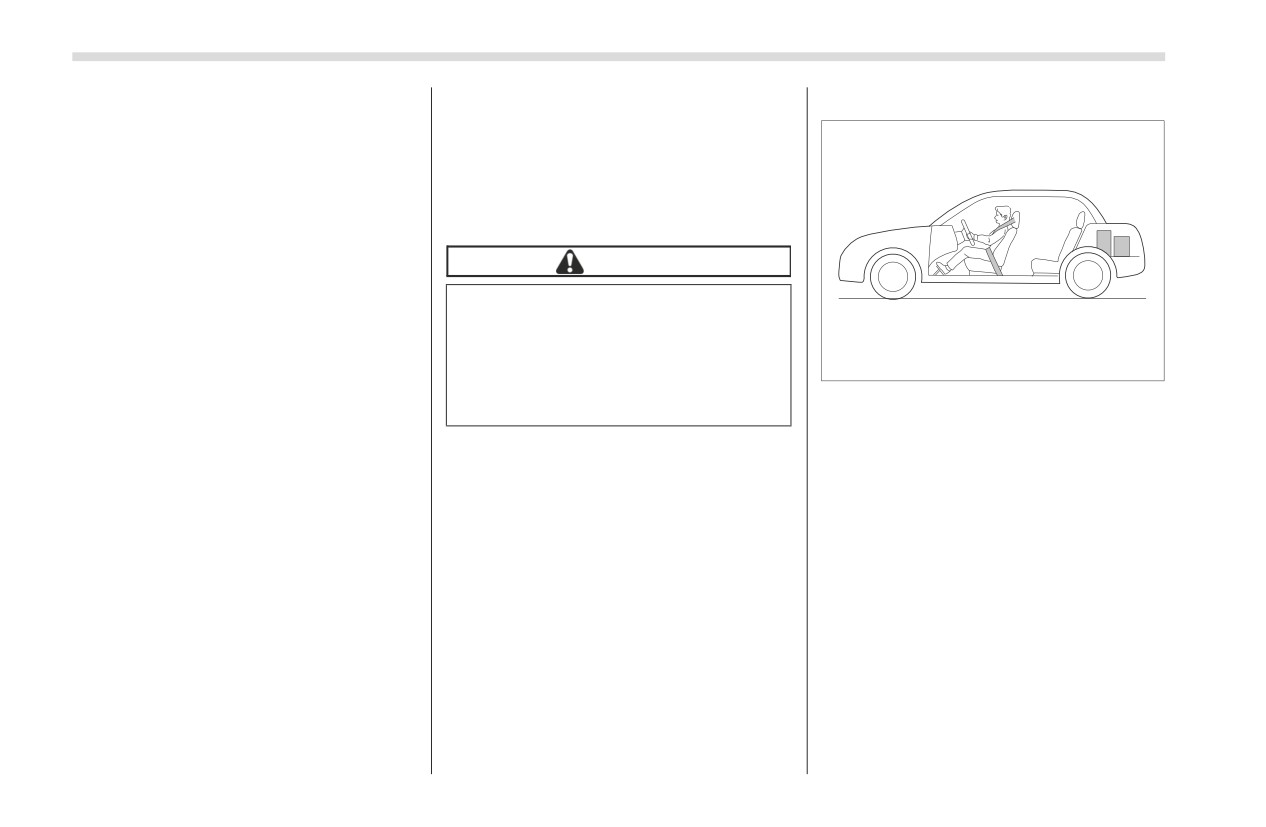
402
Tire Information
sures and make sure the wheel nuts
Cargo capacity = Load limit í (total
Example 1
are correctly tightened. For informa-
weight of occupants + total weight of
tion about the tightening torque and
optional equipment)
tightening sequence for the wheel
For information about vehicle
nuts, refer to "Flat Tires" ) P303.
loading, refer to "Loading Your Vehicle"
) P297.
■ Vehicle Load Limit - How to
Determine
CAUTION
The load capacity of your vehicle is
Your vehicle is neither
determined by weight, not by avail-
designed nor intended to be
able cargo space. The load limit of
used for trailer towing. There-
your vehicle is shown on the vehicle
D00245
fore, never tow a trailer with
placard attached to the driver’s side
your vehicle.
Vehicle capacity
weight
of the
B-pillar. Locate the statement “The
vehicle is 800 lbs (363 kg), which is
combined weight of occupants and cargo
indicated on the vehicle placard with
▼ Calculating total and load
should never exceed XXX kg or XXX lbs”
the statement
“The combined
capacities varying seating
on your vehicle’s placard.
weight of occupants and cargo
configurations
The vehicle placard also shows
should never exceed 363 kg or 800
Calculate the available load
seating capacity of your vehicle.
lbs”.
capacity as shown in the following
The total load capacity includes the
For example, if the vehicle has one
examples:
total weight of driver and all passen-
occupant weighing 154 lbs (70 kg)
gers and their belongings, any
cargo, any optional equipment such
as a roof rack or bike carrier, etc.
Therefore cargo capacity can be
calculated by the following method.
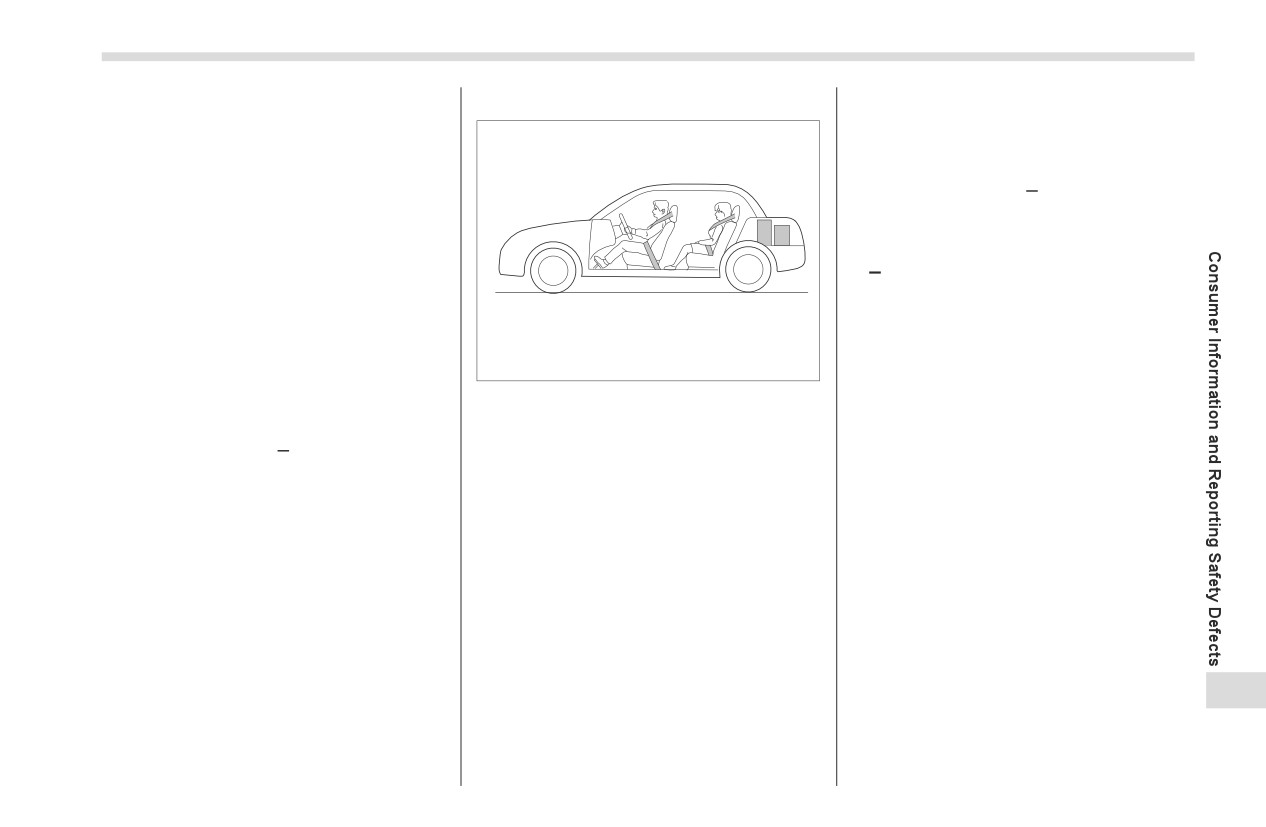
Tire Information
403
plus cargo weighing 551 lbs (250
Example 2
2. Calculate the available load
kg).
capacity.
1. Calculate the total weight.
Available Load Capacity
Total weight
= 800 lbs (363 kg)
881 lbs (400 kg)
(Vehicle
(Total weight)
= 154 lbs (70 kg) + 551 lbs (250 kg)
capacity weight)
(Occupant)
(Cargo)
= 705 lbs (320 kg)
=
81 lbs ( 37 kg)
3. The total weight now exceeds
2. Calculate the available load
the capacity weight by 81 lbs (37
capacity by subtracting the total
weight from the vehicle capacity
kg), so the cargo weight must be
D00250
reduced by 81 lbs (37 kg) or more.
weight of 800 lbs (363 kg).
For example, if a person weighing
Available Load Capacity
176 lbs (80 kg) now enters the same
vehicle
(bringing the number of
= 800 lbs (363 kg)
705 lbs (320 kg)
occupants to two), the calculations
(Vehicle
(Total weight)
are as follows:
capacity weight)
= 95 lbs (43 kg)
1. Calculate the total weight.
3. The result of step 2 shows that a
Total weight
further 95 lbs (43 kg) of cargo can
= 154 lbs (70 kg) + 176 lbs (80 kg)
be carried.
(Occupant)
+ 551 lbs (250 kg)
(Cargo)
13
= 881 lbs (400 kg)
- CONTINUED -
404
Tire Information
■ Determining Compatibility of
Therefore, this means that the
Tire could separate from its rim.
Tire and Vehicle Load Capac-
vehicle cannot necessarily be
loaded up to the tire’s maximum
■ Steps for Determining
ities
load rating on the tire sidewall.
Correct Load Limit
The sum of four tires’ maximum
load ratings must exceed the
1. Locate the statement
“The
■ Adverse Safety Conse-
maximum loaded vehicle weight
combined weight of occupants and
quences of Overloading on
(“GVWR”). In addition, sum of the
cargo should never exceed XXX kg
Handling and Stopping and
maximum load ratings of two front
or XXX lbs.” on your vehicle’s
on Tires
tires and of two rear tires must
placard.
Overloading could affect vehicle
exceed each axle’s maximum
2. Determine the combined weight
handling, stopping distance, vehicle
loaded capacity (“GVWR”). Original
of the driver and passengers that
and tire as shown in the following.
equipment tires are designed to
will be riding in your vehicle.
This could lead to an accident and
fulfill those conditions.
3. Subtract the combined weight of
possibly result in severe personal
The maximum loaded vehicle
the driver and passengers from
injury.
weight is referred to Gross Vehicle
XXX kg or XXX lbs.
Vehicle stability will deteriorate.
Weight Rating (GVWR). And each
4. The resulting figure equals the
axle’s maximum loaded capacity is
Heavy and/or high-mounted
available amount of cargo and
referred to Gross Axle Weight
loads could increase the risk of
luggage load capacity. For
Rating (GAWR). The GVWR and
rollover.
example, if the “XXX” amount equals
each axle’s GAWR are shown on
Stopping distance will increase.
1,400 lbs (635 kg) and there will be
the vehicle certification label affixed
Brakes could overheat and fail.
five 150 lbs (68 kg) passengers in
to the driver’s door.
Suspension, bearings, axles and
your vehicle, the amount of avail-
The GVWR and front and rear
other parts of the body could break
able cargo and luggage load
GAWRs are determined by not only
or experience accelerated wear that
capacity is 650 lbs (1,400 í 750 (5 ×
the maximum load rating of tires but
will shorten vehicle life.
150) = 650 lbs).
also loaded capacities of the
Tires could fail.
5. Determine the combined weight
vehicle’s suspension, axles and
of luggage and cargo being loaded
Tread separation could occur.
other parts of the body.
Uniform Tire Quality Grading Standards
405
on the vehicle. That weight may not
13-3. Uniform Tire Quality
All passenger car tires must
safely exceed the available cargo
conform to Federal Safety Require-
Grading Standards
and luggage load
capacity
calcu-
ments in addition to these grades.
lated in Step 4.
This information indicates the rela-
tive performance of passenger car
■ TREADWEAR
tires in the area of treadwear, trac-
The treadwear grade is a compara-
tion, and temperature resistance.
tive rating based on the wear rate of
This is to aid the consumer in
the tire when tested under
making an informed choice in the
controlled conditions on a specified
purchase of tires.
government test course.
Quality grades can be found where
For example, a tire graded
150
applicable on the tire sidewall
would wear one and one-half (1-1/2)
between tread shoulder and
times as well on the government
maximum section width. For
course as a tire graded 100. The
example:
relative performance of tires
TREADWEAR 200 TRACTION AA
depends upon the actual conditions
TEMPERATURE A
of their use, however, and may
The quality grades apply to new
depart significantly from the norm
pneumatic tires for use on
due to variations in driving habits,
passenger cars. However, they do
service practices and differences in
not apply to deep tread, winter type
road characteristics and climate.
snow tires, space-saver or tempo-
rary use spare tires, tires with
■ TRACTION AA, A, B, C
nominal rim diameters of 12 inches
The traction grades, from highest to
or less, or to some limited produc-
lowest, are AA, A, B and C. Those
13
tion tires.
grades represent the tire’s ability to
stop on wet pavement as measured
under controlled conditions on
- CONTINUED -
406
Reporting Safety Defects (USA)
specified government test surfaces
car tires must meet under the
13-4. Reporting Safety
of asphalt and concrete. A tire
Federal Motor Vehicle Safety Stan-
Defects (USA)
marked C may have poor traction
dard No.
109. Grades B and A
performance.
represent higher levels of perfor-
If you believe that your vehicle has
mance on the laboratory test wheel
a defect which could cause a crash
WARNING
than the minimum required by law.
or could cause injury or death, you
should immediately inform the
The traction grade assigned to
WARNING
National Highway Traffic Safety
this tire is based on straight-
Administration (NHTSA) in addition
ahead braking traction tests,
The temperature grade for this
to notifying Subaru of America, Inc.
and does not include accelera-
tire is established for a tire that
If
NHTSA receives similar
tion, cornering, hydroplaning,
is properly inflated and not
complaints, it may open an investi-
or peak traction characteris-
overloaded. Excessive speed,
gation, and if it finds that a safety
tics.
underinflation, or excessive
defect exists in a group of vehicles,
loading, either separately or in
it may order a recall and remedy
combination, can cause heat
■ TEMPERATURE A, B, C
campaign. However, NHTSA
buildup and possible tire fail-
The temperature grades are A (the
cannot become involved in indi-
ure.
highest), B, and C, representing the
vidual problems between you, your
tire’s resistance to the generation of
dealer, or Subaru of America, Inc.
heat and its ability to dissipate heat
To contact NHTSA, you may call the
when tested under controlled condi-
Vehicle Safety Hotline toll-free at 1-
tions on a specified indoor labora-
888-327-4236
(TTY:
1-800-424-
tory test wheel. Sustained high
9153);
go
to
temperature can cause the material
www.safercar.gov; or write to:
of the tire to degenerate and reduce
Administrator, NHTSA, 1200 New
tire life, and excessive temperature
Jersey Avenue, SE, West Building,
can lead to sudden tire failure. The
Washington, DC 20590. You can
grade C corresponds to a level of
also obtain other information about
performance which all passenger
How to Contact Transport Canada in Order to Report a Safety Concern Relating to the Vehicle (Canada)
407
motor vehicle safety from http://
13-5. How to Contact Trans-
port Canada in Order to
Report a Safety Concern
Relating to the Vehicle
(Canada)
13
- CONTINUED -