Smart roadster and smart roadster coupe. Manual - part 8
 

  Index      Smart     Smart roadster and smart roadster coupe. Service Manual


Search            copyright infringement  


Content      ..     6      7      8      9     ..


Smart roadster and smart roadster coupe. Manual - part 8


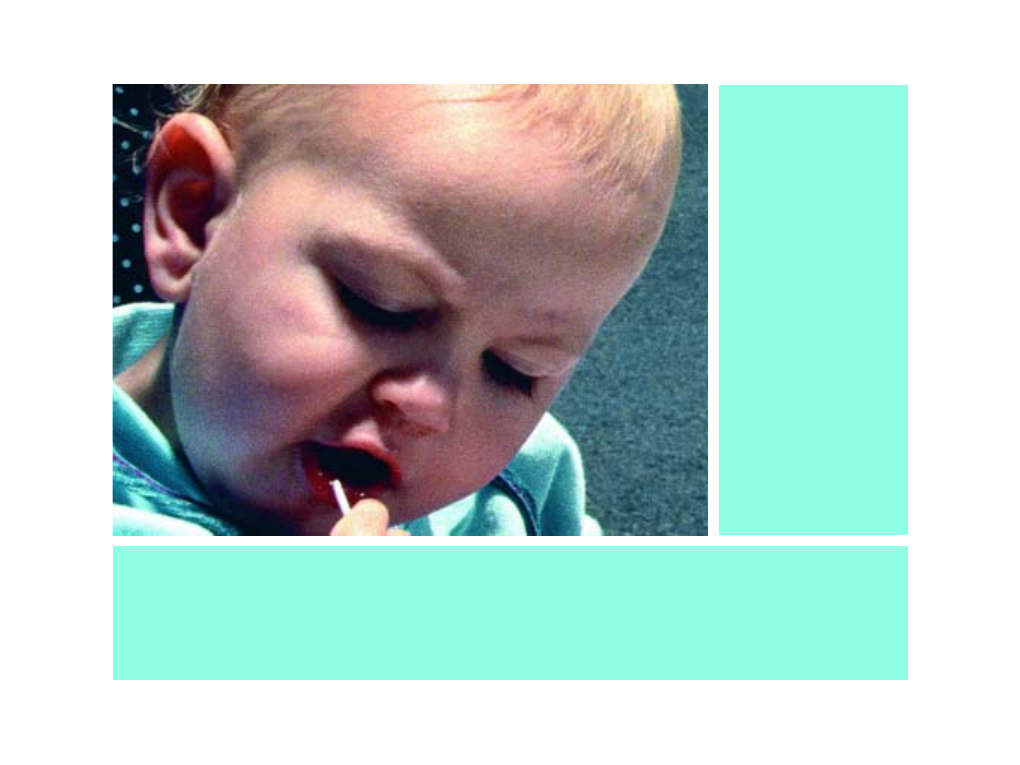
 >>Child friendly.

The safety of your children is a matter close to our heart.
For this reason, we have developed child restraint systems* for your children that fulfil the most stringent safety criteria. To make 
sure that your children are comfortable, the system has been designed using the latest ergonomic findings.

Contents

>Child restraint systems*

>Using child restraint 

systems

>Recommended child 

restraint systems 

-------------------------------------------------------------------------------------------------------------------------------------------------------------

62   Child friendly   

Child restraint systems*

Child restraint systems*

Without suitable child restraint systems
 the seat belts cannot be fastened 

correctly.

 your children will be exposed to a 

greater risk of injury, as children's 
muscles and bones are not yet fully 
developed.

To reduce this increased risk of injury, 
children need suitable child restraint 
systems if they are

 smaller than 150 cm or
 under 12 years of age.


We therefore recommend that you use the 
child restraint systems approved by 
smart gmbh. Details of these products are 
provided in the operating instructions 
for the individual items. Please read 
them carefully.

>Note!
Observe the respective national 
regulations in this regard.

-------------------------------------------------------------------------------------------------------------------------------------------------------------

Child friendly  63

Child restraint systems*

What you must note when transporting 
children!

Danger of injury!
Never leave a child alone in the 

car. It could for instance set the car 
moving, injure itself on moving parts, 
and open the doors in a manner that 
could endanger both itself and others.
Please also observe the warnings given 
elsewhere in these operating 
instructions regarding children and 
the vehicle.

Danger of injury!
It will not be possible to fit the 

seat belts correctly on children under 
150 centimetres tall or under 12 years 
of age without suitable support 
equipment. They therefore need 
special child restraint systems for 
protection in the event of an accident.
Never carry children travelling on the 
lap of another occupant. Both you and 
the child will otherwise be unprotected 
in the event of an accident and could 
sustain serious or even fatal injuries. 
When fitting a child restraint system, 
observe the manufacturer's fitting 
instructions.

Danger of injury!
To reduce the risk of serious or 

even fatal injuries to the child in the 
event of an accident, braking 
manoeuvres or sudden changes of 
direction, please note the following:

 On child restraint systems that do not 

have their own belt system, the 
shoulder belt of the car's builtin 
threepoint seat belt must run 
approximately across the middle of 
the child's shoulder  never across 
the neck  and lie firmly against the 
upper body. The lap section of the 
seat belt must run across the pelvis  
not across the stomach  and always 
lie firmly in place. Tighten the belt 
if necessary.

 Only one child at a time should be 

secured by any child restraint 
system.

 Make sure that the belt is not 

trapped, twisted or rubbing against 
sharp edges.

Also observe the operating 
instructions for the child restraint 
system.

-------------------------------------------------------------------------------------------------------------------------------------------------------------

64   Child friendly   

Child restraint systems*

Danger of injury!
If the child restraint system or 

its fastenings have previously been 
damaged or subjected to loads in an 
accident, the child it is intended to 
protect could sustain serious or even 
fatal injuries as a result of another 
accident, braking manoeuvres or 
abrupt changes of direction.

You should therefore have restraint 
systems and fastenings that have been 
damaged or subjected to loads in an 
accident checked without delay in a 
qualified specialist workshop, such as 
a smart center, and have them replaced 
if necessary.

Danger of injury!
If the airbag indicator light 

does not come on when a baby carrier is 
fitted to the passenger's seat, the 
passenger's airbag has not been 
deactivated. If the passenger's airbag 
has not been deactivated, a child could 
sustain serious or even fatal injuries 
in the event of the airbag on the 
passenger's side being triggered, 
particularly if the child is in the 
immediate vicinity of the passenger's 
airbag at the time of its activation.
The passenger's airbag is only 
deactivated when you fit an original 
smart baby carrier to the passenger's 
seat.

Danger of injury!
For this reason, you should never 

carry a child on the passenger's seat in 
a child restraint system that faces to 
the rear if the passenger's airbag has 
not been deactivated, i.e. if the airbag 
indicator light is not lit.
Also observe the corresponding 
warning sticker on the instrument 
panel.
If you have installed an original smart 
baby carrier on the passenger's seat 
and the airbag indicator light does not 
come on (restraint system not 
identified), have the automatic 
restraint system recognition function 
checked without delay by a qualified 
specialist workshop, such as a smart 
center.
Until this problem has been rectified, 
do not carry children in the car, as they 
could sustain serious or even fatal 
injuries in the event of an accident.

-------------------------------------------------------------------------------------------------------------------------------------------------------------

Child friendly  65

Using child restraint systems*

Using child restraint 
systems* 

The table below provides you with an 
overview of the installation options for 
child restraint systems in your car. 

Seats

Weight categories and approximate age groups

up to 10 kg
(up to approx. 
9 months)

up to 13 kg
(0 to 2 years)

9 to 18 kg
(from approx. 9 months to 
4 years)

15 to 36 kg
(from approx. 4 months to 
12 years)

Passenger seat


B

UV

UV

UV: Suitable for front facing "universal" child restraint systems that have been approved for this age group.
B: Suitable for special child restraint systems included in the enclosed list. The child restraint systems in question may be "vehiclespecific", "restricted", or "semi

universal".

-------------------------------------------------------------------------------------------------------------------------------------------------------------

66   Child friendly   

Recommended child restraint 
systems

Weight group

Manufacturer

Model

Homologation 

No.

smart article 

number

Comment

up to 10 kg (to 9 months)


up to 13 kg (0 to 2 years)

Storchenmühle

Baby carrier*

E4 03 442811

LU 0010322

1), 2)

Storchenmühle

Quick coupling*
and Basisfix*
Lefthand drive model

Component
Approval
Baby carrier

LU 14474 V001

1), 2)

Storchenmühle

Quick coupling*
and Basisfix*
Righthand drive model

Component
Approval
Baby carrier

LU 14473 V001

1), 2)

9 to 36 kg
(from 9 months to 12 years)

Storchenmühle

Child restraint system 
Air seat*
Righthand/lefthand 
drive model

E1 03 301085

LU 15081

1)

15 to 36 kg
(from 4 to 12 years)

Klippan

Booster cushion*
for children

E11 03 44066

LU 0002617

1)

Klippan

Backrest* for booster 
cushion*

E11 03 44112

LU 0004663

1)

1)When these child restraint systems are used, the front passenger's seat must be moved to the rearmost position.
2)Disabling of front passenger's front airbag essential if baby carrier used on front passenger's seat.

-------------------------------------------------------------------------------------------------------------------------------------------------------------

Contents

>Before driving off

>Driving

>Driving in winter

>Driving with a catalytic 

converter

>Driving notes

>Cruise control*

>Speed limiter* 

>Brakes

>Electronic 

Stability Program (esp) 

>Airbags

>>On the move.

When a study evolves into driving enjoyment, then we are dealing with a car that conveys an entirely new driving experience.
A gearshift control similar to what we see in the Formula 1 or sports cars. You can shift the softip sequential 6speed gearbox without 
using the clutch. And when in softouch* automatic mode, your vehicle shifts all by itself. Additionally, esp helps you to get through the 
winter safely and also counteracts skidding!

-------------------------------------------------------------------------------------------------------------------------------------------------------------

72   On the move  

Before driving off

Before driving off

쮿

Acquaint yourself with the operating 
controls in your car before starting 
your first journey. 

쮿

You should study its special technical 
features:
 (A) display with gear indicator
 (B) electronic immobiliser
 (C) gearshift lever
 (D) selector button for softip/

softouch*

 (E) position of ignition switch
 no clutch pedal

쮿

Please study this chapter very 
carefully.
> Get to know the car and how to handle 

it.

Accident risk!
Using telephones and radio 

transmitters whose aerials are located 
within the passenger compartment can 
cause interference with the vehicle's 
electrical system, which in turn may 
compromise the operating safety of the 
vehicle.
For safety reasons, all telephones and 
radio transmitters that do not have an 
outside aerial must be switched off 
during the journey.

Accident risk!
If you use floor mats*, make sure 

that there is enough clearance between 
them and the pedals, and that they are 
secured in place. Never place any loose 
objects in the driver's footwell.
Check that the floor mat is secure 
before setting off, and adjust it if 
necessary. An insufficiently secured 
floor mat could slip and obstruct pedal 
actions.

Do not place floor mats on top of each 
other, as it will then not be possible to 
secure them.

-------------------------------------------------------------------------------------------------------------------------------------------------------------

On the move 73

Before driving off

Gearshifts

You change gear in your car in various 
ways, depending on its specification:

Manual shifting (softip)
Shifting between gears (

or ) is done by 

tipping the softip selector out of the 
gearshift plane.

Automated shifting (softouch)*
Shifting between the gears occurs 
automatically when the gearshift lever is 
in the gearshift plane and you press 
button (A).

>Note!
When you start the car, manual shifting 
(softip) is selected. 
Exception: Brabus vehicles and vehicles 
with 60 kW.

Gearshifts from the steering wheel*
The 3spoke leatherwrapped sports 
steering wheel with shifting capability* 
allows you to shift gears without taking 
your hands off of the wheel.
To change the gear, press the shift 
paddles on the steering wheel with the 
gearshift lever in the gearshift plane.

+ = Upshift
= Downshift

-------------------------------------------------------------------------------------------------------------------------------------------------------------

74   On the move  

Driving

Driving

Breaking in
The first 1,500 km are of immense 
significance for the service life and 
performance of your car's engine.

During the breakin period:
 Do not drive at full throttle.
 Shift gears in good time, i.e. when the 

gear indicator tells you to do so. 

 Avoid running at high engine speeds.

When the breakin period is over:
You can gradually start to drive your car 
faster, progressing up to top speed and 
maximum engine speed. 

>Note!
Please study the driving notes contained 
in these operating instructions.

-------------------------------------------------------------------------------------------------------------------------------------------------------------

On the move 75

Driving

Electronic immobiliser

If the car remains unlocked for more than 
5 minutes, the electronic immobiliser is 
automatically activated.
With electronic immobiliser activated
 the display shows 

 when you turn the 

ignition key to position 

1.

 a beeper sounds three times.

How to deactivate the electronic 
immobiliser:

쮿

Turn the ignition key back to position 

0.

쮿

Press pushbutton 

 on the ignition key. 

If you have an infrared remote control, 
you need to aim at the inside rearview 
mirror.
> A single beeper tone indicates that 

the electronic immobiliser is 
deactivated.

쮿

Turn the ignition key back to position 

1.

> A 

1N or R is shown in the gear 

indicator.

-------------------------------------------------------------------------------------------------------------------------------------------------------------

76   On the move  

Driving

Starting the engine

쮿

Fasten your seat belt.

쮿

Apply the footbrake.

쮿

Insert the key in the ignition switch.

쮿

Turn the key to 

1.

쮿

Move the gearshift lever to position 

N.

> An 

N appears in the gear indicator.

쮿

Press the start button on the gearshift 
lever.

or

쮿

Briefly turn the key to the right.
> The engine starts automatically (one

touch starting).

>Important!
The engine only starts when the gearshift 
lever is in position

N.

The display shows 

N.

Danger of poisoning!
Never run the engine in enclosed 

spaces. The exhaust emissions contain 
carbon monoxide. Breathing in exhaust 
emissions can severely damage your 
health, resulting in a loss of 
consciousness or even death.

Accident risk!
If the engine cannot be started, 

the servo brake will not work.
Considerably more effort will be 
needed to apply the brakes.

-------------------------------------------------------------------------------------------------------------------------------------------------------------

On the move 77

Driving

>Note!
If a 

 is shown on the gear indicator, the 

electronic immobiliser must first be 
deactivated


(see page 75).

>Note!
If, when starting, the electronic 
immobiliser is activated or the reverse 
gear is engaged, the light on the display 
will flash.

The car will not start

Check once again whether
 the gearshift lever is in position 

N,

 the footbrake has been applied,
 the gear indicator is displaying an 

N.

1. If the engine does not start within a 
period of 4 seconds:

쮿

Wait for a few moments.

쮿

Try to start the engine again.

2. Engine will not start:

쮿

Secure your car against rolling away 
if you have to leave it.

쮿

Call a breakdown recovery service 
such as smartmove Assistance or a 
qualified specialist workshop such as 
a smart center.

-------------------------------------------------------------------------------------------------------------------------------------------------------------

78   On the move  

Driving

Driving off

쮿

Apply the footbrake.

쮿

Pull the gearshift lever out of position 

N 

to the left into the gearshift plane.
> A 

1 or A is shown on the gear 

indicator.

쮿

Release the footbrake.

쮿

Apply pressure to the accelerator pedal 
gradually.
> The car will move off.

>Note!
If a 

0 appears on the gear indicator, this 

indicates that a gear has not yet been 
engaged. The footbrake was not applied 
while moving the lever in the gearshift 
plane.

Driving off uphill

Your car has a hillstart assist system 
(ASS).
When driving off uphill, your car remains 
braked for 0.7 of a second after the 
footbrake has been released. 
As a result, you
 have enough time to move your foot 

from the brake pedal to the accelerator 
in order to accelerate. 

 are able to prevent the car from rolling 

back; this protects the clutch.

The driving assistant is not activated if 
you start off with the handbrake applied.

>Important!
If you open the driver's door before 0.7 of 
a second has elapsed,
 the hillstart assist system is switched 

off.

 a warning signal sounds.

>Important!
The car will start to roll backwards 
0.7 seconds after you take your foot off of 
the footbrake.

-------------------------------------------------------------------------------------------------------------------------------------------------------------

On the move 79

Driving

Reversing the car

쮿

Apply the footbrake.

쮿

Shift the gearshift lever out of position 
N and pull it back to position R.
> An 

R appears in the gear indicator.

쮿

Release the footbrake.

쮿

Apply pressure to the accelerator pedal 
gradually.
> The car will move off.

>Note!
Engage the reverse gear only when the 
car is at a standstill.

-------------------------------------------------------------------------------------------------------------------------------------------------------------

710   On the move  

Driving

Manual shifting (softip) 

쮿

To continue to accelerate the car, press 
the accelerator pedal. 
> The gear indicator displays the gear 

currently engaged.

> An arrow will appear in the gear 

indicator display advising you to shift 
up (

앖) or down (앗).

쮿

Keep the pressure on the accelerator 
pedal.

쮿

Briefly press the gearshift lever or the 
shift paddles* on the steering wheel 
towards 

+ to upshift or  to downshift.

> The gearbox will shift to the next

higher/nextlower gear.

> The gear indicator displays the next

higher/nextlower gear.

>Notes on shifting!
 When coming to a stop, e. g. at traffic 

lights, the car will automatically select 
1st gear.

 The car will automatically shift up a gear 

once you reach the engine speed limit.

Environment!

 To save energy and protect the 

environment, shift up in good time, as 
soon as you are requested to do so in the 
gear indicator in the display.

-------------------------------------------------------------------------------------------------------------------------------------------------------------


Content      ..     6      7      8      9     ..