Hyundai Kona (2024 year). Manual in english - page 3
3
3-27
Child Restraint System
(CRS)
Children always in the rear
WARNING
Always properly restrain children in the
rear seats of the vehicle. Children of all
ages are safer when restrained in the rear
seat. A child riding in the front passenger
seat can be forcefully struck by an
inflating airbag resulting in SERIOUS
INJURY or DEATH.
Children under age 13 should always ride
in the rear seats and must always be
properly restrained to minimize the risk of
injury in an accident, sudden stop, or
sudden maneuver.
According to accident statistics, children
are safer when properly restrained in the
rear seats than in the front seat. Even with
airbags, children can be seriously injured
or killed. Children too large for a Child
Restraint System must use the seat belts
provided.
All 50 states have child restraint laws
which require children to travel in
approved Child Restraint Systems.
The laws governing the age or
height/weight restrictions at which seat
belts can be used instead of Child
Restraint System differs among states, so
you should be aware of the specific
requirements in your state, and where
you are travelling.
Child Restraint Systems must be properly
placed and installed in the rear seat. You
must use a commercially available Child
Restraint System that meets the
requirements of the Federal Motor
Vehicle Safety Standards (FMVSS 213).
Child Restraint Systems are generally
designed to be secured in a vehicle seat
by lap belt portion of a lap/shoulder belt,
or by a LATCH system in the rear seats of
the vehicle.
Child Restraint System (CRS)
Infants and younger children must be
restrained in an appropriate
rearward-facing or forward-facing CRS
that has first been properly secured to the
seat of the vehicle. Read and comply with
the instructions for installation and use
provided by the manufacturer of the Child
Restraint System.
WARNING
An improperly secured child restraint can
increase the risk of SERIOUS INJURY or
DEATH in an accident. Always take the
following precautions when using a Child
Restraint System:
• NEVER install a child or infant restraint
in the front passenger's seat.
• Always properly secure the child
restraint to a rear seat of the vehicle.
• Always follow the child restraint system
manufacturer's instructions for
installation and use.
• Always properly restrain your child in
the child restraint.
• If the vehicle head restraint prevents
proper installation of a child seat (as
described in the child restraint system
manual), the head restraint of the
respective seating position shall be
readjusted or entirely removed.
• Do not use an infant carrier or a child
safety seat that "hooks" over a
seatback, it may not provide adequate
protection in an accident.
• After an accident, have an authorized
HYUNDAI dealer check the child
restraint system, seat belts, tether
anchors and lower anchors.
Seats & Safety System
3-28
Selecting a Child Restraint
System (CRS)
When selecting a Child Restraint System
for your child, always:
• Make sure the Child Restraint System
has a label certifying that it meets
applicable Federal Motor Vehicle
Safety Standards (FMVSS 213).
• Select a Child Restraint System based
on your child’s height and weight. The
required label or the instructions for use
typically provide this information.
• Select a Child Restraint System that fits
the vehicle seating position where it will
be used.
• Read and comply with the warnings
and instructions for installation and use
provided with the Child Restraint
System.
Child Restraint System types
There are three main types of Child
Restraint Systems: rearward-facing,
forward-facing and booster Child
Restraint Systems.
They are classified according to the
child’s age, height and weight.
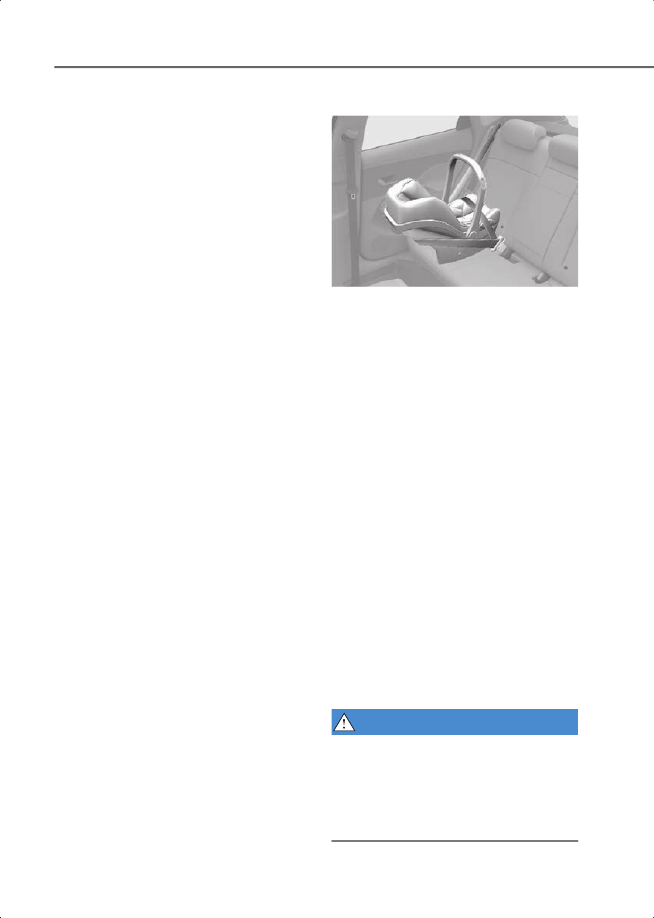
Rearward-facing Child Restraint System
2C_ALRSeatBelt
A rearward-facing Child Restraint System
provides restraint with the seating
surface against the back of the child. The
harness system holds the child in place,
and in an accident, acts to keep the child
positioned in the Child Restraint Systems
and reduce the stress to the fragile neck
and spinal cord.
All children under the age of one year
must always ride in a rearward-facing
Child Restraint System. Convertible and
3-in-1 Child Restraint Systems typically
have higher height and weight limits for
the rearward-facing position, allowing
you to keep your child rearward-facing
for a longer period of time.
Keep using Child Restraint Systems in the
rearward-facing position as long as
children fit within the height and weight
limits allowed by the Child Restraint
System’s manufacturer. It’s the best way
to keep them safe.
Once your child has outgrown the
rearward-facing Child Restraint System,
your child is ready for a forward-facing
Child Restraint System with a harness.
WARNING
NEVER install a child or infant restraint in
the front passenger's seat.
Placing a rearward-facing child restraint
in the front seat can result in SERIOUS
INJURY or DEATH if the child restraint is
struck by an inflating airbag.