Ford F-550 (2022 year). Manual in english - page 27
cause steering, suspension, axle, transfer
case or power transfer unit failure.
Follow the recommended tire inflation
pressures found on the Safety
Compliance Certification label, or the
Tire Label on the B-Pillar or the edge of
the driver door. Failure to follow this
instruction could result in loss of vehicle
control, vehicle rollover, or personal injury
or death.
Note:
Do not use snow chains on vehicles
with LT275/65R20 or LT 285/75R18 sized
tires.
Note:
The suspension insulation and
bumpers will help prevent vehicle damage.
Do not remove these components from your
vehicle when using snow tires and chains.
The tires on your vehicle have all-weather
treads to provide traction in rain and snow.
However, in some climates, you may need
to use snow tires and cables. If you need
to use cables, we recommend that you use
steel wheels of the same size and
specification, as cables may chip
aluminum wheels.
Follow these guidelines when using snow
tires and chains:
•
If possible, avoid fully loading your
vehicle.
•
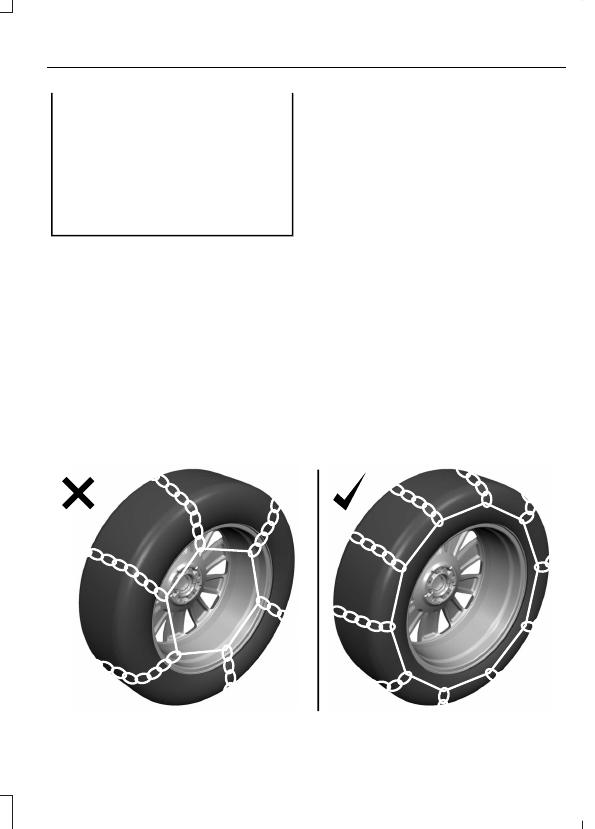
Use only SAE Class S chains.
•
Install chains securely, verifying that
the chains do not touch any wiring,
brake lines or fuel lines.
•
Only install snow chains on the rear
axle.
•
For Dual Rear Wheel (DRW) vehicles,
only install snow chains on the outer
wheel of each pair.
•
Drive cautiously. If you hear the chains
rub or bang against your vehicle, stop
and retighten the chains. If this does
not work, remove the chains to prevent
damage to your vehicle.
•
Remove the tire chains when you no
longer need them. Do not use tire
chains on dry roads.
E292547
439
Wheel and Tire Information