Ford Galaxy / Ford S-MAX. Manual - part 472
 

  Index      Ford     Ford Galaxy / Ford S-MAX - service repair manual 2006 year


Search            


Content   ..  470  471  472  473   ..


Ford Galaxy / Ford S-MAX. Manual - part 472


The CKP sensor uses the Hall effect principle. 

CHT sensor 

The CHT sensor is screwed directly into the cylinder head and measures the temperature of 
the material of the cylinder head, rather than the coolant temperature. This is a more 
accurate measurement of the engine temperature and the information is used by the 
instrument cluster for the temperature gauge indication. It is also used by the PCM to 
calculate fuel injection timing and period of injection which will vary dependant on the 
engine temperature. 

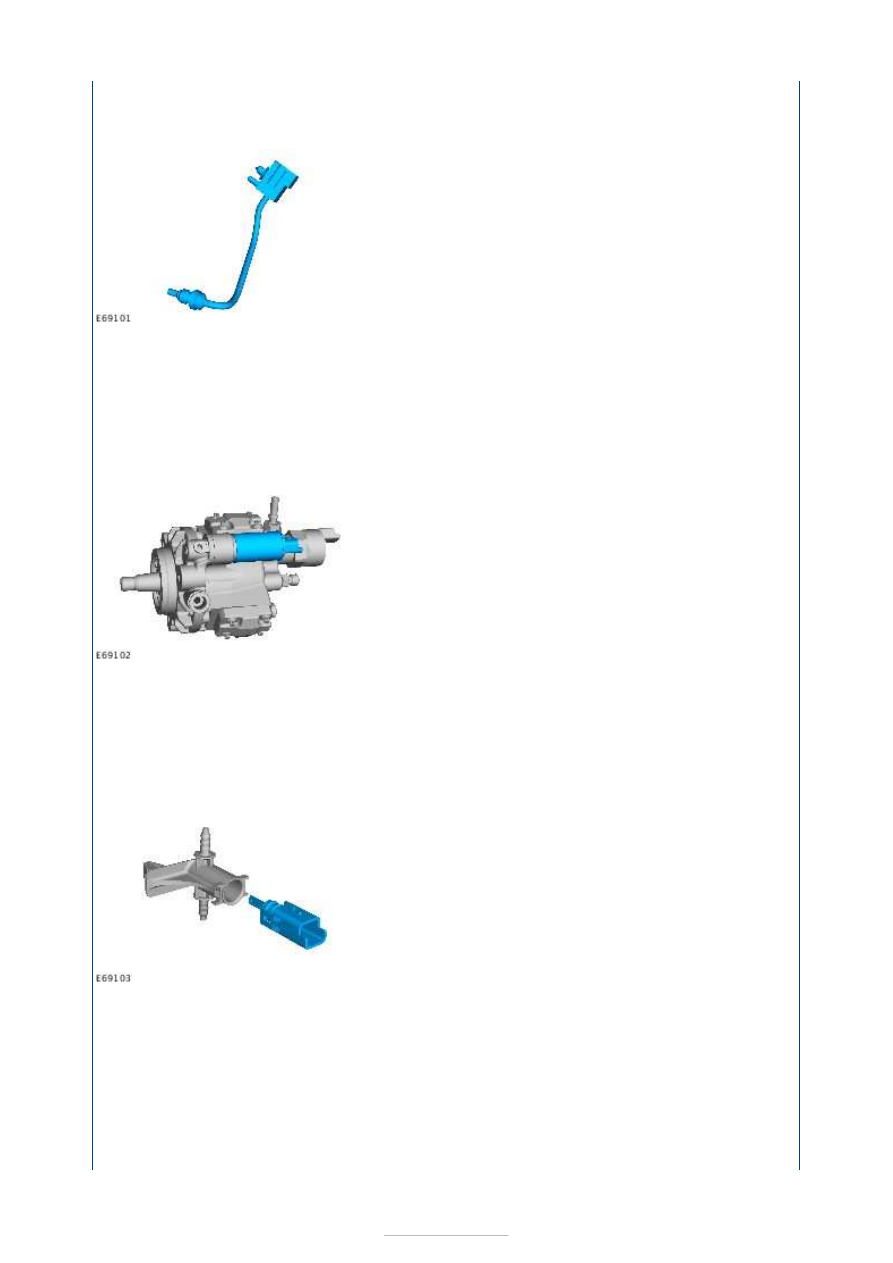
Fuel metering valve 

The fuel metering valve adjusts the quantity of fuel to the high-pressure pump elements as 
a function of engine operating conditions. This improves engine efficiency. 

The fuel metering valve is controlled by the PCM using pulse-width modulation. 

The fuel metering valve is closed when de-energized. 

Fuel temperature sensor 

The fuel temperature sensor is designed as a resistor with a negative temperature 
coefficient (NTC). 

The fuel temperature sensor monitors the temperature of the fuel returning to the fuel tank 
from the fuel pump and the fuel injectors and sends a signal to the PCM.  

The signal is required by the PCM for making fine adjustments to the fuel injection timing 
and the fuel injection quantity. 

Brake pedal position (BPP) switch and brake light switch 


The BPP switch is connected to the instrument cluster through the CAN bus. 

The BPP switch is closed when de-energized and sends a ground signal to the PCM. 

The brake light switch is connected with the PCM through a conventional electrical 
connector. 

The brake light switch is open when de-energized. When the brake light switch is closed, it 
sends 12 volts to the PCM. 

The signals of the BPP switch and the brake light switch are used if the APP sensor should 
fail. 

In this instance, the PCM compares the signals of the BPP switch and brake light switch. 

APP sensor 

The APP sensor is a double contactless inductive sensor. 

For safety reasons, the APP sensor consists of two sensors. 

If the APP sensor malfunctions when the vehicle is in operation, a diagnostic trouble code 
(DTC) will be stored in the PCM. 

If one of the sensors in the APP sensor should fail, the engine will operate at reduced 
power. 

If the vehicle is fitted with a driver information system, the fault message "REDUCED 
ACCELERATION" will be displayed. 

If both sensors of the APP switch fail, after a single operation of the BPP switch and the 
brake light switch and then after a plausibility check, the engine is controlled up to a speed 
of 1200 RPM. The vehicle can be accelerated to a maximum speed of 56 km/h (35 mph). 


When the BPP switch and the brake light switch are actuated again, engine speed will drop 
to idle speed. Once the BPP switch and the brake light switch are de-energized again, 
engine speed is increased again. 

If the vehicle is fitted with an information and message system, the fault message 
"REDUCED TOP SPEED" will be displayed. 

If the vehicle is not fitted with an information and message system, the malfunction 
indicator lamp (MIL) will be illuminated to indicate a system fault. 

Electronic Engine Controls - 1.8L 
Duratorq-TDCi (74kW/100PS) - 
Lynx/1.8L Duratorq-TDCi (92kW/125PS) 
- Lynx - Camshaft Position (CMP) Sensor

S-MAX/Galaxy 2006.5 (02/2006-)


Print


Removal and Installation 

Removal 

NOTE: Removal steps in this procedure may contain installation details. 

Installation 

1.  

2. Torque: 10 Nm 

1.

NOTE: Make sure that the sensor housing is 
clean and free of foreign material. 

To install, reverse the removal procedure. 


Content   ..  470  471  472  473   ..