Ford Galaxy / Ford S-MAX. Manual - part 402
 

  Index      Ford     Ford Galaxy / Ford S-MAX - service repair manual 2006 year


Search            


Content   ..  400  401  402  403   ..


Ford Galaxy / Ford S-MAX. Manual - part 402


Fuel Charging and Controls - 
Turbocharger - 2.2L Duratorq-TDCi 
(129kW/175PS) - DW - Turbocharger

S-MAX/Galaxy 2006.5 (02/2006-)


Print


Diagnosis and Testing 

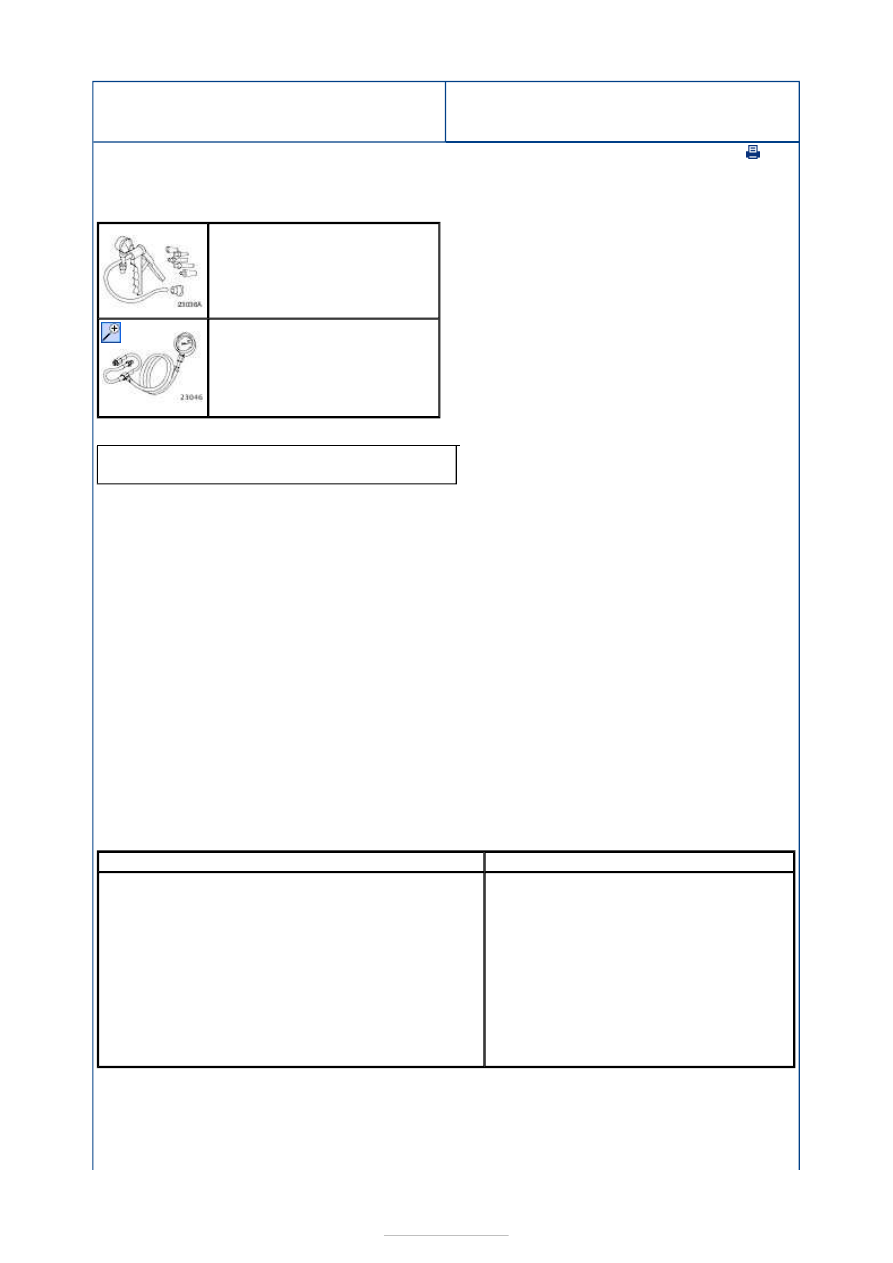
Special Tool(s) 

General Equipment 

Inspection and Verification 

NOTE: It is normal for a small amount of combustion gas to pass into the crankcase. This 
gas is scavenged into the air intake system through the positive crankcase ventilation 
(PCV) system, which incorporates an oil separator. Some engine oil, in the form of a 
vapor is carried into the air intake system with the blow-by gases (this engine oil also 
contributes to valve seat durability). This means that oil will collect inside the air intake 
components and the turbocharger. This is not an indication that the turbocharger oil seal 
has failed. The turbocharger oil seal will not fail unless the bearings fail first, which will 
cause the turbocharger to become noisy or seize. Do not install a new turbocharger due 
to oil inside the turbocharger or the air intake components. If a leak is detected in the oil 
supply or return tubes or connections, locate and rectify the source. Do not install a new 
turbocharger due to an oil leak. 

1. 1. Verify the customer concern. 

2. 2. Visually inspect for obvious signs of mechanical or electrical damage. 

Visual Inspection Chart 

3. 3. If an obvious cause for an observed or reported concern is found, correct the cause 

(if possible) before proceeding to the next step. 

4. 4. If the cause is not visually evident, verify the symptom and refer to the Symptom 

Hand Vacuum/Pressure Pump 

416 - D001 (23 - 036A) 

Fuel Pressure Gauge 

310-053 (23-046) 

Worldwide Diagnostic System (WDS) (418-
F224)

Mechanical

Electrical

Oil leak(s)  

Air cleaner element  

Air cleaner outlet pipe  

Air cleaner intake pipe  

Turbocharger oil supply or oil return tube  

Turbocharger intake pipe  

Turbocharger vacuum diaphragm unit  

Turbocharger housing  

Charge air cooler  

Charge air cooler intake pipe and hose(s)  

Charge air cooler outlet pipe and hose(s) 

Wiring harness  

Vane adjustment solenoid valve  

PCM 


Chart. 

Symptom Chart 

Symptom Chart 

Pinpoint Tests 

NOTE: The vacuum diaphragm unit is a fixed part of the turbocharger and cannot be 
adjusted or renewed. 

Symptom

Possible Sources

Action

Blue smoke with 
excessive 
turbocharger 
noise

Turbocharger 

compressor rubbing 
on housing walls. 

Turbocharger 

turbine rubbing on 
housing walls. 

Turbocharger 

bearings and oil seal
(s). 

Turbocharger oil 

supply tube blocked 
or damaged. 

*

*

*

*

GO to Pinpoint Test 

A. 


*

Blue smoke 
without excessive 
turbocharger 
noise

Turbocharger oil 

return tube blocked 
or damaged. 

*

GO to Pinpoint Test 

B. 


*

Poor engine 
performance 

Vacuum diaphragm 

unit vacuum line(s). 

*

CHECK all vacuum line(s) are installed and no 

signs of air leaks are present. REPAIR as 
necessary. 

*

Charge air cooler 

system. 

*

CHECK the charge air cooler, charge air cooler 

pipes and charge air cooler hoses for leaks and 
obstructions. REPAIR as necessary. 

*

Air cleaner intake 

pipe. 

*

CHECK the air cleaner intake pipe for obstruction. 

REPAIR the necessary. 

*

Unauthorized 

adjustment of the 
vacuum diaphragm 
unit actuator rod. 

*

The turbocharger boost pressure is factory set 

and must not be adjusted. CHECK the paint seal 
on the vacuum diaphragm unit actuator rod has 
not been broken. If the paint seal has been 
broken, INSTALL a new turbocharger.  
REFER to: 

Turbocharger

 (303-04J Fuel Charging 

and Controls - Turbocharger - 2.0L Duratorq-TDCi 
(85kW/115PS) - DW/2.0L Duratorq-TDCi 
(100kW/136PS) - DW/2.0L Duratorq-TDCi 
(103kW/140PS) - DW, Emission Requirements: 
Stage IV, Removal and Installation). 

*

Vacuum diaphragm 

unit actuator rod. 

*

CHECK the vacuum diaphragm unit actuator rod 

moves freely, If the vacuum diaphragm unit 
actuator rod does not move freely. CHECK for 
signs of damage or signs of foreign material. 
REPAIR as necessary. 

*

Turbocharger boost 

pressure. 

*

GO to Pinpoint Test 

C. 


*

PINPOINT TEST A : BLUE SMOKE WITH EXCESSIVE TURBOCHARGER NOISE 

TEST CONDITIONS

DETAILS/RESULTS/ACTIONS

A1: INSPECT THE TURBOCHARGER ROTOR VANES FOR DAMAGE

Remove the engine upper cover. 

Disconnect the positive crankcase ventilation (PCV) 
breather hose from the intake manifold PCV valve. 

Press in the release clip. 

Remove the turbocharger intake pipe support 
bracket retaining bolt. 

Raise and support the vehicle. For additional 
information,  

REFER to: 

Lifting

 (100-02 Jacking and Lifting, 

Description and Operation). 

Remove the engine undershield. 

Rotate the locking tangs counterclockwise. 

Detach the turbocharger intake pipe. 

Inspect the turbocharger rotor vanes for damage. 


Is there visible damage to the rotor vanes? 
Yes 

GO to A2

.  

No 

GO to A3

.  

A2: CHECK FOR FOREIGN MATERIAL IN THE INTAKE AIR SYSTEM COMPONENTS

Check the intake air system components for signs 
of foreign material. 

Are there any signs of foreign material? 
Yes 

CLEAN the intake air system components. INSTALL 
a new turbocharger.  
REFER to: 

Turbocharger

 (303-04J Fuel Charging 

and Controls - Turbocharger - 2.0L Duratorq-TDCi 
(85kW/115PS) - DW/2.0L Duratorq-TDCi 
(100kW/136PS) - DW/2.0L Duratorq-TDCi 
(103kW/140PS) - DW, Emission Requirements: 
Stage IV, Removal and Installation). 
TEST the system for normal operation. 

No 

GO to A4

.  

A3: CHECK THE TURBOCHARGER BEARINGS FOR EXCESSIVE MOVEMENT

NOTE: A small amount of movement in the bearings is normal. 

Make sure the turbocharger rotor spins freely 
within the housing. 

1. With the turbocharger stationary, gently lift 
the shaft (the shaft will naturally lay in the 
bottom of the bearings). 

2. Make sure the rotor spins freely within the 
housing. 

Does the rotor spin freely within the housing with no 
excessive movement? 
Yes 

GO to A4

.  

No 

INSTALL a new turbocharger.  
REFER to: 

Turbocharger

 (303-04J Fuel Charging 

and Controls - Turbocharger - 2.0L Duratorq-TDCi 
(85kW/115PS) - DW/2.0L Duratorq-TDCi 
(100kW/136PS) - DW/2.0L Duratorq-TDCi 
(103kW/140PS) - DW, Emission Requirements: 
Stage IV, Removal and Installation). 
TEST the system for normal operation. 

A4: CHECK THE TURBOCHARGER OIL SUPPLY TUBE FOR BLOCKAGE

NOTE: Discard the copper washers. 

Remove the turbocharger oil supply tube. 


Content   ..  400  401  402  403   ..