Ford Galaxy / Ford S-MAX. Manual - part 341
 

  Index      Ford     Ford Galaxy / Ford S-MAX - service repair manual 2006 year


Search            


Content   ..  339  340  341  342   ..


Ford Galaxy / Ford S-MAX. Manual - part 341


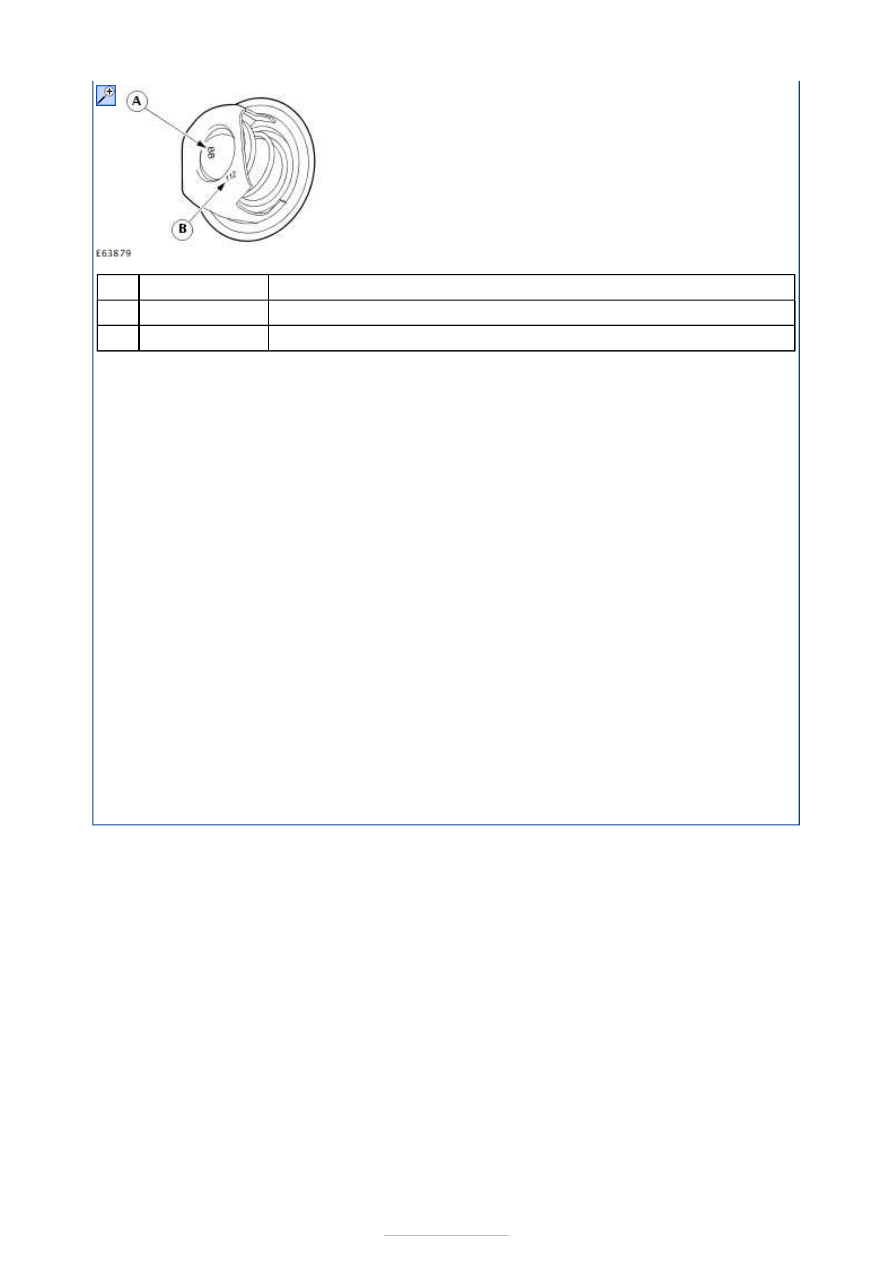
Description 

Opening temperature 

Fully open temperature 

NOTE: Generally, most thermostats maintain a coolant temperature between 88ºC 
(190ºF) and 92ºC (198ºF) although dual stage electric thermostats may increase the 
coolant temperature up to 100ºC (212ºF) under light engine load conditions. 

The engine should start cleanly and the ECT value will rise quite quickly with smooth 
progression. If the ECT signal appears unstable or erratic, the ECT sensor, electrical 
connector and wiring harness to the PCM need to be visually inspected for damage, chafing 
or water ingress. 

The temperature should rise to approximately 90ºC for a thermostat that has an 88ºC 
value. The signal value will then fall as cooler coolant enters the engine. 

If the ECT value fails to maintain a constant value and falls back to lower figures, typically 
between 60ºC (140ºF) and 70ºC (150ºF), the thermostat and its sealing function within the 
thermostat housing must be checked. 

5. 5. INSTALL a new thermostat.  

REFER to: 

Thermostat

 (303-03D Engine Cooling - 1.8L Duratorq-TDCi 

(74kW/100PS) - Lynx/1.8L Duratorq-TDCi (92kW/125PS) - Lynx, Removal and 
Installation). 

6. 6. Carry out another road test from step 1 using the same criteria to confirm that the 

concern has been rectified. 

7. 7. Using the Ford approved diagnostic tool, clear the PCM keep alive memory (KAM) 

or electrically erasable programmable read only memory (EEPROM) so that new 
drive values can be learnt. 

Item

A

B


Part Number

-

-

Engine Cooling - 1.8L Duratorq-TDCi 
(74kW/100PS) - Lynx/1.8L Duratorq-
TDCi (92kW/125PS) - Lynx - Cooling 
System Draining, Filling and Bleeding

S-MAX/Galaxy 2006.5 (02/2006-)


Print


General Procedures 

Draining 

WARNING: When releasing the cooling system pressure, cover the coolant expansion 

tank cap with a thick cloth. 

1. Release the cooling system pressure by slowly 

turning the coolant expansion tank cap between 
2 and 3 turns. 

2.  

3. Raise and support the vehicle. 

Refer to: 

Lifting

 (100-02 Jacking and Lifting, 

Description and Operation). 

4.  

5.  

6.  


Filling and Bleeding 

CAUTION: The fluid level must remain between the MAX and MIN marks. 

7. Install the radiator drain plug. 

8. Lower the vehicle. 

1. Switch the interior heater blower off. 

2. Fill the coolant expansion tank coolant level to 

the top of the neck. 

3. Install the coolant expansion tank cap. 

4. Start the engine. 

5. Raise the engine speed to 2000 revolutions per 

minute (RPM) and maintain it for 3 minute. 

6. Monitor the coolant level for approximately 3 

minutes. 

7. Switch the engine off. 

8. Check the coolant level. 

9. Fill the coolant expansion tank coolant level to 

the neck of the tank if necessary. 

10. Install the coolant expansion tank cap. 

11. Start the engine. 

12. Raise the engine speed to 2000 RPM. 

13. Maintain the engine speed at 2000 RPM for 

approximately 13 minutes until the engine has 
reached normal operating temperature. 

14. Increase the engine speed to 3000 RPM and 

maintain it for 5 seconds. 

15. Decrease the engine speed to 2000 RPM and 

maintain it for 15 minutes. 

16. Switch the engine off. 

17. Check the cooling system for leaks. 

18. Raise and support the vehicle. 

Refer to: 

Lifting

 (100-02 Jacking and Lifting, 

Description and Operation). 

19.  


20.  

21. Lower the vehicle. 

22. Allow the engine to cool. 

23. Fill the coolant expansion tank coolant level to 

the MAX mark. 


Content   ..  339  340  341  342   ..