Ford Galaxy / Ford S-MAX. Manual - part 12
 

  Index      Ford     Ford Galaxy / Ford S-MAX - service repair manual 2006 year


Search            


Content   ..  10  11  12  13   ..


Ford Galaxy / Ford S-MAX. Manual - part 12


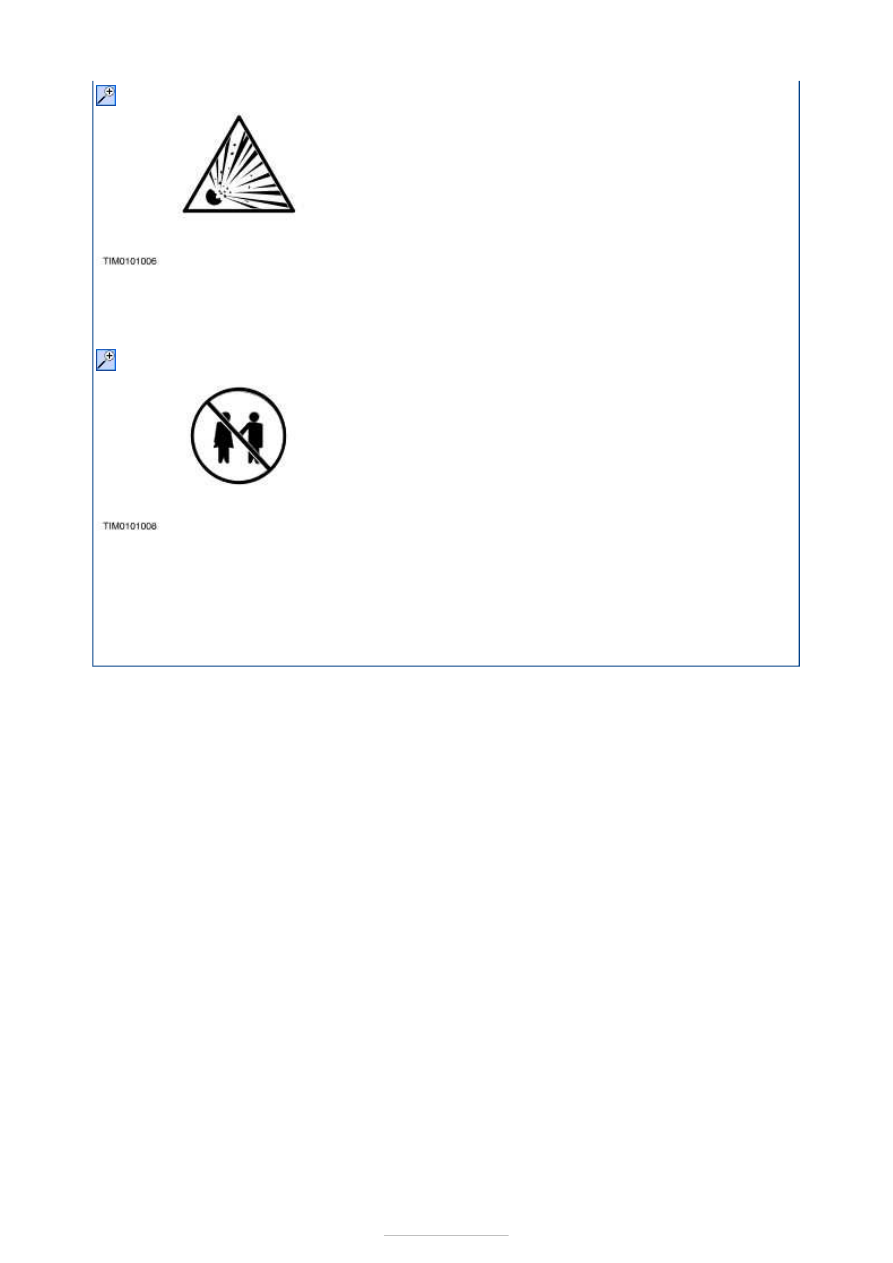
6. 6. Displaying this symbol (normally in conjunction with 5 above) warn of the 

presence of potentially explosive matter within the immediate vicinity. 

7. 7. Displaying this symbol warn that children should not be allowed in the immediate 

vicinity unsupervised. 

White Spirit 

See Solvents. 


General Information - Standard Workshop 
Practices

S-MAX/Galaxy 2006.5 (02/2006-)


Print


Description and Operation 

Vehicle in Workshop 

When working on a vehicle in the workshop always make sure that: 

the parking brake is applied or the wheels are securely chocked to prevent the vehicle 
moving forwards or backwards.  
the key is removed from key operated hood locks before any work is carried out around 
the front of the vehicle.  
if the engine is to be run, there is adequate ventilation, or an extraction hose to remove 
exhaust fumes.  
there is adequate room to raise the vehicle and remove the wheels, if necessary.  
fender covers are always fitted if any work is to be carried out in the engine 
compartment.  
the battery is disconnected if working on the engine, underneath the vehicle, or if the 
vehicle is raised. 

CAUTION: When electric arc welding on a vehicle, always disconnect the generator 

wiring to prevent the possibility of a surge of current causing damage to the internal 
components of the generator. 

if using welding equipment on the vehicle, a suitable fire extinguisher is readily available. 

Towing the Vehicle 

WARNING: When the vehicle is being towed, the ignition switch must be in position II 

(steering lock released and warning lamps illuminated). Only then will the steering, turn 
signal lamps, horn and stop lamps be operational. Failure to follow these instructions may 
result in personal injury. 
NOTE: The removable towing eye (if equipped), has a left-hand thread and must be fully 
tightened before towing can commence. 

When towing is necessary, the vehicle towing eyes should be used. The rope must be 
securely fastened to the towing eyes and must also be attached to the other vehicle such 
that the rope will not foul the bodywork. 

When a vehicle with automatic transmission is towed, the gear selector must be in position 
N (Neutral). Never tow a vehicle with automatic transmission at a speed greater than 30 
mph (50 km/h) or for a distance greater than 30 miles (50 km). If it is necessary to tow the 
vehicle a greater distance, the drive wheels must be lifted clear off the ground. 

Alternatively the vehicle can be transported on a low loader or a trailer. 

Connecting a Slave Battery Using Jumper Cables 

WARNING: If the slave battery has recently been charged and is gassing, cover the 

vent plugs or covers with a damp cloth to reduce the risk of explosion should arcing occur 
when connecting the jumper cables. Failure to follow these instructions may result in 
personal injury. 

CAUTIONS: 

A discharged battery condition may have been caused by an electrical short circuit. If 

this condition exists there will be an apparently live circuit on the vehicle even when all 
normal circuits are switched off. This can cause arcing when the jumper cables are 

connected. 

While it is not recommended that the vehicle is jump started, it is recognized that 

this may occasionally be the only practical way to mobilize a vehicle. In such an instance, 
the discharged battery must be recharged immediately after jump starting to avoid 
permanent damage. 

Always make sure that the jumper cables are adequate for the task. Heavy duty cables 
must be used.  
Always make sure that the slave battery is of the same voltage as the vehicle battery. 
The batteries must be connected in parallel.  
Always make sure that switched electric circuits are switched off before connecting 
jumper cables. This reduces the risk of arcing occurring when the final connection is 
made. 

WARNING: Make sure that the ends of the jumper cables do not touch each other or 

ground against the vehicle body at any time while the cables are attached to the battery. 
A fully charged battery, if shorted through jumper cables, can discharge at a rate well 
above 1000 amps causing violent arcing and very rapid heating of the jumper cables and 
terminals, and can even cause the battery to explode. Failure to follow these instructions 
may result in personal injury. 

Always connect the jumper cables in the following sequence: 

Slave battery positive first and then vehicle battery positive.  
Slave battery negative next and then vehicle ground at least 12 inches (300 mm) from 
the battery terminal, for example engine lifting eye. 

Always reduce the engine speed to idle before disconnecting the jumper cables. 

Before removing the jumper cables from the vehicle that had the discharged battery, switch 
on the heater blower (high) or the heated rear window, to reduce the voltage peak when 
the cables are removed. 

Always disconnect the jumper cables in the reverse order to the connecting sequence and 
do not short the ends of the cables. 

Do not rely on the generator to restore a discharged battery. For a generator to recharge a 
battery, it would take in excess of eight hours continuous driving with no additional loads 
placed on the battery. 

Component Cleaning 

To prevent the ingress of dirt, accumulations of loose dirt and greasy deposits should be 
removed before disconnecting or dismantling components or assemblies. 

Components should be thoroughly cleaned before inspection prior to reassembly. 

Cleaning Methods: 


Dry cleaning.  
Removal of loose dirt with soft or cable brushes.  
Scraping dirt off with a piece of metal or wood.  
Wiping off with a rag. 

WARNING: Wear eye protection when cleaning vehicle components with compressed 

air, a steam cleaner or a power washer. Failure to follow this instruction may result in 
personal injury. 

CAUTIONS: 

Compressed air is sometimes 'wet' so use with caution, especially on hydraulic 

systems. 

To prevent damage to the electrical connectors in the engine compartment, do not 

use a steam cleaner or a power washer to clean the engine compartment. 

Blowing dirt off with compressed air.  
Removal of dry dust using vacuum equipment. This method must always be used to 
remove friction lining material dust (asbestos particles).  
Steam cleaning. 

WARNING: Most solvents require careful handling and some are harmful. Refer to 

Health and Safety Precautions and to the manufacturers literature for the relevant safety 
precautions. Failure to follow these instructions may result in personal injury. 

Various solvents are available which are suitable for component cleaning. Some 
components, such as brake hydraulic parts and electrical assemblies should be cleaned only 
with recommended solvents — refer to Solvents, Sealers and Adhesives or to the section of 
the manual relevant to the component. 

Calibration of Essential Measuring Equipment 

WARNING: Equipment, which requires regular calibration, must be calibrated in 

accordance with the manufacturers instructions. Failure to follow this instruction may 
result in personal injury or damage to components. 

It is of fundamental importance that certain essential equipment, for example torque 
wrenches, multimeters, exhaust gas analyzers or rolling roads, are regularly calibrated in 
accordance with the manufacturers instructions. 


Content   ..  10  11  12  13   ..