Ford Transit (2018 year). Manual - part 56
 

  Index      Ford     Ford Transit - service manual 2018 year in english


Search            


Content   ..  54  55  56  57   ..


Ford Transit (2018 year). Manual - part 56


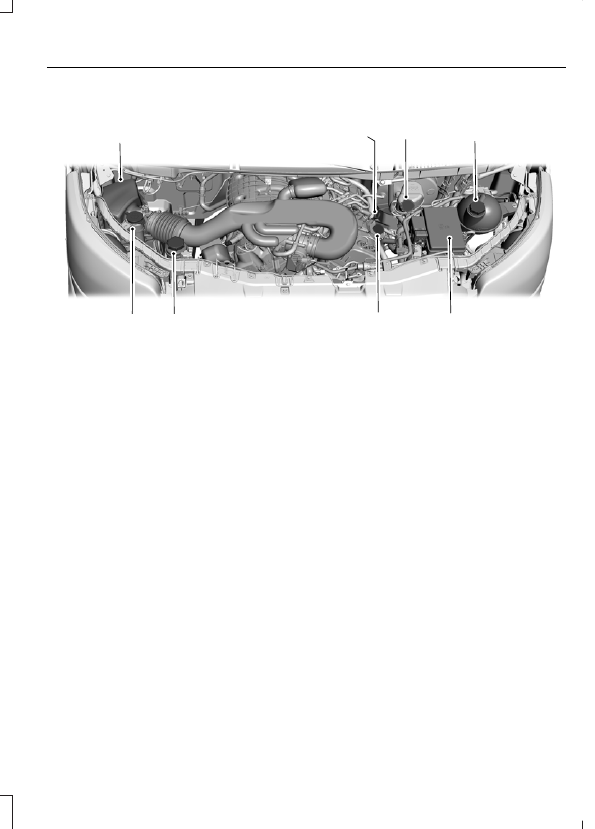
UNDER HOOD OVERVIEW - 3.7L

E174602

A

C

D

E

G

H

B

F

Air cleaner.  See Changing the Engine Air Filter (page 251).

A

Engine oil dipstick

*

 See Engine Oil Dipstick (page 228).

B

Brake fluid reservoir

*

 See Brake Fluid Check (page 235).

C

Engine coolant reservoir

*

 See Engine Oil Check (page 228).

D

Engine compartment fuse box.  See Fuses (page 202).

E

Engine oil filler cap

*

 See Engine Oil Check (page 228).

F

Power steering fluid reservoir

*

 See Power Steering Fluid Check (page 235).

G

Washer fluid reservoir

*

 See Washer Fluid Check (page 235).

H

*

 The filler caps and the engine oil dipstick are colored for easy identification.

ENGINE OIL DIPSTICK - 3.2L
POWER STROKE DIESEL

E71362

A

B

Minimum

A

Maximum

B

ENGINE OIL DIPSTICK - 3.5L
ECOBOOST™

E174604

A

B

Minimum

A

Maximum

B

ENGINE OIL DIPSTICK - 3.7L

E174604

A

B

Minimum

A

Maximum

B

ENGINE OIL CHECK

1.

Make sure that your vehicle is on level
ground.

2. Switch off the engine and wait 10

minutes for the oil to drain into the oil
pan.

3. Remove the dipstick and wipe it with

a clean, lint free cloth. Replace the
dipstick and remove it again to check
the oil level.

If the oil level is at the minimum mark, add
oil immediately.  See Capacities and
Specifications (page 299).

Note: Check the oil level before starting the
engine.

Note: Make sure that the oil level is
between the minimum and the maximum
marks.

Note: Do not use oil additives or other
engine treatments. Under certain conditions,
they could damage the engine.

Note: The oil consumption of new engines
reaches its normal level after approximately
3,000 mi (5,000 km).

Adding Engine Oil

WARNINGS

Only add oil when the engine is cold.
If the engine is hot, wait 10 minutes
for the engine to cool down.

Do not remove the filler cap when
the engine is running.

1.

Remove the engine oil filler cap.

2. Add engine oil that meets Ford

specifications.  See Capacities and
Specifications (page 299).

3. Replace the engine oil filler cap. Turn

it until you feel a strong resistance.

Note: Do not add oil further than the
maximum mark. Oil levels above the
maximum mark may cause engine damage.

Note: Soak up any spillage with an
absorbent cloth immediately.

CHANGING THE ENGINE OIL
AND OIL FILTER

WARNINGS

Prolonged and repeated skin contact
with mineral oil will result in the
removal of natural fats from the skin,

leading to dryness, irritation and dermatitis.
In addition, used engine oil contains
potentially harmful contaminants, which
may cause skin cancer. If skin contact
occurs, wash the area thoroughly with
soap or skin cleanser and water
immediately.

Do not dispose of engine oils or oil
filters in the household refuse or the
public sewage system. Use an

authorized waste disposal facility.

Do not remove the oil pan drain plug
when the engine is running.

WARNINGS

Do not remove the oil filter when the
engine is running.

1.

Remove the oil pan drain plug and wait
for the oil to drain into a suitable
container.

2. Renew the oil filter.

3. Reinstall the oil pan drain plug.

4. Refill the engine with new oil that

meets Ford specifications.  See
Capacities and Specifications (page
299).

Note: Do not add oil further than the
maximum mark. Oil levels above the
maximum mark may cause engine damage.

Note: Soak up any spillage with an
absorbent cloth immediately.

5. Reset the Intelligent Oil Life Monitor.

See Oil Change Indicator Reset
(page 230).

Engine Lubrication for Severe
Service Operation

The following conditions define severe
service operation. The Intelligent Oil Life
Monitor will determine engine oil and oil
filter change intervals.

Frequent or extended idling.

Frequent low-speed operation at
25 mph (40 km/h) or less.

Frequent severe dust condition
operation.

Frequent off-road operation.

Sustained ambient temperatures of
-9°F (-23°C) or below.

Sustained ambient temperatures of
100°F (38°C) or above.

Sustained towing operation above
1,000 mi (1,600 km).

Sustained high-speed driving at Gross
Vehicle Weight Rating (maximum
loaded weight for vehicle operation).

Sustained use of diesel fuel other than
ultra-low sulfur diesel (ULSD).

OIL CHANGE INDICATOR
RESET

Resetting the Oil Life Monitoring
System

Only reset the oil life monitoring system
after changing the engine oil and oil filter.

1.

Switch the ignition on. Do not start the
engine.

2. Press the accelerator and brake pedals

at the same time.

3. Keep the accelerator and brake pedals

fully pressed.

4. After three seconds, a message

confirming that the reset is in progress
displays.

5. After 25 seconds, a message

confirming that the reset is complete
displays.

6. Release the accelerator and brake

pedals.

7.

The message confirming that the reset
is complete no longer displays.

8. Switch the ignition off.

ENGINE COOLING FAN -
DIESEL

WARNING

Keep your hands and clothing clear
of the engine cooling fan.

Under certain conditions, the engine
cooling fan may continue to run for several
minutes after you switch your vehicle off.
This could happen in low ambient
temperatures and independent of the
engine coolant temperature, for example
short journeys or low coolant temperature.
See Diesel Particulate Filter (page 141).

ENGINE COOLING FAN - E85/
GASOLINE

WARNING

Keep your hands and clothing clear
of the engine cooling fan.

Under certain conditions, the engine
cooling fan may continue to run for several
minutes after you switch your vehicle off.

ENGINE COOLANT CHECK

WARNINGS

Never remove the coolant reservoir
cap when the engine is running or
hot.

Do not put coolant in the windshield
washer reservoir. If sprayed on the
windshield, coolant could make it

difficult to see through the windshield.

To reduce the risk of personal injury,
make sure the engine is cool before
unscrewing the coolant pressure

relief cap. The cooling system is under
pressure. Steam and hot liquid can come
out forcefully when you loosen the cap
slightly.

Do not add coolant further than the
MAX mark.


Content   ..  54  55  56  57   ..