Ford F-150 (2018 year). Manual - part 92
 

  Index      Ford     Ford F-150 - service manual 2018 year in english


Search            


Content   ..  90  91  92  93   ..


Ford F-150 (2018 year). Manual - part 92


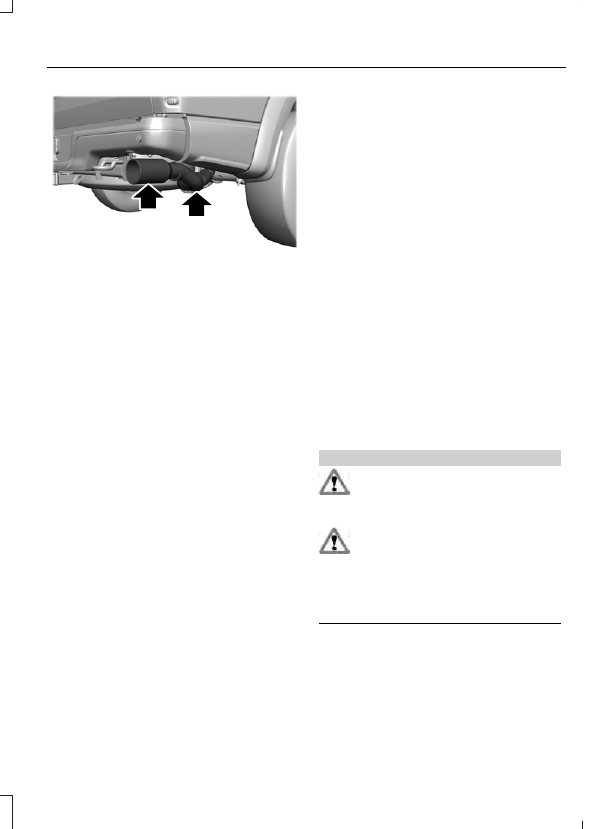
E231484

The visible holes in the exhaust tailpipe
and the holes under the shield just inboard
of the right rear tire are functional.  You
must keep the holes clean and free of
debris or foreign material to maintain the
correct operation of the exhaust system.
When washing your vehicle, spray the holes
with clean water from a hose.  This helps
to keep the holes clean and free of debris
or foreign material.

CLEANING THE WINDOWS AND
WIPER BLADES

Car wash chemicals and environmental
fallout can result in windshield and wiper
blade contamination. Dirty windshield and
wipers will result in poor windshield wiper
operation. Keep the windshield and wiper
blades clean to maintain windshield wiper
performance.

To clean the windshield and wiper blades:

Clean the windshield with a
non-abrasive glass cleaner. When
cleaning the interior of the windshield,
avoid getting any glass cleaner on the
instrument panel or door panels. Wipe
any glass cleaner off these surfaces
immediately.

For windshields contaminated with
tree sap, chemicals, wax or bugs, clean
the entire windshield using steel wool
(no greater than 0000 grade) in a
circular motion and rinse with water.

Clean the wiper blades with isopropyl
rubbing alcohol or windshield washer
concentrate.

Note:  Do not use razor blades or other
sharp objects to clean or remove decals
from the inside of the heated rear window.
The vehicle warranty does not cover
damage caused to the heated rear window
grid lines.

CLEANING THE INTERIOR

WARNINGS

Do not use cleaning solvents, bleach
or dye on the vehicle’s safety belts,
as these actions may weaken the

belt webbing.

On vehicles equipped with
seat-mounted airbags, do not use
chemical solvents or strong

detergents. Such products could
contaminate the side airbag system and
affect performance of the side airbag in a
collision.

For fabric, carpets, cloth seats, safety belts
and seats equipped with side airbags:

Remove dust and loose dirt with a
vacuum cleaner.

Remove light stains and soil with
Motorcraft Professional Strength
Carpet & Upholstery Cleaner.

If grease or tar is present on the
material, spot-clean the area first with
Motorcraft Spot and Stain Remover. In
Canada, use Motorcraft Multi-Purpose
Cleaner.

If a ring forms on the fabric after spot
cleaning, clean the entire area
immediately (but do not oversaturate)
or the ring will set.

Do not use household cleaning
products or glass cleaners, which can
stain and discolor the fabric and affect
the flame retardant abilities of the seat
materials.

CLEANING THE INSTRUMENT
PANEL AND INSTRUMENT
CLUSTER LENS

WARNING

Do not use chemical solvents or
strong detergents when cleaning the
steering wheel or instrument panel

to avoid contamination of the airbag
system.

Clean the instrument panel and cluster
lens with a clean, damp, white cotton
cloth, then use a clean and dry white
cotton cloth to dry these areas.

Avoid cleaners or polishes that increase
the gloss of the upper portion of the
instrument panel. The dull finish in this
area helps protect you from
undesirable windshield reflection.

Be certain to wash or wipe your hands
clean if you have been in contact with
certain products such as insect
repellent and suntan lotion in order to
avoid possible damage to the interior
painted surfaces.

Do not use household or glass cleaners
as these may damage the finish of the
instrument panel, interior trim and
cluster lens.

Do not allow air fresheners and hand
sanitizers to spill onto interior surfaces.
If a spill occurs, wipe off immediately.
Damage may not be covered by your
warranty.

If a staining liquid like coffee or juice has
been spilled on the instrument panel or on
interior trim surfaces, clean as follows:

1.

Wipe up spilled liquid using a clean,
white, cotton cloth.

2. Wipe the surface with a damp, clean,

white cotton cloth. For more thorough
cleaning, use a mild soap and water
solution. If the spot cannot be
completely cleaned by this method,
the area may be cleaned using a
commercially available cleaning
product designed for automotive
interiors.

3. If necessary, apply more soap and

water solution or cleaning product to
a clean, white, cotton cloth and press
the cloth onto the soiled area. Allow
this to set at room temperature for 30
minutes.

4. Remove the soaked cloth and if it is not

soiled badly, use this cloth to clean the
area by using a rubbing motion for 60
seconds.

5. Following this, wipe area dry with a

clean, white, cotton cloth.

CLEANING LEATHER SEATS

 (If

Equipped)

Without King Ranch Edition

Note: Follow the same procedure as
cleaning leather seats for cleaning leather
instrument panels and leather interior trim
surfaces.

For routine cleaning, wipe the surface with
a soft, damp cloth and a mild soap and
water solution. Dry the area with a clean,
soft cloth.

For cleaning and removing spots and stains
such as dye transfer, use Motorcraft
Premium Leather and Vinyl Cleaner or a
commercially available leather cleaning
product for automotive interiors.

Note: Test any cleaner or stain remover on
an inconspicuous area.

You should:

Remove dust and loose dirt with a
vacuum cleaner.

Clean and treat spills and stains as
soon as possible.

Do not use the following products as these
may damage the leather:

Oil and petroleum or silicone-based
leather conditioners.

Household cleaners.

Alcohol solutions.

Solvents or cleaners intended
specifically for rubber, vinyl and
plastics.

With King Ranch Edition

Your vehicle has seating covered in
premium, top-grain leather that is
extremely durable, but still requires special
care and maintenance in order to preserve
longevity and comfort.

Regular cleaning and conditioning
maintains the appearance of the leather.

Cleaning

For dirt, use a vacuum cleaner then use a
clean, damp cloth or soft brush.

For routine cleaning, wipe the surface with
a soft, damp cloth. For more thorough
cleaning, wipe the surface with a mild soap
and water solution.

Clean spills as quickly as possible.

Test any cleaner or stain remover on
an inconspicuous part of the leather as
cleaners may darken the leather.

Do not spill coffee, ketchup, mustard,
orange juice or oil-based products on
the leather as they may permanently
stain the leather.

Do not use household cleaning
products, alcohol solutions, solvents
or cleaners intended for rubber, vinyl
or plastics.

Scratches

Because the leather in the seat comes
from genuine steer hides, there may be
evidence of naturally occurring markings,
such as small scars. These markings give
character to the seating covers and are
considered to be proof of a genuine leather
product.

In order to lessen the appearance of
certain scratches and other wear marks,
apply conditioner on the affected area
following the same instructions as in the
Conditioning section.

Conditioning

Bottles of King Ranch Leather Conditioner
are available at the King Ranch Saddle
Shop. Visit the website at
www.krsaddleshop.com, or call
1–800–282–KING (5464) in the United
States. If you are unable to obtain King
Ranch Leather Conditioner, use another
premium leather conditioner.

Clean the surfaces using the steps
outlined in the Cleaning section.

Make sure the leather is dry then apply
a nickel-sized amount of conditioner
to a clean, dry cloth.

Rub the conditioner into the leather
until it disappears. Allow the
conditioner to dry, then repeat the
process for the entire interior. If a film
appears, wipe it off with a dry, clean
cloth.

REPAIRING MINOR PAINT
DAMAGE

Always read the instructions before using
cleaning products.

CLEANING THE WHEELS

 (If

Equipped)

Note: Do not apply a cleaning chemical to
warm or hot wheel rims and covers.

Note: Some automatic car washes may
cause damage to the finish on your wheel
rims and covers.

Note: Industrial-strength or heavy-duty
cleaners in combination with brush agitation
to remove brake dust and dirt, could wear
away the clear coat finish over a period time.

Note: Do not use hydrofluoric acid-based
or high caustic-based wheel cleaners, steel
wool, fuels or strong household detergents.

Note: If you intend parking your vehicle for
an extended period after cleaning the
wheels with a wheel cleaner, drive your
vehicle for a few minutes before doing so.
This will reduce the risk of increased
corrosion of the brake discs.

Alloy wheels and wheel covers are coated
with a clear coat paint finish. To maintain
their condition we recommend that you:

Clean the wheels weekly using
Motorcraft Wheel and Tire Cleaner.
Apply using manufacturer's
instructions.

Use a sponge to remove heavy
deposits of dirt and brake dust
accumulation.

Rinse thoroughly with a strong stream
of water when you have completed the
cleaning process.

To remove tar and grease, use
Motorcraft Bug and Tar Remover.

VEHICLE STORAGE

If you plan on storing your vehicle for 30
days or more, read the following
maintenance recommendations to make
sure your vehicle stays in good operating
condition.


Content   ..  90  91  92  93   ..