Intel 64 and IA-32 Architectures. Software Developer’s Manual (Collection, 2023) - page 80

INSTRUCTION SET REFERENCE, M-U
NEG—Two's Complement Negation
Opcode
Instruction
Op/
64-Bit
Compat/
Description
En
Mode
Leg Mode
F6 /3
NEG r/m8
M
Valid
Valid
Two's complement negate r/m8.
REX + F6 /3
NEG r/m81
M
Valid
N.E.
Two's complement negate r/m8.
F7 /3
NEG r/m16
M
Valid
Valid
Two's complement negate r/m16.
F7 /3
NEG r/m32
M
Valid
Valid
Two's complement negate r/m32.
REX.W + F7 /3
NEG r/m64
M
Valid
N.E.
Two's complement negate r/m64.
NOTES:
1. In 64-bit mode, r/m8 can not be encoded to access the following byte registers if a REX prefix is used: AH, BH, CH, DH.
Instruction Operand Encoding
Op/En
Operand 1
Operand 2
Operand 3
Operand 4
M
ModRM:r/m (r, w)
N/A
N/A
N/A
Description
Replaces the value of operand (the destination operand) with its two's complement. (This operation is equivalent
to subtracting the operand from 0.) The destination operand is located in a general-purpose register or a memory
location.
This instruction can be used with a LOCK prefix to allow the instruction to be executed atomically.
In 64-bit mode, the instruction’s default operation size is 32 bits. Using a REX prefix in the form of REX.R permits
access to additional registers (R8-R15). Using a REX prefix in the form of REX.W promotes operation to 64 bits. See
the summary chart at the beginning of this section for encoding data and limits.
Operation
IF DEST = 0
THEN CF := 0;
ELSE CF := 1;
FI;
DEST := [- (DEST)]
Flags Affected
The CF flag set to 0 if the source operand is 0; otherwise it is set to 1. The OF, SF, ZF, AF, and PF flags are set
according to the result.
Protected Mode Exceptions
#GP(0)
If the destination is located in a non-writable segment.
If a memory operand effective address is outside the CS, DS, ES, FS, or GS segment limit.
If the DS, ES, FS, or GS register contains a NULL segment selector.
#SS(0)
If a memory operand effective address is outside the SS segment limit.
#PF(fault-code)
If a page fault occurs.
#AC(0)
If alignment checking is enabled and an unaligned memory reference is made while the
current privilege level is 3.
#UD
If the LOCK prefix is used but the destination is not a memory operand.
NEG—Two's Complement Negation
Vol. 2B
4-167
INSTRUCTION SET REFERENCE, M-U
Real-Address Mode Exceptions
#GP
If a memory operand effective address is outside the CS, DS, ES, FS, or GS segment limit.
#SS
If a memory operand effective address is outside the SS segment limit.
#UD
If the LOCK prefix is used but the destination is not a memory operand.
Virtual-8086 Mode Exceptions
#GP(0)
If a memory operand effective address is outside the CS, DS, ES, FS, or GS segment limit.
#SS(0)
If a memory operand effective address is outside the SS segment limit.
#PF(fault-code)
If a page fault occurs.
#AC(0)
If alignment checking is enabled and an unaligned memory reference is made.
#UD
If the LOCK prefix is used but the destination is not a memory operand.
Compatibility Mode Exceptions
Same as for protected mode exceptions.
64-Bit Mode Exceptions
#SS(0)
If a memory address referencing the SS segment is in a non-canonical form.
#GP(0)
If the memory address is in a non-canonical form.
#PF(fault-code)
For a page fault.
#AC(0)
If alignment checking is enabled and an unaligned memory reference is made while the
current privilege level is 3.
#UD
If the LOCK prefix is used but the destination is not a memory operand.
4-168
Vol. 2B
NEG—Two's Complement Negation

INSTRUCTION SET REFERENCE, M-U
NOP—No Operation
Opcode
Instruction
Op/
64-Bit
Compat/
Description
En
Mode
Leg Mode
NP 90
NOP
ZO
Valid
Valid
One byte no-operation instruction.
NP 0F 1F /0
NOP r/m16
M
Valid
Valid
Multi-byte no-operation instruction.
NP 0F 1F /0
NOP r/m32
M
Valid
Valid
Multi-byte no-operation instruction.
Instruction Operand Encoding
Op/En
Operand 1
Operand 2
Operand 3
Operand 4
ZO
N/A
N/A
N/A
N/A
M
ModRM:r/m (r)
N/A
N/A
N/A
Description
This instruction performs no operation. It is a one-byte or multi-byte NOP that takes up space in the instruction
stream but does not impact machine context, except for the EIP register.
The multi-byte form of NOP is available on processors with model encoding:
• CPUID.01H.EAX[Bytes 11:8] = 0110B or 1111B
The multi-byte NOP instruction does not alter the content of a register and will not issue a memory operation. The
instruction’s operation is the same in non-64-bit modes and 64-bit mode.
Operation
The one-byte NOP instruction is an alias mnemonic for the XCHG (E)AX, (E)AX instruction.
The multi-byte NOP instruction performs no operation on supported processors and generates undefined opcode
exception on processors that do not support the multi-byte NOP instruction.
The memory operand form of the instruction allows software to create a byte sequence of “no operation” as one
instruction. For situations where multiple-byte NOPs are needed, the recommended operations (32-bit mode and
64-bit mode) are:
Table 4-12. Recommended Multi-Byte Sequence of NOP Instruction
Length
Assembly
Byte Sequence
2 bytes
66 NOP
66 90H
3 bytes
NOP DWORD ptr [EAX]
0F 1F 00H
4 bytes
NOP DWORD ptr [EAX + 00H]
0F 1F 40 00H
5 bytes
NOP DWORD ptr [EAX + EAX*1 + 00H]
0F 1F 44 00 00H
6 bytes
66 NOP DWORD ptr [EAX + EAX*1 + 00H]
66 0F 1F 44 00 00H
7 bytes
NOP DWORD ptr [EAX + 00000000H]
0F 1F 80 00 00 00 00H
8 bytes
NOP DWORD ptr [EAX + EAX*1 + 00000000H]
0F 1F 84 00 00 00 00 00H
9 bytes
66 NOP DWORD ptr [EAX + EAX*1 + 00000000H]
66 0F 1F 84 00 00 00 00 00H
Flags Affected
None
Exceptions (All Operating Modes)
#UD
If the LOCK prefix is used.
NOP—No Operation
Vol. 2B
4-169

INSTRUCTION SET REFERENCE, M-U
NOT—One's Complement Negation
Opcode
Instruction
Op/
64-Bit
Compat/
Description
En
Mode
Leg Mode
F6 /2
NOT r/m8
M
Valid
Valid
Reverse each bit of r/m8.
REX + F6 /2
NOT r/m81
M
Valid
N.E.
Reverse each bit of r/m8.
F7 /2
NOT r/m16
M
Valid
Valid
Reverse each bit of r/m16.
F7 /2
NOT r/m32
M
Valid
Valid
Reverse each bit of r/m32.
REX.W + F7 /2
NOT r/m64
M
Valid
N.E.
Reverse each bit of r/m64.
NOTES:
1. In 64-bit mode, r/m8 can not be encoded to access the following byte registers if a REX prefix is used: AH, BH, CH, DH.
Instruction Operand Encoding
Op/En
Operand 1
Operand 2
Operand 3
Operand 4
M
ModRM:r/m (r, w)
N/A
N/A
N/A
Description
Performs a bitwise NOT operation (each 1 is set to 0, and each 0 is set to 1) on the destination operand and stores
the result in the destination operand location. The destination operand can be a register or a memory location.
This instruction can be used with a LOCK prefix to allow the instruction to be executed atomically.
In 64-bit mode, the instruction’s default operation size is 32 bits. Using a REX prefix in the form of REX.R permits
access to additional registers (R8-R15). Using a REX prefix in the form of REX.W promotes operation to 64 bits. See
the summary chart at the beginning of this section for encoding data and limits.
Operation
DEST := NOT DEST;
Flags Affected
None
Protected Mode Exceptions
#GP(0)
If the destination operand points to a non-writable segment.
If a memory operand effective address is outside the CS, DS, ES, FS, or GS segment limit.
If the DS, ES, FS, or GS register contains a NULL segment selector.
#SS(0)
If a memory operand effective address is outside the SS segment limit.
#PF(fault-code)
If a page fault occurs.
#AC(0)
If alignment checking is enabled and an unaligned memory reference is made while the
current privilege level is 3.
#UD
If the LOCK prefix is used but the destination is not a memory operand.
Real-Address Mode Exceptions
#GP
If a memory operand effective address is outside the CS, DS, ES, FS, or GS segment limit.
#SS
If a memory operand effective address is outside the SS segment limit.
#UD
If the LOCK prefix is used but the destination is not a memory operand.
4-170
Vol. 2B
NOT—One's Complement Negation
INSTRUCTION SET REFERENCE, M-U
Virtual-8086 Mode Exceptions
#GP(0)
If a memory operand effective address is outside the CS, DS, ES, FS, or GS segment limit.
#SS(0)
If a memory operand effective address is outside the SS segment limit.
#PF(fault-code)
If a page fault occurs.
#AC(0)
If alignment checking is enabled and an unaligned memory reference is made.
#UD
If the LOCK prefix is used but the destination is not a memory operand.
Compatibility Mode Exceptions
Same as for protected mode exceptions.
64-Bit Mode Exceptions
#SS(0)
If a memory address referencing the SS segment is in a non-canonical form.
#GP(0)
If the memory address is in a non-canonical form.
#PF(fault-code)
If a page fault occurs.
#AC(0)
If alignment checking is enabled and an unaligned memory reference is made while the
current privilege level is 3.
#UD
If the LOCK prefix is used but the destination is not a memory operand.
NOT—One's Complement Negation
Vol. 2B
4-171

INSTRUCTION SET REFERENCE, M-U
OR—Logical Inclusive OR
Opcode
Instruction
Op/
64-Bit
Compat/
Description
En
Mode
Leg Mode
0C ib
OR AL, imm8
I
Valid
Valid
AL OR imm8.
0D iw
OR AX, imm16
I
Valid
Valid
AX OR imm16.
0D id
OR EAX, imm32
I
Valid
Valid
EAX OR imm32.
REX.W + 0D id
OR RAX, imm32
I
Valid
N.E.
RAX OR imm32 (sign-extended).
80 /1 ib
OR r/m8, imm8
MI
Valid
Valid
r/m8 OR imm8.
REX + 80 /1 ib
OR r/m81, imm8
MI
Valid
N.E.
r/m8 OR imm8.
81 /1 iw
OR r/m16, imm16
MI
Valid
Valid
r/m16 OR imm16.
81 /1 id
OR r/m32, imm32
MI
Valid
Valid
r/m32 OR imm32.
REX.W + 81 /1 id
OR r/m64, imm32
MI
Valid
N.E.
r/m64 OR imm32 (sign-extended).
83 /1 ib
OR r/m16, imm8
MI
Valid
Valid
r/m16 OR imm8 (sign-extended).
83 /1 ib
OR r/m32, imm8
MI
Valid
Valid
r/m32 OR imm8 (sign-extended).
REX.W + 83 /1 ib
OR r/m64, imm8
MI
Valid
N.E.
r/m64 OR imm8 (sign-extended).
08 /r
OR r/m8, r8
MR
Valid
Valid
r/m8 OR r8.
REX + 08 /r
OR r/m81, r81
MR
Valid
N.E.
r/m8 OR r8.
09 /r
OR r/m16, r16
MR
Valid
Valid
r/m16 OR r16.
09 /r
OR r/m32, r32
MR
Valid
Valid
r/m32 OR r32.
REX.W + 09 /r
OR r/m64, r64
MR
Valid
N.E.
r/m64 OR r64.
0A /r
OR r8, r/m8
RM
Valid
Valid
r8 OR r/m8.
REX + 0A /r
OR r81, r/m81
RM
Valid
N.E.
r8 OR r/m8.
0B /r
OR r16, r/m16
RM
Valid
Valid
r16 OR r/m16.
0B /r
OR r32, r/m32
RM
Valid
Valid
r32 OR r/m32.
REX.W + 0B /r
OR r64, r/m64
RM
Valid
N.E.
r64 OR r/m64.
NOTES:
1. In 64-bit mode, r/m8 can not be encoded to access the following byte registers if a REX prefix is used: AH, BH, CH, DH.
Instruction Operand Encoding
Op/En
Operand 1
Operand 2
Operand 3
Operand 4
I
AL/AX/EAX/RAX
imm8/16/32
N/A
N/A
MI
ModRM:r/m (r, w)
imm8/16/32
N/A
N/A
MR
ModRM:r/m (r, w)
ModRM:reg (r)
N/A
N/A
RM
ModRM:reg (r, w)
ModRM:r/m (r)
N/A
N/A
Description
Performs a bitwise inclusive OR operation between the destination (first) and source (second) operands and stores
the result in the destination operand location. The source operand can be an immediate, a register, or a memory
location; the destination operand can be a register or a memory location. (However, two memory operands cannot
be used in one instruction.) Each bit of the result of the OR instruction is set to 0 if both corresponding bits of the
first and second operands are 0; otherwise, each bit is set to 1.
This instruction can be used with a LOCK prefix to allow the instruction to be executed atomically.
4-172
Vol. 2B
OR—Logical Inclusive OR
INSTRUCTION SET REFERENCE, M-U
In 64-bit mode, the instruction’s default operation size is 32 bits. Using a REX prefix in the form of REX.R permits
access to additional registers (R8-R15). Using a REX prefix in the form of REX.W promotes operation to 64 bits. See
the summary chart at the beginning of this section for encoding data and limits.
Operation
DEST := DEST OR SRC;
Flags Affected
The OF and CF flags are cleared; the SF, ZF, and PF flags are set according to the result. The state of the AF flag is
undefined.
Protected Mode Exceptions
#GP(0)
If the destination operand points to a non-writable segment.
If a memory operand effective address is outside the CS, DS, ES, FS, or GS segment limit.
If the DS, ES, FS, or GS register contains a NULL segment selector.
#SS(0)
If a memory operand effective address is outside the SS segment limit.
#PF(fault-code)
If a page fault occurs.
#AC(0)
If alignment checking is enabled and an unaligned memory reference is made while the
current privilege level is 3.
#UD
If the LOCK prefix is used but the destination is not a memory operand.
Real-Address Mode Exceptions
#GP
If a memory operand effective address is outside the CS, DS, ES, FS, or GS segment limit.
#SS
If a memory operand effective address is outside the SS segment limit.
#UD
If the LOCK prefix is used but the destination is not a memory operand.
Virtual-8086 Mode Exceptions
#GP(0)
If a memory operand effective address is outside the CS, DS, ES, FS, or GS segment limit.
#SS(0)
If a memory operand effective address is outside the SS segment limit.
#PF(fault-code)
If a page fault occurs.
#AC(0)
If alignment checking is enabled and an unaligned memory reference is made.
#UD
If the LOCK prefix is used but the destination is not a memory operand.
Compatibility Mode Exceptions
Same as for protected mode exceptions.
64-Bit Mode Exceptions
#SS(0)
If a memory address referencing the SS segment is in a non-canonical form.
#GP(0)
If the memory address is in a non-canonical form.
#PF(fault-code)
If a page fault occurs.
#AC(0)
If alignment checking is enabled and an unaligned memory reference is made while the
current privilege level is 3.
#UD
If the LOCK prefix is used but the destination is not a memory operand.
OR—Logical Inclusive OR
Vol. 2B
4-173

INSTRUCTION SET REFERENCE, M-U
ORPD—Bitwise Logical OR of Packed Double Precision Floating-Point Values
Opcode/
Op /
64/32
CPUID
Description
Instruction
En
bit Mode
Feature
Support
Flag
66 0F 56/r
A
V/V
SSE2
Return the bitwise logical OR of packed double precision
ORPD xmm1, xmm2/m128
floating-point values in xmm1 and xmm2/mem.
VEX.128.66.0F 56 /r
B
V/V
AVX
Return the bitwise logical OR of packed double precision
VORPD xmm1,xmm2, xmm3/m128
floating-point values in xmm2 and xmm3/mem.
VEX.256.66.0F 56 /r
B
V/V
AVX
Return the bitwise logical OR of packed double precision
VORPD ymm1, ymm2, ymm3/m256
floating-point values in ymm2 and ymm3/mem.
EVEX.128.66.0F.W1 56 /r
C
V/V
AVX512VL
Return the bitwise logical OR of packed double precision
VORPD xmm1 {k1}{z}, xmm2,
AVX512DQ
floating-point values in xmm2 and xmm3/m128/m64bcst
xmm3/m128/m64bcst
subject to writemask k1.
EVEX.256.66.0F.W1 56 /r
C
V/V
AVX512VL
Return the bitwise logical OR of packed double precision
VORPD ymm1 {k1}{z}, ymm2,
AVX512DQ
floating-point values in ymm2 and ymm3/m256/m64bcst
ymm3/m256/m64bcst
subject to writemask k1.
EVEX.512.66.0F.W1 56 /r
C
V/V
AVX512DQ
Return the bitwise logical OR of packed double precision
VORPD zmm1 {k1}{z}, zmm2,
floating-point values in zmm2 and zmm3/m512/m64bcst
zmm3/m512/m64bcst
subject to writemask k1.
Instruction Operand Encoding
Op/En
Tuple Type
Operand 1
Operand 2
Operand 3
Operand 4
A
N/A
ModRM:reg (r, w)
ModRM:r/m (r)
N/A
N/A
B
N/A
ModRM:reg (w)
VEX.vvvv (r)
ModRM:r/m (r)
N/A
C
Full
ModRM:reg (w)
EVEX.vvvv (r)
ModRM:r/m (r)
N/A
Description
Performs a bitwise logical OR of the two, four or eight packed double precision floating-point values from the first
source operand and the second source operand, and stores the result in the destination operand.
EVEX encoded versions: The first source operand is a ZMM/YMM/XMM register. The second source operand can be
a ZMM/YMM/XMM register, a 512/256/128-bit memory location, or a 512/256/128-bit vector broadcasted from a
32-bit memory location. The destination operand is a ZMM/YMM/XMM register conditionally updated with
writemask k1.
VEX.256 encoded version: The first source operand is a YMM register. The second source operand is a YMM register
or a 256-bit memory location. The destination operand is a YMM register. The upper bits (MAXVL-1:256) of the
corresponding ZMM register destination are zeroed.
VEX.128 encoded version: The first source operand is an XMM register. The second source operand is an XMM
register or 128-bit memory location. The destination operand is an XMM register. The upper bits (MAXVL-1:128) of
the corresponding ZMM register destination are zeroed.
128-bit Legacy SSE version: The second source can be an XMM register or an 128-bit memory location. The desti-
nation is not distinct from the first source XMM register and the upper bits (MAXVL-1:128) of the corresponding
register destination are unmodified.
4-174
Vol. 2B
ORPD—Bitwise Logical OR of Packed Double Precision Floating-Point Values
INSTRUCTION SET REFERENCE, M-U
Operation
VORPD (EVEX encoded versions)
(KL, VL) = (2, 128), (4, 256), (8, 512)
FOR j := 0 TO KL-1
i := j * 64
IF k1[j] OR *no writemask*
THEN
IF (EVEX.b == 1) AND (SRC2 *is memory*)
THEN
DEST[i+63:i] := SRC1[i+63:i] BITWISE OR SRC2[63:0]
ELSE
DEST[i+63:i] := SRC1[i+63:i] BITWISE OR SRC2[i+63:i]
FI;
ELSE
IF *merging-masking*
; merging-masking
THEN *DEST[i+63:i] remains unchanged*
ELSE *zeroing-masking*
; zeroing-masking
DEST[i+63:i] := 0
FI
FI;
ENDFOR
DEST[MAXVL-1:VL] := 0
VORPD (VEX.256 encoded version)
DEST[63:0] := SRC1[63:0] BITWISE OR SRC2[63:0]
DEST[127:64] := SRC1[127:64] BITWISE OR SRC2[127:64]
DEST[191:128] := SRC1[191:128] BITWISE OR SRC2[191:128]
DEST[255:192] := SRC1[255:192] BITWISE OR SRC2[255:192]
DEST[MAXVL-1:256] := 0
VORPD (VEX.128 encoded version)
DEST[63:0] := SRC1[63:0] BITWISE OR SRC2[63:0]
DEST[127:64] := SRC1[127:64] BITWISE OR SRC2[127:64]
DEST[MAXVL-1:128] := 0
ORPD (128-bit Legacy SSE version)
DEST[63:0] := DEST[63:0] BITWISE OR SRC[63:0]
DEST[127:64] := DEST[127:64] BITWISE OR SRC[127:64]
DEST[MAXVL-1:128] (Unmodified)
Intel C/C++ Compiler Intrinsic Equivalent
VORPD __m512d _mm512_or_pd ( __m512d a, __m512d b);
VORPD __m512d _mm512_mask_or_pd ( __m512d s, __mmask8 k, __m512d a, __m512d b);
VORPD __m512d _mm512_maskz_or_pd (__mmask8 k, __m512d a, __m512d b);
VORPD __m256d _mm256_mask_or_pd (__m256d s, ___mmask8 k, __m256d a, __m256d b);
VORPD __m256d _mm256_maskz_or_pd (__mmask8 k, __m256d a, __m256d b);
VORPD __m128d _mm_mask_or_pd ( __m128d s, __mmask8 k, __m128d a, __m128d b);
VORPD __m128d _mm_maskz_or_pd (__mmask8 k, __m128d a, __m128d b);
VORPD __m256d _mm256_or_pd (__m256d a, __m256d b);
ORPD __m128d _mm_or_pd (__m128d a, __m128d b);
ORPD—Bitwise Logical OR of Packed Double Precision Floating-Point Values
Vol. 2B
4-175
INSTRUCTION SET REFERENCE, M-U
SIMD Floating-Point Exceptions
None
Other Exceptions
Non-EVEX-encoded instruction, see Table 2-21, “Type 4 Class Exception Conditions”.
EVEX-encoded instruction, see Table 2-49, “Type E4 Class Exception Conditions”.
4-176
Vol. 2B
ORPD—Bitwise Logical OR of Packed Double Precision Floating-Point Values

INSTRUCTION SET REFERENCE, M-U
ORPS—Bitwise Logical OR of Packed Single Precision Floating-Point Values
Opcode/
Op /
64/32
CPUID
Description
Instruction
En
bit Mode
Feature
Support
Flag
NP 0F 56 /r
A
V/V
SSE
Return the bitwise logical OR of packed single precision
ORPS xmm1, xmm2/m128
floating-point values in xmm1 and xmm2/mem.
VEX.128.0F 56 /r
B
V/V
AVX
Return the bitwise logical OR of packed single precision
VORPS xmm1,xmm2, xmm3/m128
floating-point values in xmm2 and xmm3/mem.
VEX.256.0F 56 /r
B
V/V
AVX
Return the bitwise logical OR of packed single precision
VORPS ymm1, ymm2, ymm3/m256
floating-point values in ymm2 and ymm3/mem.
EVEX.128.0F.W0 56 /r
C
V/V
AVX512VL
Return the bitwise logical OR of packed single precision
VORPS xmm1 {k1}{z}, xmm2,
AVX512DQ
floating-point values in xmm2 and xmm3/m128/m32bcst
xmm3/m128/m32bcst
subject to writemask k1.
EVEX.256.0F.W0 56 /r
C
V/V
AVX512VL
Return the bitwise logical OR of packed single precision
VORPS ymm1 {k1}{z}, ymm2,
AVX512DQ
floating-point values in ymm2 and ymm3/m256/m32bcst
ymm3/m256/m32bcst
subject to writemask k1.
EVEX.512.0F.W0 56 /r
C
V/V
AVX512DQ
Return the bitwise logical OR of packed single precision
VORPS zmm1 {k1}{z}, zmm2,
floating-point values in zmm2 and zmm3/m512/m32bcst
zmm3/m512/m32bcst
subject to writemask k1.
Instruction Operand Encoding
Op/En
Tuple Type
Operand 1
Operand 2
Operand 3
Operand 4
A
N/A
ModRM:reg (r, w)
ModRM:r/m (r)
N/A
N/A
B
N/A
ModRM:reg (w)
VEX.vvvv (r)
ModRM:r/m (r)
N/A
C
Full
ModRM:reg (w)
EVEX.vvvv (r)
ModRM:r/m (r)
N/A
Description
Performs a bitwise logical OR of the four, eight or sixteen packed single precision floating-point values from the first
source operand and the second source operand, and stores the result in the destination operand
EVEX encoded versions: The first source operand is a ZMM/YMM/XMM register. The second source operand can be
a ZMM/YMM/XMM register, a 512/256/128-bit memory location, or a 512/256/128-bit vector broadcasted from a
32-bit memory location. The destination operand is a ZMM/YMM/XMM register conditionally updated with
writemask k1.
VEX.256 encoded version: The first source operand is a YMM register. The second source operand is a YMM register
or a 256-bit memory location. The destination operand is a YMM register. The upper bits (MAXVL-1:256) of the
corresponding ZMM register destination are zeroed.
VEX.128 encoded version: The first source operand is an XMM register. The second source operand is an XMM
register or 128-bit memory location. The destination operand is an XMM register. The upper bits (MAXVL-1:128) of
the corresponding ZMM register destination are zeroed.
128-bit Legacy SSE version: The second source can be an XMM register or an 128-bit memory location. The desti-
nation is not distinct from the first source XMM register and the upper bits (MAXVL-1:128) of the corresponding
register destination are unmodified.
ORPS—Bitwise Logical OR of Packed Single Precision Floating-Point Values
Vol. 2B
4-177
INSTRUCTION SET REFERENCE, M-U
Operation
VORPS (EVEX encoded versions)
(KL, VL) = (4, 128), (8, 256), (16, 512)
FOR j := 0 TO KL-1
i := j * 32
IF k1[j] OR *no writemask*
THEN
IF (EVEX.b == 1) AND (SRC2 *is memory*)
THEN
DEST[i+31:i] := SRC1[i+31:i] BITWISE OR SRC2[31:0]
ELSE
DEST[i+31:i] := SRC1[i+31:i] BITWISE OR SRC2[i+31:i]
FI;
ELSE
IF *merging-masking*
; merging-masking
THEN *DEST[i+31:i] remains unchanged*
ELSE *zeroing-masking*
; zeroing-masking
DEST[i+31:i] := 0
FI
FI;
ENDFOR
DEST[MAXVL-1:VL] := 0
VORPS (VEX.256 encoded version)
DEST[31:0] := SRC1[31:0] BITWISE OR SRC2[31:0]
DEST[63:32] := SRC1[63:32] BITWISE OR SRC2[63:32]
DEST[95:64] := SRC1[95:64] BITWISE OR SRC2[95:64]
DEST[127:96] := SRC1[127:96] BITWISE OR SRC2[127:96]
DEST[159:128] := SRC1[159:128] BITWISE OR SRC2[159:128]
DEST[191:160] := SRC1[191:160] BITWISE OR SRC2[191:160]
DEST[223:192] := SRC1[223:192] BITWISE OR SRC2[223:192]
DEST[255:224] := SRC1[255:224] BITWISE OR SRC2[255:224].
DEST[MAXVL-1:256] := 0
VORPS (VEX.128 encoded version)
DEST[31:0] := SRC1[31:0] BITWISE OR SRC2[31:0]
DEST[63:32] := SRC1[63:32] BITWISE OR SRC2[63:32]
DEST[95:64] := SRC1[95:64] BITWISE OR SRC2[95:64]
DEST[127:96] := SRC1[127:96] BITWISE OR SRC2[127:96]
DEST[MAXVL-1:128] := 0
ORPS (128-bit Legacy SSE version)
DEST[31:0] := SRC1[31:0] BITWISE OR SRC2[31:0]
DEST[63:32] := SRC1[63:32] BITWISE OR SRC2[63:32]
DEST[95:64] := SRC1[95:64] BITWISE OR SRC2[95:64]
DEST[127:96] := SRC1[127:96] BITWISE OR SRC2[127:96]
DEST[MAXVL-1:128] (Unmodified)
4-178
Vol. 2B
ORPS—Bitwise Logical OR of Packed Single Precision Floating-Point Values
INSTRUCTION SET REFERENCE, M-U
Intel C/C++ Compiler Intrinsic Equivalent
VORPS __m512 _mm512_or_ps ( __m512 a, __m512 b);
VORPS __m512 _mm512_mask_or_ps ( __m512 s, __mmask16 k, __m512 a, __m512 b);
VORPS __m512 _mm512_maskz_or_ps (__mmask16 k, __m512 a, __m512 b);
VORPS __m256 _mm256_mask_or_ps (__m256 s, ___mmask8 k, __m256 a, __m256 b);
VORPS __m256 _mm256_maskz_or_ps (__mmask8 k, __m256 a, __m256 b);
VORPS __m128 _mm_mask_or_ps ( __m128 s, __mmask8 k, __m128 a, __m128 b);
VORPS __m128 _mm_maskz_or_ps (__mmask8 k, __m128 a, __m128 b);
VORPS __m256 _mm256_or_ps (__m256 a, __m256 b);
ORPS __m128 _mm_or_ps (__m128 a, __m128 b);
SIMD Floating-Point Exceptions
None
Other Exceptions
Non-EVEX-encoded instruction, see Table 2-21, “Type 4 Class Exception Conditions”.
EVEX-encoded instruction, see Table 2-49, “Type E4 Class Exception Conditions”.
ORPS—Bitwise Logical OR of Packed Single Precision Floating-Point Values
Vol. 2B
4-179

INSTRUCTION SET REFERENCE, M-U
OUT—Output to Port
Opcode1
Instruction
Op/
64-Bit
Compat/
Description
En
Mode
Leg Mode
E6 ib
OUT imm8, AL
I
Valid
Valid
Output byte in AL to I/O port address imm8.
E7 ib
OUT imm8, AX
I
Valid
Valid
Output word in AX to I/O port address imm8.
E7 ib
OUT imm8, EAX
I
Valid
Valid
Output doubleword in EAX to I/O port address
imm8.
EE
OUT DX, AL
ZO
Valid
Valid
Output byte in AL to I/O port address in DX.
EF
OUT DX, AX
ZO
Valid
Valid
Output word in AX to I/O port address in DX.
EF
OUT DX, EAX
ZO
Valid
Valid
Output doubleword in EAX to I/O port address
in DX.
NOTES:
1. See the IA-32 Architecture Compatibility section below.
Instruction Operand Encoding
Op/En
Operand 1
Operand 2
Operand 3
Operand 4
I
imm8
N/A
N/A
N/A
ZO
N/A
N/A
N/A
N/A
Description
Copies the value from the second operand (source operand) to the I/O port specified with the destination operand
(first operand). The source operand can be register AL, AX, or EAX, depending on the size of the port being
accessed (8, 16, or 32 bits, respectively); the destination operand can be a byte-immediate or the DX register.
Using a byte immediate allows I/O port addresses 0 to 255 to be accessed; using the DX register as a source
operand allows I/O ports from 0 to 65,535 to be accessed.
The size of the I/O port being accessed is determined by the opcode for an 8-bit I/O port or by the operand-size
attribute of the instruction for a 16- or 32-bit I/O port.
At the machine code level, I/O instructions are shorter when accessing 8-bit I/O ports. Here, the upper eight bits
of the port address will be 0.
This instruction is only useful for accessing I/O ports located in the processor’s I/O address space. See Chapter 19,
“Input/Output,” in the Intel® 64 and IA-32 Architectures Software Developer’s Manual, Volume 1, for more infor-
mation on accessing I/O ports in the I/O address space.
This instruction’s operation is the same in non-64-bit modes and 64-bit mode.
IA-32 Architecture Compatibility
After executing an OUT instruction, the Pentium® processor ensures that the EWBE# pin has been sampled active
before it begins to execute the next instruction. (Note that the instruction can be prefetched if EWBE# is not active,
but it will not be executed until the EWBE# pin is sampled active.) Only the Pentium processor family has the
EWBE# pin.
4-180
Vol. 2B
OUT—Output to Port
INSTRUCTION SET REFERENCE, M-U
Operation
IF ((PE = 1) and ((CPL > IOPL) or (VM = 1)))
THEN (* Protected mode with CPL > IOPL or virtual-8086 mode *)
IF (Any I/O Permission Bit for I/O port being accessed = 1)
THEN (* I/O operation is not allowed *)
#GP(0);
ELSE ( * I/O operation is allowed *)
DEST := SRC; (* Writes to selected I/O port *)
FI;
ELSE (Real Mode or Protected Mode with CPL ≤ IOPL *)
DEST := SRC; (* Writes to selected I/O port *)
FI;
Flags Affected
None
Protected Mode Exceptions
#GP(0)
If the CPL is greater than (has less privilege) the I/O privilege level (IOPL) and any of the
corresponding I/O permission bits in TSS for the I/O port being accessed is 1.
#UD
If the LOCK prefix is used.
Real-Address Mode Exceptions
#UD
If the LOCK prefix is used.
Virtual-8086 Mode Exceptions
#GP(0)
If any of the I/O permission bits in the TSS for the I/O port being accessed is 1.
#PF(fault-code)
If a page fault occurs.
#UD
If the LOCK prefix is used.
Compatibility Mode Exceptions
Same as protected mode exceptions.
64-Bit Mode Exceptions
Same as protected mode exceptions.
OUT—Output to Port
Vol. 2B
4-181

INSTRUCTION SET REFERENCE, M-U
OUTS/OUTSB/OUTSW/OUTSD—Output String to Port
Opcode1
Instruction
Op/
64-Bit
Compat/
Description
En
Mode
Leg Mode
6E
OUTS DX, m8
ZO
Valid
Valid
Output byte from memory location specified
in DS:(E)SI or RSI to I/O port specified in DX2.
6F
OUTS DX, m16
ZO
Valid
Valid
Output word from memory location specified
in DS:(E)SI or RSI to I/O port specified in DX2.
6F
OUTS DX, m32
ZO
Valid
Valid
Output doubleword from memory location
specified in DS:(E)SI or RSI to I/O port specified
in DX2.
6E
OUTSB
ZO
Valid
Valid
Output byte from memory location specified
in DS:(E)SI or RSI to I/O port specified in DX2.
6F
OUTSW
ZO
Valid
Valid
Output word from memory location specified
in DS:(E)SI or RSI to I/O port specified in DX2.
6F
OUTSD
ZO
Valid
Valid
Output doubleword from memory location
specified in DS:(E)SI or RSI to I/O port specified
in DX2.
NOTES:
1. See the IA-32 Architecture Compatibility section below.
2. In 64-bit mode, only 64-bit (RSI) and 32-bit (ESI) address sizes are supported. In non-64-bit mode, only 32-bit (ESI) and 16-bit (SI)
address sizes are supported.
Instruction Operand Encoding
Op/En
Operand 1
Operand 2
Operand 3
Operand 4
ZO
N/A
N/A
N/A
N/A
Description
Copies data from the source operand (second operand) to the I/O port specified with the destination operand (first
operand). The source operand is a memory location, the address of which is read from either the DS:SI, DS:ESI or
the RSI registers (depending on the address-size attribute of the instruction, 16, 32 or 64, respectively). (The DS
segment may be overridden with a segment override prefix.) The destination operand is an I/O port address (from
0 to 65,535) that is read from the DX register. The size of the I/O port being accessed (that is, the size of the source
and destination operands) is determined by the opcode for an 8-bit I/O port or by the operand-size attribute of the
instruction for a 16- or 32-bit I/O port.
At the assembly-code level, two forms of this instruction are allowed: the “explicit-operands” form and the “no-
operands” form. The explicit-operands form (specified with the OUTS mnemonic) allows the source and destination
operands to be specified explicitly. Here, the source operand should be a symbol that indicates the size of the I/O
port and the source address, and the destination operand must be DX. This explicit-operands form is provided to
allow documentation; however, note that the documentation provided by this form can be misleading. That is, the
source operand symbol must specify the correct type (size) of the operand (byte, word, or doubleword), but it does
not have to specify the correct location. The location is always specified by the DS:(E)SI or RSI registers, which
must be loaded correctly before the OUTS instruction is executed.
The no-operands form provides “short forms” of the byte, word, and doubleword versions of the OUTS instructions.
Here also DS:(E)SI is assumed to be the source operand and DX is assumed to be the destination operand. The size
of the I/O port is specified with the choice of mnemonic: OUTSB (byte), OUTSW (word), or OUTSD (doubleword).
After the byte, word, or doubleword is transferred from the memory location to the I/O port, the SI/ESI/RSI
register is incremented or decremented automatically according to the setting of the DF flag in the EFLAGS register.
(If the DF flag is 0, the (E)SI register is incremented; if the DF flag is 1, the SI/ESI/RSI register is decremented.)
The SI/ESI/RSI register is incremented or decremented by 1 for byte operations, by 2 for word operations, and by
4 for doubleword operations.
4-182
Vol. 2B
OUTS/OUTSB/OUTSW/OUTSD—Output String to Port
INSTRUCTION SET REFERENCE, M-U
The OUTS, OUTSB, OUTSW, and OUTSD instructions can be preceded by the REP prefix for block input of ECX
bytes, words, or doublewords. See “REP/REPE/REPZ /REPNE/REPNZ—Repeat String Operation Prefix” in this
chapter for a description of the REP prefix. This instruction is only useful for accessing I/O ports located in the
processor’s I/O address space. See Chapter 19, “Input/Output,” in the Intel® 64 and IA-32 Architectures Software
Developer’s Manual, Volume 1, for more information on accessing I/O ports in the I/O address space.
In 64-bit mode, the default operand size is 32 bits; operand size is not promoted by the use of REX.W. In 64-bit
mode, the default address size is 64 bits, and 64-bit address is specified using RSI by default. 32-bit address using
ESI is support using the prefix 67H, but 16-bit address is not supported in 64-bit mode.
IA-32 Architecture Compatibility
After executing an OUTS, OUTSB, OUTSW, or OUTSD instruction, the Pentium processor ensures that the EWBE#
pin has been sampled active before it begins to execute the next instruction. (Note that the instruction can be
prefetched if EWBE# is not active, but it will not be executed until the EWBE# pin is sampled active.) Only the
Pentium processor family has the EWBE# pin.
For the Pentium 4, Intel® Xeon®, and P6 processor family, upon execution of an OUTS, OUTSB, OUTSW, or OUTSD
instruction, the processor will not execute the next instruction until the data phase of the transaction is complete.
Operation
IF ((PE = 1) and ((CPL > IOPL) or (VM = 1)))
THEN (* Protected mode with CPL > IOPL or virtual-8086 mode *)
IF (Any I/O Permission Bit for I/O port being accessed = 1)
THEN (* I/O operation is not allowed *)
#GP(0);
ELSE (* I/O operation is allowed *)
DEST := SRC; (* Writes to I/O port *)
FI;
ELSE (Real Mode or Protected Mode or 64-Bit Mode with CPL ≤ IOPL *)
DEST := SRC; (* Writes to I/O port *)
FI;
Byte transfer:
IF 64-bit mode
Then
IF 64-Bit Address Size
THEN
IF DF = 0
THEN RSI := RSI RSI + 1;
ELSE RSI := RSI or - 1;
FI;
ELSE (* 32-Bit Address Size *)
IF DF = 0
THEN ESI := ESI + 1;
ELSE
ESI := ESI - 1;
FI;
FI;
ELSE
IF DF = 0
THEN
(E)SI := (E)SI + 1;
ELSE (E)SI := (E)SI - 1;
FI;
FI;
Word transfer:
IF 64-bit mode
OUTS/OUTSB/OUTSW/OUTSD—Output String to Port
Vol. 2B
4-183
INSTRUCTION SET REFERENCE, M-U
Then
IF 64-Bit Address Size
THEN
IF DF = 0
THEN RSI := RSI RSI + 2;
ELSE RSI := RSI or - 2;
FI;
ELSE (* 32-Bit Address Size *)
IF DF = 0
THEN ESI := ESI + 2;
ELSE
ESI := ESI - 2;
FI;
FI;
ELSE
IF DF = 0
THEN
(E)SI := (E)SI + 2;
ELSE (E)SI := (E)SI - 2;
FI;
FI;
Doubleword transfer:
IF 64-bit mode
Then
IF 64-Bit Address Size
THEN
IF DF = 0
THEN RSI := RSI RSI + 4;
ELSE RSI := RSI or - 4;
FI;
ELSE (* 32-Bit Address Size *)
IF DF = 0
THEN ESI := ESI + 4;
ELSE
ESI := ESI - 4;
FI;
FI;
ELSE
IF DF = 0
THEN
(E)SI := (E)SI + 4;
ELSE (E)SI := (E)SI - 4;
FI;
FI;
Flags Affected
None
4-184
Vol. 2B
OUTS/OUTSB/OUTSW/OUTSD—Output String to Port
INSTRUCTION SET REFERENCE, M-U
Protected Mode Exceptions
#GP(0)
If the CPL is greater than (has less privilege) the I/O privilege level (IOPL) and any of the
corresponding I/O permission bits in TSS for the I/O port being accessed is 1.
If a memory operand effective address is outside the limit of the CS, DS, ES, FS, or GS
segment.
If the segment register contains a NULL segment selector.
#PF(fault-code)
If a page fault occurs.
#AC(0)
If alignment checking is enabled and an unaligned memory reference is made while the
current privilege level is 3.
#UD
If the LOCK prefix is used.
Real-Address Mode Exceptions
#GP
If a memory operand effective address is outside the CS, DS, ES, FS, or GS segment limit.
#SS
If a memory operand effective address is outside the SS segment limit.
#UD
If the LOCK prefix is used.
Virtual-8086 Mode Exceptions
#GP(0)
If any of the I/O permission bits in the TSS for the I/O port being accessed is 1.
#PF(fault-code)
If a page fault occurs.
#AC(0)
If alignment checking is enabled and an unaligned memory reference is made.
#UD
If the LOCK prefix is used.
Compatibility Mode Exceptions
Same as for protected mode exceptions.
64-Bit Mode Exceptions
#SS(0)
If a memory address referencing the SS segment is in a non-canonical form.
#GP(0)
If the CPL is greater than (has less privilege) the I/O privilege level (IOPL) and any of the
corresponding I/O permission bits in TSS for the I/O port being accessed is 1.
If the memory address is in a non-canonical form.
#PF(fault-code)
If a page fault occurs.
#AC(0)
If alignment checking is enabled and an unaligned memory reference is made while the
current privilege level is 3.
#UD
If the LOCK prefix is used.
OUTS/OUTSB/OUTSW/OUTSD—Output String to Port
Vol. 2B
4-185

INSTRUCTION SET REFERENCE, M-U
PABSB/PABSW/PABSD/PABSQ—Packed Absolute Value
Opcode/
Op/
64/32 bit
CPUID
Description
Instruction
En
Mode
Feature
Support
Flag
NP 0F 38 1C /r1
A
V/V
SSSE3
Compute the absolute value of bytes in
mm2/m64 and store UNSIGNED result in mm1.
PABSB mm1, mm2/m64
66 0F 38 1C /r
A
V/V
SSSE3
Compute the absolute value of bytes in
xmm2/m128 and store UNSIGNED result in
PABSB xmm1, xmm2/m128
xmm1.
NP 0F 38 1D /r1
A
V/V
SSSE3
Compute the absolute value of 16-bit integers
in mm2/m64 and store UNSIGNED result in
PABSW mm1, mm2/m64
mm1.
66 0F 38 1D /r
A
V/V
SSSE3
Compute the absolute value of 16-bit integers
in xmm2/m128 and store UNSIGNED result in
PABSW xmm1, xmm2/m128
xmm1.
NP 0F 38 1E /r1
A
V/V
SSSE3
Compute the absolute value of 32-bit integers
in mm2/m64 and store UNSIGNED result in
PABSD mm1, mm2/m64
mm1.
66 0F 38 1E /r
A
V/V
SSSE3
Compute the absolute value of 32-bit integers
in xmm2/m128 and store UNSIGNED result in
PABSD xmm1, xmm2/m128
xmm1.
VEX.128.66.0F38.WIG 1C /r
A
V/V
AVX
Compute the absolute value of bytes in
xmm2/m128 and store UNSIGNED result in
VPABSB xmm1, xmm2/m128
xmm1.
VEX.128.66.0F38.WIG 1D /r
A
V/V
AVX
Compute the absolute value of 16- bit
integers in xmm2/m128 and store UNSIGNED
VPABSW xmm1, xmm2/m128
result in xmm1.
VEX.128.66.0F38.WIG 1E /r
A
V/V
AVX
Compute the absolute value of 32- bit
integers in xmm2/m128 and store UNSIGNED
VPABSD xmm1, xmm2/m128
result in xmm1.
VEX.256.66.0F38.WIG 1C /r
A
V/V
AVX2
Compute the absolute value of bytes in
VPABSB ymm1, ymm2/m256
ymm2/m256 and store UNSIGNED result in
ymm1.
VEX.256.66.0F38.WIG 1D /r
A
V/V
AVX2
Compute the absolute value of 16-bit integers
in ymm2/m256 and store UNSIGNED result in
VPABSW ymm1, ymm2/m256
ymm1.
VEX.256.66.0F38.WIG 1E /r
A
V/V
AVX2
Compute the absolute value of 32-bit integers
in ymm2/m256 and store UNSIGNED result in
VPABSD ymm1, ymm2/m256
ymm1.
EVEX.128.66.0F38.WIG 1C /r
B
V/V
AVX512VL
Compute the absolute value of bytes in
VPABSB xmm1 {k1}{z}, xmm2/m128
AVX512BW
xmm2/m128 and store UNSIGNED result in
xmm1 using writemask k1.
EVEX.256.66.0F38.WIG 1C /r
B
V/V
AVX512VL
Compute the absolute value of bytes in
VPABSB ymm1 {k1}{z}, ymm2/m256
AVX512BW
ymm2/m256 and store UNSIGNED result in
ymm1 using writemask k1.
EVEX.512.66.0F38.WIG 1C /r
B
V/V
AVX512BW
Compute the absolute value of bytes in
VPABSB zmm1 {k1}{z}, zmm2/m512
zmm2/m512 and store UNSIGNED result in
zmm1 using writemask k1.
EVEX.128.66.0F38.WIG 1D /r
B
V/V
AVX512VL
Compute the absolute value of 16-bit integers
VPABSW xmm1 {k1}{z}, xmm2/m128
AVX512BW
in xmm2/m128 and store UNSIGNED result in
xmm1 using writemask k1.
4-186
Vol. 2B
PABSB/PABSW/PABSD/PABSQ—Packed Absolute Value

INSTRUCTION SET REFERENCE, M-U
EVEX.256.66.0F38.WIG 1D /r
B
V/V
AVX512VL
Compute the absolute value of 16-bit integers
VPABSW ymm1 {k1}{z}, ymm2/m256
AVX512BW
in ymm2/m256 and store UNSIGNED result in
ymm1 using writemask k1.
EVEX.512.66.0F38.WIG 1D /r
B
V/V
AVX512BW
Compute the absolute value of 16-bit integers
VPABSW zmm1 {k1}{z}, zmm2/m512
in zmm2/m512 and store UNSIGNED result in
zmm1 using writemask k1.
EVEX.128.66.0F38.W0 1E /r
C
V/V
AVX512VL
Compute the absolute value of 32-bit integers
VPABSD xmm1 {k1}{z}, xmm2/m128/m32bcst
AVX512F
in xmm2/m128/m32bcst and store UNSIGNED
result in xmm1 using writemask k1.
EVEX.256.66.0F38.W0 1E /r
C
V/V
AVX512VL
Compute the absolute value of 32-bit integers
VPABSD ymm1 {k1}{z}, ymm2/m256/m32bcst
AVX512F
in ymm2/m256/m32bcst and store UNSIGNED
result in ymm1 using writemask k1.
EVEX.512.66.0F38.W0 1E /r
C
V/V
AVX512F
Compute the absolute value of 32-bit integers
VPABSD zmm1 {k1}{z}, zmm2/m512/m32bcst
in zmm2/m512/m32bcst and store UNSIGNED
result in zmm1 using writemask k1.
EVEX.128.66.0F38.W1 1F /r
C
V/V
AVX512VL
Compute the absolute value of 64-bit integers
VPABSQ xmm1 {k1}{z}, xmm2/m128/m64bcst
AVX512F
in xmm2/m128/m64bcst and store UNSIGNED
result in xmm1 using writemask k1.
EVEX.256.66.0F38.W1 1F /r
C
V/V
AVX512VL
Compute the absolute value of 64-bit integers
VPABSQ ymm1 {k1}{z}, ymm2/m256/m64bcst
AVX512F
in ymm2/m256/m64bcst and store UNSIGNED
result in ymm1 using writemask k1.
EVEX.512.66.0F38.W1 1F /r
C
V/V
AVX512F
Compute the absolute value of 64-bit integers
VPABSQ zmm1 {k1}{z}, zmm2/m512/m64bcst
in zmm2/m512/m64bcst and store UNSIGNED
result in zmm1 using writemask k1.
NOTES:
1. See note in Section 2.5, “Intel® AVX and Intel® SSE Instruction Exception Specification” in the Intel® 64 and IA-32 Architectures Soft-
ware Developer’s Manual, Volume 2A and Section 23.25.3, “Exception Conditions of Legacy SIMD Instructions Operating on MMX Reg-
isters” in the Intel® 64 and IA-32 Architectures Software Developer’s Manual, Volume 3A.
Instruction Operand Encoding
Op/En
Tuple Type
Operand 1
Operand 2
Operand 3
Operand 4
A
N/A
ModRM:reg (w)
ModRM:r/m (r)
N/A
N/A
B
Full Mem
ModRM:reg (w)
ModRM:r/m (r)
N/A
N/A
C
Full
ModRM:reg (w)
ModRM:r/m (r)
N/A
N/A
Description
PABSB/W/D computes the absolute value of each data element of the source operand (the second operand) and
stores the UNSIGNED results in the destination operand (the first operand). PABSB operates on signed bytes,
PABSW operates on signed 16-bit words, and PABSD operates on signed 32-bit integers.
EVEX encoded VPABSD/Q: The source operand is a ZMM/YMM/XMM register, a 512/256/128-bit memory location,
or a 512/256/128-bit vector broadcasted from a 32/64-bit memory location. The destination operand is a
ZMM/YMM/XMM register updated according to the writemask.
EVEX encoded VPABSB/W: The source operand is a ZMM/YMM/XMM register, or a 512/256/128-bit memory loca-
tion. The destination operand is a ZMM/YMM/XMM register updated according to the writemask.
VEX.256 encoded versions: The source operand is a YMM register or a 256-bit memory location. The destination
operand is a YMM register. The upper bits (MAXVL-1:256) of the corresponding register destination are zeroed.
VEX.128 encoded versions: The source operand is an XMM register or 128-bit memory location. The destination
operand is an XMM register. The upper bits (MAXVL-1:128) of the corresponding register destination are zeroed.
PABSB/PABSW/PABSD/PABSQ—Packed Absolute Value
Vol. 2B
4-187
INSTRUCTION SET REFERENCE, M-U
128-bit Legacy SSE version: The source operand can be an XMM register or an 128-bit memory location. The desti-
nation is an XMM register. The upper bits (VL_MAX-1:128) of the corresponding register destination are unmodi-
fied.
VEX.vvvv and EVEX.vvvv are reserved and must be 1111b otherwise instructions will #UD.
Operation
PABSB with 128 bit operands:
Unsigned DEST[7:0] := ABS(SRC[7: 0])
Repeat operation for 2nd through 15th bytes
Unsigned DEST[127:120] := ABS(SRC[127:120])
VPABSB with 128 bit operands:
Unsigned DEST[7:0] := ABS(SRC[7: 0])
Repeat operation for 2nd through 15th bytes
Unsigned DEST[127:120] := ABS(SRC[127:120])
VPABSB with 256 bit operands:
Unsigned DEST[7:0] := ABS(SRC[7: 0])
Repeat operation for 2nd through 31st bytes
Unsigned DEST[255:248] := ABS(SRC[255:248])
VPABSB (EVEX encoded versions)
(KL, VL) = (16, 128), (32, 256), (64, 512)
FOR j := 0 TO KL-1
i := j * 8
IF k1[j] OR *no writemask*
THEN
Unsigned DEST[i+7:i] := ABS(SRC[i+7:i])
ELSE
IF *merging-masking*
; merging-masking
THEN *DEST[i+7:i] remains unchanged*
ELSE *zeroing-masking*
; zeroing-masking
DEST[i+7:i] := 0
FI
FI;
ENDFOR;
DEST[MAXVL-1:VL] := 0
PABSW with 128 bit operands:
Unsigned DEST[15:0] := ABS(SRC[15:0])
Repeat operation for 2nd through 7th 16-bit words
Unsigned DEST[127:112] := ABS(SRC[127:112])
VPABSW with 128 bit operands:
Unsigned DEST[15:0] := ABS(SRC[15:0])
Repeat operation for 2nd through 7th 16-bit words
Unsigned DEST[127:112] := ABS(SRC[127:112])
VPABSW with 256 bit operands:
Unsigned DEST[15:0] := ABS(SRC[15:0])
Repeat operation for 2nd through 15th 16-bit words
Unsigned DEST[255:240] := ABS(SRC[255:240])
4-188
Vol. 2B
PABSB/PABSW/PABSD/PABSQ—Packed Absolute Value
INSTRUCTION SET REFERENCE, M-U
VPABSW (EVEX encoded versions)
(KL, VL) = (8, 128), (16, 256), (32, 512)
FOR j := 0 TO KL-1
i := j * 16
IF k1[j] OR *no writemask*
THEN
Unsigned DEST[i+15:i] := ABS(SRC[i+15:i])
ELSE
IF *merging-masking*
; merging-masking
THEN *DEST[i+15:i] remains unchanged*
ELSE *zeroing-masking*
; zeroing-masking
DEST[i+15:i] := 0
FI
FI;
ENDFOR;
DEST[MAXVL-1:VL] := 0
PABSD with 128 bit operands:
Unsigned DEST[31:0] := ABS(SRC[31:0])
Repeat operation for 2nd through 3rd 32-bit double words
Unsigned DEST[127:96] := ABS(SRC[127:96])
VPABSD with 128 bit operands:
Unsigned DEST[31:0] := ABS(SRC[31:0])
Repeat operation for 2nd through 3rd 32-bit double words
Unsigned DEST[127:96] := ABS(SRC[127:96])
VPABSD with 256 bit operands:
Unsigned DEST[31:0] := ABS(SRC[31:0])
Repeat operation for 2nd through 7th 32-bit double words
Unsigned DEST[255:224] := ABS(SRC[255:224])
VPABSD (EVEX encoded versions)
(KL, VL) = (4, 128), (8, 256), (16, 512)
FOR j := 0 TO KL-1
i := j * 32
IF k1[j] OR *no writemask*
THEN
IF (EVEX.b = 1) AND (SRC *is memory*)
THEN
Unsigned DEST[i+31:i] := ABS(SRC[31:0])
ELSE
Unsigned DEST[i+31:i] := ABS(SRC[i+31:i])
FI;
ELSE
IF *merging-masking*
; merging-masking
THEN *DEST[i+31:i] remains unchanged*
ELSE *zeroing-masking*
; zeroing-masking
DEST[i+31:i] := 0
FI
FI;
ENDFOR;
DEST[MAXVL-1:VL] := 0
PABSB/PABSW/PABSD/PABSQ—Packed Absolute Value
Vol. 2B
4-189
INSTRUCTION SET REFERENCE, M-U
VPABSQ (EVEX encoded versions)
(KL, VL) = (2, 128), (4, 256), (8, 512)
FOR j := 0 TO KL-1
i := j * 64
IF k1[j] OR *no writemask*
THEN
IF (EVEX.b = 1) AND (SRC *is memory*)
THEN
Unsigned DEST[i+63:i] := ABS(SRC[63:0])
ELSE
Unsigned DEST[i+63:i] := ABS(SRC[i+63:i])
FI;
ELSE
IF *merging-masking*
; merging-masking
THEN *DEST[i+63:i] remains unchanged*
ELSE *zeroing-masking*
; zeroing-masking
DEST[i+63:i] := 0
FI
FI;
ENDFOR;
DEST[MAXVL-1:VL] := 0
Intel C/C++ Compiler Intrinsic Equivalents
VPABSB__m512i _mm512_abs_epi8 ( __m512i a)
VPABSW__m512i _mm512_abs_epi16 ( __m512i a)
VPABSB__m512i _mm512_mask_abs_epi8 ( __m512i s, __mmask64 m, __m512i a)
VPABSW__m512i _mm512_mask_abs_epi16 ( __m512i s, __mmask32 m, __m512i a)
VPABSB__m512i _mm512_maskz_abs_epi8 (__mmask64 m, __m512i a)
VPABSW__m512i _mm512_maskz_abs_epi16 (__mmask32 m, __m512i a)
VPABSB__m256i _mm256_mask_abs_epi8 (__m256i s, __mmask32 m, __m256i a)
VPABSW__m256i _mm256_mask_abs_epi16 (__m256i s, __mmask16 m, __m256i a)
VPABSB__m256i _mm256_maskz_abs_epi8 (__mmask32 m, __m256i a)
VPABSW__m256i _mm256_maskz_abs_epi16 (__mmask16 m, __m256i a)
VPABSB__m128i _mm_mask_abs_epi8 (__m128i s, __mmask16 m, __m128i a)
VPABSW__m128i _mm_mask_abs_epi16 (__m128i s, __mmask8 m, __m128i a)
VPABSB__m128i _mm_maskz_abs_epi8 (__mmask16 m, __m128i a)
VPABSW__m128i _mm_maskz_abs_epi16 (__mmask8 m, __m128i a)
VPABSD __m256i _mm256_mask_abs_epi32(__m256i s, __mmask8 k, __m256i a);
VPABSD __m256i _mm256_maskz_abs_epi32( __mmask8 k, __m256i a);
VPABSD __m128i _mm_mask_abs_epi32(__m128i s, __mmask8 k, __m128i a);
VPABSD __m128i _mm_maskz_abs_epi32( __mmask8 k, __m128i a);
VPABSD __m512i _mm512_abs_epi32( __m512i a);
VPABSD __m512i _mm512_mask_abs_epi32(__m512i s, __mmask16 k, __m512i a);
VPABSD __m512i _mm512_maskz_abs_epi32( __mmask16 k, __m512i a);
VPABSQ __m512i _mm512_abs_epi64( __m512i a);
VPABSQ __m512i _mm512_mask_abs_epi64(__m512i s, __mmask8 k, __m512i a);
VPABSQ __m512i _mm512_maskz_abs_epi64( __mmask8 k, __m512i a);
VPABSQ __m256i _mm256_mask_abs_epi64(__m256i s, __mmask8 k, __m256i a);
VPABSQ __m256i _mm256_maskz_abs_epi64( __mmask8 k, __m256i a);
VPABSQ __m128i _mm_mask_abs_epi64(__m128i s, __mmask8 k, __m128i a);
VPABSQ __m128i _mm_maskz_abs_epi64( __mmask8 k, __m128i a);
PABSB __m128i _mm_abs_epi8 (__m128i a)
VPABSB __m128i _mm_abs_epi8 (__m128i a)
4-190
Vol. 2B
PABSB/PABSW/PABSD/PABSQ—Packed Absolute Value
INSTRUCTION SET REFERENCE, M-U
VPABSB __m256i _mm256_abs_epi8 (__m256i a)
PABSW __m128i _mm_abs_epi16 (__m128i a)
VPABSW __m128i _mm_abs_epi16 (__m128i a)
VPABSW __m256i _mm256_abs_epi16 (__m256i a)
PABSD __m128i _mm_abs_epi32 (__m128i a)
VPABSD __m128i _mm_abs_epi32 (__m128i a)
VPABSD __m256i _mm256_abs_epi32 (__m256i a)
SIMD Floating-Point Exceptions
None
Other Exceptions
Non-EVEX-encoded instruction, see Table 2-21, “Type 4 Class Exception Conditions”.
EVEX-encoded VPABSD/Q, see Table 2-49, “Type E4 Class Exception Conditions”.
EVEX-encoded VPABSB/W, see Exceptions Type E4.nb in Table 2-49, “Type E4 Class Exception Conditions”.
PABSB/PABSW/PABSD/PABSQ—Packed Absolute Value
Vol. 2B
4-191

INSTRUCTION SET REFERENCE, M-U
PACKSSWB/PACKSSDW—Pack With Signed Saturation
Opcode/
Op/
64/32 bit
CPUID
Description
Instruction
En
Mode
Feature Flag
Support
NP 0F 63 /r1
A
V/V
MMX
Converts 4 packed signed word integers from
mm1 and from mm2/m64 into 8 packed
PACKSSWB mm1, mm2/m64
signed byte integers in mm1 using signed
saturation.
66 0F 63 /r
A
V/V
SSE2
Converts 8 packed signed word integers from
xmm1 and from xmm2/m128 into 16 packed
PACKSSWB xmm1, xmm2/m128
signed byte integers in xmm1 using signed
saturation.
NP 0F 6B /r1
A
V/V
MMX
Converts 2 packed signed doubleword
integers from mm1 and from mm2/m64 into 4
PACKSSDW mm1, mm2/m64
packed signed word integers in mm1 using
signed saturation.
66 0F 6B /r
A
V/V
SSE2
Converts 4 packed signed doubleword
integers from xmm1 and from xmm2/m128
PACKSSDW xmm1, xmm2/m128
into 8 packed signed word integers in xmm1
using signed saturation.
VEX.128.66.0F.WIG 63 /r
B
V/V
AVX
Converts 8 packed signed word integers from
xmm2 and from xmm3/m128 into 16 packed
VPACKSSWB xmm1,xmm2, xmm3/m128
signed byte integers in xmm1 using signed
saturation.
VEX.128.66.0F.WIG 6B /r
B
V/V
AVX
Converts 4 packed signed doubleword
integers from xmm2 and from xmm3/m128
VPACKSSDW xmm1,xmm2, xmm3/m128
into 8 packed signed word integers in xmm1
using signed saturation.
VEX.256.66.0F.WIG 63 /r
B
V/V
AVX2
Converts 16 packed signed word integers
VPACKSSWB ymm1, ymm2, ymm3/m256
from ymm2 and from ymm3/m256 into 32
packed signed byte integers in ymm1 using
signed saturation.
VEX.256.66.0F.WIG 6B /r
B
V/V
AVX2
Converts 8 packed signed doubleword
VPACKSSDW ymm1, ymm2, ymm3/m256
integers from ymm2 and from ymm3/m256
into 16 packed signed word integers in
ymm1using signed saturation.
EVEX.128.66.0F.WIG 63 /r
C
V/V
AVX512VL
Converts packed signed word integers from
VPACKSSWB xmm1 {k1}{z}, xmm2, xmm3/m128
AVX512BW
xmm2 and from xmm3/m128 into packed
signed byte integers in xmm1 using signed
saturation under writemask k1.
EVEX.256.66.0F.WIG 63 /r
C
V/V
AVX512VL
Converts packed signed word integers from
VPACKSSWB ymm1 {k1}{z}, ymm2, ymm3/m256
AVX512BW
ymm2 and from ymm3/m256 into packed
signed byte integers in ymm1 using signed
saturation under writemask k1.
EVEX.512.66.0F.WIG 63 /r
C
V/V
AVX512BW
Converts packed signed word integers from
VPACKSSWB zmm1 {k1}{z}, zmm2, zmm3/m512
zmm2 and from zmm3/m512 into packed
signed byte integers in zmm1 using signed
saturation under writemask k1.
EVEX.128.66.0F.W0 6B /r
D
V/V
AVX512VL
Converts packed signed doubleword integers
VPACKSSDW xmm1 {k1}{z}, xmm2,
AVX512BW
from xmm2 and from xmm3/m128/m32bcst
xmm3/m128/m32bcst
into packed signed word integers in xmm1
using signed saturation under writemask k1.
4-192
Vol. 2B
PACKSSWB/PACKSSDW—Pack With Signed Saturation
INSTRUCTION SET REFERENCE, M-U
EVEX.256.66.0F.W0 6B /r
D
V/V
AVX512VL
Converts packed signed doubleword integers
VPACKSSDW ymm1 {k1}{z}, ymm2,
AVX512BW
from ymm2 and from ymm3/m256/m32bcst
ymm3/m256/m32bcst
into packed signed word integers in ymm1
using signed saturation under writemask k1.
EVEX.512.66.0F.W0 6B /r
D
V/V
AVX512BW
Converts packed signed doubleword integers
VPACKSSDW zmm1 {k1}{z}, zmm2,
from zmm2 and from zmm3/m512/m32bcst
zmm3/m512/m32bcst
into packed signed word integers in zmm1
using signed saturation under writemask k1.
NOTES:
1. See note in Section 2.5, “Intel® AVX and Intel® SSE Instruction Exception Specification” in the Intel® 64 and IA-32 Architectures Soft-
ware Developer’s Manual, Volume 2A and Section 23.25.3, “Exception Conditions of Legacy SIMD Instructions Operating on MMX Reg-
isters” in the Intel® 64 and IA-32 Architectures Software Developer’s Manual, Volume 3A.
Instruction Operand Encoding
Op/En
Tuple Type
Operand 1
Operand 2
Operand 3
Operand 4
A
N/A
ModRM:reg (r, w)
ModRM:r/m (r)
N/A
N/A
B
N/A
ModRM:reg (w)
VEX.vvvv (r)
ModRM:r/m (r)
N/A
C
Full Mem
ModRM:reg (w)
EVEX.vvvv (r)
ModRM:r/m (r)
N/A
D
Full
ModRM:reg (w)
EVEX.vvvv (r)
ModRM:r/m (r)
N/A
Description
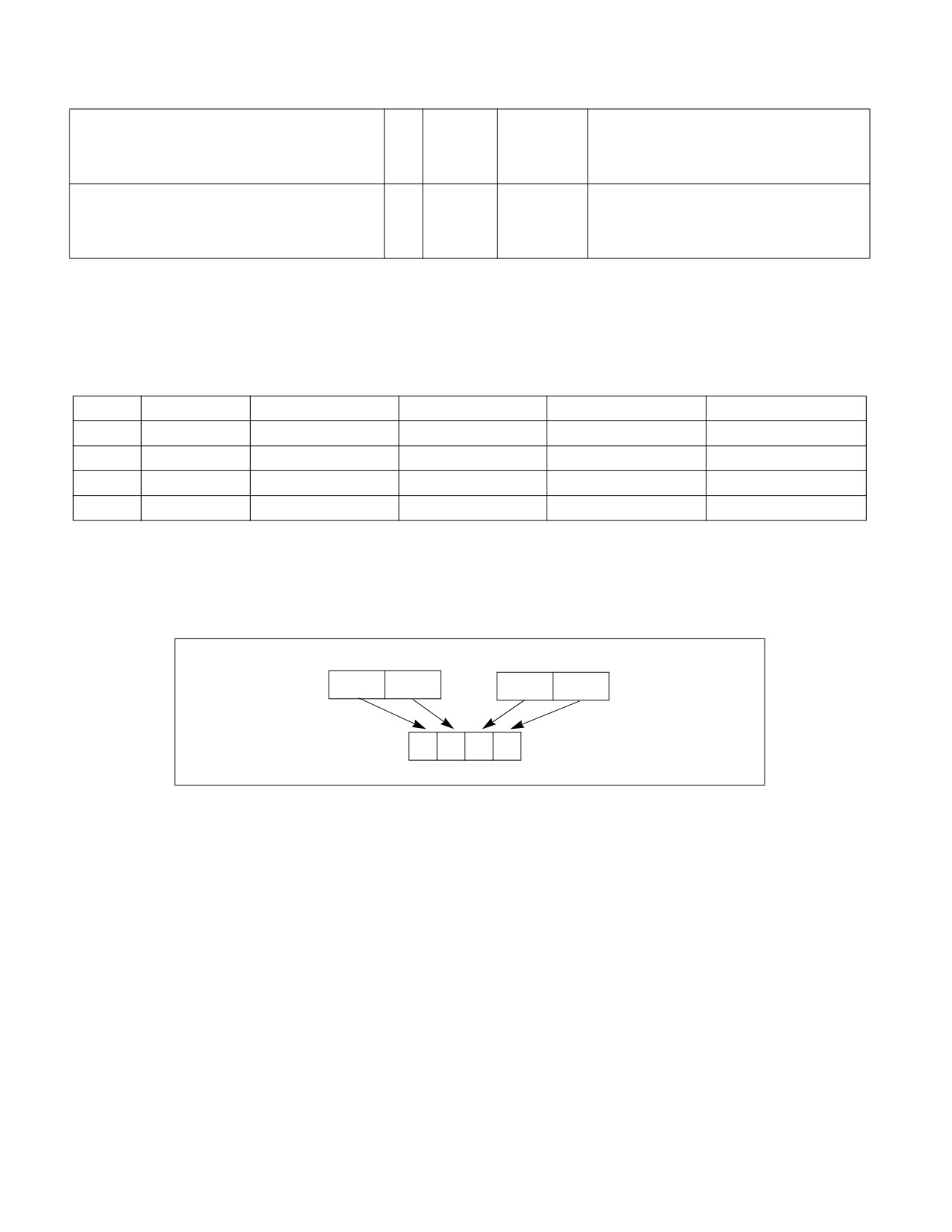
Converts packed signed word integers into packed signed byte integers (PACKSSWB) or converts packed signed
doubleword integers into packed signed word integers (PACKSSDW), using saturation to handle overflow condi-
tions. See Figure 4-6 for an example of the packing operation.
64-Bit SRC
64-Bit DEST
D
C
B
A
D’
C’
B’
A’
64-Bit DEST
Figure 4-6. Operation of the PACKSSDW Instruction Using 64-Bit Operands
PACKSSWB converts packed signed word integers in the first and second source operands into packed signed byte
integers using signed saturation to handle overflow conditions beyond the range of signed byte integers. If the
signed word value is beyond the range of a signed byte value (i.e., greater than 7FH or less than 80H), the satu-
rated signed byte integer value of 7FH or 80H, respectively, is stored in the destination. PACKSSDW converts
packed signed doubleword integers in the first and second source operands into packed signed word integers using
signed saturation to handle overflow conditions beyond 7FFFH and 8000H.
EVEX encoded PACKSSWB: The first source operand is a ZMM/YMM/XMM register. The second source operand is a
ZMM/YMM/XMM register or a 512/256/128-bit memory location. The destination operand is a ZMM/YMM/XMM
register, updated conditional under the writemask k1.
EVEX encoded PACKSSDW: The first source operand is a ZMM/YMM/XMM register. The second source operand is a
ZMM/YMM/XMM register, a 512/256/128-bit memory location, or a 512/256/128-bit vector broadcasted from a 32-
bit memory location. The destination operand is a ZMM/YMM/XMM register, updated conditional under the
writemask k1.
PACKSSWB/PACKSSDW—Pack With Signed Saturation
Vol. 2B
4-193
INSTRUCTION SET REFERENCE, M-U
VEX.256 encoded version: The first source operand is a YMM register. The second source operand is a YMM register
or a 256-bit memory location. The destination operand is a YMM register. The upper bits (MAXVL-1:256) of the
corresponding ZMM register destination are zeroed.
VEX.128 encoded version: The first source operand is an XMM register. The second source operand is an XMM
register or 128-bit memory location. The destination operand is an XMM register. The upper bits (MAXVL-1:128) of
the corresponding ZMM register destination are zeroed.
128-bit Legacy SSE version: The first source operand is an XMM register. The second operand can be an XMM
register or an 128-bit memory location. The destination is not distinct from the first source XMM register and the
upper bits (MAXVL-1:128) of the corresponding ZMM destination register destination are unmodified.
Operation
PACKSSWB instruction (128-bit Legacy SSE version)
DEST[7:0] := SaturateSignedWordToSignedByte (DEST[15:0]);
DEST[15:8] := SaturateSignedWordToSignedByte (DEST[31:16]);
DEST[23:16] := SaturateSignedWordToSignedByte (DEST[47:32]);
DEST[31:24] := SaturateSignedWordToSignedByte (DEST[63:48]);
DEST[39:32] := SaturateSignedWordToSignedByte (DEST[79:64]);
DEST[47:40] := SaturateSignedWordToSignedByte (DEST[95:80]);
DEST[55:48] := SaturateSignedWordToSignedByte (DEST[111:96]);
DEST[63:56] := SaturateSignedWordToSignedByte (DEST[127:112]);
DEST[71:64] := SaturateSignedWordToSignedByte (SRC[15:0]);
DEST[79:72] := SaturateSignedWordToSignedByte (SRC[31:16]);
DEST[87:80] := SaturateSignedWordToSignedByte (SRC[47:32]);
DEST[95:88] := SaturateSignedWordToSignedByte (SRC[63:48]);
DEST[103:96] := SaturateSignedWordToSignedByte (SRC[79:64]);
DEST[111:104] := SaturateSignedWordToSignedByte (SRC[95:80]);
DEST[119:112] := SaturateSignedWordToSignedByte (SRC[111:96]);
DEST[127:120] := SaturateSignedWordToSignedByte (SRC[127:112]);
DEST[MAXVL-1:128] (Unmodified)
PACKSSDW instruction (128-bit Legacy SSE version)
DEST[15:0] := SaturateSignedDwordToSignedWord (DEST[31:0]);
DEST[31:16] := SaturateSignedDwordToSignedWord (DEST[63:32]);
DEST[47:32] := SaturateSignedDwordToSignedWord (DEST[95:64]);
DEST[63:48] := SaturateSignedDwordToSignedWord (DEST[127:96]);
DEST[79:64] := SaturateSignedDwordToSignedWord (SRC[31:0]);
DEST[95:80] := SaturateSignedDwordToSignedWord (SRC[63:32]);
DEST[111:96] := SaturateSignedDwordToSignedWord (SRC[95:64]);
DEST[127:112] := SaturateSignedDwordToSignedWord (SRC[127:96]);
DEST[MAXVL-1:128] (Unmodified)
4-194
Vol. 2B
PACKSSWB/PACKSSDW—Pack With Signed Saturation
INSTRUCTION SET REFERENCE, M-U
VPACKSSWB instruction (VEX.128 encoded version)
DEST[7:0] := SaturateSignedWordToSignedByte (SRC1[15:0]);
DEST[15:8] := SaturateSignedWordToSignedByte (SRC1[31:16]);
DEST[23:16] := SaturateSignedWordToSignedByte (SRC1[47:32]);
DEST[31:24] := SaturateSignedWordToSignedByte (SRC1[63:48]);
DEST[39:32] := SaturateSignedWordToSignedByte (SRC1[79:64]);
DEST[47:40] := SaturateSignedWordToSignedByte (SRC1[95:80]);
DEST[55:48] := SaturateSignedWordToSignedByte (SRC1[111:96]);
DEST[63:56] := SaturateSignedWordToSignedByte (SRC1[127:112]);
DEST[71:64] := SaturateSignedWordToSignedByte (SRC2[15:0]);
DEST[79:72] := SaturateSignedWordToSignedByte (SRC2[31:16]);
DEST[87:80] := SaturateSignedWordToSignedByte (SRC2[47:32]);
DEST[95:88] := SaturateSignedWordToSignedByte (SRC2[63:48]);
DEST[103:96] := SaturateSignedWordToSignedByte (SRC2[79:64]);
DEST[111:104] := SaturateSignedWordToSignedByte (SRC2[95:80]);
DEST[119:112] := SaturateSignedWordToSignedByte (SRC2[111:96]);
DEST[127:120] := SaturateSignedWordToSignedByte (SRC2[127:112]);
DEST[MAXVL-1:128] := 0;
VPACKSSDW instruction (VEX.128 encoded version)
DEST[15:0] := SaturateSignedDwordToSignedWord (SRC1[31:0]);
DEST[31:16] := SaturateSignedDwordToSignedWord (SRC1[63:32]);
DEST[47:32] := SaturateSignedDwordToSignedWord (SRC1[95:64]);
DEST[63:48] := SaturateSignedDwordToSignedWord (SRC1[127:96]);
DEST[79:64] := SaturateSignedDwordToSignedWord (SRC2[31:0]);
DEST[95:80] := SaturateSignedDwordToSignedWord (SRC2[63:32]);
DEST[111:96] := SaturateSignedDwordToSignedWord (SRC2[95:64]);
DEST[127:112] := SaturateSignedDwordToSignedWord (SRC2[127:96]);
DEST[MAXVL-1:128] := 0;
VPACKSSWB instruction (VEX.256 encoded version)
DEST[7:0] := SaturateSignedWordToSignedByte (SRC1[15:0]);
DEST[15:8] := SaturateSignedWordToSignedByte (SRC1[31:16]);
DEST[23:16] := SaturateSignedWordToSignedByte (SRC1[47:32]);
DEST[31:24] := SaturateSignedWordToSignedByte (SRC1[63:48]);
DEST[39:32] := SaturateSignedWordToSignedByte (SRC1[79:64]);
DEST[47:40] := SaturateSignedWordToSignedByte (SRC1[95:80]);
DEST[55:48] := SaturateSignedWordToSignedByte (SRC1[111:96]);
DEST[63:56] := SaturateSignedWordToSignedByte (SRC1[127:112]);
DEST[71:64] := SaturateSignedWordToSignedByte (SRC2[15:0]);
DEST[79:72] := SaturateSignedWordToSignedByte (SRC2[31:16]);
DEST[87:80] := SaturateSignedWordToSignedByte (SRC2[47:32]);
DEST[95:88] := SaturateSignedWordToSignedByte (SRC2[63:48]);
DEST[103:96] := SaturateSignedWordToSignedByte (SRC2[79:64]);
DEST[111:104] := SaturateSignedWordToSignedByte (SRC2[95:80]);
DEST[119:112] := SaturateSignedWordToSignedByte (SRC2[111:96]);
DEST[127:120] := SaturateSignedWordToSignedByte (SRC2[127:112]);
DEST[135:128] := SaturateSignedWordToSignedByte (SRC1[143:128]);
DEST[143:136] := SaturateSignedWordToSignedByte (SRC1[159:144]);
DEST[151:144] := SaturateSignedWordToSignedByte (SRC1[175:160]);
DEST[159:152] := SaturateSignedWordToSignedByte (SRC1[191:176]);
DEST[167:160] := SaturateSignedWordToSignedByte (SRC1[207:192]);
DEST[175:168] := SaturateSignedWordToSignedByte (SRC1[223:208]);
DEST[183:176] := SaturateSignedWordToSignedByte (SRC1[239:224]);
PACKSSWB/PACKSSDW—Pack With Signed Saturation
Vol. 2B
4-195
INSTRUCTION SET REFERENCE, M-U
DEST[191:184] := SaturateSignedWordToSignedByte (SRC1[255:240]);
DEST[199:192] := SaturateSignedWordToSignedByte (SRC2[143:128]);
DEST[207:200] := SaturateSignedWordToSignedByte (SRC2[159:144]);
DEST[215:208] := SaturateSignedWordToSignedByte (SRC2[175:160]);
DEST[223:216] := SaturateSignedWordToSignedByte (SRC2[191:176]);
DEST[231:224] := SaturateSignedWordToSignedByte (SRC2[207:192]);
DEST[239:232] := SaturateSignedWordToSignedByte (SRC2[223:208]);
DEST[247:240] := SaturateSignedWordToSignedByte (SRC2[239:224]);
DEST[255:248] := SaturateSignedWordToSignedByte (SRC2[255:240]);
DEST[MAXVL-1:256] := 0;
VPACKSSDW instruction (VEX.256 encoded version)
DEST[15:0] := SaturateSignedDwordToSignedWord (SRC1[31:0]);
DEST[31:16] := SaturateSignedDwordToSignedWord (SRC1[63:32]);
DEST[47:32] := SaturateSignedDwordToSignedWord (SRC1[95:64]);
DEST[63:48] := SaturateSignedDwordToSignedWord (SRC1[127:96]);
DEST[79:64] := SaturateSignedDwordToSignedWord (SRC2[31:0]);
DEST[95:80] := SaturateSignedDwordToSignedWord (SRC2[63:32]);
DEST[111:96] := SaturateSignedDwordToSignedWord (SRC2[95:64]);
DEST[127:112] := SaturateSignedDwordToSignedWord (SRC2[127:96]);
DEST[143:128] := SaturateSignedDwordToSignedWord (SRC1[159:128]);
DEST[159:144] := SaturateSignedDwordToSignedWord (SRC1[191:160]);
DEST[175:160] := SaturateSignedDwordToSignedWord (SRC1[223:192]);
DEST[191:176] := SaturateSignedDwordToSignedWord (SRC1[255:224]);
DEST[207:192] := SaturateSignedDwordToSignedWord (SRC2[159:128]);
DEST[223:208] := SaturateSignedDwordToSignedWord (SRC2[191:160]);
DEST[239:224] := SaturateSignedDwordToSignedWord (SRC2[223:192]);
DEST[255:240] := SaturateSignedDwordToSignedWord (SRC2[255:224]);
DEST[MAXVL-1:256] := 0;
VPACKSSWB (EVEX encoded versions)
(KL, VL) = (16, 128), (32, 256), (64, 512)
TMP_DEST[7:0] := SaturateSignedWordToSignedByte (SRC1[15:0]);
TMP_DEST[15:8] := SaturateSignedWordToSignedByte (SRC1[31:16]);
TMP_DEST[23:16] := SaturateSignedWordToSignedByte (SRC1[47:32]);
TMP_DEST[31:24] := SaturateSignedWordToSignedByte (SRC1[63:48]);
TMP_DEST[39:32] := SaturateSignedWordToSignedByte (SRC1[79:64]);
TMP_DEST[47:40] := SaturateSignedWordToSignedByte (SRC1[95:80]);
TMP_DEST[55:48] := SaturateSignedWordToSignedByte (SRC1[111:96]);
TMP_DEST[63:56] := SaturateSignedWordToSignedByte (SRC1[127:112]);
TMP_DEST[71:64] := SaturateSignedWordToSignedByte (SRC2[15:0]);
TMP_DEST[79:72] := SaturateSignedWordToSignedByte (SRC2[31:16]);
TMP_DEST[87:80] := SaturateSignedWordToSignedByte (SRC2[47:32]);
TMP_DEST[95:88] := SaturateSignedWordToSignedByte (SRC2[63:48]);
TMP_DEST[103:96] := SaturateSignedWordToSignedByte (SRC2[79:64]);
TMP_DEST[111:104] := SaturateSignedWordToSignedByte (SRC2[95:80]);
TMP_DEST[119:112] := SaturateSignedWordToSignedByte (SRC2[111:96]);
TMP_DEST[127:120] := SaturateSignedWordToSignedByte (SRC2[127:112]);
IF VL >= 256
TMP_DEST[135:128] := SaturateSignedWordToSignedByte (SRC1[143:128]);
TMP_DEST[143:136] := SaturateSignedWordToSignedByte (SRC1[159:144]);
TMP_DEST[151:144] := SaturateSignedWordToSignedByte (SRC1[175:160]);
TMP_DEST[159:152] := SaturateSignedWordToSignedByte (SRC1[191:176]);
TMP_DEST[167:160] := SaturateSignedWordToSignedByte (SRC1[207:192]);
4-196
Vol. 2B
PACKSSWB/PACKSSDW—Pack With Signed Saturation
INSTRUCTION SET REFERENCE, M-U
TMP_DEST[175:168] := SaturateSignedWordToSignedByte (SRC1[223:208]);
TMP_DEST[183:176] := SaturateSignedWordToSignedByte (SRC1[239:224]);
TMP_DEST[191:184] := SaturateSignedWordToSignedByte (SRC1[255:240]);
TMP_DEST[199:192] := SaturateSignedWordToSignedByte (SRC2[143:128]);
TMP_DEST[207:200] := SaturateSignedWordToSignedByte (SRC2[159:144]);
TMP_DEST[215:208] := SaturateSignedWordToSignedByte (SRC2[175:160]);
TMP_DEST[223:216] := SaturateSignedWordToSignedByte (SRC2[191:176]);
TMP_DEST[231:224] := SaturateSignedWordToSignedByte (SRC2[207:192]);
TMP_DEST[239:232] := SaturateSignedWordToSignedByte (SRC2[223:208]);
TMP_DEST[247:240] := SaturateSignedWordToSignedByte (SRC2[239:224]);
TMP_DEST[255:248] := SaturateSignedWordToSignedByte (SRC2[255:240]);
FI;
IF VL >= 512
TMP_DEST[263:256] := SaturateSignedWordToSignedByte (SRC1[271:256]);
TMP_DEST[271:264] := SaturateSignedWordToSignedByte (SRC1[287:272]);
TMP_DEST[279:272] := SaturateSignedWordToSignedByte (SRC1[303:288]);
TMP_DEST[287:280] := SaturateSignedWordToSignedByte (SRC1[319:304]);
TMP_DEST[295:288] := SaturateSignedWordToSignedByte (SRC1[335:320]);
TMP_DEST[303:296] := SaturateSignedWordToSignedByte (SRC1[351:336]);
TMP_DEST[311:304] := SaturateSignedWordToSignedByte (SRC1[367:352]);
TMP_DEST[319:312] := SaturateSignedWordToSignedByte (SRC1[383:368]);
TMP_DEST[327:320] := SaturateSignedWordToSignedByte (SRC2[271:256]);
TMP_DEST[335:328] := SaturateSignedWordToSignedByte (SRC2[287:272]);
TMP_DEST[343:336] := SaturateSignedWordToSignedByte (SRC2[303:288]);
TMP_DEST[351:344] := SaturateSignedWordToSignedByte (SRC2[319:304]);
TMP_DEST[359:352] := SaturateSignedWordToSignedByte (SRC2[335:320]);
TMP_DEST[367:360] := SaturateSignedWordToSignedByte (SRC2[351:336]);
TMP_DEST[375:368] := SaturateSignedWordToSignedByte (SRC2[367:352]);
TMP_DEST[383:376] := SaturateSignedWordToSignedByte (SRC2[383:368]);
TMP_DEST[391:384] := SaturateSignedWordToSignedByte (SRC1[399:384]);
TMP_DEST[399:392] := SaturateSignedWordToSignedByte (SRC1[415:400]);
TMP_DEST[407:400] := SaturateSignedWordToSignedByte (SRC1[431:416]);
TMP_DEST[415:408] := SaturateSignedWordToSignedByte (SRC1[447:432]);
TMP_DEST[423:416] := SaturateSignedWordToSignedByte (SRC1[463:448]);
TMP_DEST[431:424] := SaturateSignedWordToSignedByte (SRC1[479:464]);
TMP_DEST[439:432] := SaturateSignedWordToSignedByte (SRC1[495:480]);
TMP_DEST[447:440] := SaturateSignedWordToSignedByte (SRC1[511:496]);
TMP_DEST[455:448] := SaturateSignedWordToSignedByte (SRC2[399:384]);
TMP_DEST[463:456] := SaturateSignedWordToSignedByte (SRC2[415:400]);
TMP_DEST[471:464] := SaturateSignedWordToSignedByte (SRC2[431:416]);
TMP_DEST[479:472] := SaturateSignedWordToSignedByte (SRC2[447:432]);
TMP_DEST[487:480] := SaturateSignedWordToSignedByte (SRC2[463:448]);
TMP_DEST[495:488] := SaturateSignedWordToSignedByte (SRC2[479:464]);
TMP_DEST[503:496] := SaturateSignedWordToSignedByte (SRC2[495:480]);
TMP_DEST[511:504] := SaturateSignedWordToSignedByte (SRC2[511:496]);
FI;
FOR j := 0 TO KL-1
i := j * 8
IF k1[j] OR *no writemask*
THEN
DEST[i+7:i] := TMP_DEST[i+7:i]
PACKSSWB/PACKSSDW—Pack With Signed Saturation
Vol. 2B
4-197
INSTRUCTION SET REFERENCE, M-U
ELSE
IF *merging-masking*
; merging-masking
THEN *DEST[i+7:i] remains unchanged*
ELSE *zeroing-masking*
; zeroing-masking
DEST[i+7:i] := 0
FI
FI;
ENDFOR;
DEST[MAXVL-1:VL] := 0
VPACKSSDW (EVEX encoded versions)
(KL, VL) = (8, 128), (16, 256), (32, 512)
FOR j := 0 TO ((KL/2) - 1)
i := j * 32
IF (EVEX.b == 1) AND (SRC2 *is memory*)
THEN
TMP_SRC2[i+31:i] := SRC2[31:0]
ELSE
TMP_SRC2[i+31:i] := SRC2[i+31:i]
FI;
ENDFOR;
TMP_DEST[15:0] := SaturateSignedDwordToSignedWord (SRC1[31:0]);
TMP_DEST[31:16] := SaturateSignedDwordToSignedWord (SRC1[63:32]);
TMP_DEST[47:32] := SaturateSignedDwordToSignedWord (SRC1[95:64]);
TMP_DEST[63:48] := SaturateSignedDwordToSignedWord (SRC1[127:96]);
TMP_DEST[79:64] := SaturateSignedDwordToSignedWord (TMP_SRC2[31:0]);
TMP_DEST[95:80] := SaturateSignedDwordToSignedWord (TMP_SRC2[63:32]);
TMP_DEST[111:96] := SaturateSignedDwordToSignedWord (TMP_SRC2[95:64]);
TMP_DEST[127:112] := SaturateSignedDwordToSignedWord (TMP_SRC2[127:96]);
IF VL >= 256
TMP_DEST[143:128] := SaturateSignedDwordToSignedWord (SRC1[159:128]);
TMP_DEST[159:144] := SaturateSignedDwordToSignedWord (SRC1[191:160]);
TMP_DEST[175:160] := SaturateSignedDwordToSignedWord (SRC1[223:192]);
TMP_DEST[191:176] := SaturateSignedDwordToSignedWord (SRC1[255:224]);
TMP_DEST[207:192] := SaturateSignedDwordToSignedWord (TMP_SRC2[159:128]);
TMP_DEST[223:208] := SaturateSignedDwordToSignedWord (TMP_SRC2[191:160]);
TMP_DEST[239:224] := SaturateSignedDwordToSignedWord (TMP_SRC2[223:192]);
TMP_DEST[255:240] := SaturateSignedDwordToSignedWord (TMP_SRC2[255:224]);
FI;
IF VL >= 512
TMP_DEST[271:256] := SaturateSignedDwordToSignedWord (SRC1[287:256]);
TMP_DEST[287:272] := SaturateSignedDwordToSignedWord (SRC1[319:288]);
TMP_DEST[303:288] := SaturateSignedDwordToSignedWord (SRC1[351:320]);
TMP_DEST[319:304] := SaturateSignedDwordToSignedWord (SRC1[383:352]);
TMP_DEST[335:320] := SaturateSignedDwordToSignedWord (TMP_SRC2[287:256]);
TMP_DEST[351:336] := SaturateSignedDwordToSignedWord (TMP_SRC2[319:288]);
TMP_DEST[367:352] := SaturateSignedDwordToSignedWord (TMP_SRC2[351:320]);
TMP_DEST[383:368] := SaturateSignedDwordToSignedWord (TMP_SRC2[383:352]);
TMP_DEST[399:384] := SaturateSignedDwordToSignedWord (SRC1[415:384]);
TMP_DEST[415:400] := SaturateSignedDwordToSignedWord (SRC1[447:416]);
TMP_DEST[431:416] := SaturateSignedDwordToSignedWord (SRC1[479:448]);
4-198
Vol. 2B
PACKSSWB/PACKSSDW—Pack With Signed Saturation
INSTRUCTION SET REFERENCE, M-U
TMP_DEST[447:432] := SaturateSignedDwordToSignedWord (SRC1[511:480]);
TMP_DEST[463:448] := SaturateSignedDwordToSignedWord (TMP_SRC2[415:384]);
TMP_DEST[479:464] := SaturateSignedDwordToSignedWord (TMP_SRC2[447:416]);
TMP_DEST[495:480] := SaturateSignedDwordToSignedWord (TMP_SRC2[479:448]);
TMP_DEST[511:496] := SaturateSignedDwordToSignedWord (TMP_SRC2[511:480]);
FI;
FOR j := 0 TO KL-1
i := j * 16
IF k1[j] OR *no writemask*
THEN DEST[i+15:i] := TMP_DEST[i+15:i]
ELSE
IF *merging-masking*
; merging-masking
THEN *DEST[i+15:i] remains unchanged*
ELSE *zeroing-masking*
; zeroing-masking
DEST[i+15:i] := 0
FI
FI;
ENDFOR;
DEST[MAXVL-1:VL] := 0
Intel C/C++ Compiler Intrinsic Equivalents
VPACKSSDW__m512i _mm512_packs_epi32(__m512i m1, __m512i m2);
VPACKSSDW__m512i _mm512_mask_packs_epi32(__m512i s, __mmask32 k, __m512i m1, __m512i m2);
VPACKSSDW__m512i _mm512_maskz_packs_epi32( __mmask32 k, __m512i m1, __m512i m2);
VPACKSSDW__m256i _mm256_mask_packs_epi32( __m256i s, __mmask16 k, __m256i m1, __m256i m2);
VPACKSSDW__m256i _mm256_maskz_packs_epi32( __mmask16 k, __m256i m1, __m256i m2);
VPACKSSDW__m128i _mm_mask_packs_epi32( __m128i s, __mmask8 k, __m128i m1, __m128i m2);
VPACKSSDW__m128i _mm_maskz_packs_epi32( __mmask8 k, __m128i m1, __m128i m2);
VPACKSSWB__m512i _mm512_packs_epi16(__m512i m1, __m512i m2);
VPACKSSWB__m512i _mm512_mask_packs_epi16(__m512i s, __mmask32 k, __m512i m1, __m512i m2);
VPACKSSWB__m512i _mm512_maskz_packs_epi16( __mmask32 k, __m512i m1, __m512i m2);
VPACKSSWB__m256i _mm256_mask_packs_epi16( __m256i s, __mmask16 k, __m256i m1, __m256i m2);
VPACKSSWB__m256i _mm256_maskz_packs_epi16( __mmask16 k, __m256i m1, __m256i m2);
VPACKSSWB__m128i _mm_mask_packs_epi16( __m128i s, __mmask8 k, __m128i m1, __m128i m2);
VPACKSSWB__m128i _mm_maskz_packs_epi16( __mmask8 k, __m128i m1, __m128i m2);
PACKSSWB __m128i _mm_packs_epi16(__m128i m1, __m128i m2)
PACKSSDW __m128i _mm_packs_epi32(__m128i m1, __m128i m2)
VPACKSSWB __m256i _mm256_packs_epi16(__m256i m1, __m256i m2)
VPACKSSDW __m256i _mm256_packs_epi32(__m256i m1, __m256i m2)
SIMD Floating-Point Exceptions
None
Other Exceptions
Non-EVEX-encoded instruction, see Table 2-21, “Type 4 Class Exception Conditions”.
EVEX-encoded VPACKSSDW, see Table 2-50, “Type E4NF Class Exception Conditions”.
EVEX-encoded VPACKSSWB, see Exceptions Type E4NF.nb in Table 2-50, “Type E4NF Class Exception Conditions”.
PACKSSWB/PACKSSDW—Pack With Signed Saturation
Vol. 2B
4-199

INSTRUCTION SET REFERENCE, M-U
PACKUSDW—Pack With Unsigned Saturation
Opcode/
Op /
64/32
CPUID
Description
Instruction
En
bit Mode
Feature
Support
Flag
66 0F 38 2B /r
A
V/V
SSE4_1
Convert 4 packed signed doubleword integers from xmm1
PACKUSDW xmm1, xmm2/m128
and 4 packed signed doubleword integers from
xmm2/m128 into 8 packed unsigned word integers in
xmm1 using unsigned saturation.
VEX.128.66.0F38 2B /r
B
V/V
AVX
Convert 4 packed signed doubleword integers from xmm2
VPACKUSDW xmm1,xmm2,
and 4 packed signed doubleword integers from
xmm3/m128
xmm3/m128 into 8 packed unsigned word integers in
xmm1 using unsigned saturation.
VEX.256.66.0F38 2B /r
B
V/V
AVX2
Convert 8 packed signed doubleword integers from ymm2
VPACKUSDW ymm1, ymm2,
and 8 packed signed doubleword integers from
ymm3/m256
ymm3/m256 into 16 packed unsigned word integers in
ymm1 using unsigned saturation.
EVEX.128.66.0F38.W0 2B /r
C
V/V
AVX512VL
Convert packed signed doubleword integers from xmm2
VPACKUSDW xmm1{k1}{z},
AVX512BW
and packed signed doubleword integers from
xmm2, xmm3/m128/m32bcst
xmm3/m128/m32bcst into packed unsigned word integers
in xmm1 using unsigned saturation under writemask k1.
EVEX.256.66.0F38.W0 2B /r
C
V/V
AVX512VL
Convert packed signed doubleword integers from ymm2
VPACKUSDW ymm1{k1}{z},
AVX512BW
and packed signed doubleword integers from
ymm2, ymm3/m256/m32bcst
ymm3/m256/m32bcst into packed unsigned word integers
in ymm1 using unsigned saturation under writemask k1.
EVEX.512.66.0F38.W0 2B /r
C
V/V
AVX512BW
Convert packed signed doubleword integers from zmm2
VPACKUSDW zmm1{k1}{z},
and packed signed doubleword integers from
zmm2, zmm3/m512/m32bcst
zmm3/m512/m32bcst into packed unsigned word integers
in zmm1 using unsigned saturation under writemask k1.
Instruction Operand Encoding
Op/En
Tuple Type
Operand 1
Operand 2
Operand 3
Operand 4
A
N/A
ModRM:reg (r, w)
ModRM:r/m (r)
N/A
N/A
B
N/A
ModRM:reg (w)
VEX.vvvv (r)
ModRM:r/m (r)
N/A
C
Full
ModRM:reg (w)
EVEX.vvvv (r)
ModRM:r/m (r)
N/A
Description
Converts packed signed doubleword integers in the first and second source operands into packed unsigned word
integers using unsigned saturation to handle overflow conditions. If the signed doubleword value is beyond the
range of an unsigned word (that is, greater than FFFFH or less than 0000H), the saturated unsigned word integer
value of FFFFH or 0000H, respectively, is stored in the destination.
EVEX encoded versions: The first source operand is a ZMM/YMM/XMM register. The second source operand is a
ZMM/YMM/XMM register, a 512/256/128-bit memory location, or a 512/256/128-bit vector broadcasted from a 32-
bit memory location. The destination operand is a ZMM register, updated conditionally under the writemask k1.
VEX.256 encoded version: The first source operand is a YMM register. The second source operand is a YMM register
or a 256-bit memory location. The destination operand is a YMM register. The upper bits (MAXVL-1:256) of the
corresponding ZMM register destination are zeroed.
VEX.128 encoded version: The first source operand is an XMM register. The second source operand is an XMM
register or 128-bit memory location. The destination operand is an XMM register. The upper bits (MAXVL-1:128) of
the corresponding ZMM register destination are zeroed.
128-bit Legacy SSE version: The first source operand is an XMM register. The second operand can be an XMM
register or an 128-bit memory location. The destination is not distinct from the first source XMM register and the
upper bits (MAXVL-1:128) of the corresponding destination register destination are unmodified.
4-200
Vol. 2B
PACKUSDW—Pack With Unsigned Saturation
INSTRUCTION SET REFERENCE, M-U
Operation
PACKUSDW (Legacy SSE instruction)
TMP[15:0] := (DEST[31:0] < 0) ? 0 : DEST[15:0];
DEST[15:0] := (DEST[31:0] > FFFFH) ? FFFFH : TMP[15:0] ;
TMP[31:16] := (DEST[63:32] < 0) ? 0 : DEST[47:32];
DEST[31:16] := (DEST[63:32] > FFFFH) ? FFFFH : TMP[31:16] ;
TMP[47:32] := (DEST[95:64] < 0) ? 0 : DEST[79:64];
DEST[47:32] := (DEST[95:64] > FFFFH) ? FFFFH : TMP[47:32] ;
TMP[63:48] := (DEST[127:96] < 0) ? 0 : DEST[111:96];
DEST[63:48] := (DEST[127:96] > FFFFH) ? FFFFH : TMP[63:48] ;
TMP[79:64] := (SRC[31:0] < 0) ? 0 : SRC[15:0];
DEST[79:64] := (SRC[31:0] > FFFFH) ? FFFFH : TMP[79:64] ;
TMP[95:80] := (SRC[63:32] < 0) ? 0 : SRC[47:32];
DEST[95:80] := (SRC[63:32] > FFFFH) ? FFFFH : TMP[95:80] ;
TMP[111:96] := (SRC[95:64] < 0) ? 0 : SRC[79:64];
DEST[111:96] := (SRC[95:64] > FFFFH) ? FFFFH : TMP[111:96] ;
TMP[127:112] := (SRC[127:96] < 0) ? 0 : SRC[111:96];
DEST[127:112] := (SRC[127:96] > FFFFH) ? FFFFH : TMP[127:112] ;
DEST[MAXVL-1:128] (Unmodified)
PACKUSDW (VEX.128 encoded version)
TMP[15:0] := (SRC1[31:0] < 0) ? 0 : SRC1[15:0];
DEST[15:0] := (SRC1[31:0] > FFFFH) ? FFFFH : TMP[15:0] ;
TMP[31:16] := (SRC1[63:32] < 0) ? 0 : SRC1[47:32];
DEST[31:16] := (SRC1[63:32] > FFFFH) ? FFFFH : TMP[31:16] ;
TMP[47:32] := (SRC1[95:64] < 0) ? 0 : SRC1[79:64];
DEST[47:32] := (SRC1[95:64] > FFFFH) ? FFFFH : TMP[47:32] ;
TMP[63:48] := (SRC1[127:96] < 0) ? 0 : SRC1[111:96];
DEST[63:48] := (SRC1[127:96] > FFFFH) ? FFFFH : TMP[63:48] ;
TMP[79:64] := (SRC2[31:0] < 0) ? 0 : SRC2[15:0];
DEST[79:64] := (SRC2[31:0] > FFFFH) ? FFFFH : TMP[79:64] ;
TMP[95:80] := (SRC2[63:32] < 0) ? 0 : SRC2[47:32];
DEST[95:80] := (SRC2[63:32] > FFFFH) ? FFFFH : TMP[95:80] ;
TMP[111:96] := (SRC2[95:64] < 0) ? 0 : SRC2[79:64];
DEST[111:96] := (SRC2[95:64] > FFFFH) ? FFFFH : TMP[111:96] ;
TMP[127:112] := (SRC2[127:96] < 0) ? 0 : SRC2[111:96];
DEST[127:112] := (SRC2[127:96] > FFFFH) ? FFFFH : TMP[127:112];
DEST[MAXVL-1:128] := 0;
VPACKUSDW (VEX.256 encoded version)
TMP[15:0] := (SRC1[31:0] < 0) ? 0 : SRC1[15:0];
DEST[15:0] := (SRC1[31:0] > FFFFH) ? FFFFH : TMP[15:0] ;
TMP[31:16] := (SRC1[63:32] < 0) ? 0 : SRC1[47:32];
DEST[31:16] := (SRC1[63:32] > FFFFH) ? FFFFH : TMP[31:16] ;
TMP[47:32] := (SRC1[95:64] < 0) ? 0 : SRC1[79:64];
DEST[47:32] := (SRC1[95:64] > FFFFH) ? FFFFH : TMP[47:32] ;
TMP[63:48] := (SRC1[127:96] < 0) ? 0 : SRC1[111:96];
DEST[63:48] := (SRC1[127:96] > FFFFH) ? FFFFH : TMP[63:48] ;
TMP[79:64] := (SRC2[31:0] < 0) ? 0 : SRC2[15:0];
DEST[79:64] := (SRC2[31:0] > FFFFH) ? FFFFH : TMP[79:64] ;
TMP[95:80] := (SRC2[63:32] < 0) ? 0 : SRC2[47:32];
DEST[95:80] := (SRC2[63:32] > FFFFH) ? FFFFH : TMP[95:80] ;
TMP[111:96] := (SRC2[95:64] < 0) ? 0 : SRC2[79:64];
DEST[111:96] := (SRC2[95:64] > FFFFH) ? FFFFH : TMP[111:96] ;
PACKUSDW—Pack With Unsigned Saturation
Vol. 2B
4-201
INSTRUCTION SET REFERENCE, M-U
TMP[127:112] := (SRC2[127:96] < 0) ? 0 : SRC2[111:96];
DEST[127:112] := (SRC2[127:96] > FFFFH) ? FFFFH : TMP[127:112] ;
TMP[143:128] := (SRC1[159:128] < 0) ? 0 : SRC1[143:128];
DEST[143:128] := (SRC1[159:128] > FFFFH) ? FFFFH : TMP[143:128] ;
TMP[159:144] := (SRC1[191:160] < 0) ? 0 : SRC1[175:160];
DEST[159:144] := (SRC1[191:160] > FFFFH) ? FFFFH : TMP[159:144] ;
TMP[175:160] := (SRC1[223:192] < 0) ? 0 : SRC1[207:192];
DEST[175:160] := (SRC1[223:192] > FFFFH) ? FFFFH : TMP[175:160] ;
TMP[191:176] := (SRC1[255:224] < 0) ? 0 : SRC1[239:224];
DEST[191:176] := (SRC1[255:224] > FFFFH) ? FFFFH : TMP[191:176] ;
TMP[207:192] := (SRC2[159:128] < 0) ? 0 : SRC2[143:128];
DEST[207:192] := (SRC2[159:128] > FFFFH) ? FFFFH : TMP[207:192] ;
TMP[223:208] := (SRC2[191:160] < 0) ? 0 : SRC2[175:160];
DEST[223:208] := (SRC2[191:160] > FFFFH) ? FFFFH : TMP[223:208] ;
TMP[239:224] := (SRC2[223:192] < 0) ? 0 : SRC2[207:192];
DEST[239:224] := (SRC2[223:192] > FFFFH) ? FFFFH : TMP[239:224] ;
TMP[255:240] := (SRC2[255:224] < 0) ? 0 : SRC2[239:224];
DEST[255:240] := (SRC2[255:224] > FFFFH) ? FFFFH : TMP[255:240] ;
DEST[MAXVL-1:256] := 0;
VPACKUSDW (EVEX encoded versions)
(KL, VL) = (8, 128), (16, 256), (32, 512)
FOR j := 0 TO ((KL/2) - 1)
i := j * 32
IF (EVEX.b == 1) AND (SRC2 *is memory*)
THEN
TMP_SRC2[i+31:i] := SRC2[31:0]
ELSE
TMP_SRC2[i+31:i] := SRC2[i+31:i]
FI;
ENDFOR;
TMP[15:0] := (SRC1[31:0] < 0) ? 0 : SRC1[15:0];
DEST[15:0] := (SRC1[31:0] > FFFFH) ? FFFFH : TMP[15:0] ;
TMP[31:16] := (SRC1[63:32] < 0) ? 0 : SRC1[47:32];
DEST[31:16] := (SRC1[63:32] > FFFFH) ? FFFFH : TMP[31:16] ;
TMP[47:32] := (SRC1[95:64] < 0) ? 0 : SRC1[79:64];
DEST[47:32] := (SRC1[95:64] > FFFFH) ? FFFFH : TMP[47:32] ;
TMP[63:48] := (SRC1[127:96] < 0) ? 0 : SRC1[111:96];
DEST[63:48] := (SRC1[127:96] > FFFFH) ? FFFFH : TMP[63:48] ;
TMP[79:64] := (TMP_SRC2[31:0] < 0) ? 0 : TMP_SRC2[15:0];
DEST[79:64] := (TMP_SRC2[31:0] > FFFFH) ? FFFFH : TMP[79:64] ;
TMP[95:80] := (TMP_SRC2[63:32] < 0) ? 0 : TMP_SRC2[47:32];
DEST[95:80] := (TMP_SRC2[63:32] > FFFFH) ? FFFFH : TMP[95:80] ;
TMP[111:96] := (TMP_SRC2[95:64] < 0) ? 0 : TMP_SRC2[79:64];
DEST[111:96] := (TMP_SRC2[95:64] > FFFFH) ? FFFFH : TMP[111:96] ;
TMP[127:112] := (TMP_SRC2[127:96] < 0) ? 0 : TMP_SRC2[111:96];
DEST[127:112] := (TMP_SRC2[127:96] > FFFFH) ? FFFFH : TMP[127:112] ;
IF VL >= 256
TMP[143:128] := (SRC1[159:128] < 0) ? 0 : SRC1[143:128];
DEST[143:128] := (SRC1[159:128] > FFFFH) ? FFFFH : TMP[143:128] ;
TMP[159:144] := (SRC1[191:160] < 0) ? 0 : SRC1[175:160];
DEST[159:144] := (SRC1[191:160] > FFFFH) ? FFFFH : TMP[159:144] ;
4-202
Vol. 2B
PACKUSDW—Pack With Unsigned Saturation
INSTRUCTION SET REFERENCE, M-U
TMP[175:160] := (SRC1[223:192] < 0) ? 0 : SRC1[207:192];
DEST[175:160] := (SRC1[223:192] > FFFFH) ? FFFFH : TMP[175:160] ;
TMP[191:176] := (SRC1[255:224] < 0) ? 0 : SRC1[239:224];
DEST[191:176] := (SRC1[255:224] > FFFFH) ? FFFFH : TMP[191:176] ;
TMP[207:192] := (TMP_SRC2[159:128] < 0) ? 0 : TMP_SRC2[143:128];
DEST[207:192] := (TMP_SRC2[159:128] > FFFFH) ? FFFFH : TMP[207:192] ;
TMP[223:208] := (TMP_SRC2[191:160] < 0) ? 0 : TMP_SRC2[175:160];
DEST[223:208] := (TMP_SRC2[191:160] > FFFFH) ? FFFFH : TMP[223:208] ;
TMP[239:224] := (TMP_SRC2[223:192] < 0) ? 0 : TMP_SRC2[207:192];
DEST[239:224] := (TMP_SRC2[223:192] > FFFFH) ? FFFFH : TMP[239:224] ;
TMP[255:240] := (TMP_SRC2[255:224] < 0) ? 0 : TMP_SRC2[239:224];
DEST[255:240] := (TMP_SRC2[255:224] > FFFFH) ? FFFFH : TMP[255:240] ;
FI;
IF VL >= 512
TMP[271:256] := (SRC1[287:256] < 0) ? 0 : SRC1[271:256];
DEST[271:256] := (SRC1[287:256] > FFFFH) ? FFFFH : TMP[271:256] ;
TMP[287:272] := (SRC1[319:288] < 0) ? 0 : SRC1[303:288];
DEST[287:272] := (SRC1[319:288] > FFFFH) ? FFFFH : TMP[287:272] ;
TMP[303:288] := (SRC1[351:320] < 0) ? 0 : SRC1[335:320];
DEST[303:288] := (SRC1[351:320] > FFFFH) ? FFFFH : TMP[303:288] ;
TMP[319:304] := (SRC1[383:352] < 0) ? 0 : SRC1[367:352];
DEST[319:304] := (SRC1[383:352] > FFFFH) ? FFFFH : TMP[319:304] ;
TMP[335:320] := (TMP_SRC2[287:256] < 0) ? 0 : TMP_SRC2[271:256];
DEST[335:304] := (TMP_SRC2[287:256] > FFFFH) ? FFFFH : TMP[79:64] ;
TMP[351:336] := (TMP_SRC2[319:288] < 0) ? 0 : TMP_SRC2[303:288];
DEST[351:336] := (TMP_SRC2[319:288] > FFFFH) ? FFFFH : TMP[351:336] ;
TMP[367:352] := (TMP_SRC2[351:320] < 0) ? 0 : TMP_SRC2[315:320];
DEST[367:352] := (TMP_SRC2[351:320] > FFFFH) ? FFFFH : TMP[367:352] ;
TMP[383:368] := (TMP_SRC2[383:352] < 0) ? 0 : TMP_SRC2[367:352];
DEST[383:368] := (TMP_SRC2[383:352] > FFFFH) ? FFFFH : TMP[383:368] ;
TMP[399:384] := (SRC1[415:384] < 0) ? 0 : SRC1[399:384];
DEST[399:384] := (SRC1[415:384] > FFFFH) ? FFFFH : TMP[399:384] ;
TMP[415:400] := (SRC1[447:416] < 0) ? 0 : SRC1[431:416];
DEST[415:400] := (SRC1[447:416] > FFFFH) ? FFFFH : TMP[415:400] ;
TMP[431:416] := (SRC1[479:448] < 0) ? 0 : SRC1[463:448];
DEST[431:416] := (SRC1[479:448] > FFFFH) ? FFFFH : TMP[431:416] ;
TMP[447:432] := (SRC1[511:480] < 0) ? 0 : SRC1[495:480];
DEST[447:432] := (SRC1[511:480] > FFFFH) ? FFFFH : TMP[447:432] ;
TMP[463:448] := (TMP_SRC2[415:384] < 0) ? 0 : TMP_SRC2[399:384];
DEST[463:448] := (TMP_SRC2[415:384] > FFFFH) ? FFFFH : TMP[463:448] ;
TMP[475:464] := (TMP_SRC2[447:416] < 0) ? 0 : TMP_SRC2[431:416];
DEST[475:464] := (TMP_SRC2[447:416] > FFFFH) ? FFFFH : TMP[475:464] ;
TMP[491:476] := (TMP_SRC2[479:448] < 0) ? 0 : TMP_SRC2[463:448];
DEST[491:476] := (TMP_SRC2[479:448] > FFFFH) ? FFFFH : TMP[491:476] ;
TMP[511:492] := (TMP_SRC2[511:480] < 0) ? 0 : TMP_SRC2[495:480];
DEST[511:492] := (TMP_SRC2[511:480] > FFFFH) ? FFFFH : TMP[511:492] ;
FI;
FOR j := 0 TO KL-1
i := j * 16
IF k1[j] OR *no writemask*
THEN
DEST[i+15:i] := TMP_DEST[i+15:i]
ELSE
IF *merging-masking*
; merging-masking
PACKUSDW—Pack With Unsigned Saturation
Vol. 2B
4-203
INSTRUCTION SET REFERENCE, M-U
THEN *DEST[i+15:i] remains unchanged*
ELSE *zeroing-masking*
; zeroing-masking
DEST[i+15:i] := 0
FI
FI;
ENDFOR;
DEST[MAXVL-1:VL] := 0
Intel C/C++ Compiler Intrinsic Equivalents
VPACKUSDW__m512i _mm512_packus_epi32(__m512i m1, __m512i m2);
VPACKUSDW__m512i _mm512_mask_packus_epi32(__m512i s, __mmask32 k, __m512i m1, __m512i m2);
VPACKUSDW__m512i _mm512_maskz_packus_epi32( __mmask32 k, __m512i m1, __m512i m2);
VPACKUSDW__m256i _mm256_mask_packus_epi32( __m256i s, __mmask16 k, __m256i m1, __m256i m2);
VPACKUSDW__m256i _mm256_maskz_packus_epi32( __mmask16 k, __m256i m1, __m256i m2);
VPACKUSDW__m128i _mm_mask_packus_epi32( __m128i s, __mmask8 k, __m128i m1, __m128i m2);
VPACKUSDW__m128i _mm_maskz_packus_epi32( __mmask8 k, __m128i m1, __m128i m2);
PACKUSDW__m128i _mm_packus_epi32(__m128i m1, __m128i m2);
VPACKUSDW__m256i _mm256_packus_epi32(__m256i m1, __m256i m2);
SIMD Floating-Point Exceptions
None
Other Exceptions
Non-EVEX-encoded instruction, see Table 2-21, “Type 4 Class Exception Conditions”.
EVEX-encoded instruction, see Table 2-50, “Type E4NF Class Exception Conditions”.
4-204
Vol. 2B
PACKUSDW—Pack With Unsigned Saturation

INSTRUCTION SET REFERENCE, M-U
PACKUSWB—Pack With Unsigned Saturation
Opcode/
Op/
64/32 bit
CPUID
Description
Instruction
En
Mode
Feature Flag
Support
NP 0F 67 /r1
A
V/V
MMX
Converts 4 signed word integers from mm and
4 signed word integers from mm/m64 into 8
PACKUSWB mm, mm/m64
unsigned byte integers in mm using unsigned
saturation.
66 0F 67 /r
A
V/V
SSE2
Converts 8 signed word integers from xmm1
and 8 signed word integers from xmm2/m128
PACKUSWB xmm1, xmm2/m128
into 16 unsigned byte integers in xmm1 using
unsigned saturation.
VEX.128.66.0F.WIG 67 /r
B
V/V
AVX
Converts 8 signed word integers from xmm2
and 8 signed word integers from xmm3/m128
VPACKUSWB xmm1, xmm2, xmm3/m128
into 16 unsigned byte integers in xmm1 using
unsigned saturation.
VEX.256.66.0F.WIG 67 /r
B
V/V
AVX2
Converts 16 signed word integers from ymm2
and 16signed word integers from
VPACKUSWB ymm1, ymm2, ymm3/m256
ymm3/m256 into 32 unsigned byte integers
in ymm1 using unsigned saturation.
EVEX.128.66.0F.WIG 67 /r
C
V/V
AVX512VL
Converts signed word integers from xmm2
VPACKUSWB xmm1{k1}{z}, xmm2, xmm3/m128
AVX512BW
and signed word integers from xmm3/m128
into unsigned byte integers in xmm1 using
unsigned saturation under writemask k1.
EVEX.256.66.0F.WIG 67 /r
C
V/V
AVX512VL
Converts signed word integers from ymm2
VPACKUSWB ymm1{k1}{z}, ymm2, ymm3/m256
AVX512BW
and signed word integers from ymm3/m256
into unsigned byte integers in ymm1 using
unsigned saturation under writemask k1.
EVEX.512.66.0F.WIG 67 /r
C
V/V
AVX512BW
Converts signed word integers from zmm2
VPACKUSWB zmm1{k1}{z}, zmm2, zmm3/m512
and signed word integers from zmm3/m512
into unsigned byte integers in zmm1 using
unsigned saturation under writemask k1.
NOTES:
1. See note in Section 2.5, “Intel® AVX and Intel® SSE Instruction Exception Specification” in the Intel® 64 and IA-32 Architectures Soft-
ware Developer’s Manual, Volume 2A and Section 23.25.3, “Exception Conditions of Legacy SIMD Instructions Operating on MMX Reg-
isters” in the Intel® 64 and IA-32 Architectures Software Developer’s Manual, Volume 3A.
Instruction Operand Encoding
Op/En
Tuple Type
Operand 1
Operand 2
Operand 3
Operand 4
A
N/A
ModRM:reg (r, w)
ModRM:r/m (r)
N/A
N/A
B
N/A
ModRM:reg (w)
VEX.vvvv (r)
ModRM:r/m (r)
N/A
C
Full Mem
ModRM:reg (w)
EVEX.vvvv (r)
ModRM:r/m (r)
N/A
Description
Converts 4, 8, 16 or 32 signed word integers from the destination operand (first operand) and 4, 8, 16 or 32 signed
word integers from the source operand (second operand) into 8, 16, 32 or 64 unsigned byte integers and stores the
result in the destination operand. (See Figure 4-6 for an example of the packing operation.) If a signed word
integer value is beyond the range of an unsigned byte integer (that is, greater than FFH or less than 00H), the satu-
rated unsigned byte integer value of FFH or 00H, respectively, is stored in the destination.
EVEX.512 encoded version: The first source operand is a ZMM register. The second source operand is a ZMM
register or a 512-bit memory location. The destination operand is a ZMM register.
PACKUSWB—Pack With Unsigned Saturation
Vol. 2B
4-205
INSTRUCTION SET REFERENCE, M-U
VEX.256 and EVEX.256 encoded versions: The first source operand is a YMM register. The second source operand
is a YMM register or a 256-bit memory location. The destination operand is a YMM register. The upper bits (MAXVL-
1:256) of the corresponding ZMM register destination are zeroed.
VEX.128 and EVEX.128 encoded versions: The first source operand is an XMM register. The second source operand
is an XMM register or 128-bit memory location. The destination operand is an XMM register. The upper bits (MAXVL-
1:128) of the corresponding register destination are zeroed.
128-bit Legacy SSE version: The first source operand is an XMM register. The second operand can be an XMM
register or an 128-bit memory location. The destination is not distinct from the first source XMM register and the
upper bits (MAXVL-1:128) of the corresponding register destination are unmodified.
Operation
PACKUSWB (with 64-bit operands)
DEST[7:0] := SaturateSignedWordToUnsignedByte DEST[15:0];
DEST[15:8] := SaturateSignedWordToUnsignedByte DEST[31:16];
DEST[23:16] := SaturateSignedWordToUnsignedByte DEST[47:32];
DEST[31:24] := SaturateSignedWordToUnsignedByte DEST[63:48];
DEST[39:32] := SaturateSignedWordToUnsignedByte SRC[15:0];
DEST[47:40] := SaturateSignedWordToUnsignedByte SRC[31:16];
DEST[55:48] := SaturateSignedWordToUnsignedByte SRC[47:32];
DEST[63:56] := SaturateSignedWordToUnsignedByte SRC[63:48];
PACKUSWB (Legacy SSE instruction)
DEST[7:0] := SaturateSignedWordToUnsignedByte (DEST[15:0]);
DEST[15:8] := SaturateSignedWordToUnsignedByte (DEST[31:16]);
DEST[23:16] := SaturateSignedWordToUnsignedByte (DEST[47:32]);
DEST[31:24] := SaturateSignedWordToUnsignedByte (DEST[63:48]);
DEST[39:32] := SaturateSignedWordToUnsignedByte (DEST[79:64]);
DEST[47:40] := SaturateSignedWordToUnsignedByte (DEST[95:80]);
DEST[55:48] := SaturateSignedWordToUnsignedByte (DEST[111:96]);
DEST[63:56] := SaturateSignedWordToUnsignedByte (DEST[127:112]);
DEST[71:64] := SaturateSignedWordToUnsignedByte (SRC[15:0]);
DEST[79:72] := SaturateSignedWordToUnsignedByte (SRC[31:16]);
DEST[87:80] := SaturateSignedWordToUnsignedByte (SRC[47:32]);
DEST[95:88] := SaturateSignedWordToUnsignedByte (SRC[63:48]);
DEST[103:96] := SaturateSignedWordToUnsignedByte (SRC[79:64]);
DEST[111:104] := SaturateSignedWordToUnsignedByte (SRC[95:80]);
DEST[119:112] := SaturateSignedWordToUnsignedByte (SRC[111:96]);
DEST[127:120] := SaturateSignedWordToUnsignedByte (SRC[127:112]);
PACKUSWB (VEX.128 encoded version)
DEST[7:0] := SaturateSignedWordToUnsignedByte (SRC1[15:0]);
DEST[15:8] := SaturateSignedWordToUnsignedByte (SRC1[31:16]);
DEST[23:16] := SaturateSignedWordToUnsignedByte (SRC1[47:32]);
DEST[31:24] := SaturateSignedWordToUnsignedByte (SRC1[63:48]);
DEST[39:32] := SaturateSignedWordToUnsignedByte (SRC1[79:64]);
DEST[47:40] := SaturateSignedWordToUnsignedByte (SRC1[95:80]);
DEST[55:48] := SaturateSignedWordToUnsignedByte (SRC1[111:96]);
DEST[63:56] := SaturateSignedWordToUnsignedByte (SRC1[127:112]);
DEST[71:64] := SaturateSignedWordToUnsignedByte (SRC2[15:0]);
DEST[79:72] := SaturateSignedWordToUnsignedByte (SRC2[31:16]);
DEST[87:80] := SaturateSignedWordToUnsignedByte (SRC2[47:32]);
DEST[95:88] := SaturateSignedWordToUnsignedByte (SRC2[63:48]);
DEST[103:96] := SaturateSignedWordToUnsignedByte (SRC2[79:64]);
DEST[111:104] := SaturateSignedWordToUnsignedByte (SRC2[95:80]);
4-206
Vol. 2B
PACKUSWB—Pack With Unsigned Saturation
INSTRUCTION SET REFERENCE, M-U
DEST[119:112] := SaturateSignedWordToUnsignedByte (SRC2[111:96]);
DEST[127:120] := SaturateSignedWordToUnsignedByte (SRC2[127:112]);
DEST[MAXVL-1:128] := 0;
VPACKUSWB (VEX.256 encoded version)
DEST[7:0] := SaturateSignedWordToUnsignedByte (SRC1[15:0]);
DEST[15:8] := SaturateSignedWordToUnsignedByte (SRC1[31:16]);
DEST[23:16] := SaturateSignedWordToUnsignedByte (SRC1[47:32]);
DEST[31:24] := SaturateSignedWordToUnsignedByte (SRC1[63:48]);
DEST[39:32] := SaturateSignedWordToUnsignedByte (SRC1[79:64]);
DEST[47:40] := SaturateSignedWordToUnsignedByte (SRC1[95:80]);
DEST[55:48] := SaturateSignedWordToUnsignedByte (SRC1[111:96]);
DEST[63:56] := SaturateSignedWordToUnsignedByte (SRC1[127:112]);
DEST[71:64] := SaturateSignedWordToUnsignedByte (SRC2[15:0]);
DEST[79:72] := SaturateSignedWordToUnsignedByte (SRC2[31:16]);
DEST[87:80] := SaturateSignedWordToUnsignedByte (SRC2[47:32]);
DEST[95:88] := SaturateSignedWordToUnsignedByte (SRC2[63:48]);
DEST[103:96] := SaturateSignedWordToUnsignedByte (SRC2[79:64]);
DEST[111:104] := SaturateSignedWordToUnsignedByte (SRC2[95:80]);
DEST[119:112] := SaturateSignedWordToUnsignedByte (SRC2[111:96]);
DEST[127:120] := SaturateSignedWordToUnsignedByte (SRC2[127:112]);
DEST[135:128] := SaturateSignedWordToUnsignedByte (SRC1[143:128]);
DEST[143:136] := SaturateSignedWordToUnsignedByte (SRC1[159:144]);
DEST[151:144] := SaturateSignedWordToUnsignedByte (SRC1[175:160]);
DEST[159:152] := SaturateSignedWordToUnsignedByte (SRC1[191:176]);
DEST[167:160] := SaturateSignedWordToUnsignedByte (SRC1[207:192]);
DEST[175:168] := SaturateSignedWordToUnsignedByte (SRC1[223:208]);
DEST[183:176] := SaturateSignedWordToUnsignedByte (SRC1[239:224]);
DEST[191:184] := SaturateSignedWordToUnsignedByte (SRC1[255:240]);
DEST[199:192] := SaturateSignedWordToUnsignedByte (SRC2[143:128]);
DEST[207:200] := SaturateSignedWordToUnsignedByte (SRC2[159:144]);
DEST[215:208] := SaturateSignedWordToUnsignedByte (SRC2[175:160]);
DEST[223:216] := SaturateSignedWordToUnsignedByte (SRC2[191:176]);
DEST[231:224] := SaturateSignedWordToUnsignedByte (SRC2[207:192]);
DEST[239:232] := SaturateSignedWordToUnsignedByte (SRC2[223:208]);
DEST[247:240] := SaturateSignedWordToUnsignedByte (SRC2[239:224]);
DEST[255:248] := SaturateSignedWordToUnsignedByte (SRC2[255:240]);
VPACKUSWB (EVEX encoded versions)
(KL, VL) = (16, 128), (32, 256), (64, 512)
TMP_DEST[7:0] := SaturateSignedWordToUnsignedByte (SRC1[15:0]);
TMP_DEST[15:8] := SaturateSignedWordToUnsignedByte (SRC1[31:16]);
TMP_DEST[23:16] := SaturateSignedWordToUnsignedByte (SRC1[47:32]);
TMP_DEST[31:24] := SaturateSignedWordToUnsignedByte (SRC1[63:48]);
TMP_DEST[39:32] := SaturateSignedWordToUnsignedByte (SRC1[79:64]);
TMP_DEST[47:40] := SaturateSignedWordToUnsignedByte (SRC1[95:80]);
TMP_DEST[55:48] := SaturateSignedWordToUnsignedByte (SRC1[111:96]);
TMP_DEST[63:56] := SaturateSignedWordToUnsignedByte (SRC1[127:112]);
TMP_DEST[71:64] := SaturateSignedWordToUnsignedByte (SRC2[15:0]);
TMP_DEST[79:72] := SaturateSignedWordToUnsignedByte (SRC2[31:16]);
TMP_DEST[87:80] := SaturateSignedWordToUnsignedByte (SRC2[47:32]);
TMP_DEST[95:88] := SaturateSignedWordToUnsignedByte (SRC2[63:48]);
TMP_DEST[103:96] := SaturateSignedWordToUnsignedByte (SRC2[79:64]);
TMP_DEST[111:104] := SaturateSignedWordToUnsignedByte (SRC2[95:80]);
PACKUSWB—Pack With Unsigned Saturation
Vol. 2B
4-207
INSTRUCTION SET REFERENCE, M-U
TMP_DEST[119:112] := SaturateSignedWordToUnsignedByte (SRC2[111:96]);
TMP_DEST[127:120] := SaturateSignedWordToUnsignedByte (SRC2[127:112]);
IF VL >= 256
TMP_DEST[135:128] := SaturateSignedWordToUnsignedByte (SRC1[143:128]);
TMP_DEST[143:136] := SaturateSignedWordToUnsignedByte (SRC1[159:144]);
TMP_DEST[151:144] := SaturateSignedWordToUnsignedByte (SRC1[175:160]);
TMP_DEST[159:152] := SaturateSignedWordToUnsignedByte (SRC1[191:176]);
TMP_DEST[167:160] := SaturateSignedWordToUnsignedByte (SRC1[207:192]);
TMP_DEST[175:168] := SaturateSignedWordToUnsignedByte (SRC1[223:208]);
TMP_DEST[183:176] := SaturateSignedWordToUnsignedByte (SRC1[239:224]);
TMP_DEST[191:184] := SaturateSignedWordToUnsignedByte (SRC1[255:240]);
TMP_DEST[199:192] := SaturateSignedWordToUnsignedByte (SRC2[143:128]);
TMP_DEST[207:200] := SaturateSignedWordToUnsignedByte (SRC2[159:144]);
TMP_DEST[215:208] := SaturateSignedWordToUnsignedByte (SRC2[175:160]);
TMP_DEST[223:216] := SaturateSignedWordToUnsignedByte (SRC2[191:176]);
TMP_DEST[231:224] := SaturateSignedWordToUnsignedByte (SRC2[207:192]);
TMP_DEST[239:232] := SaturateSignedWordToUnsignedByte (SRC2[223:208]);
TMP_DEST[247:240] := SaturateSignedWordToUnsignedByte (SRC2[239:224]);
TMP_DEST[255:248] := SaturateSignedWordToUnsignedByte (SRC2[255:240]);
FI;
IF VL >= 512
TMP_DEST[263:256] := SaturateSignedWordToUnsignedByte (SRC1[271:256]);
TMP_DEST[271:264] := SaturateSignedWordToUnsignedByte (SRC1[287:272]);
TMP_DEST[279:272] := SaturateSignedWordToUnsignedByte (SRC1[303:288]);
TMP_DEST[287:280] := SaturateSignedWordToUnsignedByte (SRC1[319:304]);
TMP_DEST[295:288] := SaturateSignedWordToUnsignedByte (SRC1[335:320]);
TMP_DEST[303:296] := SaturateSignedWordToUnsignedByte (SRC1[351:336]);
TMP_DEST[311:304] := SaturateSignedWordToUnsignedByte (SRC1[367:352]);
TMP_DEST[319:312] := SaturateSignedWordToUnsignedByte (SRC1[383:368]);
TMP_DEST[327:320] := SaturateSignedWordToUnsignedByte (SRC2[271:256]);
TMP_DEST[335:328] := SaturateSignedWordToUnsignedByte (SRC2[287:272]);
TMP_DEST[343:336] := SaturateSignedWordToUnsignedByte (SRC2[303:288]);
TMP_DEST[351:344] := SaturateSignedWordToUnsignedByte (SRC2[319:304]);
TMP_DEST[359:352] := SaturateSignedWordToUnsignedByte (SRC2[335:320]);
TMP_DEST[367:360] := SaturateSignedWordToUnsignedByte (SRC2[351:336]);
TMP_DEST[375:368] := SaturateSignedWordToUnsignedByte (SRC2[367:352]);
TMP_DEST[383:376] := SaturateSignedWordToUnsignedByte (SRC2[383:368]);
TMP_DEST[391:384] := SaturateSignedWordToUnsignedByte (SRC1[399:384]);
TMP_DEST[399:392] := SaturateSignedWordToUnsignedByte (SRC1[415:400]);
TMP_DEST[407:400] := SaturateSignedWordToUnsignedByte (SRC1[431:416]);
TMP_DEST[415:408] := SaturateSignedWordToUnsignedByte (SRC1[447:432]);
TMP_DEST[423:416] := SaturateSignedWordToUnsignedByte (SRC1[463:448]);
TMP_DEST[431:424] := SaturateSignedWordToUnsignedByte (SRC1[479:464]);
TMP_DEST[439:432] := SaturateSignedWordToUnsignedByte (SRC1[495:480]);
TMP_DEST[447:440] := SaturateSignedWordToUnsignedByte (SRC1[511:496]);
TMP_DEST[455:448] := SaturateSignedWordToUnsignedByte (SRC2[399:384]);
TMP_DEST[463:456] := SaturateSignedWordToUnsignedByte (SRC2[415:400]);
TMP_DEST[471:464] := SaturateSignedWordToUnsignedByte (SRC2[431:416]);
TMP_DEST[479:472] := SaturateSignedWordToUnsignedByte (SRC2[447:432]);
TMP_DEST[487:480] := SaturateSignedWordToUnsignedByte (SRC2[463:448]);
TMP_DEST[495:488] := SaturateSignedWordToUnsignedByte (SRC2[479:464]);
4-208
Vol. 2B
PACKUSWB—Pack With Unsigned Saturation
INSTRUCTION SET REFERENCE, M-U
TMP_DEST[503:496] := SaturateSignedWordToUnsignedByte (SRC2[495:480]);
TMP_DEST[511:504] := SaturateSignedWordToUnsignedByte (SRC2[511:496]);
FI;
FOR j := 0 TO KL-1
i := j * 8
IF k1[j] OR *no writemask*
THEN
DEST[i+7:i] := TMP_DEST[i+7:i]
ELSE
IF *merging-masking*
; merging-masking
THEN *DEST[i+7:i] remains unchanged*
ELSE *zeroing-masking*
; zeroing-masking
DEST[i+7:i] := 0
FI
FI;
ENDFOR;
DEST[MAXVL-1:VL] := 0
Intel C/C++ Compiler Intrinsic Equivalents
VPACKUSWB__m512i _mm512_packus_epi16(__m512i m1, __m512i m2);
VPACKUSWB__m512i _mm512_mask_packus_epi16(__m512i s, __mmask64 k, __m512i m1, __m512i m2);
VPACKUSWB__m512i _mm512_maskz_packus_epi16(__mmask64 k, __m512i m1, __m512i m2);
VPACKUSWB__m256i _mm256_mask_packus_epi16(__m256i s, __mmask32 k, __m256i m1, __m256i m2);
VPACKUSWB__m256i _mm256_maskz_packus_epi16(__mmask32 k, __m256i m1, __m256i m2);
VPACKUSWB__m128i _mm_mask_packus_epi16(__m128i s, __mmask16 k, __m128i m1, __m128i m2);
VPACKUSWB__m128i _mm_maskz_packus_epi16(__mmask16 k, __m128i m1, __m128i m2);
PACKUSWB:
__m64 _mm_packs_pu16(__m64 m1, __m64 m2)
(V)PACKUSWB:
__m128i _mm_packus_epi16(__m128i m1, __m128i m2)
VPACKUSWB:
__m256i _mm256_packus_epi16(__m256i m1, __m256i m2);
Flags Affected
None
SIMD Floating-Point Exceptions
None
Other Exceptions
Non-EVEX-encoded instruction, see Table 2-21, “Type 4 Class Exception Conditions”.
EVEX-encoded instruction, see Exceptions Type E4NF.nb in Table 2-50, “Type E4NF Class Exception Conditions”.
PACKUSWB—Pack With Unsigned Saturation
Vol. 2B
4-209

INSTRUCTION SET REFERENCE, M-U
PADDB/PADDW/PADDD/PADDQ—Add Packed Integers
Opcode/
Op /
64/32
CPUID
Description
Instruction
En
bit Mode
Feature
Support
Flag
NP 0F FC /r1
A
V/V
MMX
Add packed byte integers from mm/m64 and mm.
PADDB mm, mm/m64
NP 0F FD /r1
A
V/V
MMX
Add packed word integers from mm/m64 and mm.
PADDW mm, mm/m64
NP 0F FE /r1
A
V/V
MMX
Add packed doubleword integers from mm/m64 and
PADDD mm, mm/m64
mm.
NP 0F D4 /r1
A
V/V
MMX
Add packed quadword integers from mm/m64 and
PADDQ mm, mm/m64
mm.
66 0F FC /r
A
V/V
SSE2
Add packed byte integers from xmm2/m128 and
PADDB xmm1, xmm2/m128
xmm1.
66 0F FD /r
A
V/V
SSE2
Add packed word integers from xmm2/m128 and
PADDW xmm1, xmm2/m128
xmm1.
66 0F FE /r
A
V/V
SSE2
Add packed doubleword integers from xmm2/m128
PADDD xmm1, xmm2/m128
and xmm1.
66 0F D4 /r
A
V/V
SSE2
Add packed quadword integers from xmm2/m128 and
PADDQ xmm1, xmm2/m128
xmm1.
VEX.128.66.0F.WIG FC /r
B
V/V
AVX
Add packed byte integers from xmm2, and
VPADDB xmm1, xmm2, xmm3/m128
xmm3/m128 and store in xmm1.
VEX.128.66.0F.WIG FD /r
B
V/V
AVX
Add packed word integers from xmm2, xmm3/m128
VPADDW xmm1, xmm2, xmm3/m128
and store in xmm1.
VEX.128.66.0F.WIG FE /r
B
V/V
AVX
Add packed doubleword integers from xmm2,
VPADDD xmm1, xmm2, xmm3/m128
xmm3/m128 and store in xmm1.
VEX.128.66.0F.WIG D4 /r
B
V/V
AVX
Add packed quadword integers from xmm2,
VPADDQ xmm1, xmm2, xmm3/m128
xmm3/m128 and store in xmm1.
VEX.256.66.0F.WIG FC /r
B
V/V
AVX2
Add packed byte integers from ymm2, and
VPADDB ymm1, ymm2, ymm3/m256
ymm3/m256 and store in ymm1.
VEX.256.66.0F.WIG FD /r
B
V/V
AVX2
Add packed word integers from ymm2, ymm3/m256
VPADDW ymm1, ymm2, ymm3/m256
and store in ymm1.
VEX.256.66.0F.WIG FE /r
B
V/V
AVX2
Add packed doubleword integers from ymm2,
VPADDD ymm1, ymm2, ymm3/m256
ymm3/m256 and store in ymm1.
VEX.256.66.0F.WIG D4 /r
B
V/V
AVX2
Add packed quadword integers from ymm2,
VPADDQ ymm1, ymm2, ymm3/m256
ymm3/m256 and store in ymm1.
EVEX.128.66.0F.WIG FC /r
C
V/V
AVX512VL
Add packed byte integers from xmm2, and
VPADDB xmm1 {k1}{z}, xmm2,
AVX512BW
xmm3/m128 and store in xmm1 using writemask k1.
xmm3/m128
EVEX.128.66.0F.WIG FD /r
C
V/V
AVX512VL
Add packed word integers from xmm2, and
VPADDW xmm1 {k1}{z}, xmm2,
AVX512BW
xmm3/m128 and store in xmm1 using writemask k1.
xmm3/m128
EVEX.128.66.0F.W0 FE /r
D
V/V
AVX512VL
Add packed doubleword integers from xmm2, and
VPADDD xmm1 {k1}{z}, xmm2,
AVX512F
xmm3/m128/m32bcst and store in xmm1 using
xmm3/m128/m32bcst
writemask k1.
EVEX.128.66.0F.W1 D4 /r
D
V/V
AVX512VL
Add packed quadword integers from xmm2, and
VPADDQ xmm1 {k1}{z}, xmm2,
AVX512F
xmm3/m128/m64bcst and store in xmm1 using
xmm3/m128/m64bcst
writemask k1.
EVEX.256.66.0F.WIG FC /r
C
V/V
AVX512VL
Add packed byte integers from ymm2, and
VPADDB ymm1 {k1}{z}, ymm2,
AVX512BW
ymm3/m256 and store in ymm1 using writemask k1.
ymm3/m256
EVEX.256.66.0F.WIG FD /r
C
V/V
AVX512VL
Add packed word integers from ymm2, and
VPADDW ymm1 {k1}{z}, ymm2,
AVX512BW
ymm3/m256 and store in ymm1 using writemask k1.
ymm3/m256
4-210
Vol. 2B
PADDB/PADDW/PADDD/PADDQ—Add Packed Integers

INSTRUCTION SET REFERENCE, M-U
Opcode/
Op /
64/32
CPUID
Description
Instruction
En
bit Mode
Feature
Support
Flag
EVEX.256.66.0F.W0 FE /r
D
V/V
AVX512VL
Add packed doubleword integers from ymm2,
VPADDD ymm1 {k1}{z}, ymm2,
AVX512F
ymm3/m256/m32bcst and store in ymm1 using
ymm3/m256/m32bcst
writemask k1.
EVEX.256.66.0F.W1 D4 /r
D
V/V
AVX512VL
Add packed quadword integers from ymm2,
VPADDQ ymm1 {k1}{z}, ymm2,
AVX512F
ymm3/m256/m64bcst and store in ymm1 using
ymm3/m256/m64bcst
writemask k1.
EVEX.512.66.0F.WIG FC /r
C
V/V
AVX512BW
Add packed byte integers from zmm2, and
VPADDB zmm1 {k1}{z}, zmm2,
zmm3/m512 and store in zmm1 using writemask k1.
zmm3/m512
EVEX.512.66.0F.WIG FD /r
C
V/V
AVX512BW
Add packed word integers from zmm2, and
VPADDW zmm1 {k1}{z}, zmm2,
zmm3/m512 and store in zmm1 using writemask k1.
zmm3/m512
EVEX.512.66.0F.W0 FE /r
D
V/V
AVX512F
Add packed doubleword integers from zmm2,
VPADDD zmm1 {k1}{z}, zmm2,
zmm3/m512/m32bcst and store in zmm1 using
zmm3/m512/m32bcst
writemask k1.
EVEX.512.66.0F.W1 D4 /r
D
V/V
AVX512F
Add packed quadword integers from zmm2,
VPADDQ zmm1 {k1}{z}, zmm2,
zmm3/m512/m64bcst and store in zmm1 using
zmm3/m512/m64bcst
writemask k1.
NOTES:
1. See note in Section 2.5, “Intel® AVX and Intel® SSE Instruction Exception Specification” in the Intel® 64 and IA-32 Architectures Soft-
ware Developer’s Manual, Volume 2A and Section 23.25.3, “Exception Conditions of Legacy SIMD Instructions Operating on MMX Reg-
isters” in the Intel® 64 and IA-32 Architectures Software Developer’s Manual, Volume 3A.
Instruction Operand Encoding
Op/En
Tuple Type
Operand 1
Operand 2
Operand 3
Operand 4
A
N/A
ModRM:reg (r, w)
ModRM:r/m (r)
N/A
N/A
B
N/A
ModRM:reg (w)
VEX.vvvv (r)
ModRM:r/m (r)
N/A
C
Full Mem
ModRM:reg (w)
EVEX.vvvv (r)
ModRM:r/m (r)
N/A
D
Full
ModRM:reg (w)
EVEX.vvvv (r)
ModRM:r/m (r)
N/A
Description
Performs a SIMD add of the packed integers from the source operand (second operand) and the destination
operand (first operand), and stores the packed integer results in the destination operand. See Figure 9-4 in the
Intel® 64 and IA-32 Architectures Software Developer’s Manual, Volume 1, for an illustration of a SIMD operation.
Overflow is handled with wraparound, as described in the following paragraphs.
The PADDB and VPADDB instructions add packed byte integers from the first source operand and second source
operand and store the packed integer results in the destination operand. When an individual result is too large to
be represented in 8 bits (overflow), the result is wrapped around and the low 8 bits are written to the destination
operand (that is, the carry is ignored).
The PADDW and VPADDW instructions add packed word integers from the first source operand and second source
operand and store the packed integer results in the destination operand. When an individual result is too large to
be represented in 16 bits (overflow), the result is wrapped around and the low 16 bits are written to the destination
operand (that is, the carry is ignored).
The PADDD and VPADDD instructions add packed doubleword integers from the first source operand and second
source operand and store the packed integer results in the destination operand. When an individual result is too
large to be represented in 32 bits (overflow), the result is wrapped around and the low 32 bits are written to the
destination operand (that is, the carry is ignored).
PADDB/PADDW/PADDD/PADDQ—Add Packed Integers
Vol. 2B
4-211
INSTRUCTION SET REFERENCE, M-U
The PADDQ and VPADDQ instructions add packed quadword integers from the first source operand and second
source operand and store the packed integer results in the destination operand. When a quadword result is too
large to be represented in 64 bits (overflow), the result is wrapped around and the low 64 bits are written to the
destination operand (that is, the carry is ignored).
Note that the (V)PADDB, (V)PADDW, (V)PADDD and (V)PADDQ instructions can operate on either unsigned or
signed (two's complement notation) packed integers; however, it does not set bits in the EFLAGS register to indi-
cate overflow and/or a carry. To prevent undetected overflow conditions, software must control the ranges of
values operated on.
EVEX encoded VPADDD/Q: The first source operand is a ZMM/YMM/XMM register. The second source operand is a
ZMM/YMM/XMM register, a 512/256/128-bit memory location or a 512/256/128-bit vector broadcasted from a
32/64-bit memory location. The destination operand is a ZMM/YMM/XMM register updated according to the
writemask.
EVEX encoded VPADDB/W: The first source operand is a ZMM/YMM/XMM register. The second source operand is a
ZMM/YMM/XMM register, a 512/256/128-bit memory location. The destination operand is a ZMM/YMM/XMM
register updated according to the writemask.
VEX.256 encoded version: The first source operand is a YMM register. The second source operand is a YMM register
or a 256-bit memory location. The destination operand is a YMM register. the upper bits (MAXVL-1:256) of the
destination are cleared.
VEX.128 encoded version: The first source operand is an XMM register. The second source operand is an XMM
register or 128-bit memory location. The destination operand is an XMM register. The upper bits (MAXVL-1:128) of
the corresponding ZMM register destination are zeroed.
128-bit Legacy SSE version: The first source operand is an XMM register. The second operand can be an XMM
register or an 128-bit memory location. The destination is not distinct from the first source XMM register and the
upper bits (MAXVL-1:128) of the corresponding ZMM register destination are unmodified.
Operation
PADDB (with 64-bit operands)
DEST[7:0] := DEST[7:0] + SRC[7:0];
(* Repeat add operation for 2nd through 7th byte *)
DEST[63:56] := DEST[63:56] + SRC[63:56];
PADDW (with 64-bit operands)
DEST[15:0] := DEST[15:0] + SRC[15:0];
(* Repeat add operation for 2nd and 3th word *)
DEST[63:48] := DEST[63:48] + SRC[63:48];
PADDD (with 64-bit operands)
DEST[31:0] := DEST[31:0] + SRC[31:0];
DEST[63:32] := DEST[63:32] + SRC[63:32];
PADDQ (with 64-Bit operands)
DEST[63:0] := DEST[63:0] + SRC[63:0];
PADDB (Legacy SSE instruction)
DEST[7:0] := DEST[7:0] + SRC[7:0];
(* Repeat add operation for 2nd through 15th byte *)
DEST[127:120] := DEST[127:120] + SRC[127:120];
DEST[MAXVL-1:128] (Unmodified)
PADDW (Legacy SSE instruction)
DEST[15:0] := DEST[15:0] + SRC[15:0];
(* Repeat add operation for 2nd through 7th word *)
DEST[127:112] := DEST[127:112] + SRC[127:112];
DEST[MAXVL-1:128] (Unmodified)
4-212
Vol. 2B
PADDB/PADDW/PADDD/PADDQ—Add Packed Integers
INSTRUCTION SET REFERENCE, M-U
PADDD (Legacy SSE instruction)
DEST[31:0] := DEST[31:0] + SRC[31:0];
(* Repeat add operation for 2nd and 3th doubleword *)
DEST[127:96] := DEST[127:96] + SRC[127:96];
DEST[MAXVL-1:128] (Unmodified)
PADDQ (Legacy SSE instruction)
DEST[63:0] := DEST[63:0] + SRC[63:0];
DEST[127:64] := DEST[127:64] + SRC[127:64];
DEST[MAXVL-1:128] (Unmodified)
VPADDB (VEX.128 encoded instruction)
DEST[7:0] := SRC1[7:0] + SRC2[7:0];
(* Repeat add operation for 2nd through 15th byte *)
DEST[127:120] := SRC1[127:120] + SRC2[127:120];
DEST[MAXVL-1:128] := 0;
VPADDW (VEX.128 encoded instruction)
DEST[15:0] := SRC1[15:0] + SRC2[15:0];
(* Repeat add operation for 2nd through 7th word *)
DEST[127:112] := SRC1[127:112] + SRC2[127:112];
DEST[MAXVL-1:128] := 0;
VPADDD (VEX.128 encoded instruction)
DEST[31:0] := SRC1[31:0] + SRC2[31:0];
(* Repeat add operation for 2nd and 3th doubleword *)
DEST[127:96] := SRC1[127:96] + SRC2[127:96];
DEST[MAXVL-1:128] := 0;
VPADDQ (VEX.128 encoded instruction)
DEST[63:0] := SRC1[63:0] + SRC2[63:0];
DEST[127:64] := SRC1[127:64] + SRC2[127:64];
DEST[MAXVL-1:128] := 0;
VPADDB (VEX.256 encoded instruction)
DEST[7:0] := SRC1[7:0] + SRC2[7:0];
(* Repeat add operation for 2nd through 31th byte *)
DEST[255:248] := SRC1[255:248] + SRC2[255:248];
VPADDW (VEX.256 encoded instruction)
DEST[15:0] := SRC1[15:0] + SRC2[15:0];
(* Repeat add operation for 2nd through 15th word *)
DEST[255:240] := SRC1[255:240] + SRC2[255:240];
VPADDD (VEX.256 encoded instruction)
DEST[31:0] := SRC1[31:0] + SRC2[31:0];
(* Repeat add operation for 2nd and 7th doubleword *)
DEST[255:224] := SRC1[255:224] + SRC2[255:224];
VPADDQ (VEX.256 encoded instruction)
DEST[63:0] := SRC1[63:0] + SRC2[63:0];
DEST[127:64] := SRC1[127:64] + SRC2[127:64];
DEST[191:128] := SRC1[191:128] + SRC2[191:128];
DEST[255:192] := SRC1[255:192] + SRC2[255:192];
PADDB/PADDW/PADDD/PADDQ—Add Packed Integers
Vol. 2B
4-213
INSTRUCTION SET REFERENCE, M-U
VPADDB (EVEX encoded versions)
(KL, VL) = (16, 128), (32, 256), (64, 512)
FOR j := 0 TO KL-1
i := j * 8
IF k1[j] OR *no writemask*
THEN DEST[i+7:i] := SRC1[i+7:i] + SRC2[i+7:i]
ELSE
IF *merging-masking*
; merging-masking
THEN *DEST[i+7:i] remains unchanged*
ELSE *zeroing-masking*
; zeroing-masking
DEST[i+7:i] = 0
FI
FI;
ENDFOR;
DEST[MAXVL-1:VL] := 0
VPADDW (EVEX encoded versions)
(KL, VL) = (8, 128), (16, 256), (32, 512)
FOR j := 0 TO KL-1
i := j * 16
IF k1[j] OR *no writemask*
THEN DEST[i+15:i] := SRC1[i+15:i] + SRC2[i+15:i]
ELSE
IF *merging-masking*
; merging-masking
THEN *DEST[i+15:i] remains unchanged*
ELSE *zeroing-masking*
; zeroing-masking
DEST[i+15:i] = 0
FI
FI;
ENDFOR;
DEST[MAXVL-1:VL] := 0
VPADDD (EVEX encoded versions)
(KL, VL) = (4, 128), (8, 256), (16, 512)
FOR j := 0 TO KL-1
i := j * 32
IF k1[j] OR *no writemask*
THEN
IF (EVEX.b = 1) AND (SRC2 *is memory*)
THEN DEST[i+31:i] := SRC1[i+31:i] + SRC2[31:0]
ELSE DEST[i+31:i] := SRC1[i+31:i] + SRC2[i+31:i]
FI;
ELSE
IF *merging-masking*
; merging-masking
THEN *DEST[i+31:i] remains unchanged*
ELSE *zeroing-masking*
; zeroing-masking
DEST[i+31:i] := 0
FI
FI;
ENDFOR;
DEST[MAXVL-1:VL] := 0
4-214
Vol. 2B
PADDB/PADDW/PADDD/PADDQ—Add Packed Integers
INSTRUCTION SET REFERENCE, M-U
VPADDQ (EVEX encoded versions)
(KL, VL) = (2, 128), (4, 256), (8, 512)
FOR j := 0 TO KL-1
i := j * 64
IF k1[j] OR *no writemask*
THEN
IF (EVEX.b = 1) AND (SRC2 *is memory*)
THEN DEST[i+63:i] := SRC1[i+63:i] + SRC2[63:0]
ELSE DEST[i+63:i] := SRC1[i+63:i] + SRC2[i+63:i]
FI;
ELSE
IF *merging-masking*
; merging-masking
THEN *DEST[i+63:i] remains unchanged*
ELSE *zeroing-masking*
; zeroing-masking
DEST[i+63:i] := 0
FI
FI;
ENDFOR;
DEST[MAXVL-1:VL] := 0
Intel C/C++ Compiler Intrinsic Equivalents
VPADDB__m512i _mm512_add_epi8 ( __m512i a, __m512i b)
VPADDW__m512i _mm512_add_epi16 ( __m512i a, __m512i b)
VPADDB__m512i _mm512_mask_add_epi8 ( __m512i s, __mmask64 m, __m512i a, __m512i b)
VPADDW__m512i _mm512_mask_add_epi16 ( __m512i s, __mmask32 m, __m512i a, __m512i b)
VPADDB__m512i _mm512_maskz_add_epi8 (__mmask64 m, __m512i a, __m512i b)
VPADDW__m512i _mm512_maskz_add_epi16 (__mmask32 m, __m512i a, __m512i b)
VPADDB__m256i _mm256_mask_add_epi8 (__m256i s, __mmask32 m, __m256i a, __m256i b)
VPADDW__m256i _mm256_mask_add_epi16 (__m256i s, __mmask16 m, __m256i a, __m256i b)
VPADDB__m256i _mm256_maskz_add_epi8 (__mmask32 m, __m256i a, __m256i b)
VPADDW__m256i _mm256_maskz_add_epi16 (__mmask16 m, __m256i a, __m256i b)
VPADDB__m128i _mm_mask_add_epi8 (__m128i s, __mmask16 m, __m128i a, __m128i b)
VPADDW__m128i _mm_mask_add_epi16 (__m128i s, __mmask8 m, __m128i a, __m128i b)
VPADDB__m128i _mm_maskz_add_epi8 (__mmask16 m, __m128i a, __m128i b)
VPADDW__m128i _mm_maskz_add_epi16 (__mmask8 m, __m128i a, __m128i b)
VPADDD __m512i _mm512_add_epi32( __m512i a, __m512i b);
VPADDD __m512i _mm512_mask_add_epi32(__m512i s, __mmask16 k, __m512i a, __m512i b);
VPADDD __m512i _mm512_maskz_add_epi32( __mmask16 k, __m512i a, __m512i b);
VPADDD __m256i _mm256_mask_add_epi32(__m256i s, __mmask8 k, __m256i a, __m256i b);
VPADDD __m256i _mm256_maskz_add_epi32( __mmask8 k, __m256i a, __m256i b);
VPADDD __m128i _mm_mask_add_epi32(__m128i s, __mmask8 k, __m128i a, __m128i b);
VPADDD __m128i _mm_maskz_add_epi32( __mmask8 k, __m128i a, __m128i b);
VPADDQ __m512i _mm512_add_epi64( __m512i a, __m512i b);
VPADDQ __m512i _mm512_mask_add_epi64(__m512i s, __mmask8 k, __m512i a, __m512i b);
VPADDQ __m512i _mm512_maskz_add_epi64( __mmask8 k, __m512i a, __m512i b);
VPADDQ __m256i _mm256_mask_add_epi64(__m256i s, __mmask8 k, __m256i a, __m256i b);
VPADDQ __m256i _mm256_maskz_add_epi64( __mmask8 k, __m256i a, __m256i b);
VPADDQ __m128i _mm_mask_add_epi64(__m128i s, __mmask8 k, __m128i a, __m128i b);
VPADDQ __m128i _mm_maskz_add_epi64( __mmask8 k, __m128i a, __m128i b);
PADDB __m128i _mm_add_epi8 (__m128i a,__m128i b );
PADDW __m128i _mm_add_epi16 ( __m128i a, __m128i b);
PADDD __m128i _mm_add_epi32 ( __m128i a, __m128i b);
PADDQ __m128i _mm_add_epi64 ( __m128i a, __m128i b);
PADDB/PADDW/PADDD/PADDQ—Add Packed Integers
Vol. 2B
4-215
INSTRUCTION SET REFERENCE, M-U
VPADDB __m256i _mm256_add_epi8 (__m256ia,__m256i b );
VPADDW __m256i _mm256_add_epi16 ( __m256i a, __m256i b);
VPADDD __m256i _mm256_add_epi32 ( __m256i a, __m256i b);
VPADDQ __m256i _mm256_add_epi64 ( __m256i a, __m256i b);
PADDB __m64 _mm_add_pi8(__m64 m1, __m64 m2)
PADDW __m64 _mm_add_pi16(__m64 m1, __m64 m2)
PADDD __m64 _mm_add_pi32(__m64 m1, __m64 m2)
PADDQ __m64 _mm_add_si64(__m64 m1, __m64 m2)
SIMD Floating-Point Exceptions
None
Other Exceptions
Non-EVEX-encoded instruction, see Table 2-21, “Type 4 Class Exception Conditions”.
EVEX-encoded VPADDD/Q, see Table 2-49, “Type E4 Class Exception Conditions”.
EVEX-encoded VPADDB/W, see Exceptions Type E4.nb in Table 2-49, “Type E4 Class Exception Conditions”.
4-216
Vol. 2B
PADDB/PADDW/PADDD/PADDQ—Add Packed Integers