Intel 64 and IA-32 Architectures. Software Developer’s Manual (Collection, 2023) - page 69

INSTRUCTION SET REFERENCE, A-L
31 30 29 28 27 26 25 24 23 22 21 20 19 18
17 16
15
14 13 12
11 10
9
8
7
6
5
4
3
2
1
0
ECX
0
RDRAND
F16C
AVX
OSXSAVE
XSAVE
AES
TSC-Deadline
POPCNT
MOVBE
x2APIC
SSE4_2 — SSE4.2
SSE4_1 — SSE4.1
DCA — Direct Cache Access
PCID — Process-context Identifiers
PDCM — Perf/Debug Capability MSR
xTPR Update Control
CMPXCHG16B
FMA — Fused Multiply Add
SDBG
CNXT-ID — L1 Context ID
SSSE3 — SSSE3 Extensions
TM2 — Thermal Monitor 2
EIST — Enhanced Intel SpeedStep® Technology
SMX — Safer Mode Extensions
VMX — Virtual Machine Extensions
DS-CPL — CPL Qualified Debug Store
MONITOR — MONITOR/MWAIT
DTES64 — 64-bit DS Area
PCLMULQDQ — Carryless Multiplication
SSE3 — SSE3 Extensions
OM16524b
Reserved
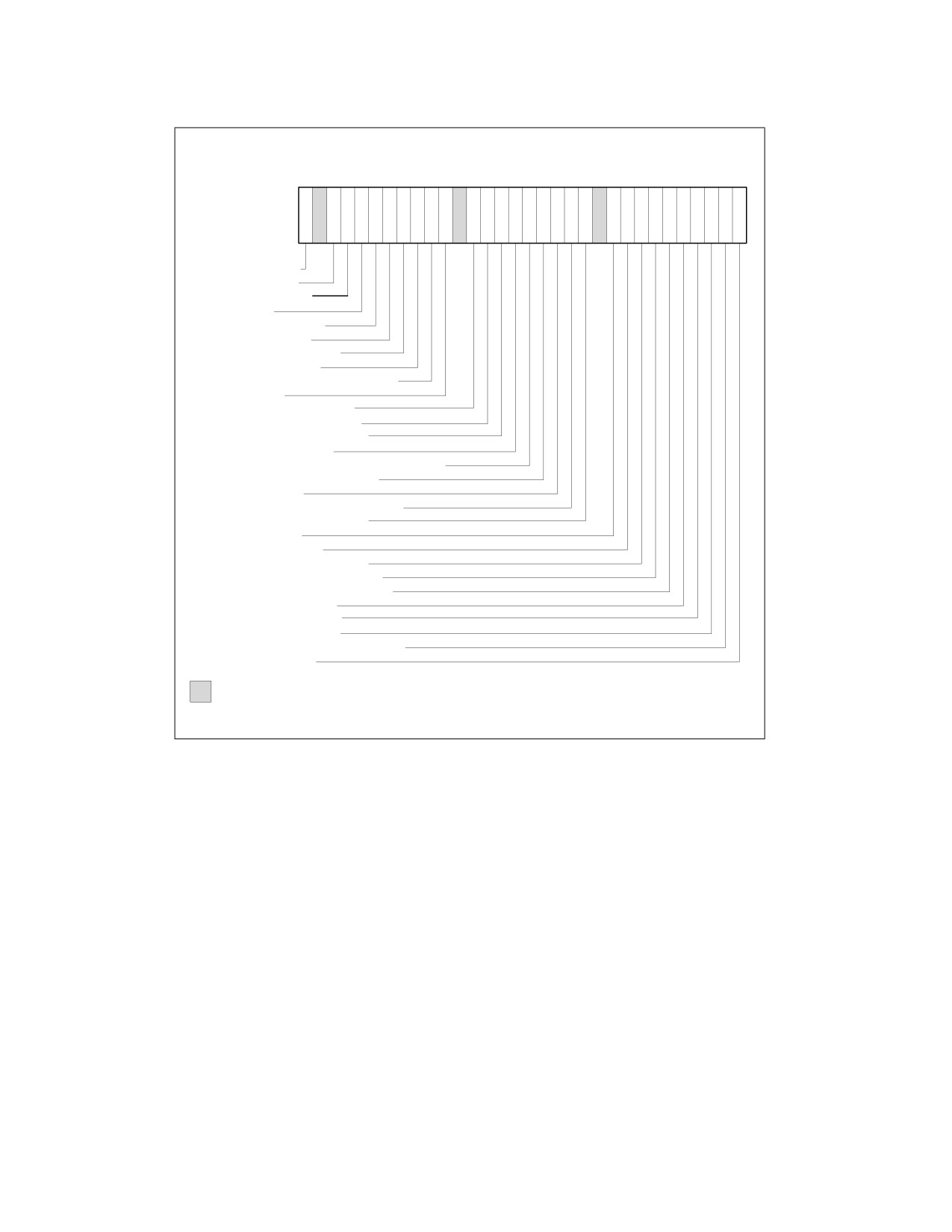
Figure 3-7. Feature Information Returned in the ECX Register
Table 3-10. Feature Information Returned in the ECX Register
Bit #
Mnemonic
Description
0
SSE3
Streaming SIMD Extensions 3 (SSE3). A value of 1 indicates the processor supports this
technology.
1
PCLMULQDQ
PCLMULQDQ. A value of 1 indicates the processor supports the PCLMULQDQ instruction.
2
DTES64
64-bit DS Area. A value of 1 indicates the processor supports DS area using 64-bit layout.
3
MONITOR
MONITOR/MWAIT. A value of 1 indicates the processor supports this feature.
4
DS-CPL
CPL Qualified Debug Store. A value of 1 indicates the processor supports the extensions to the
Debug Store feature to allow for branch message storage qualified by CPL.
5
VMX
Virtual Machine Extensions. A value of 1 indicates that the processor supports this technology.
6
SMX
Safer Mode Extensions. A value of 1 indicates that the processor supports this technology. See
Chapter 7, “Safer Mode Extensions Reference”.
7
EIST
Enhanced Intel SpeedStep® technology. A value of 1 indicates that the processor supports this
technology.
8
TM2
Thermal Monitor 2. A value of 1 indicates whether the processor supports this technology.
9
SSSE3
A value of 1 indicates the presence of the Supplemental Streaming SIMD Extensions 3 (SSSE3). A
value of 0 indicates the instruction extensions are not present in the processor.
CPUID—CPU Identification
Vol. 2A
3-241

INSTRUCTION SET REFERENCE, A-L
Table 3-10. Feature Information Returned in the ECX Register (Contd.)
Bit #
Mnemonic
Description
10
CNXT-ID
L1 Context ID. A value of 1 indicates the L1 data cache mode can be set to either adaptive mode
or shared mode. A value of 0 indicates this feature is not supported. See definition of the
IA32_MISC_ENABLE MSR Bit 24 (L1 Data Cache Context Mode) for details.
11
SDBG
A value of 1 indicates the processor supports IA32_DEBUG_INTERFACE MSR for silicon debug.
12
FMA
A value of 1 indicates the processor supports FMA extensions using YMM state.
13
CMPXCHG16B
CMPXCHG16B Available. A value of 1 indicates that the feature is available. See the
“CMPXCHG8B/CMPXCHG16B—Compare and Exchange Bytes” section in this chapter for a
description.
14
xTPR Update
xTPR Update Control. A value of 1 indicates that the processor supports changing
Control
IA32_MISC_ENABLE[bit 23].
15
PDCM
Perfmon and Debug Capability: A value of 1 indicates the processor supports the performance
and debug feature indication MSR IA32_PERF_CAPABILITIES.
16
Reserved
Reserved
17
PCID
Process-context identifiers. A value of 1 indicates that the processor supports PCIDs and that
software may set CR4.PCIDE to 1.
18
DCA
A value of 1 indicates the processor supports the ability to prefetch data from a memory mapped
device.
19
SSE4_1
A value of 1 indicates that the processor supports SSE4.1.
20
SSE4_2
A value of 1 indicates that the processor supports SSE4.2.
21
x2APIC
A value of 1 indicates that the processor supports x2APIC feature.
22
MOVBE
A value of 1 indicates that the processor supports MOVBE instruction.
23
POPCNT
A value of 1 indicates that the processor supports the POPCNT instruction.
24
TSC-Deadline
A value of 1 indicates that the processor’s local APIC timer supports one-shot operation using a
TSC deadline value.
25
AESNI
A value of 1 indicates that the processor supports the AESNI instruction extensions.
26
XSAVE
A value of 1 indicates that the processor supports the XSAVE/XRSTOR processor extended states
feature, the XSETBV/XGETBV instructions, and XCR0.
27
OSXSAVE
A value of 1 indicates that the OS has set CR4.OSXSAVE[bit 18] to enable XSETBV/XGETBV
instructions to access XCR0 and to support processor extended state management using
XSAVE/XRSTOR.
28
AVX
A value of 1 indicates the processor supports the AVX instruction extensions.
29
F16C
A value of 1 indicates that processor supports 16-bit floating-point conversion instructions.
30
RDRAND
A value of 1 indicates that processor supports RDRAND instruction.
31
Not Used
Always returns 0.
3-242
Vol. 2A
CPUID—CPU Identification
INSTRUCTION SET REFERENCE, A-L
3130292827262524 23 22 21 20 19 18 17 16 15 14 13 12 1110
9
8
7
6
5
4
3
2
1
0
EDX
PBE-Pend. Brk. EN.
TM-Therm. Monitor
HTT-Multi-threading
SS-Self Snoop
SSE2-SSE2 Extensions
SSE-SSE Extensions
FXSR-FXSAVE/FXRSTOR
MMX-MMX Technology
ACPI-Thermal Monitor and Clock Ctrl
DS-Debug Store
CLFSH-CLFLUSH instruction
PSN-Processor Serial Number
PSE-36 - Page Size Extension
PAT-Page Attribute Table
CMOV-Conditional Move/Compare Instruction
MCA-Machine Check Architecture
PGE-PTE Global Bit
MTRR-Memory Type Range Registers
SEP-SYSENTER and SYSEXIT
APIC-APIC on Chip
CX8-CMPXCHG8B Inst.
MCE-Machine Check Exception
PAE-Physical Address Extensions
MSR-RDMSR and WRMSR Support
TSC-Time Stamp Counter
PSE-Page Size Extensions
DE-Debugging Extensions
VME-Virtual-8086 Mode Enhancement
FPU-x87 FPU on Chip
Reserved
OM16523
Figure 3-8. Feature Information Returned in the EDX Register
CPUID—CPU Identification
Vol. 2A
3-243

INSTRUCTION SET REFERENCE, A-L
Table 3-11. More on Feature Information Returned in the EDX Register
Bit #
Mnemonic
Description
0
FPU
Floating-Point Unit On-Chip. The processor contains an x87 FPU.
1
VME
Virtual 8086 Mode Enhancements. Virtual 8086 mode enhancements, including CR4.VME for controlling the
feature, CR4.PVI for protected mode virtual interrupts, software interrupt indirection, expansion of the TSS
with the software indirection bitmap, and EFLAGS.VIF and EFLAGS.VIP flags.
2
DE
Debugging Extensions. Support for I/O breakpoints, including CR4.DE for controlling the feature, and optional
trapping of accesses to DR4 and DR5.
3
PSE
Page Size Extension. Large pages of size 4 MByte are supported, including CR4.PSE for controlling the
feature, the defined dirty bit in PDE (Page Directory Entries), optional reserved bit trapping in CR3, PDEs, and
PTEs.
4
TSC
Time Stamp Counter. The RDTSC instruction is supported, including CR4.TSD for controlling privilege.
5
MSR
Model Specific Registers RDMSR and WRMSR Instructions. The RDMSR and WRMSR instructions are
supported. Some of the MSRs are implementation dependent.
6
PAE
Physical Address Extension. Physical addresses greater than 32 bits are supported: extended page table
entry formats, an extra level in the page translation tables is defined, 2-MByte pages are supported instead of
4 Mbyte pages if PAE bit is 1.
7
MCE
Machine Check Exception. Exception 18 is defined for Machine Checks, including CR4.MCE for controlling the
feature. This feature does not define the model-specific implementations of machine-check error logging,
reporting, and processor shutdowns. Machine Check exception handlers may have to depend on processor
version to do model specific processing of the exception, or test for the presence of the Machine Check feature.
8
CX8
CMPXCHG8B Instruction. The compare-and-exchange 8 bytes (64 bits) instruction is supported (implicitly
locked and atomic).
9
APIC
APIC On-Chip. The processor contains an Advanced Programmable Interrupt Controller (APIC), responding to
memory mapped commands in the physical address range FFFE0000H to FFFE0FFFH (by default - some
processors permit the APIC to be relocated).
10
Reserved
Reserved
11
SEP
SYSENTER and SYSEXIT Instructions. The SYSENTER and SYSEXIT and associated MSRs are supported.
12
MTRR
Memory Type Range Registers. MTRRs are supported. The MTRRcap MSR contains feature bits that describe
what memory types are supported, how many variable MTRRs are supported, and whether fixed MTRRs are
supported.
13
PGE
Page Global Bit. The global bit is supported in paging-structure entries that map a page, indicating TLB entries
that are common to different processes and need not be flushed. The CR4.PGE bit controls this feature.
14
MCA
Machine Check Architecture. A value of 1 indicates the Machine Check Architecture of reporting machine
errors is supported. The MCG_CAP MSR contains feature bits describing how many banks of error reporting
MSRs are supported.
15
CMOV
Conditional Move Instructions. The conditional move instruction CMOV is supported. In addition, if x87 FPU is
present as indicated by the CPUID.FPU feature bit, then the FCOMI and FCMOV instructions are supported
16
PAT
Page Attribute Table. Page Attribute Table is supported. This feature augments the Memory Type Range
Registers (MTRRs), allowing an operating system to specify attributes of memory accessed through a linear
address on a 4KB granularity.
17
PSE-36
36-Bit Page Size Extension. 4-MByte pages addressing physical memory beyond 4 GBytes are supported with
32-bit paging. This feature indicates that upper bits of the physical address of a 4-MByte page are encoded in
bits 20:13 of the page-directory entry. Such physical addresses are limited by MAXPHYADDR and may be up to
40 bits in size.
18
PSN
Processor Serial Number. The processor supports the 96-bit processor identification number feature and the
feature is enabled.
19
CLFSH
CLFLUSH Instruction. CLFLUSH Instruction is supported.
20
Reserved
Reserved
3-244
Vol. 2A
CPUID—CPU Identification

INSTRUCTION SET REFERENCE, A-L
Table 3-11. More on Feature Information Returned in the EDX Register (Contd.)
Bit #
Mnemonic
Description
21
DS
Debug Store. The processor supports the ability to write debug information into a memory resident buffer.
This feature is used by the branch trace store (BTS) and processor event-based sampling (PEBS) facilities (see
Chapter 24, “Introduction to Virtual-Machine Extensions,” in the Intel® 64 and IA-32 Architectures Software
Developer’s Manual, Volume 3C).
22
ACPI
Thermal Monitor and Software Controlled Clock Facilities. The processor implements internal MSRs that
allow processor temperature to be monitored and processor performance to be modulated in predefined duty
cycles under software control.
23
MMX
Intel MMX Technology. The processor supports the Intel MMX technology.
24
FXSR
FXSAVE and FXRSTOR Instructions. The FXSAVE and FXRSTOR instructions are supported for fast save and
restore of the floating-point context. Presence of this bit also indicates that CR4.OSFXSR is available for an
operating system to indicate that it supports the FXSAVE and FXRSTOR instructions.
25
SSE
SSE. The processor supports the SSE extensions.
26
SSE2
SSE2. The processor supports the SSE2 extensions.
27
SS
Self Snoop. The processor supports the management of conflicting memory types by performing a snoop of its
own cache structure for transactions issued to the bus.
28
HTT
Max APIC IDs reserved field is Valid. A value of 0 for HTT indicates there is only a single logical processor in
the package and software should assume only a single APIC ID is reserved. A value of 1 for HTT indicates the
value in CPUID.1.EBX[23:16] (the Maximum number of addressable IDs for logical processors in this package) is
valid for the package.
29
TM
Thermal Monitor. The processor implements the thermal monitor automatic thermal control circuitry (TCC).
30
Reserved
Reserved
31
PBE
Pending Break Enable. The processor supports the use of the FERR#/PBE# pin when the processor is in the
stop-clock state (STPCLK# is asserted) to signal the processor that an interrupt is pending and that the
processor should return to normal operation to handle the interrupt.
INPUT EAX = 02H: TLB/Cache/Prefetch Information Returned in EAX, EBX, ECX, EDX
When CPUID executes with EAX set to 02H, the processor returns information about the processor’s internal TLBs,
cache, and prefetch hardware in the EAX, EBX, ECX, and EDX registers. The information is reported in encoded
form and fall into the following categories:
• The least-significant byte in register EAX (register AL) will always return 01H. Software should ignore this value
and not interpret it as an informational descriptor.
• The most significant bit (bit 31) of each register indicates whether the register contains valid information (set
to 0) or is reserved (set to 1).
• If a register contains valid information, the information is contained in 1 byte descriptors. There are four types
of encoding values for the byte descriptor, the encoding type is noted in the second column of Table 3-12. Table
3-12 lists the encoding of these descriptors. Note that the order of descriptors in the EAX, EBX, ECX, and EDX
registers is not defined; that is, specific bytes are not designated to contain descriptors for specific cache,
prefetch, or TLB types. The descriptors may appear in any order. Note also a processor may report a general
descriptor type (FFH) and not report any byte descriptor of “cache type” via CPUID leaf 2.
CPUID—CPU Identification
Vol. 2A
3-245

INSTRUCTION SET REFERENCE, A-L
Table 3-12. Encoding of CPUID Leaf 2 Descriptors
Value
Type
Description
00H
General
Null descriptor, this byte contains no information
01H
TLB
Instruction TLB: 4 KByte pages, 4-way set associative, 32 entries
02H
TLB
Instruction TLB: 4 MByte pages, fully associative, 2 entries
03H
TLB
Data TLB: 4 KByte pages, 4-way set associative, 64 entries
04H
TLB
Data TLB: 4 MByte pages, 4-way set associative, 8 entries
05H
TLB
Data TLB1: 4 MByte pages, 4-way set associative, 32 entries
06H
Cache
1st-level instruction cache: 8 KBytes, 4-way set associative, 32 byte line size
08H
Cache
1st-level instruction cache: 16 KBytes, 4-way set associative, 32 byte line size
09H
Cache
1st-level instruction cache: 32KBytes, 4-way set associative, 64 byte line size
0AH
Cache
1st-level data cache: 8 KBytes, 2-way set associative, 32 byte line size
0BH
TLB
Instruction TLB: 4 MByte pages, 4-way set associative, 4 entries
0CH
Cache
1st-level data cache: 16 KBytes, 4-way set associative, 32 byte line size
0DH
Cache
1st-level data cache: 16 KBytes, 4-way set associative, 64 byte line size
0EH
Cache
1st-level data cache: 24 KBytes, 6-way set associative, 64 byte line size
1DH
Cache
2nd-level cache: 128 KBytes, 2-way set associative, 64 byte line size
21H
Cache
2nd-level cache: 256 KBytes, 8-way set associative, 64 byte line size
22H
Cache
3rd-level cache: 512 KBytes, 4-way set associative, 64 byte line size, 2 lines per sector
23H
Cache
3rd-level cache: 1 MBytes, 8-way set associative, 64 byte line size, 2 lines per sector
24H
Cache
2nd-level cache: 1 MBytes, 16-way set associative, 64 byte line size
25H
Cache
3rd-level cache: 2 MBytes, 8-way set associative, 64 byte line size, 2 lines per sector
29H
Cache
3rd-level cache: 4 MBytes, 8-way set associative, 64 byte line size, 2 lines per sector
2CH
Cache
1st-level data cache: 32 KBytes, 8-way set associative, 64 byte line size
30H
Cache
1st-level instruction cache: 32 KBytes, 8-way set associative, 64 byte line size
40H
Cache
No 2nd-level cache or, if processor contains a valid 2nd-level cache, no 3rd-level cache
41H
Cache
2nd-level cache: 128 KBytes, 4-way set associative, 32 byte line size
42H
Cache
2nd-level cache: 256 KBytes, 4-way set associative, 32 byte line size
43H
Cache
2nd-level cache: 512 KBytes, 4-way set associative, 32 byte line size
44H
Cache
2nd-level cache: 1 MByte, 4-way set associative, 32 byte line size
45H
Cache
2nd-level cache: 2 MByte, 4-way set associative, 32 byte line size
46H
Cache
3rd-level cache: 4 MByte, 4-way set associative, 64 byte line size
47H
Cache
3rd-level cache: 8 MByte, 8-way set associative, 64 byte line size
48H
Cache
2nd-level cache: 3MByte, 12-way set associative, 64 byte line size
49H
Cache
3rd-level cache: 4MB, 16-way set associative, 64-byte line size (Intel Xeon processor MP, Family 0FH, Model
06H);
2nd-level cache: 4 MByte, 16-way set associative, 64 byte line size
4AH
Cache
3rd-level cache: 6MByte, 12-way set associative, 64 byte line size
4BH
Cache
3rd-level cache: 8MByte, 16-way set associative, 64 byte line size
4CH
Cache
3rd-level cache: 12MByte, 12-way set associative, 64 byte line size
4DH
Cache
3rd-level cache: 16MByte, 16-way set associative, 64 byte line size
4EH
Cache
2nd-level cache: 6MByte, 24-way set associative, 64 byte line size
4FH
TLB
Instruction TLB: 4 KByte pages, 32 entries
3-246
Vol. 2A
CPUID—CPU Identification

INSTRUCTION SET REFERENCE, A-L
Table 3-12. Encoding of CPUID Leaf 2 Descriptors (Contd.)
Value
Type
Description
50H
TLB
Instruction TLB: 4 KByte and 2-MByte or 4-MByte pages, 64 entries
51H
TLB
Instruction TLB: 4 KByte and 2-MByte or 4-MByte pages, 128 entries
52H
TLB
Instruction TLB: 4 KByte and 2-MByte or 4-MByte pages, 256 entries
55H
TLB
Instruction TLB: 2-MByte or 4-MByte pages, fully associative, 7 entries
56H
TLB
Data TLB0: 4 MByte pages, 4-way set associative, 16 entries
57H
TLB
Data TLB0: 4 KByte pages, 4-way associative, 16 entries
59H
TLB
Data TLB0: 4 KByte pages, fully associative, 16 entries
5AH
TLB
Data TLB0: 2 MByte or 4 MByte pages, 4-way set associative, 32 entries
5BH
TLB
Data TLB: 4 KByte and 4 MByte pages, 64 entries
5CH
TLB
Data TLB: 4 KByte and 4 MByte pages,128 entries
5DH
TLB
Data TLB: 4 KByte and 4 MByte pages,256 entries
60H
Cache
1st-level data cache: 16 KByte, 8-way set associative, 64 byte line size
61H
TLB
Instruction TLB: 4 KByte pages, fully associative, 48 entries
63H
TLB
Data TLB: 2 MByte or 4 MByte pages, 4-way set associative, 32 entries and a separate array with 1 GByte
pages, 4-way set associative, 4 entries
64H
TLB
Data TLB: 4 KByte pages, 4-way set associative, 512 entries
66H
Cache
1st-level data cache: 8 KByte, 4-way set associative, 64 byte line size
67H
Cache
1st-level data cache: 16 KByte, 4-way set associative, 64 byte line size
68H
Cache
1st-level data cache: 32 KByte, 4-way set associative, 64 byte line size
6AH
Cache
uTLB: 4 KByte pages, 8-way set associative, 64 entries
6BH
Cache
DTLB: 4 KByte pages, 8-way set associative, 256 entries
6CH
Cache
DTLB: 2M/4M pages, 8-way set associative, 128 entries
6DH
Cache
DTLB: 1 GByte pages, fully associative, 16 entries
70H
Cache
Trace cache: 12 K-μop, 8-way set associative
71H
Cache
Trace cache: 16 K-μop, 8-way set associative
72H
Cache
Trace cache: 32 K-μop, 8-way set associative
76H
TLB
Instruction TLB: 2M/4M pages, fully associative, 8 entries
78H
Cache
2nd-level cache: 1 MByte, 4-way set associative, 64byte line size
79H
Cache
2nd-level cache: 128 KByte, 8-way set associative, 64 byte line size, 2 lines per sector
7AH
Cache
2nd-level cache: 256 KByte, 8-way set associative, 64 byte line size, 2 lines per sector
7BH
Cache
2nd-level cache: 512 KByte, 8-way set associative, 64 byte line size, 2 lines per sector
7CH
Cache
2nd-level cache: 1 MByte, 8-way set associative, 64 byte line size, 2 lines per sector
7DH
Cache
2nd-level cache: 2 MByte, 8-way set associative, 64byte line size
7FH
Cache
2nd-level cache: 512 KByte, 2-way set associative, 64-byte line size
80H
Cache
2nd-level cache: 512 KByte, 8-way set associative, 64-byte line size
82H
Cache
2nd-level cache: 256 KByte, 8-way set associative, 32 byte line size
83H
Cache
2nd-level cache: 512 KByte, 8-way set associative, 32 byte line size
84H
Cache
2nd-level cache: 1 MByte, 8-way set associative, 32 byte line size
85H
Cache
2nd-level cache: 2 MByte, 8-way set associative, 32 byte line size
86H
Cache
2nd-level cache: 512 KByte, 4-way set associative, 64 byte line size
87H
Cache
2nd-level cache: 1 MByte, 8-way set associative, 64 byte line size
CPUID—CPU Identification
Vol. 2A
3-247

INSTRUCTION SET REFERENCE, A-L
Table 3-12. Encoding of CPUID Leaf 2 Descriptors (Contd.)
Value
Type
Description
A0H
DTLB
DTLB: 4k pages, fully associative, 32 entries
B0H
TLB
Instruction TLB: 4 KByte pages, 4-way set associative, 128 entries
B1H
TLB
Instruction TLB: 2M pages, 4-way, 8 entries or 4M pages, 4-way, 4 entries
B2H
TLB
Instruction TLB: 4KByte pages, 4-way set associative, 64 entries
B3H
TLB
Data TLB: 4 KByte pages, 4-way set associative, 128 entries
B4H
TLB
Data TLB1: 4 KByte pages, 4-way associative, 256 entries
B5H
TLB
Instruction TLB: 4KByte pages, 8-way set associative, 64 entries
B6H
TLB
Instruction TLB: 4KByte pages, 8-way set associative, 128 entries
BAH
TLB
Data TLB1: 4 KByte pages, 4-way associative, 64 entries
C0H
TLB
Data TLB: 4 KByte and 4 MByte pages, 4-way associative, 8 entries
C1H
STLB
Shared 2nd-Level TLB: 4 KByte/2MByte pages, 8-way associative, 1024 entries
C2H
DTLB
DTLB: 4 KByte/2 MByte pages, 4-way associative, 16 entries
C3H
STLB
Shared 2nd-Level TLB: 4 KByte /2 MByte pages, 6-way associative, 1536 entries. Also 1GBbyte pages, 4-way,
16 entries.
C4H
DTLB
DTLB: 2M/4M Byte pages, 4-way associative, 32 entries
CAH
STLB
Shared 2nd-Level TLB: 4 KByte pages, 4-way associative, 512 entries
D0H
Cache
3rd-level cache: 512 KByte, 4-way set associative, 64 byte line size
D1H
Cache
3rd-level cache: 1 MByte, 4-way set associative, 64 byte line size
D2H
Cache
3rd-level cache: 2 MByte, 4-way set associative, 64 byte line size
D6H
Cache
3rd-level cache: 1 MByte, 8-way set associative, 64 byte line size
D7H
Cache
3rd-level cache: 2 MByte, 8-way set associative, 64 byte line size
D8H
Cache
3rd-level cache: 4 MByte, 8-way set associative, 64 byte line size
DCH
Cache
3rd-level cache: 1.5 MByte, 12-way set associative, 64 byte line size
DDH
Cache
3rd-level cache: 3 MByte, 12-way set associative, 64 byte line size
DEH
Cache
3rd-level cache: 6 MByte, 12-way set associative, 64 byte line size
E2H
Cache
3rd-level cache: 2 MByte, 16-way set associative, 64 byte line size
E3H
Cache
3rd-level cache: 4 MByte, 16-way set associative, 64 byte line size
E4H
Cache
3rd-level cache: 8 MByte, 16-way set associative, 64 byte line size
EAH
Cache
3rd-level cache: 12MByte, 24-way set associative, 64 byte line size
EBH
Cache
3rd-level cache: 18MByte, 24-way set associative, 64 byte line size
ECH
Cache
3rd-level cache: 24MByte, 24-way set associative, 64 byte line size
F0H
Prefetch
64-Byte prefetching
F1H
Prefetch
128-Byte prefetching
FEH
General
CPUID leaf 2 does not report TLB descriptor information; use CPUID leaf 18H to query TLB and other address
translation parameters.
FFH
General
CPUID leaf 2 does not report cache descriptor information, use CPUID leaf 4 to query cache parameters
3-248
Vol. 2A
CPUID—CPU Identification
INSTRUCTION SET REFERENCE, A-L
Example 3-1. Example of Cache and TLB Interpretation
The first member of the family of Pentium 4 processors returns the following information about caches and TLBs
when the CPUID executes with an input value of 2:
EAX
66 5B 50 01H
EBX
0H
ECX
0H
EDX
00 7A 70 00H
Which means:
• The least-significant byte (byte 0) of register EAX is set to 01H. This value should be ignored.
• The most-significant bit of all four registers (EAX, EBX, ECX, and EDX) is set to 0, indicating that each register
contains valid 1-byte descriptors.
• Bytes 1, 2, and 3 of register EAX indicate that the processor has:
— 50H - a 64-entry instruction TLB, for mapping 4-KByte and 2-MByte or 4-MByte pages.
— 5BH - a 64-entry data TLB, for mapping 4-KByte and 4-MByte pages.
— 66H - an 8-KByte 1st level data cache, 4-way set associative, with a 64-Byte cache line size.
• The descriptors in registers EBX and ECX are valid, but contain NULL descriptors.
• Bytes 0, 1, 2, and 3 of register EDX indicate that the processor has:
— 00H - NULL descriptor.
— 70H - Trace cache: 12 K-μop, 8-way set associative.
— 7AH - a 256-KByte 2nd level cache, 8-way set associative, with a sectored, 64-byte cache line size.
— 00H - NULL descriptor.
INPUT EAX = 04H: Returns Deterministic Cache Parameters for Each Level
When CPUID executes with EAX set to 04H and ECX contains an index value, the processor returns encoded data
that describe a set of deterministic cache parameters (for the cache level associated with the input in ECX). Valid
index values start from 0.
Software can enumerate the deterministic cache parameters for each level of the cache hierarchy starting with an
index value of 0, until the parameters report the value associated with the cache type field is 0. The architecturally
defined fields reported by deterministic cache parameters are documented in Table 3-8.
This Cache Size in Bytes
= (Ways + 1) * (Partitions + 1) * (Line_Size + 1) * (Sets + 1)
= (EBX[31:22] + 1) * (EBX[21:12] + 1) * (EBX[11:0] + 1) * (ECX + 1)
The CPUID leaf 04H also reports data that can be used to derive the topology of processor cores in a physical
package. This information is constant for all valid index values. Software can query the raw data reported by
executing CPUID with EAX=04H and ECX=0 and use it as part of the topology enumeration algorithm described in
Chapter 9, “Multiple-Processor Management,” in the Intel® 64 and IA-32 Architectures Software Developer’s
Manual, Volume 3A.
INPUT EAX = 05H: Returns MONITOR and MWAIT Features
When CPUID executes with EAX set to 05H, the processor returns information about features available to
MONITOR/MWAIT instructions. The MONITOR instruction is used for address-range monitoring in conjunction with
MWAIT instruction. The MWAIT instruction optionally provides additional extensions for advanced power manage-
ment. See Table 3-8.
INPUT EAX = 06H: Returns Thermal and Power Management Features
When CPUID executes with EAX set to 06H, the processor returns information about thermal and power manage-
ment features. See Table 3-8.
CPUID—CPU Identification
Vol. 2A
3-249
INSTRUCTION SET REFERENCE, A-L
INPUT EAX = 07H: Returns Structured Extended Feature Enumeration Information
When CPUID executes with EAX set to 07H and ECX = 0, the processor returns information about the maximum
input value for sub-leaves that contain extended feature flags. See Table 3-8.
When CPUID executes with EAX set to 07H and the input value of ECX is invalid (see leaf 07H entry in Table 3-8),
the processor returns 0 in EAX/EBX/ECX/EDX. In subleaf 0, EAX returns the maximum input value of the highest
leaf 7 sub-leaf, and EBX, ECX & EDX contain information of extended feature flags.
INPUT EAX = 09H: Returns Direct Cache Access Information
When CPUID executes with EAX set to 09H, the processor returns information about Direct Cache Access capabili-
ties. See Table 3-8.
INPUT EAX = 0AH: Returns Architectural Performance Monitoring Features
When CPUID executes with EAX set to 0AH, the processor returns information about support for architectural
performance monitoring capabilities. Architectural performance monitoring is supported if the version ID (see Table
3-8) is greater than Pn 0. See Table 3-8.
For each version of architectural performance monitoring capability, software must enumerate this leaf to discover
the programming facilities and the architectural performance events available in the processor. The details are
described in Chapter 24, “Introduction to Virtual-Machine Extensions,” in the Intel® 64 and IA-32 Architectures
Software Developer’s Manual, Volume 3C.
INPUT EAX = 0BH: Returns Extended Topology Information
CPUID leaf 1FH is a preferred superset to leaf 0BH. Intel recommends first checking for the existence of Leaf 1FH
before using leaf 0BH.
When CPUID executes with EAX set to 0BH, the processor returns information about extended topology enumera-
tion data. Software must detect the presence of CPUID leaf 0BH by verifying (a) the highest leaf index supported
by CPUID is >= 0BH, and (b) CPUID.0BH:EBX[15:0] reports a non-zero value. See Table 3-8.
INPUT EAX = 0DH: Returns Processor Extended States Enumeration Information
When CPUID executes with EAX set to 0DH and ECX = 0, the processor returns information about the bit-vector
representation of all processor state extensions that are supported in the processor and storage size requirements
of the XSAVE/XRSTOR area. See Table 3-8.
When CPUID executes with EAX set to 0DH and ECX = n (n > 1, and is a valid sub-leaf index), the processor returns
information about the size and offset of each processor extended state save area within the XSAVE/XRSTOR area.
See Table 3-8. Software can use the forward-extendable technique depicted below to query the valid sub-leaves
and obtain size and offset information for each processor extended state save area:
For i = 2 to 62 // sub-leaf 1 is reserved
IF (CPUID.(EAX=0DH, ECX=0):VECTOR[i] = 1 ) // VECTOR is the 64-bit value of EDX:EAX
Execute CPUID.(EAX=0DH, ECX = i) to examine size and offset for sub-leaf i;
FI;
INPUT EAX = 0FH: Returns Intel Resource Director Technology (Intel RDT) Monitoring Enumeration Information
When CPUID executes with EAX set to 0FH and ECX = 0, the processor returns information about the bit-vector
representation of QoS monitoring resource types that are supported in the processor and maximum range of RMID
values the processor can use to monitor of any supported resource types. Each bit, starting from bit 1, corresponds
to a specific resource type if the bit is set. The bit position corresponds to the sub-leaf index (or ResID) that soft-
ware must use to query QoS monitoring capability available for that type. See Table 3-8.
When CPUID executes with EAX set to 0FH and ECX = n (n >= 1, and is a valid ResID), the processor returns infor-
mation software can use to program IA32_PQR_ASSOC, IA32_QM_EVTSEL MSRs before reading QoS data from the
IA32_QM_CTR MSR.
3-250
Vol. 2A
CPUID—CPU Identification
INSTRUCTION SET REFERENCE, A-L
INPUT EAX = 10H: Returns Intel Resource Director Technology (Intel RDT) Allocation Enumeration Information
When CPUID executes with EAX set to 10H and ECX = 0, the processor returns information about the bit-vector
representation of QoS Enforcement resource types that are supported in the processor. Each bit, starting from bit
1, corresponds to a specific resource type if the bit is set. The bit position corresponds to the sub-leaf index (or
ResID) that software must use to query QoS enforcement capability available for that type. See Table 3-8.
When CPUID executes with EAX set to 10H and ECX = n (n >= 1, and is a valid ResID), the processor returns infor-
mation about available classes of service and range of QoS mask MSRs that software can use to configure each
class of services using capability bit masks in the QoS Mask registers, IA32_resourceType_Mask_n.
INPUT EAX = 12H: Returns Intel SGX Enumeration Information
When CPUID executes with EAX set to 12H and ECX = 0H, the processor returns information about Intel SGX capa-
bilities. See Table 3-8.
When CPUID executes with EAX set to 12H and ECX = 1H, the processor returns information about Intel SGX attri-
butes. See Table 3-8.
When CPUID executes with EAX set to 12H and ECX = n (n > 1), the processor returns information about Intel SGX
Enclave Page Cache. See Table 3-8.
INPUT EAX = 14H: Returns Intel Processor Trace Enumeration Information
When CPUID executes with EAX set to 14H and ECX = 0H, the processor returns information about Intel Processor
Trace extensions. See Table 3-8.
When CPUID executes with EAX set to 14H and ECX = n (n > 0 and less than the number of non-zero bits in
CPUID.(EAX=14H, ECX= 0H).EAX), the processor returns information about packet generation in Intel Processor
Trace. See Table 3-8.
INPUT EAX = 15H: Returns Time Stamp Counter and Nominal Core Crystal Clock Information
When CPUID executes with EAX set to 15H and ECX = 0H, the processor returns information about Time Stamp
Counter and Core Crystal Clock. See Table 3-8.
INPUT EAX = 16H: Returns Processor Frequency Information
When CPUID executes with EAX set to 16H, the processor returns information about Processor Frequency Informa-
tion. See Table 3-8.
INPUT EAX = 17H: Returns System-On-Chip Information
When CPUID executes with EAX set to 17H, the processor returns information about the System-On-Chip Vendor
Attribute Enumeration. See Table 3-8.
INPUT EAX = 18H: Returns Deterministic Address Translation Parameters Information
When CPUID executes with EAX set to 18H, the processor returns information about the Deterministic Address
Translation Parameters. See Table 3-8.
INPUT EAX = 19H: Returns Key Locker Information
When CPUID executes with EAX set to 19H, the processor returns information about Key Locker. See Table 3-8.
INPUT EAX = 1AH: Returns Native Model ID Information
When CPUID executes with EAX set to 1AH, the processor returns information about Native Model Identification.
See Table 3-8.
INPUT EAX = 1BH: Returns PCONFIG Information
When CPUID executes with EAX set to 1BH, the processor returns information about PCONFIG capabilities. This
information is enumerated in sub-leaves selected by the value of ECX (starting with 0).
CPUID—CPU Identification
Vol. 2A
3-251
INSTRUCTION SET REFERENCE, A-L
Each sub-leaf of CPUID function 1BH enumerates its sub-leaf type in EAX. If a sub-leaf type is 0, the sub-leaf is
invalid and zero is returned in EBX, ECX, and EDX. In this case, all subsequent sub-leaves (selected by larger input
values of ECX) are also invalid.
The only valid sub-leaf type currently defined is 1, meaning target identifier, indicating that the sub-leaf enumer-
ates target identifiers for the PCONFIG instruction. Any non-zero value returned in EBX, ECX, or EDX indicates a
valid target of the PCONFIG instruction (any value of zero should be ignored). The only target identifier currently
defined is 1, indicating MKTME. See the “PCONFIG—Platform Configuration” instruction in Chapter 4 of the Intel®
64 and IA-32 Architectures Software Developer’s Manual, Volume 2B for more information.
INPUT EAX = 1CH: Returns Last Branch Record Information
When CPUID executes with EAX set to 1CH, the processor returns information about LBRs (the architectural
feature). See Table 3-8.
INPUT EAX = 1DH: Returns Tile Information
When CPUID executes with EAX set to 1DH and ECX = 0H, the processor returns information about tile
architecture. See Table 3-8.
When CPUID executes with EAX set to 1DH and ECX = 1H, the processor returns information about tile palette 1.
See Table 3-8.
INPUT EAX = 1EH: Returns TMUL Information
When CPUID executes with EAX set to 1EH and ECX = 0H, the processor returns information about TMUL
capabilities. See Table 3-8.
INPUT EAX = 1FH: Returns V2 Extended Topology Information
When CPUID executes with EAX set to 1FH, the processor returns information about extended topology enumera-
tion data. Software must detect the presence of CPUID leaf 1FH by verifying (a) the highest leaf index supported
by CPUID is >= 1FH, and (b) CPUID.1FH:EBX[15:0] reports a non-zero value. See Table 3-8.
INPUT EAX = 20H: Returns History Reset Information
When CPUID executes with EAX set to 20H, the processor returns information about History Reset. See Table 3-8.
METHODS FOR RETURNING BRANDING INFORMATION
Use the following techniques to access branding information:
1. Processor brand string method.
2. Processor brand index; this method uses a software supplied brand string table.
These two methods are discussed in the following sections. For methods that are available in early processors, see
Section: “Identification of Earlier IA-32 Processors” in Chapter 20 of the Intel® 64 and IA-32 Architectures Soft-
ware Developer’s Manual, Volume 1.
The Processor Brand String Method
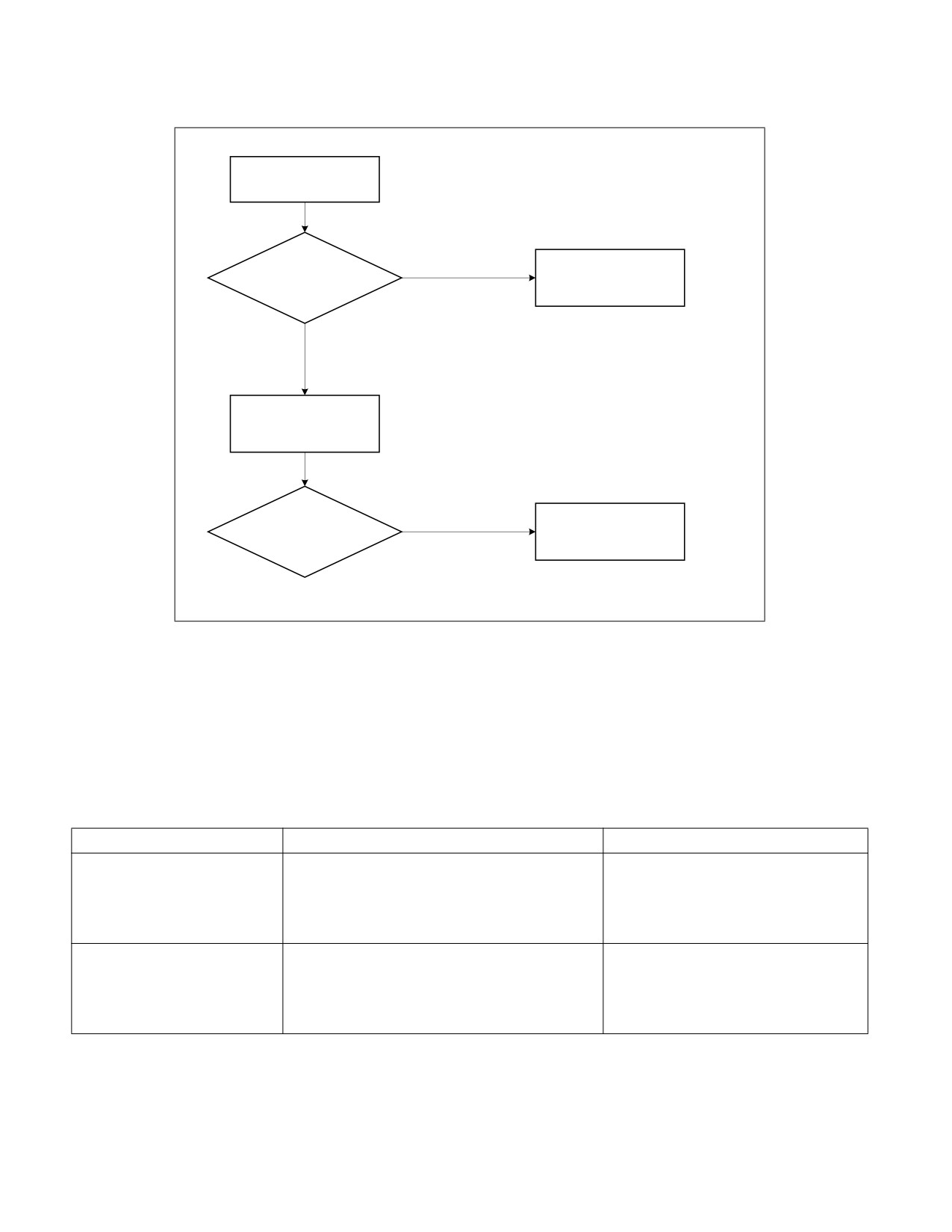
Figure 3-9 describes the algorithm used for detection of the brand string. Processor brand identification software
should execute this algorithm on all Intel 64 and IA-32 processors.
This method (introduced with Pentium 4 processors) returns an ASCII brand identification string and the Processor
Base frequency of the processor to the EAX, EBX, ECX, and EDX registers.
3-252
Vol. 2A
CPUID—CPU Identification
INSTRUCTION SET REFERENCE, A-L
Input: EAX=
0x80000000
CPUID
False
Processor Brand
IF (EAX & 0x80000000)
String Not
Supported
CPUID
True ≥
Function
Extended
Supported
EAX Return Value =
Max. Extended CPUID
Function Index
True
IF (EAX Return Value
Processor Brand
String Supported
≥ 0x80000004)
OM15194
Figure 3-9. Determination of Support for the Processor Brand String
How Brand Strings Work
To use the brand string method, execute CPUID with EAX input of 8000002H through 80000004H. For each input
value, CPUID returns 16 ASCII characters using EAX, EBX, ECX, and EDX. The returned string will be NULL-termi-
nated.
Table 3-13 shows the brand string that is returned by the first processor in the Pentium 4 processor family.
Table 3-13. Processor Brand String Returned with Pentium 4 Processor
EAX Input Value
Return Values
ASCII Equivalent
80000002H
EAX = 20202020H
“
”
EBX = 20202020H
“
”
ECX = 20202020H
“
”
EDX = 6E492020H
“nI
”
80000003H
EAX = 286C6574H
“(let”
EBX = 50202952H
“P )R”
ECX = 69746E65H
“itne”
EDX = 52286D75H
“R(mu”
CPUID—CPU Identification
Vol. 2A
3-253
INSTRUCTION SET REFERENCE, A-L
Table 3-13. Processor Brand String Returned with Pentium 4 Processor (Contd.)
EAX Input Value
Return Values
ASCII Equivalent
80000004H
EAX = 20342029H
“ 4 )”
EBX = 20555043H
“ UPC”
ECX = 30303531H
“0051”
EDX = 007A484DH
“\0zHM”
Extracting the Processor Frequency from Brand Strings
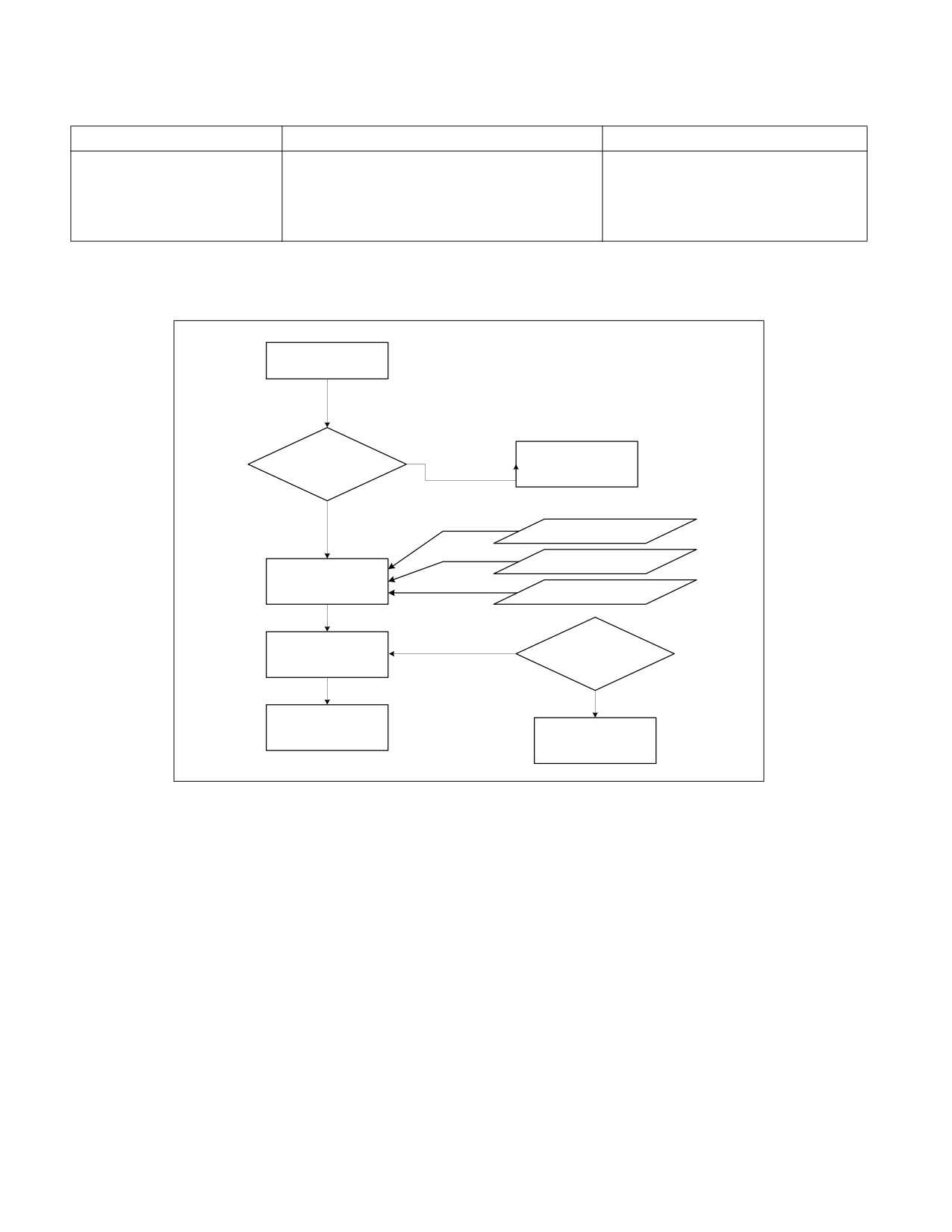
Figure 3-10 provides an algorithm which software can use to extract the Processor Base frequency from the
processor brand string.
Scan "Brand String" in
Reverse Byte Order
"zHM", or
Match
"zHG", or
Substring
"zHT"
False
IF Substring Matched
Report Error
Determine "Freq"
If "zHM"
True
and "Multiplier"
Multiplier = 1 x 10⁶
If "zHG"
Multiplier = 1 x 10⁹
Determine "Multiplier"
If "zHT"
Multiplier = 1 x 10¹²
Scan Digits
Until Blank
Reverse Digits
Determine "Freq"
In Reverse Order
To Decimal Value
Processor Base
Frequency =
"Freq" = X.YZ if
"Freq" x "Multiplier"
Digits = "ZY.X"
Figure 3-10. Algorithm for Extracting Processor Frequency
The Processor Brand Index Method
The brand index method (introduced with Pentium® III Xeon® processors) provides an entry point into a brand
identification table that is maintained in memory by system software and is accessible from system- and user-level
code. In this table, each brand index is associate with an ASCII brand identification string that identifies the official
Intel family and model number of a processor.
When CPUID executes with EAX set to 1, the processor returns a brand index to the low byte in EBX. Software can
then use this index to locate the brand identification string for the processor in the brand identification table. The
first entry (brand index 0) in this table is reserved, allowing for backward compatibility with processors that do not
support the brand identification feature. Starting with processor signature family ID = 0FH, model = 03H, brand
index method is no longer supported. Use brand string method instead.
Table 3-14 shows brand indices that have identification strings associated with them.
3-254
Vol. 2A
CPUID—CPU Identification

INSTRUCTION SET REFERENCE, A-L
Table 3-14. Mapping of Brand Indices; and Intel 64 and IA-32 Processor Brand Strings
Brand Index
Brand String
00H
This processor does not support the brand identification feature
01H
Intel(R) Celeron(R) processor1
02H
Intel(R) Pentium(R) III processor1
03H
Intel(R) Pentium(R) III Xeon(R) processor; If processor signature = 000006B1h, then Intel(R) Celeron(R)
processor
04H
Intel(R) Pentium(R) III processor
06H
Mobile Intel(R) Pentium(R) III processor-M
07H
Mobile Intel(R) Celeron(R) processor1
08H
Intel(R) Pentium(R) 4 processor
09H
Intel(R) Pentium(R) 4 processor
0AH
Intel(R) Celeron(R) processor1
0BH
Intel(R) Xeon(R) processor; If processor signature = 00000F13h, then Intel(R) Xeon(R) processor MP
0CH
Intel(R) Xeon(R) processor MP
0EH
Mobile Intel(R) Pentium(R) 4 processor-M; If processor signature = 00000F13h, then Intel(R) Xeon(R) processor
0FH
Mobile Intel(R) Celeron(R) processor1
11H
Mobile Genuine Intel(R) processor
12H
Intel(R) Celeron(R) M processor
13H
Mobile Intel(R) Celeron(R) processor1
14H
Intel(R) Celeron(R) processor
15H
Mobile Genuine Intel(R) processor
16H
Intel(R) Pentium(R) M processor
17H
Mobile Intel(R) Celeron(R) processor1
18H - 0FFH
RESERVED
NOTES:
1. Indicates versions of these processors that were introduced after the Pentium III
IA-32 Architecture Compatibility
CPUID is not supported in early models of the Intel486 processor or in any IA-32 processor earlier than the
Intel486 processor.
Operation
IA32_BIOS_SIGN_ID MSR := Update with installed microcode revision number;
CASE (EAX) OF
EAX = 0:
EAX := Highest basic function input value understood by CPUID;
EBX := Vendor identification string;
EDX := Vendor identification string;
ECX := Vendor identification string;
BREAK;
EAX = 1H:
EAX[3:0] := Stepping ID;
EAX[7:4] := Model;
EAX[11:8] := Family;
CPUID—CPU Identification
Vol. 2A
3-255
INSTRUCTION SET REFERENCE, A-L
EAX[13:12] := Processor type;
EAX[15:14] := Reserved;
EAX[19:16] := Extended Model;
EAX[27:20] := Extended Family;
EAX[31:28] := Reserved;
EBX[7:0] := Brand Index; (* Reserved if the value is zero. *)
EBX[15:8] := CLFLUSH Line Size;
EBX[16:23] := Reserved; (* Number of threads enabled = 2 if MT enable fuse set. *)
EBX[24:31] := Initial APIC ID;
ECX := Feature flags; (* See Figure 3-7. *)
EDX := Feature flags; (* See Figure 3-8. *)
BREAK;
EAX = 2H:
EAX := Cache and TLB information;
EBX := Cache and TLB information;
ECX := Cache and TLB information;
EDX := Cache and TLB information;
BREAK;
EAX = 3H:
EAX := Reserved;
EBX := Reserved;
ECX := ProcessorSerialNumber[31:0];
(* Pentium III processors only, otherwise reserved. *)
EDX := ProcessorSerialNumber[63:32];
(* Pentium III processors only, otherwise reserved. *
BREAK
EAX = 4H:
EAX := Deterministic Cache Parameters Leaf; (* See Table 3-8. *)
EBX := Deterministic Cache Parameters Leaf;
ECX := Deterministic Cache Parameters Leaf;
EDX := Deterministic Cache Parameters Leaf;
BREAK;
EAX = 5H:
EAX := MONITOR/MWAIT Leaf; (* See Table 3-8. *)
EBX := MONITOR/MWAIT Leaf;
ECX := MONITOR/MWAIT Leaf;
EDX := MONITOR/MWAIT Leaf;
BREAK;
EAX = 6H:
EAX := Thermal and Power Management Leaf; (* See Table 3-8. *)
EBX := Thermal and Power Management Leaf;
ECX := Thermal and Power Management Leaf;
EDX := Thermal and Power Management Leaf;
BREAK;
EAX = 7H:
EAX := Structured Extended Feature Flags Enumeration Leaf; (* See Table 3-8. *)
EBX := Structured Extended Feature Flags Enumeration Leaf;
ECX := Structured Extended Feature Flags Enumeration Leaf;
EDX := Structured Extended Feature Flags Enumeration Leaf;
BREAK;
EAX = 8H:
EAX := Reserved = 0;
EBX := Reserved = 0;
ECX := Reserved = 0;
3-256
Vol. 2A
CPUID—CPU Identification
INSTRUCTION SET REFERENCE, A-L
EDX := Reserved = 0;
BREAK;
EAX = 9H:
EAX := Direct Cache Access Information Leaf; (* See Table 3-8. *)
EBX := Direct Cache Access Information Leaf;
ECX := Direct Cache Access Information Leaf;
EDX := Direct Cache Access Information Leaf;
BREAK;
EAX = AH:
EAX := Architectural Performance Monitoring Leaf; (* See Table 3-8. *)
EBX := Architectural Performance Monitoring Leaf;
ECX := Architectural Performance Monitoring Leaf;
EDX := Architectural Performance Monitoring Leaf;
BREAK
EAX = BH:
EAX := Extended Topology Enumeration Leaf; (* See Table 3-8. *)
EBX := Extended Topology Enumeration Leaf;
ECX := Extended Topology Enumeration Leaf;
EDX := Extended Topology Enumeration Leaf;
BREAK;
EAX = CH:
EAX := Reserved = 0;
EBX := Reserved = 0;
ECX := Reserved = 0;
EDX := Reserved = 0;
BREAK;
EAX = DH:
EAX := Processor Extended State Enumeration Leaf; (* See Table 3-8. *)
EBX := Processor Extended State Enumeration Leaf;
ECX := Processor Extended State Enumeration Leaf;
EDX := Processor Extended State Enumeration Leaf;
BREAK;
EAX = EH:
EAX := Reserved = 0;
EBX := Reserved = 0;
ECX := Reserved = 0;
EDX := Reserved = 0;
BREAK;
EAX = FH:
EAX := Intel Resource Director Technology Monitoring Enumeration Leaf; (* See Table 3-8. *)
EBX := Intel Resource Director Technology Monitoring Enumeration Leaf;
ECX := Intel Resource Director Technology Monitoring Enumeration Leaf;
EDX := Intel Resource Director Technology Monitoring Enumeration Leaf;
BREAK;
EAX = 10H:
EAX := Intel Resource Director Technology Allocation Enumeration Leaf; (* See Table 3-8. *)
EBX := Intel Resource Director Technology Allocation Enumeration Leaf;
ECX := Intel Resource Director Technology Allocation Enumeration Leaf;
EDX := Intel Resource Director Technology Allocation Enumeration Leaf;
BREAK;
EAX = 12H:
EAX := Intel SGX Enumeration Leaf; (* See Table 3-8. *)
EBX := Intel SGX Enumeration Leaf;
ECX := Intel SGX Enumeration Leaf;
CPUID—CPU Identification
Vol. 2A
3-257
INSTRUCTION SET REFERENCE, A-L
EDX := Intel SGX Enumeration Leaf;
BREAK;
EAX = 14H:
EAX := Intel Processor Trace Enumeration Leaf; (* See Table 3-8. *)
EBX := Intel Processor Trace Enumeration Leaf;
ECX := Intel Processor Trace Enumeration Leaf;
EDX := Intel Processor Trace Enumeration Leaf;
BREAK;
EAX = 15H:
EAX := Time Stamp Counter and Nominal Core Crystal Clock Information Leaf; (* See Table 3-8. *)
EBX := Time Stamp Counter and Nominal Core Crystal Clock Information Leaf;
ECX := Time Stamp Counter and Nominal Core Crystal Clock Information Leaf;
EDX := Time Stamp Counter and Nominal Core Crystal Clock Information Leaf;
BREAK;
EAX = 16H:
EAX := Processor Frequency Information Enumeration Leaf; (* See Table 3-8. *)
EBX := Processor Frequency Information Enumeration Leaf;
ECX := Processor Frequency Information Enumeration Leaf;
EDX := Processor Frequency Information Enumeration Leaf;
BREAK;
EAX = 17H:
EAX := System-On-Chip Vendor Attribute Enumeration Leaf; (* See Table 3-8. *)
EBX := System-On-Chip Vendor Attribute Enumeration Leaf;
ECX := System-On-Chip Vendor Attribute Enumeration Leaf;
EDX := System-On-Chip Vendor Attribute Enumeration Leaf;
BREAK;
EAX = 18H:
EAX := Deterministic Address Translation Parameters Enumeration Leaf; (* See Table 3-8. *)
EBX := Deterministic Address Translation Parameters Enumeration Leaf;
ECX := Deterministic Address Translation Parameters Enumeration Leaf;
EDX := Deterministic Address Translation Parameters Enumeration Leaf;
BREAK;
EAX = 19H:
EAX := Key Locker Enumeration Leaf; (* See Table 3-8. *)
EBX := Key Locker Enumeration Leaf;
ECX := Key Locker Enumeration Leaf;
EDX := Key Locker Enumeration Leaf;
BREAK;
EAX = 1AH:
EAX := Native Model ID Enumeration Leaf; (* See Table 3-8. *)
EBX := Native Model ID Enumeration Leaf;
ECX := Native Model ID Enumeration Leaf;
EDX := Native Model ID Enumeration Leaf;
BREAK;
EAX = 1BH:
EAX := PCONFIG Information Enumeration Leaf; (* See “INPUT EAX = 1BH: Returns PCONFIG Information” on page 3-251. *)
EBX := PCONFIG Information Enumeration Leaf;
ECX := PCONFIG Information Enumeration Leaf;
EDX := PCONFIG Information Enumeration Leaf;
BREAK;
EAX = 1CH:
EAX := Last Branch Record Information Enumeration Leaf; (* See Table 3-8. *)
EBX := Last Branch Record Information Enumeration Leaf;
ECX := Last Branch Record Information Enumeration Leaf;
3-258
Vol. 2A
CPUID—CPU Identification
INSTRUCTION SET REFERENCE, A-L
EDX := Last Branch Record Information Enumeration Leaf;
BREAK;
EAX = 1DH:
EAX := Tile Information Enumeration Leaf; (* See Table 3-8. *)
EBX := Tile Information Enumeration Leaf;
ECX := Tile Information Enumeration Leaf;
EDX := Tile Information Enumeration Leaf;
BREAK;
EAX = 1EH:
EAX := TMUL Information Enumeration Leaf; (* See Table 3-8. *)
EBX := TMUL Information Enumeration Leaf;
ECX := TMUL Information Enumeration Leaf;
EDX := TMUL Information Enumeration Leaf;
BREAK;
EAX = 1FH:
EAX := V2 Extended Topology Enumeration Leaf; (* See Table 3-8. *)
EBX := V2 Extended Topology Enumeration Leaf;
ECX := V2 Extended Topology Enumeration Leaf;
EDX := V2 Extended Topology Enumeration Leaf;
BREAK;
EAX = 20H:
EAX := Processor History Reset Sub-leaf; (* See Table 3-8. *)
EBX := Processor History Reset Sub-leaf;
ECX := Processor History Reset Sub-leaf;
EDX := Processor History Reset Sub-leaf;
BREAK;
EAX = 80000000H:
EAX := Highest extended function input value understood by CPUID;
EBX := Reserved;
ECX := Reserved;
EDX := Reserved;
BREAK;
EAX = 80000001H:
EAX := Reserved;
EBX := Reserved;
ECX := Extended Feature Bits (* See Table 3-8.*);
EDX := Extended Feature Bits (* See Table 3-8. *);
BREAK;
EAX = 80000002H:
EAX := Processor Brand String;
EBX := Processor Brand String, continued;
ECX := Processor Brand String, continued;
EDX := Processor Brand String, continued;
BREAK;
EAX = 80000003H:
EAX := Processor Brand String, continued;
EBX := Processor Brand String, continued;
ECX := Processor Brand String, continued;
EDX := Processor Brand String, continued;
BREAK;
EAX = 80000004H:
EAX := Processor Brand String, continued;
EBX := Processor Brand String, continued;
ECX := Processor Brand String, continued;
CPUID—CPU Identification
Vol. 2A
3-259
INSTRUCTION SET REFERENCE, A-L
EDX := Processor Brand String, continued;
BREAK;
EAX = 80000005H:
EAX := Reserved = 0;
EBX := Reserved = 0;
ECX := Reserved = 0;
EDX := Reserved = 0;
BREAK;
EAX = 80000006H:
EAX := Reserved = 0;
EBX := Reserved = 0;
ECX := Cache information;
EDX := Reserved = 0;
BREAK;
EAX = 80000007H:
EAX := Reserved = 0;
EBX := Reserved = 0;
ECX := Reserved = 0;
EDX := Reserved = Misc Feature Flags;
BREAK;
EAX = 80000008H:
EAX := Reserved = Physical Address Size Information;
EBX := Reserved = Virtual Address Size Information;
ECX := Reserved = 0;
EDX := Reserved = 0;
BREAK;
EAX >= 40000000H and EAX <= 4FFFFFFFH:
DEFAULT: (* EAX = Value outside of recognized range for CPUID. *)
(* If the highest basic information leaf data depend on ECX input value, ECX is honored.*)
EAX := Reserved; (* Information returned for highest basic information leaf. *)
EBX := Reserved; (* Information returned for highest basic information leaf. *)
ECX := Reserved; (* Information returned for highest basic information leaf. *)
EDX := Reserved; (* Information returned for highest basic information leaf. *)
BREAK;
ESAC;
Flags Affected
None.
Exceptions (All Operating Modes)
#UD
If the LOCK prefix is used.
In earlier IA-32 processors that do not support the CPUID instruction, execution of the instruc-
tion results in an invalid opcode (#UD) exception being generated.
3-260
Vol. 2A
CPUID—CPU Identification

INSTRUCTION SET REFERENCE, A-L
CRC32—Accumulate CRC32 Value
Opcode/
Op/
64-Bit
Compat/
Description
Instruction
En
Mode
Leg Mode
F2 0F 38 F0 /r
RM
Valid
Valid
Accumulate CRC32 on r/m8.
CRC32 r32, r/m8
F2 REX 0F 38 F0 /r
RM
Valid
N.E.
Accumulate CRC32 on r/m8.
CRC32 r32, r/m81
F2 0F 38 F1 /r
RM
Valid
Valid
Accumulate CRC32 on r/m16.
CRC32 r32, r/m16
F2 0F 38 F1 /r
RM
Valid
Valid
Accumulate CRC32 on r/m32.
CRC32 r32, r/m32
F2 REX.W 0F 38 F0 /r
RM
Valid
N.E.
Accumulate CRC32 on r/m8.
CRC32 r64, r/m8
F2 REX.W 0F 38 F1 /r
RM
Valid
N.E.
Accumulate CRC32 on r/m64.
CRC32 r64, r/m64
NOTES:
1. In 64-bit mode, r/m8 can not be encoded to access the following byte registers if a REX prefix is used: AH, BH, CH, DH.
Instruction Operand Encoding
Op/En
Operand 1
Operand 2
Operand 3
Operand 4
RM
ModRM:reg (r, w)
ModRM:r/m (r)
N/A
N/A
Description
Starting with an initial value in the first operand (destination operand), accumulates a CRC32 (polynomial
11EDC6F41H) value for the second operand (source operand) and stores the result in the destination operand. The
source operand can be a register or a memory location. The destination operand must be an r32 or r64 register. If
the destination is an r64 register, then the 32-bit result is stored in the least significant double word and
00000000H is stored in the most significant double word of the r64 register.
The initial value supplied in the destination operand is a double word integer stored in the r32 register or the least
significant double word of the r64 register. To incrementally accumulate a CRC32 value, software retains the result
of the previous CRC32 operation in the destination operand, then executes the CRC32 instruction again with new
input data in the source operand. Data contained in the source operand is processed in reflected bit order. This
means that the most significant bit of the source operand is treated as the least significant bit of the quotient, and
so on, for all the bits of the source operand. Likewise, the result of the CRC operation is stored in the destination
operand in reflected bit order. This means that the most significant bit of the resulting CRC (bit 31) is stored in the
least significant bit of the destination operand (bit 0), and so on, for all the bits of the CRC.
Operation
Notes:
BIT_REFLECT64: DST[63-0] = SRC[0-63]
BIT_REFLECT32: DST[31-0] = SRC[0-31]
BIT_REFLECT16: DST[15-0] = SRC[0-15]
BIT_REFLECT8: DST[7-0] = SRC[0-7]
MOD2: Remainder from Polynomial division modulus 2
CRC32—Accumulate CRC32 Value
Vol. 2A
3-261
INSTRUCTION SET REFERENCE, A-L
CRC32 instruction for 64-bit source operand and 64-bit destination operand:
TEMP1[63-0] := BIT_REFLECT64 (SRC[63-0])
TEMP2[31-0] := BIT_REFLECT32 (DEST[31-0])
TEMP3[95-0] := TEMP1[63-0] « 32
TEMP4[95-0] := TEMP2[31-0] « 64
TEMP5[95-0] := TEMP3[95-0] XOR TEMP4[95-0]
TEMP6[31-0] := TEMP5[95-0] MOD2 11EDC6F41H
DEST[31-0] := BIT_REFLECT (TEMP6[31-0])
DEST[63-32] := 00000000H
CRC32 instruction for 32-bit source operand and 32-bit destination operand:
TEMP1[31-0] := BIT_REFLECT32 (SRC[31-0])
TEMP2[31-0] := BIT_REFLECT32 (DEST[31-0])
TEMP3[63-0] := TEMP1[31-0] « 32
TEMP4[63-0] := TEMP2[31-0] « 32
TEMP5[63-0] := TEMP3[63-0] XOR TEMP4[63-0]
TEMP6[31-0] := TEMP5[63-0] MOD2 11EDC6F41H
DEST[31-0] := BIT_REFLECT (TEMP6[31-0])
CRC32 instruction for 16-bit source operand and 32-bit destination operand:
TEMP1[15-0] := BIT_REFLECT16 (SRC[15-0])
TEMP2[31-0] := BIT_REFLECT32 (DEST[31-0])
TEMP3[47-0] := TEMP1[15-0] « 32
TEMP4[47-0] := TEMP2[31-0] « 16
TEMP5[47-0] := TEMP3[47-0] XOR TEMP4[47-0]
TEMP6[31-0] := TEMP5[47-0] MOD2 11EDC6F41H
DEST[31-0] := BIT_REFLECT (TEMP6[31-0])
CRC32 instruction for 8-bit source operand and 64-bit destination operand:
TEMP1[7-0] := BIT_REFLECT8(SRC[7-0])
TEMP2[31-0] := BIT_REFLECT32 (DEST[31-0])
TEMP3[39-0] := TEMP1[7-0] « 32
TEMP4[39-0] := TEMP2[31-0] « 8
TEMP5[39-0] := TEMP3[39-0] XOR TEMP4[39-0]
TEMP6[31-0] := TEMP5[39-0] MOD2 11EDC6F41H
DEST[31-0] := BIT_REFLECT (TEMP6[31-0])
DEST[63-32] := 00000000H
CRC32 instruction for 8-bit source operand and 32-bit destination operand:
TEMP1[7-0] := BIT_REFLECT8(SRC[7-0])
TEMP2[31-0] := BIT_REFLECT32 (DEST[31-0])
TEMP3[39-0] := TEMP1[7-0] « 32
TEMP4[39-0] := TEMP2[31-0] « 8
TEMP5[39-0] := TEMP3[39-0] XOR TEMP4[39-0]
TEMP6[31-0] := TEMP5[39-0] MOD2 11EDC6F41H
DEST[31-0] := BIT_REFLECT (TEMP6[31-0])
Flags Affected
None
3-262
Vol. 2A
CRC32—Accumulate CRC32 Value
INSTRUCTION SET REFERENCE, A-L
Intel C/C++ Compiler Intrinsic Equivalent
unsigned int _mm_crc32_u8( unsigned int crc, unsigned char data )
unsigned int _mm_crc32_u16( unsigned int crc, unsigned short data )
unsigned int _mm_crc32_u32( unsigned int crc, unsigned int data )
unsigned __int64 _mm_crc32_u64( unsigned __int64 crc, unsigned __int64 data )
SIMD Floating-Point Exceptions
None
Protected Mode Exceptions
#GP(0)
If a memory operand effective address is outside the CS, DS, ES, FS or GS segments.
#SS(0)
If a memory operand effective address is outside the SS segment limit.
#PF (fault-code)
For a page fault.
#AC(0)
If alignment checking is enabled and an unaligned memory reference is made while the
current privilege level is 3.
#UD
If CPUID.01H:ECX.SSE4_2 [Bit 20] = 0.
If LOCK prefix is used.
Real-Address Mode Exceptions
#GP(0)
If any part of the operand lies outside of the effective address space from 0 to 0FFFFH.
#SS(0)
If a memory operand effective address is outside the SS segment limit.
#UD
If CPUID.01H:ECX.SSE4_2 [Bit 20] = 0.
If LOCK prefix is used.
Virtual 8086 Mode Exceptions
#GP(0)
If any part of the operand lies outside of the effective address space from 0 to 0FFFFH.
#SS(0)
If a memory operand effective address is outside the SS segment limit.
#PF (fault-code)
For a page fault.
#AC(0)
If alignment checking is enabled and an unaligned memory reference is made.
#UD
If CPUID.01H:ECX.SSE4_2 [Bit 20] = 0.
If LOCK prefix is used.
Compatibility Mode Exceptions
Same exceptions as in Protected Mode.
64-Bit Mode Exceptions
#GP(0)
If the memory address is in a non-canonical form.
#SS(0)
If a memory address referencing the SS segment is in a non-canonical form.
#PF (fault-code)
For a page fault.
#AC(0)
If alignment checking is enabled and an unaligned memory reference is made while the
current privilege level is 3.
#UD
If CPUID.01H:ECX.SSE4_2 [Bit 20] = 0.
If LOCK prefix is used.
CRC32—Accumulate CRC32 Value
Vol. 2A
3-263

INSTRUCTION SET REFERENCE, A-L
CVTDQ2PD—Convert Packed Doubleword Integers to Packed Double Precision Floating-Point
Values
Opcode/
Op /
64/32
CPUID
Description
Instruction
En
bit Mode
Feature
Support
Flag
F3 0F E6 /r
A
V/V
SSE2
Convert two packed signed doubleword integers from
CVTDQ2PD xmm1, xmm2/m64
xmm2/mem to two packed double precision floating-
point values in xmm1.
VEX.128.F3.0F.WIG E6 /r
A
V/V
AVX
Convert two packed signed doubleword integers from
VCVTDQ2PD xmm1, xmm2/m64
xmm2/mem to two packed double precision floating-
point values in xmm1.
VEX.256.F3.0F.WIG E6 /r
A
V/V
AVX
Convert four packed signed doubleword integers from
VCVTDQ2PD ymm1, xmm2/m128
xmm2/mem to four packed double precision floating-
point values in ymm1.
EVEX.128.F3.0F.W0 E6 /r
B
V/V
AVX512VL
Convert 2 packed signed doubleword integers from
VCVTDQ2PD xmm1 {k1}{z},
AVX512F
xmm2/m64/m32bcst to eight packed double precision
xmm2/m64/m32bcst
floating-point values in xmm1 with writemask k1.
EVEX.256.F3.0F.W0 E6 /r
B
V/V
AVX512VL
Convert 4 packed signed doubleword integers from
VCVTDQ2PD ymm1 {k1}{z},
AVX512F
xmm2/m128/m32bcst to 4 packed double precision
xmm2/m128/m32bcst
floating-point values in ymm1 with writemask k1.
EVEX.512.F3.0F.W0 E6 /r
B
V/V
AVX512F
Convert eight packed signed doubleword integers from
VCVTDQ2PD zmm1 {k1}{z},
ymm2/m256/m32bcst to eight packed double precision
ymm2/m256/m32bcst
floating-point values in zmm1 with writemask k1.
Instruction Operand Encoding
Op/En
Tuple Type
Operand 1
Operand 2
Operand 3
Operand 4
A
N/A
ModRM:reg (w)
ModRM:r/m (r)
N/A
N/A
B
Half
ModRM:reg (w)
ModRM:r/m (r)
N/A
N/A
Description
Converts two, four or eight packed signed doubleword integers in the source operand (the second operand) to two,
four or eight packed double precision floating-point values in the destination operand (the first operand).
EVEX encoded versions: The source operand can be a YMM/XMM/XMM (low 64 bits) register, a 256/128/64-bit
memory location or a 256/128/64-bit vector broadcasted from a 32-bit memory location. The destination operand
is a ZMM/YMM/XMM register conditionally updated with writemask k1. Attempt to encode this instruction with EVEX
embedded rounding is ignored.
VEX.256 encoded version: The source operand is an XMM register or 128- bit memory location. The destination
operand is a YMM register.
VEX.128 encoded version: The source operand is an XMM register or 64- bit memory location. The destination
operand is a XMM register. The upper Bits (MAXVL-1:128) of the corresponding ZMM register destination are
zeroed.
128-bit Legacy SSE version: The source operand is an XMM register or 64- bit memory location. The destination
operand is an XMM register. The upper Bits (MAXVL-1:128) of the corresponding ZMM register destination are
unmodified.
VEX.vvvv and EVEX.vvvv are reserved and must be 1111b, otherwise instructions will #UD.
3-264
Vol. 2A
CVTDQ2PD—Convert Packed Doubleword Integers to Packed Double Precision Floating-Point Values
INSTRUCTION SET REFERENCE, A-L
SRC
X3
X2
X1
X0
X3
X2
X1
X0
DEST
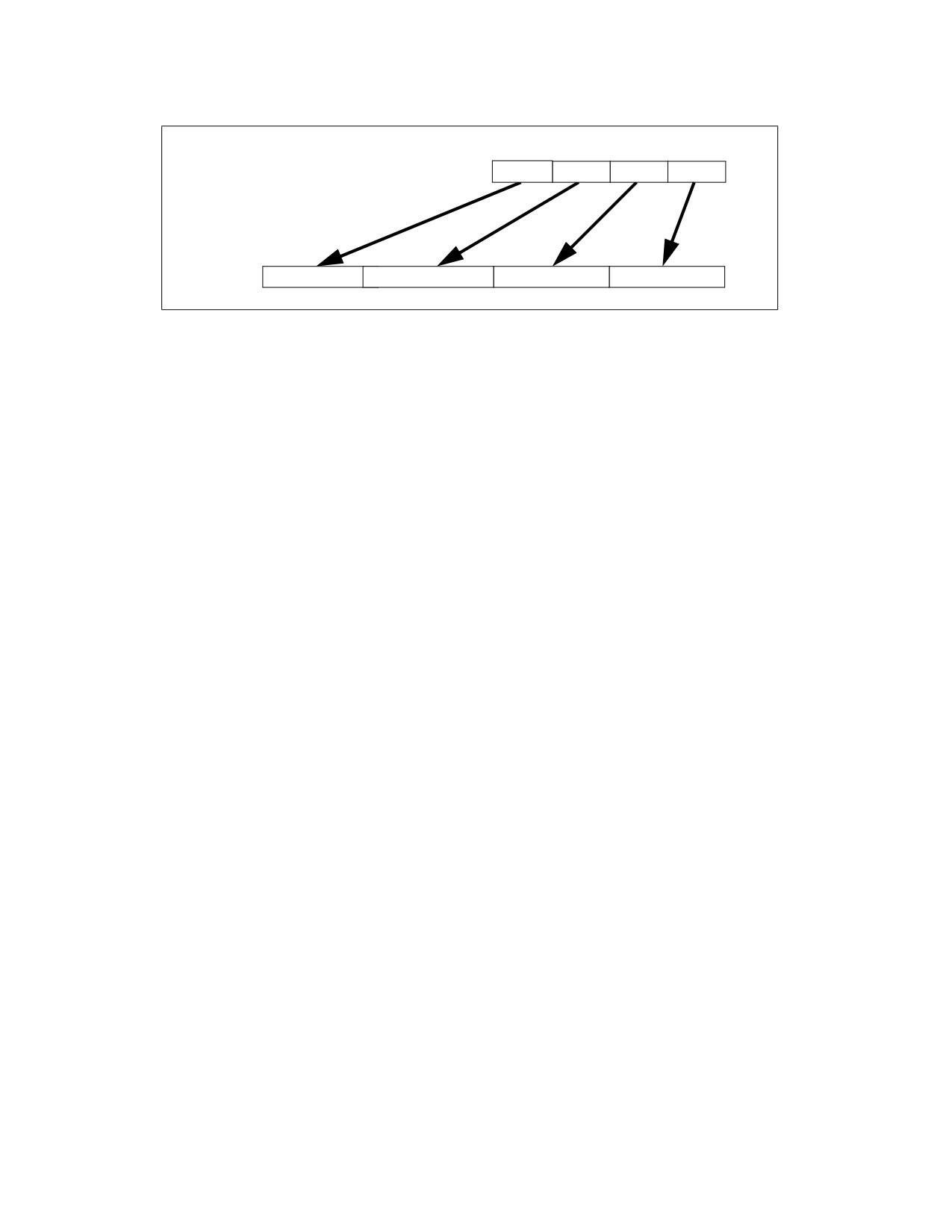
Figure 3-11. CVTDQ2PD (VEX.256 encoded version)
Operation
VCVTDQ2PD (EVEX encoded versions) when src operand is a register
(KL, VL) = (2, 128), (4, 256), (8, 512)
FOR j := 0 TO KL-1
i := j * 64
k := j * 32
IF k1[j] OR *no writemask*
THEN DEST[i+63:i] :=
Convert_Integer_To_Double_Precision_Floating_Point(SRC[k+31:k])
ELSE
IF *merging-masking*
; merging-masking
THEN *DEST[i+63:i] remains unchanged*
ELSE
; zeroing-masking
DEST[i+63:i] := 0
FI
FI;
ENDFOR
DEST[MAXVL-1:VL] := 0
CVTDQ2PD—Convert Packed Doubleword Integers to Packed Double Precision Floating-Point Values
Vol. 2A
3-265
INSTRUCTION SET REFERENCE, A-L
VCVTDQ2PD (EVEX encoded versions) when src operand is a memory source
(KL, VL) = (2, 128), (4, 256), (8, 512)
FOR j := 0 TO KL-1
i := j * 64
k := j * 32
IF k1[j] OR *no writemask*
THEN
IF (EVEX.b = 1)
THEN
DEST[i+63:i] :=
Convert_Integer_To_Double_Precision_Floating_Point(SRC[31:0])
ELSE
DEST[i+63:i] :=
Convert_Integer_To_Double_Precision_Floating_Point(SRC[k+31:k])
FI;
ELSE
IF *merging-masking*
; merging-masking
THEN *DEST[i+63:i] remains unchanged*
ELSE
; zeroing-masking
DEST[i+63:i] := 0
FI
FI;
ENDFOR
DEST[MAXVL-1:VL] := 0
VCVTDQ2PD (VEX.256 encoded version)
DEST[63:0] := Convert_Integer_To_Double_Precision_Floating_Point(SRC[31:0])
DEST[127:64] := Convert_Integer_To_Double_Precision_Floating_Point(SRC[63:32])
DEST[191:128] := Convert_Integer_To_Double_Precision_Floating_Point(SRC[95:64])
DEST[255:192] := Convert_Integer_To_Double_Precision_Floating_Point(SRC[127:96)
DEST[MAXVL-1:256] := 0
VCVTDQ2PD (VEX.128 encoded version)
DEST[63:0] := Convert_Integer_To_Double_Precision_Floating_Point(SRC[31:0])
DEST[127:64] := Convert_Integer_To_Double_Precision_Floating_Point(SRC[63:32])
DEST[MAXVL-1:128] := 0
CVTDQ2PD (128-bit Legacy SSE version)
DEST[63:0] := Convert_Integer_To_Double_Precision_Floating_Point(SRC[31:0])
DEST[127:64] := Convert_Integer_To_Double_Precision_Floating_Point(SRC[63:32])
DEST[MAXVL-1:128] (unmodified)
Intel C/C++ Compiler Intrinsic Equivalent
VCVTDQ2PD __m512d _mm512_cvtepi32_pd( __m256i a);
VCVTDQ2PD __m512d _mm512_mask_cvtepi32_pd( __m512d s, __mmask8 k, __m256i a);
VCVTDQ2PD __m512d _mm512_maskz_cvtepi32_pd( __mmask8 k, __m256i a);
VCVTDQ2PD __m256d _mm256_cvtepi32_pd (__m128i src);
VCVTDQ2PD __m256d _mm256_mask_cvtepi32_pd( __m256d s, __mmask8 k, __m256i a);
VCVTDQ2PD __m256d _mm256_maskz_cvtepi32_pd( __mmask8 k, __m256i a);
VCVTDQ2PD __m128d _mm_mask_cvtepi32_pd( __m128d s, __mmask8 k, __m128i a);
VCVTDQ2PD __m128d _mm_maskz_cvtepi32_pd( __mmask8 k, __m128i a);
CVTDQ2PD __m128d _mm_cvtepi32_pd (__m128i src)
3-266
Vol. 2A
CVTDQ2PD—Convert Packed Doubleword Integers to Packed Double Precision Floating-Point Values
INSTRUCTION SET REFERENCE, A-L
Other Exceptions
VEX-encoded instructions, see Table 2-22, “Type 5 Class Exception Conditions”.
EVEX-encoded instructions, see Table 2-51, “Type E5 Class Exception Conditions”.
Additionally:
#UD
If VEX.vvvv != 1111B or EVEX.vvvv != 1111B.
CVTDQ2PD—Convert Packed Doubleword Integers to Packed Double Precision Floating-Point Values
Vol. 2A
3-267

INSTRUCTION SET REFERENCE, A-L
CVTDQ2PS—Convert Packed Doubleword Integers to Packed Single Precision Floating-Point
Values
Opcode
Op /
64/32
CPUID
Description
Instruction
En
bit Mode
Feature
Support
Flag
NP 0F 5B /r
A
V/V
SSE2
Convert four packed signed doubleword integers from
CVTDQ2PS xmm1, xmm2/m128
xmm2/mem to four packed single precision floating-
point values in xmm1.
VEX.128.0F.WIG 5B /r
A
V/V
AVX
Convert four packed signed doubleword integers from
VCVTDQ2PS xmm1, xmm2/m128
xmm2/mem to four packed single precision floating-
point values in xmm1.
VEX.256.0F.WIG 5B /r
A
V/V
AVX
Convert eight packed signed doubleword integers from
VCVTDQ2PS ymm1, ymm2/m256
ymm2/mem to eight packed single precision floating-
point values in ymm1.
EVEX.128.0F.W0 5B /r
B
V/V
AVX512VL
Convert four packed signed doubleword integers from
VCVTDQ2PS xmm1 {k1}{z},
AVX512F
xmm2/m128/m32bcst to four packed single precision
xmm2/m128/m32bcst
floating-point values in xmm1with writemask k1.
EVEX.256.0F.W0 5B /r
B
V/V
AVX512VL
Convert eight packed signed doubleword integers from
VCVTDQ2PS ymm1 {k1}{z},
AVX512F
ymm2/m256/m32bcst to eight packed single precision
ymm2/m256/m32bcst
floating-point values in ymm1with writemask k1.
EVEX.512.0F.W0 5B /r
B
V/V
AVX512F
Convert sixteen packed signed doubleword integers
VCVTDQ2PS zmm1 {k1}{z},
from zmm2/m512/m32bcst to sixteen packed single
zmm2/m512/m32bcst{er}
precision floating-point values in zmm1with writemask
k1.
Instruction Operand Encoding
Op/En
Tuple Type
Operand 1
Operand 2
Operand 3
Operand 4
A
N/A
ModRM:reg (w)
ModRM:r/m (r)
N/A
N/A
B
Full
ModRM:reg (w)
ModRM:r/m (r)
N/A
N/A
Description
Converts four, eight or sixteen packed signed doubleword integers in the source operand to four, eight or sixteen
packed single precision floating-point values in the destination operand.
EVEX encoded versions: The source operand can be a ZMM/YMM/XMM register, a 512/256/128-bit memory location
or a 512/256/128-bit vector broadcasted from a 32-bit memory location. The destination operand is a
ZMM/YMM/XMM register conditionally updated with writemask k1.
VEX.256 encoded version: The source operand is a YMM register or 256- bit memory location. The destination
operand is a YMM register. Bits (MAXVL-1:256) of the corresponding register destination are zeroed.
VEX.128 encoded version: The source operand is an XMM register or 128- bit memory location. The destination
operand is a XMM register. The upper bits (MAXVL-1:128) of the corresponding register destination are zeroed.
128-bit Legacy SSE version: The source operand is an XMM register or 128- bit memory location. The destination
operand is an XMM register. The upper Bits (MAXVL-1:128) of the corresponding register destination are unmodi-
fied.
VEX.vvvv and EVEX.vvvv are reserved and must be 1111b, otherwise instructions will #UD.
3-268
Vol. 2A
CVTDQ2PS—Convert Packed Doubleword Integers to Packed Single Precision Floating-Point Values
INSTRUCTION SET REFERENCE, A-L
Operation
VCVTDQ2PS (EVEX encoded versions) when SRC operand is a register
(KL, VL) = (4, 128), (8, 256), (16, 512)
IF (VL = 512) AND (EVEX.b = 1)
THEN
SET_ROUNDING_MODE_FOR_THIS_INSTRUCTION(EVEX.RC); ; refer to Table 15-4 in the Intel® 64 and IA-32 Architectures
Software Developer’s Manual, Volume 1
ELSE
SET_ROUNDING_MODE_FOR_THIS_INSTRUCTION(MXCSR.RC); ; refer to Table 15-4 in the Intel® 64 and IA-32 Architectures
Software Developer’s Manual, Volume 1
FI;
FOR j := 0 TO KL-1
i := j * 32
IF k1[j] OR *no writemask*
THEN DEST[i+31:i] :=
Convert_Integer_To_Single_Precision_Floating_Point(SRC[i+31:i])
ELSE
IF *merging-masking*
; merging-masking
THEN *DEST[i+31:i] remains unchanged*
ELSE
; zeroing-masking
DEST[i+31:i] := 0
FI
FI;
ENDFOR
DEST[MAXVL-1:VL] := 0
VCVTDQ2PS (EVEX encoded versions) when SRC operand is a memory source
(KL, VL) = (4, 128), (8, 256), (16, 512)
FOR j := 0 TO KL-1
i := j * 32
IF k1[j] OR *no writemask*
THEN
IF (EVEX.b = 1)
THEN
DEST[i+31:i] :=
Convert_Integer_To_Single_Precision_Floating_Point(SRC[31:0])
ELSE
DEST[i+31:i] :=
Convert_Integer_To_Single_Precision_Floating_Point(SRC[i+31:i])
FI;
ELSE
IF *merging-masking*
; merging-masking
THEN *DEST[i+31:i] remains unchanged*
ELSE
; zeroing-masking
DEST[i+31:i] := 0
FI
FI;
ENDFOR
DEST[MAXVL-1:VL] := 0
CVTDQ2PS—Convert Packed Doubleword Integers to Packed Single Precision Floating-Point Values
Vol. 2A
3-269
INSTRUCTION SET REFERENCE, A-L
VCVTDQ2PS (VEX.256 encoded version)
DEST[31:0] := Convert_Integer_To_Single_Precision_Floating_Point(SRC[31:0])
DEST[63:32] := Convert_Integer_To_Single_Precision_Floating_Point(SRC[63:32])
DEST[95:64] := Convert_Integer_To_Single_Precision_Floating_Point(SRC[95:64])
DEST[127:96] := Convert_Integer_To_Single_Precision_Floating_Point(SRC[127:96)
DEST[159:128] := Convert_Integer_To_Single_Precision_Floating_Point(SRC[159:128])
DEST[191:160] := Convert_Integer_To_Single_Precision_Floating_Point(SRC[191:160])
DEST[223:192] := Convert_Integer_To_Single_Precision_Floating_Point(SRC[223:192])
DEST[255:224] := Convert_Integer_To_Single_Precision_Floating_Point(SRC[255:224)
DEST[MAXVL-1:256] := 0
VCVTDQ2PS (VEX.128 encoded version)
DEST[31:0] := Convert_Integer_To_Single_Precision_Floating_Point(SRC[31:0])
DEST[63:32] := Convert_Integer_To_Single_Precision_Floating_Point(SRC[63:32])
DEST[95:64] := Convert_Integer_To_Single_Precision_Floating_Point(SRC[95:64])
DEST[127:96] := Convert_Integer_To_Single_Precision_Floating_Point(SRC[127z:96)
DEST[MAXVL-1:128] := 0
CVTDQ2PS (128-bit Legacy SSE version)
DEST[31:0] := Convert_Integer_To_Single_Precision_Floating_Point(SRC[31:0])
DEST[63:32] := Convert_Integer_To_Single_Precision_Floating_Point(SRC[63:32])
DEST[95:64] := Convert_Integer_To_Single_Precision_Floating_Point(SRC[95:64])
DEST[127:96] := Convert_Integer_To_Single_Precision_Floating_Point(SRC[127z:96)
DEST[MAXVL-1:128] (unmodified)
Intel C/C++ Compiler Intrinsic Equivalent
VCVTDQ2PS __m512 _mm512_cvtepi32_ps( __m512i a);
VCVTDQ2PS __m512 _mm512_mask_cvtepi32_ps( __m512 s, __mmask16 k, __m512i a);
VCVTDQ2PS __m512 _mm512_maskz_cvtepi32_ps( __mmask16 k, __m512i a);
VCVTDQ2PS __m512 _mm512_cvt_roundepi32_ps( __m512i a, int r);
VCVTDQ2PS __m512 _mm512_mask_cvt_roundepi_ps( __m512 s, __mmask16 k, __m512i a, int r);
VCVTDQ2PS __m512 _mm512_maskz_cvt_roundepi32_ps( __mmask16 k, __m512i a, int r);
VCVTDQ2PS __m256 _mm256_mask_cvtepi32_ps( __m256 s, __mmask8 k, __m256i a);
VCVTDQ2PS __m256 _mm256_maskz_cvtepi32_ps( __mmask8 k, __m256i a);
VCVTDQ2PS __m128 _mm_mask_cvtepi32_ps( __m128 s, __mmask8 k, __m128i a);
VCVTDQ2PS __m128 _mm_maskz_cvtepi32_ps( __mmask8 k, __m128i a);
CVTDQ2PS __m256 _mm256_cvtepi32_ps (__m256i src)
CVTDQ2PS __m128 _mm_cvtepi32_ps (__m128i src)
SIMD Floating-Point Exceptions
Precision
Other Exceptions
VEX-encoded instructions, see Table 2-19, “Type 2 Class Exception Conditions”.
EVEX-encoded instructions, see Table 2-46, “Type E2 Class Exception Conditions”.
Additionally:
#UD
If VEX.vvvv != 1111B or EVEX.vvvv != 1111B.
3-270
Vol. 2A
CVTDQ2PS—Convert Packed Doubleword Integers to Packed Single Precision Floating-Point Values

INSTRUCTION SET REFERENCE, A-L
CVTPD2DQ—Convert Packed Double Precision Floating-Point Values to Packed Doubleword
Integers
Opcode
Op /
64/32
CPUID
Description
Instruction
En
bit Mode
Feature
Support
Flag
F2 0F E6 /r
A
V/V
SSE2
Convert two packed double precision floating-point
CVTPD2DQ xmm1, xmm2/m128
values in xmm2/mem to two signed doubleword
integers in xmm1.
VEX.128.F2.0F.WIG E6 /r
A
V/V
AVX
Convert two packed double precision floating-point
VCVTPD2DQ xmm1, xmm2/m128
values in xmm2/mem to two signed doubleword
integers in xmm1.
VEX.256.F2.0F.WIG E6 /r
A
V/V
AVX
Convert four packed double precision floating-point
VCVTPD2DQ xmm1, ymm2/m256
values in ymm2/mem to four signed doubleword
integers in xmm1.
EVEX.128.F2.0F.W1 E6 /r
B
V/V
AVX512VL
Convert two packed double precision floating-point
VCVTPD2DQ xmm1 {k1}{z},
AVX512F
values in xmm2/m128/m64bcst to two signed
xmm2/m128/m64bcst
doubleword integers in xmm1 subject to writemask k1.
EVEX.256.F2.0F.W1 E6 /r
B
V/V
AVX512VL
Convert four packed double precision floating-point
VCVTPD2DQ xmm1 {k1}{z},
AVX512F
values in ymm2/m256/m64bcst to four signed
ymm2/m256/m64bcst
doubleword integers in xmm1 subject to writemask k1.
EVEX.512.F2.0F.W1 E6 /r
B
V/V
AVX512F
Convert eight packed double precision floating-point
VCVTPD2DQ ymm1 {k1}{z},
values in zmm2/m512/m64bcst to eight signed
zmm2/m512/m64bcst{er}
doubleword integers in ymm1 subject to writemask k1.
Instruction Operand Encoding
Op/En
Tuple Type
Operand 1
Operand 2
Operand 3
Operand 4
A
N/A
ModRM:reg (w)
ModRM:r/m (r)
N/A
N/A
B
Full
ModRM:reg (w)
ModRM:r/m (r)
N/A
N/A
Description
Converts packed double precision floating-point values in the source operand (second operand) to packed signed
doubleword integers in the destination operand (first operand).
When a conversion is inexact, the value returned is rounded according to the rounding control bits in the MXCSR
register or the embedded rounding control bits. If a converted result cannot be represented in the destination
format, the floating-point invalid exception is raised, and if this exception is masked, the indefinite integer value
(2w-1, where w represents the number of bits in the destination format) is returned.
EVEX encoded versions: The source operand is a ZMM/YMM/XMM register, a 512-bit memory location, or a 512-bit
vector broadcasted from a 64-bit memory location. The destination operand is a ZMM/YMM/XMM register condi-
tionally updated with writemask k1. The upper bits (MAXVL-1:256/128/64) of the corresponding destination are
zeroed.
VEX.256 encoded version: The source operand is a YMM register or 256- bit memory location. The destination
operand is an XMM register. The upper bits (MAXVL-1:128) of the corresponding ZMM register destination are
zeroed.
VEX.128 encoded version: The source operand is an XMM register or 128- bit memory location. The destination
operand is a XMM register. The upper bits (MAXVL-1:64) of the corresponding ZMM register destination are zeroed.
128-bit Legacy SSE version: The source operand is an XMM register or 128- bit memory location. The destination
operand is an XMM register. Bits[127:64] of the destination XMM register are zeroed. However, the upper bits
(MAXVL-1:128) of the corresponding ZMM register destination are unmodified.
VEX.vvvv and EVEX.vvvv are reserved and must be 1111b, otherwise instructions will #UD.
CVTPD2DQ—Convert Packed Double Precision Floating-Point Values to Packed Doubleword Integers
Vol. 2A
3-271
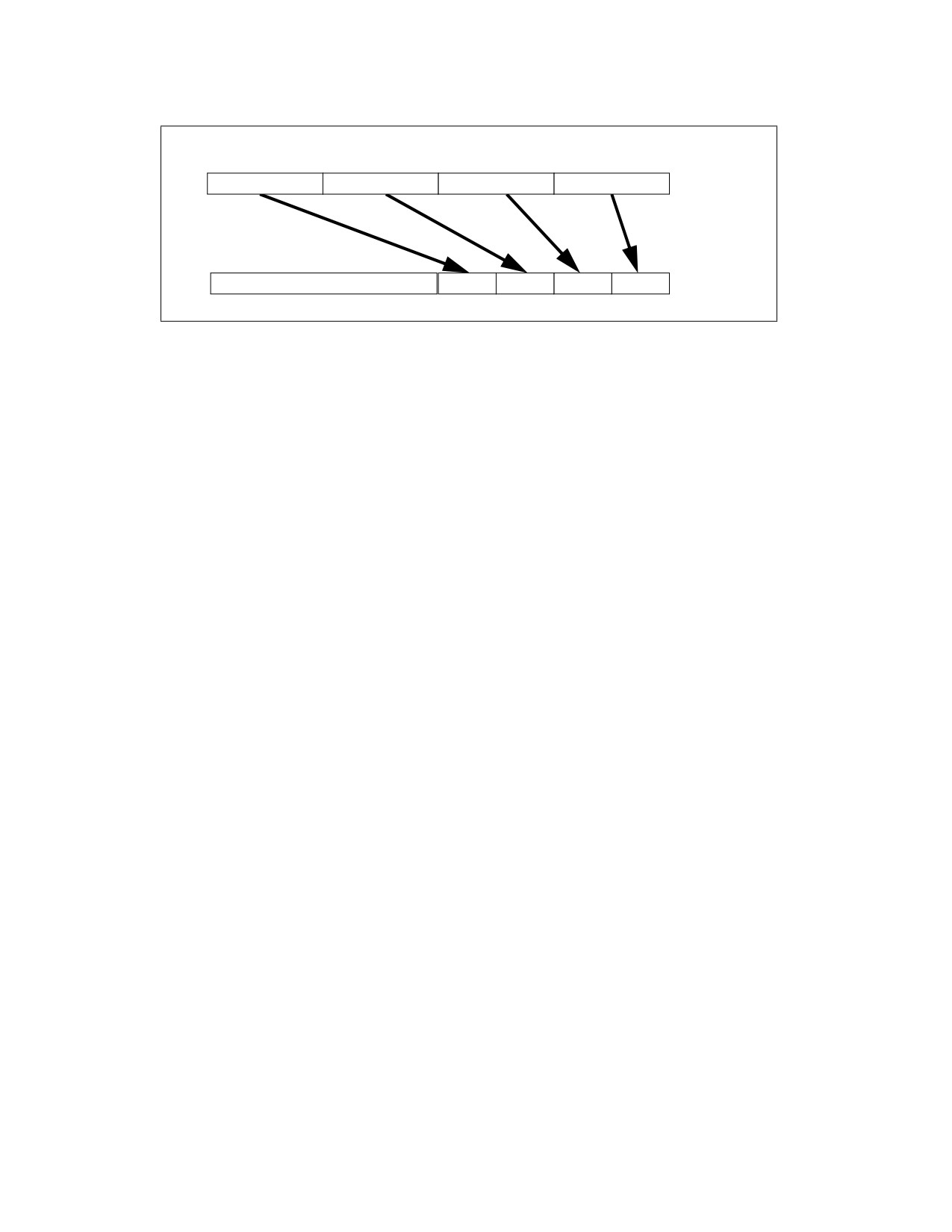
INSTRUCTION SET REFERENCE, A-L
SRC
X3
X2
X1
X0
DEST
0
X3
X2
X1
X0
Figure 3-12. VCVTPD2DQ (VEX.256 encoded version)
Operation
VCVTPD2DQ (EVEX encoded versions) when src operand is a register
(KL, VL) = (2, 128), (4, 256), (8, 512)
IF (VL = 512) AND (EVEX.b = 1)
THEN
SET_ROUNDING_MODE_FOR_THIS_INSTRUCTION(EVEX.RC);
ELSE
SET_ROUNDING_MODE_FOR_THIS_INSTRUCTION(MXCSR.RC);
FI;
FOR j := 0 TO KL-1
i := j * 32
k := j * 64
IF k1[j] OR *no writemask*
THEN DEST[i+31:i] :=
Convert_Double_Precision_Floating_Point_To_Integer(SRC[k+63:k])
ELSE
IF *merging-masking*
; merging-masking
THEN *DEST[i+31:i] remains unchanged*
ELSE
; zeroing-masking
DEST[i+31:i] := 0
FI
FI;
ENDFOR
DEST[MAXVL-1:VL/2] := 0
3-272
Vol. 2A
CVTPD2DQ—Convert Packed Double Precision Floating-Point Values to Packed Doubleword Integers
INSTRUCTION SET REFERENCE, A-L
VCVTPD2DQ (EVEX encoded versions) when src operand is a memory source
(KL, VL) = (2, 128), (4, 256), (8, 512)
FOR j := 0 TO KL-1
i := j * 32
k := j * 64
IF k1[j] OR *no writemask*
THEN
IF (EVEX.b = 1)
THEN
DEST[i+31:i] :=
Convert_Double_Precision_Floating_Point_To_Integer(SRC[63:0])
ELSE
DEST[i+31:i] :=
Convert_Double_Precision_Floating_Point_To_Integer(SRC[k+63:k])
FI;
ELSE
IF *merging-masking*
; merging-masking
THEN *DEST[i+31:i] remains unchanged*
ELSE
; zeroing-masking
DEST[i+31:i] := 0
FI
FI;
ENDFOR
DEST[MAXVL-1:VL/2] := 0
VCVTPD2DQ (VEX.256 encoded version)
DEST[31:0] := Convert_Double_Precision_Floating_Point_To_Integer(SRC[63:0])
DEST[63:32] := Convert_Double_Precision_Floating_Point_To_Integer(SRC[127:64])
DEST[95:64] := Convert_Double_Precision_Floating_Point_To_Integer(SRC[191:128])
DEST[127:96] := Convert_Double_Precision_Floating_Point_To_Integer(SRC[255:192)
DEST[MAXVL-1:128] := 0
VCVTPD2DQ (VEX.128 encoded version)
DEST[31:0] := Convert_Double_Precision_Floating_Point_To_Integer(SRC[63:0])
DEST[63:32] := Convert_Double_Precision_Floating_Point_To_Integer(SRC[127:64])
DEST[MAXVL-1:64] := 0
CVTPD2DQ (128-bit Legacy SSE version)
DEST[31:0] := Convert_Double_Precision_Floating_Point_To_Integer(SRC[63:0])
DEST[63:32] := Convert_Double_Precision_Floating_Point_To_Integer(SRC[127:64])
DEST[127:64] := 0
DEST[MAXVL-1:128] (unmodified)
CVTPD2DQ—Convert Packed Double Precision Floating-Point Values to Packed Doubleword Integers
Vol. 2A
3-273
INSTRUCTION SET REFERENCE, A-L
Intel C/C++ Compiler Intrinsic Equivalent
VCVTPD2DQ __m256i _mm512_cvtpd_epi32( __m512d a);
VCVTPD2DQ __m256i _mm512_mask_cvtpd_epi32( __m256i s, __mmask8 k, __m512d a);
VCVTPD2DQ __m256i _mm512_maskz_cvtpd_epi32( __mmask8 k, __m512d a);
VCVTPD2DQ __m256i _mm512_cvt_roundpd_epi32( __m512d a, int r);
VCVTPD2DQ __m256i _mm512_mask_cvt_roundpd_epi32( __m256i s, __mmask8 k, __m512d a, int r);
VCVTPD2DQ __m256i _mm512_maskz_cvt_roundpd_epi32( __mmask8 k, __m512d a, int r);
VCVTPD2DQ __m128i _mm256_mask_cvtpd_epi32( __m128i s, __mmask8 k, __m256d a);
VCVTPD2DQ __m128i _mm256_maskz_cvtpd_epi32( __mmask8 k, __m256d a);
VCVTPD2DQ __m128i _mm_mask_cvtpd_epi32( __m128i s, __mmask8 k, __m128d a);
VCVTPD2DQ __m128i _mm_maskz_cvtpd_epi32( __mmask8 k, __m128d a);
VCVTPD2DQ __m128i _mm256_cvtpd_epi32 (__m256d src)
CVTPD2DQ __m128i _mm_cvtpd_epi32 (__m128d src)
SIMD Floating-Point Exceptions
Invalid, Precision
Other Exceptions
See Table 2-19, “Type 2 Class Exception Conditions”.
EVEX-encoded instructions, see Table 2-46, “Type E2 Class Exception Conditions”.
Additionally:
#UD
If VEX.vvvv != 1111B or EVEX.vvvv != 1111B.
3-274
Vol. 2A
CVTPD2DQ—Convert Packed Double Precision Floating-Point Values to Packed Doubleword Integers

INSTRUCTION SET REFERENCE, A-L
CVTPD2PI—Convert Packed Double Precision Floating-Point Values to Packed Dword Integers
Opcode/
Op/
64/32 bit
CPUID
Description
Instruction
En
Mode
Feature
Support
Flag
66 0F 2D /r
RM
V/V
SSE2
Convert two packed double precision floating-
point values from xmm/m128 to two packed
CVTPD2PI mm, xmm/m128
signed doubleword integers in mm.
Instruction Operand Encoding
Op/En
Operand 1
Operand 2
Operand 3
Operand 4
RM
ModRM:reg (w)
ModRM:r/m (r)
N/A
N/A
Description
Converts two packed double precision floating-point values in the source operand (second operand) to two packed
signed doubleword integers in the destination operand (first operand).
The source operand can be an XMM register or a 128-bit memory location. The destination operand is an MMX tech-
nology register.
When a conversion is inexact, the value returned is rounded according to the rounding control bits in the MXCSR
register. If a converted result is larger than the maximum signed doubleword integer, the floating-point invalid
exception is raised, and if this exception is masked, the indefinite integer value (80000000H) is returned.
This instruction causes a transition from x87 FPU to MMX technology operation (that is, the x87 FPU top-of-stack
pointer is set to 0 and the x87 FPU tag word is set to all 0s [valid]). If this instruction is executed while an x87 FPU
floating-point exception is pending, the exception is handled before the CVTPD2PI instruction is executed.
In 64-bit mode, use of the REX.R prefix permits this instruction to access additional registers (XMM8-XMM15).
Operation
DEST[31:0] := Convert_Double_Precision_Floating_Point_To_Integer32(SRC[63:0]);
DEST[63:32] := Convert_Double_Precision_Floating_Point_To_Integer32(SRC[127:64]);
Intel C/C++ Compiler Intrinsic Equivalent
CVTPD1PI:
__m64 _mm_cvtpd_pi32(__m128d a)
SIMD Floating-Point Exceptions
Invalid, Precision.
Other Exceptions
See Table 23-4, “Exception Conditions for Legacy SIMD/MMX Instructions with FP Exception and 16-Byte Align-
ment” in the Intel® 64 and IA-32 Architectures Software Developer’s Manual, Volume 3B.
CVTPD2PI—Convert Packed Double Precision Floating-Point Values to Packed Dword Integers
Vol. 2A
3-275

INSTRUCTION SET REFERENCE, A-L
CVTPD2PS—Convert Packed Double Precision Floating-Point Values to Packed Single Precision
Floating-Point Values
Opcode/
Op /
64/32
CPUID
Description
Instruction
En
bit Mode
Feature
Support
Flag
66 0F 5A /r
A
V/V
SSE2
Convert two packed double precision floating-point
CVTPD2PS xmm1, xmm2/m128
values in xmm2/mem to two single precision
floating-point values in xmm1.
VEX.128.66.0F.WIG 5A /r
A
V/V
AVX
Convert two packed double precision floating-point
VCVTPD2PS xmm1, xmm2/m128
values in xmm2/mem to two single precision
floating-point values in xmm1.
VEX.256.66.0F.WIG 5A /r
A
V/V
AVX
Convert four packed double precision floating-point
VCVTPD2PS xmm1, ymm2/m256
values in ymm2/mem to four single precision
floating-point values in xmm1.
EVEX.128.66.0F.W1 5A /r
B
V/V
AVX512VL
Convert two packed double precision floating-point
VCVTPD2PS xmm1 {k1}{z},
AVX512F
values in xmm2/m128/m64bcst to two single
xmm2/m128/m64bcst
precision floating-point values in xmm1with
writemask k1.
EVEX.256.66.0F.W1 5A /r
B
V/V
AVX512VL
Convert four packed double precision floating-point
VCVTPD2PS xmm1 {k1}{z},
AVX512F
values in ymm2/m256/m64bcst to four single
ymm2/m256/m64bcst
precision floating-point values in xmm1with
writemask k1.
EVEX.512.66.0F.W1 5A /r
B
V/V
AVX512F
Convert eight packed double precision floating-point
VCVTPD2PS ymm1 {k1}{z},
values in zmm2/m512/m64bcst to eight single
zmm2/m512/m64bcst{er}
precision floating-point values in ymm1with
writemask k1.
Instruction Operand Encoding
Op/En
Tuple Type
Operand 1
Operand 2
Operand 3
Operand 4
A
N/A
ModRM:reg (w)
ModRM:r/m (r)
N/A
N/A
B
Full
ModRM:reg (w)
ModRM:r/m (r)
N/A
N/A
Description
Converts two, four or eight packed double precision floating-point values in the source operand (second operand)
to two, four or eight packed single precision floating-point values in the destination operand (first operand).
When a conversion is inexact, the value returned is rounded according to the rounding control bits in the MXCSR
register or the embedded rounding control bits.
EVEX encoded versions: The source operand is a ZMM/YMM/XMM register, a 512/256/128-bit memory location, or
a 512/256/128-bit vector broadcasted from a 64-bit memory location. The destination operand is a
YMM/XMM/XMM (low 64-bits) register conditionally updated with writemask k1. The upper bits (MAXVL-
1:256/128/64) of the corresponding destination are zeroed.
VEX.256 encoded version: The source operand is a YMM register or 256- bit memory location. The destination
operand is an XMM register. The upper bits (MAXVL-1:128) of the corresponding ZMM register destination are
zeroed.
VEX.128 encoded version: The source operand is an XMM register or 128- bit memory location. The destination
operand is a XMM register. The upper bits (MAXVL-1:64) of the corresponding ZMM register destination are zeroed.
128-bit Legacy SSE version: The source operand is an XMM register or 128- bit memory location. The destination
operand is an XMM register. Bits[127:64] of the destination XMM register are zeroed. However, the upper Bits
(MAXVL-1:128) of the corresponding ZMM register destination are unmodified.
VEX.vvvv and EVEX.vvvv are reserved and must be 1111b otherwise instructions will #UD.
3-276
Vol. 2A
CVTPD2PS—Convert Packed Double Precision Floating-Point Values to Packed Single Precision Floating-Point Values
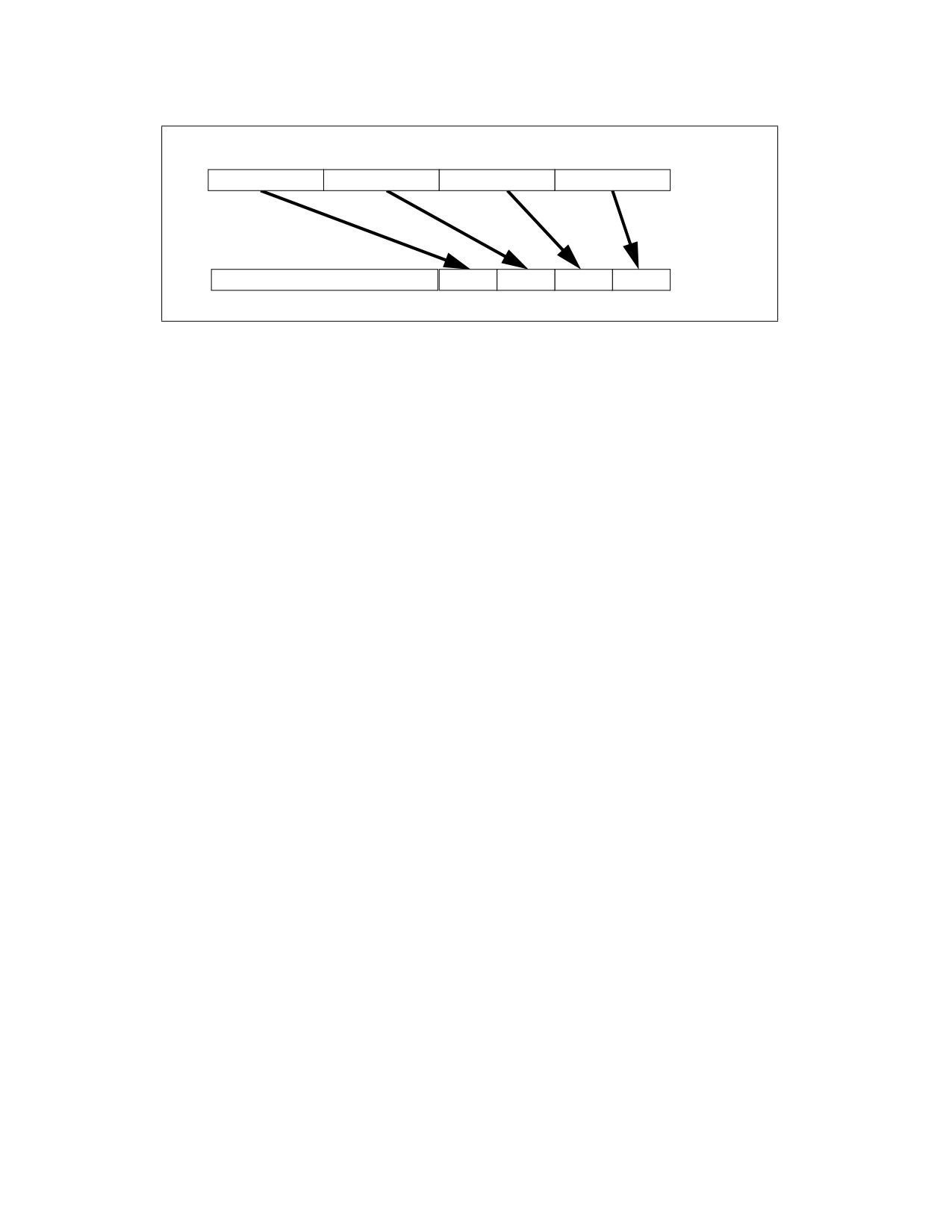
INSTRUCTION SET REFERENCE, A-L
SRC
X3
X2
X1
X0
DEST
0
X3
X2
X1
X0
Figure 3-13. VCVTPD2PS (VEX.256 encoded version)
Operation
VCVTPD2PS (EVEX encoded version) when src operand is a register
(KL, VL) = (2, 128), (4, 256), (8, 512)
IF (VL = 512) AND (EVEX.b = 1)
THEN
SET_ROUNDING_MODE_FOR_THIS_INSTRUCTION(EVEX.RC);
ELSE
SET_ROUNDING_MODE_FOR_THIS_INSTRUCTION(MXCSR.RC);
FI;
FOR j := 0 TO KL-1
i := j * 32
k := j * 64
IF k1[j] OR *no writemask*
THEN
DEST[i+31:i] := Convert_Double_Precision_Floating_Point_To_Single_Precision_Floating_Point(SRC[k+63:k])
ELSE
IF *merging-masking*
; merging-masking
THEN *DEST[i+31:i] remains unchanged*
ELSE
; zeroing-masking
DEST[i+31:i] := 0
FI
FI;
ENDFOR
DEST[MAXVL-1:VL/2] := 0
CVTPD2PS—Convert Packed Double Precision Floating-Point Values to Packed Single Precision Floating-Point Values
Vol. 2A
3-277
INSTRUCTION SET REFERENCE, A-L
VCVTPD2PS (EVEX encoded version) when src operand is a memory source
(KL, VL) = (2, 128), (4, 256), (8, 512)
FOR j := 0 TO KL-1
i := j * 32
k := j * 64
IF k1[j] OR *no writemask*
THEN
IF (EVEX.b = 1)
THEN
DEST[i+31:i] :=Convert_Double_Precision_Floating_Point_To_Single_Precision_Floating_Point(SRC[63:0])
ELSE
DEST[i+31:i] := Convert_Double_Precision_Floating_Point_To_Single_Precision_Floating_Point(SRC[k+63:k])
FI;
ELSE
IF *merging-masking*
; merging-masking
THEN *DEST[i+31:i] remains unchanged*
ELSE
; zeroing-masking
DEST[i+31:i] := 0
FI
FI;
ENDFOR
DEST[MAXVL-1:VL/2] := 0
VCVTPD2PS (VEX.256 encoded version)
DEST[31:0] := Convert_Double_Precision_To_Single_Precision_Floating_Point(SRC[63:0])
DEST[63:32] := Convert_Double_Precision_To_Single_Precision_Floating_Point(SRC[127:64])
DEST[95:64] := Convert_Double_Precision_To_Single_Precision_Floating_Point(SRC[191:128])
DEST[127:96] := Convert_Double_Precision_To_Single_Precision_Floating_Point(SRC[255:192)
DEST[MAXVL-1:128] := 0
VCVTPD2PS (VEX.128 encoded version)
DEST[31:0] := Convert_Double_Precision_To_Single_Precision_Floating_Point(SRC[63:0])
DEST[63:32] := Convert_Double_Precision_To_Single_Precision_Floating_Point(SRC[127:64])
DEST[MAXVL-1:64] := 0
CVTPD2PS (128-bit Legacy SSE version)
DEST[31:0] := Convert_Double_Precision_To_Single_Precision_Floating_Point(SRC[63:0])
DEST[63:32] := Convert_Double_Precision_To_Single_Precision_Floating_Point(SRC[127:64])
DEST[127:64] := 0
DEST[MAXVL-1:128] (unmodified)
3-278
Vol. 2A
CVTPD2PS—Convert Packed Double Precision Floating-Point Values to Packed Single Precision Floating-Point Values
INSTRUCTION SET REFERENCE, A-L
Intel C/C++ Compiler Intrinsic Equivalent
VCVTPD2PS __m256 _mm512_cvtpd_ps( __m512d a);
VCVTPD2PS __m256 _mm512_mask_cvtpd_ps( __m256 s, __mmask8 k, __m512d a);
VCVTPD2PS __m256 _mm512_maskz_cvtpd_ps( __mmask8 k, __m512d a);
VCVTPD2PS __m256 _mm512_cvt_roundpd_ps( __m512d a, int r);
VCVTPD2PS __m256 _mm512_mask_cvt_roundpd_ps( __m256 s, __mmask8 k, __m512d a, int r);
VCVTPD2PS __m256 _mm512_maskz_cvt_roundpd_ps( __mmask8 k, __m512d a, int r);
VCVTPD2PS __m128 _mm256_mask_cvtpd_ps( __m128 s, __mmask8 k, __m256d a);
VCVTPD2PS __m128 _mm256_maskz_cvtpd_ps( __mmask8 k, __m256d a);
VCVTPD2PS __m128 _mm_mask_cvtpd_ps( __m128 s, __mmask8 k, __m128d a);
VCVTPD2PS __m128 _mm_maskz_cvtpd_ps( __mmask8 k, __m128d a);
VCVTPD2PS __m128 _mm256_cvtpd_ps (__m256d a)
CVTPD2PS __m128 _mm_cvtpd_ps (__m128d a)
SIMD Floating-Point Exceptions
Invalid, Precision, Underflow, Overflow, Denormal
Other Exceptions
VEX-encoded instructions, see Table 2-19, “Type 2 Class Exception Conditions”.
EVEX-encoded instructions, see Table 2-46, “Type E2 Class Exception Conditions”.
Additionally:
#UD
If VEX.vvvv != 1111B or EVEX.vvvv != 1111B.
CVTPD2PS—Convert Packed Double Precision Floating-Point Values to Packed Single Precision Floating-Point Values
Vol. 2A
3-279

INSTRUCTION SET REFERENCE, A-L
CVTPI2PD—Convert Packed Dword Integers to Packed Double Precision Floating-Point Values
Opcode/
Op/
64-Bit
Compat/
Description
Instruction
En
Mode
Leg Mode
66 0F 2A /r
RM
Valid
Valid
Convert two packed signed doubleword
integers from mm/mem64 to two packed
CVTPI2PD xmm, mm/m641
double precision floating-point values in xmm.
NOTES:
1. Operation is different for different operand sets; see the Description section.
Instruction Operand Encoding
Op/En
Operand 1
Operand 2
Operand 3
Operand 4
RM
ModRM:reg (w)
ModRM:r/m (r)
N/A
N/A
Description
Converts two packed signed doubleword integers in the source operand (second operand) to two packed double
precision floating-point values in the destination operand (first operand).
The source operand can be an MMX technology register or a 64-bit memory location. The destination operand is an
XMM register. In addition, depending on the operand configuration:
• For operands xmm, mm: the instruction causes a transition from x87 FPU to MMX technology operation (that
is, the x87 FPU top-of-stack pointer is set to 0 and the x87 FPU tag word is set to all 0s [valid]). If this
instruction is executed while an x87 FPU floating-point exception is pending, the exception is handled before
the CVTPI2PD instruction is executed.
• For operands xmm, m64: the instruction does not cause a transition to MMX technology and does not take
x87 FPU exceptions.
In 64-bit mode, use of the REX.R prefix permits this instruction to access additional registers (XMM8-XMM15).
Operation
DEST[63:0] := Convert_Integer_To_Double_Precision_Floating_Point(SRC[31:0]);
DEST[127:64] := Convert_Integer_To_Double_Precision_Floating_Point(SRC[63:32]);
Intel C/C++ Compiler Intrinsic Equivalent
CVTPI2PD:
__m128d _mm_cvtpi32_pd(__m64 a)
SIMD Floating-Point Exceptions
None
Other Exceptions
See Table 23-6, “Exception Conditions for Legacy SIMD/MMX Instructions with XMM and without FP Exception” in
the Intel® 64 and IA-32 Architectures Software Developer’s Manual, Volume 3B.
3-280
Vol. 2A
CVTPI2PD—Convert Packed Dword Integers to Packed Double Precision Floating-Point Values

INSTRUCTION SET REFERENCE, A-L
CVTPI2PS—Convert Packed Dword Integers to Packed Single Precision Floating-Point Values
Opcode/
Op/
64-Bit
Compat/
Description
Instruction
En
Mode
Leg Mode
NP 0F 2A /r
RM
Valid
Valid
Convert two signed doubleword integers
from mm/m64 to two single precision
CVTPI2PS xmm, mm/m64
floating-point values in xmm.
Instruction Operand Encoding
Op/En
Operand 1
Operand 2
Operand 3
Operand 4
RM
ModRM:reg (r, w)
ModRM:r/m (r)
N/A
N/A
Description
Converts two packed signed doubleword integers in the source operand (second operand) to two packed single
precision floating-point values in the destination operand (first operand).
The source operand can be an MMX technology register or a 64-bit memory location. The destination operand is an
XMM register. The results are stored in the low quadword of the destination operand, and the high quadword
remains unchanged. When a conversion is inexact, the value returned is rounded according to the rounding control
bits in the MXCSR register.
This instruction causes a transition from x87 FPU to MMX technology operation (that is, the x87 FPU top-of-stack
pointer is set to 0 and the x87 FPU tag word is set to all 0s [valid]). If this instruction is executed while an x87 FPU
floating-point exception is pending, the exception is handled before the CVTPI2PS instruction is executed.
In 64-bit mode, use of the REX.R prefix permits this instruction to access additional registers (XMM8-XMM15).
Operation
DEST[31:0] := Convert_Integer_To_Single_Precision_Floating_Point(SRC[31:0]);
DEST[63:32] := Convert_Integer_To_Single_Precision_Floating_Point(SRC[63:32]);
(* High quadword of destination unchanged *)
Intel C/C++ Compiler Intrinsic Equivalent
CVTPI2PS:
__m128 _mm_cvtpi32_ps(__m128 a, __m64 b)
SIMD Floating-Point Exceptions
Precision
Other Exceptions
See Table 23-5, “Exception Conditions for Legacy SIMD/MMX Instructions with XMM and FP Exception” in the
Intel® 64 and IA-32 Architectures Software Developer’s Manual, Volume 3B.
CVTPI2PS—Convert Packed Dword Integers to Packed Single Precision Floating-Point Values
Vol. 2A
3-281

INSTRUCTION SET REFERENCE, A-L
CVTPS2DQ—Convert Packed Single Precision Floating-Point Values to Packed Signed
Doubleword Integer Values
Opcode/
Op /
64/32
CPUID
Description
Instruction
En
bit Mode
Feature
Support
Flag
66 0F 5B /r
A
V/V
SSE2
Convert four packed single precision floating-point values
CVTPS2DQ xmm1, xmm2/m128
from xmm2/mem to four packed signed doubleword
values in xmm1.
VEX.128.66.0F.WIG 5B /r
A
V/V
AVX
Convert four packed single precision floating-point values
VCVTPS2DQ xmm1, xmm2/m128
from xmm2/mem to four packed signed doubleword
values in xmm1.
VEX.256.66.0F.WIG 5B /r
A
V/V
AVX
Convert eight packed single precision floating-point values
VCVTPS2DQ ymm1, ymm2/m256
from ymm2/mem to eight packed signed doubleword
values in ymm1.
EVEX.128.66.0F.W0 5B /r
B
V/V
AVX512VL
Convert four packed single precision floating-point values
VCVTPS2DQ xmm1 {k1}{z},
AVX512F
from xmm2/m128/m32bcst to four packed signed
xmm2/m128/m32bcst
doubleword values in xmm1 subject to writemask k1.
EVEX.256.66.0F.W0 5B /r
B
V/V
AVX512VL
Convert eight packed single precision floating-point values
VCVTPS2DQ ymm1 {k1}{z},
AVX512F
from ymm2/m256/m32bcst to eight packed signed
ymm2/m256/m32bcst
doubleword values in ymm1 subject to writemask k1.
EVEX.512.66.0F.W0 5B /r
B
V/V
AVX512F
Convert sixteen packed single precision floating-point
VCVTPS2DQ zmm1 {k1}{z},
values from zmm2/m512/m32bcst to sixteen packed
zmm2/m512/m32bcst{er}
signed doubleword values in zmm1 subject to writemask
k1.
Instruction Operand Encoding
Op/En
Tuple Type
Operand 1
Operand 2
Operand 3
Operand 4
A
N/A
ModRM:reg (w)
ModRM:r/m (r)
N/A
N/A
B
Full
ModRM:reg (w)
ModRM:r/m (r)
N/A
N/A
Description
Converts four, eight or sixteen packed single precision floating-point values in the source operand to four, eight or
sixteen signed doubleword integers in the destination operand.
When a conversion is inexact, the value returned is rounded according to the rounding control bits in the MXCSR
register or the embedded rounding control bits. If a converted result cannot be represented in the destination
format, the floating-point invalid exception is raised, and if this exception is masked, the indefinite integer value
(2w-1, where w represents the number of bits in the destination format) is returned.
EVEX encoded versions: The source operand is a ZMM register, a 512-bit memory location or a 512-bit vector
broadcasted from a 32-bit memory location. The destination operand is a ZMM register conditionally updated with
writemask k1.
VEX.256 encoded version: The source operand is a YMM register or 256- bit memory location. The destination
operand is a YMM register. The upper bits (MAXVL-1:256) of the corresponding ZMM register destination are
zeroed.
VEX.128 encoded version: The source operand is an XMM register or 128- bit memory location. The destination
operand is a XMM register. The upper bits (MAXVL-1:128) of the corresponding ZMM register destination are
zeroed.
128-bit Legacy SSE version: The source operand is an XMM register or 128- bit memory location. The destination
operand is an XMM register. The upper bits (MAXVL-1:128) of the corresponding ZMM register destination are
unmodified.
VEX.vvvv and EVEX.vvvv are reserved and must be 1111b otherwise instructions will #UD.
3-282
Vol. 2A
CVTPS2DQ—Convert Packed Single Precision Floating-Point Values to Packed Signed Doubleword Integer Values
INSTRUCTION SET REFERENCE, A-L
Operation
VCVTPS2DQ (encoded versions) when src operand is a register
(KL, VL) = (4, 128), (8, 256), (16, 512)
IF (VL = 512) AND (EVEX.b = 1)
THEN
SET_ROUNDING_MODE_FOR_THIS_INSTRUCTION(EVEX.RC);
ELSE
SET_ROUNDING_MODE_FOR_THIS_INSTRUCTION(MXCSR.RC);
FI;
FOR j := 0 TO KL-1
i := j * 32
IF k1[j] OR *no writemask*
THEN DEST[i+31:i] :=
Convert_Single_Precision_Floating_Point_To_Integer(SRC[i+31:i])
ELSE
IF *merging-masking*
; merging-masking
THEN *DEST[i+31:i] remains unchanged*
ELSE
; zeroing-masking
DEST[i+31:i] := 0
FI
FI;
ENDFOR
DEST[MAXVL-1:VL] := 0
VCVTPS2DQ (EVEX encoded versions) when src operand is a memory source
(KL, VL) = (4, 128), (8, 256), (16, 512)
FOR j := 0 TO 15
i := j * 32
IF k1[j] OR *no writemask*
THEN
IF (EVEX.b = 1)
THEN
DEST[i+31:i] :=
Convert_Single_Precision_Floating_Point_To_Integer(SRC[31:0])
ELSE
DEST[i+31:i] :=
Convert_Single_Precision_Floating_Point_To_Integer(SRC[i+31:i])
FI;
ELSE
IF *merging-masking*
; merging-masking
THEN *DEST[i+31:i] remains unchanged*
ELSE
; zeroing-masking
DEST[i+31:i] := 0
FI
FI;
ENDFOR
DEST[MAXVL-1:VL] := 0
CVTPS2DQ—Convert Packed Single Precision Floating-Point Values to Packed Signed Doubleword Integer Values
Vol. 2A
3-283
INSTRUCTION SET REFERENCE, A-L
VCVTPS2DQ (VEX.256 encoded version)
DEST[31:0] := Convert_Single_Precision_Floating_Point_To_Integer(SRC[31:0])
DEST[63:32] := Convert_Single_Precision_Floating_Point_To_Integer(SRC[63:32])
DEST[95:64] := Convert_Single_Precision_Floating_Point_To_Integer(SRC[95:64])
DEST[127:96] := Convert_Single_Precision_Floating_Point_To_Integer(SRC[127:96)
DEST[159:128] := Convert_Single_Precision_Floating_Point_To_Integer(SRC[159:128])
DEST[191:160] := Convert_Single_Precision_Floating_Point_To_Integer(SRC[191:160])
DEST[223:192] := Convert_Single_Precision_Floating_Point_To_Integer(SRC[223:192])
DEST[255:224] := Convert_Single_Precision_Floating_Point_To_Integer(SRC[255:224])
VCVTPS2DQ (VEX.128 encoded version)
DEST[31:0] := Convert_Single_Precision_Floating_Point_To_Integer(SRC[31:0])
DEST[63:32] := Convert_Single_Precision_Floating_Point_To_Integer(SRC[63:32])
DEST[95:64] := Convert_Single_Precision_Floating_Point_To_Integer(SRC[95:64])
DEST[127:96] := Convert_Single_Precision_Floating_Point_To_Integer(SRC[127:96])
DEST[MAXVL-1:128] := 0
CVTPS2DQ (128-bit Legacy SSE version)
DEST[31:0] := Convert_Single_Precision_Floating_Point_To_Integer(SRC[31:0])
DEST[63:32] := Convert_Single_Precision_Floating_Point_To_Integer(SRC[63:32])
DEST[95:64] := Convert_Single_Precision_Floating_Point_To_Integer(SRC[95:64])
DEST[127:96] := Convert_Single_Precision_Floating_Point_To_Integer(SRC[127:96])
DEST[MAXVL-1:128] (unmodified)
Intel C/C++ Compiler Intrinsic Equivalent
VCVTPS2DQ __m512i _mm512_cvtps_epi32( __m512 a);
VCVTPS2DQ __m512i _mm512_mask_cvtps_epi32( __m512i s, __mmask16 k, __m512 a);
VCVTPS2DQ __m512i _mm512_maskz_cvtps_epi32( __mmask16 k, __m512 a);
VCVTPS2DQ __m512i _mm512_cvt_roundps_epi32( __m512 a, int r);
VCVTPS2DQ __m512i _mm512_mask_cvt_roundps_epi32( __m512i s, __mmask16 k, __m512 a, int r);
VCVTPS2DQ __m512i _mm512_maskz_cvt_roundps_epi32( __mmask16 k, __m512 a, int r);
VCVTPS2DQ __m256i _mm256_mask_cvtps_epi32( __m256i s, __mmask8 k, __m256 a);
VCVTPS2DQ __m256i _mm256_maskz_cvtps_epi32( __mmask8 k, __m256 a);
VCVTPS2DQ __m128i _mm_mask_cvtps_epi32( __m128i s, __mmask8 k, __m128 a);
VCVTPS2DQ __m128i _mm_maskz_cvtps_epi32( __mmask8 k, __m128 a);
VCVTPS2DQ __ m256i _mm256_cvtps_epi32 (__m256 a)
CVTPS2DQ __m128i _mm_cvtps_epi32 (__m128 a)
SIMD Floating-Point Exceptions
Invalid, Precision
Other Exceptions
VEX-encoded instructions, see Table 2-19, “Type 2 Class Exception Conditions”.
EVEX-encoded instructions, see Table 2-46, “Type E2 Class Exception Conditions”.
Additionally:
#UD
If VEX.vvvv != 1111B or EVEX.vvvv != 1111B.
3-284
Vol. 2A
CVTPS2DQ—Convert Packed Single Precision Floating-Point Values to Packed Signed Doubleword Integer Values

INSTRUCTION SET REFERENCE, A-L
CVTPS2PD—Convert Packed Single Precision Floating-Point Values to Packed Double Precision
Floating-Point Values
Opcode/
Op /
64/32
CPUID
Description
Instruction
En
bit Mode
Feature
Support
Flag
NP 0F 5A /r
A
V/V
SSE2
Convert two packed single precision floating-point values in
CVTPS2PD xmm1, xmm2/m64
xmm2/m64 to two packed double precision floating-point
values in xmm1.
VEX.128.0F.WIG 5A /r
A
V/V
AVX
Convert two packed single precision floating-point values in
VCVTPS2PD xmm1, xmm2/m64
xmm2/m64 to two packed double precision floating-point
values in xmm1.
VEX.256.0F.WIG 5A /r
A
V/V
AVX
Convert four packed single precision floating-point values
VCVTPS2PD ymm1, xmm2/m128
in xmm2/m128 to four packed double precision floating-
point values in ymm1.
EVEX.128.0F.W0 5A /r
B
V/V
AVX512VL
Convert two packed single precision floating-point values in
VCVTPS2PD xmm1 {k1}{z},
AVX512F
xmm2/m64/m32bcst to packed double precision floating-
xmm2/m64/m32bcst
point values in xmm1 with writemask k1.
EVEX.256.0F.W0 5A /r
B
V/V
AVX512VL
Convert four packed single precision floating-point values
VCVTPS2PD ymm1 {k1}{z},
in xmm2/m128/m32bcst to packed double precision
xmm2/m128/m32bcst
floating-point values in ymm1 with writemask k1.
EVEX.512.0F.W0 5A /r
B
V/V
AVX512F
Convert eight packed single precision floating-point values
VCVTPS2PD zmm1 {k1}{z},
in ymm2/m256/b32bcst to eight packed double precision
ymm2/m256/m32bcst{sae}
floating-point values in zmm1 with writemask k1.
Instruction Operand Encoding
Op/En
Tuple Type
Operand 1
Operand 2
Operand 3
Operand 4
A
N/A
ModRM:reg (w)
ModRM:r/m (r)
N/A
N/A
B
Half
ModRM:reg (w)
ModRM:r/m (r)
N/A
N/A
Description
Converts two, four or eight packed single precision floating-point values in the source operand (second operand) to
two, four or eight packed double precision floating-point values in the destination operand (first operand).
EVEX encoded versions: The source operand is a YMM/XMM/XMM (low 64-bits) register, a 256/128/64-bit memory
location or a 256/128/64-bit vector broadcasted from a 32-bit memory location. The destination operand is a
ZMM/YMM/XMM register conditionally updated with writemask k1.
VEX.256 encoded version: The source operand is an XMM register or 128- bit memory location. The destination
operand is a YMM register. Bits (MAXVL-1:256) of the corresponding destination ZMM register are zeroed.
VEX.128 encoded version: The source operand is an XMM register or 64- bit memory location. The destination
operand is a XMM register. The upper Bits (MAXVL-1:128) of the corresponding ZMM register destination are
zeroed.
128-bit Legacy SSE version: The source operand is an XMM register or 64- bit memory location. The destination
operand is an XMM register. The upper Bits (MAXVL-1:128) of the corresponding ZMM register destination are
unmodified.
Note: VEX.vvvv and EVEX.vvvv are reserved and must be 1111b otherwise instructions will #UD.
CVTPS2PD—Convert Packed Single Precision Floating-Point Values to Packed Double Precision Floating-Point Values
Vol. 2A
3-285
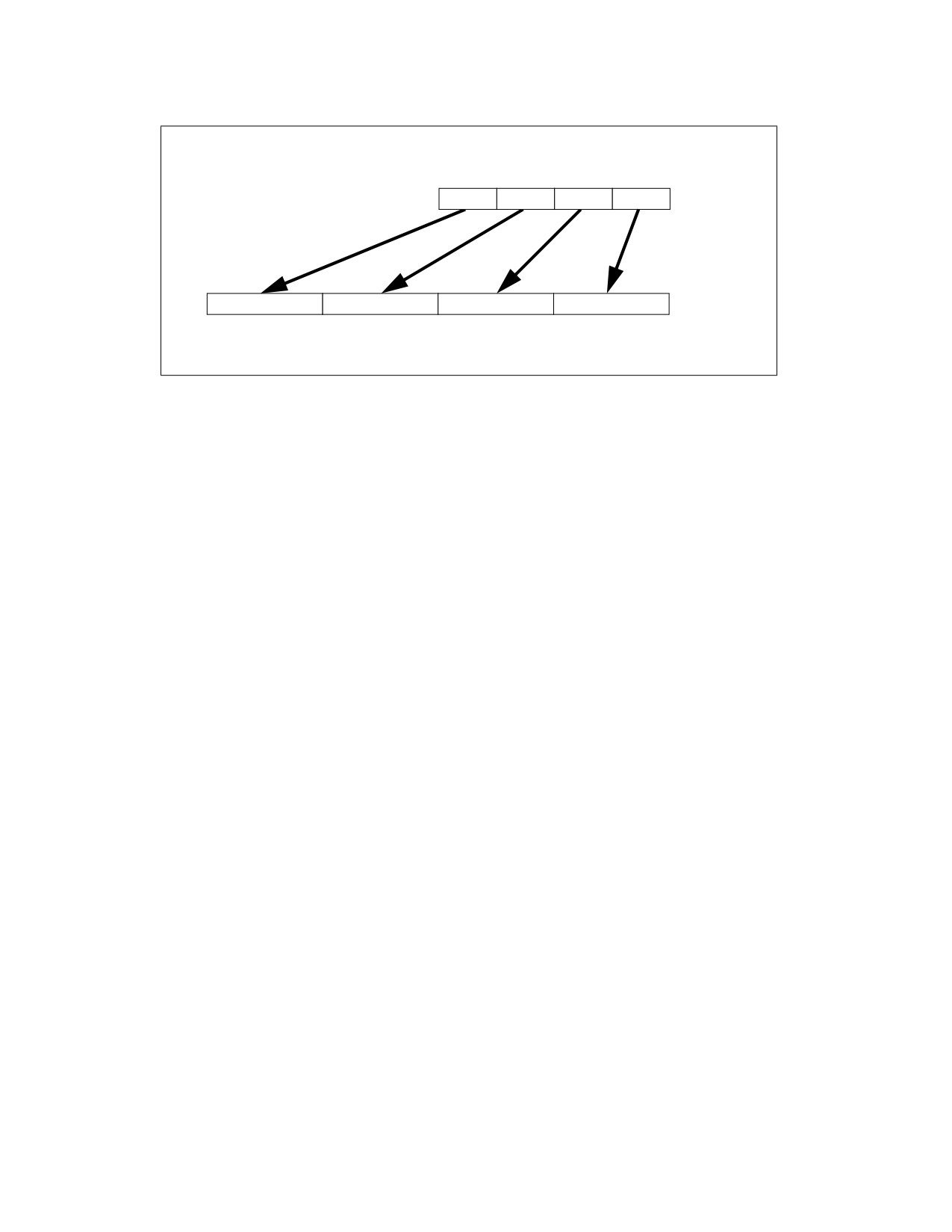
INSTRUCTION SET REFERENCE, A-L
SRC
X3
X2
X1
X0
X3
X2
X1
X0
DEST
Figure 3-14. CVTPS2PD (VEX.256 encoded version)
Operation
VCVTPS2PD (EVEX encoded versions) when src operand is a register
(KL, VL) = (2, 128), (4, 256), (8, 512)
FOR j := 0 TO KL-1
i := j * 64
k := j * 32
IF k1[j] OR *no writemask*
THEN DEST[i+63:i] :=
Convert_Single_Precision_To_Double_Precision_Floating_Point(SRC[k+31:k])
ELSE
IF *merging-masking*
; merging-masking
THEN *DEST[i+63:i] remains unchanged*
ELSE
; zeroing-masking
DEST[i+63:i] := 0
FI
FI;
ENDFOR
DEST[MAXVL-1:VL] := 0
VCVTPS2PD (EVEX encoded versions) when src operand is a memory source
(KL, VL) = (2, 128), (4, 256), (8, 512)
FOR j := 0 TO KL-1
i := j * 64
k := j * 32
IF k1[j] OR *no writemask*
THEN
IF (EVEX.b = 1)
THEN
DEST[i+63:i] :=
Convert_Single_Precision_To_Double_Precision_Floating_Point(SRC[31:0])
ELSE
DEST[i+63:i] :=
Convert_Single_Precision_To_Double_Precision_Floating_Point(SRC[k+31:k])
FI;
ELSE
3-286
Vol. 2A
CVTPS2PD—Convert Packed Single Precision Floating-Point Values to Packed Double Precision Floating-Point Values
INSTRUCTION SET REFERENCE, A-L
IF *merging-masking*
; merging-masking
THEN *DEST[i+63:i] remains unchanged*
ELSE
; zeroing-masking
DEST[i+63:i] := 0
FI
FI;
ENDFOR
DEST[MAXVL-1:VL] := 0
VCVTPS2PD (VEX.256 encoded version)
DEST[63:0] := Convert_Single_Precision_To_Double_Precision_Floating_Point(SRC[31:0])
DEST[127:64] := Convert_Single_Precision_To_Double_Precision_Floating_Point(SRC[63:32])
DEST[191:128] := Convert_Single_Precision_To_Double_Precision_Floating_Point(SRC[95:64])
DEST[255:192] := Convert_Single_Precision_To_Double_Precision_Floating_Point(SRC[127:96)
DEST[MAXVL-1:256] := 0
VCVTPS2PD (VEX.128 encoded version)
DEST[63:0] := Convert_Single_Precision_To_Double_Precision_Floating_Point(SRC[31:0])
DEST[127:64] := Convert_Single_Precision_To_Double_Precision_Floating_Point(SRC[63:32])
DEST[MAXVL-1:128] := 0
CVTPS2PD (128-bit Legacy SSE version)
DEST[63:0] := Convert_Single_Precision_To_Double_Precision_Floating_Point(SRC[31:0])
DEST[127:64] := Convert_Single_Precision_To_Double_Precision_Floating_Point(SRC[63:32])
DEST[MAXVL-1:128] (unmodified)
Intel C/C++ Compiler Intrinsic Equivalent
VCVTPS2PD __m512d _mm512_cvtps_pd( __m256 a);
VCVTPS2PD __m512d _mm512_mask_cvtps_pd( __m512d s, __mmask8 k, __m256 a);
VCVTPS2PD __m512d _mm512_maskz_cvtps_pd( __mmask8 k, __m256 a);
VCVTPS2PD __m512d _mm512_cvt_roundps_pd( __m256 a, int sae);
VCVTPS2PD __m512d _mm512_mask_cvt_roundps_pd( __m512d s, __mmask8 k, __m256 a, int sae);
VCVTPS2PD __m512d _mm512_maskz_cvt_roundps_pd( __mmask8 k, __m256 a, int sae);
VCVTPS2PD __m256d _mm256_mask_cvtps_pd( __m256d s, __mmask8 k, __m128 a);
VCVTPS2PD __m256d _mm256_maskz_cvtps_pd( __mmask8 k, __m128a);
VCVTPS2PD __m128d _mm_mask_cvtps_pd( __m128d s, __mmask8 k, __m128 a);
VCVTPS2PD __m128d _mm_maskz_cvtps_pd( __mmask8 k, __m128 a);
VCVTPS2PD __m256d _mm256_cvtps_pd (__m128 a)
CVTPS2PD __m128d _mm_cvtps_pd (__m128 a)
SIMD Floating-Point Exceptions
Invalid, Denormal
Other Exceptions
VEX-encoded instructions, see Table 2-20, “Type 3 Class Exception Conditions”.
EVEX-encoded instructions, see Table 2-47, “Type E3 Class Exception Conditions”.
Additionally:
#UD
If VEX.vvvv != 1111B or EVEX.vvvv != 1111B.
CVTPS2PD—Convert Packed Single Precision Floating-Point Values to Packed Double Precision Floating-Point Values
Vol. 2A
3-287

INSTRUCTION SET REFERENCE, A-L
CVTPS2PI—Convert Packed Single Precision Floating-Point Values to Packed Dword Integers
Opcode/
Op/
64-Bit
Compat/
Description
Instruction
En
Mode
Leg Mode
NP 0F 2D /r
RM
Valid
Valid
Convert two packed single precision floating-
point values from xmm/m64 to two packed
CVTPS2PI mm, xmm/m64
signed doubleword integers in mm.
Instruction Operand Encoding
Op/En
Operand 1
Operand 2
Operand 3
Operand 4
RM
ModRM:reg (w)
ModRM:r/m (r)
N/A
N/A
Description
Converts two packed single precision floating-point values in the source operand (second operand) to two packed
signed doubleword integers in the destination operand (first operand).
The source operand can be an XMM register or a 128-bit memory location. The destination operand is an MMX tech-
nology register. When the source operand is an XMM register, the two single precision floating-point values are
contained in the low quadword of the register. When a conversion is inexact, the value returned is rounded
according to the rounding control bits in the MXCSR register. If a converted result is larger than the maximum
signed doubleword integer, the floating-point invalid exception is raised, and if this exception is masked, the indef-
inite integer value (80000000H) is returned.
CVTPS2PI causes a transition from x87 FPU to MMX technology operation (that is, the x87 FPU top-of-stack pointer
is set to 0 and the x87 FPU tag word is set to all 0s [valid]). If this instruction is executed while an x87 FPU floating-
point exception is pending, the exception is handled before the CVTPS2PI instruction is executed.
In 64-bit mode, use of the REX.R prefix permits this instruction to access additional registers (XMM8-XMM15).
Operation
DEST[31:0] := Convert_Single_Precision_Floating_Point_To_Integer(SRC[31:0]);
DEST[63:32] := Convert_Single_Precision_Floating_Point_To_Integer(SRC[63:32]);
Intel C/C++ Compiler Intrinsic Equivalent
CVTPS2PI:
__m64 _mm_cvtps_pi32(__m128 a)
SIMD Floating-Point Exceptions
Invalid, Precision
Other Exceptions
See Table 23-5, “Exception Conditions for Legacy SIMD/MMX Instructions with XMM and FP Exception” in the
Intel® 64 and IA-32 Architectures Software Developer’s Manual, Volume 3B.
3-288
Vol. 2A
CVTPS2PI—Convert Packed Single Precision Floating-Point Values to Packed Dword Integers

INSTRUCTION SET REFERENCE, A-L
CVTSD2SI—Convert Scalar Double Precision Floating-Point Value to Doubleword Integer
Opcode/
Op /
64/32
CPUID
Description
Instruction
En
bit Mode
Feature
Support
Flag
F2 0F 2D /r
A
V/V
SSE2
Convert one double precision floating-point value from
CVTSD2SI r32, xmm1/m64
xmm1/m64 to one signed doubleword integer r32.
F2 REX.W 0F 2D /r
A
V/N.E.
SSE2
Convert one double precision floating-point value from
CVTSD2SI r64, xmm1/m64
xmm1/m64 to one signed quadword integer sign-
extended into r64.
VEX.LIG.F2.0F.W0 2D /r 1
A
V/V
AVX
Convert one double precision floating-point value from
VCVTSD2SI r32, xmm1/m64
xmm1/m64 to one signed doubleword integer r32.
VEX.LIG.F2.0F.W1 2D /r 1
A
V/N.E.2
AVX
Convert one double precision floating-point value from
VCVTSD2SI r64, xmm1/m64
xmm1/m64 to one signed quadword integer sign-
extended into r64.
EVEX.LLIG.F2.0F.W0 2D /r
B
V/V
AVX512F
Convert one double precision floating-point value from
VCVTSD2SI r32, xmm1/m64{er}
xmm1/m64 to one signed doubleword integer r32.
EVEX.LLIG.F2.0F.W1 2D /r
B
V/N.E.2
AVX512F
Convert one double precision floating-point value from
VCVTSD2SI r64, xmm1/m64{er}
xmm1/m64 to one signed quadword integer sign-
extended into r64.
NOTES:
1. Software should ensure VCVTSD2SI is encoded with VEX.L=0. Encoding VCVTSD2SI with VEX.L=1 may encounter unpredictable
behavior across different processor generations.
2. VEX.W1/EVEX.W1 in non-64 bit is ignored; the instructions behaves as if the W0 version is used.
Instruction Operand Encoding
Op/En
Tuple Type
Operand 1
Operand 2
Operand 3
Operand 4
A
N/A
ModRM:reg (w)
ModRM:r/m (r)
N/A
N/A
B
Tuple1 Fixed
ModRM:reg (w)
ModRM:r/m (r)
N/A
N/A
Description
Converts a double precision floating-point value in the source operand (the second operand) to a signed double-
word integer in the destination operand (first operand). The source operand can be an XMM register or a 64-bit
memory location. The destination operand is a general-purpose register. When the source operand is an XMM
register, the double precision floating-point value is contained in the low quadword of the register.
When a conversion is inexact, the value returned is rounded according to the rounding control bits in the MXCSR
register.
If a converted result exceeds the range limits of signed doubleword integer (in non-64-bit modes or 64-bit mode
with REX.W/VEX.W/EVEX.W=0), the floating-point invalid exception is raised, and if this exception is masked, the
indefinite integer value (80000000H) is returned.
If a converted result exceeds the range limits of signed quadword integer (in 64-bit mode and
REX.W/VEX.W/EVEX.W = 1), the floating-point invalid exception is raised, and if this exception is masked, the
indefinite integer value (80000000_00000000H) is returned.
Legacy SSE instruction: Use of the REX.W prefix promotes the instruction to produce 64-bit data in 64-bit mode.
See the summary chart at the beginning of this section for encoding data and limits.
Note: VEX.vvvv and EVEX.vvvv are reserved and must be 1111b, otherwise instructions will #UD.
Software should ensure VCVTSD2SI is encoded with VEX.L=0. Encoding VCVTSD2SI with VEX.L=1 may encounter
unpredictable behavior across different processor generations.
CVTSD2SI—Convert Scalar Double Precision Floating-Point Value to Doubleword Integer
Vol. 2A
3-289
INSTRUCTION SET REFERENCE, A-L
Operation
VCVTSD2SI (EVEX encoded version)
IF SRC *is register* AND (EVEX.b = 1)
THEN
SET_ROUNDING_MODE_FOR_THIS_INSTRUCTION(EVEX.RC);
ELSE
SET_ROUNDING_MODE_FOR_THIS_INSTRUCTION(MXCSR.RC);
FI;
IF 64-Bit Mode and OperandSize = 64
THEN DEST[63:0] := Convert_Double_Precision_Floating_Point_To_Integer(SRC[63:0]);
ELSE
DEST[31:0] := Convert_Double_Precision_Floating_Point_To_Integer(SRC[63:0]);
FI
(V)CVTSD2SI
IF 64-Bit Mode and OperandSize = 64
THEN
DEST[63:0] := Convert_Double_Precision_Floating_Point_To_Integer(SRC[63:0]);
ELSE
DEST[31:0] := Convert_Double_Precision_Floating_Point_To_Integer(SRC[63:0]);
FI;
Intel C/C++ Compiler Intrinsic Equivalent
VCVTSD2SI int _mm_cvtsd_i32(__m128d);
VCVTSD2SI int _mm_cvt_roundsd_i32(__m128d, int r);
VCVTSD2SI __int64 _mm_cvtsd_i64(__m128d);
VCVTSD2SI __int64 _mm_cvt_roundsd_i64(__m128d, int r);
CVTSD2SI __int64 _mm_cvtsd_si64(__m128d);
CVTSD2SI int _mm_cvtsd_si32(__m128d a)
SIMD Floating-Point Exceptions
Invalid, Precision
Other Exceptions
VEX-encoded instructions, see Table 2-20, “Type 3 Class Exception Conditions”.
EVEX-encoded instructions, see Table 2-48, “Type E3NF Class Exception Conditions”.
Additionally:
#UD
If VEX.vvvv != 1111B or EVEX.vvvv != 1111B.
3-290
Vol. 2A
CVTSD2SI—Convert Scalar Double Precision Floating-Point Value to Doubleword Integer