Boeing 737 - 600/700/800/900. Operations Manual (1997 year) - page 16

Performance Dispatch
737-600/CFM56-7B22
Takeoff
FAA/JAROPS
Category D Brakes
Boeing 737 Operations Manual
Takeoff
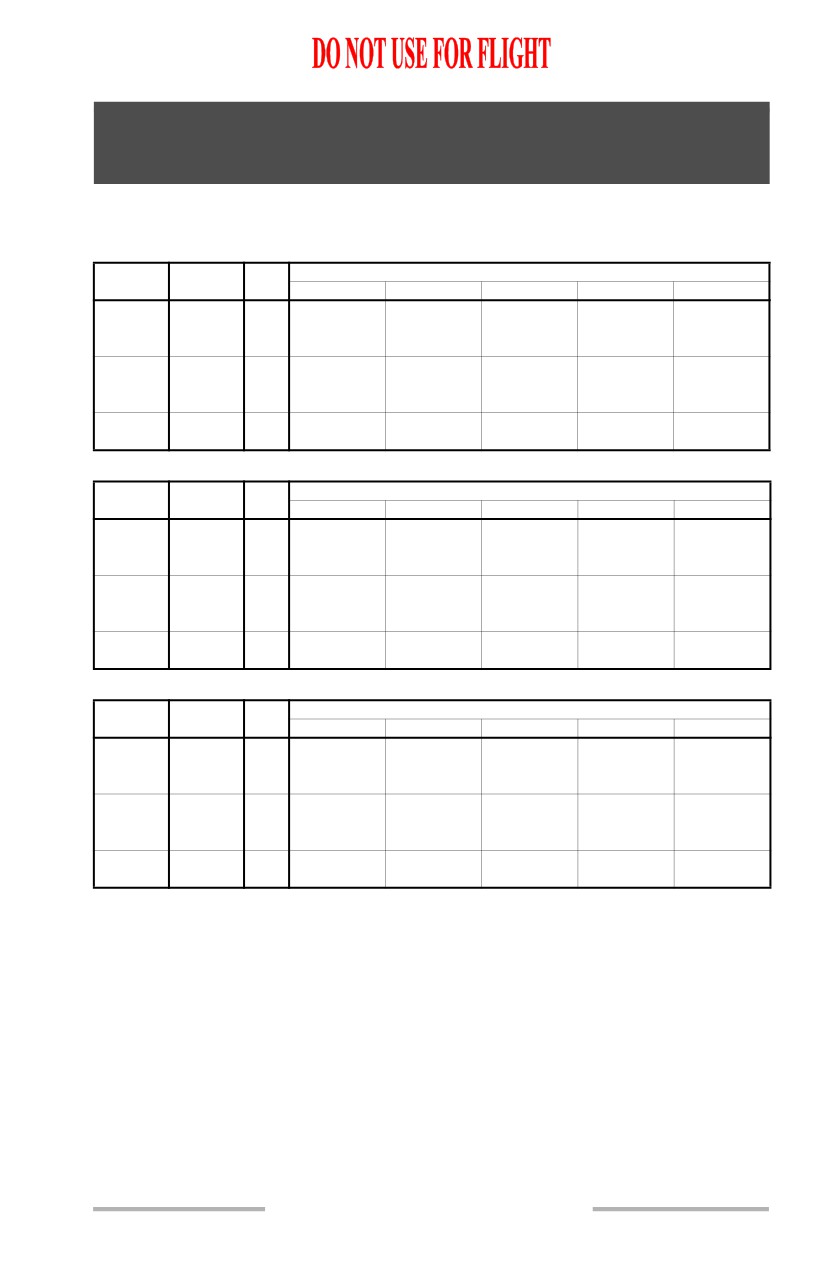
Takeoff Obstacle Limit Weight
Flaps 5
Sea Level 30°C & Below, Zero Wind
Based on engine bleed for packs on and anti-ice off
Wind Adjustments
OAT & ALT ADJUSTED OBSTACLE LIMIT WEIGHT (1000 KG)
WIND (KTS)
40
44
48
52
56
60
64
68
15 TW
-7.9
-7.6
-7.3
-7.1
-6.8
-6.5
-6.2
-5.9
10 TW
-5.3
-5.1
-4.9
-4.7
-4.5
-4.3
-4.1
-4.0
5 TW
-2.6
-2.5
-2.4
-2.4
-2.3
-2.2
-2.1
-2.0
0
0
0
0
0
0
0
0
0
10 HW
1.0
0.9
0.9
0.8
0.7
0.6
0.6
0.5
20 HW
2.0
1.9
1.7
1.6
1.4
1.3
1.2
1.0
30 HW
3.1
2.9
2.6
2.4
2.2
2.0
1.8
1.6
40 HW
4.2
3.9
3.6
3.3
3.0
2.7
2.4
2.1
With engine bleed for packs off, increase weight by 800 kg.
With engine anti-ice on, decrease weight by 150 kg.
With engine and wing anti-ice on, decrease weight by 700 kg.
PD.10.8
737-600/CFM56-7B22
FAA/JAROPS
Category D Brakes
Boeing 737 Operations Manual
Performance Dispatch
Chapter PD
Enroute
Section 11
Enroute
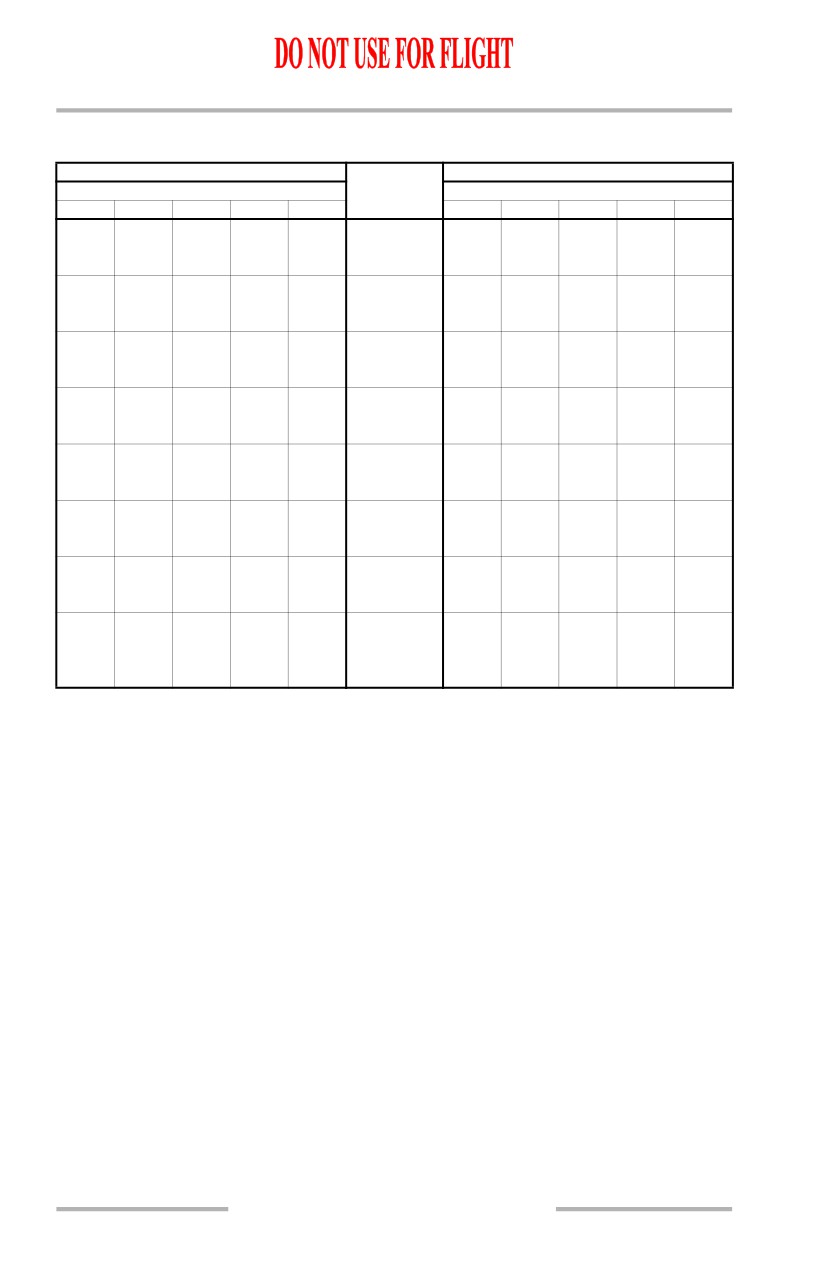
Long Range Cruise Maximum Operating Altitude
Max Cruise Thrust
ISA + 10°C and Below
WEIGHT
OPTIMUM
TAT
MARGIN TO INITIAL BUFFET 'G' (BANK ANGLE)
(1000 KG)
ALT (FT)
(°C)
1.20 (33°)
1.25 (36°)
1.30 (39°)
1.40 (44°)
1.50 (48°)
70
34500
-15
37700*
37700*
37700*
36400
35100
65
36000
-18
39200*
39200*
39200*
38000
36600
60
37700
-18
40700*
40700*
40700*
39700
38300
55
39500
-18
41000
41000
41000
41000
40100
50
41000
-18
41000
41000
41000
41000
41000
45
41000
-18
41000
41000
41000
41000
41000
40
41000
-18
41000
41000
41000
41000
41000
35
41000
-18
41000
41000
41000
41000
41000
ISA + 15°C
WEIGHT
OPTIMUM
TAT
MARGIN TO INITIAL BUFFET 'G' (BANK ANGLE)
(1000 KG)
ALT (FT)
(°C)
1.20 (33°)
1.25 (36°)
1.30 (39°)
1.40 (44°)
1.50 (48°)
70
34500
-9
37000*
37000*
37000*
36400
35100
65
36000
-13
38300*
38300*
38300*
38000
36600
60
37700
-13
39800*
39800*
39800*
39700
38300
55
39500
-13
41000
41000
41000
41000
40100
50
41000
-13
41000
41000
41000
41000
41000
45
41000
-13
41000
41000
41000
41000
41000
40
41000
-13
41000
41000
41000
41000
41000
35
41000
-13
41000
41000
41000
41000
41000
ISA + 20°C
WEIGHT
OPTIMUM
TAT
MARGIN TO INITIAL BUFFET 'G' (BANK ANGLE)
(1000 KG)
ALT (FT)
(°C)
1.20 (33°)
1.25 (36°)
1.30 (39°)
1.40 (44°)
1.50 (48°)
70
34500
-4
35700*
35700*
35700*
35700*
35100
65
36000
-7
37200*
37200*
37200*
37200*
36600
60
37700
-7
38700*
38700*
38700*
38700*
38300
55
39500
-7
40200*
40200*
40200*
40200*
40100
50
41000
-7
41000
41000
41000
41000
41000
45
41000
-7
41000
41000
41000
41000
41000
40
41000
-7
41000
41000
41000
41000
41000
35
41000
-7
41000
41000
41000
41000
41000
*Denotes altitude thrust limited in level flight, 100 fpm residual rate of climb.
PD.11.1
Performance Dispatch
737-600/CFM56-7B22
Enroute
FAA/JAROPS
Category D Brakes
Boeing 737 Operations Manual
Enroute
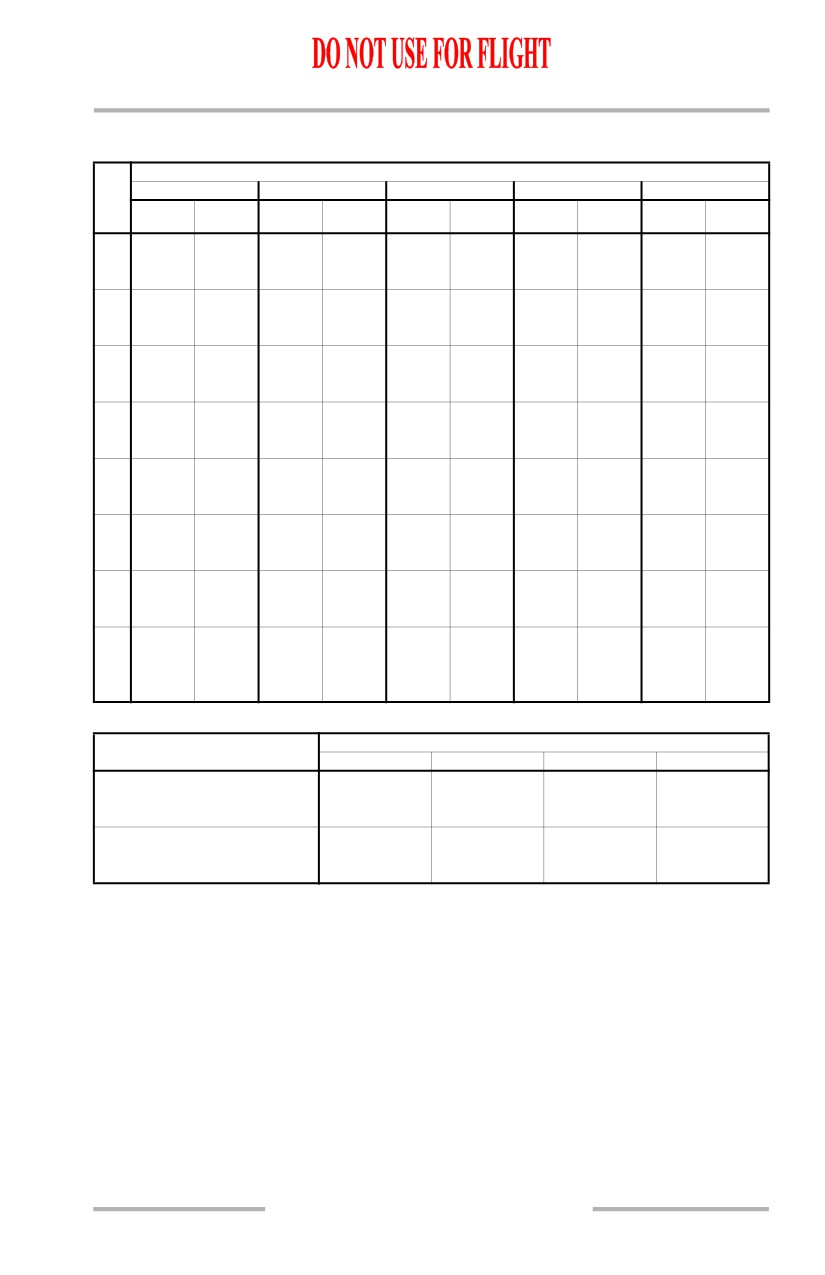
Long Range Cruise Trip Fuel and Time
Ground to Air Miles Conversion
AIR DISTANCE (NM)
GROUND
AIR DISTANCE (NM)
HEADWIND COMPONENT (KTS)
DISTANCE
TAILWIND COMPONENT (KTS)
100
80
60
40
20
(NM)
20
40
60
80
100
278
258
240
225
212
200
190
181
173
166
159
551
513
479
450
424
400
381
364
349
334
322
823
767
717
673
635
600
573
548
524
504
485
1095
1021
955
897
846
800
764
731
700
673
648
1366
1274
1192
1120
1057
1000
955
914
877
842
811
1636
1527
1429
1344
1268
1200
1147
1098
1053
1011
974
1906
1780
1666
1567
1480
1400
1338
1281
1229
1181
1137
2175
2032
1903
1790
1691
1600
1530
1465
1405
1350
1300
2443
2283
2139
2013
1901
1800
1721
1648
1581
1520
1464
2711
2535
2375
2236
2112
2000
1913
1832
1757
1689
1627
2978
2785
2611
2458
2323
2200
2104
2016
1934
1859
1791
3245
3035
2846
2681
2534
2400
2296
2199
2110
2028
1954
3511
3285
3081
2903
2744
2600
2488
2383
2287
2198
2118
3776
3534
3316
3125
2955
2800
2679
2567
2463
2368
2281
4041
3783
3550
3346
3165
3000
2871
2751
2640
2538
2445
4305
4032
3784
3568
3375
3200
3062
2935
2816
2708
2609
4569
4280
4018
3789
3586
3400
3254
3119
2993
2878
2773
4831
4527
4252
4011
3796
3600
3446
3302
3170
3048
2936
5093
4774
4485
4232
4006
3800
3637
3486
3346
3218
3100
5355
5021
4718
4453
4216
4000
3829
3670
3523
3388
3264
5616
5267
4951
4674
4426
4200
4021
3854
3699
3557
3428
5876
5513
5184
4894
4636
4400
4212
4038
3876
3727
3592
6136
5758
5416
5114
4846
4600
4404
4221
4052
3897
3755
6395
6003
5648
5335
5055
4800
4595
4405
4229
4067
3919
6653
6247
5879
5555
5265
5000
4787
4589
4405
4237
4083
PD.11.2
737-600/CFM56-7B22
Performance Dispatch
FAA/JAROPS
Enroute
Category D Brakes
Boeing 737 Operations Manual
Enroute
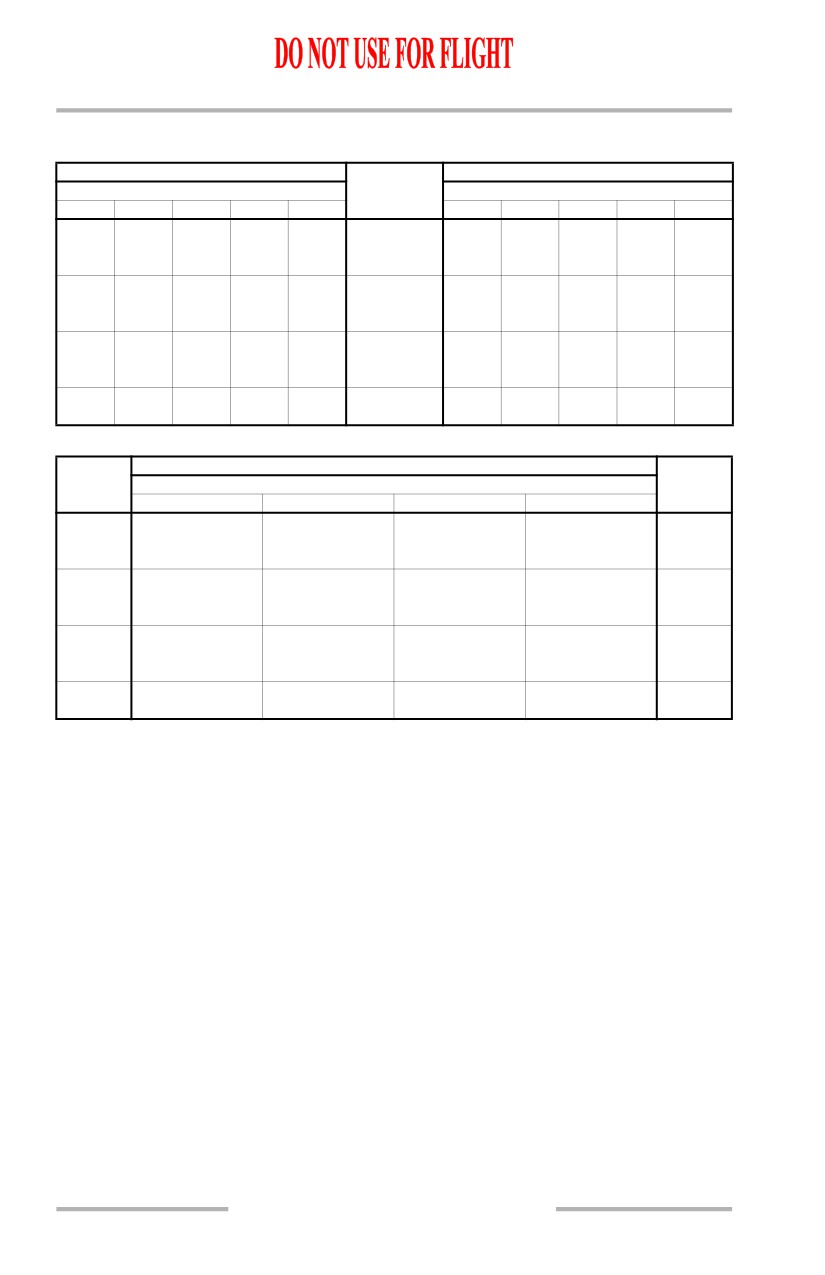
Long Range Cruise Trip Fuel and Time
Reference Fuel and Time Required
PRESSURE ALTITUDE (1000 FT)
AIR
29
31
33
35
37
DIST
(NM)
FUEL
TIME
FUEL
TIME
FUEL
TIME
FUEL
TIME
FUEL
TIME
(1000 KG)(HR:MIN)(1000 KG)(HR:MIN)(1000 KG)(HR:MIN)(1000 KG)(HR:MIN)(1000 KG)(HR:MIN)
200
1.4
0:38
1.4
0:37
1.4
0:37
1.4
0:36
1.4
0:36
400
2.4
1:08
2.4
1:07
2.4
1:06
2.3
1:05
2.3
1:04
600
3.4
1:39
3.4
1:37
3.3
1:34
3.3
1:33
3.2
1:31
800
4.5
2:09
4.4
2:06
4.3
2:03
4.2
2:00
4.1
1:59
1000
5.5
2:39
5.4
2:36
5.2
2:31
5.1
2:28
5.0
2:26
1200
6.5
3:09
6.4
3:04
6.2
2:59
6.1
2:56
6.0
2:53
1400
7.6
3:38
7.4
3:33
7.2
3:27
7.1
3:23
6.9
3:20
1600
8.7
4:07
8.4
4:01
8.2
3:55
8.0
3:50
7.8
3:47
1800
9.7
4:37
9.5
4:30
9.2
4:23
9.0
4:18
8.8
4:14
2000
10.8
5:06
10.5
4:58
10.2
4:51
9.9
4:45
9.7
4:41
2200
11.9
5:34
11.6
5:26
11.3
5:18
11.0
5:12
10.7
5:08
2400
13.0
6:03
12.7
5:53
12.3
5:45
12.0
5:39
11.7
5:34
2600
14.1
6:31
13.7
6:21
13.4
6:12
13.0
6:06
12.7
6:01
2800
15.3
6:59
14.8
6:49
14.4
6:39
14.0
6:33
13.7
6:28
3000
16.4
7:28
15.9
7:16
15.5
7:06
15.0
7:00
14.7
6:55
3200
17.5
7:55
17.0
7:43
16.6
7:33
16.1
7:26
15.8
7:21
3400
18.7
8:22
18.2
8:10
17.7
8:00
17.2
7:53
16.9
7:48
3600
19.9
8:50
19.3
8:37
18.8
8:27
18.2
8:20
18.0
8:14
3800
21.1
9:17
20.5
9:04
19.9
8:53
19.3
8:46
19.1
8:41
4000
22.2
9:44
21.6
9:31
21.0
9:20
20.4
9:13
20.1
9:07
4200
23.5
10:11
22.8
9:58
22.1
9:47
21.6
9:39
21.3
9:34
4400
24.7
10:38
24.0
10:24
23.3
10:13
22.7
10:06
22.5
10:00
4600
25.9
11:05
25.2
10:51
24.4
10:39
23.9
10:32
23.7
10:27
4800
27.2
11:31
26.4
11:17
25.6
11:06
25.0
10:59
24.9
10:53
5000
28.4
11:58
27.6
11:44
26.8
11:32
26.2
11:25
26.1
11:20
Fuel Required Adjustments (1000 KG)
REFERENCE FUEL REQUIRED
LANDING WEIGHT (1000 KG)
(1000 KG)
30
40
50
60
5
-0.8
-0.4
0.0
0.7
10
-1.7
-0.9
0.0
1.5
15
-2.5
-1.3
0.0
2.5
20
-3.4
-1.8
0.0
3.7
25
-4.3
-2.3
0.0
5.1
30
-5.2
-2.7
0.0
6.6
Based on 280/.78 climb, Long Range Cruise and .78/280/250 descent.
PD.11.3
Performance Dispatch
737-600/CFM56-7B22
Enroute
FAA/JAROPS
Category D Brakes
Boeing 737 Operations Manual
Enroute
Long Range Cruise Step Climb
Ground to Air Miles Conversion
AIR DISTANCE (NM)
GROUND
AIR DISTANCE (NM)
HEADWIND COMPONENT (KTS)
DISTANCE
TAILWIND COMPONENT (KTS)
100
80
60
40
20
(NM)
20
40
60
80
100
1325
1244
1173
1109
1052
1000
953
911
872
836
803
1843
1733
1636
1549
1471
1400
1336
1277
1224
1174
1129
2360
2222
2099
1989
1890
1800
1718
1644
1576
1513
1455
2876
2710
2561
2428
2309
2200
2101
2011
1928
1852
1781
3392
3197
3023
2868
2727
2600
2484
2378
2281
2191
2108
3907
3684
3485
3307
3146
3000
2867
2745
2633
2530
2435
4421
4170
3947
3746
3565
3400
3250
3113
2986
2870
2762
4934
4656
4408
4185
3983
3800
3633
3480
3339
3210
3090
5448
5142
4869
4624
4402
4200
4016
3847
3693
3550
3417
5961
5628
5330
5062
4820
4600
4399
4215
4046
3890
3745
6474
6113
5791
5501
5238
5000
4782
4583
4399
4230
4073
Trip Fuel and Time Required
TRIP FUEL (1000 KG)
AIR DIST
TIME
LANDING WEIGHT (1000 KG)
(NM)
(HR:MIN)
30
40
50
60
1000
3.7
4.3
5.0
5.7
2:27
1400
5.1
5.9
6.8
7.9
3:22
1800
6.5
7.5
8.7
10.1
4:16
2200
7.8
9.1
10.7
12.3
5:10
2600
9.3
10.8
12.6
14.7
6:04
3000
10.7
12.5
14.7
17.1
6:58
3400
12.2
14.2
16.8
19.5
7:51
3800
13.7
16.0
19.0
22.1
8:44
4200
15.3
17.9
21.2
24.7
9:37
4600
16.9
19.8
23.5
27.4
10:30
5000
18.5
21.8
25.9
30.1
11:23
Based on 280/.78 climb, Long Range Cruise or .79 cruise and .78/280/250 descent.
Valid for all pressure altitudes with 4000 ft step climb to 2000 ft above optimum altitude.
PD.11.4
737-600/CFM56-7B22
Performance Dispatch
FAA/JAROPS
Enroute
Category D Brakes
Boeing 737 Operations Manual
Enroute
Short Trip Fuel and Time
Ground to Air Miles Conversion
AIR DISTANCE (NM)
GROUND
AIR DISTANCE (NM)
HEADWIND COMPONENT (KTS)
DISTANCE
TAILWIND COMPONENT (KTS)
100
80
60
40
20
(NM)
20
40
60
80
100
92
79
69
61
55
50
46
42
39
37
34
157
141
128
117
108
100
93
87
82
77
73
222
203
186
172
160
150
141
133
125
119
113
287
264
244
228
213
200
189
178
169
161
153
351
325
302
283
265
250
236
224
213
203
194
415
385
360
337
318
300
284
270
257
246
235
478
446
417
392
370
350
332
316
301
288
276
542
506
475
447
422
400
380
362
346
331
317
607
568
533
502
475
450
428
408
389
373
357
673
629
591
557
527
500
476
453
433
415
398
Trip Fuel and Time Required
LANDING WEIGHT (1000 KG)
TIME
AIR DIST (NM)
30
35
40
45
50
55
60
(HRS:MIN)
FUEL (1000 KG)
0.5
0.5
0.5
0.5
0.6
0.6
0.7
50
0:14
ALT (FT)
17000
15000
9000
7000
5000
5000
5000
FUEL (1000 KG)
0.7
0.8
0.8
0.9
0.9
0.9
1.0
100
0:22
ALT (FT)
25000
23000
21000
19000
15000
13000
11000
FUEL (1000 KG)
0.9
1.0
1.1
1.1
1.2
1.2
1.3
150
0:30
ALT (FT)
31000
29000
27000
25000
23000
21000
19000
FUEL (1000 KG)
1.1
1.2
1.3
1.4
1.4
1.5
1.6
200
0:37
ALT (FT)
39000
37000
35000
31000
29000
27000
25000
FUEL (1000 KG)
1.3
1.4
1.5
1.6
1.7
1.8
1.9
250
0:43
ALT (FT)
41000
41000
41000
37000
35000
33000
31000
FUEL (1000 KG)
1.4
1.6
1.7
1.8
1.9
2.0
2.1
300
0:50
ALT (FT)
41000
41000
41000
41000
37000
35000
33000
FUEL (1000 KG)
1.6
1.7
1.9
2.0
2.1
2.2
2.4
350
0:57
ALT (FT)
41000
41000
41000
41000
37000
35000
33000
FUEL (1000 KG)
1.8
1.9
2.0
2.2
2.3
2.5
2.6
400
1:03
ALT (FT)
41000
41000
41000
41000
37000
35000
33000
FUEL (1000 KG)
1.9
2.1
2.2
2.4
2.5
2.7
2.9
450
1:10
ALT (FT)
41000
41000
41000
39000
37000
35000
33000
FUEL (1000 KG)
2.1
2.2
2.4
2.6
2.8
2.9
3.1
500
1:18
ALT (FT)
41000
41000
41000
39000
37000
35000
33000
Based on 280/.78 climb, Long Range Cruise and .78/280/250 descent.
Holding Planning
Flaps Up
TOTAL FUEL FLOW (KG/HR)
WEIGHT
PRESSURE ALTITUDE (FT)
(1000 KG)
1500
5000
10000
15000
20000
25000
30000
35000
41000
70
2490
2450
2420
2400
2360
2330
2390
2470
65
2330
2290
2260
2230
2200
2150
2210
2260
60
2180
2130
2100
2070
2040
1980
2020
2060
2330
55
2020
1970
1940
1910
1870
1830
1840
1880
2030
50
1870
1820
1780
1750
1710
1680
1690
1710
1810
45
1720
1660
1650
1610
1580
1550
1530
1530
1610
40
1600
1550
1490
1450
1420
1400
1380
1360
1420
35
1450
1400
1350
1310
1280
1250
1230
1210
1240
This table includes 5% additional fuel for holding in a racetrack pattern.
PD.11.5
Performance Dispatch
737-600/CFM56-7B22
Enroute
FAA/JAROPS
Category D Brakes
Boeing 737 Operations Manual
Enroute
Crew Oxygen Requirements
Required Pressure (PSI) for 76 Cu. Ft. Cylinder
BOTTLE
NUMBER OF CREW USING OXYGEN
TEMPERATURE
°C
°F
2
3
4
50
122
735
1055
1360
45
113
725
1040
1340
40
104
715
1020
1320
35
92
700
1005
1300
30
86
690
990
1280
25
77
680
975
1255
20
68
670
960
1240
15
59
655
940
1215
10
50
645
925
1195
5
41
635
910
1175
0
32
620
890
1150
-5
23
610
875
1130
-10
14
600
860
1110
Required Pressure (PSI) for 114/115 Cu. Ft. Cylinder
BOTTLE
NUMBER OF CREW USING OXYGEN
TEMPERATURE
°C
°F
2
3
4
50
122
530
735
945
45
113
520
725
930
40
104
510
715
915
35
92
505
700
900
30
86
495
690
885
25
77
485
680
870
20
68
480
670
860
15
59
470
655
840
10
50
460
645
830
5
41
455
635
815
0
32
445
620
800
-5
23
440
610
785
-10
14
430
600
770
PD.11.6
737-600/CFM56-7B22
Performance Dispatch
FAA/JAROPS
Enroute
Category D Brakes
Boeing 737 Operations Manual
ENGINE INOP
MAX CONTINUOUS THRUST
Net Level Off Weight
PRESSURE ALTITUDE
LEVEL OFF WEIGHT (1000 KG)
(1000 FT)
ISA + 10°C & BELOW
ISA + 15°C
ISA + 20°C
32
39.7
30
43.4
42.2
40.8
28
47.3
45.9
44.4
26
51.4
49.8
48.2
24
55.1
53.3
51.6
22
58.4
56.4
54.5
20
61.8
59.6
57.1
18
65.3
62.8
59.9
16
68.6
65.8
62.4
14
72.5
69.0
65.4
12
72.5
72.0
68.5
10
72.5
72.5
71.6
8
72.5
72.5
72.5
Anti-Ice Adjustment
LEVEL OFF WEIGHT ADJUSTMENT (1000 KG)
ANTI-ICE
PRESSURE ALTITUDE (1000 FT)
CONFIGURATION
8
10
12
14
16
18
20
22
24
26
28
30
32
ENGINE ONLY
-2.2
-2.0
-2.7
-2.1
-1.8
-1.6
-1.4
-1.3
-1.2
-1.2
-1.1
-0.8
ENGINE & WING
-5.8
-8.1
-8.1
-7.9
-7.4
-7.0
-6.4
-5.6
-4.9
-4.5
-4.3
-4.1
PD.11.7
Performance Dispatch
737-600/CFM56-7B22
Enroute
FAA/JAROPS
Category D Brakes
Boeing 737 Operations Manual
ALL ENGINES
Long Range Cruise Critical Fuel Reserves
Ground to Air Miles Conversion
AIR DISTANCE (NM)
GROUND
AIR DISTANCE (NM)
HEADWIND COMPONENT (KTS)
DISTANCE
TAILWIND COMPONENT (KTS)
100
80
60
40
20
(NM)
20
40
60
80
100
294
268
247
229
214
200
188
177
168
159
152
603
548
501
462
429
400
375
352
333
315
299
913
827
756
695
644
600
561
528
498
471
447
1224
1106
1010
929
860
800
748
703
662
626
594
1534
1386
1264
1162
1075
1000
935
878
827
782
742
1844
1665
1518
1395
1290
1200
1122
1053
992
938
889
2154
1945
1772
1628
1505
1400
1308
1228
1157
1094
1037
2465
2224
2027
1861
1721
1600
1495
1403
1322
1249
1184
2775
2504
2281
2094
1936
1800
1682
1578
1487
1405
1332
Critical Fuel (1000 KG)
AIR DIST
WEIGHT AT CRITICAL POINT (1000 KG)
(NM)
35
40
45
50
55
60
65
70
200
1.7
1.7
1.8
1.9
1.9
2.0
2.1
2.1
300
2.4
2.4
2.5
2.6
2.7
2.8
2.9
3.0
400
3.1
3.1
3.2
3.4
3.5
3.6
3.7
3.9
500
3.8
3.8
4.0
4.1
4.3
4.4
4.6
4.7
600
4.5
4.5
4.7
4.9
5.0
5.2
5.4
5.6
700
5.2
5.2
5.4
5.6
5.8
6.0
6.2
6.4
800
5.9
5.9
6.1
6.4
6.6
6.8
7.0
7.3
900
6.6
6.6
6.8
7.1
7.3
7.6
7.8
8.1
1000
7.3
7.3
7.5
7.8
8.1
8.4
8.6
8.9
1100
8.0
8.0
8.2
8.5
8.8
9.1
9.4
9.7
1200
8.7
8.7
8.9
9.3
9.6
9.9
10.3
10.6
1300
9.4
9.4
9.6
10.0
10.4
10.7
11.1
11.4
1400
10.1
10.1
10.3
10.7
11.1
11.5
11.8
12.2
1500
10.8
10.8
11.0
11.4
11.8
12.2
12.6
13.0
1600
11.5
11.5
11.7
12.1
12.6
13.0
13.4
13.8
1700
12.2
12.2
12.4
12.8
13.3
13.7
14.2
14.6
1800
12.9
12.9
13.1
13.5
14.0
14.5
15.0
15.4
Based on: Emergency descent to 10000 ft. Level cruise at 10000 ft. 250 KIAS descent to 1500 ft. 15 minute
hold at 1500 ft. One missed approach; approach and land. 5% allowance for wind errors.
Increase fuel required 0.8% for each 10°C hotter than ISA conditions.
If icing conditions exist, increase fuel by 14% to account for engine and wing anti-ice on and ice accumulation
on unheated surfaces.
Allowance for performance deterioration not included.
Compare the fuel required from this table with critical fuel reserves for one engine inoperative and use the
higher of the two.
PD.11.8
737-600/CFM56-7B22
Performance Dispatch
FAA/JAROPS
Enroute
Category D Brakes
Boeing 737 Operations Manual
ENGINE INOP
Long Range Cruise Critical Fuel Reserves
Ground to Air Miles Conversion
AIR DISTANCE (NM)
GROUND
AIR DISTANCE (NM)
HEADWIND COMPONENT (KTS)
DISTANCE
TAILWIND COMPONENT (KTS)
100
80
60
40
20
(NM)
20
40
60
80
100
299
272
250
231
214
200
188
177
167
158
150
617
557
507
465
430
400
374
351
330
312
296
935
841
764
700
646
600
560
525
494
466
442
1253
1126
1022
935
862
800
746
699
657
620
587
1572
1411
1279
1170
1078
1000
932
873
821
775
733
1890
1695
1537
1405
1295
1200
1118
1047
984
929
879
2209
1980
1794
1640
1511
1400
1304
1221
1148
1083
1025
2527
2265
2052
1875
1727
1600
1491
1395
1311
1237
1171
2845
2549
2309
2110
1943
1800
1677
1569
1475
1391
1316
Critical Fuel (1000 KG)
AIR DIST
WEIGHT AT CRITICAL POINT (1000 KG)
(NM)
35
40
45
50
55
60
65
70
200
1.5
1.5
1.6
1.7
1.7
1.8
1.9
2.0
300
2.1
2.1
2.2
2.3
2.4
2.5
2.6
2.8
400
2.7
2.7
2.9
3.0
3.1
3.3
3.4
3.6
500
3.3
3.3
3.5
3.7
3.8
4.0
4.2
4.4
600
3.9
4.0
4.2
4.4
4.6
4.7
5.0
5.2
700
4.5
4.6
4.8
5.0
5.3
5.5
5.7
6.0
800
5.2
5.2
5.4
5.7
6.0
6.2
6.5
6.7
900
5.8
5.8
6.1
6.4
6.6
6.9
7.2
7.5
1000
6.4
6.4
6.7
7.0
7.3
7.6
7.9
8.3
1100
7.0
7.0
7.3
7.6
8.0
8.3
8.7
9.0
1200
7.6
7.6
7.9
8.3
8.7
9.0
9.4
9.8
1300
8.2
8.3
8.5
8.9
9.3
9.7
10.1
10.6
1400
8.8
8.9
9.1
9.6
10.0
10.4
10.9
11.3
1500
9.5
9.5
9.8
10.2
10.7
11.1
11.6
12.0
1600
10.1
10.1
10.4
10.9
11.3
11.8
12.3
12.8
1700
10.7
10.7
11.0
11.5
12.0
12.5
13.0
13.5
1800
11.3
11.3
11.6
12.1
12.6
13.2
13.7
14.3
Based on: Emergency descent to 10000 ft. Level cruise at 10000 ft. 250 KIAS descent to 1500 ft. 15 minute
hold at 1500 ft. One missed approach; approach and land. 5% allowance for wind errors.
Increase fuel required 0.8% for each 10°C hotter than ISA conditions.
If icing conditions exist, increase fuel by 15% to account for engine and wing anti-ice on and ice accumulation
on unheated surfaces.
Allowance for performance deterioration not included.
Compare the fuel required from this table with critical fuel reserves for all engines operative and use the
higher of the two.
PD.11.9
Performance Dispatch
737-600/CFM56-7B22
Enroute
FAA/JAROPS
Category D Brakes
Boeing 737 Operations Manual
Intentionally
Blank
PD.11.10
737-600/CFM56-7B22
FAA/JAROPS
Category D Brakes
Boeing 737 Operations Manual
Performance Dispatch
Chapter PD
Landing
Section 12
Landing
Landing Field Limit Weight
Flaps 40
Wind Corrected Field Length (M)
FIELD LENGTH
WIND COMPONENT (KTS)
AVAILABLE
(M)
-15
-10
-5
0
10
20
30
40
1000
810
900
1000
1060
1130
1200
1270
1200
890
990
1100
1200
1270
1340
1420
1500
1400
1070
1180
1290
1400
1470
1560
1640
1720
1600
1250
1360
1480
1600
1680
1770
1850
1950
1800
1430
1550
1670
1800
1890
1980
2070
2170
2000
1610
1730
1860
2000
2100
2190
2290
2400
2200
1790
1920
2050
2200
2310
2400
1970
2110
2250
2400
2600
2150
2290
2800
2330
Field Limit Weight (1000 KG)
WIND CORR’D
AIRPORT PRESSURE ALTITUDE (FT)
FIELD LENGTH
0
1000
2000
3000
(M)
DRY
WET
DRY
WET
DRY
WET
DRY
WET
1000
36.8
1200
47.5
39.1
46.1
37.9
44.6
36.7
43.3
1400
57.4
48.4
56.1
47.0
54.8
45.5
53.3
44.2
1600
66.1
57.1
64.4
55.8
62.7
54.4
61.2
52.9
1800
74.3
64.4
72.6
62.9
70.8
61.3
69.1
59.9
2000
71.9
70.2
68.5
66.6
2200
73.2
Decrease field limit weight 4500 kg when using manual speed brakes.
PD.12.1

Performance Dispatch
737-600/CFM56-7B22
Landing
FAA/JAROPS
Category D Brakes
Boeing 737 Operations Manual
Landing
Landing Climb Limit Weight
Valid for approach with Flaps 15 and landing with Flaps 30 or 40
Based on engine bleed for packs on and anti-ice off
LANDING CLIMB LIMIT WEIGHT (1000 KG)
AIRPORT OAT
AIRPORT PRESSURE ALTITUDE (FT)
°C
°F
0
1000
2000
3000
54
129
54.2
52
126
55.3
53.5
50
122
56.4
54.6
52.7
48
118
57.5
55.7
53.8
52.0
46
115
58.7
56.8
54.9
53.0
44
111
59.8
57.9
55.9
54.1
42
108
61.0
59.0
57.0
55.1
40
104
62.2
60.2
58.1
56.2
38
100
63.4
61.4
59.3
57.3
36
97
64.7
62.6
60.5
58.5
34
93
66.0
63.8
61.7
59.6
32
90
67.3
65.1
62.9
60.7
30
86
68.6
66.3
64.0
61.8
28
82
68.7
67.5
65.2
63.0
26
79
68.7
67.6
66.4
64.1
24
75
68.8
67.6
66.4
65.3
22
72
68.8
67.7
66.5
65.3
20
68
68.9
67.7
66.5
65.3
18
64
68.9
67.8
66.6
65.4
16
61
69.0
67.8
66.6
65.5
14
57
69.0
67.9
66.7
65.5
12
54
69.1
67.9
66.7
65.6
10
50
69.1
67.9
66.7
65.6
-40
-40
69.6
68.4
67.2
66.1
With engine bleed for packs off, increase weight by 1100 kg.
With engine anti-ice on, decrease weight by 200 kg.
With engine and wing anti-ice on, decrease weight by 950 kg.
When operating in icing conditions during any part of the flight with forecast landing temperature below
10°C, decrease weight by 4550 kg.
PD.12.2
737-600/CFM56-7B22
Performance Dispatch
FAA/JAROPS
Landing
Category D Brakes
Boeing 737 Operations Manual
ENGINE INOP
Go-Around Climb Gradient
Flaps 15
Based on engine bleed for packs on and anti-ice off
Reference Go-Around Gradient (%)
PRESSURE ALTITUDE (FT)
OAT (°C)
0
1000
2000
3000
54
2.77
50
3.31
2.87
2.41
46
3.87
3.40
2.94
2.48
42
4.44
3.95
3.46
2.99
38
5.04
4.53
4.02
3.53
34
5.66
5.13
4.60
4.08
30
6.28
5.72
5.17
4.63
26
6.31
6.02
5.72
5.19
22
6.34
6.05
5.75
5.47
18
6.36
6.07
5.77
5.49
14
6.39
6.09
5.79
5.51
10
6.41
6.12
5.81
5.54
Gradient Adjustment for Weight (%)
WEIGHT
REFERENCE GO-AROUND GRADIENT (%)
(1000 KG)
0
1
2
3
4
5
6
7
65
-2.33
-2.53
-2.83
-3.11
-3.36
-3.60
-3.85
-4.08
60
-1.70
-1.83
-2.05
-2.25
-2.43
-2.61
-2.79
-2.96
55
-0.92
-1.01
-1.13
-1.23
-1.33
-1.43
-1.53
-1.61
50
0.00
0.00
0.00
0.00
0.00
0.00
0.00
0.00
45
1.12
1.25
1.36
1.48
1.61
1.74
1.88
2.02
40
2.54
2.84
3.10
3.36
3.66
3.96
4.25
4.60
Gradient Adjustment for Speed (%)
SPEED
WEIGHT ADJUSTED GO-AROUND GRADIENT (%)
(KIAS)
0
1
2
3
4
5
6
7
VREF
-0.32
-0.34
-0.35
-0.35
-0.36
-0.36
-0.36
-0.36
VREF+5
0.00
0.00
0.00
0.00
0.00
0.00
0.00
0.00
VREF+10
0.17
0.18
0.19
0.19
0.19
0.19
0.19
0.19
VREF+20
0.33
0.33
0.32
0.30
0.28
0.25
0.24
0.22
VREF+30
0.25
0.19
0.12
0.05
-0.01
-0.05
-0.07
-0.09
With engine bleed for packs off, increase gradient by 0.3%.
With engine anti-ice on, decrease gradient by 0.1%.
With engine and wing anti-ice on, decrease gradient by 0.3%.
When operating in icing conditions during any part of the flight with forecast landing temperatures below
10°C, decrease gradient by 0.6%
PD.12.3

Performance Dispatch
737-600/CFM56-7B22
Landing
FAA/JAROPS
Category D Brakes
Boeing 737 Operations Manual
Quick Turnaround Limit Weight
Flaps 40
LIMIT WEIGHT (1000 KG)
OAT
AIRPORT PRESSURE ALTITUDE (FT)
°C
°F
0
1000
2000
3000
50
122
72.2
70.9
69.5
40
104
72.5
72.0
70.6
69.3
30
86
72.5
72.5
71.8
70.4
20
68
72.5
72.5
72.5
71.6
10
50
72.5
72.5
72.5
72.5
0
32
72.5
72.5
72.5
72.5
-10
14
72.5
72.5
72.5
72.5
-20
-4
72.5
72.5
72.5
72.5
-30
-22
72.5
72.5
72.5
72.5
-40
-40
72.5
72.5
72.5
72.5
Increase weight by 700 kg per 1% uphill slope. Decrease weight by 950 kg per 1% downhill slope.
Increase weight by 1750 kg per 10 knots headwind. Decrease weight by 6400 kg per 10 knots tailwind.
After landing at weights exceeding those shown above, adjusted for slope and wind, wait at least 62 minutes
and check that wheel thermal plugs have not melted before executing a takeoff.
As an alternate procedure, ensure that each brake pressure plate surface temperature, without artificial cool-
ing, is less than 218°C as follows: No sooner than 10 and no later than 15 minutes after parking, measure each
brake pressure plate surface temperature at a minimum of two points per brake by an accurate method
(using a Doric Microtemp 450 hand held thermometer or equivalent, hold temperature probe in place for 20
seconds or until reading stabilizes). If each measured temperature is less than 218°C, immediate dispatch is
allowed; otherwise the required minimum ground wait period of 62 minutes applies.
PD.12.4
737-600/CFM56-7B22
FAA/JAROPS
Category D Brakes
Boeing 737 Operations Manual
Performance Dispatch
Chapter PD
Text
Section 13
Text
Introduction
This chapter contains self dispatch performance data intended primarily
for use by flight crews in the event that information cannot be obtained
from the airline dispatch office. The takeoff data provided is for a single
takeoff flap at max takeoff thrust. The range of conditions covered is
limited to those normally encountered in airline operation. In the event of
conflict between the data presented in this chapter and that contained in the
approved Airplane Flight Manual, the Flight Manual shall always take
precedence.
Takeoff
The maximum allowable takeoff weight will be the least of the Field,
Climb and Obstacle Limit Weights as determined from the tables shown.
Tire and Brake Energy Limits are not shown as they are not limiting for the
range of conditions shown in this chapter.
JAROPS-1 requires that the runway length be adjusted to account for
alignment of the airplane prior to takeoff. The table below provides TORA,
TODA and ASDA adjustments for both 90 degree taxiway entry and 180
degree turnaround. For the 180 degree turnaround case, adjustments are
provided for both a nominal 60 m runway as well as the minimum required
for the stated minimum pavement width. These values may be used when
obtaining takeoff weights from the Airplane Flight Manual or a takeoff
analysis program. When using line-up allowances with the Field Length
Limit chart, the field length available must be reduced by the ASDA
adjustment.
90 DEGREE
180 DEGREE TURNAROUND
TAXIWAY ENTRY
NOMINAL LINE-UP
MINIMUM LINE-UP
MINIMUM LINE-UP
DISTANCE (M)
DISTANCE (M)
DISTANCE (M)
(60.0 M RUNWAY)
(24.4 M RUNWAY)
TORA & TODA
9.6
15.0
15.0
ASDA
20.9
26.4
26.4
Field Limit Weight - Slope and Wind Corrections
These tables for dry and wet runways provide corrections to the field
length available for the effects of runway slope and wind component along
the runway. Enter the appropriate table with the available field length and
runway slope to determine the slope corrected field length. Next enter the
appropriate table with slope corrected field length and wind component to
determine the slope and wind corrected field length.
PD.13.1
Performance Dispatch
737-600/CFM56-7B22
Text
FAA/JAROPS
Category D Brakes
Boeing 737 Operations Manual
Field and Climb Limit Weight
Tables are presented for selected airport pressure altitudes and runway
conditions and show both Field and Climb Limit Weights. Enter the
appropriate table for pressure altitude and runway condition with “Slope
and Wind Corrected Field Length” determined above and airport OAT to
obtain Field Limit Weight. Also read Climb Limit Weight for the same
OAT. Intermediate altitudes may be interpolated or use next higher
altitude. When finding a maximum weight for a wet runway, the dry
runway limit weight must also be determined and the lower of the two
weights used.
Obstacle Limit Weight
The Reference Obstacle Limit Weight table provides obstacle limit
weights for reference airport conditions based on obstacle height above the
runway surface and distance from brake release. Enter the adjustment
tables to adjust the reference Obstacle Limit Weight for the effects of
OAT, pressure altitude and wind as indicated. In the case of multiple
obstacles, enter the tables successively with each obstacle and determine
the most limiting weight.
When using line-up allowances with the Obstacle Limit chart, the obstacle
distance from brake release must be reduced by the ASDA adjustment.
Enroute
Long Range Cruise Maximum Operating Altitude
These tables provide the maximum operating altitude in the same manner
as the FMC. Maximum altitudes are shown for a given cruise weight and
maneuver capability. Note that this table considers both thrust and buffet
limits, providing the more limiting of the two. Any data that is thrust
limited is denoted by an asterisk and represents only a thrust limited
condition in level flight with 100 ft/min residual rate of climb. Flying
above these altitudes with sustained banks in excess of approximately 15°
may cause the airplane to lose speed and/or altitude. The altitudes shown
in the table are limited to the maximum certified altitude of 41000 ft.
Long Range Cruise Trip Fuel and Time
Long Range Cruise Trip Fuel and Time tables are provided to determine
trip time and fuel required to destination.
To determine trip fuel and time for a constant altitude cruise, first enter the
Ground to Air Miles Conversion table to convert ground distance and
enroute wind to an equivalent still air distance for use with the Reference
Fuel and Time tables. Next, enter the Reference Fuel and Time table with
PD.13.2
737-600/CFM56-7B22
Performance Dispatch
FAA/JAROPS
Text
Category D Brakes
Boeing 737 Operations Manual
air distance from the Ground to Air Miles Conversion table and the desired
altitude and read Reference Fuel and Time Required. Lastly, enter the Fuel
Required Adjustment table with the Reference Fuel and the planned
landing weight to obtain the adjustment to the fuel required at the planned
landing weight.
Long Range Cruise Step Climb Trip Fuel and Time
The Long Range Cruise Step Climb Trip Fuel and Time tables are provided
to determine trip time and fuel required to destination when flying a step
climb profile. Step climb profiles are based on 4000 ft step climbs to keep
the flight within 2000 ft of the optimum altitude for the current cruise
weight. To determine trip fuel and time, enter the Ground to Air Miles
Conversion table and determine air distance as discussed above. Then
enter the Trip Fuel and Time Required table with air distance and planned
landing weight to read trip fuel. Continue across the table to read trip time.
Short Trip Fuel and Time
These tables are provided to determine trip fuel and time for short
distances or alternates. Obtain air distance from the table using the ground
distance and wind component to the alternate. Enter the Trip Fuel and Time
Required table with air distance and read trip fuel required for the expected
landing weight, together with time to alternate at right. For distances
greater than shown or other altitudes, use the Long Range Cruise Trip Fuel
and Time tables.
Holding Planning
This table provides total fuel flow information necessary for planning flaps
up holding and reserve fuel requirements. Data is based on the FMC
holding speed schedule which is the higher of the maximum endurance and
flaps up maneuver speeds. As noted, the fuel flow is based on flight in a
racetrack holding pattern. For holding in straight and level flight, reduce
table values by 5%.
Crew Oxygen Requirements
Tables are provided to determine the minimum dispatch oxygen pressure
for protective breathing equipment used by the flight crew. Enter the
number of crew plus observers using oxygen and read the minimum
cylinder pressure required for the appropriate bottle temperature and size.
These pressures provide sufficient oxygen for 15 minutes of protective
breathing for each flight crew member plus 10% contingency at 8000 ft
cabin pressure altitude. Route specific analysis is necessary to determine
if additional oxygen pressure is needed to meet supplemental oxygen
requirements.
PD.13.3
Performance Dispatch
737-600/CFM56-7B22
Text
FAA/JAROPS
Category D Brakes
Boeing 737 Operations Manual
Net Level Off Weight
The Net Level Off Weight table is provided to determine terrain clearance
capability in straight and level flight following an engine failure.
Regulations require terrain clearance planning based on net performance
which is the gross (or actual) gradient performance degraded by 1.1%. In
addition, the net level off pressure altitude must clear the terrain by
1000 ft.
To determine the maximum weight for terrain clearance, enter the table
with required net level off pressure altitude and expected ISA deviation to
obtain weight. Adjust weight for anti-ice operation as noted below the
table.
Extended Range Operations
Regulations require that flights conducted over a route that contains a
point further than one hour’s time at
“normal one engine inoperative
speed” from an adequate diversion airport comply with rules set up
specifically for “Extended Range Operation with Two Engine airplanes.”
This section provides reserve fuel planning information for the "Critical
Fuel Scenario" based on two engine operation at Long Range Cruise as
well as single engine operation at Long Range Cruise.
Long Range Cruise Critical Fuel Reserves
Enter the Ground to Air Miles Conversion table with forecast wind and
ground distance to diversion airport from critical point to obtain air
distance. Now enter the Critical Fuel table with air distance and expected
weight at the critical point and read required fuel. Apply the noted fuel
adjustments as necessary. Regulations require a
5% allowance for
performance deterioration unless a value has been established by the
operator for inservice deterioration.
As noted below each table, the fuel required is the greater of the two engine
fuel and the single engine fuel. This fuel is compared to the amount of fuel
normally onboard the airplane at that point in the route. If the fuel required
by the critical fuel reserves exceeds the amount of fuel normally expected,
the fuel load must be adjusted accordingly.
Landing
Tables are provided for determining the maximum landing weight as
limited by field length or climb requirements for a single landing flap.
Maximum landing weight is the lowest of the field length limit weight,
climb limit weight, or maximum certified landing weight.
PD.13.4
737-600/CFM56-7B22
Performance Dispatch
FAA/JAROPS
Text
Category D Brakes
Boeing 737 Operations Manual
Landing Field Limit Weight
Obtain wind corrected field length by entering the Wind Corrected Field
Length table with field length available and wind component along the
runway. Now enter the Field Limit Weight table with wind corrected field
length and pressure altitude to read field limit weight for the expected
runway condition.
Landing Climb Limit Weight
Enter the table with airport OAT and pressure altitude to read landing
climb limit weight. Apply the noted adjustments as required.
Go-Around Climb Gradient
Enter the Reference Go-Around Gradient table with airport OAT and
pressure altitude to determine the reference go-around gradient. Then
adjust the reference gradient for airplane weight and speed using the tables
provided to determine the weight and speed adjusted go-around gradient.
Apply the necessary corrections for engine bleed configuration and icing
conditions as noted.
Quick Turnaround Limit Weight
Enter the table with airport pressure altitude and OAT to read maximum
quick turnaround weight. Apply the noted adjustments as required.
If the landing weight exceeds the maximum quick turnaround weight, wait
the specified time and then check that the wheel thermal plugs have not
melted before executing a subsequent takeoff, or ensure the brake
temperature is within limits using the alternate procedure described on the
page.
PD.13.5