содержание .. 23 24 25 26 ..
FTB-2 и FTB-2 Pro. Руководство пользователя - часть 25
Data Types
Applicable Data Types for Output —IEEE 488.2
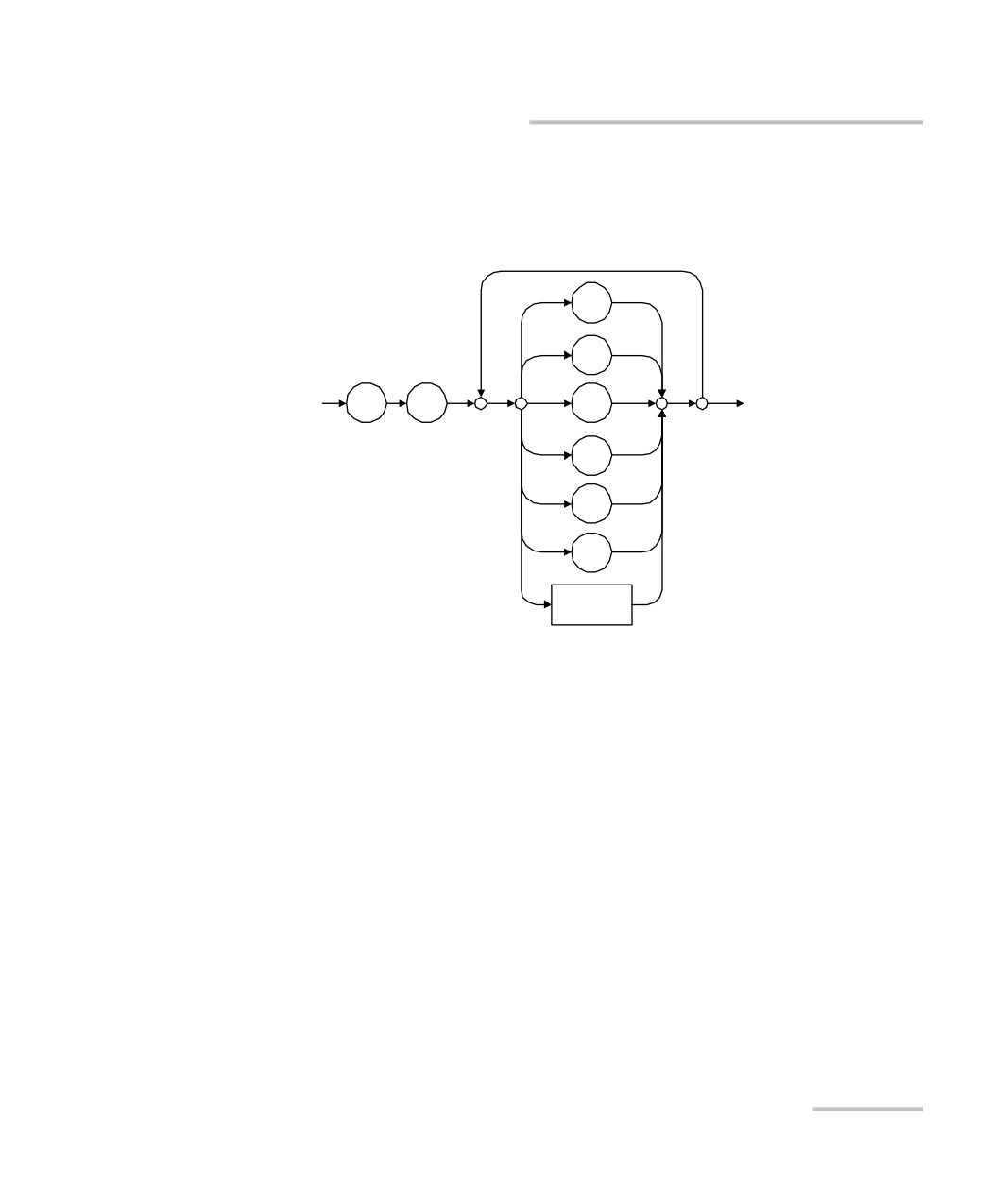
<HEXADECIMAL NUMERIC RESPONSE DATA>
This data type will be used by a device to return integer representations
in hexadecimal (base 16).
A
B
#
H
C
D
E
F
<digit>
Examples: #HA3C5, #H0123C, #H010F
FTB-2 and FTB-2 Pro
375
Data Types
Applicable Data Types for Output —IEEE 488.2
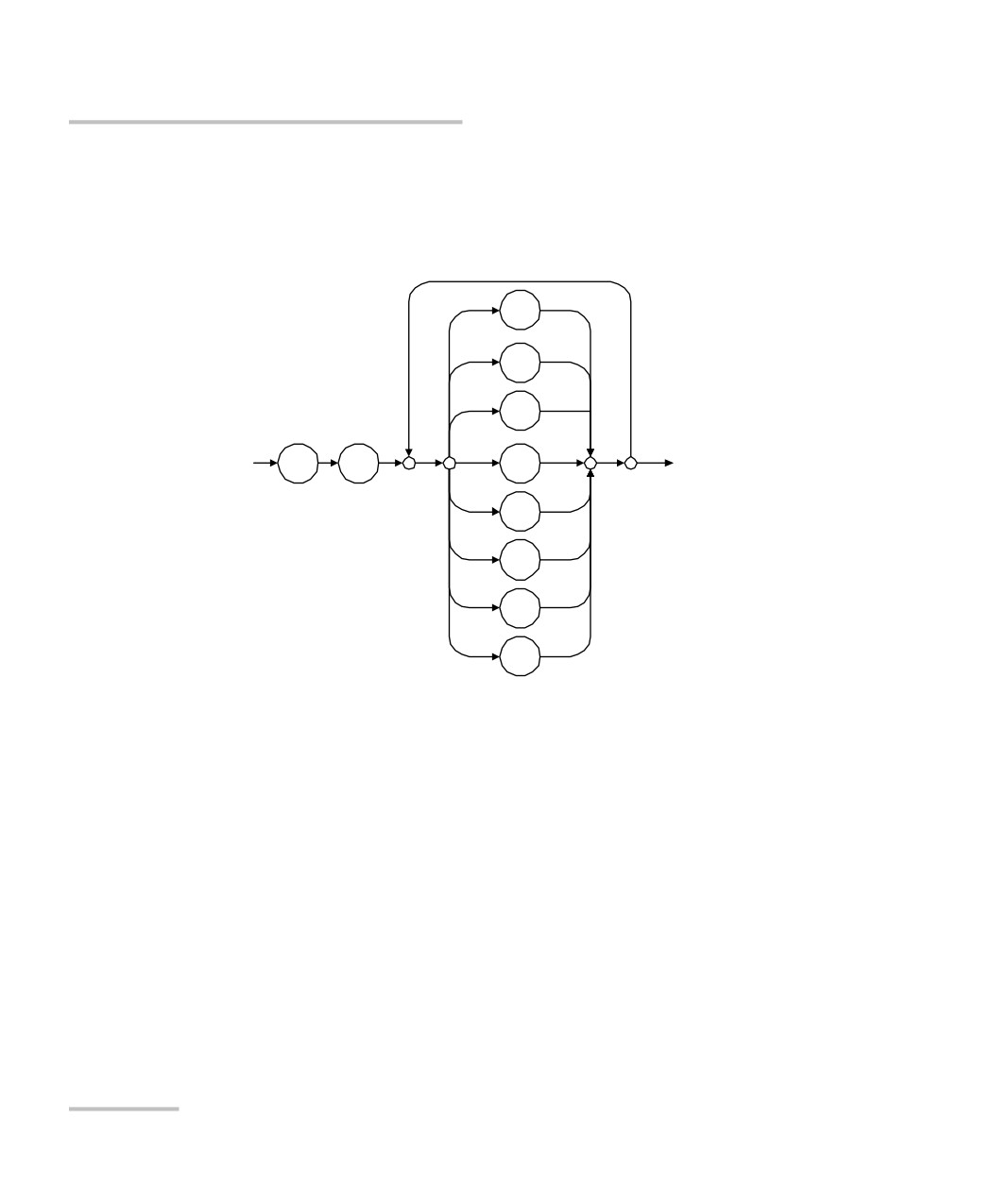
<OCTAL NUMERIC RESPONSE DATA>
This data type will be used by a device to return integer representations
in octal (base 8).
0
1
2
#
Q
3
4
5
6
7
Examples: #Q753214, #Q0124, #Q0725
376
FTB-2 and FTB-2 Pro
Data Types
Applicable Data Types for Output —IEEE 488.2
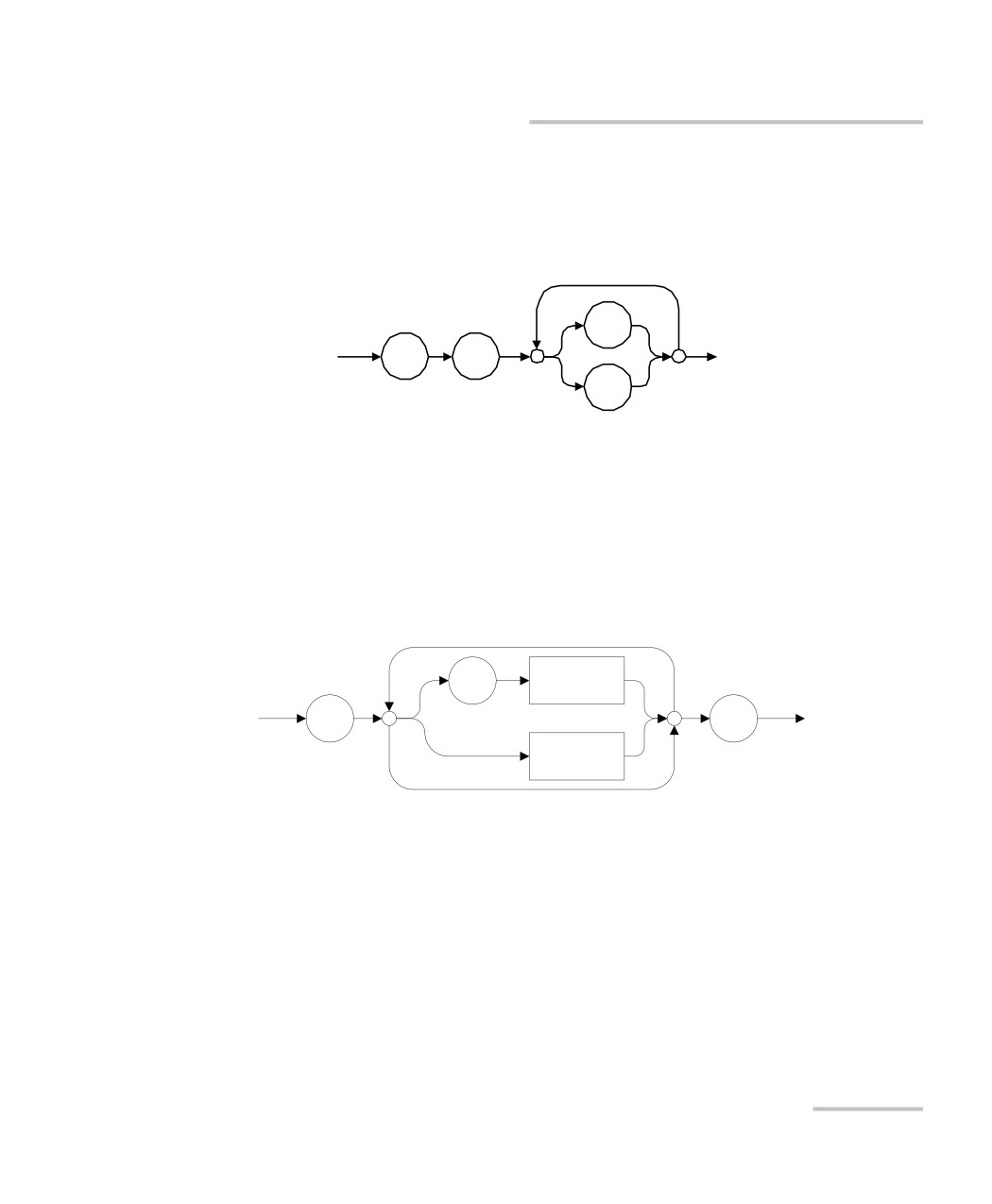
<BINARY NUMERIC RESPONSE DATA>
This data type will be used by a device to return integer representations
in binary (base 2).
0
#
B
1
Examples: #B11011110101, #B110100, #B0100
<STRING RESPONSE DATA>
This data type will be used by a device to return strings containing 7-bit
ASCII characters and especially when text has to be displayed since
even the non-printable characters are also returned.
"
<inserted ">
"
"
<non-single
quote char>
Examples: "SCPI Commands", "SCPI ""Commands"""
FTB-2 and FTB-2 Pro
377
Data Types
Applicable Data Types for Output —IEEE 488.2
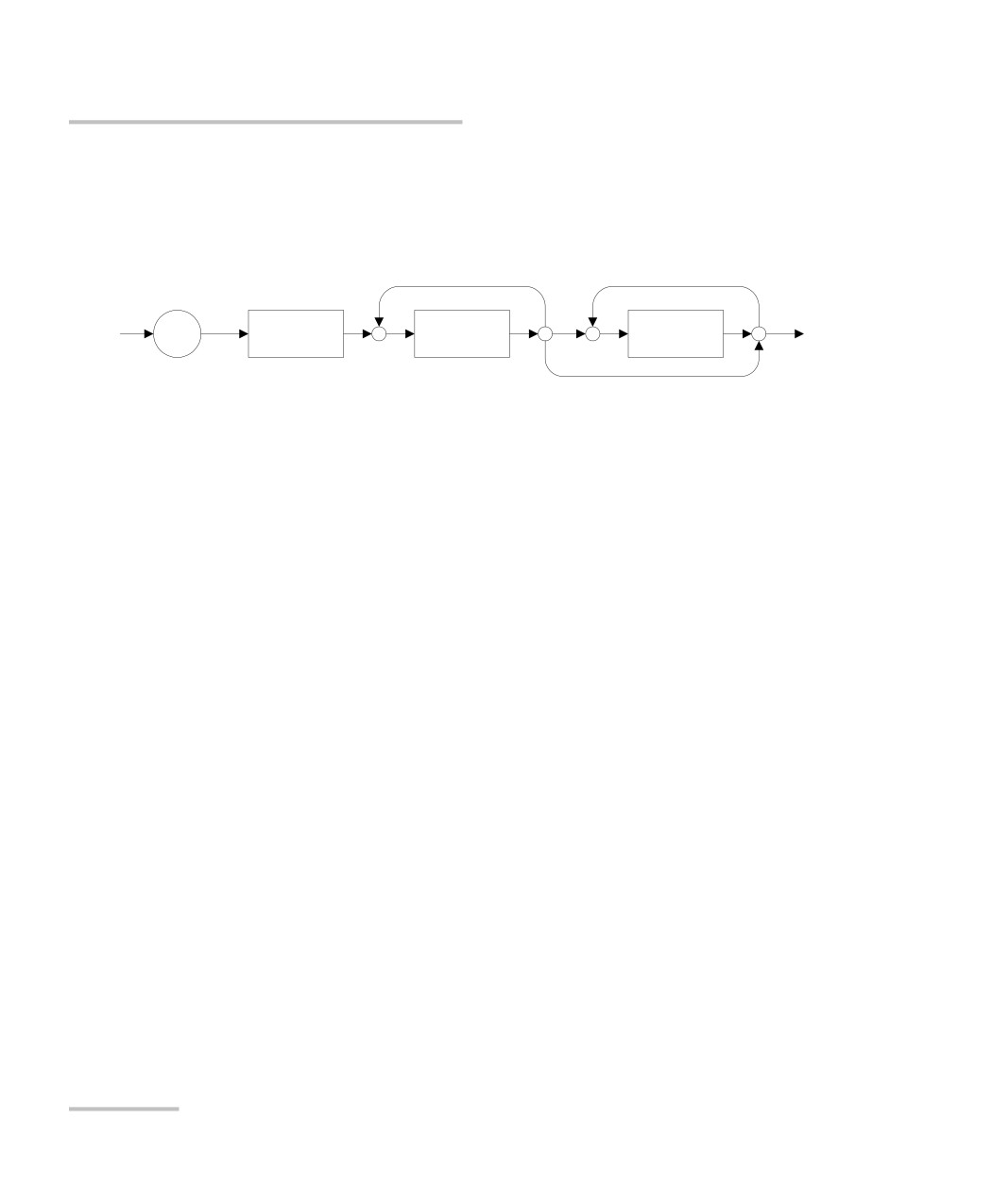
<DEFINITE LENGTH ARBITRARY BLOCK RESPONSE DATA>
This data type is used by a device to return blocks of 8-bit binary
information with a fixed and predetermined length.
<non-zero
<8-bit data
#
<digit>
digit>
byte>
The actual length of the retrieved data has the following structure:
The first byte contains the # character.
The byte that immediately follows contains the number of
subsequent bytes that you have to check to know the total length.
For example, if you receive this response (here, values are expressed
in decimal instead of binary for easier readability):
# 2 1 3 7 6 8 9 2 ...
The byte that immediately follows the # contains 2, which means that
you have to read the two following bytes to know the length (in bytes)
of the retrieved data. The bytes indicate 1 and 3. The length will then
be 13 bytes. The actual response will begin at byte number 5, in this
case.
Examples: #14<DAB><DAB><DAB><DAB>,
#3004<DAB><DAB><DAB><DAB>
where “<DAB>” stands for data byte
378
FTB-2 and FTB-2 Pro
Data Types
Applicable Data Types for Output —IEEE 488.2
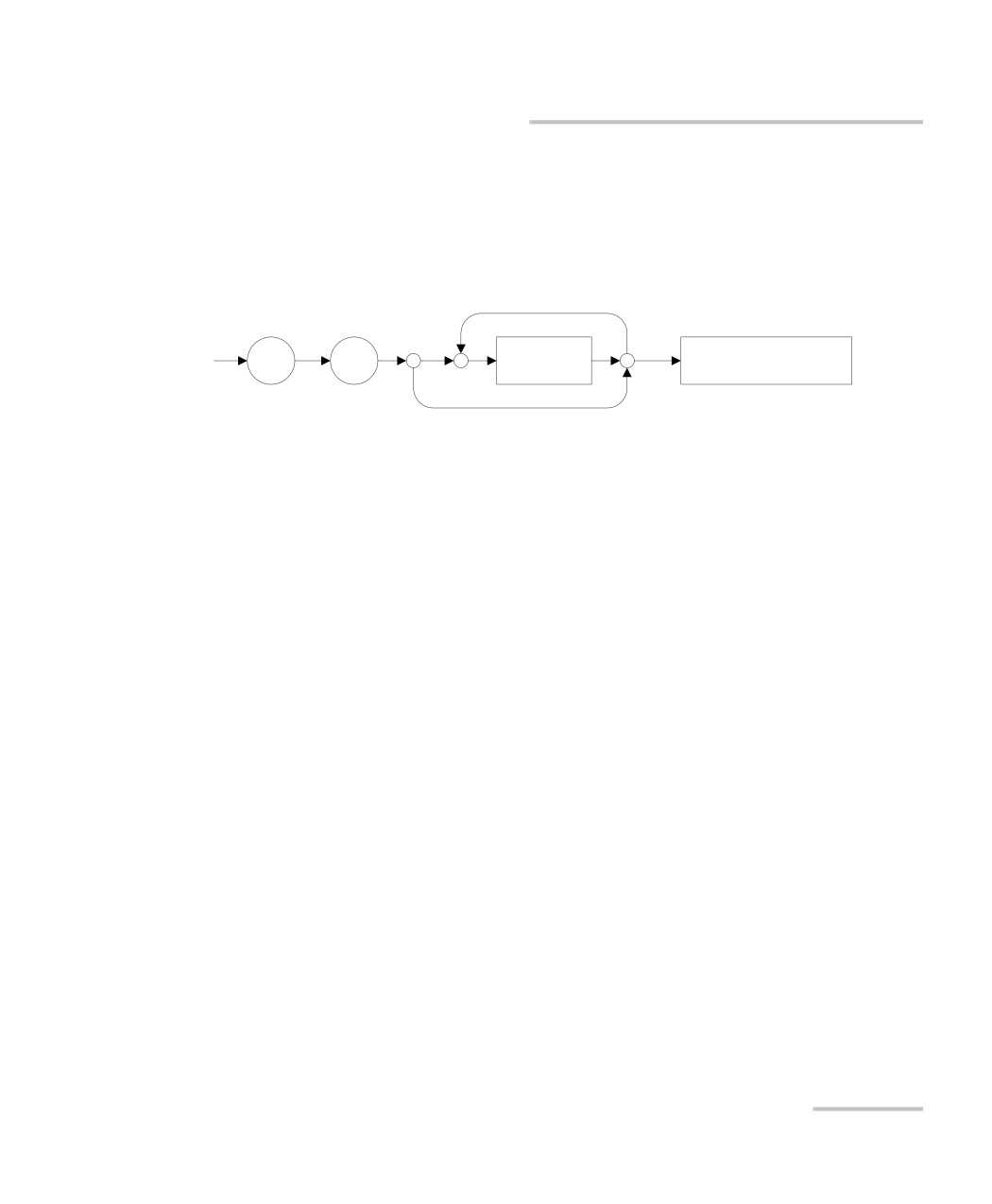
<INDEFINITE LENGTH ARBITRARY BLOCK RESPONSE DATA>
This data type is used by a device to return blocks of 8-bit binary
information when the block length was not predefined or when data
has to be computed later.
<8-bit data
<RESPONSE MESSAGE
#
0
byte>
TERMINATOR>
Note: If you receive a zero as the first digit (#0), it is necessarily followed by a
<RESPONSE PROGRAM MESSAGE TERMINATOR> so that you will detect
the end of the <INDEFINITE LENGTH ARBITRARY BLOCK RESPONSE
DATA>.
Example: #0<DAB><DAB><DAB><DAB><terminator> where
“<DAB>” stands for data byte.
FTB-2 and FTB-2 Pro
379
Data Types
Applicable Data Types for Output —IEEE 488.2
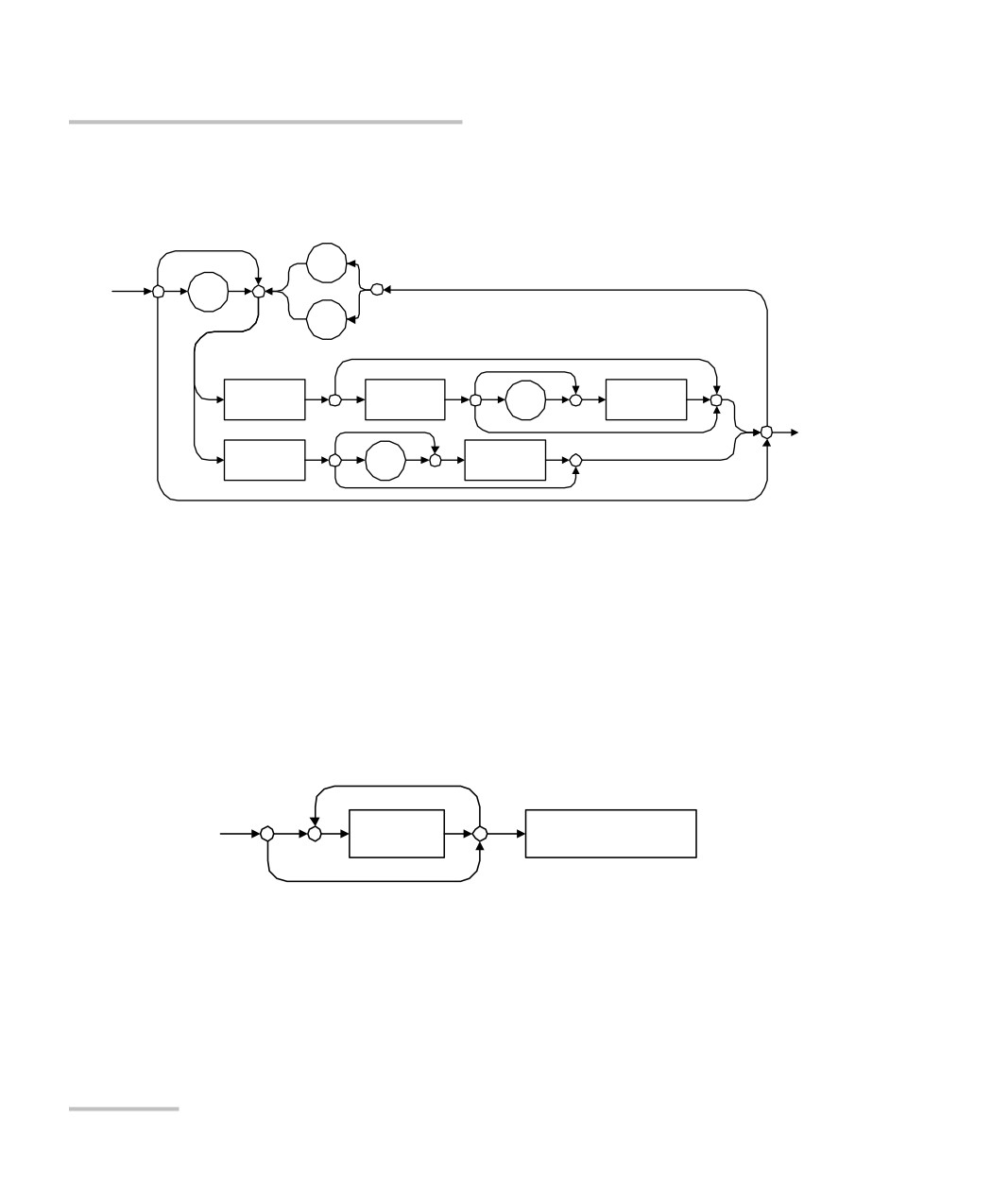
<SUFFIX RESPONSE DATA>
This data type is used by a device to return units and multipliers.
/
/
<suf f ix mult.>
<suf f ix unit>
<digit>
-
<suf f ix unit>
<digit>
-
Examples: DBW, W, KHZ
<ARBITRARY ASCII RESPONSE DATA>
This data type is used by a device to return information when it is
impossible to use any other data type.
Example: To the *IDN? query, the device will return this response in an
arbitrary ASCII bytes format:
EXFO E.O. Engineering,,125-2A55,1.0.1.97
<ASCII data
<RESPONSE MESSAGE
by te>
TERMINATOR>
380
FTB-2 and FTB-2 Pro
Data Types
Applicable Data Types for Input—SCPI
Applicable Data Types for Input—SCPI
SCPI data types include the IEEE 488.2 data types (see Applicable Data
Types for Input—IEEE 488.2 on page 362) with certain additional
restrictions.
<numeric_value>: abbreviated form of the decimal numeric element.
It differs from the <DECIMAL NUMERIC PROGRAM DATA> “<NRf>”
described in IEEE 488.2.
Several forms of <CHARACTER PROGRAM DATA> are defined as
special forms of numbers. These are: MINimum, MAXimum, DEFault,
UP, DOWN, Not A Number (NAN), INFinity and Negative INFinity
(NINF). The following special forms are likely to be used by EXFO’s
instruments in certain commands or queries:
DEFault: This special <numeric_value> parameter forces the
instrument to select a value, which is deemed to be convenient to
the user.
MINimum|MAXimum: These special <numeric_value>
parameters refer to the instrument’s limit values. MINimum
corresponds to the value closest to negative infinity that the
function can accept. MAXimum corresponds to the largest value
that the function can accept.
<Boolean Program Data>: This form is often used as a shorthand
of the <DECIMAL NUMERIC PROGRAM DATA>ON|OFF form.
<Boolean Program Data> parameters have a value of 0 or 1 and
are not followed by any unit.
On input, an <NRf> is rounded to an integer.
A non-zero result is interpreted as 1.
ON and OFF are accepted on input for readability purposes. They
correspond respectively to 1 and 0. However, on output, they
appear as 1 or 0, never ON or OFF.
FTB-2 and FTB-2 Pro
381
Data Types
Special Numeric Values Received on Output
Special Numeric Values Received on Output
It is possible that an instrument returns unusual values in certain cases. For
information on these values, see Applicable Data Types for Output —IEEE
488.2 on page 371.
382
FTB-2 and FTB-2 Pro

C IEEE 488.2 and Specific
Command Reference
This chapter presents detailed information about the commands and
queries supplied with your FTB-2 and FTB-2 Pro.
IEEE 488.2 Commands-Quick Reference
The FTB-2 and FTB-2 Pro recognizes the required commands identified in
IEEE 488.2. The table below summarizes these commands. These
commands are fully explained on the following pages.
Command
Function
*CLS
Clear status command
*ESE
Standard event status enable command
*ESE?
Standard event status enable query
*ESR?
Standard event status register query
*IDN?
Identification query
*OPC
Operation complete command
*OPC?
Operation complete query
*RST
Reset command
*SRE
Service request enable command
*SRE?
Service request enable query
*STB?
Read status byte query
*TST?
Self-test query
*WAI
Wait for pending operations to be completed
FTB-2 and FTB-2 Pro
383
IEEE 488.2 and Specific Command Reference
IEEE 488.2 Required Commands
IEEE 488.2 Required Commands
*CLS
Description
The *CLS command clears the Standard Event
Status Register and the Error/Event Queue.
Syntax
*CLS
Parameter(s)
None
384
FTB-2 and FTB-2 Pro

IEEE 488.2 and Specific Command Reference
IEEE 488.2 Required Commands
*ESE
Description
The *ESE command sets the Standard Event
Status Enable Register bits, as defined in the
table below. This register contains a mask value
for the bits to be enabled in the Standard Event
Status Register.
MSB
Standard Event Status Enable Register
LSB
PON
URQ
CME
EXE
DDE
QYE
N.U.
OPC
Syntax
*ESE<wsp><RegisterValue>
Parameter(s)
RegisterValue:
The program data syntax for <RegisterValue> is
defined as a <DECIMAL NUMERIC PROGRAM
DATA> element.
The <RegisterValue>, expressed in base 2,
represents the bit values of the Standard Event
Status Enable Register.
FTB-2 and FTB-2 Pro
385

IEEE 488.2 and Specific Command Reference
IEEE 488.2 Required Commands
*ESE
The table below shows the contents of this
register.
Bit
Weight
Meaning
PON
128
Power ON Enable
URQ
64
User ReQuest Enable
CMD
32
CoMmanD Error Enable
EXE
16
Execution Error Enable
DDE
8
Device Dependent Error Enable
QRY
4
QueRry Error Enable
N.U.
2
Not used
OPC
1
Operation Complete Enable
A value of 1 in the Enable Register enables the
corresponding bit in the Status Register, a value
of 0 disables the bit. The value of the
<RegisterValue> shall be in the range of 0
through 255.
Example(s)
*ESE 25
where 25 = (bit EXE, bit DDE and bit OPC)
*ESE 0
clears the content of the Standard Event Status
Enable register
See Also
*ESE?
*ESR?
386
FTB-2 and FTB-2 Pro

IEEE 488.2 and Specific Command Reference
IEEE 488.2 Required Commands
*ESE?
Description
With the *ESE? query you can determine the
current contents of the Standard Event Status
Enable Register. See the contents of this register
below.
MSB
Standard Ev ent Status Enable Register
LSB
PON
URQ
CME
EXE
DDE
QYE
N.U.
OPC
Syntax
*ESE?
Parameter(s)
None
Response Syntax
<RegisterValue>
FTB-2 and FTB-2 Pro
387

IEEE 488.2 and Specific Command Reference
IEEE 488.2 Required Commands
*ESE?
Response(s)
RegisterValue:
The response data syntax for <RegisterValue> is
defined as a <NR1 NUMERIC RESPONSE DATA>
element.
The <RegisterValue> ranges from 0 through 255.
The <RegisterValue> value expressed in base 2
(binary) represents the bit values of the Standard
Event Status Enable register. See below.
Bit
Weight
Meaning
PON
128
Power ON Enable
URQ
64
User ReQuest Enable
CMD
32
CoMmanD Error Enable
EXE
16
Execution Error Enable
DDE
8
Device Dependent Error Enable
QRY
4
QueRry Error Enable
N.U.
2
Not used
OPC
1
Operation Complete Enable
Example(s)
*ESE? returns 133
where 133 = (bit PON, bit QYE and bit OPC)
See Also
*ESE
*ESR?
388
FTB-2 and FTB-2 Pro

IEEE 488.2 and Specific Command Reference
IEEE 488.2 Required Commands
*ESR?
Description
With the *ESR? query you can determine the
current contents of the Standard Event Status
Register. Reading the Standard Event Status
Register clears it. See the contents of this register
below.
Standard Event Status
MSB
LSB
Register
PON
URQ
CME
EXE
DDE
QYE
N.U.
OPC
Syntax
*ESR?
Parameter(s)
None
Response Syntax
<RegisterValue>
FTB-2 and FTB-2 Pro
389

IEEE 488.2 and Specific Command Reference
IEEE 488.2 Required Commands
*ESR?
Response(s)
RegisterValue:
The response data syntax for <RegisterValue> is
defined as a <NR1 NUMERIC RESPONSE DATA>
element.
The <RegisterValue> ranges from 0 through 255.
The <RegisterValue> value expressed in base 2
(binary) represents the bit values of the Standard
Event Status register. See below.
Bit
Weight
Meaning
PON
128
Power ON Enable
URQ
64
User ReQuest Enable
CMD
32
CoMmanD Error Enable
EXE
16
Execution Error Enable
DDE
8
Device Dependent Error Enable
QRY
4
QueRry Error Enable
N.U.
2
Not used
OPC
1
Operation Complete Enable
Example(s)
*ESR? returns 33
where 33 = (bit CME and bit OPC)
See Also
*ESE
*ESE?
390
FTB-2 and FTB-2 Pro
содержание .. 23 24 25 26 ..