Intel 64 and IA-32 Architectures. Software Developer’s Manual (2026) - page 21
MOVNTPD-Store Packed Double Precision Floating-Point Values Using Non-Temporal Hint
Opcode/
Op /
64/32 bit
CPUID Feature
Description
Instruction
En
Mode
Flag
Support
66 0F 2B /r
A
V/V
SSE2
Move packed double precision values in xmm1 to m128
MOVNTPD m128, xmm1
using non-temporal hint.
VEX.128.66.0F.WIG 2B /r
A
V/V
AVX
Move packed double precision values in xmm1 to m128
VMOVNTPD m128, xmm1
using non-temporal hint.
VEX.256.66.0F.WIG 2B /r
A
V/V
AVX
Move packed double precision values in ymm1 to m256
VMOVNTPD m256, ymm1
using non-temporal hint.
EVEX.128.66.0F.W1 2B /r
B
V/V
(AVX512VL AND
Move packed double precision values in xmm1 to m128
VMOVNTPD m128, xmm1
AVX512F) OR
using non-temporal hint.
AVX10.1
EVEX.256.66.0F.W1 2B /r
B
V/V
(AVX512VL AND
Move packed double precision values in ymm1 to m256
VMOVNTPD m256, ymm1
AVX512F) OR
using non-temporal hint.
AVX10.1
EVEX.512.66.0F.W1 2B /r
B
V/V
AVX512F
Move packed double precision values in zmm1 to m512
VMOVNTPD m512, zmm1
OR AVX10.1
using non-temporal hint.
Instruction Operand Encoding1
Op/En
Tuple Type
Operand 1
Operand 2
Operand 3
Operand 4
A
N/A
ModRM:r/m (w)
ModRM:reg (r)
N/A
N/A
B
Full Mem
ModRM:r/m (w)
ModRM:reg (r)
N/A
N/A
Description
Moves the packed double precision floating-point values in the source operand (second operand) to the destination
operand (first operand) using a non-temporal hint to prevent caching of the data during the write to memory. The
source operand is an XMM register, YMM register or ZMM register, which is assumed to contain packed double preci-
sion, floating-pointing data. The destination operand is a 128-bit, 256-bit or 512-bit memory location. The memory
operand must be aligned on a 16-byte (128-bit version), 32-byte (VEX.256 encoded version) or 64-byte
(EVEX.512 encoded version) boundary otherwise a general-protection exception (#GP) will be generated.
The non-temporal hint is implemented by using a write combining (WC) memory type protocol when writing the
data to memory. Using this protocol, the processor does not write the data into the cache hierarchy, nor does it
fetch the corresponding cache line from memory into the cache hierarchy. The memory type of the region being
written to can override the non-temporal hint, if the memory address specified for the non-temporal store is in an
uncacheable (UC) or write protected (WP) memory region. For more information on non-temporal stores, see
“Caching of Temporal vs. Non-Temporal Data” in Chapter 10 in the IA-32 Intel Architecture Software Developer’s
Manual, Volume 1.
Because the WC protocol uses a weakly-ordered memory consistency model, a fencing operation implemented with
the SFENCE or MFENCE instruction should be used in conjunction with MOVNTPD instructions if multiple processors
might use different memory types to read/write the destination memory locations.
Note: VEX.vvvv and EVEX.vvvv are reserved and must be 1111b, VEX.L must be 0; otherwise instructions will
#UD.
Operation
VMOVNTPD (EVEX Encoded Versions)
VL = 128, 256, 512
DEST[VL-1:0] := SRC[VL-1:0]
1. ModRM.MOD != 011B
MOVNTPD-Store Packed Double Precision Floating-Point Values Using Non-Temporal Hint
Vol. 2B
4-94
DEST[MAXVL-1:VL] := 0
MOVNTPD (Legacy and VEX Versions)
DEST := SRC
Intel C/C++ Compiler Intrinsic Equivalent
VMOVNTPD void _mm512_stream_pd(double * p, __m512d a);
VMOVNTPD void _mm256_stream_pd (double * p, __m256d a);
MOVNTPD void _mm_stream_pd (double * p, __m128d a);
SIMD Floating-Point Exceptions
None.
Other Exceptions
Non-EVEX-encoded instruction, see Exceptions Type1.SSE2 in Table 2-18, “Type 1 Class Exception Conditions.”
EVEX-encoded instruction, see Table 2-47, “Type E1NF Class Exception Conditions.”
Additionally:
#UD
If VEX.vvvv != 1111B or EVEX.vvvv != 1111B.
MOVNTPD-Store Packed Double Precision Floating-Point Values Using Non-Temporal Hint
Vol. 2B
4-95
MOVNTPS-Store Packed Single Precision Floating-Point Values Using Non-Temporal Hint
Opcode/
Op /
64/32 bit
CPUID Feature
Description
Instruction
En
Mode
Flag
Support
NP 0F 2B /r
A
V/V
SSE
Move packed single precision values xmm1 to mem using
MOVNTPS m128, xmm1
non-temporal hint.
VEX.128.0F.WIG 2B /r
A
V/V
AVX
Move packed single precision values xmm1 to mem using
VMOVNTPS m128, xmm1
non-temporal hint.
VEX.256.0F.WIG 2B /r
A
V/V
AVX
Move packed single precision values ymm1 to mem using
VMOVNTPS m256, ymm1
non-temporal hint.
EVEX.128.0F.W0 2B /r
B
V/V
(AVX512VL AND
Move packed single precision values in xmm1 to m128
VMOVNTPS m128, xmm1
AVX512F) OR
using non-temporal hint.
AVX10.1
EVEX.256.0F.W0 2B /r
B
V/V
(AVX512VL AND
Move packed single precision values in ymm1 to m256
VMOVNTPS m256, ymm1
AVX512F) OR
using non-temporal hint.
AVX10.1
EVEX.512.0F.W0 2B /r
B
V/V
AVX512F
Move packed single precision values in zmm1 to m512
VMOVNTPS m512, zmm1
OR AVX10.1
using non-temporal hint.
Instruction Operand Encoding1
Op/En
Tuple Type
Operand 1
Operand 2
Operand 3
Operand 4
A
N/A
ModRM:r/m (w)
ModRM:reg (r)
N/A
N/A
B
Full Mem
ModRM:r/m (w)
ModRM:reg (r)
N/A
N/A
Description
Moves the packed single precision floating-point values in the source operand (second operand) to the destination
operand (first operand) using a non-temporal hint to prevent caching of the data during the write to memory. The
source operand is an XMM register, YMM register or ZMM register, which is assumed to contain packed single preci-
sion, floating-pointing. The destination operand is a 128-bit, 256-bit or 512-bit memory location. The memory
operand must be aligned on a 16-byte (128-bit version), 32-byte (VEX.256 encoded version) or 64-byte
(EVEX.512 encoded version) boundary otherwise a general-protection exception (#GP) will be generated.
The non-temporal hint is implemented by using a write combining (WC) memory type protocol when writing the
data to memory. Using this protocol, the processor does not write the data into the cache hierarchy, nor does it
fetch the corresponding cache line from memory into the cache hierarchy. The memory type of the region being
written to can override the non-temporal hint, if the memory address specified for the non-temporal store is in an
uncacheable (UC) or write protected (WP) memory region. For more information on non-temporal stores, see
“Caching of Temporal vs. Non-Temporal Data” in Chapter 10 in the IA-32 Intel Architecture Software Developer’s
Manual, Volume 1.
Because the WC protocol uses a weakly-ordered memory consistency model, a fencing operation implemented with
the SFENCE or MFENCE instruction should be used in conjunction with MOVNTPS instructions if multiple processors
might use different memory types to read/write the destination memory locations.
Note: VEX.vvvv and EVEX.vvvv are reserved and must be 1111b otherwise instructions will #UD.
Operation
VMOVNTPS (EVEX Encoded Versions)
VL = 128, 256, 512
DEST[VL-1:0] := SRC[VL-1:0]
DEST[MAXVL-1:VL] := 0
1. ModRM.MOD != 011B
MOVNTPS-Store Packed Single Precision Floating-Point Values Using Non-Temporal Hint
Vol. 2B
4-96
MOVNTPS
DEST := SRC
Intel C/C++ Compiler Intrinsic Equivalent
VMOVNTPS void _mm512_stream_ps(float * p, __m512d a);
MOVNTPS void _mm_stream_ps (float * p, __m128d a);
VMOVNTPS void _mm256_stream_ps (float * p, __m256 a);
SIMD Floating-Point Exceptions
None.
Other Exceptions
Non-EVEX-encoded instruction, see Exceptions Type1.SSE in Table 2-18, “Type 1 Class Exception Conditions.”
EVEX-encoded instruction, see Table 2-47, “Type E1NF Class Exception Conditions.”
Additionally:
#UD
If VEX.vvvv != 1111B or EVEX.vvvv != 1111B.
MOVNTPS-Store Packed Single Precision Floating-Point Values Using Non-Temporal Hint
Vol. 2B
4-97
MOVNTQ-Store of Quadword Using Non-Temporal Hint
Opcode
Instruction
Op/
64-Bit
Compat/
Description
En
Mode
Leg Mode
NP 0F E7 /r
MOVNTQ m64, mm
MR
Valid
Valid
Move quadword from mm to m64 using non-
temporal hint.
Instruction Operand Encoding
Op/En
Operand 1
Operand 2
Operand 3
Operand 4
MR
ModRM:r/m (w)
ModRM:reg (r)
N/A
N/A
Description
Moves the quadword in the source operand (second operand) to the destination operand (first operand) using a
non-temporal hint to minimize cache pollution during the write to memory. The source operand is an MMX tech-
nology register, which is assumed to contain packed integer data (packed bytes, words, or doublewords). The
destination operand is a 64-bit memory location.
The non-temporal hint is implemented by using a write combining (WC) memory type protocol when writing the
data to memory. Using this protocol, the processor does not write the data into the cache hierarchy, nor does it
fetch the corresponding cache line from memory into the cache hierarchy. The memory type of the region being
written to can override the non-temporal hint, if the memory address specified for the non-temporal store is in an
uncacheable (UC) or write protected (WP) memory region. For more information on non-temporal stores, see
“Caching of Temporal vs. Non-Temporal Data” in Chapter 10 in the Intel® 64 and IA-32 Architectures Software
Developer’s Manual, Volume 1.
Because the WC protocol uses a weakly-ordered memory consistency model, a fencing operation implemented with
the SFENCE or MFENCE instruction should be used in conjunction with MOVNTQ instructions if multiple processors
might use different memory types to read/write the destination memory locations.
This instruction’s operation is the same in non-64-bit modes and 64-bit mode.
Operation
DEST := SRC;
Intel C/C++ Compiler Intrinsic Equivalent
MOVNTQ void _mm_stream_pi(__m64 * p, __m64 a)
SIMD Floating-Point Exceptions
None.
Other Exceptions
See Section 25.25.3, “Exception Conditions of Legacy SIMD Instructions Operating on MMX Registers” in the Intel®
64 and IA-32 Architectures Software Developer’s Manual, Volume 3B.
MOVNTQ-Store of Quadword Using Non-Temporal Hint
Vol. 2B
4-98

MOVQ-Move Quadword
Opcode/
Op/ En
64/32-bit
CPUID
Description
Instruction
Mode
Feature Flag
NP 0F 6F /r
A
V/V
MMX
Move quadword from mm/m64 to mm.
MOVQ mm, mm/m64
NP 0F 7F /r
B
V/V
MMX
Move quadword from mm to mm/m64.
MOVQ mm/m64, mm
F3 0F 7E /r
A
V/V
SSE2
Move quadword from xmm2/mem64 to xmm1.
MOVQ xmm1, xmm2/m64
VEX.128.F3.0F.WIG 7E /r
A
V/V
AVX
Move quadword from xmm2 to xmm1.
VMOVQ xmm1, xmm2/m64
EVEX.128.F3.0F.W1 7E /r
C
V/V
AVX512F
Move quadword from xmm2/m64 to xmm1.
VMOVQ xmm1, xmm2/m64
OR AVX10.1
66 0F D6 /r
B
V/V
SSE2
Move quadword from xmm1 to xmm2/mem64.
MOVQ xmm2/m64, xmm1
VEX.128.66.0F.WIG D6 /r
B
V/V
AVX
Move quadword from xmm2 register to
xmm1/m64.
VMOVQ xmm1/m64, xmm2
EVEX.128.66.0F.W1 D6 /r
D
V/V
AVX512F
Move quadword from xmm2 register to
VMOVQ xmm1/m64, xmm2
OR AVX10.1
xmm1/m64.
Instruction Operand Encoding
Op/En
Tuple Type
Operand 1
Operand 2
Operand 3
Operand 4
A
N/A
ModRM:reg (w)
ModRM:r/m (r)
N/A
N/A
B
N/A
ModRM:r/m (w)
ModRM:reg (r)
N/A
N/A
C
Tuple1 Scalar
ModRM:reg (w)
ModRM:r/m (r)
N/A
N/A
D
Tuple1 Scalar
ModRM:r/m (w)
ModRM:reg (r)
N/A
N/A
Description
Copies a quadword from the source operand (second operand) to the destination operand (first operand). The
source and destination operands can be MMX technology registers, XMM registers, or 64-bit memory locations.
This instruction can be used to move a quadword between two MMX technology registers or between an MMX tech-
nology register and a 64-bit memory location, or to move data between two XMM registers or between an XMM
register and a 64-bit memory location. The instruction cannot be used to transfer data between memory locations.
When the source operand is an XMM register, the low quadword is moved; when the destination operand is an XMM
register, the quadword is stored to the low quadword of the register, and the high quadword is cleared to all 0s.
In 64-bit mode and if not encoded using VEX/EVEX, use of the REX prefix in the form of REX.R permits this instruc-
tion to access additional registers (XMM8-XMM15).
Note: VEX.vvvv and EVEX.vvvv are reserved and must be 1111b, otherwise instructions will #UD.
If VMOVQ is encoded with VEX.L= 1, an attempt to execute the instruction encoded with VEX.L= 1 will cause an
#UD exception.
Operation
MOVQ Instruction When Operating on MMX Technology Registers and Memory Locations
DEST := SRC;
MOVQ Instruction When Source and Destination Operands are XMM Registers
DEST[63:0] := SRC[63:0];
MOVQ-Move Quadword
Vol. 2B
4-99
DEST[127:64] := 0000000000000000H;
MOVQ Instruction When Source Operand is XMM Register and Destination
operand is memory location:
DEST := SRC[63:0];
MOVQ Instruction When Source Operand is Memory Location and Destination
operand is XMM register:
DEST[63:0] := SRC;
DEST[127:64] := 0000000000000000H;
VMOVQ (VEX.128.F3.0F 7E) With XMM Register Source and Destination
DEST[63:0] := SRC[63:0]
DEST[MAXVL-1:64] := 0
VMOVQ (VEX.128.66.0F D6) With XMM Register Source and Destination
DEST[63:0] := SRC[63:0]
DEST[MAXVL-1:64] := 0
VMOVQ (7E - EVEX Encoded Version) With XMM Register Source and Destination
DEST[63:0] := SRC[63:0]
DEST[MAXVL-1:64] := 0
VMOVQ (D6 - EVEX Encoded Version) With XMM Register Source and Destination
DEST[63:0] := SRC[63:0]
DEST[MAXVL-1:64] := 0
VMOVQ (7E) With Memory Source
DEST[63:0] := SRC[63:0]
DEST[MAXVL-1:64] := 0
VMOVQ (7E - EVEX Encoded Version) With Memory Source
DEST[63:0] := SRC[63:0]
DEST[:MAXVL-1:64] := 0
VMOVQ (D6) With Memory DEST
DEST[63:0] := SRC2[63:0]
Flags Affected
None.
Intel C/C++ Compiler Intrinsic Equivalent
VMOVQ __m128i _mm_loadu_si64( void * s);
VMOVQ void _mm_storeu_si64( void * d, __m128i s);
MOVQ m128i _mm_move_epi64(__m128i a)
SIMD Floating-Point Exceptions
None.
Other Exceptions
See Section 25.25.3, “Exception Conditions of Legacy SIMD Instructions Operating on MMX Registers” in the Intel®
64 and IA-32 Architectures Software Developer’s Manual, Volume 3B.
MOVQ-Move Quadword
Vol. 2B
4-100
MOVQ-Move Quadword
Vol. 2B
4-101
MOVQ2DQ-Move Quadword from MMX Technology to XMM Register
Opcode /
Op/
64/32-bit
CPUID
Description
Instruction
En
Mode
Feature
Flag
F3 0F D6 /r
RM
V/V
SSE2
Move quadword from mmx to low quadword
of xmm.
MOVQ2DQ xmm, mm
Instruction Operand Encoding
Op/En
Operand 1
Operand 2
Operand 3
Operand 4
RM
ModRM:reg (w)
ModRM:r/m (r)
N/A
N/A
Description
Moves the quadword from the source operand (second operand) to the low quadword of the destination operand
(first operand). The source operand is an MMX technology register and the destination operand is an XMM register.
This instruction causes a transition from x87 FPU to MMX technology operation (that is, the x87 FPU top-of-stack
pointer is set to 0 and the x87 FPU tag word is set to all 0s [valid]). If this instruction is executed while an x87 FPU
floating-point exception is pending, the exception is handled before the MOVQ2DQ instruction is executed.
In 64-bit mode, use of the REX.R prefix permits this instruction to access additional registers (XMM8-XMM15).
Operation
DEST[63:0] := SRC[63:0];
DEST[127:64] := 00000000000000000H;
Intel C/C++ Compiler Intrinsic Equivalent
MOVQ2DQ__128i _mm_movpi64_epi64 ( __m64 a)
SIMD Floating-Point Exceptions
None.
Protected Mode Exceptions
#NM
If CR0.TS[bit 3] = 1.
#UD
If CR0.EM[bit 2] = 1.
If CR4.OSFXSR[bit 9] = 0.
If CPUID.01H:EDX.SSE2[26] = 0.
If the LOCK prefix is used.
#MF
If there is a pending x87 FPU exception.
Real-Address Mode Exceptions
Same exceptions as in protected mode.
Virtual-8086 Mode Exceptions
Same exceptions as in protected mode.
Compatibility Mode Exceptions
Same exceptions as in protected mode.
MOVQ2DQ-Move Quadword from MMX Technology to XMM Register
Vol. 2B
4-102
64-Bit Mode Exceptions
Same exceptions as in protected mode.
MOVQ2DQ-Move Quadword from MMX Technology to XMM Register
Vol. 2B
4-103

MOVSD-Move or Merge Scalar Double Precision Floating-Point Value
Opcode/
Op / En
64/32 bit
CPUID
Description
Instruction
Mode
Feature Flag
Support
F2 0F 10 /r
A
V/V
SSE2
Move scalar double precision floating-point value
MOVSD xmm1, xmm2
from xmm2 to xmm1 register.
F2 0F 10 /r
A
V/V
SSE2
Load scalar double precision floating-point value
MOVSD xmm1, m64
from m64 to xmm1 register.
F2 0F 11 /r
C
V/V
SSE2
Move scalar double precision floating-point value
MOVSD xmm1/m64, xmm2
from xmm2 register to xmm1/m64.
VEX.LIG.F2.0F.WIG 10 /r
B
V/V
AVX
Merge scalar double precision floating-point value
VMOVSD xmm1, xmm2, xmm3
from xmm2 and xmm3 to xmm1 register.
VEX.LIG.F2.0F.WIG 10 /r
D
V/V
AVX
Load scalar double precision floating-point value
VMOVSD xmm1, m64
from m64 to xmm1 register.
VEX.LIG.F2.0F.WIG 11 /r
E
V/V
AVX
Merge scalar double precision floating-point value
VMOVSD xmm1, xmm2, xmm3
from xmm2 and xmm3 registers to xmm1.
VEX.LIG.F2.0F.WIG 11 /r
C
V/V
AVX
Store scalar double precision floating-point value
VMOVSD m64, xmm1
from xmm1 register to m64.
EVEX.LLIG.F2.0F.W1 10 /r
B
V/V
AVX512F
Merge scalar double precision floating-point value
VMOVSD xmm1 {k1}{z}, xmm2, xmm3
OR AVX10.1
from xmm2 and xmm3 registers to xmm1 under
writemask k1.
EVEX.LLIG.F2.0F.W1 10 /r
F
V/V
AVX512F
Load scalar double precision floating-point value
VMOVSD xmm1 {k1}{z}, m64
OR AVX10.1
from m64 to xmm1 register under writemask k1.
EVEX.LLIG.F2.0F.W1 11 /r
E
V/V
AVX512F
Merge scalar double precision floating-point value
VMOVSD xmm1 {k1}{z}, xmm2, xmm3
OR AVX10.1
from xmm2 and xmm3 registers to xmm1 under
writemask k1.
EVEX.LLIG.F2.0F.W1 11 /r
G
V/V
AVX512F
Store scalar double precision floating-point value
VMOVSD m64 {k1}, xmm1
OR AVX10.1
from xmm1 register to m64 under writemask k1.
Instruction Operand Encoding
Op/En
Tuple Type
Operand 1
Operand 2
Operand 3
Operand 4
A
N/A
ModRM:reg (r, w)
ModRM:r/m (r)
N/A
N/A
B
N/A
ModRM:reg (w)
VEX.vvvv (r)
ModRM:r/m (r)
N/A
C
N/A
ModRM:r/m (w)
ModRM:reg (r)
N/A
N/A
D
N/A
ModRM:reg (w)
ModRM:r/m (r)
N/A
N/A
E
N/A
ModRM:r/m (w)
EVEX.vvvv (r)
ModRM:reg (r)
N/A
F
Tuple1 Scalar
ModRM:reg (r, w)
ModRM:r/m (r)
N/A
N/A
G
Tuple1 Scalar
ModRM:r/m (w)
ModRM:reg (r)
N/A
N/A
Description
Moves a scalar double precision floating-point value from the source operand (second operand) to the destination
operand (first operand). The source and destination operands can be XMM registers or 64-bit memory locations.
This instruction can be used to move a double precision floating-point value to and from the low quadword of an
XMM register and a 64-bit memory location, or to move a double precision floating-point value between the low
quadwords of two XMM registers. The instruction cannot be used to transfer data between memory locations.
Legacy version: When the source and destination operands are XMM registers, bits MAXVL:64 of the destination
operand remains unchanged. When the source operand is a memory location and destination operand is an XMM
MOVSD-Move or Merge Scalar Double Precision Floating-Point Value
Vol. 2B
4-108
registers, the quadword at bits 127:64 of the destination operand is cleared to all 0s, bits MAXVL:128 of the desti-
nation operand remains unchanged.
VEX and EVEX encoded register-register syntax: Moves a scalar double precision floating-point value from the
second source operand (the third operand) to the low quadword element of the destination operand (the first
operand). Bits 127:64 of the destination operand are copied from the first source operand (the second operand).
Bits (MAXVL-1:128) of the corresponding destination register are zeroed.
VEX and EVEX encoded memory store syntax: When the source operand is a memory location and destination
operand is an XMM registers, bits MAXVL:64 of the destination operand is cleared to all 0s.
EVEX encoded versions: The low quadword of the destination is updated according to the writemask.
Note: For VMOVSD (memory store and load forms), VEX.vvvv and EVEX.vvvv are reserved and must be 1111b,
otherwise instruction will #UD.
Operation
VMOVSD (EVEX.LLIG.F2.0F 10 /r: VMOVSD xmm1, m64 With Support for 32 Registers)
IF k1[0] or *no writemask*
THEN
DEST[63:0] := SRC[63:0]
ELSE
IF *merging-masking*
; merging-masking
THEN *DEST[63:0] remains unchanged*
ELSE
; zeroing-masking
THEN DEST[63:0] := 0
FI;
FI;
DEST[MAXVL-1:64] := 0
VMOVSD (EVEX.LLIG.F2.0F 11 /r: VMOVSD m64, xmm1 With Support for 32 Registers)
IF k1[0] or *no writemask*
THEN
DEST[63:0] := SRC[63:0]
ELSE
*DEST[63:0] remains unchanged*
; merging-masking
FI;
VMOVSD (EVEX.LLIG.F2.0F 11 /r: VMOVSD xmm1, xmm2, xmm3)
IF k1[0] or *no writemask*
THEN
DEST[63:0] := SRC2[63:0]
ELSE
IF *merging-masking*
; merging-masking
THEN *DEST[63:0] remains unchanged*
ELSE
; zeroing-masking
THEN DEST[63:0] := 0
FI;
FI;
DEST[127:64] := SRC1[127:64]
DEST[MAXVL-1:128] := 0
MOVSD (128-bit Legacy SSE Version: MOVSD xmm1, xmm2)
DEST[63:0] := SRC[63:0]
DEST[MAXVL-1:64] (Unmodified)
MOVSD-Move or Merge Scalar Double Precision Floating-Point Value
Vol. 2B
4-109
VMOVSD (VEX.128.F2.0F 11 /r: VMOVSD xmm1, xmm2, xmm3)
DEST[63:0] := SRC2[63:0]
DEST[127:64] := SRC1[127:64]
DEST[MAXVL-1:128] := 0
VMOVSD (VEX.128.F2.0F 10 /r: VMOVSD xmm1, xmm2, xmm3)
DEST[63:0] := SRC2[63:0]
DEST[127:64] := SRC1[127:64]
DEST[MAXVL-1:128] := 0
VMOVSD (VEX.128.F2.0F 10 /r: VMOVSD xmm1, m64)
DEST[63:0] := SRC[63:0]
DEST[MAXVL-1:64] := 0
MOVSD/VMOVSD (128-bit Versions: MOVSD m64, xmm1 or VMOVSD m64, xmm1)
DEST[63:0] := SRC[63:0]
MOVSD (128-bit Legacy SSE Version: MOVSD xmm1, m64)
DEST[63:0] := SRC[63:0]
DEST[127:64] := 0
DEST[MAXVL-1:128] (Unmodified)
Intel C/C++ Compiler Intrinsic Equivalent
VMOVSD __m128d _mm_mask_load_sd(__m128d s, __mmask8 k, double * p);
VMOVSD __m128d _mm_maskz_load_sd( __mmask8 k, double * p);
VMOVSD __m128d _mm_mask_move_sd(__m128d sh, __mmask8 k, __m128d sl, __m128d a);
VMOVSD __m128d _mm_maskz_move_sd( __mmask8 k, __m128d s, __m128d a);
VMOVSD void _mm_mask_store_sd(double * p, __mmask8 k, __m128d s);
MOVSD __m128d _mm_load_sd (double *p)
MOVSD void _mm_store_sd (double *p, __m128d a)
MOVSD __m128d _mm_move_sd ( __m128d a, __m128d b)
SIMD Floating-Point Exceptions
None.
Other Exceptions
Non-EVEX-encoded instruction, see Table 2-22, “Type 5 Class Exception Conditions,” additionally:
#UD
If VEX.vvvv != 1111B.
EVEX-encoded instruction, see Table 2-60, “Type E10 Class Exception Conditions.”
MOVSD-Move or Merge Scalar Double Precision Floating-Point Value
Vol. 2B
4-110
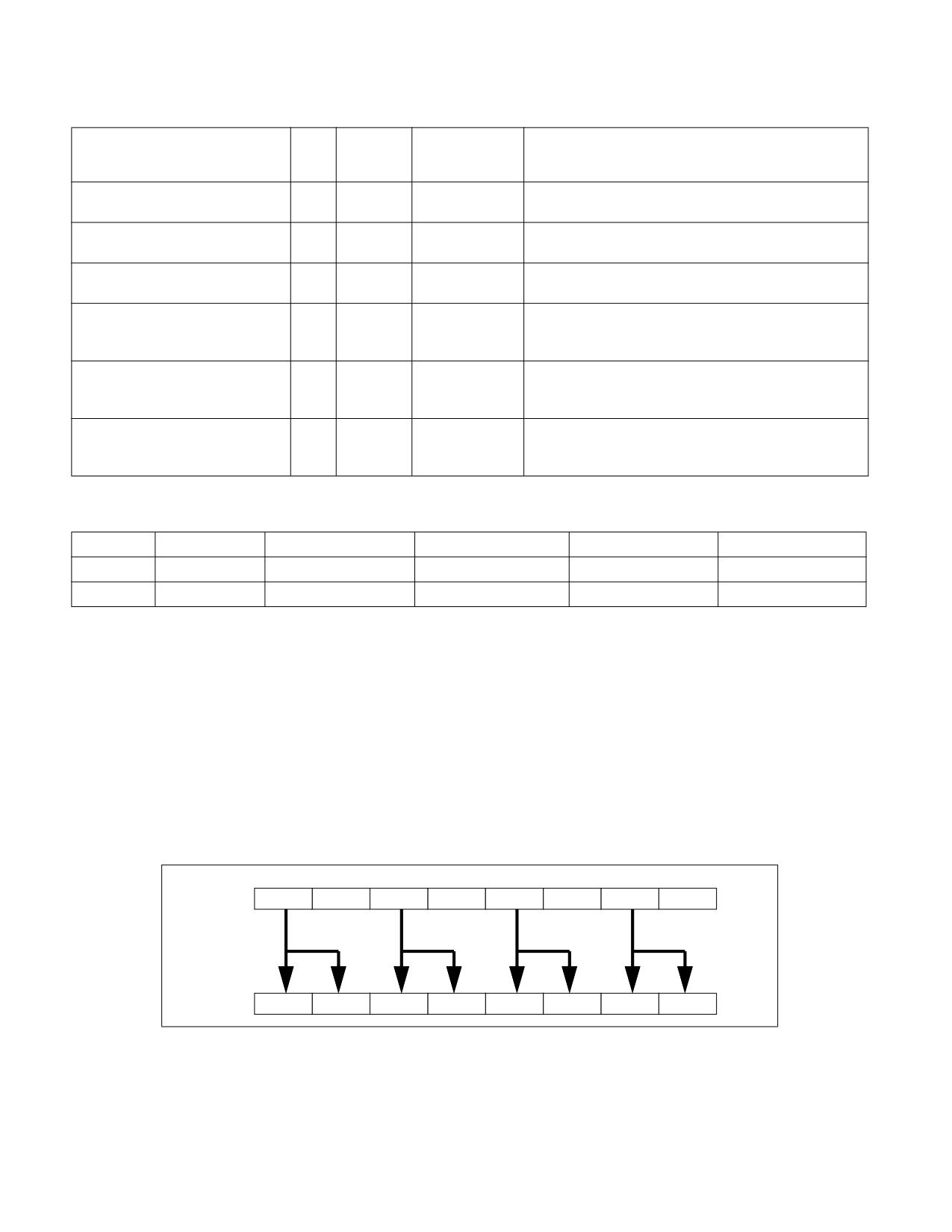
MOVSHDUP-Replicate Single Precision Floating-Point Values
Opcode/
Op /
64/32 bit
CPUID Feature
Description
Instruction
En
Mode
Flag
Support
F3 0F 16 /r
A
V/V
SSE3
Move odd index single precision floating-point values
MOVSHDUP xmm1, xmm2/m128
from xmm2/mem and duplicate each element into xmm1.
VEX.128.F3.0F.WIG 16 /r
A
V/V
AVX
Move odd index single precision floating-point values
VMOVSHDUP xmm1, xmm2/m128
from xmm2/mem and duplicate each element into xmm1.
VEX.256.F3.0F.WIG 16 /r
A
V/V
AVX
Move odd index single precision floating-point values
VMOVSHDUP ymm1, ymm2/m256
from ymm2/mem and duplicate each element into ymm1.
EVEX.128.F3.0F.W0 16 /r
B
V/V
(AVX512VL AND
Move odd index single precision floating-point values
VMOVSHDUP xmm1 {k1}{z},
AVX512F) OR
from xmm2/m128 and duplicate each element into
xmm2/m128
AVX10.1
xmm1 under writemask.
EVEX.256.F3.0F.W0 16 /r
B
V/V
(AVX512VL AND
Move odd index single precision floating-point values
VMOVSHDUP ymm1 {k1}{z},
AVX512F) OR
from ymm2/m256 and duplicate each element into
ymm2/m256
AVX10.1
ymm1 under writemask.
EVEX.512.F3.0F.W0 16 /r
B
V/V
AVX512F
Move odd index single precision floating-point values
VMOVSHDUP zmm1 {k1}{z},
OR AVX10.1
from zmm2/m512 and duplicate each element into
zmm2/m512
zmm1 under writemask.
Instruction Operand Encoding
Op/En
Tuple Type
Operand 1
Operand 2
Operand 3
Operand 4
A
N/A
ModRM:reg (w)
ModRM:r/m (r)
N/A
N/A
B
Full Mem
ModRM:reg (w)
ModRM:r/m (r)
N/A
N/A
Description
Duplicates odd-indexed single precision floating-point values from the source operand (the second operand) to
adjacent element pair in the destination operand (the first operand). See Figure 4-3. The source operand is an
XMM, YMM or ZMM register or 128, 256 or 512-bit memory location and the destination operand is an XMM, YMM
or ZMM register.
128-bit Legacy SSE version: Bits (MAXVL-1:128) of the corresponding destination register remain unchanged.
VEX.128 encoded version: Bits (MAXVL-1:128) of the destination register are zeroed.
VEX.256 encoded version: Bits (MAXVL-1:256) of the destination register are zeroed.
EVEX encoded version: The destination operand is updated at 32-bit granularity according to the writemask.
Note: VEX.vvvv and EVEX.vvvv are reserved and must be 1111b otherwise instructions will #UD.
SRC
X7
X6
X5
X4
X3
X2
X1
X0
DEST
X7
X7
X5
X5
X3
X3
X1
X1
Figure 4-3. MOVSHDUP Operation
MOVSHDUP-Replicate Single Precision Floating-Point Values
Vol. 2B
4-111
Operation
VMOVSHDUP (EVEX Encoded Versions)
(KL, VL) = (4, 128), (8, 256), (16, 512)
TMP_SRC[31:0] := SRC[63:32]
TMP_SRC[63:32] := SRC[63:32]
TMP_SRC[95:64] := SRC[127:96]
TMP_SRC[127:96] := SRC[127:96]
IF VL >= 256
TMP_SRC[159:128] := SRC[191:160]
TMP_SRC[191:160] := SRC[191:160]
TMP_SRC[223:192] := SRC[255:224]
TMP_SRC[255:224] := SRC[255:224]
FI;
IF VL >= 512
TMP_SRC[287:256] := SRC[319:288]
TMP_SRC[319:288] := SRC[319:288]
TMP_SRC[351:320] := SRC[383:352]
TMP_SRC[383:352] := SRC[383:352]
TMP_SRC[415:384] := SRC[447:416]
TMP_SRC[447:416] := SRC[447:416]
TMP_SRC[479:448] := SRC[511:480]
TMP_SRC[511:480] := SRC[511:480]
FI;
FOR j := 0 TO KL-1
i := j * 32
IF k1[j] OR *no writemask*
THEN DEST[i+31:i] := TMP_SRC[i+31:i]
ELSE
IF *merging-masking*
; merging-masking
THEN *DEST[i+31:i] remains unchanged*
ELSE
; zeroing-masking
DEST[i+31:i] := 0
FI
FI;
ENDFOR
DEST[MAXVL-1:VL] := 0
MOVSHDUP-Replicate Single Precision Floating-Point Values
Vol. 2B
4-112
VMOVSHDUP (VEX.256 Encoded Version)
DEST[31:0] := SRC[63:32]
DEST[63:32] := SRC[63:32]
DEST[95:64] := SRC[127:96]
DEST[127:96] := SRC[127:96]
DEST[159:128] := SRC[191:160]
DEST[191:160] := SRC[191:160]
DEST[223:192] := SRC[255:224]
DEST[255:224] := SRC[255:224]
DEST[MAXVL-1:256] := 0
VMOVSHDUP (VEX.128 Encoded Version)
DEST[31:0] := SRC[63:32]
DEST[63:32] := SRC[63:32]
DEST[95:64] := SRC[127:96]
DEST[127:96] := SRC[127:96]
DEST[MAXVL-1:128] := 0
MOVSHDUP (128-bit Legacy SSE Version)
DEST[31:0] := SRC[63:32]
DEST[63:32] := SRC[63:32]
DEST[95:64] := SRC[127:96]
DEST[127:96] := SRC[127:96]
DEST[MAXVL-1:128] (Unmodified)
Intel C/C++ Compiler Intrinsic Equivalent
VMOVSHDUP __m512 _mm512_movehdup_ps( __m512 a);
VMOVSHDUP __m512 _mm512_mask_movehdup_ps(__m512 s, __mmask16 k, __m512 a);
VMOVSHDUP __m512 _mm512_maskz_movehdup_ps( __mmask16 k, __m512 a);
VMOVSHDUP __m256 _mm256_mask_movehdup_ps(__m256 s, __mmask8 k, __m256 a);
VMOVSHDUP __m256 _mm256_maskz_movehdup_ps( __mmask8 k, __m256 a);
VMOVSHDUP __m128 _mm_mask_movehdup_ps(__m128 s, __mmask8 k, __m128 a);
VMOVSHDUP __m128 _mm_maskz_movehdup_ps( __mmask8 k, __m128 a);
VMOVSHDUP __m256 _mm256_movehdup_ps (__m256 a);
VMOVSHDUP __m128 _mm_movehdup_ps (__m128 a);
SIMD Floating-Point Exceptions
None.
Other Exceptions
Non-EVEX-encoded instruction, see Table 2-21, “Type 4 Class Exception Conditions.”
EVEX-encoded instruction, see Exceptions Type E4NF.nb in Table 2-52, “Type E4NF Class Exception Conditions.”
Additionally:
#UD
If EVEX.vvvv != 1111B or VEX.vvvv != 1111B.
MOVSHDUP-Replicate Single Precision Floating-Point Values
Vol. 2B
4-113
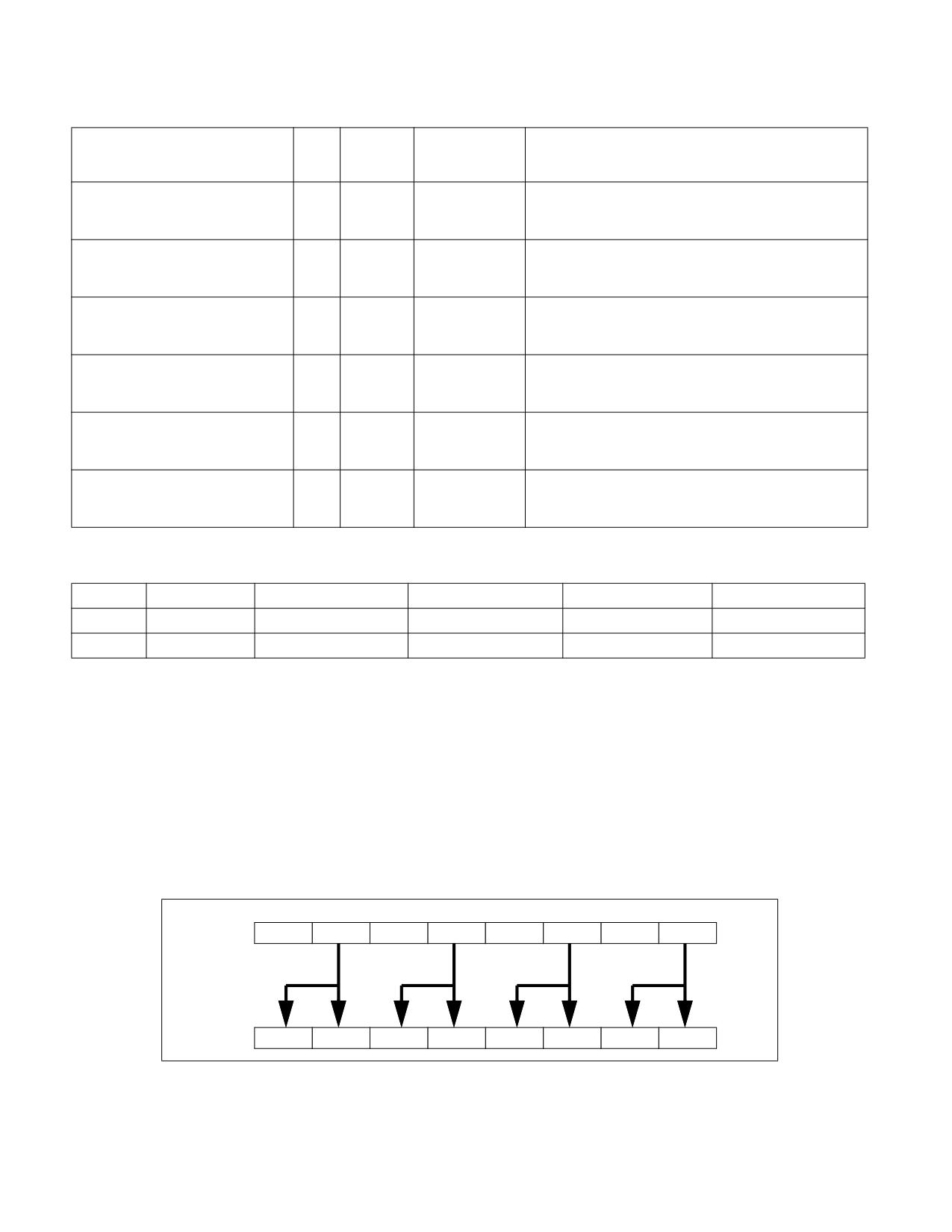
MOVSLDUP-Replicate Single Precision Floating-Point Values
Opcode/
Op /
64/32 bit
CPUID Feature
Description
Instruction
En
Mode
Flag
Support
F3 0F 12 /r
A
V/V
SSE3
Move even index single precision floating-point values
MOVSLDUP xmm1, xmm2/m128
from xmm2/mem and duplicate each element into
xmm1.
VEX.128.F3.0F.WIG 12 /r
A
V/V
AVX
Move even index single precision floating-point values
VMOVSLDUP xmm1, xmm2/m128
from xmm2/mem and duplicate each element into
xmm1.
VEX.256.F3.0F.WIG 12 /r
A
V/V
AVX
Move even index single precision floating-point values
VMOVSLDUP ymm1, ymm2/m256
from ymm2/mem and duplicate each element into
ymm1.
EVEX.128.F3.0F.W0 12 /r
B
V/V
(AVX512VL AND
Move even index single precision floating-point values
VMOVSLDUP xmm1 {k1}{z},
AVX512F) OR
from xmm2/m128 and duplicate each element into
xmm2/m128
AVX10.1
xmm1 under writemask.
EVEX.256.F3.0F.W0 12 /r
B
V/V
(AVX512VL AND
Move even index single precision floating-point values
VMOVSLDUP ymm1 {k1}{z},
AVX512F) OR
from ymm2/m256 and duplicate each element into
ymm2/m256
AVX10.1
ymm1 under writemask.
EVEX.512.F3.0F.W0 12 /r
B
V/V
AVX512F
Move even index single precision floating-point values
VMOVSLDUP zmm1 {k1}{z},
OR AVX10.1
from zmm2/m512 and duplicate each element into
zmm2/m512
zmm1 under writemask.
Instruction Operand Encoding
Op/En
Tuple Type
Operand 1
Operand 2
Operand 3
Operand 4
A
N/A
ModRM:reg (w)
ModRM:r/m (r)
N/A
N/A
B
Full Mem
ModRM:reg (w)
ModRM:r/m (r)
N/A
N/A
Description
Duplicates even-indexed single precision floating-point values from the source operand (the second operand). See
Figure 4-4. The source operand is an XMM, YMM or ZMM register or 128, 256 or 512-bit memory location and the
destination operand is an XMM, YMM or ZMM register.
128-bit Legacy SSE version: Bits (MAXVL-1:128) of the corresponding destination register remain unchanged.
VEX.128 encoded version: Bits (MAXVL-1:128) of the destination register are zeroed.
VEX.256 encoded version: Bits (MAXVL-1:256) of the destination register are zeroed.
EVEX encoded version: The destination operand is updated at 32-bit granularity according to the writemask.
Note: VEX.vvvv and EVEX.vvvv are reserved and must be 1111b otherwise instructions will #UD.
SRC
X7
X6
X5
X4
X3
X2
X1
X0
DEST
X6
X6
X4
X4
X2
X2
X0
X0
Figure 4-4. MOVSLDUP Operation
MOVSLDUP-Replicate Single Precision Floating-Point Values
Vol. 2B
4-114
Operation
VMOVSLDUP (EVEX Encoded Versions)
(KL, VL) = (4, 128), (8, 256), (16, 512)
TMP_SRC[31:0] := SRC[31:0]
TMP_SRC[63:32] := SRC[31:0]
TMP_SRC[95:64] := SRC[95:64]
TMP_SRC[127:96] := SRC[95:64]
IF VL >= 256
TMP_SRC[159:128] := SRC[159:128]
TMP_SRC[191:160] := SRC[159:128]
TMP_SRC[223:192] := SRC[223:192]
TMP_SRC[255:224] := SRC[223:192]
FI;
IF VL >= 512
TMP_SRC[287:256] := SRC[287:256]
TMP_SRC[319:288] := SRC[287:256]
TMP_SRC[351:320] := SRC[351:320]
TMP_SRC[383:352] := SRC[351:320]
TMP_SRC[415:384] := SRC[415:384]
TMP_SRC[447:416] := SRC[415:384]
TMP_SRC[479:448] := SRC[479:448]
TMP_SRC[511:480] := SRC[479:448]
FI;
FOR j := 0 TO KL-1
i := j * 32
IF k1[j] OR *no writemask*
THEN DEST[i+31:i] := TMP_SRC[i+31:i]
ELSE
IF *merging-masking*
; merging-masking
THEN *DEST[i+31:i] remains unchanged*
ELSE
; zeroing-masking
DEST[i+31:i] := 0
FI
FI;
ENDFOR
DEST[MAXVL-1:VL] := 0
MOVSLDUP-Replicate Single Precision Floating-Point Values
Vol. 2B
4-115
VMOVSLDUP (VEX.256 Encoded Version)
DEST[31:0] := SRC[31:0]
DEST[63:32] := SRC[31:0]
DEST[95:64] := SRC[95:64]
DEST[127:96] := SRC[95:64]
DEST[159:128] := SRC[159:128]
DEST[191:160] := SRC[159:128]
DEST[223:192] := SRC[223:192]
DEST[255:224] := SRC[223:192]
DEST[MAXVL-1:256] := 0
VMOVSLDUP (VEX.128 Encoded Version)
DEST[31:0] := SRC[31:0]
DEST[63:32] := SRC[31:0]
DEST[95:64] := SRC[95:64]
DEST[127:96] := SRC[95:64]
DEST[MAXVL-1:128] := 0
MOVSLDUP (128-bit Legacy SSE Version)
DEST[31:0] := SRC[31:0]
DEST[63:32] := SRC[31:0]
DEST[95:64] := SRC[95:64]
DEST[127:96] := SRC[95:64]
DEST[MAXVL-1:128] (Unmodified)
Intel C/C++ Compiler Intrinsic Equivalent
VMOVSLDUP __m512 _mm512_moveldup_ps( __m512 a);
VMOVSLDUP __m512 _mm512_mask_moveldup_ps(__m512 s, __mmask16 k, __m512 a);
VMOVSLDUP __m512 _mm512_maskz_moveldup_ps( __mmask16 k, __m512 a);
VMOVSLDUP __m256 _mm256_mask_moveldup_ps(__m256 s, __mmask8 k, __m256 a);
VMOVSLDUP __m256 _mm256_maskz_moveldup_ps( __mmask8 k, __m256 a);
VMOVSLDUP __m128 _mm_mask_moveldup_ps(__m128 s, __mmask8 k, __m128 a);
VMOVSLDUP __m128 _mm_maskz_moveldup_ps( __mmask8 k, __m128 a);
VMOVSLDUP __m256 _mm256_moveldup_ps (__m256 a);
VMOVSLDUP __m128 _mm_moveldup_ps (__m128 a);
SIMD Floating-Point Exceptions
None.
Other Exceptions
Non-EVEX-encoded instruction, see Table 2-21, “Type 4 Class Exception Conditions.”
EVEX-encoded instruction, see Exceptions Type E4NF.nb in Table 2-52, “Type E4NF Class Exception Conditions.”
Additionally:
#UD
If EVEX.vvvv != 1111B or VEX.vvvv != 1111B.
MOVSLDUP-Replicate Single Precision Floating-Point Values
Vol. 2B
4-116

MOVS/MOVSB/MOVSW/MOVSD/MOVSQ-Move Data From String to String
\
Opcode
Instruction
Op/
64-Bit
Compat/
Description
En
Mode
Leg Mode
A4
MOVS m8, m8
ZO
Valid
Valid
For legacy mode, Move byte from address
DS:(E)SI to ES:(E)DI. For 64-bit mode move
byte from address (R|E)SI to (R|E)DI.
A5
MOVS m16, m16
ZO
Valid
Valid
For legacy mode, move word from address
DS:(E)SI to ES:(E)DI. For 64-bit mode move
word at address (R|E)SI to (R|E)DI.
A5
MOVS m32, m32
ZO
Valid
Valid
For legacy mode, move dword from address
DS:(E)SI to ES:(E)DI. For 64-bit mode move
dword from address (R|E)SI to (R|E)DI.
REX.W + A5
MOVS m64, m64
ZO
Valid
N.E.
Move qword from address (R|E)SI to (R|E)DI.
A4
MOVSB
ZO
Valid
Valid
For legacy mode, Move byte from address
DS:(E)SI to ES:(E)DI. For 64-bit mode move
byte from address (R|E)SI to (R|E)DI.
A5
MOVSW
ZO
Valid
Valid
For legacy mode, move word from address
DS:(E)SI to ES:(E)DI. For 64-bit mode move
word at address (R|E)SI to (R|E)DI.
A5
MOVSD
ZO
Valid
Valid
For legacy mode, move dword from address
DS:(E)SI to ES:(E)DI. For 64-bit mode move
dword from address (R|E)SI to (R|E)DI.
REX.W + A5
MOVSQ
ZO
Valid
N.E.
Move qword from address (R|E)SI to (R|E)DI.
Instruction Operand Encoding
Op/En
Operand 1
Operand 2
Operand 3
Operand 4
ZO
N/A
N/A
N/A
N/A
Description
Moves the byte, word, or doubleword specified with the second operand (source operand) to the location specified
with the first operand (destination operand). Both the source and destination operands are located in memory. The
address of the source operand is read from the DS:ESI or the DS:SI registers (depending on the address-size attri-
bute of the instruction, 32 or 16, respectively). The address of the destination operand is read from the ES:EDI or
the ES:DI registers (again depending on the address-size attribute of the instruction). The DS segment may be
overridden with a segment override prefix, but the ES segment cannot be overridden.
At the assembly-code level, two forms of this instruction are allowed: the “explicit-operands” form and the “no-
operands” form. The explicit-operands form (specified with the MOVS mnemonic) allows the source and destination
operands to be specified explicitly. Here, the source and destination operands should be symbols that indicate the
size and location of the source value and the destination, respectively. This explicit-operands form is provided to
allow documentation; however, note that the documentation provided by this form can be misleading. That is, the
source and destination operand symbols must specify the correct type (size) of the operands (bytes, words, or
doublewords), but they do not have to specify the correct location. The locations of the source and destination
operands are always specified by the DS:(E)SI and ES:(E)DI registers, which must be loaded correctly before the
move string instruction is executed.
The no-operands form provides “short forms” of the byte, word, and doubleword versions of the MOVS instruc-
tions. Here also DS:(E)SI and ES:(E)DI are assumed to be the source and destination operands, respectively. The
size of the source and destination operands is selected with the mnemonic: MOVSB (byte move), MOVSW (word
move), or MOVSD (doubleword move).
After the move operation, the (E)SI and (E)DI registers are incremented or decremented automatically according
to the setting of the DF flag in the EFLAGS register. (If the DF flag is 0, the (E)SI and (E)DI register are incre-
MOVS/MOVSB/MOVSW/MOVSD/MOVSQ-Move Data From String to String
Vol. 2B
4-104
mented; if the DF flag is 1, the (E)SI and (E)DI registers are decremented.) The registers are incremented or
decremented by 1 for byte operations, by 2 for word operations, or by 4 for doubleword operations.
NOTE
To improve performance, more recent processors support modifications to the processor’s
operation during the string store operations initiated with MOVS and MOVSB. See Section 7.3.9.3
in the Intel® 64 and IA-32 Architectures Software Developer’s Manual, Volume 1, for additional
information on fast-string operation.
The MOVS, MOVSB, MOVSW, and MOVSD instructions can be preceded by the REP prefix (see “REP-Repeat String
Operation (Prefix)” for a description of the REP prefix) for block moves of ECX bytes, words, or doublewords.
In 64-bit mode, the instruction’s default address size is 64 bits, 32-bit address size is supported using the prefix
67H. The 64-bit addresses are specified by RSI and RDI; 32-bit address are specified by ESI and EDI. Use of the
REX.W prefix promotes doubleword operation to 64 bits. See the summary chart at the beginning of this section for
encoding data and limits.
Operation
DEST := SRC;
Non-64-bit Mode:
IF (Byte move)
THEN IF DF = 0
THEN
(E)SI := (E)SI + 1;
(E)DI := (E)DI + 1;
ELSE
(E)SI := (E)SI - 1;
(E)DI := (E)DI - 1;
FI;
ELSE IF (Word move)
THEN IF DF = 0
(E)SI := (E)SI + 2;
(E)DI := (E)DI + 2;
FI;
ELSE
(E)SI := (E)SI - 2;
(E)DI := (E)DI - 2;
FI;
ELSE IF (Doubleword move)
THEN IF DF = 0
(E)SI := (E)SI + 4;
(E)DI := (E)DI + 4;
FI;
ELSE
(E)SI := (E)SI - 4;
(E)DI := (E)DI - 4;
FI;
FI;
64-bit Mode:
IF (Byte move)
THEN IF DF = 0
THEN
(R|E)SI := (R|E)SI + 1;
(R|E)DI := (R|E)DI + 1;
ELSE
MOVS/MOVSB/MOVSW/MOVSD/MOVSQ-Move Data From String to String
Vol. 2B
4-105
(R|E)SI := (R|E)SI - 1;
(R|E)DI := (R|E)DI - 1;
FI;
ELSE IF (Word move)
THEN IF DF = 0
(R|E)SI := (R|E)SI + 2;
(R|E)DI := (R|E)DI + 2;
FI;
ELSE
(R|E)SI := (R|E)SI - 2;
(R|E)DI := (R|E)DI - 2;
FI;
ELSE IF (Doubleword move)
THEN IF DF = 0
(R|E)SI := (R|E)SI + 4;
(R|E)DI := (R|E)DI + 4;
FI;
ELSE
(R|E)SI := (R|E)SI - 4;
(R|E)DI := (R|E)DI - 4;
FI;
ELSE IF (Quadword move)
THEN IF DF = 0
(R|E)SI := (R|E)SI + 8;
(R|E)DI := (R|E)DI + 8;
FI;
ELSE
(R|E)SI := (R|E)SI - 8;
(R|E)DI := (R|E)DI - 8;
FI;
FI;
Flags Affected
None.
Protected Mode Exceptions
#GP(0)
If the destination is located in a non-writable segment.
If a memory operand effective address is outside the CS, DS, ES, FS, or GS segment limit.
If the DS, ES, FS, or GS register contains a NULL segment selector.
#SS(0)
If a memory operand effective address is outside the SS segment limit.
#PF(fault-code)
If a page fault occurs.
#AC(0)
If alignment checking is enabled and an unaligned memory reference is made while the
current privilege level is 3.
#UD
If the LOCK prefix is used.
Real-Address Mode Exceptions
#GP
If a memory operand effective address is outside the CS, DS, ES, FS, or GS segment limit.
#SS
If a memory operand effective address is outside the SS segment limit.
#UD
If the LOCK prefix is used.
MOVS/MOVSB/MOVSW/MOVSD/MOVSQ-Move Data From String to String
Vol. 2B
4-106
Virtual-8086 Mode Exceptions
#GP(0)
If a memory operand effective address is outside the CS, DS, ES, FS, or GS segment limit.
#SS(0)
If a memory operand effective address is outside the SS segment limit.
#PF(fault-code)
If a page fault occurs.
#AC(0)
If alignment checking is enabled and an unaligned memory reference is made.
#UD
If the LOCK prefix is used.
Compatibility Mode Exceptions
Same exceptions as in protected mode.
64-Bit Mode Exceptions
#SS(0)
If a memory address referencing the SS segment is in a non-canonical form.
#GP(0)
If the memory address is in a non-canonical form.
#PF(fault-code)
If a page fault occurs.
#AC(0)
If alignment checking is enabled and an unaligned memory reference is made while the
current privilege level is 3.
#UD
If the LOCK prefix is used.
MOVS/MOVSB/MOVSW/MOVSD/MOVSQ-Move Data From String to String
Vol. 2B
4-107

MOVSS-Move or Merge Scalar Single Precision Floating-Point Value
Opcode/
Op / En
64/32 bit
CPUID
Description
Instruction
Mode
Feature Flag
Support
F3 0F 10 /r
A
V/V
SSE
Merge scalar single precision floating-point value
MOVSS xmm1, xmm2
from xmm2 to xmm1 register.
F3 0F 10 /r
A
V/V
SSE
Load scalar single precision floating-point value from
MOVSS xmm1, m32
m32 to xmm1 register.
VEX.LIG.F3.0F.WIG 10 /r
B
V/V
AVX
Merge scalar single precision floating-point value
VMOVSS xmm1, xmm2, xmm3
from xmm2 and xmm3 to xmm1 register
VEX.LIG.F3.0F.WIG 10 /r
D
V/V
AVX
Load scalar single precision floating-point value from
VMOVSS xmm1, m32
m32 to xmm1 register.
F3 0F 11 /r
C
V/V
SSE
Move scalar single precision floating-point value
MOVSS xmm2/m32, xmm1
from xmm1 register to xmm2/m32.
VEX.LIG.F3.0F.WIG 11 /r
E
V/V
AVX
Move scalar single precision floating-point value
VMOVSS xmm1, xmm2, xmm3
from xmm2 and xmm3 to xmm1 register.
VEX.LIG.F3.0F.WIG 11 /r
C
V/V
AVX
Move scalar single precision floating-point value
VMOVSS m32, xmm1
from xmm1 register to m32.
EVEX.LLIG.F3.0F.W0 10 /r
B
V/V
AVX512F
Move scalar single precision floating-point value
VMOVSS xmm1 {k1}{z}, xmm2, xmm3
OR AVX10.1
from xmm2 and xmm3 to xmm1 register under
writemask k1.
EVEX.LLIG.F3.0F.W0 10 /r
F
V/V
AVX512F
Move scalar single precision floating-point values
VMOVSS xmm1 {k1}{z}, m32
OR AVX10.1
from m32 to xmm1 under writemask k1.
EVEX.LLIG.F3.0F.W0 11 /r
E
V/V
AVX512F
Move scalar single precision floating-point value
VMOVSS xmm1 {k1}{z}, xmm2, xmm3
OR AVX10.1
from xmm2 and xmm3 to xmm1 register under
writemask k1.
EVEX.LLIG.F3.0F.W0 11 /r
G
V/V
AVX512F
Move scalar single precision floating-point values
VMOVSS m32 {k1}, xmm1
OR AVX10.1
from xmm1 to m32 under writemask k1.
Instruction Operand Encoding
Op/En
Tuple Type
Operand 1
Operand 2
Operand 3
Operand 4
A
N/A
ModRM:reg (r, w)
ModRM:r/m (r)
N/A
N/A
B
N/A
ModRM:reg (w)
VEX.vvvv (r)
ModRM:r/m (r)
N/A
C
N/A
ModRM:r/m (w)
ModRM:reg (r)
N/A
N/A
D
N/A
ModRM:reg (w)
ModRM:r/m (r)
N/A
N/A
E
N/A
ModRM:r/m (w)
EVEX.vvvv (r)
ModRM:reg (r)
N/A
F
Tuple1 Scalar
ModRM:reg (r, w)
ModRM:r/m (r)
N/A
N/A
G
Tuple1 Scalar
ModRM:r/m (w)
ModRM:reg (r)
N/A
N/A
Description
Moves a scalar single precision floating-point value from the source operand (second operand) to the destination
operand (first operand). The source and destination operands can be XMM registers or 32-bit memory locations.
This instruction can be used to move a single precision floating-point value to and from the low doubleword of an
XMM register and a 32-bit memory location, or to move a single precision floating-point value between the low
doublewords of two XMM registers. The instruction cannot be used to transfer data between memory locations.
Legacy version: When the source and destination operands are XMM registers, bits (MAXVL-1:32) of the corre-
sponding destination register are unmodified. When the source operand is a memory location and destination
MOVSS-Move or Merge Scalar Single Precision Floating-Point Value
Vol. 2B
4-117
operand is an XMM registers, Bits (127:32) of the destination operand is cleared to all 0s, bits MAXVL:128 of the
destination operand remains unchanged.
VEX and EVEX encoded register-register syntax: Moves a scalar single precision floating-point value from the
second source operand (the third operand) to the low doubleword element of the destination operand (the first
operand). Bits 127:32 of the destination operand are copied from the first source operand (the second operand).
Bits (MAXVL-1:128) of the corresponding destination register are zeroed.
VEX and EVEX encoded memory load syntax: When the source operand is a memory location and destination
operand is an XMM registers, bits MAXVL:32 of the destination operand is cleared to all 0s.
EVEX encoded versions: The low doubleword of the destination is updated according to the writemask.
Note: For memory store form instruction “VMOVSS m32, xmm1”, VEX.vvvv is reserved and must be 1111b other-
wise instruction will #UD. For memory store form instruction “VMOVSS mv {k1}, xmm1”, EVEX.vvvv is reserved
and must be 1111b otherwise instruction will #UD.
Software should ensure VMOVSS is encoded with VEX.L=0. Encoding VMOVSS with VEX.L=1 may encounter
unpredictable behavior across different processor generations.
Operation
VMOVSS (EVEX.LLIG.F3.0F.W0 11 /r When the Source Operand is Memory and the Destination is an XMM Register)
IF k1[0] or *no writemask*
THEN
DEST[31:0] := SRC[31:0]
ELSE
IF *merging-masking*
; merging-masking
THEN *DEST[31:0] remains unchanged*
ELSE
; zeroing-masking
THEN DEST[31:0] := 0
FI;
FI;
DEST[MAXVL-1:32] := 0
VMOVSS (EVEX.LLIG.F3.0F.W0 10 /r When the Source Operand is an XMM Register and the Destination is Memory)
IF k1[0] or *no writemask*
THEN
DEST[31:0] := SRC[31:0]
ELSE
*DEST[31:0] remains unchanged*
; merging-masking
FI;
VMOVSS (EVEX.LLIG.F3.0F.W0 10/11 /r Where the Source and Destination are XMM Registers)
IF k1[0] or *no writemask*
THEN
DEST[31:0] := SRC2[31:0]
ELSE
IF *merging-masking*
; merging-masking
THEN *DEST[31:0] remains unchanged*
ELSE
; zeroing-masking
THEN DEST[31:0] := 0
FI;
FI;
DEST[127:32] := SRC1[127:32]
DEST[MAXVL-1:128] := 0
MOVSS-Move or Merge Scalar Single Precision Floating-Point Value
Vol. 2B
4-118
MOVSS (Legacy SSE Version When the Source and Destination Operands are Both XMM Registers)
DEST[31:0] := SRC[31:0]
DEST[MAXVL-1:32] (Unmodified)
VMOVSS (VEX.128.F3.0F 11 /r Where the Destination is an XMM Register)
DEST[31:0] := SRC2[31:0]
DEST[127:32] := SRC1[127:32]
DEST[MAXVL-1:128] := 0
VMOVSS (VEX.128.F3.0F 10 /r Where the Source and Destination are XMM Registers)
DEST[31:0] := SRC2[31:0]
DEST[127:32] := SRC1[127:32]
DEST[MAXVL-1:128] := 0
VMOVSS (VEX.128.F3.0F 10 /r When the Source Operand is Memory and the Destination is an XMM Register)
DEST[31:0] := SRC[31:0]
DEST[MAXVL-1:32] := 0
MOVSS/VMOVSS (When the Source Operand is an XMM Register and the Destination is Memory)
DEST[31:0] := SRC[31:0]
MOVSS (Legacy SSE Version when the Source Operand is Memory and the Destination is an XMM Register)
DEST[31:0] := SRC[31:0]
DEST[127:32] := 0
DEST[MAXVL-1:128] (Unmodified)
Intel C/C++ Compiler Intrinsic Equivalent
VMOVSS __m128 _mm_mask_load_ss(__m128 s, __mmask8 k, float * p);
VMOVSS __m128 _mm_maskz_load_ss( __mmask8 k, float * p);
VMOVSS __m128 _mm_mask_move_ss(__m128 sh, __mmask8 k, __m128 sl, __m128 a);
VMOVSS __m128 _mm_maskz_move_ss( __mmask8 k, __m128 s, __m128 a);
VMOVSS void _mm_mask_store_ss(float * p, __mmask8 k, __m128 a);
MOVSS __m128 _mm_load_ss(float * p)
MOVSS void_mm_store_ss(float * p, __m128 a)
MOVSS __m128 _mm_move_ss(__m128 a, __m128 b)
SIMD Floating-Point Exceptions
None.
Other Exceptions
Non-EVEX-encoded instruction, see Table 2-22, “Type 5 Class Exception Conditions,” additionally:
#UD
If VEX.vvvv != 1111B.
EVEX-encoded instruction, see Table 2-60, “Type E10 Class Exception Conditions.”
MOVSS-Move or Merge Scalar Single Precision Floating-Point Value
Vol. 2B
4-119
MOVSX/MOVSXD-Move With Sign-Extension
Opcode
Instruction
Op/
64-Bit
Compat/
Description
En
Mode
Leg Mode
0F BE /r
MOVSX r16, r/m81
RM
Valid
Valid
Move byte to word with sign-extension.
0F BE /r
MOVSX r32, r/m81
RM
Valid
Valid
Move byte to doubleword with sign-
extension.
REX.W + 0F BE /r
MOVSX r64, r/m81
RM
Valid
N.E.
Move byte to quadword with sign-extension.
0F BF /r
MOVSX r32, r/m16
RM
Valid
Valid
Move word to doubleword, with sign-
extension.
REX.W + 0F BF /r
MOVSX r64, r/m16
RM
Valid
N.E.
Move word to quadword with sign-extension.
63 /r2
MOVSXD r16, r/m16
RM
Valid
N.E.
Move word to word with sign-extension.
63 /r2
MOVSXD r32, r/m32
RM
Valid
N.E.
Move doubleword to doubleword with sign-
extension.
REX.W + 63 /r
MOVSXD r64, r/m32
RM
Valid
N.E.
Move doubleword to quadword with sign-
extension.
NOTES:
1. With a REX prefix in 64-bit mode, attempts to access AH, BH, CH, or DH will instead access SPL, DIL, BPL, or SIL, respectively.
2. The use of MOVSXD without REX.W in 64-bit mode is discouraged. Regular MOV should be used instead of using MOVSXD without
REX.W.
Instruction Operand Encoding
Op/En
Operand 1
Operand 2
Operand 3
Operand 4
RM
ModRM:reg (w)
ModRM:r/m (r)
N/A
N/A
Description
Copies the contents of the source operand (register or memory location) to the destination operand (register) and
sign extends the value to 16 or 32 bits (see Figure 7-6 in the Intel® 64 and IA-32 Architectures Software Devel-
oper’s Manual, Volume 1). The size of the converted value depends on the operand-size attribute.
In 64-bit mode, the instruction’s default operation size is 32 bits. Use of the REX.R prefix permits access to addi-
tional registers (R8-R15). Use of the REX.W prefix promotes operation to 64 bits. See the summary chart at the
beginning of this section for encoding data and limits.
Operation
DEST := SignExtend(SRC);
Flags Affected
None.
Protected Mode Exceptions
#GP(0)
If a memory operand effective address is outside the CS, DS, ES, FS, or GS segment limit.
If the DS, ES, FS, or GS register contains a NULL segment selector.
#SS(0)
If a memory operand effective address is outside the SS segment limit.
#PF(fault-code)
If a page fault occurs.
#AC(0)
If alignment checking is enabled and an unaligned memory reference is made while the
current privilege level is 3.
#UD
If the LOCK prefix is used.
MOVSX/MOVSXD-Move With Sign-Extension
Vol. 2B
4-120
Real-Address Mode Exceptions
#GP
If a memory operand effective address is outside the CS, DS, ES, FS, or GS segment limit.
#SS
If a memory operand effective address is outside the SS segment limit.
#UD
If the LOCK prefix is used.
Virtual-8086 Mode Exceptions
#GP(0)
If a memory operand effective address is outside the CS, DS, ES, FS, or GS segment limit.
#SS(0)
If a memory operand effective address is outside the SS segment limit.
#PF(fault-code)
If a page fault occurs.
#UD
If the LOCK prefix is used.
Compatibility Mode Exceptions
Same exceptions as in protected mode.
64-Bit Mode Exceptions
#SS(0)
If a memory address referencing the SS segment is in a non-canonical form.
#GP(0)
If the memory address is in a non-canonical form.
#PF(fault-code)
If a page fault occurs.
#AC(0)
If alignment checking is enabled and an unaligned memory reference is made while the
current privilege level is 3.
#UD
If the LOCK prefix is used.
MOVSX/MOVSXD-Move With Sign-Extension
Vol. 2B
4-121

MOVUPD-Move Unaligned Packed Double Precision Floating-Point Values
Opcode/
Op / En
64/32 bit
CPUID Feature
Description
Instruction
Mode
Flag
Support
66 0F 10 /r
A
V/V
SSE2
Move unaligned packed double precision
MOVUPD xmm1, xmm2/m128
floating-point from xmm2/mem to xmm1.
66 0F 11 /r
B
V/V
SSE2
Move unaligned packed double precision
MOVUPD xmm2/m128, xmm1
floating-point from xmm1 to xmm2/mem.
VEX.128.66.0F.WIG 10 /r
A
V/V
AVX
Move unaligned packed double precision
VMOVUPD xmm1, xmm2/m128
floating-point from xmm2/mem to xmm1.
VEX.128.66.0F.WIG 11 /r
B
V/V
AVX
Move unaligned packed double precision
VMOVUPD xmm2/m128, xmm1
floating-point from xmm1 to xmm2/mem.
VEX.256.66.0F.WIG 10 /r
A
V/V
AVX
Move unaligned packed double precision
VMOVUPD ymm1, ymm2/m256
floating-point from ymm2/mem to ymm1.
VEX.256.66.0F.WIG 11 /r
B
V/V
AVX
Move unaligned packed double precision
VMOVUPD ymm2/m256, ymm1
floating-point from ymm1 to ymm2/mem.
EVEX.128.66.0F.W1 10 /r
C
V/V
(AVX512VL AND
Move unaligned packed double precision
VMOVUPD xmm1 {k1}{z}, xmm2/m128
AVX512F) OR
floating-point from xmm2/m128 to xmm1
AVX10.1
using writemask k1.
EVEX.128.66.0F.W1 11 /r
D
V/V
(AVX512VL AND
Move unaligned packed double precision
VMOVUPD xmm2/m128 {k1}{z}, xmm1
AVX512F) OR
floating-point from xmm1 to xmm2/m128
AVX10.1
using writemask k1.
EVEX.256.66.0F.W1 10 /r
C
V/V
(AVX512VL AND
Move unaligned packed double precision
VMOVUPD ymm1 {k1}{z}, ymm2/m256
AVX512F) OR
floating-point from ymm2/m256 to ymm1
AVX10.1
using writemask k1.
EVEX.256.66.0F.W1 11 /r
D
V/V
(AVX512VL AND
Move unaligned packed double precision
VMOVUPD ymm2/m256 {k1}{z}, ymm1
AVX512F) OR
floating-point from ymm1 to ymm2/m256
AVX10.1
using writemask k1.
EVEX.512.66.0F.W1 10 /r
C
V/V
AVX512F
Move unaligned packed double precision
VMOVUPD zmm1 {k1}{z}, zmm2/m512
OR AVX10.1
floating-point values from zmm2/m512 to
zmm1 using writemask k1.
EVEX.512.66.0F.W1 11 /r
D
V/V
AVX512F
Move unaligned packed double precision
VMOVUPD zmm2/m512 {k1}{z}, zmm1
OR AVX10.1
floating-point values from zmm1 to
zmm2/m512 using writemask k1.
Instruction Operand Encoding
Op/En
Tuple Type
Operand 1
Operand 2
Operand 3
Operand 4
A
N/A
ModRM:reg (w)
ModRM:r/m (r)
N/A
N/A
B
N/A
ModRM:r/m (w)
ModRM:reg (r)
N/A
N/A
C
Full Mem
ModRM:reg (w)
ModRM:r/m (r)
N/A
N/A
D
Full Mem
ModRM:r/m (w)
ModRM:reg (r)
N/A
N/A
MOVUPD-Move Unaligned Packed Double Precision Floating-Point Values
Vol. 2B
4-122
Description
Note: VEX.vvvv and EVEX.vvvv is reserved and must be 1111b otherwise instructions will #UD.
EVEX.512 encoded version:
Moves 512 bits of packed double precision floating-point values from the source operand (second operand) to the
destination operand (first operand). This instruction can be used to load a ZMM register from a float64 memory
location, to store the contents of a ZMM register into a memory. The destination operand is updated according to
the writemask.
VEX.256 encoded version:
Moves 256 bits of packed double precision floating-point values from the source operand (second operand) to the
destination operand (first operand). This instruction can be used to load a YMM register from a 256-bit memory
location, to store the contents of a YMM register into a 256-bit memory location, or to move data between two YMM
registers. Bits (MAXVL-1:256) of the destination register are zeroed.
128-bit versions:
Moves 128 bits of packed double precision floating-point values from the source operand (second operand) to the
destination operand (first operand). This instruction can be used to load an XMM register from a 128-bit memory
location, to store the contents of an XMM register into a 128-bit memory location, or to move data between two
XMM registers.
128-bit Legacy SSE version: Bits (MAXVL-1:128) of the corresponding destination register remain unchanged.
When the source or destination operand is a memory operand, the operand may be unaligned on a 16-byte
boundary without causing a general-protection exception (#GP) to be generated
VEX.128 and EVEX.128 encoded versions: Bits (MAXVL-1:128) of the destination register are zeroed.
Operation
VMOVUPD (EVEX Encoded Versions, Register-Copy Form)
(KL, VL) = (2, 128), (4, 256), (8, 512)
FOR j := 0 TO KL-1
i := j * 64
IF k1[j] OR *no writemask*
THEN DEST[i+63:i] := SRC[i+63:i]
ELSE
IF *merging-masking*
; merging-masking
THEN *DEST[i+63:i] remains unchanged*
ELSE DEST[i+63:i] := 0
; zeroing-masking
FI
FI;
ENDFOR
DEST[MAXVL-1:VL] := 0
VMOVUPD (EVEX Encoded Versions, Store-Form)
(KL, VL) = (2, 128), (4, 256), (8, 512)
FOR j := 0 TO KL-1
i := j * 64
IF k1[j] OR *no writemask*
THEN DEST[i+63:i] := SRC[i+63:i]
ELSE *DEST[i+63:i] remains unchanged*
; merging-masking
FI;
ENDFOR;
MOVUPD-Move Unaligned Packed Double Precision Floating-Point Values
Vol. 2B
4-123
VMOVUPD (EVEX Encoded Versions, Load-Form)
(KL, VL) = (2, 128), (4, 256), (8, 512)
FOR j := 0 TO KL-1
i := j * 64
IF k1[j] OR *no writemask*
THEN DEST[i+63:i] := SRC[i+63:i]
ELSE
IF *merging-masking*
; merging-masking
THEN *DEST[i+63:i] remains unchanged*
ELSE DEST[i+63:i] := 0
; zeroing-masking
FI
FI;
ENDFOR
DEST[MAXVL-1:VL] := 0
VMOVUPD (VEX.256 Encoded Version, Load - and Register Copy)
DEST[255:0] := SRC[255:0]
DEST[MAXVL-1:256] := 0
VMOVUPD (VEX.256 Encoded Version, Store-Form)
DEST[255:0] := SRC[255:0]
VMOVUPD (VEX.128 Encoded Version)
DEST[127:0] := SRC[127:0]
DEST[MAXVL-1:128] := 0
MOVUPD (128-bit Load- and Register-Copy- Form Legacy SSE Version)
DEST[127:0] := SRC[127:0]
DEST[MAXVL-1:128] (Unmodified)
(V)MOVUPD (128-bit Store-Form Version)
DEST[127:0] := SRC[127:0]
Intel C/C++ Compiler Intrinsic Equivalent
VMOVUPD __m512d _mm512_loadu_pd( void * s);
VMOVUPD __m512d _mm512_mask_loadu_pd(__m512d a, __mmask8 k, void * s);
VMOVUPD __m512d _mm512_maskz_loadu_pd( __mmask8 k, void * s);
VMOVUPD void _mm512_storeu_pd( void * d, __m512d a);
VMOVUPD void _mm512_mask_storeu_pd( void * d, __mmask8 k, __m512d a);
VMOVUPD __m256d _mm256_mask_loadu_pd(__m256d s, __mmask8 k, void * m);
VMOVUPD __m256d _mm256_maskz_loadu_pd( __mmask8 k, void * m);
VMOVUPD void _mm256_mask_storeu_pd( void * d, __mmask8 k, __m256d a);
VMOVUPD __m128d _mm_mask_loadu_pd(__m128d s, __mmask8 k, void * m);
VMOVUPD __m128d _mm_maskz_loadu_pd( __mmask8 k, void * m);
VMOVUPD void _mm_mask_storeu_pd( void * d, __mmask8 k, __m128d a);
MOVUPD __m256d _mm256_loadu_pd (double * p);
MOVUPD void _mm256_storeu_pd( double *p, __m256d a);
MOVUPD __m128d _mm_loadu_pd (double * p);
MOVUPD void _mm_storeu_pd( double *p, __m128d a);
SIMD Floating-Point Exceptions
None.
MOVUPD-Move Unaligned Packed Double Precision Floating-Point Values
Vol. 2B
4-124
Other Exceptions
Non-EVEX-encoded instruction, see Table 2-21, “Type 4 Class Exception Conditions.”
Note treatment of #AC varies; additionally:
#UD
If VEX.vvvv != 1111B.
EVEX-encoded instruction, see Exceptions Type E4.nb in Table 2-51, “Type E4 Class Exception Conditions.”
MOVUPD-Move Unaligned Packed Double Precision Floating-Point Values
Vol. 2B
4-125

MOVUPS-Move Unaligned Packed Single Precision Floating-Point Values
Opcode/
Op / En
64/32 bit
CPUID Feature
Description
Instruction
Mode
Flag
Support
NP 0F 10 /r
A
V/V
SSE
Move unaligned packed single precision
MOVUPS xmm1, xmm2/m128
floating-point from xmm2/mem to xmm1.
NP 0F 11 /r
B
V/V
SSE
Move unaligned packed single precision
MOVUPS xmm2/m128, xmm1
floating-point from xmm1 to xmm2/mem.
VEX.128.0F.WIG 10 /r
A
V/V
AVX
Move unaligned packed single precision
VMOVUPS xmm1, xmm2/m128
floating-point from xmm2/mem to xmm1.
VEX.128.0F.WIG 11 /r
B
V/V
AVX
Move unaligned packed single precision
VMOVUPS xmm2/m128, xmm1
floating-point from xmm1 to xmm2/mem.
VEX.256.0F.WIG 10 /r
A
V/V
AVX
Move unaligned packed single precision
VMOVUPS ymm1, ymm2/m256
floating-point from ymm2/mem to ymm1.
VEX.256.0F.WIG 11 /r
B
V/V
AVX
Move unaligned packed single precision
VMOVUPS ymm2/m256, ymm1
floating-point from ymm1 to ymm2/mem.
EVEX.128.0F.W0 10 /r
C
V/V
(AVX512VL AND
Move unaligned packed single precision
VMOVUPS xmm1 {k1}{z}, xmm2/m128
AVX512F) OR
floating-point values from xmm2/m128 to
AVX10.1
xmm1 using writemask k1.
EVEX.256.0F.W0 10 /r
C
V/V
(AVX512VL AND
Move unaligned packed single precision
VMOVUPS ymm1 {k1}{z}, ymm2/m256
AVX512F) OR
floating-point values from ymm2/m256 to
AVX10.1
ymm1 using writemask k1.
EVEX.512.0F.W0 10 /r
C
V/V
AVX512F
Move unaligned packed single precision
VMOVUPS zmm1 {k1}{z}, zmm2/m512
OR AVX10.1
floating-point values from zmm2/m512 to
zmm1 using writemask k1.
EVEX.128.0F.W0 11 /r
D
V/V
(AVX512VL AND
Move unaligned packed single precision
VMOVUPS xmm2/m128 {k1}{z}, xmm1
AVX512F) OR
floating-point values from xmm1 to
AVX10.1
xmm2/m128 using writemask k1.
EVEX.256.0F.W0 11 /r
D
V/V
(AVX512VL AND
Move unaligned packed single precision
VMOVUPS ymm2/m256 {k1}{z}, ymm1
AVX512F) OR
floating-point values from ymm1 to
AVX10.1
ymm2/m256 using writemask k1.
EVEX.512.0F.W0 11 /r
D
V/V
AVX512F
Move unaligned packed single precision
VMOVUPS zmm2/m512 {k1}{z}, zmm1
OR AVX10.1
floating-point values from zmm1 to
zmm2/m512 using writemask k1.
Instruction Operand Encoding
Op/En
Tuple Type
Operand 1
Operand 2
Operand 3
Operand 4
A
N/A
ModRM:reg (w)
ModRM:r/m (r)
N/A
N/A
B
N/A
ModRM:r/m (w)
ModRM:reg (r)
N/A
N/A
C
Full Mem
ModRM:reg (w)
ModRM:r/m (r)
N/A
N/A
D
Full Mem
ModRM:r/m (w)
ModRM:reg (r)
N/A
N/A
MOVUPS-Move Unaligned Packed Single Precision Floating-Point Values
Vol. 2B
4-126
Description
Note: VEX.vvvv and EVEX.vvvv is reserved and must be 1111b otherwise instructions will #UD.
EVEX.512 encoded version:
Moves 512 bits of packed single precision floating-point values from the source operand (second operand) to the
destination operand (first operand). This instruction can be used to load a ZMM register from a 512-bit float32
memory location, to store the contents of a ZMM register into memory. The destination operand is updated
according to the writemask.
VEX.256 and EVEX.256 encoded versions:
Moves 256 bits of packed single precision floating-point values from the source operand (second operand) to the
destination operand (first operand). This instruction can be used to load a YMM register from a 256-bit memory
location, to store the contents of a YMM register into a 256-bit memory location, or to move data between two YMM
registers. Bits (MAXVL-1:256) of the destination register are zeroed.
128-bit versions:
Moves 128 bits of packed single precision floating-point values from the source operand (second operand) to the
destination operand (first operand). This instruction can be used to load an XMM register from a 128-bit memory
location, to store the contents of an XMM register into a 128-bit memory location, or to move data between two
XMM registers.
128-bit Legacy SSE version: Bits (MAXVL-1:128) of the corresponding destination register remain unchanged.
When the source or destination operand is a memory operand, the operand may be unaligned without causing a
general-protection exception (#GP) to be generated.
VEX.128 and EVEX.128 encoded versions: Bits (MAXVL-1:128) of the destination register are zeroed.
Operation
VMOVUPS (EVEX Encoded Versions, Register-Copy Form)
(KL, VL) = (4, 128), (8, 256), (16, 512)
FOR j := 0 TO KL-1
i := j * 32
IF k1[j] OR *no writemask*
THEN DEST[i+31:i] := SRC[i+31:i]
ELSE
IF *merging-masking*
; merging-masking
THEN *DEST[i+31:i] remains unchanged*
ELSE DEST[i+31:i] := 0
; zeroing-masking
FI
FI;
ENDFOR
DEST[MAXVL-1:VL] := 0
VMOVUPS (EVEX Encoded Versions, Store-Form)
(KL, VL) = (4, 128), (8, 256), (16, 512)
FOR j := 0 TO KL-1
i := j * 32
IF k1[j] OR *no writemask*
THEN DEST[i+31:i] := SRC[i+31:i]
ELSE *DEST[i+31:i] remains unchanged*
; merging-masking
FI;
ENDFOR;
MOVUPS-Move Unaligned Packed Single Precision Floating-Point Values
Vol. 2B
4-127
VMOVUPS (EVEX Encoded Versions, Load-Form)
(KL, VL) = (4, 128), (8, 256), (16, 512)
FOR j := 0 TO KL-1
i := j * 32
IF k1[j] OR *no writemask*
THEN DEST[i+31:i] := SRC[i+31:i]
ELSE
IF *merging-masking*
; merging-masking
THEN *DEST[i+31:i] remains unchanged*
ELSE DEST[i+31:i] := 0
; zeroing-masking
FI
FI;
ENDFOR
DEST[MAXVL-1:VL] := 0
VMOVUPS (VEX.256 Encoded Version, Load - and Register Copy)
DEST[255:0] := SRC[255:0]
DEST[MAXVL-1:256] := 0
VMOVUPS (VEX.256 Encoded Version, Store-Form)
DEST[255:0] := SRC[255:0]
VMOVUPS (VEX.128 Encoded Version)
DEST[127:0] := SRC[127:0]
DEST[MAXVL-1:128] := 0
MOVUPS (128-bit Load- and Register-Copy- Form Legacy SSE Version)
DEST[127:0] := SRC[127:0]
DEST[MAXVL-1:128] (Unmodified)
(V)MOVUPS (128-bit Store-Form Version)
DEST[127:0] := SRC[127:0]
Intel C/C++ Compiler Intrinsic Equivalent
VMOVUPS __m512 _mm512_loadu_ps( void * s);
VMOVUPS __m512 _mm512_mask_loadu_ps(__m512 a, __mmask16 k, void * s);
VMOVUPS __m512 _mm512_maskz_loadu_ps( __mmask16 k, void * s);
VMOVUPS void _mm512_storeu_ps( void * d, __m512 a);
VMOVUPS void _mm512_mask_storeu_ps( void * d, __mmask8 k, __m512 a);
VMOVUPS __m256 _mm256_mask_loadu_ps(__m256 a, __mmask8 k, void * s);
VMOVUPS __m256 _mm256_maskz_loadu_ps( __mmask8 k, void * s);
VMOVUPS void _mm256_mask_storeu_ps( void * d, __mmask8 k, __m256 a);
VMOVUPS __m128 _mm_mask_loadu_ps(__m128 a, __mmask8 k, void * s);
VMOVUPS __m128 _mm_maskz_loadu_ps( __mmask8 k, void * s);
VMOVUPS void _mm_mask_storeu_ps( void * d, __mmask8 k, __m128 a);
MOVUPS __m256 _mm256_loadu_ps ( float * p);
MOVUPS void _mm256 _storeu_ps( float *p, __m256 a);
MOVUPS __m128 _mm_loadu_ps ( float * p);
MOVUPS void _mm_storeu_ps( float *p, __m128 a);
SIMD Floating-Point Exceptions
None.
MOVUPS-Move Unaligned Packed Single Precision Floating-Point Values
Vol. 2B
4-128
Other Exceptions
Non-EVEX-encoded instruction, see Table 2-21, “Type 4 Class Exception Conditions.”
Note treatment of #AC varies.
EVEX-encoded instruction, see Exceptions Type E4.nb in Table 2-51, “Type E4 Class Exception Conditions.”
Additionally:
#UD
If EVEX.vvvv != 1111B or VEX.vvvv != 1111B.
MOVUPS-Move Unaligned Packed Single Precision Floating-Point Values
Vol. 2B
4-129
MOVZX-Move With Zero-Extend
Opcode
Instruction
Op/
64-Bit
Compat/
Description
En
Mode
Leg Mode
0F B6 /r
MOVZX r16, r/m81
RM
Valid
Valid
Move byte to word with zero-extension.
0F B6 /r
MOVZX r32, r/m81
RM
Valid
Valid
Move byte to doubleword, zero-extension.
REX.W + 0F B6 /r
MOVZX r64, r/m81
RM
Valid
N.E.
Move byte to quadword, zero-extension.
0F B7 /r
MOVZX r32, r/m16
RM
Valid
Valid
Move word to doubleword, zero-extension.
REX.W + 0F B7 /r
MOVZX r64, r/m16
RM
Valid
N.E.
Move word to quadword, zero-extension.
NOTES:
1. With a REX prefix in 64-bit mode, attempts to access AH, BH, CH, or DH will instead access SPL, DIL, BPL, or SIL, respectively.
Instruction Operand Encoding
Op/En
Operand 1
Operand 2
Operand 3
Operand 4
RM
ModRM:reg (w)
ModRM:r/m (r)
N/A
N/A
Description
Copies the contents of the source operand (register or memory location) to the destination operand (register) and
zero extends the value. The size of the converted value depends on the operand-size attribute.
In 64-bit mode, the instruction’s default operation size is 32 bits. Use of the REX.R prefix permits access to addi-
tional registers (R8-R15). Use of the REX.W prefix promotes operation to 64 bit operands. See the summary chart
at the beginning of this section for encoding data and limits.
Operation
DEST := ZeroExtend(SRC);
Flags Affected
None.
Protected Mode Exceptions
#GP(0)
If a memory operand effective address is outside the CS, DS, ES, FS, or GS segment limit.
If the DS, ES, FS, or GS register contains a NULL segment selector.
#SS(0)
If a memory operand effective address is outside the SS segment limit.
#PF(fault-code)
If a page fault occurs.
#AC(0)
If alignment checking is enabled and an unaligned memory reference is made while the
current privilege level is 3.
#UD
If the LOCK prefix is used.
Real-Address Mode Exceptions
#GP
If a memory operand effective address is outside the CS, DS, ES, FS, or GS segment limit.
#SS
If a memory operand effective address is outside the SS segment limit.
#UD
If the LOCK prefix is used.
MOVZX-Move With Zero-Extend
Vol. 2B
4-130
Virtual-8086 Mode Exceptions
#GP(0)
If a memory operand effective address is outside the CS, DS, ES, FS, or GS segment limit.
#SS(0)
If a memory operand effective address is outside the SS segment limit.
#PF(fault-code)
If a page fault occurs.
#AC(0)
If alignment checking is enabled and an unaligned memory reference is made.
#UD
If the LOCK prefix is used.
Compatibility Mode Exceptions
Same exceptions as in protected mode.
64-Bit Mode Exceptions
#SS(0)
If a memory address referencing the SS segment is in a non-canonical form.
#GP(0)
If the memory address is in a non-canonical form.
#PF(fault-code)
If a page fault occurs.
#AC(0)
If alignment checking is enabled and an unaligned memory reference is made while the
current privilege level is 3.
#UD
If the LOCK prefix is used.
MOVZX-Move With Zero-Extend
Vol. 2B
4-131
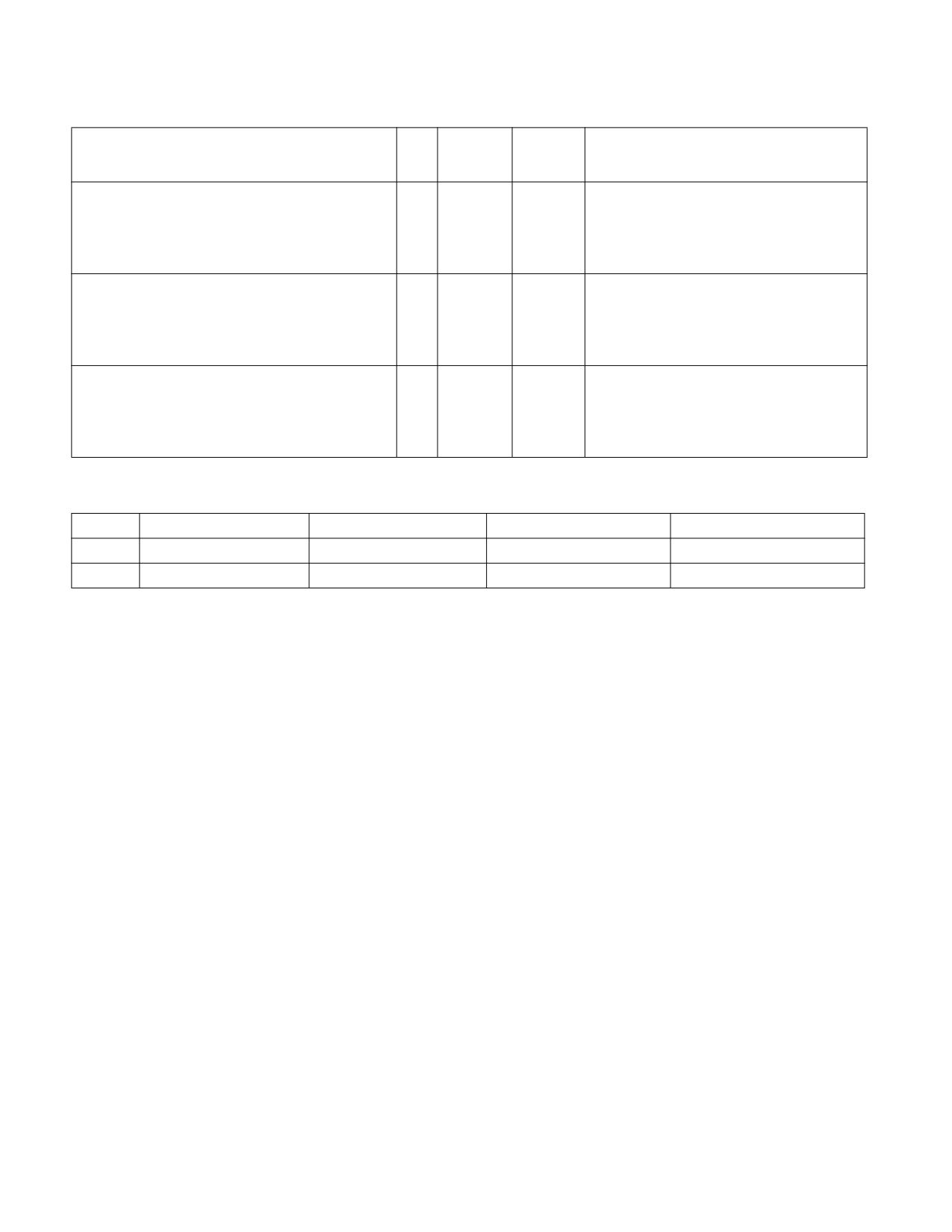
MPSADBW-Compute Multiple Packed Sums of Absolute Difference
Opcode/
Op/
64/32-bit
CPUID
Description
Instruction
En
Mode
Feature
Flag
66 0F 3A 42 /r ib
RMI
V/V
SSE4_1
Sums absolute 8-bit integer difference of
adjacent groups of 4 byte integers in xmm1
MPSADBW xmm1, xmm2/m128, imm8
and xmm2/m128 and writes the results in
xmm1. Starting offsets within xmm1 and
xmm2/m128 are determined by imm8.
VEX.128.66.0F3A.WIG 42 /r ib
RVMI
V/V
AVX
Sums absolute 8-bit integer difference of
adjacent groups of 4 byte integers in xmm2
VMPSADBW xmm1, xmm2, xmm3/m128, imm8
and xmm3/m128 and writes the results in
xmm1. Starting offsets within xmm2 and
xmm3/m128 are determined by imm8.
VEX.256.66.0F3A.WIG 42 /r ib
RVMI
V/V
AVX2
Sums absolute 8-bit integer difference of
adjacent groups of 4 byte integers in xmm2
VMPSADBW ymm1, ymm2, ymm3/m256, imm8
and ymm3/m128 and writes the results in
ymm1. Starting offsets within ymm2 and
xmm3/m128 are determined by imm8.
Instruction Operand Encoding
Op/En
Operand 1
Operand 2
Operand 3
Operand 4
RMI
ModRM:reg (r, w)
ModRM:r/m (r)
imm8
N/A
RVMI
ModRM:reg (w)
VEX.vvvv (r)
ModRM:r/m (r)
imm8
Description
(V)MPSADBW calculates packed word results of sum-absolute-difference (SAD) of unsigned bytes from two blocks
of 32-bit dword elements, using two select fields in the immediate byte to select the offsets of the two blocks within
the first source operand and the second operand. Packed SAD word results are calculated within each 128-bit lane.
Each SAD word result is calculated between a stationary block_2 (whose offset within the second source operand
is selected by a two bit select control, multiplied by 32 bits) and a sliding block_1 at consecutive byte-granular
position within the first source operand. The offset of the first 32-bit block of block_1 is selectable using a one bit
select control, multiplied by 32 bits.
128-bit Legacy SSE version: Imm8[1:0]*32 specifies the bit offset of block_2 within the second source operand.
Imm[2]*32 specifies the initial bit offset of the block_1 within the first source operand. The first source operand
and destination operand are the same. The first source and destination operands are XMM registers. The second
source operand is either an XMM register or a 128-bit memory location. Bits (MAXVL-1:128) of the corresponding
YMM destination register remain unchanged. Bits 7:3 of the immediate byte are ignored.
VEX.128 encoded version: Imm8[1:0]*32 specifies the bit offset of block_2 within the second source operand.
Imm[2]*32 specifies the initial bit offset of the block_1 within the first source operand. The first source and desti-
nation operands are XMM registers. The second source operand is either an XMM register or a 128-bit memory
location. Bits (127:128) of the corresponding YMM register are zeroed. Bits 7:3 of the immediate byte are ignored.
VEX.256 encoded version: The sum-absolute-difference (SAD) operation is repeated 8 times for MPSADW between
the same block_2 (fixed offset within the second source operand) and a variable block_1 (offset is shifted by 8 bits
for each SAD operation) in the first source operand. Each 16-bit result of eight SAD operations between block_2
and block_1 is written to the respective word in the lower 128 bits of the destination operand.
Additionally, VMPSADBW performs another eight SAD operations on block_4 of the second source operand and
block_3 of the first source operand. (Imm8[4:3]*32 + 128) specifies the bit offset of block_4 within the second
source operand. (Imm[5]*32+128) specifies the initial bit offset of the block_3 within the first source operand.
Each 16-bit result of eight SAD operations between block_4 and block_3 is written to the respective word in the
upper 128 bits of the destination operand.
MPSADBW-Compute Multiple Packed Sums of Absolute Difference
Vol. 2B
4-132
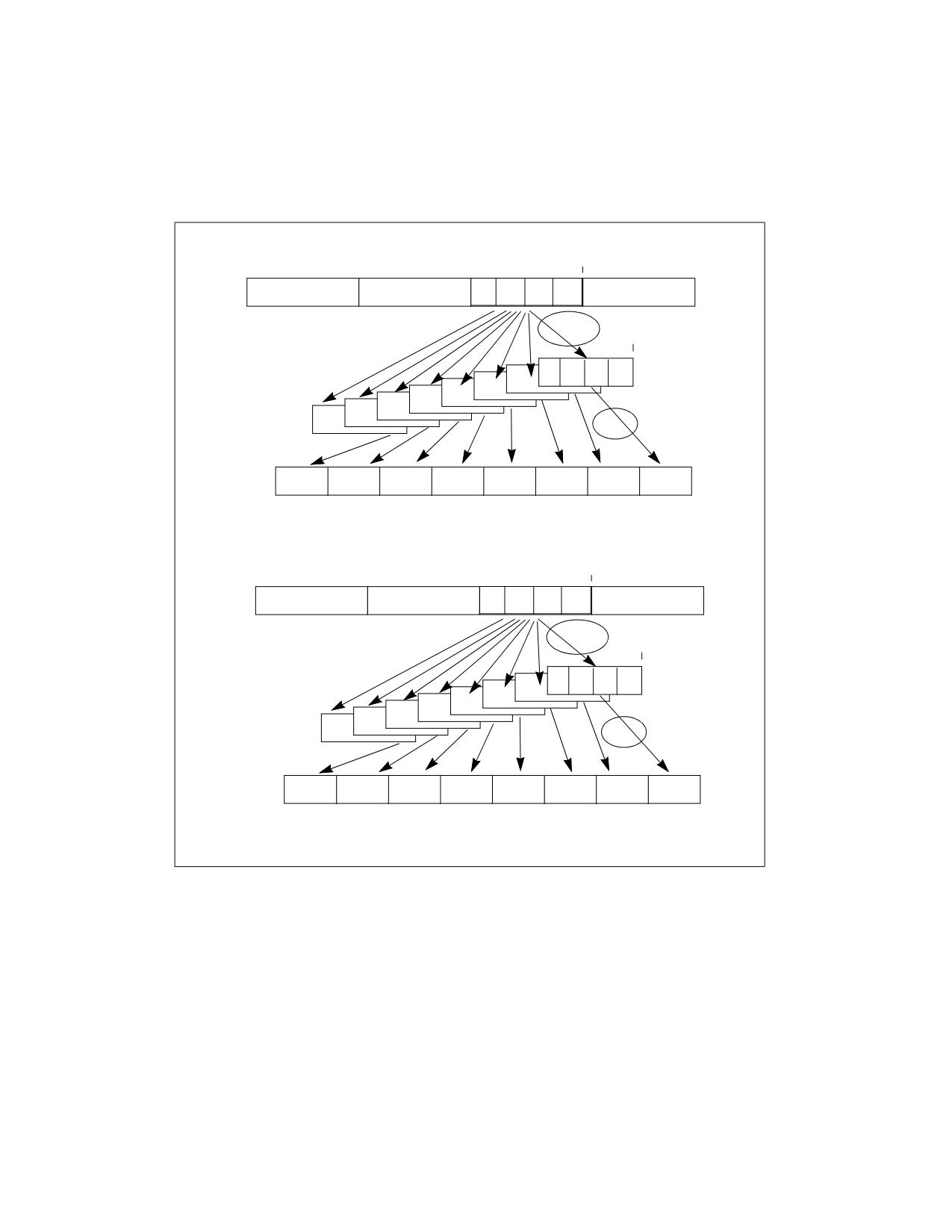
The first source operand is a YMM register. The second source register can be a YMM register or a 256-bit memory
location. The destination operand is a YMM register. Bits 7:6 of the immediate byte are ignored.
Note: If VMPSADBW is encoded with VEX.L= 1, an attempt to execute the instruction encoded with VEX.L= 1 will
cause an #UD exception.
Imm[4:3]*32+128
255
224
192
128
Src2
Abs. Diff.
Imm[5]*32+128
Src1
Sum
255
144
128
Destination
Imm[1:0]*32
127
96
64
0
Src2
Abs. Diff.
Imm[2]*32
Src1
Sum
127
16
0
Destination
Figure 4-5. 256-bit VMPSADBW Operation
Operation
VMPSADBW (VEX.256 Encoded Version)
BLK2_OFFSET := imm8[1:0]*32
BLK1_OFFSET := imm8[2]*32
SRC1_BYTE0 := SRC1[BLK1_OFFSET+7:BLK1_OFFSET]
SRC1_BYTE1 := SRC1[BLK1_OFFSET+15:BLK1_OFFSET+8]
SRC1_BYTE2 := SRC1[BLK1_OFFSET+23:BLK1_OFFSET+16]
SRC1_BYTE3 := SRC1[BLK1_OFFSET+31:BLK1_OFFSET+24]
SRC1_BYTE4 := SRC1[BLK1_OFFSET+39:BLK1_OFFSET+32]
SRC1_BYTE5 := SRC1[BLK1_OFFSET+47:BLK1_OFFSET+40]
MPSADBW-Compute Multiple Packed Sums of Absolute Difference
Vol. 2B
4-133
SRC1_BYTE6 := SRC1[BLK1_OFFSET+55:BLK1_OFFSET+48]
SRC1_BYTE7 := SRC1[BLK1_OFFSET+63:BLK1_OFFSET+56]
SRC1_BYTE8 := SRC1[BLK1_OFFSET+71:BLK1_OFFSET+64]
SRC1_BYTE9 := SRC1[BLK1_OFFSET+79:BLK1_OFFSET+72]
SRC1_BYTE10 := SRC1[BLK1_OFFSET+87:BLK1_OFFSET+80]
SRC2_BYTE0 := SRC2[BLK2_OFFSET+7:BLK2_OFFSET]
SRC2_BYTE1 := SRC2[BLK2_OFFSET+15:BLK2_OFFSET+8]
SRC2_BYTE2 := SRC2[BLK2_OFFSET+23:BLK2_OFFSET+16]
SRC2_BYTE3 := SRC2[BLK2_OFFSET+31:BLK2_OFFSET+24]
TEMP0 := ABS(SRC1_BYTE0 - SRC2_BYTE0)
TEMP1 := ABS(SRC1_BYTE1 - SRC2_BYTE1)
TEMP2 := ABS(SRC1_BYTE2 - SRC2_BYTE2)
TEMP3 := ABS(SRC1_BYTE3 - SRC2_BYTE3)
DEST[15:0] := TEMP0 + TEMP1 + TEMP2 + TEMP3
TEMP0 := ABS(SRC1_BYTE1 - SRC2_BYTE0)
TEMP1 := ABS(SRC1_BYTE2 - SRC2_BYTE1)
TEMP2 := ABS(SRC1_BYTE3 - SRC2_BYTE2)
TEMP3 := ABS(SRC1_BYTE4 - SRC2_BYTE3)
DEST[31:16] := TEMP0 + TEMP1 + TEMP2 + TEMP3
TEMP0 := ABS(SRC1_BYTE2 - SRC2_BYTE0)
TEMP1 := ABS(SRC1_BYTE3 - SRC2_BYTE1)
TEMP2 := ABS(SRC1_BYTE4 - SRC2_BYTE2)
TEMP3 := ABS(SRC1_BYTE5 - SRC2_BYTE3)
DEST[47:32] := TEMP0 + TEMP1 + TEMP2 + TEMP3
TEMP0 := ABS(SRC1_BYTE3 - SRC2_BYTE0)
TEMP1 := ABS(SRC1_BYTE4 - SRC2_BYTE1)
TEMP2 := ABS(SRC1_BYTE5 - SRC2_BYTE2)
TEMP3 := ABS(SRC1_BYTE6 - SRC2_BYTE3)
DEST[63:48] := TEMP0 + TEMP1 + TEMP2 + TEMP3
TEMP0 := ABS(SRC1_BYTE4 - SRC2_BYTE0)
TEMP1 := ABS(SRC1_BYTE5 - SRC2_BYTE1)
TEMP2 := ABS(SRC1_BYTE6 - SRC2_BYTE2)
TEMP3 := ABS(SRC1_BYTE7 - SRC2_BYTE3)
DEST[79:64] := TEMP0 + TEMP1 + TEMP2 + TEMP3
TEMP0 := ABS(SRC1_BYTE5 - SRC2_BYTE0)
TEMP1 := ABS(SRC1_BYTE6 - SRC2_BYTE1)
TEMP2 := ABS(SRC1_BYTE7 - SRC2_BYTE2)
TEMP3 := ABS(SRC1_BYTE8 - SRC2_BYTE3)
DEST[95:80] := TEMP0 + TEMP1 + TEMP2 + TEMP3
TEMP0 := ABS(SRC1_BYTE6 - SRC2_BYTE0)
TEMP1 := ABS(SRC1_BYTE7 - SRC2_BYTE1)
TEMP2 := ABS(SRC1_BYTE8 - SRC2_BYTE2)
TEMP3 := ABS(SRC1_BYTE9 - SRC2_BYTE3)
DEST[111:96] := TEMP0 + TEMP1 + TEMP2 + TEMP3
TEMP0 := ABS(SRC1_BYTE7 - SRC2_BYTE0)
TEMP1 := ABS(SRC1_BYTE8 - SRC2_BYTE1)
MPSADBW-Compute Multiple Packed Sums of Absolute Difference
Vol. 2B
4-134
TEMP2 := ABS(SRC1_BYTE9 - SRC2_BYTE2)
TEMP3 := ABS(SRC1_BYTE10 - SRC2_BYTE3)
DEST[127:112] := TEMP0 + TEMP1 + TEMP2 + TEMP3
BLK2_OFFSET := imm8[4:3]*32 + 128
BLK1_OFFSET := imm8[5]*32 + 128
SRC1_BYTE0 := SRC1[BLK1_OFFSET+7:BLK1_OFFSET]
SRC1_BYTE1 := SRC1[BLK1_OFFSET+15:BLK1_OFFSET+8]
SRC1_BYTE2 := SRC1[BLK1_OFFSET+23:BLK1_OFFSET+16]
SRC1_BYTE3 := SRC1[BLK1_OFFSET+31:BLK1_OFFSET+24]
SRC1_BYTE4 := SRC1[BLK1_OFFSET+39:BLK1_OFFSET+32]
SRC1_BYTE5 := SRC1[BLK1_OFFSET+47:BLK1_OFFSET+40]
SRC1_BYTE6 := SRC1[BLK1_OFFSET+55:BLK1_OFFSET+48]
SRC1_BYTE7 := SRC1[BLK1_OFFSET+63:BLK1_OFFSET+56]
SRC1_BYTE8 := SRC1[BLK1_OFFSET+71:BLK1_OFFSET+64]
SRC1_BYTE9 := SRC1[BLK1_OFFSET+79:BLK1_OFFSET+72]
SRC1_BYTE10 := SRC1[BLK1_OFFSET+87:BLK1_OFFSET+80]
SRC2_BYTE0 := SRC2[BLK2_OFFSET+7:BLK2_OFFSET]
SRC2_BYTE1 := SRC2[BLK2_OFFSET+15:BLK2_OFFSET+8]
SRC2_BYTE2 := SRC2[BLK2_OFFSET+23:BLK2_OFFSET+16]
SRC2_BYTE3 := SRC2[BLK2_OFFSET+31:BLK2_OFFSET+24]
TEMP0 := ABS(SRC1_BYTE0 - SRC2_BYTE0)
TEMP1 := ABS(SRC1_BYTE1 - SRC2_BYTE1)
TEMP2 := ABS(SRC1_BYTE2 - SRC2_BYTE2)
TEMP3 := ABS(SRC1_BYTE3 - SRC2_BYTE3)
DEST[143:128] := TEMP0 + TEMP1 + TEMP2 + TEMP3
TEMP0 := ABS(SRC1_BYTE1 - SRC2_BYTE0)
TEMP1 := ABS(SRC1_BYTE2 - SRC2_BYTE1)
TEMP2 := ABS(SRC1_BYTE3 - SRC2_BYTE2)
TEMP3 := ABS(SRC1_BYTE4 - SRC2_BYTE3)
DEST[159:144] := TEMP0 + TEMP1 + TEMP2 + TEMP3
TEMP0 := ABS(SRC1_BYTE2 - SRC2_BYTE0)
TEMP1 := ABS(SRC1_BYTE3 - SRC2_BYTE1)
TEMP2 := ABS(SRC1_BYTE4 - SRC2_BYTE2)
TEMP3 := ABS(SRC1_BYTE5 - SRC2_BYTE3)
DEST[175:160] := TEMP0 + TEMP1 + TEMP2 + TEMP3
TEMP0 := ABS(SRC1_BYTE3 - SRC2_BYTE0)
TEMP1 := ABS(SRC1_BYTE4 - SRC2_BYTE1)
TEMP2 := ABS(SRC1_BYTE5 - SRC2_BYTE2)
TEMP3 := ABS(SRC1_BYTE6 - SRC2_BYTE3)
DEST[191:176] := TEMP0 + TEMP1 + TEMP2 + TEMP3
TEMP0 := ABS(SRC1_BYTE4 - SRC2_BYTE0)
TEMP1 := ABS(SRC1_BYTE5 - SRC2_BYTE1)
TEMP2 := ABS(SRC1_BYTE6 - SRC2_BYTE2)
TEMP3 := ABS(SRC1_BYTE7 - SRC2_BYTE3)
DEST[207:192] := TEMP0 + TEMP1 + TEMP2 + TEMP3
TEMP0 := ABS(SRC1_BYTE5 - SRC2_BYTE0)
MPSADBW-Compute Multiple Packed Sums of Absolute Difference
Vol. 2B
4-135
TEMP1 := ABS(SRC1_BYTE6 - SRC2_BYTE1)
TEMP2 := ABS(SRC1_BYTE7 - SRC2_BYTE2)
TEMP3 := ABS(SRC1_BYTE8 - SRC2_BYTE3)
DEST[223:208] := TEMP0 + TEMP1 + TEMP2 + TEMP3
TEMP0 := ABS(SRC1_BYTE6 - SRC2_BYTE0)
TEMP1 := ABS(SRC1_BYTE7 - SRC2_BYTE1)
TEMP2 := ABS(SRC1_BYTE8 - SRC2_BYTE2)
TEMP3 := ABS(SRC1_BYTE9 - SRC2_BYTE3)
DEST[239:224] := TEMP0 + TEMP1 + TEMP2 + TEMP3
TEMP0 := ABS(SRC1_BYTE7 - SRC2_BYTE0)
TEMP1 := ABS(SRC1_BYTE8 - SRC2_BYTE1)
TEMP2 := ABS(SRC1_BYTE9 - SRC2_BYTE2)
TEMP3 := ABS(SRC1_BYTE10 - SRC2_BYTE3)
DEST[255:240] := TEMP0 + TEMP1 + TEMP2 + TEMP3
VMPSADBW (VEX.128 Encoded Version)
BLK2_OFFSET := imm8[1:0]*32
BLK1_OFFSET := imm8[2]*32
SRC1_BYTE0 := SRC1[BLK1_OFFSET+7:BLK1_OFFSET]
SRC1_BYTE1 := SRC1[BLK1_OFFSET+15:BLK1_OFFSET+8]
SRC1_BYTE2 := SRC1[BLK1_OFFSET+23:BLK1_OFFSET+16]
SRC1_BYTE3 := SRC1[BLK1_OFFSET+31:BLK1_OFFSET+24]
SRC1_BYTE4 := SRC1[BLK1_OFFSET+39:BLK1_OFFSET+32]
SRC1_BYTE5 := SRC1[BLK1_OFFSET+47:BLK1_OFFSET+40]
SRC1_BYTE6 := SRC1[BLK1_OFFSET+55:BLK1_OFFSET+48]
SRC1_BYTE7 := SRC1[BLK1_OFFSET+63:BLK1_OFFSET+56]
SRC1_BYTE8 := SRC1[BLK1_OFFSET+71:BLK1_OFFSET+64]
SRC1_BYTE9 := SRC1[BLK1_OFFSET+79:BLK1_OFFSET+72]
SRC1_BYTE10 := SRC1[BLK1_OFFSET+87:BLK1_OFFSET+80]
SRC2_BYTE0 := SRC2[BLK2_OFFSET+7:BLK2_OFFSET]
SRC2_BYTE1 := SRC2[BLK2_OFFSET+15:BLK2_OFFSET+8]
SRC2_BYTE2 := SRC2[BLK2_OFFSET+23:BLK2_OFFSET+16]
SRC2_BYTE3 := SRC2[BLK2_OFFSET+31:BLK2_OFFSET+24]
TEMP0 := ABS(SRC1_BYTE0 - SRC2_BYTE0)
TEMP1 := ABS(SRC1_BYTE1 - SRC2_BYTE1)
TEMP2 := ABS(SRC1_BYTE2 - SRC2_BYTE2)
TEMP3 := ABS(SRC1_BYTE3 - SRC2_BYTE3)
DEST[15:0] := TEMP0 + TEMP1 + TEMP2 + TEMP3
TEMP0 := ABS(SRC1_BYTE1 - SRC2_BYTE0)
TEMP1 := ABS(SRC1_BYTE2 - SRC2_BYTE1)
TEMP2 := ABS(SRC1_BYTE3 - SRC2_BYTE2)
TEMP3 := ABS(SRC1_BYTE4 - SRC2_BYTE3)
DEST[31:16] := TEMP0 + TEMP1 + TEMP2 + TEMP3
TEMP0 := ABS(SRC1_BYTE2 - SRC2_BYTE0)
TEMP1 := ABS(SRC1_BYTE3 - SRC2_BYTE1)
TEMP2 := ABS(SRC1_BYTE4 - SRC2_BYTE2)
TEMP3 := ABS(SRC1_BYTE5 - SRC2_BYTE3)
DEST[47:32] := TEMP0 + TEMP1 + TEMP2 + TEMP3
MPSADBW-Compute Multiple Packed Sums of Absolute Difference
Vol. 2B
4-136
TEMP0 := ABS(SRC1_BYTE3 - SRC2_BYTE0)
TEMP1 := ABS(SRC1_BYTE4 - SRC2_BYTE1)
TEMP2 := ABS(SRC1_BYTE5 - SRC2_BYTE2)
TEMP3 := ABS(SRC1_BYTE6 - SRC2_BYTE3)
DEST[63:48] := TEMP0 + TEMP1 + TEMP2 + TEMP3
TEMP0 := ABS(SRC1_BYTE4 - SRC2_BYTE0)
TEMP1 := ABS(SRC1_BYTE5 - SRC2_BYTE1)
TEMP2 := ABS(SRC1_BYTE6 - SRC2_BYTE2)
TEMP3 := ABS(SRC1_BYTE7 - SRC2_BYTE3)
DEST[79:64] := TEMP0 + TEMP1 + TEMP2 + TEMP3
TEMP0 := ABS(SRC1_BYTE5 - SRC2_BYTE0)
TEMP1 := ABS(SRC1_BYTE6 - SRC2_BYTE1)
TEMP2 := ABS(SRC1_BYTE7 - SRC2_BYTE2)
TEMP3 := ABS(SRC1_BYTE8 - SRC2_BYTE3)
DEST[95:80] := TEMP0 + TEMP1 + TEMP2 + TEMP3
TEMP0 := ABS(SRC1_BYTE6 - SRC2_BYTE0)
TEMP1 := ABS(SRC1_BYTE7 - SRC2_BYTE1)
TEMP2 := ABS(SRC1_BYTE8 - SRC2_BYTE2)
TEMP3 := ABS(SRC1_BYTE9 - SRC2_BYTE3)
DEST[111:96] := TEMP0 + TEMP1 + TEMP2 + TEMP3
TEMP0 := ABS(SRC1_BYTE7 - SRC2_BYTE0)
TEMP1 := ABS(SRC1_BYTE8 - SRC2_BYTE1)
TEMP2 := ABS(SRC1_BYTE9 - SRC2_BYTE2)
TEMP3 := ABS(SRC1_BYTE10 - SRC2_BYTE3)
DEST[127:112] := TEMP0 + TEMP1 + TEMP2 + TEMP3
DEST[MAXVL-1:128] := 0
MPSADBW (128-bit Legacy SSE Version)
SRC_OFFSET := imm8[1:0]*32
DEST_OFFSET := imm8[2]*32
DEST_BYTE0 := DEST[DEST_OFFSET+7:DEST_OFFSET]
DEST_BYTE1 := DEST[DEST_OFFSET+15:DEST_OFFSET+8]
DEST_BYTE2 := DEST[DEST_OFFSET+23:DEST_OFFSET+16]
DEST_BYTE3 := DEST[DEST_OFFSET+31:DEST_OFFSET+24]
DEST_BYTE4 := DEST[DEST_OFFSET+39:DEST_OFFSET+32]
DEST_BYTE5 := DEST[DEST_OFFSET+47:DEST_OFFSET+40]
DEST_BYTE6 := DEST[DEST_OFFSET+55:DEST_OFFSET+48]
DEST_BYTE7 := DEST[DEST_OFFSET+63:DEST_OFFSET+56]
DEST_BYTE8 := DEST[DEST_OFFSET+71:DEST_OFFSET+64]
DEST_BYTE9 := DEST[DEST_OFFSET+79:DEST_OFFSET+72]
DEST_BYTE10 := DEST[DEST_OFFSET+87:DEST_OFFSET+80]
SRC_BYTE0 := SRC[SRC_OFFSET+7:SRC_OFFSET]
SRC_BYTE1 := SRC[SRC_OFFSET+15:SRC_OFFSET+8]
SRC_BYTE2 := SRC[SRC_OFFSET+23:SRC_OFFSET+16]
SRC_BYTE3 := SRC[SRC_OFFSET+31:SRC_OFFSET+24]
TEMP0 := ABS( DEST_BYTE0 - SRC_BYTE0)
TEMP1 := ABS( DEST_BYTE1 - SRC_BYTE1)
TEMP2 := ABS( DEST_BYTE2 - SRC_BYTE2)
MPSADBW-Compute Multiple Packed Sums of Absolute Difference
Vol. 2B
4-137
TEMP3 := ABS( DEST_BYTE3 - SRC_BYTE3)
DEST[15:0] := TEMP0 + TEMP1 + TEMP2 + TEMP3
TEMP0 := ABS( DEST_BYTE1 - SRC_BYTE0)
TEMP1 := ABS( DEST_BYTE2 - SRC_BYTE1)
TEMP2 := ABS( DEST_BYTE3 - SRC_BYTE2)
TEMP3 := ABS( DEST_BYTE4 - SRC_BYTE3)
DEST[31:16] := TEMP0 + TEMP1 + TEMP2 + TEMP3
TEMP0 := ABS( DEST_BYTE2 - SRC_BYTE0)
TEMP1 := ABS( DEST_BYTE3 - SRC_BYTE1)
TEMP2 := ABS( DEST_BYTE4 - SRC_BYTE2)
TEMP3 := ABS( DEST_BYTE5 - SRC_BYTE3)
DEST[47:32] := TEMP0 + TEMP1 + TEMP2 + TEMP3
TEMP0 := ABS( DEST_BYTE3 - SRC_BYTE0)
TEMP1 := ABS( DEST_BYTE4 - SRC_BYTE1)
TEMP2 := ABS( DEST_BYTE5 - SRC_BYTE2)
TEMP3 := ABS( DEST_BYTE6 - SRC_BYTE3)
DEST[63:48] := TEMP0 + TEMP1 + TEMP2 + TEMP3
TEMP0 := ABS( DEST_BYTE4 - SRC_BYTE0)
TEMP1 := ABS( DEST_BYTE5 - SRC_BYTE1)
TEMP2 := ABS( DEST_BYTE6 - SRC_BYTE2)
TEMP3 := ABS( DEST_BYTE7 - SRC_BYTE3)
DEST[79:64] := TEMP0 + TEMP1 + TEMP2 + TEMP3
TEMP0 := ABS( DEST_BYTE5 - SRC_BYTE0)
TEMP1 := ABS( DEST_BYTE6 - SRC_BYTE1)
TEMP2 := ABS( DEST_BYTE7 - SRC_BYTE2)
TEMP3 := ABS( DEST_BYTE8 - SRC_BYTE3)
DEST[95:80] := TEMP0 + TEMP1 + TEMP2 + TEMP3
TEMP0 := ABS( DEST_BYTE6 - SRC_BYTE0)
TEMP1 := ABS( DEST_BYTE7 - SRC_BYTE1)
TEMP2 := ABS( DEST_BYTE8 - SRC_BYTE2)
TEMP3 := ABS( DEST_BYTE9 - SRC_BYTE3)
DEST[111:96] := TEMP0 + TEMP1 + TEMP2 + TEMP3
TEMP0 := ABS( DEST_BYTE7 - SRC_BYTE0)
TEMP1 := ABS( DEST_BYTE8 - SRC_BYTE1)
TEMP2 := ABS( DEST_BYTE9 - SRC_BYTE2)
TEMP3 := ABS( DEST_BYTE10 - SRC_BYTE3)
DEST[127:112] := TEMP0 + TEMP1 + TEMP2 + TEMP3
DEST[MAXVL-1:128] (Unmodified)
Intel C/C++ Compiler Intrinsic Equivalent
(V)MPSADBW __m128i _mm_mpsadbw_epu8 (__m128i s1, __m128i s2, const int mask);
VMPSADBW __m256i _mm256_mpsadbw_epu8 (__m256i s1, __m256i s2, const int mask);
Flags Affected
None.
MPSADBW-Compute Multiple Packed Sums of Absolute Difference
Vol. 2B
4-138
Other Exceptions
See Table 2-21, “Type 4 Class Exception Conditions.”
MPSADBW-Compute Multiple Packed Sums of Absolute Difference
Vol. 2B
4-139
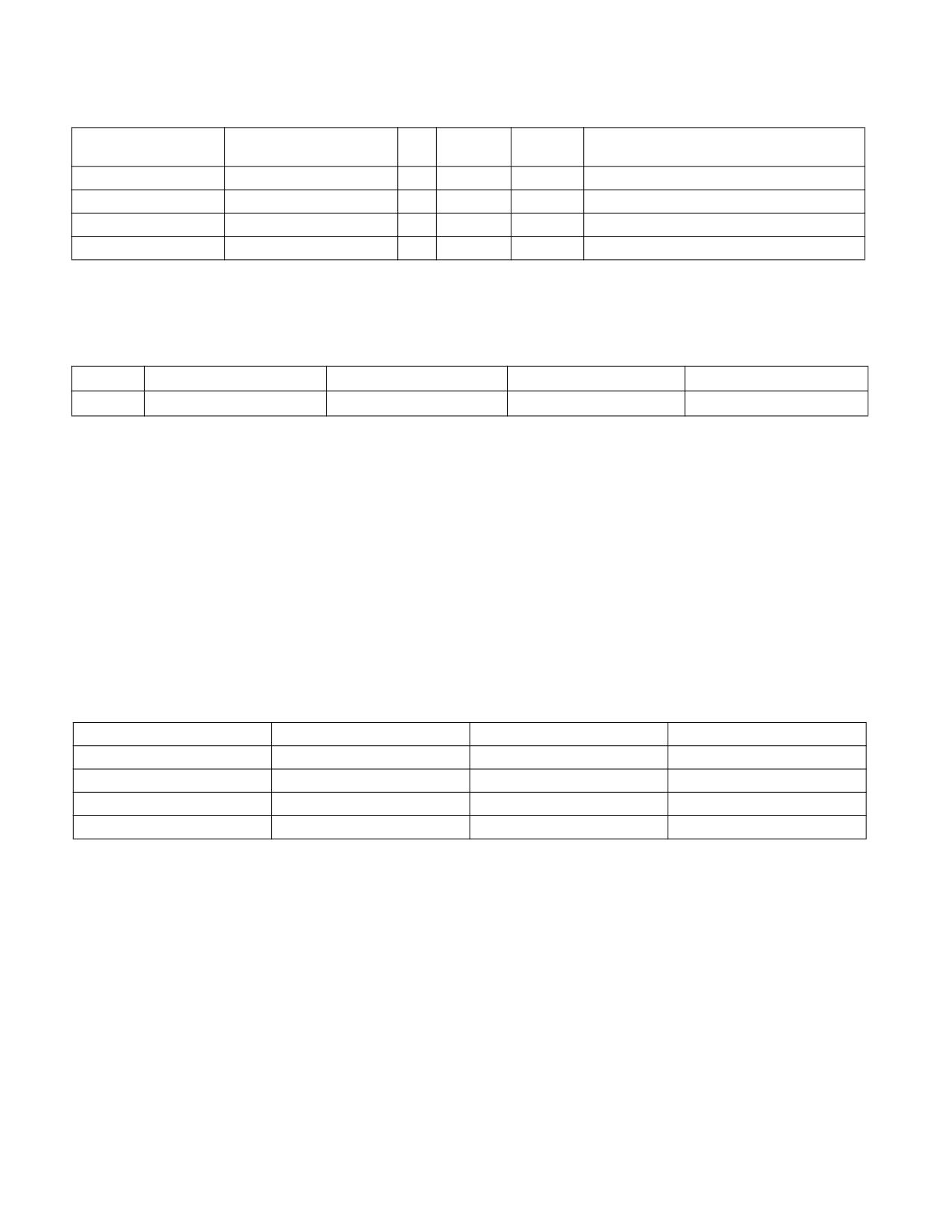
MUL-Unsigned Multiply
Opcode
Instruction
Op/
64-Bit
Compat/
Description
En
Mode
Leg Mode
F6 /4
MUL r/m81
M
Valid
Valid
Unsigned multiply (AX := AL ∗ r/m8).
F7 /4
MUL r/m16
M
Valid
Valid
Unsigned multiply (DX:AX := AX ∗ r/m16).
F7 /4
MUL r/m32
M
Valid
Valid
Unsigned multiply (EDX:EAX := EAX ∗ r/m32).
REX.W + F7 /4
MUL r/m64
M
Valid
N.E.
Unsigned multiply (RDX:RAX := RAX ∗ r/m64).
NOTES:
1. With a REX prefix in 64-bit mode, attempts to access AH, BH, CH, or DH will instead access SPL, DIL, BPL, or SIL, respectively.
Instruction Operand Encoding
Op/En
Operand 1
Operand 2
Operand 3
Operand 4
M
ModRM:r/m (r)
N/A
N/A
N/A
Description
Performs an unsigned multiplication of the first operand (destination operand) and the second operand (source
operand) and stores the result in the destination operand. The destination operand is an implied operand located
in register AL, AX or EAX (depending on the size of the operand); the source operand is located in a general-
purpose register or a memory location. The action of this instruction and the location of the result depends on the
opcode and the operand size as shown in Table 4-9.
The result is stored in register AX, register pair DX:AX, or register pair EDX:EAX (depending on the operand size),
with the high-order bits of the product contained in register AH, DX, or EDX, respectively. If the high-order bits of
the product are 0, the CF and OF flags are cleared; otherwise, the flags are set.
In 64-bit mode, the instruction’s default operation size is 32 bits. Use of the REX.R prefix permits access to addi-
tional registers (R8-R15). Use of the REX.W prefix promotes operation to 64 bits.
See the summary chart at the beginning of this section for encoding data and limits.
Table 4-9. MUL Results
Operand Size
Source 1
Source 2
Destination
Byte
AL
r/m8
AX
Word
AX
r/m16
DX:AX
Doubleword
EAX
r/m32
EDX:EAX
Quadword
RAX
r/m64
RDX:RAX
Operation
IF (Byte operation)
THEN
AX := AL ∗ SRC;
ELSE (* Word or doubleword operation *)
IF OperandSize = 16
THEN
DX:AX := AX ∗ SRC;
ELSE IF OperandSize = 32
THEN EDX:EAX := EAX ∗ SRC; FI;
ELSE (* OperandSize = 64 *)
RDX:RAX := RAX ∗ SRC;
FI;
MUL-Unsigned Multiply
Vol. 2B
4-140
FI;
Flags Affected
The OF and CF flags are set to 0 if the upper half of the result is 0; otherwise, they are set to 1. The SF, ZF, AF, and
PF flags are undefined.
Protected Mode Exceptions
#GP(0)
If a memory operand effective address is outside the CS, DS, ES, FS, or GS segment limit.
If the DS, ES, FS, or GS register contains a NULL segment selector.
#SS(0)
If a memory operand effective address is outside the SS segment limit.
#PF(fault-code)
If a page fault occurs.
#AC(0)
If alignment checking is enabled and an unaligned memory reference is made while the
current privilege level is 3.
#UD
If the LOCK prefix is used.
Real-Address Mode Exceptions
#GP
If a memory operand effective address is outside the CS, DS, ES, FS, or GS segment limit.
#SS
If a memory operand effective address is outside the SS segment limit.
#UD
If the LOCK prefix is used.
Virtual-8086 Mode Exceptions
#GP(0)
If a memory operand effective address is outside the CS, DS, ES, FS, or GS segment limit.
#SS(0)
If a memory operand effective address is outside the SS segment limit.
#PF(fault-code)
If a page fault occurs.
#AC(0)
If alignment checking is enabled and an unaligned memory reference is made.
#UD
If the LOCK prefix is used.
Compatibility Mode Exceptions
Same exceptions as in protected mode.
64-Bit Mode Exceptions
#SS(0)
If a memory address referencing the SS segment is in a non-canonical form.
#GP(0)
If the memory address is in a non-canonical form.
#PF(fault-code)
If a page fault occurs.
#AC(0)
If alignment checking is enabled and an unaligned memory reference is made while the
current privilege level is 3.
MUL-Unsigned Multiply
Vol. 2B
4-141

MULPD-Multiply Packed Double Precision Floating-Point Values
Opcode/
Op /
64/32 bit
CPUID Feature
Description
Instruction
En
Mode
Flag
Support
66 0F 59 /r
A
V/V
SSE2
Multiply packed double precision floating-point
MULPD xmm1, xmm2/m128
values in xmm2/m128 with xmm1 and store result
in xmm1.
VEX.128.66.0F.WIG 59 /r
B
V/V
AVX
Multiply packed double precision floating-point
VMULPD xmm1,xmm2, xmm3/m128
values in xmm3/m128 with xmm2 and store result
in xmm1.
VEX.256.66.0F.WIG 59 /r
B
V/V
AVX
Multiply packed double precision floating-point
VMULPD ymm1, ymm2, ymm3/m256
values in ymm3/m256 with ymm2 and store result
in ymm1.
EVEX.128.66.0F.W1 59 /r
C
V/V
(AVX512VL AND
Multiply packed double precision floating-point
VMULPD xmm1 {k1}{z}, xmm2,
AVX512F) OR
values from xmm3/m128/m64bcst to xmm2 and
xmm3/m128/m64bcst
AVX10.1
store result in xmm1.
EVEX.256.66.0F.W1 59 /r
C
V/V
(AVX512VL AND
Multiply packed double precision floating-point
VMULPD ymm1 {k1}{z}, ymm2,
AVX512F) OR
values from ymm3/m256/m64bcst to ymm2 and
ymm3/m256/m64bcst
AVX10.1
store result in ymm1.
EVEX.512.66.0F.W1 59 /r
C
V/V
AVX512F
Multiply packed double precision floating-point
VMULPD zmm1 {k1}{z}, zmm2,
OR AVX10.1
values in zmm3/m512/m64bcst with zmm2 and
zmm3/m512/m64bcst{er}
store result in zmm1.
Instruction Operand Encoding
Op/En
Tuple Type
Operand 1
Operand 2
Operand 3
Operand 4
A
N/A
ModRM:reg (r, w)
ModRM:r/m (r)
N/A
N/A
B
N/A
ModRM:reg (w)
VEX.vvvv (r)
ModRM:r/m (r)
N/A
C
Full
ModRM:reg (w)
EVEX.vvvv (r)
ModRM:r/m (r)
N/A
Description
Multiply packed double precision floating-point values from the first source operand with corresponding values in
the second source operand, and stores the packed double precision floating-point results in the destination
operand.
EVEX encoded versions: The first source operand (the second operand) is a ZMM/YMM/XMM register. The second
source operand can be a ZMM/YMM/XMM register, a 512/256/128-bit memory location or a 512/256/128-bit vector
broadcasted from a 64-bit memory location. The destination operand is a ZMM/YMM/XMM register conditionally
updated with writemask k1.
VEX.256 encoded version: The first source operand is a YMM register. The second source operand can be a YMM
register or a 256-bit memory location. The destination operand is a YMM register. Bits (MAXVL-1:256) of the corre-
sponding destination ZMM register are zeroed.
VEX.128 encoded version: The first source operand is a XMM register. The second source operand can be a XMM
register or a 128-bit memory location. The destination operand is a XMM register. The upper bits (MAXVL-1:128) of
the destination YMM register destination are zeroed.
128-bit Legacy SSE version: The second source can be an XMM register or an 128-bit memory location. The desti-
nation is not distinct from the first source XMM register and the upper bits (MAXVL-1:128) of the corresponding
ZMM register destination are unmodified.
MULPD-Multiply Packed Double Precision Floating-Point Values
Vol. 2B
4-142
Operation
VMULPD (EVEX Encoded Versions)
(KL, VL) = (2, 128), (4, 256), (8, 512)
IF (VL = 512) AND (EVEX.b = 1) AND SRC2 *is a register*
THEN
SET_ROUNDING_MODE_FOR_THIS_INSTRUCTION(EVEX.RC);
ELSE
SET_ROUNDING_MODE_FOR_THIS_INSTRUCTION(MXCSR.RC);
FI;
FOR j := 0 TO KL-1
i := j * 64
IF k1[j] OR *no writemask*
THEN
IF (EVEX.b = 1) AND (SRC2 *is memory*)
THEN
DEST[i+63:i] := SRC1[i+63:i] * SRC2[63:0]
ELSE
DEST[i+63:i] := SRC1[i+63:i] * SRC2[i+63:i]
FI;
ELSE
IF *merging-masking*
; merging-masking
THEN *DEST[i+63:i] remains unchanged*
ELSE
; zeroing-masking
DEST[i+63:i] := 0
FI
FI;
ENDFOR
DEST[MAXVL-1:VL] := 0
VMULPD (VEX.256 Encoded Version)
DEST[63:0] := SRC1[63:0] * SRC2[63:0]
DEST[127:64] := SRC1[127:64] * SRC2[127:64]
DEST[191:128] := SRC1[191:128] * SRC2[191:128]
DEST[255:192] := SRC1[255:192] * SRC2[255:192]
DEST[MAXVL-1:256] := 0;
VMULPD (VEX.128 Encoded Version)
DEST[63:0] := SRC1[63:0] * SRC2[63:0]
DEST[127:64] := SRC1[127:64] * SRC2[127:64]
DEST[MAXVL-1:128] := 0
MULPD (128-bit Legacy SSE Version)
DEST[63:0] := DEST[63:0] * SRC[63:0]
DEST[127:64] := DEST[127:64] * SRC[127:64]
DEST[MAXVL-1:128] (Unmodified)
MULPD-Multiply Packed Double Precision Floating-Point Values
Vol. 2B
4-143
Intel C/C++ Compiler Intrinsic Equivalent
VMULPD __m512d _mm512_mul_pd( __m512d a, __m512d b);
VMULPD __m512d _mm512_mask_mul_pd(__m512d s, __mmask8 k, __m512d a, __m512d b);
VMULPD __m512d _mm512_maskz_mul_pd( __mmask8 k, __m512d a, __m512d b);
VMULPD __m512d _mm512_mul_round_pd( __m512d a, __m512d b, int);
VMULPD __m512d _mm512_mask_mul_round_pd(__m512d s, __mmask8 k, __m512d a, __m512d b, int);
VMULPD __m512d _mm512_maskz_mul_round_pd( __mmask8 k, __m512d a, __m512d b, int);
VMULPD __m256d _mm256_mul_pd (__m256d a, __m256d b);
MULPD __m128d _mm_mul_pd (__m128d a, __m128d b);
SIMD Floating-Point Exceptions
Overflow, Underflow, Invalid, Precision, Denormal.
Other Exceptions
Non-EVEX-encoded instruction, see Table 2-19, “Type 2 Class Exception Conditions.”
EVEX-encoded instruction, see Table 2-48, “Type E2 Class Exception Conditions.”
MULPD-Multiply Packed Double Precision Floating-Point Values
Vol. 2B
4-144

MULPS-Multiply Packed Single Precision Floating-Point Values
Opcode/
Op /
64/32 bit
CPUID Feature
Description
Instruction
En
Mode
Flag
Support
NP 0F 59 /r
A
V/V
SSE
Multiply packed single precision floating-point values
MULPS xmm1, xmm2/m128
in xmm2/m128 with xmm1 and store result in xmm1.
VEX.128.0F.WIG 59 /r
B
V/V
AVX
Multiply packed single precision floating-point values
VMULPS xmm1,xmm2, xmm3/m128
in xmm3/m128 with xmm2 and store result in xmm1.
VEX.256.0F.WIG 59 /r
B
V/V
AVX
Multiply packed single precision floating-point values
VMULPS ymm1, ymm2, ymm3/m256
in ymm3/m256 with ymm2 and store result in ymm1.
EVEX.128.0F.W0 59 /r
C
V/V
(AVX512VL AND
Multiply packed single precision floating-point values
VMULPS xmm1 {k1}{z}, xmm2,
AVX512F) OR
from xmm3/m128/m32bcst to xmm2 and store
xmm3/m128/m32bcst
AVX10.1
result in xmm1.
EVEX.256.0F.W0 59 /r
C
V/V
(AVX512VL AND
Multiply packed single precision floating-point values
VMULPS ymm1 {k1}{z}, ymm2,
AVX512F) OR
from ymm3/m256/m32bcst to ymm2 and store
ymm3/m256/m32bcst
AVX10.1
result in ymm1.
EVEX.512.0F.W0 59 /r
C
V/V
AVX512F
Multiply packed single precision floating-point values
VMULPS zmm1 {k1}{z}, zmm2,
OR AVX10.1
in zmm3/m512/m32bcst with zmm2 and store result
zmm3/m512/m32bcst {er}
in zmm1.
Instruction Operand Encoding
Op/En
Tuple Type
Operand 1
Operand 2
Operand 3
Operand 4
A
N/A
ModRM:reg (r, w)
ModRM:r/m (r)
N/A
N/A
B
N/A
ModRM:reg (w)
VEX.vvvv (r)
ModRM:r/m (r)
N/A
C
Full
ModRM:reg (w)
EVEX.vvvv (r)
ModRM:r/m (r)
N/A
Description
Multiply the packed single precision floating-point values from the first source operand with the corresponding
values in the second source operand, and stores the packed double precision floating-point results in the destina-
tion operand.
EVEX encoded versions: The first source operand (the second operand) is a ZMM/YMM/XMM register. The second
source operand can be a ZMM/YMM/XMM register, a 512/256/128-bit memory location or a 512/256/128-bit vector
broadcasted from a 32-bit memory location. The destination operand is a ZMM/YMM/XMM register conditionally
updated with writemask k1.
VEX.256 encoded version: The first source operand is a YMM register. The second source operand can be a YMM
register or a 256-bit memory location. The destination operand is a YMM register. Bits (MAXVL-1:256) of the corre-
sponding destination ZMM register are zeroed.
VEX.128 encoded version: The first source operand is a XMM register. The second source operand can be a XMM
register or a 128-bit memory location. The destination operand is a XMM register. The upper bits (MAXVL-1:128) of
the destination YMM register destination are zeroed.
128-bit Legacy SSE version: The second source can be an XMM register or an 128-bit memory location. The desti-
nation is not distinct from the first source XMM register and the upper bits (MAXVL-1:128) of the corresponding
ZMM register destination are unmodified.
MULPS-Multiply Packed Single Precision Floating-Point Values
Vol. 2B
4-145
Operation
VMULPS (EVEX Encoded Version)
(KL, VL) = (4, 128), (8, 256), (16, 512)
IF (VL = 512) AND (EVEX.b = 1) AND SRC2 *is a register*
THEN
SET_ROUNDING_MODE_FOR_THIS_INSTRUCTION(EVEX.RC);
ELSE
SET_ROUNDING_MODE_FOR_THIS_INSTRUCTION(MXCSR.RC);
FI;
FOR j := 0 TO KL-1
i := j * 32
IF k1[j] OR *no writemask*
THEN
IF (EVEX.b = 1) AND (SRC2 *is memory*)
THEN
DEST[i+31:i] := SRC1[i+31:i] * SRC2[31:0]
ELSE
DEST[i+31:i] := SRC1[i+31:i] * SRC2[i+31:i]
FI;
ELSE
IF *merging-masking*
; merging-masking
THEN *DEST[i+31:i] remains unchanged*
ELSE
; zeroing-masking
DEST[i+31:i] := 0
FI
FI;
ENDFOR
DEST[MAXVL-1:VL] := 0
VMULPS (VEX.256 Encoded Version)
DEST[31:0] := SRC1[31:0] * SRC2[31:0]
DEST[63:32] := SRC1[63:32] * SRC2[63:32]
DEST[95:64] := SRC1[95:64] * SRC2[95:64]
DEST[127:96] := SRC1[127:96] * SRC2[127:96]
DEST[159:128] := SRC1[159:128] * SRC2[159:128]
DEST[191:160] := SRC1[191:160] * SRC2[191:160]
DEST[223:192] := SRC1[223:192] * SRC2[223:192]
DEST[255:224] := SRC1[255:224] * SRC2[255:224].
DEST[MAXVL-1:256] := 0;
VMULPS (VEX.128 Encoded Version)
DEST[31:0] := SRC1[31:0] * SRC2[31:0]
DEST[63:32] := SRC1[63:32] * SRC2[63:32]
DEST[95:64] := SRC1[95:64] * SRC2[95:64]
DEST[127:96] := SRC1[127:96] * SRC2[127:96]
DEST[MAXVL-1:128] := 0
MULPS (128-bit Legacy SSE Version)
DEST[31:0] := SRC1[31:0] * SRC2[31:0]
DEST[63:32] := SRC1[63:32] * SRC2[63:32]
DEST[95:64] := SRC1[95:64] * SRC2[95:64]
DEST[127:96] := SRC1[127:96] * SRC2[127:96]
DEST[MAXVL-1:128] (Unmodified)
MULPS-Multiply Packed Single Precision Floating-Point Values
Vol. 2B
4-146
Intel C/C++ Compiler Intrinsic Equivalent
VMULPS __m512 _mm512_mul_ps( __m512 a, __m512 b);
VMULPS __m512 _mm512_mask_mul_ps(__m512 s, __mmask16 k, __m512 a, __m512 b);
VMULPS __m512 _mm512_maskz_mul_ps(__mmask16 k, __m512 a, __m512 b);
VMULPS __m512 _mm512_mul_round_ps( __m512 a, __m512 b, int);
VMULPS __m512 _mm512_mask_mul_round_ps(__m512 s, __mmask16 k, __m512 a, __m512 b, int);
VMULPS __m512 _mm512_maskz_mul_round_ps(__mmask16 k, __m512 a, __m512 b, int);
VMULPS __m256 _mm256_mask_mul_ps(__m256 s, __mmask8 k, __m256 a, __m256 b);
VMULPS __m256 _mm256_maskz_mul_ps(__mmask8 k, __m256 a, __m256 b);
VMULPS __m128 _mm_mask_mul_ps(__m128 s, __mmask8 k, __m128 a, __m128 b);
VMULPS __m128 _mm_maskz_mul_ps(__mmask8 k, __m128 a, __m128 b);
VMULPS __m256 _mm256_mul_ps (__m256 a, __m256 b);
MULPS __m128 _mm_mul_ps (__m128 a, __m128 b);
SIMD Floating-Point Exceptions
Overflow, Underflow, Invalid, Precision, Denormal.
Other Exceptions
Non-EVEX-encoded instruction, see Table 2-19, “Type 2 Class Exception Conditions.”
EVEX-encoded instruction, see Table 2-48, “Type E2 Class Exception Conditions.”
MULPS-Multiply Packed Single Precision Floating-Point Values
Vol. 2B
4-147
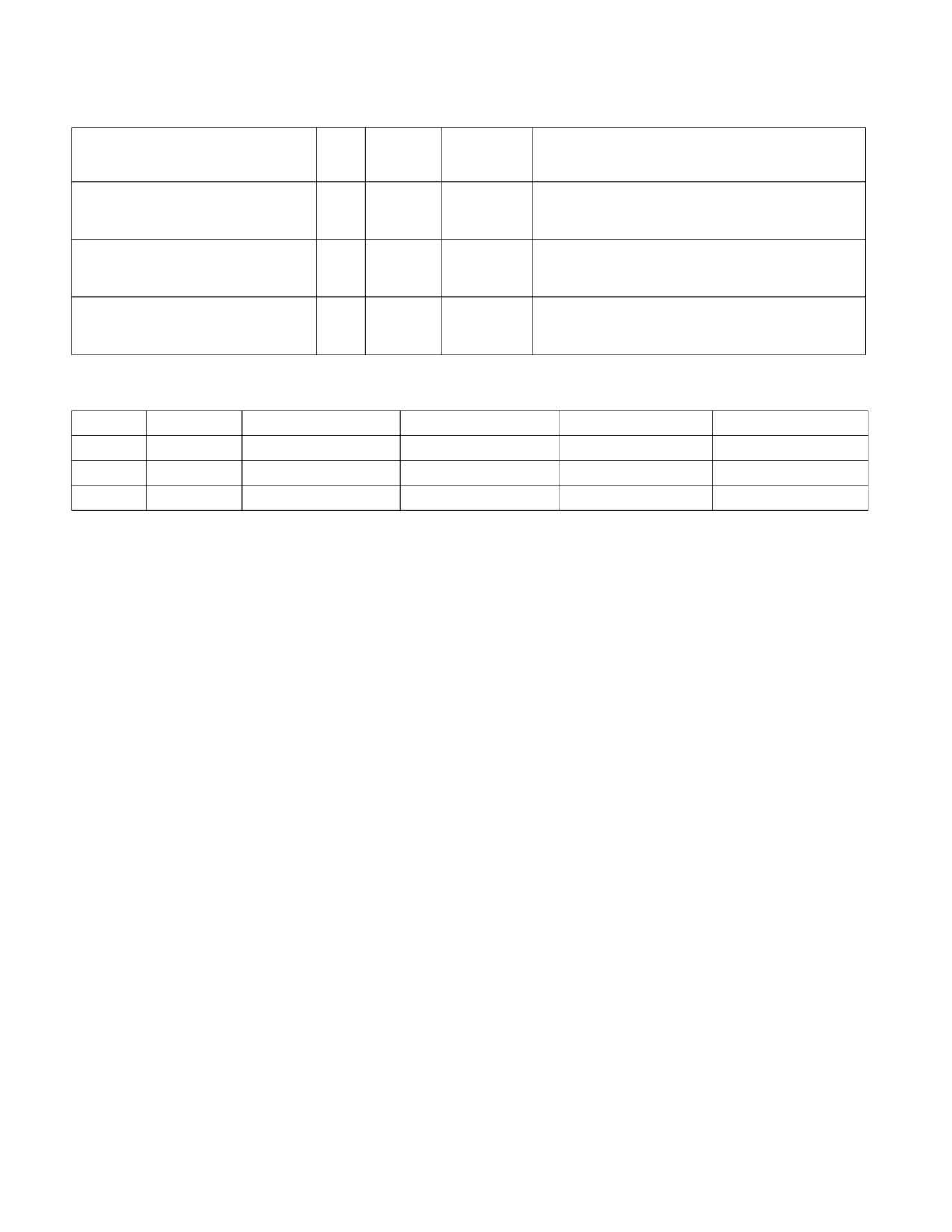
MULSD-Multiply Scalar Double Precision Floating-Point Value
Opcode/
Op /
64/32 bit
CPUID
Description
Instruction
En
Mode
Feature Flag
Support
F2 0F 59 /r
A
V/V
SSE2
Multiply the low double precision floating-point value in
MULSD xmm1,xmm2/m64
xmm2/m64 by low double precision floating-point
value in xmm1.
VEX.LIG.F2.0F.WIG 59 /r
B
V/V
AVX
Multiply the low double precision floating-point value in
VMULSD xmm1,xmm2, xmm3/m64
xmm3/m64 by low double precision floating-point
value in xmm2.
EVEX.LLIG.F2.0F.W1 59 /r
C
V/V
AVX512F
Multiply the low double precision floating-point value in
VMULSD xmm1 {k1}{z}, xmm2,
OR AVX10.1
xmm3/m64 by low double precision floating-point
xmm3/m64 {er}
value in xmm2.
Instruction Operand Encoding
Op/En
Tuple Type
Operand 1
Operand 2
Operand 3
Operand 4
A
N/A
ModRM:reg (r, w)
ModRM:r/m (r)
N/A
N/A
B
N/A
ModRM:reg (w)
VEX.vvvv (r)
ModRM:r/m (r)
N/A
C
Tuple1 Scalar
ModRM:reg (w)
EVEX.vvvv (r)
ModRM:r/m (r)
N/A
Description
Multiplies the low double precision floating-point value in the second source operand by the low double precision
floating-point value in the first source operand, and stores the double precision floating-point result in the destina-
tion operand. The second source operand can be an XMM register or a 64-bit memory location. The first source
operand and the destination operands are XMM registers.
128-bit Legacy SSE version: The first source operand and the destination operand are the same. Bits (MAXVL-
1:64) of the corresponding destination register remain unchanged.
VEX.128 and EVEX encoded version: The quadword at bits 127:64 of the destination operand is copied from the
same bits of the first source operand. Bits (MAXVL-1:128) of the destination register are zeroed.
EVEX encoded version: The low quadword element of the destination operand is updated according to the write-
mask.
Software should ensure VMULSD is encoded with VEX.L=0. Encoding VMULSD with VEX.L=1 may encounter unpre-
dictable behavior across different processor generations.
MULSD-Multiply Scalar Double Precision Floating-Point Value
Vol. 2B
4-148
Operation
VMULSD (EVEX Encoded Version)
IF (EVEX.b = 1) AND SRC2 *is a register*
THEN
SET_ROUNDING_MODE_FOR_THIS_INSTRUCTION(EVEX.RC);
ELSE
SET_ROUNDING_MODE_FOR_THIS_INSTRUCTION(MXCSR.RC);
FI;
IF k1[0] or *no writemask*
THEN
DEST[63:0] := SRC1[63:0] * SRC2[63:0]
ELSE
IF *merging-masking*
; merging-masking
THEN *DEST[63:0] remains unchanged*
ELSE
; zeroing-masking
THEN DEST[63:0] := 0
FI
FI;
ENDFOR
DEST[127:64] := SRC1[127:64]
DEST[MAXVL-1:128] := 0
VMULSD (VEX.128 Encoded Version)
DEST[63:0] := SRC1[63:0] * SRC2[63:0]
DEST[127:64] := SRC1[127:64]
DEST[MAXVL-1:128] := 0
MULSD (128-bit Legacy SSE Version)
DEST[63:0] := DEST[63:0] * SRC[63:0]
DEST[MAXVL-1:64] (Unmodified)
Intel C/C++ Compiler Intrinsic Equivalent
VMULSD __m128d _mm_mask_mul_sd(__m128d s, __mmask8 k, __m128d a, __m128d b);
VMULSD __m128d _mm_maskz_mul_sd( __mmask8 k, __m128d a, __m128d b);
VMULSD __m128d _mm_mul_round_sd( __m128d a, __m128d b, int);
VMULSD __m128d _mm_mask_mul_round_sd(__m128d s, __mmask8 k, __m128d a, __m128d b, int);
VMULSD __m128d _mm_maskz_mul_round_sd( __mmask8 k, __m128d a, __m128d b, int);
MULSD __m128d _mm_mul_sd (__m128d a, __m128d b)
SIMD Floating-Point Exceptions
Overflow, Underflow, Invalid, Precision, Denormal.
Other Exceptions
Non-EVEX-encoded instruction, see Table 2-20, “Type 3 Class Exception Conditions.”
EVEX-encoded instruction, see Table 2-49, “Type E3 Class Exception Conditions.”
MULSD-Multiply Scalar Double Precision Floating-Point Value
Vol. 2B
4-149
MULSS-Multiply Scalar Single Precision Floating-Point Values
Opcode/
Op /
64/32 bit
CPUID
Description
Instruction
En
Mode
Feature Flag
Support
F3 0F 59 /r
A
V/V
SSE
Multiply the low single precision floating-point value in
MULSS xmm1,xmm2/m32
xmm2/m32 by the low single precision floating-point
value in xmm1.
VEX.LIG.F3.0F.WIG 59 /r
B
V/V
AVX
Multiply the low single precision floating-point value in
VMULSS xmm1,xmm2, xmm3/m32
xmm3/m32 by the low single precision floating-point
value in xmm2.
EVEX.LLIG.F3.0F.W0 59 /r
C
V/V
AVX512F
Multiply the low single precision floating-point value in
VMULSS xmm1 {k1}{z}, xmm2,
OR AVX10.1
xmm3/m32 by the low single precision floating-point
xmm3/m32 {er}
value in xmm2.
Instruction Operand Encoding
Op/En
Tuple Type
Operand 1
Operand 2
Operand 3
Operand 4
A
N/A
ModRM:reg (r, w)
ModRM:r/m (r)
N/A
N/A
B
N/A
ModRM:reg (w)
VEX.vvvv (r)
ModRM:r/m (r)
N/A
C
Tuple1 Scalar
ModRM:reg (w)
EVEX.vvvv (r)
ModRM:r/m (r)
N/A
Description
Multiplies the low single precision floating-point value from the second source operand by the low single precision
floating-point value in the first source operand, and stores the single precision floating-point result in the destina-
tion operand. The second source operand can be an XMM register or a 32-bit memory location. The first source
operand and the destination operands are XMM registers.
128-bit Legacy SSE version: The first source operand and the destination operand are the same. Bits (MAXVL-
1:32) of the corresponding YMM destination register remain unchanged.
VEX.128 and EVEX encoded version: The first source operand is an xmm register encoded by VEX.vvvv. The three
high-order doublewords of the destination operand are copied from the first source operand. Bits (MAXVL-1:128)
of the destination register are zeroed.
EVEX encoded version: The low doubleword element of the destination operand is updated according to the write-
mask.
Software should ensure VMULSS is encoded with VEX.L=0. Encoding VMULSS with VEX.L=1 may encounter unpre-
dictable behavior across different processor generations.
MULSS-Multiply Scalar Single Precision Floating-Point Values
Vol. 2B
4-150
Operation
VMULSS (EVEX Encoded Version)
IF (EVEX.b = 1) AND SRC2 *is a register*
THEN
SET_ROUNDING_MODE_FOR_THIS_INSTRUCTION(EVEX.RC);
ELSE
SET_ROUNDING_MODE_FOR_THIS_INSTRUCTION(MXCSR.RC);
FI;
IF k1[0] or *no writemask*
THEN
DEST[31:0] := SRC1[31:0] * SRC2[31:0]
ELSE
IF *merging-masking*
; merging-masking
THEN *DEST[31:0] remains unchanged*
ELSE
; zeroing-masking
THEN DEST[31:0] := 0
FI
FI;
ENDFOR
DEST[127:32] := SRC1[127:32]
DEST[MAXVL-1:128] := 0
VMULSS (VEX.128 Encoded Version)
DEST[31:0] := SRC1[31:0] * SRC2[31:0]
DEST[127:32] := SRC1[127:32]
DEST[MAXVL-1:128] := 0
MULSS (128-bit Legacy SSE Version)
DEST[31:0] := DEST[31:0] * SRC[31:0]
DEST[MAXVL-1:32] (Unmodified)
Intel C/C++ Compiler Intrinsic Equivalent
VMULSS __m128 _mm_mask_mul_ss(__m128 s, __mmask8 k, __m128 a, __m128 b);
VMULSS __m128 _mm_maskz_mul_ss( __mmask8 k, __m128 a, __m128 b);
VMULSS __m128 _mm_mul_round_ss( __m128 a, __m128 b, int);
VMULSS __m128 _mm_mask_mul_round_ss(__m128 s, __mmask8 k, __m128 a, __m128 b, int);
VMULSS __m128 _mm_maskz_mul_round_ss( __mmask8 k, __m128 a, __m128 b, int);
MULSS __m128 _mm_mul_ss(__m128 a, __m128 b)
SIMD Floating-Point Exceptions
Underflow, Overflow, Invalid, Precision, Denormal.
Other Exceptions
Non-EVEX-encoded instruction, see Table 2-20, “Type 3 Class Exception Conditions.”
EVEX-encoded instruction, see Table 2-49, “Type E3 Class Exception Conditions.”
MULSS-Multiply Scalar Single Precision Floating-Point Values
Vol. 2B
4-151
MULX-Unsigned Multiply Without Affecting Flags
Opcode/
Op/ En
64/32-
CPUID
Description
Instruction
bit
Feature
Mode
Flag
VEX.LZ.F2.0F38.W0 F6 /r
RVM
V/V
BMI2
Unsigned multiply of r/m32 with EDX without affecting arithmetic
MULX r32a, r32b, r/m32
flags.
VEX.LZ.F2.0F38.W1 F6 /r
RVM
V/N.E.
BMI2
Unsigned multiply of r/m64 with RDX without affecting arithmetic
MULX r64a, r64b, r/m64
flags.
Instruction Operand Encoding
Op/En
Operand 1
Operand 2
Operand 3
Operand 4
RDX/EDX is implied 64/32 bits
RVM
ModRM:reg (w)
VEX.vvvv (w)
ModRM:r/m (r)
source
Description
Performs an unsigned multiplication of the implicit source operand (EDX/RDX) and the specified source operand
(the third operand) and stores the low half of the result in the second destination (second operand), the high half
of the result in the first destination operand (first operand), without reading or writing the arithmetic flags. This
enables efficient programming where the software can interleave add with carry operations and multiplications.
If the first and second operand are identical, it will contain the high half of the multiplication result.
This instruction is not supported in real mode and virtual-8086 mode. The operand size is always 32 bits if not in
64-bit mode. In 64-bit mode operand size 64 requires VEX.W1. VEX.W1 is ignored in non-64-bit modes. An
attempt to execute this instruction with VEX.L not equal to 0 will cause #UD.
Operation
// DEST1: ModRM:reg
// DEST2: VEX.vvvv
IF (OperandSize = 32)
SRC1 := EDX;
DEST2 := (SRC1*SRC2)[31:0];
DEST1 := (SRC1*SRC2)[63:32];
ELSE IF (OperandSize = 64)
SRC1 := RDX;
DEST2 := (SRC1*SRC2)[63:0];
DEST1 := (SRC1*SRC2)[127:64];
FI
Intel C/C++ Compiler Intrinsic Equivalent
Auto-generated from high-level language when possible.
unsigned int mulx_u32(unsigned int a, unsigned int b, unsigned int * hi);
unsigned __int64 mulx_u64(unsigned __int64 a, unsigned __int64 b, unsigned __int64 * hi);
Flags Affected
None.
SIMD Floating-Point Exceptions
None.
MULX-Unsigned Multiply Without Affecting Flags
Vol. 2B
4-152
Other Exceptions
See Table 2-29, “Type 13 Class Exception Conditions.”
MULX-Unsigned Multiply Without Affecting Flags
Vol. 2B
4-153
MWAIT-Monitor Wait
Opcode
Instruction
Op/
64-Bit
Compat/
Description
En
Mode
Leg Mode
0F 01 C9
MWAIT
ZO
Valid
Valid
A hint that allows the processor to stop instruction
execution and enter an implementation-dependent
optimized state until occurrence of a class of events.
Instruction Operand Encoding
Op/En
Operand 1
Operand 2
Operand 3
Operand 4
ZO
N/A
N/A
N/A
N/A
Description
The MWAIT instruction provides hints to allow the processor to enter an implementation-dependent optimized
state. There are two principal targeted usages: address-range monitoring and advanced power management. The
former usage requires the use of the MONITOR instruction, while the latter may or may not be combined with
MONITOR.
CPUID.01H:ECX.MONITOR[3] and CPUID.07H.01H:EDX.MWAIT[23] both indicate the availability of MWAIT in the
processor; the instruction is supported if either is enumerated as 1. System software may disable this instruction
by clearing IA32_MISC_ENABLE[18]; doing so clears both CPUID feature flags and causes execution of MWAIT to
generate an invalid-opcode exception.
MWAIT may be executed only at privilege level 0 (execution with CPL > 0 results in an invalid-opcode exception).
The instruction’s operation is the same in all modes.
ECX specifies extensions for the MWAIT instruction. EAX may contain hints such as the preferred optimized state
the processor should enter. The first processors to implement MWAIT supported only the zero value for EAX and
ECX. Later processors allowed setting ECX[0] to enable masked interrupts as break events for MWAIT or setting
ECX[2] to enable monitorless MWAIT (see below). Software can use the CPUID instruction to determine the exten-
sions supported by the processor:
• CPUID.05H:ECX.INTERRUPT_AS_BREAK_EVENT[1] indicates, if set, the ability to set ECX[0].
• CPUID.05H:ECX.MONITORLESS_MWAIT[3] indicates, if set, the ability to set ECX[2].
Execution of MWAIT with an unsupported extension selected in ECX results in a general-protection exception
#GP(0).
Execution of MWAIT with ECX[2] = 1 is called “monitorless MWAIT.” Such an execution ignores any preceding
MONITOR instruction and stores to any address range that may have been monitored. Support for the MONITOR
instruction is enumerated by CPUID.01H:ECX.MONITOR[3]. If CPUID.01H:ECX.MONITOR[3] is enumerated as 0
and CPUID.05H:ECX.MONITORLESS_MWAIT[3] is enumerated as 1, execution of MWAIT with ECX[2] = 0 results in
#GP(0).
Address-range monitoring is always clear after MWAIT completes executing, even for executions of monitorless
MWAIT.
MWAIT for Address Range Monitoring
For address-range monitoring, the MWAIT instruction operates with the MONITOR instruction. For that reason, it is
available only if CPUID.01H:ECX.MONITOR[3] is enumerated as 1.
The two instructions allow the definition of an address at which to wait (MONITOR) and an implementation-depen-
dent-optimized operation to commence at the wait address (MWAIT). The execution of MWAIT is a hint to the
processor that it can enter an implementation-dependent-optimized state while waiting for an event or a store
operation to the address range armed by MONITOR.
The following cause the processor to exit the implementation-dependent-optimized state: a store to the address
range armed by the MONITOR instruction, an NMI or SMI, a debug exception, a machine check exception, the
BINIT# signal, the INIT# signal, and the RESET# signal. Other implementation-dependent events may also cause
the processor to exit the implementation-dependent-optimized state.
MWAIT-Monitor Wait
Vol. 2B
4-154

In addition, an external interrupt causes the processor to exit the implementation-dependent-optimized state
either (1) if the interrupt would be delivered to software (e.g., as it would be if HLT had been executed instead of
MWAIT); or (2) if ECX[0] = 1. Software can execute MWAIT with ECX[0] = 1 only if CPUID.05H:ECX.INTER-
RUPT_AS_BREAK_EVENT[1] = 1. (Implementation-specific conditions may result in an interrupt causing the
processor to exit the implementation-dependent-optimized state even if interrupts are masked and ECX[0] = 0.)
Following exit from the implementation-dependent-optimized state, control passes to the instruction following the
MWAIT instruction. A pending interrupt that is not masked (including an NMI or an SMI) may be delivered before
execution of that instruction. Unlike the HLT instruction, the MWAIT instruction does not support a restart at the
MWAIT instruction following the handling of an SMI.
If the preceding MONITOR instruction did not successfully arm an address range or if the MONITOR instruction has
not been executed prior to executing MWAIT, then the processor will not enter the implementation-dependent-opti-
mized state. Execution will resume at the instruction following the MWAIT.
MWAIT for Power Management
MWAIT accepts a hint and optional extension to the processor that it can enter a specified target C-state while
waiting for an event or a store operation to the address range armed by MONITOR (the latter only if MWAIT is
executed with ECX[2] = 0). Support for MWAIT extensions for power management is indicated by
CPUID.05H:ECX[0] reporting 1.
EAX and ECX are used to communicate the additional information to the MWAIT instruction, such as the kind of
optimized state the processor should enter. ECX specifies optional extensions for the MWAIT instruction. EAX may
contain hints such as the preferred optimized state the processor should enter. Implementation-specific conditions
may cause a processor to ignore the hint and enter a different optimized state. Future processor implementations
may implement several optimized “waiting” states and will select among those states based on the hint argument.
Table 4-10 describes the meaning of ECX and EAX registers for MWAIT extensions.
Table 4-10. MWAIT Extension Register (ECX)
Bits
Description
0
Treat interrupts as break events even if masked (e.g., even if EFLAGS.IF = 0). May be set only if
CPUID.05H:ECX.INTERRUPT_AS_BREAK_EVENT[1] = 1.
1
Reserved.
2
Allows MWAIT to enter and stay in an implementation-dependent-optimized state regardless of whether an
address range armed by MONITOR exists or has been stored to. May be set only if
CPUID.05H:ECX.MONITORLESS_MWAIT[3] = 1. Must be set if CPUID.01H:ECX.MONITOR[3] = 0.
31: 3
Reserved.
Table 4-11. MWAIT Hints Register (EAX)
Bits
Description
3 : 0
Sub C-state within a C-state, indicated by bits [7:4]
7 : 4
Target C-state*
Value of 0 means C1; 1 means C2 and so on
Value of 01111B means C0
Note: Target C states for MWAIT extensions are processor-specific C-states, not ACPI C-states
31: 8
Reserved
Note that if MWAIT is used to enter any of the C-states that are numerically higher than C1, a store to the address
range armed by the MONITOR instruction will cause the processor to exit MWAIT only if the store was originated by
other processor agents. A store from non-processor agent might not cause the processor to exit MWAIT in such
cases.
MWAIT-Monitor Wait
Vol. 2B
4-155
For additional details of MWAIT extensions, see Chapter 17, “Power and Thermal Management,” of Intel® 64 and
IA-32 Architectures Software Developer’s Manual, Volume 3.
Operation
(* MWAIT takes the argument in EAX as a hint extension and is architected to take the argument in ECX as an instruction extension
MWAIT EAX, ECX *)
{
WHILE ((“Monitor Hardware is in armed state”) or ECX[2] = 1) {
implementation_dependent_optimized_state(EAX, ECX); }
Set the state of Monitor Hardware as triggered;
}
Intel C/C++ Compiler Intrinsic Equivalent
MWAIT void _mm_mwait(unsigned extensions, unsigned hints)
Example Using a Monitored Address
MONITOR/MWAIT instruction pair must be coded in the same loop because execution of the MWAIT instruction will
trigger the monitor hardware. It is not a proper usage to execute MONITOR once and then execute MWAIT in a
loop. Setting up MONITOR without executing MWAIT has no adverse effects.
Typically the MONITOR/MWAIT pair is used in a sequence, such as:
EAX = Logical Address(Trigger)
ECX = 0 (*Hints *)
EDX = 0 (* Hints *)
IF ( !trigger_store_happened) {
MONITOR EAX, ECX, EDX
IF ( !trigger_store_happened ) {
MWAIT EAX, ECX
}
}
The above code sequence makes sure that a triggering store does not happen between the first check of the trigger
and the execution of the monitor instruction. Without the second check that triggering store would go unnoticed.
Typical usage of MONITOR and MWAIT would have the above code sequence within a loop.
Numeric Exceptions
None.
Protected Mode Exceptions
#GP(0)
If ECX[31:3] ≠ 0 or ECX[1] = 1.
If ECX[0] = 1 and CPUID.05H:ECX.INTERRUPT_AS_BREAK_EVENT[1] = 0.
If ECX[2] = 1 and CPUID.05H:ECX.MONITORLESS_MWAIT[3] = 0.
If ECX[2] = 0 and CPUID.01H:ECX.MONITOR[3] = 0.
#UD
If CPUID.01H:ECX.MONITOR[3] = 0 and CPUID.07H.01H:EDX.MWAIT[23] = 0.
If current privilege level is not 0.
Real Address Mode Exceptions
#GP(0)
If ECX[31:3] ≠ 0 or ECX[1] = 1.
If ECX[0] = 1 and CPUID.05H:ECX.INTERRUPT_AS_BREAK_EVENT[1] = 0.
If ECX[2] = 1 and CPUID.05H:ECX.MONITORLESS_MWAIT[3] = 0.
If ECX[2] = 0 and CPUID.01H:ECX.MONITOR[3] = 0.
MWAIT-Monitor Wait
Vol. 2B
4-156
#UD
If CPUID.01H:ECX.MONITOR[3] = 0 and CPUID.07H.01H:EDX.MWAIT[23] = 0.
Virtual 8086 Mode Exceptions
#UD
The MWAIT instruction is not recognized in virtual-8086 mode (even if
CPUID.01H:ECX.MONITOR[3] = 1 or CPUID.07H.01H:EDX.MWAIT[23] = 1).
Compatibility Mode Exceptions
Same exceptions as in protected mode.
64-Bit Mode Exceptions
#GP(0)
If RCX[63:3] ≠ 0 or RCX[1] = 1.
If RCX[0] = 1 and CPUID.05H:ECX.INTERRUPT_AS_BREAK_EVENT[1] = 0.
If RCX[2] = 1 and CPUID.05H:ECX.MONITORLESS_MWAIT[bit 3] = 0.
If RCX[2] = 0 and CPUID.01H:ECX.MONITOR[bit 3] = 0.
#UD
If the current privilege level is not 0.
If CPUID.01H:ECX.MONITOR[3] = 0 and CPUID.07H.01H:EDX.MWAIT[23] = 0.
MWAIT-Monitor Wait
Vol. 2B
4-157
NEG-Two's Complement Negation
Opcode
Instruction
Op/
64-Bit
Compat/
Description
En
Mode
Leg Mode
F6 /3
NEG r/m81
M
Valid
Valid
Two's complement negate r/m8.
F7 /3
NEG r/m16
M
Valid
Valid
Two's complement negate r/m16.
F7 /3
NEG r/m32
M
Valid
Valid
Two's complement negate r/m32.
REX.W + F7 /3
NEG r/m64
M
Valid
N.E.
Two's complement negate r/m64.
NOTES:
1. With a REX prefix in 64-bit mode, attempts to access AH, BH, CH, or DH will instead access SPL, DIL, BPL, or SIL, respectively.
Instruction Operand Encoding
Op/En
Operand 1
Operand 2
Operand 3
Operand 4
M
ModRM:r/m (r, w)
N/A
N/A
N/A
Description
Replaces the value of operand (the destination operand) with its two's complement. (This operation is equivalent
to subtracting the operand from 0.) The destination operand is located in a general-purpose register or a memory
location.
This instruction can be used with a LOCK prefix to allow the instruction to be executed atomically.
In 64-bit mode, the instruction’s default operation size is 32 bits. Using a REX prefix in the form of REX.R permits
access to additional registers (R8-R15). Using a REX prefix in the form of REX.W promotes operation to 64 bits. See
the summary chart at the beginning of this section for encoding data and limits.
Operation
IF DEST = 0
THEN CF := 0;
ELSE CF := 1;
FI;
DEST := [- (DEST)]
Flags Affected
The CF flag set to 0 if the source operand is 0; otherwise it is set to 1. The OF, SF, ZF, AF, and PF flags are set
according to the result.
Protected Mode Exceptions
#GP(0)
If the destination is located in a non-writable segment.
If a memory operand effective address is outside the CS, DS, ES, FS, or GS segment limit.
If the DS, ES, FS, or GS register contains a NULL segment selector.
#SS(0)
If a memory operand effective address is outside the SS segment limit.
#PF(fault-code)
If a page fault occurs.
#AC(0)
If alignment checking is enabled and an unaligned memory reference is made while the
current privilege level is 3.
#UD
If the LOCK prefix is used but the destination is not a memory operand.
Real-Address Mode Exceptions
#GP
If a memory operand effective address is outside the CS, DS, ES, FS, or GS segment limit.
NEG-Two's Complement Negation
Vol. 2B
4-158
#SS
If a memory operand effective address is outside the SS segment limit.
#UD
If the LOCK prefix is used but the destination is not a memory operand.
Virtual-8086 Mode Exceptions
#GP(0)
If a memory operand effective address is outside the CS, DS, ES, FS, or GS segment limit.
#SS(0)
If a memory operand effective address is outside the SS segment limit.
#PF(fault-code)
If a page fault occurs.
#AC(0)
If alignment checking is enabled and an unaligned memory reference is made.
#UD
If the LOCK prefix is used but the destination is not a memory operand.
Compatibility Mode Exceptions
Same as for protected mode exceptions.
64-Bit Mode Exceptions
#SS(0)
If a memory address referencing the SS segment is in a non-canonical form.
#GP(0)
If the memory address is in a non-canonical form.
#PF(fault-code)
For a page fault.
#AC(0)
If alignment checking is enabled and an unaligned memory reference is made while the
current privilege level is 3.
#UD
If the LOCK prefix is used but the destination is not a memory operand.
NEG-Two's Complement Negation
Vol. 2B
4-159
NOP-No Operation
Opcode
Instruction
Op/
64-Bit
Compat/
Description
En
Mode
Leg Mode
NP 90
NOP
ZO
Valid
Valid
One byte no-operation instruction.
NP 0F 1F /0
NOP r/m16
M
Valid
Valid
Multi-byte no-operation instruction.
NP 0F 1F /0
NOP r/m32
M
Valid
Valid
Multi-byte no-operation instruction.
Instruction Operand Encoding
Op/En
Operand 1
Operand 2
Operand 3
Operand 4
ZO
N/A
N/A
N/A
N/A
M
ModRM:r/m (r)
N/A
N/A
N/A
Description
This instruction performs no operation. It is a one-byte or multi-byte NOP that takes up space in the instruction
stream but does not impact machine context, except for the EIP register.
The multi-byte form of NOP is available on processors with model encoding:
• CPUID.01H:EAX[Bytes 11:8] = 0110B or 1111B
The multi-byte NOP instruction does not alter the content of a register and will not issue a memory operation. The
instruction’s operation is the same in non-64-bit modes and 64-bit mode.
Operation
The one-byte NOP instruction is an alias mnemonic for the XCHG (E)AX, (E)AX instruction.
The multi-byte NOP instruction performs no operation on supported processors and generates undefined opcode
exception on processors that do not support the multi-byte NOP instruction.
The memory operand form of the instruction allows software to create a byte sequence of “no operation” as one
instruction. For situations where multiple-byte NOPs are needed, the recommended operations (32-bit mode and
64-bit mode) are:
Table 4-12. Recommended Multi-Byte Sequence of NOP Instruction
Length
Assembly
Byte Sequence
2 bytes
66 NOP
66 90H
3 bytes
NOP DWORD ptr [EAX]
0F 1F 00H
4 bytes
NOP DWORD ptr [EAX + 00H]
0F 1F 40 00H
5 bytes
NOP DWORD ptr [EAX + EAX*1 + 00H]
0F 1F 44 00 00H
6 bytes
66 NOP DWORD ptr [EAX + EAX*1 + 00H]
66 0F 1F 44 00 00H
7 bytes
NOP DWORD ptr [EAX + 00000000H]
0F 1F 80 00 00 00 00H
8 bytes
NOP DWORD ptr [EAX + EAX*1 + 00000000H]
0F 1F 84 00 00 00 00 00H
9 bytes
66 NOP DWORD ptr [EAX + EAX*1 + 00000000H]
66 0F 1F 84 00 00 00 00 00H
Flags Affected
None.
Exceptions (All Operating Modes)
#UD
If the LOCK prefix is used.
NOP-No Operation
Vol. 2B
4-160
NOT-One's Complement Negation
Opcode
Instruction
Op/
64-Bit
Compat/
Description
En
Mode
Leg Mode
F6 /2
NOT r/m81
M
Valid
Valid
Reverse each bit of r/m8.
F7 /2
NOT r/m16
M
Valid
Valid
Reverse each bit of r/m16.
F7 /2
NOT r/m32
M
Valid
Valid
Reverse each bit of r/m32.
REX.W + F7 /2
NOT r/m64
M
Valid
N.E.
Reverse each bit of r/m64.
NOTES:
1. With a REX prefix in 64-bit mode, attempts to access AH, BH, CH, or DH will instead access SPL, DIL, BPL, or SIL, respectively.
Instruction Operand Encoding
Op/En
Operand 1
Operand 2
Operand 3
Operand 4
M
ModRM:r/m (r, w)
N/A
N/A
N/A
Description
Performs a bitwise NOT operation (each 1 is set to 0, and each 0 is set to 1) on the destination operand and stores
the result in the destination operand location. The destination operand can be a register or a memory location.
This instruction can be used with a LOCK prefix to allow the instruction to be executed atomically.
In 64-bit mode, the instruction’s default operation size is 32 bits. Using a REX prefix in the form of REX.R permits
access to additional registers (R8-R15). Using a REX prefix in the form of REX.W promotes operation to 64 bits. See
the summary chart at the beginning of this section for encoding data and limits.
Operation
DEST := NOT DEST;
Flags Affected
None.
Protected Mode Exceptions
#GP(0)
If the destination operand points to a non-writable segment.
If a memory operand effective address is outside the CS, DS, ES, FS, or GS segment limit.
If the DS, ES, FS, or GS register contains a NULL segment selector.
#SS(0)
If a memory operand effective address is outside the SS segment limit.
#PF(fault-code)
If a page fault occurs.
#AC(0)
If alignment checking is enabled and an unaligned memory reference is made while the
current privilege level is 3.
#UD
If the LOCK prefix is used but the destination is not a memory operand.
Real-Address Mode Exceptions
#GP
If a memory operand effective address is outside the CS, DS, ES, FS, or GS segment limit.
#SS
If a memory operand effective address is outside the SS segment limit.
#UD
If the LOCK prefix is used but the destination is not a memory operand.
NOT-One's Complement Negation
Vol. 2B
4-161
Virtual-8086 Mode Exceptions
#GP(0)
If a memory operand effective address is outside the CS, DS, ES, FS, or GS segment limit.
#SS(0)
If a memory operand effective address is outside the SS segment limit.
#PF(fault-code)
If a page fault occurs.
#AC(0)
If alignment checking is enabled and an unaligned memory reference is made.
#UD
If the LOCK prefix is used but the destination is not a memory operand.
Compatibility Mode Exceptions
Same as for protected mode exceptions.
64-Bit Mode Exceptions
#SS(0)
If a memory address referencing the SS segment is in a non-canonical form.
#GP(0)
If the memory address is in a non-canonical form.
#PF(fault-code)
If a page fault occurs.
#AC(0)
If alignment checking is enabled and an unaligned memory reference is made while the
current privilege level is 3.
#UD
If the LOCK prefix is used but the destination is not a memory operand.
NOT-One's Complement Negation
Vol. 2B
4-162
OR-Logical Inclusive OR
Opcode
Instruction
Op/
64-Bit
Compat/
Description
En
Mode
Leg Mode
0C ib
OR AL, imm8
I
Valid
Valid
AL OR imm8.
0D iw
OR AX, imm16
I
Valid
Valid
AX OR imm16.
0D id
OR EAX, imm32
I
Valid
Valid
EAX OR imm32.
REX.W + 0D id
OR RAX, imm32
I
Valid
N.E.
RAX OR imm32 (sign-extended).
80 /1 ib
OR r/m81, imm8
MI
Valid
Valid
r/m8 OR imm8.
81 /1 iw
OR r/m16, imm16
MI
Valid
Valid
r/m16 OR imm16.
81 /1 id
OR r/m32, imm32
MI
Valid
Valid
r/m32 OR imm32.
REX.W + 81 /1 id
OR r/m64, imm32
MI
Valid
N.E.
r/m64 OR imm32 (sign-extended).
83 /1 ib
OR r/m16, imm8
MI
Valid
Valid
r/m16 OR imm8 (sign-extended).
83 /1 ib
OR r/m32, imm8
MI
Valid
Valid
r/m32 OR imm8 (sign-extended).
REX.W + 83 /1 ib
OR r/m64, imm8
MI
Valid
N.E.
r/m64 OR imm8 (sign-extended).
08 /r
OR r/m81, r81
MR
Valid
Valid
r/m8 OR r8.
09 /r
OR r/m16, r16
MR
Valid
Valid
r/m16 OR r16.
09 /r
OR r/m32, r32
MR
Valid
Valid
r/m32 OR r32.
REX.W + 09 /r
OR r/m64, r64
MR
Valid
N.E.
r/m64 OR r64.
0A /r
OR r81, r/m81
RM
Valid
Valid
r8 OR r/m8.
0B /r
OR r16, r/m16
RM
Valid
Valid
r16 OR r/m16.
0B /r
OR r32, r/m32
RM
Valid
Valid
r32 OR r/m32.
REX.W + 0B /r
OR r64, r/m64
RM
Valid
N.E.
r64 OR r/m64.
NOTES:
1. With a REX prefix in 64-bit mode, attempts to access AH, BH, CH, or DH will instead access SPL, DIL, BPL, or SIL, respectively.
Instruction Operand Encoding
Op/En
Operand 1
Operand 2
Operand 3
Operand 4
I
AL/AX/EAX/RAX
imm8/16/32
N/A
N/A
MI
ModRM:r/m (r, w)
imm8/16/32
N/A
N/A
MR
ModRM:r/m (r, w)
ModRM:reg (r)
N/A
N/A
RM
ModRM:reg (r, w)
ModRM:r/m (r)
N/A
N/A
Description
Performs a bitwise inclusive OR operation between the destination (first) and source (second) operands and stores
the result in the destination operand location. The source operand can be an immediate, a register, or a memory
location; the destination operand can be a register or a memory location. (However, two memory operands cannot
be used in one instruction.) Each bit of the result of the OR instruction is set to 0 if both corresponding bits of the
first and second operands are 0; otherwise, each bit is set to 1.
This instruction can be used with a LOCK prefix to allow the instruction to be executed atomically.
In 64-bit mode, the instruction’s default operation size is 32 bits. Using a REX prefix in the form of REX.R permits
access to additional registers (R8-R15). Using a REX prefix in the form of REX.W promotes operation to 64 bits. See
the summary chart at the beginning of this section for encoding data and limits.
OR-Logical Inclusive OR
Vol. 2B
4-163