FM 3-05.70 Field Manual Survival (17 May 2002) - page 10
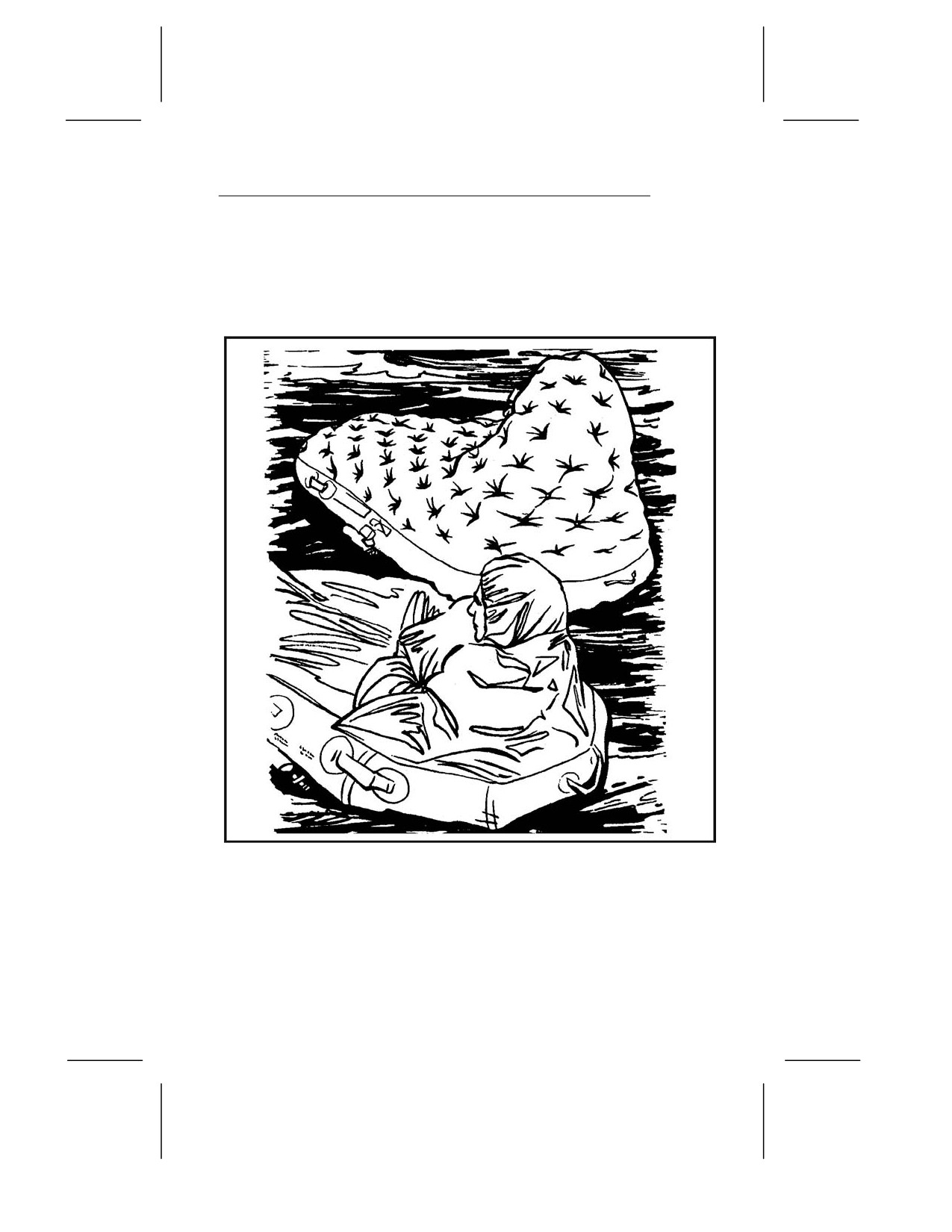
spray shield. There are two variations of the one-man raft; the
improved model incorporates an inflatable spray shield and floor
that provide additional insulation. The spray shield helps keep
you dry and warm in cold oceans and protects you from the sun in
the hot climates (Figure 16-11).
Figure 16-11. One-Man Raft With Spray Shield Inflated
Seven-Man Raft
16-30. Some multiplace aircraft carry the seven-man raft. It is a
component of the survival drop kit (Figure 16-12, page 16-16).
This raft may inflate upside down and require you to right the
raft before boarding. Always work from the bottle side to prevent
injury if the raft turns over. Facing into the wind, the wind
16-15
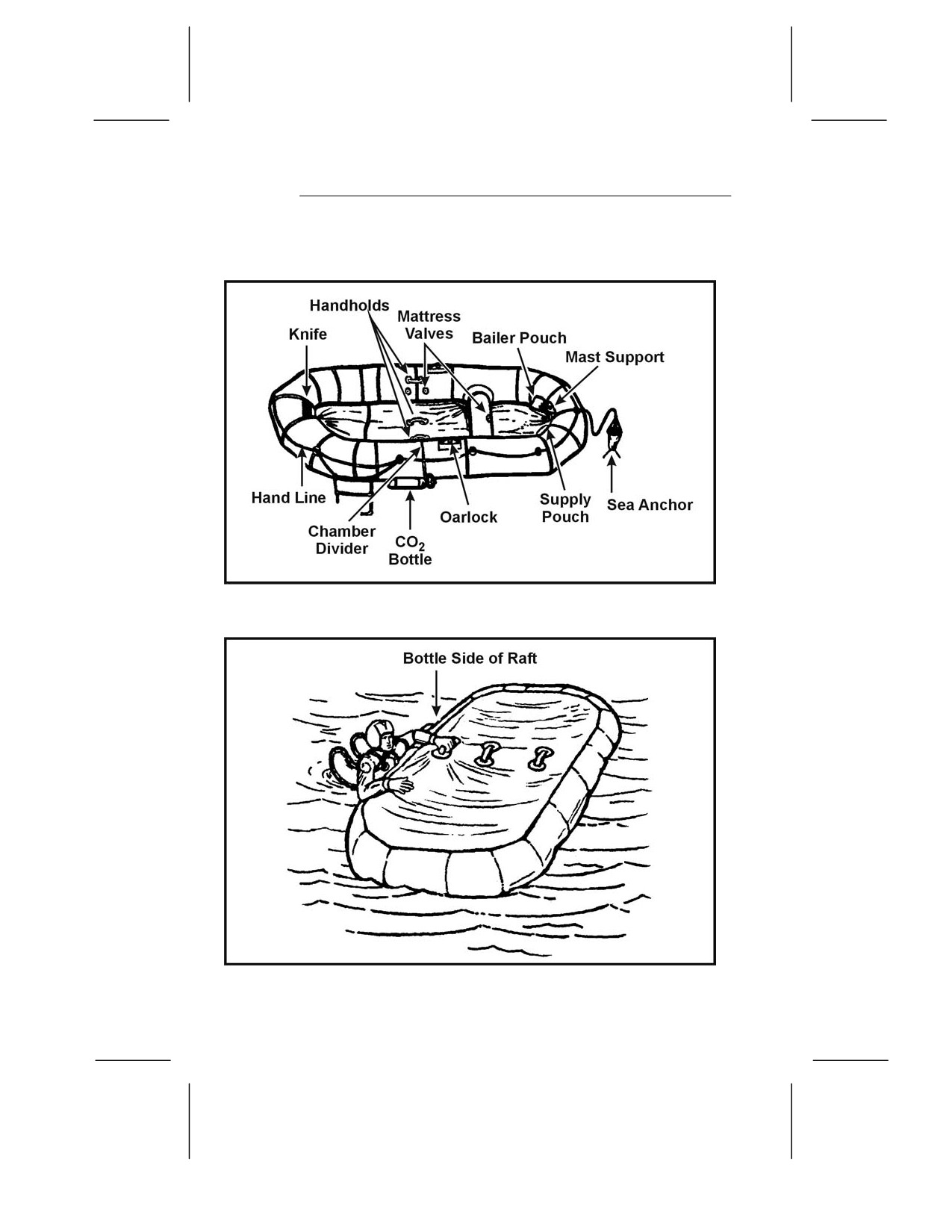
provides additional help in righting the raft. Use the handles on
the inside bottom of the raft for boarding (Figure 16-13).
Figure 16-12. Seven-Man Raft
Figure 16-13. Method of Righting Raft
16-16
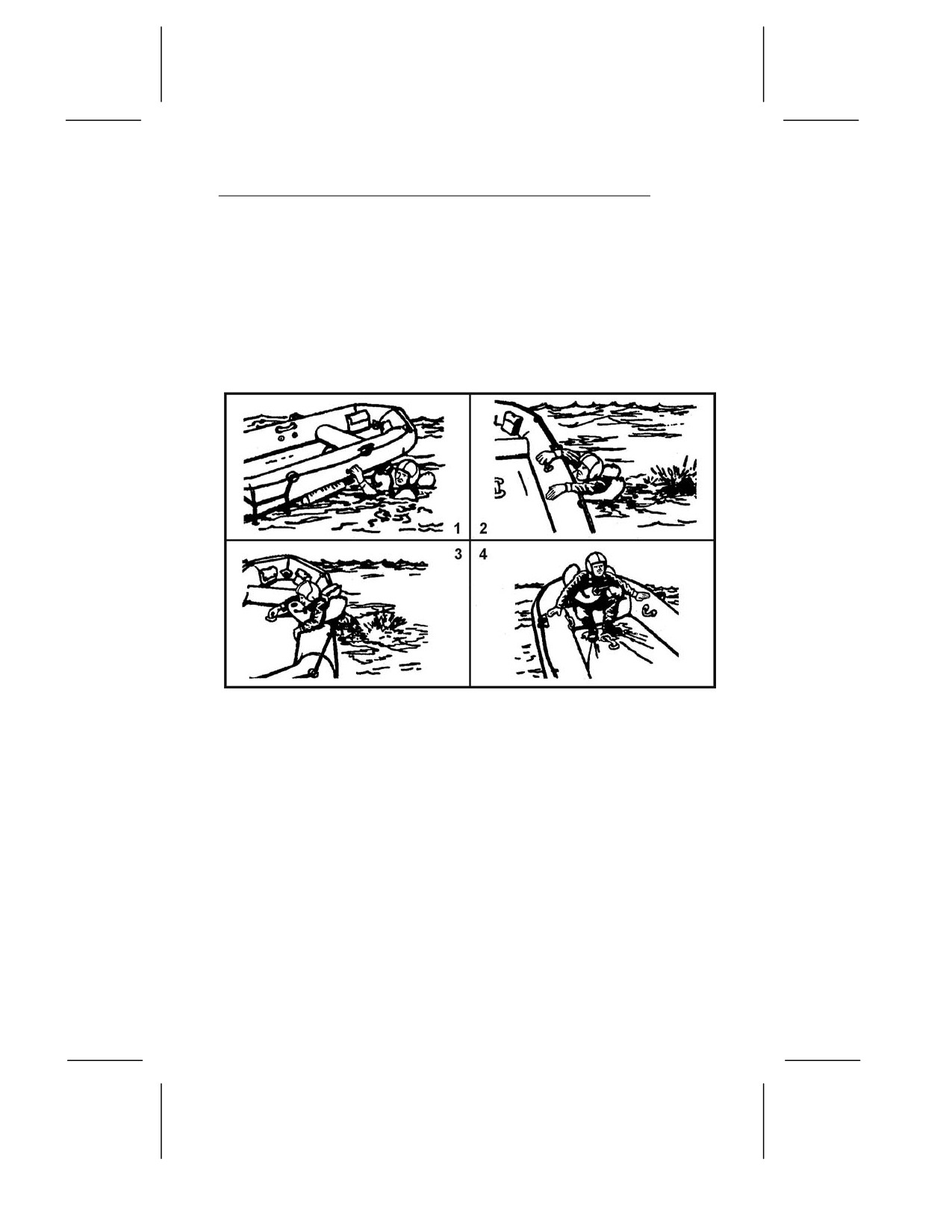
16-31. Use the boarding ramp if someone holds down the raft’s
opposite side. If you don’t have help, again work from the bottle
side with the wind at your back to help hold down the raft. Follow
the five As outlined in paragraph 16-22. Then grasp an oarlock
and boarding handle, kick your legs to get your body prone on the
water, and then kick and pull yourself into the raft. If you are
weak or injured, you may partially deflate the raft to make
boarding easier (Figure 16-14).
Figure 16-14. Method of Boarding Seven-Man Raft
16-32. Use the hand pump to keep the buoyancy chambers and
cross seat firm. Never overinflate the raft.
25-, 35-, and 46-Man Rafts
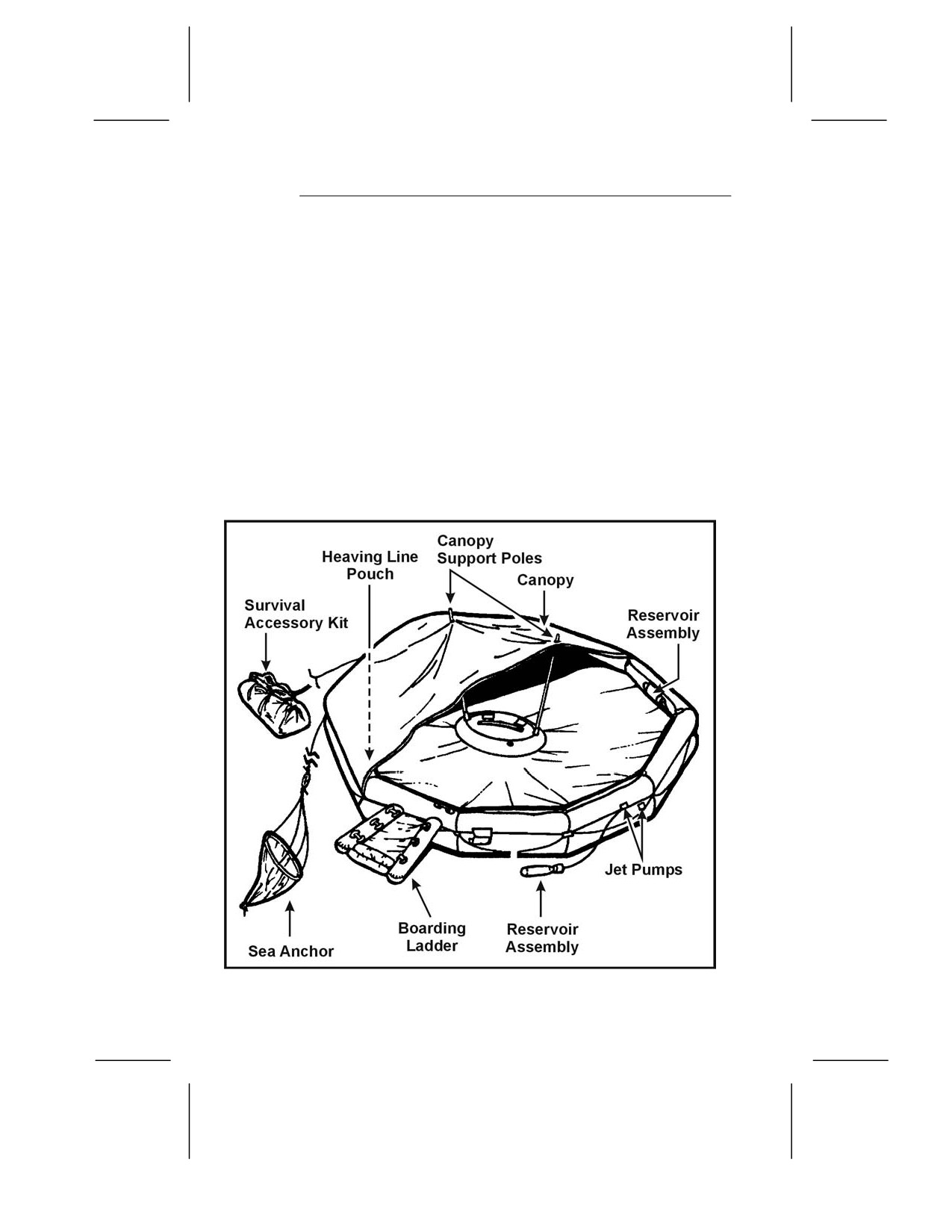
16-33. You may find 25-, 35-, or 46-man rafts in multiplace aircraft
(Figure 16-15, page 16-18). The 20-man raft has been discontinued.
The rafts are stowed in raft compartments on the outside of the
fuselage, usually on the wings, alongside the upper half of the port
(left) side of the aircraft. There will always be enough raft space to
accommodate all personnel on each type of aircraft. If the number
of personnel exceeds the maximum number of raft spaces,
additional rafts will be centerline-loaded and ratchet-strapped to
the cargo bay floor. Some may be automatically deployed from the
16-17
cockpit or from stations within the cargo area, usually near the
crew chief’s station, while others may need manual deployment. No
matter how the raft lands in the water, it is ready for boarding. A
lanyard connects the accessory kit to the raft and you retrieve the
kit by hand. You must manually inflate the center chamber with
the hand pump. Board the 25-, 35-, or 46-man raft from the
aircraft, if possible. If not, board in the following manner:
• Approach the lower boarding ramp, following the arrows
printed on the outside of the raft.
• Remove your life preserver and tether it to yourself so that
it trails behind you.
• Grasp the boarding handles and kick your legs to get your
body into a prone position on the water’s surface; then kick
and pull until you are inside the raft.
Figure 16-15. 25-Man Raft
16-18
16-34. An incompletely inflated raft will make boarding easier.
Approach the intersection of the raft and ramp, grasp the upper
boarding handle, and swing one leg onto the center of the ramp,
as in mounting a horse.
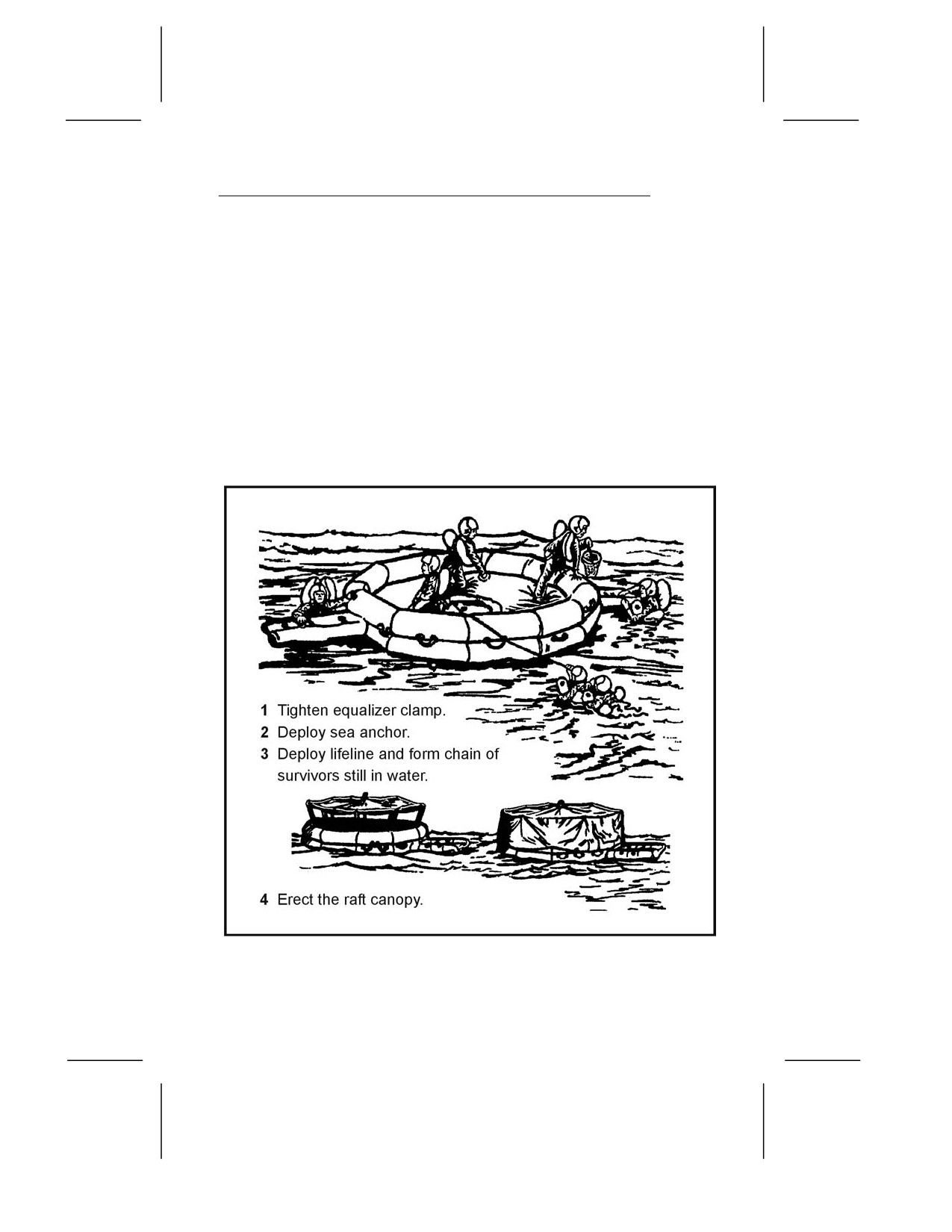
16-35. Immediately tighten the equalizer clamp upon entering the
raft to prevent deflating the entire raft in case of a puncture
(Figure 16-16).
16-36. Use the pump to keep these rafts’ chambers and center
ring firm. They should be well rounded but not overly tight. The
center rings keep the center of the floor afloat, and give raft
occupants something to brace their feet against to prevent all
occupants from sliding toward the center.
Figure 16-16. Immediate Action—Multiplace Raft
16-19
SAILING RAFTS
16-37. Rafts do not have keels, therefore, you can’t sail them into
the wind. However, anyone can sail a raft downwind. You can
successfully sail the seven-man raft
10 degrees off from the
direction of the wind. Do not try to sail the raft unless land is
near. If you decide to sail and the wind is blowing toward a
desired destination, fully inflate the raft, sit high, take in the sea
anchor, rig a sail, and use an oar as a rudder.
16-38. In the seven-man raft, erect a square sail in the bow
using the oars and their extensions as the mast and crossbar
(Figure 16-17, page 16-21). You may use a waterproof tarpaulin
or parachute material for the sail. If the raft has no regular mast
socket and step, erect the mast by tying it securely to the front
cross seat using braces. Pad the bottom of the mast to prevent it
from chafing or punching a hole through the floor, whether or not
there is a socket. The heel of a shoe, with the toe wedged under
the seat, makes a good improvised mast step. Do not secure the
corners of the lower edge of the sail. Hold the lines attached to the
corners with your hands so that a gust of wind will not rip the
sail, break the mast, or capsize the raft.
16-39. Take every precaution to prevent the raft from turning
over. In rough weather, keep the sea anchor away from the bow.
Have the passengers sit low in the raft, with their weight
distributed to hold the upwind side down. To prevent falling out,
they should also avoid sitting on the sides of the raft or standing
up. Avoid sudden movements without warning the other
passengers. When the sea anchor is not in use, tie it to the raft
and stow it in such a manner that it will hold immediately if the
raft capsizes.
WATER
16-40. Water is your most important need. With it alone, you can
live for ten days or longer, depending on your will to live. When
drinking water, moisten your lips, tongue, and throat before
swallowing.
16-20
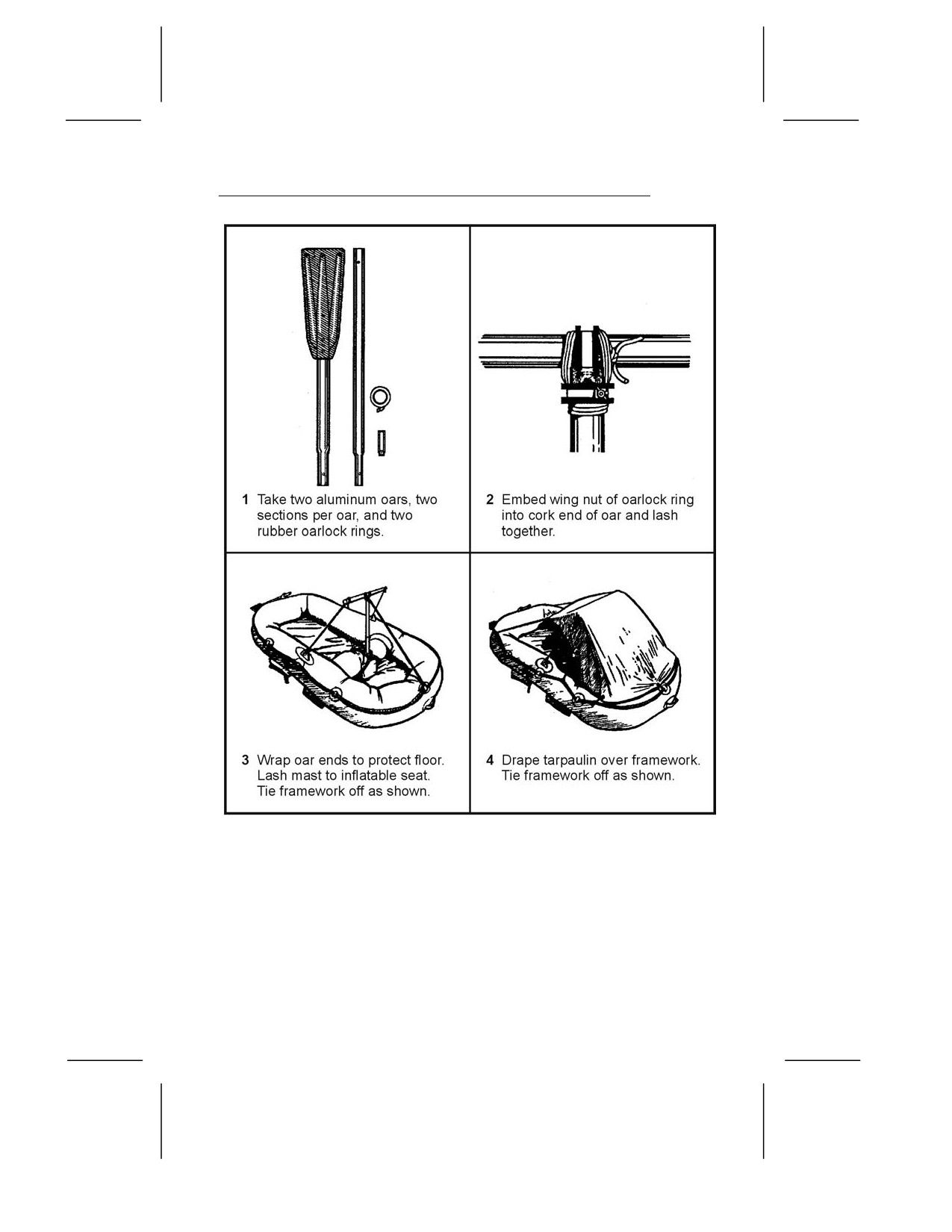
Figure 16-17. Sail Construction
Short-Water Rations
16-41. When you have a limited water supply and you can’t
replace it by chemical or mechanical means, use the water
efficiently.
Protect freshwater supplies from seawater
contamination. Keep your body well shaded, both from overhead
sun and from reflection off the sea surface. Allow ventilation of
16-21
air; dampen your clothes during the hottest part of the day. Do
not exert yourself. Relax and sleep when possible. Fix your daily
water ration after considering the amount of water you have, the
output of solar stills and desalting kit, and the number and
physical condition of your party.
16-42. If you don’t have water, don’t eat. If your water ration is two
liters or more per day, eat any part of your ration or any additional
food that you may catch, such as birds, fish, shrimp. The life raft’s
motion and your anxiety may cause nausea. If you eat when
nauseated, you may lose your food immediately. If nauseated, rest
and relax as much as you can, and take only water.
16-43. To reduce your loss of water through perspiration, soak
your clothes in the sea and wring them out before putting them
on again. Don’t overdo this during hot days when no canopy or
sun shield is available. This is a trade-off between cooling and the
saltwater boils, sores, and rashes that will result. Be careful not
to get the bottom of the raft wet.
16-44. Watch the clouds and be ready for any chance of showers.
Keep the tarpaulin handy for catching water. If it is encrusted
with dried salt, wash it in seawater. Normally, a small amount of
seawater mixed with rain will hardly be noticeable and will not
cause any physical reaction. In rough seas you cannot get
uncontaminated fresh water.
16-45. At night, secure the tarpaulin like a sunshade, and turn up
its edges to collect dew. It is also possible to collect dew along the
sides of the raft using a sponge or cloth. When it rains, drink as
much as you can hold.
Manual Reverse Osmosis Desalinator
16-46. Most rafts today are equipped with a manual reverse
osmosis desalinator (MROD). The MROD is a very highly efficient
water purifier designed to remove salt particles from seawater,
thereby making seawater potable. The two most common models
are the Survivor 35 and the Survivor 06, which make 35 and 6
gallons of potable water in a 24-hour period if used continuously.
Water procurement at sea is a 24-hour-a-day job. The MROD’s
life cycle is up to 50,000 gallons of water. The MROD has a 10-
year shelf life before it must be repacked by the manufacturer.
16-22
To operate the MROD, place both the intake (larger dual hose) and
the potable water supply hose into the water. Begin a 2-second
cycle of pumping the handle—one second up, one second down.
A pressure indicator will protrude from the pump housing to show
that the proper flow is being maintained. An orange band will be
visible when the correct rhythm is maintained. Purge the
antimicrobial packing agent from the filter medium for 2 minutes.
Then begin to collect potable water.
NOTE: Ensure that the water is free from any petroleum residue
(jet fuel, hydraulic fluid, or oil) before using an MROD. The filter
medium is very sensitive to petroleum, oils, and lubricants, and
will render the filter useless, destroying your water production
capability.
Solar Still
16-47. When solar stills are available, read the instructions and
set them up immediately. Use as many stills as possible,
depending on the number of men in the raft and the amount of
sunlight available. Secure solar stills to the raft with care. Solar
stills only work on flat, calm seas.
Desalting Kits
16-48. When desalting kits are available in addition to solar stills,
use them only for immediate water needs or during long overcast
periods when you cannot use solar stills. In any event, keep
desalting kits and emergency water stores for periods when you
cannot use solar stills or catch rainwater.
Water From Fish
16-49. Drink the aqueous fluid found along the spine and in the
eyes of large fish. Carefully cut the fish in half to get the fluid
along the spine and suck the eye. If you are so short of water that
you need to do this, then do not drink any of the other body
fluids. These other fluids are rich in protein and fat and will use
up more of your reserve water in digestion than they supply.
Sea Ice
16-50. In arctic waters, use old sea ice for water. This ice is
bluish, has rounded corners, and splinters easily. It is nearly free
16-23
of salt. New ice is gray, milky, hard, and salty. Water from
icebergs is fresh, but icebergs are dangerous to approach. Use
them as a source of water only in emergencies.
16-51. As in any survival situation there are dangers when you
are substituting or compromising necessities. Even though water
is one of your basic needs, keep in mind the following tips.
DO NOT—
• Drink seawater.
• Drink urine.
• Drink alcohol.
• Smoke.
• Eat, unless water is available.
16-52. Sleep and rest are the best ways of enduring periods of
reduced water and food intake. However, make sure that you have
enough shade when napping during the day. If the sea is rough, tie
yourself to the raft, close any cover, and ride out the storm as best
you can. Relax is the key word—at least try to relax.
FOOD PROCUREMENT
16-53. In the open sea, fish will be the main food source. There
are some poisonous and dangerous ocean fish, but, in general,
when out of sight of land, fish are safe to eat. Nearer the shore
there are fish that are both dangerous and poisonous to eat.
There are some fish, such as the red snapper and barracuda, that
are normally edible but poisonous when taken from the waters of
atolls and reefs. Flying fish will even jump into your raft!
Fish
16-54. When fishing, do not handle the fishing line with bare
hands and never wrap it around your hands or tie it to a life raft.
The salt that adheres to it can make it a sharp cutting edge, an
edge dangerous both to the raft and your hands. Wear gloves, if
they are available, or use a cloth to handle fish and to avoid
injury from sharp fins and gill covers.
16-55. In warm regions, gut and bleed fish immediately after
catching them. Cut fish that you do not eat immediately into thin,
narrow strips and hang them to dry. A well-dried fish stays edible
16-24
for several days. Fish not cleaned and dried may spoil in half a
day. Fish with dark meat are very prone to decomposition. If you
do not eat them all immediately, do not eat any of the leftovers.
Use the leftovers for bait.
16-56. Never eat fish that have pale, shiny gills, sunken eyes,
flabby skin and flesh, or an unpleasant odor. Good fish show the
opposite characteristics. Sea fish have a saltwater or clean fishy
odor. Do not confuse eels with sea snakes that have an obviously
scaly body and strongly compressed, paddle-shaped tail. Both eels
and sea snakes are edible, but you must handle the latter with
care because of their poisonous bites. The heart, blood, intestinal
wall, and liver of most fish are edible. Cook the intestines. Also
edible are the partly digested smaller fish that you may find in
the stomachs of large fish. In addition, sea turtles are edible.
16-57. Shark meat is a good source of food whether raw, dried, or
cooked. Shark meat spoils very rapidly due to the high
concentration of urea in the blood; therefore, bleed it immediately
and soak it in several changes of water. People prefer some shark
species over others. Consider them all edible except the Greenland
shark, whose flesh contains high quantities of vitamin A. Do not
eat the livers, due to high vitamin A content.
Fishing Aids
16-58. The accessory kit contains a very good fishing kit that
should meet your needs just about anywhere around the world.
You can also use different materials to make fishing aids as
described in the following paragraphs:
• Fishing line. Use pieces of tarpaulin or canvas. Unravel
the threads and tie them together in short lengths in
groups of three or more threads. Shoelaces and parachute
suspension line also work well.
• Fish hooks. No one at sea should be without fishing
equipment, but if you are, improvise hooks as shown in
Chapter 8.
• Fish lures. You can fashion lures by attaching a double
hook to any shiny piece of metal.
• Grapple. Use grapples to hook seaweed. You may shake
crabs, shrimp, or small fish out of the seaweed.
16-25
These you may eat or use for bait. You may eat seaweed
itself, but only when you have plenty of drinking water.
Improvise grapples from wood. Use a heavy piece of wood
as the main shaft, and lash three smaller pieces to the
shaft as grapples.
• Bait. You can use small fish as bait for larger ones. Scoop
the small fish up with a net. If you don’t have a net, make
one from cloth of some type. Hold the net under the water
and scoop upward. Use all the guts from birds and fish for
bait. When using bait, try to keep it moving in the water to
give it the appearance of being alive.
Helpful Fishing Hints
16-59. Your fishing should be successful if you remember the
following important hints:
• Be extremely careful with fish that have teeth and spines.
• Cut a large fish loose rather than risk capsizing the raft.
Try to catch small rather than large fish.
• Do not puncture your raft with hooks or other sharp
instruments.
• Do not fish when large sharks are in the area.
• Watch for schools of fish; try to move close to these schools.
• Fish at night using a light. The light attracts fish.
• In the daytime, shade attracts some fish. You may find
them under your raft.
• Improvise a spear by tying a knife to an oar blade. This
spear can help you catch larger fish, but you must get
them into the raft quickly or they will slip off the blade.
Also, tie the knife very securely or you may lose it.
• Always take care of your fishing equipment. Dry your
fishing lines, clean and sharpen the hooks, and do not
allow the hooks to stick into the fishing lines.
Birds
16-60. As stated in Chapter 8, all sea birds are edible. Eat any
birds you can catch. Sometimes birds may land on your raft, but
usually they are cautious. You may be able to attract some birds
16-26
by towing a bright piece of metal behind the raft. This will bring
the bird within shooting range, provided you have a firearm.
16-61. If a bird lands within your reach, you may be able to catch
it. If the birds do not land close enough or land on the other end of
the raft, you may be able to catch them with a bird noose. Bait the
center of the noose and wait for the bird to land. When the bird’s
feet are in the center of the noose, pull it tight.
16-62. Use all parts of the bird. Use the feathers for insulation,
the entrails and feet for bait, and so on. Use your imagination.
MEDICAL PROBLEMS ASSOCIATED WITH SEA SURVIVAL
16-63. At sea, you may become seasick, get saltwater sores, or
face some of the same medical problems that occur on land, such
as dehydration, hypothermia, or sunburn. These problems can
become critical if left untreated.
Seasickness
16-64. Seasickness is the nausea and vomiting caused by the
motion of the raft. It can result in—
• Extreme fluid loss and exhaustion.
• Loss of the will to survive.
• Others becoming seasick.
• Attraction of sharks to the raft.
• Unclean conditions.
16-65. To treat seasickness—
• Wash both the patient and the raft to remove the sight and
odor of vomit.
• Keep the patient from eating food until his nausea is gone.
• Have the patient lie down and rest.
• Give the patient seasickness pills if available. If the
patient is unable to take the pills orally, insert them
rectally for absorption by the body. Do not take seasickness
pills if you are already seasick. They tend to make the
patient even sicker; always take seasickness pills before
the symptoms appear.
16-27
NOTE: Some people at sea have said that erecting a canopy or
using the horizon or a cloud as a focal point helped overcome
seasickness. Others have said that swimming alongside the raft for
short periods helped, but extreme care must be taken if swimming.
Saltwater Sores
16-66. These sores result from a break in skin exposed to
saltwater for an extended period. They may also occur at the
areas that your clothing binds you—your waist, ankles, or wrist.
The sores may form scabs and pus. Do not open or drain the
sores. Flush them with freshwater, if available, and allow to dry.
Apply an antiseptic, if available.
Immersion Rot, Frostbite, and Hypothermia
16-67. These problems are similar to those encountered in cold
weather environments. Symptoms and treatment are the same as
covered in Chapter 15.
Blindness or Headache
16-68. If flame, smoke, or other contaminants get in the eyes,
flush them immediately with saltwater, then with freshwater, if
available. Apply ointment, if available. Bandage both eyes 18 to
24 hours, or longer if damage is severe. If the glare from the sky
and water causes your eyes to become bloodshot and inflamed,
bandage them lightly. Try to prevent this problem by wearing
sunglasses. Improvise sunglasses if necessary.
Constipation
16-69. This condition is a common problem on a raft. Do not take
a laxative, as this will cause further dehydration. Exercise as
much as possible and drink an adequate amount of water,
if available.
Difficult Urination
16-70. This problem is not unusual and is due mainly to
dehydration. It is best not to treat it, as it could cause further
dehydration.
16-28
Sunburn
16-71. Sunburn is a serious problem in sea survival. Try to
prevent sunburn by staying in the shade and keeping your head
and skin covered. Use cream or lip salve from your first-aid kit.
Remember, reflection from the water also causes sunburn in
places where the sun usually doesn’t burn you—tender skin
under the earlobes, eyebrows, nose, chin, and underarms.
SHARKS
16-72. Whether you are in the water or in a boat or raft, you may
see many types of sea life around you. Some may be more
dangerous than others. Generally, sharks are the greatest danger
to you. Other animals, such as whales, porpoises, and stingrays,
may look dangerous, but really pose little threat in the open sea.
16-73. Of the many hundreds of shark species, only about 20
species are known to attack man. The most dangerous are the
great white shark, the hammerhead, the mako, and the tiger
shark. Other sharks known to attack man include the gray, blue,
lemon, sand, nurse, bull, and oceanic white-tip sharks. Consider
any shark longer than 1 meter (3 feet) dangerous.
16-74. There are sharks in all oceans and seas of the world. While
many live and feed in the depths of the sea, others hunt near the
surface. The sharks living near the surface are the ones you will
most likely see. Their dorsal fins frequently project above the
water. Sharks in the tropical and subtropical seas are far more
aggressive than those in temperate waters.
16-75. All sharks are basically eating machines. Their normal
diet is live animals of any type, and they will strike at injured or
helpless animals. Sight, smell, or sound may guide them to their
prey. Sharks have an acute sense of smell and the smell of blood
in the water excites them. They are also very sensitive to any
abnormal vibrations in the water. The struggles of a wounded
animal or swimmer, underwater explosions, or even a fish
struggling on a fishline will attract a shark.
16-76. Sharks can bite from almost any position; they do not have
to turn on their side to bite. The jaws of some of the larger sharks
are so far forward that they can bite floating objects easily
without twisting to the side.
16-29
16-77. Sharks may hunt alone, but most reports of attacks cite
more than one shark present. The smaller sharks tend to travel
in schools and attack in mass. Whenever one of the sharks finds a
victim, the other sharks will quickly join it. Sharks will eat a
wounded shark as quickly as their prey.
16-78. Sharks feed at all hours of the day and night. Most
reported shark contacts and attacks were during daylight, and
many of these have been in the late afternoon. Some of the
measures that you can take to protect yourself against sharks
when you are in the water are—
• Stay with other swimmers. A group can maintain a 360-
degree watch. A group can either frighten or fight off
sharks better than one man.
• Always watch for sharks. Keep all your clothing on, to
include your shoes. Historically, sharks have attacked the
unclothed men in groups first, mainly in the feet. Clothing
also protects against abrasions should the shark brush
against you.
• Avoid urinating. If you must, only do so in small amounts.
Let it dissipate between discharges. If you must defecate,
do so in small amounts and throw it as far away from you
as possible. Do the same if you must vomit.
16-79. If a shark attack is imminent while you are in the water,
splash and yell just enough to keep the shark at bay. Sometimes
yelling underwater or slapping the water repeatedly will scare
the shark away. Conserve your strength for fighting in case the
shark attacks.
16-80. If attacked, kick and strike the shark. Hit the shark on the
gills or eyes if possible. If you hit the shark on the nose, you may
injure your hand if it glances off and hits its teeth.
16-81. When you are in a raft and see sharks—
• Do not fish. If you have hooked a fish, let it go. Do not
clean fish in the water.
• Do not throw garbage overboard.
• Do not let your arms, legs, or equipment hang in the water.
16-30
• Keep quiet and do not move around.
• Bury all dead as soon as possible. If there are many sharks
in the area, conduct the burial at night.
16-82. When you are in a raft and a shark attack is imminent, hit
the shark with anything you have, except your hands. You will do
more damage to your hands than the shark. If you strike with an
oar, be careful not to lose or break it.
DETECTING LAND
16-83. You should watch carefully for any signs of land. There are
many indicators that land is near.
16-84. A fixed cumulus cloud in a clear sky or in a sky where all
other clouds are moving often hovers over or slightly downwind
from an island.
16-85. In the tropics, the reflection of sunlight from shallow
lagoons or shelves of coral reefs often causes a greenish tint in
the sky.
16-86. In the arctic, light-colored reflections on clouds often
indicate ice fields or snow-covered land. These reflections are
quite different from the dark gray ones caused by open water.
16-87. Deep water is dark green or dark blue. Lighter color
indicates shallow water, which may mean land is near.
16-88. At night, or in fog, mist, or rain, you may detect land by
odors and sounds. The musty odor of mangrove swamps and mud
flats carry a long way. You hear the roar of surf long before you
see the surf. The continued cries of seabirds coming from one
direction indicate their roosting place on nearby land.
16-89. There usually are more birds near land than over the open
sea. The direction from which flocks fly at dawn and to which
they fly at dusk may indicate the direction of land. During the
day, birds are searching for food and the direction of flight has no
significance.
16-90. Mirages occur at any latitude, but they are more likely in
the tropics, especially during the middle of the day. Be careful not
to mistake a mirage for nearby land. A mirage disappears or its
16-31
appearance and elevation change when viewed from slightly
different heights.
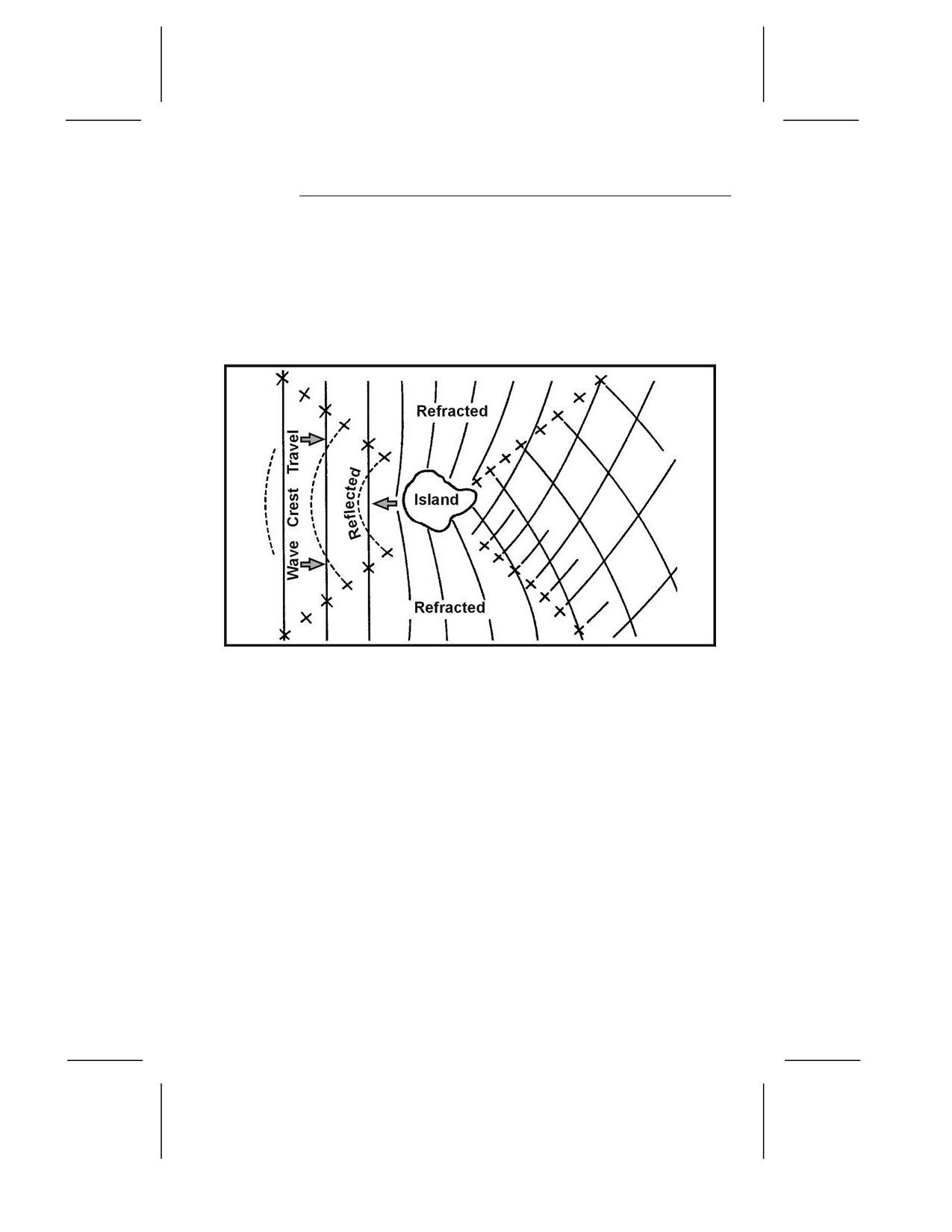
16-91. You may be able to detect land by the pattern of the waves
(refracted) as they approach land (Figure 16-18). By traveling
with the waves and parallel to the slightly turbulent area marked
“X” on the illustration, you should reach land.
Figure 16-18. Wave Patterns About an Island
RAFTING OR BEACHING TECHNIQUES
16-92. Once you have found land, you must get ashore safely. To
raft ashore, you can usually use the one-man raft without danger.
However, going ashore in a strong surf is dangerous. Take your
time. Select your landing point carefully. Try not to land when
the sun is low and straight in front of you. Try to land on the lee
side of an island or on a point of land jutting out into the water.
Keep your eyes open for gaps in the surf line, and head for them.
Avoid coral reefs and rocky cliffs. There are no coral reefs near
the mouths of freshwater streams. Avoid rip currents or strong
tidal currents that may carry you far out to sea. Either signal
ashore for help or sail around and look for a sloping beach where
the surf is gentle.
16-93. If you have to go through the surf to reach shore, take
down the mast. Keep your clothes and shoes on to avoid severe
16-32
cuts. Adjust and inflate your life vest. Trail the sea anchor over
the stem using as much line as you have. Use the oars or paddles
and constantly adjust the sea anchor to keep a strain on the
anchor line. These actions will keep the raft pointed toward shore
and prevent the sea from throwing the stern around and
capsizing you. Use the oars or paddles to help ride in on the
seaward side of a large wave.
16-94. The surf may be irregular and velocity may vary, so modify
your procedure as conditions demand. A good method of getting
through the surf is to have half the men sit on one side of the raft,
half on the other, facing away from each other. When a heavy sea
bears down, half should row (pull) toward the sea until the crest
passes; then the other half should row (pull) toward the shore
until the next heavy sea comes along.
16-95. Against a strong wind and heavy surf, the raft must have
all possible speed to pass rapidly through the oncoming crest to
avoid being turned broadside or thrown end over end. If possible,
avoid meeting a large wave at the moment it breaks.
16-96. If in a medium surf with no wind or offshore wind, keep
the raft from passing over a wave so rapidly that it drops
suddenly after topping the crest. If the raft turns over in the surf,
try to grab hold of it and ride it in.
16-97. As the raft nears the beach, ride in on the crest of a large
wave. Paddle or row hard and ride in to the beach as far as you
can. Do not jump out of the raft until it has grounded, then
quickly get out and beach it.
16-98. If you have a choice, do not land at night. If you have
reason to believe that people live on the shore, lay away from the
beach, signal, and wait for the inhabitants to come out and bring
you in.
16-99. If you encounter sea ice, land only on large, stable floes.
Avoid icebergs that may capsize and small floes or those obviously
disintegrating. Use oars and hands to keep the raft from rubbing
on the edge of the ice. Take the raft out of the water and store it
well back from the floe’s edge. You may be able to use it for
shelter. Keep the raft inflated and ready for use. Any floe may
break up without warning.
16-33
SWIMMING ASHORE
16-100. If rafting ashore is not possible and you have to swim,
wear your shoes and at least one thickness of clothing. Use the
sidestroke or breaststroke to conserve strength.
16-101. If the surf is moderate, ride in on the back of a small
wave by swimming forward with it. Dive to a shallow depth to
end the ride just before the wave breaks.
16-102. In high surf, swim toward shore in the trough between
waves. When the seaward wave approaches, face it and
submerge. After it passes, work toward shore in the next trough.
If caught in the undertow of a large wave, push off the bottom or
swim to the surface and proceed toward shore as above.
16-103. If you must land on a rocky shore, look for a place where
the waves rush up onto the rocks. Avoid places where the waves
explode with a high, white spray. Swim slowly when making your
approach. You will need your strength to hold on to the rocks. You
should be fully clothed and wear shoes to reduce injury.
16-104. After selecting your landing point, advance behind a
large wave into the breakers. Face toward shore and take a
sitting position with your feet in front, 60 to 90 centimeters (2 or
3 feet) lower than your head. This position will let your feet
absorb the shock when you land or strike submerged boulders or
reefs. If you do not reach shore behind the wave you picked, swim
with your hands only. As the next wave approaches, take a sitting
position with your feet forward. Repeat the procedure until you
land.
16-105. Water is quieter in the lee of a heavy growth of seaweed.
Take advantage of such growth. Do not swim through the
seaweed; crawl over the top by grasping the vegetation with
overhand movements.
16-106. Cross a rocky or coral reef as you would land on a rocky
shore. Keep your feet close together and your knees slightly bent
in a relaxed sitting posture to cushion the blows against the coral.
PICKUP OR RESCUE
16-34
16-107. On sighting rescue craft approaching for pickup (boat,
ship, conventional aircraft, or helicopter), quickly clear any lines
(fishing lines, desalting kit lines) or other gear that could cause
entanglement during rescue. Secure all loose items in the raft.
Take down canopies and sails to ensure a safer pickup. After
securing all items, put on your helmet, if available. Fully inflate
your life preserver. Remain in the raft, unless otherwise
instructed, and remove all equipment except the preservers. If
possible, you will receive help from rescue personnel lowered into
the water. Remember, follow all instructions given by the rescue
personnel.
16-108. If the helicopter recovery is unassisted, do the following
before pickup:
• Secure all the loose equipment in the raft, accessory bag,
or in pockets.
• Deploy the sea anchor, stability bags, and accessory bag.
• Partially deflate the raft and fill it with water.
• Unsnap the survival kit container from the parachute
harness.
• Grasp the raft handhold and roll out of the raft.
• Allow the recovery device or the cable to ground out on the
water’s surface.
• Maintain the handhold until the recovery device is in your
other hand.
• Mount the recovery device, avoiding entanglement with
the raft.
• Signal the hoist operator for pickup by placing one arm
straight out to the side with your thumb up while you hold
on with the other. Vigorously splash the water and then
raise your arm in the “thumbs up” signal. Once recovered,
DO NOT reach for the helicopter or crewman to try to
assist him. Allow the aircrew personnel to pull you into the
aircraft by themselves.
SEASHORES
16-35
16-109. Search planes or ships do not always spot a drifting raft
or swimmer. You may have to land along the coast before being
rescued. Surviving along the seashore is different from open sea
survival. Food and water are more abundant and shelter is
obviously easier to locate and construct.
16-110. If you are in friendly territory and decide to travel, it is
better to move along the coast than to go inland. Do not leave the
coast except to avoid obstacles (swamps and cliffs) or unless you
find a trail that you know leads to human habitation.
16-111. In time of war, remember that the enemy patrols most
coastlines. These patrols may cause problems for you if you land
on a hostile shore. You will have extremely limited travel options
in this situation. Avoid all contact with other humans and make
every effort to cover all tracks you leave on the shore.
SPECIAL HEALTH HAZARDS
16-112. Surviving on the seashore certainly can provide a greater
abundance of your basic needs, but hazards also exist. Coral,
poisonous and aggressive fish, crocodiles, sea urchins, sea biscuits,
sponges, anemones, tides, and undertow can pose special health
hazards that you should be aware of and know how to handle.
Coral
16-113. Coral, dead or alive, can inflict painful cuts. There are
hundreds of water hazards that can cause deep puncture wounds,
severe bleeding, and the danger of infection. Clean all coral cuts
thoroughly. Do not use iodine to disinfect any coral cuts. Some coral
polyps feed on iodine and may grow inside your flesh if you use iodine.
Poisonous Fish
16-114. Many reef fish have toxic flesh. For some species, the
flesh is always poisonous, for other species, only at certain times
of the year. The poisons are present in all parts of the fish, but
especially in the liver, intestines, and eggs. This is due to their
ingesting of a poisonous bacterial that grows only on coral reefs.
This bacteria is toxic to humans.
16-115. Fish toxins are water soluble; no amount of cooking will
neutralize them. They are tasteless, therefore, the standard
edibility tests are useless. Birds are least susceptible to the
16-36
poisons. Therefore, do not think that because a bird can eat a fish,
it is a safe species for you to eat.
16-116. The toxins will produce a numbness of the lips, tongue,
toes, and tips of the fingers, severe itching, and a clear reversal of
temperature sensations. Cold items appear hot and hot items
cold. There will probably also be nausea, vomiting, loss of speech,
dizziness, and a paralysis that eventually brings death.
16-117. In addition to fish with poisonous flesh, there are those
that are dangerous to touch. Many stingrays have a poisonous
barb in their tail. There are also species that can deliver an
electric shock. Some reef fish, such as stonefish and toadfish,
have venomous spines that can cause very painful although
seldom fatal injuries. The venom from these spines causes a
burning sensation or even an agonizing pain that is out of
proportion to the apparent severity of the wound. A jellyfish,
while not usually fatal, can inflict a very painful sting if it touches
you with its tentacles. See Chapter 11 and Appendix F for details
on particularly dangerous fish of the sea and seashore.
Aggressive Fish
16-118. You should also avoid some ferocious fish. The bold and
inquisitive barracuda has attacked men wearing shiny objects.
It may charge lights or shiny objects at night. The sea bass, which
can grow to 1.7 meters (6 feet), is another fish to avoid. The
moray eel, which has many sharp teeth and grows to 1.5 meters
(5 feet), can also be aggressive if disturbed.
Sea Snakes
16-119. Sea snakes are venomous and sometimes found in mid
ocean. They are unlikely to bite unless provoked. Avoid them.
Crocodiles
16-120. Crocodiles inhabit tropical saltwater bays and mangrove-
bordered estuaries and range up to 65 kilometers (39 miles) into
the open sea. Few remain near inhabited areas. You commonly
find crocodiles in the remote areas of the East Indies and
Southeast Asia. Consider specimens over 1 meter (3 feet) long
dangerous, especially females guarding their nests. Crocodile
meat is an excellent source of food when available.
16-37
Sea Urchins, Sea Biscuits, Sponges, and Anemones
16-121. These animals can cause extreme, though seldom fatal,
pain. Usually found in tropical shallow water near coral
formations, sea urchins resemble small, round porcupines. If
stepped on, they slip fine needles of lime or silica into the skin,
where they break off and fester. If possible, remove the spines
and treat the injury for infection. The other animals mentioned
inflict injury similarly.
Tides and Undertow
16-122. If caught in a large wave’s undertow, push off the bottom
or swim to the surface and proceed shoreward in a trough
between waves. Do not fight against the pull of the undertow.
Swim with it or perpendicular to it until it loses strength, then
swim for shore.
FOOD
16-123. Obtaining food along a seashore should not present a
problem. There are many types of seaweed and other plants you
can easily find and eat. See Chapter 9 and Appendix B for a
discussion of these plants. There is also a great variety of animal
life that can supply your need for food in this type of survival
situation.
Mollusks
16-124. Mussels, limpets, clams, sea snails, octopuses, squids,
and sea slugs are all edible. Shellfish will usually supply most of
the protein eaten by coastal survivors. Avoid the blue-ringed
octopus and cone shells (described in Chapter 11 and Appendix
F). Also, beware of “red tides” that make mollusks poisonous.
Apply the edibility test on each species before eating.
Worms
16-125. Coastal worms are generally edible, but it is better to use
them for fish bait. Avoid bristle worms that look like fuzzy
caterpillars. Also, avoid tubeworms that have sharp-edged tubes.
Arrow worms, alias amphioxus, are not true worms. You find
them in the sand. They are excellent either fresh or dried.
16-38
Crabs, Lobsters, and Barnacles
16-126. These animals are seldom dangerous to man and are an
excellent food source. The pincers of larger crabs or lobsters can
crush a man’s finger. Many species have spines on their shells,
making it preferable to wear gloves when catching them.
Barnacles can cause scrapes or cuts and are difficult to detach
from their anchor, but the larger species are an excellent food
source.
Sea Urchins
16-127. These are common and can cause painful injuries when
stepped on or touched. They are also a good source of food. Handle
them with gloves and remove all spines.
Sea Cucumbers
16-128. This animal is an important food source in the Indo-
Pacific regions. Use them whole after evisceration or remove the
five muscular strips that run the length of its body. Eat them
smoked, pickled, or cooked.
16-39
Chapter 17
Expedient Water Crossings
In a survival situation, you may have to cross a
water obstacle. It may be in the form of a river, a
stream, a lake, a bog, quicksand, quagmire, or
muskeg. Even in the desert, flash floods occur,
making streams an obstacle. Whatever the
obstacle, you need to know how to cross it safely.
RIVERS AND STREAMS
17-1. You can apply almost every description to rivers and
streams. They may be shallow or deep, slow or fast moving,
narrow or wide. Before you try to cross a river or stream, develop
a good plan.
17-2. Your first step is to look for a high place from which you can
get a good view of the river or stream. From this place, you can
look for a place to cross. If there is no high place, climb a tree.
Good crossing locations include—
• A level stretch where it breaks into several channels. Two
or three narrow channels are usually easier to cross than a
wide river.
• A shallow bank or sandbar. If possible, select a point
upstream from the bank or sandbar so that the current
will carry you to it if you lose your footing.
• A course across the river that leads downstream so that
you will cross the current at about a 45-degree angle.
17-3. The following areas possess potential hazards; avoid them,
if possible:
• Obstacles on the opposite side of the river that might
hinder your travel. Try to select the spot from which travel
will be the safest and easiest.
• A ledge of rocks that crosses the river. This often indicates
dangerous rapids or canyons.
17-1
• A deep or rapid waterfall or a deep channel. Never try to
ford a stream directly above or even close to such hazards.
• Rocky places that could cause you to sustain serious
injuries from slipping or falling. Usually, submerged rocks
are very slick, making balance extremely difficult. An
occasional rock that breaks the current, however, may help
you.
• An estuary of a river because it is normally wide, has
strong currents, and is subject to tides. These tides can
influence some rivers many kilometers from their mouths.
Go back upstream to an easier crossing site.
• Eddies, which can produce a powerful backward pull
downstream of the obstruction causing the eddy and pull
you under the surface.
17-4. The depth of a fordable river or stream is no deterrent if you
can keep your footing. In fact, deep water sometimes runs more
slowly and is therefore safer than fast-moving shallow water. You
can always dry your clothes later, or if necessary, you can make a
raft to carry your clothing and equipment across the river.
17-5. You must not try to swim or wade across a stream or river
when the water is at very low temperatures. This swim could be
fatal. Try to make a raft of some type. Wade across if you can get
only your feet wet. Dry them vigorously as soon as you reach the
other bank.
RAPIDS
17-6. If necessary, you can safely cross a deep, swift river or rapids.
To swim across a deep, swift river, swim with the current, never
fight it. Try to keep your body horizontal to the water. This will
reduce the danger of being pulled under.
17-7. In fast, shallow rapids, lie on your back, feet pointing
downstream, finning your hands alongside your hips. This action
will increase buoyancy and help you steer away from obstacles.
Keep your feet up to avoid getting them bruised or caught by rocks.
17-8. In deep rapids, lie on your stomach, head downstream,
angling toward the shore whenever you can. Watch for obstacles
17-2
and be careful of backwater eddies and converging currents, as
they often contain dangerous swirls. Converging currents occur
where new watercourses enter the river or where water has been
diverted around large obstacles such as small islands.
17-9. To ford a swift, treacherous stream, apply the following steps:
•
Remove your pants and shirt to lessen the water’s pull on
you. Keep your footgear on to protect your feet and ankles
from rocks. It will also provide you with firmer footing.
•
Tie your pants and other articles to the top of your
rucksack or in a bundle, if you have no pack. This way, if
you have to release your equipment, all your articles will
be together. It is easier to find one large pack than to find
several small items.
•
Carry your pack well up on your shoulders and be sure you
can easily remove it, if necessary. Not being able to get a
pack off quickly enough can drag even the strongest
swimmers under.
•
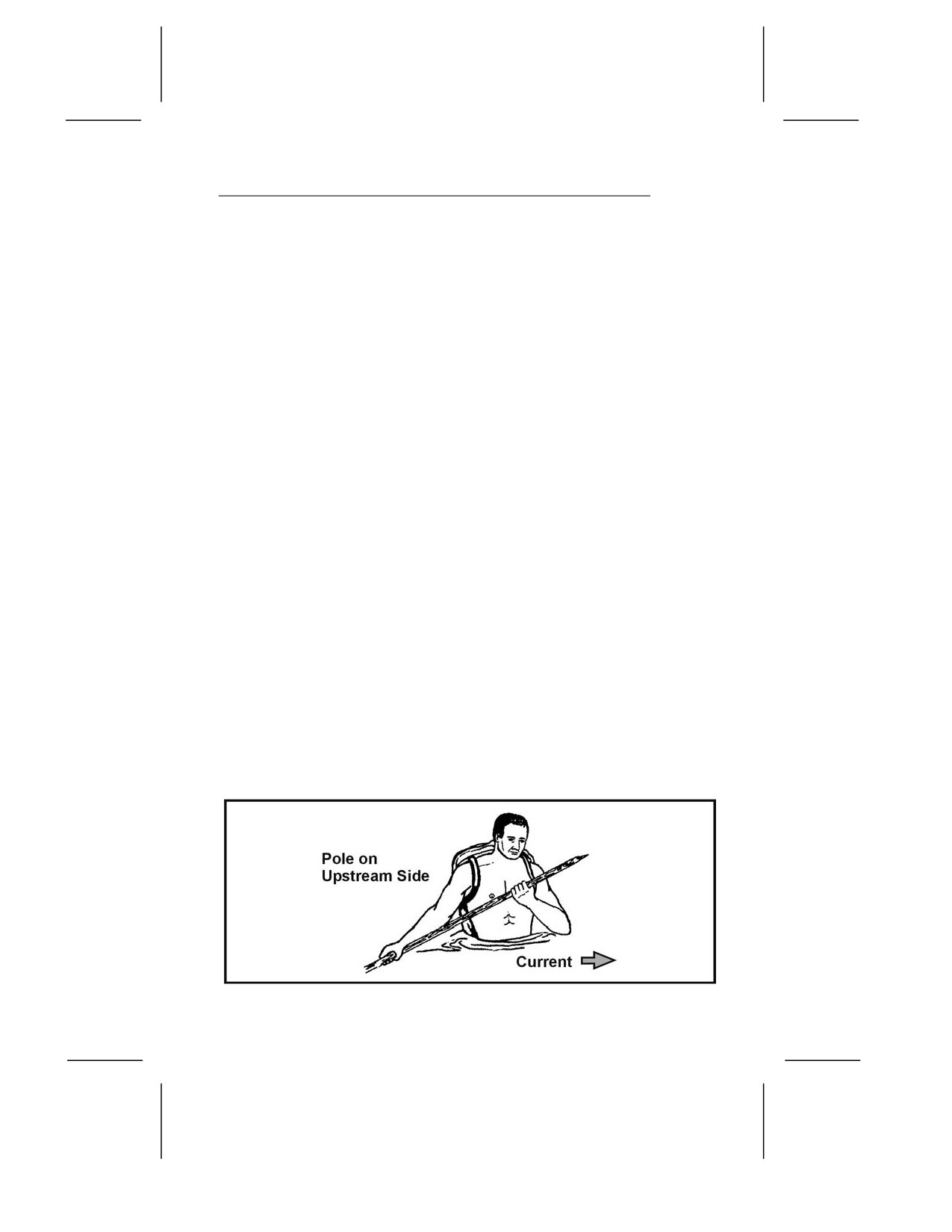
Find a strong pole about 7.5 centimeters (3 inches) in
diameter and 2.1 to 2.4 meters (7 to 8 feet) long to help you
ford the stream. Grasp the pole and plant it firmly on your
upstream side to break the current. Plant your feet firmly
with each step, and move the pole forward a little
downstream from its previous position, but still upstream
from you. With your next step, place your foot below the
pole. Keep the pole well slanted so that the force of the
current keeps the pole against your shoulder (Figure 17-1).
•
Cross the stream so that you will cross the downstream
current at a 45-degree angle.
17-3
17-10. Using this method, you can safely cross currents usually
too strong for one person to stand against. Do not concern yourself
about your pack’s weight, as the weight will help rather than
hinder you in fording the stream.
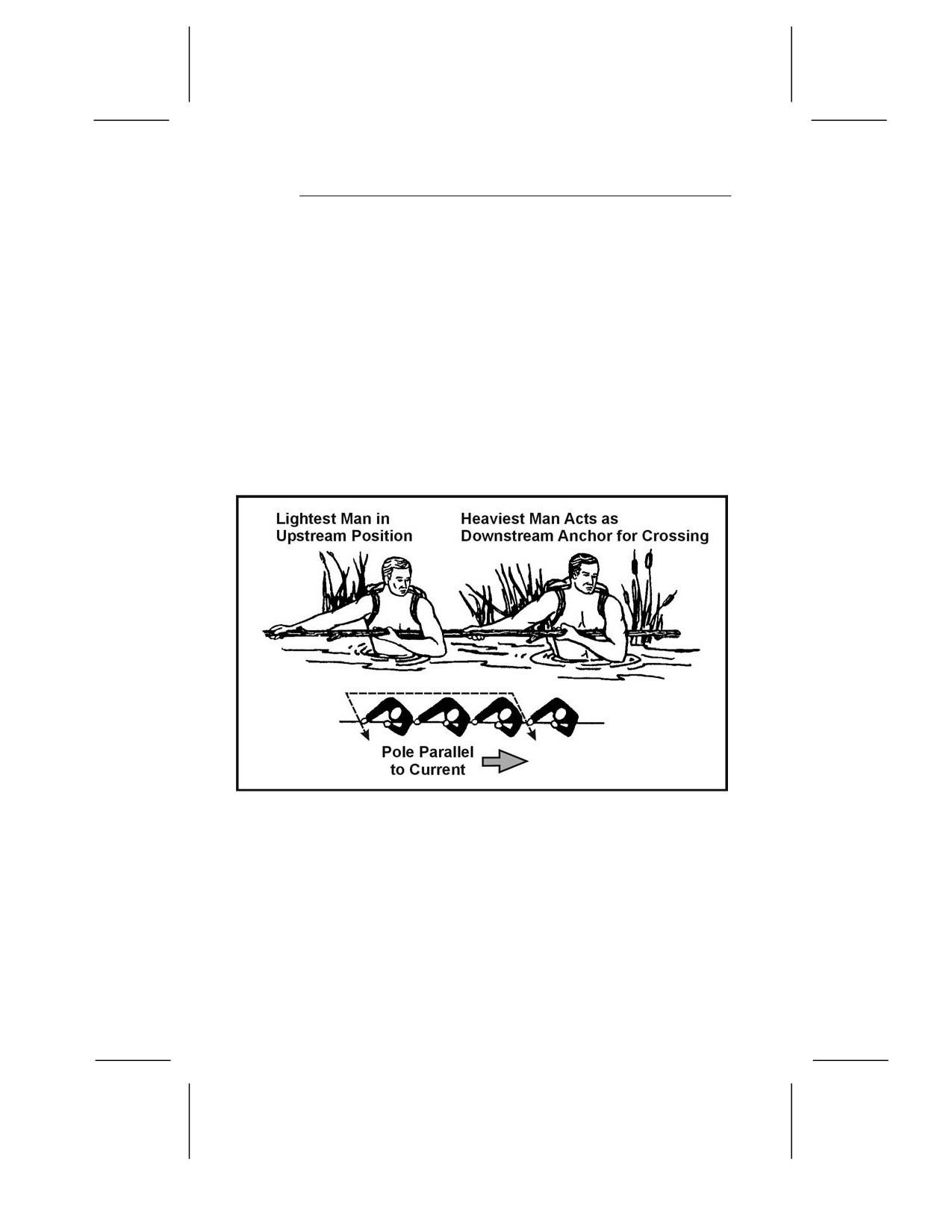
17-11. If there are other people with you, cross the stream
together. Ensure that everyone has prepared their pack and
clothing as outlined above. Position the heaviest person on the
downstream end of the pole and the lightest on the upstream end.
In using this method, the upstream person breaks the current,
and those below can move with relative ease in the eddy formed
by the upstream person. If the upstream person gets temporarily
swept off his feet, the others can hold steady while he regains his
footing (Figure 17-2).
Figure 17-2. Several Men Crossing Swift Stream
17-12. If you have three or more people and a rope available, you
can use the technique shown in Figure 17-3, page 17-5, to cross
the stream. The length of the rope must be three times the width
of the stream.
17-4
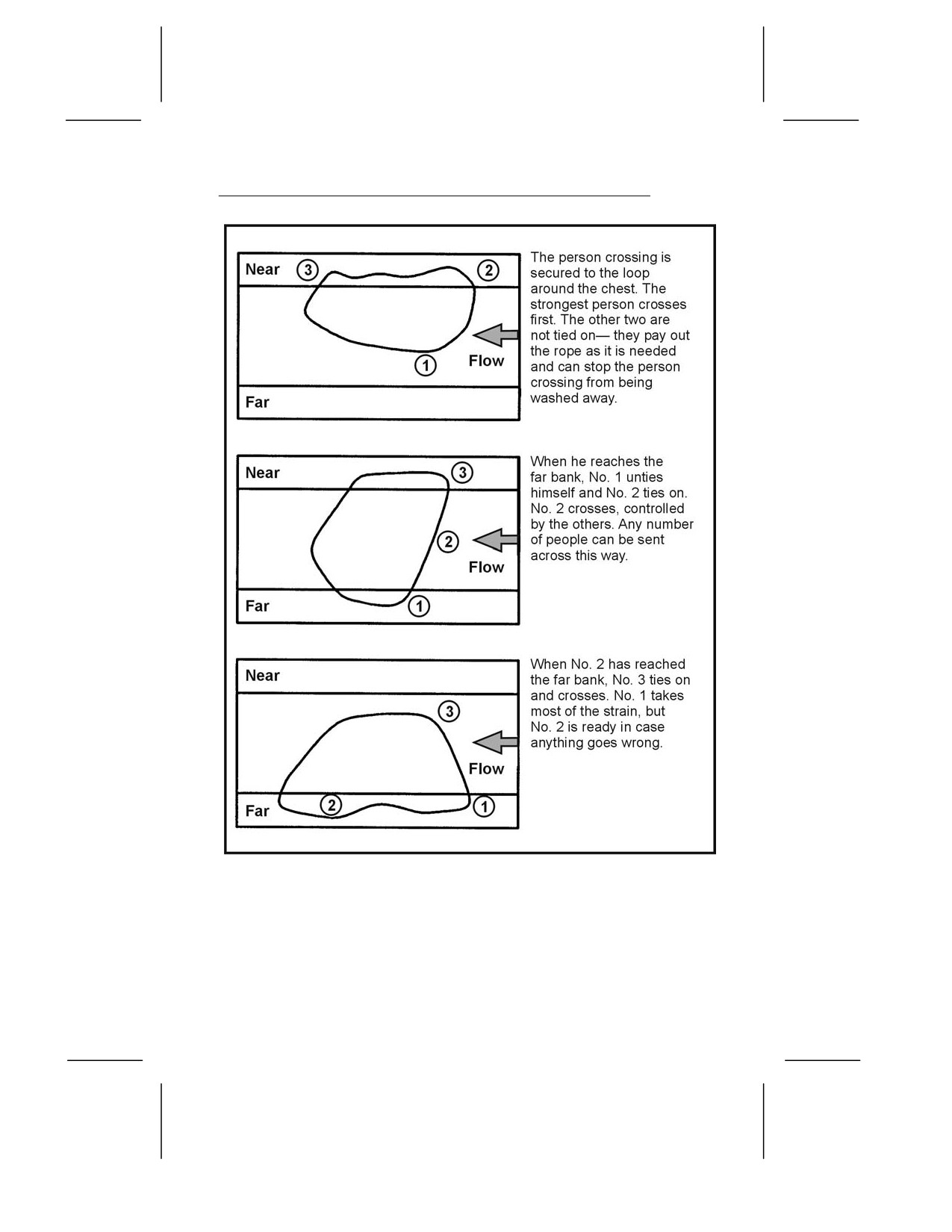
Figure 17-3. Individuals Tied Together to Cross Stream
RAFTS
17-13. If you have two ponchos, you can construct a brush raft or
an Australian poncho raft. With either of these rafts, you can
safely float your equipment across a slow-moving stream or river.
17-5