STRENGTHENING MENTAL HEALTH AND PSYCHOSOCIAL SUPPORT SYSTEMS AND SERVICES. MALAYSIA COUNTRY REPORT 2022 - page 2
THE DSW also provides protection and rehabilitation services in 39 children’s institutions with a
capacity for 3,955 children as follows:
a. Rehabilitation institutions - 22
b. Protection institutions - 17
On a similar note, the social welfare sector was furthermore recommended to take a lead role in
the establishment of residential rehabilitation services as a medium- to long-term priority action. At
the moment, the majority of such services are provided by NGOs. With many organizations facing
limited funding and other restrictions, it is timely for the social welfare sector to assume a bigger
role in this area.
Responsive care: Justice sector
The justice sector currently plays a minimal role in responsive care, except for children and adolescents
who are engaged in the justice system (for example, victims of family violence). Psychologists
within the justice system provide psychological assessment, screening, management and referral
for children and adolescents who come into contact with the justice system. Although they do not
widely advertise their services to the public, they do encourage the public to utilize the services that
they provide. For example, parents and/or students do visit the psychologists at the police station
after their engagement at schools during MHPSS awareness campaigns.
Table 5. Sectoral roles in implementing MHPSS actions: Prevention of mental health conditions in the
immediate social context
Actions in bold indicate where a sector is recommended to have a leading role or primary responsibility for
implementation
Prevention of mental health conditions in the immediate social context
HEALTH
EDUCATION
SOCIAL WELFARE
JUSTICE
Support to mental
School and
Support to mental
health approaches in
education-based
health approaches in
education, including
programmes and
education
teacher well-being
approaches:
• Whole-of-
education mental
health promotion,
including a focus
on creating safe,
respectful and
inclusive learning
environments,
supporting social
and emotional
learning, and
supporting
positive peer
and peer-teacher
relationships
• Teacher-parent
communication
• Teacher and staff
well-being
Introduction
63
Prevention of mental health conditions in the immediate social context
HEALTH
EDUCATION
SOCIAL WELFARE
JUSTICE
Establishing youth
Establishing youth
and peer support
and peer support
groups
groups
Digital literacy, online
Digital literacy and
Digital literacy, online
networks for mental
civility education
networks for mental
health
health
Intensive
Intensive
Intensive
Supporting intensive
interventions to
interventions to
interventions to
interventions to
address risk factors
address risk factors
address risk factors
address risk factors
(including substance
Support to schools
School-based
use)
following crisis (e.g.,
interventions
suicide in community)
following crisis in
the community
(e.g., suicide)
Identify and address
Raise awareness
Parenting
mental health needs
about positive
programmes to build
of parents/carers
parenting
skills in nurturing and
responsive care, and
non-violent discipline
Prevention: Education sector
The education sector was recommended to have a major role in the implementation of actions to
prevent poor mental health. This includes a leading role in coordination and implementation of actions
to optimize learning environments, build individual assets and support healthy peer relationships.
Schools in particular were identified as a key platform for delivery of many MHPSS actions. As such,
the education sector should have a greater role in developing and implementing whole-of-school or
education mental health promotion approaches through the development of policies, implementation
guidance and delivery of training for teachers, school counsellors and other education staff in mental
health. This sector also has lead responsibility for developing curricula to support social and emotional
learning; addressing bullying, harassment and substance use; and implementing programmes to
foster healthy peer relationships and build interpersonal skills. Schools were also noted to be an
important source of programmes to support digital literacy and civility and to potentially play a role in
establishing both online and in-person peer groups and networks in relation to mental health. Given
the linkages between schools and parents, the education sector was also recommended to support
implementation of parenting programmes in collaboration with social welfare.
Prevention: Health sector
The health sector was recommended to play a supporting role to the education sector in mental
health preventive approaches. These include the training of educators in mental health and providing
school-based interventions following a crisis in the community (e.g., suicide).
Prevention: Social welfare sector
Most stakeholders agreed that social welfare should play a major role alongside the education sector
in preventive services, particularly in the development and implementation of large-scale parenting
programmes. This sector was also seen to have primary responsibility for targeted interventions
64 Strengthening Mental Health and Psychosocial Support systems and services for
children and adolescents in the East Asia and Pacific region: Malaysia Country report 2022
to address children and adolescents at risk of poor mental health (for example, children who have
experienced violence, abuse or neglect).
Prevention: Justice sector
Although the justice sector was identified as playing a minor role in prevention, the sector is needed
to support intensive interventions to address risk factors. The sector could also be engaged in
programmes to promote anti-violence and bullying in school.
Table 6. Sectoral roles in implementing MHPSS actions: Mental health promotion - Ensuring an enabling
and safe environment
Actions in bold indicate where a sector is recommended to have a leading role or primary responsibility for
implementation
Mental health promotion: Ensuring an enabling and safe environment
HEALTH
EDUCATION
SOCIAL WELFARE
JUSTICE
National,
Integrating
Integrating
Integrating mental
multisectoral
mental health into
mental health into
health of children
mental health plans
education policies
early childhood
and adolescents
and strategies,
development, child
into juvenile justice
including suicide
protection/ending
and justice health
prevention
violence, social
policy and plans
welfare and social
protection policies
and plans
Integration of
mental health into
maternal and child
health, adolescent
health, nutrition,
and HIV policies and
strategies
Policy and standards
Identifying barriers
Protections for
for high quality
in access to mental
children and
mental healthcare
health services for
adolescents in
marginalized groups
the mental health
system
Legislation
mandating access to
mental healthcare,
including removing
mandatory parental
consent requirements
Legislation
mandating access to
mental healthcare
for children and
adolescents
deprived of liberty
and in out-of-home
placements
Introduction
65
Mental health promotion: Ensuring an enabling and safe environment
HEALTH
EDUCATION
SOCIAL WELFARE
JUSTICE
Support to legislation
Legislation and
and policies to
policies to prohibit
protect children and
violence, harm,
adolescents from
discrimination
violence and harm
•
Decriminalize
suicide
•
End all forms of
violence
•
Child marriage
•
Discrimination
•
Control of
substance use
•
Restrict access to
lethal means
•
Child labour
•
Recruitment to
armed forces
•
Minimum age
of criminal
responsibility
Social protection
programmes for
families
Training and
Training and
community-based
community-based
programmes to
programmes to
address stigma and
address stigma and
discrimination
discrimination
Capacity building
Capacity building
Capacity building
in adolescents
in adolescents to
in adolescents to
to support
support participation,
support participation,
participation,
including those with
including those with
including those with
lived experience
lived experience
lived experience
of mental health
of mental health
of mental health
needs or risks, in the
needs or risks, in the
needs or risks, in the
planning and design
planning and design
planning and design
of MHPSS
of MHPSS
of MHPSS
66 Strengthening Mental Health and Psychosocial Support systems and services for
children and adolescents in the East Asia and Pacific region: Malaysia Country report 2022
Promotion: Justice sector
The justice sector was identified as having a lead role in developing and enforcing legislation to
protect children and adolescents from harm and discrimination. This includes amending legislation
to decriminalize suicide and increase the minimum age of criminal responsibility.
Promotion: Health sector
With respect to policy and legislation, the health sector was identified as having a lead role in
developing mental health policy and technical guidance to support the delivery of responsive care.
This includes a role in advocating for legislation that ensures the rights of children and adolescents to
mental healthcare, removes mandatory requirements for parental consent, and protects children and
adolescents within the mental health system from harm. This sector was also seen as having overall
responsibility for developing national, multisectoral mental health policy and strategies. Additionally,
the heath sector was identified as having a role in supporting efforts to improve mental health literacy
and mental health promotion.
Promotion: Social welfare sector
Because of its existing close linkages with communities, the social welfare sector was identified
as having a key role in developing and implementing programmes to promote mental health and
address the broader social determinants of well-being (such as early childhood development). This
sector was also recommended to have a leading role, along with the justice sector, in supporting the
enforcement of legislation and policies to protect children from harm, including supporting mandatory
reporting of child abuse.
Promotion: Education sector
Strengthening the integration of mental health into education policies and plans was identified as a
key priority for the education sector. This sector was also noted to play an important role in addressing
mental health stigma and discrimination through curriculum-based and other learning programmes
related to mental health.
In addition to sectors having lead responsibility for implementing different MHPSS actions within
each tier, there are several critical areas of convergence where effective implementation of specific
actions requires strong collaboration across sectors. These include actions to:
Improve early identification, screening and referral to multidisciplinary care;
Ensure continuing care and support for children, adolescents and their families experiencing
mental health conditions or at increased risk;
Implement targeted, intensive interventions for children and adolescents at increased risk of
poor mental health (particularly in relation to high-risk exposures such as violence and conflict
with the law);
Implement whole-of-school-based approaches to prevent poor mental health and promote
well-being;
Support positive parenting and provide services and supports to parents and carers of children
with mental health needs, or for their own mental health needs;
Social protection and supports to address broader determinants of mental health and well-being.
Introduction
67
Non-governmental organizations
Not-for-profit NGOs were seen to play a potentially important role in the implementation of MHPSS.
Many local and international organizations are engaged in areas that relate in some way to mental
health and well-being (such as physical health, sexual and reproductive health, child welfare and child
development), providing a platform to integrate more specific MHPSS actions. In particular, strong
partnerships with communities and understanding of community needs would facilitate delivery
of actions around mental health literacy, addressing stigma, community-based service delivery
(identification, referral and first aid), and programmes to support parents and families. The NGO sector
was also seen to have an important role in supporting mental health advocacy. Within this sector,
youth organizations were also identified as crucial in promoting mental health literacy and participating
in the implementation of preventive and care interventions in community and school settings.
Private sector
The private sector was identified as having a significant role to play in filling the service delivery gaps as
this sector provides a large proportion of health services, including mental health services. In general,
stakeholders recommended that further mapping was required to better understand the current
roles and capacities of the private sector in mental health, with greater coordination and regulation
of the sector. The private sector was also identified as having a potential role in providing financial
support or other resources (such as technology, including digital technology, expertise and training
opportunities) to support MHPSS initiatives through corporate social responsibility programmes.
UNICEF
Through consultation with UNICEF representatives in the region, UNICEF was identified as having
an important role and comparative advantage in:
Advancing the advocacy agenda in relation to children and adolescent mental health prevention
and promotion;
Playing a crucial convening role in facilitating linkages between sectors (such as health, social
welfare, child protection and education) and supporting cross-sectoral dialogue, planning and
resource allocation;
Data synthesis and evidence generation through supporting research to draw attention to key
mental health needs and advocating for evidence-based action;
Supporting, through funding, new initiatives, pilot projects and other innovations to test new
ways of delivering MHPSS for children and adolescents;
Integrating MHPSS into existing UNICEF programmes and platforms (including primary healthcare,
education, parenting programmes and child protection);
Supporting and delivering programmes to address mental health-related stigma and improve
mental health literacy through national-level advocacy and community-based programming; and
Integrating MHPSS in emergency settings.
68 Strengthening Mental Health and Psychosocial Support systems and services for
children and adolescents in the East Asia and Pacific region: Malaysia Country report 2022
Introduction
69
Challenges and
recommendations
for strengthening the
multisectoral mental
health system
70 Strengthening Mental Health and Psychosocial Support systems and services for
children and adolescents in the East Asia and Pacific region: Malaysia Country report 2022
Legislation, policy and strategy
Malaysia has a strong legislative and policy framework to support MHPSS and ensure the mental
health and well-being of children and adolescents. The National Strategic Plan for Mental Health
2020-2025 lays the foundation for multisectoral action to promote well-being, prevent poor mental
health, provide responsive services and protect the rights of children and adolescents. The Strategic
Plan includes some specific actions to address the unique needs of this age group (such as screening
and early detection, mental health education and responsive care in schools). However, while the
Strategic Plan recognizes the importance of engaging sectors in addition to health, it does not
articulate a clear, multisectoral vision for mental health or describe the mechanisms needed to enable
cross-sectoral collaboration and accountability. This includes a lack of performance indicators or other
mechanisms to monitor collaboration or coordination.
The Mental Health Act 2001 includes some general protections of rights of those within the mental
health system in relation to physical restraint, deprivation of liberty, involuntary treatment, and
appeal. However, there are no specific protections for children and adolescents. Such protections
could include:
Right to least restrictive assessment and treatment possible, including specific consideration
of the use of physical restraint, involuntary seclusion, and deprivation of liberty for those under
the age of 18 years;
Right of children and adolescents to make decisions about mental healthcare and recovery to
the fullest extent possible, with consideration of the best interests of the child or adolescent
(including removal of mandatory requirements for parental consent);
Appointment of a personal representative other than a family member, if necessary
Right to have contact with family or other support persons;
Right to recreational activities, education and other supports that respond to individual needs.
Other recommendations from stakeholders included merging the Child Act and Mental Health Act
to develop an act that specifically caters to mental health in children; developing a national Mental
Capacity Act to provide greater clarity on the rights of children and adolescents with respect to
consent and assent to mental healthcare (particularly in cases of severe mental disorder) and the
rights and responsibilities of parents; and amending Article 8(2) of the Federal Constitution to include
protection from discrimination on the basis of disability, including children with a developmental
disorder. An additional gap in legislation exists for undocumented migrants and asylum seekers,
including children and adolescents. Due to their lack of legal status, these children may not be eligible
for healthcare services, including for mental health.
Mental health has been integrated to some extent into the sectoral policies and plans of education
and social welfare. The National Education Blueprint recognizes the importance of emotional
development and the school curriculum and environment in supporting resilience, emotional skills
and peer relationships, and there is currently a national programme to support screening in schools.
However, there are gaps in relation to greater inclusion of mental health literacy and social and
emotional learning within the national standard curriculum, a clear, whole-of-education policy to
support mental health, and strategies to reach out-of-school children and adolescents with MHPSS.
Malaysia also has a suite of laws, policies and plans related to child welfare and protection that
address some of the key determinants of mental health (such as violence, trafficking, education and
participation), with inclusion of MHPSS (such as counselling and psychosocial support) and strong
linkages with health services. Stakeholders identified a need for strengthened social protection policy,
with a greater focus on children and families. The justice sector has also included the provision of
psychiatric assessment and care in legislation and policy with respect to management of children
in custody, as well as some protections for child victims and those in conflict with the law to
prevent further psychological harm. Nevertheless, policies that more clearly articulate the roles and
responsibilities of these sectors with respect to MHPSS would strengthen access to and the quality
of MHPSS for those most at risk. The justice sector, in particular, noted that this process takes time
and requires greater ministerial support across sectors.
Challenges and recommendations for strengthening the multisectoral mental health system
71
“Amending the law will take a long time. You need a supporting ministry. And then you need
the AG (Attorney General) chamber to table a bill in parliament. And usually, it takes political
will. So, you need to have somebody within the cabinet to campaign for mental health and
support services. I think currently the priority is the GDP and economy. I don’t know how
highly they rate mental health support services. So, you need to get people to go and talk to
their members of parliament, so that they can raise this. You need to advocate, you need the
mental health practitioners to raise it with their ministers and their relevant ministries, you
need the MOE (Ministry of Education) to raise it, so that there is joint effort. Because this is
not something that is politically slanted. It’s apolitical. It’s for the benefit of the country
but only if they see it as a priority.” —A justice sector informant
Across sectors, stakeholders noted that in addition to addressing these gaps, there was a need
for implementation strategies, plans and frameworks that more clearly defined the roles and
responsibilities of agencies, particularly at local level units. While supportive policies are in place,
the lack of clear guidance and accountability contributes to limited implementation.
“So far, there are policies like, for example, National Adolescents Guidelines policies where it
says...it looks into the needs...it addresses the needs for adolescents, all in all. But policies
are remaining as policies.” —A health sector informant
“I was saying that something to move the needle is having policy. Then, it makes things
happen. Having a policy, and getting the stakeholder to buy into that policy and implementing and
following up to make things happen. You will see changes” —A social welfare sector informant
“You can come up with all the action plans, we always say you have a strategic plan, action
plan, but where’s the action? So, that part is lacking” —A social welfare sector informant
KEY RECOMMENDATIONS - LEGISLATION AND POLICY:
Ensure ‘mental health in all policies’ with more explicit recognition and actions to address
mental health in non-health sector policies, and as part of the COVID-19 response.
Expand existing national mental health policy, or develop specific child and adolescent
mental health policy, to provide clearer and more comprehensive guidance on actions to
promote, prevent and respond to the mental health needs of this age group.
Strengthen mental health legislation to include specific protections and considerations
for children and adolescents, including clearer rights with respect to consent to mental
healthcare and removal of mandatory requirements for parental consent.
Amend Article 8(2) of the Federal Constitution to include protection from discrimination
on the basis of disability, including protection for children with developmental disorder(s).
Develop multisectoral implementation plans and guidance with clear roles, responsibilities
and accountability at all levels
(including key performance indicators related to
multisectoral coordination).
Review legislative and regulatory barriers to access (e.g., undocumented migrants,
mandatory requirement for parental consent).
Develop policies and strategies to reach out-of-school children and adolescents, and other
marginalized groups.
Improve dissemination of MHPSS-related policies and plans across sectors and to
administrative and implementation agencies.
Develop multisectoral mental health plans at subnational level to support coordination
and implementation.
Strengthen legal protections against all forms of harm and discrimination, including
decriminalization of suicide and prohibition of all forms of corporal punishment.
Strengthen social protection policy, with a focus on children and families.
72
Strengthening Mental Health and Psychosocial Support systems and services for
children and adolescents in the East Asia and Pacific region: Malaysia Country report 2022
Leadership and governance
While there are examples of programmes and approaches that have engaged multiple sectors, such
as coordination between the social welfare and health sectors in child protection cases, limited
multisectoral collaboration and lack of coordinated leadership across sectors was identified as one
of the major challenges to implementation of MHPSS.
National level
Limited high-level, multisectoral coordination of policy and planning remains a challenge in Malaysia.
Stakeholders across sectors noted that each sector has a different policy focus, planning cycle and
budget priorities and that these are not currently aligned around a common vision or goal for child and
adolescent mental health. Stakeholders recommended that the health sector, specifically the Ministry
of Health, have overall leadership and accountability for MHPSS, including responsibility for mental
health policy, technical guidance, oversight of training, and monitoring and evaluation. However,
key roles were also identified for other sectors in providing leadership for MHPSS - most notably
the social welfare sector (for marginalized children and those at risk) and the education sector (for
developing and implementing school-based actions and MHPSS in learning environments), with roles
also for the justice sector in supporting MHPSS for children and families at high risk. UNICEF, WHO
and NGOs were also identified as having key leadership roles - particularly in relation to supporting
evidence-based policy through technical guidance, and linkages with communities. The private sector
was additionally identified as an important national stakeholder that should be engaged in policy and
planning to improve coverage of services.
Stakeholders across sectors emphasized the need for collaborative, high-level support for mental
health with a clear, multisectoral vision, acknowledging that many of the determinants and necessary
actions for mental health lay outside the traditional scope of the health sector. To facilitate better
collaboration and coordination, it was recommended that a national steering committee be established,
led by the Ministry of Health, with membership of all key sectors (including UN agencies and NGOs)
and the authority and resources to drive action. The National Strategic Plan lays the foundation for
this, by including the establishment of a national coordinating body with representation from health,
education, labour, social welfare and local government units to support greater coordination and
integration of mental health into all policies.
Subnational implementation levels
In addition to greater coordination at a national policy level, there is also a critical need to improve
coordination and governance at subnational implementation levels. In the context of decentralization,
state, district and local government authorities are responsible for planning, prioritization, resource
allocation and implementation. Lack of awareness of MHPSS-related policy and legislation at state
and district levels and a disconnect between national and subnational agencies contribute to limited
implementation and coordination between sectoral units and inconsistent delivery of national programmes
in different administrative areas. Lack of consistent policy goals and objectives in relation to mental health
across sectors was also highlighted, leading to fragmented implementation and gaps in delivery.
To overcome these challenges, stakeholders recommended that greater support be provided to
District Offices to: increase awareness of mental health and relevant policies and plans; support
planning and resource allocation; and establish district-level, multisectoral committees to guide
implementation and collaboration.
“So, I agree we all tend to work in silos. There’s no real platform for sharing and I think
that is also one of the problems that we have is that sometimes, nobody knows” —A social
welfare sector informant
“So, if you ask me, all of them have their role and all of them are doing their best when it
comes to MHPSS. But they’re all not connected to each other.”—A health sector informant
Challenges and recommendations for strengthening the multisectoral mental health system
73
KEY RECOMMENDATIONS - LEADERSHIP AND GOVERNANCE:
Establish a high-level, multisectoral national steering committee led by the Ministry of
Health, with representation from all key sectors (including UN agencies, NGOs and the
private sector), and with the authority and resources to drive action.
Build the capacity of District Offices in MHPSS to support local planning, coordination and
resource allocation.
Establish local, multisectoral committees to support coordination and implementation of
the priority MHPSS package.
Develop subnational implementation plans for MHPSS that clearly articulate sectoral roles
and responsibilities and are aligned with national goals and strategies for mental health.
Service delivery
Multiple platforms exist to support the delivery of MHPSS actions (see Figure 16). Within responsive
care, health facilities (primary, secondary and tertiary level) remain an important setting to deliver
screening through to specialized care. The National Strategic Plan and Operational Framework
emphasize the need to strengthen primary-level and community-based mental health services and
avoid admission of children into adult institutional care settings. Greater investment is needed in
developing child/adolescent-centred and friendly care models; strengthening entry points for children,
adolescents and their families through maternal and child health services, nutrition programmes,
adolescent health and other physical health services; and establishing child-focused, multidisciplinary
teams. The National Strategic Plan as well as stakeholders also recommended expanding models
of service delivery outside traditional clinical settings, in particular transitioning to community-based
and mobile services to improve access to screening, referral and care, and home-based services to
provide more person-centred care (particularly for subclinical or continuing care) and to reduce the
burden on health facilities.
Figure 16. Platforms for delivery of MHPSS across the three tiers of MPHSS actions
RESPONSIVE
CARE
SCHOOLS
ALT. CARE &
JUSTICE
ONLINE
PREVENTION
COMMUNITY
HEALTH
PROMOTION
74 Strengthening Mental Health and Psychosocial Support systems and services for
children and adolescents in the East Asia and Pacific region: Malaysia Country report 2022
In addition to the delivery of responsive care actions, community-based delivery was also identified
as an important platform for implementing actions to address mental health literacy, shift community
norms and stigma, and deliver preventive actions (including parenting programmes, family violence
programmes and targeted interventions for children, adolescents and families at risk). To address gaps
in service delivery and the workforce, community-based organizations and NGOs were identified as
important partners, with opportunities to work with existing NGOs to integrate MHPSS actions into
their programming. Stakeholders also recommended considering the establishment of community-
based centres providing safe spaces for children and adolescents that include provision of information
and services for mental health. There was also a recommendation for young people to lead MHPSS
programmes designed for children and adolescents, particularly in preventive care. Additionally, to
ensure that MHPSS is more accessible to people with disabilities and marginalized populations,
stakeholders recommended fortifying on-the-ground outreach and peer-to-peer support systems led
by young people and NGOs.
Schools and other learning environments are a critical platform for reaching large numbers of
children and adolescents with MHPSS. All sectors nominated school-based delivery as essential
to the effective implementation of MHPSS, with a focus on improving early identification and
screening, contributing to multidisciplinary and continuing care and, most significantly, actions to
build individual assets, promote positive peer relationships and create safe learning environments.
There have already been important efforts to integrate screening into secondary school settings.
However, much greater attention to the training and supportive supervision needs of teachers and
school counsellors is needed to support these programmes and referral linkages with other sectors
and service providers, as well as consideration of the additional demands on teachers’ time to support
MHPSS. Opportunities to strengthen curriculum-based approaches to support social and emotional
learning and teachers in behavioural management should be further explored. Schools are not only
a platform for delivering interventions. Learning environments in and of themselves have a profound
influence on mental health and well-being from early childhood through to adolescence. Addressing
the school/learning culture, academic pressures, respect and inclusiveness through the development
of whole-of-education approaches to mental health promotion are also important to support mental
health and well-being.
The potential of online and digital platforms has received increasing recognition, particularly in the
context of COVID-19. Malaysia has several hotlines, helplines and online applications that provide
information, mental health literacy and referral linkages. However, these platforms are currently
underutilized, with potential to make better use of online technology to support counselling, telehealth
for mental healthcare, interactive parenting programmes and integrating mental health into academic
online education for students.
Justice settings are also important for the delivery of screening, referral, targeted interventions to
address risk factors and continuing care for children who are victims or witnesses of crime, as well
as juvenile offenders. Several existing models of collaborative care were noted in Malaysia, with the
justice, health and social sectors collaborating to provide mental health assessment and referral.
However, stakeholders noted that these approaches could be strengthened through clearer policies
and protocols in relation to MHPSS for children in conflict with the law and child victims/witnesses,
and stronger linkages with other sectors and agencies.
All sectors noted significant barriers impacting on equitable access to MHPSS. Rural and remote
communities and migrants and ethnic minorities were recognized as having limited access to
facilities, services and skilled providers, with both government and NGO services concentrated in
more urban settings. Children and adolescents not engaged in formal education were also noted as
a key underserved group, as most national policies and programmes are focused on school-based
delivery. Children and adolescents living with disability were also identified as having high unmet
needs for MHPSS and very poor access to inclusive care - with stakeholders recommending a much
greater focus on ensuring that services are inclusive of those with disabilities. Stakeholders also
recommended further research to understand barriers and service-delivery preferences as well as
improved coordination with community-based organizations to better serve marginalized groups.
Challenges and recommendations for strengthening the multisectoral mental health system
75
KEY RECOMMENDATIONS - SERVICE DELIVERY:
Develop models and standards of child and adolescent-centred health services for mental
health
Strengthen two-way referral mechanisms between primary and tertiary care.
Transition to integrated community-based services that span the three tiers of MHPSS.
Integrate MHPSS into other health services at community level, including maternal and
child health, nutrition, adolescent health and general medical/physical health.
Establish more community centres that provide safe spaces for children and adolescents
and provide MHPSS information and services.
Build on existing school-based models to strengthen responsive care as well as key
preventive actions.
Strengthen and evaluate online and digital service delivery models that link mental health
promotion, positive peer relationships, parenting programmes and responsive care (self-
referral and counselling).
Strengthen protocols within justice settings to support the delivery of MHPSS and protect
children and adolescents from psychological harm, and strengthen linkages with health and
social welfare agencies.
Identify barriers and service-delivery preferences for marginalized and underserved
communities, particularly strategies needed to reach out-of-school children and adolescents,
and those living with disability.
Standards and oversight
Several recommendations were made to strengthen the quality of MHPSS and improve oversight.
At a national level, the Ministry of Health was identified as having primary responsibility for quality
assurance through setting technical standards and guidance, establishing indicators and monitoring
performance. While this role is more clearly defined with respect to responsive care and clinical health
services, oversight in relation to actions against the other tiers (prevention and promotion) is less clearly
articulated. To support oversight, it was recommended that a harmonized set of indicators for MHPSS be
developed that could be used to monitor performance and quality across multiple sectors. Stakeholders
also recommended establishing an independent monitoring body (or technical advisory committee)
made up of representatives from key sectors, reporting to the Ministry of Health, with responsibility
for monitoring quality and compliance and evaluating MHPSS programmes provided across all sectors.
A high priority is strengthening a national protocol for early identification, screening and referral for
children and adolescents with mental health conditions and those at increased risk. This includes
expanding locally validated and age-appropriate screening tools (including for children) and detailed
protocols for administering these within different settings (health, education, child welfare and justice).
A national, standard protocol and procedures for referral of children and adolescents with mental
health needs are also critical - not only for efficient referral within the health system but to support
inter-agency referral between sectors (for example from schools or child protection settings to health
services). Stakeholders also emphasized that these protocols needed to be two-way in order to
improve communication between specialist services and primary providers (health, education and
social welfare) and strengthen follow-up and continuing care and support.
76 Strengthening Mental Health and Psychosocial Support systems and services for
children and adolescents in the East Asia and Pacific region: Malaysia Country report 2022
To support responsive care, national standards for adolescent-friendly health service delivery should
be expanded to provide more specific service standards in relation to mental health, including trauma-
informed approaches. Similarly, standards of care provided in other settings are also needed - for
example, protocols and service standards for provision of psychological first aid or initial management
of behavioural problems in schools, and provision of MHPSS in social welfare and justice settings. For
the education sector, developing a national standard curriculum to support mental health education
was identified as a high priority. For the justice sector, stakeholders recommended that protocols be
developed to provide greater guidance on the management (health and legal) of children in conflict with
the law who have a mental health condition, and protocols to minimize harmful impacts on the mental
health of juvenile offenders and child victims/witnesses. Standard operating procedures and protocols
that cover multiple agencies are also needed for children and adolescents engaged in the justice or
social welfare sectors. Within child protection, these should include detailed guidance on the roles and
responsibilities of each sector and relevant agencies in screening, referral, management, preparation
for release or discharge, and follow-up to ensure continuity of care and monitoring in the community.
Stakeholders also recommended developing a standardized system for NGOs to engage with the
Government in MHPSS. This included a standardized process for applying for funding, aligned with
MHPSS delivery priorities.
KEY RECOMMENDATIONS - STANDARDS AND OVERSIGHT:
Define clear multisectoral indicators to monitor MHPSS performance.
Establish a national, independent monitoring body (or technical advisory committee) with
cross-sectoral representation, reporting to the Ministry of Health, to monitor quality,
compliance and performance of MHPSS programmes.
Strengthen guidance, protocols and procedures with respect to delivery of child-
and adolescent-friendly mental health services, including parental consent and
trauma-informed approaches.
Develop clear guidance and protocols for early identification, screening and referral (within
sectors and between), with clearly defined roles and accountability of key actors.
Establish standard operating procedures across agencies to support coordinated care of
children and adolescents engaged in child protection or justice settings.
Strengthen justice-related protocols to minimize harm to children and adolescents who
come into contact with the justice sector.
Develop a national, standard referral protocol across health, education, social welfare, justice
and other settings (including for NGOs) that also supports communication back to primary
providers to support follow-up and continuing care.
Develop a national, standard mental health education curriculum for all levels of education.
Standardize a system to support NGO engagement in MHPSS.
Strengthen continuous evaluation of the accreditation of the mental health workforce.
Challenges and recommendations for strengthening the multisectoral mental health system
77
Multisectoral mental health and
psychosocial support workforce
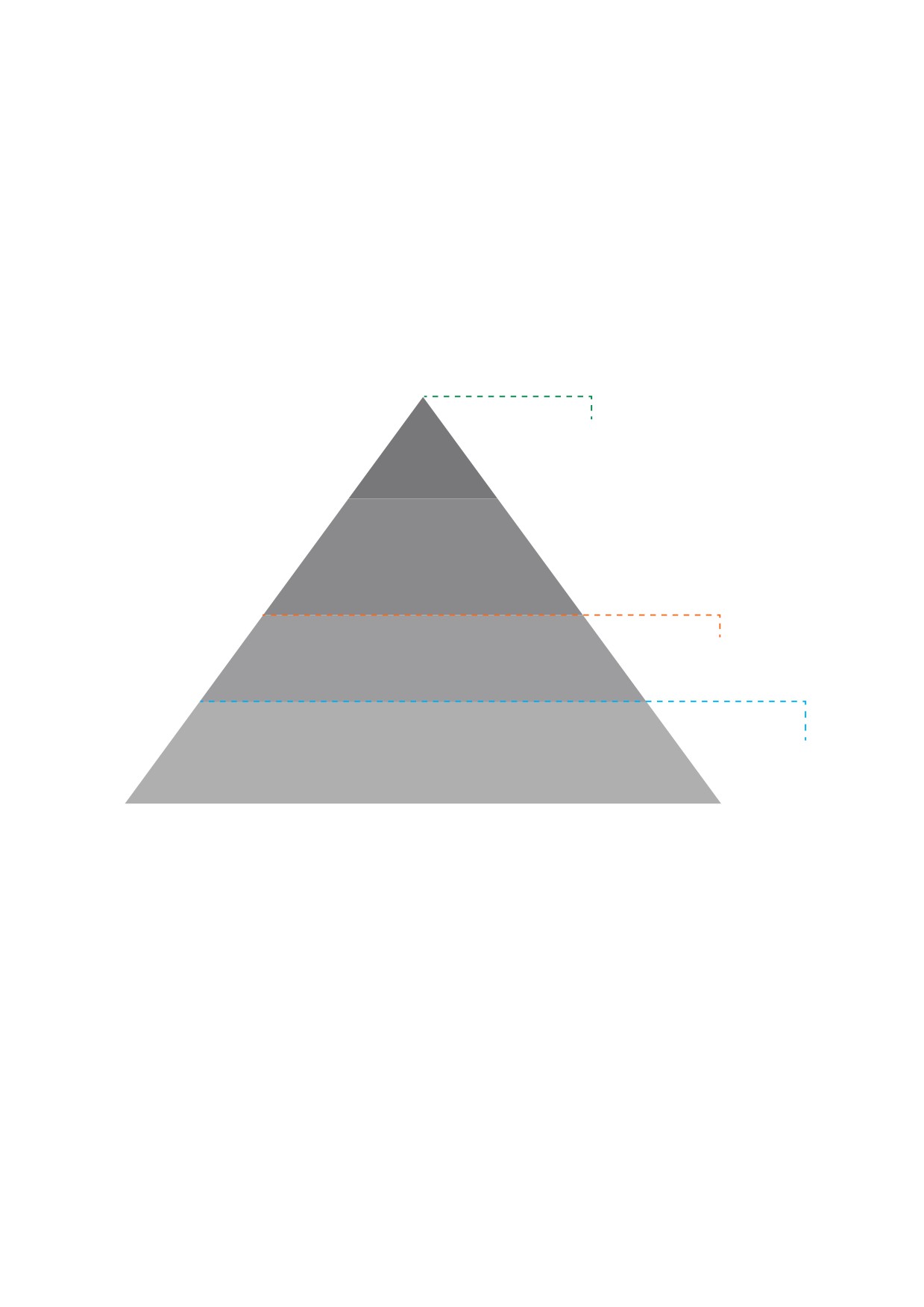
The multisectoral MHPSS workforce is challenging to define as it is diverse and dynamic. It ranges
from specialist providers whose primary roles relate to mental health to providers and volunteers who
may be required to deliver some aspect of MHPSS but for whom this is not a primary responsibility and
who have fragmented access to training, accreditation and support. The three tiers of MHPSS actions
(responsive care, prevention and promotion) can be coarsely mapped against the corresponding
multisectoral mental health workforce as shown in Figure 17.
Figure 17. Key tiers of the workforce required to ensure MHPSS
RESPONSIVE CARE
Staff
qualified
in clinical
services
Staff with professional
or on-the-job training to
provide early identification,
screening, referral, and case
management: social workers, teachers,
case workers, and other community
members (including first responders)
PREVENTION
Staff with professional or on-the-job training to design
and deliver preventive interventions and programmes:
teachers, social workers, counsellors, case workers, justice
officers, health workers, youth and peer leaders
MENTAL HEALTH
Policy, administrative and technical staff working on policy and
PROMOTION
legislation across health, social welfare, education and justice
Non-government and community-based organizations, youth organizations,
and community leaders engaged in health promotion and advocacy
The current MHPSS workforce
In Malaysia, the MHPSS workforce includes public, private and non-government actors across the
health, education, social welfare/child protection, justice and community sectors (see Figure 18).
All sectors identified workforce shortages as a major challenge impacting on implementation of
MHPSS policies and programmes. Limited numbers of professionals trained to deliver components of
MHPSS (such as health professionals, teachers, school counsellors, social workers and psychologists)
contribute to constraints on service delivery, very high caseloads and over-reliance on tertiary services
leading to referral bottlenecks and delayed access to care. To address inequity in access to MHPSS,
there is also a need to consider the skills mix and distribution of the workforce as well as the need for
collaborative and multidisciplinary teams. In addition to increasing the number of skilled providers in
rural areas, stakeholders also emphasized the need for providers with diverse gender, disability, ethnic
and cultural backgrounds so that communities have access to an appropriate and trusted provider.
78 Strengthening Mental Health and Psychosocial Support systems and services for
children and adolescents in the East Asia and Pacific region: Malaysia Country report 2022
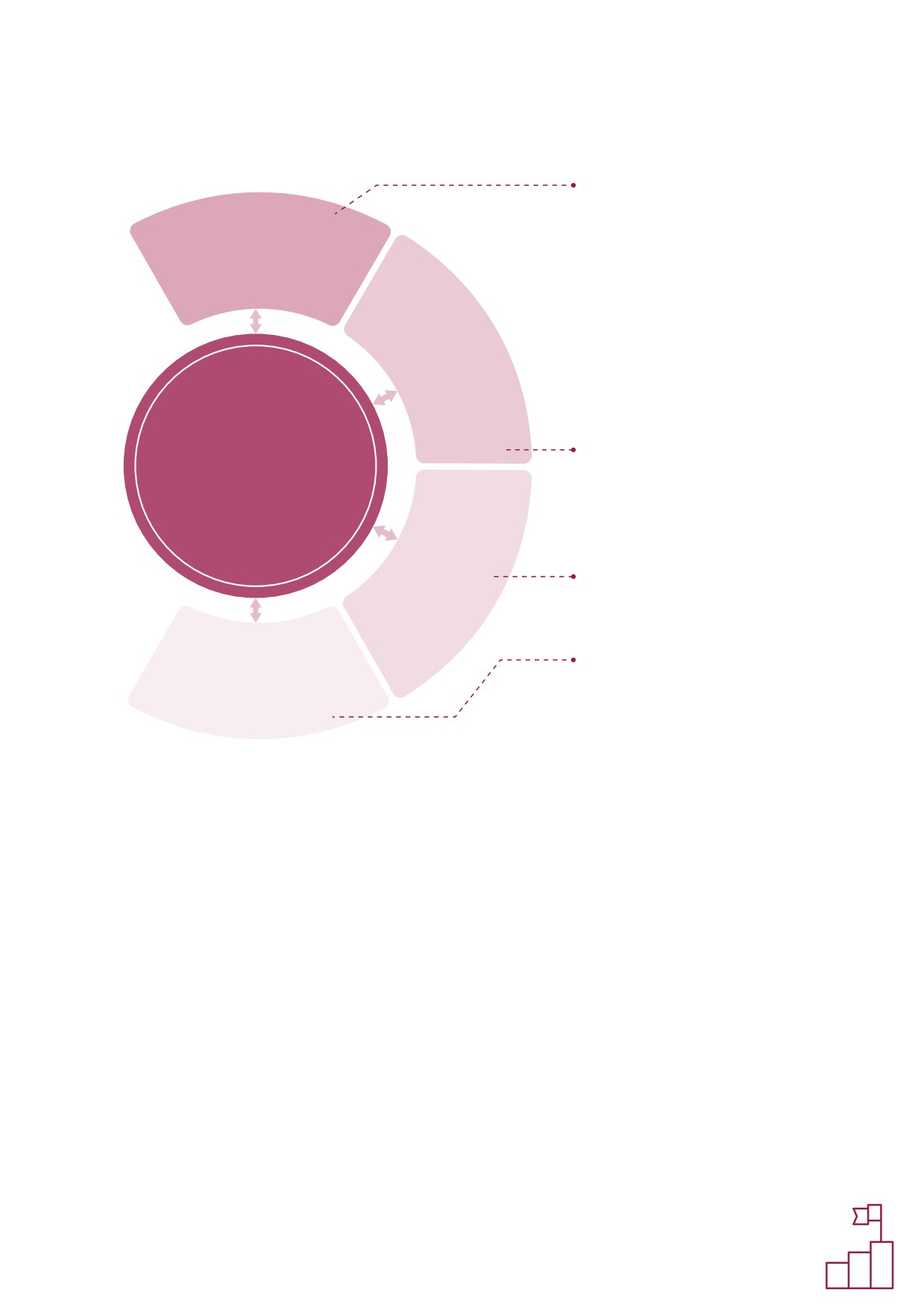
FIGURE 18. MULTISECTORAL MENTAL HEALTH AND PSYCHOSOCIAL SUPPORT WORKFORCE
Psychiatrists
Other clinicians (family
medicine specialists,
general practitioners,
HEALTH
paediatricians)
Psychologists
Counsellors
Nurses
Paramedics
JUSTICE
Community health
COMMUNITY
volunteers
Community leaders
Senior citizens
Parents
Psychologists
Refugees
Polices
Community
Prosecutors
counsellors
Judicial workers
NGOs
Youth
organizations
SOCIAL
WELFAR
Social workers
Teacher
EDUCATION
Counsellors
Recommended roles for the MHPSS workforce
Many priority MHPSS actions are already integrated into existing workforce roles, although providers’
capacity to carry out these roles is hampered by the challenges noted above. Table 7 outlines key
recommended roles by sector.
Within the health sector, specialist clinicians have primary responsibility for delivery of responsive
care (screening, referral and clinical care). Malaysia currently has 1.27 psychiatrists per 100,000
population,23 compared to the upper-middle-income country average of 2.03.15,17 The number of
psychologists is 1.03 per 100,000, compared to the upper-middle-income country average of 1.47.
There are only 0.07 child psychiatrists per 100,000 and 6.84 mental health nurses per 100,000 in
Malaysia.15 Aside from these specialist clinicians, paediatricians, family medicine specialists and
general practitioners also provide MHPSS responsive care to children and adolescents. Furthermore,
nurses and assistant medical officers are also a part of the clinical team providing MHPSS. To address
constraints in specialist provider availability, stakeholders recommended improving training and
support to non-specialist providers (including mental health volunteers) to provide MHPSS, noting
that most children and adolescents do not require highly specialized care, but could be better managed
at primary level by trained providers supported by specialists as needed.
Challenges and recommendations for strengthening the multisectoral mental health system
79
Within the education sector, teachers and counsellors currently perform screening for common
mental health conditions. Through screening for learning difficulties (the Literation and Numeration
Screening - LINUS programme), teachers can opportunistically detect underlying mental health
conditions. School-based counsellors have also been trained to use age-validated screening tools.
Counsellors provide counselling or refer to psychologists or psychiatrists for more complex clinical
cases. Teachers are also the primary providers of education related to mental health, although the
need for standardized curricula and teaching aids to support this was noted as a key challenge. To
better support teachers and counsellors, stakeholders recommended establishing a collaborative
programme whereby a psychiatrist and/or psychologist is assigned to be in charge of the schools
under a particular district so that the schools have direct access to them for consultation or referral
regarding children with potential mental health conditions. However, to achieve this, the number of
mental health experts dealing with adolescents and children needs to be increased, especially in
the public health sector.
Within the social welfare sector, social workers and psychologists encompass a broad workforce in
Malaysia, providing case management of children and adolescents within the social welfare system.
Social workers are primarily employed by the Ministry of Women, Family and Community Development
(national level) and by the Department of Social Welfare at subnational levels. However, they also work
within health (e.g., hospitals) and justice settings and are employed through NGOs. Accurate data
regarding the total size of the social welfare workforce are lacking. However, in 2018 it was estimated
that there were around 3,352 social workers employed across child protection, justice and anti-trafficking
programmes. An estimated 236 were directly engaged in child protection and 183 in managing children
within the justice system.67 Social workers supervise children and adolescents in their daily activities
to promote life skills, independence and resilience. Psychologists are responsible for the screening of
mental health problems and providing initial treatments such as psychological first aid and counselling.
Non-government volunteers also play a crucial role in tele-counselling by operating helplines and they
also participate in community programmes to reach vulnerable populations to deliver MHPSS. One
stakeholder highlighted a challenge noted for social workers at social welfare homes that also applies
to the MHPSS workforce at large. It regards work-life balance and the general well-being of the MHPSS
workforce while caring for the mental health of their clients.
“…we find that our staff working at social welfare homes themselves are experiencing
distress...because they have two shifts, but their shift starts as early as 6.00 a.m., so their
own welfare they cannot manage well”—A social welfare sector informant
Within the justice sector, there are psychologists from Section D11 (Sexual, Women and Children
Investigation) of the Royal Malaysia Police that provide responsive care and prevention for children and
adolescents. Although their main focus is on victims, suspects and witnesses of crimes within the
justice system, their services are also open to the public. They provide screening and counselling, while
referring to clinical psychologists or psychiatrists for more complex cases. They also actively engage
with schools to deliver MHPSS education and information. A challenge identified by stakeholders
is that the public is not aware that they can access MHPSS services at the police station. This is
because of the stigma associated with seeing a psychologist at a police station, with connotations
of criminality. Nonetheless, through their outreach programmes at schools, these psychologists
continue to encourage parents and students to use the MHPSS services that they offer.
80 Strengthening Mental Health and Psychosocial Support systems and services for
children and adolescents in the East Asia and Pacific region: Malaysia Country report 2022
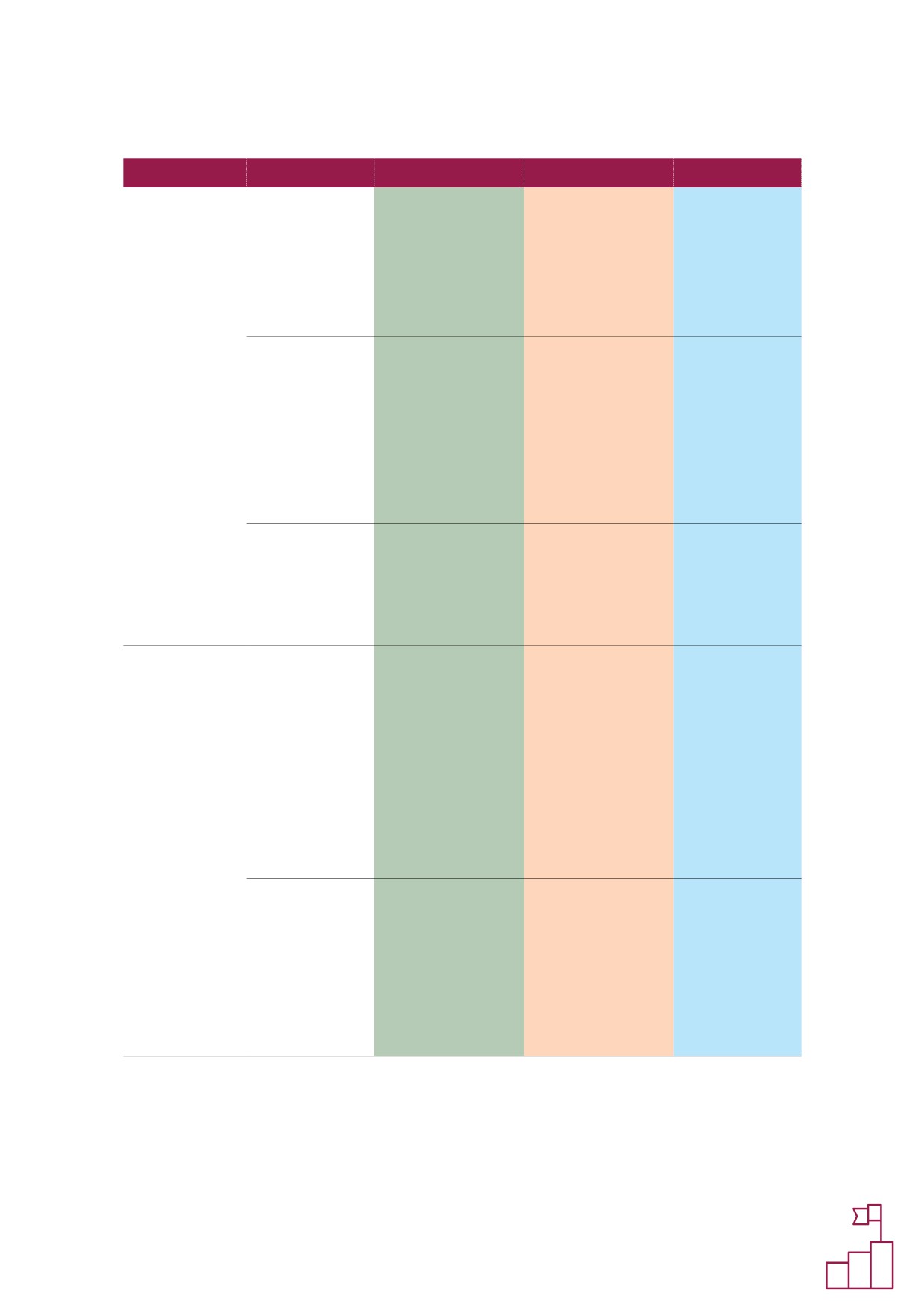
Table 7. Overview of key MHPSS roles, by sector
Sector
Provider
Responsive care
Prevention
Promotion
Health
Specialist
Screening,
Targeted
mental health
diagnosis and
interventions to
clinicians
management
address risks (e.g.,
as part of a
harmful substance
multidisciplinary
use)
team
Supporting school-
based approaches
Other clinicians
Screening,
Supporting
Supporting
diagnosis and
positive parenting
mental health
management as
and targeted
literacy
part of a team,
interventions
and supported
to identify and
by specialists as
support children
needed
and families at risk
Supporting school-
based approaches
Community
Community-based
Supporting
Mental health
Heath
early identification
universal
literacy,
Volunteers
and screening,
prevention actions
addressing
referral, supporting
(e.g., promotion of
stigma and
community-based
positive parenting)
discrimination
care
Education
Teachers
Early identification,
Supporting social
Supporting
screening and
and emotional
mental health
referral
learning, skills
literacy and
and resilience,
anti-stigma
Behaviour
promoting positive
through greater
modification for
peer relationships
engagement
uncomplicated
(curriculum-based
with families
cases
and participation
and school
Supporting
in whole-of-school
communities
continuity of
approaches)
care and ongoing
education
Guidance
Screening and
Supporting
Supporting
counsellors
referral, provision
school-based
mental health
of counselling and
interventions to
literacy and
initial management
increase mental
anti-stigma
of mental health
health literacy
through greater
conditions
and social and
engagement
emotional skills
with families
and school
communities
Challenges and recommendations for strengthening the multisectoral mental health system
81
Sector
Provider
Responsive care
Prevention
Promotion
Social welfare
Social workers/
Early identification,
Parenting
Mental health
and child
community
screening and
programmes
literacy and
protection
development
referral of children
(universal) and
programmes
officers
and adolescents at
support to families
to address
increased risk
in need (targeted)
stigma and
discrimination
Management
Other targeted
as part of a
interventions to
Social
multidisciplinary
address risks
protection
team (facility,
programmes
residential and
for children and
community-based)
families
Justice
Police, court
Early identification
Targeted
psychologists
and referral
interventions
and other
for screening,
and follow-
frontline justice
diagnosis and
up of children,
workers
management
adolescents
and families at
risk (including
meaningful skills
training for young
offenders)
Community
Youth leaders,
Early identification
Promoting positive
Mental health
community
and mental health
peer relationships,
literacy and
leaders,
first aid
positive parenting,
programmes
community-
and support to
to address
based
community-based
stigma and
organizations
interventions
discrimination
Competencies, training and support
Stakeholders identified the common competencies required of the multisectoral MHPSS workforce
(see Figure 19). Particular emphasis was placed on improving understanding of child and adolescent
mental health and related behaviours, as well as specific skills in relation to screening, managing
difficult behaviour and dealing with crisis (including psychological first aid).
82 Strengthening Mental Health and Psychosocial Support systems and services for
children and adolescents in the East Asia and Pacific region: Malaysia Country report 2022

FIGURE 19. COMMON CROSS-SECTORAL MHPSS COMPETENCIES
Common MHPSS competencies
Understanding
Skills: early
Understanding
of common
Understanding
identification,
of child and
mental health
of relevant
screening,
adolescent
conditions and
laws, policies
behaviour
development
risks during
and plans (and
management,
and behaviour
childhood and
their role)
psychological
adolescence
first aid
Communication skills (with children, adolescents and families and with implementing partners,
local authorities, officers)
Specialist training programmes for health sector clinicians is relatively well established in Malaysia.
Postgraduate psychiatry training is monitored by the Ministry of Health and a Conjoint Board.71
Two parallel pathways exist for postgraduate training - a postgraduate Masters programme in
psychiatry and the Member of the Royal College of Psychiatrists (MRCPsych) qualification.71 To be
able to practice, psychiatrists are required to register with the Malaysia Medical Council and National
Specialist Register. Another cadre of the MHPSS workforce in the health sector consists of clinical
psychologists. They are trained in specialized postgraduate courses to obtain a qualification in clinical
psychology72 and are regulated by the Allied Health Professions Act (Act 774).
For the education sector, limited teacher training in mental health and well-being has contributed
to low awareness of mental health, lack of recognition of mental health conditions and behavioural
problems, and limited skills in positive behavioural management. Additionally, stakeholders noted
that there are no specific guidelines for school counsellors for continuous professional development.
Stakeholders recommended that all teachers receive training in mental health skills to support children
with developmental disorders, learning difficulties and other needs; and improved skills in early
identification of mental health conditions (including training in the use of screening tools). To facilitate
this, it was recommended that a specific mental health committee be established within the Ministry
of Education with responsibility for training, support and supervision of teachers and counsellors.
Another recommendation was establishing a policy to support the professionalization, quality and
oversight of counsellors within the Malaysian Counselling Board. It was further recommended that
the education sector work in collaboration with the Ministry of Health to support continuous training
for counsellors and teachers.
Training and education of the social service workforce is fragmented, with no national requirement
for a specific education or qualification. Some social workers have degrees in social work (offered by
seven universities) or other social sciences, while others have non-related degrees or qualifications.
Assistant social welfare officers have diploma-level training, which may or may not be in relevant
fields or disciplines. There is currently no systematic programme to integrate child protection or
mental health into training of the social welfare workforce. The Malaysian Association of Social
Work has developed a definition of social work and a code of ethics; however, there is no specific
legislation supporting the professionalization of this workforce. Like the justice sector, psychologists
within social welfare and justice settings primarily receive in-service training, although this is not
standardized. Stakeholders recommended incorporating mental health into the pre- and in-service
training of teachers, social workers, police and other justice sector workers, as well as greater
collaboration with the Ministry of Health to support continuous development and access to mental
health training for those with specific MHPSS roles.
Challenges and recommendations for strengthening the multisectoral mental health system
83
There were also recommendations to improve support for and supervision of the mental health
workforce. These included establishing cross-sectoral, multidisciplinary teams at implementation
level, particularly to improve support for and supervision of non-specialist providers (such as linking
teachers and social workers to psychologists and psychiatrists), incentives to work in MHPSS (such as
free training); and increasing the salary and remuneration of social workers, psychologists and others
engaged in mental health and child protection to attract skilled and dedicated workers and improve
retention and motivation. Establishing workforce networks, such as school counsellor networks, was
also recommended to encourage the sharing of knowledge, experience and support. Attention to
the mental health needs of providers is also needed, reflecting the often stressful and sometimes
distressing roles required. Stakeholders further recommended providing mental health training to
communities (including community leaders, religious leaders, parents and refugees) to support
implementation of community-based actions, such as improving awareness, addressing stigma and
providing psychological first aid, to improve accessibility.
Overall, greater coordination across sectors to map the mental health workforce, roles and
competencies is needed to support workforce planning - including training, supportive supervision,
distribution and collaboration through multidisciplinary teams at a local level.
KEY RECOMMENDATIONS - MENTAL HEALTH WORKFORCE:
Improve collaboration across sectors at national level to facilitate development, planning
and support of the mental health workforce. This could include establishing committees
within sectors (e.g., Ministry of Education) to oversee mental health workforce training and
support, in collaboration with the Ministry of Health.
Undertake further detailed mapping of the multisectoral mental health workforce and
existing mental health competencies to identify gaps (numbers, skills, distribution).
Integrate and strengthen pre-service mental health training for health, education, social
welfare and justice sector providers - including for non-specialist providers.
Provide updated in-service training for non-specialist health providers, teachers, counsellors,
psychologists, social workers and police aligned with clearly defined MHPSS roles and ensure
that this training in ongoing to support continuous development (including establishing
ongoing training as a requirement for accreditation).
Provide opportunities for mental health training for community members to support mental
health awareness.
Establish steps to support professionalization of the social service workforce (this could
also include school counsellors).
Strengthen job aids, tools and protocols to support key MHPSS roles (screening, referral,
behaviour management and mental health first aid).
More explicitly integrate MHPSS actions into the defined roles and performance indicators
of key cadres (teachers, counsellors, social workers and justice officers).
Improve remuneration and job security/career pathways for social workers, psychologists
and other mental health professionals.
Establish mechanisms for support supervision of the mental health workforce through
multidisciplinary teams, support networks and services and supports to address the mental
health of providers.
84 Strengthening Mental Health and Psychosocial Support systems and services for
children and adolescents in the East Asia and Pacific region: Malaysia Country report 2022
Budget and financing
Malaysia’s public health system is financed mainly through general revenue and taxation collected by
the federal Government, while the private sector is funded through private health insurance and out-
of-pocket payments from consumers. Spending on health (at 4.3 per cent of GDP in 2019) remains
below the average for upper-middle-income countries (at 5.85 per cent of GDP in 2019).73,74 Public
sources of financing account for 52 per cent of total health expenditure. The main sources of total
health expenditure in 2019 were the Ministry of Health (45 per cent), followed by household out-of-
pocket expenditure at 35 per cent.73
The WHO has estimated global average spending on mental health at 2.1 per cent of a country’s national
health budget,75 which may be viewed as a sufficient national budget allocation for mental health.
Meanwhile, government expenditure on mental health in Malaysia in 2017 was estimated to be 1.3 per
cent of total health expenditure.76 For the 2022 budget, the Malaysian Government has allocated a total
of RM319 million (out of RM32.4 billion, or 0.98 per cent) on estimated operational expenditure which
covers emoluments, services and supplies for mental health services under the Ministry of Health.77,78
An additional RM70 million was also allocated to address mental health issues by strengthening support,
counselling and psychosocial services, and to increase advocacy programmes and strengthen the role
of NGOs as drivers of mental health programmes.77 The total budget of RM389 million (1.2 per cent) for
mental health in 2022 is markedly less than the WHO global benchmark.75,77,78 There must also be greater
expenditure on the psychosocial aspects (non-healthcare determinants) of mental health such as mental
health literacy, living and working conditions, adequate income and wages, food security and physical
activity. This can be achieved through investment in public health services and engagement with various
stakeholders such as other ministries and community leaders to form a ‘whole of society’ approach.
Apart from government sources, funding is also provided through NGOs (financed by international or
local donors), private foundations, corporate social responsibility programmes and through user out-of-
pocket fees. Additionally, NGOs may be financed through state government funding. There are limited
data on other sectors’ spending on MHPSS-related services and programmes. However, stakeholders
across sectors emphasized that current budgets were insufficient to support implementation, particularly
with increasing demand for MHPSS as a result of COVID-19. Furthermore, stakeholders noted that
budget processes are complex and cross-sectoral coordination limited, leading to a lack of cross-sectoral
planning and budgeting, although some stakeholders indicated that there is some flexibility within
sectors to reallocate non-MHPSS funding to support MHPSS programmes. In the absence of a detailed,
costed, multisectoral mental health plan that clearly defines the roles and responsibilities of each sector,
accurately apportioning the human and other resources required to implement MHPSS is a challenge.
This is particularly so for programmes, services and supports provided outside the health sector.
Challenges and recommendations for strengthening the multisectoral mental health system
85
KEY RECOMMENDATIONS - BUDGET AND FINANCIAL RESOURCES:
Aim for MHPSS budget allocation of 2.1 per cent of the national health budget.
Include mental health services
(including outpatient services) within national
insurance schemes.
Include a national mental health goal in social and economic plans and/or as a primary
programme within the Ministry of Health.
Define a detailed minimum-services package for child and adolescent mental health (based
on the tiered framework of actions) addressing responsive care, prevention and promotion
that can be costed, with budget responsibility across key sectors clearly defined.
Establish a national, cross-sectoral planning body and cross-sectoral budgeting committees
for MHPSS to support efficient and coordinated budget requests and processes.
Increase support for subnational and local government units to improve resource allocation
for implementation of MHPSS.
Consider establishing a public fund to provide additional funding for prevention, promotion,
research and innovation with respect to mental health.
Participation
Mental health-related stigma, discrimination and lack of mental health literacy are major barriers to
seeking support and services. Stigma and misconceptions were described as contributing to a lack of
care-seeking by parents, who preferred to keep mental health conditions to themselves and address
them privately. Misunderstandings and misconceptions about mental health and behaviour are also
common, with teachers and parents dismissing signs of poor mental health as attention-seeking or
misbehaviour. Limited mental health literacy among children, adolescents and their parents/carers
also contributes to delays in care-seeking and the underutilization of available supports and services.
Engaging communities and strengthening the participation of children, adolescents and families
is central to ensuring that policies, programmes and services respond to their needs and address
barriers. According to stakeholders, further research and consultation are needed with children,
adolescents and families (including marginalized and underserved groups) to understand the specific
barriers and needs in relation to MHPSS to directly inform policies, programmes and services.
Stakeholders particularly emphasized the need to improve mechanisms to engage migrants, refugees,
out-of-school children and adolescents and those with disabilities, in policy and programme design.
Youth participation (including young people with lived experience) was also seen as essential to
developing policies and programmes that effectively respond to needs.
To support greater participation and engagement, stakeholders made a number of recommendations.
At a national level, it was suggested that young people should have a formal role in the recently
established NCMW. The NCMW came into being “to provide sustainable solutions to the possible
long term mental health impact of COVID-19”.79 The coalition was initiated by Rotary Malaysia and its
members include organizations such as the Malaysia Mental Health Association, Malaysian Psychiatric
Association, Ministry of Health, WHO and UNICEF, among others. In addition to supporting planning,
monitoring, evaluation and feedback on a national plan of action for mental health, the NCMW also
provides a platform to discuss mental health issues beyond COVID-19. It was also recommended
that key sectors more proactively seek the input and feedback of communities and young people by
holding community meetings or ‘roadshows’ to explore mental health and MHPSS priorities.
86 Strengthening Mental Health and Psychosocial Support systems and services for
children and adolescents in the East Asia and Pacific region: Malaysia Country report 2022
At local level, stakeholders also recommended establishing community-based centres for children and
adolescents that offer a safe space, opportunities to provide MHPSS information and services, and
capacity building for young people (including in social and emotional skills), and are places where youth
leadership could be supported and engaged in programme design. In addition to parenting programmes
to improve parent/caregiver skills and mental health literacy, it was also recommended that parents be
engaged in the design and delivery of MHPSS programmes. Parent-teacher associations were identified
by multiple sectors as an underutilized platform for supporting parent engagement - to obtain input
and feedback, support delivery of MHPSS programmes (such as mental health awareness) and build
more effective linkages between communities, families and schools for MHPSS.
Strengthening mechanisms for community feedback and monitoring both at service-delivery level
(e.g., health facilities) through to subnational and national government bodies responsible for mental
health is also important. An accessible and responsive system to support feedback and complaints
in relation to mental health services is needed. There is a national independent body to assess mental
health facilities with respect to compliance with mental health legislation. Currently, a Public Complaint
Management System exists to receive feedback regarding the healthcare services provided by the
Ministry of Health. However, there is no such mechanism to cover the entire country (to include both
public and private health systems) and that is specific to MHPSS.
KEY RECOMMENDATIONS - PARTICIPATION:
Build capacity and increase opportunities for young people and youth organizations to
participate in MHPSS policy and planning, including those with lived experience and
marginalized young people.
Establish formal roles for youth and parent representatives on national mental health
committees or similar bodies, such as the National Coalition for Mental Well-being.
Strengthen engagement between government agencies, communities and youth groups to
ensure that MHPSS approaches meet local needs and support implementation, including
more formally defined roles for young people in the planning and delivery of MHPSS.
Include youth and parent representatives in subnational committees and/or establish child
and adolescent task forces to support planning.
Establish or strengthen mechanisms for feedback and complaints, including for feedback
in non-health settings and in child and adolescent-friendly formats.
Data, health information and research
All stakeholders identified an urgent need to improve data and information systems related to MHPSS
among children and adolescents. At a national level, timely and reliable statistics (disaggregated
by location, age and sex) related to the prevalence of common mental health conditions and risks
is needed to inform policies and support prioritization and implementation plans, and budgeting.
These include estimates of common mental disorders (depression, anxiety, developmental disorders,
psychosis), suicide rates, psychological distress and behavioural problems, key risk factors (substance
use, bullying, violence, adolescent pregnancy), and population and service delivery data (such as
the number of families requiring social welfare). Ensuring that data include marginalized populations
was also identified as a key need, with capacity to identify those with the greatest needs or most
underserved, and to monitor equity. Additionally, data on the impacts of COVID-19 were identified
as a key short-term priority. Some data are collected through existing household surveys (such as
the NHMS) and it was noted that mental health indicators also need to be integrated into routine
information systems - for example, by re-establishing a national suicide surveillance system.
Challenges and recommendations for strengthening the multisectoral mental health system
87
Stakeholders also highlighted the need to include mental health indicators in the routine data collection
of sectors outside health and to improve the sharing of data within and between sectors to support
planning and implementation. For example, enabling the timely sharing of data collected through
the education, social welfare and justice sectors with multidisciplinary teams, for instance through
data linkage, would improve the identification, planning and follow-up of children and families at risk.
Currently, there are no mechanisms to collate, manage or share data efficiently between sectors.
Establishing a multisectoral mental health information system that includes relevant government, private
sector and NGO providers was a high priority, as was building a user-friendly platform to enable access
to timely and relevant data. Stakeholders recommended the development of a common system that
could function as a one-stop centre for data collection and sharing as well as for case management.
The information provided should also be in a simplified version so that it can be easily understood by all
key agencies, with a standardized approach to data collection (indicators, format, disaggregation) across
agencies. Many stakeholders also recommended that additional and dedicated resources (financial
and human resources) be provided to support information systems, rather than relying on frontline
providers (such as doctors, nurses, teachers and social workers) to maintain systems and enter data.
Improved access to data describing the multisectoral system was also a noted priority, including
up-to-date information about the multisectoral workforce; MHPSS service availability and distribution;
coverage and use of services such as hotlines; and data about non-government actors in MHPSS. To
support this, stakeholders recommended development of a minimum set of harmonized indicators
that all sectors and relevant units would report or contribute to. It was further recommended that
NGOs and the private sector also collect and report routine mental health data into a central system
to enable greater transparency and oversight.
Research priorities include: further studies to understand the needs, barriers and service-delivery
preferences of children and adolescents; studies to determine the effectiveness of specific MHPSS
interventions; and implementation research to understand effective models of service delivery.
Building local research capacity was identified as key to supporting impactful research.
KEY RECOMMENDATIONS - DATA, INFORMATION AND RESEARCH:
Establish a national suicide and self-harm surveillance system.
Establish a child protection information management system that is accessible within and
across sectors.
Include mental health indicators in routine health information systems and provide age and
sex-disaggregated data.
Integrate child and adolescent mental health indicators into the routine information systems
of the education, social welfare and justice sectors.
Improve mechanisms for timely analysis, reporting and sharing of data within and across
sectors to support implementation of MHPSS and continuity of care for those at risk.
Establish a user-friendly platform ‘one-stop shop’ across sectors, to enable harmonized
collection, use and sharing of data.
Invest in further research and support local research capacity to understand demand-side
needs, barriers and service-delivery preferences and build the evidence for specific actions
and effective implementation models
88 Strengthening Mental Health and Psychosocial Support systems and services for
children and adolescents in the East Asia and Pacific region: Malaysia Country report 2022
Challenges and recommendations for strengthening the multisectoral mental health system
89
Key
recommendations
and conclusions
90 Strengthening Mental Health and Psychosocial Support systems and services for
children and adolescents in the East Asia and Pacific region: Malaysia Country report 2022
Children and adolescents aged 0-18 years in Malaysia experience a high burden of poor mental
health. Around 1 in 8 adolescents aged 10-19 and 1 in 20 children aged 5-9 are estimated to have
a mental disorder (including developmental disorder). Suicide is the second leading cause of death
for adolescents aged 15-19. Risk factors for poor mental health, including exposure to violence,
peer victimization and bullying, loneliness and social isolation, particularly in the context of COVID-
19, are also prevalent.
In response to these needs, Malaysia has made important progress to address child and adolescent
mental health. National policy and legislative frameworks are broadly supportive, recognizing, at least
in part, the specific needs and considerations for this age group and the importance of a national,
multisectoral approach to mental healthcare, prevention and promotion. While a large focus of the
current response has been on the clinical management of mental health conditions through the health
sector, there are also important national approaches to improve and respond to mental health in
schools, including through programmes to support early identification, screening and counselling. The
social welfare and justice sectors also deliver multidisciplinary programmes to identify and support
children and families at increased risk, including those who have been exposed to violence, abuse
or neglect, and children in conflict with the law.
Despite this progress, this analysis has identified some important gaps in the current MHPSS response.
These include the accessibility and availability of child- and adolescent-friendly and multidisciplinary
care for mental health conditions (particularly outside specialized tertiary and institutional settings),
comprehensive and coordinated whole-of-education approaches to mental health promotion (including
a national curriculum to support social and emotional learning), a national (and targeted) approach to
support nurturing and responsive care provided by parents and carers, and coordinated programmes
to support healthy peer relationships and address peer victimization. There are also important gaps in
relation to programmes reaching marginalized, out-of-school and migrant children and adolescents.
There are also some important cross-cutting challenges impacting on implementation of MHPSS.
While mental health and well-being is integrated to some degree in the sectoral plans of education,
social welfare and justice, these generally focus narrowly on specific actions (such as mental health
screening or provision of counselling) rather than encompassing a more holistic vision for mental
health and well-being and clear articulation of the sector’s role and response. At a subnational
level, the lack of clear plans, guidance and structures to support implementation and multisectoral
collaboration have contributed to limited coordination across sectors. Across all sectors, insufficient
numbers and inappropriate distribution of skilled personnel were noted as a major barrier to
implementation, contributing to heavy workloads, long delays in access to care and inconsistent
delivery of interventions. Limited availability of services responsive to the needs of children and
adolescents, particularly at community level, and over-reliance on tertiary and institutional-based
care also contribute to high unmet needs and delays in access to services through the health
and social welfare sectors, and time-consuming referral from other sectors. Lack of standardized,
national referral protocols, particularly for referrals arising outside the health sector, also contribute
to delays in access to services and supports, as do the lack of standardized protocols and operating
procedures across agencies for supporting children at high risk. Insufficient budgets for MHPSS-
related programmes, and budgeting processes that do not currently support agenda-based and
cross-sectoral budget planning are also key challenges.
In addition to specific recommendations to strengthen the multisectoral mental health system, there
are a number of overarching recommendations to improve the implementation of MHPSS for children
and adolescents in Malaysia:
1. At national level, the Mental Health Act should be strengthened to more clearly articulate the
specific considerations and protections for children and adolescents, including those within the
mental health system. Consideration should also be given to developing a specific multisectoral
child and adolescent mental health strategy that more clearly articulates the MHPSS actions
across the three tiers of responsive care, prevention and promotion, and details a multisectoral
plan (and coordination structure) for implementation, including cross-sectoral performance
indicators and the clear roles, responsibilities and accountabilities of key sectors.
Key recommendations and conclusions
91
2.
The Government should strengthen legislative protections for children and adolescents (including
prohibiting corporal punishment, decriminalizing suicide, addressing discrimination, increasing
protections within justice and institutional settings), and address legislative barriers to accessing
MHPSS (such as mandatory parental consent and barriers for undocumented migrants).
3.
Under the leadership of the Ministry of Health, a national, multisectoral steering committee for
child and adolescent mental health should be established, with responsibility for coordinating
policy, implementation and accountability.
4.
Under the Ministry of Health, a cross-sectoral, independent monitoring body should be established
to assess quality, compliance and performance of MHPSS programmes and services.
5.
At district level, the state government should support district offices to develop local, multisectoral
implementation plans, resource allocation and coordination for MHPSS. To support this, consider
establishing district-level multisectoral subcommittees for mental health and provide capacity
building for district-level decision-makers in mental health.
6.
The Ministry of Health, in consultation with other sectors and technical partners, should strengthen
national, standardized protocols for child and adolescent health across agencies, including:
a. Early identification protocols and validated screening tools for this age group and detailed
guidance on their use in different settings (including consideration of the potential harms
of screening);
b. Referral procedures across sectors;
c. Non-specialist management;
d. Case management of children and adolescents engaged in the child protection and
justice sectors;
e. Greater protections for children in conflict with the law and child victims within the justice
system; and
f. National quality service standards for child and adolescent mental health services
across sectors.
7.
The Government should include mental health services (including outpatient services) within the
national health insurance programme and increase public resource allocation for mental health
across the tiers of care, prevention and promotion. To support this, consideration should be given
to including mental health as a primary programme, and a minimum-services package (based on
the regional framework) should be defined and costed, with budget allocation and responsibility
clearly defined across key sectors. The Government could also consider establishing a national,
cross-sectoral body or budget committee on MHPSS to support coordinated and comprehensive
budget requests that align with national MHPSS goals.
8.
The Government, with support from professional associations, training institutions and
development partners, should strengthen the multisectoral MHPSS workforce through:
a. Further in-depth mapping to identify key roles across sectors against the MHPSS priority
actions and the required competencies and inter-sectoral training needs to support these roles;
b. Development of job descriptions for identified roles and/or integration of MHPSS roles into
the defined scope of practice and performance indicators for key providers across sectors;
c. Integration of child and adolescent development and mental health into the pre-service
training of health professionals, the social service workforce, justice sector workers, teachers
and other school-based staff, in alignment with the roles and responsibilities with respect
to MHPSS;
d. Strengthened in-service training in mental health (including continuous education) for health
providers (including non-specialists and community-based workers), social service workers,
justice sector workers, teachers and education staff that is competency-based and aligned
with expected MHPSS roles;
92 Strengthening Mental Health and Psychosocial Support systems and services for
children and adolescents in the East Asia and Pacific region: Malaysia Country report 2022
e. Training provided to relevant ministry-level staff from the health, education, social welfare
and justice sectors to support planning and development of the workforce as well as broader
MHPSS programmes;
f. Expansion of the number of posts at national and subnational levels; and
g. Improved supervision and support for MHPSS providers across sectors, including establishing
provider support networks and multidisciplinary teams, improved remuneration, job security
and career pathways, and attention to the mental health needs of providers themselves
9.
The Ministry of Health, in consultation with other key sectors and academic and development
partners, should improve the collection, use and accessibility of data at national and subnational
levels - including data to identify mental health needs, support planning and implementation,
and track progress. This should include the development of a minimum set of MHPSS-related
indicators harmonized across sectors, including performance indicators related to multisectoral
collaboration and development of user-friendly platforms (such as a data dashboard) to improve
the access of service providers and communities to mental health data.
10. The Government, development partners and NGOs should increase opportunities for children and
adolescents to participate in MHPSS policy and programming, including establishing more formal
roles for young people (such as representation on the National Coalition for Mental Well-being, or
national steering committee). The Ministry of Health should also improve child- and adolescent-
friendly mechanisms for providing feedback on MHPSS programmes and mental health services.
11.
The Government, development partners and NGOs should expedite the process of systematic
decentralization of mental healthcare to community-based MHPSS by expanding national and
community-based programmes to address mental health- related stigma and discrimination and
improve mental health literacy (particularly aimed at children, adolescents and parents/caregivers).
12. The Government, development partners and NGOs should focus on expanding inter-agency
collaboration as well as the monitoring and evaluation of implementation, outcomes and the
impact of mental health programmes, including improved data and information sharing through
digital platforms.
Key recommendations and conclusions
93
References
1.
Institute for Health Metrics and Evaluation, ‘Global Burden of Disease Study 2019’, IHME, 2019.
2.
United Nations Children’s Fund, The State of the World’s Children 2021: On my mind - Promoting,
protecting and caring for children’s mental health, UNICEF, New York, 2021.
3.
Kessler, Ronald C., et al., ‘Lifetime Prevalence and Age-of-Onset Distributions of Mental
Disorders’ in the World Health Organization’s World Mental Health Survey Initiative, in World
Psychiatry, vol. 6, no. 3, 2007, pp. 168-176.
4.
Kennedy, Elissa, et al., ‘Gender Inequalities in Health and Well-being Across the First Two
Decades of Life: An analysis of 40 low-income and middle-income countries in the Asia-Pacific
region’, Lancet Global Health, vol. 8, 2020, pp. E1473-E1488.
5.
Azzopardi, Peter S., et al., ‘Progress in Adolescent Health and Well-being: Tracking 12 headline
indicators for 195 countries and territories, 1990-2016’, The Lancet, vol. 393, no. 10176, 2019,
pp. 1101-1118.
6.
World Health Organization, Mental Health Atlas 2020, WHO, Geneva, 2021.
7.
GBD 2017 Disease and Injury and Prevalence Collaborators, ‘Global, Regional, and National
Incidence, Prevalence, and Years Lived with Disability for 354 Diseases and Injuries for 195
Countries and Territories, 1990-2017: A systematic analysis for the Global Burden of Disease
Study 2017’, The Lancet, vol. 392, no. 10159, 2018, pp. 1789-1858.
8.
Willenberg, Lisa, et al., ‘Understanding Mental Health and its Determinants from the Perspective
of Adolescents: A qualitative study across diverse social settings in Indonesia’, Asian Journal
of Psychiatry, vol. 52, 2020, pp. 102148.
9.
United Nations Children’s Fund, ‘Mental Health and Psychosocial Well-being: Technical note’.
10.
United Nations Children’s Fund, Global Multisectoral Operational Framework for Mental Health
and Psychosocial Support of Children and Families Across Settings (field demonstration version),
UNICEF, New York, 2021.
11.
Institute for Public Health, ‘National Health and Morbidity Survey (NHMS) 2019’, National
Institutes of Health, Ministry of Health Malaysia, Kuala Lumpur, 2019.
12.
Institute for Public Health, ‘National Health and Morbidity Survey (NHMS) 2017: Adolescent Health
and Nutrition Survey’, National Institutes of Health, Ministry of Health Malayisa, Kuala Lumpur, 2018.
13.
World Health Organization, Mental Health Legislation and Human Rights, WHO, Geneva, 2003.
14.
Institute for Public Health, ‘National Health and Morbidity Survey (NHMS) 2017: Adolescent
Health Survey 2017’, National Institutes of Health, Ministry of Health Malaysia, 2017.
15.
World Health Organization Team Mental Health and Substance Abuse, ‘Mental Health Atlas
2017 Country Profile: Malaysia’, WHO, Geneva, 2017.
16.
Ahmad, NoorAni, et al., ‘Trends and Factors Associated with Mental Health Problems among
Children and Adolescents in Malaysia’, International Journal of Culture and Mental Health, vol. 8,
no. 2, 2015, pp. 125-136.
94 Strengthening Mental Health and Psychosocial Support systems and services for
children and adolescents in the East Asia and Pacific region: Malaysia Country report 2022
17.
Dahlan, Rahima, et al., ‘Child and Adolescent Mental Health Service (CAMHS), Terengganu,
Malaysia: Milestones so far and the paths to the future’, London Journal of Primary Care, vol. 10,
no. 4, 2018, pp. 113-117.
18.
Jamaluddin, R., et al., ‘Prevalence of Anxiety among Adolescents in Malaysia: Findings from
the National Health and Morbidity Survey (NHMS) 2012 and 2017’, Medical Journal of Malaysia,
vol. 74, suppl. 2, 2019, p. 124.
19.
Idris, Idayu Badilla, Jane Barlow and Alan Dolan, ‘A Longitudinal Study of Emotional and Behavioral
Problems among Malaysian School Children’, Annals of Global Health, vol. 85, no. 1, 2019, p. 30.
20.
Bahar, Norharlina, et al., ‘Suicide Among the Youth in Malaysia: What do we know?’ Asia-Pacific
Psychiatry, vol. 7, no. 2, 2015, pp. 223-229.
21.
Ali, Nor Hayati, et al., ‘Pattern of Suicides in 2009: Data from the National Suicide Registry
Malaysia’, Asia-Pacific Psychiatry, vol. 6, no. 2, 2012, pp. 217-225.
22.
Malaysian Healthcare Performance Unit, ‘Malaysian Mental Healthcare Performance, Technical
report 2016’, National Institute of Health, Ministry of Health, Malaysia, 2017.
23.
Midin, Marhani, et al., ‘Mental Health Services in Malaysia’, Taiwanese Journal of Psychiatry,
vol. 32. no. 4, 2018, pp. 281-293.
24.
Institute for Health Metrics and Evaluation, ‘Global Burden of Disease Data Tool’, Washington,
D.C., IHME, 2019.
25.
Flaherty, Serena Cherry and Lois Sadler, ‘A Review of Attachment Theory in the Context of
Adolescent Parenting’, Journal of Pediatric Health Care, vol. 25, no. 2, 2011, pp. 114-121.
26.
Lumos, ‘Ending the Institutionalisation of Children in Malaysia - The time is now’, Lumos,
London, 2014.
27.
OrphanCare Malaysia, ‘OrphanCare The Problem: Number of Malaysian Children in Institutional
Care’, 2014.
28.
Mohammadzadeh, Marjan, et al., ‘Emotional Health and Self-esteem Among Adolescents in
Malaysian Orphanages’, Community Mental Health Journal, vol. 54, no. 1, 2018, pp. 117-125.
29.
Ethier, Louise, Jean-Pascal Lemelin and Carl Lacharité, ‘A Longitudinal Study of the Effects of
Chronic Maltreatment on Children’s Behavioral and Emotional Problems’, Child Abuse & Neglect,
vol. 28, no. 12, 2004, pp. 1265-1278.
30.
World Health Organization, ‘Fact sheet No 150: Child maltreatment’, WHO, Geneva, 2010.
31.
Ahmad, NoorAni, et al., ‘Suicidal Ideation Among Malaysian Adolescents’, Asia-Pacific Journal
of Public Health/Asia-Pacific Academic Consortium for Public Health, vol. 26, suppl. 5, 2014,
pp. 63S-69S.
32.
Wichaidit, Wit, Nannapa Pruphetkaew and Sawitri Assanangkornchai, ‘Variations by Sex and
Age in the Association Between Alcohol Use and Depressed Mood Among Thai Adolescents’,
PloS one, vol. 14, no. 2, 2019, e0225609.
33.
Azmi, Siti Umi Fairuz, et al., ‘Prevalence and Risk Factors of Internet Addiction (IA) Among
National Primary School Children in Malaysia’, International Journal of Mental Health and
Addiction, 2019.
34.
Rameli, M. R. M., et al., ‘A Study on Relationship Between Internet Usage and Anxiety Among
Primary School Students’, Indian Journal of Public Health Research and Development, vol. 10,
no. 4, 2019, pp. 1342-1346.
References
95
35.
Mohd. Nor, Hilwa Abdullah, Nur Farah Jasmeen Mohd Bashir and Daniella Maryam Mohamed
Mokhtar, ‘Relation Between Smartphone Addiction, Sleep Quality and Psychological Health
Among Adolescents in Malaysia’, International Journal of Psychosocial Rehabilitation, vol. 24,
no. 4, 2020, pp. 4288-4298.
36.
United Nations Population Fund, My Body is My Body, My Life is My Life. Sexual and reproductive
health and rights of young people in Asia and the Pacific, UNFPA Asia-Pacific Regional Office,
Bangkok, 2021.
37.
Kalok, Aida, et al., ‘COVID-19 Pandemic and Maternal Psychological Well-being During the
Malaysian Movement Control Order: A cross-sectional study’, Frontiers in Psychiatry, vol. 12,
2021, p. 745034.
38.
Department of Social Welfare, ‘Social Welfare Statistics Report, 2019, <www.jkm.gov.my/
jkm/uploads/files/pdf/laporan_statistik/FINAL%20Web%20Upload%20-%20Laporan%20
Statistik%202019.pdf>.
39.
Abd, Rahman, Fairuz Nazri, et al., ‘Behavioral and Emotional Problems in a Kuala Lumpur
Children’s Home’, Pediatrics International, vol. 55, no. 4, 2013, pp. 422-427.
40.
Raj, Stacey P. and Vaishali Vidhatri Raval, ‘Children in Residential Care in Malaysia: An exploratory
qualitative study of adult-child interactions’, International Perspectives in Psychology: Research,
Practice, Consultation, vol. 2, 2013, pp. 194-206.
41.
United Nations Children’s Fund Malaysia, Situation Analysis of Women and Children in Malaysia,
UNICEF, Kuala Lumpur, 2020.
42.
Kok, Jin Kuan and Wai Yoong Lai, ‘Not Myself and the Connected Self: Cases of youth depression
and recovery in Malaysia’, British Journal of Guidance & Counselling, vol. 45, no. 1, 2017, pp.
32-41.
43.
UNCHR, ‘Figures at a Glance in Malaysia’, 2018, <www.unhcr.org/en-my/figures-at-a-glance-
in-malaysia.html>.
44.
Siah, Poh Chua, et al., ‘Coping with Perceived Sources of Discrimination: A survey on refugee
children in Malaysia’, Vulnerable Children and Youth Studies, vol. 16, no. 1, 2020, pp. 59-67;
Baumstarck, Karine, et al., ‘Assessment of Coping: A new French four-factor structure of the
brief COPE inventory’, Health and Quality of Life Outcomes, vol.15, no. 1, 2017.
45.
Holmes, Emily A., et al., ‘Multidisciplinary Research Priorities for the COVID-19 Pandemic: A
call for action for mental health science’, Lancet Psychiatry, 2020, pp. 547-560.
46.
Wong, Li Ping, et al., ‘Escalating Progression of Mental Health Disorders During the COVID-
19 Pandemic: Evidence from a nationwide survey’, PloS one, vol. 16, no. 3, 2021, e0248916.
47.
The ASEAN Secretariat, ‘ASEAN Mental Health Systems’, ASEAN Secretariat, Jakarta, 2016.
48.
Ministry of Health Malaysia, ‘National Strategic Plan for Mental Health’, Disease Control Division,
Ministry of Health Malaysia, Kuala Lumpur, 2020.
49.
Ministry of Health Malaysia, ‘Guideline on Medical Assessment of Child Custody Cases’, Medical
Development Division, Ministry of Health Malaysia, Kuala Lumpur, 2018.
50.
Phang, C. K., M. Marhani and A. A. Salina, ‘Help-Seeking Pathways for In-patients with First-
Episode Psychosis in Hospital Kuala Lumpur’, Malaysian Journal of Medicine and Health
Sciences, vol. 7, 2011, pp. 37-44.
51.
Martadza, Manal, et al., ‘Patterns of Referral to Clinical Psychology Services in the Ministry
of Health Malaysia’, Malaysian Journal of Medical Sciences, vol. 26, no. 6, 2019, pp. 111-119.
96 Strengthening Mental Health and Psychosocial Support systems and services for
children and adolescents in the East Asia and Pacific region: Malaysia Country report 2022
52.
Aida, J., et al., ‘Barriers to the Utilization of Primary Care Services for Mental Health Problems
Among Adolescents in a Secondary School in Malaysia’, Malaysian Family Physician, vol. 5, no. 1,
2010, pp. 31-35.
53.
Awang, Hafizuddin, et al., ‘Adolescent-Friendly Health Services in Primary Healthcare Facilities
in Malaysia and its Correlation with Adolescent Satisfaction Level’, International Journal of
Adolescence and Youth, vol. 25, no. 1, 2020, pp. 551-561.
54.
Ministry of Health Malaysia, ‘Memperkukuhkan perkhidmatan kesihatan mesra remaja di
klinik kesihatan terpilih Semua Negeri’ (‘Strengthening Adolescent-Friendly Health Services
in Selected Health Clinics in Malaysia’), Document No. KKM-600-30/7/4 Jld.4(6), Ministry of
Health Malaysia, Kuala Lumpur, 2018.
55.
Saw, Jo Anne, et al., ‘Contextualized School-Based Cognitive Behavioral Therapy (CBT) Intervention
for Malaysian Secondary School Students’, Frontiers in Psychiatry, vol. 11, 2020, p. 565896.
56.
UNICEF East Asia and the Pacific Regional Office, A Snapshot: UNICEF’s approach to mental
health during COVID-19 in East Asia and the Pacific, UNICEF EAPRO, Bangkok, 2020.
57.
Tan, Seok Hong, ‘Unmet Health Care Service Needs of Children with Disabilities in Penang,
Malaysia’, Asia-Pacific Journal of Public Health’, vol. 27, suppl. 8, 2015, pp. 41S-51S.
58.
Toran, Hasnah, Jane Squires and Karen Lawrence, ‘Infant Mental Health in Malaysia’, Infant
Mental Health Journal, vol. 32, no. 2, 2011, pp. 263-275.
59.
Shoesmith, Wendy Diana, et al., ‘Reactions to Symptoms of Mental Disorder and Help Seeking
in Sabah, Malaysia’, International Journal of Social Psychiatry, vol. 64, no. 1, 2017, pp. 49-55.
60.
Ghaffar, Siti Fatimah Ab, et al., ‘Effect of a School-Based Anxiety Prevention Programme Among
Primary School Children’, International Journal of Environmental Research and Public Health,
vol. 16, no. 24, 2019, p. 4913.
61.
Mohammadzadeh, Marjan, et al., ‘Stress and Coping Mechanisms Among Adolescents Living in
Orphanages: An experience from Klang Valley, Malaysia’, Asia-Pacific Psychiatry, vol. 10, no. 1,
2018, e12311.
62.
Sivaraman, B., E. Nye and L. Bowes, ‘School-Based Anti-Bullying Interventions for Adolescents
in Low- and Middle-Income Countries: A systematic review’, Aggression and Violent Behavior,
vol. 45, 2019, pp. 154-162.
63.
Shaw, Stacey A., et al., ‘A Randomized Clinical Trial Testing a Parenting Intervention Among
Afghan and Rohingya Refugees in Malaysia’, Family Process, vol. 60, no. 3, 2020, pp. 788-805.
64.
Kok, J. K. and S. K. Low, ‘Proposing a Collaborative Approach for School Counseling’, International
Journal of School & Educational Psychology, vol. 5, no. 4, 2017, pp. 281-289.
65.
Nordin, Mohd Norazmi, et al., ‘Effectiveness of Counseling in Schools: Malaysia setting’, Turkish
Journal of Physiotherapy and Rehabilitation, vol. 32, no. 3, 2021, pp. 4677-4681.
66.
Department of Social Welfare, ‘Services, Children’s Home’, 2021, <www.jkm.gov.my/jkm/index.
php?r=portal/left&id=aFIzU3BRWGNKT2tIU2M4RWhvVzg0dz09>, accessed 23 September
2021.
67.
UNICEF East Asia and the Pacific Regional Office and Global Social Service Workforce Alliance,
The Social Service Workforce in the East Asia and Pacific Region: Multi-country review, UNICEF,
Bangkok, 2019.
68.
Department of Social Welfare, ‘Welfare Organizations: Sekolah Tunas Bakti’, Official Portal, 2016.
References
97
69.
Department of Social Welfare, ‘Children: Rumah Perlindungan’, 2021, <www.jkm.gov.my/
jkm/index.php?r=portal/left&id=eWdMdnViYVFzeHJYUHFsNlNONm5oQT09>, accessed 23
September 2021.
70.
Hung, C. S., et al., ‘Overcoming the Barriers in North Borneo: Mental health promotion using
the kinabalu module’, Indian Journal of Psychiatry, vol. 61, no. 9, suppl. 3, 2019, p. S536.
71.
Guan, Ng Chong, et al., ‘Psychiatrists in Malaysia: The ratio and distribution’, Malaysian Journal
of Psychiatry, vol. 27, no. 1, 2018, pp. 4-12.
72.
Khan, Rahmattullah, ‘Why Do We Need More Clinical Psychologists?’ The Malaysian Journal of
Medical Science, vol. 15, no. 2, 2008, pp. 1-2.
73.
Malaysia National Health Accounts Section, ‘Health Expenditure Report 1997-2019’, Ministry
of Health, Putrajaya, 2021.
74.
World Health Organization Regional Office for the Western Pacific, Malaysia Health System
handle/10665/206911>, accessed 9 June 2022.
75.
publications/i/item/9789240036703>, accessed 9 June 2022.
76.
World Health Organization, ‘Mental Health Atlas 2017 Member State Profile: Malaysia’, WHO,
Geneva, 2017.
77.
Ministry of Finance Malaysia, ‘Budget Speech 2022’, Putrajaya, 2021, <https://budget.mof.gov.
my/pdf/2022/ucapan/bs22.pdf>, accessed 9 June 2022.
78.
Ministry of Health Malaysia, ‘Maksud Bekalan/Pembangunan 42 (‘The Meaning of Supply/
Development 42’), Putrajaya, 2021.
79.
National Coalition for Mental Wellbeing 2022, <https://mentalwellbeing.my>, accessed 7
February 2022.
98 Strengthening Mental Health and Psychosocial Support systems and services for
children and adolescents in the East Asia and Pacific region: Malaysia Country report 2022
Appendix A:
Workshop agenda, prioritization tool
and interview guide
COUNTRY-LEVEL CONSULTATION WORKSHOP ON THE MENTAL HEALTH AND
PSYCHOSOCIAL SUPPORT SERVICES IN EAST ASIA AND THE PACIFIC REGION
Programme outline
Day one
Time
Activity
Facilitator
Session A: Introduction
9:00 - 9:15
Welcome remarks and introductions
UNICEF/Country TAG
chair
9:15 - 9:30
Overview and objectives of the project and
Burnet
workshop
Session B: Overview of the conceptual framework for MHPSS
9:30 - 10:15
The conceptual framework for MHPSS
Burnet to provide
overview
Presentation of the framework
Country partner/
Questions and discussion
UNICEF to help
facilitate discussion
Session C: Prioritizing actions and sectoral roles
10:15 - 10:30
Introduction to the proposed actions of the
Burnet to provide
conceptual framework
overview
Presentation of the actions against each tier
Introduction to potential sectoral roles
10:30 - 10:45
Overview of the prioritization tool and tasks
Burnet to provide
overview
Introduction to the online tool and tasks to be
completed before the next meeting
10:45 - 11:00
Questions and next steps
UNICEF/Country TAG
Participants to complete the online tool in preparation for the second workshop
Appendix A:
99
Day two
Time
Activity
Facilitator
Session A: Introduction and recap
9:00 - 9:15
Welcome and recap
UNICEF/Country TAG
chair
Session B: Defining a minimum-services package for MHPSS
9:15 - 9:30
Presentation of the key findings from the online
Burnet
tool
Outline of the actions prioritized for the
minimum-services package
9:30 - 10:30
Discussion and agreement on the minimum-
Country partner/
services package
UNICEF/Country TAG
chair
Break out rooms by sector to discuss:
• Agreement on actions included
• Any actions missing or need modification
• Agreement on timeframe
• Each group feedback
10:30-10:45
Break
Session C: Identifying sectoral roles
10:45 - 11:00
Presentation of the key findings from the online
Burnet
tool
Recommendations for sectoral roles for key
actions
11:00 - 12:00
Discussion and agreement on sectoral roles
Country partner/
UNICEF/Country TAG
Break-out rooms by sector to discuss:
chair
• Agreement on lead sector
• Recommended roles for other supporting
sectors
Each group’s feedback
12:00 - 12:15
Questions and next steps
UNICEF/Country TAG
100 Strengthening Mental Health and Psychosocial Support systems and services for
children and adolescents in the East Asia and Pacific region: Malaysia Country report 2022
Example of the online prioritization tool
Workshop agenda, prioritization tool and interview guide
101
102 Strengthening Mental Health and Psychosocial Support systems and services for
children and adolescents in the East Asia and Pacific region: Malaysia Country report 2022
Translational workshopimplementing mental health and psychosocial support
services (mhpss) for children and adolescents in east asia and the pacific region
14 december 2021
Programme outline
objectives:
1. To present key findings of the MHPSS project
2. Co-develop final recommendations for implementation of MHPSS
Proposed participants:
Country TAG members
UNICEF
Youth representatives
Additional government and non-government stakeholders from sectors under-represented in
the country TAG
Time
Activity
Facilitator
Notes
Session A: Introduction
8.55-9.00 a.m.
Hotel safety briefing
Dorsett Hotel
staff
9:00 - 9:15 a.m.
Welcome remarks and
UNICEF /
introductions
Country TAG
co-chairs
9.15-9.25 a.m.
Welcome remarks from the
Dr.
Director of ICR
Kalaiarasu M.
Peariasamy
9:25 - 9:40 a.m.
Overview of the project (aims,
Burnet
Recap the project
approach) and objectives of this
aims, methods,
workshop
and purpose of
the workshop -
emphasizing that
this is a participatory
workshop to
develop and refine
recommendations
Session B: Matching actions to needs
9:40 - 10:30 a.m.
Presentation of key findings:
Country
20-minute
research lead
presentation of key
• Research chronology
findings, followed
• Mental health needs
by 20 minutes for
• Current response
general questions/
• Overview of priority actions:
feedback (noting
there will be time
- Accessible and responsive
to explore areas in
services for mental health
more detail during
problems
the rest of the
- Prevention of mental
workshop)
health problems
– Mental health promotion
Workshop agenda, prioritization tool and interview guide
103
Time
Activity
Facilitator
Notes
• Overview of key findings on
challenges and considerations
for systems strengthening
Questions and reflections
10.30 - 10.45 a.m. BREAK
Session C: Deep dive on priority actions and implementation
10:45 a.m. - 12.30 Group activity:
p.m.
1. Group A: Accessible and
Country
responsive services for
research
mental health problems:
team/
screening, referral pathways,
Stakeholders
multidisciplinary care AND
systems strengthening
2. Group B: Prevention of mental
health problems: building
skills (early childhood, schools,
online), addressing risk factors
AND system strengthening
3. Group C: Mental health
promotion: community
engagement and participation;
and policy and legislation AND
system strengthening
12.30 - 1.00 p.m.
Sharing of experience (NGOs, youth, justice)
1.00 - 2.30 p.m.
LUNCH BREAK
SESSION D: Group presentation
2:30 - 3:15 p.m.
Group A presentation
Country
research
team/
Stakeholders
3:15 - 4:00 p.m.
Group B presentation
Country
research
team/
Stakeholders
4.00 - 4.15 p.m.
Tea Break
4.15 - 5.00 p.m.
Group C presentation
Country
research
team/
Stakeholders
Session E: Wrap up and next steps
5:00 - 5:15 p.m.
Questions, reflections, feedback
Country
research lead
Next steps
5:15 - 5:30 p.m.
Close workshop
UNICEF/TAG
co-chairs
104 Strengthening Mental Health and Psychosocial Support systems and services for
children and adolescents in the East Asia and Pacific region: Malaysia Country report 2022

Implementing the mental health and psychosocial support services in East Asia
and the Pacific
Key informant interview
*Note that sector-specific question guides were also developed and are available on request
Interviewer ID:
Date (dd/mm/yy):
Start time:
End time:
Participant ID:
Sector / organization:
Current designation /
role of participant:
How is this role related
to MHPSS?
Has the participant had
a previous role related to
MHPSS? Please describe
Age of participant
Gender of participant:
Consent obtained?
YES / NO
Thank you very much for agreeing to participate in this interview.
Today we will be asking for your views and opinions about how to improve mental health and
psychosocial support (MHPSS) services for children and adolescents. This includes your thoughts
about the mental health needs of children and adolescents, what role your sector currently plays in
delivery of support services, and the challenges and opportunities to improve the delivery of mental
health and psychosocial support services.
The session today will take approximately 60 to 90 minutes.
Participating in this project is voluntary. You do not have to answer any question that I ask you, and
we can stop the interview at any time. If you don’t want to answer a question or would like to stop
the interview you do not have to give a reason. If you wish to withdraw from the project after our
discussion, please contact the study team and the information that you shared will be destroyed.
With your permission I will be taking notes and recording today’s interview using the video recording
function, or an audio-recorder, to make sure we gather all your ideas. Everything you say will remain
confidential. Your responses will not be shared with your manager or employer, and they will not
affect your role or employment.
What we learn from this interview will be compiled with the responses from other interviews. A
summary of the key findings will be shared with government representatives, and UN agencies in this
country, and in East Asia and the Pacific region. They will also be used to develop recommendations
to improve the delivery of mental health support services in your country and the region. No
personal information identifying you or your organization or employer will be included in any reports
or other documents.
Workshop agenda, prioritization tool and interview guide
105
Please confirm the participant’s consent to continue the interview, and consent to
have the interview recorded.
Question guide:
Theme
Questions
Mental health
I would like to start by asking what you think the main mental
needs of children
health needs or problems are of children and adolescents in [YOUR
and adolescents
COUNTRY]?
• Children (<10 years)
• Adolescents (10-18 years)
• Are there particular groups of children or adolescents who have worse
mental health than others, or are at increased risk? Why?
What do you think are the main factors that contribute to poor
mental health or well-being of children and adolescents?
• Individual level
• Family level
• Peer
• Community
• Society
What factors promote good mental health and well-being?
What impact do you think COVID-19 has had on the mental health
and well-being of children and adolescents?
MHPSS policies
I would like to ask you about what is currently being done by your
and national plans
sector/organization to address the mental health and well-being of
children and adolescents.
Are you aware of any government policies, plans or initiatives that
relate to the mental health of children and adolescents?
• Can you briefly describe these - what sectors do they relate to, what
plans or actions do they include for child or adolescent mental health?
• To what extent do you think these sectoral plans or policies are being
implemented?
What national standards, guidelines, or other tools currently exist to
support the delivery of mental health services or programmes?
If the participant identifies specific policies, please ask them if they
would be happy to be contacted by the research team at a later date to
help us access these documents for the desk review
106 Strengthening Mental Health and Psychosocial Support systems and services for
children and adolescents in the East Asia and Pacific region: Malaysia Country report 2022
Theme
Questions
Current role in
I would like to ask you about the different mental health and
providing MHPSS
psychosocial support services that are provided by your sector /
organization. I will refer to this as ‘MHPSS’ - which broadly includes
services, supports and programmes to respond to children and
adolescents with mental health problems, to prevent mental health
problems (addressing risk factors), and to promote good mental
health.
Could you talk me through what specific MHPSS for children and
adolescents your sector/organization currently provides? We are
interested in understanding what services or programmes are
provided, who they are for, and how they are delivered
Which groups of children and adolescents are these MHPSS for? Are
any programmes targeted and, if so, to who?
To what extent are these initiated or led by the government?
• Which ministries?
• By non-government organizations?
• By the private sector?
• Where they are led by non-government or private sector agencies,
what role has the government had?
Were there any MHPSS that had been implemented by your sector/
organization previously but are no longer provided? Why?
Are there any new MHPSS that are being planned or developed?
Additional prompts:
Services
• What MHPSS does your sector/organization provide for children or
adolescents who have mental health problems (responsive care)?
• What MHPSS does your sector/organization provide that address
specific risk factors to prevent mental health problems (prevention)
• What MHPSS does your sector/organization provide to promote good
mental health and well-being (enabling environment)
- For example, programmes to address harmful norms or attitudes
towards mental health, stigma or discrimination related to mental
health, to protect children and adolescents from harm (violence,
exploitation, abuse, neglect etc)
Delivery
• Through what mechanisms, systems or platforms are these MHPSS
provided:
- community-based
- facility-based (health, education, residential care, other)
- Online or digital
-
[explore what services are provided through which platforms]
Workshop agenda, prioritization tool and interview guide
107
Theme
Questions
• Who provides MHPSS within your sector/organization and what role(s)
do they have in supporting MHPSS?
- Who (professional, paraprofessional, volunteer) and what role or
tasks do they have in delivering MHPSS?
- What training and other supports do they receive with respect to
mental health of children and adolescents?
» pre-service or in-service
» accredited (diploma, degree, etc) or informal
» who provides this training
- Who is responsible for supervision of these MHPSS roles?
- Are these MHPSS workers supported by a professional
association?
- How are these roles licenced, accredited or regulated? Is there
specific regulation with respect to MHPSS roles?
Linkages
• Is there any current engagement between your sector/organization
and communities to address norms and attitudes related to mental
health, stigma, care-seeking behaviour, or other factors that influence
mental health?
• What linkages are there with other supports provided in other sectors
(health, social welfare, education, justice)?
- What linkages exist with NGOs? The private sector?
- How are these linkages coordinated?
- For children and adolescents who are identified as having mental
health problems, how are referrals coordinated to
» health services
» social welfare
» or other community-based supports
» Are there regulations, guidelines to support these referral
systems?
• To what extent have adolescents, children and parents/carers been
involved in designing, delivering or evaluating mental health supports
or services in your sector/organization? Is there a process for children,
adolescents and parents/carers to provide feedback?
Barriers and
I would like to ask now about what has been working well, and
enablers to
what some of the challenges have been in delivering MHPSS for
providing current
children and adolescents
MHPSS
• What do you think is currently being done well to address the mental
health of children and adolescents by your sector/organization?
• What could be improved or strengthened?
• What are the gaps (what specific areas of mental health and well-
being aren’t being addressed)?
108 Strengthening Mental Health and Psychosocial Support systems and services for
children and adolescents in the East Asia and Pacific region: Malaysia Country report 2022
Theme
Questions
• What are the main challenges currently impacting on the delivery of
MHPSS through your sector/organization? For example:
- Lack of understanding or prioritization of mental health
- Community/parent attitudes and norms/social taboos
- Funding and other resources for MHPSS
- Existence of nationally mandated programmes that include
MHPSS
- Mental health worker training and education
- Linkages and coordination with other sectors (social welfare,
education, health services, NGOs, etc)
- Information sharing within your sector/organization and across
sectors/organizations
What role should
I would like to ask you now about what roles and responsibilities
the social welfare
your sector/organization should have in MHPSS for children and
sector have in
adolescents
implementing
• Broadly speaking, what do you think the role of your sector/
MHPSS and
organization should be in implementing MHPSS? How is this different
minimum-services
to the current roles we have already discussed?
package
• Reflecting on the different ‘tiers’ of MHPSS, what role should your
sector/organization have in:
- Responsive care for children and adolescents with mental health
problems
- Prevention of mental health problems
- Creating an enabling environment to promote good mental health
You can refer to figure A1 and table A1 in the conceptual framework
I would like to ask you now about the specific MHPSS actions or
services that your sector/organization should have responsibility for.
This minimum-services package for MHPSS has been proposed by
stakeholders across different sectors in [YOUR COUNTRY]
• Are there any actions that you think are missing?
• What actions do you think your sector/organization should have
primary responsibility for, and why?
• Which of these would be feasible for your sector/organization to
deliver, and why?
• How could they be delivered?
- What mechanisms currently exist to support implementation of
these MHPSS actions? (what existing programmes or services
could MHPSS be integrated with, what existing workforce could
deliver MHPSS actions)
- Do new delivery mechanisms or systems need to be developed?
• What actions do you think your sector/organization could contribute
to (if not primary responsibility), and how (linkages with other sectors
etc)?
Workshop agenda, prioritization tool and interview guide
109
Theme
Questions
Challenges and
I would like to ask you about how the MHPSS actions proposed in
considerations for
the minimum-services package could be effectively implemented.
implementation
In particular I would like to ask about what frameworks, structures,
of a minimum-
resources or supports your sector/organization would need to
services package
strengthen implementation
and strengthening
Legislation and policy
a multisectoral
mental health
• What additional policies are needed to support the delivery of
system
MHPSS?
• What legislation or regulation changes are needed?
•
[consider: sector-specific policies to enable delivery of MHPSS,
multisectoral mental health policies that clearly define sectoral roles]
Governance and leadership
• What government or non-government agency(ies) should have primary
responsibility for implementation of MHPSS?
- Planning
- Implementation
- Monitoring
• What role in leadership or governance do you think your sector/
organization should have, and why?
• How could coordination be improved within your sector/organization
(planning, implementation, monitoring)?
• How could coordination with other sectors (health, education, justice,
social welfare) and with NGOs and the private sector be improved?
• What role should other sectors have in implementation of MHPSS?
• What role should UNICEF have in supporting MHPSS?
• What role should the private sector have in supporting or delivering
MHPSS?
• What role should NGOs have in supporting or delivering MHPSS?
Services
• How could MHPSS be integrated with existing services or
programmes for children and adolescents?
• What new services or programmes might be needed?
• Are there systems or structure changes needed within this sector/
organization to take on these roles and implementation of MHPSS?
• What tools, resources or supports would be needed?
• Is there an opportunity for online or digital delivery of MHPSS?
• What actions are needed to ensure that children, adolescents and
parents/carers have access to these services/supports? What actions
are needed to reach the most underserved children and adolescents?
110 Strengthening Mental Health and Psychosocial Support systems and services for
children and adolescents in the East Asia and Pacific region: Malaysia Country report 2022
Theme
Questions
Standards and oversight
• What national standards, guidelines or other tools currently exist to
support the delivery of MHPSS? How could these be improved? What
additional guidance is needed? [Consider: new procedures, SOPs,
programmes, referral mechanisms, etc]
• What further actions are needed with respect to accreditation or
certification of workers who are engaged in delivering MHPSS?
• How should the quality of MHPSS be monitored and assessed? By
who?
Resources
Financial
• How are current (or planned) MHPSS delivered by your sector/
organization currently funded?
- If government organization:
» Are national policies or programmes that relate to MHPSS
costed?
» What is the source of the budget (through a specific
programme, specific budget line, etc)?
» To what extent does the budget include contributions from
user fees, sponsor contributions, in-kind contributions, private
sector/local business support?
» Are MHPSS funded through national or district/local
government?
» How are the staff who deliver MHPSS funded?
» How is infrastructure for MHPSS funded?
- If non-gov/private/UN
» Are MHPSS plans or programmes costed?
» What is the source of budget for these?
» To what extent does it include user fees, private sector
support, government funding, other?
• What additional financial resources would be required to support
MHPSS? Where should these come from?
Workforce
• What additional human resources are required for MHPSS?
• What ‘types’ of MHPSS providers are needed in your sector/
organization? With what competencies?
• Can MHPSS be integrated into existing roles and/or are new roles
needed?
• What additional training is needed? For who? Who should provide this?
• What supportive supervision is needed?
• What job aids or other resources are needed?
• What requirement or role might there be for professional associations
for MHPSS workers in your sector/organization?
• How could linkages with other MHPSS providers (health workers,
teachers, social workers) be improved to support delivery of MHPSS?
Workshop agenda, prioritization tool and interview guide
111
Theme
Questions
Participation
• What role should children, adolescents and parents/carers have in
designing or developing MHPSS policy, programmes and services?
• What role should they and the community have in monitoring
and evaluating MHPSS? What mechanisms are needed to enable
feedback?
• What mechanisms are there or could be developed to support the
participation and engagement of young people?
Data and information
• What data or information do you think is needed to support the
implementation of MHPSS?
- For design and delivery of services/support programmes
- For monitoring and quality assurance
- For evaluating outcomes and impact
- For financing MHPSS
• Are there existing systems (routine data collection, population or
household surveys, etc) that do, or could, include mental health? How?
• What systems are needed (or could be strengthened) to improve
reporting, use and communication of mental health data? How is
or could this information be shared (within your sector/organization,
across different sectors, with NGOs and the private sector)?
• What do you think are some important knowledge and evidence gaps
with respect to child and adolescent mental health? I.e. what further
research would help support MHPSS?
Any other issues?
Any other comments or suggestions you would like to raise that we have
not yet covered today?
I will go over a summary of what we have discussed, if you would like to
add or change anything you have said please let me know.
112 Strengthening Mental Health and Psychosocial Support systems and services for
children and adolescents in the East Asia and Pacific region: Malaysia Country report 2022
Appendix B:
Development of the conceptual framework
The approach to development of the project conceptual framework was consultative and iterative,
as explained below.
Synthesis of the available evidence
An important foundation to this work was the framing of mental health and well-being in UNICEF’s
The State of the World’s Children 2021 report.2 One of the core messages in the report is to consider
the ‘spheres of influence’ that shape mental health and well-being from an early age. The key spheres
are ‘the world of the child’ (focusing on home and caregiving settings), ‘the world around the child’
(involving healthy attachments in schools and communities) and ‘the world at large’ (including large-
scale social determinants such as poverty and conflict). In a related commentary co-authored by
UNICEF, opportunities to intervene were broadly mapped against these spheres of influence:10 mental
health promotion is largely aimed at the social determinants of health which impact on the world of
the child, with preventive and treatment services more targeted towards the world of and around the
child. The following additional documents and resources were reviewed in drafting the conceptual
framework: UNICEF reports focusing on MHPSS; 11-14 WHO guidelines related to mental health;15-19
the Lancet Commissions on Global Mental Health and Sustainable Development, and on Adolescent
Health and Well-being;20,21 UN guidance on social and emotional learning;22,23 and available country-
level operational guidance on implementation of MHPSS from both high-income settings24-26 and
available guidance from focal countries for this project (Thailand and the Philippines).27-31 The draft
framework considered the context of the region and in particular the experience and capacity of key
sectors to implement MHPSS.
Review by the Regional Technical Advisory Group
The Regional Technical Advisory Group (TAG) was assembled specifically for this project by UNICEF
with membership including experts in child and adolescent mental health and well-being, UNICEF
regional focal points related to child and adolescent mental health, as well as UNICEF representatives
from each of the four countries where focal research was being undertaken. The conceptual
framework was first presented during a virtual meeting, with the framework then circulated for
written feedback in April 2021. All members of the TAG provided feedback and subsequently endorsed
the conceptual framework.
Additional review by content experts
Further to input from the TAG, written input was sought from content experts in: social and emotional
learning; interventions to address the social determinants of mental health; and the roles and
responsibilities of the social welfare sector in mental health. Input was also sought from programming
and implementing partners in each focal country, as well as the technical lead for MHPSS at UNICEF
headquarters with consideration of the forthcoming Minimum Services Package for MHPSS (in
development) in refining the conceptual framework and actions.
Finally, extensive feedback was sought from country-level stakeholders during an
online, two-day workshop in each focal country.
Each online workshop (in Thailand, the Philippines, Papua New Guinea and Malaysia) was held with
key stakeholders and implementation partners across health, education, social welfare and youth
advocacy representing government, non-government, private sector and UN agencies. Feedback
was gathered through facilitated discussion and an online prioritization tool completed by individuals.
The feedback from across all countries was collated to inform a cross-cutting regional framework, in
addition to identifying specific priorities within each country.
Appendix B:
113
Appendix C:
National-level data on mental health outcomes
and risks
Mental health outcomes
Data
Indicator
Sex
Age group
Residence
Estimate
Upper CI
Lower CI
source
Year
Prevalence
Female
5 to 9
0.11
0.11
0.11
GBD
2019
of depressive
Male
5 to 9
0.06
0.06
0.06
2019
disorders
Both
5 to 9
0.08
0.08
0.08
2019
Female
10 to 14
2.60
2.60
2.60
2019
Male
10 to 14
1.77
1.77
1.77
2019
Both
10 to 14
2.19
2.19
2.19
2019
Female
15 to 19
5.20
5.20
5.20
2019
Male
15 to 19
4.02
4.02
4.02
2019
Both
15 to 19
4.61
4.61
4.61
2019
Prevalence of
Female
10 to 14
0.10
0.10
0.10
GBD
2019
bipolar disorder
Male
10 to 14
0.11
0.11
0.11
2019
Both
10 to 14
0.10
0.10
0.10
2019
Female
15 to 19
0.36
0.36
0.36
2019
Male
15 to 19
0.36
0.36
0.36
2019
Both
15 to 19
0.36
0.36
0.36
2019
Prevalence
Female
13 to 17
7.70
8.76
6.85
NHMS -
2017
of inability to
Adolescent
Male
13 to 17
6.40
7.21
5.75
2017
sleep due to
Health
worry so much
Both
13 to 17
7.10
7.73
6.52
2017
most of the
time or always
in the past 12
months
Prevalence
Female
1 to 4
0.19
0.19
0.19
GBD
2019
of anxiety
Male
1 to 4
0.12
0.12
0.12
2019
disorders
Both
1 to 4
0.15
0.15
0.15
2019
Female
5 to 9
2.27
2.27
2.27
2019
Male
5 to 9
1.39
1.39
1.39
2019
Both
5 to 9
1.83
1.83
1.83
2019
Female
10 to 14
5.45
5.45
5.45
2019
114 Strengthening Mental Health and Psychosocial Support systems and services for
children and adolescents in the East Asia and Pacific region: Malaysia Country report 2022
Data
Indicator
Sex
Age group
Residence
Estimate
Upper CI
Lower CI
source
Year
Male
10 to 14
3.45
3.45
3.45
2019
Both
10 to 14
4.46
4.46
4.46
2019
Female
15 to 19
6.70
6.70
6.70
2019
Male
15 to 19
4.10
4.10
4.10
2019
Both
15 to 19
5.41
5.41
5.41
2019
Prevalence
Female
5 to 15
14.90
17.49
12.67
NHMS
2019
of conduct
Male
5 to 15
16.90
19.72
14.43
2019
problems
Both
5 to 9
15.20
18.03
12.79
2019
Both
5 to 15
15.90
17.87
14.14
2019
Both
5 to 15
Urban
15.70
18.14
13.57
2019
Both
5 to 15
Rural
16.50
19.76
13.61
2019
Both
10 to 15
16.50
19.23
14.06
2019
Prevalence
Female
1 to 4
0.69
0.69
0.69
GBD
2019
of idiopathic
Male
1 to 4
0.40
0.40
0.40
2019
developmental
intellectual
Both
1 to 4
0.54
0.54
0.54
2019
disability
Female
5 to 9
0.81
0.81
0.81
2019
Male
5 to 9
0.51
0.51
0.51
2019
Both
5 to 9
0.66
0.66
0.66
2019
Female
10 to 14
0.74
0.74
0.74
2019
Male
10 to 14
0.48
0.48
0.48
2019
Both
10 to 14
0.61
0.61
0.61
2019
Female
15 to 19
0.66
0.66
0.66
2019
Male
15 to 19
0.43
0.43
0.43
2019
Both
15 to 19
0.55
0.55
0.55
2019
Prevalence of
Female
10 to 14
0.01
0.01
0.01
GBD
2019
schizophrenia
Male
10 to 14
0.01
0.01
0.01
2019
Both
10 to 14
0.01
0.01
0.01
2019
Female
15 to 19
0.08
0.08
0.08
2019
Male
15 to 19
0.10
0.10
0.10
2019
Both
15 to 19
0.09
0.09
0.09
2019
Prevalence
Female
1 to 4
0.20
0.20
0.20
GBD
2019
of autism
Male
1 to 4
0.69
0.69
0.69
2019
spectrum
disorders
Both
1 to 4
0.45
0.45
0.45
2019
Female
5 to 9
0.20
0.20
0.20
2019
Male
5 to 9
0.68
0.68
0.68
2019
National-level data on mental health outcomes and risks
115
Data
Indicator
Sex
Age group
Residence
Estimate
Upper CI
Lower CI
source
Year
Both
5 to 9
0.44
0.44
0.44
2019
Female
10 to 14
0.18
0.18
0.18
2019
Male
10 to 14
0.65
0.65
0.65
2019
Both
10 to 14
0.41
0.41
0.41
2019
Female
15 to 19
0.17
0.17
0.17
2019
Male
15 to 19
0.58
0.58
0.58
2019
Both
15 to 19
0.38
0.38
0.38
2019
Prevalence of
Female
5 to 15
1.70
2.65
1.10
NHMS
2019
hyperactivity
Male
5 to 15
2.90
4.33
1.92
2019
problems
Both
5 to 9
2.10
3.07
1.43
2019
Both
5 to 15
2.30
3.12
1.69
2019
Both
5 to 15
Urban
2.20
3.21
1.44
2019
Both
5 to 15
Rural
2.70
4.12
1.77
2019
Both
10 to 15
2.50
3.79
1.60
2019
Prevalence
Female
5 to 15
9.10
11.15
7.46
NHMS
2019
of emotional
Male
5 to 15
7.50
9.64
5.78
2019
health
problems
Both
5 to 9
6.40
8.08
5.02
2019
Both
5 to 15
8.30
9.78
7.04
2019
Both
5 to 15
Urban
7.90
9.72
6.36
2019
Both
5 to 15
Rural
9.50
12.00
7.46
2019
Both
10 to 15
9.90
12.19
7.99
2019
Prevalence
Female
13 to 17
6.90
7.66
6.18
NHMS -
2017
of suicidal
Adolescent
Male
13 to 17
7.00
8.04
6.08
2017
attempt one
Health
or more times
Both
13 to 17
6.90
7.71
6.24
2017
in the past 12
months
Mortality rate
Female
15 to 19
1.18
1.92
0.66
GBD
2019
due to self-
Male
10 to 14
0.23
0.61
0.10
2019
harm (deaths
per 100,000
Male
15 to 19
4.98
10.38
2.71
2019
population)
Both
15 to 19
3.13
5.91
1.89
2019
Female
10 to 14
0.08
0.14
0.04
2019
Both
10 to 14
0.16
0.35
0.08
2019
116 Strengthening Mental Health and Psychosocial Support systems and services for
children and adolescents in the East Asia and Pacific region: Malaysia Country report 2022
Mental health risks
Data
Indicator
Sex
Age group
Estimate
Upper CI
Lower CI
source
Year
Prevalence of lifetime
Female
13 to 17
1.10
1.61
0.81
NHMS -
2017
marijuana use
Adolescent
Male
13 to 17
4.40
5.33
3.67
Health
Both
13 to 17
2.80
3.40
2.30
Prevalence of lifetime
Female
13 to 17
1.30
1.72
0.98
NHMS -
2017
amphetamines or
Adolescent
Male
13 to 17
3.60
4.45
2.93
methamphetamines
Health
use
Both
13 to 17
2.40
3.02
1.98
Prevalence of lifetime
Female
13 to 17
2.00
2.63
1.57
NHMS -
2017
drugs use
Adolescent
Male
13 to 17
6.60
7.80
5.60
Health
Both
13 to 17
4.30
5.08
3.64
Prevalence of having
Female
13 to 17
13.70
14.81
12.70
NHMS -
2017
been bullied on at
Adolescent
Male
13 to 17
18.70
19.99
17.48
least one day in the
Health
past month
Both
13 to 17
16.20
17.14
15.28
Prevalence of
Female
13 to 17
11.00
12.23
9.91
NHMS -
2017
physical abuse at
Adolescent
Male
13 to 17
12.70
14.07
11.37
home at least once in
Health
the past month
Both
13 to 17
11.80
12.83
10.90
Prevalence of verbal
Female
13 to 17
49.20
51.11
47.29
NHMS -
2017
abuse at home at
Adolescent
Male
13 to 17
37.20
38.53
35.79
least once in the past
Health
month
Both
13 to 17
43.20
44.60
41.85
Prevalence of being
Female
13 to 17
19.30
21.00
17.78
NHMS -
2017
physically attacked
Adolescent
Male
13 to 17
31.40
32.78
30.01
one or more times in
Health
the past 12 months
Both
13 to 17
25.30
26.50
24.10
Prevalence of
Female
13 to 17
10.80
11.57
10.04
NHMS -
2017
loneliness most of
Adolescent
Male
13 to 17
7.80
8.58
7.12
the time or always in
Health
the past 12 months
Both
13 to 17
9.30
9.91
8.75
Prevalence of suicidal
Female
13 to 17
10.80
12.00
9.76
NHMS -
2017
ideation in the past
Adolescent
Male
13 to 17
9.10
10.07
8.27
12 months
Health
Both
13 to 17
10.00
10.79
9.24
Prevalence of suicidal
Female
13 to 17
7.80
8.68
7.06
NHMS -
2017
plan in the past 12
Adolescent
Male
13 to 17
6.80
7.87
5.90
months
Health
Both
13 to 17
7.30
8.05
6.67
National-level data on mental health outcomes and risks
117