Physics For Scientists And Engineers 6E - part 271
 

  Index      Production     Physics For Scientists And Engineers 6E


Search            


Content   ..  269  270  271  272   ..


Physics For Scientists And Engineers 6E - part 271


light, which correspond to different colors, range from red (*

$ 7 $ 10

)

7

m) to violet

(*

$ 4 $ 10

)

7

m). The sensitivity of the human eye is a function of wavelength, being

a  maximum  at  a  wavelength  of  about  5.5 $ 10

)

7

m.  With  this  in  mind,  why  do  you

suppose tennis balls often have a yellow-green color?

Ultraviolet waves cover wavelengths ranging from approximately 4 $ 10

)

7

m to

6 $ 10

)

10

m.  The  Sun  is  an  important  source  of  ultraviolet  (UV)  light,  which  is  the

main  cause  of  sunburn.  Sunscreen  lotions  are  transparent  to  visible  light  but  absorb
most UV light. The higher a sunscreen’s solar protection factor (SPF), the greater the
percentage  of  UV  light  absorbed.  Ultraviolet  rays  have  also  been  implicated  in  the
formation of cataracts, a clouding of the lens inside the eye.

Most  of  the  UV  light  from  the  Sun  is  absorbed  by  ozone  (O

3

)  molecules  in  the

Earth’s  upper  atmosphere,  in  a  layer  called  the  stratosphere.  This  ozone  shield
converts  lethal  high-energy  UV  radiation  to  infrared  radiation,  which  in  turn  warms
the stratosphere. Recently, a great deal of controversy has arisen concerning the possi-
ble depletion of the protective ozone layer as a result of the chemicals emitted from
aerosol spray cans and used as refrigerants.

X-rays have wavelengths in the range from approximately 10

)

8

m to 10

)

12

m. The

most common source of x-rays is the stopping of high-energy electrons upon bombard-
ing a metal target. X-rays are used as a diagnostic tool in medicine and as a treatment
for certain forms of cancer. Because x-rays damage or destroy living tissues and organ-
isms,  care  must  be  taken  to  avoid  unnecessary  exposure  or  overexposure.  X-rays  are
also used in the study of crystal structure because x-ray wavelengths are comparable to
the atomic separation distances in solids (about 0.1 nm).

Gamma  rays are  electromagnetic  waves  emitted  by  radioactive  nuclei  (such  as

60

Co and 

137

Cs) and during certain nuclear reactions. High-energy gamma rays are a

S E C T I O N   3 4 . 6 •  The Spectrum of Electromagnetic Waves

1081

Wavelength

1 pm

1 nm

µ

m

1 cm

1 m

1 km

Long wave

AM

TV, FM

Microwaves

Infrared

Visible light

Ultraviolet

X-rays

Gamma rays

Frequency, Hz

10

22

10

21

10

20

10

19

10

18

10

17

10

16

10

15

10

14

10

13

10

12

10

11

10

10

10

9

10

8

10

7

10

6

10

5

10

4

10

3

µ

Radio waves

1 mm

Violet

Blue
Green
Yellow

Orange

Red

~400 nm

~700 nm

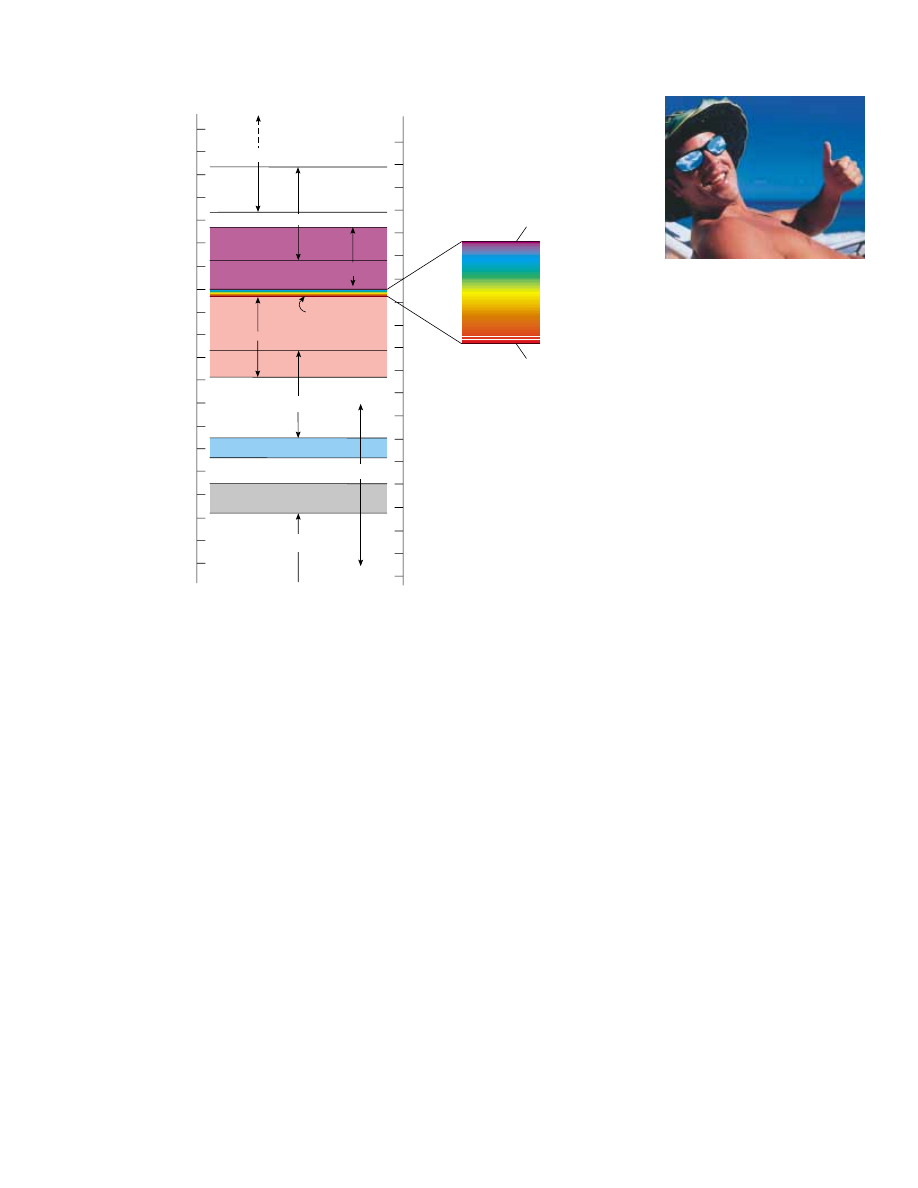
Figure 34.12 The electromagnetic spectrum. Note the overlap between adjacent wave

types. The expanded view to the right shows details of the visible spectrum.

Wearing sunglasses that do not

block ultraviolet (UV) light is worse

for your eyes than wearing no

sunglasses. The lenses of any

sunglasses absorb some visible

light, thus causing the wearer’s

pupils to dilate. If the glasses do

not also block UV light, then more

damage may be done to the lens of

the eye because of the dilated

pupils. If you wear no sunglasses at

all, your pupils are contracted, you

squint, and much less UV light

enters your eyes. High-quality

sunglasses block nearly all the 

eye-damaging UV light.

Ron Chapple/Getty Images

component  of  cosmic  rays  that  enter  the  Earth’s  atmosphere  from  space.  They  have
wavelengths  ranging  from  approximately  10

)

10

m  to  less  than  10

)

14

m.  They  are

highly penetrating and produce serious damage when absorbed by living tissues. Con-
sequently, those working near such dangerous radiation must be protected with heavily
absorbing materials, such as thick layers of lead.

1082

C H A P T E R   3 4 •  Electromagnetic Waves

Example 34.6 A Half-Wave Antenna

Thus, to operate most efficiently, the antenna should have a
length  of  (3.16 m)/2 " 1.58 m.  For  practical  reasons,  car
antennas are usually one-quarter wavelength in size.

3.16 m

* "

3.00 $ 10

8

 m/s

9.47 $ 10

7

 Hz

"

A half-wave antenna works on the principle that the optimum
length of the antenna is half the wavelength of the radiation
being received. What is the optimum length of a car antenna
when it receives a signal of frequency 94.7 MHz?

Solution Equation 34.13 tells us that the wavelength of the
signal is

Quick  Quiz  34.8

In  many  kitchens,  a  microwave  oven  is  used  to  cook

food. The frequency of the microwaves is on the order of 10

10

Hz. The wavelengths

of these microwaves are on the order of (a) kilometers (b) meters (c) centimeters
(d) micrometers.

Quick  Quiz  34.9

A  radio  wave  of  frequency  on  the  order  of  10

5

Hz  is

used to carry a sound wave with a frequency on the order of 10

3

Hz. The wavelength

of  this  radio  wave  is  on  the  order  of  (a)  kilometers  (b)  meters  (c)  centimeters
(d) micrometers.

Electromagnetic waves, which are predicted by Maxwell’s equations, have the follow-
ing properties:

• The electric field and the magnetic field each satisfy a wave equation. These two wave

equations, which can be obtained from Maxwell’s third and fourth equations, are

(34.8)

(34.9)

• The waves travel through a vacuum with the speed of light c, where

(34.10)

• The electric and magnetic fields are perpendicular to each other and perpendicu-

lar  to  the  direction  of  wave  propagation.  (Hence,  electromagnetic  waves  are
transverse waves.)

• The instantaneous magnitudes of 

E and B in an electromagnetic wave are related

by the expression

(34.14)

E
B

"

c

"

1

&

0

#

0

"

3.00 $ 10

8

 m/s

+

2

B

+

x


2

"

&

0

#

0


+

2

B

+

t

2

+

2

E

+

x


2

"

&

0

#

0


+

2

E

+

t

2

S U M M A R Y

Take a practice test for

this chapter by clicking on
the Practice Test link at
http://www.pse6.com.

Questions

1083

• The waves carry energy. The rate of flow of energy crossing a unit area is described

by the Poynting vector 

S, where

(34.19)

• Electromagnetic waves carry momentum and hence exert pressure on surfaces. If

an  electromagnetic  wave  whose  Poynting  vector  is 

S is  completely  absorbed  by  a

surface upon which it is normally incident, the radiation pressure on that surface is

(34.25)

If the surface totally reflects a normally incident wave, the pressure is doubled.

The electric and magnetic fields of a sinusoidal plane electromagnetic wave propa-

gating in the positive direction can be written

(34.11)

(34.12)

where % is the angular frequency of the wave and is the angular wave number. These
equations  represent  special  solutions  to  the  wave  equations  for  and  B.  The
wavelength and frequency of electromagnetic waves are related by

(34.13)

The  average  value  of  the  Poynting  vector  for  a  plane  electromagnetic  wave  has  a

magnitude

(34.21)

The intensity of a sinusoidal plane electromagnetic wave equals the average value

of the Poynting vector taken over one or more cycles.

The  electromagnetic  spectrum  includes  waves  covering  a  broad  range  of 

wavelengths,  from  long  radio  waves  at  more  than  10

4

m  to  gamma  rays  at  less

than 10

)

14

m.

S


av

"

E


max

 B


max

2&

0

"

E


2

max

2&

0

c

"

c

2&

0

 B


2

max

* "

c

f

"

3.00 $ 10

8

 m/s

f

B


max

 cos(kx ) %t)

E


max

 cos(kx ) %t)

"

S

c


(complete absorption)

S ' 

1

&

0


E ! B

Radio stations often advertise “instant news.” If they mean
that  you  can  hear  the  news  the  instant  they  speak  it,  is
their  claim  true?  About  how  long  would  it  take  for  a
message  to  travel  across  this  country  by  radio  waves,
assuming that the waves could be detected at this range?

2. Light from the Sun takes approximately 8.3 min to reach

the Earth. During this time interval the Earth has contin-
ued to rotate on its axis. How far is the actual direction of
the Sun from its image in the sky?

3. When  light  (or  other  electromagnetic  radiation)  travels

across  a  given  region,  what  is  it  that  oscillates?  What  is  it
that is transported?

4. Do  all  current-carrying  conductors  emit  electromagnetic

waves? Explain.

5. What  is  the  fundamental  source  of  electromagnetic

radiation?

1.

6. If  a  high-frequency  current  is  passed  through  a  solenoid

containing a metallic core, the core becomes warm due to
induction.  Explain  why  the  material  rises  in  temperature
in this situation.

7. Does  a  wire  connected  to  the  terminals  of  a  battery  emit

electromagnetic waves? Explain.
If you charge a comb by running it through your hair and
then hold the comb next to a bar magnet, do the electric
and  magnetic  fields  produced  constitute  an  electromag-
netic wave?

9. List  as  many  similarities  and  differences  between  sound

waves and light waves as you can.

10. Describe  the  physical  significance  of  the  Poynting  vector.
11. For a given incident energy of an electromagnetic wave, why

is  the  radiation  pressure  on  a  perfectly  reflecting  surface
twice as great as that on a perfect absorbing surface?

8.

Q U E S T I O N S

1084

C H A P T E R   3 4 •  Electromagnetic Waves

12. Before  the  advent  of  cable  television  and  satellite  dishes,

city  dwellers  often  used  “rabbit  ears”  atop  their  sets  (Fig.
Q34.12). Certain orientations of the receiving antenna on
a television set give better reception than others. Further-
more,  the  best  orientation  varies  from  station  to  station.
Explain.

13. Often  when  you  touch  the  indoor  antenna  on  a  radio  or

television receiver, the reception instantly improves. Why?

14. Explain how the (dipole) VHF antenna of a television set

works. (See Fig. Q34.12.)

15. Explain  how  the  UHF  (loop)  antenna  of  a  television  set

works. (See Fig. Q34.12.)

16. Explain why the voltage induced in a UHF (loop) antenna

depends on the frequency of the signal, while the voltage
in a VHF (dipole) antenna does not. (See Fig. Q34.12.)

17. Electrical engineers often speak of the radiation resistance

of  an  antenna.  What  do  you  suppose  they  mean  by  this
phrase?
What does a radio wave do to the charges in the receiving
antenna to provide a signal for your car radio?

19. An  empty  plastic  or  glass  dish  being  removed  from  a

microwave  oven  is  cool  to  the  touch.  How  can  this  be
possible? (Assume that your electric bill has been paid.)

20. Why should an infrared photograph of a person look dif-

ferent from a photograph taken with visible light?
Suppose that a creature from another planet had eyes that
were sensitive to infrared radiation. Describe what the alien
would see if it looked around the room you are now in. In
particular, what would be bright and what would be dim?

22. A  welder  must  wear  protective  glasses  and  clothing  to

prevent  eye  damage  and  sunburn.  What  does  this  imply
about the nature of the light produced by the welding?

23. A home microwave oven uses electromagnetic waves with a

wavelength of about 12.2 cm. Some 2.4-GHz cordless tele-
phones suffer noisy interference when a microwave oven is
used nearby. Locate the waves used by both devices on the
electromagnetic  spectrum.  Do  you  expect  them  to  inter-
fere with each other?

21.

18.

Figure Q34.12 Questions 12, 14, 15, and 16, and Problem 49.

The V-shaped pair of long rods is the VHF antenna and the loop is

the UHF antenna.

George Semple

Section 34.1 Maxwell’s Equations and Hertz’s 

Discoveries

1.

A very long, thin rod carries electric charge with the linear
density  35.0 nC/m.  It  lies  along  the  axis  and  moves
in the  direction  at  a  speed  of  15.0 Mm/s.  (a)  Find  the
electric  field  the  rod  creates  at  the  point  (0,  20.0 cm,  0).
(b)  Find  the  magnetic  field  it  creates  at  the  same  point.

Note: Assume that the medium is vacuum unless specified
otherwise.

(c)  Find  the  force  exerted  on  an  electron  at  this  point,
moving with a velocity of (240

iˆ) Mm/s.

Section 34.2 Plane Electromagnetic Waves

2. (a)  The  distance  to  the  North  Star,  Polaris,  is  approxi-

mately  6.44 $ 10

18

m.  If  Polaris  were  to  burn  out  today,

in  what  year  would  we  see  it  disappear?  (b)  How  long
does it take for sunlight to reach the Earth? (c) How long
does  it  take  for  a  microwave  radar  signal  to  travel  from
the  Earth  to  the  Moon  and  back?  (d)  How  long  does  it
take for a radio wave to travel once around the Earth in a
great  circle,  close  to  the  planet’s  surface?  (e)  How  long

1

2

3

= straightforward, intermediate, challenging

= full solution available in the Student Solutions Manual and Study Guide

= coached solution with hints available at http://www.pse6.com

= computer useful in solving problem

= paired numerical and symbolic problems

P R O B L E M S


Content   ..  269  270  271  272   ..