Physics For Scientists And Engineers 6E - part 35
 

  Index      Production     Physics For Scientists And Engineers 6E


Search            


Content   ..  33  34  35  36   ..


Physics For Scientists And Engineers 6E - part 35


S E C T I O N   5 . 8 •  Forces of Friction

137

We take an average value of acceleration of # 8.4 m/s

2

,

which  is  approximately  0.86g.  We  then  calculate  the  co-
efficient  of  friction  from 

#" -

s

mg ma,  which  gives

-

s

"

0.86  for  the  Toyota.  This  is  lower  than  the  rubber-

on-concrete value given in Table 5.2. Can you think of any
reasons for this?

We now estimate the stopping distance of the car if the

wheels  were  skidding.  From  Table  5.2,  we  see  that  the  dif-
ference  between  the  coefficients  of  static  and  kinetic  fric-
tion for rubber against concrete is about 0.2. Let us assume
that  our  coefficients  differ  by  the  same  amount,  so  that 
-

k

& 0.66. This allows us to estimate the stopping distances

when  the  wheels  are  locked  and  the  car  skids  across  the
pavement, as shown in the third column of Table 5.4. The
results illustrate the advantage of not allowing the wheels to
skid.

Because  an  ABS  keeps  the  wheels  rotating,  the  higher

coefficient of static friction is maintained between the tires
and road. This approximates the technique of a professional
driver  who  is  able  to  maintain  the  wheels  at  the  point  of
maximum  friction  force.  Let  us  estimate  the  ABS  perfor-
mance by assuming that the magnitude of the acceleration
is not quite as good as that achieved by the professional dri-
ver but instead is reduced by 5%.

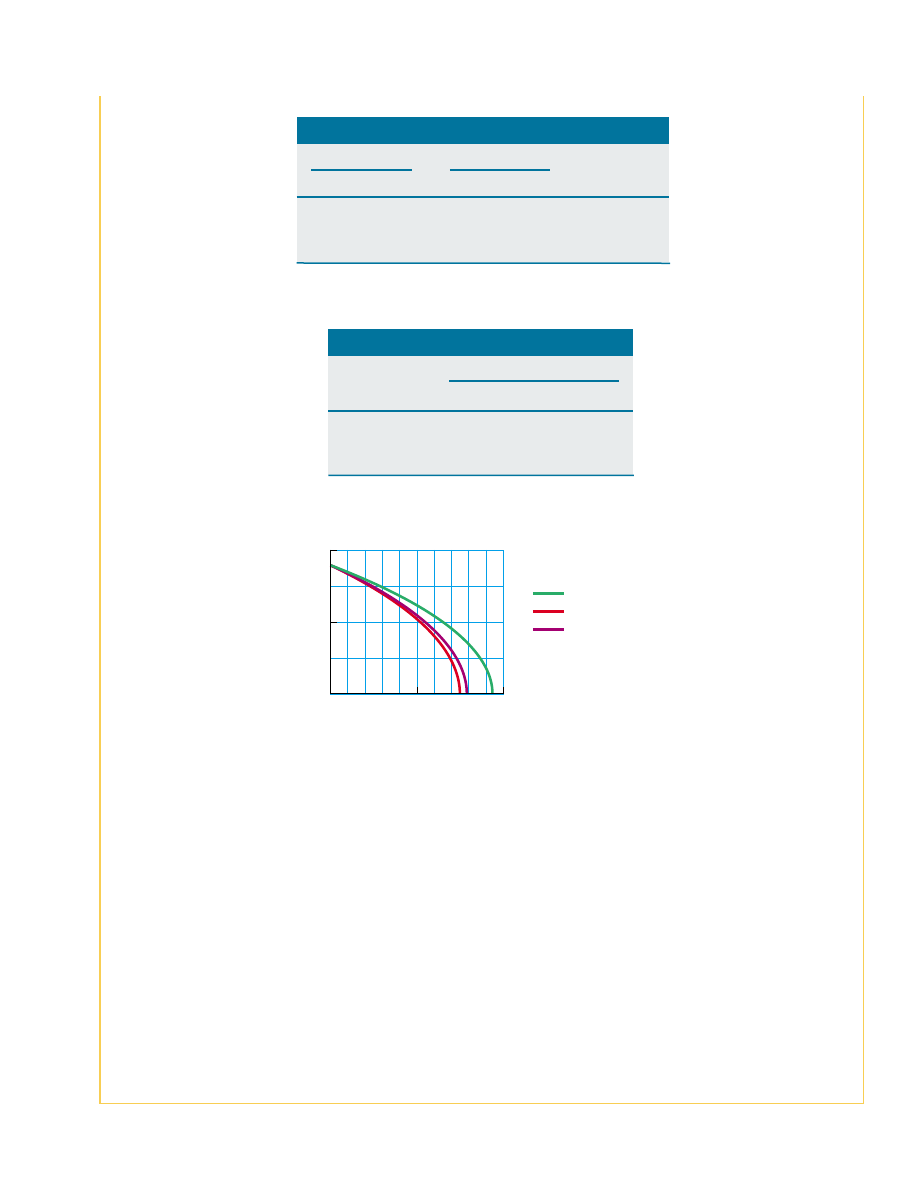
Figure 5.22 is a plot of vehicle speed versus distance from

where  the  brakes  were  applied  (at  an  initial  speed  of
80.0 mi/h " 35.8 m/s) for the three cases of amateur driver,
professional driver, and estimated ABS performance (amateur
driver). This shows that a markedly shorter distance is neces-
sary for stopping without locking the wheels compared to skid-
ding.  In  addition  a  satisfactory  value  of  stopping  distance  is
achieved when the ABS computer maintains tire rotation.

Initial Speed

Stopping Distance

(mi/h)

(m/s)

(ft)

(m)

30

13.4

34

10.4

#

8.63

60

26.8

143

43.6

#

8.24

80

35.8

251

76.5

#

8.38

Data for a Toyota Corolla:

Table 5.3

Stopping Distance

no skid (m)

skidding (m)

30

10.4

13.9

60

43.6

55.5

80

76.5

98.9

Stopping Distance With and Without Skidding

Table 5.4

Speed (m/s)

40

20

0

0

50

100

Distance from point

of application of brakes (m)

ABS, amateur driver

Professional driver

Amateur driver

Figure 5.22 This plot of vehicle speed versus distance from the location at which the

brakes were applied shows that an antilock braking system (ABS) approaches the per-

formance of a trained professional driver.

Acceleration

(m/s

2

)

Initial Speed

(mi/h)

138

C H A P T E R   5 •  The Laws of Motion

An 

inertial frame of reference is one we can identify in which an object that does not

interact with other objects experiences zero acceleration. Any frame moving with con-
stant velocity relative to an inertial frame is also an inertial frame. 

Newton’s first law

states that it is possible to find such a frame, or, equivalently, in the absence of an exter-
nal force, when viewed from an inertial frame, an object at rest remains at rest and an
object in uniform motion in a straight line maintains that motion.

Newton’s second law states that the acceleration of an object is directly propor-

tional to the net force acting on it and inversely proportional to its mass. The net force
acting on an object equals the product of its mass and its acceleration: 

#F " ma. If the

object is either stationary or moving with constant velocity, then the object is in equilib-
rium and the force vectors must cancel each other.

The 

gravitational force exerted on an object is equal to the product of its mass (a

scalar quantity) and the free-fall acceleration: 

F

g

"

m

g. The weight of an object is the

magnitude of the gravitational force acting on the object.

Newton’s third law states that if two objects interact, the force exerted by object 1

on object 2 is equal in magnitude and opposite in direction to the force exerted by ob-
ject 2 on object 1. Thus, an isolated force cannot exist in nature.

The 

maximum force of static friction f

s,max

between an object and a surface is

proportional to the normal force acting on the object. In general, f

s

.

-

s

n, where -

s

is

the 

coefficient of static friction and is the magnitude of the normal force. When

an object slides over a surface, the direction of the 

force of kinetic friction f

k

is oppo-

site  the  direction  of  motion  of  the  object  relative  to  the  surface  and  is  also  propor-
tional to the magnitude of the normal force. The magnitude of this force is given by 
f

k

"

-

k

n, where -

k

is the 

coefficient of kinetic friction.

S U M M A R Y

Take a practice test for

this chapter by clicking the
Practice Test link at
http://www.pse6.com.

1. A ball is held in a person’s hand. (a) Identify all the exter-

nal  forces  acting  on  the  ball  and  the  reaction  to  each. 
(b) If the ball is dropped, what force is exerted on it while
it  is  falling?  Identify  the  reaction  force  in  this  case.  (Ne-
glect air resistance.)

2. If  a  car  is  traveling  westward  with  a  constant  speed  of

20 m/s, what is the resultant force acting on it?

3. What  is  wrong  with  the  statement  “Because  the  car  is  at

rest, there are no forces acting on it”? How would you cor-
rect this sentence?
In  the  motion  picture It  Happened  One  Night (Columbia
Pictures, 1934), Clark Gable is standing inside a station-
ary bus in front of Claudette Colbert, who is seated. The
bus  suddenly  starts  moving  forward  and  Clark  falls  into
Claudette’s lap. Why did this happen?

5. A passenger sitting in the rear of a bus claims that she was

injured  as  the  driver  slammed  on  the  brakes,  causing  a
suitcase  to  come  flying  toward  her  from  the  front  of  the
bus.  If  you  were  the  judge  in  this  case,  what  disposition
would you make? Why?

6. A  space  explorer  is  moving  through  space  far  from  any

planet  or  star.  She  notices  a  large  rock,  taken  as  a  speci-
men from an alien planet, floating around the cabin of the

4.

ship. Should she push it gently or kick it toward the stor-
age compartment? Why?
A rubber ball is dropped onto the floor. What force causes
the ball to bounce?

8. While a football is in flight, what forces act on it? What are

the action–reaction pairs while the football is being kicked
and while it is in flight?

9. The mayor of a city decides to fire some city employees be-

cause  they  will  not  remove  the  obvious  sags  from  the  ca-
bles that support the city traffic lights. If you were a lawyer,
what defense would you give on behalf of the employees?
Who do you think would win the case in court?
A  weightlifter  stands  on  a  bathroom  scale.  He  pumps  a
barbell up and down. What happens to the reading on the
bathroom  scale  as  this  is  done?  What  if he  is  strong
enough to actually throw the barbell upward? How does the
reading on the scale vary now?

11. Suppose a truck loaded with sand accelerates along a high-

way.  If  the  driving  force  on  the  truck  remains  constant,
what happens to the truck’s acceleration if its trailer leaks
sand at a constant rate through a hole in its bottom?

12. As a rocket is fired from a launching pad, its speed and ac-

celeration increase with time as its engines continue to op-

10.

7.

Q U E S T I O N S

Questions

139

erate.  Explain  why  this  occurs  even  though  the  thrust  of
the engines remains constant.

13. What force causes an automobile to move? A propeller-dri-

ven airplane? A rowboat?
Identify  the  action–reaction  pairs  in  the  following  situa-
tions: a man takes a step; a snowball hits a girl in the back;
a baseball player catches a ball; a gust of wind strikes a win-
dow.

15. In  a  contest  of  National  Football  League  behemoths,

teams  from  the  Rams  and  the  49ers  engage  in  a  tug-of-
war,  pulling  in  opposite  directions  on  a  strong  rope. 
The Rams exert a force of 9 200 N and they are winning,
making  the  center  of  the  rope  move  steadily  toward 
themselves.  Is  it  possible  to  know  the  tension  in  the 
rope  from  the  information  stated?  Is  it  larger  or  smaller
than  9  200  N?  How  hard  are  the  49ers  pulling  on  the
rope?  Would  it  change  your  answer  if  the  49ers  were 
winning  or  if  the  contest  were  even?  The  stronger  team
wins  by  exerting  a  larger  force—on  what?  Explain  your 
answers.

16. Twenty people participate in a tug-of-war. The two teams

of  ten  people  are  so  evenly  matched  that  neither  team
wins. After the game they notice that a car is stuck in the
mud.  They  attach  the  tug-of-war  rope  to  the  bumper  of
the  car,  and  all  the  people  pull  on  the  rope.  The  heavy
car has just moved a couple of decimeters when the rope
breaks. Why did the rope break in this situation when it
did not break when the same twenty people pulled on it
in a tug-of-war?

17. “When the locomotive in Figure Q5.17 broke through the

wall of the train station, the force exerted by the locomo-
tive on the wall was greater than the force the wall could
exert on the locomotive.” Is this statement true or in need
of correction? Explain your answer.

18. An athlete grips a light rope that passes over a low-friction

pulley attached to the ceiling of a gym. A sack of sand pre-
cisely equal in weight to the athlete is tied to the other end
of the rope. Both the sand and the athlete are initially at
rest. The athlete climbs the rope, sometimes speeding up
and slowing down as he does so. What happens to the sack
of sand? Explain.

19. If the action and reaction forces are always equal in magni-

tude and opposite in direction to each other, then doesn’t
the  net  vector  force  on  any  object  necessarily  add  up  to
zero? Explain your answer.

20. Can  an  object  exert  a  force  on  itself?  Argue  for  your

answer.

21. If you push on a heavy box that is at rest, you must exert

some  force  to  start  its  motion.  However,  once  the  box  is

14.

sliding, you can apply a smaller force to maintain that mo-
tion. Why?

22. The driver of a speeding empty truck slams on the brakes

and  skids  to  a  stop  through  a  distance  d.  (a)  If  the  truck
carried  a  load  that  doubled  its  mass,  what  would  be  the
truck’s “skidding distance”? (b) If the initial speed of the
truck  were  halved,  what  would  be  the  truck’s  skidding
distance?

23. Suppose  you  are  driving  a  classic  car.  Why  should  you

avoid slamming on your brakes when you want to stop in
the  shortest  possible  distance?  (Many  cars  have  antilock
brakes that avoid this problem.)

24. A book is given a brief push to make it slide up a rough in-

cline. It comes to a stop and slides back down to the start-
ing point. Does it take the same time to go up as to come
down? What if the incline is frictionless?

25. A large crate is placed on the bed of a truck but not tied

down. (a) As the truck accelerates forward, the crate re-
mains at rest relative to the truck. What force causes the
crate to accelerate forward? (b) If the driver slammed on
the brakes, what could happen to the crate?

26. Describe a few examples in which the force of friction ex-

erted  on  an  object  is  in  the  direction  of  motion  of  the
object.

Figure Q5.17

Roger V

iollet, Mill V

alley

, CA, University Science Books, 1982

140

C H A P T E R   5 •  The Laws of Motion

Sections 5.1 through 5.6

1.

A  force  applied  to  an  object  of  mass  m

1

produces  an

acceleration of 3.00 m/s

2

. The same force applied to a sec-

ond  object  of  mass  m

2

produces  an  acceleration  of

1.00 m/s

2

. (a) What is the value of the ratio m

1

/m

2

? (b) If

m

1

and  m

2

are  combined,  find  their  acceleration  under

the action of the force F.

2. The  largest-caliber  antiaircraft  gun  operated  by  the  Ger-

man  air  force  during  World  War  II  was  the  12.8-cm  Flak
40. This weapon fired a 25.8-kg shell with a muzzle speed
of 880 m/s. What propulsive force was necessary to attain
the  muzzle  speed  within  the  6.00-m  barrel?  (Assume  the
shell moves horizontally with constant acceleration and ne-
glect friction.)
A  3.00-kg  object  undergoes  an  acceleration  given  by
" (2.00ˆi $ 5.00ˆj) m/s

2

.  Find  the  resultant  force  acting

on it and the magnitude of the resultant force.

4. The  gravitational  force  on  a  baseball  is #F

g

ˆj.  A  pitcher

throws the baseball with velocity vˆi by uniformly acceler-
ating  it  straight  forward  horizontally  for  a  time  interval
%

#0 " t.  If  the  ball  starts  from  rest,  (a)  through

what  distance  does  it  accelerate  before  its  release?
(b) What force does the pitcher exert on the ball?

To model a spacecraft, a toy rocket engine is securely

fastened  to  a  large  puck,  which  can  glide  with  negligible
friction  over  a  horizontal  surface,  taken  as  the  xy plane.
The 4.00-kg puck has a velocity of 300ˆi m/s at one instant.
Eight seconds later, its velocity is to be (800ˆi $ 10.0ˆj) m/s.
Assuming  the  rocket  engine  exerts  a  constant  horizontal
force,  find  (a)  the  components  of  the  force  and  (b)  its
magnitude.

6. The average speed of a nitrogen molecule in air is about

6.70 1 10

2

m/s, and its mass is 4.68 1 10

#

26

kg. (a) If it

takes 3.00 1 10

#

13

s for a nitrogen molecule to hit a wall

and rebound with the same speed but moving in the op-
posite  direction,  what  is  the  average  acceleration  of  the
molecule  during  this  time  interval?  (b)  What  average
force does the molecule exert on the wall?

An electron of mass 9.11 1 10

#

31

kg has an initial speed of

3.00 1 10

5

m/s.  It  travels  in  a  straight  line,  and  its  speed

increases  to  7.00 1 10

5

m/s  in  a  distance  of  5.00 cm.  As-

suming  its  acceleration  is  constant,  (a)  determine  the
force exerted on the electron and (b) compare this force
with the weight of the electron, which we neglected.

8. A woman weighs 120 lb. Determine (a) her weight in new-

tons (N) and (b) her mass in kilograms (kg).

9. If a man weighs 900 N on the Earth, what would he weigh

on  Jupiter,  where  the  acceleration  due  to  gravity  is
25.9 m/s

2

?

7.

5.

3.

1

2

3

= straightforward, intermediate, challenging

= full solution available in the Student Solutions Manual and Study Guide

= coached solution with hints available at http://www.pse6.com

= computer useful in solving problem

= paired numerical and symbolic problems

P R O B L E M S

10. The distinction between mass and weight was discovered

after  Jean  Richer  transported  pendulum  clocks  from
Paris to French Guyana in 1671. He found that they ran
slower there quite systematically. The effect was reversed
when  the  clocks  returned  to  Paris.  How  much  weight
would you personally lose in traveling from Paris, where
" 9.809 5 m/s

2

, to Cayenne, where " 9.780 8 m/s

2

?

[We  will  consider  how  the  free-fall  acceleration  influ-
ences the period of a pendulum in Section 15.5.]
Two forces F

1

and F

2

act on a 5.00-kg object. If F

1

"

20.0 N

and  F

2

"

15.0  N,  find  the  accelerations  in  (a)  and  (b)  of

Figure P5.11.

11.

(a)

90.0

°

F

2

F

1

m

(b)

60.0

°

F

2

F

1

m

Figure P5.11

12. Besides  its  weight,  a  2.80-kg  object  is  subjected  to  one

other  constant  force.  The  object  starts  from  rest  and  in
1.20  s  experiences  a  displacement  of  (4.20ˆi # 3.30ˆj) m,
where  the  direction  of  ˆj is  the  upward  vertical  direction.
Determine the other force.

13.

You stand on the seat of a chair and then hop off. (a) Dur-
ing the time you are in flight down to the floor, the Earth
is lurching up toward you with an acceleration of what or-
der  of  magnitude?  In  your  solution  explain  your  logic.
Model the Earth as a perfectly solid object. (b) The Earth
moves up through a distance of what order of magnitude?

14.

Three  forces  acting  on  an  object  are  given  by
F

1

"

(#2.00ˆi $ 2.00ˆj) N,  F

2

"

(5.00ˆi # 3.00ˆj) N,  and

F

3

"

(#45.0ˆi) N. The object experiences an acceleration

of magnitude 3.75 m/s

2

. (a) What is the direction of the

acceleration?  (b)  What  is  the  mass  of  the  object?  (c)  If
the object is initially at rest, what is its speed after 10.0 s?
(d) What are the velocity components of the object after
10.0 s?

15.

A 15.0-lb block rests on the floor. (a) What force does the
floor exert on the block? (b) If a rope is tied to the block
and  run  vertically  over  a  pulley,  and  the  other  end  is  at-
tached  to  a  free-hanging  10.0-lb  weight,  what  is  the  force
exerted by the floor on the 15.0-lb block? (c) If we replace
the 10.0-lb weight in part (b) with a 20.0-lb weight, what is
the force exerted by the floor on the 15.0-lb block?


Content   ..  33  34  35  36   ..