Volkswagen Golf (2015 year). Instruction - part 15
 

  Index      Volkswagen     Volkswagen Golf - instruction 2015 year in english


Search            copyright infringement  


Content   ..  13  14  15  16   ..


Volkswagen Golf (2015 year). Instruction - part 15


  NOTICE 

Shifting down to a gear that is too low when driving at fast speeds or high engine rpm can 
cause extensive damage to the clutch and transmission. That is true even if the clutch pedal is 
pressed so that the clutch is not engaged.


  NOTICE 

To help prevent damage and premature wear: 

  Do not rest your hand on the gearshift lever while driving. Over time, the pressure will 

cause premature wear in the transmission. 

  Make sure that the vehicle has come to a complete stop before shifting into Reverse (R). 
  Always depress the clutch pedal all the way when changing gears. 
  Do not hold the vehicle on a hill using engine power with the clutch pedal partially engaged 

and the engine running. 

Automatic transmission: Selector lever 


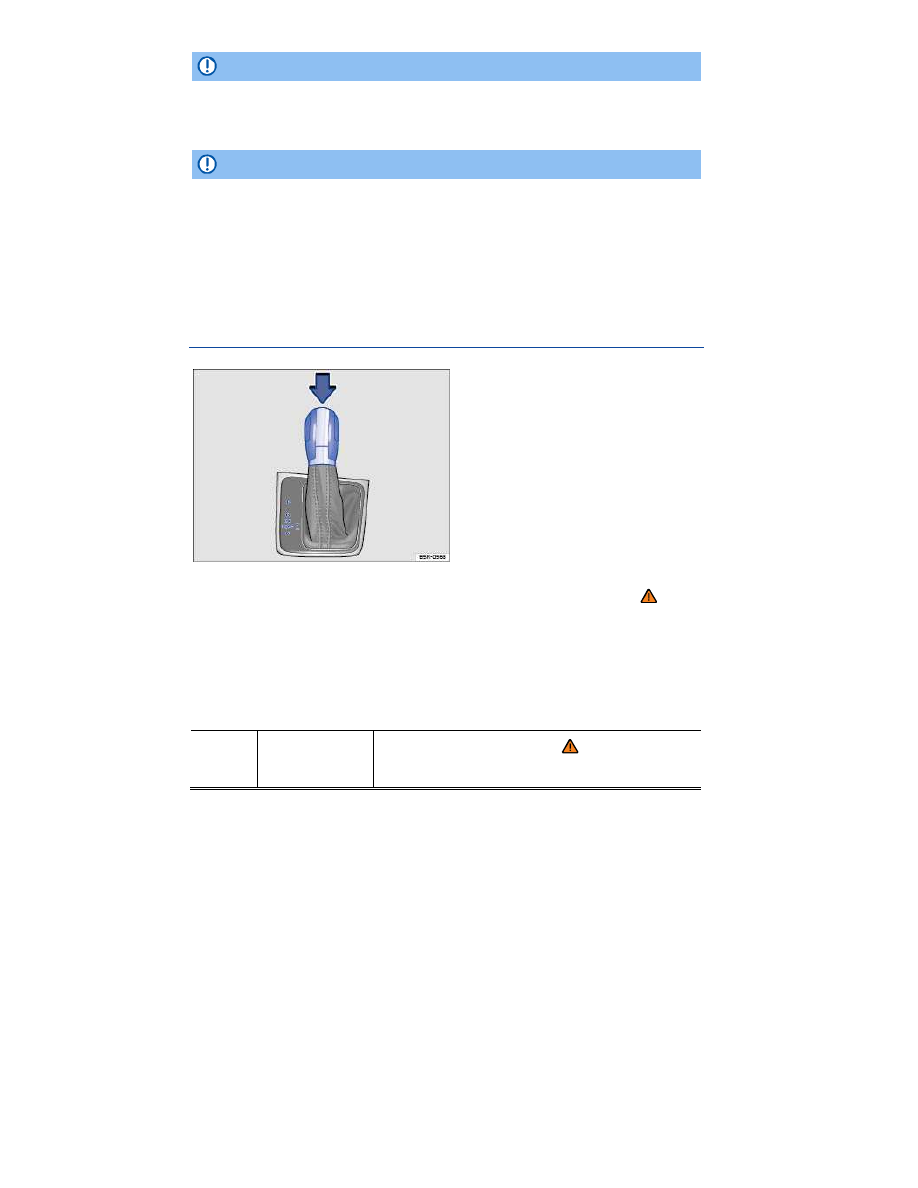
Fig. 130 Automatic transmission selector lever with shift lever release button (arrow). 

 Please first read and note the introductory information and heed the WARNINGS 


Automatic transmission vehicles have an Automatic Shift Lock (ASL). With ASL, you must switch on 
the ignition, depress the brake pedal and hold it down while pressing the release button on the 

selector lever handle in the direction of the arrow 

⇒ 

fig. 130

 to move the selector lever out of Park (P) 

and into a drive gear. When the selector lever is in Neutral (N), you also have to depress the brake 
pedal before you can move the selector lever to Drive/Sport Drive (D/S), or Reverse (R)

If the ignition is switched on, either the current selector lever setting or the current gear is shown in the 
instrument cluster display. 


Selector 

lever 

position  

Designation  

Meaning 

⇒ 


Selector 

lever 

position  

Designation  

Meaning 

⇒ 


Park  

The drive wheels are mechanically locked. 

Select only when the vehicle is not moving. To change the 

selector lever position, switch on the ignition (if it is off) and then 

press the selector lever release button while holding down the 

brake pedal.  


Reverse  

The Reverse gear is engaged. 

Shift into Reverse only when the vehicle is not moving.  


Neutral  

Transmission is in Neutral position. No power is transmitted to 

the wheels and no engine braking is available.  


Drive (standard 
driving position)  

All forward gears shift up and down automatically. The 

transmission shifts as needed depending on engine load, 

individual driving style, and vehicle speed.  


Sport Drive (sport 

driving position)  

All forward gears automatically upshift later and downshift 

earlier than in Drive (D) to take full advantage of the engine's 

power reserves. The transmission shifts as needed depending 

on engine load, individual driving style, and vehicle speed. The 

system will not, however, switch to the highest forward gear.  

The timing of the gear shift is determined by the engine load, 

your individual driving style, and the vehicle speed.  


Changing gear 

selection  

Switch between Drive (D) and Sport drive (S) by tapping the 

selector lever once to the rear from gear position D/S . The 

selector lever always returns to gear position D/S.  

It is possible to access Tiptronic selection from gear position 

D/S when either Drive (D) or Sport drive (S) is active  


Automatic Shift Lock (ASL) 

The Automatic Shift Lock (ASL) in Park (P) and Neutral (N) prevents drive positions from being 
engaged inadvertently, which would cause the vehicle to move. 

To release the ASL, depress and hold the brake pedal with the ignition switched on. Press the release 
button on the selector lever at the same time. 

The ASL is not engaged if the selector lever is moved quickly through Neutral (N) (e.g., when shifting 
from Reverse (R) to Drive (D)). This makes it possible to “rock” the vehicle backwards and forwards if 
it is stuck in snow or mud. The ASL engages automatically if the brake pedal is not depressed and the 
lever is in Neutral (N) for more than about 1 second and the vehicle is traveling no faster than about 
3 mph (5 km/h). 

In rare cases, the ASL may not engage on vehicles with a DSG

®

 automated transmission. If this 

happens, power to the drive wheels will be interrupted to prevent the vehicle from moving 
unexpectedly. The green indicator light   will blink and a text message will be displayed. To engage 
the Automatic Shift Lock (ASL): 

  Depress and then release the brake pedal. Try to engage the ASL again. 


  WARNING 

Moving the selector lever to the wrong position can cause loss of vehicle control, a collision, 
and serious personal injury. 

  Never accelerate when moving the selector lever. 
  When the engine is running and a drive position is engaged, the vehicle will start to move 

as soon as the brake pedal is released. 

  Never shift into Reverse (R) or Park (P) when the vehicle is moving. 


  WARNING 

Unintended vehicle movement can cause serious personal injury. 

  Never get out of the driver's seat while the engine is running, especially when the 

transmission is in a drive gear. If you must leave your vehicle while the engine is running, 
always set the parking brake and shift the transmission into Park (P). 

  Never leave the vehicle in Neutral (N). It will roll down hills, whether the engine is running 

or not. 

  When the engine is running and a drive gear - Drive (D), Sport Drive (S), or Reverse (R) - 

has been selected, press and hold the brake pedal to keep the vehicle from moving. The 
vehicle may “creep” and move forward or backward even if the engine is idling slowly. 

  Never shift into Reverse (R) or Park (P) when the vehicle is moving. 


  NOTICE 

Even though the transmission is in Park (P), the vehicle may move a couple of inches (a few 
centimeters) forwards or backwards if you take your foot off the brake pedal after stopping the 
vehicle without first setting the parking brake.
 

  If the selector lever is moved into Neutral (N) by mistake when the vehicle is moving, take your 

foot off the accelerator pedal. Wait until the engine speed has dropped to idle speed before moving 
the selector lever into a drive gear. 


Shifting with Tiptronic

®


Fig. 131 Selector lever in Tiptronic position. 


Fig. 132 Steering wheel with Tiptronic shift paddles (if equipped). 

 Please first read and note the introductory information and heed the WARNINGS 


Tiptronic lets you upshift and downshift manually with the automatic transmission. When Tiptronic 
mode is used, the transmission stays in the current gear and does not upshift or downshift 
automatically unless the transmission senses a situation where upshifting or downshifting is necessary 
to keep the engine from over- or under-revving. 

Using Tiptronic with the selector lever 

  Push the selector lever sideways to the right from the D/S position into the Tiptronic position 

⇒ 


in Automatic transmission: Selector lever

  Briefly push the selector lever forward 

(+)

 to upshift into a higher gear or backward 

(–)

 to downshift 

into a lower gear 

⇒ 

fig. 131

Using Tiptronic with the shift paddles behind the steering wheel (if equipped) 

  The paddles 

⇒ 

fig. 132

 (arrows) work when the selector lever is in the Tiptronic position or when 

the selector lever is in Drive or Sport Drive (D/S). You do not have to move the selector lever over to 
the right into the Tiptronic position. 

  To upshift, pull the paddle on the right  + 

 toward you. 

  To downshift, pull the paddle on the left  –  toward you. 


  To switch off Tiptronic mode, pull the paddle on the right  + 

 toward you and hold it there for 

about 1 second. 

Tiptronic will switch off automatically if the shift paddles have not been used for a while and the 
selector lever is not in the Tiptronic position. 

  NOTICE 

  During acceleration, the transmission will shift automatically into the next higher gear 

before reaching maximum engine speed (rpm). 

  If you use Tiptronic to shift into a lower gear, the transmission will downshift only when 

doing so will not over-rev the engine. 

Driving with automatic transmission 

 Please first read and note the introductory information and heed the WARNINGS 


All forward gears shift up and down automatically. 

Driving on hills 

The steeper the grade, the lower the gear that must be selected. Lower gears increase the braking 
effect of the engine. Never coast downhill in Neutral (N)

  Reduce speed. 
  Switch to Tiptronic mode by moving the selector lever from Drive or Sport Drive (D/S) to the right 

into the Tiptronic position 

⇒ Shifting with Tiptronic®

  Downshift by pulling the selector lever back briefly (-). 

  OR: Downshift using the paddles on the steering wheel 

⇒ Using Tiptronic with the shift paddles 

behind the steering wheel (if equipped)

If you stop and start up again when going uphill, you should use Hill Hold 

⇒ Starting assistance 

systems as long as the engine is running. 

Vehicles without Hill Hold: If you stop on a hill with the vehicle in gear, you must depress the brake 
pedal or engage the parking brake to keep the vehicle from rolling. Do not release the brake pedal or 

the parking brake until the vehicle has started to move forward 

⇒  . 

Kick-down acceleration 

The kick-down feature permits maximum acceleration when the selector lever is in the Drive (D), Sport 
Drive (S), or Tiptronic mode. 

If you push the accelerator all the way down, the vehicle will automatically downshift, depending on 
vehicle speed and engine speed (rpm). This feature lets you take advantage of the full acceleration 

capacity of the vehicle 

⇒ 

With kick-down actuated, the transmission will stay in the current gear longer and not upshift until the 
engine reaches maximum rpm. 


  WARNING 

Rapid acceleration can cause skidding and loss of traction, especially on slippery roads, 
resulting in a loss of vehicle control, collisions, and serious personal injury. 

  Only use the kick-down feature or fast acceleration if visibility, weather, road, and traffic 

conditions permit and other drivers will not be endangered by your driving and the vehicle's 
acceleration. 

  Always adapt your driving to the traffic flow. 
  Note that the drive wheels can spin and the vehicle can swerve when ASR is switched off, 

especially when the road is slippery. 

  Once you have accelerated, switch ASR back on again. 


  NOTICE 

  When stopping on hills with the transmission in a drive gear, do not use the accelerator to 

help prevent the vehicle from rolling backwards. This can cause the automatic transmission to 
overheat and be damaged.
 

  Never let the vehicle coast or roll down a hill in Neutral (N), especially when the engine is 

not running. The transmission will not be lubricated and will be damaged. 

Automatic transmission malfunction 

 Please first read and note the introductory information and heed the WARNINGS 


Emergency shift program 

If all selector lever position indicators in the instrument cluster display are highlighted against a bright 
background, there is a system malfunction. The automatic transmission or the DSG

®

 automated 

transmission will then operate in the emergency shift program. The emergency shift program lets you 
drive the vehicle, but at a reduced speed and without being able to use all of the forward gears. 

In some cases, vehicles with a DSG transmission may not be able to shift into reverse. It is then 
impossible to drive the vehicle backwards. 

In any event, have the automatic transmission checked by an authorized Volkswagen dealer or 
authorized Volkswagen Service Facility. 

Overheating of the DSG

®

 automated transmission 

The DSG transmission may overheat, for example, due to frequent starts, extended “creeping,” or 
stop-and-go traffic. Overheating is indicated by the warning light   and, if applicable, by a text 
message in the instrument cluster. An additional warning chime may sound. Stop and let the 

transmission cool down 

⇒  . 

The vehicle does not move forward or in reverse even though a drive position is selected 
with the selector lever 

If the vehicle does not move in the desired direction, the system may not have engaged the drive 
position correctly. Press the brake pedal and select the drive position again. 

If the vehicle still does not move in the desired direction, there is a system malfunction. See your 
authorized Volkswagen dealer or authorized Volkswagen Service Facility for assistance to have the 
system checked. 


  NOTICE 

  As soon as you get any of these warnings about transmission overheating, you must either 

park the vehicle in a safe place or drive faster than 12 mph (20 km/h). 

  If the text message and acoustic warning repeat themselves every 10 seconds or so, you 

must park the vehicle in a safe place as soon as you can safely do so and stop the engine. Let 
the transmission cool down.
 

  To help prevent damage to the transmission, do not drive the vehicle again until the 

acoustic warning has stopped. As long as the engine is overheated, avoid stop and start 
driving and avoid low speeds (“walking pace”).
 

Gear recommendation 


Fig. 133 In the instrument cluster display: Gear recommendation. 

 Please first read and note the introductory information and heed the WARNINGS 


Your vehicle may be equipped with a gear recommendation feature. The gear recommendation 
displays a gear in the instrument cluster display that can help reduce fuel consumption. 

For vehicles with an automatic transmission: The selector lever must be in the Tiptronic position 
⇒ Shifting with Tiptronic®
Key to 

fig. 133

(A)


Current gear. 

(B)


Recommended gear. 

If the optimal gear is already selected, another gear is not recommended . Only the current gear is 
displayed. 

  WARNING 

The gear recommendation is only intended to assist the driver to select a gear for optimum 
fuel economy. The gear recommendation cannot take road and traffic conditions into 
account. 

  The driver is responsible for selecting the correct gear for the current driving conditions, 

such as when passing, when driving on hills or when towing a trailer. 

  Selecting the optimal gear helps to reduce fuel consumption. 

  The gear recommendation display turns off if you depress the clutch pedal (manual transmission) 

or move the selector lever out of the Tiptronic position (automatic transmission). 


Steering 

 Introduction 

In this section you’ll find information about: 

Warning and indicator lights


Steering system information


The power steering system is not hydraulic, it is electro-mechanical. In both cases, the power steering 
works only when the engine is running. 

The hydraulic power steering system uses hydraulic lines, hydraulic oil, a pump, a filter, and other 
parts to maintain a constant oil pressure in the hydraulic system. 

The electro-mechanical power steering system automatically adjusts to driving speed, steering torque, 
and the steering angle of the wheels. It delivers extra steering force only when you are actually turning 
the wheels. The electro-mechanical power steering works only when the engine is running. 

More information: 

  Starting and stopping the engine  
  Vehicle battery  
  Towing  

  WARNING 

Turning the steering wheel is very hard when the power steering system is not working. This 
makes it harder to steer and control the vehicle. 

  Power steering works only when the engine is running. 
  Never let the vehicle coast with the engine switched off. 
  Never remove the key from the ignition switch while the vehicle is moving or rolling to a 

stop. The steering wheel will lock and you will be unable to control the vehicle. 

Warning and indicator lights 

 Please first read and note the introductory information and heed the WARNINGS 


Lights 

up  

Possible cause  

Proper response  

=


Power steering malfunction.  

 Stop! 

Have the power steering system checked 

immediately by an authorized Volkswagen 

dealer or an authorized Volkswagen Service 

Facility.  


Lights 

up  

Possible cause  

Proper response  

=


Power steering assist is reduced.  

Stop, restart the engine, and drive a short 

distance. If the yellow warning light does not 

come on again, you do not need to have the 

steering system checked. 

Otherwise, have the steering checked 

immediately by an authorized Volkswagen 

dealer or an authorized Volkswagen Service 

Facility.  

Vehicle battery was disconnected and 

has been reconnected.  

Drive a short distance at about 10–12 mph 

(15–20 km/h).  


Flashes  

Possible cause  

Proper response  

=


Electronic steering column lock 

malfunction.  

 Stop! 

The ignition cannot be switched on. The 

vehicle must not be towed! Get professional 

assistance.  

=


Steering system stiff.  

Turn the steering wheel back and forth.  

Steering column not locked/unlocked.  

Switch the ignition off and then switch it on 

again. Heed any messages shown in the 

instrument cluster display, if applicable. 

On vehicles with Keyless Access, press the 

starter button briefly twice in a row without 

depressing the brake or clutch pedal. 

Do not drive any farther if the steering 

column remains locked after you switch on 

the ignition. Contact your authorized 
Volkswagen dealer or an authorized 

Volkswagen Service Facility for assistance.  


When the ignition is switched on, several warning and indicator lights come on briefly for a function 
check. They go out after a few seconds. 

  WARNING 

Failure to heed warning lights and instrument cluster text messages can cause the vehicle to 
break down in traffic and result in a collision and serious personal injury. 

  Never ignore warning lights or text WARNINGS. 

  Always stop the vehicle as soon as it is safe to do so. 


  NOTICE 

Failure to heed warning lights or text WARNINGS can result in vehicle damage. 


Steering system information 

 Please first read and note the introductory information and heed the WARNINGS 


To help make it more difficult to steal your vehicle, you should always make sure the steering column 
is locked before leaving the vehicle. 

Electronic steering column lock 

Vehicles with Keyless Access: The steering column is locked if the driver door is opened with the 
ignition switched off. The vehicle must be standing still and the transmission must be in Park (P) on an 
automatic transmission vehicle. 

If the driver door is opened before the ignition is switched off, the electronic steering column lock is 
activated only after the vehicle has been locked with the vehicle key or via the sensor in the door 
handle. 

Mechanical steering column lock 

Vehicles without Keyless Access: The steering column is locked if the vehicle is stationary and the 
vehicle key is removed from the ignition switch. 
 

Engaging the steering column lock  

Disengaging the steering column lock  

Parking the vehicle  

Turn the steering wheel slightly to take pressure 

off the steering column lock.  

Remove the vehicle key.  

Insert the vehicle key into the ignition switch.  

Turn the steering wheel slightly until you hear the 

steering column lock engage.  

Hold the steering wheel in this position and turn 

the ignition switch.  


Power steering 

Power steering automatically adjusts to driving speed, steering torque, and the steering angle of the 
wheels. Power steering works only when the engine is running. 

If power steering is reduced or lost completely, it will be much harder to steer and control the vehicle. 

Counter-steering assistance 

Counter-steering assistance is part of Electronic Stability Control (ESC). This feature makes it easier 
for the driver to control the vehicle in difficult situations. For example, if you have to brake hard on a 
surface that provides uneven traction, the vehicle could pull to the right or left. ESC detects this 

situation and helps the driver counter-steer with additional steering power 

⇒ 

  WARNING 

The counter-steering assistance in ESC can do no more than help the driver steer in difficult 
situations. The driver must still control the vehicle. The vehicle does not steer by itself with 
this feature! 


  NOTICE 

If the ignition is off, the steering column lock will engage and the vehicle cannot be steered. 
For this reason, you must leave the ignition on when going through an automatic car wash, for 
example, so that the wheels will still steer.


Braking and parking 

 Introduction 

In this section you’ll find information about: 

Warning and indicator lights


Parking brake


Parking


About the brakes


Braking assistance systems


Switching Anti-Slip Regulation (ASR) on and off


Brake fluid


The braking assistance systems are the Anti-Lock Brake System (ABS), Brake Assist System 
(BAS), Electronic Differential Lock (EDL), Anti-Slip Regulation (ASR), and Electronic Stability Control 
(ESC). 

More information: 

  Trailer towing  
  Tires and wheels  
  Starting assistance systems  
  Parts, accessories, repairs, and modifications  

  WARNING 

Driving with bad brakes or worn brake pads can cause a collision and serious personal 
injury. 

  If the brake pads are worn or you notice changes in the way the vehicle brakes, 

immediately contact an authorized Volkswagen dealer or authorized Volkswagen Service 
Facility to have the brake pads checked and, if necessary, replaced. 


  WARNING 

Parking improperly can cause serious personal injury. 

  Never remove the key from the ignition switch while the vehicle is moving or rolling to a 

stop. The steering wheel will lock and you will not be able to steer or control the vehicle. 

  Never park the vehicle where the hot exhaust system or catalytic converter could ignite 

flammable materials, such as brush, leaves, dry grass, spilled fuel, etc. 

  Always apply the parking brake when parking your vehicle. 
  Improper use of the parking brake can seriously injure you and your passengers. 
  Never use the parking brake to slow down the vehicle when it is moving, except in an 

emergency. The stopping distance is much longer because only the rear wheels are braked. 
Always use the foot brake to stop the vehicle. 

  Never activate the throttle manually from the engine compartment when the engine is 

running and the automatic transmission is in gear. The vehicle will start to move as soon as 
the engine speed increases even if the parking brake is on. 

  Never leave children or anyone who cannot help themselves behind in the vehicle. They 

could release the parking brake and move the gear selector lever or gear shift, which could 
cause the vehicle to start moving. This can lead to a crash and serious personal injuries. 

  Always take the key with you when you leave the vehicle. The engine can be started and 

vehicle systems such as the power windows can be operated, leading to serious personal 
injury. 

  Never leave children, disabled persons, or anyone who cannot help themselves in the 

vehicle. The doors can be locked with the remote control vehicle key, trapping passengers in 
the vehicle in an emergency. For example, depending on the time of year, people trapped in 
the vehicle can be exposed to very high or very low temperatures. 

  Heat buildup in the passenger and luggage compartment of a parked vehicle can result in 

temperatures in the vehicle that are much higher than the outside temperatures, particularly 
in summer. Temperatures can quickly reach levels that can cause unconsciousness and 
death, particularly to small children. 


  NOTICE 

  Always be careful when you park in areas with parking barriers or high curbs. These vary in 

height and could damage your bumper and related parts if the front of your vehicle hits a 
barrier or curb that is too high while you are getting into or out of a parking spot. To help 
prevent damage, stop before the tires of your vehicle touch a parking barrier or curb.
 

  Always be careful when you enter a driveway or drive up or down steep ramps or over 

curbs or other obstacles. Parts of the vehicle close to the ground may be damaged (such as 
bumper covers, spoilers, and parts of the engine, suspension, and exhaust systems).
 

Warning and indicator lights 

 Please first read and note the introductory information and heed the WARNINGS 


Lights 

up  

Possible cause or meaning 

⇒ 


Proper response  


Parking brake engaged.  

 Stop! 

Release the parking brake 

⇒ page 237.  


Lights 

up  

Possible cause or meaning 

⇒ 


Proper response  


Brake system malfunction.  

 Stop! 

Get professional assistance immediately  

Brake fluid level too low.  

 Stop! 

Check brake fluid level  

Together with ABS indicator light   or 

: ABS failure.  

See an authorized Volkswagen dealer or an 

authorized Volkswagen Service Facility. 

The vehicle brakes will work without ABS.  


ESC switched off by the system.  

Switch ignition off and on again. You may 

have to drive a short distance.  

ESC malfunction.  

See an authorized Volkswagen dealer or an 

authorized Volkswagen Service Facility.  

Together with ABS indicator light   or 

: ABS malfunction.  

See an authorized Volkswagen dealer or an 

authorized Volkswagen Service Facility. 

The vehicle brakes will work without ABS.  

Vehicle battery has been reconnected.  

Drive a short distance at a speed of 10–

12 mph (15–20 km/h). If the indicator light 

stays on, see an authorized Volkswagen 

dealer or an authorized Volkswagen Service 

Facility  


ASR manually deactivated.  

Switch on ASR 

⇒ page 244. ASR 

automatically turns on when you turn the 

ignition off and back on again.  


Together with ESC indicator light  : ABS 

malfunction.  

See an authorized Volkswagen dealer or an 

authorized Volkswagen Service Facility. 

The vehicle brakes will work without ABS.  

Together with warning light   or 

ABS failure.  


Brake pedal not depressed.  

Depress the brake pedal to select a gear or 

drive position.  


Flashes  

Possible cause  

Proper response  


ESC or ASR is operating.  

Take foot off accelerator pedal. Adapt driving 

to road conditions.  


The release button in the selector lever is 

not engaged.  

Engage the Automatic Shift Lock (ASL)  


When the ignition is switched on, several warning and indicator lights come on briefly for a function 
check. They go out after a few seconds. 


  WARNING 

Failure to heed warning lights and instrument cluster text messages can cause the vehicle to 
break down in traffic and result in a collision and serious personal injury. 

  Never ignore warning lights or text WARNINGS. 
  Always stop the vehicle as soon as it is safe to do so. 


  WARNING 

Driving with bad brakes can cause a collision and serious personal injury. 

  If the brake warning light 

 or   does not go out, or lights up when driving, either the 

brake fluid level in the reservoir is too low or there is a fault in the brake system. Stop the 

vehicle as soon as you can do so safely and get expert assistance 

⇒ Brake fluid

  If the brake warning light 

 or   lights up at the same time as the ABS warning light 


or 

, the ABS may not be working properly. This could cause the rear wheels to lock up 

relatively quickly during braking. Rear wheel brake lock-up can cause loss of vehicle control. 

  If you believe the vehicle is safe to drive, drive slowly and very carefully to the nearest 

authorized Volkswagen dealer, authorized Volkswagen Service Facility, or other qualified 
workshop and have the brake system inspected. Avoid sudden hard braking and steering. 

  If the ABS indicator light 

 or   does not go out, or if it lights up while driving, the ABS 

system is not working properly. The vehicle can then be stopped only with the standard 
brakes (without ABS). You will not have the protection ABS provides. Contact your 
authorized Volkswagen dealer or an authorized Volkswagen Service Facility as soon as 
possible. 

  If the brake pads are worn or you notice changes in the way the vehicle brakes, 

immediately contact an authorized Volkswagen dealer or authorized Volkswagen Service 
Facility to have the brake pads checked and, if necessary, replaced. 


  NOTICE 

Failure to heed warning lights or text WARNINGS can result in vehicle damage. 

Parking brake 


Fig. 134 Between the front seats: Parking brake. 

 Please first read and note the introductory information and heed the WARNINGS 


Setting the parking brake 

  Pull the parking brake lever up firmly. 
  When the ignition is on, the indicator light   or 

 appears in the instrument cluster display to 

show that the parking brake is engaged 

⇒ Warning and indicator lights

Releasing the parking brake 

  Pull the lever up slightly and press the release button 

⇒ 

fig. 134

 (arrow). 

  While holding the release button down, move the lever all the way down. 

  WARNING 

Improper use of the parking brake can cause accidents and severe injuries. 

  Never use the parking brake to slow down the vehicle when it is moving, except in an 

emergency. Braking distance is much longer, since only the rear wheels are braked. Always 
use the foot brake. 

  Never drive with the parking brake partially engaged. This can cause the brake to overheat 

and negatively affect the brake system. It will also cause the rear brake pads to wear 
prematurely. 

  Never activate the throttle manually from the engine compartment when the engine is 

running and the automatic transmission is in gear. The vehicle will start to move even if the 
parking brake is engaged. 


  NOTICE 

Even though the transmission is in Park (P), the vehicle may move a couple of inches (a few 
centimeters) forwards or backwards if you take your foot off the brake pedal after stopping the 
vehicle without first firmly setting the parking brake.
 

  A warning signal sounds if you drive faster than about 4 mph (6 km/h) with the parking brake 

engaged. 

Parking 

 Please first read and note the introductory information and heed the WARNINGS 


Please note legal regulations when stopping and parking your vehicle. 

Parking the vehicle 

Please perform these steps only in the order listed. 

  Stop the vehicle on a suitable surface 

⇒ 

  Hold the brake pedal down until the engine is switched off. 

  Apply the parking brake to help prevent the vehicle from moving 

⇒ Parking brake

  For automatic transmissions: Shift the transmission into Park (P)
  Switch off the engine and then take your foot off the brake. 
  Remove the vehicle key from the ignition. 
  If necessary, turn the steering wheel slightly to engage the steering column lock. 
  Shift manual transmission into 1st gear (on level ground or if pointed uphill) or reverse (if pointed 

downhill) and let the clutch out. 


  Make sure all passengers and especially children leave the vehicle. 
  Take all vehicle keys with you when leaving your vehicle. 
  Lock the vehicle. 

On hills 

Before stopping the engine, turn the steering wheel so that, if the vehicle starts to roll, its front wheels 
will roll into the curb: 

  Facing downhill, turn the front wheels so that they point toward the curb. 
  Facing uphill, turn the front wheels so that they point away from the curb. 

  WARNING 

The vehicle exhaust system and the catalytic converter get very hot. They can cause fires and 
serious personal injury. 

  Never park where the hot exhaust system could ignite flammable materials, such as 

brush, leaves, dry grass, spilled fuel, etc. 


  WARNING 

Leaving the vehicle when the selector lever is not in Park (P) (automatic transmissions) can 
cause the vehicle to roll away. This can cause accidents and serious personal injuries. 

  When leaving the vehicle, always move the selector lever to Park (P), engage the parking 

brake, and pay attention to the warning messages on the instrument cluster display at all 
times. 


  NOTICE 

  Always be careful when you park in areas with parking barriers or high curbs. These vary in 

height and could damage your bumper and related parts if the front of your vehicle hits a 
barrier or curb that is too high while you are getting into or out of a parking spot. To help 
prevent damage, stop before the tires of your vehicle touch a parking barrier or curb.
 

  Always be careful when you enter a driveway or drive up or down steep ramps or over 

curbs or other obstacles. Parts of the vehicle close to the ground may be damaged (such as 
bumper covers, spoilers, and parts of the engine, suspension, and exhaust systems).
 

About the brakes 

 Please first read and note the introductory information and heed the WARNINGS 


New brake pads do not provide full performance during the first 100 to 200 miles (200 to 300 km) and 

must first be “broken” in 

⇒ 

. To some extent, you can make up for the somewhat reduced 

performance by applying more pressure to the brake pedal. But, during the break-in period, the 
stopping distance for hard braking and emergency braking will be longer until the brakes are fully 
broken in. Avoid hard braking and situations that might require hard braking (such as following other 
vehicles too closely) – especially during the break-in period. 

Brake pad wear depends mostly on operating conditions and the way the vehicle is driven. If you do a 
lot of city and short-distance driving and/or have a sporty driving style, you should have the brake pads 
checked by an authorized Volkswagen dealer or authorized Volkswagen Service Facility more often 
than the regular service intervals. 


Content   ..  13  14  15  16   ..