Mitsubishi Mirage (2022 year). Manual in english - page 1
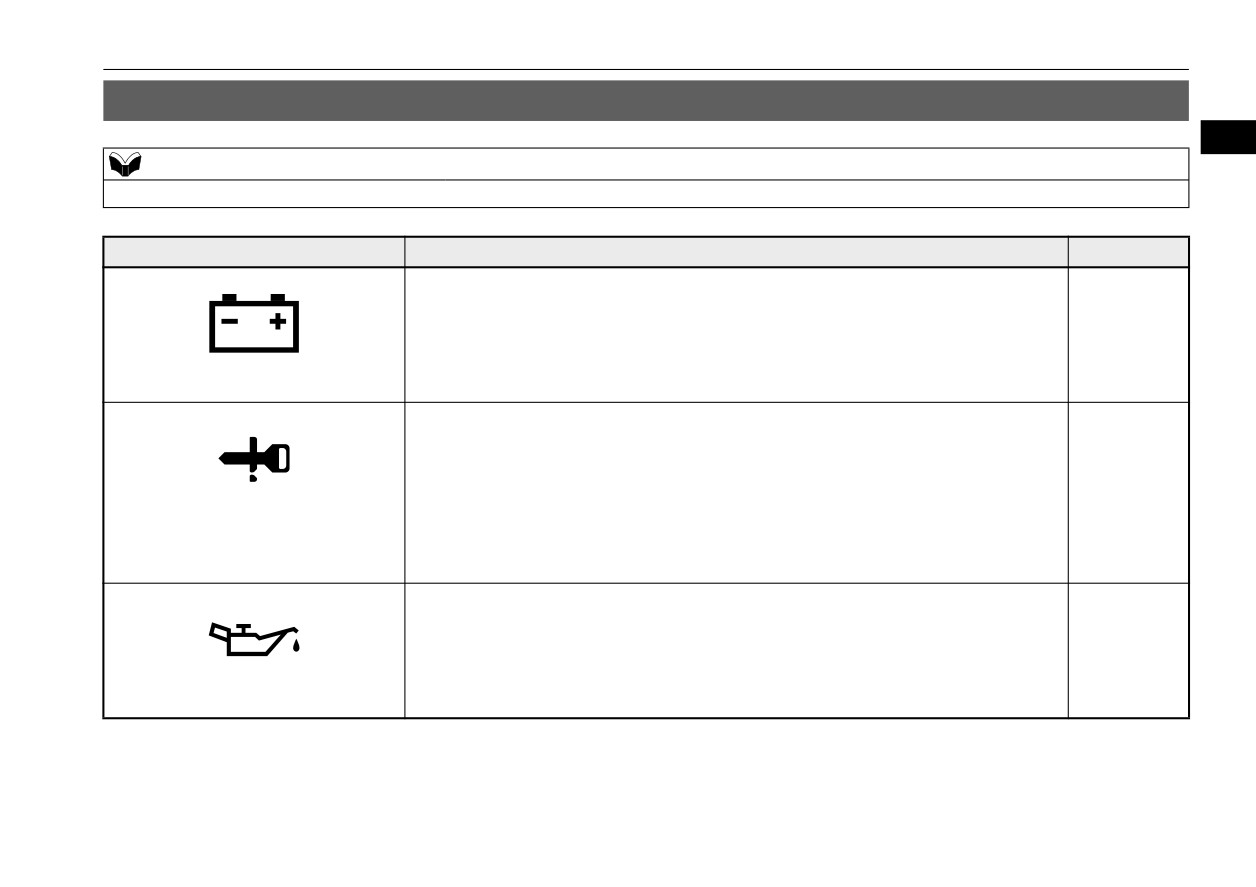
If this warning light comes on or flashes while you’re driving...
If this warning light comes on or flashes while you’re driving...
N00200702410
2
NOTE
z These warning lights will come on for a few seconds for a bulb check when the ignition switch is first turned to “ON” or the operation mode is put in ON.
Warning lights
Do this
Ref. Page
z Park your vehicle in a safe place and stop the engine.
Contact your Mitsubishi Motors dealer or a repair facility of your choice for assis-
P. 5-90
tance.
Charging system warning light
z Park your vehicle in a safe place and stop the engine.
Contact your Mitsubishi Motors dealer or a repair facility of your choice for assis-
P. 5-16
tance.
(Illuminates and intermittent sounds)
(for vehicles equipped with the
F.A.S.T.-key)
z Park your vehicle in a safe place and stop the engine, then check the engine oil
level.
If the light comes on while the engine oil level is normal, have the system checked
P. 5-90
at an authorized Mitsubishi Motors dealer or a repair facility of your choice as soon
as possible.
Oil pressure warning light
Quick index
2-1
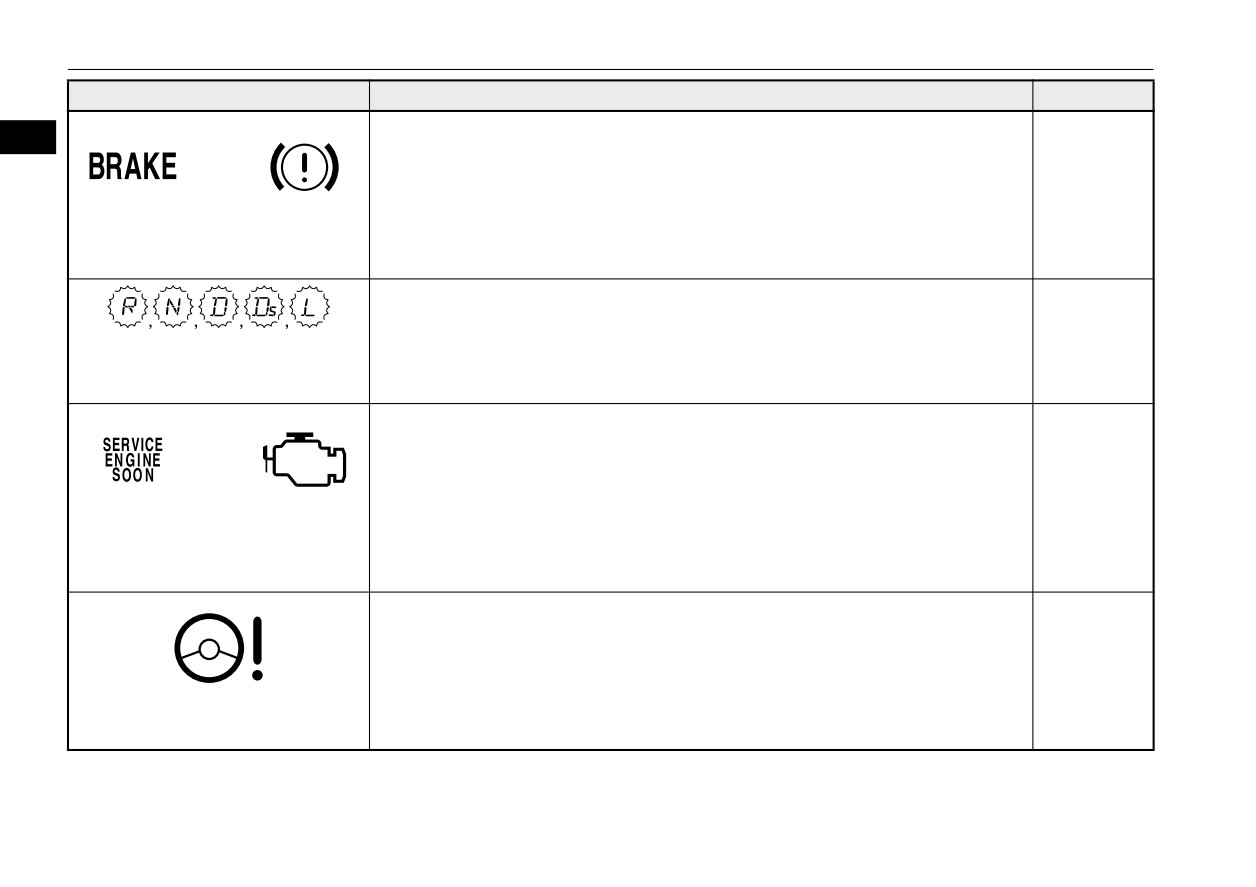
If this warning light comes on or flashes while you’re driving...
Warning lights
Do this
Ref. Page
z If this light comes on while driving, check to see that the parking brake is fully
2
released.
or
z If this light stays on after releasing the parking brake, immediately stop and check
the brake fluid level.
P. 5-88
z If the brake fluid level is correct, there may be a system malfunction. Avoid hard
Brake warning light
braking and high speed, and contact an authorized Mitsubishi Motors dealer or a
repair facility of your choice for assistance.
z Park your vehicle in a safe place.
Idle the engine until the selector lever position indicator stops flashing.
Selector lever position indicator in the
P. 5-46
If the indicator does not go off, contact an authorized Mitsubishi Motors dealer or a
instrument cluster flashes rapidly
repair facility of your choice immediately.
(once per second)
z Although your vehicle will usually be drivable and not need towing, have the
or
engine system checked at an authorized Mitsubishi Motors dealer or a repair facility
of your choice as soon as possible. If the vehicle is not drivable, contact emergency
P. 5-89
roadside assistance at 1-888-648-7820 (for vehicles sold in U.S.A.) or 1-888-576-
Engine malfunction indicator
4878 (for vehicles sold in Canada), an authorized Mitsubishi Motors dealer, or local
(“SERVICE ENGINE SOON” or
towing company for assistance.
“Check engine light”)
z If this light comes on while the engine is running, it may become harder to turn the
steering wheel. Have your vehicle inspected at an authorized Mitsubishi Motors
P. 5-53
dealer or a repair facility of your choice as soon as possible.
Electric power steering system (EPS)
warning light
2-2
Quick index
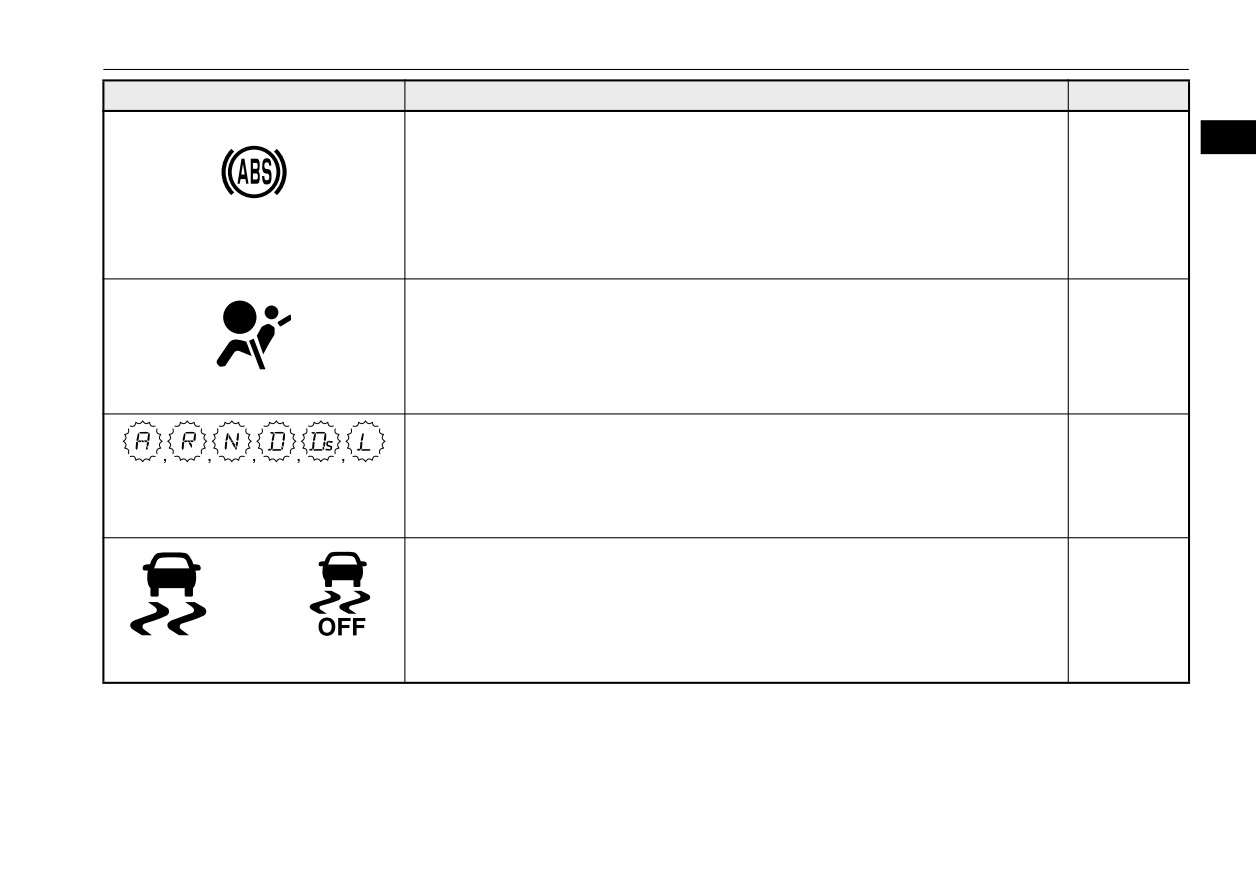
If this warning light comes on or flashes while you’re driving...
Warning lights
Do this
Ref. Page
z When this light comes on, the anti-lock braking system is not functioning and only
2
the ordinary braking system is functioning.
z Park your vehicle in a safe place and stop the engine.
Test the system as described on page 5-52.
P. 5-52
z If the light does not go out after the test, or if it comes on again, we recommend that
Anti-lock braking system warning
you have the system checked at an authorized Mitsubishi Motors dealer or a repair
light
facility of your choice as soon as possible.
z Immediately have the airbag and the pre-tensioner seat belt system checked at an
P. 4-31
authorized Mitsubishi Motors dealer.
SRS warning light
z Have your continuously variable transmission (CVT) checked at an authorized
Selector lever position indicator in the
P. 5-46
Mitsubishi Motors dealer or a repair facility of your choice immediately.
instrument cluster flashes slowly
(every 2 seconds)
z Park your vehicle in a safe place and stop the engine.
Restart the engine and check whether the indicator goes out.
and
z If the indicator does not go out, or if it comes on again, have your vehicle inspected
P. 5-55
by an authorized Mitsubishi Motors dealer or a repair facility of your choice as soon
as possible.
ASC indicator and ASC OFF indicator
z When this indicator comes on, the active stability control is not functioning.
Quick index
2-3
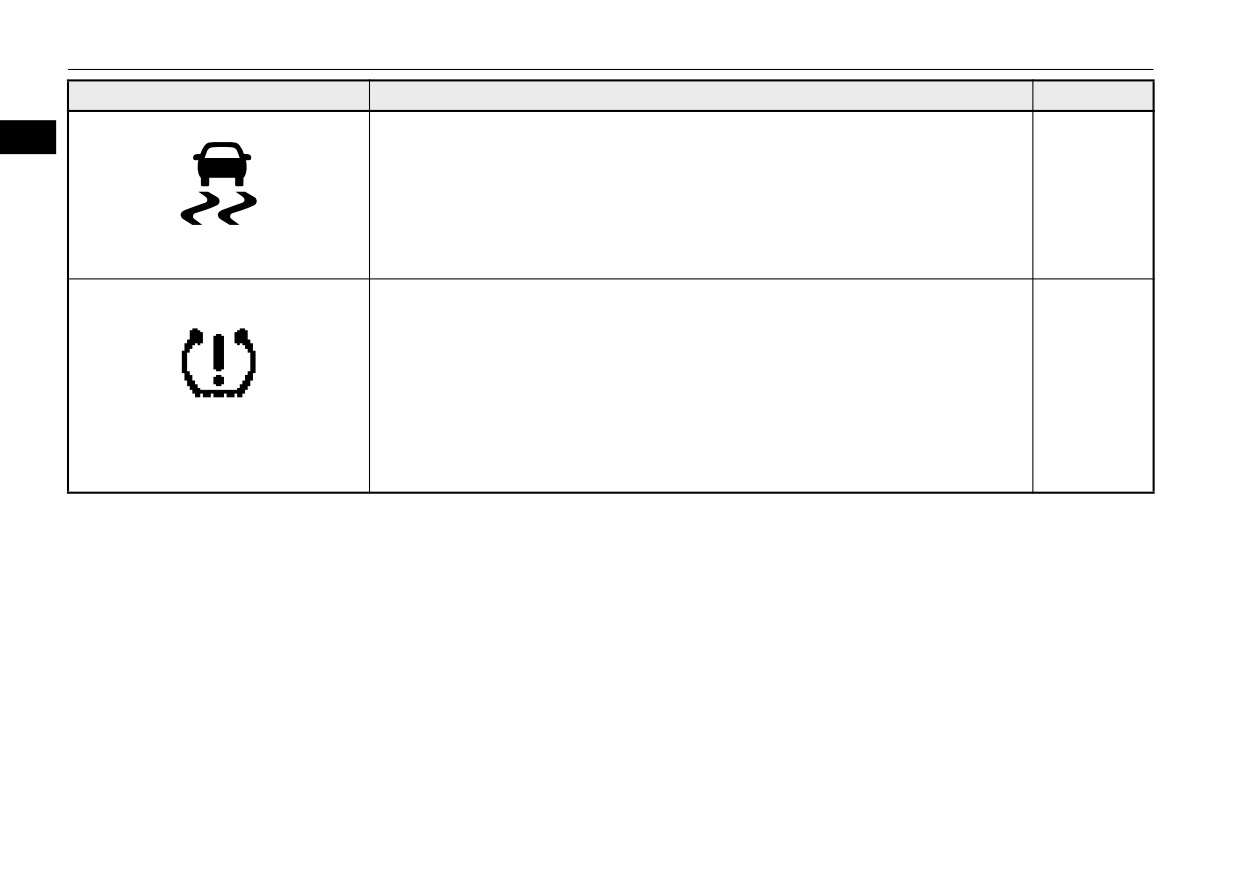
If this warning light comes on or flashes while you’re driving...
Warning lights
Do this
Ref. Page
z
Park your vehicle in a safe place and stop the engine.
2
Restart the engine and check whether the indicator goes out.
z
If the indicator does not go out, or if it comes on again, have your vehicle inspected
by an authorized Mitsubishi Motors dealer or a repair facility of your choice as soon
P. 5-50
as possible.
z
When this indicator comes on, the hill start assist is not functioning.
ASC indicator
Start off carefully on a steep uphill slope.
z
If the warning light comes on, you should stop and adjust the tires to the proper
inflation pressure as soon as possible.
(See “Tire inflation pressures” on page 9-17.)
Once adjustments have been made, the warning light will go off after a few minutes
of driving.
P. 5-71
z
If the warning light blinks for approximately 1 minute and then remains continu-
Tire pressure monitoring system warn-
ously illuminated, the system is not operating properly. If the system returns to nor-
ing light (if so equipped)
mal, the warning light will go off. If the warning light does not go off, have the
vehicle inspected at an authorized Mitsubishi Motors dealer.
2-4
Quick index
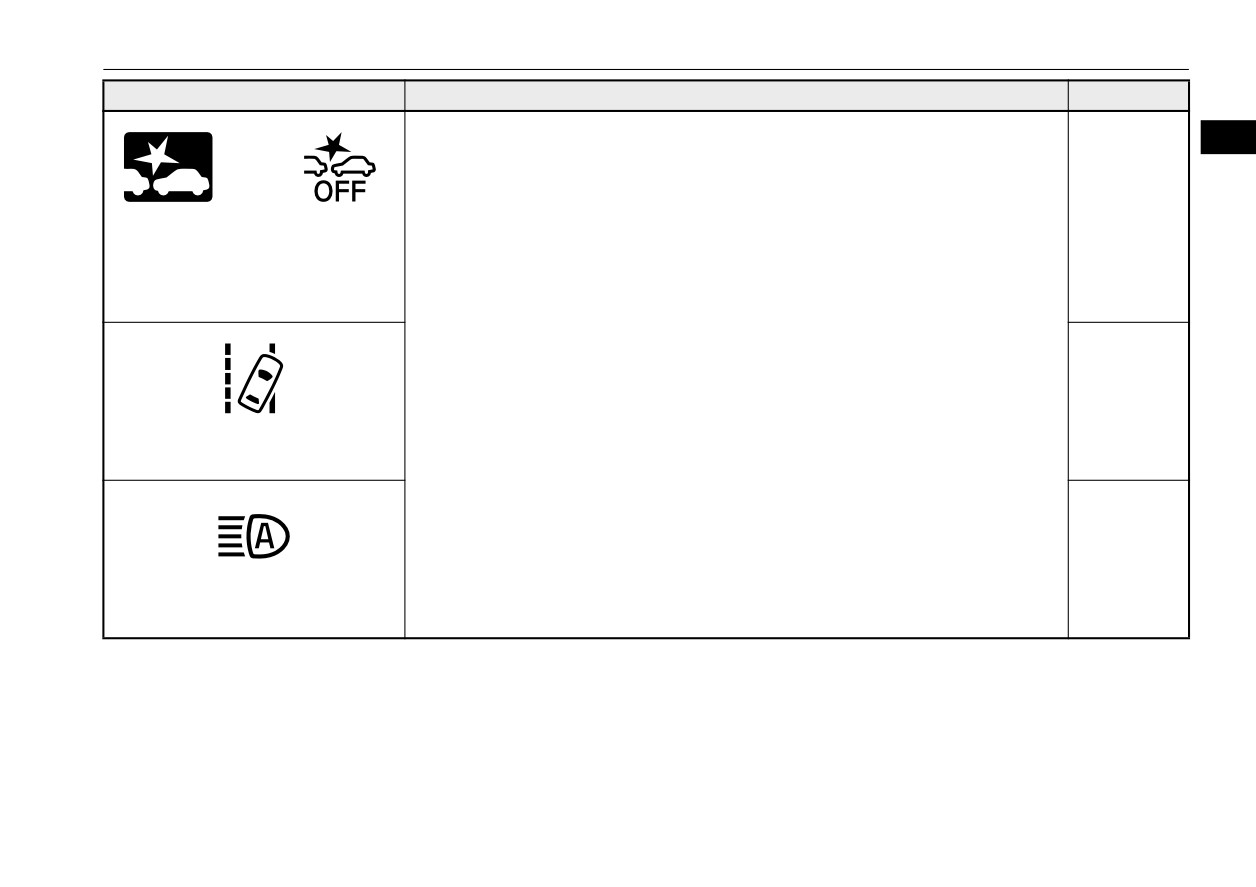
If this warning light comes on or flashes while you’re driving...
Warning lights
Do this
Ref. Page
2
and
P.5-66
Forward Collision Mitigation system
(FCM) indicator and Forward Colli-
sion Mitigation system (FCM) OFF
indicator (if so equipped)
z Park your vehicle in a safe place and restart the engine.
z If the indicators or warning lights remain, contact an authorized Mitsubishi Motors
dealer.
z When this indicators come on, FCM, LDW and AHB are not functioning.
P.5-71
Lane Departure Warning (LDW) light
(yellow) (if so equipped)
P.5-97
Automatic High Beam (AHB) warn-
ing light (yellow) (if so equipped)
Quick index
2-5
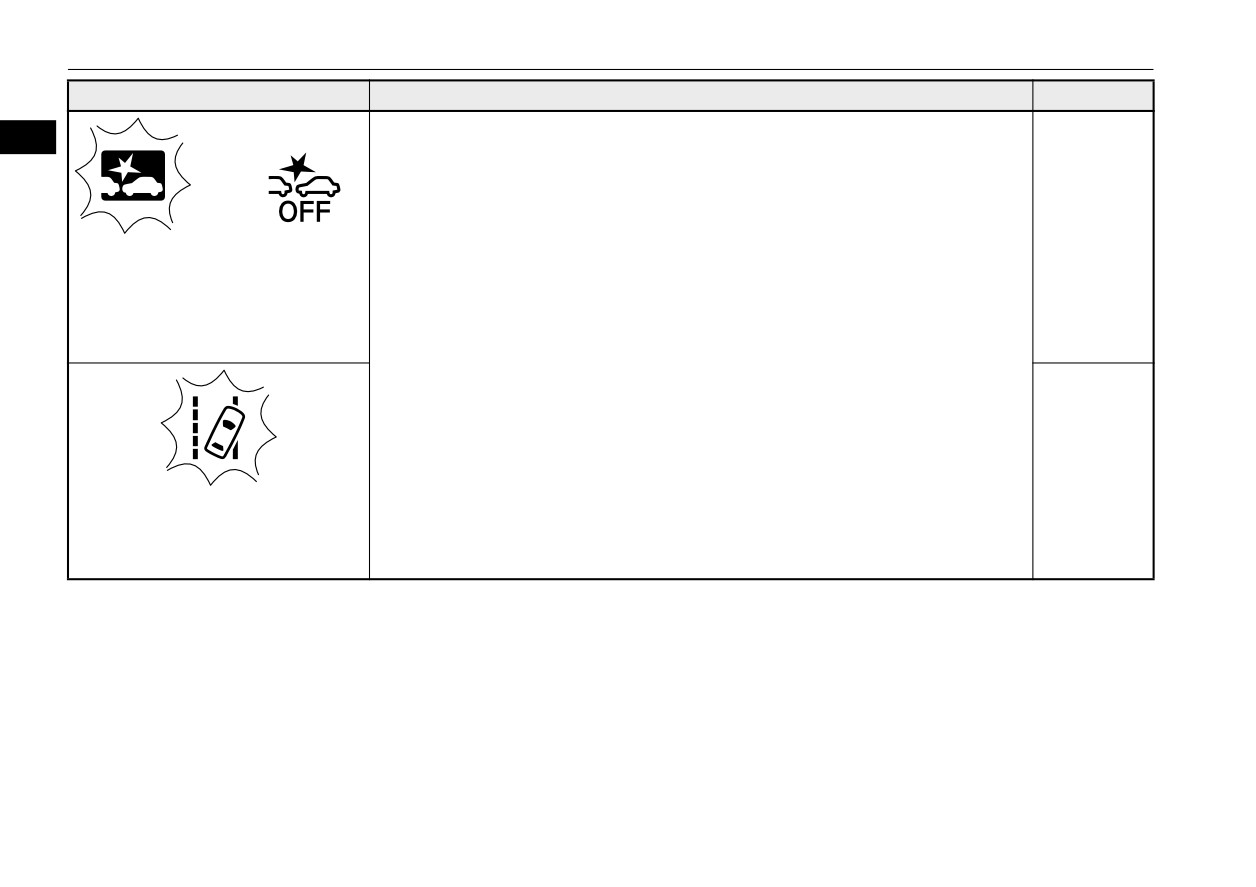
If this warning light comes on or flashes while you’re driving...
Warning lights
Do this
Ref. Page
2
and
P.5-65
(blink)
Forward Collision Mitigation system
z Park your vehicle in a safe place.
(FCM) indicator and Forward Colli-
Clean the outside surface of the windscreen of the sensor portion, and check
sion Mitigation system (FCM) OFF
whether the indicators go off.
indicator (if so equipped)
z If the indicators or warning lights remain, contact an authorized Mitsubishi Motors
dealer for inspection of the sensor.
z When these indicators or warning light come on, FCM and LDW are not function-
ing.
P.5-70
(blink slowly)
Lane Departure Warning (LDW) light
(yellow) (if so equipped)
2-6
Quick index
If this problem occurs...
If this problem occurs...
N00200902193
2
Problem
Do this
Ref. Page
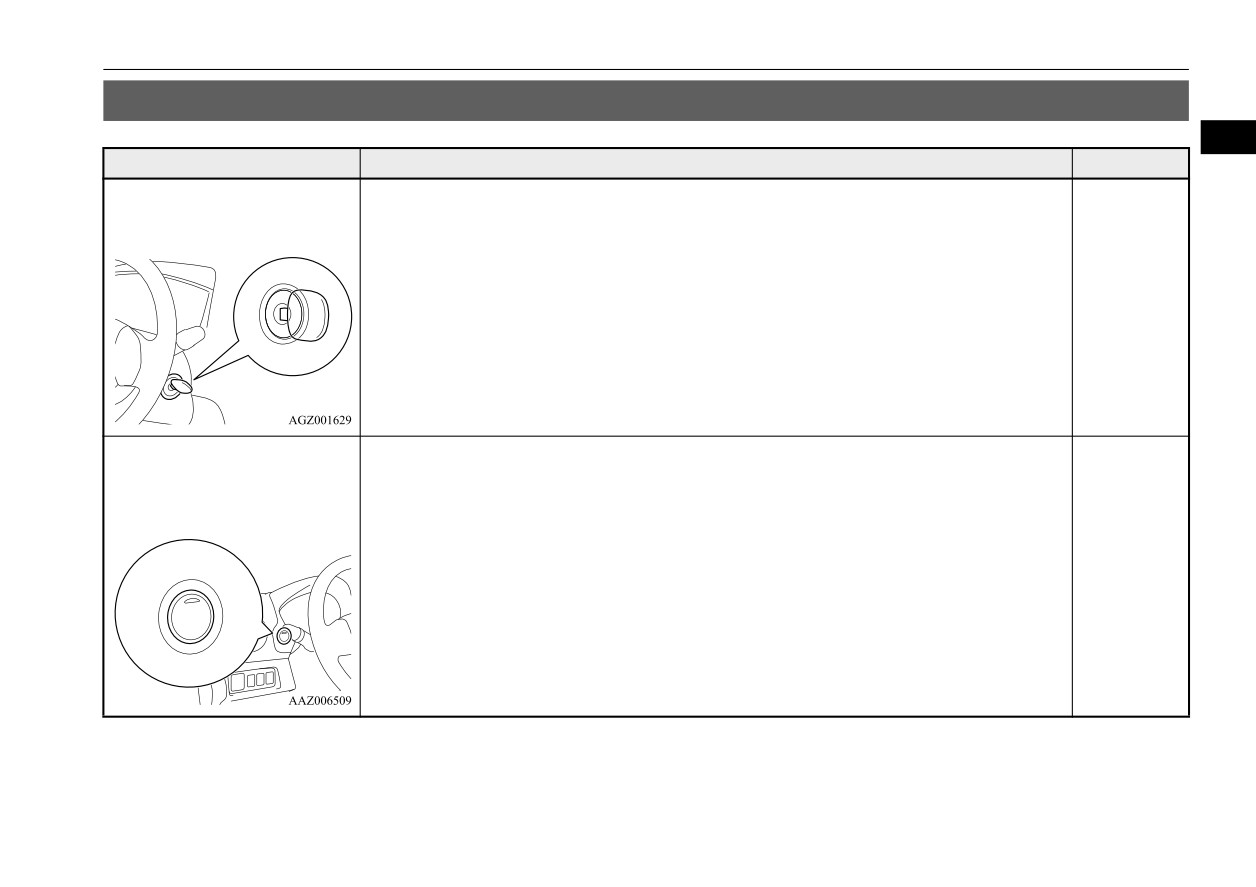
Unable to turn the key.
(except for vehicles equipped
with the F.A.S.T.-key)
From “ACC” to “OFF”
Vehicles with continuously variable transmission (CVT):
P. 5-39
Check the position of the selector lever.
The key cannot be removed unless the selector lever is set to the “P” (PARK) position.
The engine does not start when
the engine switch is pressed.
(for vehicles equipped with the
F.A.S.T.-key)
Make sure the F.A.S.T.-key is in the vehicle.
Make sure the selector lever is in the “P” (PARK) position, and then press the engine switch
P. 5-14
while depressing the brake pedal.
Quick index
2-7
If this problem occurs...
Problem
Do this
Ref. Page
1. Move the selector lever to the “P” (PARK) position, and then change the operation mode
2
The engine does not start and the
to OFF. (For vehicles with continuously variable transmission (CVT))
operation mode cannot be
2. One of the other causes could be low battery voltage.
P. 5-15
changed to OFF. (for vehicles
If this occurs, the keyless entry system and the F.A.S.T.-key operation will also not oper-
equipped with the F.A.S.T.-key)
ate.
Contact an authorized Mitsubishi Motors dealer.
The F.A.S.T.-key does not oper-
Use the emergency key to lock and unlock the door.
ate.
Insert the F.A.S.T.-key into the key slot of the floor console, and then start the engine or
P. 5-19
(for vehicles equipped with the
change the operation mode.
F.A.S.T.-key)
Cannot shift the selector lever
from the “P” (PARK) position.
Shift the selector lever while pressing the brake pedal.
P. 5-43
(for vehicles with continuously
Check that the ignition switch or the operation mode is in ON.
variable transmission (CVT))
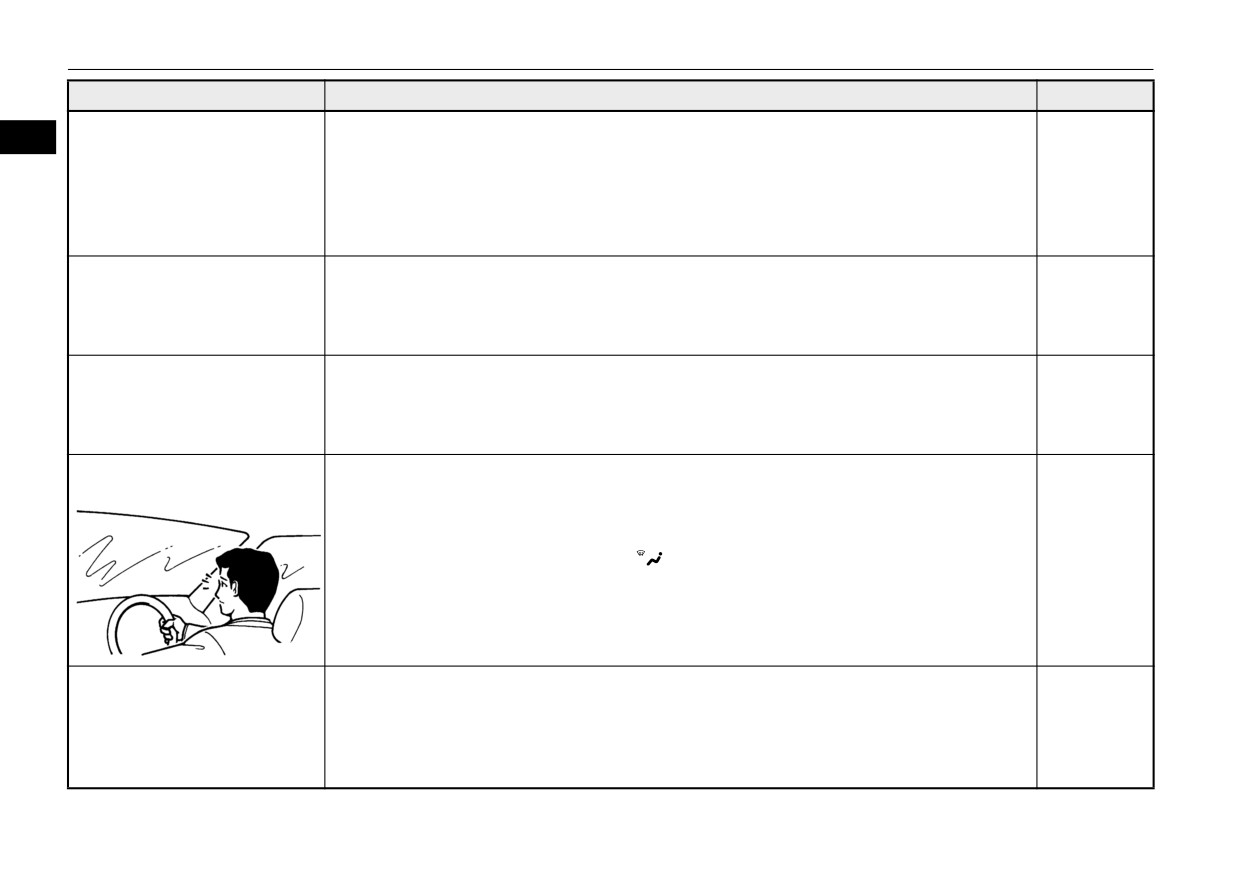
The windows are fogged up.
Push the defogger switch to change the “
” mode.
P. 7-6
The engine does not start.
The lights do not come on.
P. 8-2,
The lights are dim.
Have the battery checked. Recharge or replace as needed.
P. 9-11
The horn does not honk.
The horn sound is weak.
2-8
Quick index
If this problem occurs...
Problem
Do this
Ref. Page
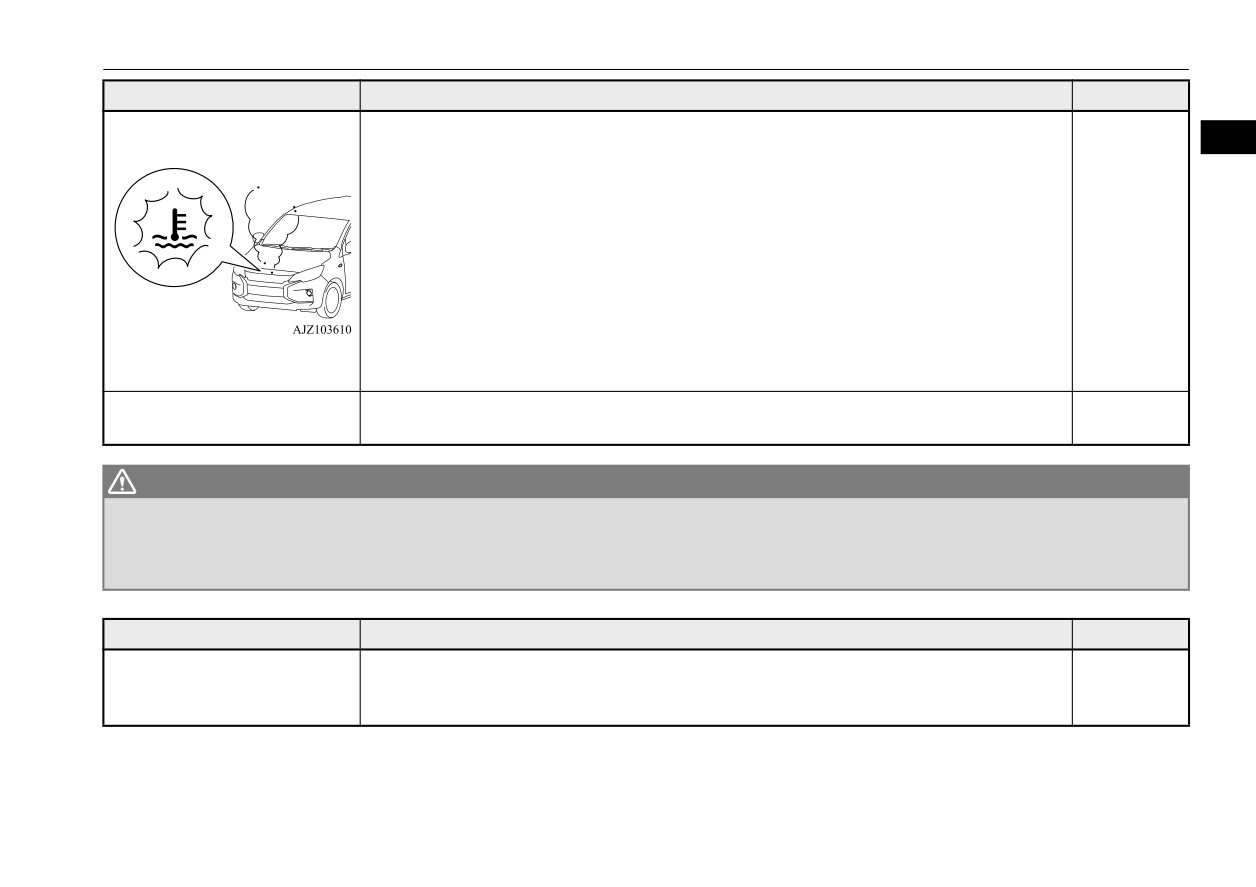
The high coolant temperature
2
warning light is illuminated.
The engine is overheated.
P. 8-4
Carefully stop the vehicle in a safe place.
Steam comes out of the engine
compartment.
The vehicle is stuck in sand,
Rock your vehicle back and forth to free it.
P. 8-13
mud or snow
WARNING
z When attempting to rock your vehicle out of a stuck position, be sure that no one is near the vehicle. The rocking motion may cause the vehicle to
suddenly lurch forward or backward, possibly injuring bystanders.
z Avoid revving the engine or spinning the wheels. Prolonged efforts to free a stuck vehicle may result in overheating and transaxle failure.
If the vehicle remains stuck after several rocking attempts, have a towing service pull the vehicle out.
Problem
Do this
Ref. Page
The brakes are not functioning
properly after crossing a puddle
Dry out the brakes by driving slowly while lightly pressing the brake pedal.
P. 6-5
or stream.
Quick index
2-9
If this problem occurs...
Problem
Do this
Ref. Page
The continuously variable trans-
2
mission (CVT) makes no shift
change when accelerating. The
There may be a problem in the CVT.
initial movement of the vehicle
Have the vehicle inspected by an authorized Mitsubishi Motors dealer or a repair facility of
P. 5-46
is slow when the vehicle starts
your choice immediately.
moving.
(for vehicles with CVT)
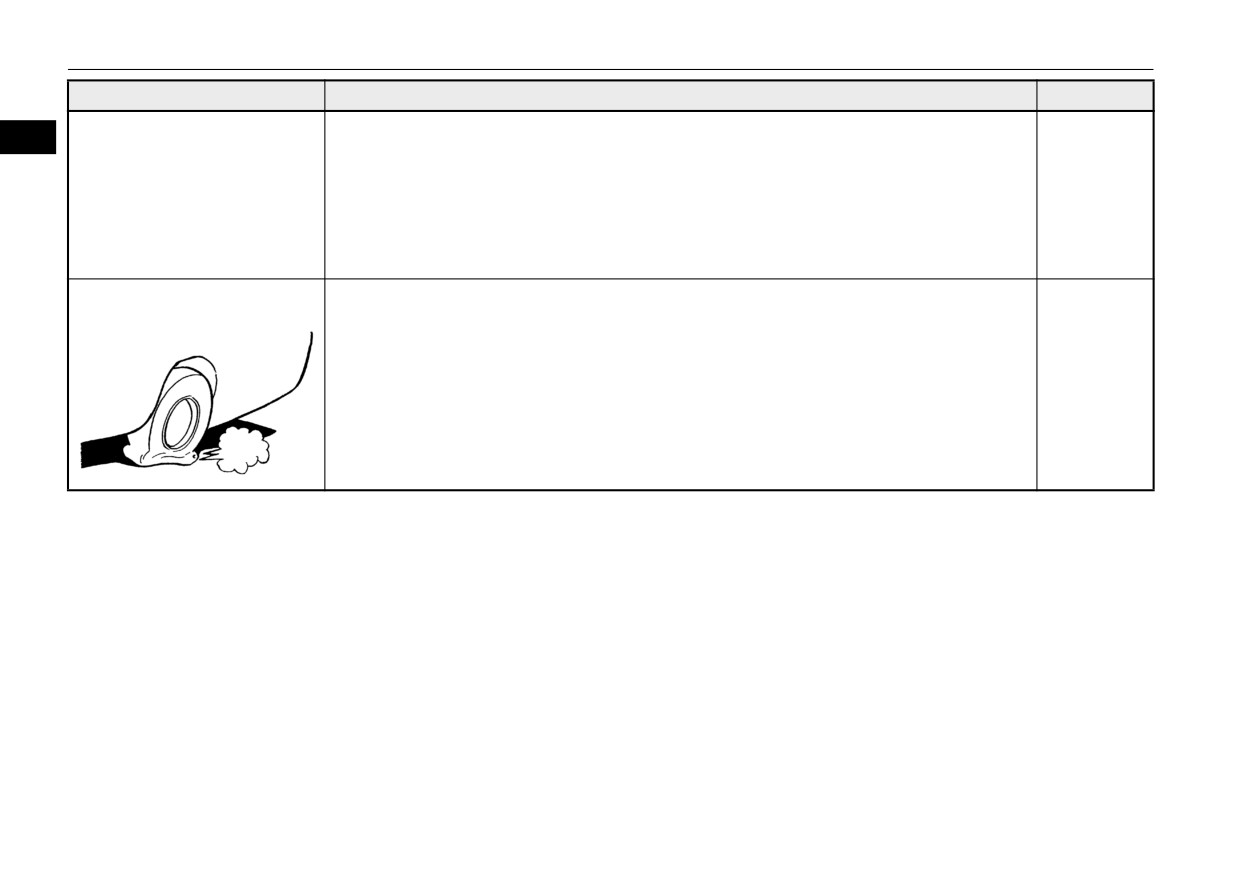
A tire is punctured.
1. Park the vehicle in a safe place where the surface is flat and level.
P. 8-6
2. Replace the flat tire with the compact spare tire.
2-10
Quick index
General information
3
Fuel selection
3-2
Filling the fuel tank
3-3
Modifications to and racing of your vehicle
3-5
Genuine Mitsubishi Motors parts
3-6
California Perchlorate Materials Requirements
3-7
Event Data Recording
3-7
Fuel selection
oline to minimize fuel-injector clogging and
Fuel selection
Methanol
minimize intake-valve deposits. Detergent
N00301002020
gasoline helps keep your engine in tune and
Your vehicle is designed to use unleaded gas-
your emission-control system working prop-
Do not operate your vehicle on gasoline con-
oline only. It is equipped with a fuel tank
erly.
taining methanol (wood alcohol). Using this
3
filler pipe specifically designed to accept only
type of alcohol could adversely affect the
a small diameter unleaded gasoline dispens-
vehicle’s performance and damage critical
Octane requirement
ing nozzle.
parts of the vehicle’s fuel system.
Your vehicle is designed to operate on
WARNING
Reformulated gasoline
unleaded gasoline having a minimum octane
z
Gasoline is highly flammable and explo-
number of 87 [(MON+RON)/2] or 91 RON.
sive. You could be burned, seriously
Many areas of the country require the use of
injured or killed when handling it. When-
cleaner burning fuel referred to as “Reformu-
ever you refuel your vehicle, stop the
Oxygenated gasoline
lated Gasoline”.
engine and keep flames, sparks, and
Reformulated gasoline contains oxygenates
smoking materials away from the vehicle.
Gasoline sold at some service stations con-
and is specially blended to reduce vehicle
Always handle fuel in well-ventilated out-
tains oxygenates such as ethanol, although
emissions and improve air quality.
door areas.
the oxygenates may not be identified by those
Mitsubishi Motors Corporation strongly sup-
names. Oxygenates are required in some
ports the use of reformulated gasoline. Prop-
areas of the country. Such fuel can be used in
erly blended reformulated gasoline has no
CAUTION
your vehicle.
adverse effect on vehicle performance or the
z Using leaded gasoline in your vehicle will
damage the engine, catalytic converter, and
durability of the engine and fuel system.
the oxygen sensors. Also, using leaded gaso-
Ethanol (Gasohol)
line is illegal, and will void your warranty
MMT (methylcyclopentadienyl
coverage of the engine, catalytic converter,
and oxygen sensors.
A mixture of up to 10 % ethanol (grain alco-
manganese tricarbonyl)
hol) and 90 % unleaded gasoline may be used
in your vehicle, provided the octane number
MMT is a manganese-containing metallic
is at least as high as that recommended for
Gasoline detergent additives
additive that is blended into some gasolines
unleaded gasoline.
to increase the octane number. Mitsubishi
Motors Corporation recommends using gaso-
In the United States, fuel suppliers are
lines without MMT.
required by law to add detergents to their gas-
3-2
General information
Filling the fuel tank
Use of gasolines blended with MMT may
NOTE
WARNING
adversely affect performance, and cause the
z
Poor-quality gasoline can cause problems
z
Gasoline is highly flammable and explo-
malfunction indicator on your instrument
such as hard starting, stalling during idling,
sive. You could be burned, seriously
panel to come on. If this happens, contact an
abnormal engine noise, and poor accelera-
injured or killed when handling it. When
authorized Mitsubishi Motors dealer or a
3
tion. If you experience any of these prob-
refueling your vehicle, always turn the
repair facility of your choice for assistance.
lems, try using a different brand of gasoline.
engine off and keep away from flames,
If the engine malfunction indicator (“SER-
sparks, and smoking materials. Always
VICE ENGINE SOON” or “Check engine
handle fuel in well-ventilated outdoor
Sulfur in gasoline
light”) flashes, have the vehicle inspected
areas.
immediately by the nearest authorized
z
Before removing the fuel tank filler cap,
Your vehicle may have been designed to sat-
Mitsubishi Motors dealer or a repair facility
be sure to get rid of your body’s static
isfy California’s low-emission regulations
of your choice.
electricity by touching a metal part of the
based on clean-burning low-sulfur gasoline.
z
Repeatedly driving short distances at low
car or fuel pump. Any static electricity on
Gasoline sold in parts of the country other
speeds can cause deposits to form in the fuel
your body could create a spark that
than California is allowed to have a higher
system and engine, resulting in hard starting
ignites fuel vapor.
and poor acceleration. If these problems
z
Perform the whole refueling process
sulfur content. Using such gasoline could
occur, you are advised to add a detergent
(opening the fuel tank filler door, remov-
adversely affect the vehicle’s catalytic con-
additive to the gasoline when you refuel the
ing the fuel tank filler cap, etc.) by your-
verter and cause the engine malfunction indi-
vehicle. The additive will remove the depos-
self; do not let any other person near the
cator
(“SERVICE ENGINE SOON” or
its, thereby returning the engine to a normal
fuel tank filler. If you allowed a person to
“Check engine light”) to come on. Illumina-
condition. Be sure to use a Mitsubishi
help you and that person was carrying
tion of this indicator while using high-sulfur
Motors Genuine cleaning additive. Using an
static electricity, fuel vapor could be
gasoline does not necessarily mean the vehi-
unsuitable additive could make an engine
ignited.
cle’s emission-control system is malfunction-
malfunction. For details, please contact the
z
Do not move away from the fuel tank filler
ing. Your authorized Mitsubishi Motors
nearest authorized Mitsubishi Motors dealer.
until refueling is finished. If you moved
dealer may suggest using a different, lower-
away and did something else (for example,
sulfur brand of unleaded gasoline to deter-
sitting on a seat) part-way through the
mine if the problem is fuel-related.
refueling process, you could pick up a
Filling the fuel tank
fresh charge of static electricity.
N00301102050
z
Be careful not to inhale fuel vapor. Fuel
contains toxic substances.
WARNING
z
Keep the doors and windows closed while
z When handling fuel, comply with the
refueling the vehicle. If they were open,
safety regulations displayed by garages
fuel vapor could get into the cabin.
and filling stations.
General information
3-3
Filling the fuel tank
Fuel tank capacity
WARNING
z Since the fuel system may be under pres-
sure, remove the fuel tank filler cap
9.2 gal (35 L)
slowly. This relieves any pressure or vac-
3
uum that might have built up in the fuel
Refueling
tank. If the fuel tank filler cap is venting
vapor or if you hear a hissing sound, wait
1. Before filling with fuel, stop the engine.
until the sound stops before removing the
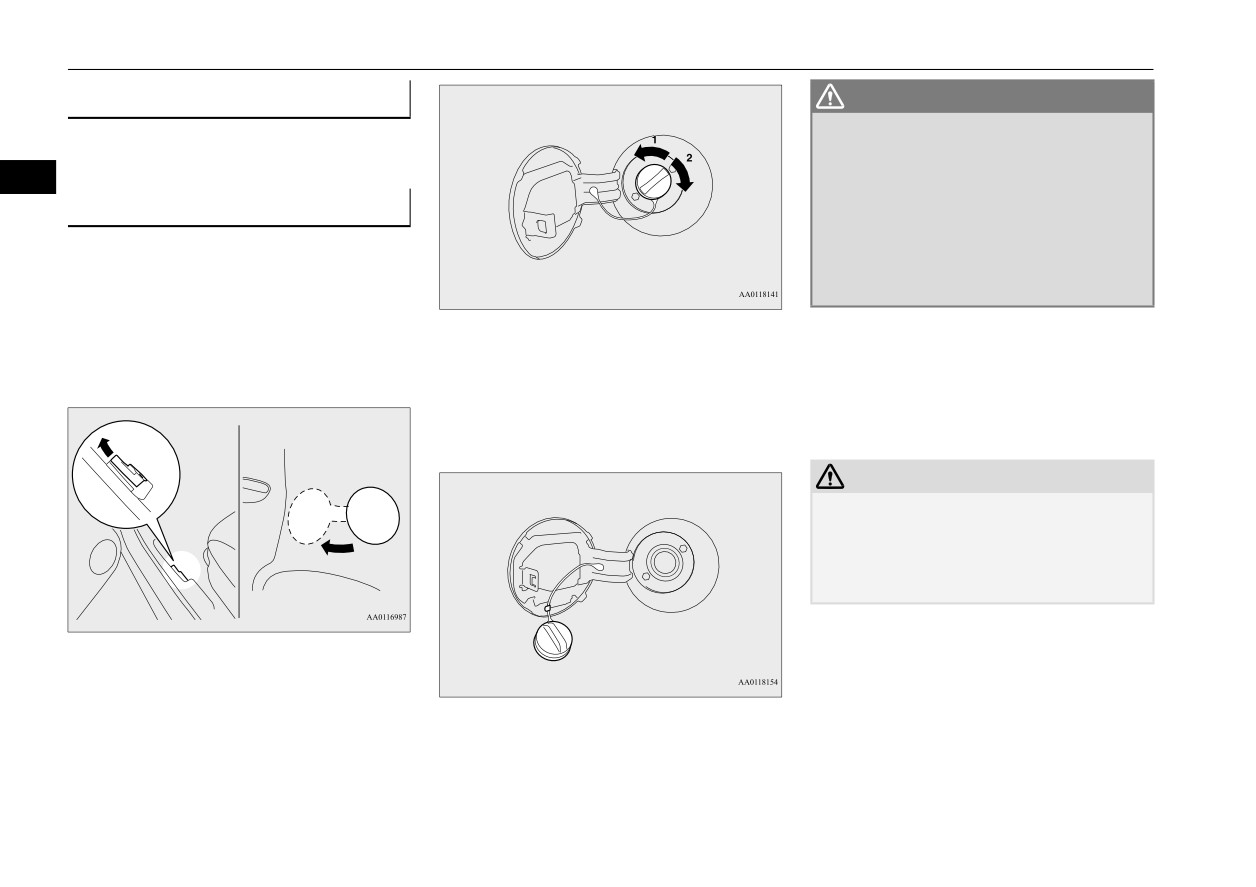
2. The fuel tank filler is located on the rear
fuel tank filler cap. Otherwise, fuel may
driver side of your vehicle.
spray out, injuring you or others.
The fuel tank filler door can be opened
1- Remove
from inside the vehicle with the fuel tank
5. To fill with fuel correctly depends mainly
2- Close
filler door release lever located at the left
on correct handling of the fuel filler noz-
side of the driver’s seat.
zle. Do not tilt the nozzle. Insert the noz-
4. While filling with fuel, hang the fuel tank
zle in the fuel tank filler port as far as it
filler cap cord on the hook located on the
goes.
inside surface of the fuel tank filler door.
CAUTION
z Your vehicle can only be operated using
unleaded gasoline. Serious engine and cata-
lytic converter damage will result if leaded
gasoline is filled into these vehicles, and
consequently, this must never be attempted.
6. When the nozzle stops automatically, do
3. Open the fuel tank filler pipe by slowly
not add more fuel.
turning the fuel tank filler cap counter-
clockwise.
3-4
General information
Modifications to and racing of your vehicle
VEHICLE ARE NOT COVERED
CAUTION
NOTE
UNDER WARRANTY.
z To avoid fuel spillage and overfilling, do not
z
If the fuel tank filler cap is not tight while
“top-off” the fuel tank. Spilled fuel could
driving, the engine malfunction indicator
Examples of modifications to your vehicle
discolor, stain, or crack the vehicle’s paint-
(“SERVICE ENGINE SOON” or “Check
that can cause damage or performance prob-
work. If fuel spills on the paintwork, wipe it
engine light”) may come on when the
3
lems include the following:
off with a soft cloth.
onboard diagnostic (OBD) system performs
a self check.
z Failure to use Mitsubishi Motors genuine
Always tighten the fuel tank filler cap until
7. To close, turn the fuel tank filler cap
parts
you hear at least 3 clicks.
slowly clockwise until you hear clicking
z Failure to use required fuel and fluids
The indicator will go off after several driving
sounds, then gently push the fuel tank
z Failure to use proper size tires and wheels
cycles. If the indicator does not go off, con-
filler door closed.
tact your authorized Mitsubishi Motors
z Modification of the fuel, intake, exhaust,
dealer or a repair facility of your choice
emission, suspension, engine, drive train
WARNING
immediately.
or electrical wiring systems
z
Make sure the fuel tank filler cap is
z Modification of any onboard com-
securely closed. If the fuel tank filler cap
puter/control module, including repro-
were loose, fuel could leak, resulting in a
gramming, or replacing/adding chips to
Modifications to and racing
fire.
any onboard computer/control module
of your vehicle
N00301600194
Review the Warranty and Maintenance Man-
CAUTION
This vehicle should not be modified with
ual for further details regarding warranty cov-
z
If you need to replace the fuel tank filler cap,
non-Mitsubishi Motors genuine parts.
erage.
use only the fuel tank filler cap specified for
Mitsubishi Motors designs and manufactures
your model vehicle.
high quality vehicles with an emphasis on
Installation of accessories
safety and durability. Modifications using
N00301701310
non-Mitsubishi Motors genuine parts may
affect the performance, safety and/or durabil-
CAUTION
ity of your vehicle, and may violate applica-
z Before any electrical or electronic accesso-
ble state and/or federal regulations.
ries are installed, consult an authorized
Mitsubishi Motors dealer.
DAMAGE OR PERFORMANCE PROB-
LEMS RESULTING FROM MODIFICA-
TIONS TO OR RACING OF YOUR
General information
3-5
Genuine Mitsubishi Motors parts
Refer to the “Specifications” section for
CAUTION
Modification/alterations to the
information regarding wheel and tire
z Your vehicle is equipped with a diagnosis
electrical or fuel systems
sizes.
connector (data link connector) for checking
N00301800183
and servicing the electronic control system.
3
Mitsubishi Motors manufactures high quality
Mitsubishi Motors does not recommend con-
WARNING
necting a device other than the Scan Tool for
vehicles with an emphasis on safety. It is
z While driving, do not use a cellular phone
inspections and service to this connector
important to consult an authorized Mitsubishi
in a way that hinders safe driving. Any-
because an unexpected problem could result.
Motors dealer before installation of any
thing, including cellular phone usage, that
In addition, malfunctions caused by connect-
accessory which may involve modification of
distracts you from the safe operation of
ing a device other than the Scan Tool may
your vehicle increases your risk of an acci-
the electrical or fuel systems.
not be covered under warranty.
dent.
Refer to and follow all state and local laws
z
The installation of accessories, optional
CAUTION
in your area regarding cellular phone
parts, etc., should only be performed
z Please consult an authorized Mitsubishi
usage while driving.
within the limits prescribed by law, and in
Motors dealer concerning any such acces-
accordance with the guidelines and warn-
sory fitment or modification.
ings contained within the documents
If the wires interfere with the vehicle body or
Important point!
accompanying this vehicle.
improper installation methods are used (pro-
tective fuses not included, etc.), electronic
Only Mitsubishi Motors approved acces-
Due to the large number of accessory and
devices may be adversely affected, resulting
sories should be fitted to your vehicle.
replacement parts provided by different man-
in a fire, vehicle damage, or other accident.
z Improper installation of electrical parts
ufacturers in the market, it is not always pos-
could cause a fire. Refer to the “Modifica-
sible for an authorized Mitsubishi Motors
tion/alterations to the electrical or fuel
dealer to check whether the attachment or
Genuine Mitsubishi Motors
systems” section within this owner’s man-
installation of a non-Mitsubishi Motors genu-
ual.
parts
ine parts affects the driving safety of your
z
Using a cellular phone or radio set inside
N00301401261
vehicle.
the vehicle without an external antenna
Mitsubishi Motors Genuine Parts are
may cause electrical system interference,
designed and manufactured to meet high stan-
which could lead to unsafe vehicle opera-
dards of performance, and are recommended
tion.
for all of your maintenance needs. Also avail-
z
Tires and wheels which do not meet spec-
able from your Mitsubishi Motors dealer are
ifications must not be used.
a wide variety of accessories to personalize
your new vehicle. Each Mitsubishi Motors
3-6
General information
California Perchlorate Materials Requirements
vehicle has a selection of Mitsubishi Motors
The EDR is designed to record data related to
To read data recorded by an EDR, special
authorized accessories to choose from to tai-
vehicle dynamics and safety systems for a
equipment is required, and access to the vehi-
lor your new vehicle to your own personal
short period of time, typically 30 seconds or
cle or the EDR is needed. In addition to the
preference. Your Mitsubishi Motors dealer’s
less.
vehicle manufacturer, other parties, such as
Parts Manager has information on various
law enforcement, that have the special equip-
3
audio systems, protection items, as well as
The EDR in this vehicle is designed to record
ment, can read the information if they have
interior and exterior accessories available for
such data as:
access to the vehicle or the EDR.
your specific model.
z How various systems in your vehicle were
operating;
California Perchlorate
z Whether or not the driver and front pas-
senger safety belts were buckled/fastened;
Materials Requirements
z How far (if at all) the driver was depress-
N00300100017
ing the accelerator and/or brake pedal;
Certain components of this vehicle, such as
and,
airbag modules, seat belt pretensioners, and
z How fast the vehicle was traveling.
button cell batteries, may contain perchlorate
materials.
These data can help provide a better under-
Special handling may apply. For additional
standing of the circumstances in which
information, see www.dtsc.ca.gov/hazardous-
crashes and injuries occur.
waste/perchlorate.
NOTE
Event Data Recording
z EDR data are recorded by your vehicle only
N00302700033
if a non-trivial crash situation occurs; no data
are recorded by the EDR under normal driv-
This vehicle is equipped with an event data
ing conditions and no personal data (e.g.,
recorder (EDR).
name, gender, age, and crash location) are
The main purpose of an EDR is to record, in
recorded. However, other parties, such as
certain crash or near crash-like situations,
law enforcement, could combine the EDR
such as an airbag deployment or hitting a
data with the type of personally identifying
road obstacle, data that will assist in under-
data routinely acquired during a crash inves-
standing how a vehicle’s systems performed.
tigation.
General information
3-7
Seat and restraint systems
Seats
4-2
4
Seats and restraint systems
4-2
Front seats
4-3
Rear seats
4-6
Head restraints
4-7
Seat belts
4-9
Seat belt use during pregnancy
4-14
Seat belt pre-tensioner and force limiter systems
4-14
Child restraint systems
4-15
Maintenance and inspection of seat belts
4-25
Supplemental Restraint System (SRS) - airbag
4-26
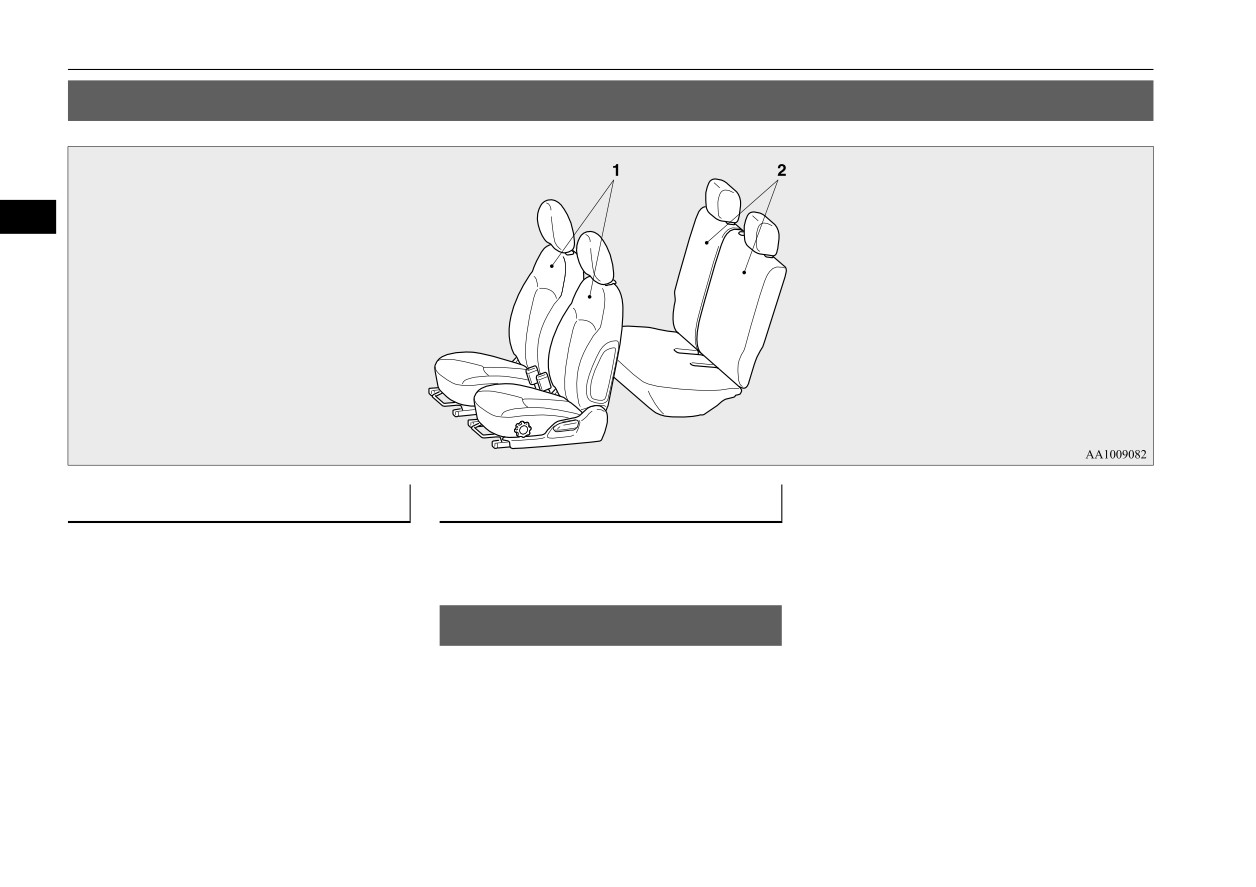
Seats
Seats
N00408401580
4
tion during a severe frontal collision, your
1 - Front seats
2 - Rear seats
vehicle has a Supplemental Restraint System
(SRS) with airbags for the driver and passen-
z To adjust the seat forward or backward
z Folding the seatbacks forward Page
gers. The seats, head restraints, and door
Page 4-3
4-6
locks also are safety equipment, which must
z To adjust the seatbacks Page 4-4
be used correctly.
z To adjust the seat height (Driver’s seat
Seats and restraint systems
only, if so equipped) Page 4-4
N00401601235
Always check the following before you drive:
z Arm rest
(Driver’s seat only, if so
equipped) Page 4-5
Your vehicle has seat belts and other safety
z That everyone in your vehicle is properly
z Heated seats (if so equipped) Page 4-5
features that help protect you and your pas-
wearing their seat belt.
sengers in an accident.
z That infants and small children are prop-
Seat belts are the most important safety
erly secured in an appropriate child
device. When worn properly, seat belts can
restraint system in the rear seat.
reduce the chance of serious injury or death
z That all doors are fully closed and locked.
in various types of crashes. For added protec-
4-2
Seat and restraint systems
///////////////////////////////////////