Mazda Training manual - part 238
3 – SHORT BLOCK
37
Piston Engine Fundamentals
TC010-05-01S
Construction
Pistons are usually made of aluminum alloys, which are lighter than cast
iron or iron-steel alloys. While lighter weight is an advantage, aluminum
alloys also tend to expand more with heat. To overcome this problem,
some pistons have a steel strut cast into the bottom of the piston head.
This strut helps control expansion.
Clearance
Although the piston fits closely in the cylinder bore, it does not seal the
combustion chamber. The compression seal is made by the piston rings
installed in grooves near the top of the piston. To allow room for the piston
rings and lubricating oil, a clearance of a few thousandths of an inch must
be maintained between the outside edge of the piston and the cylinder
wall.
This clearance lets lubricating oil into the upper part of the cylinder. The
clearance also prevents the engine from seizing if one of the pistons
expands too much from overheating.
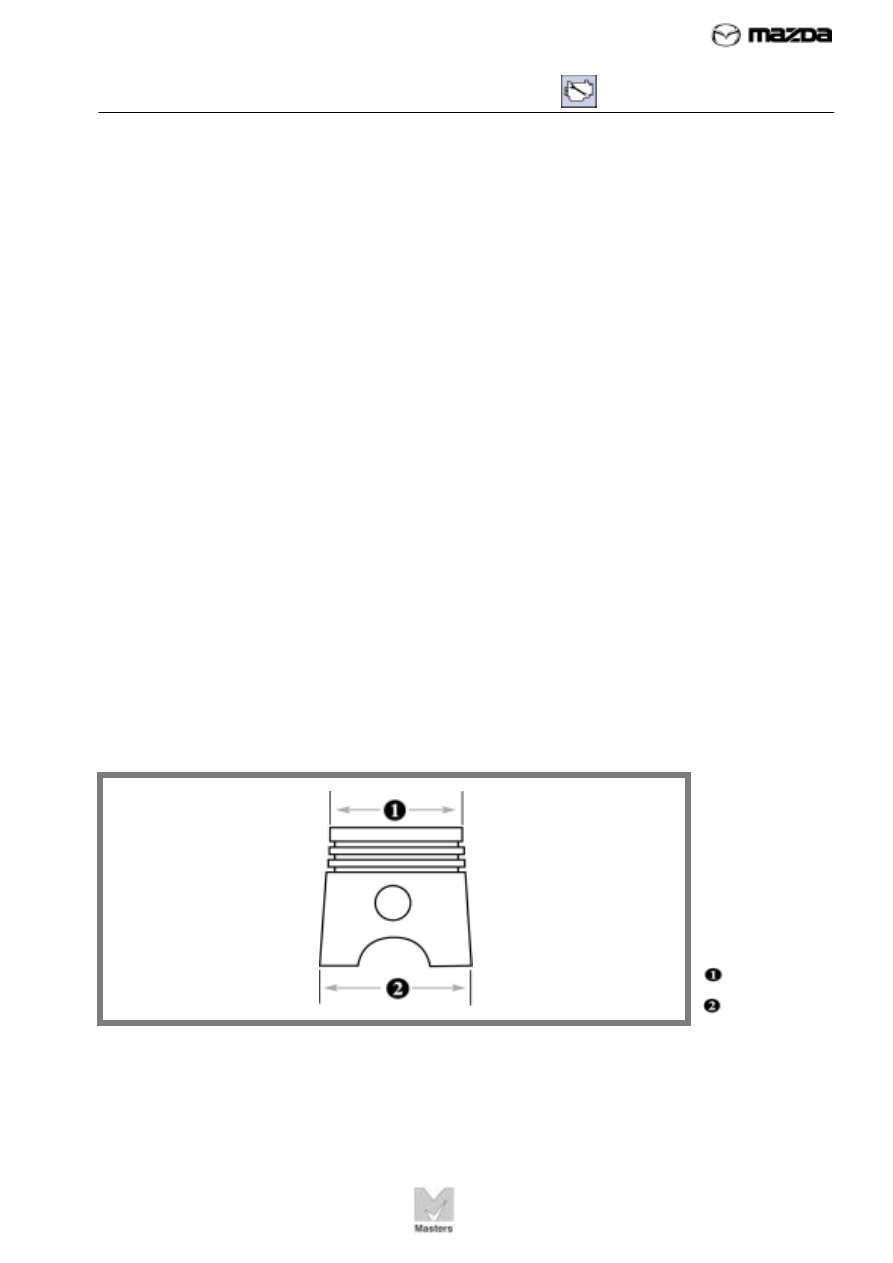
To maintain a consistent clearance from the top to the bottom of the
cylinder, the piston usually has a slightly tapered shape, as shown in
Figure 24. The top diameter of the piston is slightly smaller than the
bottom diameter when the piston is cold. When the engine operates, the
top of the piston gets much hotter than the bottom, and the expansion at
the top evens up the diameter.
FIGURE 24. The
upper part of the
piston gets very
hot, and its
smaller diameter
expands to
maintain
consistent clear-
ance from top to
bottom.
Top
diameter
(smaller)
Bottom
Diameter
(larger)