Lexus TX350 (2024 year). Manual in english - page 10
314
4-5. Using the driving support systems
●
When a vehicle turns into the detection
area
■
Situations in which the system may
operate even if there is no possibility of a
collision
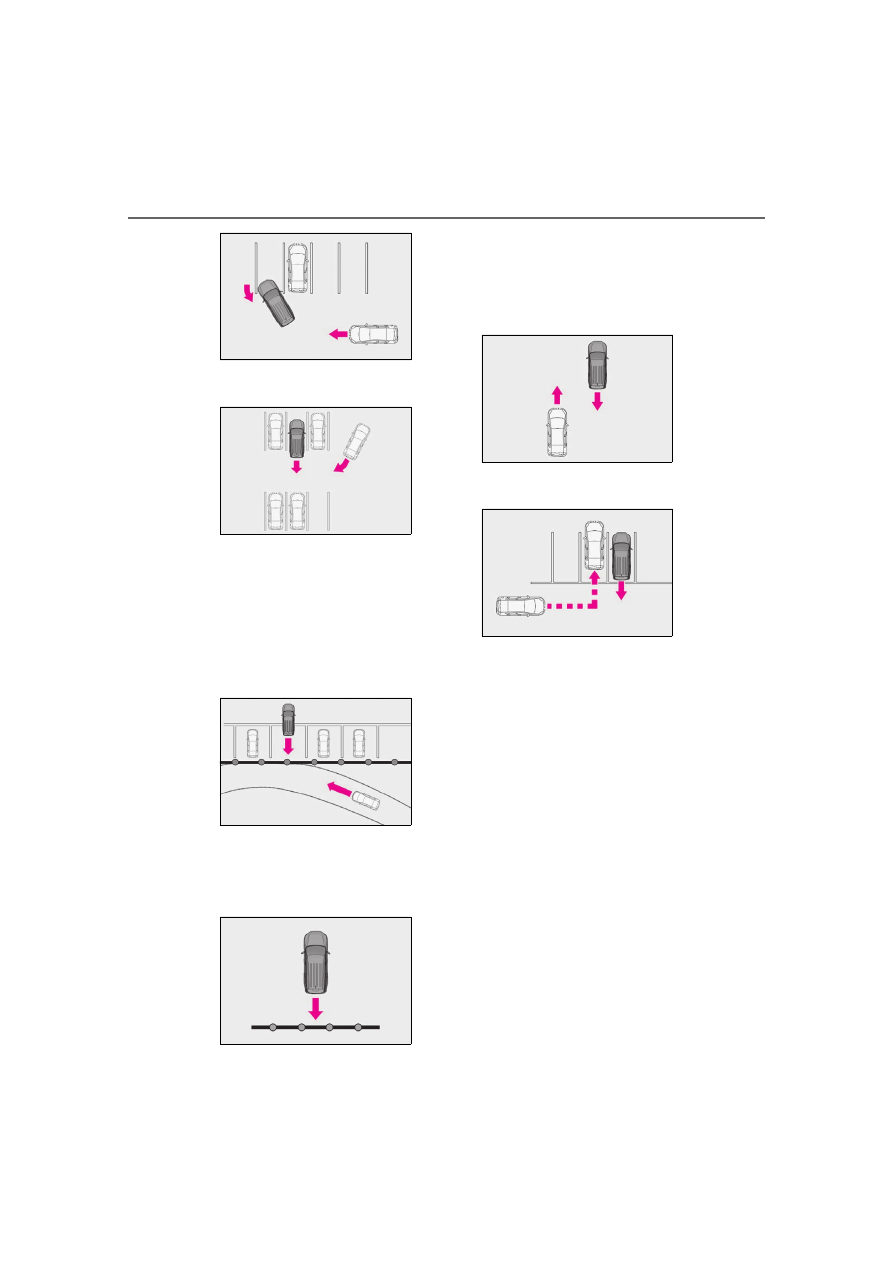
Instances of the RCTA function unneces-
sary detecting a vehicle and/or object may
increase in the following situations:
●
When the parking space faces a street
and vehicles are being driven on the
street
●
When the distance between your vehicle
and metal objects, such as a guardrail,
wall, sign, or parked vehicle, which may
reflect electrical waves toward the rear of
the vehicle, is short
●
When equipment that may obstruct a
sensor is installed, such as a towing eye-
let, bumper protector (an additional trim
strip, etc.), bicycle carrier, or snow plow
●
When a vehicle passes by the side of your
vehicle
●
When a detected vehicle turns while
approaching the vehicle
●
When there are spinning objects near
your vehicle such as the fan of an air con-
ditioning unit
●
When water is splashed or sprayed
toward the rear bumper, such as from a
sprinkler
●
Moving objects (flags, exhaust fumes,
large rain droplets or snowflakes, rain
water on the road surface, etc.)
●
When the distance between your vehicle
and a guardrail, wall, etc., that enters the
detection area is short
●
Gratings and gutters
●
When a sensor or the area around a sen-
sor is extremely hot or cold
●
If the suspension has been modified or
tires of a size other than specified are
installed
●
If the front of the vehicle is raised or low-
ered due to the carried load
●
When towing with the vehicle.