Lexus SC300 / Lexus SC400. Manual - part 687
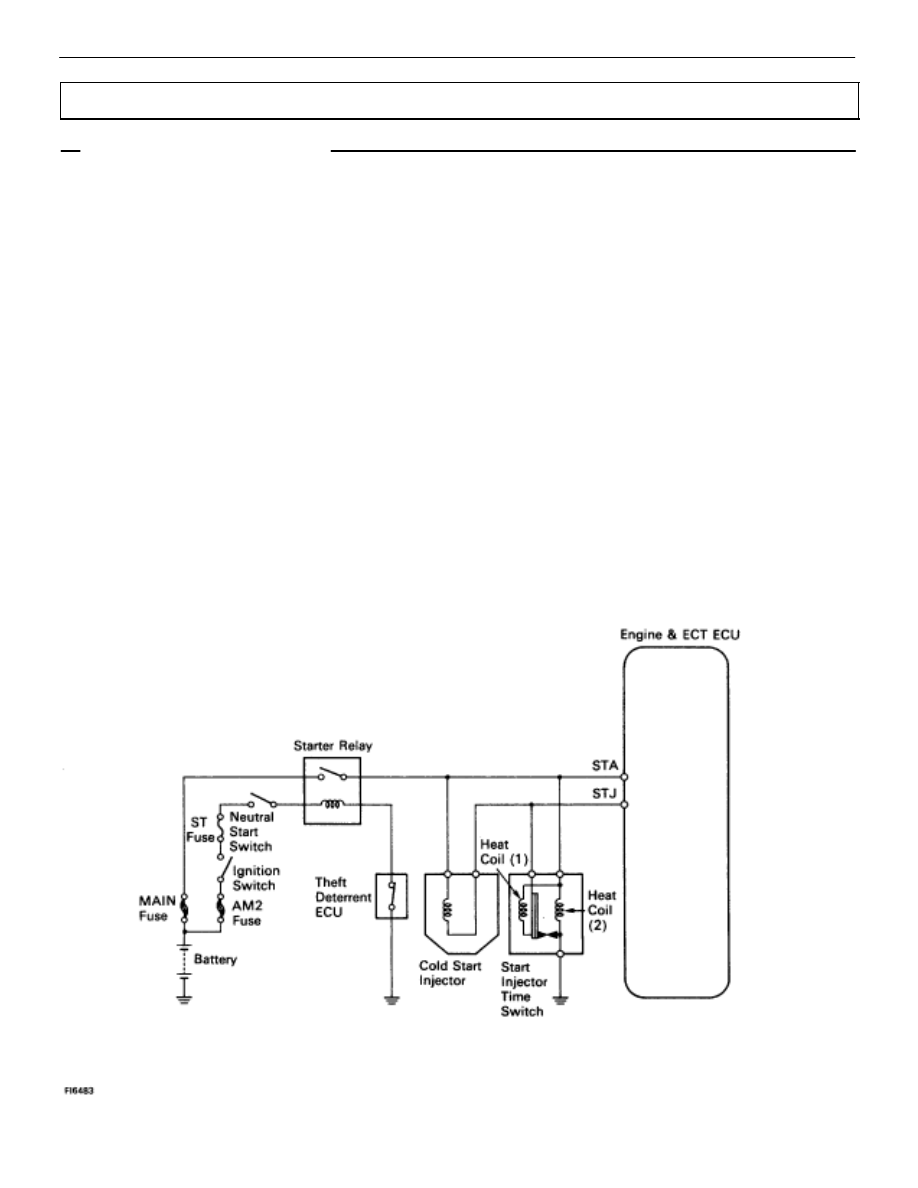
Cold Start Injector Circuit
CIRCUIT DESCRIPTION
The cold start injector is used to maintain the engine startability when it is cold. The injection volume, i,e, the
length of time the injector is energized, is controlled by the ECU and the cold start injector time switch.
During a cold start, when the starter turns the contacts in the cold start injector time switch close. Thus current
flows to the cold start injector coil, injecting fuel. At the same time, a bimetal in the heat coil is energized and
heats up. This soon causes the contacts to open, cutting off the current flow to the injector coil and stopping
fuel injection.
The injection duration of the cold start injector is determined by the coolant temperature and the length of time
current flows to the heat coil. When the engine is warm, the contacts are opened by the bimetal and the cold
start injector does not operate.
When the engine is hard to start and the starter is operated continuously, heat coil (2) heats up the bimetal keep-
ing the contacts open to prevent spark plugs from becoming fouled, which is caused by the cold start injector
operation when the open contacts close again.
When the engine is started at a coolant temperature of 22
°
C (72
°
F) or lower, the cold start injector operation
time is controlled by the cold start injector time switch.
When the coolant temperature is in the normal temperature range 22
°
C (72
°
F) or higher, the contacts of the cold
start injector time switch are open and the time switch is off, instead, the ECU controls the operating time of the
cold start injector.
In this way, the CO and HC levels can be reduced while the engine is being started and the engine startability
is maintained. Control by the ECU ends when the coolant temperature reaches 60
°
C (140
°
F).
TR–136
–
ENGINE TROUBLESHOOTING
Circuit Inspection