Lexus SC300 / Lexus SC400. Manual - part 6
[2] SYMPTOM CONFIRMATION AND DIAGNOSTIC CODE CHECK
The diagnostic system in the LEXUS SC400 fulfills various functions. The first function is the Diagnostic Code
Check in which a malfunction in the signal circuits to the ECU is stored in code in the ECU memory at the time
of occurrence, to be output by the technician during troubleshooting. Another function is the Input Signal Check
which checks if the signals from various switches are sent to the ECU correctly.
The air conditioner system has an Actuator Check function whereby the ECU automatically operates the actua-
tors of the damper and blowermotor, etc. to check the operation. The cruise control system has a Cancel Signal
Check function which memorizes and displays what sort of signal it was that last cancelled the cruise control.
By using these check functions, the problem areas can be narrowed down quickly and troubleshooting can be
performed effectively. Diagnostic functions are incorporated in the following systems in the LEXUS SC400.
System
Diagnostic Code
Check
Input Signal Check
(Sensor Check)
Other Diagnosis
Function
Engine
(with Test Mode)
Automatic Transmission
(with Test Mode)
Anti–Lock Brake
Traction Control (Option)
SRS Airbag
Power Seat (only vehicles with memory function)
Wireless Door Lock Control
Cruise Control
Cancel Signal
Check
Air Conditioner
Actuator Check
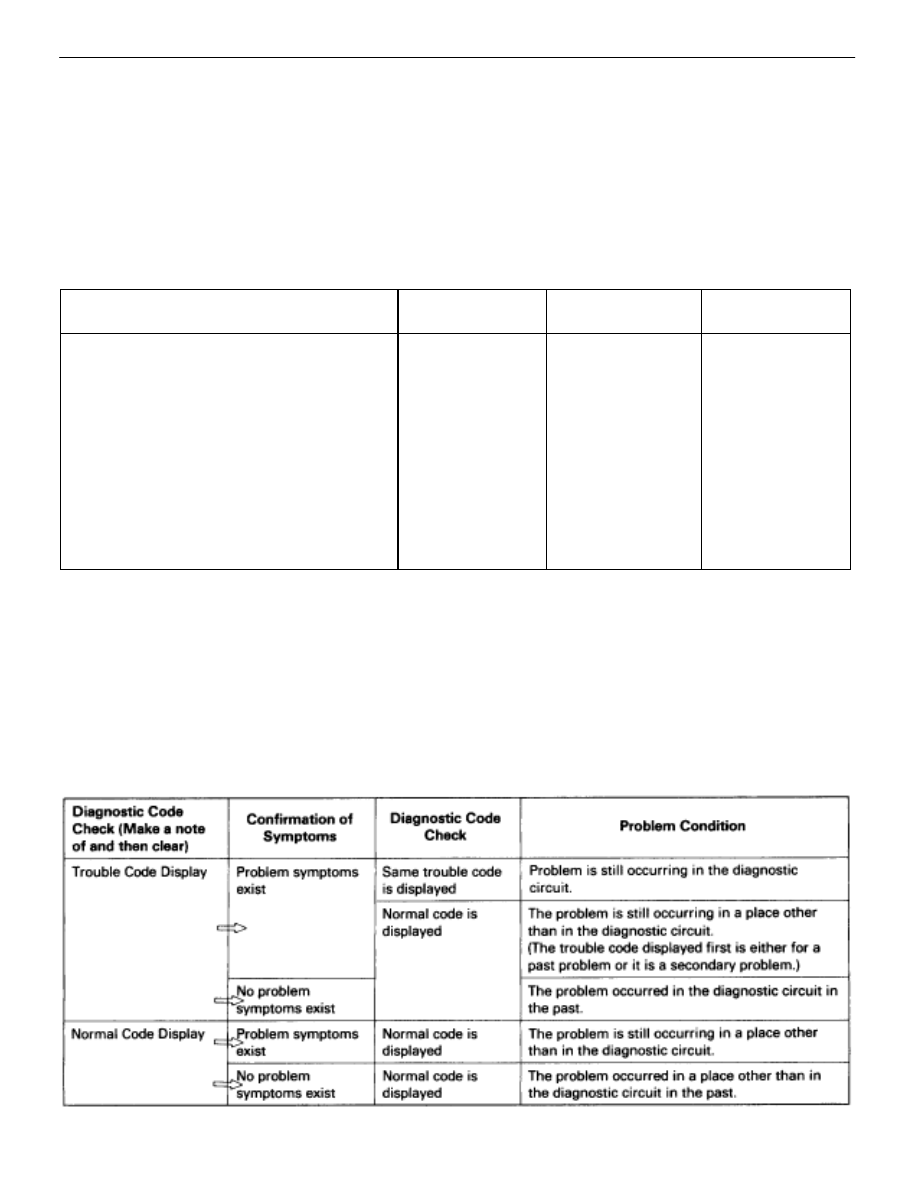
In diagnostic code check, it is very important to determine whether the problem indicated by the diagnostic code
is still occurring or occurred in the past but returned to normal at present. In addition, it must be checked in the
problem symptom check whether the malfunction indicated by the diagnostic code is directly related to the prob-
lem symptom or not. For this reason, the diagnostic codes should be checked before and after the symptom
confirmation to determine the current conditions, as shown in the table below. If this is not done, it may, depend-
ing on the case, result in unnecessary troubleshooting for normally operating systems, thus making it more diffi-
cult to locate the problem, or in repairs not pertinent to the problem. Therefore, always follow the procedure in
correct order and perform the diagnostic code check.
DIAGNOSTIC CODE CHECK PROCEDURE
IN–18
–
INTRODUCTION
How to Troubleshoot ECU Controlled Systems