Lexus ES300 (1997 year). Manual - part 12
46
CHASSIS — BRAKES
3. Operation
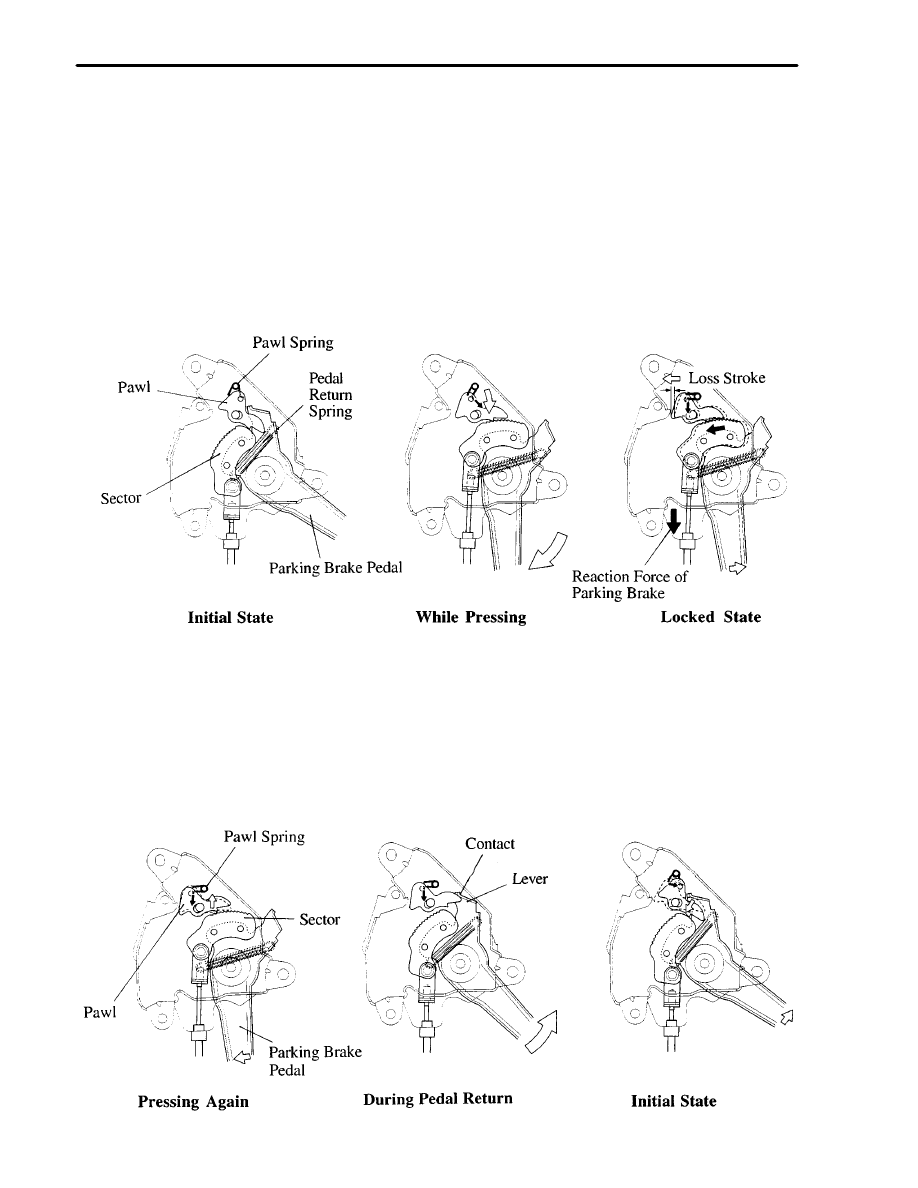
During Applying
Pressing the parking brake pedal causes the sector’s ratchet to engage with the pawl.
At this time, a clockwise force is applied to the pawl by the pawl spring.
Then, when the pressure on the brake pedal is released, the reaction force of the parking broke and the force
of the pedal return spring cause the pawl and sector, which remain engaged, to return (only for the amount
of the loss stroke). As a result, the parking brake becomes locked.
At this time, a counterclockwise force is applied by the pawl spring to the pawl. However, as the reaction
force of the parking brake and the force of the pedal return spring are stronger, the pawl and the sector do
not become disengaged.
During Releasing
When the parking brake pedal is pressed again, as the reaction force of the parking brake and the force of
the pedal return spring will not be applied to the pawl, the pawl spring causes the pawl to rotate
counterclockwise. As a result, the pawl is released from the sector’s ratchet.
Next, when the parking brake pedal returns to its initial point, the lever that is provided on the pedal will
push the pawl downward. This force, along with the force of the pawl spring, causes the parking brake to
revert to the initial state.