Infiniti QX50 (2021 year). Manual in english - page 4
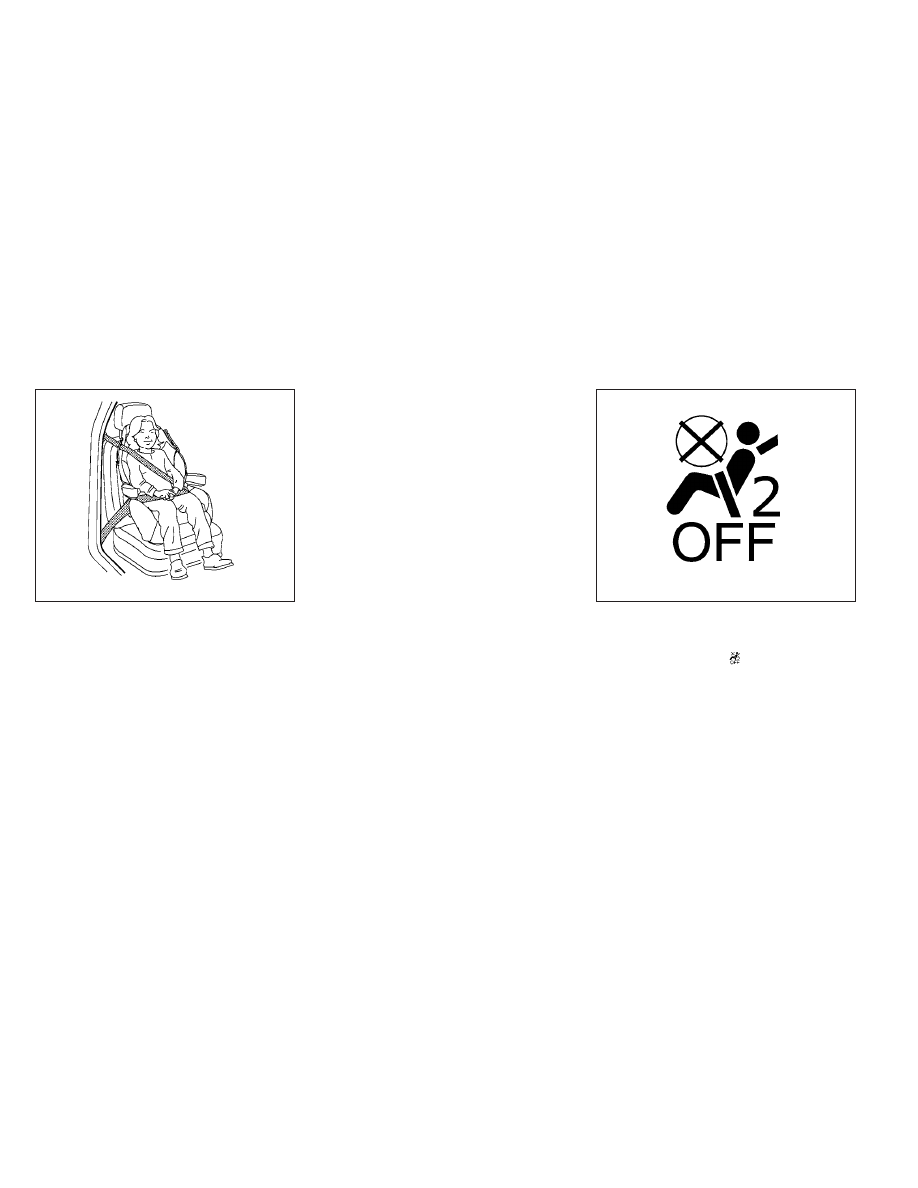
3. The booster seat should be positioned on
the vehicle seat so that it is stable.
If necessary, adjust or remove the head
restraint/headrest to obtain the correct
booster seat fit. If the head restraint/
headrest is removed, store it in a secure
place.
Be sure to reinstall the head
restraint/headrest when the booster
seat is removed.
For additional informa-
tion, see “Head restraints/headrests”
(P. 1-7).
If the seating position does not have an
adjustable head restraint/headrest and it
is interfering with the proper booster seat
fit, try another seating position or a differ-
ent booster seat.
4. Position the lap portion of the seat belt
low and snug on the child’s hips. Be sure to
follow the booster seat manufacturer’s
instructions for adjusting the seat belt
routing.
5. Pull the shoulder belt portion of the seat
belt toward the retractor to take up extra
slack. Be sure the shoulder belt is posi-
tioned across the top, middle portion of
the child’s shoulder. Be sure to follow the
booster seat manufacturer’s instructions
for adjusting the seat belt routing.
6. Follow the warnings, cautions and in-
structions for properly fastening a seat
belt shown in “Three-point type seat belt
with retractor” (P. 1-15).
7. If the booster seat is installed in the front
passenger seat, place the ignition switch
in the ON position. The front passenger air
bag status light
may or may not
illuminate, depending on the size of the
child and the type of booster seat being
used. For additional information, see
“Front passenger air bag and status light”
(P. 1-51).
LRS0454
Front passenger position
LRS0865
1-40
Safety-Seats, seat belts and supplemental restraint system