Hummer H1 (2006+). Manual - part 219
6-26
Wheels and Tires/Central Tire Inflation System (CTIS)
_______________
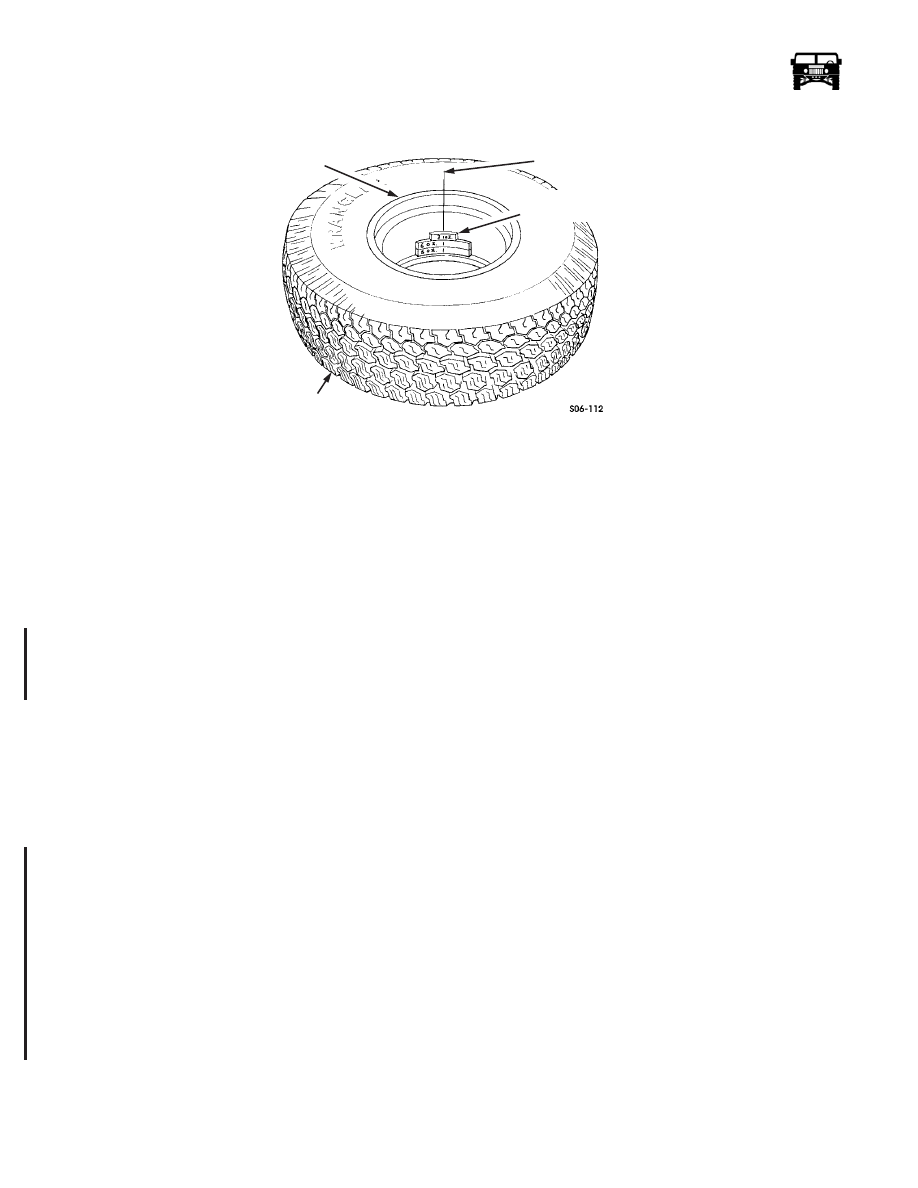
Figure 6-31: Balance Weight Placement
TROUBLESHOOTING A NON-BALANCING WHEEL AND TIRE ASSEMBLY
NOTE: If a wheel and tire assembly cannot be balanced, or balance cannot be maintained, any of the following conditions may be
causing the problem:
• The run flat is moving on the wheel/rim.
• Excessive radial or lateral run out condition of the wheel.
• Improper seating of the tire bead on the wheel flange.
NOTE: Perform the following if the run flat is moving on the wheel. If an excessive run out condition is suspected, proceed to
Wheel End Vibration Correction Using Road Force Values.
Suspected Run Flat Movement Procedure
1.
Disassemble the wheel and remove the run flat from the tire.
2.
Clean the inside of the tire, wheel and the O-ring seal with soap and water. Allow the cleaned parts to dry prior to assembly.
3.
Apply run flat gel lubricant at the crown area on the inside tire area.
4.
Install the run flat into the tire and assemble the wheel.
5.
Balance the wheel and tire assembly.
WHEEL END VIBRATION CORRECTION USING ROAD FORCE VALUES
Initial Checks
NOTE: Before performing any vibration analysis or balance operations, drive the vehicle to warm the tires.
1.
Verify the customer complaint at the affected speed, with tire pressures set to 26 psi. front and 28 psi. rear. Many tire vibrations
will not be evident until the vehicle is driven long enough for the tires to reach operating temperature (10 minutes at highway
speed).
2.
After the complaint is verified, check all wheel end parts that could contribute to a vibration, i.e.: loose lug nuts, spindle
bearings, tie rod ends, idler arm, pitman arm, steering gear and idler arm mount bolts. Perform a visual inspection of the
wheels and tires for physical damage.
WHEEL
WHEEL AND
TIRE ASSEMBLY
WEIGHT
(TAPE-ON TYPE)
ASSEMBLY
LIGHT SPOT
12-1-05