Hummer H1 (2006+). Manual - part 46
OBD-28
On-Board Diagnostics
_______________________________________________
OBD II DIAGNOSTIC TROUBLE CODES
DTC Identification
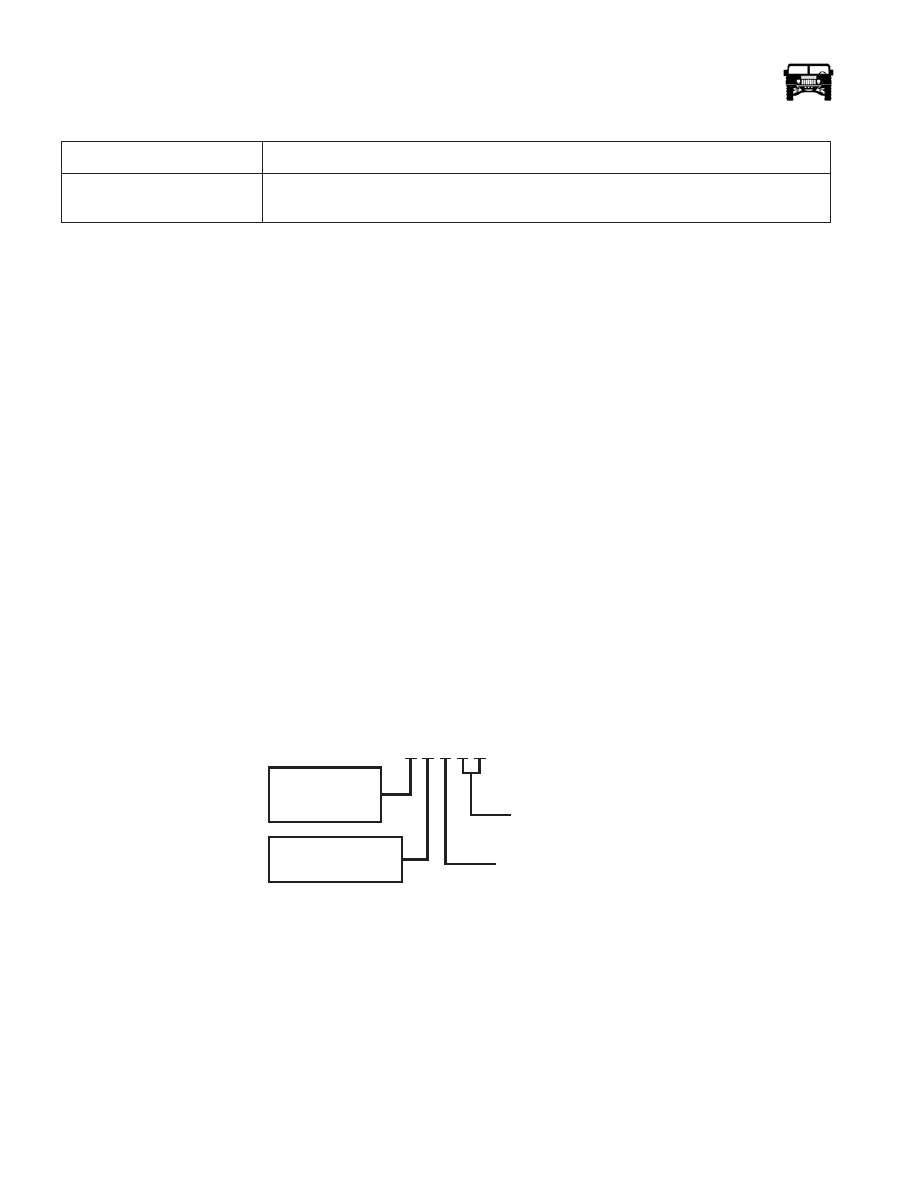
OBD II requires that the automotive industry use a standardized Diagnostic Trouble Code (DTC) structure (Figure OBD-3). This
code structure is very different from OBD I DTC structure. The OBD II DTCs contains a letter and a four-digit number. The letter
identifies the function of the device that has the fault:
• B = Body
• C = Chassis
• P = Powertrain
• U = Network or data link code
The first digit of the number indicates if the DTC is generic or manufacturer-specific (0=generic, 1=specific). The second number
indicates the specific vehicle system that has the fault. Below are the powertrain system identifiers:
• 1 = Fuel and Air Metering
• 2 = Fuel and Air Metering (injector circuit malfunction).
• 3 = Ignition System or Misfire
• 4 = Auxiliary Emission Controls
• 5 = Vehicle Speed Control and Idle Control System
• 6 = Computer Output Circuit
• 7 = Transmission
• 8 = Transmission
The last two digits indicate the component or section of the system that has the fault.
Figure OBD-3: OBD II Code Structure
Code Type
Each DTC is directly related to a diagnostic test. The Diagnostic Management System sets DTCs based on the failure of the tests during a
trip or trips. Certain tests must fail two consecutive trips before the DTC is set. The following are the four types of DTCs and the char-
acteristic of those codes:
Engine mechanical check.
• Check for incorrect basic engine parts such as the cam, the heads, the pistons, etc.
• Check for any excessive oil entering the combustion chamber.
NOTE: Definition: White, black, gray or blue smoke under load, idle or start up hot or cold.
Checks Action
P 0 1 1 7
EXAMPLE: P0117 ECT SENSOR CIRCUIT LOW VOLTAGE
B - BODY
C - CHASSIS
P - POWERTRAIN
U - NETWORK
0 - GENERIC (SAE)
1 - MANUFACTURER
SPECIFIC
SPECIFIC FAULT
DESIGNATION
SPECIFIC VEHICLE
SYSTEM