Geely Emgrand X7. Manual part - 294


  Главная      Geely     Geely Emgrand X7 - Manual


поиск по сайту            


содержание   ..   291  292  293  294  295 ..


Geely Emgrand X7. Manual part - 294
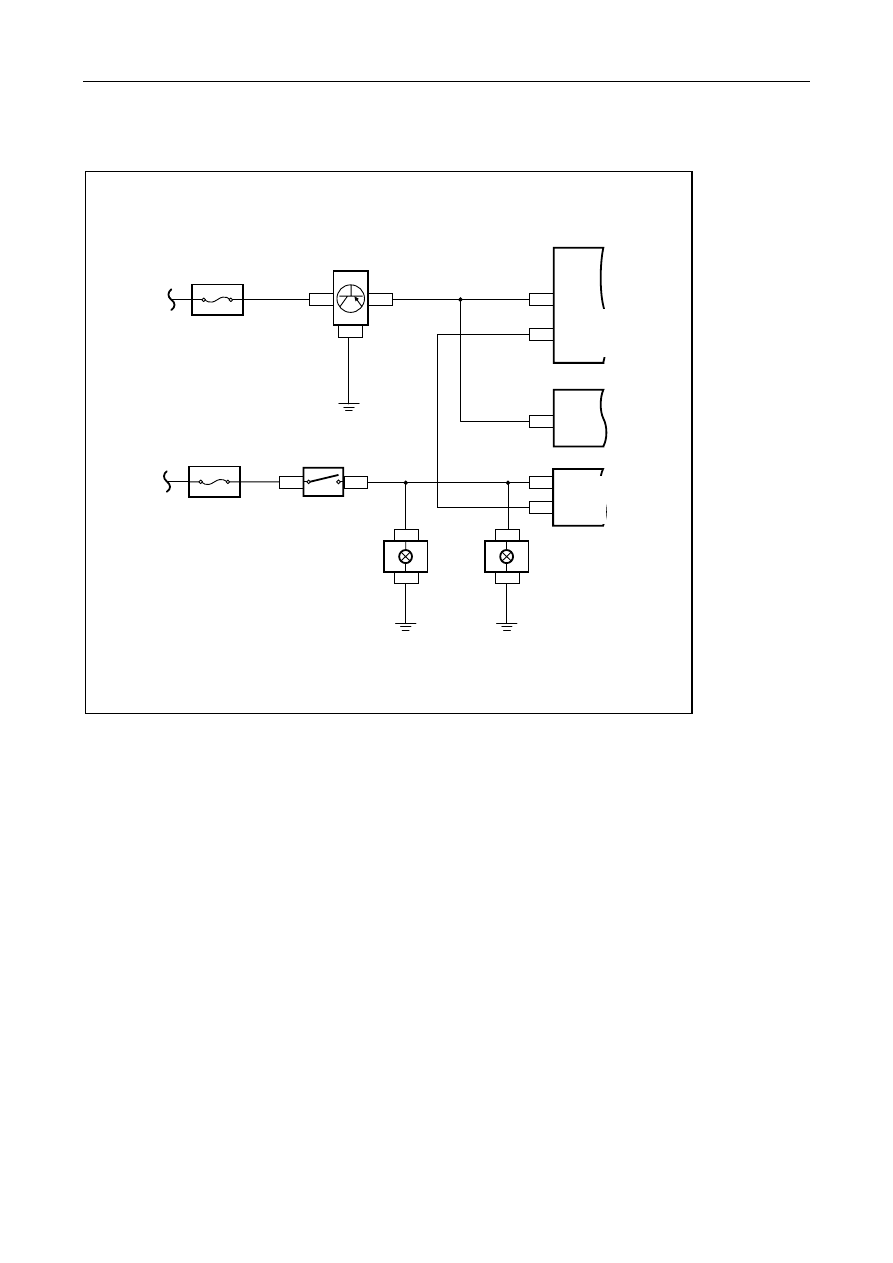


3.4.6 Electrical schematic diagram 

3.4.6.1 Reverse switch, vehicle speed sensor circuit schematic 

IF25 10A

2 EN21

1

EN21

1

IP02

7

IP01

51

EN01

1

SO33

5

SO33

3

EN21

组合仪表

ECM

SPEED IN

VSS

车速传感器

10A IF27

1

2

EN22

EN22

倒车灯开关

右后
组合灯

左后
组合灯

4 SO31

3 SO31

4

3

SO24

SO24

NL03-2013b


Speed sensor

Reverse lamp switch

Combinatio

n instrument

Left rear 

combination 

lamp


Right 

rearcombina

tion lamp

Reverse 

radar control 

module

1175


3.4.7 Diagnostic information and procedures 

3.4.7.1 Diagnosis descriptions 

Refer to 3.4.2 description and operation, get familiar with the system functions and operation before starting 
system diagnosis, so that it will help to determine the correct diagnostic procedures, more importantly, it will also 
help to determine whether the situation described by the customer is normal. 

3.4.7.2 Visual inspection 

Common malfunctions of transmission are: hard to shift, gear stuck, gear collision and grinding abnormal sound. 
The clutch, drive system malfunction can also cause the above faults. During maintenance, we need carefully 
analyze and distinguish. 

Prior to repairing, carry out general inspection of the transmission and clutch: 

z  Check transmission, clutch pipe for oil seeping. 

z  Inspect the transmission oil level, transmission oil viscosity and color, and then inspect for dirt and metal 

debris to determine whether there have been internal components stuck, burning or broken. 

z  Check transmission and the surrounding components. Check for bolts and nuts loosening or falling off; 

z  Road test and engage gears to confirm the vehicle conditions for further diagnosis. 

Before repairing the transmission abnormal sound, distinguish the clutch, drive shaft, and the engine abnormal 
sound, and exclude the external factors that may generate abnormal sound and noise. 

Before repairing the transmission abnormal sound, identify the following items: 

z  Road Noise 

Such as noise generated from tires, road, wheel bearings, engine and exhaust system. The noise varies due to 
vehicle dimension, type and body insulation materials, etc. 

z  Drive Shaft System Noise 

As a mechanical device, drive axle system can not be without sound during the operation. There will be some 
sound during the operation. Confirm the abnormal noise: 

1.  Choose a good road surface to reduce tires friction and body vibration generated noise. 

2.  Drive a distance long enough to completely warm up the lubrication oil. 

3.  Record speed and transmission gear when the noise occurs. 

4.  Determine whether there is noise when driving the vehicle in the following conditions: 

z  Slow acceleration or sudden acceleration; 

z  On an even road, keep the throttle slightly open and maintain constant speed when driving; 

z  Transmission is put in gear and the throttle closed when cruising. 

5.  Stop vehicle and shut down the engine, whether there is abnormal sound. 

z  Bearing Noise 

1.  Differential Gear or Bearing Noise 

Noise of bearings on differential side and the wheel bearing noise is likely to be mixed up. As the differential 
bearings have a pre-load force, even if the wheels leave the road, as long as the differential and drive shaft are in 
operation, the differential bearings noise will not be significantly reduced. 

2.  Wheel Bearing Noise 

When the transmission is in neutral gear and the vehicle is sliding, the wheel bearing issue a continuous roar or 
friction sound. Since there is no wheel bearing pre-load force, when the wheels leave the ground the wheel 
bearing noise will be significantly reduced. 

1176


z  Bearing internal wear, deformation, indentation in bearing ring; micro-abrasive entering into the bearing and 

its seat ring; foreign matter entering into the bearing and the seat ring is locked; bearing and its seat ring due 
to wear and tear become loose; and all of these will result in noise and thus make the system unable to work. 


1177


3.4.7.3 Hard to shift 

The table below describes possible fault position s. Check each part, and replace them if necessary. 

Symptoms Suspected 

parts  Referance 


1.  Clutch 

3.2 Clutch system 

2.  Transmission gearshift Lever 

3.1 Control system 

3.  Transmission shift control guy wire 

3.1 Control system 

4.  Transmission shift control mechanism 

3.4.8 Dismantle and 

installation  

Hard to shift 

5.  Faulty gear or synchronizer   

3.4.8 Dismantle and 

installation  

Diagnostic procedures: 

Check the transmission shift lever operation. 

A. Engine 

stopped. 

B.  Shift rod hard to engage or disengage gears. 


Check shift control mechanism    shift force and travel. 

A.    Operate the shift lever. Shifting force is 20~30N 

(4.5~6.7 LB). Transmission shift control travel 
should meet the range shown in the figure. 


p(换档摇臂工作状态)

Q(换档摇臂工作状态)

R70

R54

1 3 5

挡位置

2 4 R 挡位置

1、2 挡位置

3、4 挡位置

5、R挡位置

空挡位置

19.5

15

15

19.5

NL03-2014b


Go to step 6 

No 

Yes 

P(shift rocker arm work status) 

1st,3rd, 5th speed 

position 

Neutral position

2nd, 4rd and R 

speed position

Q(shift rocker arm work status)


1st,2nd speed 

position


3rd,4th speed 

position


5th,R speed 

position


1178


содержание   ..   291  292  293  294  295 ..